Category: UNCATEGORIZED

02 May 2019

SpaceX confirms its Dragon crew capsule exploded in testing

For the first time after a video of an exploding Dragon capsule leaked in late April, SpaceX confirmed the spacecraft’s destruction during testing. In statements made today, SpaceX’s vice president of mission assurance Hans Koenigsmann provided a little insight on the mysterious ground test gone wrong.

As CNBC reports, Koenigsmann said during a press event that it is “too early” to determine the cause but noted that the capsule exploded as its SuperDraco thruster system was being fired up:

“At the test stand we powered up Dragon and it powered up as expected. We completed tests with the Draco thrusters – the Draco thrusters are the smaller thrusters that are also on Dragon 1, the Cargo Dragon. We fired them in two sets, each for five seconds, and that went very well. And just prior before we wanted to fire the SuperDraco there was an anomaly and the vehicle was destroyed.”

The capsule shown in a grainy video from April 21 turns out to be the same test spacecraft that visited the International Space Station in early March and returned to the Earth via a splashdown in the Atlantic six days later. Unlike the company’s cargo capsules, that capsule, known as SpaceX Demo-1, is designed to carry crew members in the future.

Even during testing, the loss of any spacecraft — particularly one designed to carry a human crew — is a big deal. The event is likely to push SpaceX’s target launch for a crewed Dragon flight this year into 2020. NASA is currently working with the company to investigate the incident.

“I hope this is a relatively swift investigation at the end of the day,” Koenigsmann said.  “I don’t want to completely preclude the current schedule, but certainly this is not good news for the schedule.”

02 May 2019

Beyond Meat rockets in early trading on Nasdaq, reaching a valuation of over $3 billion

Meat alternatives are getting a big public market debut with the Beyond Meat public offering, as shares of the company rocketed above their initial list price.

The company’s shares surged up 135% in their market opener, valuing the company as high as $3.52 billion. Volatility was so high on the company’s stock that the Nasdaq had to pause trading of “BYND” shares.

The company’s first trade came in at $46 at 12:18 p.m. Eastern, according to a report in MarketWatch. That’s a whopping 76% above the initial price. Gains extended throughout the morning reaching an intraday high of $63.43 (or around 154% above its initial high) and the stock is now trading at around $55 per share.

The company priced its public offering at $25 per share last night — at the upper end of an already increased share price (likely in response to shareholder demand).

In all the company raised more than $240 million at just under a $1.5 billion valuation through the sale of at least 9.6 million shares when it priced yesterday.

Beyond Meat is a pioneer of the plant-based meat movement, and the listing is a remarkable and unprecedented move for the industry,” said Bruce Friedrich, the executive director of the sustainable food industry research and watchdog group, the Good Food Institute. “While it’s the first company of its kind to go public, the move could pave a way forward for other plant-based meat makers who will be watching on.”

Investor appetite for the company comes despite its balance sheet problems. Beyond Meat reported a net loss of $29.9 million on $87.9 million in revenue for 2018.

What’s steeling investors’ stomachs for an investment in the company appears to be its gross margins, which came in at 25% for the first quarter and were at 20% for 2018 up from negative margins in the preceding year.

The company’s success could be a harbinger of things to come. There’s a crop of meat substitutes and alternative protein products on the market or coming to market — and they’ve met with enormous customer success.

Earlier this week, Burger King announced that it would begin a nationwide rollout of its Impossible Whopper, and companies like Memphis Meat, which develops lab-grown animal proteins, and Sustainable Bioproducts, another developer of protein replacements are waiting in the wings to bring their own products to market.

Beyond Meat’s public offering is the second-highest liquidity event for a company in the sustainable foods market. The largest was WhiteWave Foods acquisition for $12.5 billion by Danone in 2017 after a public listing five years earlier.

“Securing funds like this is a big deal for Beyond Meat and will allow it to ramp up its supply chain capabilities and make delicious plant-based meat accessible to all,” said Friedrich in a statement. “Investors recognize that this is not a niche but a mainstream movement and a huge business opportunity… Beyond Meat is on the frontier of food system transformation. Their success and the successes of other plant-based meat makers could help repair our food system and mitigate the many harms caused by conventional meat production.”

02 May 2019

Target ups its ad efforts with revamped media company, Roundel

A surprise addition to this year’s NewFronts, first-time participant Target today announced its plans to rebrand its media network formerly known as “Target Media Network” to be called “Roundel.” The goal with the repositioning is to better communicate to clients that its focus goes beyond display ads on Target.com. Instead, Roundel will create campaigns and content for its clients, who include brands and agencies — including brands that aren’t sold in Target’s stores — and deliver them to either to Target’s own website or to “brand-safe” external channels like Pinterest, PopSugar, and NBC Universal.

To date, Target’s pitch has been that its data on consumers and their habits can help it to create better campaigns and content for interested brands. Target Media Network had already been working with national advertisers, including those who didn’t sell products in Target, ahead of this rebranding. But the prior name limited its potential, the retailer believed.

Roundel’s nearly 1,000 partners (previously Target Media Network clients) have included Coca-Cola, Disney, Pepsi, P&G, Mastercard, Unilever, Dyson, and others. The network, launched in 2016, has seen double-digit growth during this time.

AdWeek (paywalled) had the exclusive on Roundel’s launch. Target has now shared the details on its own website, as well.

According to AdWeek, Target wanted to announce Roundel at the NewFronts because it wasn’t only going to focus on display ads — it would also involve social, video, and linear TV.

Roundel will leverage Target’s shopper insights to create personalized ad campaigns that can run on Target.com or elsewhere across 150 brand-safe channels, like Pinterest, PopSugar, NBCU and others. These channels may also be web, mobile or social sites, Target notes.

The advertisers don’t have to currently sell products at Target to work with Roundel. Other brands — like financial services, automotive, and travel businesses — can also leverage Roundel’s offerings.

Contrary to rumors ahead of the event, however, Target doesn’t have plans to invest in original content like its rivals Walmart (Vudu) and Amazon (Prime Video).

The launch comes at a time when retailers are getting more directly involved in advertising both on their websites and through other media that goes beyond basic display ads. Amazon, for example, is now running a live-streamed QVC-like video network on Amazon.com called Amazon Live. It also has been building out a large and growing ad business that spans it properties, including Amazon.com, IMDb, and Amazon Video and is talking to clients about other ad types, including video.

In Q4 2018 its ad business topped $3 billion, but slowed in Q1 2019 to reach $2.7 billion after five quarters of 60%+ growth. It’s now the number three player behind Facebook and Google, but still very much a distant third. 

Target had kept its plans well under wraps ahead of today’s event. But it wasn’t the only retailer catering to the advertisers at this week’s Digital Content NewFronts.

Yesterday, Walmart introduced a new video ad network, the Vudu Audience Extension network, which it claims will reach half of U.S. households, as well as its plans for interactive video and “shoppable” shows, and new original content. It has also been building out its advertising business and increasing its outreach to agencies to talk about new ad formats like video.

Target didn’t follow the usual course for these sorts of presentations. Its event was hosted in a unique environment, with little seating, pop-up talks in different spots, and was bathed in red light.

02 May 2019

May Mobility COO and Co-founder Alisyn Malek at TC Sessions: Mobility on July 10

Even as the giants of the autonomous vehicle industry were setting ambitious timelines for their robotaxi deployments, May Mobility was already hitting the streets.

The startup launched its first low-speed autonomous shuttle service in Detroit in summer 2018. By March, the Ann Arbor, Michigan-based company was operating in at least three U.S. cities. It’s a rapid acceleration for a company that was founded less than two years ago.

We’re excited to announce that May Mobility COO and co-founder Alisyn Malek will participate in TechCrunch’s inaugural TC Sessions: Mobility, a one-day event on July 10, 2019 in San Jose, Calif. centered around the future of mobility and transportation.

Malek was recognized as a top 10 female innovator to watch by Smithsonian in 2018 and named a top automotive professional under 35 to watch by LinkedIn in 2015 for her work in cutting-edge product development and corporate venture. She’s an automotive engineer

Before Malek co-founded May Mobility, she had already made a name for herself at General Motors. Malek was the former head of GM’s innovation pipeline. Prior to that role, Malek was an investment manager at GM Ventures, where she led investment in the autonomous space, including the early negotiations with Cruise Automation . GM would acquire Cruise in 2016.

During her time at GM, Malek also led a global team to develop advanced charging technology for the company’s Spark and Bolt EV products.

How does TC Sessions: Mobility stand out in a sea of automotive and mobility conferences? We invite the best and brightest founders, investors and technologists who are determined to invent a future Henry Ford might never have imagined; we highlight up and coming startups, offer demo space to showcase products and create programming aimed at delivering the most value for every ticket holder. Our events are fun too.

Early-stage startup founders, don’t miss your chance to demo your company in front of top influencers at TC Sessions: Mobility 2019. It’s a prime opportunity to showcase your tech startup in front of a very large, very targeted audience — the mobility and transportation industry’s movers and shakers. Book a demo table here.

In case you missed it, some of our recently announced speakers include Waymo CTO Dmitri Dolgov, Nuro co-founder and CEO Dave Ferguson, Scoot SVP of Product Katie DeWitt, co-founder and CEO of Voyage Oliver Cameron,  co-founder, president and CEO of Mobileye, Amnon Shashua — who also is a senior vice president at Intel. And there are more.

Early-Bird tickets are now on sale — save $100 on tickets before prices go up.

Students, you can grab your tickets for just $45.

02 May 2019

Couchbase’s mobile database gets built-in ML and enhanced synchronization features

Couchbase, the company behind the eponymous NoSQL database, announced a major update to its mobile database today that brings some machine learning smarts, as well as improved synchronization features and enhanced stats and logging support to the software.

“We’ve led the innovation and data management at the edge since the release of our mobile database five years ago,” Couchbase’s VP of Engineering Wayne Carter told me. “And we’re excited that others are doing that now. We feel that it’s very, very important for businesses to be able to utilize these emerging technologies that do sit on the edge to drive their businesses forward, and both making their employees more effective and their customer experience better.”

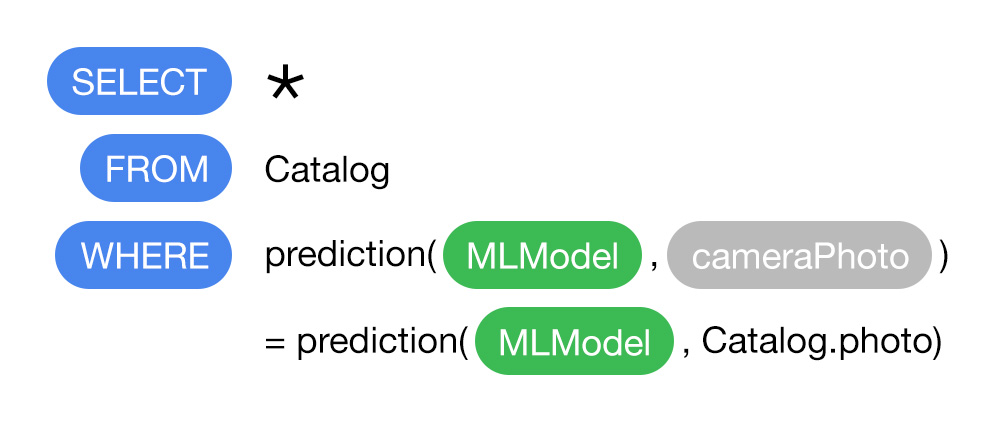
The latter part is what drove a lot of today’s updates, Carter noted. He also believes that the database is the right place to do some machine learning. So with this release, the company is adding predictive queries to its mobile database. This new API allows mobile apps to take pre-trained machine learning models and run predictive queries against the data that is stored locally. This would allow a retailer to create a tool that can use a phone’s camera to figure out what part a customer is looking for.

To support these predictive queries, Couchbase mobile is also getting support for predictive indexes. “Predictive indexes allow you to create an index on prediction, enabling correlation of real-time predictions with application data in milliseconds,” Carter said. In many ways, that’s also the unique value proposition for bringing machine learning into the database. “What you really need to do is you need to utilize the unique values of a database to be able to deliver the answer to those real-time questions within milliseconds,” explained Carter.

The other major new feature in this release is delta synchronization, which allows businesses to push far smaller updates to the databases on their employees mobile devices. That’s because they only have to receive the information that changed instead of a full updated database. Carter says this was a highly requested feature but until now, the company always had to prioritize work on other components of Couchbase.

This is an especially useful feature for the company’s retail customers, a vertical where it has been quite successful. These users need to keep their catalogs up to data and quite a few of them supply their employees with mobile devices to help shoppers. Rumor has it that Apple, too, is a Couchbase user.

The update also includes a few new features that will be more of interest to operators, including advanced stats reporting and enhanced logging support.


02 May 2019

Daily Crunch: Facebook shows off an aspirational redesign

The Daily Crunch is TechCrunch’s roundup of our biggest and most important stories. If you’d like to get this delivered to your inbox every day at around 9am Pacific, you can subscribe here.

1. Facebook pivots to what it wishes it was

Facebook is rolling out what could be called an aspirational redesign known as FB5. Rather than polishing what Facebook was, it’s designed to spotlight what the company wants to be.

“This is the biggest change we’ve made to the Facebook app and site in five years,” said CEO Mark Zuckerberg at the company’s F8 developer conference.

2. Uber now lets you buy transit tickets in Denver

Uber, which is days away from going public, has added in-app ticketing to its transit offering in Denver. This comes a few months after Uber first launched transit integration in the city.

3. Spotify launches voice-enabled ads on mobile devices in a limited US test

The ads will encourage the listener to speak a verbal command in order to take action on the ad’s content. Initially, the audio ads will direct listeners to a branded Spotify playlist or a podcast.

4. A 30-mph e-bike to compete with cars in cities? Investors just bet $20 million on it

Bond Mobility is a three-year-old startup that says its “high-performance” dockless electric bikes will leave e-scooters in the dust.

5. Google now lets you auto-delete your app activity, location and web history

Google says you can now auto-delete your location history and web and app activity by setting a time limit for how long Google can save this data.

6. Acast launches Acast Access to make paywalled podcasts available on any player

With Acast Access, publishers should be able to create versions of their podcasts that are only available to subscribers, but are still accessible from any app.

7. Nine lessons on how Niantic reached a $4B valuation

Greg Kumparak has been taking readers on a deep dive into the Niantic story, and now he’s highlighting the key themes he found in his reporting. (Extra Crunch membership required.)

02 May 2019

3 key secrets to building extraordinary teams

Developing new technology, identifying product/market fit, creating a go-to-market strategy… When building businesses, these are the types of challenges entrepreneurs tend to spend the majority of their time thinking about (and talking about with other entrepreneurs). And it’s easy to understand why: These are challenges that entrepreneurs can tackle largely on their own, without having to rely on anyone else.

But you can only solve a small fraction of the problems that you will face if you want to scale. You need to hire.

People – not products – are the lifeblood of hypergrowth companies. Ultimately, the conversations and relationships the people at your company have with customers, potential customers, investors, and others, will determine how successful you are in the long run.

This is a lesson that took me 20+ years and the founding of five companies to learn. Believe me, as an introvert, I’d love to just geek out on the 1% of stuff I can figure out on my own.

Instead, you need to:

  1. Hire people before skills: Scrappiness and cultural fit matter more than intelligence and experience.
  2. Hire for the right stage: you will need certain types of people at different points of your growth
  3. Get internal feedback but not consensus: hiring managers need to own the decision

This is how hypergrowth companies are born.

3 Hiring Tips for Scaling a High-Growth Startup

Last year, my most recent company, Drift, grew from 80 to 260 people and went from one office in Boston to three, with additions in San Francisco and Seattle. By the end of this year, we’ll be adding a significant number across the offices. And in the years to follow, we’ll likely open offices in EMEA and other regions around the globe.

02 May 2019

InCountry raises $7M to help multinationals store private data in countries of origin

The last few years have seen a rapid expansion of national regulations that, in the name of data protection, govern how and where organizations like healthcare and insurance companies, financial services companies and others store residents’ personal data that is used and collected through their services.

But keeping abreast of and following those rules has proven to be a minefield for companies. Now, a startup is coming out of stealth with a new product to to help.

InCountry, which provides “data residency-as-a-service” to businesses and other organizations, is launching with $7 million in funding and its first product: Profile, which focuses on user profile and registration information in 50 countries on six continents. There will be more products launched covering payment, transaction and health data later in the year, co-founder and CEO Peter Yared said in an interview.

The funding — a seed round — is coming from Caffeinated Capital , Felicis Ventures, Ridge Ventures, Bloomberg Beta, Charles River Ventures, Global Founders Capital.

InCountry is founded and led by Yared, a repeat entrepreneur who most recently co-founded and eventually sold the “micro-app” startup Sapho, which was acquired by Citrix. Other companies he’s sold startups to include VMWare, Sun, and Oracle, and he was also once the CIO of CBS Interactive. 

Yared told me in an interview that he has actually been self-funding, running and quietly accruing customers for InCountry for two years. He decided to raise this seed round — a number of investors in this list are repeat backers of his ventures — to start revving up the engines. (One of those ‘revs’ is an interesting talent hire. Today the company is also announcing Alex Castro as chief product officer. Castro was an early employee working on Amazon Web Services and Mircosoft’s move into CRM, and also worked on autonomous at Uber.)

If you have never heard of the term “data residency-as-a-service”, that might be because it’s something that has been coined by Yared himself to describe the function of his startup.

InCountry is part tech provider, part consultancy.

On the tech side, it provides the technical aspects of providing personal data storage in a specific national border for companies that might otherwise run other aspects of their services from other locations. That includes SDKs that link to a variety of data centers and cloud service providers that allow new countries to be added in under 10 minutes; two types of encryption on the data to make sure that it remains secure; and managed services for its biggest clients. (InCountry is not disclosing any client names right now, except for video-editing company Revl.)

On the consultancy side, it has an in-house team of researchers and partnerships with law firms to continually update its policies and ensure that customers remain compliant with any changes. InCountry says that to provide further assurance to customers, it provides insurance of up to three times the value of a customer’s spend.

InCountry’s aim is twofold: first, to solve the many pain points that a company or other organization has to go through when considering how to comply with data hosting regulations; and second, to make sure that by making it easy, companies actually do what’s required of them.

As Yared describes it, the process for becoming data compliant can be painful, but his startup is applying an economy of scale, since the process is essentially one that everyone will have to follow:

“They have to figure out what the requirements are, find the facility, audit the facility, which includes making sure it’s not owned by the state, make sure the network is properly segregated, develop the right software layer to manage the data, hire program managers, network operations people and more,” he said. And for those handling this themselves, cloud service providers will typically cover a smaller footprint of regions, 17 at most for the biggest. “We take care of all that, and add on more as we need to.”

The problem is that because the process is so painful, many companies often flout the requirements, which isn’t good for its customers, nor for the companies themselves, which run the risk of getting fined.

“It’s universally acknowledged that the way data is stored and handled by most companies and handled is not meeting the average requirements of citizens rights,” Yared said. “That’s why we now have GDPR, and will see more GDPR-like regulations get rolled out.”

One thing that InCountry is not touching is data such as messages between users and other kinds of personal files — data that has been the subject of sometimes very controversial data regulations. Its limit are the pieces of personal information about users — bank details, health information, social security numbers, and so on — that are part and parcel of what we provide to companies in the course of interacting with them online.

“In early outreach, we have had people as for private data storage, but we would be ethically uncomfortable with that,” Yared said. “We want to be in the business of helping people who have regulated data, by storing that in a compliant manner that is more helpful, and more fruitful to users.”

The aim will be to add more services over time covering ever more countries, to keep in line with the growing trend among regulators to put more data residency laws in place.

“We’re witnessing more countries signing in data laws each week, and we’re only going to see those numbers increase,” said Sundeep Peechu, Managing Director at Felicis Ventures, in a statement. “We’re excited to be leading the round and reinvesting in Peter as he launches his seventh company. He recognized the problem early on and started working on a solution nearly two years ago that goes beyond regional data centers and patchwork in-house DIY solutions.”


02 May 2019

DDoS attack disrupted US energy company operations, government confirms

A distributed denial-of-service attack launched against an energy company providing power in several western U.S. states was enough to report “interruptions of electrical system operations” to the government’s energy authority.

The “cyber event” lasted almost ten hours on March 5, according to an electric emergency and disturbance report filed with the Department of Energy by the affected company.

E&E News first reported the “cyber event” last week. It was later reported as a DDoS attack.

In an email to TechCrunch, a spokesperson for the Department of Energy confirmed the attack, which knocked the energy company’s systems offline by overloading them with traffic.

“DOE received a report about a denial-of-service condition that occurred at an electric utility on March 5, 2019 related to a known vulnerability that required a previously published software update to mitigate,” said the spokesperson. “DOE continues to work with our industry partners through the ISACs to ensure the dissemination of the appropriate mitigation information to manage their associated risks.”

The name of the energy company wasn’t named, but it provides power and energy to customers across Los Angeles in California, Salt Lake County in Utah, and Converse County in Wyoming.

“The incident did not impact generation, the reliability of the grid or cause any customer outages,” said the DOE spokesperson.

Western Electricity Coordinating Council, the regional reliability authority for the affected area, did not immediately comment.

Power networks — considered critical infrastructure by the U.S. government — have long been a target for hackers, but successful attacks are rare. Russian hackers were blamed for a power outage in Ukraine at Christmas in 2015, leaving a quarter-of-a-million residents without power for two days. Venezuela recently blamed a cyberattack for a power outage earlier this year, but the claims remain unfounded.

The Trump administration also blamed Russia for attempting to break in to U.S. power grids.

02 May 2019

Uber now lets you buy transit tickets in Denver

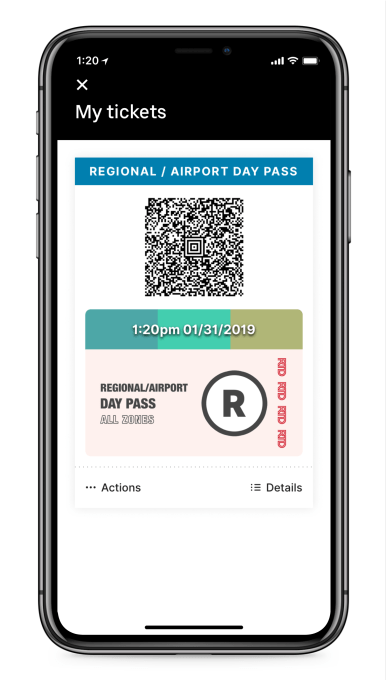
Uber, which is days away from going public, has added in-app ticketing to its transit offering in Denver. This comes a few months after Uber first launched transit integration in the city.

“For the first time ever, taking an Uber trip can mean taking public transit,” Uber Head of Transit David Reich said in a statement. “We are excited to expand our collaboration with RTD and Masabi to make Denver the first city in the world where riders can purchase transit tickets and ride public transit seamlessly through the Uber app. With this step, we are moving closer to making Uber’s platform a one-stop shop for transportation access, from shared rides to buses and bikes.”

For transit, Uber is serving two sets of customers: agencies and riders. For both sets, Uber is aiming to increase efficiency, enhance the experience and increase equity and accessibility, Reich told TechCrunch earlier this year.

While Uber is only launching this in Denver today, Masabi handles ticketing for 30 transportation agencies worldwide, including Los Angeles’ Metrolink, New York’s MTA, London’s Thames Clippers and Boston’s MBTA. Uber also has relationships with a number of cities already.

“We know convenience is the number one reason people choose a transit option, and we truly believe that a multimodal public and shared private approach will be a key part of encouraging more people to take fewer private car journeys, reducing congestion for all,” Masabi CEO Brian Zanghi said in a statement. “By making public transit tickets available through Masabi’s Justride SDK in the Uber app, we are making this a reality for the first time, helping more people seamlessly and conveniently discover and access public transit services.”