Category: UNCATEGORIZED

01 May 2019

Sean Parker’s Brigade/Causes acquired by govtech app Countable

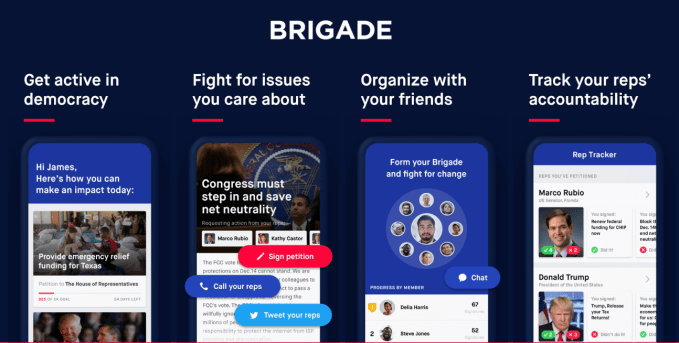
Causes grew to a jawdropping 186 million users as one of the first ten Facebook platform apps. Started by Facebook co-founder Sean Parker, it was meant to turn a generation into activists and philanthropists. Causes acquired Votizen to augment shallow clicktivism with a way to remind friends to vote. But after Facebook went mobile and the web platform waned, Parker arranged Causes’ sale to his newer civic tech effort Brigade, for which he’d led a $9.3 million Series A and later fed more money. Brigade’s ballot guide was used by 250,000 people in the 2016 election leading to 5 million Get Out The Vote messages sent, but the startup’s apps for connecting with campaigns or debating political issues never went viral like Causes.

Now both Causes’ and Brigade’s stories are coming to an end. In February, we caught wind of Brigade selling off its high-grade engineering team to Pinterest in an acquihire while it sought a home for its IP. Today, Brigade announces its technology and data have been acquired by politician tracking service Countable. Terms of the deal were not disclosed but it’s unlikely that Brigade’s Series A investors earned a return.

“While we didn’t reach the ultimate mountaintop, I think we moved the entire civic tech space forward” Brigade CEO Matt Mahan tells me.

Countable lets people view summaries of upcoming legislation, contact their representatives about their opinion, and then track the officials’ votes. “Brigade was founded with the non-partisan mission to reinvent how Americans participate in politics. When they decided to bring their journey to a close, Matt and Brigade’s leadership team sought out a mission-aligned company to acquire their technology, and a responsible place to point any members of their community who were eager to remain civically active and engaged” says Countable CEO Bart Myers. “They approached Countable–an obvious fit for our commitment to lowering barriers to civic entry and empowering meaningful action, and we’re excited to provide a home for their technology moving forward.”

To further their contribution to the democracy innovation community, Countable has agreed to open source Brigade’s voter matching software. This allows apps to tie a user to their official voting record to offer personalized features like reminders of upcoming elections, petitions for local issues, and ways to contact their elected officials. Seth Flaxman, the CEO of civic tech software developer Democracy Works that built TurboVote, says “This is extremely difficult technology to build and can help TurboVote determine which of our 6 million users needs more help registering to vote. They are passing the baton, making it possible for nonprofits like ours to build off their progress.”

We’ll have more analysis shortly

01 May 2019

Early-stage US VC Joyance to scout for health and wellness startups in Europe

Good news for European startups with a health or wellness bent. Joyance Partners, a $20M US VC firm that invests in early-stage startups in the health and ‘better living’ space is launching into the European market with a dedicated European partner.

The move could be seen as taking advantage of leaps in the capability of European startups, especially in the health and AI space.

To lead its European efforts, the fund has appointed Paolo Pio as managing director of Joyance Partners Europe. Paolo was most recently head of product and business development at Cisco for Europe, and then Asia/Pacific. He has also been an active angel investor.

“The European startup scene is growing rapidly, and it needs funds like Joyance to provide the kind of support and capital necessary at the very early stages,” said Pio.

“We’re extremely pleased with the companies we’ve seen in the US and are excited to expand our search for companies that contribute to individual health and happiness to Europe,” said Mike Edelhart, managing partner of Joyance Partners in a statement.

Joyance launched in 2017 and has since made over 50 investments related to the emerging science of health and happiness. These include personal thermostat Embr Labs; on-body fluidics lab Epicore Biosystems; microbiome leader DermBiont; medical AI innovators Gyant and Lark Health; NeoSensory, which lets one human sense stand in for another; female pleasure products maker Unbound; and Wynd Technologies, which delivers pure air to individuals or groups.

Another investment, NeoSensory, raised $14.2M, and focuses on sending a variety of data streams to the brain via the sense of touch.

Joyance is also adding two other new team members to bolster its activity. Holly Jacobus (Investment Partner, NY) and Jun Deng, PhD (Investment Partner, Silicon Valley).

The firm has a particular description for these types of investments. They call them “delightful moments — the small quanta of time that brings greater joy, confidence, calm, control, and absence of anxiety or pain.”

So far so hippie, but Joyance says that research increasingly notes a connection between happiness and health, such as the long-noted effects of job stress on health, and the coloration between positive emotions and longer and healthier life.

In a 2010 study released in the European Heart Journal, for each one-point increase in positive emotions a patient had expressed, their heart disease risk was 22 percent lower.

So get being happy, people.

(Photo by Form on Unsplash)

01 May 2019

Hulu tops 28 million customers, unveils new shows and a ‘binge watch’ ad experience

Hulu has now grown over 28 million U.S. customers, including 26.8 million monthly paid subscribers and 1.3 million promotional accounts, the company announced this morning as part of its annual presentation at the digital Newfronts in New York. In January, Hulu had 25 million total users, including both paid and promo accounts, and 20 million this time last year. The streaming service also today unveiled its new slate of shows and original programming, alongside other content deals and a new “binge advertising experience” that’s designed to be less intrusive.

On the content front, Hulu announced an expanded partnership with Marvel to bring two new live-action series to its service in 2020.

Though Marvel owner Disney is preparing to launch its own direct-to-consumer streaming service later this year, Disney’s majority ownership of Hulu is proving to be an advantage as it can shift some of the more adult-oriented Marvel properties to Hulu, instead of the more family-focused Disney+ streaming service.

That seems to be the case for the new Marvel series Marvel’s Ghost Rider, aka Robbie Reyes, who’s described as a “quintessential antihero, consumed by hellfire and supernaturally bound to a demon.” The other, Marvel’s Helstrom, features Daimon and Ana Helstrom, the son and daughter of a powerful serial killer, who tracks down the worst of humanity.

Ghost Rider is exec-produced by Ingrid Escajeda, who will serve as showrunner, along with Paul Zbyszewski and Marvel’s Jeph Loeb. Helstrom is exec-produced by Loeb and Zbyszewski, who will also serve as showrunner. 

The two new series join existing Marvel properties on Hulu, including Marvel’s Runaways, and other more adult-oriented fare like Marvel’s M.O.D.O.KMarvel’s Hit-MonkeyMarvel’s Tigra & Dazzler Show, Marvel’s Howard The Duck, and the planned special event, Marvel’s The Offenders.

Hulu also today announced a new multi-year, multi-show partnership with Vox Media Studio, (Momofuku founder) David Chang’s Majordomo Media, and Chrissy Teigen’s Suit & Thai Productions, to develop premium food-centric programming. One of the first shows will feature Chang and Teigen and will focus on family cooking; another documentary series will tap into Vox’s Eater, and its knowledge of the best restaurants in the world.

Tiegen also scored her own two-year deal with Hulu to create original programming that could range from scripted content to original talk shows. (In other words, what Oprah is to Apple TV+, Tiegen is to Hulu, in terms of having free reign.)

Meanwhile, with the newly greenlit series Nine Perfect Strangers, Hulu hopes to have a hit like HBO did with Big Little Lies, as the series adapts another of author Liane Moriarty’s novels for the screen.

Also like Big Little Lies, David E. Kelley and Nicole Kidman are again involved, the former as co-showrunner and co-writer along with John Henry Butterworth, and the latter starring in a lead role as the director of a boutique health-and-wellness resort promising healing and transformation to the aforementioned nine strangers. Kidman’s production company, Blossom Films, which exec-produced the first season of Big Little Lies, is also involved along with Made Up Stories and Endeavor Content.

As previously reported, Hulu is running its own take on the Theranos scandal, with The Dropout, starring Kate McKinnon as Theranos CEO Elizabeth Holmes. And it’s renewing two freshman comedies, Pen15 and Ramy for second seasons.

Hulu’s Newfronts are really about the advertisers, of course. And this year, Hulu is pitching them a way to better target and cater to binge watchers — the viewers who are tuning in to watch for long stretches at a time. This “binge ad experience” is the second non-intrusive format Hulu has developed — the first being the “pause ad” that only appears when you press pause.

Binge ads will instead allow advertisers to target just binge watchers with creatives that are “situationally relevant” to their viewing behavior. (More on this as Hulu takes the stage later this morning.)

“This is a monumental time for Hulu’s advertising business and for brands who are looking to reach the most valuable audience in television,” said Peter Naylor, SVP and Head of Advertising Sales at Hulu, in a statement released alongside today’s event. “Because of our viewer-first advertising principles, we’re scaling rapidly. We’re offering advertisers the most sophisticated targeting, the largest addressable footprint in on-demand television, robust measurement solutions, and new ad models,” he added. “Hulu is future-proofing TV advertising and transforming the way brands connect with consumers.”

Hulu’s efforts in trying to figure out how to balance advertising with a quality TV experience, where viewers aren’t continually interrupted by repetitive ads, could be an advantage. Its focus on the user experience could help it better compete amid a growing range of free, ad-supported streaming services — a market that today includes the likes of Roku, Amazon (IMDb), Sinclair, Viacom (Pluto TV), Tubi, Google (YouTube), Walmart (Vudu), and others.

And it could give it a head’s start on competing with Netflix, if and when Netflix decides to run ads at some point in the future — a topic that was discussed earlier this week at the NewFronts, when an ad exec hinted that Netflix’s recruiters were already working towards a future that included advertising.

“In today’s direct-to-consumer world, viewers are demanding better when it comes to TV — from the user experience to their content choices to the advertising,” said Hulu CEO Randy Freer, in a statement. “Hulu’s continued growth, as well as the shows and initiatives announced today, reflect our deep investment in product, programming, brand, customer experience and business strategy to ensure that with Hulu, consumers can connect with the stories they love, at the right time and price, on any device,” he said.


01 May 2019

Shellbot malware now shuts down other cryptominers

When hackers want to make a quick buck, mining cryptocurrency seems to be the way to go.

New research out Wednesday by Boston-based security firm Threat Stack shared exclusively with TechCrunch reveals a new variant of the Shellbot malware is taking a leaf out of the other cryptocurrency mining by breaking into computers and using their resources to make money.

Shellbot, first written about by Jask in February, now uses an old but reliable SSH brute force technique to break into internet-connected Linux servers with weak passwords to infect a system and mine cryptocurrency.

But now Threat Stack says the malware has new capabilities allowing it to spread through a network and shut down other cryptominers on infected computers, allowing the malware to free up more processing power for its own cryptomining operation.

“The main goal of this campaign appears to be monetary gain via cryptomining and propagating itself to other systems on the internet,” the research said.

The researchers found the malware on a customer’s Linux server, but declined to name the customer — only that it’s a U.S.-based company with a a global footprint. The system was shut down after it was found to be used to targeting other vulnerable machines.

The malware has three components. Although it’s not known exactly how the malware is delivered, the researchers found the dropper script used to install the malicious payload from the malware’s command and control server, an IRC chat server, which the hackers can use to check the status of the malware and remotely run commands. Using a 272-line script, the malware checks to see if any other cryptominers are on the system and installs its own. Then, the cryptominer begins mining Monero, a privacy-focused cryptocurrency, and sends the proceeds back to a MoneroHash server.

According to the MoneroHash campaign, the malware was making about $300 a day — or $8,000 in total. But the more servers infected, the greater the cryptomining returns will be.

“The threat actors behind this campaign have shown the ability and willingness to update this malware with new functionality after it has gained a foothold on an infected system,” Sam Bisbee, chief security officer at Threat Stack, told TechCrunch.

“They are fully capable of using this malware to exfiltrate, ransom, or destroy data,” he said.

Shellbot is the latest malware to put a premium on mining cryptocurrency rather than just exfiltrating files. It emerged last week a new malware, Beapy, was using leaked National Security Agency hacking tools to burrow into corporate networks to mine cryptocurrency at the file level.

Bisbee said the company is continuing to investigate Shellbot, but that the malware was likely “being used broadly based on its capabilities.”

01 May 2019

Julian Assange jailed for 50 weeks for breaching UK bail conditions

WikiLeaks founder Julian Assange has been jailed for 50 weeks for violating his U.K. bail conditions in 2012 at a sentencing hearing at Southwark Crown Court today.

A spokeswoman for the court confirmed the almost-year long custodial sentence via email — which falls just short of the 12-month maximum carried by the offence.

In a tweet following Assange’s sentencing Wikileaks branded it “shocking” and “vindictive”.

He had already been found guilty of breaching his bail conditions at a hearing last month which followed his arrest in the Ecuadorian Embassy — after the country withdrew the diplomatic asylum it had previously granted him.

Assange fled to the Ecuadorian embassy in London in 2012, seeking to evade extradition to Sweden where he was facing rape accusations, claiming he was afraid the country would extradite him to the U.S.

What followed was almost seven years of self-imposed incarceration in the embassy — until his host’s patience finally wore thin. 

During this time Swedish prosecutors also dropped their cases against him, seeing no prospect of extracting him from the diplomatic asylum he was being shielded by.

In a letter read out by his lawyer in court, The Guardian reports that Assange apologized “unreservedly to those who consider that I have disrespected them by the way I have pursued my case”, claiming he had been afraid of the “terrifying circumstances” he found himself in — and saying he now regrets his decision to flee.

Once in U.K. police custody last month Assange was immediately rearrested on behalf of the U.S. — which has charged him with conspiracy to hack into a classified computer, and is seeking his extradition.

The 50-week jail sentence means he will remain behind bars in the U.K. as he begins his fight against extradition to the U.S.

The U.S. charge relates to the leak, almost a decade ago, of classified military information that was passed by former army intelligence analyst and whistleblower, Chelsea Manning, to WikiLeaks.

Documents leaked by Manning and published by WikiLeaks included hundreds of thousands of battlefield reports from Afghanistan and Iraq which showed, among other unflattering revelations, that the U.S. military had killed more civilians than had been officially reported.

Assange has sought to claim ‘journalist’ status and First Amendment free speech protections for publishing the classified information. But U.S. prosecutors are alleging the WikiLeaks’ founder helped Manning crack a password which allowed her to gain access to classified information that she otherwise would not have been able to leak.

If extradited to the U.S. and convicted on these charges Assange faces up to five years in prison.

He’s due back in U.K. court on Thursday for a hearing on the U.S.’ extradition request.

In parallel, Manning is also behind bars in the U.S. — having been jailed for refusing to testify to a grand jury investigating WikiLeaks.

Her original 35-year sentence for leaking classified military documents was commuted to seven years by former US president Barack Obama.

01 May 2019

BenevolentAI starts AI collaboration with AstraZeneca to accelerate drug discovery

BenevolentAI, is an AI company where AI actually means something. Founded in 2013, it focuses on ‘accelerating the journey from data to medicines.’ To achieve that, it’s raised a whopping $202 million to look at early drug discovery to late-stage clinical development and has a research facility in Cambridge, UK where there is plenty of AI talent to be had.

Today it’s inked a long-term collaboration with Pharma giant AstraZeneca to use AI and machine learning for the discovery and development of new treatments for chronic kidney disease (CKD) and idiopathic pulmonary fibrosis (IPF).

The two organizations will begin collaboration between their respects teams to combine AstraZeneca’s genomics, chemistry and clinical data with BenevolentAI’s target identification platform and biomedical knowledge graph. This is designed to create a “network of contextualised scientific data” (genes, proteins, diseases and compounds) and to look at the relationship between them.

It’s a very big market. Global Market Insights estimates the global healthcare AI market will exceed $10 billion by 2024.

Joanna Shields, CEO of BenevolentAI, said: “Millions of people today suffer from diseases that have no effective treatment. The future of drug discovery and development lies in bridging the gap between AI, data, and biology. We are thrilled to be joining forces with AstraZeneca to develop new insights and identify promising new treatments for chronic kidney disease and idiopathic pulmonary fibrosis.”

Mene Pangalos, EVP and President, R&D BioPharmaceuticals, AstraZeneca, said: “The vast amount of data available to research scientists is growing exponentially each year. By combining AstraZeneca’s disease area expertise and large, diverse datasets with BenevolentAI’s leading AI and machine learning capabilities, we can unlock the potential of this wealth of data to improve our understanding of complex disease biology and identify new targets that could treat debilitating diseases.”

CKD and IPF are complex diseases in which the underlying disease biology is not well understood. As a result, the disease complexity requires the interrogation of vast, rich datasets. Hence which this partnership comes at such an opportune time.

BenevolentAI has previously signed an exclusive license agreement with Johnson & Johnson subsidiary Janssen Pharmaceutica for a series of clinical-stage drug candidates. It also discovered a drug that could delay the onset of motor neurone disease.

01 May 2019

India’s BlackBuck raises $150 million to digitize freight and logistics across India

India’s trucking system has a big inefficiency problem that continues to drag the economy. BlackBuck, one of the handful logistics startups that is trying to overhaul this system, just raised $150 million in Series D round to further pursue its mission.

The new round was led by Goldman Sachs Investment Partners and Accel at a valuation just shy of $1 billion, according to a person familiar with the matter. Wellington, Sequoia Capital, B Capital, LightStreet, and existing investors Sands Capital and World Bank’s investment arm International Finance Corporation also participated in the round.

The four-year-old B2B startup, which connects businesses with truck owners and freight operators, has raised about $230 million in equity financing and another $100 million in debt financing to date, CEO Rajesh Yabaji told TechCrunch in an interview.

Yabaji said the startup will use the fresh capital to expand and improve its technology stack that enables truck drivers to find more work, and grow its fleet of driver partners. As of today, BlackBuck has 300,000 trucks on its platform and about 10,000 clients including big names such as soft drinks manufacturer Coca Cola, consumer goods giant Unilever, and automotive conglomerate Tata .

BlackBuck has developed a simplified app for truck drivers in India, who are typically not very literate, to help them easily navigate to the destination using Google Maps and accept work. On the client side, businesses can fire up a similar app to place orders. Recently it also tied up with insurance company Acko to cover all the trucks on its network.

So as things work at the moment, truck drivers in India often struggle to find any work on their way back from a drop. Yabaji says BlackBuck enables them to find 25% to 30% more work opportunities. The startup takes between 15% to 20% cut of that and this is how it makes money.

India’s logistics market, valued at $160 billion, has attracted major VC funds in recent years. Delhivery, a supply chain startup, has raised north of $670 million from SoftBank, and Tiger Global among others. Rivigo, a startup that rotates drivers to improve efficiency, has raised north of $215 million from SAIF Partners and Warburg Pincus.

It’s a capital-heavy business. BlackBuck, which employs about 2,000 people, generated $135.5 million in revenue at a loss of $17 million in fiscal year 2018, according to regulatory filings. Yabaji says the startup aims to aggressively grow its business, so profitability is not something it is hoping to go after in the immediate future.

“Given the market we are in today, in terms of private capital being available, we do not have to do IPO for a really long time. It is all about optimizing for the objective,” he said.

BlackBuck said it will also give about 200 of its employees an option to liquidate up to 25% of their vested shareholding in the company at the current price.

01 May 2019

Airbnb-backed OYO moves into Europe, acquires @Leisure from Axel Springer for $415M

OYO, the fast-growing budget hotel startup out of India that’s backed by Airbnb, SoftBank, Grab and Didi, has made an acquisition to expand its footprint into Europe, specifically around self-catering home rentals. The company has picked up @Leisure Group from Axel Springer for about $415 million (€369.5 million).

@Leisure sees traffic and business from some 2.8 million travellers annually from across 118 countries. Its European footprint covers some 115,000 homes, and some 300,000 rooms globally

It operates through various sub-brands, including Belvilla, DanCenter, Danland and Traum-Ferienwohnungen, and last year it posted Ebitda of more than €24 million, Axel Springer said.

The German media company, which acquired @Leisure four years ago for an undisclosed sum, also said the divestment is expected to close in June 2019, and will see it focusing more on its jobs and classifieds business as a result.

The deal is the latest big move for OYO, which is now valued at $5 billion, as it continues to expand its footprint outside of its home market, after launches in Japan in recent weeks and China last year.

While companies like Airbnb have expanded into higher end homes and business services, what its investment OYO brings is diversification into another segment of the market. OYO has built its business primarily on budget offerings — and with this deal into middle-class, family travel that’s often also planned on a budget.

That’s a strategy that has appeared to pay off in spades. OYO says it is now the world’s sixth-largest chain of hotels, a place it hopes to advance on the back of raising more than $1 billion in funding since September last year, first in a tranche of $1 billion that included SoftBank’s Vision Fund, and later through a strategic investment from Airbnb, which sources tell us was between $150 million and $200 million.

OYO founder and CEO Ritesh Agrawal

“We see vacation homes as a unique opportunity with 115,000 units of homes now getting added to our already growing count of beautiful homes and we are excited to continue maintaining our global industry leadership,” OYO’s founder and CEO Ritesh Agarwal (pictured above) said in a statement. “Our focus, however, will remain to be a beloved consumer brand that has the ability to create a perfect space in every place. The @Leisure Group is a great partner and we are excited to broad base their offerings. @Leisure Group has proven capabilities in helping develop Europe into a vacation rentals hotspot and we are keen to leverage their competencies towards ensuring beautiful vacation rental and urban homes experience for millions of tourists from every part of the world.”

Tobias Wann, the CEO @Leisure, is becoming CEO of Vacation Homes at OYO as part of the acquisition.

“We are delighted to join forces with OYO in its mission of creating quality and beautiful spaces,” he said in a statement. “@Leisure Group was started with a similar mission to identify and service all forms of vacation & urban home rentals, focusing on delivering a hassle-free experience to both homeowners and guests. I am delighted to share that we’ve successfully achieved that over the past few years, and now aspire to leverage our synergies to deepen our presence in Europe and look to expand globally.”

Europe’s vacation rental market will be worth some $18.6 billion this year, according to estimates, growing at between four and eight percent annually. Now that we are heading into the travel season we are seeing a number of deals emerging to capitalise on the opportunity both within the borders of the region, as well as to tap interest from international tourists coming to Europe. Earlier this week, we confirmed that GetYourGuide, a startup from Berlin that offers listings for tours and other travel experiences, is raising between €300 million and €500 million in funding at a valuation of about $1.6 billion.

Europe has also been an important type of market, in that it’s been one of the big leaders in self-catering vacation home rentals, so for OYO to break into Europe, having a network like this, ready-made rather than built from scratch, is one way to make the move quickly — a sentiment echoed by OYO itself:

“With Europe spearheading the vacation and urban home rental trend globally, @Leisure Group is uniquely positioned to capitalize on its experience and insights aided with OYO’s full stack approach towards building the world’s largest global vacation rentals business,” said OYO chief strategy officer Maninder Gulati in a statement. “If one were to look at Europe alone, there is an ever-increasing demand for vacation homes with an increasing trend of booking an entire home. Further, in such a market of largely fragmented small and independent players, and a handful of established players, of which @Leisure Group, is one of the largest, we feel travelers will be excited with what @Leisure Group can offer. Through this acquisition, the size and scale of the opportunity can be immediately unlocked for OYO’s Homes business.”

The deal will give OYO a big boost from its existing footprint, which had covered 800 cities in 24 countries, including the UK, US, India, China, Malaysia, Nepal, UAE, Indonesia, Saudi Arabia, the Philippines and Japan. It already had 18,000 buildings and 636,000 units under management, along with  40,000-holiday homes. Other investors in it include Sequoia Capital, Lightspeed Ventures, Hero Enterprise, and China Lodging Group. 

01 May 2019

Struggling grocery startup Honestbee fires its CEO

The changes continue to roll at Honestbee. Fresh from pausing operations in four countries and announcing plans to lay off 10 percent of staff, the Singapore-based online grocery startup has let CEO Joel Sng go, two sources with knowledge of his exit told TechCrunch.

Sng, who co-founded Honestbee back in 2015 and previously served as an advisor with its investor Formation 8, cleared his desk and vacated his office yesterday, according to sources.

Honestbee declined to comment.

Isaac Tay, another co-founder, left the company last year while the last remaining co-founder is Jonathan Low, who leads Honestbee’s engineering team.

Sng’s apparent exit comes after we reported that Honestbee had told staff that it is in the process of securing funding that it claims will provide an additional year of runway for the business. Sources who spoke to TechCrunch said it has not been announced how much that funding is, or which investor is providing it.

Honestbee had held acquisition talks with Grab, Go-Jek and others in recent weeks.

Honestbee co-founder Joel Sng [Image via LinkedIn]

It isn’t immediately clear who will take over from Sng. Sources previously told TechCrunch that Sng’s right man is Roger Koh, whose LinkedIn lists his current job as a principal with Formation 8. Formation 8 led Honestbee’s $15 million Series A round in 2015. The fund has since shut down and its stake appears to have transferred to Formation Group, according to the firm’s website.

Filings show that Honestbee has raised at least $46 million since that Series A. Its high burn rate suggests it may have raised even more, but nothing has been announced or filed while former staff have told TechCrunch that only Sng and Koh have access to financial details.

The company is going through some turbulent times. We reported last week that a cash crash — not helped by a burn rate of $6.5 million per month — had left suppliers unpaid, payroll for April uncertain and morale low among Honestbee’s estimated 1,000 staff.

The company said yesterday announced a series of cost-cutting measures that will see it temporarily cease business in Hong Kong, Indonesia, Japan and the Philippines while it conducts a review. It has also stopped offering food delivery, an additional service it launched in recent years, in Thailand and Hong Kong.

01 May 2019

Samsung Ventures’ first investment in Southeast Asia is HR startup Swingvy

Samsung Ventures, the VC arm of the Korean electronics giant, has made its first investment in Southeast Asia after it backed HR startup Swingvy.

Singapore-based Swingy’s service provides HR services, payroll and insurance for SMEs on a freemium basis. The company announced this week that it raised $7 million that was led by the Samsung arm with participation from Aviva Ventures — from insurance firm Aviva — and Bass Investment. Existing investors Walden International and Big Basin Capital, which financed a previous $1.6 million round, also took part.

Founded in 2016, Swingvy claims to work with over 5,100 companies across Singapore, Malaysia and Taiwan. Those customers, some of which do not pay, have a cumulative user base of over 100,000 employees.

“Our target customer is SMEs not enterprise,” Jin Choeh, who is CEO and one of three Swingvy co-founders, told TechCrunch in an interview. “There are some local players, some legacy players and some startup competitors, but generally we saw that there’s no market leader for HR tech in Southeast Asia.”

The service itself covers areas such as an employee directory, processes for leave, performance management, company calendar, HR reporting, payroll and benefits. On the latter, Swingvy offers health insurance through partnerships with third-parties — Choeh said it is a licensed insurance agent. He said that new features coming soon include claims (for expenses and payments) while further down the line will be monthly insurance and corporate cards.

It is quite common for HR and other ‘base-level’ SME services to develop marketplaces that match their customers with third-party providers — we’ve seen that in Japan among very mature players, for example — but Swingvy isn’t going down that route. Choeh explained that it will consider offering its own services in areas where it believes it can give value to customers and control the quality and experience directly.

More broadly, the startup is aiming to triple its customer base to 15,000 this year thanks to this new injection of capital.

The initial focus is on hiring — Swingy plans to grow its headcount of 23 to over 60 this year — and more “aggressive” sales growth. That’ll mean bringing in a dedicated sales team, increasingly online advertising spend to reach new customers and being more visible around event marketing.

“Sales and marketing has been less than 10 percent of our spend,” said Choeh. “We’ve proved our model is quite cost efficient and we believe it is time to raise sales and marketing efforts.”

There’s no immediate plan to expand to new markets, but the Swingvy CEO said his company is eyeing potential expansions in 2020. Potential countries include Thailand, Vietnam and Japan, he said. Indonesia — Southeast Asia’s largest economy and the world’s fourth most populous country — is also under review, but Choeh said his team is aware that it is hyper-competitive while the market for paid SME products is particularly challenging.

What of the relationship with Samsung? For now, the relationship is financial rather than strategic, but Choeh admitted that there could be opportunities to work closely together in the future.