Category: UNCATEGORIZED

23 Apr 2019

Le Wagon launches part-time coding bootcamps


Le Wagon has been steadily growing for the past few years. The bootstrapped French company now has 34 campuses across 22 countries. And now, Le Wagon is about to welcome a whole lot more students thanks to a new part-time program.

The startup has been testing a new part-time format in London and now wants to expand this program across all campuses. This way, students can keep working in their existing company and attend Le Wagon on Tuesday night, Thursday night and Saturday.

Le Wagon still focuses on its highly rated full-stack program. So far, nearly 5,000 students have attended this 9-week full-time bootcamp. You get to learn about front-end and back-end development, and you end up building your own project from start to finish.

After a couple of months, you should be ready to start a startup or join a startup as a software engineer. And Le Wagon is still scaling that program as the company expects to accept between 2,000 and 3,000 students in 2019 alone.

The part-time program has the exact same content and costs the same price — the full-time program in Paris currently costs €6,900. The part-time program is going live in Paris in August, and it should be live on most campuses by January 2020. And the company thinks a part-time program opens up many different possibilities.

If you have a family and kids, maybe you can’t afford to leave your job or take a sabbatical. Some high-ranked executives also want to be 100 percent sure they want to start a new career before leaving everything behind. According to Le Wagon co-founder and COO Romain Paillard, the new program should attract different profiles, which should improve the quality of the alumni community.

Many former students create their own startups. French startups founded by Le Wagon alumni have raised $48 million (€43 million) in total.

Of course, it’ll take a lot of motivation to go through the program. It’s like signing up for a part-time job in addition to your full-time job. Le Wagon will screen candidates as much as possible to see if they’re motivated enough to finish the program.

Many companies don’t want to let their employees attend Le Wagon right now because it means they’ll be gone for a couple of months. Le Wagon thinks companies will be more open-minded about a part-time program and support their employees.

This will be a nice addition to Le Wagon’s executive program. The company is just starting on this front and has attracted hundreds of employees working for big companies and looking for a short program to learn new skills.

23 Apr 2019

Douyu, China’s Twitch backed by Tencent, files for a $500M U.S. IPO

Douyu, a Chinese live streaming service focused on video games, has filed with the U.S. Securities and Exchange Commission as it prepares to raise up to $500 million on the NYSE less than a year after its archrival floated on the same stock market.

Wuhan-based Douyu, whose name translates as “fighting fish”, is the second Twitch -like service backed by Tencent to go public in the United States. Its direct competitor Huya, who has a similarly fierce name “tiger’s teeth” and also counts Tencent as a major investor, raised $180 million from its NYSE listing last May.

It’s not surprising for Tencent to hedge its bets in esports streaming, given the giant relies heavily on video games to make money. For example, Tencent can use some of its portfolio companies’ ad slots to get the word out about its new releases. Indeed, Douyu’s filing shows it received a hefty 27.48 million yuan ($4.09 million) in advertising fees from Tencent last year.

As Douyu warns in its prospectus, its alliance with Tencent can be tenuous.

“Tencent may devote resources or attention to the other companies it has an interest in, including our direct or indirect competitors. As a result, we may not fully realize the benefits we expect from the strategic cooperation with Tencent. Failure to realize the intended benefits from the strategic cooperation with Tencent, or potential restrictions on our collaboration with other parties, could materially and adversely affect our business and results of operations.”

But there are nuances in the giant’s ties to China’s top two live streaming services that could mean more affinity between Tencent and Douyu. The social media and gaming behemoth is currently Douyu’s largest shareholder with a 40.1 percent stake owned through its wholly-owned subsidiary Nectarine. Over at Huya, Tencent is the second-largest stakeholder behind YY, the pioneer in China’s live streaming sector that had spun off Huya.

When it comes to the financial terms, the rivaling pair is in a head-on race. In 2018, Douyu doubled its net revenues to $531.5 million. Huya held an edge as it earned $678.3 million in the same period, also doubling the amount from a year ago.

Huya may have learned a few things about monetizing live streaming from 14-year-old YY as it managed to pull in more revenues despite owning a smaller user base. While Douyu claimed 153.5 million monthly active users in the fourth quarter, Huya had 116.6 million.

How the two make money also diverge slightly. In the fourth quarter, 86 percent of Douyu’s revenues originated from virtual items that users tipped to their favorite streaming hosts, with the remaining earnings derived from advertising and more. By contrast, Huya relied almost exclusively on live streaming gifts, which made up 95.3 percent of total revenues.

douyu

Screenshot of a Douyu live streaming session 

As Douyu grows its coffers to spend on content as well as technologies following the impending IPO, competition in China’s live streaming landscape is set to heat up. Just earlier this month, Huya raised $327 million in a secondary offering to invest in content and R&D. Like many other businesses anchored in content, Huya and Douyu depend tremendously on quality creators to keep users loyal. Both have offered sizable checks to live streaming hosts, promising to grow the internet celebrities into bigger stars.

And they’ve extended the battlefield outside China as emerging media forms, most exemplified by short video services Douyin (TikTok’s China version) and Kuaishou, threaten to steal people’s eyeball time away. Both bite-size video apps now enjoy a much bigger user base than their live streaming counterparts.

“We intend to further explore overseas markets to expand our user base through both organic expansion and selective investments,” noted Douyu in its IPO filing.

In a similar move, Huya’s overseas expansion is also well underway. “In addition to our vigorous domestic growth, we have successfully leveraged our unique business model to enter new overseas markets. We believe we are delivering long-term value through strategic investments in overseas markets in 2019 and beyond,” said Huya chief executive Rongjie Dong in the company’s Q4 earnings report.

23 Apr 2019

Smartcar accuses $50M-funded rival Otonomo of API plagiarism

Ruthless copying is common in tech. Just ask Snapchat. However, it’s typically more conceptual than literal. But car API startup Smartcar claims that its competitor Otonomo copy-and-pasted Smartcar’s API documentation, allegedly plagiarizing it extensively to the point of including the original’s typos and randomly generated strings of code. It’s published a series of side-by-side screenshots detailing the supposed theft of its intellectual property.

Smartcar CEO Sahas Katta says “We do have evidence of several of their employees systemically using our product with behavior indicating they wanted to copy our product in both form and function.” Now a spokesperson for the startup tells me “We’ve filed a cease-and-desist letter, delivered to Otonomo this morning, that contains documented aspects of different breaches and violations.”

The accusations are troubling given Otonomo is not some inconsequential upstart. The Israel-based company has raised over $50 million since its founding in 2015, and its investors include auto parts giant Aptiv (formerly Delphi) and prestigious VC firm Bessemer Ventures Partners. Otonomo CMO Lisa Joy provided this statement in response to the allegations, noting it will investigate but is confident it acted with integrity:

Otonomo prides itself on providing a completely unique offering backed by our own intellectual property and patents. We take Smartcar’s questions seriously and are conducting an investigation, but we remain confident that our rigorous standards of integrity remain uncompromised. If our investigation reveals any issues, we will immediately take the necessary steps to address them.

Both startups are trying to build an API layer that connects data from cars with app developers so they can build products that can locate, unlock, or harness data from vehicles. The 20-person Mountain View-based Smartcar has raised $12 million from Andreessen Horowitz and NEA. A major deciding factor in who’ll win this market is which platform offers the best documentation that makes it easiest for developers to integrate the APIs. 

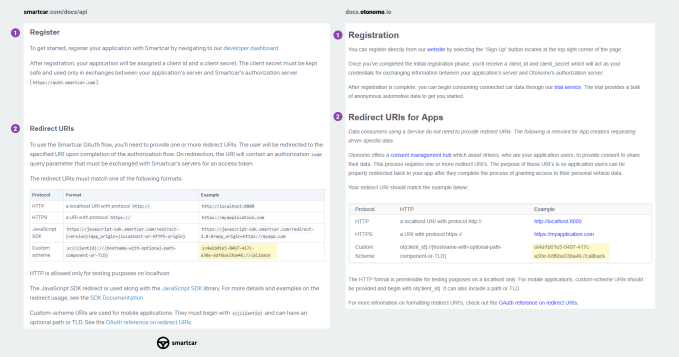
“A few days ago, we came across Otonomo’s publicly available API documentation. As we read through it, we quickly realized that something was off. It looked familiar. Oddly familiar. That’s because we wrote it” Smartcar explains in its blog post. “We didn’t just find a few vague similarities to Smartcar’s documentation. Otonomo’s docs are a systematically written rip-off of ours – from the overall structure, right down to code samples and even typos.”

The screenshot above comparing API documentation from Smartcar on the left and Otonomo on the right appears to show Otonomo used nearly identical formatting and the exact same randomly generated sample identifier (highlighted) as Smartcar. Further examples flag seemingly identical code strings and snippets.

Smartcar founder and CEO Sahas Katta

Otonomo has pulled down their docs.otonomo.io documentation website, but TechCrunch has reviewed an Archive.org Wayback Machine showing this Otonomo site as of April 5, 2019 featured sections that are identical to the documentation Smartcar published in August 2018. That includes Smartcar’s typo “it will returned here”, and its randomly generated sample code placeholder “”4a1b01e5-0497-417c-a30e-6df6ba33ba46” which both appear in the Wayback Machine copy of Otonomo’s docs. The typo was fixed in this version of Otonomo’s docs that’s still publicly available, but that code string remains.

“It would be a one in a quintillion chance of them happening to land on the same randomly generated string” Smartcar’s Katta tells TechCrunch.

Yet curiously, Otonomo’s CMO told TechCrunch that “The materials that [Smartcar] put on their post are all publicly accessible documentation, It’s all public domain content.” But that’s not true, Katta argues, given the definition of ‘public domain’ is content belonging to the public that’s uncopyrightable. “I would sure hope not, considering . . . we have proper copyright notices at the bottom. Our product is our intellectual property. Just like Twilio’s API documentation or Stripe’s, it is published and publicly available — and it is proprietary.”

Otonomo’s Lisa Joy noted that her startup is currently fundraising for its Series C, which reportedly already includes $10 million from South Korean energy and telecom holdings giant SK. “We’re in the middle of raising a round right now. That round is not done” she told me. But if Otonomo gets a reputation for allegedly copying its API docs, that could hurt its standing with developers and potentially endanger that funding round.

23 Apr 2019

India’s ZestMoney raises $20M to grow its digital lending service

Fintech is very much still hot in Asia. ZestMoney, a startup that helps consumers with no credit history get loans to buy online, announced today it has raised a $20 million Series B.

The round is led by Quona Capital, a stealthy Washington-based fund that invests in emerging market fintech and has an office in India. Others participating included new backer Reinventure, an Australian fund which includes Coinbase among its fintech portfolio, as well as returning investors Ribbit Capital, Omidyar Network and Naspers -owned PayU. The round takes ZestMoney to $42 million to date, it previously raised a $13.4 million ‘Series A2’ led by Chinese phone giant Xiaomi last August.

ZestMoney was founded in 2015 by Lizzie Chapman (its CEO), Priya Sharma (CFO/COO) and Ashish Anantharaman (CTO). The trio — pictured at the top — met working at Wong after Chapman moved to India from the UK to head up the controversial pay-day loan company’s local business. That venture ended up falling through and the rest is history, as they say.

Unlike Wonga and its ilk, ZestMoney is very much a consumer-centric loans company. That’s to say that it works with consumers who have no credit card, limited credit history and often very little assessable data, to help them build a profile and become ‘credit-worthy.’ That typically begins with small loans, which grow as a customer repays successfully.

The startup has partnered with over 800 merchants, including Flipkart and Amazon, to offer financing options at point-of-sale. That helps retailers close out transactions whilst enabling consumers to buy medium-to-large ticket items, which typically include electronics, education and learning costs or vacations. Most of its transactions happen online, but Xiaomi is a major partner helping ZestMoney’s offline push.

Small loans don’t generate a return that makes the hassle worthwhile for banks, but that’s where startups like ZestMoney come in. It aggregates the smaller customers and manages the details, making it an attractive partner at scale for banks — and that’s another stakeholder that the startup works with.

All in all, the approach runs in stark contrast to the ratchety terms that Wonga and others force on consumers who use their credit services.

As Chapman told us last year: “New age fintech is much more optimistic… the thesis is ‘Behave well and do good things and you’ll get cheaper pricing.'”

Speaking to TechCrunch this week, the ZestMoney CEO said the new capital will towards further increasing the focus on technology. That includes AI for credit assessment and other analytics, as well as developing voice-based communication and facial recognition technologies that will help engage consumers who are less comfortable with English as a language and lack experience using the internet and digital services.

The company is also beginning to cast its eye overseas, and it has opened an office in Singapore as it begins to assess expansion opportunities in the Southeast Asian region. Singapore is the regional hub, especially for fintech, but Chapman said the country itself isn’t likely to be a market for ZestMoney. She also cautioned that expansion isn’t likely to come in the immediate future.

“We’re looking at doing things around the Southeast Asia region,” she explained in an interview. “We won’t dive in and start operating in 10 other markets overnight, but a lot of countries [there] have synergies with India. There could be opportunities to work with local e-commerce companies or perhaps license our technology.”

The main focus for ZestMoney will remain its home market in India, however.

“There is still a huge, huge ocean of demand in India,” added Chapman — who spoke at our Disrupt Berlin event last year. “We still see sub-five percent financing online and it is just 30 percent offline.”

With that in mind, Chapman said ZestMoney is making a more concerted push around its in-store financing option that works directly with physical retail partners.

Quona Capital co-founder and managing partner Ganesh Rengaswamy echoed Chapman’s belief that there is still plenty of growth opportunity in India.

“ZestMoney and Quona’s partnership is very symbiotic given the shared values of addressing big challenges in emerging markets fintech, market leadership through responsible high growth, and delivering financial accessibility to vastly underserved consumers,” he said in a statement

22 Apr 2019

Vine reboot Byte begins beta testing

Twitter shut down Dom Hoffman’s app Vine, giving away the short-form video goldmine to China’s TikTok. Now a year and half since Hoffman announced he’d reimagine the app as V2 then scrapped that name, his follow-up to Vine called Byte has finally sent out the first 100 invites to its closed beta. Byte will let users record or upload short, looped vertical videos to what’s currently a reverse-chronological feed.

It will be a long uphill climb for Byte given TikTok’s massive popularity. But if it differentiates by focusing less on lip syncing and teen non-sense so it’s less alienating to an older audience, there might be room for a homegrown competitor in short-form video entertainment.

Hoffman tells TechCrunch that he’s emboldened by the off-the-cuff nature of the beta community, which he believes proves the app is compelling even before lots of creative and funny video makers join. He says his top priority is doing right by creators so they’ll be lined up to give Byte a shot when it officially launches even if they could get more views elsewhere.

For now, Hoffman plans to keep running beta tests, adding and subtracting features for a trial by fire to see what works and what’s unnecessary. The current version is just camera recordings with no uploads, and just a feed with Likes and comments but no account following. Upcoming iterations from his seven-person team will test video uploads and profiles.

One reassuring point is that Hoffman is well aware that TikTok’s epic rise has changed the landscape. He admits that Byte can’t win with the exact same playbook Vine did when it faced an open field, and it must bring something unique. Hoffman tells me he’s a big fan of TikTok, and sees it as one evolutionary step past Vine, but not in the same direction as his new app

Does the world need Vine back if TikTok already has over 500 million active users? We’ll soon find out of Hoffman can take a Byte of that market.

22 Apr 2019

Tesla plans to launch a robotaxi network in 2020

Tesla expects to launch the first robotaxis as part of broader vision for an autonomous ride-sharing network in 2020, CEO Elon Musk said during the company’s Autonomy Day.

“I feel very confident predicting that there will be autonomous robotaxis next year — not in all jurisdictions because we won’t have regulatory approval everywhere” Musk said without detailing what regulations he was referring to.

Tesla will enable owners to add their properly equipped vehicles to its own ride-sharing app, which will operate close to an Uber of Airbnb business model. Tesla will take 25 percent to 30 percent of the revenue from those rides, Musk said. In places where there isn’t enough people to share their cars, Tesla would provide a dedicated fleet of robotaxis.

Musk has talked about the Tesla Network and ambitions to allow owners to place their vehicles on the ride-hailing app since 2016.

All new Tesla vehicles are now produced with its custom full self-driving computer chip, a detail that Musk revealed during the event Monday. That chip fulfills the hardware requirements for full self-driving, according to Musk, who boasted that it was the best in the world. (Tesla vehicles are equipped with a suite of sensors such as forward-facing radar and cameras. It does not have lidar, or light detection and ranging radar, a sensor that most AV developers say is critical, but that Musk argues is a fool’s errand and “doomed.”)

The remaining step is the software, which Musk says will be “feature complete” and at a reliability level that we would consider that no one needs to pay attention, by the middle of next year.

“From our standpoint, if you fast forward a year, maybe a year and three months, but next year for sure, we’ll have over a million robotaxis on the road,” Musk said. “The fleet wakes up with an over the air update; that’s all it takes.”

Musk also noted at numerous times that the full self-driving and the robotaxi fleet will require regulatory approval. However, he didn’t explain or name specific mention of what kinds of regulatory approval is needed. The federal government does not have any laws regulating autonomous vehicles. There are only voluntary guidelines. And if the vehicles are not altered in any way on the hardware side — such as removing the steering wheel or pedals, for instance — it’s unclear how the federal government could limit Tesla.

Musk could be referring to local and state laws that regulate ride-hailing networks. Again, it’s unclear and we’ll update the story if Tesla provides new information.

Recharging the Tesla robotaxis is one of few challenges that the company will face as it prepares to deploy.

Musk noted that he sees a future where the robotaxis would return home and automatically park and recharge. While he stopped short of confirming a production version of the snake charger Tesla unveiled in 2015, it was clear that Tesla sees a similar version coming to market alongside the robotaxi network.

22 Apr 2019

Tesla plans to launch a robotaxi network in 2020

Tesla expects to launch the first robotaxis as part of broader vision for an autonomous ride-sharing network in 2020, CEO Elon Musk said during the company’s Autonomy Day.

“I feel very confident predicting that there will be autonomous robotaxis next year — not in all jurisdictions because we won’t have regulatory approval everywhere” Musk said without detailing what regulations he was referring to.

Tesla will enable owners to add their properly equipped vehicles to its own ride-sharing app, which will operate close to an Uber of Airbnb business model. Tesla will take 25 percent to 30 percent of the revenue from those rides, Musk said. In places where there isn’t enough people to share their cars, Tesla would provide a dedicated fleet of robotaxis.

Musk has talked about the Tesla Network and ambitions to allow owners to place their vehicles on the ride-hailing app since 2016.

All new Tesla vehicles are now produced with its custom full self-driving computer chip, a detail that Musk revealed during the event Monday. That chip fulfills the hardware requirements for full self-driving, according to Musk, who boasted that it was the best in the world. (Tesla vehicles are equipped with a suite of sensors such as forward-facing radar and cameras. It does not have lidar, or light detection and ranging radar, a sensor that most AV developers say is critical, but that Musk argues is a fool’s errand and “doomed.”)

The remaining step is the software, which Musk says will be “feature complete” and at a reliability level that we would consider that no one needs to pay attention, by the middle of next year.

“From our standpoint, if you fast forward a year, maybe a year and three months, but next year for sure, we’ll have over a million robotaxis on the road,” Musk said. “The fleet wakes up with an over the air update; that’s all it takes.”

Musk also noted at numerous times that the full self-driving and the robotaxi fleet will require regulatory approval. However, he didn’t explain or name specific mention of what kinds of regulatory approval is needed. The federal government does not have any laws regulating autonomous vehicles. There are only voluntary guidelines. And if the vehicles are not altered in any way on the hardware side — such as removing the steering wheel or pedals, for instance — it’s unclear how the federal government could limit Tesla.

Musk could be referring to local and state laws that regulate ride-hailing networks. Again, it’s unclear and we’ll update the story if Tesla provides new information.

Recharging the Tesla robotaxis is one of few challenges that the company will face as it prepares to deploy.

Musk noted that he sees a future where the robotaxis would return home and automatically park and recharge. While he stopped short of confirming a production version of the snake charger Tesla unveiled in 2015, it was clear that Tesla sees a similar version coming to market alongside the robotaxi network.

22 Apr 2019

Tesla vaunts creation of ‘the best chip in the world’ for self-driving

At its “Autonomy Day” today, Tesla detailed the new custom chip that will be running the self-driving software in its vehicles. Elon Musk rather peremptorily called it “the best chip in the world…objectively.” That might be a stretch, but it certainly should get the job done.

Called for now the “full self-driving computer,” or FSD Computer, it is a high-performance, special-purpose chip built (by Samsung, in Texas) solely with autonomy and safety in mind. Whether and how it actually outperforms its competitors is not a simple question and we will have to wait for more data and closer analysis to say more.

Former Apple chip engineer Pete Bannon went over the FSDC’s specs, and while the numbers may be important to software engineers working with the platform, what’s more important at a higher level is meeting various requirements specific to self-driving tasks.

Perhaps the most obvious feature catering to AVs is redundancy. The FSDC consists of two duplicate systems right next to each other on one board. This is a significant choice, though hardly unprecedented, simply because splitting the system in two naturally divides its power as well, so if performance were the only metric (if this was a server, for instance) you’d never do it.
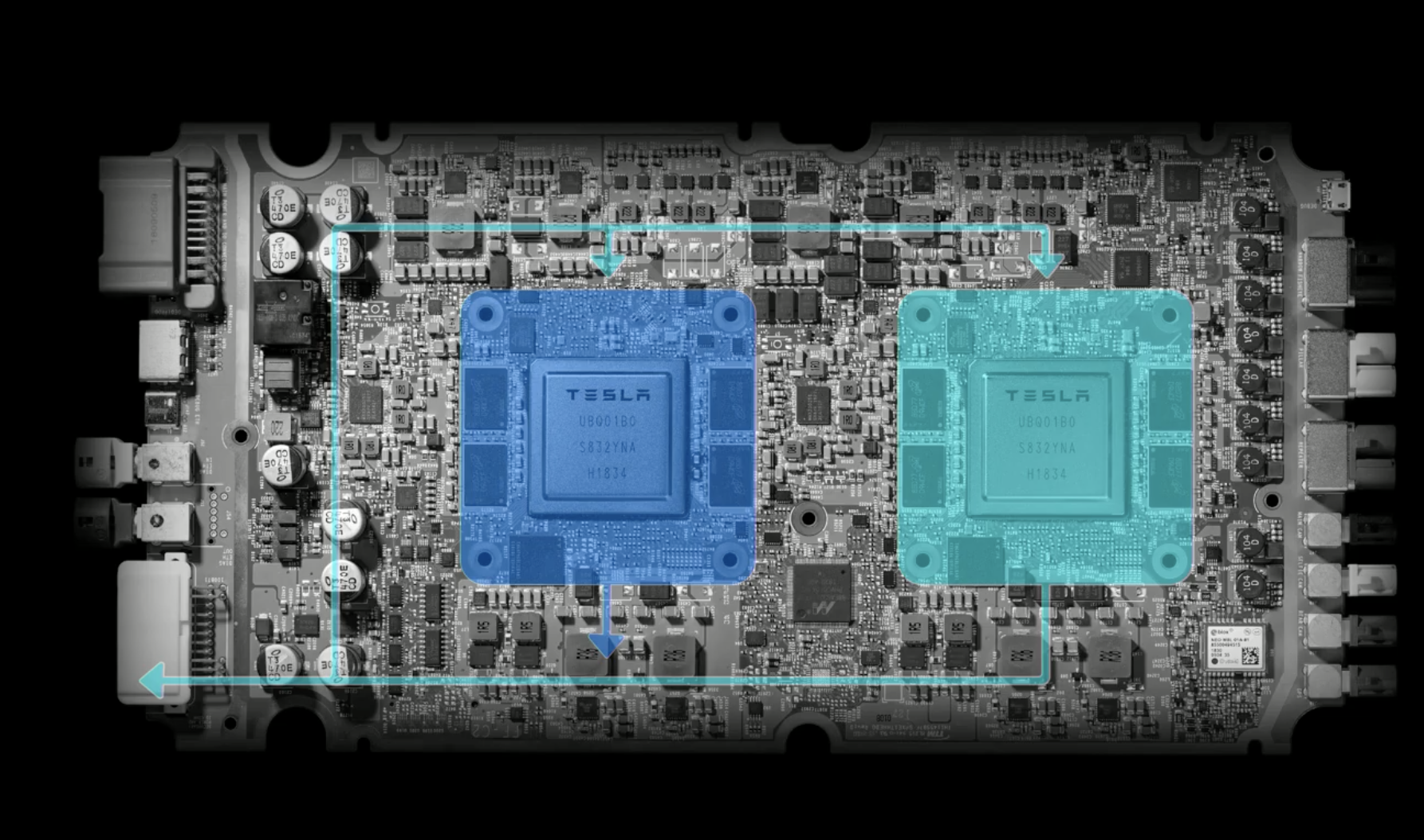
Here, however, redundancy means that should an error or damage creep in somehow or another, it will be isolated to one of the two systems and reconciliation software will detect and flag it. Meanwhile the other chip, on its own power and storage systems, should be unaffected. And if something happens that breaks both at the same time, the system architecture is the least of your worries.

Redundancy is a natural choice for AV systems, but it’s made more palatable by the extreme levels of acceleration and specialization that are possible nowadays for neural network-based computing. A regular general-purpose CPU like you have in your laptop will get schooled by a GPU when it comes to graphics-related calculations, and similarly a special compute unit for neural networks will beat even a GPU. As Bannon notes, the vast majority of calculations are a specific math operation and catering to that yields enormous performance benefits.

Pair that with high speed RAM and storage and you have very little in the way of bottlenecks as far as running the most complex parts of the self-driving systems. The resulting performance is impressive, enough to make a proud Musk chime in during the presentation:
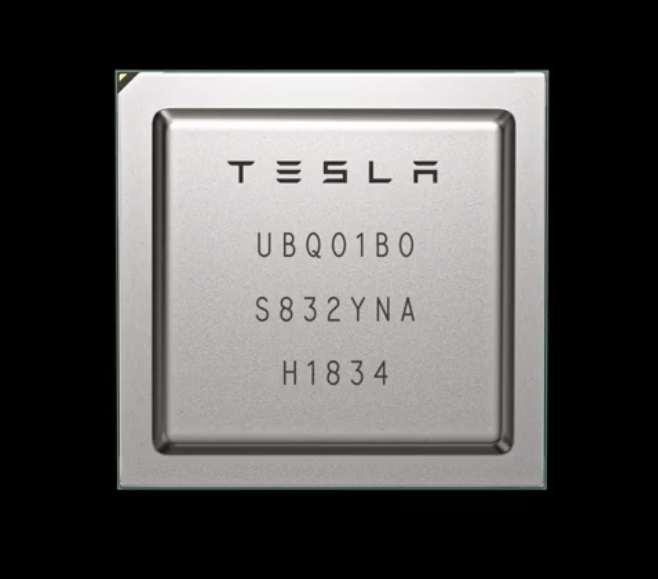
“How could it be that Tesla, who has never designed a chip before, would design the best chip in the world? But that is objectively what has occurred. Not best by a small margin, best by a big margin.”

Let’s take this with a grain of salt, as surely engineers from Nvidia, Mobileye, and other self-driving concerns would take issue with the statement on some grounds or another. And even if it is the best chip in the world, there will be a better one in a few months — and regardless, hardware is only as good as the software that runs on it. (Fortunately Tesla has some amazing talent on that side as well.)

(One quick note for a piece of terminology you might not be familiar with: OPs. This is short for operations for second, and it’s measured in the billions and trillions these days. FLOPs is another common term, which means floating-point operations per second; these pertain to higher-precision math often used by supercomputers for scientific calculations. One isn’t better or worse than the other, and they shouldn’t be compared directly or considered exchangeable.)

High-performance computing tasks tend to drain the battery, like doing transcoding or HD video editing on your laptop and it bites the dust after 45 minutes. If your car did that you’d be mad, and rightly so. Fortunately a side effect of acceleration tends to be efficiency.

The whole FSDC runs on about 100 watts (or 50 per compute unit), which is pretty low — it’s not cell phone chip low, but it’s well below what a desktop or high performance laptop would pull, less even than many single GPUs. Some AV-oriented chips draw more, some draw less, but Tesla’s claim is that they’re getting more power per watt than the competition. Again, these claims are difficult to vet immediately considering the closed nature of AV hardware development, but it’s clear that Tesla is at least competitive and may very well beat its competitors on some important metrics.
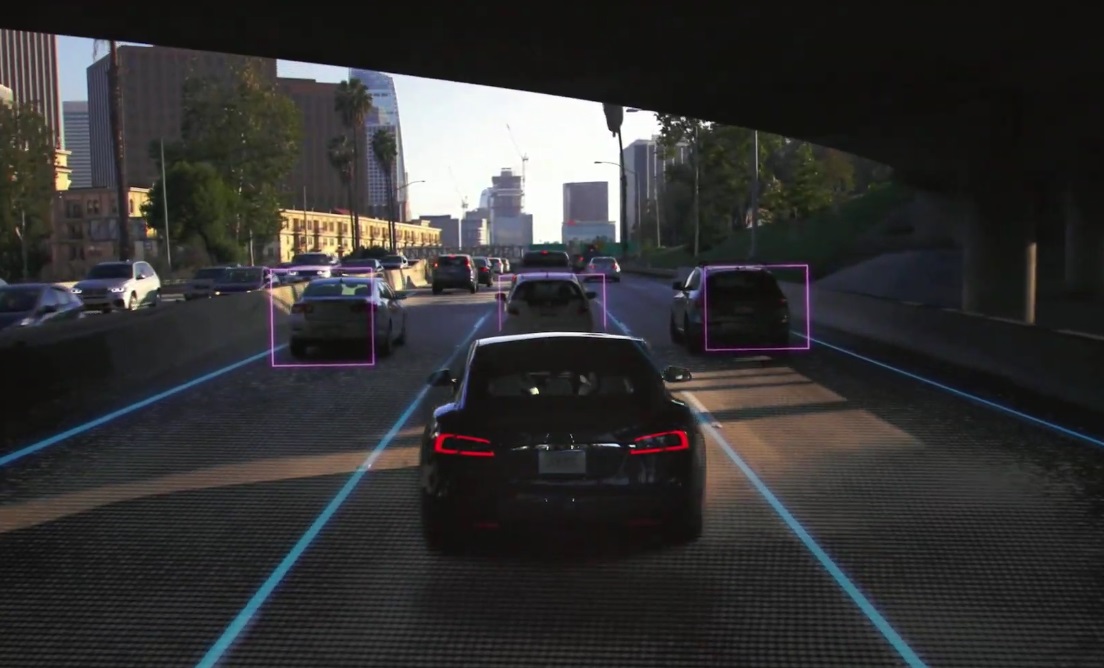
Two more AV-specific features found on the chip, though not in duplicate (the compute pathways converge at some point), are some CPU lockstep work and a security layer. Lockstep means that it is being very carefully enforced that the timing on these chips is the same, ensuring that they are processing the exact same data at the same time. It would be disastrous if they got out of sync either with each other or with other systems. Everything in AVs depends on very precise timing while minimizing delay, so robust lockstep measures are put in place to keep that straight.

The security section of the chip vets commands and data cryptographically to watch for, essentially, hacking attempts. Like all AV systems, this is a finely-oiled machine and interference must not be allowed for any reason — lives are on the line. So the security piece watches the input and output data carefully to watch for anything suspicious like spoofed visual data (to trick the car into thinking there’s a pedestrian, for instance) to tweaked output data (say to prevent it from taking proper precautions if it does detect a pedestrian).

The most impressive part of all might be that this whole custom chip is backwards-compatible with existing Teslas, able to be dropped right in, and it won’t even cost that much. Exactly how much the system itself costs Tesla, and how much you’ll be charged as a customer — well, that will probably vary. But despite being the “best chip in the world,” this one is relatively affordable.

Part of that might be from going with a 14nm fabrication process rather than the sub-10nm process others have chosen (and to which Tesla may eventually have to migrate). For power savings the smaller the better and as we’ve established, efficiency is the name of the game here.

We’ll know more once there’s a bit more objective — truly objective, apologies to Musk — testing on this chip and its competition. For now just know that Tesla isn’t slacking and the FSD Computer should be more than enough to keep your Model 3 on the road.


22 Apr 2019

China’s fast-growing Starbucks competitor Luckin Coffee just filed to go public on the Nasdaq

China’s Luckin Coffee has registered plans with the SEC to go public on the Nasdaq, setting a placeholder amount of $100 million, shows its filing.

The development comes less than a week after the 18-month-old company announced $150 million in Series B “plus” funding led by the private equity firm Blackrock, which pumped $125 million into the company in a deal that values Luckin at $2.9 billion.

As TechCrunch reported last Wednesday, Blackrock also owns a nearly 7 percent stake in Starbucks, the nearly 50-year-old American coffee company that has taken over the world and now finds itself in a knock-down-drag-out battle with the Beijing-based upstart.

It’s hard to blame Blackstone — which has itself raised $126 billion(!) over the last 12 months — for hedging its bets. While Starbucks now enjoys a market cap of nearly $94 billion, and its stock has more than doubled over the last five years to a current $76 per share, Luckin has been growing like gangbusters, fueled by the more than $550 million it has raised to date, including a $200 million Series A round that it closed last July, and a $200 million Series B round that it announced in December.

Indeed, while Starbucks has opened up 3,600 stores across 150 cities in China since first emerging on the scene 20 years ago, Luckin has already opened up 2,000 outlets, including prep kitchens, pick-up stations, and, across 22 cities. More amazing, or crazy, depending on your view, Luckin plans to more than double that number by the end of this year. Starbucks has meanwhile announced plans to double the number of stores it has in China over the next five years.

In addition to Blackrock, others of Luckin’s backers include Joy Capital, GIC, Legend Capital, Dazheng Capital, and Centurium Capital.

22 Apr 2019

Tesla’s computer is now in all new cars and a next-gen chip is already ‘halfway done’

The Tesla computer, a new custom chip designed to enable full self-driving capabilities, is now in all new Model 3, X and S vehicles, CEO Elon Musk said during the company’s Autonomy Day.

Tesla switched over from Nvidia’s Drive platform to its own custom chip for the Model S and X about a month ago and for the Model 3 about 10 days ago, Musk said.

“All cars being produced all have the hardware necessary — computer and otherwise — for full self-driving,” Musk said. “All you need to do is improve the software.”

Work is also already underway on a next-generation chip, Musk added. The design of this current chip was completed “maybe one and half, two years ago.” Tesla is now about halfway through the design of the next-generation chip.

Musk wanted to focus the talk on the current chip, but he later added that the next-generation one would be “three times better” than the current system and was about two years away.

The software caveat about full self-driving is an important one. Tesla vehicles are not considered fully autonomous, or Level 4, a designation by SAE that means the car can handle all aspects of driving in certain conditions without human intervention.

Instead, Tesla vehicles are “Level 2,” a more advanced driver assistance system than most other vehicles on the road today. Musk has promised that the advanced driver assistance capabilities on Tesla vehicles will continue to improve until eventually reaching that full automation high-water mark.

Tesla offers two different advanced driver assistance packages to customers: Autopilot and Full Self-Driving. Autopilot is ADAS that offers a combination of adaptive cruise control and lane steering and is now a standard feature on new cars. The price of vehicles has been adjusted higher to reflect the addition of Autopilot as a standard feature.

Full Self-Driving, or FSD, costs an additional $5,000. (And, to be clear, vehicles are not full self-driving driving.) FSD includes Summon as well as Navigate on Autopilot, an active guidance system that navigates a car from a highway on-ramp to off-ramp, including interchanges and making lane changes. Once drivers enter a destination into the navigation system, they can enable “Navigate on Autopilot” for that trip.