Category: UNCATEGORIZED

15 Apr 2019

Volvo cars in Europe will be able to warn to each other about hazardous road conditions

Volvo is taking technology that allowed some of its vehicles to communicate with each other about hazardous road conditions and expanding it across Europe in an effort to increase safety, the automaker announced Monday.

Volvo first introduced its Hazard Light Alert and Slippery Road Alert system in 2016 on Volvo’s 90 Series cars. But it was limited to drivers in Sweden and Norway. Next week, Volvo will make the system available to drivers across Europe.

The system will be a standard feature on all 2020 model-year vehicles in Europe. The system can be retrofitted on select earlier models as well, Volvo said.

The vehicle-to-vehicle communication tech that enables the Hazard Light Alert and Slippery Road Alert system uses a cloud-based network to communicate between vehicles. For instance, when an equipped Volvo vehicle switches on the hazard light a signal is sent to all nearby Volvo cars connected to the cloud service.

The slippery road alert works by anonymously collecting road surface information from cars farther ahead on the road and warning drivers approaching a slippery road section in advance.

“Sharing real-time safety data between cars can help avoid accidents,” Malin Ekholm, head of Volvo Cars Safety Centre said in a statement. “Volvo owners directly contribute to making roads safer for other drivers that enable the feature, while they also benefit from early warnings to potentially dangerous conditions ahead.”

The expansion of the system is the latest in a series of efforts by Volvo to improve safety within its portfolio and across the industry. Volvo said, as part of its announcement, that it has opened a central digital library of all of its past safety research, dating back to the 1970s.

Volvo Cars reiterated its call to the rest of the car industry to join it in sharing anonymized data related to traffic safety across car brands.

Earlier this year, Volvo said it would limit speeds on all new vehicles, beginning with its 2020 models, to about 111 miles per hour.

It also plans to integrate driver monitoring systems into its next-gen, SPA2-based vehicles beginning in the early 2020s. That system will be able to take action if the driver is distracted or intoxicated. The camera and other sensors will monitor the driver and will intervene if a clearly intoxicated or distracted driver does not respond to warning signals and is risking an accident involving serious injury or death. Under this scenario, Volvo could limit the car’s speed, call the Volvo on Call service on behalf of the driver or cause the vehicle to slow down and park itself on the roadside.

15 Apr 2019

YouTube’s algorithm added 9/11 facts to a livestream of the Notre-Dame Cathedral fire

Some viewers following live coverage of the Notre-Dame Cathedral broadcast on YouTube were met with a strangely out of place info box offering facts about the September 11 attacks.

Buzzfeed first reported the appearance of the misplaced fact check box on at least three livestreams from major news outlets. Twitter users also took note of the information mismatch.

Ironically, the feature is a tool designed to fact check topics that generate misinformation on the platform. It adds a small info box below videos that provides third-party factual information from YouTube partners — in this case Encyclopedia Britannica.

YouTube began rolling out the fact checking “information panels” this year in India and they now appears to be available in other countries.

“Users may see information from third parties, including Encyclopedia Britannica and Wikipedia, alongside videos on a small number of well-established historical and scientific topics that have often been subject to misinformation online, like the moon landing,” the company wrote in its announcement at the time.

The information boxes are clearly algorithmically generated and today’s unfortunate slip-up makes it clear that the tool doesn’t have much human oversight. It’s possible that imagery of a tower-like structure burning triggered the algorithm to provide the 9/11 information, but we’ve asked YouTube for more details on what specifically went wrong here.

15 Apr 2019

Apple hires A&E’s Molly Thompson as its Head of Documentaries

In addition to a growing lineup of scripted fare, documentaries will be another key focus for Apple TV+, the company’s new streaming service set to launch in May. According to a new report today from Variety, Apple has hired A&E’s Molly Thompson as its Head of Documentaries.

Thompson’s experience at A&E includes founding its documentary production arm, A&E IndieFilms, back in 2005. While there, several of its films earned Emmy nominations, including “Life, Animated,” “Cartel Land,” “Jesus Camp,” and “Murderball.”

Cartel Land,” “Life, Animated,” and “The Tillman Story,” combined, went on to win over a half-dozen Emmys, along with other industry awards.

Thompson also has exec produced: “The Clinton Affair,” Charles Ferguson’s “Watergate” docuseries, “Studio 54,” “City of Ghosts,” “The Imposter,” “Drunk Stoned Brilliant Dead: The Story of the National Lampoon,” “The Unknown Known: The Life and Times of Donald Rumsfeld,” “No Place on Earth,” “Cave of Forgotten Dreams,” and “Being Evel”  — some of which were under A&E’s History Films banner.

For Lifetime Films, she exec produced two narrative features: “Lila & Eve,” which starred Viola Davis and Jennifer Lopez and premiered at the 2016 Toronto International Film Festival; plus Eleanor Coppola’s “Paris Can Wait,” with Diane Lane and Alec Baldwin.

Thompson’s hiring indicates Apple’s interest in bringing content that will appeal to those who don’t regularly watch traditional TV, but instead like to stream more educational fare — like documentary films and docu-series, biographies, shows with a historical focus, and other non-fiction. Plus, documentaries would give Apple a way to compete early on for Emmy attention, even if its scripted series fail to gain critical praise.

Documentaries also represent another means of competing directly with Netflix, where the format has become a huge draw for subscribers — even zeitgeist-y, at times. Netflix today has a range of documentaries that nearly everyone has seen, or has at least heard of, like “Making a Murderer,” “Wild Wild Country,” “13th,” “Amanda Knox,” “Fyre,” “Amy,” and many more. This month it will have another hit in this genre, with Beyoncé’s Coachella documentary, out on April 17th.

Apple has already announced a few of its documentary efforts for Apple TV+, including Oprah’s docu-series, one of which is co-produced with Prince Harry; as well as a docu-series about extraordinary homes; and Victoria Stone and Mark Deeble’s documentary about an elephant matriarch, “The Elephant Queen.” The latter, which Apple picked up at the Toronto International Film Festival, was one of its first feature film buys.

Image credit: IMDb

15 Apr 2019

New USPTO Guidance May Clear Path for More Technology Patents

On January 4, 2019, the United States Patent and Trademark Office (USPTO) released new Patent Examiner Guidance (“the Guidance”) for subject matter eligibility. The updated guidance could benefit any technology patent applicant who has a computer-related invention – from smartphones to artificial intelligence – and who has previously had difficulty acquiring patents under the USPTO’s procedures for determining patent subject matter eligibility.

This Guidance represents the current methodology for analysis of patent claims under 35 U.S.C. § 101 in view of Mayo v. Prometheus, Alice v. CLS Bank Intl., and subsequent cases, and is intended to provide a more concrete framework for analyzing whether patent claims, as a whole, are merely “directed to” an abstract idea.  The Guidance will supersede certain analysis methods articulated in previous guidance, particularly the Examiner’s “Quick Reference” that previously sought to categorize abstract ideas.

The Alice/Mayo Test

The Guidance acknowledges that applying the Alice/Mayo test to analyze claims under § 101 has “caused uncertainty in this area of the law” and has resulted in examination practices that prevent stakeholders from “reliably and predictably determining what subject matter is patent-eligible.” As such, the Guidance attempts to remedy this uncertainty by revising the USPTO’s analysis under the first step (Step 2A) of the Alice/Mayo test:

15 Apr 2019

The other micro VC allocation model

Portfolio co-founder: Our other investors want to participate but our lead wants to take most of the round.

Me: OK

Portfolio co-founder: So that means pro-rata is going to be tough.  

Me: Let’s see what everyone says.

A few days later.

Portfolio co-founder: The math worked out. Some people didn’t do their pro-rata and others did more.

Me: In theory, this shouldn’t happen because everyone is doing their pro-rata, but this is usually how things seem to work out. The round wasn’t going to be put at risk over pro-rata.

We’re always curious to see how rounds come together when there is limited capacity for both new investors and existing investor pro-rata. For the most part, there is supposed to be one core investor strategy; the maintainers, who use reserves and then opportunity funds or SPVs to avoid or minimize dilution. Sometimes there are also accumulators, who use multiple rounds to expand their ownership, but this is more common in private equity outside of venture capital.

The maintainers are pretty well understood. They have the typical $1 in reserve for each $1 invested, mirroring a common strategy espoused by some of the best VCs. USV shared a great example including fund allocation assumptions. Accumulators are a little more surprising to meet, but Greenspring, which is uniquely positioned to observe a lot of early-stage managers, hint that one of their top performing managers uses the accumulator strategy to get to more than 20 percent, fully diluted at exit. That’s not the whole story though, because, unlike USV, the strategy also involves some additional important assumptions, most notably investing in less-competitive geographies.

We’ve seen other allocation strategies, but we don’t see a lot written about them. For example, some investors tend to be among the first checks and, going through our co-investments with them, it’s clear they don’t always take pro-rata, but don’t seem to fuss about it. Here’s a great example of how one of today’s very best seed-stage investors, Founder Collective, thinks about this:

We dilute alongside our founders over time. So we have the same incentives as our founders to increase the value of the company in future financings.

It’s easy to dismiss this as founder-friendly at the expense of LPs, but I suspect Founder Collective’s LPs don’t see it that way at all. It’s hard to know how often this positioning leads to a higher win rate on competitive deals, but let’s assume there is little difference. Does the math work?

Let’s assume a VC is buying 20 percent of the company and then riding the dilution train down to a fully diluted 5.2 percent on exit at Series F (thanks to Fred Wilson again; in this example, we’re using one of his recent frameworks with these exact numbers). For a $50 million fund, this works just fine. Interestingly, it looks similar to the result for a $100 million fund with reserves, but the later assumes that they can always secure pro-rata and they can make use of opportunity funds to get a bit more upside.

We’ve discussed this a lot as we deployed our last fund. The vast majority of people insisted we needed $1 for every $1 invested, but we found that, thanks to our fund size, the math seemed to work without significant reserves if we purchased enough ownership upfront and, as Founder Collective notes, it seems to align better with founders and our growth-stage co-investors.

Longer funnel (not wider)

We’ve seen two major changes since we first started investing 12 years ago. The first is well-reflected by a recent deck shared by Mark Suster at Upfront, and highlighted in the slide shown below. It seems like the top of the funding funnel is getting wider.

It’s true that seed stage has grown 3x in the last decade. But that doesn’t necessarily mean the funnel only got wider. It also made it taller, like the image below.
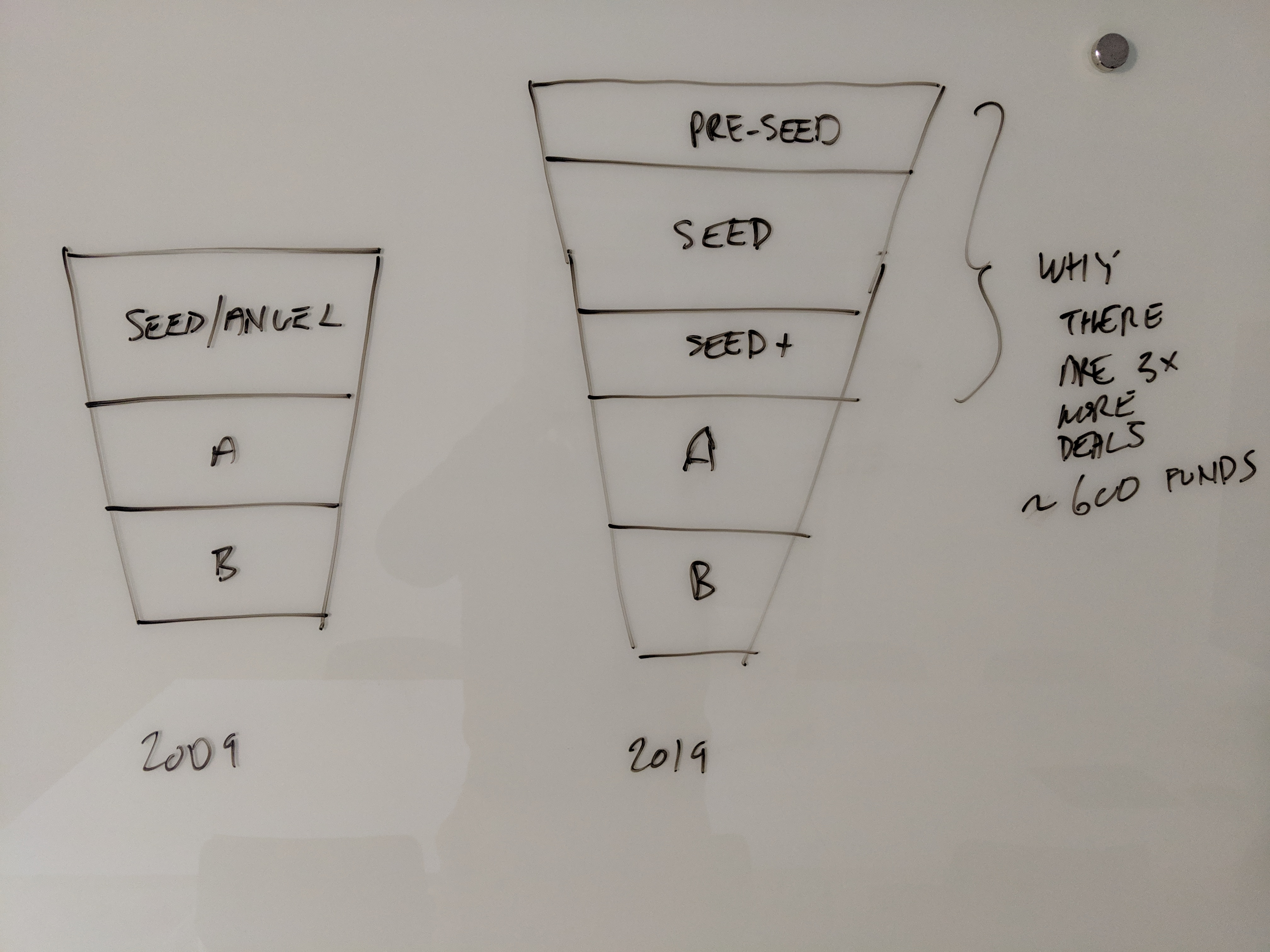
One way to think about this — what used to be a sequence of “seed, A, B” is now, often, but not always a new sequence of “pre-seed, seed and seed+.”

Series A investments are totally different today than they were 10 years ago. But the Series A round is much more competitive because a lot of new money has shown up to play here and this makes accumulation and maintain models much harder, especially for seed and Series A stage-focused funds.

Who are these new players adding to the competition? Some are new VC funds, but a lot of them are corporate VC (CVC) funds.
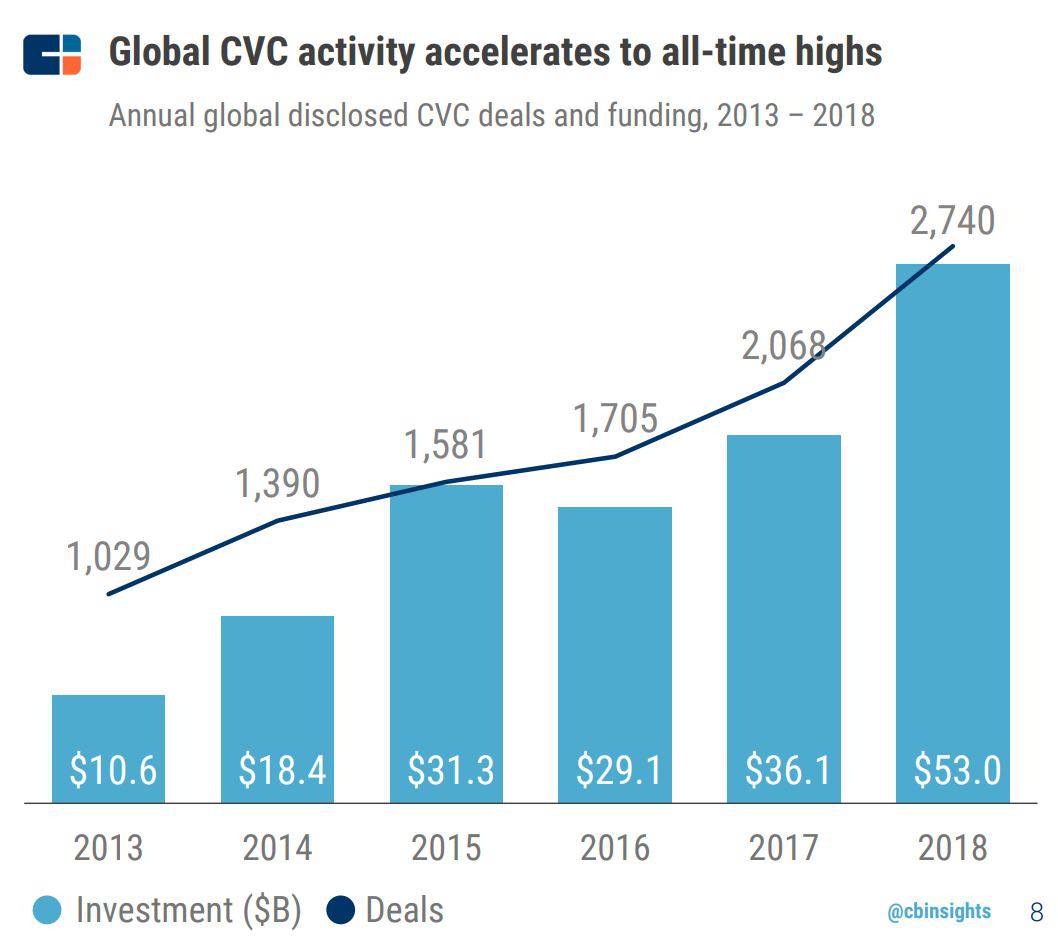
Where is all this CVC money going? We’re pretty sure it’s not in pre-seed or seed, though there is some CVC fund of fund activity into seed funds, but that’s not reflected in this data. And we’ve only seen a few instances of seed+ CVC activity. Interestingly, to find a good example of this, you probably don’t have to look further than Lyft’s S-1, where GM and Rakuten join better-known tech CVC Alphabet.
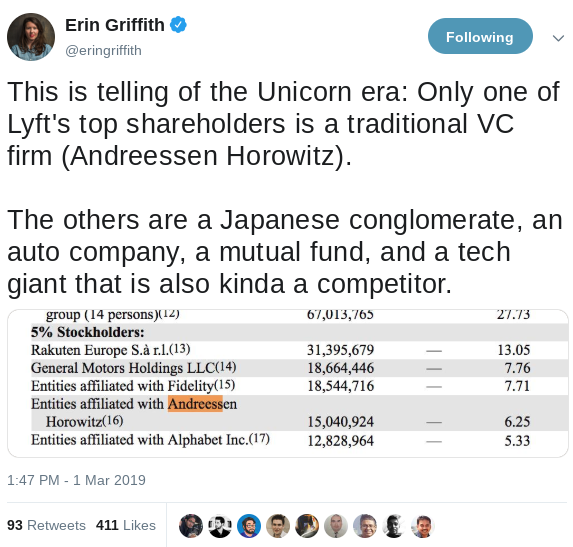
Regarding the founder conversation referenced earlier, the round is coming together because of a strategic investor who is leading it. This has become more common. Like Lyft’s team, founders understand tech and value sector-specific corporate investors as partners.

We don’t think we’ll see a slowdown in CVC interest any time soon because, much like their big tech counterparts, incumbents in sectors from transportation and real estate to energy and infrastructure all realize that the startup ecosystem is now an extension of their product development process — VC and M&A are now an extension of R&D.

It’s not just that there is more money competing for Series A or B deals now. That money has different goals beyond pure financial returns and the value add is different from VCs. CVCs often bring distribution, ecosystem and domain expertise. So the end result is more competitive A or B rounds and more complex pro-rata discussions.

Strategic pro-rata shuffle

Founders are still trying to sell no more than 20 percent of their company, while traditional VCs are trying to buy 20 percent and we still have to figure out pro-rata for existing investors while making room for growing interest from strategic investors.

For Urban Us, we’ve embraced these new round dynamics — they may make growth-stage allocations a bit more tricky, but strategic investors can deliver a lot of value. One clear result — it’s sometimes better for us not to take our pro-rata at series A.

High conviction before Series A

We tend to think of high conviction as a Series A idea — i.e. Series A investors who accumulate, maintain or use opportunity funds. But the same concept is now at work in the tall part of the funnel — the two or three stages before Series A.

We’ve long been fans of accelerator models like YC, Launch or Techstars. We’ve co-invested with all of them. While there was a sense that “not following” presented signaling risk, accelerators have found creative ways to sidestep the issue — for example, joining rounds only if there is another lead. So this means they can concentrate holdings before Series A.

We now have our own accelerator, URBAN-X, because we’re best positioned to help address some unique challenges for the urbantech companies we’re looking to back. This allows us to be the first investor in most of our portfolio companies. And we can own enough of the company before Series A so we can still achieve our fully diluted ownership targets on behalf of our LPs.

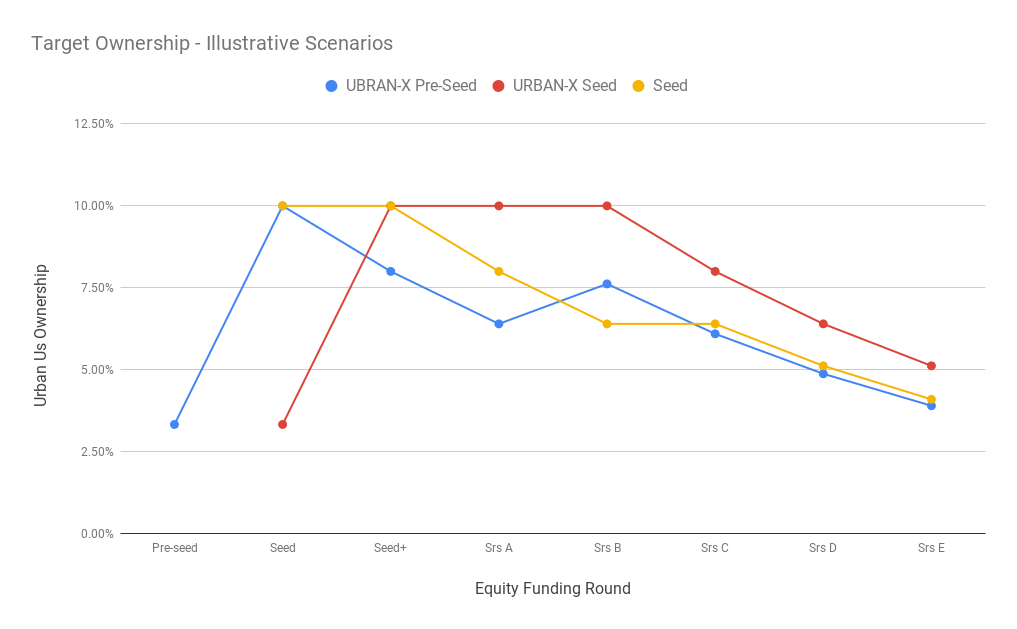
As we look over scenarios related to when we first invest or when we think it will be hard to get pro-rata, we can find a few different paths to a target ownership position at exit. Some variations are shown below reflecting our approach for our newest fund.
The math

Obviously there are many different paths to ownership, especially in a world with two or three rounds happening before Series A. We’ve run a few simulations to understand the impact of different follow-on strategies. To explore different seed-stage allocation approaches, we modified Fred Wilson’s “Doubling Model” to explore a few of the variations. Only one change — we replaced Series A with seed+ as it’s more inline with what we’ve seen. It’s also important because it implies one less round of dilution in some seed strategies. We also assumed most seed investors invest in syndicates, so they don’t buy 20 percent unless they’re on the large end of fund sizes – i.e. $100 million+.

We explored what happens when seed investors make a single investment to buy 10 percent of a company and never follow-on and how might that compare to selective B and C-stage follow-ons or using progress from seed to seed rounds to avoid dilution on more promising companies. There is also the question of the implied fund size and number of investments — if you can make high conviction bets early, you get to make more investments even with a relatively small fund. But eventually you bump into time constraints for partners — getting to 40 deals with two partners can work, but presumes you are not a lone wolf partner and that you make hard choices about where to allocate time — which often seems harder than allocating money.

Up to about $50 million there are a range of possible strategies that can work, but diluting with founders allows more investments, even with smaller funds versus more traditional aggressive follow-on. More deals may be essential to the success of this model. Here’s our modified version of the doubling model (changes to the model are noted with blue cells).

Diluting alongside founders

VCs routinely remind founders that they shouldn’t worry about dilution because they will have a smaller share, but the pie will be bigger. Mostly this math works for founders, so why not VCs? Founder Collective is the only other firm we found that is explicit about aiming for this result. And this may be even more necessary today to make room for more strategic VCs to join traditional VCs.

At Urban Us our investment model is focused on getting fully diluted ownership before Series A. If we can do some pro-rata or sometimes if we need to do a bridge to buy teams more time, we’ll do that. And we’ll be equally excited when founders are able to bring in great new investors to help them through their next growth stage, regardless of their allocation strategy.


15 Apr 2019

The most overlooked path to commercialize AI is for companies to do it themselves

The Bessemer Process patented in 1856 by Sir Henry Bessemer is one of the inventions most closely associated with catalyzing the second industrial revolution. By reducing the impurities of iron with an innovative oxidizing air blast, the process ushered in a new wave of inexpensive, high-volume steelmaking.

Bessemer decided to license his patent to a handful of steelmakers in an effort to quickly monetize his efforts. But contrary to expectations, technical challenges and monopolistic greed prevented large steelmakers from agreeing to favorable licensing terms.

In an effort to drive adoption, Bessemer opened his own steel making plant with the intention of undercutting competitors. The approach was so successful that each partner in the endeavor walked away from the 14 year partnership with an 81x return.

Some 162 years later, new businesses continue to struggle to convince customers to adopt new technologies — even when it’s in their best interest. Following in the footsteps of founders like Bessemer, today’s innovative startups are discovering that it often makes more sense to launch “full stack” businesses that provide a traditional service optimized with proprietary automation measures.

Chris Dixon of Andreessen Horowitz popularized the term “full stack startup” in 2014, just before the deep learning revolution. In his words, a full stack startup is a company that “builds a complete, end-to- end product or service that bypasses existing companies.”

The full stack methodology gave birth to companies like Uber and Tesla prior to the apex of the deep learning revolution. And in today’s AI-first world of data and human labelers, full stack startups are poised to play an even more important role in the startup ecosystem.

Going full stack comes with the advantage of being able to operate outside traditional incentive structures that limit the ability for large players in legacy industries to implement automation measures.

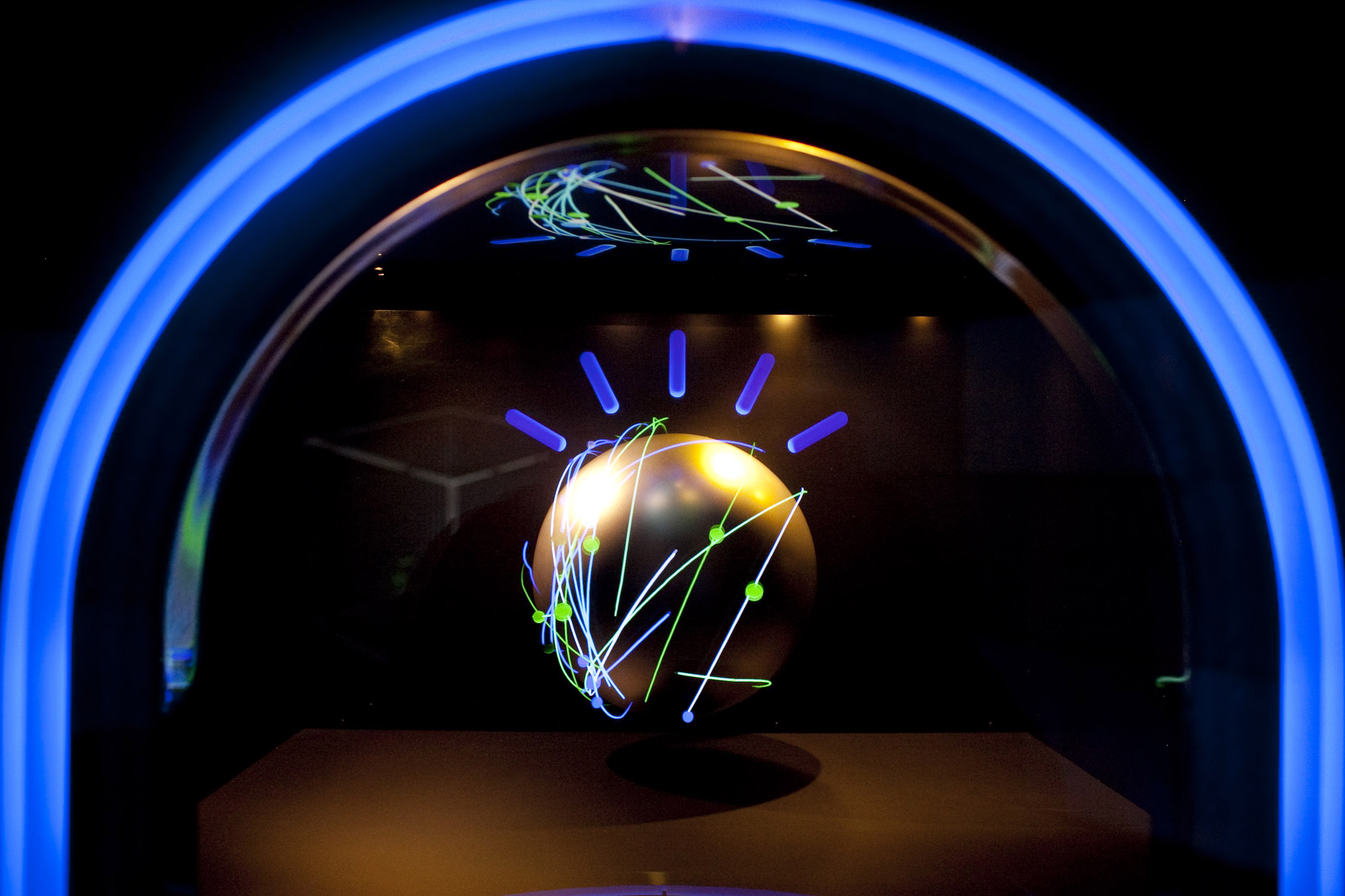
Watson computer at IBM in New York City

(Photo by Andrew Spear for The Washington Post via Getty Images.)

What does DIY AI look like?

Startups like Cognition IP, a BSV portfolio company, and Atrium are good examples of this. On paper, these businesses look very similar to traditional law firms in that they employ lawyers to practice patent law and startup law, respectively. But while traditional law firms often don’t automate due to the natural incentives associated with hourly billing, full stack startups are incentivized by consumer adoption so they have much to gain from developing a faster, cheaper, better strategy.

In addition to rejiggering old incentive structures à la Bessemer, going full stack opens up opportunities for companies to integrate labeling workflows into more traditional roles, to reap the full benefits of virtuous feedback loops, and to avoid countless complex process integrations.

Data labeling is a critical responsibility for startups that rely on machine learning. Services like Amazon Mechanical Turk and Figure Eight work well when startups have relatively manageable data labeling responsibilities. But when labeling and human-plus-machine cooperative decision-making are a core part of everyday operations, startups often have to hire employees to manage that workflow internally.

Scaling these teams is expensive and operationally intensive. Going full stack opens up opportunities for companies to integrate labeling workflows into other jobs. Employees traditionally tasked with performing a consumer or enterprise service can take on the extra task at reduced expense. And if their role is assisted by a machine, they will gradually become more productive over time as their assistive models get more accurate with more labeled data.

A second and inherently related benefit of going full stack is that these startups are able to generate – and own – powerful virtuous data feedback loops. Owning data flows creates more impressive moats than merely locking down static data sets. Deep Sentinel has a natural moat in the consumer security space, for example, as it not only has accurate classifiers, but accurate classifiers that continue to improve with real world data generated in an environment it can control.

Courtesy of Flickr/Tullio Saba

Leveraging automation is a matter of balancing risks and rewards

In 1951, Ford’s VP of Operations, Del Harder, decided it was time to upgrade the company’s lines with a more fully automated system for moving materials through the production sequence. It ultimately took five years of tinkering at Ford’s Cleveland Engine Plant before the technique was ready to scale to other factories. By chaining together previously independent parts of the production sequence, Harder had created new frustrating interdependencies.

Founders today going after traditional industries like manufacturing and agriculture similarly understand that the devil is in the details when it comes to scaling. The clear advantage to startups subscribing to the full stack methodology is that they only need to worry about integrating once with their own processes.

But on the flip side, going full stack does come with its own significant scaling expenses. Venture capital as a financing vehicle only makes sense to a certain point with respect to risk, margin and dilution, so many founders attempting to execute this strategic playbook have turned to debt financing.

Fortunately we have been in good economic times with low interest rates. Traditional full stack businesses like Tesla and Uber have both raised significant debt, and even up-and-coming players like Opendoor have turned to this financing strategy. A nasty economic downturn could certainly throw a wrench into things for just about everyone.

Progress in technology is cyclical and success is heavily dependent on execution within extremely narrow opportunistic bands of time. It’s debatable whether capital intensive, venture-backed companies like FedEx and Apple could have been successful if they were started in a different fundraising environment.

Like countless other automation technologies that preceded machine learning, the winners of the deep learning revolution will be startups whose technologies are optimized to work side-by-side with humans to generate outsized returns. Going full stack is difficult, expensive, and not the only way to win, but it’s an under-appreciated strategy that’s extremely relevant for today’s machine learning-enabled startups.

15 Apr 2019

OpenAI Five crushes Dota2 world champs, and soon you can lose to it too

Dota2 is one of the most popular, and complex, online games in the world, but an AI has once again shown itself to supersede human skill. In matches over the weekend, OpenAI’s “Five” system defeated two pro teams soundly, and soon you’ll be able to test your own mettle against — or alongside — the ruthless agent.

In a blog post, OpenAI detailed how its game-playing agent has progressed from its younger self — it seems wrong to say previous version, since it really is the same extensive neural network as many months ago, but with much more training.

The version that played at Dota2’s premiere tournament, The International, gets schooled by the new version 99 percent of the time. And it’s all down to more practice:

In total, the current version of OpenAI Five has consumed 800 petaflop/s-days and experienced about 45,000 years of Dota self-play over 10 realtime months (up from about 10,000 years over 1.5 realtime months as of The International), for an average of 250 years of simulated experience per day.

To the best of our knowledge, this is the first time an RL [reinforcement learning] agent has been trained using such a long-lived training run.

One is tempted to cry foul at a datacenter-spanning intelligence being allowed to train for 600 human lifespans. But really it’s more of a compliment to human cognition that we can accomplish the same thing with a handful of months or years, while still finding time to eat, sleep, socialize (well, some of us) and so on.

Dota2 is an intense and complex game with some rigid rules but a huge amount of fluidity, and representing it in a way that makes sense to a computer isn’t easy (which likely accounts partly for the volume of training required). Controlling five “heroes” at once on a large map with so much going on at any given time is enough to tax a team of five human brains. But teams work best when they’re acting as a single unit, which is more or less what Five was doing from the start. Rather than five heroes, it was more like five fingers of a hand to the AI.

Interestingly, OpenAI also discovered lately that Five is capable of playing cooperatively with humans as well as in competition. This was far from a sure thing — the whole system might have frozen up or misbehaved if it had a person in there gumming up the gears. But in fact it works pretty well.

You can watch the replays or get the pro commentary on the games if you want to hear exactly how the AI won (I’ve played but I’m far from good. I’m not even bad yet). I understand they had some interesting buy-back tactics and were very aggressive. Or, if you’re feeling masochistic, you can take the AI on yourself in a limited time event later this week.

We’re launching OpenAI Five Arena, a public experiment where we’ll let anyone play OpenAI Five in both competitive and cooperative modes. We’d known that our 1v1 bot would be exploitable through clever strategies; we don’t know to what extent the same is true of OpenAI Five, but we’re excited to invite the community to help us find out!

Although a match against pros would mean all-out war using traditional tactics, low-stakes matches against curious players might reveal interesting patterns or exploits that the AI’s creators aren’t aware of. Results will be posted publicly, so be ready for that.

You’ll need to sign up ahead of time, though: The system will only be available to play from Thursday night at 6 PM to the very end of Sunday, Pacific time. They need to reserve the requisite amount of computing resources to run the thing, so sign up now if you want to be sure to get a spot.

OpenAI’s team writes that this is the last we’ll hear of this particular iteration of the system; it’s done competing (at least in tournaments) and will be described more thoroughly in a paper soon. They’ll continue to work in the Dota2 environment because it’s interesting, but what exactly the goals, means, or limitations will be are yet to be announced.

15 Apr 2019

OpenAI Five crushes Dota2 world champs, and soon you can lose to it too

Dota2 is one of the most popular, and complex, online games in the world, but an AI has once again shown itself to supersede human skill. In matches over the weekend, OpenAI’s “Five” system defeated two pro teams soundly, and soon you’ll be able to test your own mettle against — or alongside — the ruthless agent.

In a blog post, OpenAI detailed how its game-playing agent has progressed from its younger self — it seems wrong to say previous version, since it really is the same extensive neural network as many months ago, but with much more training.

The version that played at Dota2’s premiere tournament, The International, gets schooled by the new version 99 percent of the time. And it’s all down to more practice:

In total, the current version of OpenAI Five has consumed 800 petaflop/s-days and experienced about 45,000 years of Dota self-play over 10 realtime months (up from about 10,000 years over 1.5 realtime months as of The International), for an average of 250 years of simulated experience per day.

To the best of our knowledge, this is the first time an RL [reinforcement learning] agent has been trained using such a long-lived training run.

One is tempted to cry foul at a datacenter-spanning intelligence being allowed to train for 600 human lifespans. But really it’s more of a compliment to human cognition that we can accomplish the same thing with a handful of months or years, while still finding time to eat, sleep, socialize (well, some of us) and so on.

Dota2 is an intense and complex game with some rigid rules but a huge amount of fluidity, and representing it in a way that makes sense to a computer isn’t easy (which likely accounts partly for the volume of training required). Controlling five “heroes” at once on a large map with so much going on at any given time is enough to tax a team of five human brains. But teams work best when they’re acting as a single unit, which is more or less what Five was doing from the start. Rather than five heroes, it was more like five fingers of a hand to the AI.

Interestingly, OpenAI also discovered lately that Five is capable of playing cooperatively with humans as well as in competition. This was far from a sure thing — the whole system might have frozen up or misbehaved if it had a person in there gumming up the gears. But in fact it works pretty well.

You can watch the replays or get the pro commentary on the games if you want to hear exactly how the AI won (I’ve played but I’m far from good. I’m not even bad yet). I understand they had some interesting buy-back tactics and were very aggressive. Or, if you’re feeling masochistic, you can take the AI on yourself in a limited time event later this week.

We’re launching OpenAI Five Arena, a public experiment where we’ll let anyone play OpenAI Five in both competitive and cooperative modes. We’d known that our 1v1 bot would be exploitable through clever strategies; we don’t know to what extent the same is true of OpenAI Five, but we’re excited to invite the community to help us find out!

Although a match against pros would mean all-out war using traditional tactics, low-stakes matches against curious players might reveal interesting patterns or exploits that the AI’s creators aren’t aware of. Results will be posted publicly, so be ready for that.

You’ll need to sign up ahead of time, though: The system will only be available to play from Thursday night at 6 PM to the very end of Sunday, Pacific time. They need to reserve the requisite amount of computing resources to run the thing, so sign up now if you want to be sure to get a spot.

OpenAI’s team writes that this is the last we’ll hear of this particular iteration of the system; it’s done competing (at least in tournaments) and will be described more thoroughly in a paper soon. They’ll continue to work in the Dota2 environment because it’s interesting, but what exactly the goals, means, or limitations will be are yet to be announced.

15 Apr 2019

I asked the US government for my immigration file and all I got were these stupid photos

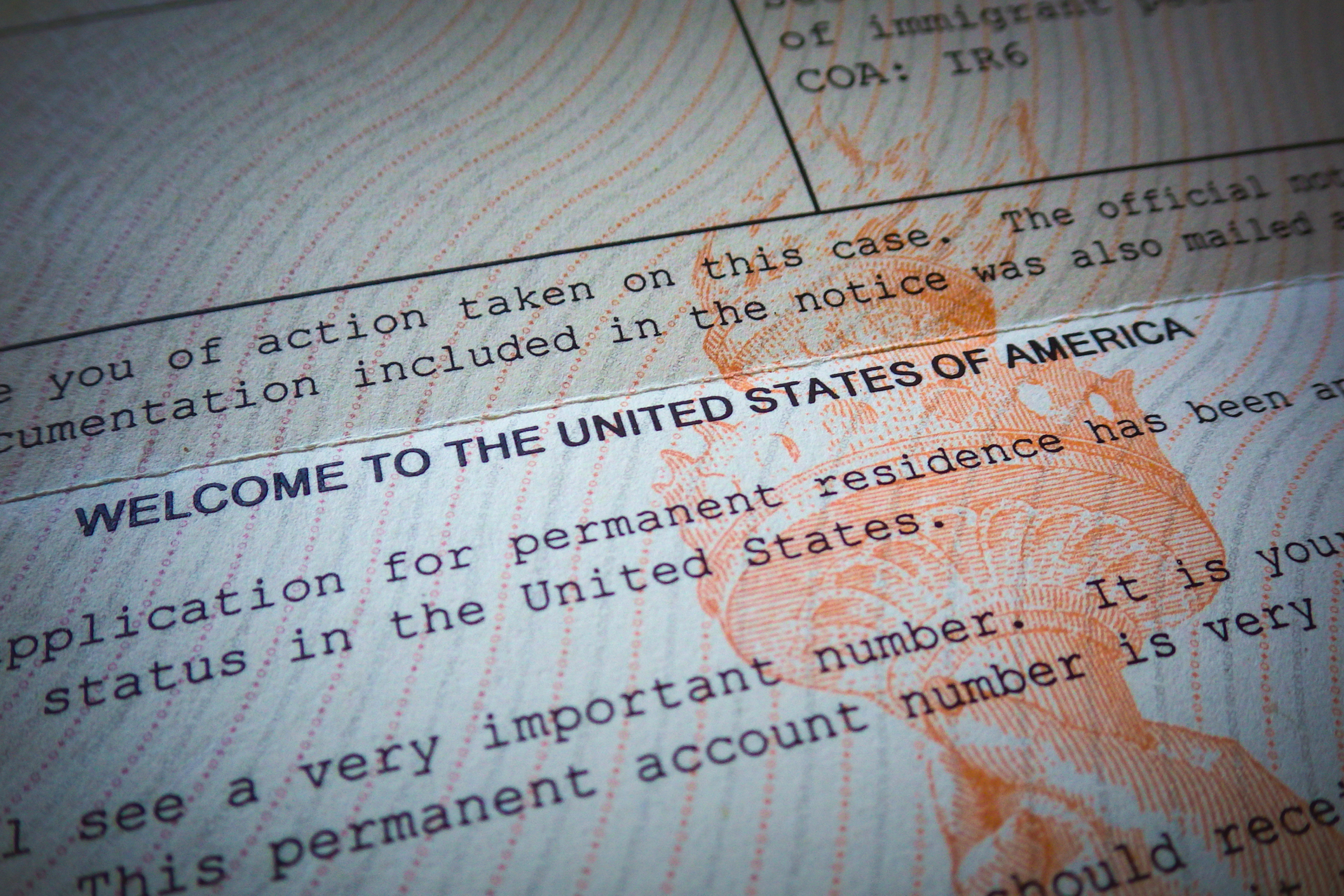
“Welcome to the United States of America.”

That’s the first thing you read when you find out your green card application was approved. Those long-awaited words are printed on fancier-than-usual paper, an improvement on the usual copy machine printed paper that the government sends to periodically remind you that you, like millions of other people, are stuck in the same slow bureaucratic system.

First you cry — then you cry a lot. And then you celebrate. But then you have to wait another week or so for the actual credit card-sized card — yes, it’s green — to turn up in the mail before it really kicks in.

It took two years to get my green card, otherwise known as U.S. permanent residency. That’s a drop in the ocean to the millions who endure twice, or even three times as long. After six years as a Brit in New York, I could once again leave the country and arrive without worrying as much that a grumpy border officer might not let me back in because they don’t like journalists.

The reality is, U.S. authorities can reject me — and any other foreign national — from entering the U.S. for almost any reason. As we saw with President Trump’s ban on foreign nationals from seven Muslim-majority nations — since ruled unconstitutional — the highly vetted status of holding a green card doesn’t even help much. You have almost no rights and the questioning can be brutally invasive — as I, too, have experienced before, along with the stare-downs and silent psychological warfare they use to mentally shake you down.

I was curious what they knew about me. With my green card in one hand and empowered by my newfound sense of immigration security, I filed a Freedom of Information request with U.S. Citizenship and Immigration Services to obtain all of the files the government had collected on me in order to process my application.

Seven months later, disappointment.

USCIS sent me a disk with 561 pages of documents and a cover letter telling me most of the interesting bits were redacted, citing exemptions such as records relating to officers and government staff, investigatory material compiled for law enforcement purposes, and techniques used by the government to decide an applicant’s case.

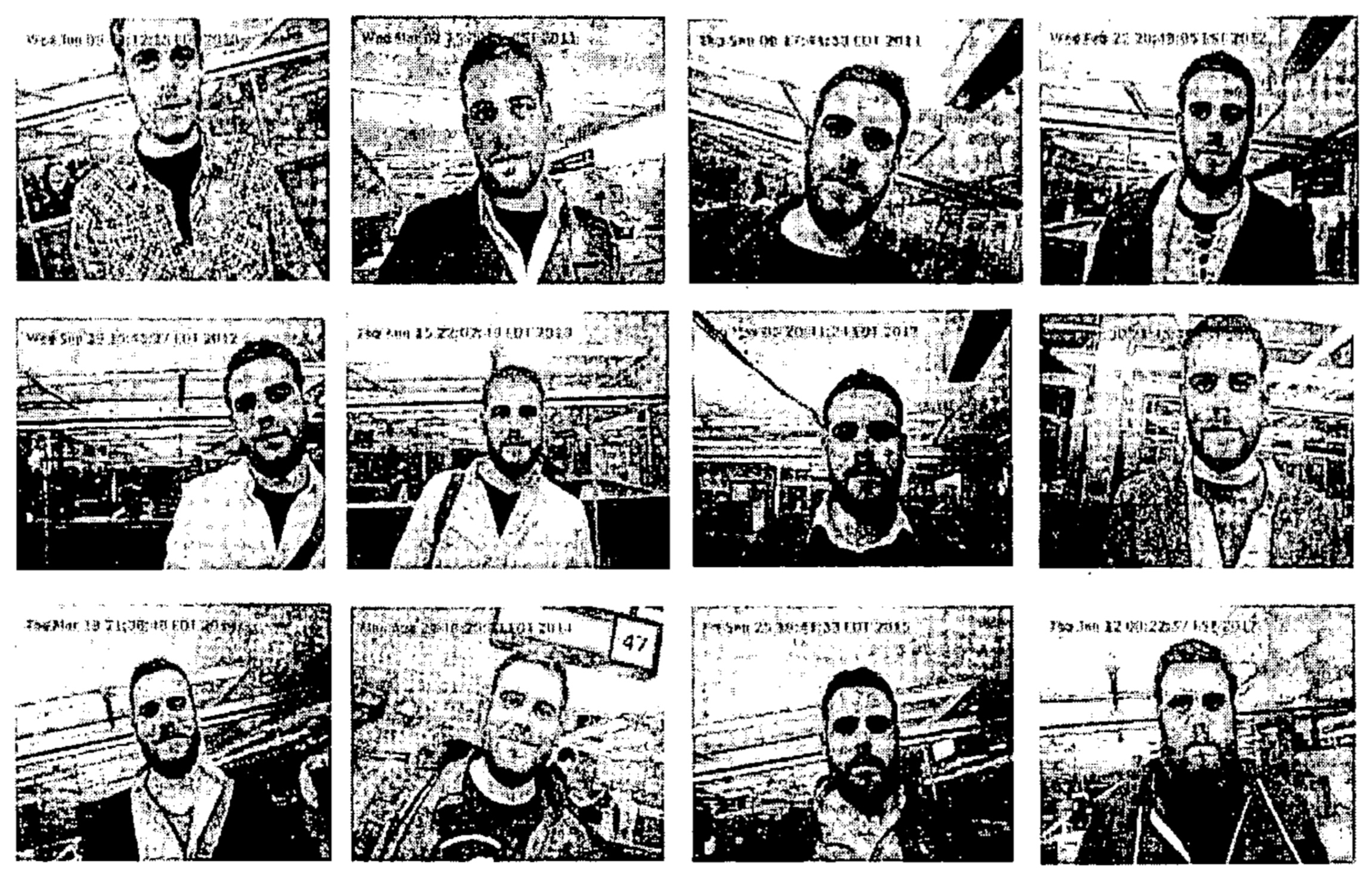
But I did get almost a decade’s worth of photos taken by border officials entering the United States.

Seven years of photos taken at the U.S. border. (Source: Homeland Security/FOIA)

What’s interesting about these encounters is that you can see me getting exponentially fatter over the years while my sense of style declines at about the same rate.

Each photo comes with a record from a web-based system called the Customer Profile Management Service (CPMS), which stores all the photos of foreign nationals visiting or returning to the U.S. from a camera at port of entries.

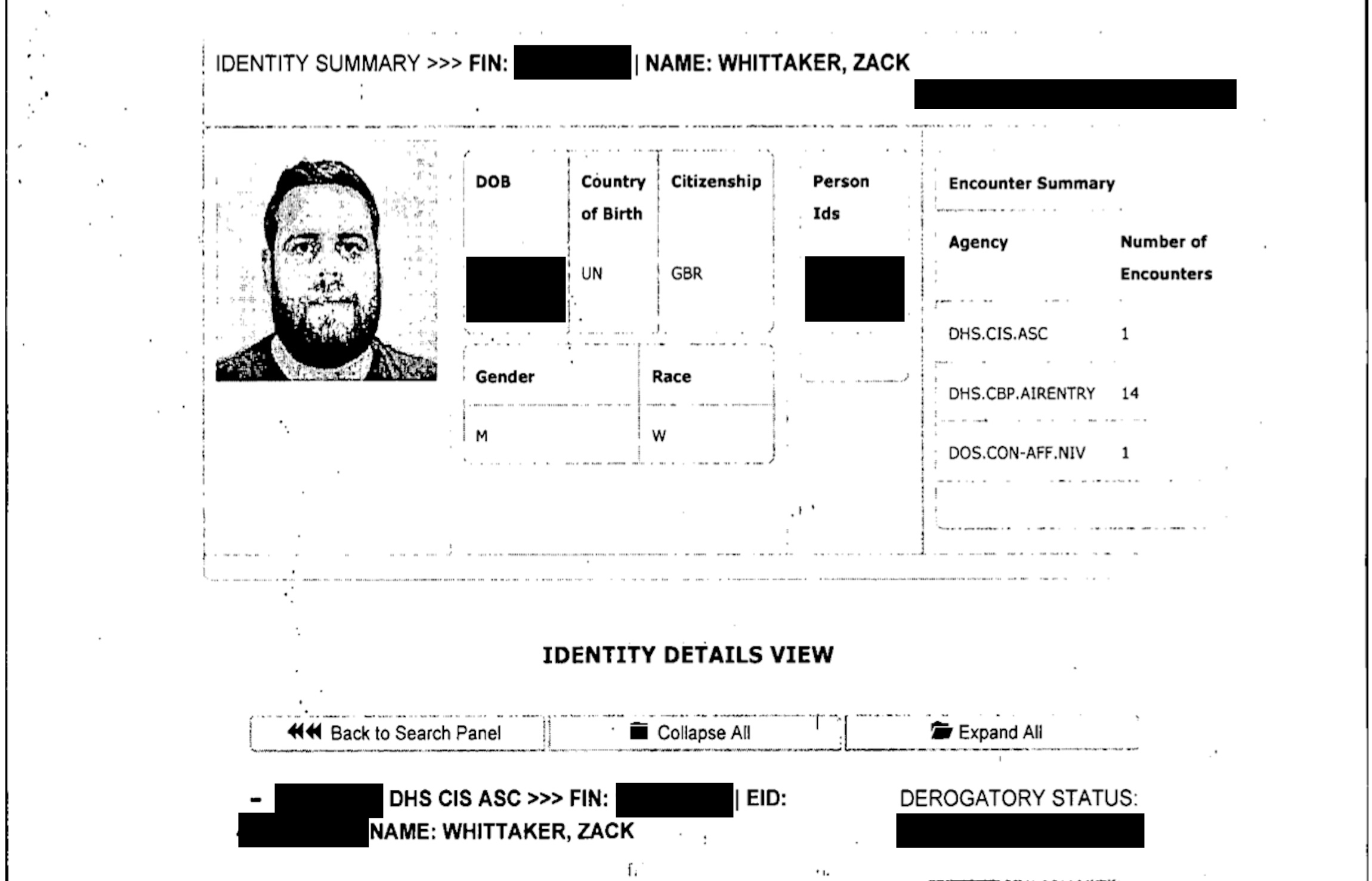
Immigration officers and border officials use the Identity Verification Tool (IVT) to visually confirm my identity and review my records at the border and my interview, as well as checking for any “derogatory” information that might flag a problem in my case.

The government’s IDENT system, which immigration staff and border officials use to visually verify an applicant’s identity along with any potentially barring issues, like a criminal record. (Source: FOIA)

Everyone’s file will differ, and my green card case was somewhat simple and straightforward compared to others.

Some 90 percent of my file are things my lawyer submitted — my application, my passport and existing visa, my bank statements and tax returns, my medical exam, and my entire set of supporting evidence — such as my articles, citations, and letters of recommendation. The final 10 percent were actual responsive government documents, and some random files like photocopied folders.

And there was a lot of duplication.

From the choice files we are publishing, the green card process appears highly procedural and offered little to nothing in terms of decision making by immigration officers. Many of the government-generated documents was mostly box-ticking, such as verifying the authenticity of documents along the chain of custody. A single typo can derail an entire case.

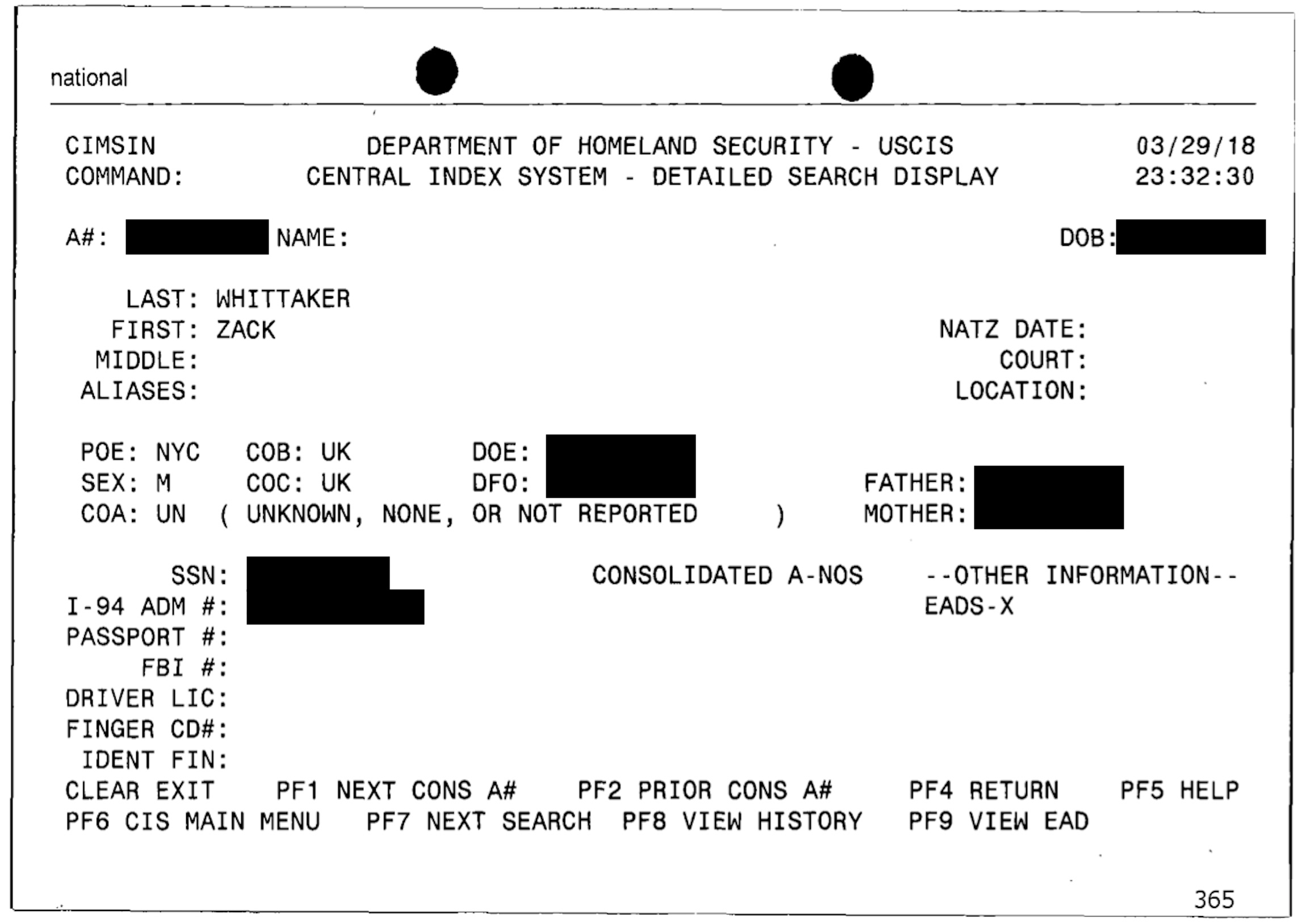
The government uses several Homeland Security systems to check my immigration records against USCIS’ Central Index System, and verifying my fingerprints against my existing records stored in its IDENT system to ensure it’s really me at the interview.

USCIS’ Central Index System, a repository of data held by the government as applications go through the immigration process. (Source: FOIA)

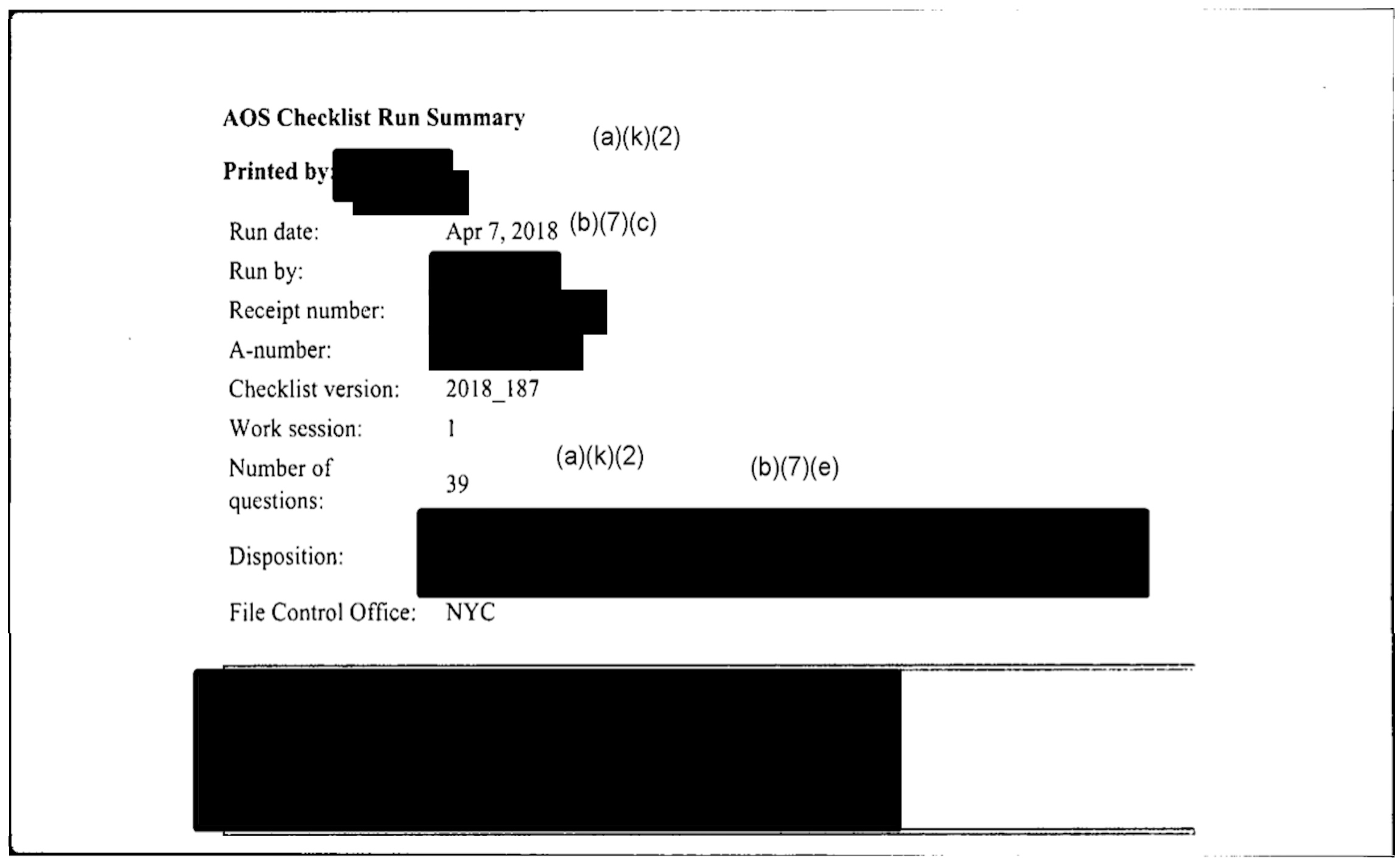
During my adjustment-of-status interview with an immigration officer, my “disposition” was recorded but redacted. (Spoiler alert: it was probably “sweaty and nervous.”)

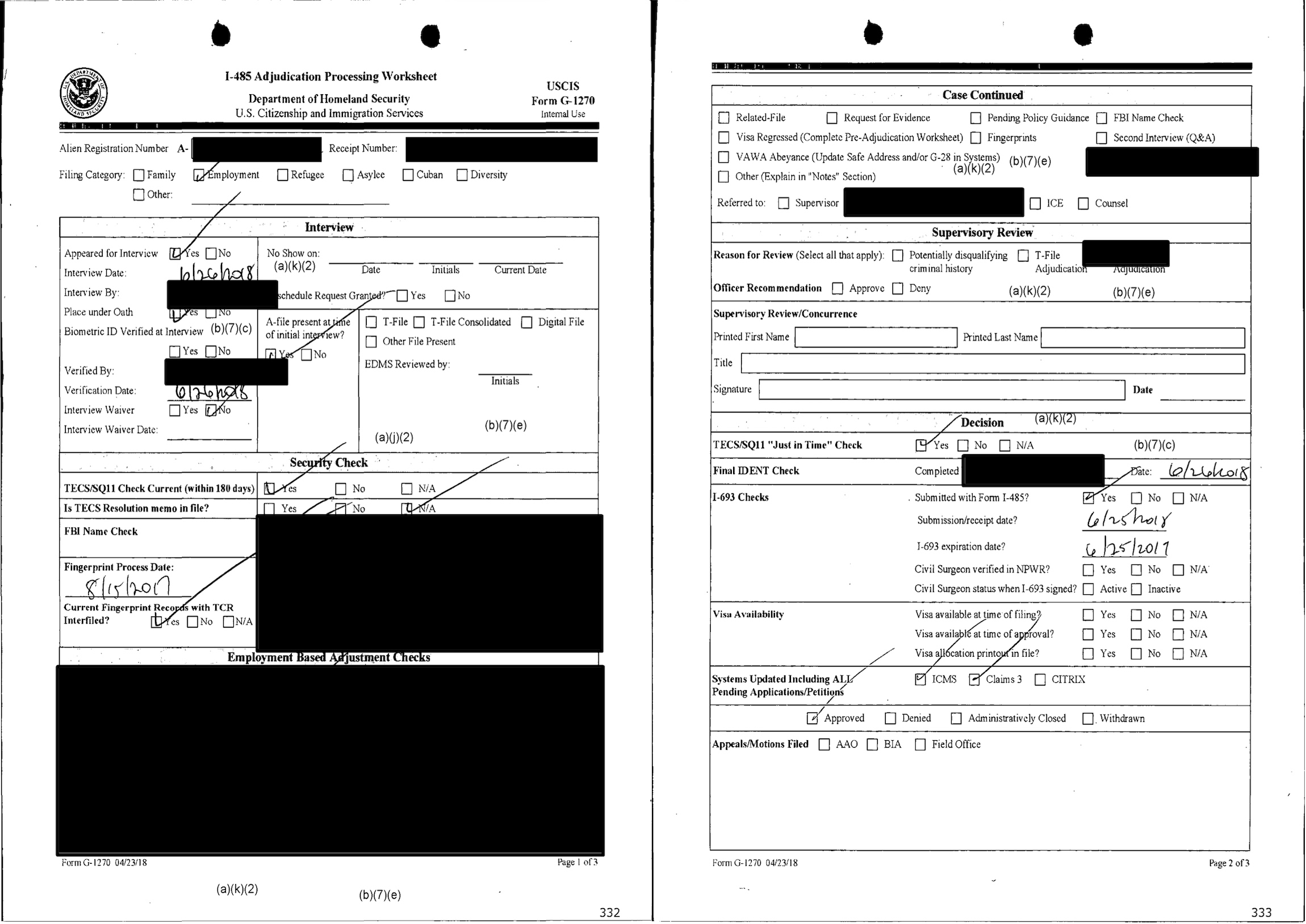
A file filled out by an immigration officer at an adjustment of status interview, which green card candidates are subject to. (Source: FOIA)

Following the interview, the immigration officer checks to make sure that the interview procedures are properly carried out. Homeland Security also pulls in data from the FBI to check to see if my name is on a watchlist, but also to confirm my identity as the real person applying for the green card.

And, in the end, two years of work and waiting came down to was a single checked box following my interview. “Approved.”

The final adjudication of an applicant’s green card. (Source: FOIA)

It’s no secret that you can FOIA for your green card file. Some are forced to file to obtain their case files in order to appeal their denied applications.

Runa Sandvik, a senior director of information security at The New York Times, obtained her border photographs from Homeland Security some years ago. Nowadays, it’s just as easy to request your files. Fill out one form and email it to the USCIS.

For me, next stop is citizenship. Just five more years to go.

Read more:

15 Apr 2019

Lyft adds Citi Bikes to its app for NYC riders

Lyft is going to integrate Citi Bike into its app for some riders in New York City. Lyft acquired bike-share startup Motivate back in July and proceeded to become a one-stop transportation app in three cities in December. Now, it’s ready to do the same in New York.

Beginning early next month, Lyft customers in NYC will be able to unlock CitiBikes through the Lyft app. Lyft says it picked New York as its fourth location after Washington, D.C., Los Angeles and Santa Monica, Calif. because Citi Bike is one of the most popular bikeshare systems. To date, Citi Bike has logged more than 75 million rides with a fleet of more than 12,000 bikes.

Before, riders needed a special Citi Bike account but with the Lyft integration, that will no longer be necessary. The caveat is that this is only available for riders who are new to Citi Bike. Those with pre-existing accounts won’t be able to link their accounts to use the Lyft app to unlock bikes just yet. But Lyft says it’s coming over the next few months.

It’s worth noting, however, that Lyft had to pull CitiBike’s pedal-assist bikes off the road this past weekend after receiving reports from some riders that the brakes were too strong, resulting in some people falling off the bikes. Lyft also pulled its pedal assist bikes from San Francisco and Washington D.C.

“After a small number of reports and out of an abundance of caution, we are proactively pausing our electric bikes from service,” Lyft spokesperson Julie Wood said in a statement to TechCrunch. “Safety always comes first.”

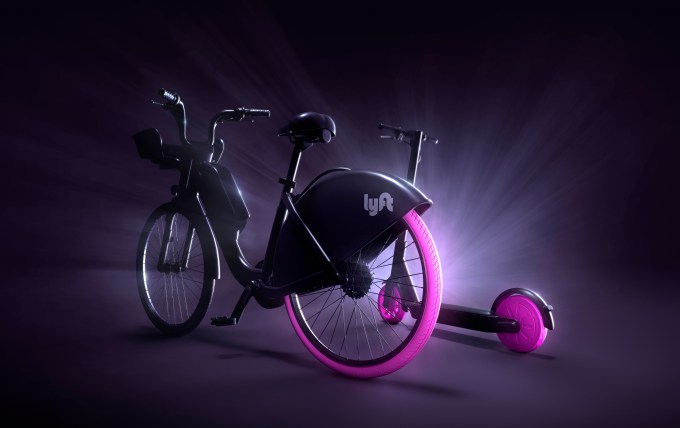
It’s not clear when the pedal-assist bikes will return to the CitiBike, Ford GoBike and Capital Bikeshare fleets. Motivate first deployed pedal assist bikes in San Francisco about one year ago before more broadly deploying the bikes. Currently, Lyft is working with its suppliers and a third-party engineering firm to determine the root cause of the issue. The recall affects about 15 percent of the bikes available, but Lyft plans to temporarily replace the pedal-assist bikes with classic bikes. Meanwhile, Lyft is working on its own electric bike model that it will deploy in the near future.

Since acquiring Motivate, Lyft has expanded to additional neighborhoods outside of Manhattan and agreed to put $100 million into the Citi Bike system. Over the next five years, Lyft plans to triple the number of bikes to 40,000.

Lyft competitor Uber added bikes and scooters to its app last September with the launch of Mode Switch. The idea was to make it easier for people to switch between different modalities.