Category: UNCATEGORIZED

10 Apr 2019

Southeast Asia’s Carousell snags investment from Naspers-owned OLX

It’s taken some time to come around, but Naspers — the early Tencent investor that’s also behind the world’s top listings service — finally has a piece of Southeast Asia’s Carousell. TechCrunch broke news of talks between the two sides last year, and today Tech In Asia reported that Naspers-owned OLX Group has put $42 million into Carousell.

In addition, it appears that the deal includes the transfer of the OLX Philippines business to Carousell, according to a report from Deal Street Asia which cites a source close to the investment.

Carousell is a mobile-first peer-to-peer selling app that operates across Singapore, Malaysia, Indonesia, Taiwan, Hong Kong, and Australia. Founded by three graduates of the National University of Singapore, its listing business has expanded into automotive and real estate, which it monetizes whilst keeping the core service free.

The deal gives Singapore-based Carousell a valuation of $365 million, according to a company filing that Tech In Asia gained access to. The publication reported that OLX now owns 11.5 percent of Carousell — that would make it the startup’s third-largest shareholder beyond existing backers Rakuten and Sequoia India, which own 29.6 percent and 15.1 percent, respectively.

Prior to this deal, Carousell had raised $126.8 million in funding. Its last round was a $85 million deal that closed in May 2018, although TechCrunch earlier broke news of the investment.

OLX, meanwhile, is the world’s biggest classifieds business. It is active across over 40 countries through a network of 17 entities. All combined, it claims to reach more than 350 million users each month. That makes it a very coveted investor for Carousell and, really, any company that sits in classifieds/listing space.

OLX is the world’s largest operator of classifieds sites — its reach covers 350 million monthly users across 40 countries through 17 brands

A source with knowledge of discussions told TechCrunch that the Carousell deal had been agreed to some time ago, but Naspers’ impending IPO in Europe — it is taking its Tencent stake and other web holdings public on Euronext Amsterdam — was the reason for the delay in tying things up.

It also seems that agreeing on a valuation may have been a sticking point. In our story last year, we reported that Carousell was shooting for a $500 million valuation but this deal is short of that by some margin, according to the details sourced by Tech In Asia. We also reported that the investment could be a precursor to an eventual acquisition — that’s a development that we’ll have to wait on, but it is certainly a logical assumption that many will come to, rightly or wrongly.

There have already been some significant dealings in 2019, as OLX/Naspers strategically shuffle their cards across the world. OLX last week sold a slew of its Africa-based business to rival Jiji, while, back in January, Naspers took full control of its Russia-based classifieds site Avito in a deal worth $1.16 billion.

Outside of classifieds, Nasper has put increased focus on India where it has backed unicorns Swiggy (food delivery) and Byju’s (education) in major deals announced in recent months.

10 Apr 2019

Defy Partners raises $262M to close the Series A gap

Defy Partners, a Silicon Valley investment firm launched in 2017 by a pair of seasoned venture capitalists, has secured $262 million for its sophomore fund.

The firm leads investments in Series A startups, providing between $3 million and $10 million depending on the status of the business. To provide its portfolio companies additional follow-on capital, Defy has raised a significantly larger fund than its debut effort, which brought in $151 million two years ago.

Alongside the new capital, Defy has added to the mix two venture partners, or “Sages” as they are calling them. Otherwise, Defy co-founders Trae Vassallo and Neil Sequeira tell TechCrunch, their strategy remains the same.

“Raising the next round of financing is hopefully something we can be helpful with,” Sequeira told TechCrunch. “That’s always been expected from venture partners but it’s not everything, it’s what a good venture person can help you with besides just money that matters. Sophisticated entrepreneurs know it’s about more than just money.”

Sequeira previously spent more than 13 years as a managing director at General Catalyst before joining forces with Vassallo, who had herself spent 12 years as a general partner at Kleiner Perkins . The two were well-known in the Valley for a slew of high-profile investments, including Bustle and The Honest Company for Sequeira and Dropcam and Nest for Vassallo.

“Neil and I from the beginning had a shared set of values and a vision,” Vassallo told TechCrunch. “What has been so valuable is that the two of us have completely different networks. We’ve found that while it’s a small industry, our different experiences have made us so much more valuable to our entrepreneurs.”

Vassallo and Sequeira say the proliferation of seed funds made them realize the need for additional Series A funds. So they left behind the Silicon Valley institutions that are Kleiner Perkins and General Catalyst to support early-stage founders and connect on a more intimate level.

“It’s really fun to be an entrepreneur again,” said Vassallo, who co-founded Good Technology in 2000. “When you’re an entrepreneur, you have to figure out absolutely everything: What kind of culture you want to build, how you’re going to work together as a team, how you want to grow or not grow as you move forward. That’s been the fun part. It gives us incredible empathy with the entrepreneurs we are working with on a regular basis.”

Defy has deployed capital to a mix of enterprise and consumer companies to date, including Owl, which sells security cameras for vehicles; cloud security compliance platform Shujinko; and Securly, a tool meant to help kids stay safe on their devices.

Brian Lee and Sujal Patel joined Defy earlier this month as part of its new Sage program. Lee co-founded The Honest Company, ShoeDazzle and LegalZoom, while Patel co-founded Isilon Systems. The pair, who are longtime friends of the firm, will seek new investments, take board seats and work with existing portfolio companies.

10 Apr 2019

YieldStreet acquires Athena for $170M to add art financing to its alternative investment platform

YieldStreet — which raised $62 million in February to further open up alternative investments in areas like shipping, real estate, legal finance and commercial loans to a wider base of investors — is today announcing its first acquisition to expand into a new asset class. It is paying $170 million to acquire Athena Art Finance, which provides loans to art dealers, collectors, and museums and galleries to buy fine art and other collectibles.

Athena had been founded in 2015 and was controlled private equity firm Carlyle Group along with individual investors (one of whom is Olivier Sarkozy, the half-brother of the former president of France). YieldStreet said that to date, Athena has racked up cumulative originations totalling some $225 million (the fees that are made out of originating the loans) and, strikingly, no realized credit losses. It will continue to be led by Cynthia E. Sachs under YieldStreet.

Art finance is a huge business that has grown as the mean price of top quality works continues to creep up, and sales volumes continue to grow. Those interested in buying for investment or love (ideally love) turn to financing as they compete to buy works against a super-wealthy cadre of collectors. A recent report put the global art finance market at some $20 billion annually, the majority of that being secured by individuals rather than organizations or businesses.

YieldStreet’s business is built on a platform for people to put up financing for alternative investments in areas that are generally showing very strong returns, but which are typically not traded on public markets and have traditionally been open only to a small group of top investors, a business that has grown to 100,000 users over the years.

The idea is that it will now be adding art finance into the mix, both to open up a new investment area, as well as to appeal to a potentially wider set of investors.

“Our acquisition of Athena demonstrates YieldStreet’s ability to leverage our technology, proprietary origination channels and efficient direct-to-consumer distribution, to take a traditional capital intensive business and make it capital efficient. We’re thrilled to have the Athena team join the YieldStreet family, and look forward to supporting its existing business and continued scale and success,” said YieldStreet Founder and President Michael Weisz in a statement.

Art finance is, of course, a very different beast from real estate or shipping, and Athena’s staff includes art experts who help to evaluate work and the wider art market, alongside those who structure the loans and the risk analysis. YieldStreet has up to now positioned itself as a smart partner for alternative investments.

YieldStreet has seen $650 million invested on its platform (up from $600 million in February), with an expected 12 percent IRR and more than $300 million in principal and interest payments made to its investors. YieldStreet’s business was built by offering investment opportunities to accredited investors (already a wider pool than the investment banks that traditionally made these kinds of investments), which has a specific set of criteria that includes individuals having a net worth of at least $1 million or with annual income of $200,000 or more.

Going forward, YieldStreet is expanding its business by opening it up to individuals who are not accredited by creating investment vehicles that bring together multiple products, which is another way that Athena’s business fits into its strategy: it helps YieldStreet scale out its investment range. “We are working through the legal and regulatory aspects now,” Milind Mehere, founder & CEO of YieldStreet, told me earlier this year.

“True to our investor-first approach, we are constantly looking for unique and attractive diversification opportunities,” said Mehere, in a statement. “Athena is the leading provider of credit solutions for the global art market and has scaled the business with strong growth and asset performance. Art financing is an attractive asset class with typically low correlation to the stock market and low loan-to-values, providing what we believe is both an exciting and sound new investment option for our investor community of more than 100,000 members.”

In addition to Edison Partners, which led the previous round, YieldStreet’s other investors include Greenspring Associates, Raine Ventures and Soros Fund Management.

10 Apr 2019

Movo grabs $22.5M to get more cities in LatAm scooting

Madrid-based micromobility startup Movo has closed a €20 million (~$22.5M) Series A funding round to accelerate international expansion.

The 2017 founded Spanish startup targets cities in its home market and in markets across LatAm, offering last mile mobility via rentable electric scooters (e-mopeds and e-scooters) plotted on an app map. It’s a subsidiary of local ride-hailing firm, Cabify, which provided the seed funding for the startup.

Movo’s Series A round is led by two new investors: Insurance firm Mutua Madrileña, doubtless spying strategic investment potential in helping diversify its business by growing the market for humans to scoot around cities on two wheels — and VC fund Seaya Ventures, an early investor in Cabify.

Both Mutua Madrileña and Seaya Ventures are now taking a seat on Movo’s board.

Commenting on the Series A in a statement, Javier Mira, general director of Mutua Madrileña, said: “The equity investment in Movo reflects Mutua Madrileña’s aspiration to respond to the new mobility needs that are emerging, and to the economic and social changes that are occurring and that are transforming our life habits.”

Movo currently operates in six cities across five countries — Spain, México, Colombia, Perú and Chile.

It first launched an e-moped service in Madrid a year ago, according to a spokeswoman, and has since expanded domestic operations to the southern Spanish coastal city of Malaga, as well as riding into Latin America.

The new funding is mostly pegged for further international expansion, with a plan to expand into new markets in LatAm including Argentina, Brazil and Uruguay. Movo is targeting operating in a total of 10 countries by the end of 2019.

The Series A will also be used to grow its vehicle fleet in existing markets, it said.

“We are very excited to be able to offer a solution to the problems of mobility in cities, particularly for short distances in areas with high population density,” said CEO Pedro Rivas in a statement. “We are committed to working together with governments to complement mass public transport with these new micromobility alternatives, so that people can get around in a more sustainable and efficient way.”

Commenting on its investment in the Cabify subsidiary, Seaya Ventures’ Beatriz Gonzalez, founder and managing partner, said the fund is “committed to the evolution of mobility towards sustainable alternatives in the world’s major cities”.

“We want to be part of the transport revolution by promoting projects like Cabify and, of course, Movo,” she said in a statement which seeks to paint micromobility as a solution for urban congestion and poor air quality. “We are motivated to continue to promote companies with which we share this sense of responsibility towards the development and improvement of people’s quality of life.”

10 Apr 2019

InVision announces new integrations with Jira

Today InVision announced even deeper integrations with Jira, letting users embed actual InVision prototypes right within a Jira ticket. The company also announced the Jira app for InVision Studio, letting designers in Studio see interactive Jira tickets in real time.

InVision has already had lighter integrations with Atlassian products, including Jira, Confluence and Trello. It’s also worth noting that Atlassian participated in InVision’s $115 million Series F funding round.

The partnership makes sense. Atlassian provides a parallel product to InVision, except instead of serving designers, Atlassian serves engineers.

But it brings up an interesting challenge for InVision, last valued at $1.9 billion. The company went from creating its own market with a paid prototyping and collaboration tool to competing with giants and startups alike as it introduced new products.

InVision Studio, for instance, is meant to compete with the likes of Adobe XD, Sketch, and Figma, among others.

At the same time, InVision’s strategy has always been to become a connective tissue for the broader design landscape. CEO Clark Valberg has said in the past that he sees InVision becoming the Salesforce of the design world, with a broad array of partnerships and integrations across the industry to handle each, nuanced fraction of the process in a single, fluid place.

“Up until now we’ve been a fairly horizontal player,” said VP of Product Mike Davidson. “We created the market for prototyping. There was no paid market for a prototyping tool until InVision came along. Now that you see us provide a more vertical stack of tools, we don’t want to lose the great thing we’ve built with the InVision Prototyping tool. It’s been more popular than we could have ever imagined.”

Davidson added that InVision now serves 100 of the Fortune 100 companies.

And since its launch in 2011, InVision has maintained that original strategic course of staying open, particularly with Atlassian. But InVision isn’t just friendly with Atlassian. The company also introduced an App Store and Asset Store in InVision Studio (partnerships include Slack, Dribbble, and Getty), with plans to launch a developer API so anyone can build apps for InVision Studio. Plus, InVision has made a handful of acquisitions, and launched the Design Forward Fund, which allocates $5 million toward investing in design startups.

VP of Product Mike Davidson believes that balancing this open garden philosophy with the desire to provide the very best products across the entire process (automatically putting InVision in competition with other design startups) is one of the company’s greatest challenges.

“We want to provide a first-cclass experience from beginning to end but we also want to provide a system that’s open enough where you can use your tool of choice for any one of the particular functions,” said Davidson. “It’s a difficult balance. We want to allow for designers and developers to choose which tools they use for whatever job they’re trying to do, but we also want to be the best choice for each one of those functions.”

10 Apr 2019

Watch day 2 of Google Cloud Next live right here

Yesterday, the opening keynote for Google’s Cloud Next conference was packed with news, from Google’s hybrid cloud platform Anthos to Google’s new product to turn a container into a URL. At 9 AM PT, 12 PM ET, 5 PM GMT, Google is opening day 2 of its conference with the product innovation keynote.

Later at 4:30 PM PT, 7:30 PM PT, you’ll be able to watch the developer keynote:

Along with Amazon Web Services and Microsoft Azure, Google is building the infrastructure of the web. Countless startups use Google Cloud as their only hosting provider. And there are now more and more specialized and niche services launching. So it’s going to be interesting to see what Google has in store to beat their competitors on the cloud front.

We’ll have a team on the ground covering all the announcements and explaining what it means.

10 Apr 2019

Cathay Capital and AfricInvest to raise $168M Africa VC fund

Tunisia based private equity firm Africinvest has teamed up with Cathay Capital — a global private equity firm based in Paris — to launch a new Africa tech fund with a target raise of $168 million.

Details are still forthcoming, but the Cathay Africinvest Innovation Fund will focus primarily on series A to C stage investments in African technology companies, says fund co-founder Denis Barrier.

“We’ll look at investments across several countries in Africa. We’ll focus on areas such as fintech, logistics, AI, agtech, and edutech,” Barrier says.

Barrier could not say when the fund would be closed, but did confirm investments could come as early as summer 2019.  He expects to see strong local showing for startups from across Africinvest’s 10 country offices in Abidjan, Algiers, Cairo, Casablanca, Dubai, Lagos, Nairobi, Paris and Port Louis, and Tunis. The firm will open an office in Johannesburg in the near future, according to a company release.

In the private equity space, both founding companies of the new Cathay Africinvest Innovation Fund  carry considerable capital and scope. Co-founded by Denis Barrier and Mingpo Cai, Cathay Capital has $2.5 billion in assets under management and offices in the U.S., Europe, Asia, and the Middle-East.

Per Crunchbase, Africinvest’s 46 venture and debt investments span the brick and mortar side of many of the sectors the new tech fund looks to target, including education and banking.

With the line between banks and fintech also starting to blur in Africa, that could lead to an advantage for the Cathay Africinvest Innovation Fund in sourcing deal flow.

The new investment group enters during a period when investment rounds and the number of funds focused on African startups continues to grow rapidly. By Shenzen or Silicon Valley standards, the value of VC to African startups—which surpassed $1 billion for the first time in 2018 according to Partech—is minuscule. But by one estimate, that represents more than a one-hundred percent increase in VC to Africa over a four-year period.

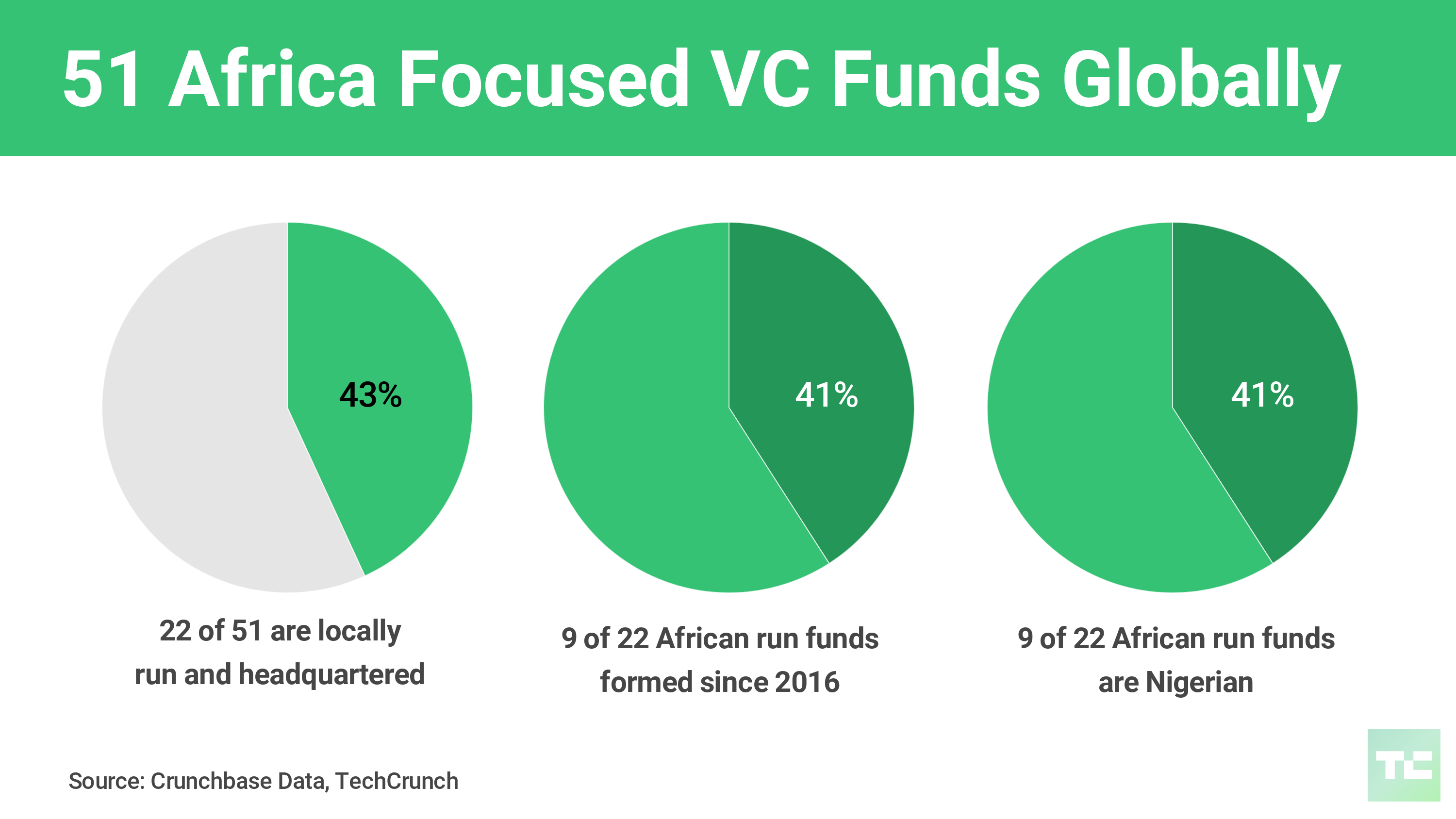
The number of Africa focused VC firms globally has also grown, topping 51 in 2018 per TechCrunch and Crunchbase research.

The Cathay Africinvest Innovation Fund takes the number of to 52.

10 Apr 2019

Amazon’s entry-level 2019 Kindle is let down by a sub-par display

Amazon’s Kindle is of course the brand most think of when they consider buying an e-reader, but competition does exist and the truth is it makes the company’s newest entry-level device look like a poor bargain. The price may be low, but this budget reader just doesn’t meet the bar.

The most basic current device in the e-paper Kindle lineup, the plain old “Kindle” (as opposed to Kindle Voyage, Kindle Paperwhite, etc) has in this 2019 iteration gained a couple features. An adjustable frontlight illuminates the E-Ink screen, there’s an improved touchscreen and a refreshed hardware design, though you’re forgiven if you don’t notice.

At $110, or $90 if you allow ads on your device, it’s among the cheaper devices out there, falling well below the $150 Paperwhite and $270 Oasis (again, subtract $20 if you don’t opt out of “special offers,” which I always make sure to mention).

It runs the familiar Kindle OS and of course seamlessly connects to your Amazon account, just like the others in the lineup. In general it’s more or less the same as the others in terms of formats, store and access features, and so on. So you’re not sacrificing anything on that front.

Unfortunately, what you do sacrifice is something much more important: a decent screen.

We’ve been privileged in the last couple years to see the quality of e-reader displays improve considerably, both in terms of resolution and lighting. A couple months ago I reviewed the $130 Kobo Clara HD, which offers few frills and, frankly, inferior build quality, but a beautiful screen and color temperature-adjustable frontlight, which is really worth paying for.

The specs speak for themselves: the “all-new” Kindle has a 6-inch with a pixel density of 167 PPI. The Clara HD has nearly twice that: 300 PPI, like the nicer Kindles, and believe me, you notice. It makes a huge difference to how text looks — there are diminishing returns past that point, but the change from 167 to 300 is a big one. Letters look much crisper and more regular, and fonts look much more different from each other, allowing you to customize your reading experience a more. (I recently found out I can easily add fonts to the Kobo and it’s great.)

It’s hard to capture the difference between the two except in macro shots, but in person it’s a serious one. There’s a reason phones, tablets, and e-readers (including Amazon’s own) all went to high pixel density and never looked back.

[gallery ids="1810104,1810107"]

The Clara also has a frontlight that lets you adjust the color cast from cool to warm, which you can see above (I realize the temperatures of the images themselves are different as well but you get the idea). I didn’t think I’d find this useful, but as with resolution, it’s one of those things where once you have it, it’s difficult to go back. The cold, pixelated screen of the basic Kindle was unbearable after the warm, smooth look of the Kobo.

If you must have a Kindle reader and can’t spend more than $100, I’d seriously advise you to try to find an old generation of Paperwhite or the like with the higher resolution screen and frontlight. It makes a huge difference to readability and that’s really the most important part of a reader.

I would however advise you to spend a little more now to avoid buyer’s remorse. The Paperwhite is a great device and not too much more if you’re willing to accept Amazon’s “special offers.” Kindles in general have great build quality as well. If you aren’t attached to the Kindle brand, however, the Kobo Clara HD is only a bit more money and offers a better reading experience than either, in my opinion, as well as the flexibility that comes with the company’s devices.

When the entry-level Kindle gets a screen that matches the entry-level competition, I’ll happily endorse it, but for now I have to recommend its slightly more expensive peers for a major bump in quality.

10 Apr 2019

ShopBack, a cashback startup in Asia Pacific, raises $45M from Rakuten and others

ShopBack, a Singapore-based startup that offers cashback and consumer rewards in Asia Pacific, has closed a $45 million round led by new investors Rakuten Capital and EV Growth.

Founded in 2014, the startup had been relatively under-the-radar until late 2017 when it announced a $25 million investment that funded expansion into Australia among other things. Now, it is doubling down with this deal which sees participation from another new backer, EDBI, the corporate investment arm of Singapore’s Economic Development Board. Shopback has now raised close to $85 million from investors, which also include Credit Saison Blue Sky, AppWorks, SoftBank Ventures Korea, Singtel Innov8 and Qualgro.

The investment will see Amit Patel, who leads Rakuten-owned cashback service Ebates, and EV Growth managing partner Willson Cuaca, join the board. Cuaca is a familiar face since his East Ventures firm, which launched EV Growth alongside Yahoo Japan Capital and SMDV last year, was an early investor in Shopback, while the addition of Patel is potentially very significant for the startup. Indeed, when I previously wrote about ShopBack, I compared the startup directly to Ebates, which was bought by Rakuten for $1 billion in 2014.

Ebates brings operating experience in the cashback space,” Henry Chan, ShopBack co-founder and CEO told TechCrunch in an interview.

“A lot has changed in the last year and a half, Ebates has a very strong focus on the U.S… given that we’re not competing, it makes sense to partner and to learn,” he added.

The obvious question to ask is whether this deal is a precursor to a potential acquisition.

So, is it?

“It is squarely for learning and for growth,” Chan said in response. “It makes sense for us to partner with someone with the know-how.”

ShopBack operates in seven markets in Asia Pacific — Singapore, Malaysia, the Philippines, Thailand, Taiwan, Australia and Indonesia — with a core rewards service that gives consumers rebates for spending on areas like e-commerce, ride-hailing, food delivery, online travel and more. It has moved offline, too, with a new service for discovering and paying for food which initially launched in Singapore.

ShopBack said it saw a 250 percent growth in sales and orders last year which translated to nearly $1 billion in sales for its merchant partners. The company previously said it handled $400 million in 2017. It added that it typically handles more than 2.5 million transactions for upwards of seven million users.

(Left to right) Henry Chan, co-founder and CEO of ShopBack, welcomes new board member Amit Patel, CEO of Rakuten -owned Ebates [Image via ShopBack]

Chan said that, since the previous funding round, ShopBack has seen its business in emerging markets like Indonesia, Thailand and the Philippines take off and eclipse its efforts in more developed countries like Singapore. Still, he said, the company benefits from the diversity of the region.

Markets like Singapore and Taiwan, where online spending is more established, allow ShopBack to “learn ahead of time how different industries will develop” as the internet economy matures in Southeast Asia, Chan — who started the company with fellow co-founder Joel Leong — explained.

Outside of Southeast Asia, Chan said that ShopBack’s Australia business — launched nearly one year ago — has been its “most phenomenal market in terms of growth.”

“We’re already superseding incumbents,” he said.

ShopBack claims some 300,000 registered users in Australia, where it said purchases through its platform have grown by 1,300 percent between May 2018 and March 2019. Of course, that’s growth from a tiny initial base and ShopBack didn’t provide raw figures on sales.

For its next expansion, ShopBack is looking closer to home with Vietnam its upcoming target. The country is already home to one of its three R&D centers — the other two are located in Singapore and Taiwan — and Chan said the startup is currently hiring for a general manager to head up the soon-to-launch Vietnam business.

Already, though, the company is beginning to think about reaching beyond Asia Pacific. Chan maintained that the company already has a proven playbook — particularly on the tech side — so it “can enter a Western market” if it chooses, but that isn’t likely to happen in the immediate future.

“We could [expand beyond Asia Pacific] but we have a fair bit on our plate, right now,” said Chan with a laugh.

10 Apr 2019

A powerful malware that tried to blow up a Saudi plant strikes again

A highly capable malware reportedly used in a failed plot to blow up a Saudi petrochemical plant has now been linked to a second compromised facility.

FireEye researchers say the unnamed “critical infrastructure” facility was the latest victim of the powerful Triton malware, the umbrella term for a series of malicious custom components used to launched directed attacks.

Triton, previously linked to the Russian government, is designed to burrow into a target’s networks and sabotage their industrial control systems, often used in power plants and oil refineries to control the operations of the facility. By compromising these controls, a successful attack can cause significant disruption — even destruction.

According to the security company’s latest findings out Wednesday, the hackers waited almost a year after their initial compromise of the facility’s network before they launched a deeper assault, taking the time to prioritize learning what the network looked like and how to pivot from one system to another. The hackers’ goal was to quietly gain access to the facility’s safety instrumented system, an autonomous monitor that ensures physical systems don’t operate outside of their normal operational state. These critical systems are strictly segmented from the rest of the network to prevent any damage in the event of a cyberattack.

But the hackers were able to gain access to the critical safety system, and focused on finding a way to effectively deploy Triton’s payloads to carry out their mission without causing the systems to enter into a safe fail-over state.

In the case of the August 2017 attack in which Triton was deployed, the Saudi facility would have been destroyed had it not been for a bug in the code.

“These attacks are also often carried out by nation states that may be interested in preparing for contingency operations rather than conducting an immediate attack,” said FireEye’s report. “During this time, the attacker must ensure continued access to the target environment or risk losing years of effort and potentially expensive custom [industrial control system] malware,” said the report. “This attack was no exception.”.

FireEye would not comment on the type of facility or its location — or even the year of the attack, but said it was likely to cause damage.

“We assess the group was attempting to build the capability to cause physical damage at the facility when they accidentally caused a process shutdown that let to the Mandiant investigation,” said Nathan Brubaker, senior manager, analysis at FireEye, in an email to TechCrunch describing the first incident, but wouldn’t comment on the motives of the second facility.

But the security firm warned that the attackers’ slow and steady approach — which involved moving slowly and precisely as to not trigger any alarms — showed they had a deep focus on not getting caught. That, they said, suggests there may be other targets beyond the second facility “where the [hackers] was or still is present.”

The security company published lists of hashes unique to the files found in the second facility’s attack in a hope that I.T. staff in other at-risk industries and facilities can check for any compromise.

“Not only can these [tactics, techniques and procedures] be used to find evidence of intrusions, but identification of activity that has strong overlaps with the actor’s favored techniques can lead to stronger assessments of actor association, further bolstering incident response efforts,” the company said.