Category: UNCATEGORIZED

28 Mar 2019

Autonomous vehicle IP protection — when HAL is driving

Each day, a fleet of lidar-guided, all-electric Chevy Bolts exits a downtown garage to roam San Francisco, attempting to blend in with people-guided vehicles and other AVs. The autonomous vehicles are actually only “semi-autonomous” — each has a human crew whose mission is to correct the car’s erroneous driving decisions on the fly, until sufficient data can at least approximate the reflexive intuition of an experienced driver.

Like a child who develops a sense for right and wrong through praise and scolding, present-day machine learning requires similar binary experiential training. The collected learning then becomes a valuable basis for guidance systems that will render vehicles truly autonomous.

But how can that very valuable intellectual property be protected? Historically, startups could obtain venture capital by trotting out a portfolio of issued patents. With the 2014 Alice decision on subject matter patentability by the U.S. Supreme Court, however, it has been problematic, to say the least, to obtain patents that are essentially based on algorithms.

The two-step “Alice” test requires examination of 1) whether the claims are directed to a patent-eligible concept or a patent-ineligible abstract idea; and 2) if directed to an abstract idea, whether the claims contain an “inventive concept” sufficient to transform the abstract idea into a patent-eligible application. Under the latter, “well-understood, routine, and conventional” activities or claim elements cannot form an inventive concept. Even if subject matter barriers can be overcome, the evolved AI may no longer bear semblance to the original expression of code, such as to raise inventorship issues. If a macaque monkey cannot hold a copyright, can a machine hold a patent?   

As a result, most companies presently guard their machine learning data as trade secrets. But trade secret protection has its drawbacks, one of which is to society at large. Unlike technology taught in patented disclosures, which could allow a new entrant to catch up (provided it licenses or designs around the patent), an AV data set of an unwilling licensor is not obtainable absent a trade secret violation or duplicating the considerable miles driven. 

Keeping AV data secret also creates a “black box” where consumers and authorities are unable to fairly and completely evaluate the proficiency/safety of the AI systems guiding the vehicles. At most, consumers will likely have to rely on publicly compiled data regarding car crashes and other reported incidents, which fail to adequately assess the underlying AI or even isolate AI as the cause (as opposed to other factors). As it is, AV developers’ “disengagement reports” — those tallying incidents where the human attendant must take over for the AI — vary widely, depending on how the developer chooses to interpret the reporting requirement.  Without comparable data, consumers are often left with nothing more than anecdotal evidence as to which AV system is the safest or most advanced.

Trade secret protection has its drawbacks, one of which is to society at large.

Relying on trade secret protection is also problematic for the owner of the data, largely because of the requirement that to be protectable, the trade secrets must be kept confidential. This can lead to a “need-to-know” access environment, hampering development and breeding paranoia. Physical security could mean preventing employees from carrying data on portable devices or working from home, instead requiring work and storage on servers isolated from external connectivity. It also could mean needing metal detectors and security screening devices and procedures to, quite literally, keep data from walking out the door. Encryption also could be used, introducing yet another layer of protection, but possibly with a productivity trade-off. And none of this is a complete guard against a mal-intended employee who abuses their access privileges.  

And what of that disgruntled employee who, instead of taking an unauthorized copy to another employer, virally transmits it over social media? Once out in public, the secrets lose their value, as present law generally does not permit actions against a company that comes across trade secrets through no fault of their own. Imagine losing your company’s valuation because your once-proprietary AV data set is now essentially public domain.

On the other hand, one might question whether the “best” AI should be kept from the public. A promise of AVs is that AI guidance and inter-vehicle communications can enhance traffic safety and optimize traffic flow.  Confining the safest, highest functioning AI to select manufacturers would mean less-than-optimal overall safety or efficiency, as “smarter” cars would need to deal with “less smart” vehicles (and human-driven ones!). At the very least, without any technical standards regulating the interaction between various AVs, each unique system will need to communicate with, and predict the behaviors of, potentially hundreds of different AIs.

All of this is to suggest that, as present-day human-driven vehicles evolve into the Nikola 9000, our IP laws and protections must likewise evolve. Just as hybrid vehicles were an early solution to “range anxiety,” perhaps some hybrid IP concept could be developed to satisfy the needs for autonomous vehicle IP protection while continuing to “promote the progress of science and useful arts” under the Constitution.

28 Mar 2019

Vizion.ai launches its managed Elasticsearch service

Setting up Elasticsearch, the open-source system that many companies large and small use to power their distributed search and analytics engines, isn’t the hardest thing. What is very hard, though, is to provision the right amount of resources to run the service, especially when your users’ demand comes in spikes, without overpaying for unused capacity. Vizion.ai’s new Elasticsearch Service does away with all of this by essentially offering Elasticsearch as a service and only charging its customers for the infrastructure they use.

Vizion’s service automatically scales up and down as needed. It’s a managed service and delivered as a SaaS platform that can support deployments on both private and public clouds, with full API compatibility with the standard Elastic stack that typically includes tools like Kibana for visualizing data, Beats for sending data to the service and Logstash for transforming the incoming data and setting up data pipelines. Users can easily create several stacks for testing and development, too, for example.

Vizion.ai GM and VP Geoff Tudor

“When you go into the AWS Elasticsearch service, you’re going to be looking at dozens or hundreds of permutations for trying to build your own cluster,” Vision.ai’s VP and GM Geoff Tudor told me. “Which instance size? How many instances? Do I want geographical redundancy? What’s my networking? What’s my security? And if you choose wrong, then that’s going to impact the overall performance. […] We do balancing dynamically behind that infrastructure layer.” To do this, the service looks at the utilization patterns of a given user and then allocates resources to optimize for the specific use case.

What Vizion has done here is take some of the work from its parent company Panzura, a multi-cloud storage service for enterprises that has plenty of patents around data caching, and applied it to this new Elasticsearch service.

There are obviously other companies that offer commercial Elasticsearch platforms already. Tudor acknowledges this, but argues that his company’s platform is different. With other products, he argues, you have to decide on the size of your block storage for your metadata upfront, for example, and you typically want SSDs for better performance, which can quickly get expensive. Thanks to Panzura’s IP, Vizion.ai is able to bring down the cost by caching recent data on SSDs and keeping the rest in cheaper object storage pools.

He also noted that the company is positioning the overall Vizion.ai service, with the Elasticsearch service as one of the earliest components, as a platform for running AI and ML workloads. Support for TensorFlow, PredictionIO (which plays nicely with Elasticsearch) and other tools is also in the works. “We want to make this an easy serverless ML/AI consumption in a multi-cloud fashion, where not only can you leverage the compute, but you can also have your storage of record at a very cost-effective price point.”

28 Mar 2019

Amazon Prime members get a free year of Nintendo Switch Online through Twitch Prime

You may have forgotten about Twitch Prime, but the company is adding an interesting new perk for Nintendo Switch owners. The company is giving out up to one year of Nintendo Switch Online, the subscription service that lets you play online multiplayer games and access NES games.

If you’re an Amazon Prime or Prime Video subscriber, you automatically become a Twitch Prime member once you link your accounts together — Amazon owns Twitch. Twitch Prime gives you access to free loot, such a in-game skins for Apex Legends or Call of Duty Black Ops 4, as well as free (mostly indie) games.

As part of Twitch Prime, you can also subscribe to a Twitch channel for free — the streamer still gets compensated. Twitch Prime also gives your more options to customize your chat experience.

Nintendo and Twitch are partnering to offer a complimentary Nintendo Switch Online subscription — it usually costs $20. But you won’t get 12 months at once. You can go to this website and redeem three months right now.

In two months, you’ll be able to redeem another nine months. Twitch and Nintendo probably hope that you’ll forget about the second part of the perk, so don’t forget to set up a reminder.

The offer expires on September 24, 2019 for the initial three months, and on January 22, 2020 for the additional nine months. The good news is that it also works if you’re already a Nintendo Switch Online subscriber. You’ll just get additional subscription time.

28 Mar 2019

How Apple Card works

One of the most buzzy announcements on Apple’s stage this week was Apple Card, its in-house credit card powered by Goldman Sachs and Mastercard. Consumers, tech press, financial press and Wall Street were all intrigued for various reasons.

But there are still a ton of questions around the way it works mechanically, the terms involved for consumers and its overall benefits. Though I’m not a financial reporter, I did used to cover payments and I’m a huge points hound. Some of the benefits (and caveats) of Apple Card are worth examining a bit more.

In some ways, Apple getting into the credit card game was one of the tech world’s biggest finally’s. Once Apple launched Passbook, it became extremely clear that it was headed towards this end game, with stops along the way for loyalty cards, coupons, external credit cards and ticketing.

This week, we got to see what Apple thinks is a solid ‘version 1’ of its credit card offering. Yes, this is a V1, and Apple is going to be iterating on the concept with new features and benefits.

The basics

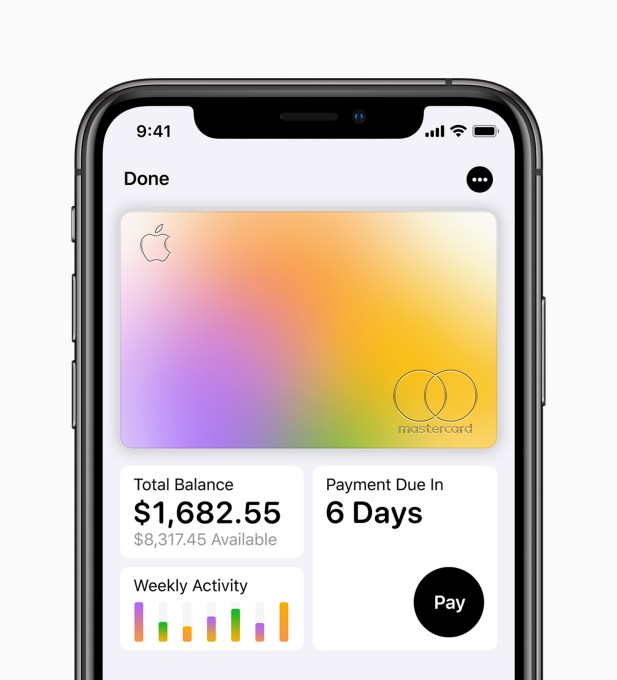
The basics of Apple Card are pretty straightforward. We’ve already posted the basics here so I won’t go over them at length. It’s a virtual card and physical card that can be used for both regular and Apple Pay purchases at any place Mastercard works. The app companion categorizes purchases automatically, shows you where they were made and has a design that makes it easy for you to see interest charges, spending and cash back. The physical card offers 1% cash back, the virtual card offers 2% cash back on Apple Pay purchases and 3% back on purchases of Apple products. The cash back is delivered daily to your Apple Cash balance or to the card monthly as a credit balance if you don’t have or want an Apple Cash account.

But beyond those basics, there are still a lot of questions about some aspects of the way the card works. Here are some interesting bits.

Activating a physical Apple Card will happen with a tap of the iPhone to the card. The activation takes place with a pop up view of the card and an activation button, similar to the pairing process of AirPods. You can see signs of this in the current beta.

There is no penalty interest rate on Apple Card. There have been some reports that Apple Card will charge penalty rates, largely due to some required regulatory legalese. Penalty rates are an increase of your interest rate if you fail to pay on time. That is not true. Apple Card has no late fees and no penalty rates. You will continue to pay your agreed upon interest rate on your outstanding balance, but that rate will not go up. It will impact your credit score, as Apple does do standard reporting, but neither Apple nor Goldman Sachs will increase your rate due to late payment.

Apple will place Apple Card users at the low end of their interest rate tier. While Apple Card’s interest rates fail to break the mold in any major way (they are roughly between 13-24%), Apple will place users who sign up at the lower end of the tier that they land in due to their credit score. This isn’t some incredible re-imagining of how to offer credit or an intensely low interest option, but it could shift you to the bottom of a tier when you qualify instead of paying a few points higher at your ‘exact’ score.

You can pay your balance via ACH from a bank account or via Apple Cash. Apple Cash is not required to pay your bill, though cash back earned or any other money you have in there can go towards your balance if you desire.

Apple Card does not require or display signatures. Neither the physical card nor the app will display a signature. A network change a few months ago means that signatures are not required at point of sale for any credit cards. Though some stores may still ask to see ID, lack of a signature anywhere within Apple Card’s system shouldn’t be a roadblock to using it.

Perhaps the biggest security feature of the offering is that Apple Card can generate virtual card numbers for online non-Apple Pay purchases. Though Apple said that the app would display your card info during the event, they weren’t specific on what that info would be so I got some more detail here.

  • The physical Apple Card, of course, has no number. The app displays the last 4 digits of the card number that is on the mag stripe of the card only, you never see the full card number.
  • Instead, Apple provides a virtual card number and virtual confirmation code (CVV) for the card in the app. You can use this for non-Apple Pay purchases online or over the phone. This number is semi-permanent, meaning that you can keep using it as long as you want.
  • But you can hit a button to regenerate the PAN (primary account number), providing you with a new credit card number at any time. This is great for situations where you are forced to tell someone your credit card number but do not necessarily completely trust the recipient.
  • Card numbers are manually regenerated only, and do not automatically rotate. There is, currently, no single-use number support or single-merchant number support.
  • Each purchase requires a confirmation code (CVV) that will refresh every transaction, a fantastic additional security feature outlined by Zack Whittaker earlier in the week. This makes it even harder for someone to use your card, even if skimmed or copied, to make online purchases.

I use a virtual card service called Privacy for transactions online where I don’t know the person or company that the number is going to well. Several banks and credit card companies like Bank of America and Citi also offer virtual card numbers currently. Apple Card, though, will doubtless be the largest body of consumers to ever have easy access to a virtual card number with an easy to use interface and will expose many more people to the concept.

If you use Apple Card for a subscription or ongoing service, by the way, it’s possible you’ll have to re-enter your info if you regenerate your card — though many, many retailers — especially if they have ‘Card on File’ systems already use account updater services. These services can pull the new number from Mastercard to make sure that recurring payments remain in place and Apple Card members will have nothing to do.

The physical card has a fixed number on the mag stripe, but you don’t know what it is. It’s important to note that the number you have in the app and the number that are on the mag stripe can be totally different and it doesn’t matter. You’ll only really know the last 4 digits of your PAN on the physical card. If your card gets lost or stolen you can get replacement cards for free, and you can easily freeze the card with the app in case of theft or fraud.

Because of the way it is set up, every purchase with Apple Card requires biometric identification aside from purchases with the physical card. That goes for Apple Pay and non-Apple Pay purchases online. I personally think it would be cool to optionally require a confirmation from your phone to let a charge go through, but that is likely a v2 situation.

Replacement cards are free. Some people were worried that the flashy titanium cards would be expensive to replace. There is no fee.

There is currently no provision for multiple users or shared cards. For now, it’s one card per person, per account.

The exchange rate for foreign transactions is determined by Mastercard. There are no foreign transaction fees, but the rate of exchange is network determined, not a fixed rate or foreign currency.

Apple Card users must have two factor authentication set up to sign up.

Using Apple Card on Android is useless. This is kind of silly but people asked me. You can’t sign up for or administrate most of Apple Card’s features on Android — but if you were to switch to Android you could continue using your physical card and paying your bill — but without the majority of the cash back or security benefits why would you?

Goldman Sachs will not sell data for marketing purposes. This was on the keynote slide but there were some additional questions about it. The data that they see can be used for internal reporting but cannot be used for external or internal marketing or advertising. That goes for third parties as well. Though some regulatory or operational partners will need to see or transmit some data, all of that must be related to operating Apple Card only, not marketing or advertising.

Why cash back? There were definitely some questions that I got as well about Apple going cash back only. My assumption, which has been backed up by those I’ve spoken to, is that Apple wanted the simplest, most universal benefit structure — and that is cash. Points are by nature relatively opaque and can vary from day-to-day in value on the dollar. For this initial offering, Apple wanted to offer a straight cash benefit that can be accessed nearly immediately, transferred to a bank or spent like cash. Though the cash back is relatively competitive, it is not the highest percentage in the industry.

Apple Pay stuff. This is more Apple Pay than Apple Card stuff but some quick notes on the transit offerings coming to Pay.

  • The number of vehicles and transit systems supported will vary by operator.
  • Portland will include subways and busses, as will Chicago.
  • Chicago will support open loop and Ventra Card systems. Portland is a closed loop system.
  • New York will pilot Apple Pay on a couple of lines in the spring and then roll out to additional lines throughout the rest of the year.

Overall the Apple Card has some relatively unique and interesting takes on data transparency for users, who are getting what appears to be an information rich but easy to interpret interface that rivals the best apps (like the AMEX app) out there for consumer cards. It’s also got a solid set of security features that are missing only a couple of small improvements like per-merchant or per-transaction numbers that would make them the best offering in the industry.

With what are bound to be record low customer acquisition costs and a self-selected group of higher end customers, Apple Card is probably going to be a fairly solid hit for Apple. I just hope they continue to iterate for additional versions of the program.

28 Mar 2019

Boundless gets $7.8M to help immigrants navigate the convoluted green card process

Two years ago, former Amazon product manager Xiao Wang stood on the stage at TechCrunch Disrupt San Francisco and made the case for a platform meant to help couples apply for marriage green cards, a complex process made worse by bureaucracy and red tape.

Called Boundless, the startup had spun out of Seattle startup studio Pioneer Square Labs and raised a $3.5 million seed round. Now, Foundry Group’s Brad Feld has led a $7.8 million Series A in the startup, with participation from existing investors Trilogy Equity Partners, PSL, Two Sigma Ventures and Founders’ Co-Op.

“Families have really only had two choices, they could spend weeks or months trying to figure this out on their own, or they can spend thousands and thousands of dollars on an immigration attorney,” Wang, Boundless co-founder and chief executive officer, told TechCrunch. “What we are trying to do is basically give everyone access to the information, the tools and the support that was previously only available to those that could afford high-priced attorneys.”

Boundless charges $750 for its online green card application support services, which includes ensuring families correctly complete applications and have access to an immigration lawyer to review those applications. The fee comes at a major discount to the costs of an immigration lawyer and streamlines a process that can be delayed months when errors are made. The startup also offers a recently launched $395 naturalization product meant to assist eligible green card holders with their U.S. citizenship applications.

Wang founded Boundless in 2017 after helping build Amazon Go, the e-commerce giant’s line of cashierless convenience stores. Wang is an immigrant, having relocated to the U.S. from China when he was a child.

“We spent almost five months of rent money on an immigration attorney because the stakes were so high and we only had one shot,” Wang said. “We wanted to make sure we were doing it right. This is a story that is echoed by millions of families every year; this is such an important part of them starting a new life in a new country.”

Wang, after three years at Amazon, realized he could use his technology background and data prowess to build an information platform supportive of these millions of families.

“This is exactly what tech and data is meant to do,” he said. “I believe there is a moral obligation for tech to be used in meaningfully improving people’s lives.”

Boundless plans to use this investment to expand its team and product offerings, as well as build out its content library, which Wang said is rapidly becoming the go-to place for immigrants navigating the legal labyrinth that is the U.S. green card and citizenship process. Its resources page, which includes straightforward guides, a number of forms and more, counts 300,000 unique visitors per month.

“We hold their hand through the entire process,” Wang said. “We want to be the single source of information and tools for all family-based immigration.”

Wang and his team also hope to shine a brighter light on immigration policy. In late 2018, as part of its effort to be louder advocates for immigrants, Boundless, alongside Warby Parker, Foursquare, Foundation Capital and more, published an open letter to the U.S. Department of Homeland Security opposing its proposed “public charge” immigration regulation, which would allow for non-citizens who are in the country legally to be denied a visa or a green card if they have a medical condition, financial liabilities and other disqualifiers.

“The stakes for making sure your application is correct have never been higher; the government has far more leeway to be able to deny applications,” Wang said. “While we can’t speed up the government processing times, we can make meaningful improvements to helping families gather all the materials they need to send in the right information.”

28 Mar 2019

Earn a free ticket to TC Sessions: Mobility 2019 with SocialLadder

Mobility is an expansive topic that includes drones, dockless scooters and autonomous cars — both terrestrial and aeronautic — plus all the ancillary tech required to get the job done. If Henry Ford and the Wright brothers were alive today, you can bet they’d be headed to TC Sessions: Mobility on July 10 in San Jose. TechCrunch’s one-day event takes a deep dive into the future of mobility and transportation with the industries’ revolutionary thinkers, founders, investors and technologists.

For the first time ever, TechCrunch is launching an ambassador program (powered by SocialLadder) where participants can earn a free pass. Free is awesome right? You betcha, and here’s how the program works:

  1. Download the SocialLadder app on your phone (Apple Store) (Google Play)
  2. Input Invite code “TechCrunch” to join our instance
  3. Create your own unique ticket code to share with your friends
  4. Complete social-sharing challenges in the app to earn points
  5. Once you earn enough points, you’ll be sent a free ticket to attend the event!

Already have SocialLadder? Just tap “Find a New Area” > Add Invite Code > Enter “TechCrunch”.

The day’s programming will include interviews, panel discussions, fireside chats and workshops with some of the greatest minds at work to push mobility to the next level. We’re busy creating the event agenda, and we’ll be announcing speakers and demos in the coming weeks, so check back for updates.

TC Sessions: Mobility 2019 takes place July 10 in San Jose, Calif. Buy your early-bird ticket or save even more money by becoming a TechCrunch ambassador with the SocialLadder app. Tell your friends and earn a free ticket. Either way, we can’t wait to see you — and the future of mobility — in July.

28 Mar 2019

Turns out The Correspondent isn’t opening a U.S. newsroom after all

Dutch news organization The Correspondent surprised some of its supporters earlier this week, when co-founder and CEO Ernst Pfauth posted an update on Medium saying that the company would not be opening a newsroom in New York City.

Which was odd, since the organization raised $2.6 million in a crowdfunding campaign last fall with the express purpose of launching in the United States.

At least, that’s what I thought. After all, I wrote an article titled, “The Correspondent launches campaign to bring its ad-free journalism to the US.”

But here’s how Pfauth explained the decision in his post (emphasis in the original):

We’ve closed our campaign office in NYC, and we have decided that we won’t open a newsroom in the US for now. We don’t aim to be a national US news organization (we have founding members from more than 130 countries around the world!) but instead want to cover the greatest challenges of our time from a global perspective — in English. For that vision, Amsterdam is as a great place to start.

So was this the plan all along? In an interview with NiemanLab, Editor in Chief Rob Wijnberg argued that this is consistent what The Correspondent team promised in the campaign: “We’re setting up in English language, and we’re going to hire U.S.-based journalists as well.”

He went on to say that the team “never really talked about setting up an office” in the United States. Still, he acknowledged that it was a U.S.-centric campaign, with Wijnberg and Pfauth spending most of their time in New York, reaching out to U.S. journalists to write about the campaign and recruiting other journalists and pundits to serve as “ambassadors.”

“So it got interpreted by a lot of media who wrote about us as, ‘They’re launching in the U.S.,'” Wijnberg said. “Which is pretty much 80 percent true, in the sense that we are going to have English-language correspondents in the U.S. — just not only in the U.S. And we never promised — or never said, because that’s not our model — to have, to cover the United States or anything.”

So I thought: Okay, that makes sense. I must have misunderstood what Pfauth was telling me.

Still, I wanted to figure out how I got this wrong, so I went back to the initial email I received from Pfauth. Here’s how it began: “Dear Anthony, I’m CEO and cofounder of The Correspondent, an online journalism platform from Amsterdam that will soon be launching in the U.S.”

Then he gave a quick description of The Correspondent’s ad-free, reader-funded model, adding, “We aim to bring the same journalistic integrity and unconventional editorial approach when we launch in the U.S.”

It’s so weird that I ended up thinking they were planning to launch in the U.S.!

Wijnberg acknowledged the confusion in his interview, telling NiemanLab, “Tons of people talk about what we’re trying to do. So the idea that you can keep all these people on message all the time would be kind of totalitarian, right?”

Maybe … except this isn’t an overly-enthusiastic ambassador; it’s the company’s CEO. (And it seems he made a similar pitch to other publications.) One might argue that keeping him on message — a.k.a., making sure he accurately describes the company’s plans as he asks people for money — is not only not “totalitarian,” but actually the responsible thing to do.

The truth is, I don’t know what happened here. If The Correspondent never planned to open a U.S. office, thinks it can do a good job covering the U.S. without one and simply did a bad job communicating? Fine. If the original plan was to open a U.S. office, then it reconsidered? That would be disappointing, but if the model still produces worthwhile journalism about the U.S., then I suppose it’s still a net positive.

But these confusing, convoluted, “I’m sorry that you didn’t understand us” explanations don’t just make the company look disingenuous — they also seem antithetical to running a newsroom that depends on readers’ knowledge, goodwill and money.

28 Mar 2019

Facebook needs a white hat Cambridge Analytica

Facebook has had a terrible couple of years. Fake news. Cambridge Analytica. Charges of anti-semitism.  Russia hacking the 2016 election. Racist memes, murders and lynchings in India, Myanmar and Sri Lanka.  

And Facebook is just the tech company with the longest list of scandals. There’s Google, YouTube, and Twitter’s well-documented roles in radicalization to consider, not to mention growing global health crises caused by medical misinformation spread on all the major platforms.

Investors are rightly beginning to worry. If tech companies and their investors can’t foresee and stop these problems, it will likely lead to damaging regulation, costing them billions.

The rest of us are increasingly unhappy that internet giants refuse to take responsibility. The argument that the problem lies with third-party abuse of their tools is wearing thin, not just with the media and politicians, but increasingly with the public as well.

If the tech giants don’t want regulators to step in and police, they need to do much more to predict, and stop the abuse, before it even happens.

One hundred cardboard cutouts of Facebook founder and CEO Mark Zuckerberg stand outside the US Capitol in Washington, DC, April 10, 2018.
Advocacy group Avaaz is calling attention to what the groups says are hundreds of millions of fake accounts still spreading disinformation on Facebook. (Photo: SAUL LOEB/AFP/Getty Images)

The common factor in social media scandals

The problems mentioned above weren’t caused by anybody breaking existing social network rules. Nor were they about hacking data, in the true meaning of a ‘hack’ which involves stealing data.

These scandals are better understood as a political smear campaign. If you’ve seen a good political smear campaign, you’ll know smears are funny, interesting and shareable. Just like a good meme.

US President Lyndon Johnson was expert at smearing his opponents. As Hunter S Thompson reported:

“The race was close and Johnson was getting worried. Finally he told his campaign manager to start a massive rumor campaign about his opponent’s life-long habit of enjoying carnal knowledge of his barnyard sows.

“Christ, we can’t get away with calling him a pig-f****r,” the campaign manager protested. “Nobody’s going to believe a thing like that.”

“I know,” Johnson replied. “But let’s make the sonofab****h deny it.”

The fundamentals of a good smear campaign is what underlies many of the abuses we see on Facebook today. Sometimes the pernicious story has a kernel of truth. Sometimes it’s entirely rubbish. But that misses the point.

For a smear to work, it just has to be shared. Facebook, YouTube and Twitter all reward content that’s shared.<

More sharing, reaches more people directly – that’s the nature of social media.

Therein lies the problem. A story that’s funny and shocking (i.e. shareable) is more likely to be recommended by YouTube, is cheaper to advertise and indexes better on Google.

Of course, this has been understood for years. You can even buy guides to it.

Ryan Holliday’s hilarious and disturbing Trust Me I’m Lying, explains how he would graffiti his own client’s posters at night, to create controversy and shareability. Holliday would then anonymously share photos of these defaced posters into Facebook groups, forums and Twitter to stoke up fights, encouraging both sides to get outraged.

Outrage meant lots of sharing on social networks, and can even be a springboard into national media.

Nothing Holliday did was illegal, or even broke social network rules. But it was clearly abuse of social networks, and ultimately damaging to society, because it created controversy where none previously existed. What would you rather society concentrate on? Schools, jobs, hospitals, or the latest social media blowup?

Beyond purely stirring up controversy, there are also plenty of technical tricks to get your smears to take off.  And social networks are good at finding things like fake profiles, data scraping and traditional hacking.

But new problems are constantly being created, and to regulators, it appears the tech companies aren’t learning from their mistakes.

Image courtesy TechCrunch/Bryce Durbin

Why is this?

Technology companies simply have the wrong culture to fix this sort of problem. Technologists inevitably focus on technical abuses.  Employing armies of fact-checkers is an important response to fake news, but ask any political strategist how to tackle a smear.  They won’t say ‘counter with the truth’, because that can embed the lie, rather than stop it. Consider politicians and pigs.

This is a different sort of abuse. Almost every important abuse mentioned here involves somebody using the tools in a way that nobody at Facebook anticipated.

Facebook built an incredible engine to use the data it knows about people, to improve advertising targeting. But that same engine can also be used by companies more commonly associated with military-style psychological warfare against populations and armies.

Technology companies are always going to struggle with social problems. Engineers have a different type of devious mind from political strategists and online conmen.

Luckily we already have a model for this.

White hat hackers have existed for decades. The internet giants reward smart ‘friendly’ hackers, and pay them to find and then help plug security holes.

Image courtesy TechCrunch/Bryce Durbin

Our proposal: ‘White hat’ Cambridge Analytica

All the social networks need to do, is to start paying bonuses to the world’s most devious political and social media strategists. People who would otherwise be using social networks for dodgy clients.

Pay them to find weaknesses in Facebook, just as tech companies pay bonuses for exposing technical flaws in software.
Everybody wins from this. Facebook would be able to fix problems before they are widely exploited. And as a bonus they would be diverting some consultants from a life of, almost, crime. Facebook’s investors would be reassured of fewer scandals, and less risk of costly regulation.

And the rest of us would benefit from Facebook starting to act its age.

28 Mar 2019

Scaleway refreshes entry-level cloud instances

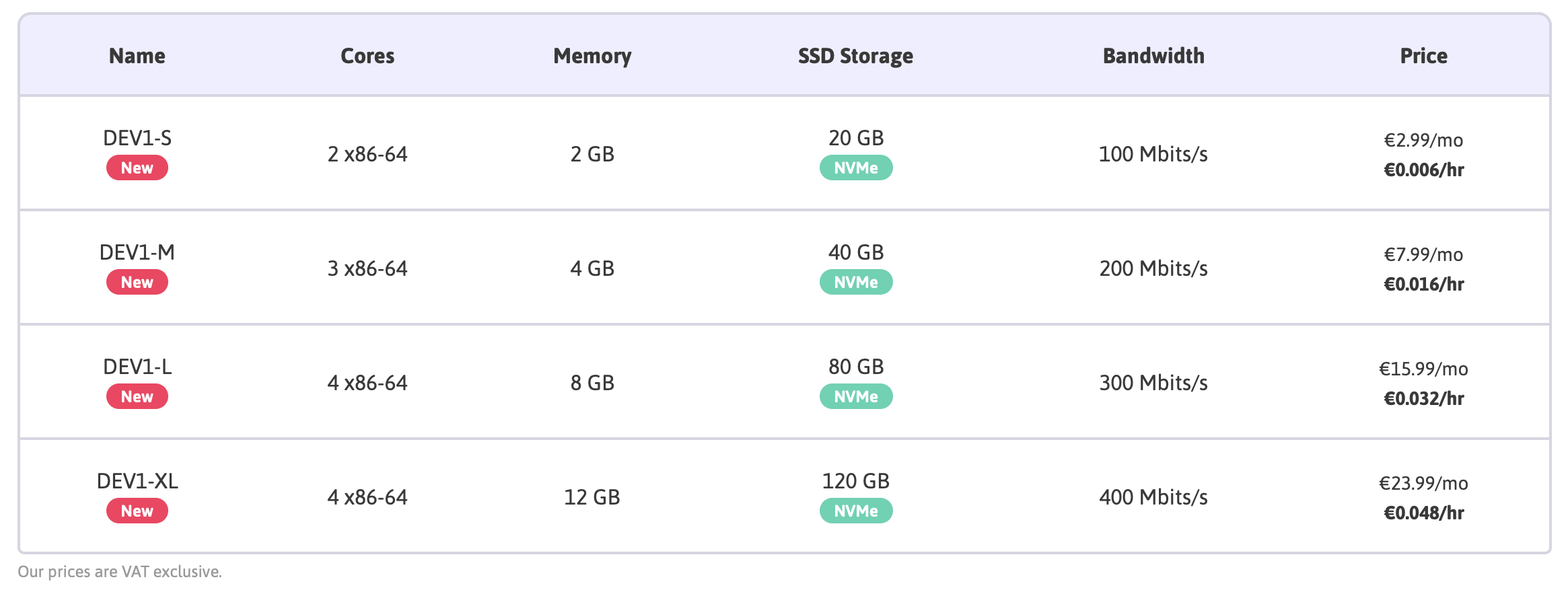
Cloud-hosting company Scaleway is upgrading its entry-level instances today. These instances are now all equipped with DDR4 ECC RAM, NVMe SSD storage and AMD EPYC CPUs. As INpact Hardware noted, the company is betting on AMD across the board.

The cheapest instance now costs €2.99 per month ($3.38). For that price, you get 2 CPU cores, 2GB of RAM, 20GB of storage and 100Mbps of bandwidth. There’s no direct equivalent in the previous lineup as it’s a new price point for the company.

Before today, you could get a server with 1GB of RAM for €1.99 per month, or 2GB of RAM for €3.99 per month, but with more storage and bandwidth too. It remains a solid deal for personal use cases, experiments and servers that don’t get a lot of traffic.

The three new instances in the ‘DEV1’ category cost €7.99 per month ($9) for 3 cores, 4GB of RAM, 40GB of storage and 200Mbps of bandwidth, €15.99 ($18) for 4 cores, 8GB of RAM, 80GB of storage, 300Mbps of bandwidth, and €23.99 ($27) for 4 cores, 12GB of RAM, 120GB of storage and 400Mbps of bandwidth.

If you want more cores and more memory, you need to look at the high-performance instances. If you’re out of storage, you don’t necessarily need to upgrade to a more expensive instance. You can buy block storage per 50GB increments for €1 per month.

With today’s update, Scaleway has now completed its lineup refresh. Older instances will be slowly phased out. Now let’s see if the company plans to open new data centers around the world with these new servers.

28 Mar 2019

Boston Dynamics puts its wheeled-robot Handle to work in a warehouse

Boston Dynamics deputed Handle two years back. Since then, however, the bipedal wheeled robot has taken a backseat to the rest of the company’s offering. While the ‘bot is no less impressive than the rest of its lineup, Boston Dynamics’ video output has almost exclusively been dedicated to Atlas and Spot/Spot Mini.

Today, however, the robot gets a bit more time to shine — albeit in slightly less glamorous circumstances. A new video offers a better look at the robot’s cargo carrying abilities, this time in a warehouse setting. The initial video showed how the robot was capable of picking up 100 pound crates, and now we’re seeing what it might look like the put the robot to work.

The “reimagined” version of the robot has some clear differences from its predecessor. It appears to be larger and, more strikingly, its twin arms have been replaced by a large, overhead suction cup gripper. This time out, lifts are limited to 30 pounds, though the boxes in the video weigh around 12.

According to the company, “Handle autonomously performs mixed SKU pallet building and depalletizing after initialization and localizing against the pallets. The on-board vision system on Handle tracks the marked pallets for navigation and finds individual boxes for grasping and placing.”

Last year at our Berkeley Robotics event, the company announced plans to commercialize Spot Mini. The robot is set for sale later this year, and is part of a new found focus on product monetization that appears to have been been a part of becoming part of a larger organization — first Google, then Softbank.

Of course, this video shouldn’t be taken a definitely sign that the company is moving in that direction, and besides, it’s hard to imagine a robot as advanced as handle not being prohibitively expensive for most warehouse. Still, at a time when most warehouse robots are essentially autonomous carts, there’s something to be said for a fast moving robot capable of actually picking products off of shelves.