
Year: 2018

26 Apr 2018

Mammoth Biosciences launches a CRISPR-powered search engine for disease detection

Most people tend to think of CRISPR as a groundbreaking gene-editing technology that can hunt down and snip away bits of DNA, like the cut and paste function on a keyboard. While many research projects tend to emphasize the potential of that process in replacing target bits of genetic material, for Mammoth Biosciences, the search function is the real game changer.

“Control + F is the exciting part,” Mammoth co-founder and CEO Trevor Martin told TechCrunch in an interview. “At core it’s just this amazing search engine that we can use to find things. The way that we search for things is just like Google.”

To conduct that search, one must enter a guide RNA and tell a CRISPR protein what to search for, any specific DNA or RNA sequence, from a malaria pathogen to a biomarker for leukemia. Mammoth’s novel technology uses a reporter molecule that exudes color when the sequence is located and snipped, indicating that the genetic search term was present in the sample and making the result of such a search viewable with the naked eye.

As the company’s documentation explains, the process would go like this:

This could be as simple as a rapid test on a credit-card sized disposable paper strip that anyone could use at home… For at-home testing, once the user has completed the test, they will securely upload an anonymous photo of the strip to Mammoth’s corresponding application for remote analysis and then receive their confidential results and professional advice – all in under an hour.

While the diagnostic element is big for the company, Mammoth is positioning itself as the platform for an “infinite number of tests” that the company and its partners could run. And while cancer is a massive application for CRISPR, the technology isn’t limited to health. Martin notes that it could be used in something like agriculture to identify a soil biome or to crack a forensic case gone cold.

Mammoth’s team is led by two Stanford PhDs, Trevor Martin and Ashley Tehranchi, CEO and CTO respectively. The research portion of the work will be helmed by Berkeley PhD students Janice Chen and Lucas Harrington. Notably, Mammoth also lists the legendary Jennifer Doudna, the scientist who discovered the CRISPR gene-editing mechanism, as a co-founder and chair of the company’s advisory board.

Doudna’s breakthrough is what makes Mammoth’s platform — and all things CRISPR — possible. “[That] really amazing work shows that you can build this kind of platform using CRISPR-based technology,” Martin said.

Mammoth Biosciences raised $120,000 from NFX Guild in 2017 and since then has pieced together capital from a variety of sources, including Mayfield, NFX, 8VC, AME Cloud, Wireframe, Kairos and Boom Capital, though the company declined to disclose the amount it has raised.

“Because we have this really transformative platform for disease detection, it’s really allowing us to rethink the business models about building this type of biotech company,” Martin told TechCrunch. “Because the technology is so programmable, we’re really leveraging [to make] Mammoth a platform company for detection.”

Mammoth’s next big step is to search for partners like universities and corporations that have interesting biomarkers that could be plugged into its CRISPR platform. The ultimate goal, as Martin explains, is to leverage its device-free system “to bring those biomarkers the last mile or even the last foot into the healthcare system.”

“We’re really excited to partner with these companies to use our platform,” Martin said. “[Mammoth] enables these awesome biomarkers to actually get used.”

26 Apr 2018

Samsung tempers record earnings with pessimistic smartphone outlook

Samsung’s latest earnings report is a succinct lesson in hoping for the best and preparing for the worst. The actual news here is pretty positive, as the company reports a record operating profit, courtesy of high demand for its components and flagship handsets.

But a statement tied to the news mentions “slow demand” no fewer than seven times, as the company looks to temper investor expectations, Those warnings largely revolve around the company’s display panel offerings and a perceived stagnations in the mobile sector in general.

“For the second quarter,” the company writes in a statement, “Samsung expects the Memory Business to maintain its strong performance, but generating overall earnings growth across the company will be a challenge due to weakness in the Display Panel segment and a decline in profitability in the Mobile Business amid rising competition in the high-end segment.”

The slow down, it seems, has already had an impact on the display side, though Samsung’s weathered much worse than this already. Keep in mind how the whole Note 7 debacle didn’t make a dent on the company’s profitability. Samsung is the consumer electronics poster child from the importance of product diversity.

There’s some Apple shade implied here as well. After all, Samsung provides the OLED panel for its chief competitor’s ultra premium handset, leaving Wall Street to infer that less than stellar iPhone X sales was a contributor here. Samsung’s forecast also includes warnings around slowed demand for its own handsets in the next quarter.

“In the Mobile Business,” Samsung writes, “profitability is expected to decline QoQ due to stagnant sales of flagship models amid weak demand and an increase in marketing expenses.” That’s due, at least in part, to a natural cycle as the initial hype dies down — though there also appears to be a larger global smartphone slow down at play here as well. But the company says it believes that will be buoyed in part by increased summer demand for TVs and air conditioners. People might not be buying as many new smartphones in the future, but hey, climate change will make sure we always need ACs. 

26 Apr 2018

Tile and Comcast team up to help you find lost items with your TV’s voice remote

Lost device finder Tile today is making good on its previously announced partnership with Comcast by introducing a way for Comcast Xfinity customers to locate their Tiles using Comcast’s TV remote, the Xfinity X1 Voice Remote. This is also the first video and voice partnership with Tile, which has been steadily expanding its integrations with third parties, including most recently Bose, Samsonite, Boosted Boards, and others.

The company has said its goal is to “blanket the world” in smart location through its partnerships, which have also included those with access points and airport Wi-Fi.

With the Comcast partnership in particular, Tile users can speak into their voice remote and ask for the location of one of their Tiles – the small dongles that can be attached to things like bags, purses, keys, wallets and more.

To use this feature, you have to say “Xfinity Home,” (yes, this is how you talk to your remote), “where are my keys?” or “Sam’s backpack?” or whatever other label you’ve assigned your Tile device.

The last known location and the address of the missing Tile will then appear on the TV screen.

To use the feature, Xfinity customers will have to download the Xfinity Home app on their iOS or Android device to add their Tiles following the instructions in the app.

The companies say that, later this year, the feature will become available to all Xfinity Internet customers, too.

Though there are a number of lost item finders on the market, Tile has become one of the biggest in the space, having sold 13 million Tiles to date, as of this January. It hasn’t provided an update on revenue in recent months, but said it had earned $100 million in 2016.

One the company’s bigger efforts lately has been on expanding its network. Tiles work beyond their Bluetooth connections by creating a community where all users with the Tile app on their phone can share information back to the network about nearby Tiles, including those from other users. That means it’s to Tile’s advantage to integrate its technology in as many places and products as possible – as this brings on more customers, and more places where nearby Tiles can be found.

Comcast was one of several new partnerships announced this year, but it was one of the bigger names. The other notable brand working with Tile now is Bose, whose SoundSport Wireless and QuietControl 30 headphones will ship with Tile’s technology embedded inside.

26 Apr 2018

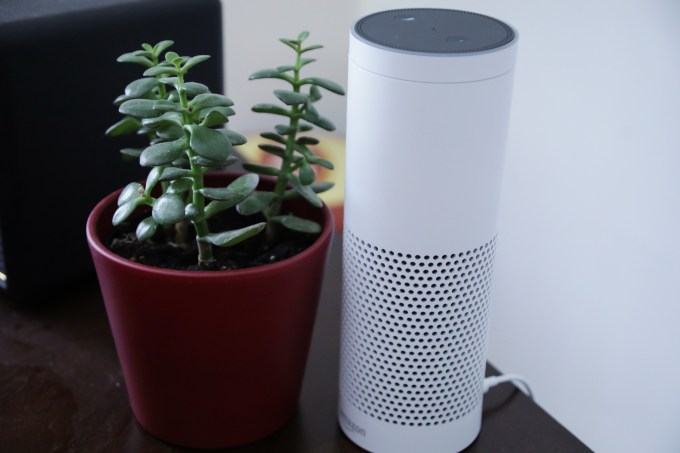
Alexa will soon gain a memory, converse more naturally, and automatically launch skills

Alexa will soon be able to recall information you’ve directed her to remember, as well as have more natural conversations that don’t require every command to begin with “Alexa.” She’ll also be able to launch skills in response to questions you ask, without explicit instructions to do so. The features are the first of what Amazon says are many launches this year that will make its virtual assistant more personalized, smarter, and more engaging.

The news was announced this morning in a keynote presentation from the head of the Alexa Brain group, Ruhi Sarikaya, speaking at the World Wide Web Conference in Lyon, France.

He explained that the Alexa Brain initiative is focused on improving Alexa’s ability to track context and memory within and across dialog sessions, as well as make it easier for users to discover and interact with Alexa’s now over 40,000 third-party skills.

With the memory update, arriving soon to U.S. users, Alexa will be able to remember any information you ask her to, and retrieve it later.

For example, you might direct Alexa to remember an important day by saying something like, “Alexa, remember that Sean’s birthday is June 20th.” Alexa will then reply, “Okay, I’ll remember that Sean’s birthday is June 20th.” This effectively turns Alexa into a way to offload information you’d otherwise have to store in your own brain, and is reminiscent of earlier bots, like Wonder, which were designed to remember anything you told it, for later retrieval over SMS or messaging platforms.

Memory, of course, has also been one of Google Assistant’s more useful features – so it was time for Alexa to catch up on this front.

In addition, Alexa will soon be able to have more natural conversations with users, thanks to something called “context carryover.” This means that Alexa will be able to understand follow-up questions and respond appropriately, even though you haven’t addressed her as “Alexa.”

For instance, you could ask “Alexa, how is the weather in Seattle?” and then ask, “What about this weekend?” after Alexa responds.

You can even change the subject, saying “Alexa, how’s the weather in Portland?,” then “How long does it take to get there?”

The feature, says Sarikaya, takes advantage of deep learning models applied to the spoken language understanding pipeline, in order to have conversations that carry customers’ intent and entities within and across domains – like it did between weather and traffic, in the example above.

Natural conversations are also coming “soon” to Alexa device owners in the U.S., U.K. and Germany.

A third advance arriving in the near future focuses on Alexa’s skills. These are the third-party voice apps that aim to help you do more with Alexa – like checking your credit card account information, playing news radio, ordering an Uber, playing a game, and more. There are so many out there, it’s becoming harder to surface them just by digging around in the Alexa Skills Store.

In the weeks ahead, U.S. users will be able to launch skills using natural phrases, instead of explicit commands like “Alexa, open [skill name]” or “…enable [skill name].”

Amazon has been working to make Alexa’s skills easier to use for years. In 2016, Echo was updated to allow users to enable new Alexa skills by voice, and last year, Alexa began suggesting skills in response to certain questions in limited scenarios. With the new feature, now in beta testing, Alexa will instead locate and launch skills for you.

Sarikaya gives an example of this from the current beta test, noting that he asked Alexa “how do I remove an oil stain from my shirt?”

Alexa responded by saying “Here is Tide Stain Remover,” which is the name of Procter & Gamble’s skill that walks you through stain removal for over 200 specific stain types – including oil.

Before, it was hard to imagine why anyone would seek out and enable a Tide skill on their own, but having it in Alexa’s repertoire now begins to make more sense.

This could also potentially present Amazon with an advertising model, similar to Google’s keyword bidding system. If someone asks for information that could be answered by a skill touting a particular product or brand, Amazon could eventually have advertisers compete to be the skill recommended first. (Perhaps the others could be called up with a follow-up request, “any other ideas?”)

Amazon isn’t giving an exact launch date for any of these three new features, only that they’re coming soon.

But despite the new launches, Sarikaya notes there’s still a lot of work left ahead.

“We have many challenges still to address, such as how to scale these new experiences across languages and different devices, how to scale skill arbitration across the tens of thousands of Alexa skills, and how to measure experience quality,” he says. “Additionally, there are component-level technology challenges that span automatic speech recognition, spoken language understanding, dialog management, natural language generation, text-to-speech synthesis, and personalization,” he says.

“Skills arbitration, context carryover and the memory feature are early instances of a class of work Amazon scientists and engineers are doing to make engaging with Alexa more friction-free,” Sarikaya continues. “We’re on a multi-year journey to fundamentally change human-computer interaction, and as we like to say at Amazon, it’s still Day 1.”


26 Apr 2018

The ONE Smart Keyboard Pro lets you tickle the ivories with ease

While the ONE Smart Keyboard Pro doesn’t have a sweet demo tune nor can it play barking dog Jingle Bells without some help, it can teach you or your kids how to play piano. The elegant keyboard has 88 weighted keys that simulate a true mechanical piano and connects to your phone so you can learn to play at your own pace.

The Keyboard Pro costs $799 and is essentially a compact teaching keyboard. It can connect to your iOS or Android devices via an oddly shaped USB B cable and once it’s paired with the app you can run through simple songs – think Greensleeves – and more complex sheet music. This keyboard is weighted but not progressively which means that each key offers the same resistance, a consideration that might be important to some more experienced players. Further, you can connect a USB cable and connect the keyboard to your computer to use it as a MIDI controller.

Again, this is a very austere keyboard. It doesn’t do much aside from teach you how to play which, in the end, is what most of us need. Because it doesn’t have the expansive bells and whistles of a Casio and because most of the smarts are in the app itself, it’s a bit of a hard sell for most people. However, if you’re looking to learn, the ONE works.

This larger and more complete version of the One Smart Keyboard offers quality workmanship and design. The entire system is surprisingly sparse with nothing but a power button and volume on the front of the keyboard. There is an input for a sustain pedal as well as a few output jacks for headphones and that’s about it. Don’t expect to pick out instruments or pitch shift with this keyboard. Once you fire up the app you have access to teaching exercises and games that let you follow along on the LED-lit keyboard as you run through songs and scales. Finally, you can buy sheet music for $3.99 or so that you can learn to play on the ONE. There is also free sheet music available for those who want to play a little classical.

[gallery ids="1629054,1629055,1629053"]

I found the entire system to be quite usable and my kids, once they figured out how to slow down the music, jumped right in learning little songs. Nothing can quite teach you how to play piano like a human teacher – there aren’t enough smarts in this app to make adjustments based on your skill – but it’s the electronic equivalent of buying a Teach Yourself Piano book and sitting down in front of grandma’s old upright. I’m especially pleased with the quality of the keyboard. I’ve already had a few MIDI keyboards over the years including models from Casio and Yamaha and this one is on par with those. The teaching feature is the main draw here, as I noted before, because there is little else you can do with this keyboard right out of the box. However, if that’s what you’re looking for in a keyboard and you don’t want to sample bodily noises so you can play Farting Clair De Lune at the school talent show, this might be the model for you.

[gallery ids="1629027,1629020,1629017,1629016,1629015"]
26 Apr 2018

Meet 11 new startups launching out of the Entrepreneurs Roundtable Accelerator

Today, 11 new companies launch out of the Entrepreneurs Roundtable Accelerator based in NYC. This is the 14th cohort of startups to launch out of ERA, and each company has received $100,000 in seed funding from the accelerator.

These startups span a wide variety of industries, from hospitality to new retail to healthcare. So without any further ado, here are the 11 companies launching out of ERA:

Butler

Butler wants to handle room service and amenities for hotels, partnering with hotels to provide room service, catering and other food-based amenities from Butler’s various hubs across the city. Using SMS as a means of communication with guests, Butler can serve a larger number of hotels. Right now, Butler serves 5,000 rooms in Manhattan.

Choosy

Leveraging machine learning algorithms that scour social media, Choosy quickly whips up fashion designs, sends them to China for manufacturing and offers flash-fashion items via Instagram. As brands like H&M and Top Shop continue to speed up their operations and offerings, Choosy looks to use tech to keep up the pace.

Flume Health

Flume Health works with self-insured employers and healthcare providers to ensure that employees are best utilizing their healthcare benefits. The company says that 78 percent of employees don’t understand how their benefits program works, costing companies up to 26 percent more for healthcare. Flume Health uses concierges to connect employees with the best healthcare at the lowest price based on their benefits plan, reducing healthcare costs by 20 percent to 60 percent.

HealNow

HealNow wants to bridge the gap between healthcare professionals, pharmacies and patients, offering an ordering and payments platform for pharmacies. Patients can pay, schedule deliveries and enter medical information online to receive their prescription or equipment, while doctors and hospitals can offer on-demand delivery of the prescriptions they write.

Myro

Deodorant stops being optional around the age of 13, but many deodorants are made with potentially harmful chemicals and toxins. Myro offers an all-natural formula in a refillable container, letting users feel good about what they’re putting on their body as well as reducing plastic waste. Plus, they smell good. Myro launches later this summer.

Orcadex

Orcadex is a business intelligence platform focused on the blockchain and cryptocurrency verticals, collecting data via machine learning and natural language processing to offer analysis and insights to customers. The platform helps professionals create models and identify trends as the blockchain space continues to rapidly evolve. Orcadex launches to a closed group of institutional investors in June.

Spin Analytics

Spin Analytics is a fintech company focused on offering credit risk modeling for financial institutions. The company works with banks to offer actionable insights for meeting regulatory compliance and reporting requirements, reducing the time and cost of maintaining compliance.

Spryfit

Spryfit is where HQ meets the gym. Users connect their fitness trackers and try to achieve their fitness goals with the hopes of winning a cash prize. The idea is to use underutilized health data from wearables and smartphones to motivate users to get fit for the cash prize. The company currently has 50,000 users.

StellarEmploy

Hourly workers like waiters tend to churn in and out of positions often. StellarEmploy uses deep learning algorithms to match employee performance to job fundamentals, letting companies recruit hourly workers that will enjoy the job, do a great job, and stay put. Some of StellarEmploy’s customers include Home Chef and IBEX Global.

Welnys

Big companies understand that healthy employees are both more effective and more cost efficient, which is why many companies have implemented a wellness program for their workers. But Welnys wants to do the heavy lifting for those companies, offering a marketplace for workplace wellness vendors such as yoga and meditation instructors, nutritionists and more.

Young Alfred

Young Alfred wants to make buying home insurance as simple as possible. The platform lets users identify their needs, while a machine learning algorithm identifies customer risk and makes custom recommendations for home insurance that fit the users needs. Young Alfred has relationships with Progressive and Hippo, and users can check-out online direct from the Young Alfred website.

26 Apr 2018

This is a real life Transformer

The J-deite RIDE transformers from a vehicle to a robot just like the Megazord from Voltron. Specific information about the creation is a bit sketchy but the YouTube channel states it’s an electric vehicle and shows the driver and passenger staying in their seat as it changes forms. It can even walk.

The whole process seems automated and takes just a few minutes. Sure, if this was a Michael Bay movie, this transformer wouldn’t stand a chance against the Jaegers that can change form in seconds. But this is real life and so I’m still impressed.

26 Apr 2018

Leaked iPhone pics show glass back and headphone jack

The headphone jack could still have a future in an iPhone. These leaked pics show an iPhone SE 2 with a glass back and headphone jack. Like the current iPhone SE, the design seems to be a take on the classic iPhone 5. I dig it.

The leak also states the upcoming device sports wireless charging, which puts it inline with the iPhone 8 and iPhone X.

Rumors have long stated that Apple was working on an updated iPhone SE. The original was released in March 16 and updated a year later with improved specs. With a 4-inch screen, the iPhone SE is the smallest iPhone Apple offers and also the cheapest.

WWDC in early June is the next major Apple event and could play host for the launch of this phone. Last month, around the iPhone SE’s birthday, Apple held a special event in a Chicago school to launch an education-focused iPad. It’s logical that Apple pushed the launch of this new iPhone SE to WWDC to give the iPad event breathing room.

While Apple cut the headphone jack from its flagship devices, the SE looks to retain the connection. It makes sense. The low-cost iPhone is key for Apple in growing markets across the world where the last two models helped grow iOS’s market penetration. This is Apple’s low-cost offering and thus suggests Apple doesn’t expect buyers to also spring for its wireless earbuds.

If released at WWDC or later in the year, the iPhone SE looks to serve consumers who enjoy smaller phones with headphone jacks. That’s me.

26 Apr 2018

Waze signs data-sharing deal with AI-based traffic management startup Waycare

Waze has struck a data-sharing agreement with Waycare, an artificial intelligence-based traffic management startup, the two companies announced today. The deal will allow them to combine anonymized navigation information crowdsourced from the 100 million drivers who use Waze with Waycare’s proprietary traffic analytics.

The collaboration is now active in Nevada, Florida, California and Nevada, with plans to expand over the next year. It is part of Waze’s Connected Citizens Program, which gives cities around the world access to anonymized driver data to help them manage traffic and road infrastructure.

A representative told TechCrunch that data supplied by Waycare to Waze will be incorporated into the app’s usual interface, while data from Waze will be added to Waycare’s platform alongside its other data sets.

[gallery ids="1628899,1628898"]


Founded in 2016, Waycare is a cloud-based platform that enables municipalities to gather data from many sources, including on-board devices, navigation apps, sensors and road camera feeds, and analyze them using proprietary deep learning algorithms to figure out how to improve traffic and road conditions. The new partnership means cities that use Waycare will be able to send urgent alerts to drivers through Waze, while giving Waycare a new trove of data.

Like Waze, which was acquired by Google in 2013, Waycare is based in Tel Aviv with operations in the U.S. The startup has raised $2.3 million so far, according to Crunchbase, and currently has projects in Nevada, Florida, Delaware and California.


26 Apr 2018

Cashback app Dosh raises $44M on a $240M valuation from PayPal and more

In an era where we can buy whatever we want from wherever we want nearly in the blink of an eye, loyalty, rewards and membership programs have become a major lever in capturing repeat consumer spend — Amazon Prime perhaps being one of the most successful examples. Now, a company that has built up shopping frequency across multiple retailers by rewarding buyers with cashback is announcing a big round of funding to expand its business

Dosh, a startup and app of the same name that lets you get cash back when you shop at selected retailers with a linked card, has raised $44 million in a Series B round of funding from investors that include PayPal and Goodwater Capital. The company has paid out $25 million to some 3 million uses since being founded in 2016.

It claims to be the largest card-linked cash-back app and network in the U.S. with Sam’s Club, Forever 21, Cost Plus World Market, Target, Mattress Firm, Papa John’s, U.S. Polo Assn., Chili’s, and Payless ShoeSource among the retailers integrated with it.

No valuation is being disclosed but we understand from a source close to the company that it is $240 million.

The funding brings the total raised by Dosh, based out of Austin, to just over $100 million. Other investors in the company have included Next Coast Ventures, Chetrit Ventures and Extol Capital.

There are dozens of services on the market today that let users get cash back when they make purchases. They include genre-specific apps like Mogl for restaurants, shopping portal Spring, numerous credit cards, and even PayPal itself. CEO and founder Ryan Wuerch says that Dosh is different from the rest because of its implementation of AI and algorithms that respond to your shopping behavior to steer your activity.

“Dosh uses behavioral stimuli to directly connect merchants and consumers with predicted results,” he said in an interview. “Dosh subscribers automatically get cash without having to change their behaviors or actions. Dosh technology drives incremental transactions, triggering an immediate cash incentive to the consumer and creating positive associations with merchants and brands.”

He says that Dosh makes its own Dosh (which in the UK is slang for “money”) by taking a percentage on transactions, although he wouldn’t specify the number.

PayPal exists as one of the options for getting your cash back — others include your bank account and donating to charity — but Wuerch says that PayPal is solely a financial investor in the startup.

The company today operates only in the US and that is the plan for the next three years, with its target being to have 1 million merchants on the platform by that time. The sweetener is that it’s helping to lift purchasing, even among the biggest of its partners, and pointedly those who have been finding it a challenge to do battle with Prime, which Amazon uses to create loyalty for itself rather than a plethora of retailers.

“Dosh subscribers become sustained, repeat customers faster,” said James Lerner, Senior Product Marketing Director, Walmart Global eCommerce/Samsclub.com, in a statement.. “Those customers are visiting 29% more often, and spending 60% more per visit after 60 days when compared to non-Dosh subscribers.”