Year: 2019

05 Nov 2019

The first U.S. clinical trial of using an in-brain chip to fight opioid addiction is now underway

Opioid addiction is easily one of the top widespread healthcare issues facing the U.S., and research indicates we’re nowhere near achieving any kind of significant mitigating solution. But a team of medical researchers working at the West Virginia University Rockefeller Neuroscience Institute (RNI) and West Virginia University Medicine (WVU) are beginning a new clinical trial of a solution that uses brain-embedded technology to potentially curb opioid addiction in cases that have resisted other methods of treatment

A team of neurosurgeons from RNI and WVU successfully implanted what’s called a ‘deep brain simulation’ or DBS devices into the brain of a 33-year old man, the first person to participate in the trial. The DBS device consists of a number of tiny electrodes, attached to specific parts of the brain that are known to be associated with addiction and self-control behaviours. The DBI should, in theory, be able to curb addiction as related impulses are sent, and also monitor cravings in real-time in the patient, providing valuable data to researchers about what’s occurring in cases of treatment-resistant opioid addiction.

Opioid addiction resulted in as many as 49.6 deaths per 100,000 people in West Virginia in 2017, WVU notes. That’s the highest rate of opioid-related death in the U.S. Other, less invasive treatment options are definitely available, including opioid alternatives that will provide pain relief to chronic sufferers like the one being developed by startup Code. But for existing sufferers, and especially for the significant portion of opioid addiction patients for whom other treatments have not proven effective, a high-tech option like DBS might be the only viable course.

This RNI trial will initially include four participants, who have all undergone thorough courses of treatment across a number of programs and yet continue to suffer from addition. The team involved also has extensive experience working with DBS in FDA-approved treatment of other disorders, including epilepsy and obsessive-compulsive disorder. It’s definitely a last-resort approach, but if this clinical trial produces positive results, it could be an option to help the most serious of cases when all other options are exhausted.

05 Nov 2019

Huawei calls hackers to Munich for secret bug bounty meeting

Chinese tech giant Huawei has asked some of the world’s best phone hackers to a secret meeting in Munich later this month as the company tries to curry favor with global governments, TechCrunch has learned.

Sources with knowledge of the November 16 meeting said Huawei will privately present its new bug bounty program, which would allow researchers to get financial rewards for submitting security vulnerabilities. The sources said the bug bounty will be focused on past and future mobile devices, as well as its new mobile operating system, HarmonyOS, Huawei’s Android competitor.

Other phone makers, including Apple, Google, and Samsung, also have bug bounties.

The move comes at a time of increased pressure on Huawei over its links to the Chinese government. Huawei has denied U.S.-led claims that it could be forced to spy on behalf of Beijing. But that hasn’t stopped the federal government from imposing sanctions and obstacles from operating in the United States. That pressure has led companies like Google from pulling its support for Android, which Huawei relies on for its phones, prompting the tech giant to find or build alternatives.

One source described the event as similar to a secret meeting hosted by Apple in August, in which the tech giant handed its most prized security researchers special “dev” iPhones to hack and find security weaknesses.

The source said that Huawei’s bug bounty meeting was likely a way to show governments that it’s willing to work with hackers and security researchers to bolster the security of its products.

Huawei, which also makes networking equipment for telecom networks, came under fire by U.K. authorities earlier this year for failing to address “serious and systematic defects” in its software at a time it’s trying to prove it’s technologies are do not pose a national security threat.

Chase Skinner, a spokesperson for Huawei, did not respond to a request for comment.

05 Nov 2019

YouTube rolls out Super Stickers, a new way for creators to make money

YouTube today is expanding the ways creators can make money with the global launch of a new feature, Super Stickers. The stickers are aimed at fans who want to show their support and connect with favorite creators, similar to Super Chat, which highlights a fan’s messages within a live chat. To be eligible for either, creators have to operate a monetized channel with over 1,000 subscribers in supported markets.

Super Chat was first launched nearly three years ago, as a way for creators to generate additional income from top fans. This is particularly useful in crowded live chats hosted by popular creators where the comments section is packed, such as during Premieres. A “super chat,” similar to Twitch’s Cheering feature, lets a fan call attention to their message by highlighting it in a bright color and pinning it to the top of the stream to give it more visibility.

Since launch, over 100,000 channels have used Super Chat, with some earning more than $400 per minute, YouTube says.

Super Stickers, meanwhile, are seemingly inspired more by Twitch’s emotes and cheermotes, as it’s also a way to bring stickers — and sometimes animated stickers — into a chat.

However, YouTube’s stickers have a very different look and feel from those at Twitch, as they resemble more like what you’d find in a messaging app’s chat, rather than Twitch’s gem or the highly personalized cheermotes Twitch offers partners.

YouTube also said its Super Stickers would span categories including gaming, fashion, beauty, sports, music, food and more.

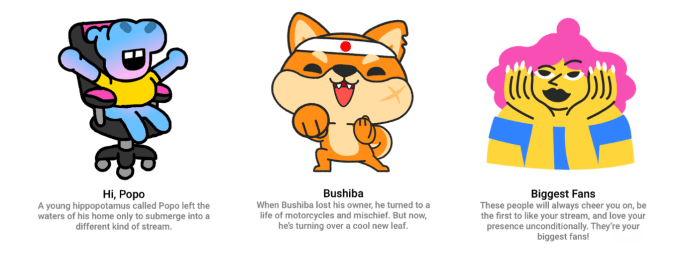
At launch, there are 8 distinct Super Sticker packs being offered, 5 which are animated and include unique bios. These include packs like “Hi, Popo” (a hippopotamus), “Baby Lemon,” “Energetic Lemon,” “Bushiba,” “Biggest Fans,” and others.

The packs are available in English, French, Japanese, Korean, and Portuguese, and are immediately available to any eligible creators already using Super Chat across 60 countries.

The stickers will also come in a range of price points, says YouTube, from 99 cents to $50.

YouTube first announced Super Stickers at the VidCon event this July,  saying the new stickers would arrive sometime later in 2019. The stickers have been in limited pilot testing until today.

Super Stickers are only one of many new ways YouTube has been expanding creators’ monetization opportunities in recent years. The company also in 2018 launched new products like channel memberships, merchandise, and premieres.

Twitch’s influence has been apparent in some of these launches. In addition to the similarities with Super Chat and Super Stickers with Twitch features, the Twitch-like channel membership model had come from YouTube Gaming, where it was first called sponsorships. Twitch also offered the ability to schedule premieres, but a message on its site says this feature is being shut down on November 12, 2019.

YouTube also rolled out support for merchandise shelves underneath videos, with partners like Teespring, Crowdmade, DFTBA, Fanjoy, Represent, Rooster Teeth, and most recently, Merchbar for artists’ channels. And it expanded channel memberships to include different, tiered levels.

The company hasn’t shared specifics on how well its newer monetization products have performed, but said earlier this year that “thousands” of channels have more than doubled their revenues as a result of the use of things like memberships, merch and Super Chat.

YouTube says Super Stickers are rolling out 100% today, but they may take a few days to propagate to all eligible channels. That process should complete by week-end.

05 Nov 2019

YouTube rolls out Super Stickers, a new way for creators to make money

YouTube today is expanding the ways creators can make money with the global launch of a new feature, Super Stickers. The stickers are aimed at fans who want to show their support and connect with favorite creators, similar to Super Chat, which highlights a fan’s messages within a live chat. To be eligible for either, creators have to operate a monetized channel with over 1,000 subscribers in supported markets.

Super Chat was first launched nearly three years ago, as a way for creators to generate additional income from top fans. This is particularly useful in crowded live chats hosted by popular creators where the comments section is packed, such as during Premieres. A “super chat,” similar to Twitch’s Cheering feature, lets a fan call attention to their message by highlighting it in a bright color and pinning it to the top of the stream to give it more visibility.

Since launch, over 100,000 channels have used Super Chat, with some earning more than $400 per minute, YouTube says.

Super Stickers, meanwhile, are seemingly inspired more by Twitch’s emotes and cheermotes, as it’s also a way to bring stickers — and sometimes animated stickers — into a chat.

However, YouTube’s stickers have a very different look and feel from those at Twitch, as they resemble more like what you’d find in a messaging app’s chat, rather than Twitch’s gem or the highly personalized cheermotes Twitch offers partners.

YouTube also said its Super Stickers would span categories including gaming, fashion, beauty, sports, music, food and more.

At launch, there are 8 distinct Super Sticker packs being offered, 5 which are animated and include unique bios. These include packs like “Hi, Popo” (a hippopotamus), “Baby Lemon,” “Energetic Lemon,” “Bushiba,” “Biggest Fans,” and others.

The packs are available in English, French, Japanese, Korean, and Portuguese, and are immediately available to any eligible creators already using Super Chat across 60 countries.

The stickers will also come in a range of price points, says YouTube, from 99 cents to $50.

YouTube first announced Super Stickers at the VidCon event this July,  saying the new stickers would arrive sometime later in 2019. The stickers have been in limited pilot testing until today.

Super Stickers are only one of many new ways YouTube has been expanding creators’ monetization opportunities in recent years. The company also in 2018 launched new products like channel memberships, merchandise, and premieres.

Twitch’s influence has been apparent in some of these launches. In addition to the similarities with Super Chat and Super Stickers with Twitch features, the Twitch-like channel membership model had come from YouTube Gaming, where it was first called sponsorships. Twitch also offered the ability to schedule premieres, but a message on its site says this feature is being shut down on November 12, 2019.

YouTube also rolled out support for merchandise shelves underneath videos, with partners like Teespring, Crowdmade, DFTBA, Fanjoy, Represent, Rooster Teeth, and most recently, Merchbar for artists’ channels. And it expanded channel memberships to include different, tiered levels.

The company hasn’t shared specifics on how well its newer monetization products have performed, but said earlier this year that “thousands” of channels have more than doubled their revenues as a result of the use of things like memberships, merch and Super Chat.

YouTube says Super Stickers are rolling out 100% today, but they may take a few days to propagate to all eligible channels. That process should complete by week-end.

05 Nov 2019

The Xbox Elite Wireless Controller Series 2 is a truly great game controller

Microsoft’s original Xbox Elite controller was a major step-up for gamers, with customizable buttons, changeable physical controls and adjustable sensitivity for serious personalization. The new Xbox Elite Controller Series 2 has just landed, and it offers similar features, but with new and improved features that add even more customization options, along with key hardware improvements that take what was one of the best gaming controllers available, and make it that much better.

USB-C

This might seem like a weird place to start, but the fact that the new Xbox Elite 2 comes with USB-C for charging and wired connections is actually a big deal, especially given that just about every other gadget in our lives has moved on to adapting this standard. Micro USB is looking decidedly long in the tooth, and if you’re like me, one of the only reasons you still have those cables around at all is to charging your game controllers.
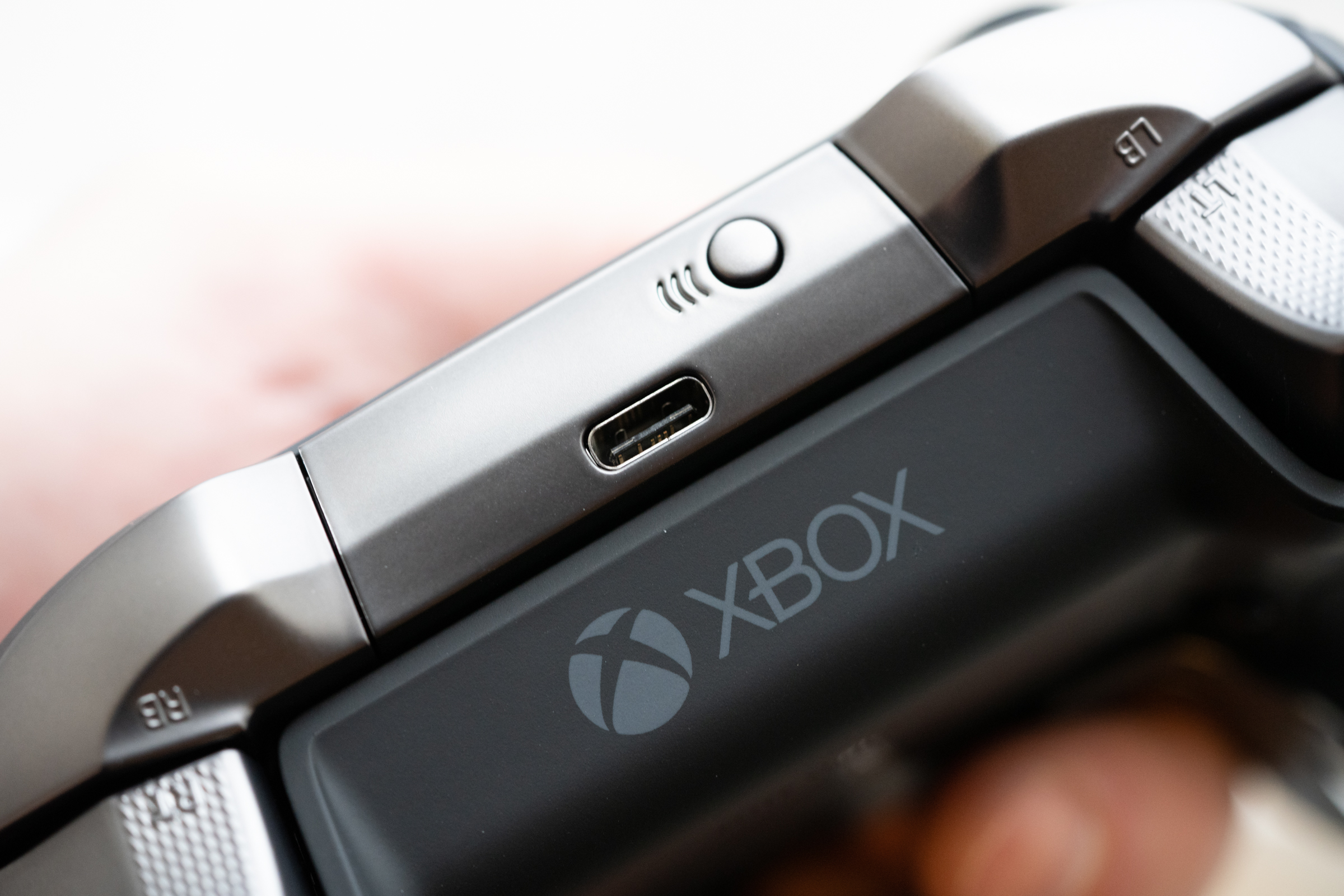
In the box, you get a braided USB-A to USB-C charging cable, which is plenty long enough to reach from your console to your couch at nine feet. Of course, you can also use your phone, tablet, MacBook or any other USB-C charger and cable combo to power up the Elite 2, which is why it’s such a nice upgrade.

This is big for one other key reason: Apple recently added Xbox controller compatibility to its iPad lineup, which also charges via USB-C. That’s what makes this the perfect controller for anyone looking to turn their tablets into a portable gaming powerhouse, since it reduces the amount of kit you need to pack when you want to grab the controller and have a good option for digging into some iPad gaming.

Adjustable everything

Probably the main reason to own the Elite 2 is that it offers amazing customization options. New to this generation, you can even adjust the resistance of the thumbsticks, which is immensely useful if you’re a frequent player of first-person shooter (FPS) games, for instance. This lets you tune the sensitivity of the sticks to help ensure you’re able to find the right balance of sensitivity vs. resistance for accurate aiming, and it should help pros and enthusiasts make the most of their own individual play style.

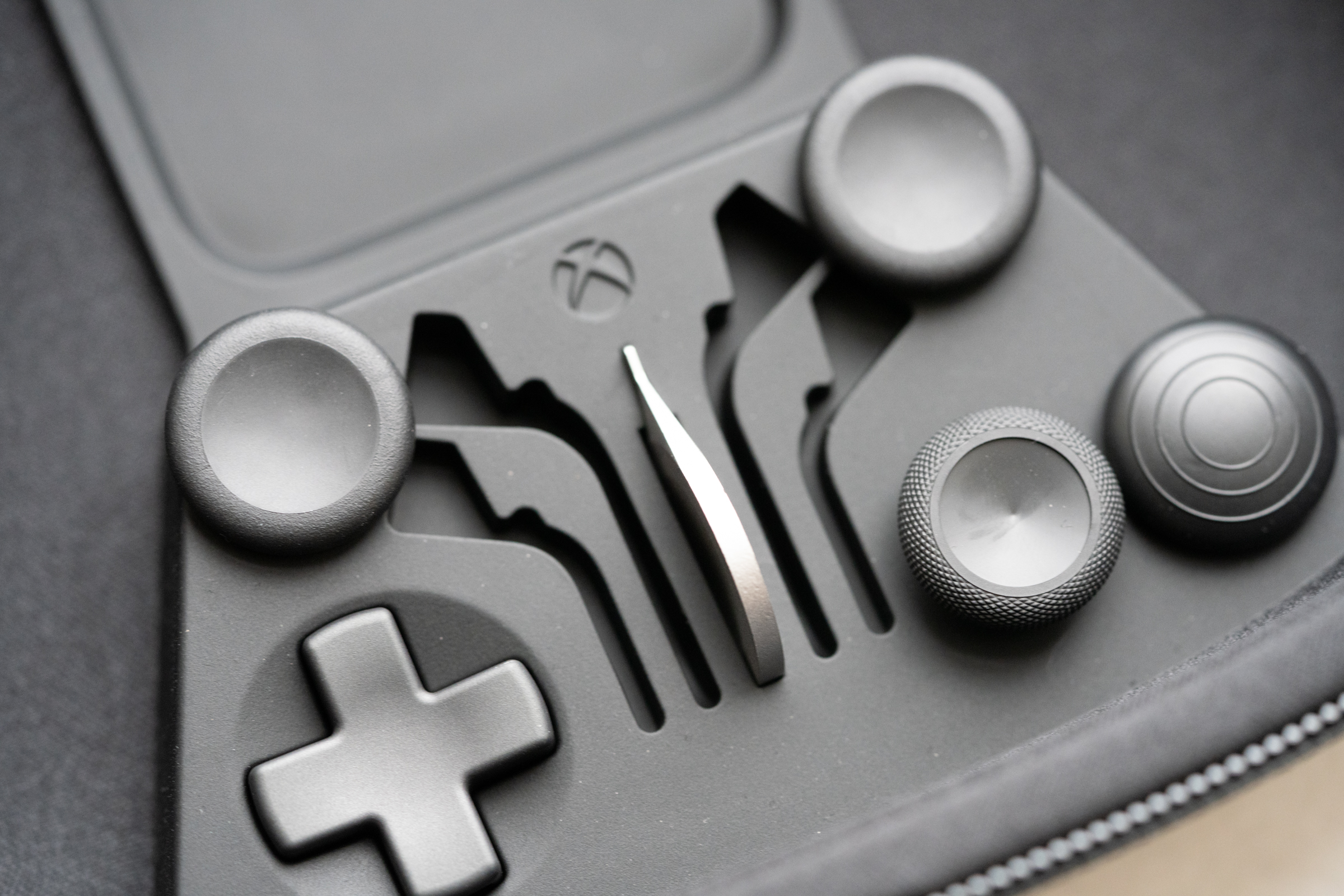
The shoulder triggers also now have even shorter hair trigger locks, which mean you can fire quicker with shorter squeezes in-game. And in the case, you’ll find other thumbsticks that you can swap out for the ones that are pre-installed, as well as a d-pad you can use to place the multi-directional pad.
On top of the hardware customization, you can also tweak everything about the controller in software on Windows 10 and Xbox One, using Microsoft’s Accessories app. You can even assign a button to act as a ‘Shift’ key to provide even more custom options, so that you can set up key combos to run even more inputs. Once you find a configuration you like, you can save it as a profile to the controller and switch quickly between them using a physical button on the controller’s front face.

Even if you’re not a hardcore multiplayer competitive gamer, these customization options can come in handy. I often use profiles that assign thumbstick clicks to the rear paddle buttons, for instance, which makes playing a lot of single-player games much more comfortable, especially during long sessions.

Dock and case included

The Xbox Elite 2 includes a travel case, just like the first generation, but this iteration is improved, too. It has a removable charging dock, which is a quality accessory in its own right. The dock offers pass-through charging even while the controller is inside the case, too, thanks to a USB-C cut-through that you can also seal with a rubberized flap when it’s not in use.
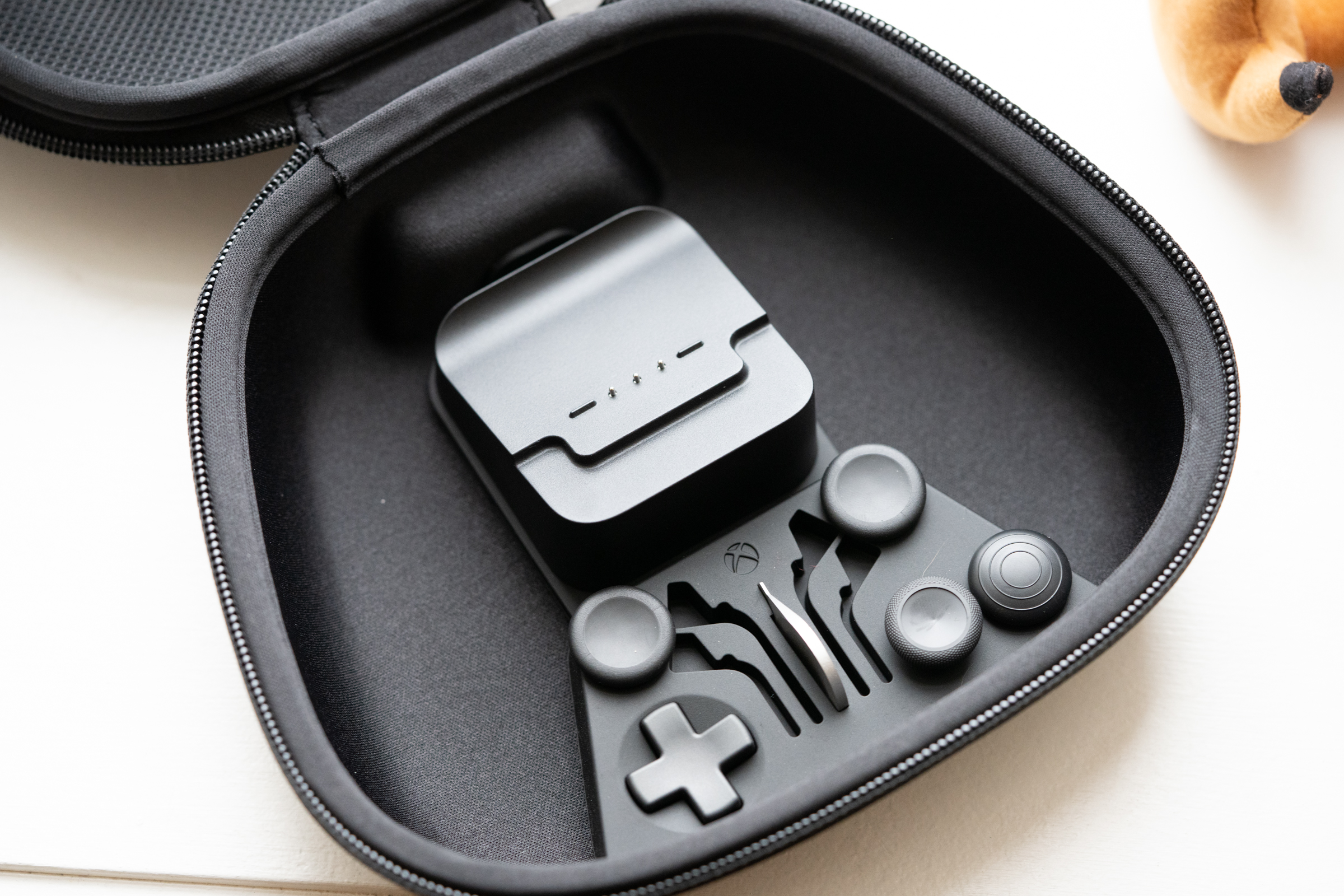
In addition to housing the charger and controller, the case can hold the additional sticks and D-pad, as well as the paddles when those aren’t in use. It’s got a mesh pocket for holding charging cables and other small accessories, and the exterior is a molded hard plastic wrapped in fabric that feels super durable, and yet doesn’t take up much more room than the controller itself when packed in a bag.

The case is actually a huge help in justifying that $179.99 price tag, since all of this would be a significant premium as an after-market add-on accessory for a standard controller.

Bottom line

Microsoft took its time with a successor to the original Xbox Elite Wireless Controller, and while at first glance you might think that not much has changed, there’s actually a lot of significant improvements here. The controller’s look and feel also feel better, with more satisfying button, pad and the stick response, and a better grip thanks to the new semi-textured finish on the front of the controller.

[gallery ids="1908338,1908336,1908334,1908333"]

USB-C and more customization options might be good enough reason even for existing Elite Controller owners to upgrade, but anyone on the fence about getting an Elite to begin with should definitely find this a very worthwhile upgrade over a standard Xbox One controller.


05 Nov 2019

Nio, Intel’s Mobileye partner to build self-driving electric cars for consumers

Mobileye, the Israeli-based automotive sensor company acquired by Intel in 2017 for $15.3 billion, is partnering with Chinese electric car startup Nio to develop autonomous vehicles that consumers can buy.

The companies, which describe this as a “strategic collaboration” aims to bring highly automated and autonomous vehicles to consumer markets in China and “other major territories.”

Under the agreement, Nio will engineer and manufacture a self-driving system designed by Mobileye. The self-driving system will target consumer autonomy — meaning cars people can buy — a departure from the traditional industry approach of developing autonomous vehicles just for ride-hailing services.

Nio will mass produce the system for Mobileye’s driverless ride-hailing services and also plans to integrate the technology into its electric vehicle lines for consumer markets. This variant will target initial release in China, with plans to subsequently expand into other global markets, the companies said.

The self-driving system, will be based on Mobileye’s Level 4 AV kit and be engineered for automotive qualification standards, quality, cost and scale, the companies said in a joint statement.

One year ago, Volkswagen Group, Intel’s Mobileye and Champion Motors said they planned to deploy Israel’s first self-driving ride-hailing service in 2019 through a joint venture called New Mobility in Israel. The group was supposed to begin testing this year in Tel Aviv and roll out the service in phases until reaching full commercialization in 2022. (Intel and Mobileye began testing self-driving cars in Jerusalem in May 2018.)

05 Nov 2019

ZenHub adds roadmapping to its GitHub project management tool

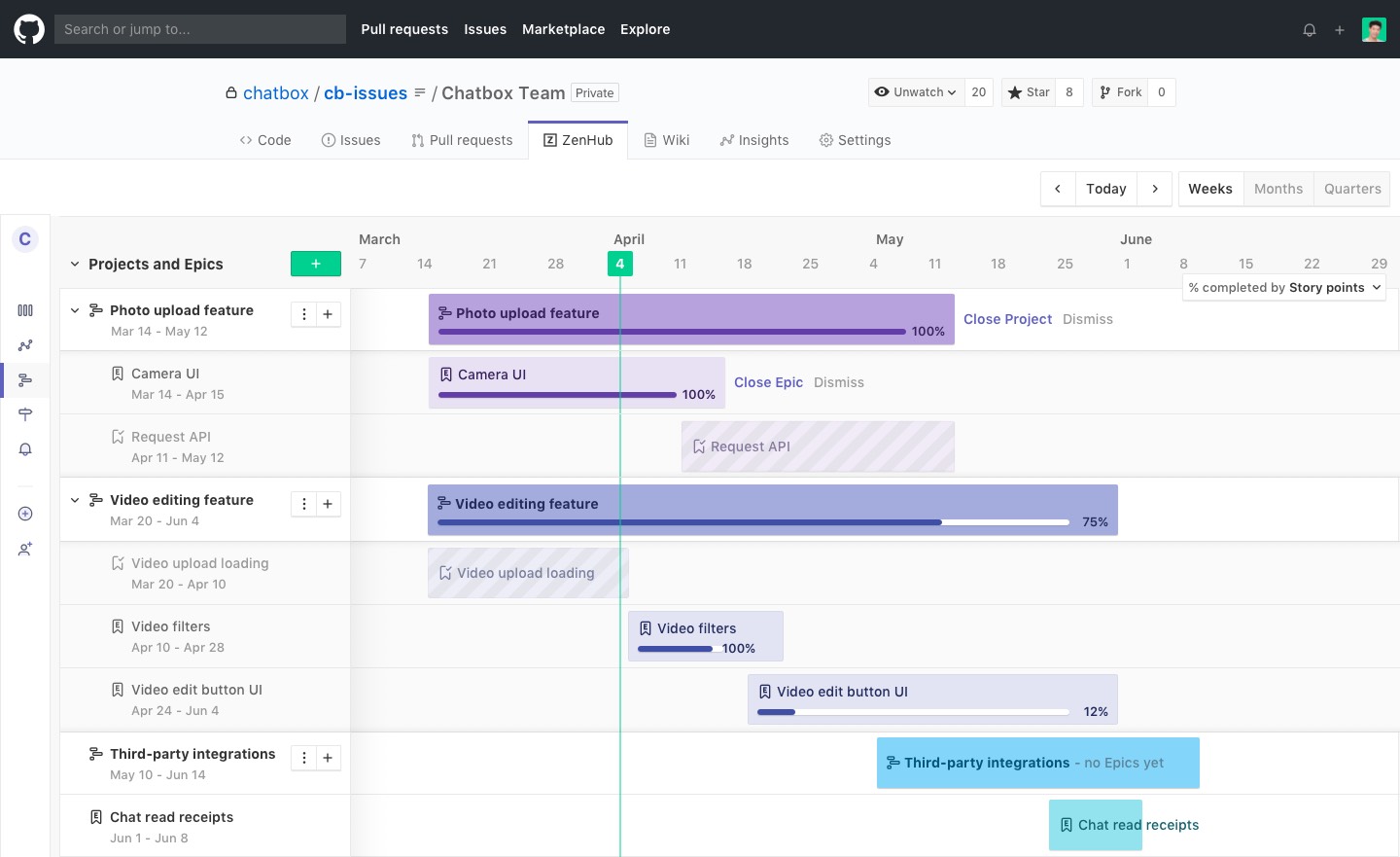
ZenHub, the popular project management tool that integrates right into GitHub, today announced the launch of Roadmaps. As you can guess from the name, this is a roadmapping feature that allows teams to better plan their projects ahead of time and visualize their status — all from within GitHub.

“We’re diving into a brand new category which is super exciting and we’re really starting to think not only about how forward-thinking software teams are managing their software projects but how they’re actually planning ahead,” ZenHub CEO and co-founder Aaron Upright told me. “And we’re really using this as an opportunity to really evolve the product and really introduce now a new kind of entrant into the space for product roadmapping.”

The product itself is indeed pretty straightforward. By default, it takes existing projects and epics a team has already defined and visualizes those on a timeline — including data about how many open issues still remain. In its current iteration, the tool is still pretty basic, but going forward ZenHub will add more advanced features like blocking. As Upright noted, that’s just fine, though, because while the main goal here is to help teams plans, ZenHub also wants to give other stakeholders a kind of 30,000-foot overview of the state of a project without having to click around every issue in GitHub or Jira.

Upright also argues that existing solutions tend to fall short of what teams really need. “Smaller organizations — teams that are 10, 15 or 25 people — they can’t afford these tools. They’re really expensive. They’re cost-prohibitive,” he said. “And so oftentimes what they do is they turn to Excel files or Google spreadsheets in order to keep track of their roadmap. And keeping the spreadsheets up to date really becomes a complex and really a full-time job.” Yet those tools that are affordable often don’t offer a way to sync data back and forth between GitHub and their platforms, which results in the product team not getting those updates in GitHub, for example. Since ZenHub lives inside of GitHub, that’s obviously not a problem.

ZenHub Roadmaps is now available to all users.

05 Nov 2019

Chronosphere launches with $11M Series A to build scalable, cloud-native monitoring tool

Chronoshere, a startup from two ex-Uber engineers, who helped create the open source M3 monitoring project to handle Uber-level scale, officially launched today with the goal of building a commercial company on top of the open source project.

It also announced an $11 million investment led by Greylock with participation from venture capitalist, Lee Fixel.

While the founders, CEO Martin Mao and CTO Rob Skillington, were working at Uber they recognized a gap in the monitoring industry, particularly around cloud native technologies like containers and micro services. There weren’t any tools available on the market that could handle Uber’s scaling requirements. So like any good engineers, they went out and built their own.

“We looked around at the market at the time and couldn’t find anything in open source or commercially available that could really scale to our needs. So we ended up building and open sourcing our solution, which is M3. Over the last three to four years we’ve scaled M3 to one of the largest production monitoring systems in the world today,” Mao explained.

The essential difference between M3 and other open source, cloud native monitoring solutions like Prometheus is that ability to scale, he says.

One of the main reasons they left to start a company, with the blessing of Uber, was that the community began asking for features that didn’t really make sense for Uber. By launching Chronosphere, Mao and Skillington would be taking on the management of the project moving forward (although sharing governance for the time being with Uber), while building those enterprise features the community has been clamoring for.

The new company’s first product will be a cloud version of M3 to help reduce some of the complexity associated with managing an M3 project. “M3 itself is a fairly complex piece of technology to run. It is solving a fairly complex problem at large scale, and running it actually requires a decent amount of investment to run at large scale, so the first thing we’re doing is taking care of that management,” Mao said.

Jerry Chen, who led the investment at Greylock, saw a company solving a big problem. “They were providing such a high resolution view of what’s going on in your cloud infrastructure and doing that at scale at a cost that actually makes sense. They solved that problem at Uber, and I saw them, and I was like wow, the rest of the market needs what guys built and I wrote the Series A check. It was as simple as that,” Chen told TechCrunch.

The cloud product is currently in private Beta, and they expect to open to public Beta early next year.

05 Nov 2019

UPS and CVS deliver prescription medicine via drone to U.S. residential customers for the first time

UPS is rolling along with its drone delivery program, working with partner CVS Pharmacy to deliver prescription drugs to customer doorsteps via its newly deployed commercial drones. UPS delivered medications to two paying customers on November 1, using the M2 drone system that the logistics company developed in partnership with Matternet.

UPS got approval from the FAA to fly its fleet of commercial drones in service of customers at the beginning of October, and now it plans to iterate its drone delivery program “in the coming months,” with the aim of ensuring that it can deploy UAVs in a commercial capacity at increasing scale. It also launched ‘UPS Flight Forward,’ a dedicated division focused on autonomous drone delivery.

For these early deliveries, drones were loaded with prescriptions filled by pharmacists at a CVS location in Cary, North Carolina. Once a UPS employee loaded the cargo onto the drones, they flew autonomously from the store location to nearby customer homes, dropping off the packages from a hover height of around 20 feet above these locations. One of the customers has mobility challenges that would make travel to a CVS store for prescription pick-up difficult, UPS points out.

This isn’t the first time UPS has deployed drones in a healthcare industry setting: The company has been working with Mattternet and WakeMed Hospital in Raleigh, doing commercial deliveries of medical samples in a B2B setting.

05 Nov 2019

UPS and CVS deliver prescription medicine via drone to U.S. residential customers for the first time

UPS is rolling along with its drone delivery program, working with partner CVS Pharmacy to deliver prescription drugs to customer doorsteps via its newly deployed commercial drones. UPS delivered medications to two paying customers on November 1, using the M2 drone system that the logistics company developed in partnership with Matternet.

UPS got approval from the FAA to fly its fleet of commercial drones in service of customers at the beginning of October, and now it plans to iterate its drone delivery program “in the coming months,” with the aim of ensuring that it can deploy UAVs in a commercial capacity at increasing scale. It also launched ‘UPS Flight Forward,’ a dedicated division focused on autonomous drone delivery.

For these early deliveries, drones were loaded with prescriptions filled by pharmacists at a CVS location in Cary, North Carolina. Once a UPS employee loaded the cargo onto the drones, they flew autonomously from the store location to nearby customer homes, dropping off the packages from a hover height of around 20 feet above these locations. One of the customers has mobility challenges that would make travel to a CVS store for prescription pick-up difficult, UPS points out.

This isn’t the first time UPS has deployed drones in a healthcare industry setting: The company has been working with Mattternet and WakeMed Hospital in Raleigh, doing commercial deliveries of medical samples in a B2B setting.