Year: 2019

01 Nov 2019

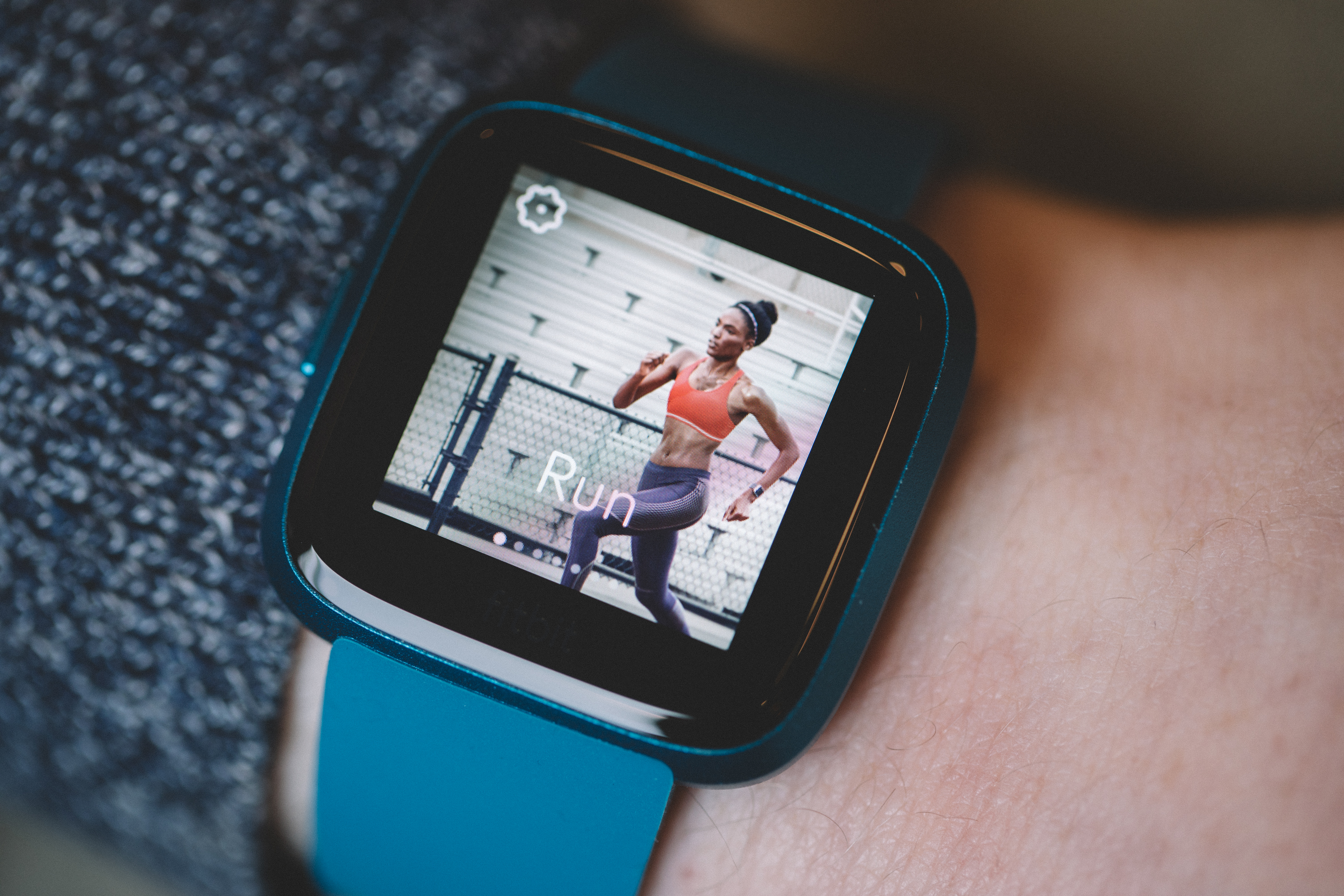
Google’s Fitbit purchase could reshape its healthcare ambitions

Google has reached into parent company Alphabet’s $121 billion cash reserves to spend $2.1 billion on Fitbit, a move into the key consumer health market that places them in more direct competition with rival Apple.

For more than a year, Ftibit and Google have partnered on healthcare applications; last April, Fitbit announced that it would work with Google’s application programming interface to connect data with electronic medical records via Google’s Cloud Healthcare API. That move followed Fitbit’s February 2018 acquisition of Twine Health, which gave the wearables company a consumer health platform which complied with existing federal regulations.

“Working with Google gives us an opportunity to transform how we scale our business, allowing us to reach more people around the world faster, while also enhancing the experience we offer to our users and the healthcare system,” said Fitbit CEO and co-founder James Park at the time of the 2018 Google partnership.

Companies throughout the healthcare industry are pushing to get closer to patients, and wearables have opened a new window into their health. Additionally, the technology can potentially encourage patients to pursue preventive healthcare measures, rather than seeking care after they’re ill.

“All of us… we’re pursuing the same thing,” said a prominent healthcare executive at a multinational medical device manufacturer. “We see a healthcare system that’s highly inefficient with a lot of waste that is very much episode-related, where we all know health is dynamic and continuous.” Gaining “better insight into health and disease drivers and interventions at the right place and the right time is the holy grail.”

Privacy concerns abound

The biggest challenge for Alphabet and Google with this acquisition is privacy; the company has already faced massive criticism for its push into healthcare in the U.K. regarding concerns about how it would handle sensitive health information. The technology industry’s habit of releasing minimum viable products doesn’t work in an industry where complications can literally become a matter of life and death.

Sensing inevitable concern around Google’s upcoming access to a bevy of health data, Rick Osterloh, Google’s SVP for devices and services, offered that the company will not use user information for advertising. “We will never sell personal information to anyone,” he wrote. “Fitbit health and wellness data will not be used for Google ads. And we will give Fitbit users the choice to review, move, or delete their data.”
Competition with Apple

Those privacy concerns stand in direct contrast to the obvious competitor driving this acquisition forward — Apple. The Cupertino-based king of consumer hardware has set itself apart from other consumer tech companies through its professed emphasis on privacy, a position that Apple will likely leverage further as it continues to make deeper forays into health.


01 Nov 2019

Mario Kart Tour will test real-time multiplayer in December

The mobile version of Nintendo’s iconic racing franchise, Mario Kart Tour, will soon support multiplayer races, bringing the game closer to its competitive roots. A limited multiplayer beta test is planned for December, just in time for holiday laziness, but only for paying subscribers — the rest of us will have to wait.

Mario Kart has had a focus on multiplayer since its first (and best, in my opinion) appearance on the SNES, with multiple modes available pitting players together in real time. So despite Mario Kart Tour’s general excellence as far as gameplay and variety, players have been disappointed by the lack of that core aspect of the game.

Sure, you can post high scores and best times, but that’s nothing compared with the feeling of coming from behind in a hard-fought race and beating out half a dozen tough competitors.

mario kart tour ios

Well, players will soon have that opportunity — if they happen to be Gold Pass subscribers. That’s the subscription tier that gives access to extra content in the “free to start” game, and will be a requirement to join the beta

Naturally this will provoke ire among players who feel they are owed not just a free game, but a free game that gives them everything they want for free. And in fact they may eventually get that, but it’s probably smart for Nintendo to limit this experience at first to paying customers so they can stress-test, balance gameplay, and so on. A subpar multiplayer experience is a good way to turn off otherwise interested players.

Still, this feeds into a larger dissatisfaction among gamers with Nintendo’s online and multiplayer strategy. The subscription service required for many popular games on the Switch comes with a selection of Nintendo and Super Nintendo Games, but beyond that the benefits are minimal and features standard on other platforms for years — voice chat, for instance — are absent or long in coming.

At only $20 a year it’s hardly a big investment, but subscription fatigue is growing among tech-savvy consumers and they are cutting things out where they can. Hopefully Nintendo’s offering will solidify and survive.

01 Nov 2019

Daily Crunch: Google is buying Fitbit

The Daily Crunch is TechCrunch’s roundup of our biggest and most important stories. If you’d like to get this delivered to your inbox every day at around 9am Pacific, you can subscribe here.

1. Google is acquiring Fitbit for $2.1 billion

Google will pay $7.35 per share for the wearables company — an all-cash deal that values Fitbit at $2.1 billion.

While Google has invested plenty in its own in-house development, buying Fitbit represents a step-change, and the opportunity to take advantage of years of effort focused specifically on the wearables category.

2. Apple TV+ now live, with one year free for new iOS, Apple TV and Mac purchases

At launch, you’ll find “The Morning Show,” “See,” “For All Mankind,” “Dickinson,” “Snoopy in Space,” “Ghostwriter” and “Helpsters,” as well as the documentary feature “The Elephant Queen” and the talk show “Oprah’s Book Club.” Some of these offer the first three episodes at launch, while others include the full season.

3. Sidewalk Labs (Alphabet’s grand experiment in smart cities) will move forward with Toronto project

Sidewalk Labs and Waterfront Toronto (the regulatory body overseeing the project) have come to an agreement that will limit the scope of the Sidewalk development — intended as a proving ground for the latest thinking in sustainable design — and make the company work more closely with oversight agencies on the construction of the 12-acre parcel.

4. Altria writes down $4.5 billion from its investment in Juul

That’s roughly one-third of the $12.8 billion that the tobacco giant had invested into Juul a little less than one year ago.

5. EHang, maker of autonomous flying shuttles, files for $100 million IPO

The company, which has been flying demonstration flights with passengers on board for a while now, is gearing up to launch its first commercial service in Guangzhou after getting approval from local and national regulators to deploy its drones in the area.

6. Japanese instant-credit provider Paidy raises $143 million from investors, including PayPal Ventures

This is the largest investment to date in the Japanese financial tech industry, according to data cited by Paidy, and brings the total investment the company has raised so far to $163 million.

7. Announcing TechCrunch’s new commenting system

There are a bunch of new features that you can read about in the post, but what I’m really hoping is that this makes a big dent in the spam.

01 Nov 2019

Cervest raises £3.7M for Earth Science AI platform to predict climate effects

Climate risk including extreme events and the related pressures our environment are fundamentally affecting the way business and governments operate – both tactically and strategically. Increasing climate volatility is causing food supply disruptions, and increasing pressure on Enterprises (including financial institutions, insurers, producers) to disclose what’s going on.

The trouble is, while there is a lot of data about all this, its complexity, incompleteness and sheer volume is too vast for humans to process with the tools available today. So just as the climate changes, we are faced with ‘data chaos’. Equally, other parts of the world suffer from data scarcity, making it much harder to provide useful and timely analysis.

So the challenge is to address these issues simultaneously. So a new startup, Cervest, has created an AI-driven platform designed to inform the decision-making capabilities of businesses, governments and growers in the face of increasing climate volatility.

Cervest, has now closed a £3.7m investment round to fund the launch of its real-time, climate forecasting platform.

The round was led by deep-tech investor Future Positive Capital, with co-investor Astanor Ventures. The seed-stage funding round brings the company’s total funding to more than £4.5m.

Built on three years of research and development by a team of scientists, mathematicians, developers and engineers, Cervest says its Earth Science AI platform can analyze billions of data points to forecast how changes in the climate will impact the future of entire countries right down to individual landscapes.

It does this by combining research and modeling techniques taken from proven Earth sciences – including atmospheric science, meteorology, hydrology and agronomy – with artificial intelligence, imaging, machine learning and Bayesian statistics.

Using large collections of satellite imagery and probability theory, the platform can identify signals, or early-warning signs, of extreme events such as floods, fires, and strong winds. It can also spot changes in soil health, and identify water risk.

Cervest says the platform could do such things as reveal to a multinational the optimum location to build a new factory; warn a wheat grower that their crop yield isn’t expected to meet its targets; or used by insurers to help them set premiums for the next 12 months.

The team comes from a network of more than 30 universities, including Imperial College, The Alan Turing Institute, Cambridge, UCL, Harvard and Oxford, and has published more than 60 peer-reviewed scientific papers.

A beta version of the platform is due to launch in Q1 2020.

Iggy Bassi, Founder & CEO, Cervest said: “Our goal is to empower everyone to make informed decisions that improve the long-term resilience of our planet. Today decision-makers are struggling with climate uncertainty and extreme events and how they are affecting their business operations, assets, investments, or policy choices.”

Sofia Hmich, Founder, Future Positive Capital said: “With reports suggesting we have fewer than 60 years of farming left unless drastic action is taken, the need for science-backed decisions could not be greater. Businesses and policymakers hold the key to change and with access to Cervest’s proprietary AI technology they can start to make that change a reality at low cost – before it’s too late.”

Bassi previously ran the impact-led agribusiness, GADCO, which was supported by Acumen Fund, Soros, Gates Foundation, World Bank, and Syngenta. Its impact featured in UNDP, World Economic Forum, FT, Guardian and Huff Post. He previously built a software company focused on data analytics.

Cervest was inspired by Bassi’s experience building a farm-to-market agribusiness whilst confronting first-hand the impacts of climate and natural resource volatilities.

The Cervest team includes 8 scientists and 4 PhDs. Between them, they have published more than 60 peer-reviewed scientific papers with more than 3000 citations in high-profile titles including Nature, Proceedings of the National Academy of Sciences and The Royal Statistical Society.

01 Nov 2019

Cervest raises £3.7M for Earth Science AI platform to predict climate effects

Climate risk including extreme events and the related pressures our environment are fundamentally affecting the way business and governments operate – both tactically and strategically. Increasing climate volatility is causing food supply disruptions, and increasing pressure on Enterprises (including financial institutions, insurers, producers) to disclose what’s going on.

The trouble is, while there is a lot of data about all this, its complexity, incompleteness and sheer volume is too vast for humans to process with the tools available today. So just as the climate changes, we are faced with ‘data chaos’. Equally, other parts of the world suffer from data scarcity, making it much harder to provide useful and timely analysis.

So the challenge is to address these issues simultaneously. So a new startup, Cervest, has created an AI-driven platform designed to inform the decision-making capabilities of businesses, governments and growers in the face of increasing climate volatility.

Cervest, has now closed a £3.7m investment round to fund the launch of its real-time, climate forecasting platform.

The round was led by deep-tech investor Future Positive Capital, with co-investor Astanor Ventures. The seed-stage funding round brings the company’s total funding to more than £4.5m.

Built on three years of research and development by a team of scientists, mathematicians, developers and engineers, Cervest says its Earth Science AI platform can analyze billions of data points to forecast how changes in the climate will impact the future of entire countries right down to individual landscapes.

It does this by combining research and modeling techniques taken from proven Earth sciences – including atmospheric science, meteorology, hydrology and agronomy – with artificial intelligence, imaging, machine learning and Bayesian statistics.

Using large collections of satellite imagery and probability theory, the platform can identify signals, or early-warning signs, of extreme events such as floods, fires, and strong winds. It can also spot changes in soil health, and identify water risk.

Cervest says the platform could do such things as reveal to a multinational the optimum location to build a new factory; warn a wheat grower that their crop yield isn’t expected to meet its targets; or used by insurers to help them set premiums for the next 12 months.

The team comes from a network of more than 30 universities, including Imperial College, The Alan Turing Institute, Cambridge, UCL, Harvard and Oxford, and has published more than 60 peer-reviewed scientific papers.

A beta version of the platform is due to launch in Q1 2020.

Iggy Bassi, Founder & CEO, Cervest said: “Our goal is to empower everyone to make informed decisions that improve the long-term resilience of our planet. Today decision-makers are struggling with climate uncertainty and extreme events and how they are affecting their business operations, assets, investments, or policy choices.”

Sofia Hmich, Founder, Future Positive Capital said: “With reports suggesting we have fewer than 60 years of farming left unless drastic action is taken, the need for science-backed decisions could not be greater. Businesses and policymakers hold the key to change and with access to Cervest’s proprietary AI technology they can start to make that change a reality at low cost – before it’s too late.”

Bassi previously ran the impact-led agribusiness, GADCO, which was supported by Acumen Fund, Soros, Gates Foundation, World Bank, and Syngenta. Its impact featured in UNDP, World Economic Forum, FT, Guardian and Huff Post. He previously built a software company focused on data analytics.

Cervest was inspired by Bassi’s experience building a farm-to-market agribusiness whilst confronting first-hand the impacts of climate and natural resource volatilities.

The Cervest team includes 8 scientists and 4 PhDs. Between them, they have published more than 60 peer-reviewed scientific papers with more than 3000 citations in high-profile titles including Nature, Proceedings of the National Academy of Sciences and The Royal Statistical Society.

01 Nov 2019

MIT’s self-propelled block robots can now manage basic swarm coordination

MIT’s Computer Science and Artificial Intelligence Laboratory has come up with a clever way for its small cube-like robots, which can move on their own, to communicate and coordinate with one another for self-assembly. The behavior is described by MIT researchers as somewhat ‘hive-like,’ and in the video above you can see what they mean by that.

These cube bots can roll across the ground, navigate up and across each other, and even jump short distances. And thanks to recent improvements made by the team working on the project, they can also communicate in a basic way using unique barcode identifiers on the faces of the blocks to allow them to identify one another. These 16 blocks can now use their communication system and their ability to move themselves around to perform tasks including producing various shapes, or even following arrows or light signals.

Their current abilities are pretty limited, but the researchers envision a time when a larger and more advanced version of this system could be use to deploy efficiently self-assembling bots that can create structures like bridges, ramps or even staircases for use in disaster response or rescue scenarios. Of course, they also theorize these things might be pretty attractive for more mundane applications like gaming, too.

01 Nov 2019

MIT’s self-propelled block robots can now manage basic swarm coordination

MIT’s Computer Science and Artificial Intelligence Laboratory has come up with a clever way for its small cube-like robots, which can move on their own, to communicate and coordinate with one another for self-assembly. The behavior is described by MIT researchers as somewhat ‘hive-like,’ and in the video above you can see what they mean by that.

These cube bots can roll across the ground, navigate up and across each other, and even jump short distances. And thanks to recent improvements made by the team working on the project, they can also communicate in a basic way using unique barcode identifiers on the faces of the blocks to allow them to identify one another. These 16 blocks can now use their communication system and their ability to move themselves around to perform tasks including producing various shapes, or even following arrows or light signals.

Their current abilities are pretty limited, but the researchers envision a time when a larger and more advanced version of this system could be use to deploy efficiently self-assembling bots that can create structures like bridges, ramps or even staircases for use in disaster response or rescue scenarios. Of course, they also theorize these things might be pretty attractive for more mundane applications like gaming, too.

01 Nov 2019

Lightspeed’s Jeremy Liew is on the hunt for always-on media startups

Perhaps best known for a career-making seed investment in Snapchat, Lightspeed partner Jeremy Liew is a leading investor across media and entertainment, making bets on startups like Cheddar, Giphy, HQ, SpecialGuest, Mic, Beme, Playdom, Duta and Flixster.

I spoke to him earlier this week about how he assesses the market for media startups, which led into a discussion about “always-on” forms of entertainment that add stimulation to a person’s environment, instead of commanding their full focus.

Here’s the transcript of our conversation, edited for length and clarity:

Eric Peckham: Do you have a consistent framework for evaluating potential investments?

Jeremy Liew: Our perspective is that consumer technology is now more about the consumer side than the technology side. It’s really more about pop culture than new innovations in technology. 

When we are assessing a consumer investment we ask ourselves, “does this have the potential to become part of pop culture?” One way to think about it is whether people who don’t use the product will still become familiar with what it is. Like how you can understand a reference to “Game of Thrones” even if you don’t watch it. 

Another key question is, whether there is a scalable, repeatable way for the product to reach its audience. That can be advertising, it can be word of mouth, it could be through social channels.

We also asked ourselves, “is this product going to build a new habit?” and we assess whether the entrepreneur has a unique insight into both why this is happening and why it’s happening now.

Your colleague Alex Taussig told me you have an overarching “future of TV” thesis that’s guided a number of your investments. Tell me about that thesis and how it filters opportunities in the media & entertainment space for you.

I think you can split what used to be called TV into two core use cases: “TV as entertainment” and “TV as company.”

“TV as entertainment” is most of what Netflix, Amazon, Apple, HBO, and similar companies have been focused on. It is high-production quality entertainment you have to pay attention to. Think shows like “Game of Thrones,” “Succession,” “Orange is the New Black.”

Then there’s another classic category of TV — “TV as company,” which is stuff that’s on while you’re doing something else. You’ve got the morning show on while you’re getting the kids ready for school or you’re getting ready to go to work. That’s how you get the five hours of TV viewing per day that Americans average.

TV as entertainment has to be so good that you choose to watch it over doing anything else; TV as company you just have to not choose to turn it off.

The vast amount of attention to the move to video — with subscription video on-demand (SVOD) and so forth — has been on TV as entertainment. There are hit shows that will attract people to Netflix, or to HBO Go, to Disney+. But what causes them to stay as a subscriber after they binge-watched all the way through the stuff that brought them in the first place?

That tends to be the TV as company content. If you actually look at hours watched in television, no one is tuning in to catch the latest episode of “Shark Week” — it is just what’s on. Think about the TV Guide grid: every genre, every channel will likely have a mobile native equivalent.

Some of these already exist. ESPN — it’s a channel where men watch the best competitors in the world play the sports they used to play when they were in high school and then they talk about it with their friends. Twitch is a place where men, mostly, watch the best competitors in the world play the games they used to play when they were younger and talk about it with their friends.

01 Nov 2019

Lightspeed’s Jeremy Liew is on the hunt for always-on media startups

Perhaps best known for a career-making seed investment in Snapchat, Lightspeed partner Jeremy Liew is a leading investor across media and entertainment, making bets on startups like Cheddar, Giphy, HQ, SpecialGuest, Mic, Beme, Playdom, Duta and Flixster.

I spoke to him earlier this week about how he assesses the market for media startups, which led into a discussion about “always-on” forms of entertainment that add stimulation to a person’s environment, instead of commanding their full focus.

Here’s the transcript of our conversation, edited for length and clarity:

Eric Peckham: Do you have a consistent framework for evaluating potential investments?

Jeremy Liew: Our perspective is that consumer technology is now more about the consumer side than the technology side. It’s really more about pop culture than new innovations in technology. 

When we are assessing a consumer investment we ask ourselves, “does this have the potential to become part of pop culture?” One way to think about it is whether people who don’t use the product will still become familiar with what it is. Like how you can understand a reference to “Game of Thrones” even if you don’t watch it. 

Another key question is, whether there is a scalable, repeatable way for the product to reach its audience. That can be advertising, it can be word of mouth, it could be through social channels.

We also asked ourselves, “is this product going to build a new habit?” and we assess whether the entrepreneur has a unique insight into both why this is happening and why it’s happening now.

Your colleague Alex Taussig told me you have an overarching “future of TV” thesis that’s guided a number of your investments. Tell me about that thesis and how it filters opportunities in the media & entertainment space for you.

I think you can split what used to be called TV into two core use cases: “TV as entertainment” and “TV as company.”

“TV as entertainment” is most of what Netflix, Amazon, Apple, HBO, and similar companies have been focused on. It is high-production quality entertainment you have to pay attention to. Think shows like “Game of Thrones,” “Succession,” “Orange is the New Black.”

Then there’s another classic category of TV — “TV as company,” which is stuff that’s on while you’re doing something else. You’ve got the morning show on while you’re getting the kids ready for school or you’re getting ready to go to work. That’s how you get the five hours of TV viewing per day that Americans average.

TV as entertainment has to be so good that you choose to watch it over doing anything else; TV as company you just have to not choose to turn it off.

The vast amount of attention to the move to video — with subscription video on-demand (SVOD) and so forth — has been on TV as entertainment. There are hit shows that will attract people to Netflix, or to HBO Go, to Disney+. But what causes them to stay as a subscriber after they binge-watched all the way through the stuff that brought them in the first place?

That tends to be the TV as company content. If you actually look at hours watched in television, no one is tuning in to catch the latest episode of “Shark Week” — it is just what’s on. Think about the TV Guide grid: every genre, every channel will likely have a mobile native equivalent.

Some of these already exist. ESPN — it’s a channel where men watch the best competitors in the world play the sports they used to play when they were in high school and then they talk about it with their friends. Twitch is a place where men, mostly, watch the best competitors in the world play the games they used to play when they were younger and talk about it with their friends.

01 Nov 2019

Google Maps Incognito mode starts rolling out for Android users


We’ve known for a while now that Google was bringing the “Incognito mode” concept to Maps, allowing you to run searches and find routes without them automatically being tied to your account history.

If you’ve been digging around trying to find the option without any luck, you weren’t just missing it. Though first mentioned back in May at Google I/O, the company says the rollout is just now officially underway.

Word of the rollout comes via a Google Maps support page, as first spotted by AndroidPolice.

It’s a staged rollout, so don’t be surprised if you don’t see the new feature immediately even if you’re on the latest version of maps. It’s rolling out in batches, beginning with Android users. Google says it should be available to all Android users in “the next few days.”

Once it’s enabled on your account, you can toggle incognito mode on/off by tapping your profile picture then flipping the switch. Here’s what that looks like:

So why incognito mode? As we wrote back in May: whether its the holiday season and you’re trying to keep your gift hunting locations under wraps, or you’re visiting a doctor and would just prefer it not pop up the next time a friend grabs your phone for some quick directions, there are all sorts of reasons you might want to leave fewer breadcrumbs. Remember, though, that while it’s less visibly tied to you, it’s still all stored in ways behind the scenes on Google’s end; the company told Wired earlier this month that while Incognito sessions aren’t tied to an account, they are logged with a unique session identifier that gets reset between sessions.