Year: 2019

28 Oct 2019

Providing emergency and security services to employees, Base Operations raises $1 million

In 2017, when a destructive earthquake struck Puebla, Mexico, sending shockwaves to Mexico City and destroying buildings in the nation’s megalopolis and its surrounding suburbs, both public and private emergency services sprung into action.

For multinational corporations operating in the city it was a test of their internal support services, which were established to meet the “duty of care” requirements that multinationals have to their foreign employees. That’s a minimum threshold which companies have to meet to ensure the safety of their employees.

After the Mexico City earthquake, at least one Fortune 500 insurance company found its services lacking. It took two weeks for the company to contact all of its employees and account for everyone.

So the company turned to a new Washington-based startup called Base Operations to see if they could do a better job.

Founded by a former security and risk management consultant, Cory Siskind, Base Operations uses a suite of hosted software services and a mobile applications to provide security updates to corporate customers and their employees.

The insurance company tested Base Operations’ check-in feature to see how it would perform in a simulated natural disaster and Siskind said that Base Operations had identified the location of 80% of the company’s workforce in less than two days. Over half of the company’s employees checked in within the first 24 hours.

Base Operations offers a dashboard for corporate customers to monitor their employees’ locations and for staff traveling abroad, the company has an app that provides geo-tagged alerts on potential risks based on an individual’s location.

“This is a compliance situation for companies… They have to do it,” says Siskind. “We work with a company’s chief security officers and travel security. If you send people off into an emerging market with a risk .PDF… It’s not dynamic information and it just sits in a report and nobody reads it.”

Companies with a sales or marketing team traveling around need to have some sort of tool to meet their compliance regulations and duty of care standards, says Siskind.

“We have a whole set of features that nudge towards safer behaviors to that you don’t end up getting mugged and so that you don’t end up in a situation that would be damaging to you,” she says. 

Siskind recently raised $1 million for Base Operations from investors including Glasswing Ventures, Spiro Ventures, the Latin American early stage investment firm, Magma Partners, and Good Growth Capital. Base Operations graduated from Techstars Impact Accelerator in 2018.

The money from the company’s most recent round will be used to expand the company’s sales and marketing efforts and continue its research and development.

So far, the company has three customers including the undisclosed insurance provider, the energy company Enel, and another, yet unnamed, corporation.

Base Operations provides its services in 15 cities including: Mexico City, Sao Paulo, Rio de Janeiro, Buenos Aires, Bogota, Santiago, San Juan, Puerto Rico, and San Jose, Costa Rica.
 

28 Oct 2019

Apple releases iOS 13.2 with Deep Fusion

Apple has released iOS 13.2 and iPadOS 13.2 for the iPhone and iPad. This update features the usual bug fixes and security improvements. But Apple is also adding a handful of new features to its operating system.

First, iOS 13.2 brings a ton of new emojis. The company now officially supports Unicode 12.0. You can now create all possible combinations of handholding couple emojis regardless of gender or skin tone. There are new accessibility-focused emojis, such as a service dog, people using wheelchairs, prosthetic arms and legs, a person with a white cane and more. There are also new animals, a yawning face and new food options.

If you have an iPhone 11 or iPhone 11 Pro, iOS 13.2 enables Deep Fusion, an image processing feature that should make your photos look better thanks to machine learning-enabled processing.

It’s also worth mentioning that you can now change the resolution and framerate of your videos in the Camera app directly.

With iOS 13.2, you can opt out of sharing Siri recordings with Apple employees and delete your Siri and dictation history. Go to Settings > Privacy > Analytics and Improvements to opt out at any time.

Finally, iOS 13.2 enables HomeKit‌ Secure Video for HomeKit-enabled camera and adds support for the newly announced AirPods Pro.

Before updating to iOS 13.2, back up your device. Make sure your iCloud backup is up to date by opening the Settings app on your iPhone or iPad and tapping on your account information at the top and then on your device name. Additionally, you can also plug your iOS device into your computer to do a manual backup in iTunes.

Don’t forget to encrypt your backup in iTunes. It is much safer if somebody hacks your computer. And encrypted backups include saved passwords and health data. This way, you don’t have to reconnect to all your online accounts.

Once this is done, you should go to the Settings app as soon as possible to get in the queue. Navigate to ‘Settings,’ then ‘General’ and then ‘Software Update.’ Then you should see ‘Update Requested…’ It will then automatically start downloading once the download is available.

28 Oct 2019

Uber Money is Uber’s new team focused on financial products and services

Uber is further exploring the financial services business with the creation of a new team, Uber Money. Uber Money is now responsible for all-things pertaining to financial products designed to support drivers, Uber Money Head Peter Hazlehurst wrote in a blog post today.

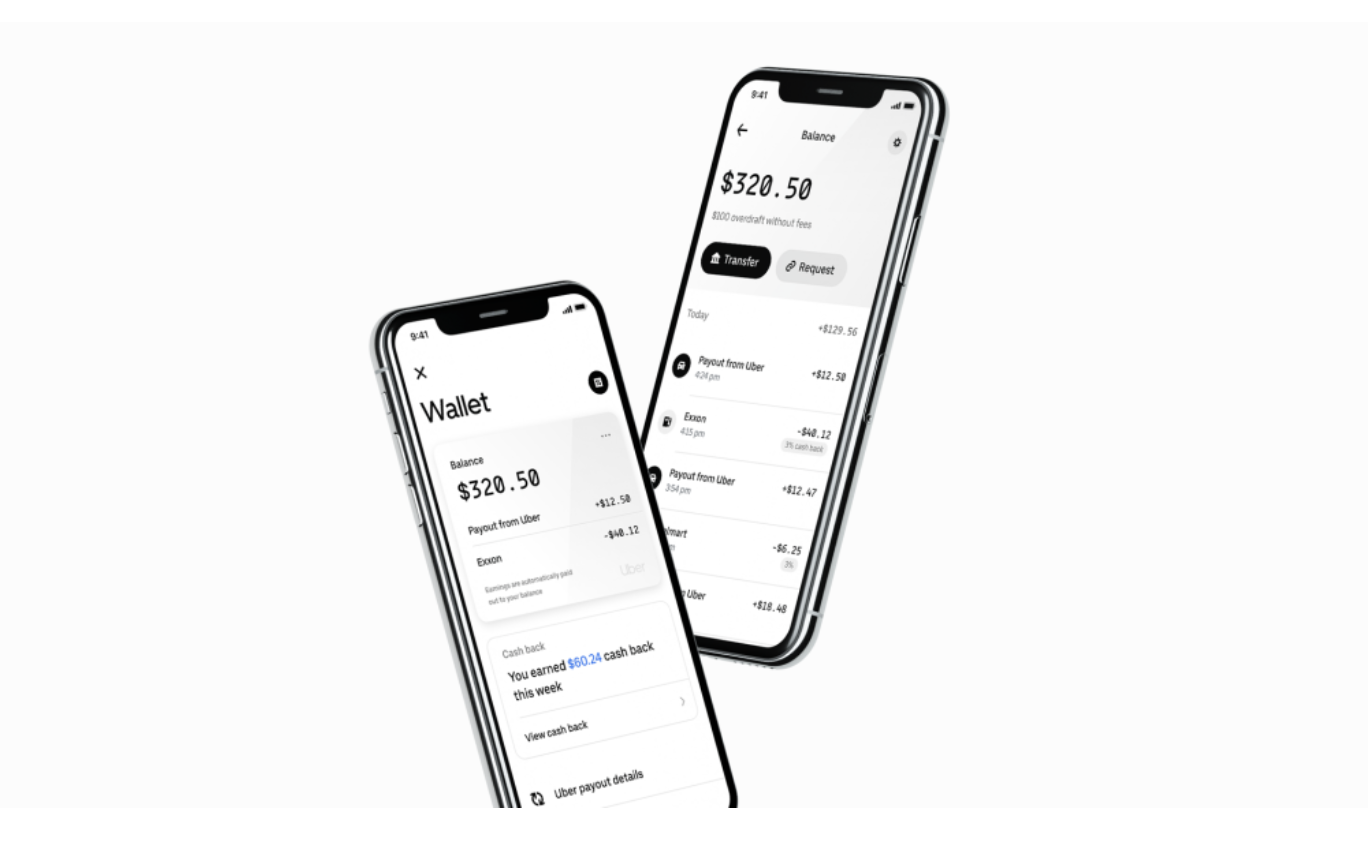
Within the driver app, drivers will soon have access to Uber Wallet so that they can more easily track their earnings and spending history, as well as manage and move their money. Wallet will start rolling out in the driver app in the coming weeks, and will later be available in the Uber and Uber Eats apps.

Screen Shot 2019 10 28 at 10.13.10 AM

In sum, Uber Money currently oversees Uber’s credit card, debit card, wallet for drivers, Uber Pay, Uber Cash and other financial products Uber may deploy down the road. This year, the team also plans to integrate the Uber debit account and debit card for drivers in the U.S. into the driver app. Down the road, Uber says it will make this available to drivers in other countries. Additionally, Uber will start offering cash back on gas starting at 3% and up to 6% for the highest tier of Uber Pro drivers.

Uber has long been at odds with its drivers when it comes to pay. The last several years have been filled with lawsuits, protests and a legislative win for workers in California regarding how Uber classifies its drivers. While financial tools may be helpful to drivers, it does not fix the core issue at hand for the many drivers who want to be treated as employees rather than 1099 independent contractors.

28 Oct 2019

NBCUniversal rolls out its ShoppableTV ads

NBCUniversal has been testing out a new ad unit that allows viewers to buy — directly from their phone — products featured on the show they’re watching.

We’ve written about other companies creating shoppable video technology, but that usually means adding links or other elements to online videos — very different from NBCU’s ShoppableTV, which connects the programming on your living room TV with a shopping experience on your phone.

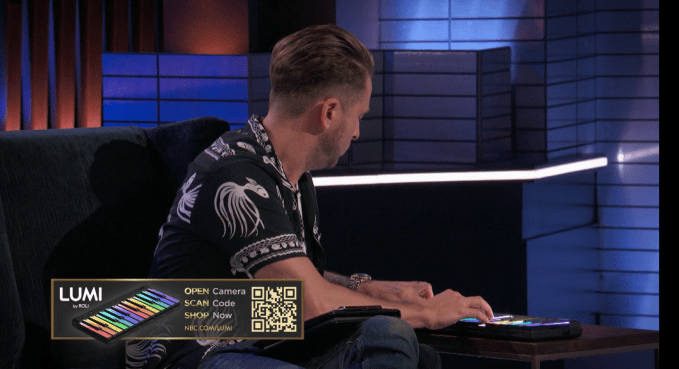
The company is using QR codes to achieve this. An ad with the code will pop up at on the bottom of the screen during relevant moments of the show. If you’d like purchase the product, you can point your camera at the code and you’ll end up following an affiliate link to the sponsor’s e-commerce site.

So far, NBCU has tested this out with sponsors like Lacoste during the French Open, Walmart on Today, Roli on NBC’s “Songland” and Zwift during the Tour de France. In some cases, the announcers are explicitly pointing viewers towards the ad. In others, it just shows up in the bottom third of the screen.

Now NBCU is officially taking the ad unit out of beta testing, and plans to start using it across its unscripted programming, including Sunday Night Football.

Lumi21

The company also said it’s already been reaching tens of millions of viewers with the unit, resulting in an average conversion rate that’s nearly 30% higher than the e-commerce industry benchmark, and in 10% growth rates on social media.

When I discussed the format with NBCUniversal executives Josh Feldman and Collette Winn, they argued that not only are the ads performing for advertisers, but also delivering a better experience for viewers, too.

“You’re not searching for the item … what you’re seeing is what you’re able to buy,” Winn said. “It’s not in your face. It’s brought in really seamlessly.”

And if you’re worried about product ads suddenly flooding your favorite shows, Winn noted that it will be limited to one brand per program.

She also said NBCU is experimenting with how these formats might show up in different devices — for example on an internet-connected TV, where the ad might incorporate more interactions with the remote.

28 Oct 2019

Google reportedly in talks to acquire Fitbit

According to Reuters, Google parent Alphabet is looking to acquire publicly traded wearables company Fitbit.

Reuters says the deal is still being negotiated and could still fall apart, but if it came together, it would surely strengthen Google’s position in the wearables space, an area where it has struggled despite its efforts around smartwatches and Wear OS.

With Wear OS, Google only focused on the smartwatch market, though, and while many of these devices have fitness tracking built-in, either through third-party apps or Google’s own Fit app, there’s still a large market for dedicated (and cheaper) fitness trackers. Fitbit, meanwhile, has been stepping up its smartwatch features with its Versa line, which does not use Wear OS.

Acquiring Fitbit would also fit into Google’s overall hardware strategy, now that it is building its own phones and other devices. In early 2018, it also closed its acquisition of large parts of HTC’s design division. We’ve also seen numerous rumors about Google building a Pixel smartwatch over the years. So far, it has not released its own first-party watch, though.

Fitbits’ stock shot up almost 30 percent after the first rumors surfaced. In recent months, the company’s stock often traded below $3, down from close to $48 shortly after its IPO in 2015. Today, after the announcement, it went up to around $5.20.

28 Oct 2019

Google reportedly in talks to acquire Fitbit

According to Reuters, Google parent Alphabet is looking to acquire publicly traded wearables company Fitbit.

Reuters says the deal is still being negotiated and could still fall apart, but if it came together, it would surely strengthen Google’s position in the wearables space, an area where it has struggled despite its efforts around smartwatches and Wear OS.

With Wear OS, Google only focused on the smartwatch market, though, and while many of these devices have fitness tracking built-in, either through third-party apps or Google’s own Fit app, there’s still a large market for dedicated (and cheaper) fitness trackers. Fitbit, meanwhile, has been stepping up its smartwatch features with its Versa line, which does not use Wear OS.

Acquiring Fitbit would also fit into Google’s overall hardware strategy, now that it is building its own phones and other devices. In early 2018, it also closed its acquisition of large parts of HTC’s design division. We’ve also seen numerous rumors about Google building a Pixel smartwatch over the years. So far, it has not released its own first-party watch, though.

Fitbits’ stock shot up almost 30 percent after the first rumors surfaced. In recent months, the company’s stock often traded below $3, down from close to $48 shortly after its IPO in 2015. Today, after the announcement, it went up to around $5.20.

28 Oct 2019

Apple announces AirPods Pro with noise cancellation

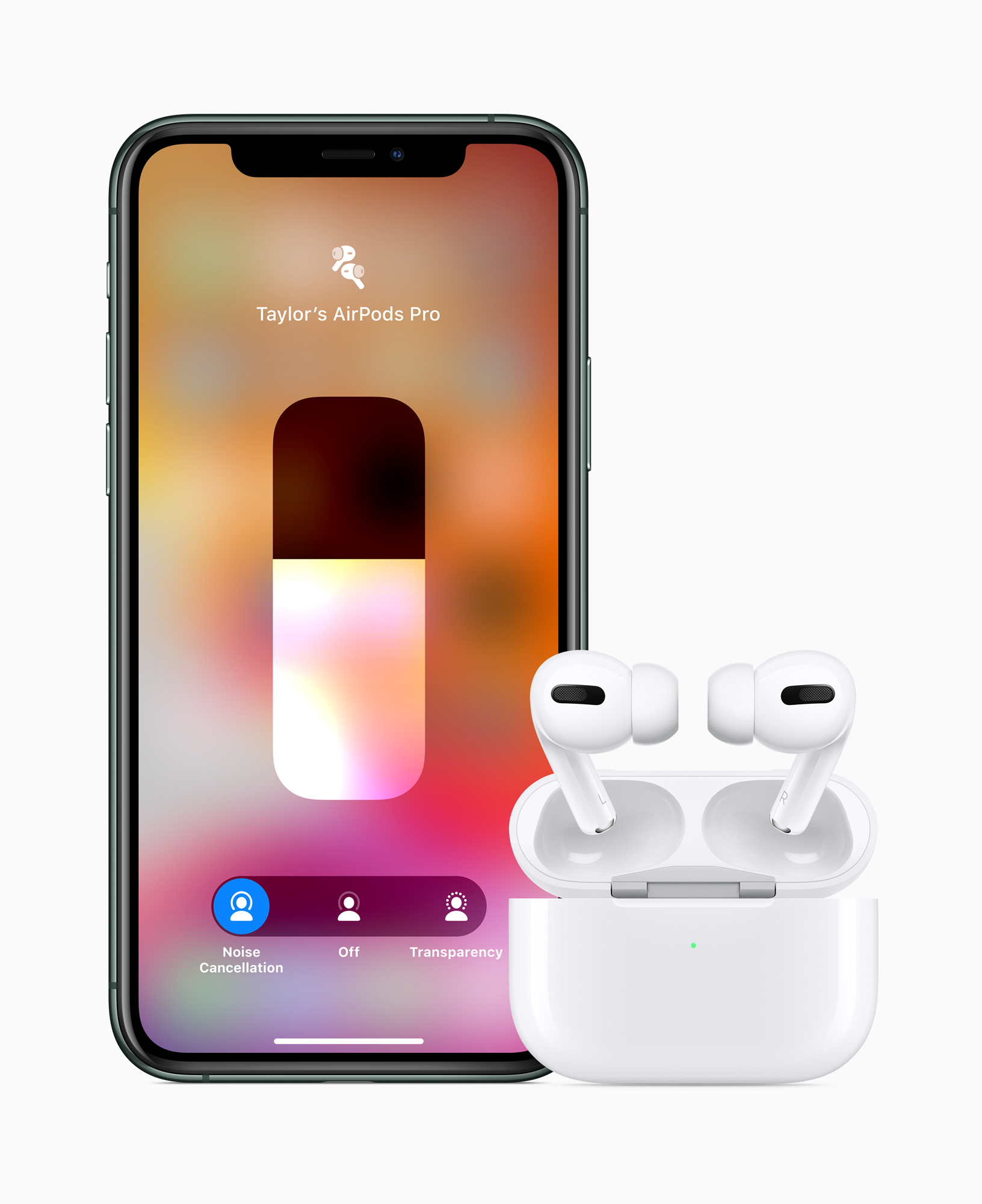
Apple just announced a new device today, the AirPods Pro. The company issued a press release to announce the new device. As the name suggests, the AirPods Pro are wireless earbuds with additional features compared to the AirPods.

In particular, the AirPods Pro features active noise cancellation — this feature is particularly popular in headphones designed for airplanes, such as the Bose 700 and Sony WH-1000XM3.

Apple has integrated two microphones in each earbud to listen to background noise and actively cancel sound around you. The company has also integrated adaptive EQ to tune the low- and mid-fequencies in real time depending on the shape of your ears.

You can switch between active noice cancellation and something called Transparency mode in order to block background noise or let background noise go through your earbuds.

Apple AirPods Pro Expanded 102819

The design of the AirPods Pro is slightly different from the AirPods. They look like in-ear earbuds with flexible silicone ear tips. You’ll be able to swap those ear tips as there are three different sizes in the box. The AirPods Pro are also sweat and water resistant.

Behind the scene, the AirPods Pro work with an Apple-designed chip called the H1. This chip handles everything from real-time noise cancelation, audio processing, and the ability to respond to “Hey Siri” requests.

Apple says that you can expect the same battery life that you’d get with regular AirPods — four and half hours of listening time with active noise cancellation and up to 24 hours of listening time with the charging case.

The charging case also looks slightly different. It features a Lightning port and wireless charging.

The AirPods Pro will be available for $249 starting on October 30. You can order them on Apple’s website starting today. Regular AirPods remain available for the same price of $159 to $199, depending on whether you get the wireless charging case.

Apple AirPods Pro iPhone11 Pro 102819

28 Oct 2019

Here’s what the Uber Eats delivery drone looks like

Uber has unveiled more details about its plans for Eats delivery via drones. If all goes according to Uber’s plan, it will start flying its first drone model before the end of the year.

Uber’s design, which it unveiled at the Forbes 30 under 30 Summit today, is made to carry up to one meal for two people. Featuring rotating wings with six rotors, the vehicle can vertically take-off and land, and travel a maximum of eight minutes, including loading and unloading. The total flight range is 18 miles, with a round trip delivery range of 12 miles.

As Uber previously said, the plan is not to use the drones for full delivery, but rather a portion of it. Once a customer orders food, the restaurant will prepare the meal and then load it onto a drone. That drone will then take off, fly and land at a pre-determined drop-off location.

Behind the scenes, Uber’s Elevate Cloud Systems will track and guide the drone, as well as notify an Eats delivery driver when and where to pick up their food. Down the road, Uber envisions landing the drones on top of parked Uber vehicles located near the delivery locations. From there, the Eats delivery driver will complete the last mile to hand-deliver the food to the customer.

Beginning next summer, Uber wants to use this drone for meal deliveries in San Diego. That would come after Uber first tests deliveries in partnership with drone operators and manufacturers.

28 Oct 2019

Porsche pilots online vehicle sales in the U.S. and Germany

Porsche will begin selling its vehicles online in the U.S. for the first time, the company announced on Monday. To begin with, the company is proceeding with a pilot program that will be offered with 25 of its U.S.-based dealer partners, but the automaker says it could expand to cover the U.S. market more broadly across a larger group of the 191 independent Porsche dealers that currently operate in the U.S.

The pilot project will let Porsche buyers pick out and submit an order for both new and used in-stock vehicles, but the process isn’t entirely online – buyers will still have to show up at a dealership to sign the final paperwork, and to take delivery of their new car. All the heavy lifting is handled online, however, including things like financing and payment calculators, as well as credit approvals and any insurance options that a buyer chooses to append to their purchase.

U.S. online shoppers will be able to do all of this through new sections integrated into the websites of the dealers participating into the program. Meanwhile, at the same time in Germany, Porsche is introducing online vehicle sales centralized through their own ‘www.porsche.de’ website, which itself is a pilot designed to test the waters for a broader European roll-out.

Online auto sales are not new, but they still aren’t really a widespread thing in most markets, especially in the U.S. where the existing independent dealership system persists. Tesla leaned heavily into online vehicle sales, however, due in part to its unwillingness to work with independent dealer partners, and to the inflexibility of state laws that protect that system. The automaker’s investment in automotive ecommerce has clearly inspired others to follow suit, however, and I don’t expect Porsche will be the last to dip its toes in these waters.

28 Oct 2019

Morpheus Space’s modular, scalable satellite propulsion could be a game-changer for orbital industry

Building effective propulsion systems for satellites has traditionally been a highly bespoke affair, with expensive, one-off systems tailor-made to big, expensive spacecraft hardware. But increasingly, companies including startups are looking at ways to provide propulsion tech that can scale with the projected boom in demand for orbital satellites, including cube sats and small sats, as the commercialization of space and advances in sensor, communication and launch technology broaden the scope of those working in this bold new frontier.

Morpheus Space, which began life as a research project at the University of Western Germany, has accomplished a lot when it comes to propulsion in the short time since its official founding around a year and a half ago. The Dresden-based startup already has sent some of its thrusters to space where they’re actually providing propulsion, and it’s working with a number of clients and potential clients including NASA’s Jet Propulsion Laboratory. The startup also just wrapped up its participation in Techstars’ inaugural Starburst Space Program in LA.

“Our motivation behind starting Morpheus Sapce was the lack of maneuverability of, especially small satellites in space,” explained Morpheus CEO and co-founder Daniel Bock, who I spoke to at last week’s International Astronautical Congress in Washington, D.C. “We have around 2,000active satellites in space, and in the next few years this will increase by 10x. We have to deal with that. So the first step in how we want to solve that is with our proportion systems, to give mobility to small satellites.”

The startup has seen a ton of inbound interest, and has even had conversations with the CTO of NASA and the CEO of Aerospace Corporation based on the strength of its technology. But what’s so special about what they’re doing, vs. what has already been available for satellite propulsion? Put simply, “it’s the world’s smallest and most efficient propulsion system,” according to Morpheus Space co-founder István Lőrincz.

NanoFEEP V2 SingelUnit Assembly V1.0 transparent Unschärfe

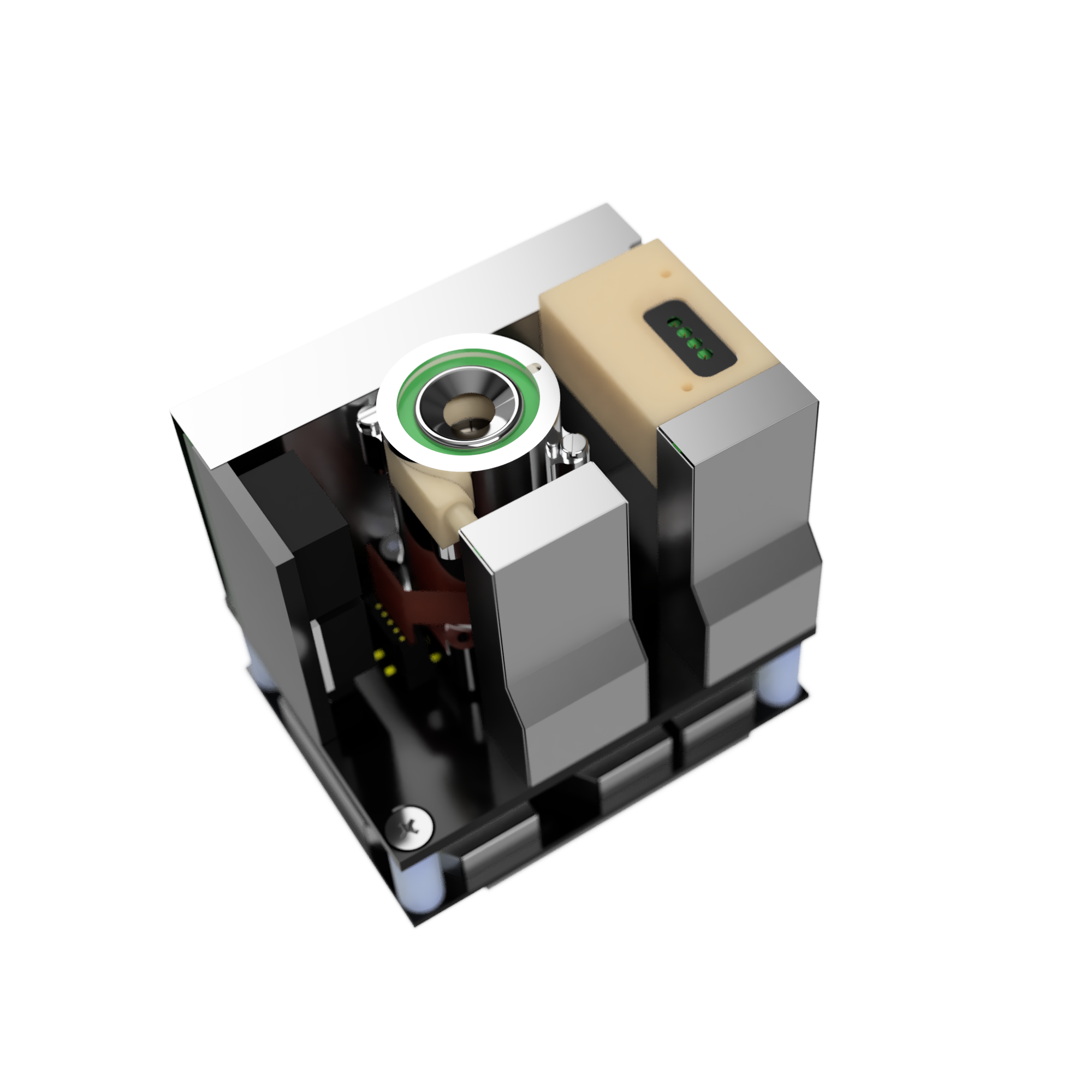
A single Morpheus NanoFEEP thruster propulsion system.

Morpheus’ thruster uses gallium as its fuel source, which allows it to be very efficient, with an operating linespace of up to three or more years – non-stop, Lőrincz told me. When you factor in the low cost of these thrusters vs. other solutions, and the ability to make them incredibly small (one thruster, along with electronics, is not that much larger than your average USB charger), you get a product that’s tailor made for the cost-sensitive emerging new space industry. Ensuring the mass of these thrusters is small pays off big dividends when it comes to thinking about launch costs, and the fact that these are ‘LEGO-like’ in their modularity means they can suit a variety of different clients’ needs.

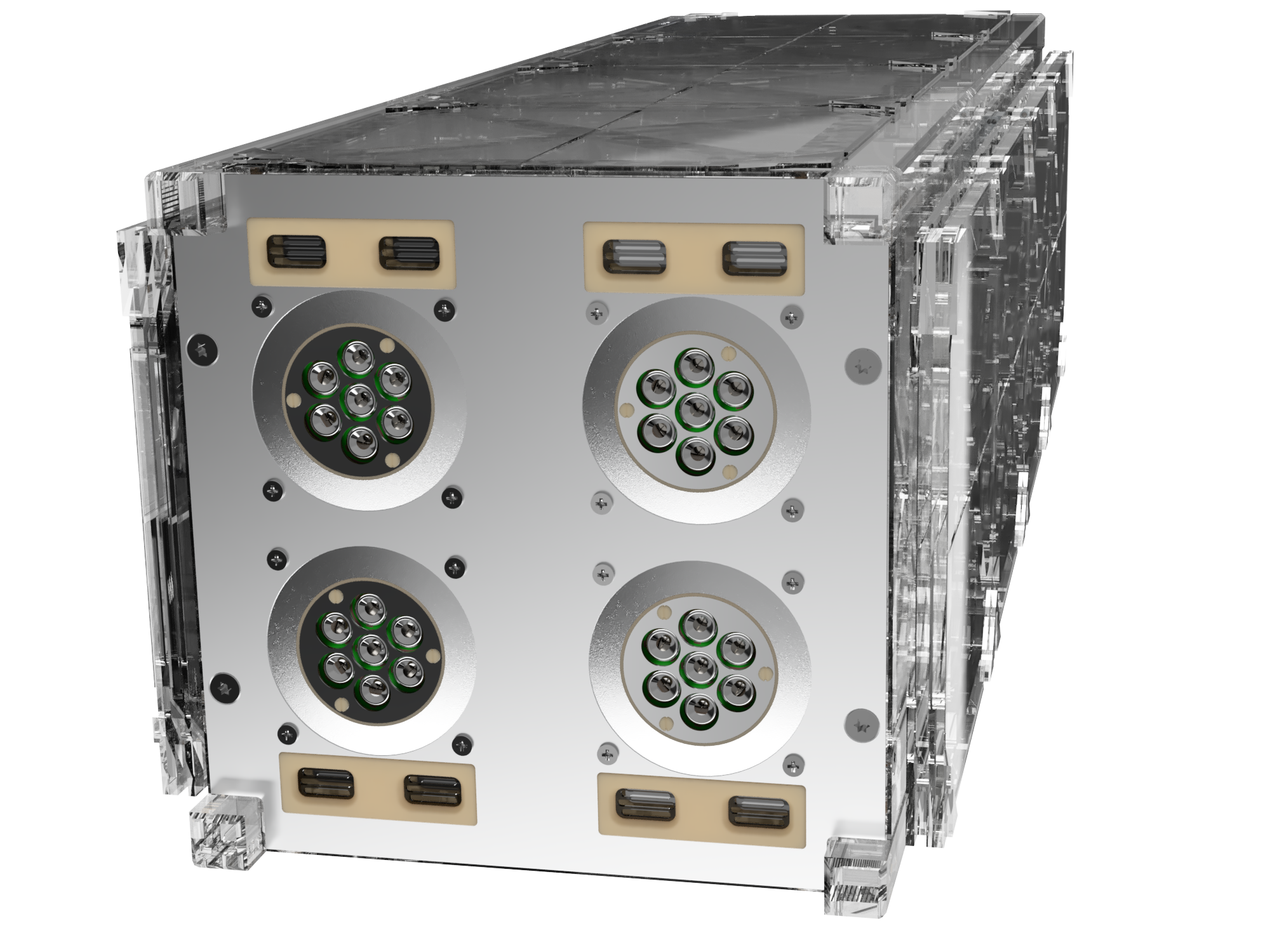
“You can build propulsion systems for satellites that are below one kilogram, up to those the size of trucks, just by creating arrays,” Lőrincz says.

3U Satellite Rendering MF transparent

An example of a Morpheus multi-thruster array used in a 3U-sized small satellite.

Size is important, but so is scalability, and that’s another strength that the Morpheus thrusters bring to the market. Lőrincz told me that their technology allows you quickly and easily build a large batch of the thrusters, instead of having to tailor-make your propulsion system to fit the satellite, which provides big benefits in terms of manufacturing and design costs – which Morpheus can then pass on to its customers, opening up the possibility of including true orbital maneuvering capabilities to a whole new, much more price-sensitive segment of the market.

Next up for Morpheus Space, after it gets its hardware business fully up and running, is to develop and deploy software that complements its thrusters and can offer clients things like fully automated route planning and navigation, Bock told me.

“For example, you can imagine you just have to command ‘Okay I want to go from A to B,’ and everything is handled on board,” he said. So when and how you turn, all the routing. And the next step will be an automated way of handling whole constellations.”

It’s a big goal, but there’s a big potential pay-off. More and more companies are getting into the constellation game, including SpaceX and Amazon, and there’s a lot more to come on that front as companies build out new use cases for collecting and making use of data gathered from orbit. Orbital traffic management and collision avoidance is one reason big industry groups like the Space Safety Coalition are being formed, and anyone who can help supply players at all budget levels of the industry with a solution stands to benefit.