
Year: 2019

17 Oct 2019

Snapchat goes after retailers and DTC brands with new Dynamic Ads

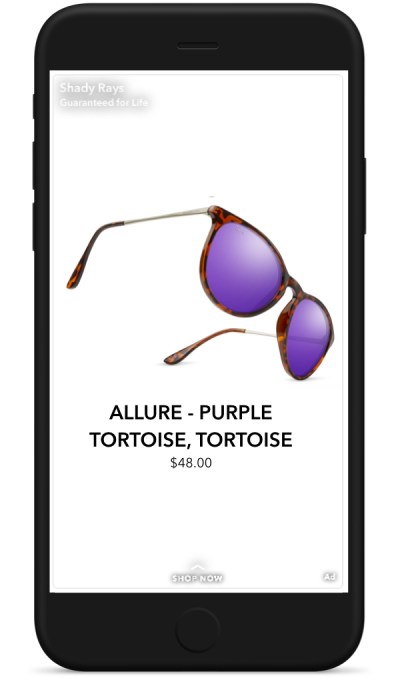
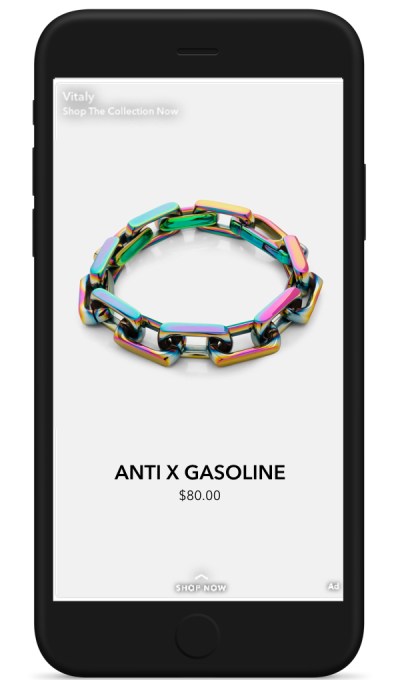
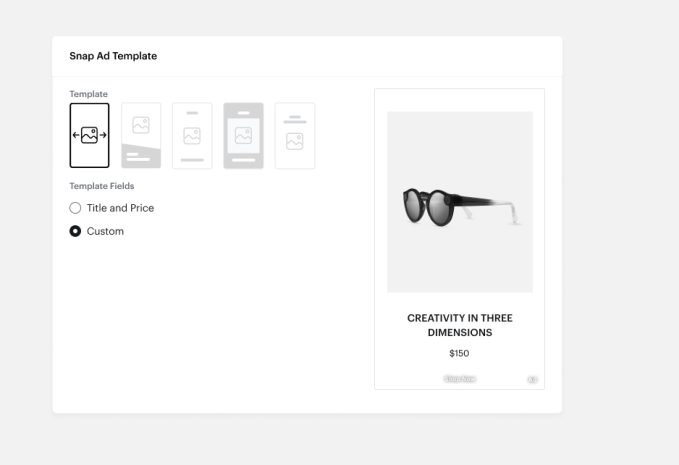
Snap today is announcing a new kind of advertising product, Dynamic Ads, that will help it to better attract ad dollars from retail, e-commerce, and other direct-to-consumer brands — a group that today thrives on Instagram. With Dynamic Ads, advertisers can now automatically create ads in real-time based on extensive product catalogs that may contain hundreds of thousands of products. These ads are then served to Snapchat users based on their interests using a variety of templates provided by Snap.

These templates have been designed for mobile, Snap says, and will help the advertiser save time as they won’t have to manually create their ads. Instead, they just sync their product catalog and allow Snap’s system to build the ad in real-time. As product availability or prices change, the ads will also adjust.

The move to better serve advertisers in the retail and direct-to-consumer (DTC) space comes at a time when many DTC brands have been increasingly turning to Snapchat as Instagram has grown too crowded. Advertisers have complained about saturation and higher ad prices there. Snap, meanwhile, targeted this category of advertisers with a growing number of tools. The result, according to some DTC brands were ads that were 8 times cheaper than Instagram.
ShadyRays DPA 2

The Dynamic Ads are the latest in a long line of new ad products and tools. Since Snap launched its Ads Manager two years ago, it has rolled out new ad types, integrations, buying types, and more, including Snap Pixel, Product Ads, advanced optimization, reach & frequency buying, quick Instant Create ads, Shopify integrations, and others aimed at video marketers. like the premium Snap Select program, the non-skip, six-second video Commercials.

More recently, it’s been focused on making ad creation easier. In July, Snap launched an “instant” tool called Instant Create that would help advertisers who were not used to creating ads for the smartphone-friendly vertical format. This ad tool would generate an ad from a brand’s existing assets, like an e-commerce storefront, in just three steps.
Vitaly DPA 2

The new Dynamic Ads will be even simpler, in a way, as advertisers will be able to build “always-on” campaigns that don’t need constant updating.

That being said, the ads risk being a little more generic. Once these templated ads spread across Snapchat, it may be harder for the products being sold to stand out from others. After all, Instagram DTC ads often succeed because of the creative ad collateral involved, or the storytelling, which goes beyond just showcasing product photos. Instagram also allows brands to connect with a wide variety of influencers to promote the products.

Snapchat, however, believes it can do well in this space, because it can better deliver the millennial audience. The company claims that 38% of Snapchat users 16 and up can’t be reached on Instagram daily, followed by 49% on Facebook. Snapchat, meanwhile, reaches over 90% of 13 to 24-year olds in the U.S. And its user base is highly engaged with the app, which gives advertisers more opportunity to reach them.
DPA Template example

“Snapchat has become a go-to destination to reach the largest and most economically influential generations in history, Millennials and Gen Z. Snapchat Dynamic Ads now allow brands to create real-time optimized mobile ads quickly and at scale, with products showcased in visually-appealing templates that feel native to the app,” said Snap’s Kathleen Gambarelli, Group Product Marketing Manager, Direct Response, in a statement.

“More than 75% of the 13-34-year-old U.S. population is active on Snapchat, and daily Snapchat users open the app over 20 times each day, offering brands major opportunities to reach the right person with the right message at the right time,” she added.

Interested advertisers will be able to start setting up their campaigns today in an open beta test, and these will begin running in one or two weeks’ time. Dynamic Ads will be available worldwide for all Snapchat advertisers, but campaigns will only reach U.S. users to start. Snap says global markets will begin in the coming months.

[gallery ids="1898904,1898902,1898901,1898903,1898899,1898905,1898900"]

17 Oct 2019

Sentons launches SurfaceWave, a processor and tech to create software-defined surfaces that supercharge touch and gesture

As handset makers continue to work on ways of making smartphones more streamlined and sleek, while at the same time introducing new features that will get people buying more devices, a startup that is pioneering something called “software-defined” surfaces — essentially, using ultrasound and AI to turn any kind of material, and any kind of surface, into one that will respond to gestures, touch and other forces — is setting out its stall to help them and other hardware makers change up the game.

Sentons, the startup out of Silicon Valley that is building software-defined surface technology, is today announcing the launch of SurfaceWave, a processor and accompanying gesture engine that can be used in smartphones and other hardware to create virtual wheels and buttons to control and navigate apps and features on the devices themselves. The SurfaceWave processor and engine are available to “any mobile manufacturer.”

Before this, Sentons had actually already inked direct deals to test out market interest in its technology. There were actually already three smartphones released — two of which were only sold in Asia (models and customer names undisclosed by Sentons) and one of which is made by Asus in partnership with Tencent, the Republic of Gamers phone (the Air Triggers are powered by Sentons). Jess Lee, the company’s CEO, told me in an interview that there are another 10-12 devices “in process” right now due to be released in coming cycles. He would not comment on whether his former employer is one of them.

Sentons has actually been around since 2011 but very much under the radar until this year, when it announced that Lee — who had been at Apple, after his previous company, the cutting-edge imaging startup InVisage, was acquired by the iPhone maker — was coming on as CEO.

The company has quietly raised about $35 million from two investors, NEA and Lee confirmed to me that it’s currently raising another, probably larger, round. (Given the company’s partnership with Tencent and Asus, those are two companies I would think are candidates as strategic investors.)

The sound of silence

Sentons’ core idea is focused around sound — specifically ultra sound.

posterImage 4813Its system is based around a processor that emits ultrasonic “pings” (similar to sonar array, the company says, which is used for example on submarines to navigate and communicate) to detect physical movement and force on the surface of an object. The company says that this technique is much more sophisticated than capacitive touch that has been used on smartphones up to now, since combined with Sentons’ algorithms it can measure force and intent as well as touch.

Combined with the processor that emits the pings and houses the gesture engine, Sentons also uses “sensor modules” around the perimeter of a device to detect when those pings are interrupted. The system trains itself and can adjust both to temporal “buttons” and also other unintended things like when a screen cracks and your gestures move over to a different area of the phone.

Asus ROG 350x176Gaming — the main use case for Asus’s ROG phone — is an obvious category ripe for software-defined surfaces. The medium always strives for more immersive experiences, and as more games are either natively made for phones, or ported there because of the popularity of mobile gaming, handset makers and publishers are always trying to come up with ways to enhance what is, ultimately, very limited real estate (even with larger screens). Using any and all parts of a device to experience motion and other physical responses, and to control the game, is a natural fit for what Sentons has built.

But the bigger picture and longer term goal is to apply Sentons’ technology for other uses on devices — photography and building enhanced camera tools is one obvious example — and on other “hardware,” like connected cars, clothes and even the human body, since Sentons’ technology can also work on and through human tissue.

“Every surface is an opportunity,” Lee said, noting that conversations around health and medical technology are still very early, while other areas like wearables and automotive are seeing “engagement” already. “In the cabin of a vehicle, you have a wealth of tactile materials, whether it’s leather dashboards or metal buttons, and all of those are extremely interesting to us,” he added.

At the same time, the more immediate opportunity for Sentons is the mobile industry.

Smartphone sales have slowed down, and for some vendors declined, in recent years; and while some of that might have to do with premium device prices continuing to climb, and much higher smartphone penetration globally, some have laid the blame in part on a lack of innovation. Specifically, newer phones are just not providing enough “must have” new features to merit making a purchase of a new device if you already have one.

You could argue that making a technology like this widely available and open to all comers might make those who are trying to make their devices stand out with special features less inclined to jump on the bandwagon.

“Yes, you could say there is more value in scarcity, an approach we took in the last company,” Lee said, referring to InVisage and how very under the radar it was before being snapped up by Apple.

However, he thinks a different approach is needed here. “Whether we launched this platform to everyone or not, the gates have opened, the piñata has broken, and we see a lot more opportunities and want to go for them,” he said.

“You can call it a multi-pronged approach,” he continued, “but ensuring the adoption of software-defined interactions [by trying to work with as many companies as possible] gets the technology or use out there quickly.” He noted that when a new gesture is introduced on devices, it can take time for the world to absorb it, “and we are positive there will be followers, perhaps with different technology, that will compete with us, so a broad launch is what we are going for.”

17 Oct 2019

Samsung confirms glaring S10 fingerprint reader flaw, promises fix

Galaxy S10 users should be turn on some alternative security features as Samsung works to address a major flaw with the device’s in-screen fingerprint sensor. The consumer electronics giant noted the issue today after a British user reported the ability to unlock her device with unregistered fingerprints.

The flaw was discovered after placing a $3.50 screen protector on the device, confirming earlier reports that adding one could introduce an air gap that interfered with the ultrasonic scanner. The company noted the issue in a statement, telling the press that it was, “aware of the case of S10’s malfunctioning fingerprint recognition and will soon issue a software patch.”

Third party companies including Korean bank KaKaoBank have suggested users turn off the reader until the issue is addressed. That certainly appears to be the most logical course of action until the next software update.

When it hit the market back in March, the company touted the technology as one of the industry’s most secure biometric features, noting that it was, “engineered to be more secure than a traditional 2D optical scanner, the industry-first Ultrasonic Fingerprint ID, with sensors embedded in the display, reads the 3D contours of your physical fingerprint to keep your phone and data safe. This advanced biometric security technology earned the Galaxy S10 the world’s first FIDO Alliance Biometric Component certification.”

Samsung has warned against the use of screen protectors previously, but the ability to fool the product with a cheap off the shelf mobile accessory clearly presents a major and unexpected security concern for Galaxy users. We’ve reached out to Samsung for further comment.

17 Oct 2019

ArsenalBio emerges from stealth with $85 million and a dream team to fight cancer

The story behind ArsenalBio begins with Sean Parker’s Institute for Cancer Immunotherapy.

Founded in 2016, the Institute has been instrumental in providing a space for the top researchers into cancer across different fields to collaborate and communicate on the latest breakthroughs in settings that range from formal meetings to informal retreats.

It was at one of these informal retreats that luminaries like: Dr. Bradley Bernstein, a professor of pathology and researcher at the Broad Institute; W. Nicholas Haining, vice president of discovery oncology at Merck Research Laboratories; Dr. Alexander Mason, an associate professor of immunology at the University of California San Francisco; and E. John Wherry, a professor of systems immunology at the University of Pennsylvania, began to talk about the current state of the art in cancer diagnostics and therapies and the technologies powering cell-based therapies to potentially cure cancer.

Parker suggested that rather than have each of these researchers spin their technologies out into separate companies that would develop one discrete innovation that would be needed to get to a cell-based therapy for solid tumors, the researchers should combine forces and build an arsenal of tools for the discovery and development of potential cures.

I look at this as a tour de force of a combination of bringing academics together who typically would start separate companies and get them working together with a dream team management team,” says Beth Seidenberg, the founder of Westlake Village BioPartners and an investor in ArsenalBio. 

Indeed, the management team is just as impressive as the researchers behind the project. Kleiner Perkins founding partner, Brooke Byers recruited Dr. Ken Drazan to serve as a consultant to the company as it was getitng off the ground Drazan, now the company’s chief executive, was the former President of the cancer research and diagnostics startup Grail has served as an executive and founder at a number of healthcare startups and large medical companies.

DrazanK Headshot

Ken Drazan, chief executive ArsenalBio

With Drazan on board, the company quickly recruited the rest of the management team. Jane Grogan, the former principal scientist in charge of adaptive tumor and cell therapy at Genentech; Michael Kalos, the former vice president of immuno-oncology and cell therapies at Janssen Oncology; and Tarjei Mikkelsen, the former vice president of biology at 10x Genomics.

ArsenalBio initially formed as a shell company with seed financing from investors in 2018, basically on the back of its technical team and nascent executive staff.

Alongside the powerhouse executive team and scientific founders, ArsenalBio has now raked in $85 million in financing from investors including Westlake Village, the PICI, Kleiner Perkins, the Unversity of California, San Francisco Foundation Investment Company, Euclidean Capital and Osage Venture Partners.

The idea is to improve the ability of T cell therapies to fight a broader range of cancers more effectively. T cell treatments have already shown amazing promise with certain types of cancer, but have not been able to effectively treat the solid tumors that represent the deadliest manifestation of the disease.

To tackle solid tumors like sarcomas, carcinomas, and lymphomas doctors need to figure out how to deliver the T cells first to the area around the tumor and then to the right tissues where the tumor is spreading. That requires a set of biological instructions which in many cases have yet to be discovered.

“We need to get the cells to deal with the tumor microenvironment,” says Seidenberg.

T cells are the human body’s natural response to fighting off infections and disease. Cancers essentially turn off that natural immune response by signaling to the cells that a tumor is actually something they should ignore rather than attack.

“Our goal is to program [cells] by delivering additional  instructions to tell the T cell to ignore the instructions from the tumor… to ignore the signals,” says Drazan. 

The company is still developing its first product strategies now, Drazan says. But ArsenalBio will be selling two different types of technologies. The first will be the medicines themselves that will be used to cure certain types of cancer. The second will be the sequences of genes that can be used to counteract or override the signals that are coming from different types of tumors which prohibit T cells from performing their normal functions.

Drazan compared those sequences to programs on Github that other researchers, clinicians and companies could use to develop their own therapies.

“ArsenalBio allows us to rewrite vast stretches of code to give T cells dramatic new functions–that means they can be made to be more effective at killing cancer and a broad spectrum of other diseases,” said Sean Parker, founder and Chairman of PICI and ArsenalBio director, in a statement. “It’s also very rewarding to see ArsenalBio born from the deep collaboration of PICI investigators—who worked together across research centers, hospitals and universities on the science behind these technologies. The company’s very existence demonstrates how much faster and better we can get therapies from bench to bedside when we collaborate and put patients first.”

17 Oct 2019

Microsoft accessibility grants go out to companies aiming to improve tech for the disabled

The tech world has a lot to offer those with disabilities, but it can be hard to get investors excited about the accessibility space. That’s why Microsoft’s AI for Accessibility grants are so welcome: equity-free Azure credits and cash for companies looking to adapt AI to the needs of those with disabilities. The company just announced ten more, including education for the blind startup ObjectiveEd.

The grant program was started a while back with a $5 million, 5-year mission to pump a little money into deserving startups and projects — and get them familiar with Microsoft’s cloud infrastructure, of course.

Applications are perennially accepted, and “anybody who wants to explore the value of AI and machine learning for people with disabilities is welcome to apply,” said Microsoft’s Mary Bellard. As long as they have “great ideas and roots in the disability community.”

Among the grantees this time around is ObjectiveEd, which I wrote about earlier this year. The company is working on an iPad-based elementary school curriculum for blind and low-vision students that’s also accessible to sighted kids and easy for teachers to deploy.

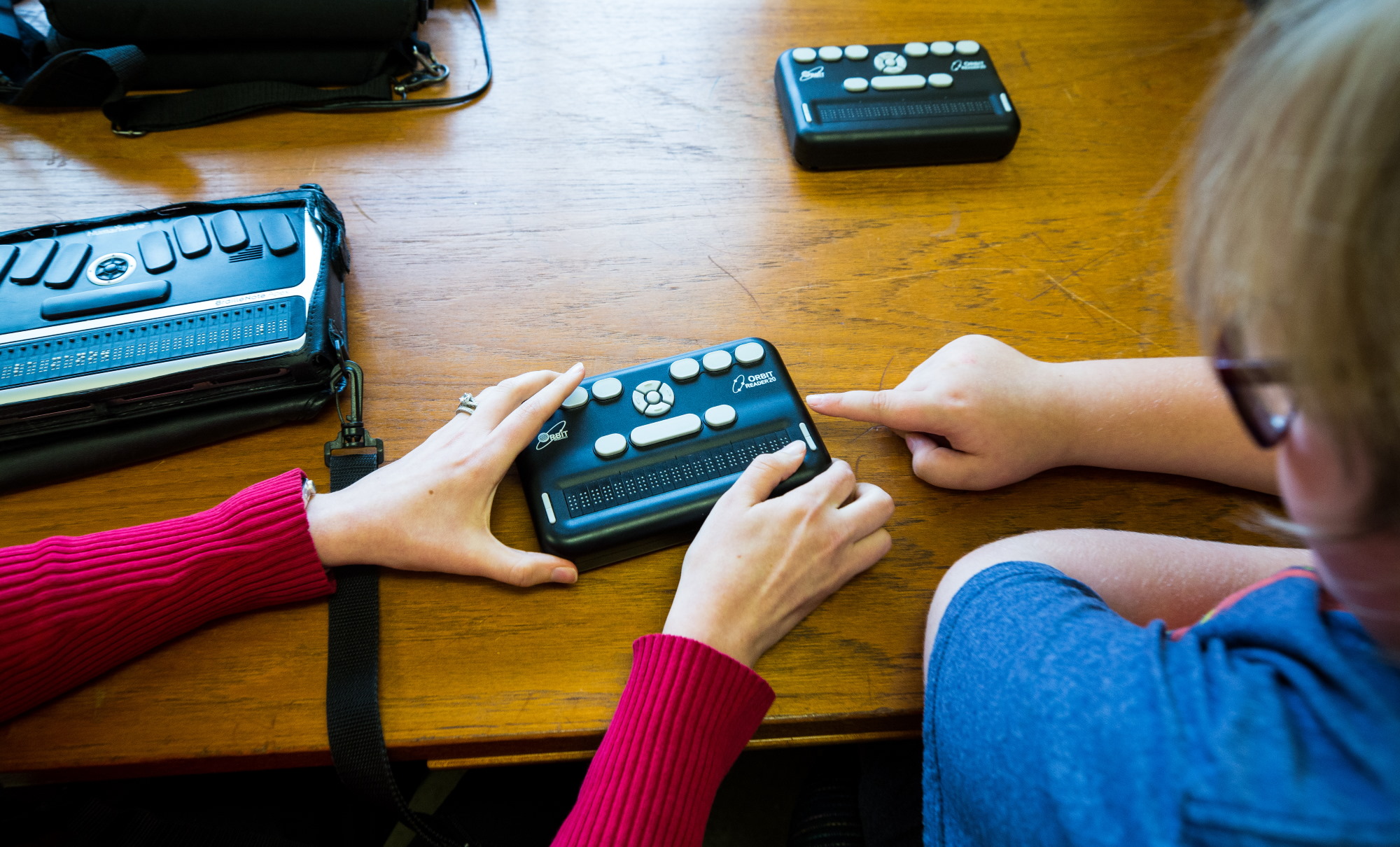
Part of that, as you might guess, is braille. But there aren’t nearly enough teachers capable of teaching braille as students who need to learn it, and the most common technique is very hands-on: a student reads braille (on a hardware braille display) out loud and a teacher corrects them. Depending on whether a student has access to the expensive braille display and a suitable tutor at home, that can mean as little as an hour a week dedicated to these crucial lessons.

ObjectiveEd 2

A refreshable braille display for use with apps like ObjectiveEd’s.

“We thought, wouldn’t it be cool if we could send a sentence to the braille display, have the student speak the words out loud, then have Microsoft’s Azure Services translate that to text and compare that to the braille display, then correct the student if necessary and move on. All within the context of a game, to make it fun,” said ObjectiveEd founder Marty Schultz.

And that’s just what the company’s next app does. Speech-to-text accuracy is high enough now that it can be used for a variety of educational and accessibility purposes, so all it will take for a student to get some extra time in on their braille lessons is an iPad and braille display — admittedly more than a thousand dollars worth of hardware, but no ever one said being blind was cheap.

Braille literacy is dropping, and, I suggested, no surprise there: With pervasive and effective audio interfaces, audio books, and screen readers, there are fewer times when blind and low-vision people truly need braille. But as Schulz and Bellard both pointed out, it’s great to be able to rely on audio for media consumption, but for serious engagement with the written word and many educational purposes, braille is either necessary or a very useful alternative to speech.

Both Schultz and Bellard noted that they are not trying to replace teachers at all — “Teachers teach, we help kids practice,” Schultz said. “We’re not experts in teaching, but we can follow their advice to make these tools useful to students.”

There are ten other grantees in this round of Microsoft’s program, covering a wide variety of approaches and technologies. I like the SmartEar, for instance, which listens for things like doorbells or alarms and alerts deaf people of them via their smartphone.

And City University of London has a great idea in personalizing object recognition. It’s pretty straightforward for a computer vision system to recognize a mug or keychain on a table. But for a blind person it’s more useful if a system can identify their mug or keychain, and then perhaps say, it’s on the brown table left of the door, or what have you.

Here are the ten grantees besides ObjectiveEd (descriptions provided by Microsoft, as I wasn’t able to investigate each one, but may in the future):

  • AbiliTrek : A platform for the disability community to rate and review the accessibility of any establishment, with the ability to tailor search results to the specific needs of any individual.
  • Azur Tech Concept – SmartEar : A service that actively listens for environmental sounds (i.e. doorbell, fire alarm, phone call) and retransmits them in colored flashes on small portable boxes or a smart phone to support the deaf community.
  • Balance for Autism – Financial Accessibility: An interactive program which provides information and activities designed to better match people with programs and services
  • City University of London – The ORBIT : Developing a data set to train AI systems for personalizing object recognition, which is becoming increasingly important for tools used by the blind community.
  • Communote – BeatCaps : A new form of transcription that uses beat tracking to generate subtitles that visualize the rhythm of music. These visualizations allow the hard of hearing to experience music.
  • Filmgsindl GmbH – EVE: A system that recognizes speech and generates automatic live subtitles for people with a hearing disability.
  • Humanistic Co-Design : A cooperative of individuals, organizations and institutions working together to increase awareness about how designers, makers, and engineers can apply their skills in collaboration with people who have disabilities.
  • iMerciv –  MapinHood : A Toronto-based startup developing a navigation app for pedestrians who are blind or have low vision and want to choose the routes they take if they’re walking to work, or to any other destination.
  • inABLE and I-Stem – I-Assistant: A serves that uses text-to-speech, speech recognition, and AI to give students a more interactive and conversational alternative to in-person testing in the classroom.
  • Open University – ADMINS : A chatbot that provides administrative support for people with disabilities who have difficulty filling out online academic forms.

The grants will take the form of Azure credits and/or cash for immediate needs like user studies and keeping the lights on. If you’re working on something you think might be a good match for this program, you can apply for it right here.

17 Oct 2019

Work management platform Asana launches new automation tools

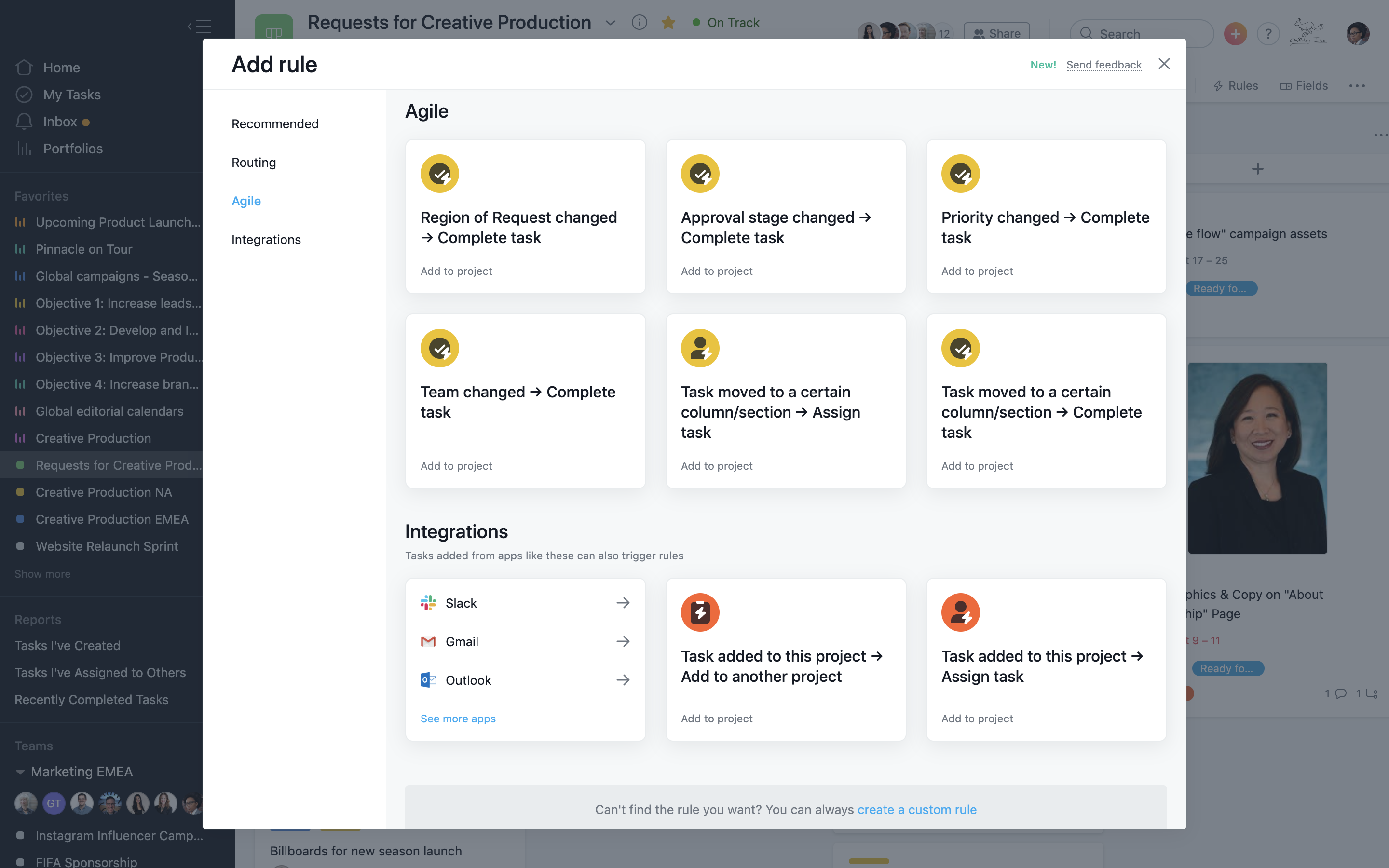
Work management platform Asana today announced the launch of a new feature that will take the work out of some of the most mundane and repetitive tasks on its platform. Asana Automation, as the new feature is called, allows users to create their own “if this then that” rules, but also features a new voice transcription service, as well as an OCR tool and new smart templates that integrate some of the service’s machine learning smarts.

“Earlier this year we launched Workload, empowering teams to be more agile when planning, monitoring and managing their efforts,” said Asana head of product said Alex Hood. “Now with Automation, we’re introducing the ability to automate your routine tasks so you can spend more energy on your craft and leave the repetitive busywork to Asana.”

Automation Rule and integration

The rule builder comes with over 70 pre-build and preset rules at launch, but users can obviously build their own rules as well. Asana customers can use the service to automatically route tasks to a specific team member, for example. Like with the rest of the new features the company announced today, the idea here is to automate many of the processes that keep teams busy all day, doing “work about work.”

The new OCR and transcription services, which are now available in Asana’s iPhone app, are pretty self-explanatory. They make it easier to capture what was said in a meeting or written on a whiteboard, which users can then assign to a given task in Asana.

Smart project templates, too, take some of the grunt work out of using Asana. “Now when using a template, such as an event plan or campaign launch, a complete workback schedule can be instantly layered on,” the company explains. “When a conflict arises between task deadlines, Asana will automatically correct, enabling teams to spend less time setting up projects and workflows, and more time getting work done.”

17 Oct 2019

Ekos announces $8M Series A to build software for craft breweries

Eskos, a Charlotte, NC startup that creates software to help craft breweries and other beverage companies organize their businesses, announced an $8 million Series A today led by Noro-Moseley Partners, an Atlanta  venture firm.

Prior to taking this funding, the company had bootstrapped for the previous five years, building a business with 1700 customers in 40 countries. The company has created an entire suite of tools to track everything from what’s in the tank, to recipes, raw materials, inventory and so on — everything you need to run a brewery, cidery or wine making business.

Prior to launching the company in 2014, the founders were thinking about building software for this market niche, so they went around and asked brewers what they were using to track their businesses. Some were just tracking it manually using clipboards and whiteboards. Others were using ERP software like SAP, Netsuite or Microsoft Dynamics. Some were using Google Sheets.

McKinney said he couldn’t believe that there wasn’t a set of tools specifically geared for this market, so he and co-founder and CTO Greg Forehand did what any good entrepreneurs would do. They built it. Today’s product includes an app to track the business on a mobile phone, and the ability to set up a drag and drop workflow for the entire operation.

He says he and Forehand actually came up with the business idea independently. He  became aware of Forehand in an early sales call. It was certainly odd that two people in the same city came up with the same idea at the same time. Eventually the two met and decided to join forces and form a business together.

It turned out to be a good decision. Upon launching in 2014, the business took off immediately. They got covered in a brewing industry publication, Brewbound, which helped spread the message. By the end of the first year they had 100 breweries on the platform. He said that word also spread by word of mouth, and although they planned on concentrating on the US market for starters, before they knew it they were getting calls from breweries in Canada, New Zealand and Australia. Today he says they have customers just about any place there is a brewery across 40 countries.

The company currently has 32 employees, including just two sales people, who also help the customers with initial setup for their particular needs. They have expanded from beer to cider to wine, and over time they hope to expand into other food and alcoholic beverage markets.

McKinney has big plans for the money. He wants to hire 40 new employees by the end of 2020 including sales and marketing folks, as well as software engineers. He says he recognizes that this will be a big change for his small operation, but it’s something they have been planning for and discussing over the last 8 months as they went through the process to find funding.

“I believe very much in being transparent with our team internally, so that nothing is really a surprise. Our team is pretty pumped about the opportunity for our customers and the things we’re going to build, and also getting some new team members in place,” he said.

17 Oct 2019

Galileo Financial raises $77 million for its fintech services that were 19 years in the making

Clay Wilkes had already been retired for six years when he launched Galileo Financial Services in 2000.

The serial entrepreneur who had been an early pioneer in telecommunications technologies (like voice over internet protocols) saw the need for better connectivity between secondary services and financial institutions 19 years ago, just as new digital services around payroll processing, transit vouchers, store cards, and other services were launching.

Now the company runs the backend integrations with financial institutions for some of the biggest names in financial technology and has just raised $77 million in financing from Accel Partners.

Not that Galileo necessarily needed the money. The company has been profitable for years since its bootstrapped beginnings and counts fintech giants like Chime Banking, Robinhood, Monzo, and Transferwise among its customers. In fact, the debit and credit card service provider will process nearly $26 billion in financing by the end of the year, according to the company.

For financial services companies that are launching these days there are a few ways to get to market quickly. One is to partner with a financial institution that will handle the money for them in accounts that are FDIC assured and the other is to become a financial provider that’s fully regulated themselves.

Most companies have opted for the second route, and when they do, they need to find a way to hook into a bank’s financial system and the payment technologies that form the backbone of transaction processing through the debit and credit cards that a huge portion fo the world relies on to buy things.

Accel partner John Locke, who is joining the Galileo board of directors, calls the company almost the flip side of the Braintree and Stripe investments that power transactions for most online merchants.

Rather than focus on the companies that are taking online orders and processing payments, Galileo deals with the consumers who are spending the money and powers the ways in which companies are trying to offer new services to get those consumers to switch from traditional banks to their upstart challengers (ironically still mostly powered by traditional banks).

“Through the API what they’re doing is creating and managing accounts, authorizing merchant transactions, monitoring fraud, initiating disputes and chargebacks, being able to configure products and a wide variety of product,” said Wilkes. “We support [direct deposit accounts] and we do credit products… all of these capabilities are capabilities that fit on our platform.”

Wilkes wouldn’t talk about the company’s valuation except to say that it’s worth “a substantial amount”.

What he will talk about is how Galileo will use the money it’s raised. The Salt Lake City-based startup is planning to greatly expand its geographical reach beyond North America. It’s “actively pursuing opportunities in Brazil and Colombia and Argentina,” according to Wilkes. In fact, the company plans to open an office in Mexico City in the coming months to service new Latin American business.

Meanwhile it already has something of a stranglehold on the market in the United Kingdom. “The top five largest fintechs in the UK are all clients today,” Wilkes said.

Unlike other companies in the market that take a fixed percentage of transactions, Galileo charges a variable amount of a few cents for every transaction that it processes to connect a startup with its banking back end.  

“We’re in a golden era of fintech innovation and Galileo has quietly built the API infrastructure layer powering the industry’s most innovative products,” said Locke in a statement. “Clay and his team have built a very impressive business with many parallels to companies like Qualtrics and Atlassian: bootstrapping first to build a quiet, profitable powerhouse and now, ready to go big globally. We’re excited to help Clay and team take Galileo to the next level.”


17 Oct 2019

Galileo Financial raises $77 million for its fintech services that were 19 years in the making

Clay Wilkes had already been retired for six years when he launched Galileo Financial Services in 2000.

The serial entrepreneur who had been an early pioneer in telecommunications technologies (like voice over internet protocols) saw the need for better connectivity between secondary services and financial institutions 19 years ago, just as new digital services around payroll processing, transit vouchers, store cards, and other services were launching.

Now the company runs the backend integrations with financial institutions for some of the biggest names in financial technology and has just raised $77 million in financing from Accel Partners.

Not that Galileo necessarily needed the money. The company has been profitable for years since its bootstrapped beginnings and counts fintech giants like Chime Banking, Robinhood, Monzo, and Transferwise among its customers. In fact, the debit and credit card service provider will process nearly $26 billion in financing by the end of the year, according to the company.

For financial services companies that are launching these days there are a few ways to get to market quickly. One is to partner with a financial institution that will handle the money for them in accounts that are FDIC assured and the other is to become a financial provider that’s fully regulated themselves.

Most companies have opted for the second route, and when they do, they need to find a way to hook into a bank’s financial system and the payment technologies that form the backbone of transaction processing through the debit and credit cards that a huge portion fo the world relies on to buy things.

Accel partner John Locke, who is joining the Galileo board of directors, calls the company almost the flip side of the Braintree and Stripe investments that power transactions for most online merchants.

Rather than focus on the companies that are taking online orders and processing payments, Galileo deals with the consumers who are spending the money and powers the ways in which companies are trying to offer new services to get those consumers to switch from traditional banks to their upstart challengers (ironically still mostly powered by traditional banks).

“Through the API what they’re doing is creating and managing accounts, authorizing merchant transactions, monitoring fraud, initiating disputes and chargebacks, being able to configure products and a wide variety of product,” said Wilkes. “We support [direct deposit accounts] and we do credit products… all of these capabilities are capabilities that fit on our platform.”

Wilkes wouldn’t talk about the company’s valuation except to say that it’s worth “a substantial amount”.

What he will talk about is how Galileo will use the money it’s raised. The Salt Lake City-based startup is planning to greatly expand its geographical reach beyond North America. It’s “actively pursuing opportunities in Brazil and Colombia and Argentina,” according to Wilkes. In fact, the company plans to open an office in Mexico City in the coming months to service new Latin American business.

Meanwhile it already has something of a stranglehold on the market in the United Kingdom. “The top five largest fintechs in the UK are all clients today,” Wilkes said.

Unlike other companies in the market that take a fixed percentage of transactions, Galileo charges a variable amount of a few cents for every transaction that it processes to connect a startup with its banking back end.  

“We’re in a golden era of fintech innovation and Galileo has quietly built the API infrastructure layer powering the industry’s most innovative products,” said Locke in a statement. “Clay and his team have built a very impressive business with many parallels to companies like Qualtrics and Atlassian: bootstrapping first to build a quiet, profitable powerhouse and now, ready to go big globally. We’re excited to help Clay and team take Galileo to the next level.”


17 Oct 2019

Pendo scores $100M Series E investment on $1 billion valuation

Pendo, the late stage startup that helps companies understand how customers are interacting with their apps, announced a $100 million Series E investment today on a valuation of $1 billion.

The round was led by Sapphire Ventures . Also participating were new investors General Atlantic and Tiger Global, and existing investors Battery Ventures, Meritech Capital, FirstMark, Geodesic Capital and Cross Creek. Pendo has now raised $206 million, according to the company.

Company CEO and co-founder Todd Olson says that one of the reasons they need so much money is they are defining a market, and the potential is quite large. “Honestly, we need to help realize the total market opportunity. I think what’s exciting about what we’ve seen in six years is that this problem of improving digital experiences is something that’s becoming top of mind for all businesses,” Olson said.

The company integrates with customer apps, capturing user behavior and feeding data back to product teams to help prioritize features and improve the user experience. In addition, the product provides ways to help those users either by walking them through different features, pointing out updates and new features or providing other notes. Developers can also ask for feedback to get direct input from users.

Olson says early on its customers were mostly other technology companies, but over time they have expanded into lots of other verticals including insurance, financial services and retail and these companies are seeing digital experience as increasingly important. “A lot of this money is going to help grow our go-to-market teams and our product teams to make sure we’re getting our message out there, and we’re helping companies deal with this transformation,” he says. Today, the company has over 1200 customers.

While he wouldn’t commit to going public, he did say it’s something the executive team certainly thinks about, and it and has started to put the structure in place to prepare should that time ever come. “This is certainly an option that we are considering, and we’re looking at ways in which to put us in a position to be able to do so, if and when the markets are good and we decide that’s the course we want to take.”