Year: 2019

10 Oct 2019

Rocket Lab’s new 5-year FAA license will help it streamline its rocket launch process

Rocket Lab has received a new 5-year Launch Operator License from the Federal Aviation Administration, which grants it permission to do multiple launches of its Electron rocket from its LC-1 launch site in New Zealand without having to seek individual clearance for each one. While not the only limiting factor, this should help Rocket Lab increase the frequency of its launches form LC-1, servicing more customers more often for commercial small satellite customers.

Until now, Rocket Lab has had to seek out a license (or multiple licenses) from the FAA for each individual rocket it flew – the company has seemingly managed that process just fine to date, but it’s an added process that probably adds a lot of time and effort to each launch attempt, even if it hasn’t directly flummoxed any mission to date.

Rocket Lab says that this will provide a “streamlined path to orbit” for its customers, however, which should make it easier for the company to operate its flexible model that is designed to work better with the shifting timelines of small sat startups and younger commercial space companies, while still ensuring that Rocket Lab’s launch capacity is used to maximum effect. Rocket Lab just recently swapped one payload for another for an upcoming launch, for example.

Rocket Lab is part of the Commercial Spaceflight Federation, an industry consortium that also includes SpaceX, Virgin Galactic, Relativity Space and others that is petitioning the FAA for reforms to regulations that would update them to better suit the current state of the commercial space business. SpaceX CEO Elon Musk recently praised the FAA as a partner that it’s been able to work with very efficiently, speaking specifically about the licensing process regarding its ongoing Starship test program.

This license isn’t tied to the agency’s overall process for licensing U.S.-based launches (LC-1 is in New Zealand, after all) but it is another indication that the current FAA is more than willing to work with younger commercial space companies to ensure they can do business in an efficient manner.

10 Oct 2019

Top VCs, founders share how to build a successful SaaS company

Last week at TechCrunch Disrupt in San Francisco, we hosted a panel on the Extra Crunch stage on “How to build a billion-dollar SaaS company.” A better title probably would have been “How to build a successful SaaS company.”

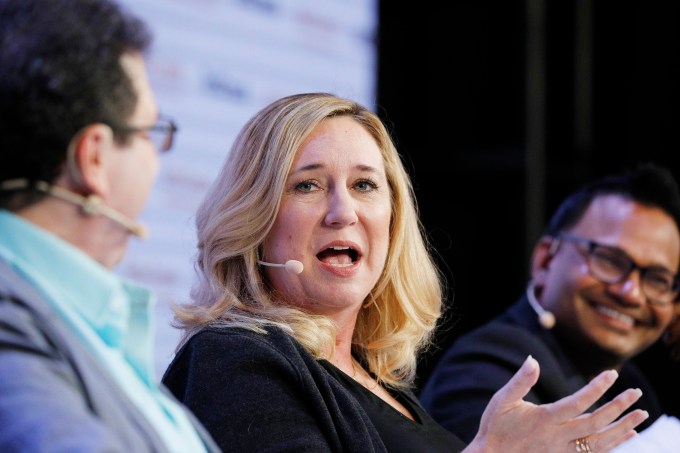
We spoke to Whitney Bouck, COO at HelloSign; Jyoti Bansal, CEO and founder at Harness, and Neeraj Agrawal, a partner at Battery Ventures to get their view on how to move through the various stages to build that successful SaaS company.

While there is no magic formula, we covered a lot of ground, including finding a product-market fit, generating early revenue, the importance of building a team, what to do when growth slows and finally, how to resolve the tension between growth and profitability.

Finding product-market fit

Neeraj Agrawal: When we’re talking to the market, what we’re really looking for is a repeatable pattern of use cases. So when we’re talking to prospects — the words they use, the pain point they use — are very similar from call to call to call? Once we see that pattern, we know we have product-market fit, and then we can replicate that.

Jyoti Bansal: Revenue is one measure of product-market fit. Are customers adopting it and getting value out of it and renewing? Until you start getting a first set of renewals and a first set of expansions and happy successful customers, you don’t really have product-market fit. So that’s the only way you can know if the product is really working or not.

Whitney Bouck: It isn’t just about revenue — the measures of success at all phases have to somewhat morph. You’ve got to be looking at usage, at adoption, value renewals, expansion, and of course, the corollary, churn, to give you good health indicators about how you’re doing with product-market fit.

Generating early revenue

Jyoti Bansal: As founders we’ve realized, getting from idea to early revenue is one of the hardest things to do. The first million in revenue is all about street fighting. Founders have to go out there and win business and do whatever it takes to get to revenue.

As your revenue grows, what you focus on as a company changes. Zero to $1 million, your goal is to find the product-market fit, do whatever it takes to get early customers. One million to $10 million, you start scaling it. Ten million to $75 million is all about sales, execution, and [at] $75 million plus, the story changes to how do you go into new markets and things like that.

Whitney Bouck: You really do have to get that poll from the market to be able to really start the momentum and growth. The freemium model is one of the ways that we start to engage people — getting visibility into the product, getting exposure to the product, really getting people thinking about, and frankly, spreading the word about how this product can provide value.

48833421487 5933a39235 k

Photo: Kimberly White/Getty Images for TechCrunch


10 Oct 2019

Top VCs, founders share how to build a successful SaaS company

Last week at TechCrunch Disrupt in San Francisco, we hosted a panel on the Extra Crunch stage on “How to build a billion-dollar SaaS company.” A better title probably would have been “How to build a successful SaaS company.”

We spoke to Whitney Bouck, COO at HelloSign; Jyoti Bansal, CEO and founder at Harness, and Neeraj Agrawal, a partner at Battery Ventures to get their view on how to move through the various stages to build that successful SaaS company.

While there is no magic formula, we covered a lot of ground, including finding a product-market fit, generating early revenue, the importance of building a team, what to do when growth slows and finally, how to resolve the tension between growth and profitability.

Finding product-market fit

Neeraj Agrawal: When we’re talking to the market, what we’re really looking for is a repeatable pattern of use cases. So when we’re talking to prospects — the words they use, the pain point they use — are very similar from call to call to call? Once we see that pattern, we know we have product-market fit, and then we can replicate that.

Jyoti Bansal: Revenue is one measure of product-market fit. Are customers adopting it and getting value out of it and renewing? Until you start getting a first set of renewals and a first set of expansions and happy successful customers, you don’t really have product-market fit. So that’s the only way you can know if the product is really working or not.

Whitney Bouck: It isn’t just about revenue — the measures of success at all phases have to somewhat morph. You’ve got to be looking at usage, at adoption, value renewals, expansion, and of course, the corollary, churn, to give you good health indicators about how you’re doing with product-market fit.

Generating early revenue

Jyoti Bansal: As founders we’ve realized, getting from idea to early revenue is one of the hardest things to do. The first million in revenue is all about street fighting. Founders have to go out there and win business and do whatever it takes to get to revenue.

As your revenue grows, what you focus on as a company changes. Zero to $1 million, your goal is to find the product-market fit, do whatever it takes to get early customers. One million to $10 million, you start scaling it. Ten million to $75 million is all about sales, execution, and [at] $75 million plus, the story changes to how do you go into new markets and things like that.

Whitney Bouck: You really do have to get that poll from the market to be able to really start the momentum and growth. The freemium model is one of the ways that we start to engage people — getting visibility into the product, getting exposure to the product, really getting people thinking about, and frankly, spreading the word about how this product can provide value.

48833421487 5933a39235 k

Photo: Kimberly White/Getty Images for TechCrunch


10 Oct 2019

Your mass consumer data collection is destroying consumer trust

These are dark days for trust. Darkest of all for marketers and advertisers.

Only 3% of people trust marketing and advertising, the lowest of any industry or practice, and that trust is falling fastest among millennials, an ominous sign for the future.

We have no one to blame but ourselves.

Like everyone else, we’ve been blinded by the promise of tech’s false promise of “Big Data Solves Everything.” Martech is driving the dialog in our industry right now, and they’re telling us that collecting as much consumer data as possible — regardless of the actual value of that data, and regardless of our consumer’s best interests — will reveal a magic growth formula.

That’s a farce. There is no magic growth formula, and tech won’t do your job for you. Believing that amassing data will save your business instead of focusing on fundamentals has only led to lazy marketing, plummeting consumer trust and a two-fold increase in the number of expensive martech solutions over the last two years.

Public awareness of the surveillance economy is sharpening. The press is increasingly paying attention to business AND advertising practices. Consumers are voting with their wallets and choosing to walk away from companies that don’t practice the values they preach. This is a trend that will speed up, not slow down. The skepticism that has recently emerged around Amazon’s new Alexa announcements is just the most recent example of this.

How soon before marketers and advertisers end up on The New York Times naughty list? How much longer will consumers tolerate the hypocrisy of brands claiming to care for them while they vacuum up their personal data? Is it worth the risk to your brand and your business?

Doing what’s right for your business means doing what’s right for your consumers.

If you are a marketer reading this: You can do better.

Being a lean data company doesn’t mean being a martyr — just the opposite. The top 10 U.S. most trustworthy S&P 500 companies outperform the market by 25-50%.

But it does mean doing something counterintuitive for many marketers in the era of big tech and adtech. It means striving to collect only the consumer data that you really need to give equal or greater value back to your customer — and protecting it. It means no more selling, sharing and buying user data. It means being transparent about your marketing practices.

Doing so will take your focus off data collection for the sake of data collection and put that focus where it belongs — on understanding your customer’s needs, delivering them more and more value and regaining their trust and respect.

This isn’t just empty talk.

At Mozilla we’re backing up this lean data commitment with action. In the spirit of truly putting our users’ interests first, the latest release of the Firefox browser blocks third-party cookies by default. Frankly, we had anticipated some pushback from publishers, but instead they’ve told us they haven’t experienced the impact they expected, which is pushing them to question the actual value of the data they’d been collecting and revisit their own practices.

A lean data movement is growing. Others have taken action too, and there are many more who believe that doing what’s right for your business means doing what’s right for your consumers.

So whatever your own lean data commitment looks like, make it now, before it’s too late. As marketers and advertisers, we’ve survived some seismic shifts over the last few years, but no one can survive 0% trust.

10 Oct 2019

BoxGroup raises its first externally backed fund to invest in seed-stage startups

BoxGroup, the seed-stage investment firm led by David Tisch, has today announced that it has raised its very first fund from limited partners. To date, Box Group has been internally backed, meaning that the cash came from none other than the three partners at the firm, David Tisch, Adam Rothenberg, and Nimi Katragadda. BoxGroup has primarily written smaller checks, usually between $250K and $500K, for early stage startups.

The new fund is actually two separate funds: a regular seed fund and an Opportunity fund, each managing $82.5 million in capital. Limited partners in BoxGroup IV include Willoughby Capital, TrueBridge, and founders from BoxGroup’s portfolio, TJ Parker (PillPack), Jeff Raider (Harry’s) and Nat Turner (Flatiron Health).

That said, not much should change at BoxGroup. The firm will still be writing $250K to $500K checks for pre-seed, seed, and early Series A companies as a participant, not a lead.

“The most important part of our message with this is that we’re not changing,” said Tisch. “In an industry where everyone is regularly changing, we believe it’s important to stay true to what we do, which is write collaborative seed checks.”

BoxGroup doesn’t take board seats or ‘ownership’ over the companies in which it invests, but rather participates in seed rounds across a wide variety of verticals, including health, biotech, and food among the usual suspects like SaaS products, marketplaces and ecommerce.

The portfolio thus far includes names like Warby Parker, Airtable, Flexport, Roman, and RigUp, which recently raised $300 million led by Andreessen Horowitz. The firm also takes a shine to New York-based companies, including Bowery Farms, Classpass, Glossier, Chief, Mirror, and David Chang’s Ando.

BoxGroup has also had three separate (nearly) billion dollar exits: Flatiron Health which sold to Roche for $2.1 billion, Harry’s which sold for $1.37 billion to Edgewell Personal Care, and PillPack which sold to Amazon for just shy of a billion.

So why raise outside capital after 10 years of internal backing?

“This is the right evolution for our fund,” said Tisch. “It takes about ten years to get returns and results in this business and we’re about ten years old. We feel very good about what we’re doing. We have the confidence and track record now to justify asking other people to take risks on us and our model.”

Tisch added that this external money will allow BoxGroup to better support its portfolio of early stage companies with follow-on investments.

10 Oct 2019

Verily, Alphabet’s other money-making, non-Google business, partners with Color on genetic analysis

Color Genomics, the genetics testing company, is partnering with Alphabet’s health technology focused subsidiary, Verily Life Sciences, to provide information from its genetic tests to the company’s Baseline Health Study participants.

The emphasis from both companies is on providing “actionable” results.

While genetic testing services have caught the public’s imagination for their ability to provide insights into an individual’s ancestry, the technology has proven to be less effective in providing insights on health that accurate enough to be clinically relevant.

Through the partnership, Project Baseline Health participants will be able to access Color’s physician-ordered genomics testing services and the company’s board-certified genetic counselors and pharmacists to help them understand what their genetic tests indicate about their risks for certain cancers, heart disease, and genes that can effect medication responses, the company said.

Offering the Color genetic testing services is another way Verily is trying to entice people into its attempt to provide a map of overall population health using the latest in data science and testing technologies.

Color’s genetic tests can be ordered online with participants taking their own samples at home. Users then receive counseling over the phone and tests are done . in a matter of weeks, according to the company.

By offering Color’s consultation services, Verily is hoping to ensure that the genetic information that participants in its “Baseline” study are providing benefit individuals as well as the study’s architects.


10 Oct 2019

Daily Crunch: Apple pulls Hong Kong app

The Daily Crunch is TechCrunch’s roundup of our biggest and most important stories. If you’d like to get this delivered to your inbox every day at around 9am Pacific, you can subscribe here.

1. Apple pulls HKmap from App Store, the day after Chinese state media criticized its ‘unwise and reckless decision’ to approve it

Less than a day after Apple was criticized by Chinese state media for allowing HKmap in the App Store, the crowdsourced map app said it had been delisted.

This is Apple’s second reversal on the issue, which it explained with a statement claiming it learned that the app “has been used in ways that endanger law enforcement and residents in Hong Kong.”

2. Grammarly raises $90M at over $1B+ valuation for its AI-based grammar and writing tools

Grammarly provides a toolkit used today by 20 million people to correct their written grammar, suggest better ways to write things and moderate their tone depending on who will be doing the reading.

3. Okta wants to make every user a security ally

Okta is giving end users information about suspicious activity involving their login, while letting them share information with the company’s security apparatus.

4. Waymo to customers: ‘Completely driverless Waymo cars are on the way’

Waymo’s existing programs all use a human safety driver behind the wheel. Now the Alphabet-owned company is getting ready for completely driverless rides.

5. Calm and Room made a $4,000 branded ‘meditation booth’

From the looks of it, the Calm Booth by Room is little more than a standard Room booth, with frosted glass, softer lighting and “a soothing misty forest interior.” But it’s a pretty smart partnership between two white-hot startups.

6. Creators of modern rechargeable batteries share Nobel prize

The prize this year honors M. Stanley Whittingham, John Goodenough and Akira Yoshino, all of whom contributed to the development of what is today the most common form of portable power.

7. Silicon Valley’s competing philosophies on tech ethics with The New Yorker’s Andrew Marantz

Marantz has in recent years trained his attention on the tech world and its contribution to social unrest in the United States and beyond. And he has just published a new book, “Antisocial: Online Extremists, Techno-Utopians, and the Hijacking of the American Conversation.” (Extra Crunch membership required.)

10 Oct 2019

To beat Amazon Go, Standard Cognition buys cashierless DeepMagic

Valued at $535 million, autonomous retail startup Standard Cognition has emerged as a soon-to-be tech giant and the best hope for merchants to compete with Amazon Go. Cashierless checkout is poised to transform brick-and-mortar commerce, and shop owners fear having to battle Amazon’s technology alone or partner with it, exposing data it could use against them.

The $86 million-funded Standard Cognition is racing to equip storefronts with an independent alternative using cameras to track what customers grab and charge them. But Amazon’s early start in the space poses a risk that it could patent troll the startup. So today, Standard Cognition announced it has acquired DeepMagic, a pioneer in autonomous retail kiosks.

DeepMagic Autonomous Kiosk

“We’re not an aggressive company by any mean. My personal stance on patents is that maybe they’re not the way the world should work” says Standard Cognition CEO Jordan Fisher. “But given the larger player in the space, I think it’s the right thing to do so we have coverage and can protect ourselves.”

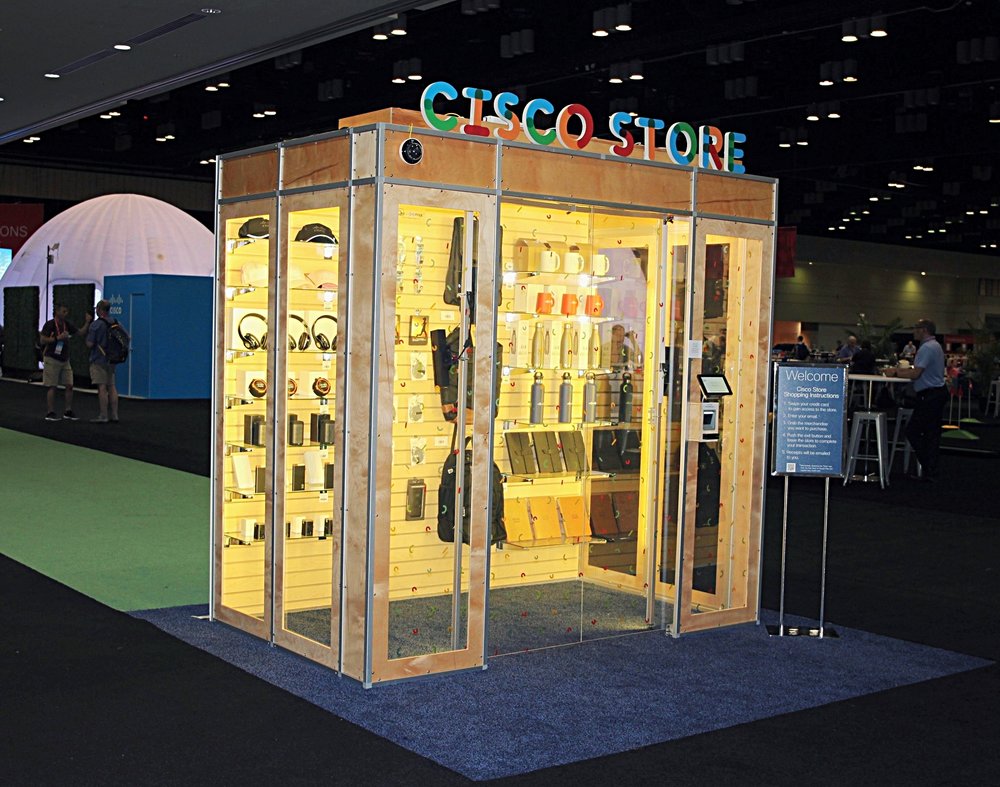
DeepMagic let customers swipe a payment card when entering a smaller kiosk or store, pick up items that are detected by cameras, and simply walk out while having their card charged. The idea is that businesses could operate satellite micro-storefronts in malls, apartment buildings and more without staff. DeepMagic was easier to deploy since the kiosks were built from the ground up to eliminate annoying checkout lines.

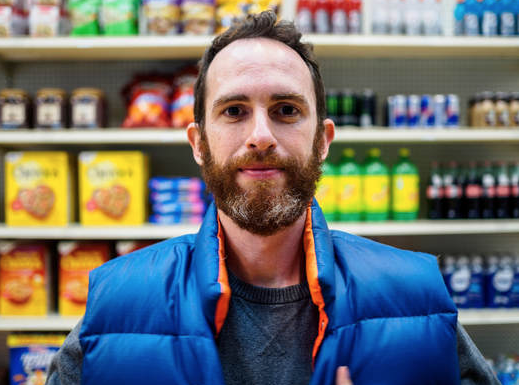
Standard Cognition CEO and co-founder Jordan Fisher

Standard Cognition meanwhile focuses on retrofitting full-sized grocers and other stores like one in minor league baseball team the Worcester Red Sox’s upcoming stadium and others it hasn’t announced. It currently has one experimental shop of its own in San Francisco. Roll outs with partners are more challenging because the startup doesn’t design the building form factor or inventory but is addressing a much bigger market of existing storefronts. It claims it can grow profit margins for shops by up to 100%.

Standard Cognition sees the smaller footprint spots outfitted by DeepMagic as a crucial piece of the autonomous retail landscape. So it’s acquiring DeepMagic’s technology, and bringing co-founder and CEO Bernd Schoner on as a consultant. Standard Cognition won’t pick up DeepMagic’s X staffers or pilot contracts, but it’s considering how to integrate the technology as ramped up its own deployments. “We were both tackling this problem with a strong focus on the power of computer vision, so it made sense to align ourselves with Standard.” Schoner tells TechCrunch. “We think Standard is in the best position to win this race.”

DeepMagic was mostly founder-funded, but the 5-employee company had raised $150,000 from angel investors since starting in New York in 2017. Yet Standard Cognition, which was founded a few months later, raised a $35 million Series B in July from EQT Ventures and Initialized. It has become a center of gravity in cashierless tech, having pulled in half the total $118 million invested in the space in 2018. Now it’s consolidating the space with the DeepMagic buy and its acquisition of retail mapping startup Explorer.ai in January.

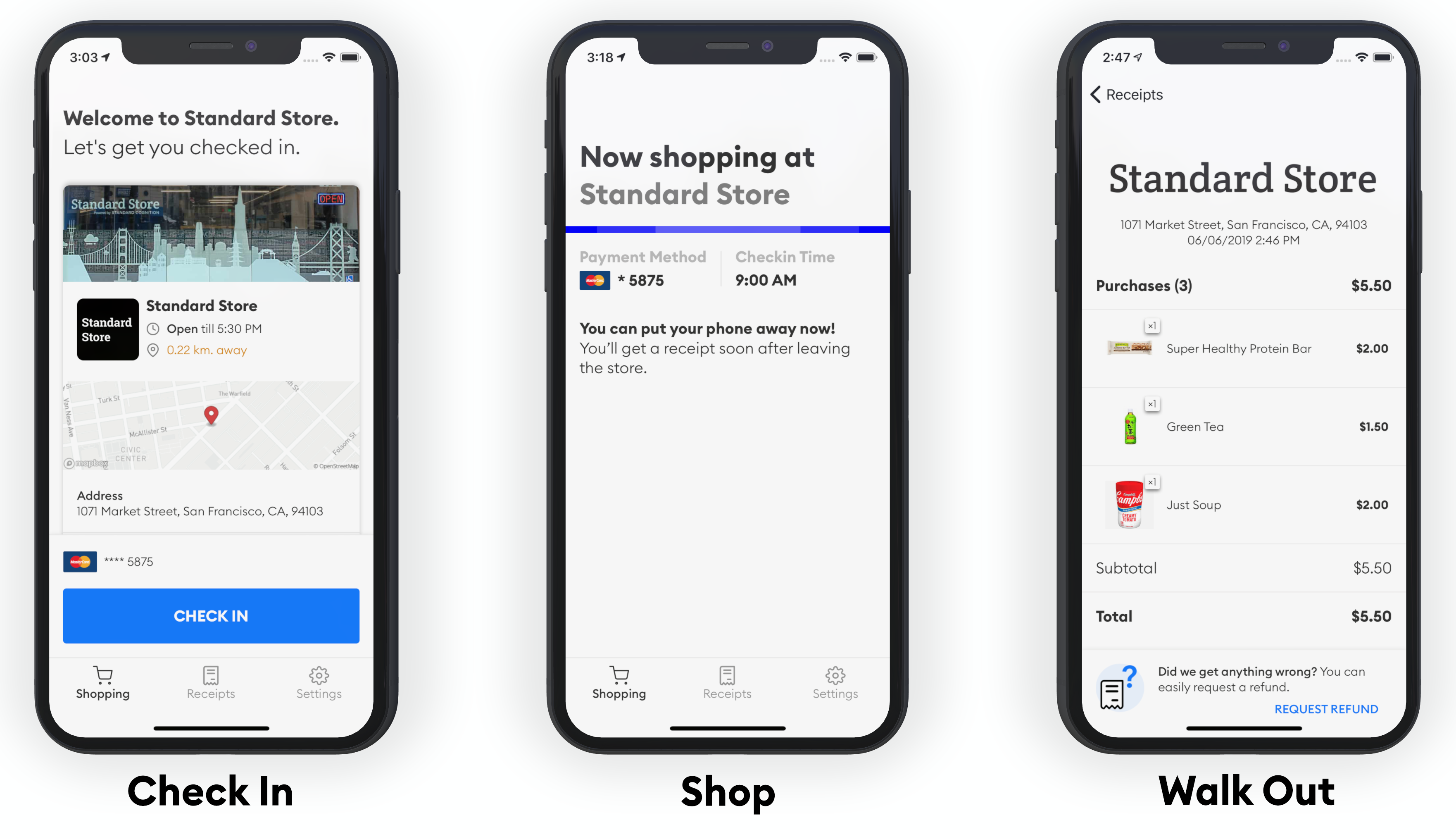
Standard Cognition App

The purpose of the buying spree is getting to market first. “Every day, the thing is speed. I think this is going to be a very fast market. Every day counts. One of my biggest jobs is to keep everybody as motivated today as they will be in 5 years” says Fisher. “6 months today will translate to 20% market share in 5 years. That’s crazy and it’s a huge motivating factor. Moving fast enough that we can get the lion share of the market is what keeps me up at night.”

The company also has to outpace fellow startups like direct competitor Zippin, Trigo, and Grabango. Along the way, Standard Cognition been focused on developing unbiased anti-theft technology that doesn’t care what a person looks like, just what items disappear from shelves. Fisher says it’s also looking into how it can make sure it doesn’t unabashedly grow unemployment. “We’re creating more jobs than we’re displacing right now” Fisher claims, saying it needs people for data labeling to train its artificial intelligence.

Standard Cognition’s co-founder and CEO hopes Amazon will find it just as challenging if it tries to move from running its own 18 or so Go stores to equipping other businesses. The startup also hopes to capitalize on fears about how Amazon might use partners’ data the way it does in ecommerce. “I don’t think that’s minor at all. Do they get the insights? Can they leverage that to have a better offering on Amazon.com and in their brick-and-mortar stores?” Fisher asks. “Our product offering has none of those strings attached. There’s no ulterior motives.”

10 Oct 2019

Flaw in Cyberoam firewalls exposed corporate networks to hackers

Sophos said it is fixing a vulnerability in its Cyberoam firewall appliances, which a security researcher says can allow an attacker to gain access to a company’s internal network without needing a password.

The vulnerability allows an attacker to remotely gain “root” permissions on a vulnerable device, giving them the highest level of access, by sending malicious commands across the internet. The attack takes advantage of the web-based operating system that sits on top of the Cyberoam firewall.

Once a vulnerable device is accessed, an attacker can jump onto a company’s network, according to the researcher who shared their findings exclusively with TechCrunch.

Cyberoam devices are typically used in large enterprises, sitting on the edge of a network and acting as a gateway to allow employees in while keeping hackers out. These devices filter out bad traffic, and prevent denial-of-service attacks and other network-based attacks. They also include virtual private networking (VPN), allowing remote employees to log on to their company’s network when they are not in the office.

It’s a similar vulnerability to recently disclosed flaws in corporate VPN providers, notably Palo Alto Networks, Pulse Secure and Fortinet, which allowed attackers to gain access to a corporate network without needing a user’s password. Many large tech companies, including Twitter and Uber, were affected by the vulnerable technology, prompting Homeland Security to issue an advisory to warn of the risks.

Sophos, which bought Cyberoam in 2014, issued a short advisory this week, noting that the company rolled out fixes on September 30.

The researcher, who asked to remain anonymous, said an attacker would only need an IP address of a vulnerable device. Getting vulnerable devices was easy, they said, by using search engines like Shodan, which lists around 96,000 devices accessible to the internet. Other search engines put the figure far higher.

A Sophos spokesperson disputed the number of devices affected, but would not provide a clearer figure.

“Sophos issued an automatic hotfix to all supported versions in September, and we know that 99% of devices have already been automatically patched,” said the spokesperson. “There are a small amount of devices that have not as of yet been patched because the customer has turned off auto-update and/or are not internet-facing devices.”

Customers still affected can update their devices manually, the spokesperson said. Sophos said the fix will be included in the next update of its CyberoamOS operating system, but the spokesperson did not say when that software would be released.

The researcher said they expect to release the proof-of-concept code in the coming months.

10 Oct 2019

Lab-grown meat could be on store shelves by 2022, thanks to Future Meat Technologies

Are consumers ready for meat grown in a lab?

Companies like Memphis Meats, Aleph Farms, Higher Steaks, Mosa Meat and Meatable are all trying to bring to supermarkets around the world meat made from cultivated animal cells, but the problem has always been the cost. 

Now, Future Meat Technologies has raised $14 million in new financing to build its first pilot manufacturing facilities to bring the cost of production of a cell-made steak down to $10 per pound — or $4 if the meat is combined with plant-based meat substitutes.

The $10 price tag is a whole lot lower than the $50 target that experts from the Good Food Institute were talking about back in April of this year — and represents a significant cost reduction that makes lab-grown meat a potentially commercially viable option much sooner than anyone expected.

“With this investment, we’re thrilled to bring cultured meat from the lab to the factory floor and begin working with our industrial partners to bring our product to market,” said Rom Kshuk, the chief executive officer of Future Meat Technologies, in a statement. “We’re not only developing a global network of investors and advisors with expertise across the meat and ingredient supply chains, but also providing the company with sufficient runway to achieve commercially viable production costs within the next two years.”

Unlike its other competitors, Future Meat Technologies doesn’t have any interest in selling its products directly to consumers. Rather, the company wants to be the supplier of the hardware and cell lines that anyone would need to become a manufacturer of lab-grown meat.

In a way, it’s not much different to the approach that Tyson Foods — an investor in Future Meat through its venture capital arm — has taken with farmers. Tyson contracts with poultry farmers to raise the chickens that the company slaughters and processes, and provides them with the means to raise the chickens for slaughter.
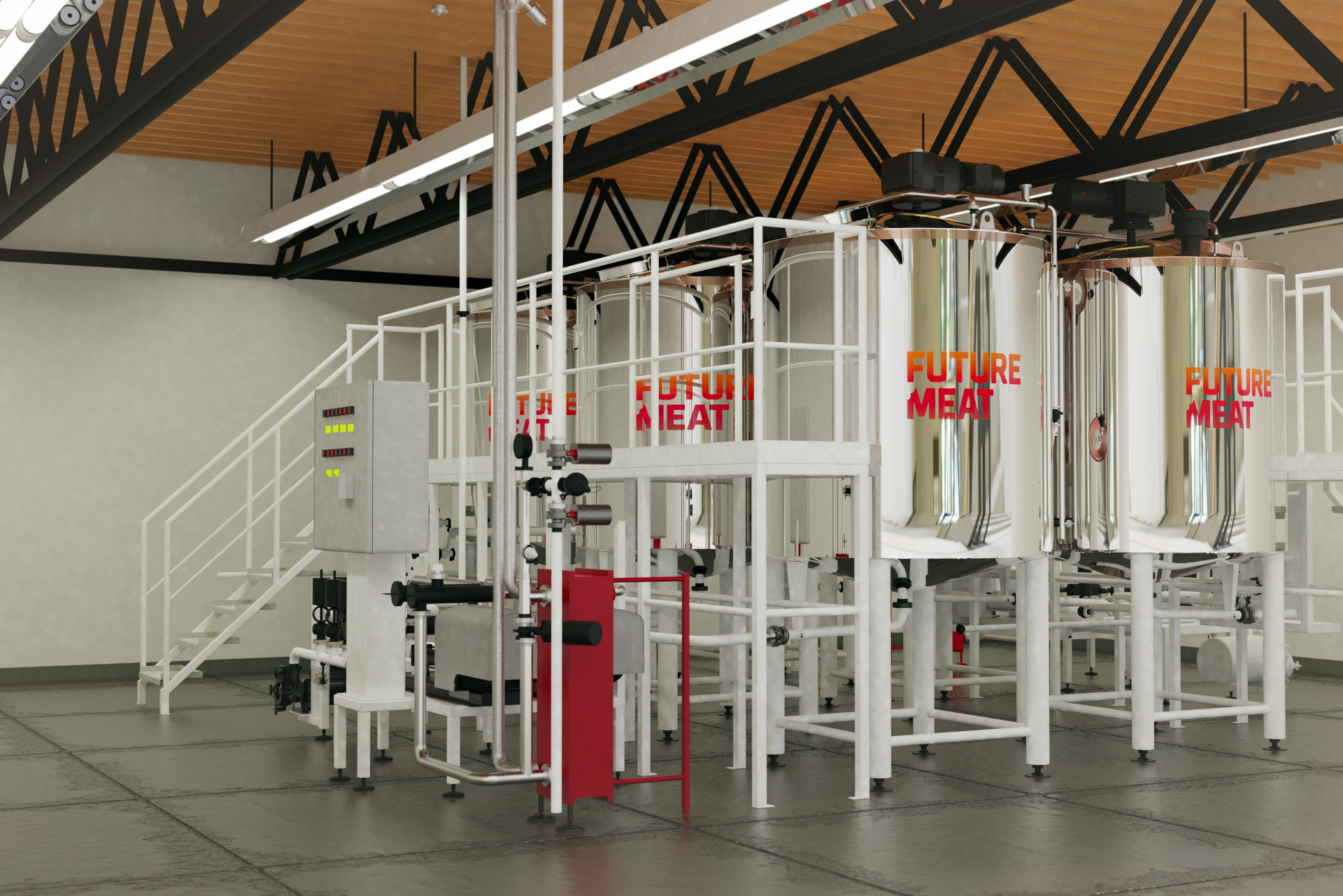
Future Meat production module

Future Meat production tanks for meat and fat

The secret to Future Meat’s success is its use of undifferentiated fibroblast cells that can be triggered with small molecules to turn into either fat cells or muscle cells. Once the fat and muscle starts growing, they’re placed in a culture with a specific resin that removes waste materials that have been an impediment to growth at large scales, according to chief science officer and founder Yaakov Nahmias.

While Future Meat doesn’t rely on fetal bovine serum to grow its meat products, it does use small molecules derived from CHO cells (Chinese hamster ovaries), which are used in new medical research and drug manufacturing.

We have a specific resin to remove the toxins from the media and that allows the cells to continue to grow,” says Nahmias. “It is essentially a new bioreactor design… you can increase the yield to 80%.. For every liter of medium you don’t get 100 grams of biomass you can get 800 grams of biomass… [and] you don’t talk about mega $100 million factories.” 

Nahmias says using a refrigerator-sized bioreactor, a manufacturer could get about half a ton of meat and fat in about 14 days. In about one month, growers can make an amount of meat equivalent of two cows’ worth of meat (a cow takes about 12 to 18 months to raise for slaughter).

The former Hebrew University of Jerusalem professor first began thinking about the lab-grown meat business while on sabbatical. “It was at a Peet’s Coffee right next to the Charles River in Cambridge,” Nahmias recalled. “Somebody asked me what I thought about cultured meat… They asked me what I thought about it and I told them it was the stupidest idea I had ever heard in my entire life.”

Growing cells is expensive, Nahmias said at the time, and the fact that the organisms basically grow in their own excrement means that they can’t reproduce effectively to reach any kind of large scale. That’s when Nahmias had his “Eureka” moment. “You need cells that grow without any growth factor at all,” says Nahmias. “The only cells that can do that are the least differentiated cells, which are fibroblasts.”

With the new financing from investors — including S2G Ventures, a Chicago-based venture firm (and an early investor in Beyond Meat); Emerald Technology Ventures, a Swiss investment firm; Tyson Ventures (one of the most active strategic investors); and Bits x Bites (a Chinese investor in food and agriculture startups) — Future Meat can now test its business model and manufacturing capabilities at scale.
Future Meat leadership

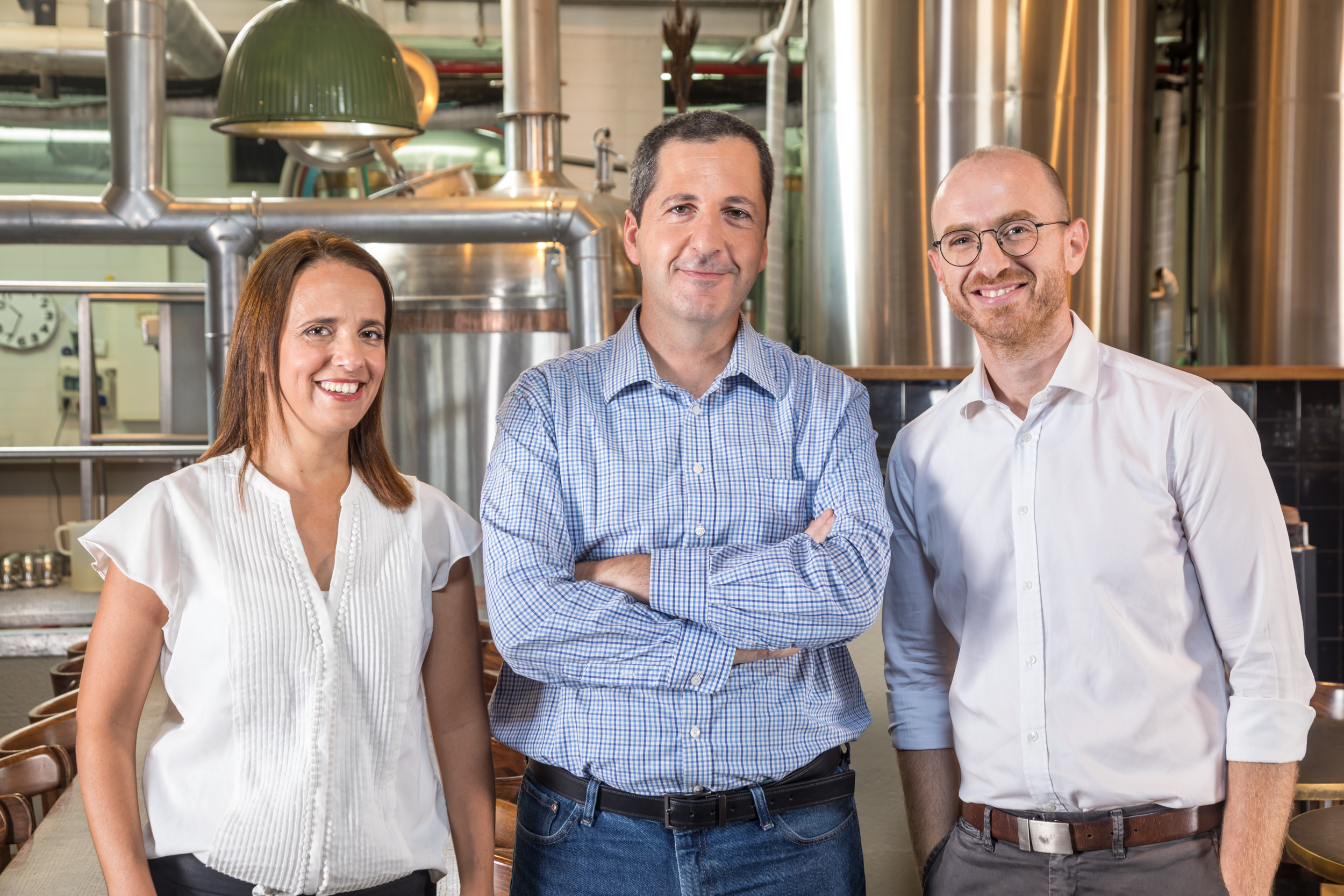
Future Meat leadership, Dr. Moria Shimoni, EVP of R&D; Yaakov Nahmias, CTO and founder; and Rom Kshuk, CEO

“You’re either growing fat or you’re growing muscle of a specific species,” says Nahmias. “Imagine a large truck going to that facility. [It’s] replacing the meat packing plant. From there the biomass goes through a process like extrusion. You can have thousands of these mass producing units. [It’s] going to a central facility where the meat comes out at the end. What we are doing is looking for parity and cost.”

For Nahmias, the fat’s the thing that brings the flavor for everything. “The fat gives you the aroma and the distinct flavor of meat,” says Nahmias. “This is the missing ingredient in Impossible Foods and Beyond Meat .”

Nahmias envisions products that are made using a combination of Future Meat’s lab-grown products and plant proteins that can approximate the full flavors of beef, chicken or lamb (all meats that the company says it is working with).

All Nahmias wants is for Future Meat to get to market; the founder doesn’t care whether that’s under Tyson’s brand or anyone else’s. “I want to be the largest company you’ve never heard of,” says Nahmias. “I want to make a product that is more sustainable and more cost-efficient, and is better for everybody.”

Like all of the other companies pursuing alternatives to animal husbandry, Future Meat, which was only founded last year, has a mission to reduce the environmental impact of meat eating. The company argues that its manufacturing model will reduce land use by 99% and emit 80% less greenhouse gas than traditional meat production.

“This continues our investment in Future Meat Technologies, which is focused on disruptive technologies related to our core business,” said Amy Tu, president of Tyson Ventures, in a statement. “We are broadening our exposure to alternative ways of producing protein to feed a growing world population.”

Ultimately the goal is getting to cost parity with regular beef. The company thinks a hybrid product could be $3 to $4, while the 100% biomass product would be roughly $10.

“We’re taking a yes and ‘Yes and’ as opposed to an either-or approach to the space,” says Matthew Walker, a managing director at S2G Ventures. “You will have animal-based meat, plant-based meat and you will have hybrid products. It’s more about the supply chain and the technological products that would bring this product to market. We think there’s room in the market for somebody to play that role.”

Nahmias and Kshuk think that’s the role Future Meat Technologies was born to play.