Year: 2019

10 Oct 2019

Apple rolls out new Siri audio clip grading opt-in and request history deletion feature in beta

Apple is rolling out a new opt-in notice for Siri audio sample review with the beta of iOS 13.2. This new opt-in feature was promised back in August after reports that audio from Siri requests were being reviewed by contractors and that the audio could contain sensitive or personal information.

Apple had previously halted the grading process entirely while it updated the process by which it used the audio clips to “improve Siri.”

The new process will include an explicit opt-in for those users who want to have clips of commands transmitted to Apple to help improve how well Siri understands commands.

The update is out in beta for iPadOS 13.2, iOS 13.2, Apple tvOS 13.2, WatchOS 6.1 and MacOS 10.15.1.

Some particulars of the new policy include

An explicit opt-in

Only Apple employees will be reviewing audio clips, not contractors

Computer generated transcripts are continuing to be used. These are in text form with no audio. They have been disassociated from identifying information by use of a random identifier.

These text transcripts, which Apple says include a small subset of requests may be reviewed by employees or contractors.

Any user can opt-out at any time.

Apple is also launching a new Delete Siri and Dictation History feature. Users can go to Settings>Siri and Search>Siri History to delete all data Apple has on their Siri requests. If Siri data is deleted within 24 hours of making a request, the audio and transcripts will not be made available to grading.

The new policies can be found at Settings>Privacy>Analytics and Improvements>About Siri in the iOS 13.2 beta.

There seems to be a solid set up updates here for Siri protections and user concerns. The continued use of text transcripts that may be reviewed by contractors is one sticky point — but the fact that they are text, anonymized and separated from any background audio may appease some critics.

These were logical and necessary steps to make this process more clear to users — and to get an explicit opt-in for people who are fine with it happening.

The next logical update, in my opinion, would be a way for users to be able to see and hear the text and audio that Apple captures from their Siri requests. If you could see, say, your last 100 requests in text or by clip — the same information that may be reviewed by Apple employees or contractors, I think it would go a long way to dispelling the concerns that people have about this process.

This would fit with Apple’s stated policy of transparency when it comes to user privacy on their platforms. Being able to see the same things other people are seeing about your personal data — even if they are anonymized — just seems fair.

10 Oct 2019

Dyson kills its electric car project and turns to solid-state batteries

Dyson said it will end its electric vehicle project after determining it could not make the car commercially viable or find a buyer.

The company, known for its high-tech vacuum cleaners and fans, said in a statement Thursday that its automotive team had developed a fantastic car, but decided to close the project. Dyson also sought a buyer for the project, but has been unsuccessful so far, the company said in the statement.

Dyson announced in September 2017 that it was working on a battery electric vehicle with an all-electric drivetrain that would be launched by 2020. The company’s board approved in October 2018 a decision to construct its first advanced automotive manufacturing facility in Singapore. The two-story manufacturing facility was scheduled for completion in 2020.

Dyson isn’t totally abandoning technology related to electric cars, and says it’s still committed to Singapore. The company will continue its £2.5 billion ($3.1 billion) investment program into new technology and plans to focus on manufacturing solid-state batteries and developing sensing technologies, vision systems, robotics, machine learning and AI, company founder James Dyson wrote in the statement.

“Our battery will benefit Dyson in a profound way and take us in exciting new directions,” he wrote, adding that the company’s investment appetite is undiminished and it will continue to deepen its roots in both the U.K. and Singapore.

Dyson said the closure was not a product failure, or a failure of the team. The company is looking to find alternative roles for employees who worked on the project and has enough vacancies in its home business to absorb most of these people, according to Dyson.

“Since day one we have taken risks and dared to challenge the status quo with new products and technologies,” Dyson wrote in the statement. “Such an approach drives progress, but has never been an easy journey — the route to success is never linear. This is not the first project which has changed direction and it will not be the last. I remain as excited about the future of Dyson as I have always been; our ambitions have never been higher, our ability to invest has never been greater, and the team has never been stronger.”

10 Oct 2019

Apple Watch Series 5’s banner feature needs to be turned up to 11

Reviewing Apple Watch Series 5 is not hard. It is so largely similar to last year’s Series 4. It carries with it all the things that made its predecessor great — the large display, haptics-enhanced Digital Crown and fall detection — and marches forward with one defining feature: the always-on display. Back-to-back years of seminal moments for the Watch is an impressive feat.

From an accessibility perspective, everything that was (and remains) great about Series 4 is there in Series 5. It is the best Apple Watch to date, and it is certainly the most accessible smartwatch on the market, period. But there are a few caveats.

Always-on

The longer I wear Apple Watch Series 5, a 44mm space-gray aluminum review unit from Apple, the more torn I feel about the device’s always-on display.

On one hand, I readily acknowledge the significance of the new display as it relates to the watch as a whole. On the other hand, however, I find the always-on display to be somewhat of a letdown in practice. It isn’t that the always-on display is bad; it’s not. It’s that the current implementation isn’t that conducive to my visual needs.

The issue is brightness. The always-on display right now isn’t bright enough for me to quickly glance down at my wrist to see the time. As someone who requires maximum brightness on all my devices in order to see well, this is problematic. Other reviewers have mentioned how nice it is to just casually look down at the watch to see the time, as you would on a mechanical watch. My peers must have substantially better eyesight than I do, because I literally cannot do that. In my usage, I have found I’m still flicking my wrist like I have any previous Apple Watch to see the time. When you do so, the Apple Watch’s screen fully illuminates (to max brightness, per my display settings), and that’s how I can tell time.

The whole point of buying Series 5 is for the always-on display. I could turn it off, but that defeats the purpose.

It makes no difference whether I’m using an analog or digital watch face. The exception is when using the new Numerals Duo face with the “filled” styling. The digits are so large that I have no trouble seeing the time. This face would be a good solution for my woes if not for the fact it doesn’t support complications. Otherwise, Numerals Duo is a great workaround for the always-on display’s lack of light.

At a technical level, I understand why watchOS dims the display. Nonetheless, it’s unfortunate there is no way to adjust the brightness while in “always on” mode. Perhaps Apple will add such a feature in the future; it would make sense as an accessibility setting. As it stands today, as good as the always-on display is in general, I can’t say it makes much sense for me. I’m effectively using Series 5 the same way I use my Series 4. Because of this, Series 5 loses some of its appeal. The whole point of buying Series 5 is for the always-on display. I could turn it off, but that defeats the purpose, and I may as well stick with last year’s model.

On the flip side, if and when the always-on display improves for me, another benefit is it will save me from having to raise my arm so often. I wear my watch on my right wrist, which is notable because the right side of my body is partially paralyzed due to cerebral palsy. As such, raising my wrist to tell time or check a notification can sometimes be painful and fatiguing. The always-on display mitigates this because, by virtue of its persistence, you don’t necessarily have to contort your arm to look at your watch — thereby alleviating pain and fatigue for me and others.
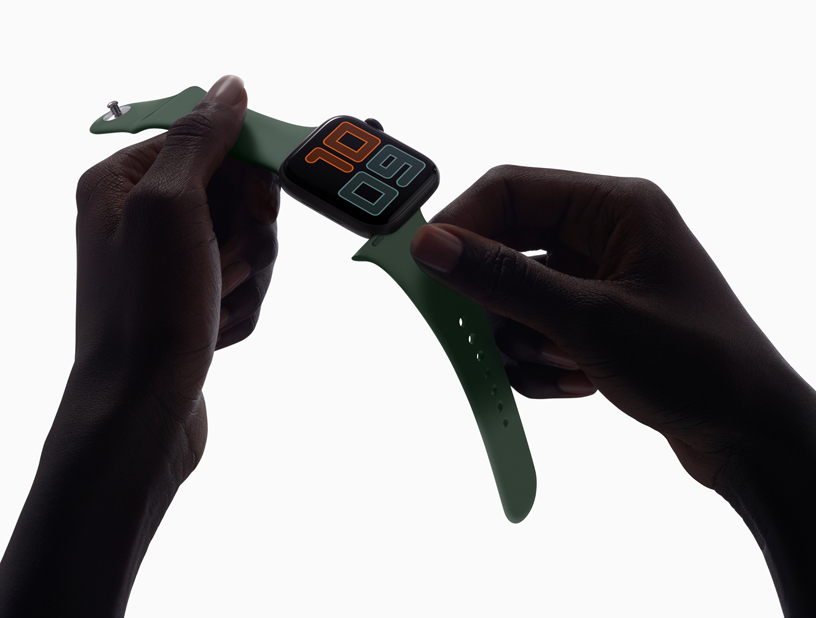
Apple watch series 5 personalization of watch band 091019 big.jpg.large

Problematic packaging

From the original Apple Watch (colloquially known as “Series 0”) through Series 3, Apple packaged the watch as an “all-in-one” product. Which is to say, the band was fastened to the watch. You could grab it and go — take the watch out of the box and immediately see how it looks on you, even before pairing it with your iPhone.

With last year’s Series 4, Apple changed how they package Apple Watch, whereby the band and watch were separate entities. In order to wear it, you first need to attach the band to the watch. In my review, I called out this change as regressive despite recognizing why it made sense operationally. The revised layout continues in Series 5, which is disappointing.

Everything should be as accessible as possible.

The issues this setup raises are the same ones I expounded upon last year. To wit, it’s easy to see how some people could get flustered with the watch and band being piecemeal; it can be challenging in terms of cognitive load and fine-motor skills. Even as a seasoned product reviewer, I freely admit to again feeling a tad disjointed as I was piecing together my review unit.

Like the always-on display’s dimmed state, I totally get why Apple chose to overhaul how they package Apple Watch. It makes complete sense in context of the new Apple Watch Studio, where you can mix and match finishes and bands. This is a prime example of why reporting on accessibility and assistive technology matters so much: esoteric details like how a product is packaged can really matter to a person with disabilities. Part of the reason Apple products are so revered is precisely because of the elegant simplicity of its packaging. The unboxing is supposed to be one of the best parts of a new Apple Watch or iPhone or iMac — especially for disabled people, the initial experience leaves a lasting impression if you have to fiddle as if it were a jigsaw puzzle. I can manage, but many cannot. And it’s important to bear in mind. Everything should be as accessible as possible.

The bottom line

There is no doubt Apple Watch Series 5 is great. It retains the title of Best, Most Accessible Apple Watch Yet, but with an asterisk. I don’t have a burning desire to upgrade — although admittedly, the titanium’s siren song has been calling me ever since last month’s event. The problem I have with the display can be easily remedied with a software update; if Apple shipped a brightness slider tomorrow, I’d order one pronto. Today, though, always-on isn’t always bright — and that sucks.

In the end, I still heartily recommend Apple Watch Series 5 to everyone. My low vision makes the always-on display difficult to see as-is, and I surely can’t be the only one. But that doesn’t take away from the fact that the watch is still the best, most accessible smartwatch by a country mile. I’m confident the always-on display will be iterated and refined over time. In the meantime, Series 4 and watchOS 6 is a pretty bad-ass combination for me.


10 Oct 2019

Amazon Music arrives on Apple TV

Amazon Music is now available on the Apple TV, including both the Apple TV 4K and the Apple TV HD running tvOS 12.0 or later, Amazon announced this morning. The launch is yet another example of the eased tensions between the two rivals, who finally came to an agreement to support each other’s streaming media services on their respective platforms.

With the new Amazon Music app for Fire TV, customers will gain access to millions of songs and thousands of playlists and stations, including Amazon Music’s version of Spotify’s Rap Caviar, which it calls Rap Rotation. Users will also be able to browse and search music from their favorite artists, as well as access all their purchased and imported music available in their “My Music” library, says Amazon.

This latest launch follows the debut of Apple Music on Fire TV back in March, and is now one of several examples of the two companies playing nice with one another.

Last year, for example, Amazon expanded its assortment of Apple inventory to include other devices besides Apple TV — like iPads, iPhones, Apple Watch and Beats headphones. It also brought its FreeTime Unlimited app to iOS. Meanwhile, Apple Music arrived on Echo devices last year.

Plus, you’ve been able to watch Amazon Prime Video on Apple TV since December 2017. And with the upcoming Apple TV+ streaming service, Apple promises a cross-platform experience, which includes Fire TV.

The app’s launch is notable for another reason, as well.

Apple today is in the crosshairs of several antitrust investigations worldwide, including in the E.U., Russia, and the U.S. Spotify, in particular, has been calling out Apple for its alleged anti-competitive behavior, like charging the so-called “Apple tax” on Spotify’s in-app subscriptions when it sells a rival service with Apple Music, for example, or for having too much control over if and when Spotify can release app updates. As a part of Apple’s defense, it’s been showcasing how it allows competitors on its platform.

The addition of Amazon Music to Apple TV will be another example it can now point to.

The new Amazon Music app is live in the Apple TV App Store in the U.S., UK, Australia, New Zealand, Brazil, Canada, France, Italy, Spain, Germany, Mexico, Japan, and India.


10 Oct 2019

Nexkey raises $6M Series A round to make your company’s doors smarter

Nexkey, a company that provides a mobile access control solution for commercial buildings and workspaces, today announced that it has raised a $6 million Series A round led by Upfront Ventures. K9 Ventures, Mark IV Capital and Anand Chandrasekaran, the former Head of Platform for Messenger at Facebook, also participated in the round. Upfront also led Nexkey’s $4.8 million seed round.

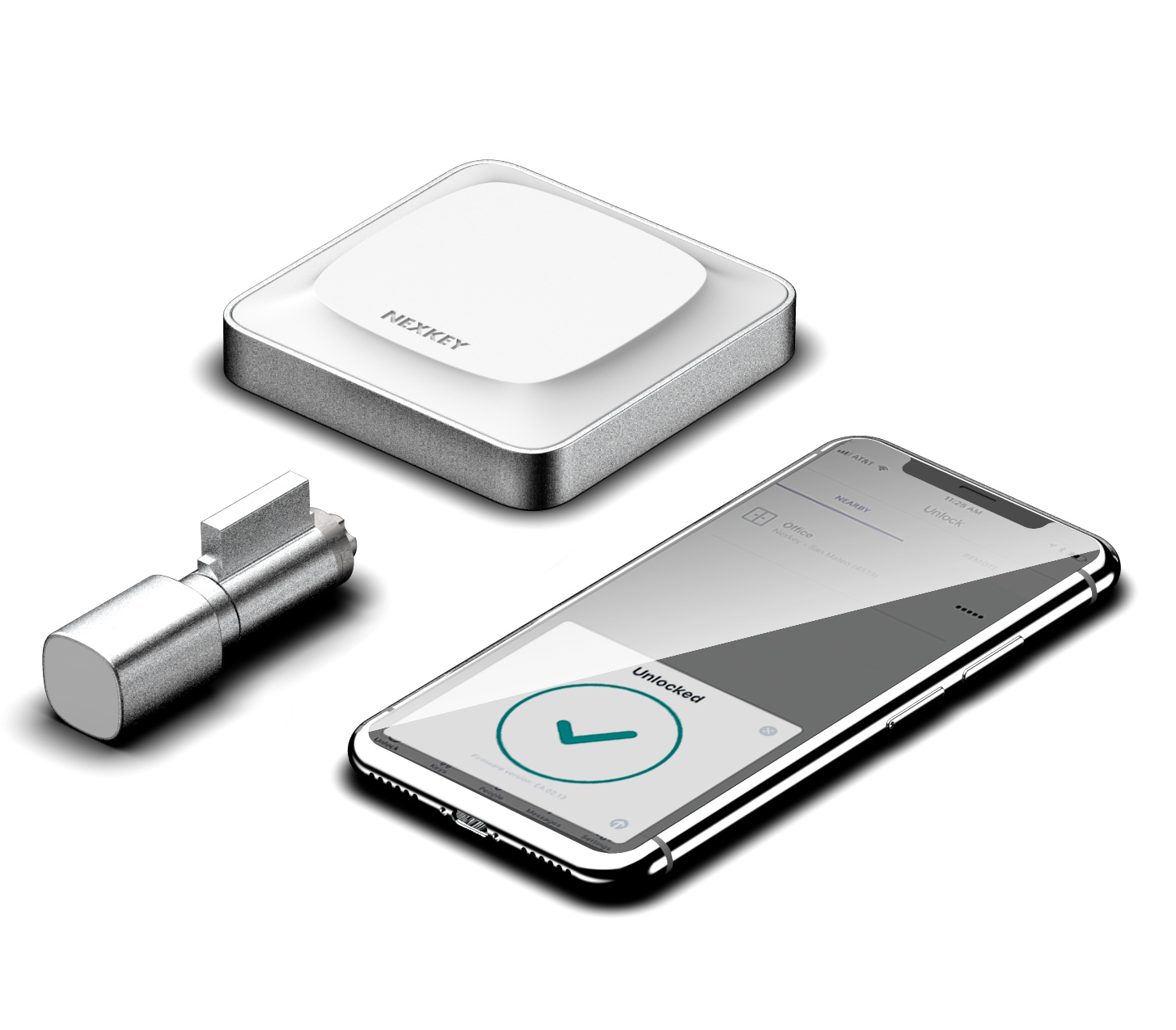
The company can turn your smartphone into your door key and replaces the badge you probably use at work to get in and out of buildings. Nexkey offers an end-to-end solution that includes the app, as well as hardware controllers and lock cylinders for your doors that can replace  There is also an API to allow its solutions to connect to other applications and devices inside a workspace.

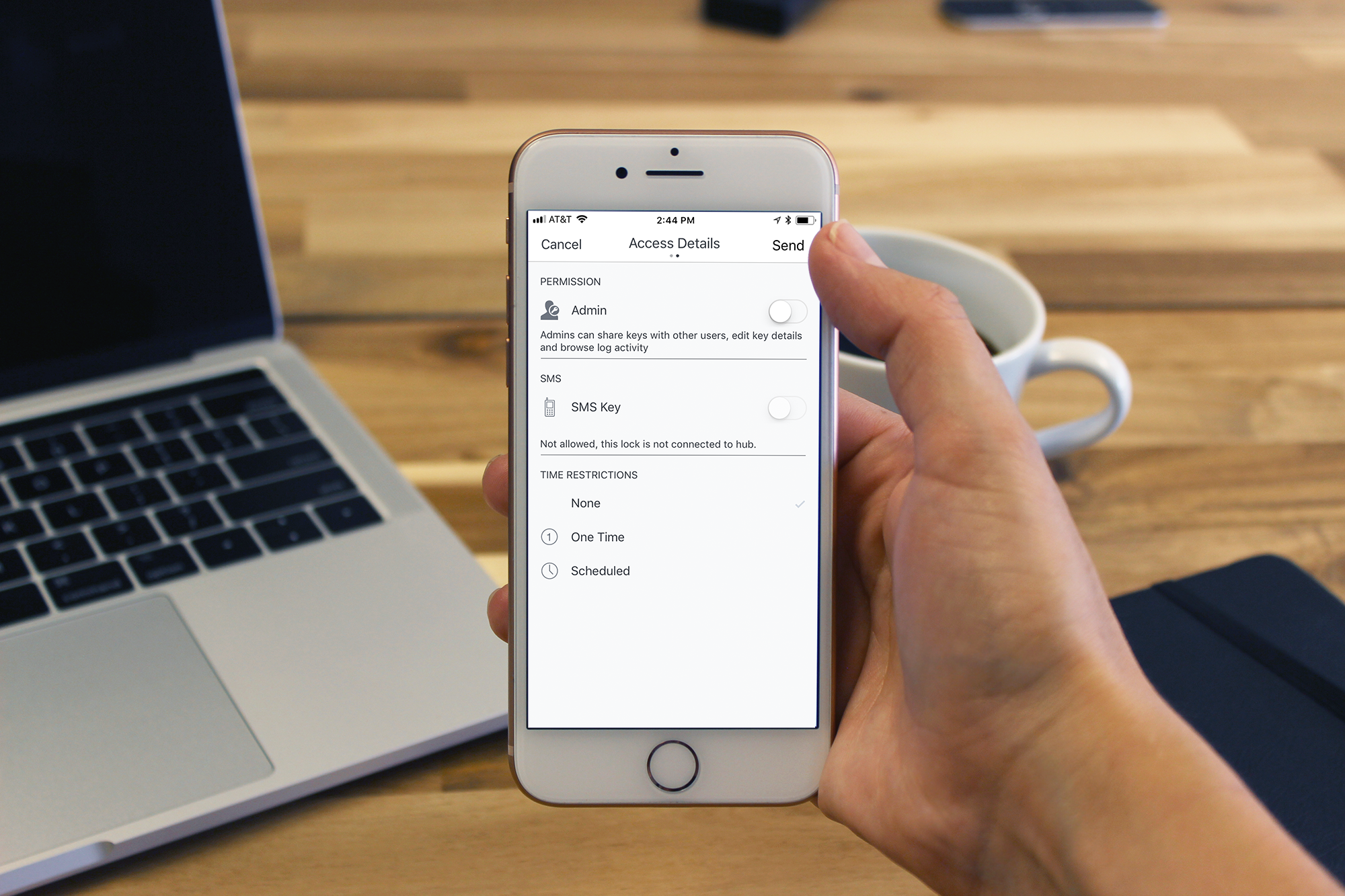
Nexkey Send Keys

In many ways, Nexkey is similar to Openpath, which raised $7 million in a seed round that was also led by Upfront Ventures.

“We launched our platform into the market a little over 9 months ago and brought over 8,500 active users on the platform the first 6 months after launch,” Nexkey CEO Eric Trabold told me. “We wanted to continue this great momentum and therefore felt that the time is right to raise more capital to enable us to do so.”

Trabold says the company will use the new funding to expand its overall sales efforts from its current focus on California to the rest of the United States. He noted that the company wanted to better understand its users’ needs before expanding to other geographies.

The company also realized that it sat on a lot of data that was valuable to its customers. “We currently expose this via an audit trail right in our App and are going to build out other, more visual ways to expose this data to our customers,” Trabold said. “We’re going to have advanced reports that can be accessed or downloaded through our Web Portal. Those will help our customers to optimize how they operate their spaces, which means that they can now properly staff during peak times, analyze overall space utilization or look for anomalies that can trigger security events.”

The new funding, the company says, will also allow it to apply more resources to help it provide more value to its users based on this data.

Among the other things it learned from its early customers is that many of its users don’t always want to have their doors locked at all times and instead often want to keep them open for anybody during business hours. The company’s users that run co-working spaces and gyms also asked the company for an easier onboarding process and the ability to apply access rules to different user types, something it is currently beta testing in its iOS app.

Nexkey Smarter Access 2

10 Oct 2019

Getting more people to open your emails

We’ve aggregated the world’s best growth marketers into one community. Twice a month, we ask them to share their most effective growth tactics, and we compile them into this Growth Report.

This is how you’re going stay up-to-date on growth marketing tactics — with advice you can’t get elsewhere.

Our community consists of 600 startup founders paired with VP’s of growth from later-stage companies. We have 300 YC founders plus senior marketers from companies including Medium, Docker, Invision, Intuit, Pinterest, Discord, Webflow, Lambda School, Perfect Keto, Typeform, Modern Fertility, Segment, Udemy, Puma, Cameo, and Ritual.

You can participate in our community by joining Demand Curve’s marketing webinars, Slack group, or marketing training program. See past growth reports here, here, here and here.

Without further ado, onto the advice.


Improving engagement for drip emails

Based on insights from Matt Sornson of Clearbit. Lightly edited with permission.

Personalizing your marketing emails increases conversion. But doing so at scale takes a lot of effort. Here’s how to get around that:

  • Run lead generation ads to your blog posts and to other long-form content on your site. Then tag users based on the posts they’ve read. Plus, prompt them to fill out useful quizzes. Store their quiz answers.
  • Push their engagement data into an automated emailing platform like Customer.io. And enrich their contact details with Clearbit to discover their job title and the industry they work in.
  • Now you can send automated yet personalized drip emails based on a person’s role, company, and interests. This results in higher conversion rates. Show recipients you know who they are and what they care about, and you’ll seem a whole lot less like spam.

Improving cold email response rates

10 Oct 2019

Get ready to see more looping videos on Spotify, as Canvas launches into beta

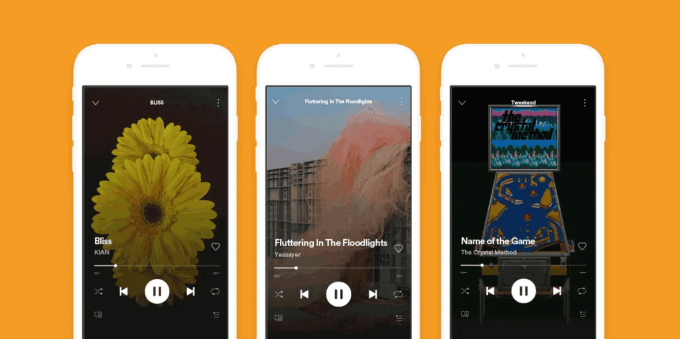
Spotify is opening up its Canvas feature to more artists, the company announced this morning, which means you’ll see a lot more of those looping videos on the app starting soon. The feature has been in limited testing before today with select artists. When available, you don’t just see the album artwork behind the player controls — you see a moving, visual experience that plays in a short loop.

So far, Canvas has had mixed reviewers from Spotify users. Some find the looping imagery distracting while others simply prefer seeing the album art. Some people seem to like the feature. But others only like it with certain content and artists.

The challenge is in designing a video loop that works well. That means it shouldn’t be an attempt to try to lip sync to a part of a song. It shouldn’t include intense flashing graphics or text, nor should it distract people from being able to see the player controls and track information.

Screen Shot 2019 10 10 at 12.07.54 PM

Spotify also suggests trying to tell a full story in the loop rather than just drastically trimming a music video down to the time allotted (3- or 8-second clips). Other recommended Canvas experiences are those that help develop the artists’ persona across their profile and tracks, or those that are updated frequently. Billie Eilish, for example, uses the feature to share animated versions of fan art.

Since launching, Canvas has been seen by millions of users, Spotify says. But the company seems to acknowledge the impact varies, based on how the Canvas is designed. When it works, it can “significantly increase” track streams, shares, and artists page visits. But Spotify didn’t say what happens when the feature fails to engage fans.

However, based on social media discussions about the feature and how-to guides detailing how to turn the thing off, it would seem that some users choose to opt out of the experience entirely.

Today, Spotify says Canvas will no longer be limited to select artists, as it’s opening more broadly to artists in an expanded beta. With the beta, Spotify hopes artists will treat Canvas as a critical part of their release strategy, and will continue to use it across their catalog.

“It’s a way to get noticed and build a vision — and an excellent way to share more of who you are with your listeners, hopefully turning them into fans,” the company writes in an announcement. “The goal is for you to have richer ways to express yourself and to allow listeners to engage with you and your music even more deeply. We’re continuing to work on additional features, as well as more tools and metrics to help you better understand how your art is reaching your audience,” the company says.

It’s hard not to comment on the timing of this launch. At the end of September, Google announced that YouTube Music would not be preinstalled on new Android devices, taking the place of Google Play Music. With YouTube Music, streamers gain access to a visually immersive experience where they can watch the music videos, not just listen to the audio, if they prefer.

Spotify, however, has traditionally been a place to listen — not to watch. That’s not to say there aren’t music videos on Spotify, they’re just not well highlighted by the app nor a core part of the Spotify experience.

The company says it’s now sending artists their invites to join the beta. Those who haven’t received the invite can instead make a request to be added here.


10 Oct 2019

Google takes AMP to the OpenJS Foundation

AMP, Google’s somewhat controversial project for speeding up the mobile web, has always been open-source, but it also always felt like a Google project first. Today, however, Google announced that the AMP framework will join the OpenJS Foundation, the Linux Foundation-based group that launched last year after the merger of the Node.js and JS foundations. The OpenJS Foundation is currently the home of projects like jQuery, class="crunchbase-link" href="https://crunchbase.com/organization/node" target="_blank" data-type="organization" data-entity="node">Node .js and webpack, and AMP will join the Foundation’s incubation program.

Large companies like Google tend to donate open-source projects to foundations once they become stable — and that’s definitely the case with the four-year-old AMP project, which developers have now used to create billions of pages on more than 30 million domains, according to Google. Late last year, Google introduced a Technical Steering Committee to help oversee the development of AMP and it was this committee that also agreed to bring the project to the OpenJS Foundation.

“Now in our fourth year, AMP is excited for the next step on our journey,” said Malte Ubl, Member of the AMP Project Technical Steering Committee, in today’s announcement. “We’ve been considering the best home for AMP for some time. We decided on the OpenJS Foundation because we feel it’s the best place for us to help us to cater to our diverse group of constituencies. This step builds on previous moves we’ve made toward open governance and helps us focus on transparency and openness.”

Google also notes that the OpenJS Foundation’s goal of promoting JavaScript and related technologies is a good fit for AMP’s mission of providing “a user-first format for web content.” The company also notes that the Foundation allows projects to maintain their identities and technical focus and stresses that AMP’s governance model was already influenced by the JS Foundation and Node.js Foundation.

Google is currently a top-level platinum member of the OpenJS Foundation and will continue to support the project and employ a number of engineers that will work on AMP full-time.

10 Oct 2019

Coinbase is launching Coinbase Pro mobile app

Cryptocurrency exchange company Coinbase is launching a mobile app for its advanced users today. You can now download the Coinbase Pro mobile app on iOS — the Android version is coming soon.

Coinbase Pro is the company’s exchange that lets you set up advanced order types, such as limit orders. Those are fairly standard features for a cryptocurrency exchange. But Coinbase set up a separate “pro” platform so that the main Coinbase.com exchange remains as simple and straightforward as possible.

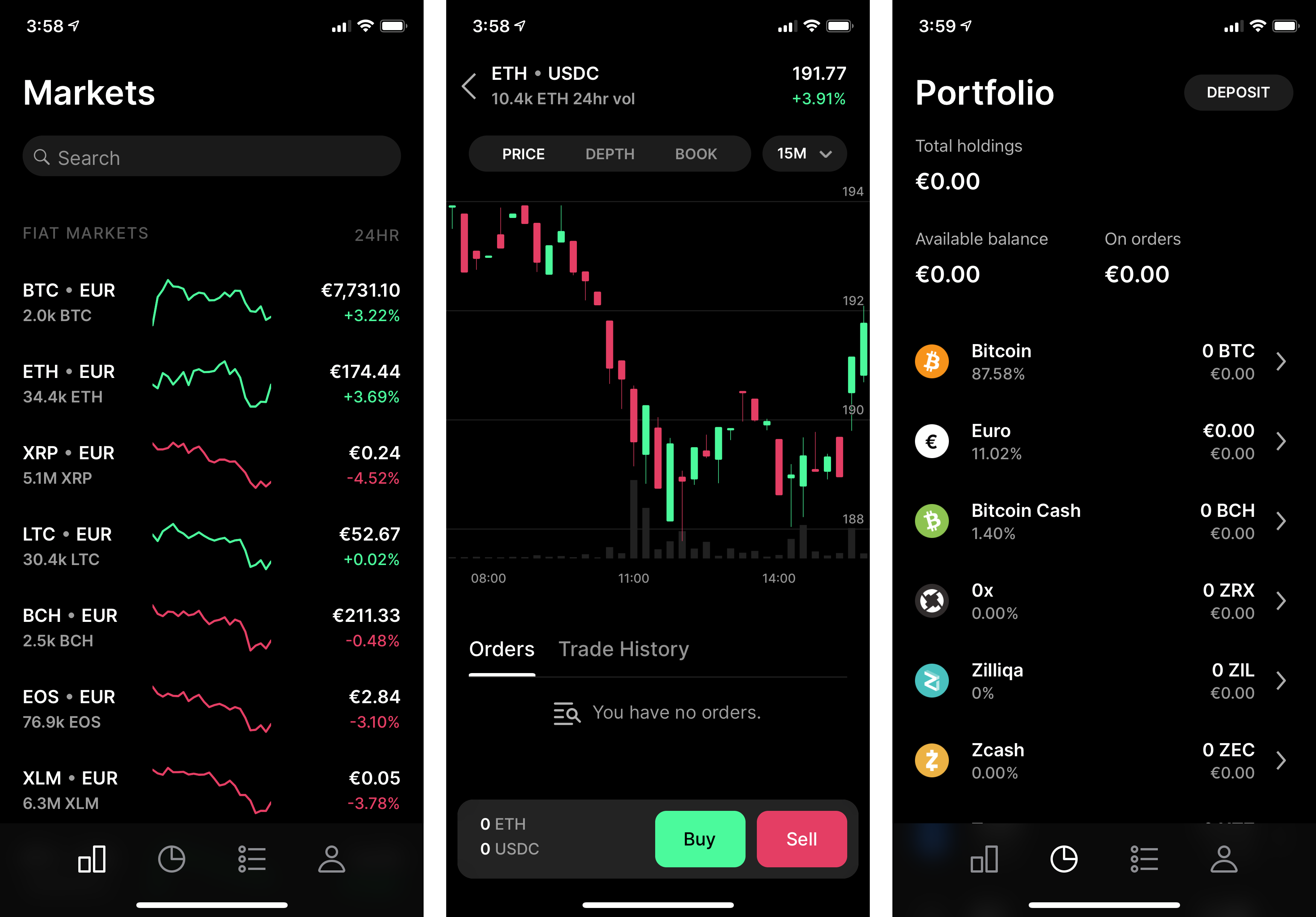
And now, you can also use Coinbase Pro on your phone. I’ve been playing around with the app, and it features everything you’d expect. On the first tab, you can see a list of trading pairs.

Coinbase Pro

If you tap on a pair, you can see real-time candles, the order book, your active orders as well as trade history for this specific pair. You can also set up an order to buy and sell cryptocurrencies from each trading pair page.

On the second tab, you can see your portfolio of crypto assets and its value in fiat currencies. You can deposit or withdraw cryptocurrencies from the mobile app. Unfortunately, if you want to deposit or withdraw fiat currencies (USD, EUR, GBP, etc.), the app tells you to head over to the website.

Finally, you can see your past and active orders, check your fees and limits.

Coinbase increased some of its trading fees on Coinbase Pro for low-volume accounts just last week. It is now more expensive to trade on Coinbase Pro if you trade less than the equivalent of $50,000 over 30 days. And if you trade less than $10,000 over 30 days, it now costs 0.50% in maker and taker fees.

Kraken charges 0.26% in taker fees if you trade less $50,000 in the past 30 days. Binance charges 0.1% in trading fees. With those new trading fees, it feels like Coinbase is indeed targeting pro users with Coinbase Pro.

Disclosure: I own small amounts of various cryptocurrencies.

10 Oct 2019

Russia’s Yandex introduces an Echo Dot-style smart speaker

In May of last year, Yandex launched the Yandex.Station. The $160 smart speaker was a clear logical step for the so-called “Google of Russia.” This week, the company is back with the next-next logical step. The Yandex.Station Mini is essentially its take on the Echo Dot/Google Home Mini.

At 3,990 rubles (around $61), it’s clearly aimed at getting more users on board with its smart assistant. Though Alice has already seen solid growth, with 45 million actively monthly users, per Yandex’s numbers. Still, these low-end smart speakers have been best sellers for both Amazon and Google, both as first-time devices and ways of getting the product in more rooms.

You’ve got your standard functionality on board here, including smart home control, music playback and the like. Along with voice, there’s also gesture control, including the ability to adjust volume with the wave of a hand above the device, which appears to point to some sort of proximity sensor.

The product will be available in Russia at the end of the month.