Year: 2019

02 Oct 2019

Kong acquires Insomnia, launches Kong Studio for API development

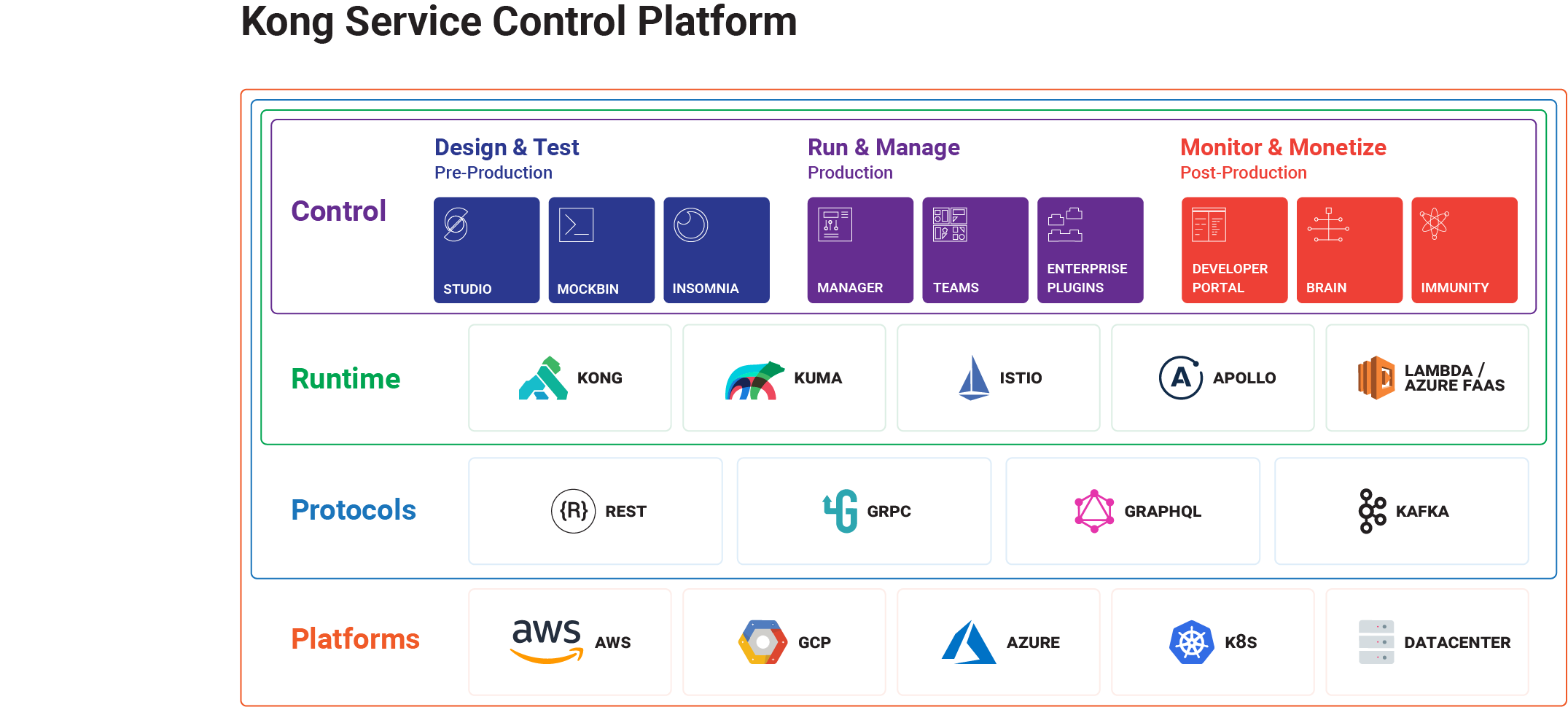
API and microservices platform Kong today announced that it has acquired Insomnia, a popular open source tool for debugging APIs. The company, which also recently announced that it had raised a $43 million Series C round, has already put this acquisition to work by using it to build Kong Studio, a tool for designing, building and maintaining APIs for both REST and GraphQL endpoints.

As Kong CEO and co-founder Augusto Marietti told me, the company wants to expand its platform to cover the full service lifecycle. So far, it has mostly focused on the runtime, but now it wants to enable developers to also design and test their services. “We looked at the space and Insomnia is the number open source API testing platform,” he told me. “And we thought that by having Insomnia in our portfolio, we will get the pre-production part of things and on top of that, we’ll be able to build Kong Studio, which is kind of the other side of Insomnia that allows you to design APIs.”

For Oct. 2 Kong News Kong Service Control Platform

Insomnia launched in 2015, as a side project of its sole developers Greg Schier. Schier quit his job in 2016 to focus on Insomnia full-time and then open-sourced it in 2017. Today, the project has 100 contributors and the tool is used by “hundreds of thousands of developers,” according to Schier.

Marietti says both the open source project and the paid Insomnia Plus service will continue to operate as before.

In addition to Kong Studio and the Insomnia acquisition, the company also today launched the latest version of its Enterprise service, the aptly named Kong Enterprise 2020. New features here include support for REST, Kafka Streams and GraphQL. Kong also launched Kong Gateway 2.0 with additional GraphQL support and the ability to write plugins in Go.

02 Oct 2019

YouTube’s Neal Mohan describes the company’s efforts on safety and trust

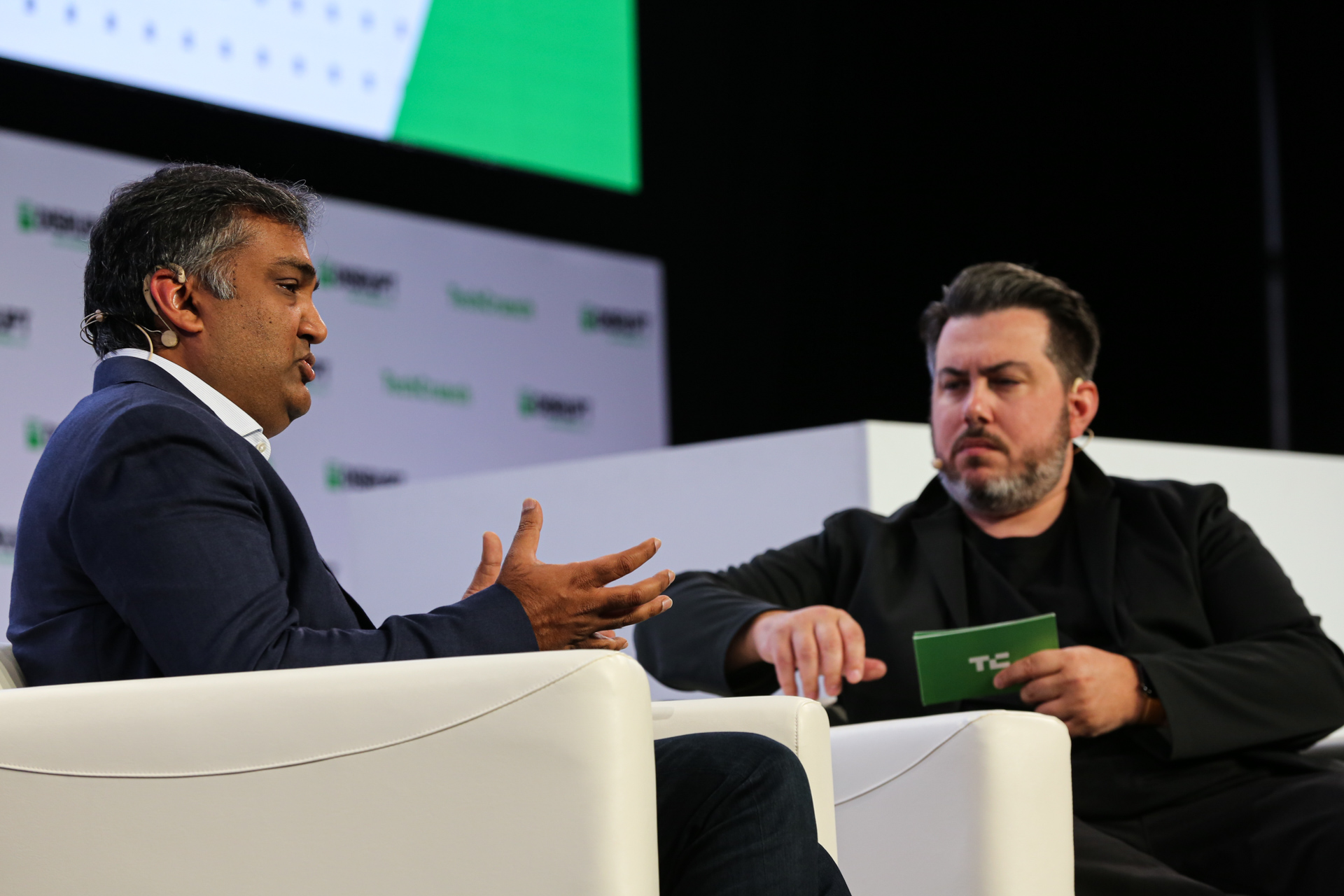
YouTube Chief Product Officer Neal Mohan gave an update on all things YouTube at TechCrunch Disrupt SF. He touched on many different subjects, from YouTube Music updates to advertiser-friendly guidelines and tweaking YouTube’s recommendation algorithm.

Mohan started right away with an update on YouTube Music. YouTube has accidentally become one of the biggest music streaming services in the world. And the company plans to take advantage of that.

“Everybody knows music has been a core part of YouTube really since the day of the founding of the product,” he said.

While YouTube Premium started as YouTube Red, the company rebranded its premium subscription service with a focus on YouTube Music. "It's a music subscription service and it also brings the best of YouTube,” Mohan said.

It is now available in 71 different countries and YouTube is rolling out three personalized playlists today to make the service more competitive with Spotify and Apple Music.

With a renewed focus on YouTube Music, Google has decided to phase out Google Play Music to focus on YouTube Music instead. But there are still some missing features on YouTube Music.

In particular, YouTube is working on porting three Google Play Music features: The ability to have a locker with personal music files, the ability to play local audio files on your Android device and the ability to transfer your playlists from Google Play Music to the YouTube Music app.

“We'd like to do it in the near future and but we want to make sure we nail that,” Mohan said. So it’s still a work in progress.

Many YouTube creators have criticized the platform as some of their videos have been demonetized. Mohan mostly recapped some of YouTube’s efforts on this front to make sure that videos aren’t demonetized for no reason.

“In addition to our community guidelines, we also have something called the advertiser-friendly guidelines. Those are the sets of rules that govern what type of content is eligible for monetization and what is not,” Mohan said.

The company now has an appeal system so that creators can contest a demonetization decision. “There's an SLA turnaround time for processing that appeal,” Mohan said.

YouTube creators themselves can give advance warnings by saying what’s in a video, such as swear words, etc. Mohan believes that this model will make monetization more stable for YouTube creators.

When it comes to autoplaying videos, watch next and personalized recommendations, YouTube has also been criticized for recommending conspiracy videos or simply weird stuff that makes you uncomfortable.

“Lots of users are recommended content that you would call sort of more mainstream sometimes it’s in the other direction,” Mohan said. “And one thing that we want to avoid is sending users down paths to more and more extreme content, especially when that content might not be quite policy violations — so it still exists on our platform — but it's borderline in nature or maybe it's spreading you know harmful misinformation in some way or the other.”

YouTube started tweaking the recommendation algorithm back in January. Mohan says that there’s been a 50% reduction in user exposure to content “that we would deem to be in that bucket of sort of borderline or maybe harmful misinformation.”

disrupt neal mohan youtube 0153

TechCrunch’s Matthew Panzarino and Neal Mohan also talked about Lilly Singh, a YouTube star who now has her own late night talk show on NBC — A Little Late with Lilly Singh.

“When they were looking for a replacement host for that late night show, it made sense,” Mohan said. “Lilly has this natural way of connecting with the audience. But also because the nature of a lot of that late night content in particular is that it's often viewed — not as it's linearly broadcasted on live channels — but the next day on YouTube.”

And Mohan doesn’t think she’s turning her back to YouTube. “She knows that her core audience, her most passionate fans are on YouTube,” he said.

Finally, Mohan had two pieces of advice for people working on subscription businesses. First, make sure that the message is clear and that people know why they should subscribe. Second, optimize the funnel from user acquisition to retention, monetization, etc.

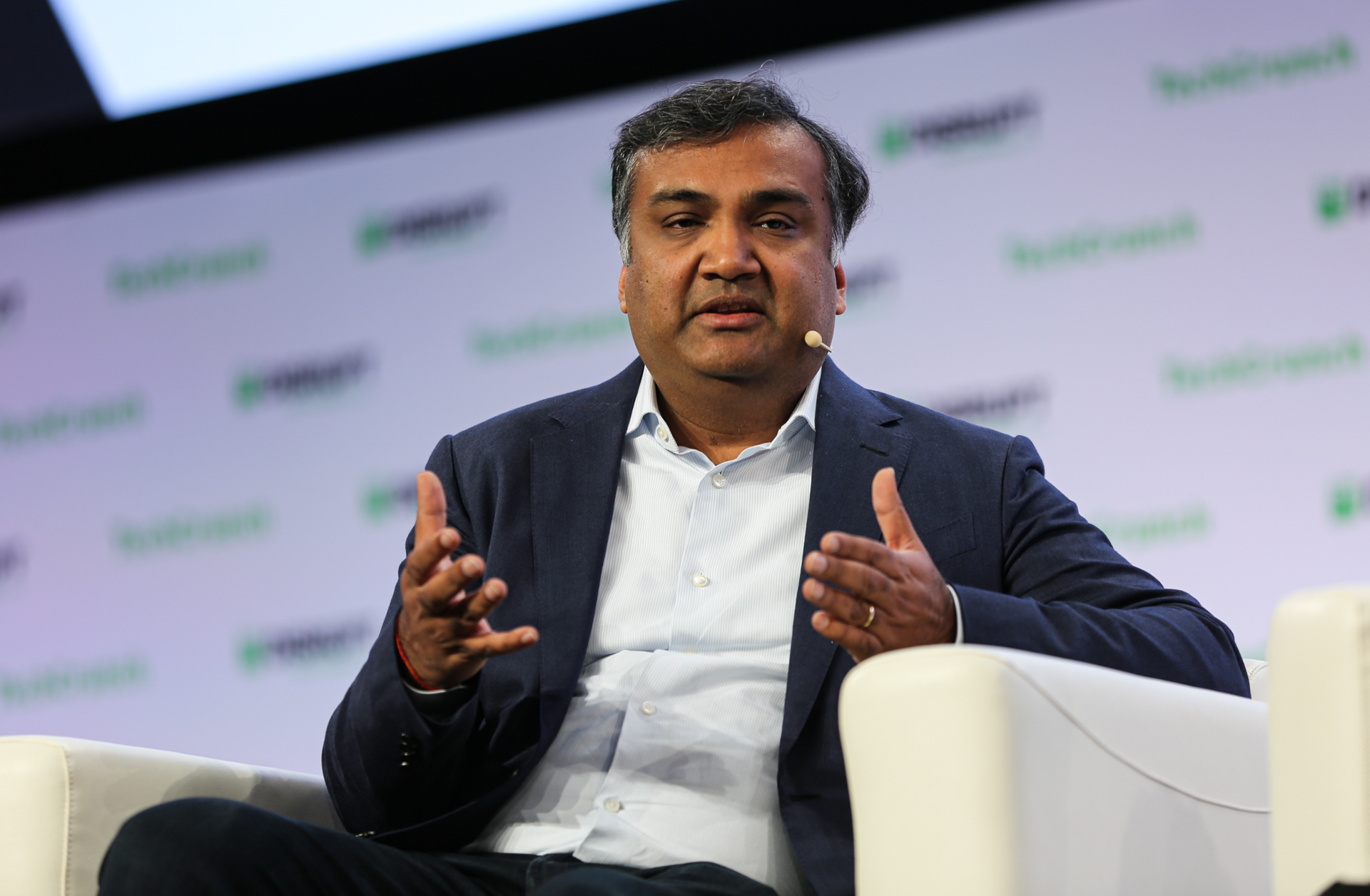
disrupt neal mohan youtube 0137

02 Oct 2019

Foursquare’s location-aware Pilgrim SDK gets a free tier

Ten years later, Foursquare is far past its scrappy consumer days as it builds out its B2B services, but its latest announcement is thrusting it back into the scrappy consumer business.

Onstage at TechCrunch Disrupt SF, Foursquare co-founder Dennis Crowley announced that the company is launching a free version of their Pilgrim SDK, which allows developers to push contextual notifications to their users based on their location data.

The SDK “powers most of the most interesting stuff we do as a company,” Crowley told TechCrunch, but there’s also “been a super high bar for [customers] getting involved with Pilgrim.”

The company has previously had to interface pretty directly with potential customers so adopting freemium model could open a sales pipeline for smaller customers that rely on Foursquare since birth.

Free-tier customers won’t be paying by dumping their user data onto Foursquare’s servers, the company says.  “This is about lowering the bar for just being able to play with it,” Crowley says.

The free-tier has a pretty high ceiling before things get premium, apps that utilize the SDK will have to cross 100,000 MAUs before they have to break out the credit card. Free-tier users aren’t going to get access to Foursquare Panel, which synthesizes data and trends from customers based on location data. You also lose access to integrations with CRMs and marketing automation systems.

Foursquare has seen plenty of success getting developers to utilize their Places API, which is part of Pilgrim. The company says there are 150,000 developers that have registered for the API including customers like Uber, Samsung and Twitter.

Developers will have to apply to get access, though the company says this is largely to weed out blatant would-be ToS violators from accessing the SDK.

To sign up, you’ll need to visit developer.foursquare.com.

“A lot of this software hasn’t existed before,” said Crowley. “We’re just entering this era of contextual computing — there’s a lot of building blocks that need to get built. We’ve built a lot of them and we’re excited to share it with as many developers as possible and see what people do with it,” he added.

02 Oct 2019

Demand for Porsche Taycan prompts automaker to add 500 more jobs

Demand for the all-electric Porsche Taycan sports car has prompted the German automaker to add 500 more jobs at its headquarters in Stuttgart-Zuffenhausen.

The move, which will boost jobs dedicated to the Taycan by one third to 2,000, is designed to give Porsche the flexibility it might need to boost production.

“With the Taycan, we are showing that e-mobility is by no means a job killer,” Andreas Haffner, a Porsche board member in charge of human resources, said in a statement. “Rather, we are underlining its future viability, especially in the sports car segment.”

Porsche has poured more than $1 billion into the development of the Taycan, its first all-electric vehicle. And that bet appears to be paying off, if initial numbers hold up. Even before the Taycan was revealed in September, the company reported strong demand for the vehicle, which it measured through the number of people who had made deposits to order the four-door sports car. Reservations required a €2,500 deposit ($2,785).

Porsche initially targeted 20,000 Taycans for the first year of production, although at full capacity the line can produce up to 40,000 of these electric vehicles.

The company has received more than 32,000 applications for the Taycan, Haffner said.

Porsche plans to increase its workforce dedicated to the Taycan by the end of the second quarter of 2020.

The Porsche Taycan wasn’t just a big bet by the automaker; the company’s workers also made a gamble. Workers and executives agreed to cost-cutting measures, including giving up a percentage of their scheduled wage increases through 2025, to guarantee that the vehicle would be built in Zuffenhausen, and not in another plant where the cars could be produced more cheaply.

02 Oct 2019

Blue Origin’s passengers will pay hundreds of thousands of dollars for a ticket on New Shepard

After committing to having a first crewed launch of its rocket ship in 2019, Blue Origin, the rocket manufacturer and launch services company backed by Jeff Bezos, is likely going to have to push that timeline back to 2020.

Speaking onstage at TechCrunch Disrupt San Francisco, Blue Origin chief executive Bob Smith said that the window for getting the crewed flight done within the 2019 timeframe was narrowing. “We’re not going to be date driven,” Smith said.

But as commercial launches come to market, customers can expect to pay “hundreds of thousands of dollars” for a ticket on the New Shepard suborbital flight.

Blue Origin isn’t the only commercial space company looking to conduct a crewed launch before the end of the year. In June, NASA set a timeline to get crewed launches from Boeing and SpaceX in September and November, respectively.

In an August statement, SpaceX said it was still planning on getting astronauts to the International Space Station later this year.

Blue Origin is still moving ahead with its planned launches and the near-term setback is something that likely won’t make much of a dent in a company backed by the world’s richest man — and one who’s strategy and vision extends on a global timeframe.

For Blue Origin’s chief executive (and its financial backer) the company’s ultimate goal is to ensure that humanity is an extra-planetary species — something that will take decades to achieve.

What Smith and others are sure of is the commercial viability of the space industry.

“Launch volume is going up and has been going up for quite a while,” says Smith.  According to the Blue Origin founder, launch volumes in the space industry have been increasing at 3% per-year and some market analysts have predicted that number could rise to 50% to 80% per-year. 

And those numbers don’t include the mega-constellations that companies like Facebook, Alphabet, and Amazon are all hoping to bring to orbit.

“The launch volume is really looking very attractive over the next ten years,” Smith says. And that’s transforming the space industry, which for decades had been dominated by government customers. “It is fundamentally shifting to a more commercial model,” says Smith. 


02 Oct 2019

YouTube Music is launching three personalized playlists

YouTube Music is preparing to better challenge Spotify and others with the launch of three new personalized playlists, Discover Mix, New Release Mix, and Your Mix, said YouTube Chief Product Officer Neal Mohan, in an on-stage interview this morning at TechCrunch Disrupt SF 2019.

Discover Mix, YouTube Music’s version of Spotify’s Discover Weekly, had already been spotted in the wild back in September. But it wasn’t yet broadly available. The other two hadn’t yet launched.

“Our YouTube Music app has been out now for a couple of years, we’ve launched the YouTube Premium service and the app and now 71 different countries,” noted Mohan. “And as we’ve rolled it out, we’ve gotten lots of feedback from our users about what they’d love to see,” he continued. And one of the things that they tell us repeatedly is, they love the fact that, through a combination of things like machine learning and human beings that are music lovers, we put all this great music in front of our users in the YouTube Music app,” he said.

According to Mohan, the Discover Mix will focus on helping users uncover new artists and music they might like, including tracks from artists you’ve never listened to before as well as lesser-known tracks from artists you already love.

The playlist takes advantage of your historical listening data on YouTube Music and on YouTube, he said.

New Release Mix, meanwhile, is YouTube Music’s version of Spotify’s Your Release Radar, and features the most recent release from your favorite artists.

Finally, Your Mix is a playlist that combines the music you love with songs you haven’t heard yet but will probably like, based on your listening habits.

The mixes will be updated weekly, and will be made available to all users worldwide where they’ll be found on the “Mixed for You” shelf on the home screen, or by searching in the app.

All three will launch sometime later this month, but YouTube doesn’t have an exact date.

The additions arrive at a time when Google is preparing to transition its Google Play Music users over to YouTube Music, which makes it a much bigger threat to existing music streaming services, including Spotify, Apple Music, Amazon Music, Pandora and others.

While YouTube Music hasn’t yet replaced Play Music entirely or shut the older app down, it did just make YouTube Music the default music app that ships with new Android devices just last week, instead of Google Play Music.


02 Oct 2019

Actor-turned-HitRecord founder Joseph Gordon-Levitt says we should all get off YouTube

Actor-turned-entrepreneur Joseph Gordon-Levitt, best known for roles in “3rd Rock from the Sun,” “Inception,” “Snowden” and, “10 Things I Hate About You,” came to TechCrunch Disrupt SF 2019 this morning to talk about his startup, collaborative media platform HitRecord. Specifically, he addressed how HitRecord differs from other platforms for creators. In doing so, he also called out the YouTube business model as problematic and something we should all get away from. 

The comments around YouTube followed a discussion of some of the criticism HitRecord’s platform has faced — namely, that it doesn’t offer high enough payouts or a way for creatives to make a living.

Since 2010, it has only paid out some $3 million dollars to its creators.

Gordon-Levitt said that HitRecord doesn’t emphasize that you’ll gain entry into the creative industry by using its platform, nor does it market itself as something you can turn into a full-time job, like YouTube often promises.

In fact, he found the YouTube model an issue for the industry and society as a whole.

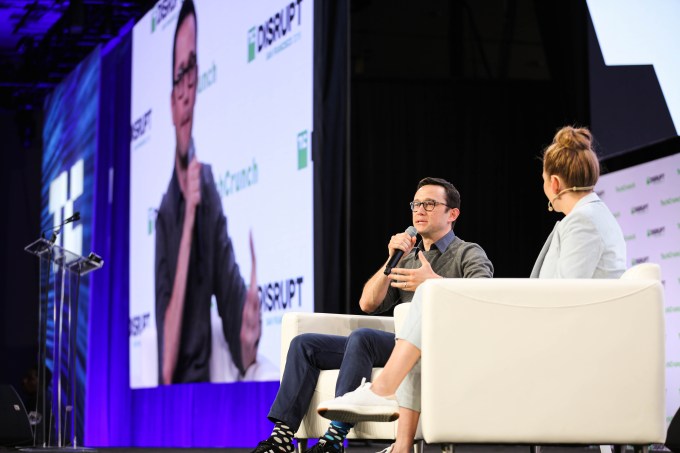
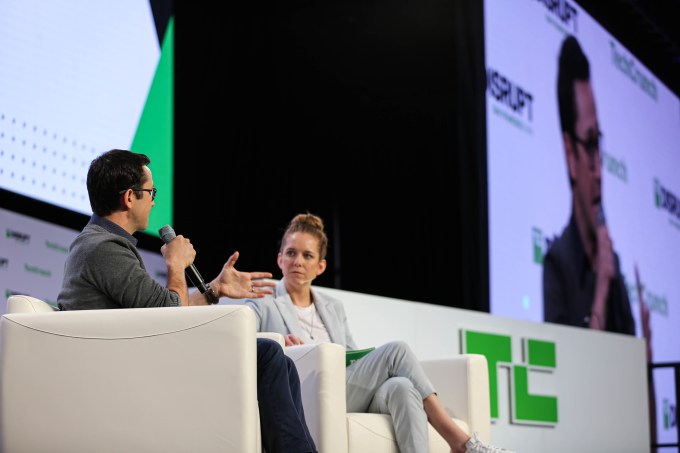
Joseph Gordon-Levitt speaks with Jordan Crook at TechCrunch Disrupt 2019 on October 2, 2019.

Joseph Gordon-Levitt speaks with Jordan Crook at TechCrunch Disrupt 2019 on October 2, 2019.

He said that making art shouldn’t be about the money or external validation — such as likes and subscribers.

“What I have experienced in my life is actually what brings me a lot of joy and happiness about the creative process is not the red carpets. It’s not the box office. It’s not those kinds of external validators. It’s the ‘doing it,’ it’s when I get to actually do the art, and especially do it with other people,” explained Gordon-Levitt.

Of course, he has the comfort of his own Hollywood success to fall back on, when new creators entering the industry don’t.

Asked what he thought of YouTube’s model as well as Instagram’s, Gordon-Levitt had some harsh words.

“Do you think that YouTube and Instagram are a net positive or negative for humans’ creativity?” asked TechCrunch editor Jordan Crook.

He responded quickly that they were a net negative.

Joseph Gordon-Levitt speaks with Jordan Crook at TechCrunch Disrupt 2019 on October 2, 2019.

Joseph Gordon-Levitt speaks with Jordan Crook at TechCrunch Disrupt 2019 on October 2, 2019.

“There’s tons of incredible stuff, beautiful communities form all kinds of creative human expression. It’s not to say that it’s all bad, but I do think that in general the basic business model of: we’re going to offer a quote-unquote ‘free service’ in exchange for the right to conduct mass surveillance, and then apply these incredibly expensive sophisticated machine learning algorithms to this massive data set to optimize for — not the benefit of the users, not what’s going to make the users more creative or more informed or more compassionate or anything — but optimize instead for the agenda of these third-party advertisers; I think that’s a basic business model that we all as the world should get off entirely,” he said.

“We shouldn’t be monetizing software, or businesses that way,” he added.

The audience at TechCrunch Disrupt cheered.

As an alternative to these services, Gordon-Levitt promoted the Netflix model as something that works.

There’s a direct billing relationship with the customer, he said, and the data collected is designed to give you more of want you like to watch.

Similarly, HitRecord aims to use data for better purposes.

“I’m all for using data to accomplish a goal that the user has signed up for,” Gordon-Levitt said. “It’s when the user is being subjected to these algorithms not in their interest, but in the interest of some third-party behind the curtain, that’s I think where you get into danger.”


02 Oct 2019

How Lime, Scoot, JUMP and Spin plan to deploy adaptive scooters

As part of San Francisco’s program to operate shared electric scooters in the city, it’s requiring providers to pilot adaptive scooters to ensure people with disabilities are not left out from this new form of transportation. Companies are expected to deploy these adaptive scooters within the first three months of the permit, which begins this month.

Last week, the San Francisco Municipal Transportation Agency granted electric scooter permits to Uber-owned JUMP, Lime, Bird-owned Scoot and Ford-owned Spin. As part of their applications, each provider outlined its planned approach to developing adaptive scooters. We dig into the key details of their applications below.

02 Oct 2019

Flir purchases IP and assets from defunct drone company, Aria

Back in March, Aria Insights suddenly went dark. The news was a bit of a surprise from a startup that had just announced a name change and pivot in tech focus. Today, thermal imaging company Flir announced that it has acquired the intellectual property and some operating assets from the former company.

Flir, best known for its thermal imaging cameras, has become increasingly invested in the drone category, including some high-profile partnerships with some of the industry’s biggest players like DJI and Parrot.

“Tethered UAS systems are becoming a more valuable tool for force protection, border security, and critical infrastructure protection,” Flir’s David Ray said in a release announcing the news. “Aria’s innovative technology and IP assets will enable us to enhance current capabilities and advance the range of solutions we can deliver to customers in this growing market segment.”

The acquisition follows another high-profile purchase by the company, which picked up iRobot military spin-off Endeavor Robotics, back in March. Aria Insights has strong iRobot connections, as well. The startup was founded in 2008 as CyPhy Works by iRobot co-founder, Helen Greiner. After Greiner left, however, the former drone hardware company pivoted to data collection, a matter of months before shutting down.

“We’re pleased to complete the sale of our assets to Flir Systems,” former Aria Insights CEO Lance VandenBrook said in a release. “We are proud of the technology our team developed through the operations of CyPhy Works and Aria, and we believe Flir offers the best opportunity to see it make a difference and support critical missions in the years ahead.”

02 Oct 2019

Snaplogic raises $72M more for its enterprise data integration platform

Cloud services and the adoption of apps that rely on them are continue to grow in popularity, but a persistent theme in enterprise technology has been that a lot of organizations still continue to use legacy software and architectures, for reasons of cost, migration headaches and simply because sometimes, if it ain’t broke, don’t fix it. That doesn’t mean they couldn’t benefit from a better way of integrating some of those workflows, and better leveraging the data coming out of those different apps, and today a startup that’s built a service to help them do that has raised a growth round of funding.

Snaplogic, which has built an integration platform that lets enterprises bring in and integrate both legacy and cloud apps to better monitor them and let them work together, has closed $72 million in growth financing, money that it will be using to expand its business globally. According to analysis from PitchBook, this latest funding comes at a $260 million pre-money valuation, which would work out to about $372 million post-money. We are checking with Snaplogic to see if it can confirm those numbers directly.

This latest round, which brings the total raised by Snaplogic to $208 million, is being led by growth equity VC Arrowroot Capital, with participation also from Golub Capital and existing investors. Past investors are an illustrious group that has included a mix of financial and strategic backers such as Andreessen Horowitz, Vitruvian (which led its previous round), Capital One, Ignition Parnters, Microsoft, and a number of others.

The company is not disclosing how big its customer base is currently. In its last round in 2016, it had grown to 700 enterprises, adding 300 in just one year, which was an especially big amount of growth. Current customers feature a number of big names like Adobe, Verizon (which owns TechCrunch), AstraZeneca, Bristol-Myers Squibb, Emirates, Schneider Electric, Siemens, Sony, and Wendy’s. It describes the bigger integration market as a $30 billion opportunity.

The defining characteristic in that list is that these are businesses that pre-date the big cloud revolution, and so they are more likely than not grappling with a mix of new and legacy apps that need to be balanced against one another, brought together in some instances to work together, and harnessed in terms of their data to help in a company’s wider efforts around big data for projects in areas like application integration, data integration, API management, B2B integration and data engineering.

“This is an exciting time for SnapLogic,” said Gaurav Dhillon, CEO at SnapLogic, in a statement. “We’re extremely proud to have built a modern and innovative solution that is solving really hard problems for our enterprise customers. This latest investment is a testament to the hard work and ongoing support of our customers, partners, and employees around the world. Together, we’ll continue to chart the way forward, making integration even faster and easier so enterprises can realize their data-driven ambitions.”

There has been an interesting wave of startups that have emerged specifically to tackle the opportunity of providing  tools to businesses that are still using old kit and older software to give them the ability to take advantage of new innovations in computing and how to use their bigger pool of data. Others include Workato (which itself has raised money in the last year), MuleSoft (now a part of Salesforce), and Microsoft itself, and in that context, Snaplogic has been taking a very measured approach in how it raises capital and expands.

“Our approach is to do successive up rounds with straightforward terms rather than chase a big slug with onerous terms,” CEO Guarav Dhillon told TechCrunch once. He’s a repeat entrepreneur and has a track record of conservative but sound growth. “We built Informatica with just $13.5 million, so my approach is to raise funds as needed.”

It’s an approach that is resonating with investors. “SnapLogic is attacking a huge and surging market opportunity with a uniquely modern and powerful platform,” said Matthew Safaii, Founder and Managing Partner at Arrowroot Capital, in a statement. “They’ve built an amazing product, work with an impressive roster of customers, and are led by an experienced executive team. As SnapLogic sets its sights on continued product leadership and global expansion, we look forward to partnering with them to help get their pioneering integration platform into the hands of even more enterprises around the globe.”

“SnapLogic is reinventing application and data integration for the modern era,” said Robert Sverbilov, Director at Golub Capital, added. “We are excited to support SnapLogic’s next generation SaaS application integration platform and to help secure its footing as a leader in the iPaaS (Integration Platform as a Service) vertical.”