Year: 2019

02 Oct 2019

India’s Udaan raises $585M to expand its B2B e-commerce platform

Udaan, a three-year-old business-to-business e-commerce platform in India, has raised more than half a billion dollars as it looks to bring more kirana stores, chemists, and other small businesses online through its marketplace.

The startup said today it has raised $585 million from Tencent, Altimeter, Footpath Ventures, Hillhouse, GGV Capital and Citi Ventures. Existing investors Lightspeed Venture Partners, which wrote its first check to the startup back in 2016, and DST Global also invested in the round.

The new round valued the startup between $2.3 billion to $2.7 billion, a person familiar with the matter told TechCrunch. Co-founders of Udaan, which reached the unicorn status in the shortest period of time among Indian startups, declined to comment on the valuation.

Udaan operates an eponymous B2B marketplace where it connects buyers and sellers. The platform supports a wide-range of categories from lifestyle, electronics, home and kitchen, staples, toys, to fruits and vegetables.

Udaan also offers a credit line to provide working capital to buyers and sellers on its platform, thereby addressing one of the biggest challenges faced by small and micro businesses and merchants in the nation, said Vaibhav Gupta, a co-founder of Udaan, in an interview with TechCrunch.

The startup has amassed more than 3 million retailers from 900 cities and towns in India. Today, a wide range of merchants, including farmers, shopkeeper owners, restaurants, chemists, and street vendors are connected to Udaan.
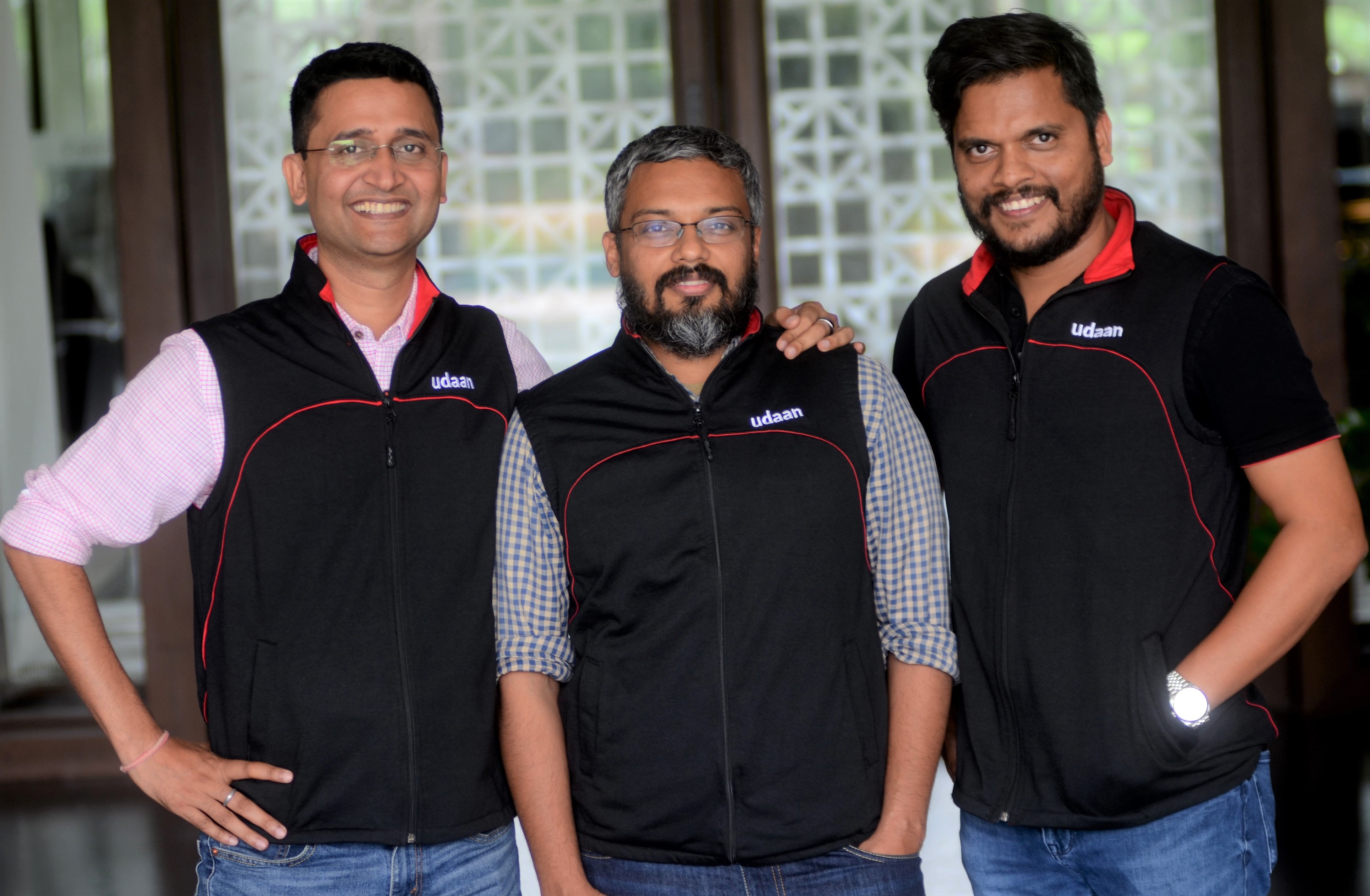
L R Amod Malviya Vaibhav Gupta Sujeet Kumar Co founders Udaan

From left-to-right: Amod-Malviya, Vaibhav Gupta, and Sujeet Kumar, co-founders of Udaan

Sujeet Kumar, another co-founder of Udaan, said the startup will use the fresh capital to expand its footprint in the nation and focus on growing the marketplace in both existing and new categories.

Even as more than half a billion people in India are online today, most businesses in the nation remain offline. But a growing cohort of startups in the nation is beginning to help merchants make use of technology.

Amazon and Walmart have invested billions of dollars to create business-to-commerce marketplaces in India, but e-commerce still accounts for just 3% of the overall retail market in the country.

Their mightiest rivals remain mom and pop stores that dot tens of thousands of villages, cities, towns, and slums of India. In recent years, many Silicon Valley companies have also started to address these businesses. Google has launched tools to help these mom and pop stores set up their online presence, and last month, it launched a business app of Google Pay to help these merchants accept online payments.

That’s the opportunity that drove Vaibhav, Sujeet, and Amod Malviya — the third co-founder — to leave their jobs at e-commerce platform Flipkart and build a platform to serve small businesses in the nation.

“The market opportunity is turning out to be much deeper than we envisioned when Lightspeed led the company’s Series A financing in 2016 and we’re excited to continue supporting the company while welcoming a strong syndicate of new investors,” said Bejul Somaia, a partner at Lightspeed Venture Partners .

In a statement, Martin Lau, President of Tencent, said, “Udaan’s unique approach can enhance the capabilities of millions of retail stores across India. It represents a powerful example of how technology can empower the business of small merchants, improve the efficiency of industries and bring benefits to consumers.”

More to follow…

02 Oct 2019

T2D3 Software Update: Embracing the Founder to CEO (F2C) Journey

It’s been four years since TechCrunch published my blog post The SaaS Adventure, which introduced the concept of a “T2D3” roadmap to help SaaS companies scale — and, as an aside, explored how well my mom understood my job as an “adventure capitalist.” The piece detailed seven distinct stages that enterprise cloud startups must navigate to achieve $100 million in annualized revenue. Specifically, the post encouraged companies to “triple, triple, double, double, double” their revenue as they hit certain milestones.

I was blown away by the response to the piece and gratified that so many founders and investors found the T2D3 framework helpful. Looking back now, I think a lot of the advice has stood the test of time. But plenty has also changed in the broader tech and software markets since 2015, and I wanted to update this advice for founders of hyper-growth companies in light of the market shifts that have occurred.

Perhaps the most notable change in the last four years is that the number of playbooks for companies to follow as they sell software has expanded. Today, more companies are embracing product-led growth and a less-formal, bottoms-up model — employees are swiping credit cards to buy a product, and not necessarily interacting with a human salesperson.

Many of the most high-profile, recent software IPOs structure their go-to-market operations this way. T2D3’s stages, by contrast, focus quite a bit on scaling a company’s internal sales function to grow. Indeed, both a product-led and a sales-led approach are viable in today’s growing B2B-tech market.

What’s more, the revenue needed for a software company to go public has increased dramatically in the last four years. This means that software founders need to focus not only on building a scalable product and finding scalable go-to-market channels, but also building a scalable org chart. These days, what is scarce for software founders isn’t money from investors; it’s great human talent.

So in addition to T2D3, my firm and I are now focusing on another founder journey: F2C, or the transition from founder/CEO to CEO/founder. This journey can take many paths, but ideally it starts with the traditional hustle to find early product/market fit.

02 Oct 2019

Watch Disrupt SF 2019 Day 1 Live right here

It’s that time of year again.

Disrupt has descended upon San Francisco, with thousands of founders, investors and technophiles pouring into the Moscone Center.

We’ll kick off the day with a fireside chat with Blue Origin’s Bob Smith on the Main Stage and a panel on how to build a billion-dollar SaaS company with Neeraj Agrawal (Battery Ventures), Jyoti Bansal (Harness) and Whitney Bouck (HelloSign).

Other speakers from Day 1 include Joseph Gordon-Levitt, Aaron Levie, Jennifer Tejada, YouTube’s Neal Mohan and Will Smith and Ang Lee.

Then, we’ll head into the Disrupt Battlefield, where 20 companies will launch their wares on the Main Stage in front of a panel of expert judges with the hopes of winning the Disrupt Cup, $100,000 and eternal glory.

It’s going to be an amazing day and we’re more than pleased to bring it to you live right here.

View the agenda right here.
Enjoy!

02 Oct 2019

Coinbase users will earn rewards on USDC holdings

Cryptocurrency exchange Coinbase wants to foster USDC adoption by letting you earn rewards when you keep USDC on your Coinbase account. Essentially, if you’re a U.S. customer, your Coinbase account has become an uninsured savings account with a 1.25% APY rewards rate.

If you’re not familiar with USDC, it’s a stablecoin backed by CENTRE, a consortium of companies working in the cryptocurrency space. 1 USDC is worth exactly 1 USD, and CENTRE members save USD in regular bank accounts whenever they issue USDC tokens. CENTRE members currently hold over $1 billion in reserve bank accounts as they have issued over 1 billion USDC.

In addition to price stability, stablecoins work just like any other ERC-20 tokens. You can hold them in a cryptocurrency wallet, you can send and receive them, you can exchange them.

When you want to buy some bitcoins on Coinbase, users usually transfer some money to their accounts and then convert USD into BTC. And yet, transferring money to a Coinbase account can take days, which means you could miss out on some big price changes.

Conversely, if you’re selling some bitcoins on Coinbase, chances are you exchanged those BTC into USD and then transferred your USD balance to your bank account. If you want to buy some bitcoins again in the future, you’ll have to go through the same lengthy process.

Coinbase’s pitch is simple: Whenever you’re converting your crypto assets and you end up with USD, just leave them on the platform as USDC.

You don’t have to do anything to accept USDC rewards as eligible Coinbase users will automatically start earning rewards starting now. If you currently hold USDC, you’ll notice that you have some “rewards pending”.

Coinbase calculates rewards in real time, which means that you’ll earn rewards even if you hold a large sum of USDC for a few hours and then transfer everything. But your Coinbase account is credited with rewards only once a month.

For now, the APY rewards rate is 1.25%, but Coinbase can change that rate in the future. It’s also worth noting that your Coinbase wallet is not insured by the Federal Deposit Insurance Corporation (FDIC) or the Securities Investor Protection Corporation (SIPC).​

Don’t put all your savings on Coinbase, as you could lose everything in case you get phished. Coinbase won’t be responsible.

So who’s eligible exactly? For now, the feature is limited to U.S. customers who don’t live in Hawaii or the State of New York. You have to verify your account (level 2) and you have to hold at least 1 USDC.

If you earn over $600 in USDC rewards in a single year, Coinbase will send you a 1099-MISC form so that you can report your earnings with the IRS.

02 Oct 2019

Daily Crunch: Zuckerberg is wrong about TikTok

The Daily Crunch is TechCrunch’s roundup of our biggest and most important stories. If you’d like to get this delivered to your inbox every day at around 9am Pacific, you can subscribe here.

1. Zuckerberg misunderstands the huge threat of TikTok

In leaked audio of a Facebook all-hands meeting, Mark Zuckerberg described TikTok as “almost like the Explore Tab that we have on Instagram.” But Josh Constine argues that this is a serious misunderstanding of the app, which is more like a new form of social entertainment.

These distinctions matter because TikTok is a rapidly growing force in social media, a.k.a. a significant threat to Facebook and Instagram. And how can Zuckerberg beat what he doesn’t understand?

2. Microsoft’s latest Surface Laptop arrives in 13- and 15-inch models

Microsoft’s press event is currently underway as I write this newsletter, but it has already announced a new piece of hardware — the latest version of the Surface Laptop, with pricing starting at $999 for the 13-inch model.

3. Court says FCC’s ‘unhinged’ net neutrality repeal can’t stop state laws

The FCC’s repeal of net neutrality rules has been significantly weakened by a federal appeals court, which ruled that the Commission could not preempt state laws like those pending in California. In fact, one judge called the FCC’s logic “unhinged from the realities of modern broadband service.”

4. These are the top Y Combinator companies of all time, based on valuation

In October of 2018, Y Combinator published a mega list of the top 101 companies to have gone through the accelerator, as sorted by each company’s valuation. This morning they updated the list, with Airbnb and Stripe have swapping the top spots.

5. NASA launches a new planet-hunting telescope using a giant balloon

A new telescope will seek out planets that resemble Earth from a height of around 125,000 feet, using special optical technology that will filter out light from the stars they orbit to provide a better view.

6. Where top VCs are investing in edtech

New software, content and financing solutions for learning outside the traditional school system offer the more compelling business opportunities, particularly when it comes to vocational training. (Extra Crunch membership required.)

7. Streamlit launches open-source machine learning application development framework

Streamlit co-founder Adrien Treuille says that rather than building a one-size-fits-all machine learning tool, the key was developing a solution that was flexible enough to serve multiple requirements, depending on the nature of the data involved.

02 Oct 2019

A startup factory? $1.2B-exit team launches $65M super{set}

Think Jack Dorsey’s jobs are tough? Well, Tom Chavez is running six startups. He thinks building businesses can be boiled down to science, so today he’s unveiling his laboratory for founding, funding and operating companies. He and his team have already proven they can do it themselves after selling their startups Rapt to Microsoft and Krux to Salesforce for a combined $1.2 billion. Now they’ve raised a $65 million fund for “super{set}”, an enterprise startup studio with a half-dozen companies currently in motion.

The idea is that {super}set either conceptualizes a company or brings in founders whose dream they can make a reality. The studio provides early funding and expertise while the startup works from their shared space in San Francisco, plus future ones in New York and Boston. The secret sauce is the “super{set} Code,” an execution playbook plus technological tools and building blocks that guide the strategy and eliminate redundant work. “Our belief is that we can make the companies 10x faster and increase capital efficiency by 5X,” says Chavez of his partnership with {super}set co-founders Vivek Vaidya, who acts as CTO, and Jae Lim who manages the fund.

Superset Team

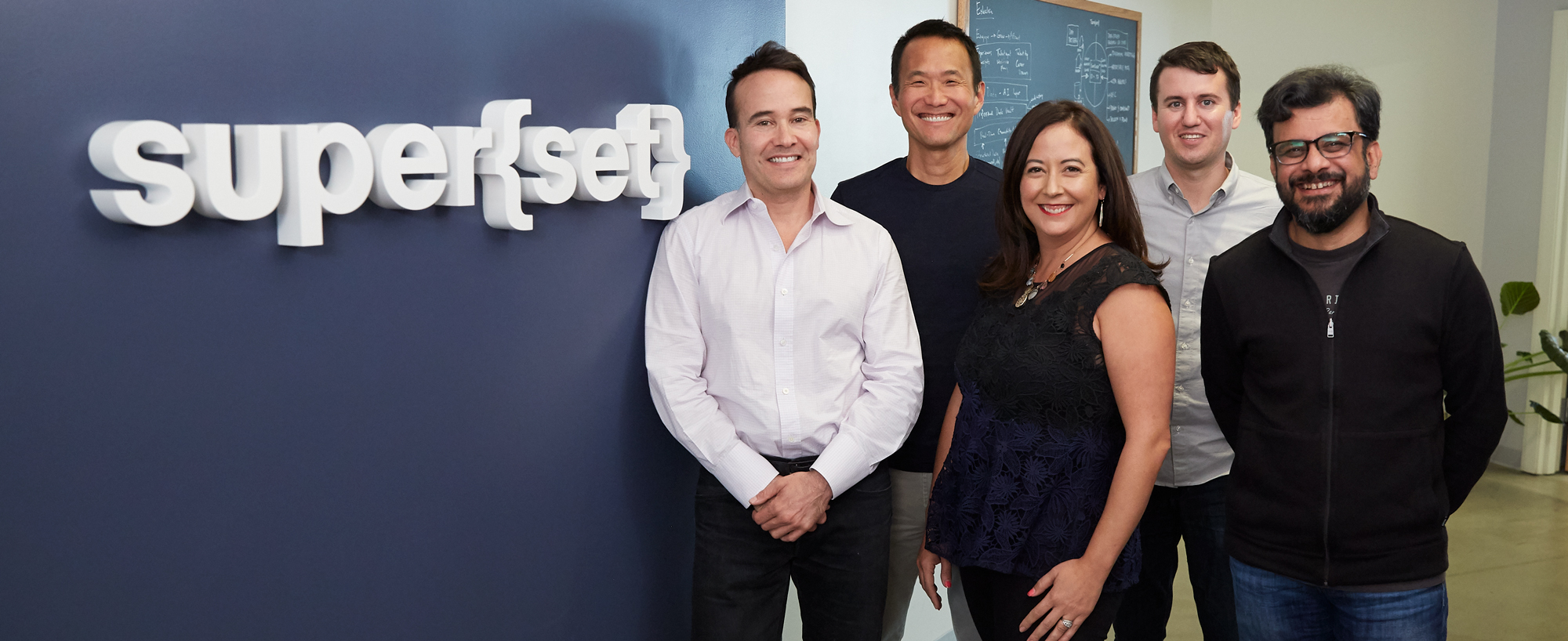
The {super}set team (from left): Tom Chavez, Jae Lim, Jen Elena and Vivek Vaidya

Perhaps the question isn’t whether the portfolio startups can scale, but if the humans behind them can without breaking. It’s stressful running a single company, let alone six. Even with the order of operations nailed down, each encounters unique challenges and no plan is one-size-fits-all. But after delivering 17.5X returns to their past investors, Chavez et al. have proven their power to repeatedly recognize what enterprises need and build admittedly boring but bountiful products in customer data management, and advertising yield.

The studio’s playbooks cover business plan formation, pitch strategies, go to market, revenue, machine learning, management principles, HR processes, sales methods, pipeline measurement, product sequencing, finance, legal and more. There’s also shared engineering code it provides, so each startup doesn’t have to reinvent the wheel. “I don’t think you can systemize it but I do think you can accelerate and de-risk the path,” Chavez explains.

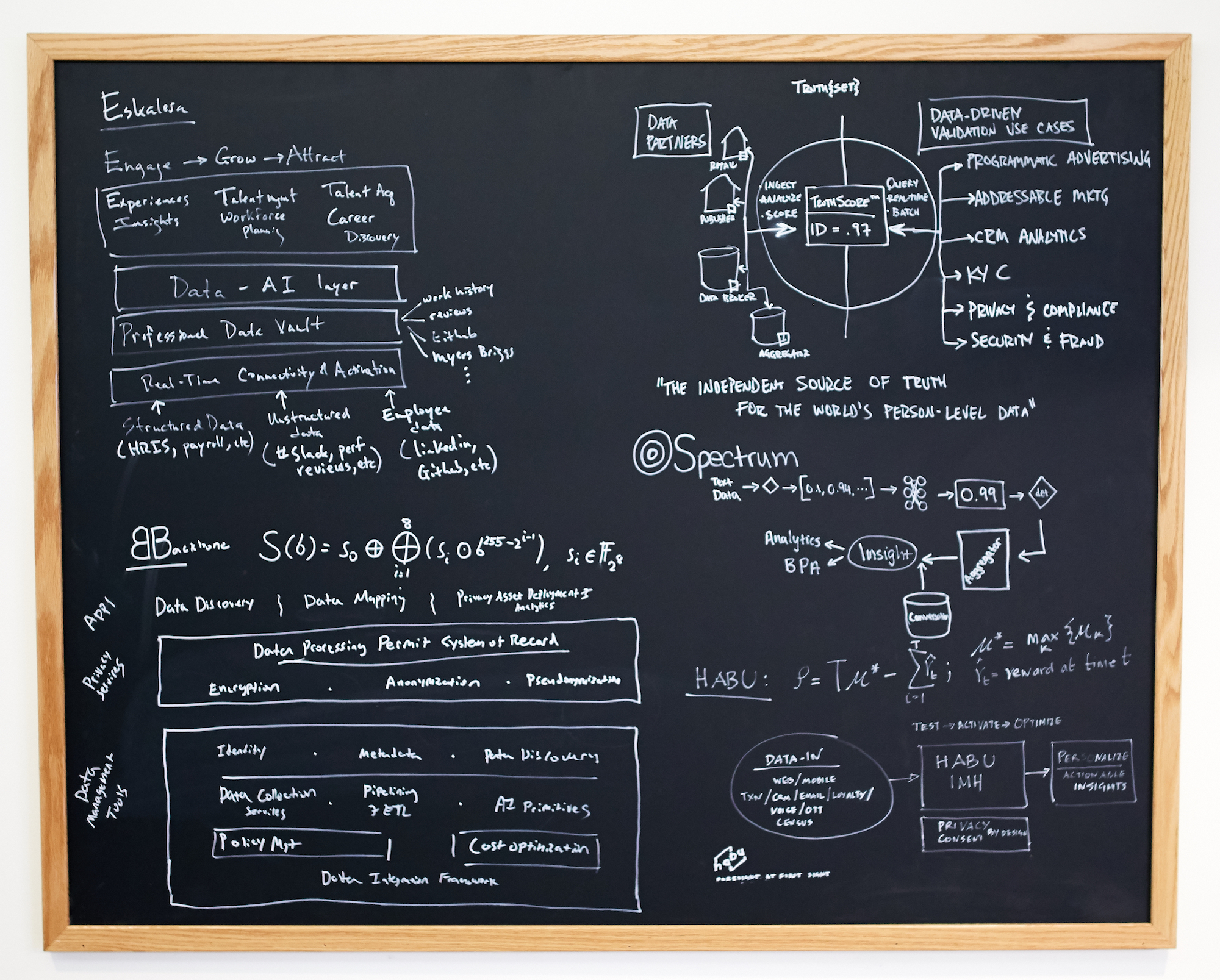
Superset Code 1

{super}set Code

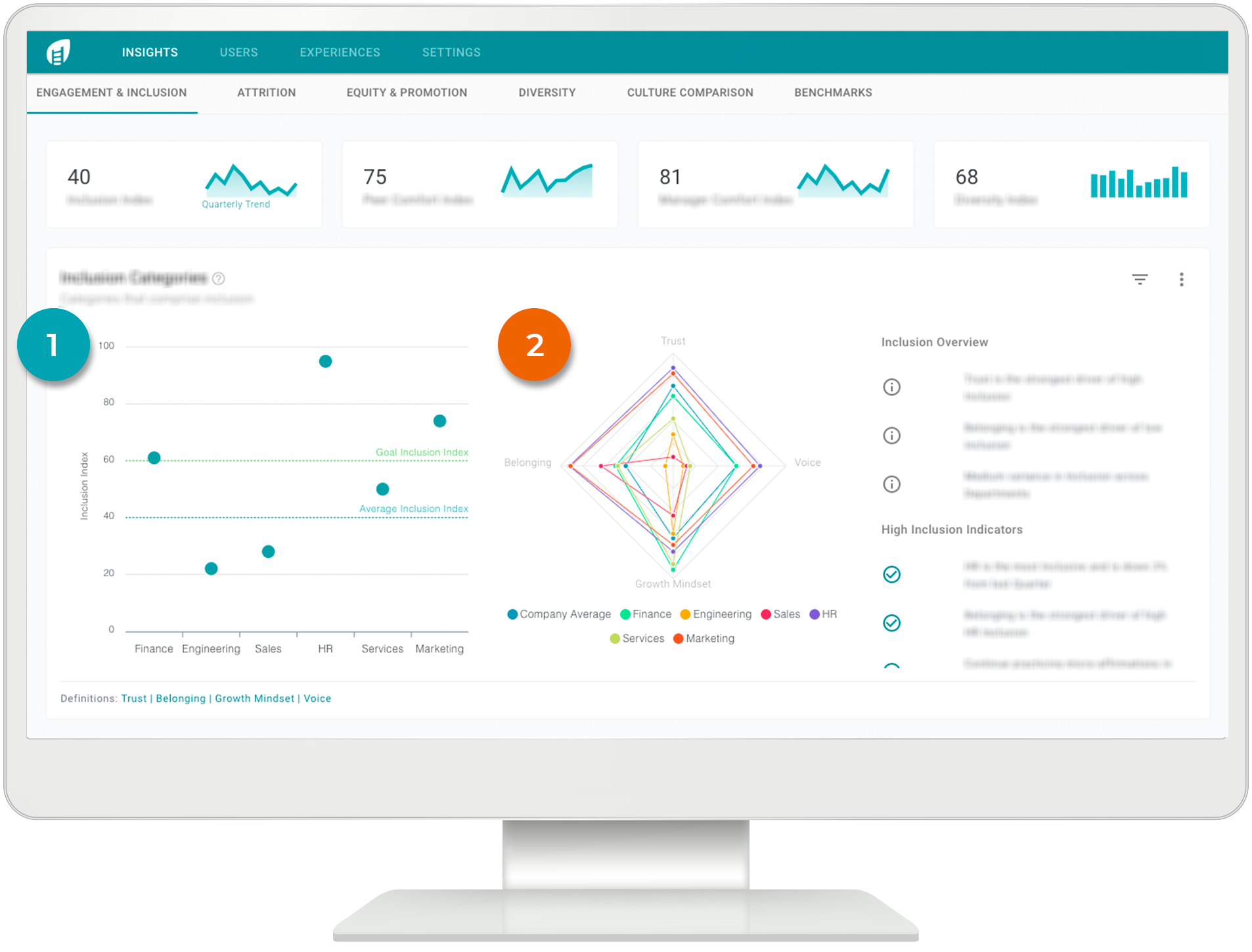
Today, the first {super}set company is coming out of stealth. Eskalera helps enterprises retain top talent by tracking diversity and inclusion stats of employees to engage them with career growth and community programs. Chavez is the CEO, but plans to install a new one shortly so he can focus more time on founding more startups. There are 55 employees across the first six companies, with two already generating revenue and most ready to emerge in the next nine months.

The funding for Eskalera and other {super}set companies comes with unique terms. Because Chavez and the team aren’t just board members you hear from once a quarter but “shoulder to shoulder with the entrepreneurs” as he repeats several times in our interview, the startups pay more equity for the cash.

The hope is having seasoned leadership aboard is worth it. “We’re product people first and foremost,” Chavez tells me. “What are you going to build? Who’s going to buy it? Why? What’s the technical moat? We’re not people doing jazz hands.” The {super}set team has plenty of skin in the game, though, given Chavez himself put in a big chunk of the $65 million, and the fund sticks to a standard management fee.

Eskalera

Eskalera

To supercharge the companies, {super}set brings in expert staffers in artificial intelligence, data science and more, who then align with the most relevant companies in the portfolio. They get equity grants to incentivize them to work hard on the startups’ behalf. “The worry I have about these larger funds is that they have an incentive disconnect where they work for the fees” Chavez says. His fund hopes to win through follow-on funding of its winners.

Tom Chavez Superset

{super}set co-founder Tom Chavez

If portfolio companies hit hard times, Chavez says {super}set will stick with them. “My first company had multiple layoffs and a major pivot. We had an enterperenur that walked away. They lost conviction, but we brought that company to an $180 million exit after people said there was no effing way and that felt really good,” Chavez says of staying the course. “The good entrepreneurs have that demonic energy.” But if everyone involved agrees a project isn’t working, they’ll shutter it. “It comes back to opportunity cost of people’s time.”

Chavez has respect for studios taking different approaches, like Atomic in consumer startups, Science in e-commerce and Pioneer Square Labs, which maintains a larger fund staff. “What excites me is moving entrepreneurship a step forward. Why couldn’t we franchise this in other cities?” He hopes {super}set can attract top talent that “just want to work on cool shit” rather than getting sucked into a single company.

Can {super}set keep all the plates spinning and really lower their risk? “If we’re wrong there will be a giant orange plume streak across the sky. The early returns are promising but we have to prove it,” Chavez says. But after accruing plenty of wealth for himself, he says the thrill that keeps him in the startup game is seeing life-changing outcomes for his teams. “I have spreadsheets showing the wealth generated by employees of companies I’ve built and nothing makes me happier than seeing them pay for tuitions, property, or retiring.”

02 Oct 2019

Here’s everything Microsoft announced at today’s Surface event

This morning’s Surface event was all about “flow.” It was hard to miss, honestly. The company must have collectively uttered the word dozens of times on stage in New York. The word of the day was largely a reference to cross device ecosystems and a couple of surprise dual-screen products shown off at the end.

surface laptop 3

Most of the rumors panned out. There was a new version of the Surface Laptop, including the addition of a 15 inch model, along with an updated process and the long-awaited addition of a USB C port. Speaking of, the Surface Pro got one of those, as well, along with improved studio microphones. There’s also the new Surface Pro X, which finds the company utilizes Microsoft’s new SQ1 chip, based on Qualcomm architecture.

Screen Shot 2019 10 02 at 7.35.08 AM

In spite of all of the rumors, the company did manage a few genuine surprises. The first of the bunch was the genuinely odd Surface Earbuds. Microsoft’s attempt to differentiate itself from similar offerings by Apple, Google, Samsung and the link is going all in on productivity. The big, round earbuds are designed to specifically to work with Office, including features like audio transcription, Powerpoint slide forwarding and real-time translation. They’ll run $249.

surface neo

More exciting is the addition of the Surface Neo. The dual-screen PC features some cool keyboard tricks and should be a genuinely fascinating product when it finally launches next holiday, sporting the new Windows 10X operating system. Holiday 2020 will also see Microsoft returning to the mobile space with the arrival of the Duo dual-screen Android handset.

[gallery ids="1890402,1890398,1890390,1890388,1890387,1890385,1890384,1890382,1890381,1890378,1890369,1890371,1890372,1890374,1890375,1890368,1890367,1890366,1890365,1890364,1890363,1890359,1890360,1890361,1890362,1890355,1890354,1890353,1890346,1890333"]


02 Oct 2019

Introducing the Startup Battlefield Companies at TechCrunch Disrupt SF 2019

TechCrunch is excited to announce the 20 startups competing in Startup Battlefield at TechCrunch Disrupt San Francisco 2019. Over the next three days, these elite companies will compete on tech’s biggest stage for the Disrupt Cup, the attention of global press and investors, and $100,000 in equity-free prize money.

The selection process for Startup Battlefield is extremely competitive: The startups you will see on stage are the top 2.6% of those that applied. Startup Battlefield showcases the most promising early-stage and fundamentally disruptive startups.

This year’s batch is no exception. From rapid cholera detection to developer tools, strawberry picking robots to regulatory and compliance monitoring, these startups run the gamut. Companies have made innovations in satellite launch technology, wildfire predictive modeling, financial trading, gardening hardware and even chemical synthesis for rapid medicine creation.

Over the past two months, teams have trained tirelessly with the Startup Battlefield and TechCrunch editorial teams to strengthen their business case, enhance their product framing and create a strong stage pitch. On Wednesday and Thursday, teams have six minutes to pitch in front of a panel of esteemed judges and a live audience, followed by an intensive Q&A session from expert judges. On Friday, a select number of companies will be chosen to compete for the grand prize in the final Startup Battlefield round, with a brand new set of judges.

Startup Battlefield starts today, Wednesday, October 2nd, at 12:50 pm with Startup Battlefield moderator and TechCrunch Senior Writer Anthony Ha.

To learn more about Startup Battlefield, click here. Tune in to watch the TechCrunch Disrupt live stream here.

Let’s check out the companies:

Wednesday 

Session 1: 12:30pm – 1:55pm

Traptic, Delos, Sendmi, Render, Mutiny

Session 2: 4:20pm-5:20pm

OmniVis, Ozone.AI, Leo Aerospace, Molecule.One, *WildCard

Thursday

Session 3: 1:00pm-2:05pm

Osano, Vise AI, Civic Champs, T4, OrbitFab

Session 4: 4:15pm-5:15pm

Avalow, Criam, LifeCouple, StrattyX, *WildCard

Friday

Finals begin at 1:15pm. Companies will be announced online Thursday night.

**As a part of Startup Alley, companies are eligible for the Wild Card. These are the companies selected for Wild Card and can compete in Startup Battlefield. These teams only learned of their acceptance last night.

02 Oct 2019

Google announces Action Blocks, a new accessibility tool for creating mobile shortcuts

Google today announced Action Blocks, a new accessibility tool that allows you to create shortcuts for common multi-step tasks with the help of the Google Assistant. In that respect, Action Blocks isn’t all that different from Shortcuts on iOS, for example, but Google is specifically looking at this as an accessibility feature for people with cognitive disabilities.

“If you’ve booked a rideshare using your phone recently, you’ve probably had to go through several steps: unlock your phone, find the right app, navigate through its screens, select appropriate options, and enter your address into the input box,” writes google accessibility software engineer Ajit Narayanan. “At each step, the app assumes that you’re able to read and write, find things by trial-and-error, remember your selections, and focus for a sustained period of time.”

Google’s own research shows that 80 percent of people with severe cognitive disabilities like advanced dementia, autism or Down syndrome don’t use smartphones, in part because of these barriers.

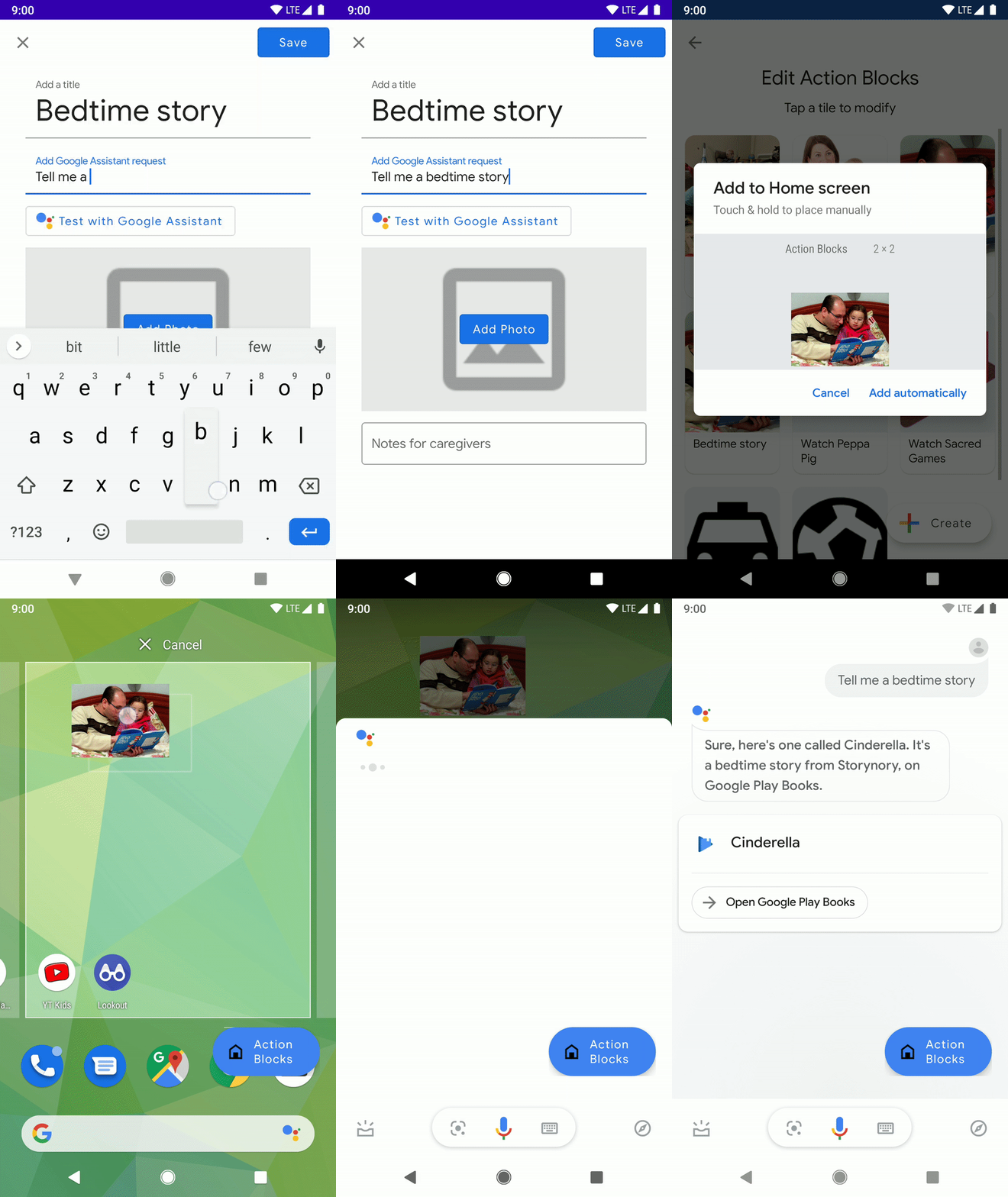
BedtimeStory 1

Action Blocks are essentially a sequence of commands for the Google Assistant, so everything the Assistant can do can be scripted using this new tool, no matter whether that’s starting a call or playing a TV show. Once the Action Block is set up, you can create a shortcut with a custom image on your phone’s home screen.

For now, the only way to get access to Action Blocks is to join Google’s trusted tester program. It’s unclear when this will roll out to a wider audience. When it does, though, I’m sure a wide variety of users will want to use of this feature .


02 Oct 2019

Google rolls out new privacy tools for Maps, YouTube and Assistant

Google today announced a handful of new consumer privacy tools for some of its most-used products, including Google Maps, YouTube, and Google Assistant. The tools are meant to better allow users to control, manage and erase the data Google collects from those who use its services or prevent Google from collecting that data in the first place, in some cases.

In Google Maps, there’s now an incognito mode option that works similar to the one available in the Chrome browser and, more recently, YouTube .

The idea is that there are times when you don’t want Google to track your usage of Maps, including when you search for particular places or travel about town.

IncognitoMarketingGIF 2019.10.01

There are a number of reasons why you might want to opt-out of being tracked in Maps — maybe you don’t want to taint your personalized recommendations with irrelevant data. Or maybe you don’t like the idea that a company tracks your every search and precise location because that’s just creepy!

You can access incognito mode from the menu that appears when you tap on your profile photo in Maps. The feature launches on Android this month, with iOS to follow.

On YouTube, Google is launching the ability to auto-delete your YouTube History. This means you’re able to set a particular time period where you want to keep your YouTube History available, like 3 or 18 months. The rest will be deleted automatically. You can also choose to manually delete the history, if you prefer.

YT retention

Finally, Google is addressing privacy issues on Google Assistant.

You’ll be able to ask “Hey Google, how do you keep my data safe?” for more information, though it’s doubtful most consumers will ever think to utter this command.

More importantly, a new feature will launch in the next few weeks that will let you delete your Assistant activity with voice commands.

For example, “Hey Google, delete the last thing I said to you,” or “delete everything I said to you last week.”

If you need to delete further back than a week, the Assistant will direct you to the account settings page where you can make that happen. That’s a bit more cumbersome, but at least it puts the settings in closer reach than before.

The issues around voice assistants’ data retention have recently been making waves, as news media alerted consumers to the fact that these smart assistants weren’t exactly unmanned operations — actual humans were reviewing the retained voice log files in order to tweak and improve the assistants’ reactions and responses.

privacy actions last week 1

Google Assistant, Alexa and even Apple’s Siri came under fire for their lack of attention to privacy controls in this emerging area, and all three have now responded accordingly.

Amazon, for example, allows Alexa users to opt out of having recordings manually reviewed, and Apple suspended its Siri response grading program worldwide until it could address the issue with privacy controls through a future software update.

Google says its new voice commands for deleting Assistant data will roll out in the next few weeks, starting in English this week and all other languages next month.

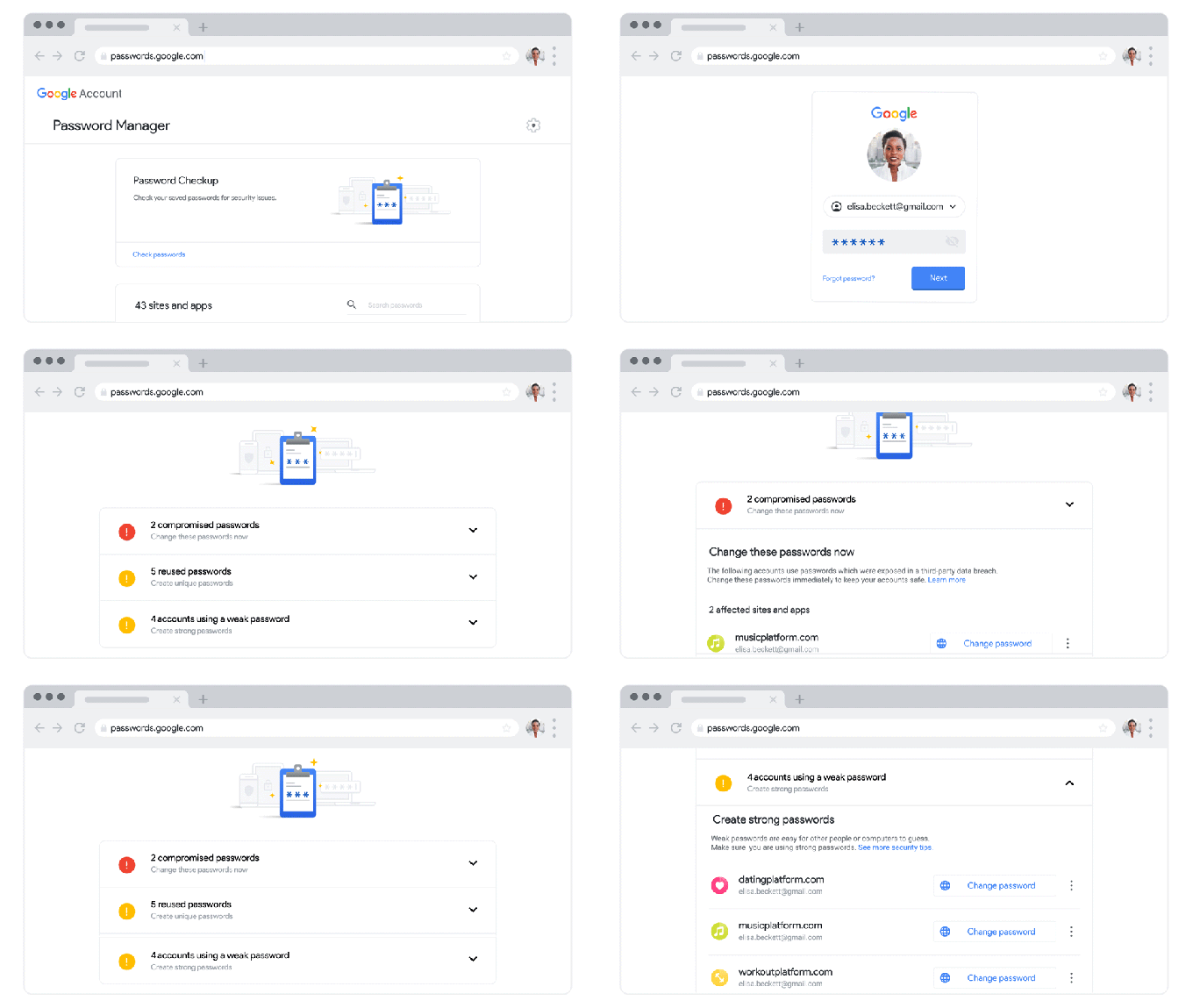
In another security-related improvement, Google also said it would introduce a new feature called Password Checkup to its password manager that will tell you if any of your passwords are weak, whether you’ve reused them across multiple sites, or if Google has discovered they’ve been compromised.

PWCheckup Gif 1

This is a standard feature for most third-party password management apps, so it makes sense for Google to now incorporate it, as well.

Currently, this is available at passwords.google.com, but is being added to Chrome later this year.