Year: 2019

02 Oct 2019

These are the top Y Combinator companies of all time, based on valuation


In October of 2018, Y Combinator published a mega list of the top 101 companies to have gone through the accelerator, as sorted by each company’s valuation.

This morning they updated the list.

Valuation as a ranking metric has its faults, of course. It’s a measurement largely of perception; a projection of a company’s perceived potential, rather than a direct indication of how much a company is actually making at a given moment. When publishing last year’s list, YC openly admitted that “valuation is a poor way to measure a company’s value in the short term.”

But it still provides some rather interesting insights into which of YC’s 2,000+ investments have grown the most, which have held strong over time, and which sectors perform the best. YC says that all of the companies that made this year’s list are each currently valued at $150M or more, with a cumulative valuation of $155 billion.

The new “Top 101”, according to YC:

  1. Stripe
  2. Airbnb
  3. Cruise
  4. DoorDash
  5. Coinbase
  6. Instacart
  7. Dropbox
  8. Ginkgo Bioworks
  9. Gusto
  10.   Flexport
  11.   Rappi
  12.   Brex
  13.   Reddit
  14.   Gitlab
  15.   PagerDuty
  16.   Checkr
  17.   Segment
  18.   Docker
  19.   Scale
  20.   Faire
  21.   Twitch
  22.   PlanGrid
  23.   MixPanel
  24.   Amplitude
  25.   Optimizely
  26.   Boom Supersonic
  27.   Grin
  28.   Meesho
  29.   Algolia
  30.   GOAT
  31.   Zapier
  32.   MessageBird
  33.   Standard Cognition
  34.   Memebox
  35.   Embark
  36.   Helion Energy
  37.   EquipmentShare
  38.   SendBird
  39.   Rescale
  40.   GoCardless
  41.   Rigetti Computing
  42.   Razorpay
  43.   North
  44.   Relativity Space
  45.   Podium
  46.   Benchling
  47.   Ironclad
  48.   Newfront
  49.   InfluxData
  50.   Webflow
  51.   People.ai
  52.   Weebly
  53.   Xendit
  54.   Matterport
  55.   EasyPost
  56.   Sift
  57.   The Athletic
  58.   Mattermost
  59.   WePay
  60.   Vidyard
  61.   Weave
  62.   Nurx
  63.   Proxy
  64.   Heap
  65.   Payfazz
  66.   memsql
  67.   Fivetran
  68.   Rippling
  69.   Clever
  70.   Heroku
  71.   Fivestars
  72.   CoreOS
  73.   ClearTax
  74.   Quero Education
  75.   Ridecell
  76.   HelloSign
  77.   GrubMarket
  78.   Lattice
  79.   Unbabel
  80.   Athelas Inc.
  81.   Oh My Green
  82.   Lever
  83.   Atrium
  84.   Zeus
  85.   Front
  86.   Le Tote
  87.   ShipBob
  88.   Snapdocs
  89.   GitPrime
  90.   Scribd
  91.   Guesty
  92.   Axoni
  93.   Lob
  94.   Notable
  95.   Atomwise
  96.   Flutterwave
  97.   Panorama Education
  98.   FutureAdvisor
  99.   SFOX
  100.     Lambda School
  101.     ZeroDown

While the top ten companies remain largely the same from 2018, a few of them have danced around a bit while others have disappeared entirely. Airbnb was #1 last year, while Stripe was #2; in 2019, they’ve swapped places. Machine Zone, creators of the once wildly popular mobile game Game of War and the number 7 company in 2018, doesn’t appear on the list at all — nor does last year’s number 9, Zenefits. YC notes that this list isn’t necessarily exhaustive, as they “allowed alumni to opt out of being listed for any reason.”

Most of the companies on the list are at least 4 or 5 years old, which makes sense — it’s pretty uncommon for companies to hit massive, record breaking valuations right out of the gate. There are, of course, exceptions: Grin, a Latin American scooter rental company that sits at number 27 on this years list, just went through YC in Summer of 2018. Atrium, the tech-driven startup law firm founded by Twitch co-founder Justin Kan, sits at number 83 and was part of the Winter 2018 class. ZeroDown, a company that aims to help people buy homes without a down payment, squeezed onto the list at number 101 after launching just months ago.

The Summer 2016 batch, meanwhile, has more appearances on the list than any other group, with the one class alone accounting for 10% of the list. The oldest company on the list is Reddit, which was part of YC’s Summer 2005 class, at number 13.

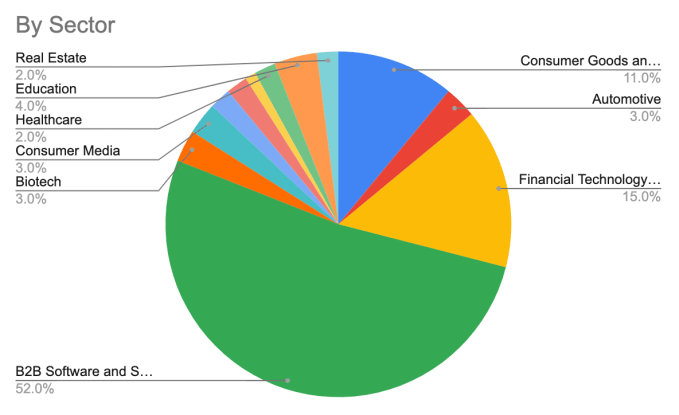
Sorted by sector, B2B Software/Services just absolutely dominates YC’s Top 101, accounting for 52% of the list. The next closest sector is FinTech at 15%, followed closely by consumer goods/services at 11%.

sector chart

The vast majority (71%) of the list calls the Bay Area home, with 63% of the Top 101 companies hosting their headquarters in San Francisco. Four companies on the list, meanwhile, call no one physical place home — GitLab, Zapier, Mattermost, and SFOX all consider themselves primarily remote.

Want to poke around the list some more? You can find YC’s full list here.

02 Oct 2019

Duet adds Android tablet support for its second screen app

Sidecar is great. It’s my favorite software thing Apple has introduced in years. I’m using it right now, as I type this, in fact. For a handle of app developers, however, the feature’s arrival with macOS Catalina was an expected, but still potentially devastating piece of news. We spoke to Duet Display and Astropad about the phenomenon of “Sherlock” that would profoundly impact their respective models. 

“We actually have a couple of other big product launches that are not connected to the space this summer,” Duet Founder and CEO Rahul Dewan said at the time. “We should be fairly diverse.” It seems Android tablet compatibility was pretty high on that list. Today the company announced a release for Google’s operating system, after several months of beta testing.

“Our users have frequently asked us to bring our product to Android, and since early this year, we have been working on an Android release of Duet so that we can expand our technology to new platforms,” Duet writes. “We have privately been beta testing with hundreds of users, working hard to create a robust product that performs well across as many Android devices as possible.”The app operates similarly to the iPad version, making it possible to use an Android tablet as a second display. That means, among other things, a much more affordable way to get a second screen for your laptop. The connection will work both wired and wireless. Current users will have to update the latest version of the Mac or Windows desktop version of the app.

It’s tough not to feel bad for a small developer effectively getting sidelined by native support (and really solid implementation in the case of Sidecar), but it’s nice to see Duet continuing to fight.

02 Oct 2019

Facetune maker Lightricks expands with a trio of apps for small businesses

Fresh of its recent raise of $135 million, Lightricks, the maker of popular selfie editor Facetune and several other top consumer-focused photo editing applications, is branching out. The company this morning announced the launch of a suite of new mobile apps aimed at small businesses that want professional content creation tools to help them with their social media marketing campaigns.

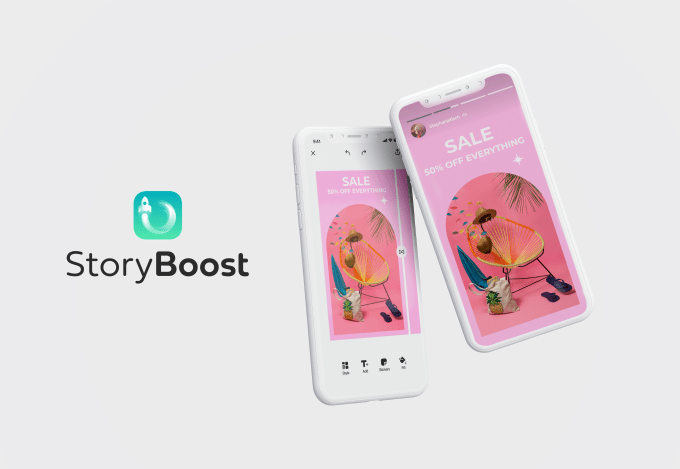
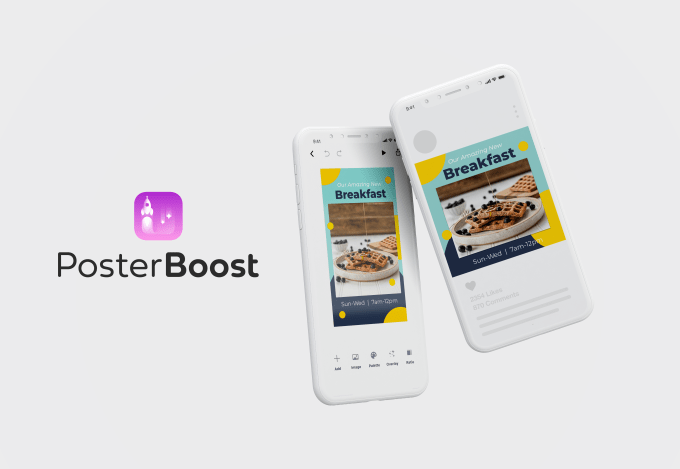
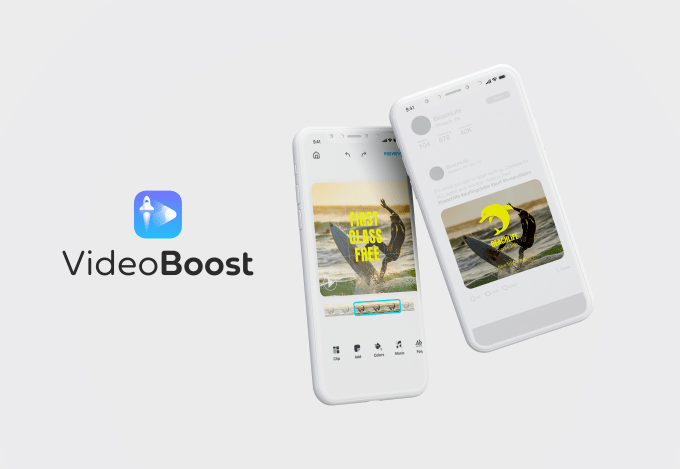
Together, the new suite of apps is known as “BoostApps,” and includes StoryBoost for creating unique stories for Instagram; VideoBoost for making videos using your own clips, stock footage or both; and PosterBoost, which lets you turn photos into engaging posts for your business.

Screens StoryBoost

The move to serve the needs of small businesses was directed by how Lightricks saw its users taking advantage of its existing products, like Enlight Videoleap and Enlight Photofox, the company says.

When Lightricks surveyed its Videoleap subscriber base, for example, it found that roughly 30% were already using the app for business purposes.

“We understood then, that our next product had to be a tool specifically for businesses. Businesses are results-driven, and that’s the basis of the BoostApps — empowering and enabling businesses to create social media marketing materials that are not only beautiful, but also effective,” says Zeev Farbman, Lightricks Co-Founder and CEO.

Like its consumer line of apps, the BoostApps are designed to be easy to use — even if you’re not a photo-editing professional or have a social media marketing background.

Instead, they’re for people who consider themselves a small business owner, Farbman says. That could be a yoga teacher, startup entrepreneur, influencer, or anyone else.

Screens PosterBoost

“The common denominator is that they started their business because they were passionate about something, and then needed to become full-fledged marketers in addition to building their businesses,” he explains. “They know that social media can get them to their marketing goals, but they don’t know how to get results without investing too much time and money.”

Like the rest of the Lightricks line, the apps are subscription-based. StoryBoost and PosterBoost are $7.99 per month, and VideoBoost is $9.99 per month. There are also annual discounts ($44.99 or $59.99, respectively) and the option for a lifetime purchase ($99.99 or $119.99). And you can subscribe to all three in a bundle for $95.99 per year. 

Also like other Lightricks apps, the new BoostApps rely heavily on the company’s technology investments and A.I. Lightricks has a dedicated team whose job it is to figure out ways to integrate their most advanced and innovative research into their apps.

For example, it created a camera motion effect that can be used on every image, using A.I. technology to build a depth map that turns the images into engaging posters, says Farbman. They also created a video engine capable of producing a range of composition effects. And the results render in real-time on the device, to make the editing process feel fast.

Screens VideoBoost

While there are plenty of other companies offering creative tools for marketers, Lightricks brings its own knowledge of digital marketing to the table — something it credits with its own success, in fact.

The launch of the SMB-focused suite doesn’t mean Lightricks is pivoting to pro tools, however, Farbman clarified. It’s more of an expansion.

Case in point: the company today is also partnering with subscription beauty service BoxyCharm on a collaboration with Facetune2, which will allow users to virtually “try on” products in the October box using AR filters.

That said, Lightricks does plan to further expand BoostApps further down the road with more tools that will integrate scheduling, smart algorithms, and post optimization features.

The Jerusalem-headquartered company, which recently achieved unicorn status, is growing quickly. It now has over 300 employees, and expects to reach at least 500 by 2020. And despite the sizable funding round, Lightricks says it tries to stay profitable or as close to profitable as possible, even when launching new products.

Combined, its suite of apps has seen nearly 200 million downloads and has 3 million paying subscribers.

To date, Lightricks has raised $205 million.

BoostApps will be available today on iOS devices. (iOS 11 or higher).


02 Oct 2019

Rune raises $2M to help you find new friends in mobile games, starting with Brawl Stars

Multiplayer games are more fun when you get to play with the same crew regularly. Playing with the same people means better cooperation, deeper strategies, and, if all goes well, more wins.

But what if none of your friends play the game you want to play?

Rune, a company out of Y Combinator’s Winter 2019 class, wants to use AI to help you find the right people to play with, connecting you via voice chat. And they’ve just closed a $2M seed round to get it done.

The round was led by the gaming-focused firm Makers Fund, and backed by byFounders, E14 Fund, VentureSouq, and Gmail creator Paul Buchheit.

The first game they’re supporting is Brawl Stars, the popular free-to-play mobile game built by Clash of Clans creator Supercell. It’s a pretty perfect game for something like this — it’s a game where strategic teams have a solid advantage, but where building such a team from scratch can be tough. Brawl Stars will automatically match you with teammates if you’re playing alone, but in-game communication is limited and random players tend to only hang around for a game or two.

brawl stars

Supercell’s Brawl Stars

When you first sign up, Rune asks you a handful of questions to start tuning their matchmaking algorithm. Which language(s) do you speak? How much Brawl Stars have you played (how many “trophies” have you earned?) What sort of gameplay are you looking for right now — are you just messing around, or are you looking for nothing but wins? Push a button, and the matchmaking system starts its search.

The more you play, the better the algorithm is tuned. If you seem to have longer play sessions with certain players, for example, it can prioritize matchmaking you with players their algorithms see as similar. (For the curious: while they will tune the matchmaking algorithms based on metadata like who you’re chatting with and for how long, Rune co-founder Sanjay Guruprasad tells me that they don’t store or analyze the actual voice communication in any way.)

The company says that players have collectively spent around 50,000 hours chatting through the app since launching in March of 2019.

Rune’s matchmaking and voice chat systems are currently limited to two players. Since Brawl Stars (and plenty of other Battle Royale/arena style games) have game modes that support up to three players per team, Sanjay tells me that 3-player matchmaking and voice chat are “both in the pipeline and will come out soon.”

Rune plans to support other games beyond Brawl Stars in the future — in fact, driving traffic to other games is part of their plans to monetize the free app. Once you’ve befriended someone, you’re free to use Rune for voice chat with whatever game you want; it just runs in the background, so what you’re playing doesn’t matter too much.

Rune is available for free on iOS here, and on Android here.

02 Oct 2019

Twitter and TweetDeck are experiencing partial outages

It’s not just you, Twitter has gone wobbly again. Users of the social network in Asia and Europe are reporting a range of problems tweeting and viewing certain types of content this morning.

Among the problems being reported are not being able to post certain types of content to the site (such as polls and media), though at least some users are still able to post text tweets saying they’re having problems.

Other users aren’t seeing latest replies to their tweets. In my case I’m unable to view latest replies on Twitter’s desktop product but can see them on an (older) version of Twitter’s iOS app.

Some Twitter users are also reporting problems posting to Android.

A Twitter spokeswoman confirmed to TechCrunch it’s having problems — pointing us to a tweet from @TwitterSupport where the company says it’s experiencing outages across both Twitter and its alternative client, TweekDeck.

The problem is also affecting being able to view DMs, per the tweet.

“We’re currently working on a fix, and should be back to normal soon,” Twitter adds, without providing detail about the cause of the issues.

The flakey service comes a few months after a major outage for Twitter.

Back in July Twitter’s service went down for a full hour. In that case an “internal configuration change” caused the issue — which Twitter subsequently rolled back.

It also suffered problems with direct messages in the same month.

Coincidentally or not, the company rolled out a major redesign of its desktop product this summer.

Twitter’s new ‘Facebook-style’ look has not been universally popular, to put it politely. Whether the redesign is the root cause of the recent bout of service flakiness remains to be seen.

Twitter’s status page sheds zero light on the matter — currently reporting that “all systems are operational” when that’s patently not the case.

We’ll update this report with any further details on the problems from Twitter.

02 Oct 2019

Impala builds a single API for the entire hotel industry

Meet Impala, a London-based startup that wants to make it easier to interact with hotel data. The startup is building a layer on top of legacy hotel systems to standardize everything with a modern REST API.

And Impala has just raised an $11 million Series A funding round from Stride.VC, Xavier Niel/Kima Ventures, Jerry Murdock, the partners of DST Global and existing investors. The company had previously raised a $1.75 million seed round.

Essentially, Impala wants to be as simple as Stripe, Twilio or Plaid. With a few lines of code, any developer should be able to get started with Impala before diving deeper.

If you’re not familiar with the tech stack of the hotel industry, hotels use Property Management Systems to manage rooms, room types, pricing, extras, taxes, etc.

“One of the reasons it's necessary is that hotels never replace that underlying system (ever) and so there's no incentive for those old systems to build open APIs (even if they could),” co-founder and CEO Ben Stephenson told me.

Developers working on products in the hotel industry currently have to build a ton of integrations to connect to all the different hotel systems. Impala wants to do the same work once and for all, and standardize the API for anyone building services on top of hotel systems.

In other words, if you want to know how many standard rooms are left in different hotels, you can query those hotels using the same API call. It becomes much easier to manage one or multiple hotels, and build apps, websites and internal services that interact with a hotel system.

With today’s funding round, the company wants to build more integrations with hotel systems. It currently supports 8 different systems, but universal support will be key when it comes to making Impala the universal language of the hotel industry.

Impala is also working on a direct booking API. Right now, many hotels manually upload booking data to Booking Holdings websites (Booking.com, Priceline, Agoda, Kayak…) and Expedia Group websites (Expedia, Hotels.com, HomeAway, Trivago…), or use a channel manager.

Those channel managers act as middlepersons that send information to multiple websites at once. “The problem with this is that if you and I wanted to start a new online seller tomorrow, we would have to connect to all of the different channel managers,” Stephenson said.

A direct booking API would lower the barrier to entry for Expedia and Booking competitors. It would also open up possibilities for new types of players who don’t necessarily sell hotel rooms today. You could imagine being able to book a room directly from a city guide website, a conference website or a music festival app.

It wouldn’t be a Booking.com embed, it would leverage Impala’s direct booking API to book directly with the hotel, which would lead to reduced commissions.

02 Oct 2019

India’s NoBroker raises $50M to help people buy and rent without real estate brokers

An Indian startup that is attempting to improve the way how people in the nation rent or buy an apartment by not paying any brokerage just raised a significant amount of capital to further expand its business.

NoBroker said on Wednesday it has raised $50 million in a new financing round. The Series D round for the Bangalore-based real estate property operator was led by Tiger Global Management and included participation from existing investors General Atlantic. The five-year-old startup, which closed its previous financing round in June, has raised $121 million to date. The new round valued NoBroker at about $300 million, a person familiar with the matter told TechCrunch.

NoBroker operates in Bengaluru, Chennai, Gurgaon, Mumbai, Hyderabad and Pune cities in India. The startup has established itself as one of the largest players in the real estate business. It operates over 2.5 million properties on its website and is adding more than 280,000 new users each month, Amit Kumar, cofounder and CEO of NoBroker, told TechCrunch in an interview.

Real estate brokers in India, as is true in other markets, help people find properties. But they can charge up to 10 months worth of rent (leasing) — or a single-digit percent of the apartment’s worth if someone is buying the property — in urban cities as their commission. NoBroker allows the owner of a property to directly connect with potential tenants to remove brokerage charges from the equation.

The startup makes money in three ways. First, it lets non-paying users get in touch with only nine property owners. Those who wish to contact more property owners are required to pay a fee. Second, property owners can opt to pay NoBroker to have its representatives deal with prospective buyers — in a move that ironically makes the startup serve as a broker.

NoBroker also offers end-to-end services such as rent agreements and movers and packers, for which it also charges a fee. The startup says it uses machine learning to speed up the transactions and make it service low-cost.

The startup processes about $14 million in rent each month, Kumar said. This is increasing by 25%-30% each month, he said. It recently launched a community app to keep a digital log of all the entries — say a Flipkart delivery personnel comes to your house — occurring in a society, maintain a dialogue with other people in their vicinity, and exchange goods.

The new financing round is oddly smaller than $51 million NoBroker had raised in June this year. Saurabh Garg, chief business officer of NoBroker, told TechCrunch in an interview that the founding team did not want to dilute their stake in the startup, hence they opted for a smaller round.

NoBroker is competing with a number of players including heavily backed NestAway, which counts Goldman Sachs and Tiger Global among its investors. NestAway operates in eight cities and has raised north of $100 million to date. Budget hotel startup Oyo, which has already become one of the largest hotel businesses in the world, also operates in NoBroker’s territory with Oyo Living.

But NoBroker’s Kumar said he does not see Oyo and other startups as competition. Instead, “these other players are some of its largest clients,” he said. India’s real estate industry is estimated to grow to $1 trillion in worth by 2030.

01 Oct 2019

Zuckerberg misunderstands the huge threat of TikTok

“It’s almost like the Explore Tab that we have on Instagram” said Facebook CEO Mark Zuckerberg in leaked audio of him describing TikTok during an all-hands meeting. But it’s not. TikTok represents a new form of social entertainment that’s vastly different from the lifelogging of Instagram where you can just take a selfie, show something pretty, or pan around what you’re up to. TikToks are premeditated, storyboarded, and vastly different than the haphazard Stories on Insta.

That’s why Zuckerberg’s comments cast a dark shadow over the future of the Facebook family of apps. How can it beat what it doesn’t understand? He certainly can’t ignore it. Facebook’s copycat Lasso has been installed just 425,000 times since it launched in November, while TikTok has 640 million installs in the same period outside of China. Oh, and TikTok has 1.4 billion total installs beyond China to date.
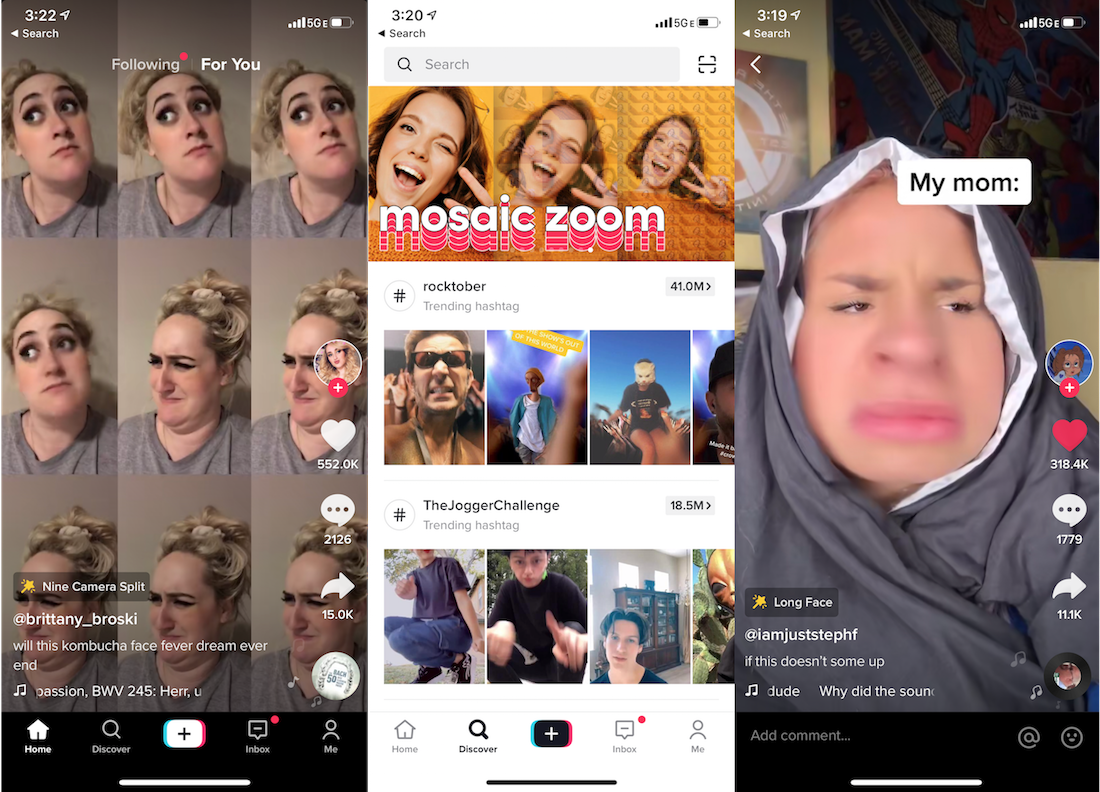
TikTok Screenshots

TikTok

Casey Newton of The Verge today published two hours of audio and transcripts from two internal-only all-hands Q&As held by Zuckerberg at Facebook in July. His comments touch on the company’s plan to fight being broken up by regulators, especially if Elizabeth Warren becomes President. He thinks Facebook would win, but on resorting to suing the government, he says “does that still suck for us? Yeah.” Zuckerberg also describes how Facebook is working to launch a payments product in Mexico and elsewhere by year’s end as Libra deals with regulatory scrutiny.

But beyond his comments on regulation, it’s his pigeonholing of TikTok that’s most alarming. It foreshadows Facebook failing to win one of the core social feeds that its business depends on. Perhaps his perspective on the competitor is evolving, but the leak portrays him as thinking TikTok is just the next Snapchat Stories to destroy.

Zuckeberg’s Thoughts On TikTok

Here’s what Zuckerberg said about TikTok during the internal Q&A sessions, (emphasis mine):

So yeah. I mean, TikTok is doing well. One of the things that’s especially notable about TikTok is, for a while, the internet landscape was kind of a bunch of internet companies that were primarily American companies. And then there was this parallel universe of Chinese companies that pretty much only were offering their services in China. And we had Tencent who was trying to spread some of their services into Southeast Asia. Alibaba has spread a bunch of their payment services to Southeast Asia. Broadly, in terms of global expansion, that had been pretty limited, and TikTok, which is built by this company Beijing ByteDance, is really the first consumer internet product built by one of the Chinese tech giants that is doing quite well around the world. It’s starting to do well in the US, especially with young folks. It’s growing really quickly in India. I think it’s past Instagram now in India in terms of scale. So yeah, it’s a very interesting phenomenon.

And the way that we kind of think about it is: it’s married short-form, immersive video with browse. So it’s almost like the Explore Tab that we have on Instagram, which is today primarily about feed posts and highlighting different feed posts. I kind of think about TikTok as if it were Explore for stories, and that were the whole app. And then you had creators who were specifically working on making that stuff. So we have a number of approaches that we’re going to take towards this, and we have a product called Lasso that’s a standalone app that we’re working on, trying to get product-market fit in countries like Mexico, is I think one of the first initial ones. We’re trying to first see if we can get it to work in countries where TikTok is not already big before we go and compete with TikTok in countries where they are big.

We’re taking a number of approaches with Instagram, including making it so that Explore is more focused on stories, which is increasingly becoming the primary way that people consume content on Instagram, as well as a couple of other things there. But yeah, I think that it’s not only one of the more interesting new phenomena and products that are growing. But in terms of the geopolitical implications of what they’re doing, I think it is quite interesting. I think we have time to learn and understand and get ahead of the trend. It is growing, but they’re spending a huge amount of money promoting it. What we’ve found is that their retention is actually not that strong after they stop advertising. So the space is still fairly nascent, and there’s time for us to kind of figure out what we want to do here. But I think this is a real thing. It’s good.

To Zuckerberg’s credit, he’s not dismissing the threat. He knows TikTok is popular. He knows it’s growing in key international markets Facebook and Instagram depend on to keep user counts rising. And he knows his company needs to respond via its standalone clone Lasso and more.
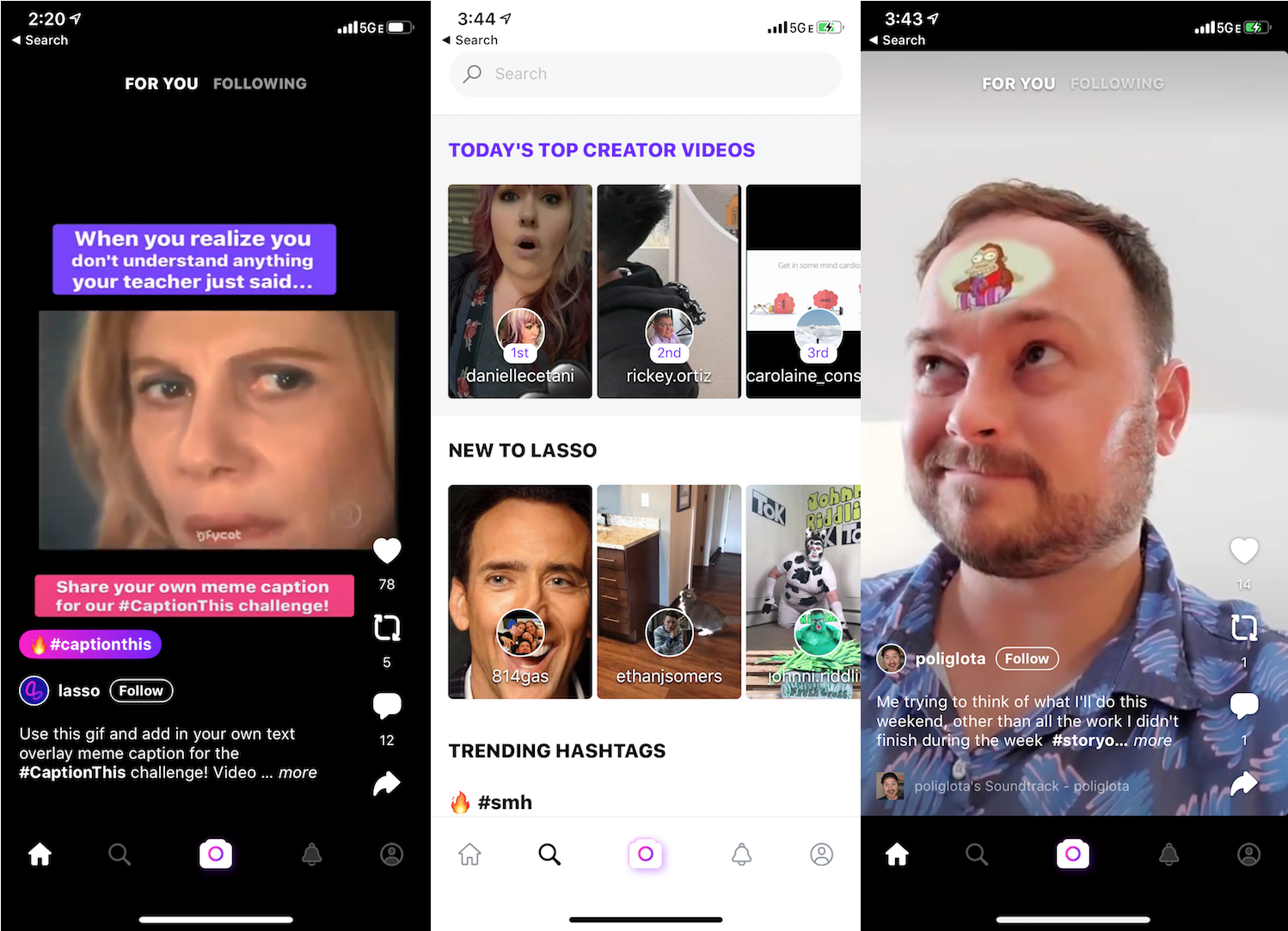
Facebook Lasso Screenshots

Lasso

But while TikToks might look like Stories because they’re vertical videos, and TikTok might algorithmically recommend them to people like Instagram Explore, it’s a whole ‘nother beast of a product and one that may be harder than it seems to copy.

To crystallize why, let’s rewind to Snapchat. With the launch of Stories, it started to blow up with US teens. Facebook’s attempts to clone it in standalone apps like Poke and Slingshot never gained traction. In fact, none of Facebook’s standalone apps have succeeded unless they splintered off an already-popular piece of Facebook like chat and users were forced to download them like Messenger. It wasn’t until Zuckerberg stuck his clone of Stories front-and-center atop Instagram and Facebook that Snapchat’s user count went from growing 18% per quarter to shrinking. There, Facebook used the same strategy laid out in Zuckerberg’s comments — push its good-enough clone in countries where the original isn’t popular yet.

But Facebook was fortunate because Stories really wasn’t that dissimilar to the content users were already sharing on Instagram — tiny biographical snippets of their lives. Snapchat CEO Evan Spiegel had originally invented Stories as a vision of Facebook’s News Feed through the lens of an ephemeral camera. All users had to know was “I take the same videos, but shorter and sillier, posted more often, and then they disappear”. The concept of Instagram and Facebook didn’t have to change. They were still about telling friends what you were up to. Choking off TikTok’s growth will be much more complicated.

Why TikTok Is Tough To Clone

TikTok isn’t about you or what you’re doing. It’s about entertaining your audience. It’s not spontaneous chronicling of your real life. It’s about inventing characters, dressing up as someone else, and acting out jokes. It’s not about privacy and friends, but strutting on the world stage. And it’s not about originality — the heart of Instagram. TikTok is about remixing culture — taking the audio from someone else’s clip and reimagining the gag in a new context by layering it atop a video you record.
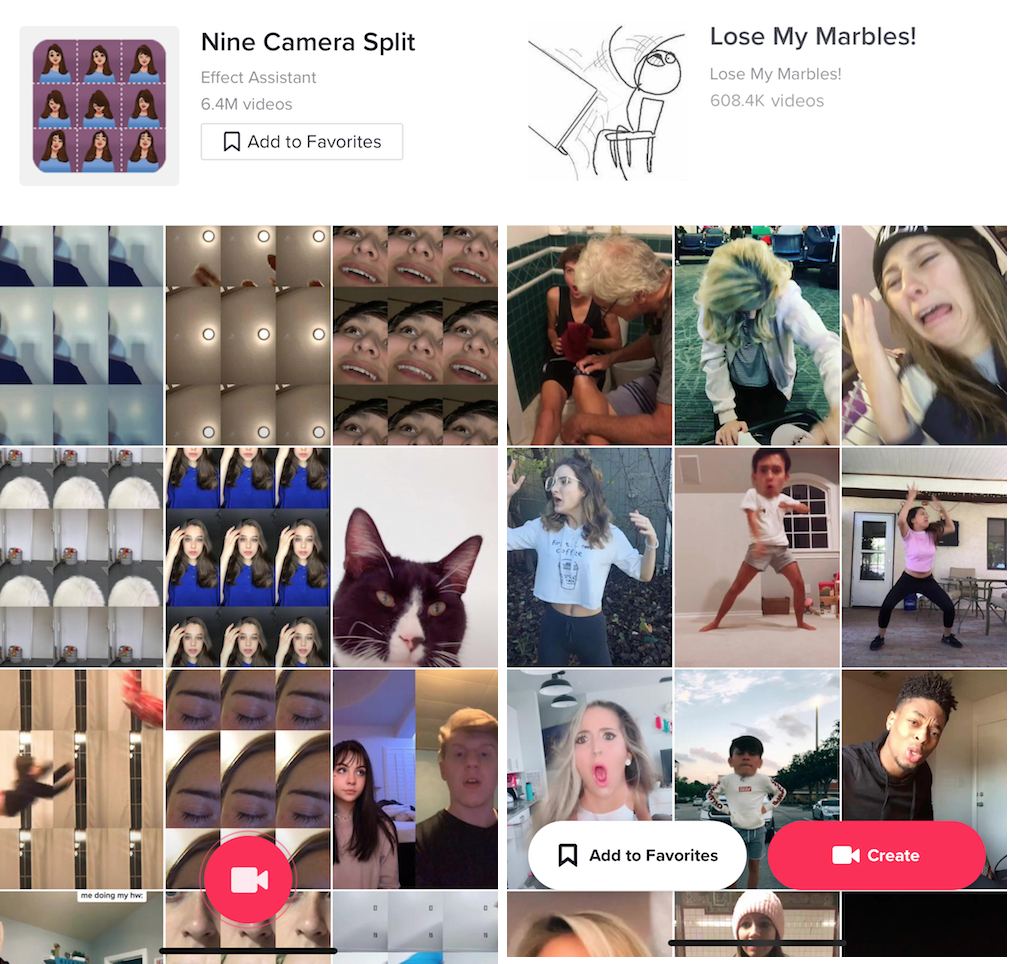
TikTok Remixes

That makes TikTok distinct enough that it will be very difficult to shoehorn into Instagram or Facebook, even if they add the remixing functionality. Most videos on those apps aren’t designed to be templates for memes like TikToks are. Insta and Facebook’s social graphs are rooted in friendship and augmented by the beautiful and famous, but don’t encompass the new wave of amateur performers TikTok elevates. And since each post to the app becomes fodder for someone else’s creativity, a competitor starting from scratch doesn’t offer much to remix.

That means a TikTok clone would have to be somewhat buried in Instagram or Facebook, rebuild a new social graph, and retrain users’ understanding of these apps’ purpose…at the risk of distracting from their core use cases. This leaves Facebook hoping to grow its standalone TikTok clone Lasso which TechCrunch scooped a year ago before it launched last November. But as we’ve seen, Facebook struggles growing brand new apps, and that effort is further hindered by its increasingly toxic brand and sheen of uncoolness. Nor does it help that Facebook must divert development resources to comply with all the new privacy and transparency obligations as part of its $5 billion FTC fine and settlement.

The Next Feed

Facebook’s best bet is to assess the future value of the ads it could run on a successful TikTok clone and apply some greater fraction of that grand sum to competing directly. It’s already made some smart additions to Lasso like tutorials for how to remix and the option to add GIFs as sections of your video. But it’s still failing to gain serious traction in the US. While typical TikTok homepage videos have hundreds of thousands of Likes, the top ones I saw in my Lasso feed today received 70 or fewer.

I had Sensor Tower run some analysis comparing TikTok with Lasso since its launch last November, and found that Lasso gets 6 downloads for every 1000 for TikTok in the US. Some more stats:

  • US Total Downloads Since November: Lasso – 250,000 // TikTok – 41.3 million
  • US Downloads Per Day Since November: Lasso – 760 // TikTok – 126,000
  • Average US Google Play Social App Chart Ranking: Lasso – #155 // TikTok – #2

Beyond the US, Lasso has only launched in one other market, Mexico in April, where it’s been faring better but could hardly even be considered a competitor to TikTok. They won’t even coherently fit together on a graph. Facebook needs to lean harder into Lasso:

  • Mexico Total Downloads Since April: Lasso – 175,000 // TikTok – 3.3 million
  • Mexico Downloads Per Day Since November: Lasso – 1,000 // TikTok – 19,000
Facebook Lasso Logo

Zuckerberg may need to find a coherent place for TikTok style features inside Instagram and potentially Facebook. That could be another horizontal row of previews like with Stories and/or a header on the Explore page dedicated to premeditated content. Certainly something more prominent than a single button like IGTV that still no one is asking for. One opportunity to best TikTok would be building a dedicated remix source browser into the Stories camera to help users find content to put their own spin on.

Facebook will also need to buy out top TikTok creators to make videos for it instead, and even quasi-hire some of the most prolific video meme or challenge inventors to give users trends to jump on rather than just one-off clips to watch. Its failure to offer IGTV stars monetization has led many to ignore that platform, and it can’t afford that again.

If Zuckerberg approaches TikTok as merely an algorithmic video recommender like Explore, Facebook will miss out on owning the social entertainment feed. If he doesn’t decisively move to challenge TikTok soon, its catalog of content to remix will grow insurmountable and it will own the whole concept of short form performative video. Snapchat’s insistence on ephemerality makes it incompatible with remixing, and YouTube isn’t nimble enough to reinvent itself.

If no American company can step up, we could see our interest data, faces, and attention forfeited to an app that while delightful to use, heralds Chinese political values at odds with our own.


01 Oct 2019

Startup aims to make filtered water an app-driven subscription service in the home

With so many scandals around the quality of tap water these days, especially in the US, many people are turning to bottled water to drink. But this requires single-use plastics that are wreaking havoc on the environment.

One startup in Europe, Mitte, thinks it has the answer: filtering water direct from the tap. It’s raised $10.6 million in a seed round. But it hasn’t started manufacturing yet. A new US-based startup thinks is has a competitive solution.

oollee provides people with an unlimited supply of filtered drinking water for a small monthly fee. It’s now raised $1 million in pre-seed funding from investors including Mission Gate Inc and Columbus Holdings.

The idea is that with ordinary filters, people forget to maintain them and the water quality deteriorates. With oollee, maintenance and cartridge replacements are included in the monthly fee. To subscribe costs $29 per month (so less than $1 a day).

oollee uses the Reverse Osmosis method, where water is forced across a semipermeable membrane, leaving contaminants behind, which are then flushed down the drain. The clean drinking water collects in a holding tank. Usually, the installation and maintenance of an RO filter is costly and is too cumbersome for a house.

Umit Khiarollaev, CEO and co-founder of oollee says: “The small device connects to Wi-Fi and allows customers to monitor the water. The app reminds users to replace the filter element and lets them order new filters with a single click. Users can also check water condition, volume, temperature, and other factors.” Users can also check water condition, volume, temperature, and other factors. The oollee water purifier filters water in four stages, re-introducing essential minerals in the final stage.

Competitors are all major bottled water or smart filters manufacturers plus delivery services like Nestle or Alhambra and the tech giant Xiaomi in China with water filters.

01 Oct 2019

Drivy rebrands to Getaround six months after acquisition

European peer-to-peer car rental service Drivy has a new name. It is now called Getaround, which shouldn’t surprise anyone who has been following Drivy’s recent news. Back in April, Getaround announced the acquisition of Drivy for $300 million to expand to Europe. And Drivy is now 100% part of Getaround as the company is unifying its brand across the globe.

While Getaround now operates under a single brand again, there are still two mobile apps — Drivy is called Getaround EU for now. Drivy CEO Paulin Dementhon is now the CEO of Europe for Getaround.

In addition to the new name, Getaround now offers hourly car rentals in Europe just like in the U.S. And that’s about all there’s to know.

Overall, there are 5 million Getaround users and 20,000 cars around the world. The company operates in 300 cities across 8 countries.

While Drivy started as a sort of Airbnb for cars, the company has slowly evolved to focus less on cars owned by regular car owners. The startup introduced a device that lets you lock and unlock the car using a smartphone. It then started partnering with small companies that own tiny fleets of connected cars that they want to list on the platform.