Year: 2019

24 Sep 2019

As e-cigarettes come under fire, Hava Health readies a vape pen to help people quit smoking

In a small corner on the second floor of a roughshod maker space in Philadelphia, the founders of Hava Health are plotting the launch of what they call the first vaporizer designed for smoking cessation.

Robots roam the open floors of the offices at NextFab, where Josh Israel and Devin Serago, two serial entrepreneurs and college friends, work on nailing down the technical aspects of vape that would systematically reduce nicotine concentrations over time to ween smokers and vapers alike off of nicotine.

We’re not revolutionizing a completely new product,” says Israel. “The understanding of vaporizer has been around for 10 years plus… patented a new design to let people do what we set out to do which is to actually help people quit smoking.”

Israel and Serago have already raised a small seed round from some big names in the venture capital investment community, including Global Founders Capital, Make in LA, Backstage Capital, Quake Capital, Ben Franklin Technology Partners and NextFab. 

Indeed, it was the ability to work in the NextFab maker space on an industrial block in Philadelphia next to a plumbing supplier that allowed the two men to rapidly prototype their product.

Unlike other electronic cigarettes that are currently on the market, Hava Health and its Hale vaporizer are in the process of applying for approval from the U.S. Food and Drug Administration to be classified as a smoking cessation treatment. The company founders see their competitors not in vaporizer vendors like Juul Labs, but in the patches and gums on offer from brands like Nicorette and NicoDerm.

Device App

We’re not another vape device or another e-cigarette,” says Israel. “Our mission is to actually help people quit their addiction to nicotine.”

The timing for Hava couldn’t be better. Over the summer, regulators appeared to have woken up to the dramatic rise in e-cigarette usage among teens after years of declining cigarette usage. Earlier this month, the Trump administration proposed a ban on flavored e-cigarette products, while the marketing tactics of vaporizer companies came under more intense scrutiny.

Juul Labs, makers of the most widely used electronic cigarette on the market, has borne the brunt of the criticism from health professionals.

Meanwhile, a mysterious lung illness affecting some users of primarily marijuana-based vaporizer products spurred the Food and Drug Administration into action to tighten controls on the distribution, sale and approval of new products.

Israel says that products on the market currently are addiction “alternatives,” giving users a healthier way to use nicotine.

By contrast, Hava Health is pitching a smoking cessation tool. “We have a patented design,” says Israel. “What we do is we separate nicotine from the other compounds. We reduce the nicotine as we leave the other oils the same. Over time we reduce the nicotine and increase the clean oils and we get them to zero percent.”

The dual-chambered cartridge for controlling nicotine levels and the other oils used in vaporization was the technology that received Hava’s first patent. Now the company is making it through the FDA’s clinical trials process with the goal of getting its vaporizers on store shelves by 2024.

Israel and Serago took a circuitous route to become medical device entrepreneurs. Their previous endeavor was a company called ThrillGroup, a group dating app that was acquired by Shabi.com.

After their experience building that company, first in the U.S. and then in India, the two entrepreneurs returned to the states and cast about for their next opportunity.

“We started this because his grandmother died from lung cancer and his little brother expressed frustration that he couldn’t quit using the vaporizers and was smoking more than he would have if he had used a regular cigarette,” says Israel. 
24 Sep 2019

Extra Crunch community perk from Brex now includes airline points transfer with JetBlue

The community perks for Extra Crunch members just got better with an upgrade to our offer from Brex. Earlier this month we announced that annual Extra Crunch members can get 100,000 Brex Rewards points after signing up for a Brex corporate credit card. Now the offer includes an airline miles transfer program headlined by JetBlue TrueBlue and including six other airline partners: Aeromexico Club Premier, Air France/KLM Flying Blue, Avianca LifeMiles, Cathay Pacific Asia Miles, Qantas Frequent Flyer Program and Singapore KrisFlyer. The miles transfer ratio from Brex Rewards points to JetBlue TrueBlue points is 1:1, and Brex is giving away up to five JetBlue round-trip flights for Brex customers who transfer the most Brex Rewards points to TrueBlue points between 9/24 and 10/24.

Brex gives startup teams higher credit limits than what they would get with any other business credit card option, and it does so without requiring a personal credit check or security deposit during the application. There are some impressive reward multipliers across categories like rideshare, travel and restaurants. It also comes with $50,000 worth of partner offers from AWS, Salesforce and many more.

Full benefits with the Brex for Startups credit card include:

  • 100,000 Brex Rewards points upon signup (equal to about $1,000)
  • 7x points on ridesharing app charges
  • 4x points on travel charges, including Airbnb
  • Miles transfer program to seven airlines (including JetBlue, Singapore Airlines, Qantas, Air France, Cathay, Avianca and Aeromexico) and their loyalty programs
  • 3x points on restaurant charges
  • 2x points on recurring software charges like Salesforce, Slack and GitHub
  • 1x points on all other charges
  • Discounts on the top services for startups, including Zendesk, Google Ads, SendGrid, AWS, WeWork and more
  • Automated receipt-capture and expense matching with the Brex mobile app, or via text and email
  • Built-in integrations with NetSuite, QuickBooks and Xero
  • And more

In order to qualify for the Brex credit card, companies need at least $100,000 in the bank and must meet Brex’s other qualification requirements. This offer is only available to annual Extra Crunch members in the United States. You can sign up for annual Extra Crunch membership here.

Extra Crunch membership offers how-tos and guides on company building, deep dives on successful startups, lists of verified experts in key services, no banner ads on TechCrunch.com, discounts on TechCrunch events and more. You can take a look at the types of articles we produce for Extra Crunch by heading here.

After signing up for an annual Extra Crunch membership, you’ll receive a welcome email with a link to the Brex offer. If you are currently a monthly Extra Crunch subscriber and want to upgrade to annual in order to claim this deal, head over to the “my account” section on TechCrunch.com and click the “upgrade” button.

Once you receive the link, you’ll have the opportunity to sign up for the credit card. As a reminder, companies must have at least $100K in the bank to qualify, be based in the U.S. and meet Brex’s other qualification requirements. 

To sweeten the deal, Brex is also offering anyone that signs up a chance to win one of five round-trip JetBlue flights to any JetBlue destination. Winners will have the option to bring a friend and will be able to book JetBlue Mint or JetBlue Economy tickets (as long as the value per ticket does not exceed $2,000). The contest starts today and runs through October 24. Winners are chosen based on the number of Brex Rewards points transferred to JetBlue TrueBlue points through the Brex dashboard during the contest period. Winners will be announced in November.

Sign up for an annual Extra Crunch membership today to claim this community perk. You can purchase an annual Extra Crunch membership here.

24 Sep 2019

Disrupt Berlin: Get advice on the latest growth tactics from Demand Curve

We’re going to try something new at Disrupt Berlin this year, based on the great response we’ve been getting to our startup how-to coverage. We’re going to put experts who work closely with startups on our Q&A stage, where you can talk to them in intimate workshops about key topics like growth, fundraising and recruiting.

To help kick off this experiment, we’ve asked growth marketing expert Asher King Abramson to lead a session where he’ll tear down your landing pages and Facebook/Instagram ads in front of a live audience. He’ll deconstruct how effective they are at (1) conveying what you do (2) and doing so enticingly — so that people click.

Get your Disrupt tickets here (you’ll also get a very large discount on an Extra Crunch subscription).

If you’re attending in Berlin and want to participate, you can submit your assets to ec_editors@techcrunch.com for him to consider.

If you’re not familiar, Abramson is the cofounder of Bell Curve, a growth marketing agency widely used by Y Combinator companies and others around Silicon Valley and the world, the cofounder of Demand Curve (YC s19), and a frequent industry speaker on growth (you can see some of his webinars here). We recently named Bell Curve to Verified Experts, our growing list of service providers who startups love to work with, based on founder recommendations. You may also be familiar with his cofounder, Julian Shapiro, a columnist here at TechCrunch who has covered topics for us including trends in paid channel ad prices, how well different sectors monetize and now a regular column featuring tips from across top growth marketers (like these tips from today on how to sponsor a Youtube influencer, the relative value of SEO link-building in 2019, etc).

This focus on growth is part of our larger orientation towards building great companies via coverage in our new Extra Crunch subscription product.

One additional note: if you’re heading to Disrupt SF instead, you’ll also be able to workshop with Abramson there.

24 Sep 2019

Spotify adds two personalized playlists focused on your repeat listens

Spotify is expanding its selection of personalized playlists with this morning’s launch of two new additions: On Repeat and Repeat Rewind. Both are focused on helping you revisit the songs you have kept replaying at various times.

The former, On Repeat, will deliver your current obsessions — that is, the tracks you’ve played the most over the past 30 days. This playlist will auto-update as you continue to listen to more music. However, the playlist is not genre-specific, so for those with broad musical tastes and interests, it could be a little disjointed.

Meanwhile, Repeat Rewind is a way to return to your most recently-loved songs from over a month ago. That means it’s not quite as current as On Repeat, but will help you revisit some of your all-time favorites.

Like On Repeat, the playlist isn’t limited by artists, mood or genre. And it will update every five days, Spotify says.

There won’t be any overlap in the two playlists, either, which will make them useful additions for any regular Spotify listeners.

The playlists join Spotify’s growing collection of personalized playlists, headlined by Discover Weekly. They’ll be available in the “Made for You” hub in the Spotify app, where you’ll find Discover Weekly, Release Radar, Your Summer Rewind, Your Daily Drive, and others. The playlists will also sit in the “Uniquely Yours” shelf on the app’s home section.

Spotify’s personalized playlists are one of its top-selling features and a reason why it’s difficult for users to jump ship to a Spotify competitor.

They also tend to inspire rivals’ own efforts in personalized music. Just a few days ago, for example, YouTube Music began rolling out a “Discover Mix” playlist, which is basically its own version of Discover Weekly. And a few years ago, Apple Music did much of the same with its launch of “My New Music Mix.”

The new playlists are live now across platforms.


24 Sep 2019

Microsoft urges Windows users to install emergency security patch

Microsoft has warned Windows users to install an “emergency” out-of-band security patch.

The software giant said in an advisory that a security flaw in some versions of Internet Explorer could allow an attacker to remotely run malicious code on an affected device. A user could be stealthily infected by visiting a malicious web page or by being tricked into clicking on a link in an email.

“An attacker who successfully exploited the vulnerability could take control of an affected system,” said Microsoft.

Microsoft said the vulnerability was under active exploitation, though details of the flaw had not been made public.

More than 7 percent of all browser users are running affected versions of Internet Explorer 9, 10 and 11, according to recent data. All supported versions of Windows are affected, including Windows 7, Windows 8.1 and Windows 10, as well as several Windows Server versions.

Most users can install the patches using Windows Update.

Microsoft also issued a fix for its in-built malware scanner Windows Defender, which if exploited could have triggered a denial-of-service condition resulting in the app failing to work.

The company said no action was required by users to remediate the bug in Windows Defender.

It’s rare but not unheard of for Microsoft to release emergency security patches outside of its typical monthly patching cycle. The company typically releases security fixes in the second week of each month on its so-called Patch Tuesday, but will also release fixes for significant vulnerabilities under active exploitation as soon as they are made available.

Homeland Security warned in its own advisory urging affected users to install the patches.

24 Sep 2019

Atlas the humanoid robot shows off a new and improved gymnastics routine

Boston Dynamics has been teaching its old bots new tricks – Atlas, its humanoid robot that walks on two legs, can now do a surprisingly elegant gymnastics routine, tumbling into a handstand, followed by cartwheels and including a jump twist. This level of athleticism (can a robot express ‘athleticism’?) is incredibly impressive, given that this is a 330 lb robot that could “barely walk” in 2013 when the prototype was first developed.

Atlas’ movement in this routine is at once incredibly human-like, and also something beyond human – especially when it turtles in preparation for its first somersault. This isn’t the first time that Atlas has displayed parkour skills, but Boston Dynamics says that it is using new techniques to make the process of programming these maneuvers much easier, by translating descriptions of the moved involved into motions that the robot can actually manage given its mobility limitations automatically using a newly developed optimization algorithm.

This allows them to create new routines much faster than was possible previously, and it’s able to complete the routine as intended around 80 percent of the time – pretty good odds, even for a human gymnast.

24 Sep 2019

Spotify’s app for artists gets a big revamp, adds real-time stats for any song

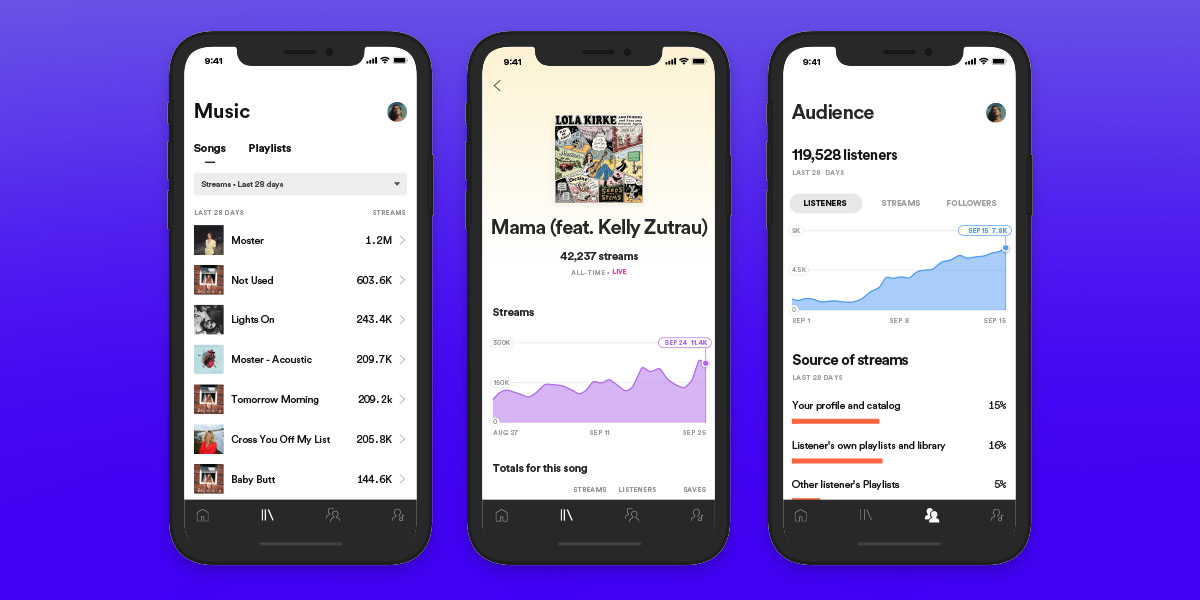
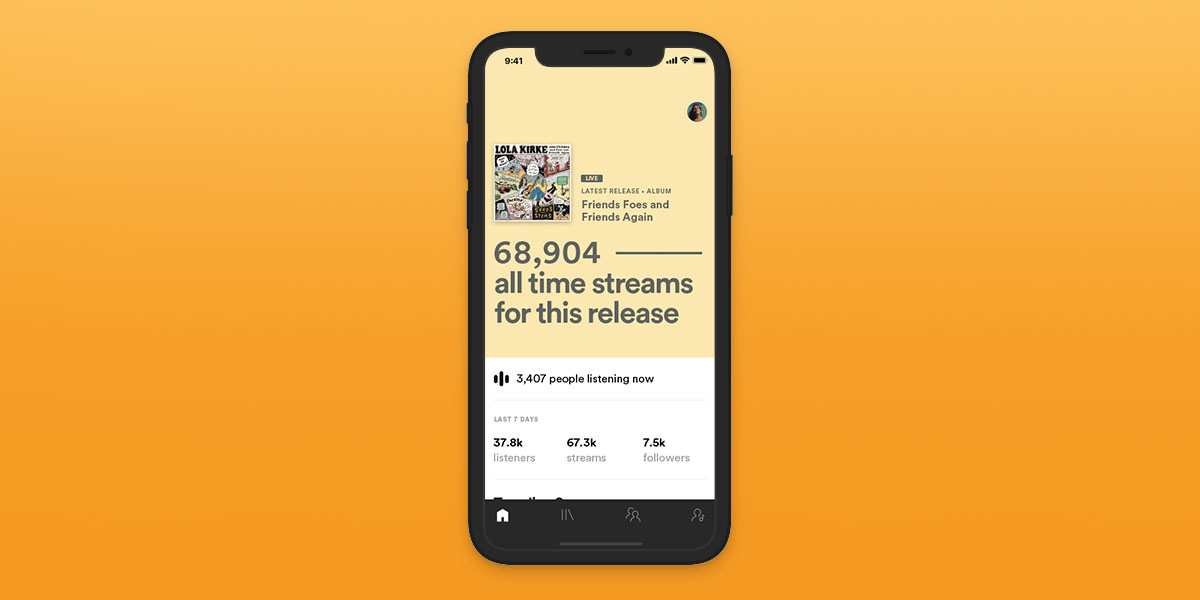
Spotify this morning is rolling out an updated version of its app for artists, across both iOS and Android. The new app includes a refreshed design, as well as new analytics like real-time stats on how many plays a song is currently getting around the world, most notably. Educational materials are also for the first time available through the app’s new Home tab.

Launched two years ago, the Spotify app already offers a way to see real-time listening stats for new releases for the first week they go live. Now it’s expanding its listening stats so artists can see how many people are playing any of their songs right now, and compare that with the song’s all-time streams.

It’s also now easier to track important milestones in the revamped app, Spotify says — like when a song gets added to a playlist or the artist gains new followers.

S4A 09092019 BlogImageMaster Home Tab

From the Home tab, Spotify will offer more recommendations on how to best use its tools and promote its Co.Lab events.

Here, artists will be able to read articles, watch videos and presentations, get advice from successful artists, learn about product updates, and more.

S4A 09092019 BlogImageMaster Homecard Tab

The audience analytics and music sections have also gotten a visual refresh, designed to make it easier to see the latest stats related to who’s listening, where, and what similar artists these fans like.

S4A 09092019 BlogImageMaster Library Tab

And in a much-needed addition, artists or their managers can now update the artist’s profile in the app, including the ability to pick a new profile photo, rewrite the bio, update playlists and the Artist’s Pick directly from the Artists page in the app.

For those who are managing multiple artists, it’s now easier to switch between profiles.

S4A 09092019 BlogImageMaster Artist Profile

The update to the Spotify for Artists app is one of the more significant to a arrive since the analytics dashboard moved to mobile back in 2017. And with the standout feature of real-time listening stats for any song at any time, the app is even more of a competitor to Apple’s artist dashboard, which just exited beta last month with the addition of Shazam data.

Spotify says the new app is rolling out this week across both iOS and Android.

24 Sep 2019

Paperspace adds machine learning model development pipeline to GPU service

Paperspace has always had a firm focus on data science teams building machine models, offering them access to GPUs in the cloud, but the company has had broader ambition beyond providing pure infrastructure, and today it announced a new set of tools to help these teams pass the model off to developers and operations in a smoother way.

Co-founder and CEO Dillon Erb says this an attempt to provide a full tool set for data scientists and developers, beyond providing pure GPU power to test and build the models. “Machine learning teams do a lot of GPU work — and as you know, we’ve been working with GPUs for a number of years now, and that’s one of our specialties. Now what we’re doing is taking a kind of agile methodology approach or CI/CD (continuous integration/continuous delivery) for machine learning, and using that to solve much larger scale [machine learning] problems,” Erb said.

As the company describes it, “The new release introduces GradientCI, the industry’s first comprehensive CI/CD engine for building, training and deploying deep learning models…” Erb says the goal is to provide a way to take the model built on top of Paperspace and put it to work in the company faster. Teams often lose time after the model is built because there is no good way to pass the model onto the DevOps team to use in applications.

“GradientCI lets you do things like set up staging development production environments, and provide a common interface between your data team and your DevOps team. This is about taking software development best practices, and applying that to this relatively new universe of training and deploying machine learning models,” Erb explained.

He says that up until now, there hasn’t been a way to do this, and this has led to the development team doing things like completely rewriting the model in Java or whatever their production environment is to make it work inside their applications. “It’s been a really clunky handoff, and where we do a really good job is adding things like version control and reproducibility and a common kind of syntax, so that the traditional DevOps guys can actually pick up and deploy the machine learning tool stacks without being a deep learning expert,” Erb explained.

Paperspace was founded in 2014, and was a member of the Y Combinator Winter 2015 class. Since then, it has raised $23 million from investors such as Battery Ventures, Intel Capital, SineWave Ventures, Sorenson Capital and Y Combinator, according to Crunchbase. It’s most recent financing was $13 million Series A last year.

24 Sep 2019

PagerDuty gets smarter with Intelligent Triage and Dashboards

PagerDuty, the service that helps everybody from startups to enterprises manage incidents when they inevitably arise, today announced the launch of two new features that both use the company’s machine learning smarts to help teams respond to issues faster and more efficiently.

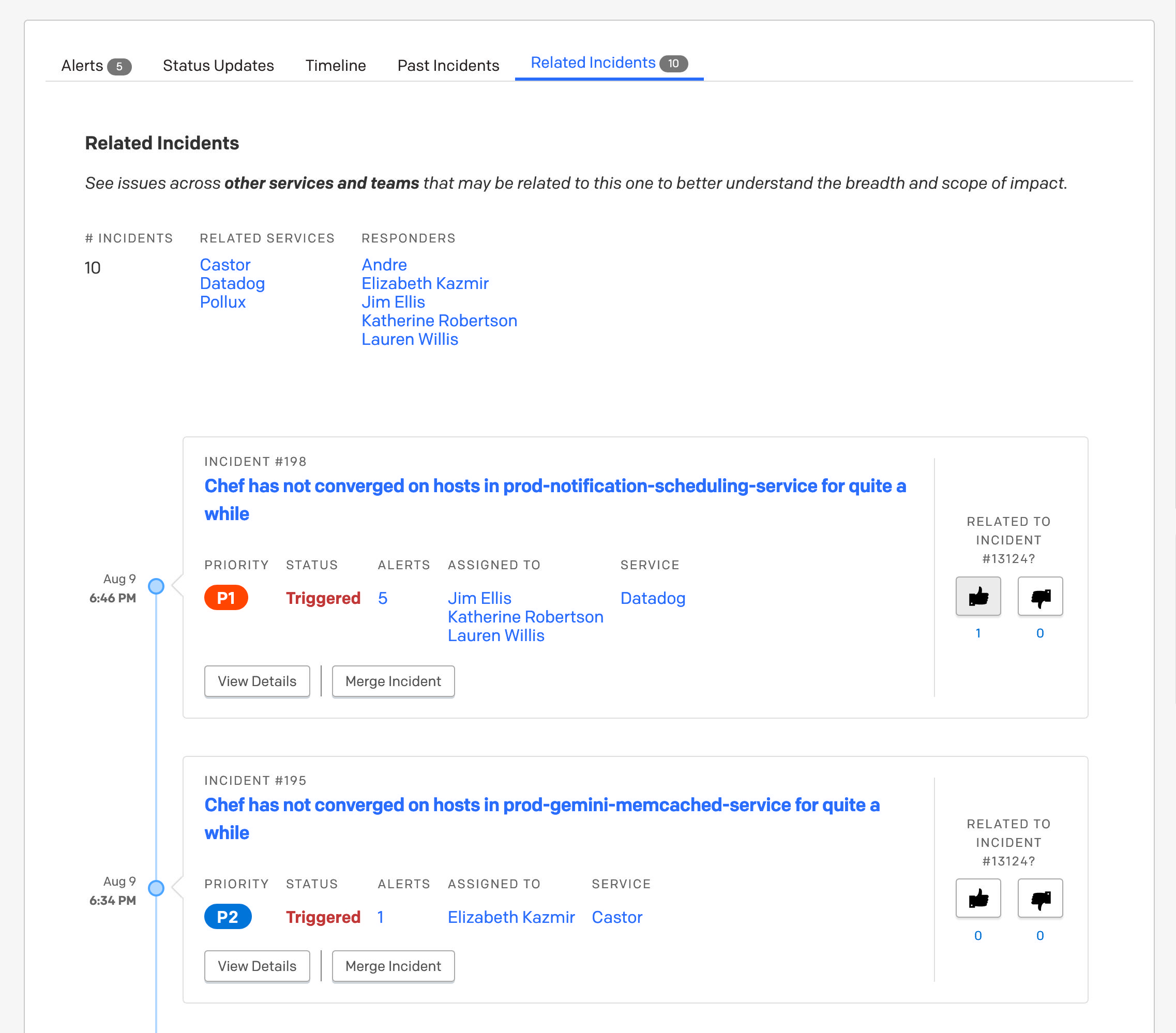
The first of these services is Intelligent Triage, which is part of the company’s overall Event Intelligence product. The idea here is to ensure that operations teams can solve issues faster. Previously, PageDuty was already able to group alerts by type, but that was based on real-time data and without historical context. With Intelligent Triage, the service can use historical data to match what it knows about previous issues and how they were solved to a current issue, and then smartly group those issues so different teams inside a company don’t get multiple alerts from related issues but instead get actionable data on what is happening and which teams and services are affected.

“The problem we’re solving with Intelligent Triage, is all around ensuring that when one team is brought in to start addressing [an issue], they can now have visibility into other teams around them that may be working on related issues,” PagerDuty SVP of Product Jonathan Rende told me. “So other parts of the business, other parts of the teams now have this kind of broader view.”

IntelligentTriage

Ideally, this will help companies pull together the right people faster and minimize downtime. Indeed, the company argues that for some companies, this new triage tool can bring the average response time down from 80 minutes to 15 minutes.

In addition to Intelligent Triage, PagerDuty is also launching Intelligent Dashboards, which is part of the company’s analytics product. Rende noted that Intelligent Dashboards builds on top of the reports the service already generates to help companies understand the impact that outages and incidents have on their business (and their teams). The dashboards take this a step further by taking all of the real-time data from PagerDuty and adding a recommendation engine on top of that. “We’re not looking at the trending data for all teams and we’re making intelligent recommendations to teams on how they can mature and improve their processes,” he said. “This is really important as teams are trying to be more effective, grow their DevOps practices, but also protects the company’s revenue, protect customer experience and be able to share that with management across the organization.”

The dashboards also feature benchmarks that compare different teams inside an organization, as well as other organizations inside the same vertical.

Like other companies with access to copious amounts of data, PagerDuty, too, is clearly betting on using machine learning to solve some of its customers’ problems. “We’re making use of our data,” Rende said. “We have over 12,000 customers today and we had those customers for going on ten years, so when you look at some of the things around our intelligent dashboards, we’re pulling in that data and leverage it to help organizations mature in their transformation, in their digital journeys.”

In addition to Intelligent Triage and Dashboards, the company also today announced new integrations and partnerships with Zendesk and Salesforce Service Cloud. There’s no AI wizardry here, but instead, the focus is on giving customer service agents access to incident data so when customers call, the customer service teams can be aware of issues and provide updates without having to directly talk to the engineering team that is likely hard at work trying to restore service.

24 Sep 2019

Uber gets temporary two-month license reprieve in London

London’s transport regulator, TfL, has given Uber a temporary reprieve to continue operating in the UK capital.

The ride-hailing giant’s current (provisional) licence expires tomorrow but there’s no return to normality for Uber in its most important European city — with TfL issuing just a two-month extension on its private hire vehicle licence — not a full five-year term, as Uber had hoped.

The backstory here is TfL’s decision two years ago to deny Uber’s application to renew its licence — when it raised a range of safety and corporate governance issues.

The then scandal-struck company was nonetheless allowed to continue operating in London during an appeal process.

Uber went on to claim it was making changes to improve its processes and come into compliance with the regulator’s requirements. And in June 2018 a UK court granted it a provisional 15-month licence so it could continue to work on satisfying TfL’s conditions.

But the latest short leash extension puts the company on watch again.

TfL says the extension has the same conditions Uber has been subject to over the past 15 months, as well as some new conditions “to ensure passenger safety” which it says cover ride sharing, appropriate insurance and driver document checks by Uber.

Last year the court attached a number of extra conditions to Uber’s provisional licence to operate, including that the company produce an independently verified assurance report every six months; appoint three non-executive directors to its board; provide at least 28 days notice for changes to its operating model; and maintain arrangements with London’s Met Police for the reporting of passenger complaints that may be criminal — all of which still apply.

The regulator adds that it’s requesting additional material from Uber to inform any future licensing decision — emphasizing that its original concern included culture and governance issues.

“Uber London Limited has been granted a two-month private hire operator licence to allow for scrutiny of additional information that we are requesting ahead of consideration of any potential further licensing application,” a TfL spokesperson said in a statement.

In a statement responding to TfL’s decision, Jamie Heywood, Uber’s regional general manager for Northern & Eastern Europe, sought to put a positive spin on not being knocked back entirely.

“TfL’s recognition of our improved culture and governance reflects the progress we have made in London. We will continue to work closely with TfL and provide any additional requested information,” he said.

“Over the past two years, we’ve launched a range of new safety features in the app, introduced better protections for drivers and our Clean Air Plan is helping to tackle air pollution. We will keep listening, learning and improving to provide the best service while being a trusted partner to London.”

Among the changes Uber claims to have made since the regulator stepped in and slapped down its licence renewal, are a new senior leadership team in the UK; limits to operating hours for drivers, with a log-out required at 10 hours; a 24/7 support centre staffed by trained agents to handle driver and rider safety queries; a free insurance product for drivers and a dedicated forum where they can share feedback; various safety alerts and privacy tweaks; and real-time public transport information shown within the app.

Uber also says it’s an “ambition” that every car on its app in London is fully electric in 2025 — saying it’s raised £50M to put towards helping licensed drivers upgrade to a fully electric vehicle.

There are major question marks about the rising costs of doing business for Uber as regulatory and legal requirements dial up around the world — including in the US.

Earlier this month California passed gig economy workers rights legislation that could see Uber on the hook for wage and benefit protections in its home market. While, in the UK, the company has continued to lose appeals against a successful legal challenge over drivers rights back in 2016.

Uber’s own investor prospectus warned potential shareholders the company may never be profitable.