Year: 2019

24 Sep 2019

Manufacturing app platform Tulip raises a $39.5M Series B

Back in 2017, Tulip raised a $13 million Series A, with help from NEA, Pitango Venture Capital and a handful of investors who were already on board for its seed round. Now the Somerville, Mass. startup is back with a Series B that’s three times that.

Germany tool maker DMG MORI has joined the ranks for a $39.5 million round along with the aforementioned names and Vertex Ventures. This latest round finds the manufacturing software company looking to grow its presence among small and medium enterprise businesses in Europe, the Middle East, Africa and Asia.

Tulip has gained a fair bit of notice in recent years for its manufacturing app platform that requires no coding. As part of the deal, DMG MORI announced a partnership with the startup that finds it looking to use Tulip’s apps to help automate assembly, training and quality control.

“We are proud of our new alliance. After all, digitization is human-centered. With the no-code platform, employees can autonomously create manufacturing apps,” DMG MORI chairman Christian Thönes said in a release tied to the news. “Tulip is the ideal entry into digitization mainly for our medium-sized customers.”

The partnership also finds Tulip opening an office in Munich, to help support European growth.

24 Sep 2019

Cycode raises $4.6M seed round to keep your source code safe

Cycode, an Israeli security company that aims to protect enterprises’ source code, today announced that it has raised a $4.6 million seed led by YL Ventures. Among others, Andy Grolnick, the former president and CEO of LogRhythm, Justin Somaini, the former CSO of SAP, and Eyal Gruner, the founder and CEO of Cynet, also participated.

The co-founders, Lior Levy (CEO) and Ronen Slavin (CTO) argue that for most companies, source code protection remains a gap in their security posture. “We’ve seen many different security products and we came to the conclusion that current security controls and tools are just not good enough at security and protecting source code,” Levy told me. He argues that unlike with a lot of other intellectual property, you can’t just put source code in an encrypted database and enforce access roles. Source code, after all, tends to live in a lot of different places, making standard access control techniques much harder to apply.

2019 09 23 1607

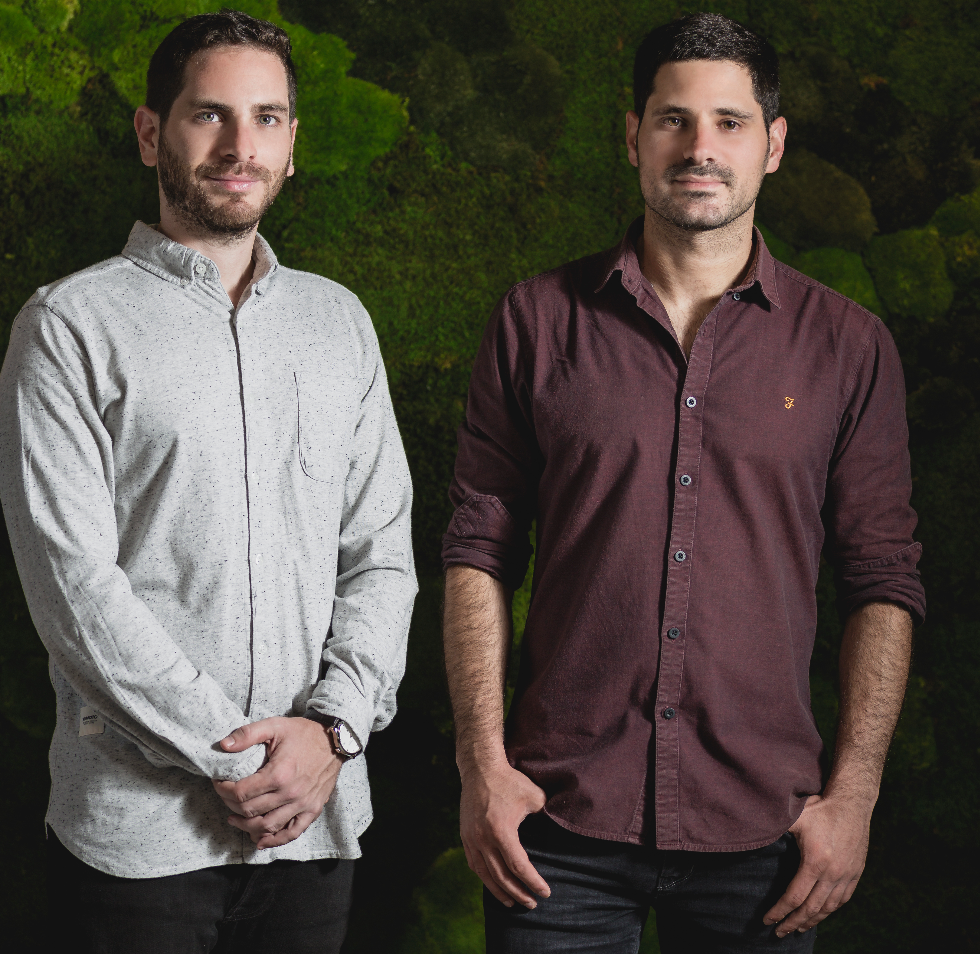
Cycode co-founders Lior Levy and Ronen Slavin

Cycode then connects to different services where the source code sits, including the likes of GitHub and Bitbucket, and then tries to understand how the organization uses that code. It provides visibility into how was access to the code, how that access is used, and then automatically monitors the movement of the code while it’s looks for any anomalous behavior. The service also scans for leaks of the code across public and dark web sites.

“When Lior and Ronen approached us about this significant security gap and outlined the way many security teams were running blind to this risk, we were immediately compelled to invest in their pioneering solution to resolve it,” said Yoav Leitersdorf, managing partner at YL Ventures, who led the Cycode funding round. “Cycode’s platform is the exact type of product needed to solve this unaddressed and growing problem.”

The company currently has six employees, but as Levy told me, the plan is to use the new funding to expand to 20 employees soon and to open an office in the U.S. that will focus on sales and marketing.

Right now, the company is focusing mostly on large enterprise customers, but Levy tells me that that’s not the only market Cycode is going after, but for its initial customer base, the team is going after these large companies. He did note, though, that for most startups, security is often not the main concern (though maybe it should be?). “We feel that large enterprises feel the pain harder,” Levy said. “First of all, because of the fragmentation of the several source code management systems [they use], and secondly, because they really care about it and they really don’t see any solutions that answers all their needs on the market.”

Cycode is currently in limited availability but the team expects that the service will be generally available in 2020.

24 Sep 2019

Adobe’s next-gen Fresco drawing and painting app launches on iPad

Adobe today announced that Fresco (previously also known under its codename Project Gemini), it’s long-awaited next-generation drawing and painting app, is now available on the iPad. If you’re a Creative Cloud subscriber, you should be able to download it right now, but unlike some of Adobe’s other products, Fresco will also come in a free version that has some limitations, but should still give you access to the overall experience of using the app. You’ll also be able to purchase Fresco as a stand-alone app.

As Adobe’s Kyle Webster notes, one of the areas the team really focused on was the variety of brushes that are available in the app, including all of your favorite Photoshop brushes. Given that Webster sold his company KylesBrushes to Adobe in 2017, that doesn’t come as a surprise. Similarly, the fact that Fresco makes good use of the Apple Pencil is very much expected.

The highlight of Fresco, though, is Adobe’s Live Brushes, which can recreate the feeling of painting with oils and watercolors. These brushes — and the way they interact with the virtual paper — are powered by some of the company AI smarts, courtesy of its Sensei platform.

In addition to oil and watercolor, Fresco also features vector brushes. Since Adobe already offers a vector drawing app in the form of Adobe Illustrator, you’ll also be able to use Fresco to create a first draft of your drawing and then take it to Illustrator to finish it up.

The iPad app is out now. Android and Windows users will have to wait a little bit longer.

Village J.C. Park

24 Sep 2019

Fivetran hauls in $44M Series B as data pipeline business booms

Fivetran, a startup that helps companies move data from disparate repositories to data warehouses, announced $44 million Series B financing today, less than a year after collecting a $15 million Series A round.

Andreessen Horowitz (A16Z) led the round with participation from existing investors Matrix Partners and CEAS Investments. As part of the deal, Martin Casado from A16Z will join the Fivetran board. Today’s investment brings the total raised to over $59 million, according to Crunchbase.

Company co-founder and CEO George Frasier said they raised a little sooner than expected, but they needed a cash infusion to keep up with the steady growth they have been seeing. He said the company also wanted to get the funding done while the capital markets were still strong. “If we wait four months or six months, the terms are not going to be that much better — and, who knows, there could be a recession. You never know how long the sun shines, and we had interest from some really good firms that we liked, and that’s a big factor too obviously.” he said.

He added that it’s not purely an economic decision. “We’re really happy with where we landed with Martin [Casado] joining the board and Andreessen Horowitz on the cap table, but [the economic outlook] was definitely part of our calculus.”

And Casado is happy to have invested in Fivetran. Writing in a blog post today about the investment, he sees a company that’s solving a big problem in a modern context. “Fivetran is a SaaS service that connects to the critical data sources in an organization, pulls and processes all the data, and then dumps it into a warehouse (e.g., Snowflake, BigQuery or RedShift) for SQL access and further transformations, if needed. If data is the new oil, then Fivetran is the pipes that get it from the source to the refinery,” he wrote.

He said that the company already has over 750 customers and A16Z is included among them. It certainly doesn’t hurt when your lead investor uses your product.

The company was founded in 2012 and has been growing steadily. Last year it 80 employees at the time of its Series A and today it has 175. Frasier expects that to double again over the next year, and it’s all driven by business needs. He says that over the last 12 months revenue has grown 3x.

With 150 connectors today, the company wants to continue to expand its array of data connection tools and cover more data requirements. But he says the connectors are complicated and that will take an investment in more engineering talent. Today’s announcement should help in that regard.

24 Sep 2019

NASA orders up to a dozen Orion spacecraft from Lockheed Martin for Moon missions

NASA has placed an order for a minimum of six, and as many as 12 Orion spacecraft from Lockheed Martin. The Orion is a spacecraft that Lockheed Martin designed and built specifically for the purpose of flying crewed missions to space, and the first Orion recently completed construction ahead of testing and preparation for its first ever lunar trip next year.

This new contract covers the first mission that will carry actual astronauts to the Moon, which NASA is still targeting for 2024, and covers additional missions spanning ordering periods running up to September 30, 2030. The concrete missions that are already planned which will trigger immediate orders are Artemis III through V, and that contract is valued at $2.7 billion. In 2022, NASA then plans to put down orders for Artemis VI through VIII, which accounts for the second batch of Orion capsules and will come in at $1.9 billion. NASA says that it’s purposely batching orders in groups of three to “benefit from efficiencies that become available in the supply chain over time” – efficiencies which presumably account for the $800 million price differential.

NASA also hopes to be cost-efficient through spacecraft reuse: It’s hoping to re-fly the Orion capsules it’s purchasing at least once per spacecraft, beginning with Artemis II, the first crewed mission in the Artemis program, which will aim to do a Moon flyby but not actually touch down on the lunar surface. NASA also notes that work done for this Orion contract will serve its Lunar Gateway project as well, with re-use of components developed for the spacecraft contributing to its plan to develop a lunar space station to support future Moon missions, and stage missions to Mars and beyond.

24 Sep 2019

Watch Japan’s Aerospace Exploration Agency launch supplies to the International Space Station live

The Japan Aerospace Exploration Agency (JAXA) will launch a cargo of experiments, supplies and small satellite payloads to the International Space Station today at 12:05 PM EDT (1:05 AM JST / 9:05 AM PDT). The payload will be delivered via a Mitsubishi Heavy Industries (MHI) H-IIB rocket, packed in an H-II Transport Vehicle (HTV) unpiloted cargo spacecraft which will then rendezvous with the ISS to offload science experiments, new lithium-ion batteries for use in replacing older nickel-hydrogen ones used on the orbital laboratory.

This mission is codenamed ‘HTV-8,’ the eighth mission that MHI has run using the HTV cargo ship. It’ll launch from Tanegashima Space Center in Japan, which is on a small island off the very southern end of Japan’s Kyushu region. This is the second attempt for the launch, after the original try was scrubbed prior to lift-off due to a small fire on the launch pad, which MHI subsequently investigated and corrected.

The H-IIB rocket is a fully expendable launch vehicle, with a liquid-oxygen fueled central core, and four solid fuel boosters that surround the base to provide more lift, giving the rocket a total lift capacity of up to 18,000 lbs to geostationary transfer orbit, or as much as 36,400 lbs to low-Earth orbit.

This eighth flight for the H-IIB will also be its second last – the company plans one more flight for this configuration before focusing entirely on its forthcoming H3 medium-lift launch vehicle, which will boost cargo capacity to as much as 14,3000 lbs to geostationary transfer orbit, and which will reduce launch costs by more than half to between $50 – $65 million, in an effort to become more price competitive with emerging commercial launch providers like SpaceX . H3 is targeting next year for its first test flights, with commercial operations kicking off in 2021.

NASA will begin broadcasting the live stream of the launch above starting at around 11:30 AM EDT (8:30 PM PDT).

24 Sep 2019

Sentry raises $40 million Series C led by Accel for its error-tracking software

Sentry, a startup that provides bug-monitoring software for app developers, announced today that it has raised a $40 million Series C led by returning investor Accel, with participation from New Enterprise Associates.

The funding brings the San Francisco-based company’s total raised to about $66.5 million. Its last round of funding, a $16 billion Series B, was announced in May 2018 and brought Sentry’s valuation to $100 million. The company did not divulge its new valuation for its Series C, but co-founder and CEO David Cramer (pictured above) told TechCrunch that it reflects Sentry’s growth from serving 2,000 organizations at the end of 2015 to 50,000 now. Its clients include companies like Airbnb, Dropbox, Microsoft, PayPal, Peloton, Pinterest, Square, Symantec and Uber.

In a press statement, Accel partner Daniel Levine said “Sentry’s leadership has proven year after year that it can identify emerging technology trends and, crucially, bring products to market that developers need and are willing to pay for. We’ve watched Sentry achieve, and sustain, its market leadership in error monitoring, and we are excited to support the team as they reinvent APM and shake up the market to give customers critical tools for the app-oriented decade ahead.”

Sentry’s software is used to monitor performance and identify issues before they result in costly outages. Sentry also announced today that it is extending support for native applications with Sentry for Native, targeted to mobile, gaming and IoT developers. In an email, Cramer said that the company wants to “expand our product to more developers, and help them in more ways so they can leverage one solution (Sentry) across a broad range of environments.”

Sentry differentiates from legacy application performance monitoring solutions by focusing on software that run on devices its developers have no control over, including mobile and IoT devices and smart sensor networks. Another selling point is Sentry’s availability by open source or SaaS, for developers who want a hosted service. In addition to sending developers alerts, Sentry also gives them context for potential root cause analysis, to help them identify the source of the error.

“The past five years have seen massive leaps and advancements in how applications are built, deployed and run. Cloud. DevOps. Edge. Microservices. Code is much closer to consumers in application experiences on browsers in Single Page Applications (running JavaScript), desktops, and mobile and IoT devices,” Cramer said. “So why are we relying on decades-old APM technology designed for the server era to monitor and manage critical code?”

24 Sep 2019

ClimateTech is the new hot space for investors in a warming planet

How do you attract the attention of a prince? Aside from being Meghan Markle, of course. One answer came recently in the form of Prince Harry’s backing of a new initiative designed to make offsetting the carbon from your airline flights a properly mainstream idea.

For Harry, the initiative had a double whammy. It might finally make carbon offsetting cool, especially if the royals and the celebs are doing it. And it had the added bonus of taking the heat off royals for jetting around the world (sorry!).

But the Travalyst initiative doesn’t stop at offsetting. It will also address conservation, environmental protection and expanding local community economic development by encouraging sustainable tourism practices across the travel industry. And it’s backed by Booking.com, Ctrip, Skyscanner, TripAdvisor and Visa.

The initiative hints at a range of future climate initiatives, now that the issue is firmly on the global agenda after a wave of public demonstrations such as the Climate Strikes started by schoolgirl Greta Thunberg.

The climate is now firmly on the global agenda, but is there really such as thing as “climate tech”?

After all we already have biotech, HealthTech, FinTech. InsurTech, AdTech and AgTech, so why not ClimateTech and what are its investment prospects? What would distinguish it from, say, CleanTech?

24 Sep 2019

Investors: Prospect for early-stage startup gold at Disrupt Berlin 2019

Got an early stage fund? Then grab an Investor pass, pack your bags and head to Disrupt Berlin 2019 on 11-12 December. We’ll host hundreds of exhibiting startups, which makes this tech conference prime prospecting territory for investors looking to add only the best early-stage startups to their portfolio.

Buy your Investor pass and join thousands of early-stage startup founders, investors innovators and entrepreneurs from more than 50 countries. Pro Tip: Why go it alone? You can save an additional 10% if you buy two or more passes at once.

Your prospecting adventure begins in Startup Alley, our exhibition hall and the epicenter of opportunity. Along with hundreds of stellar startups, you’ll find our TC Top Picks. TechCrunch editors hand-pick this cohort — representing the best startups in each of these categories: AI/Machine Learning, BioTech/HealthTech, Blockchain, FinTech, Mobility, Privacy/Security, Retail/eCommerce, Robotics/IoT/Hardware, SaaS and Social Impact & Education.

You’ll find great ideas and tech innovation everywhere in the world — and well represented in Startup Alley. Be sure to check out the Country Pavilions featuring emerging startups from international startup groups, government innovation centers, incubators and accelerators.

And if you’re shopping for something truly audacious, bold and innovative, you’ll find it at the Startup Battlefield. Watch 15-20 startups launch on a world stage and vie for $50,000 — and your attention. You know who else competed in Startup Battlefield? Dropbox, GetAround, SirenCare, Fitbit, Mint.com, Vurb and more. Will you find and fund the next big name in tech?

Here’s another Pro Tip: CrunchMatch, our business matching platform, makes it easier to find and connect with founders that fit your interests. You create a profile listing your specific criteria and goals. The CrunchMatch algorithm suggests matches and, subject to your approval, proposes meeting times and sends meeting requests.

Here’s what Michael Kocan, managing partner at Trend Discovery, says about CrunchMatch.

“I scheduled more than 35 meetings with startups that I pre-vetted using CrunchMatch, and we made a significant investment in one, who came to our attention through Startup Battlefield. It’s an extremely efficient way to vet deals.”

How effective is CrunchMatch? In 2018, the program facilitated more than 3,000 meetings. And Yoolbox — makers of a portable wireless charger — says the connections it made through CrunchMatch helped Yoolbox helped to increase its distribution.

Disrupt Berlin 2019 takes place on 11-12 December, and if you’ve got an early stage fund, you gotta go to Berlin. Buy your investor pass today, and let the prospecting begin!

Is your company interested in sponsoring or exhibiting at Disrupt Berlin 2019? Contact our sponsorship sales team by filling out this form.

24 Sep 2019

Fundbox raises $176 million Series C to build ‘Visa’ for B2B payments

Credit cards have become all but ubiquitous for consumer transactions, and it isn’t hard to see why. By intermediating payments, networks like Visa allow buyers and sellers to exchange money for goods and services without knowing the financial risk profile of the counter-party. Rather than applying for credit at every merchant you shop at, you apply once at your issuing institution, and then can transact with every merchant on the network. It’s the simple formula: reducing friction means more sales, and therefore more profits.

Yet for all the innovation in the consumer side of the economy, there has been an astonishingly limited amount of innovation in the B2B world. Payments between businesses are still conducted through invoices, with net payment terms that can exceed 90 days and with little knowledge of the financial risk of the counter-parties. There is no FICO score for business as there is with consumers, nor is there a system that can intermediate those transactions and reduce their friction.

That’s where Fundbox comes in. The SF-headquartered startup wants to ultimately transform B2B payments by creating a Visa-like payments network that allows businesses to transact with each other without having to know counter-party risk while also getting everyone paid faster.

It’s a vision that has pulled in the attention of even more venture capital. The company, which was founded in 2013, announced today that it has raised $176 million in a series C equity financing led by a consortium of funders, including Allianz X, Healthcare of Ontario Pension Plan, HarbourVest and a litany of others. Existing backers Khosla, General Catalyst, and Spark Capital Growth also participated. With this new round of capital, the company’s total equity funding reaches upwards of $300 million.

In addition to the equity capital, the company also announced that it has raised a $150 million credit facility to underwrite its product.

Fundbox CEO Eyal Shinar said that a priority in this fundraise was to select backers who not only could invest in equity, but also had large balance sheets who could expand the company’s underwriting capability as it scales.

Today, Fundbox’s core product is a revolving line of credit for small businesses. Cash flow is a huge concern for many companies, since they often have to wait for a payment from an invoice to arrive before investing in their next projects or hiring more employees. A revolving line of credit allows companies to flexibly draw down and pay back a loan, while only paying fees on what a company uses.

To apply for the loan, companies connect Fundbox to their financial data store (for example, QuickBooks), and Fundbox slurps in the data and offers a credit decision in as fast as minutes. Companies can then tap their line of credit almost immediately and use it as working capital. As invoices are paid, companies can then pay off their line of credit and stop paying fees.

From that product base, Shinar ultimately sees Fundbox as a GDP-scale startup, given the value it could potentially unlock for companies and the economy at large. “There are more than $3 trillion locked in those invoices,” he explained to me, “$3.4 trillion flows through consumer credit cards, but $23 trillion are in invoices … and even if you focus on [just] small and medium business, it’s $9 trillion.”

As the company collects data from all the players in the market, it wants to build upon those data network effects to ultimately operate the payment rails for B2B transactions. So instead of offering a line of credit to the seller, it could facilitate both sides of the transaction and get rid of the root complexity in the first place.

It’s a bold vision, and certainly one that has attracted a variety of players. In the startup world, Kabbage (whose co-founder and president Kathryn Petralia I will be interviewing at TechCrunch Disrupt SF next week) has built a business around line of credit lending and has similarly raised large amounts of venture capital.

Larger companies like Square, PayPay, and Intuit (which owns the popular accounting software QuickBooks) have introduced various lending products to B2B customers. And in terms of payments, Stripe through its new credit card and Brex offer the means for companies to empower their employees to make purchases on behalf of the company.

Shinar said that a huge priority for Fundbox has been to make underwriting more efficient. He said that a large percentage of the current employee base at the company is data scientists, and the company has built upon the wave of digitalization that has taken place among small and medium businesses. “Every company has at least one set of APIs … and it is accessible, and it is granular,” Shinar said. By just tapping into those existing data feeds, Fundbox is able to avoid the human underwriting common with much of business lending today.

One initiative the company has undertaken is a tool dubbed “X-Ray” to better describe how the company’s machine learning models are really underwriting its loan products. Shinar noted that payments is a highly-regulated space, and that the company has to be able to explain its decisions and how they are unbiased to any regulator that might start asking questions.

The company today has 240 employees spread across SF, Tel Aviv, and a recently launched office in Dallas. Shinar says that he wants to use the new funds to “go on the offensive” and “double and triple down on what is working.”