Year: 2019

17 Sep 2019

Google Fi gets an unlimited plan

For the longest time, Google Fi didn’t play the unlimited calls, text and data game and instead focused on offering pretty affordable and flexible plans with a price cap of $80 (before taxes and government fees). Today, however, Google is introducing Fi Unlimited, which, as you’ve probably figured out from the name, is more akin to a traditional ‘unlimited’ plan from other carriers.

Fi Unlimited plans start at $70 for the first line. For families, you can also opt to pay $60 per line for 2 lines, $50 per line for 3 lines or $45 per line for 4 to 6 lines (excluding taxes and fees). That’s pretty much in line with the unlimited plans from other carriers, though they all come with their own limitations, special services and may feature different (and often more substantial) family discounts.

“Since Fi’s launch in 2015, we’ve had one plan, the Fi Flexible plan, that gives you the flexibility to pay for just the data you use,” writes Fi product manager Dhwani Shah. “As we’ve grown, we’ve heard that many of you want the simplicity and predictability that comes with paying the same price each month. So today, for the first time ever, Fi is adding a second plan: our Google Fi Unlimited plan.”

If you’re also a happy Fi user and like the old plan, don’t panic. A Google spokesperson has told us that Google will continue to offer the existing flexible plan, too.

blog unlimited pricing

Unlimited, of course, is never quite unlimited, so Google will cap your speed after you use 22GB of data in a given month (only 1% of Fi users currently do so, the company says) and it ‘may’ cap video quality at 480p. Like with the company’s other Fi plans, there are no contracts or activation fees.

There are some positives, too, though. You’ll get free international calls from the U.S. to 50 countries and territories and you’ll still get Fi’s unlimited data and text in 200 countries. Every unlimited plan also includes a Google One membership with 100 GB of cloud storage and live support for all Google products, as well as Google’s new phone backup service. There are also no limits on hotspot usage.

As always, you’ll need a compatible phone to make Fi work for you.

The maximum you’ll pay for Fi’s flexible price is $80 per month after you’ve used more than 6 GB of data. So there’s a tradeoff here. You’ll pay a fixed price for every unlimited line, even if you only use 1 GB of data, but you’ll pay a predictable price and you’ll get a discount for activating multiple lines, as well as a few other goodies.

17 Sep 2019

Boston-based DataRobot raises $206M Series E to bring AI to enterprise

Artificial intelligence is playing an increasingly large role in enterprise software, and Boston’s DataRobot has been helping companies build, manage and deploy machine learning models for some time now. Today, the company announced a $206 million Series E investment led by Sapphire Ventures.

Other participants in this round included new investors Tiger Global Management, World Innovation Lab, Alliance Bernstein PCI, and EDBI along with existing investors DFJ Growth, Geodesic Capital, Intel Capital, Sands Capital, NEA and Meritech.

Today’s investment brings the total raised to $431 million, according to the company. It has a pre-money valuation of $1 billion, according to PitchBook. DataRobot would not confirm this number.

The company has been catching the attention of these investors by offering a machine learning platform aimed at analysts, developers and data scientists to help build predictive models much more quickly than it typically takes using traditional methodologies. Once built, the company provides a way to deliver the model in the form of an API, simplifying deployment.

The late-stage startup plans to use the money to continue building out its product line, while looking for acquisition opportunities where it makes sense. The company also announced the availability of a new product today, DataRobot MLOps, a tool to manage, monitor and deploy machine learning models across a large organization.

The company, which was founded in 2012, claims it has had triple-digit recurring revenue growth dating back to 2015, as well as one billion models built on the platform to-date. Customers contributing to that number include a broad range of companies such as Humana, United Airlines, Harvard Business School and Deloitte.

17 Sep 2019

IEX’s Katsuyama is no flash in the pan

When you watch a commercial for one of the major stock exchanges, you are welcomed into a world of fast-moving, slick images full of glistening buildings, lush crops and happy people. They are typically interspersed with shots of intrepid executives veering out over the horizon as if to say, “I’ve got a long-term vision, and the exchange where my stock is listed is a valuable partner in achieving my goals.” It’s all very reassuring and stylish. But there’s another side to the story.

I have been educated about the realities of today’s stock exchange universe through recent visits with Brad Katsuyama, co-founder and CEO of IEX (a.k.a. The Investors Exchange). If Katsuyama’s name rings a bell, and you don’t work on Wall Street, it’s likely because you remember him as the protagonist of Michael Lewis’s 2014 best-seller, Flash Boys: A Wall Street Revolt, which explored high-frequency trading (HFT) and made the case that the stock market was rigged, really badly.

Five years later, some of the worst practices Lewis highlighted are things of the past, and there are several attributes of the American equity markets that are widely admired around the world. In many ways, though, the realities of stock trading have gotten more unseemly, thanks to sophisticated trading technologies (e.g., microwave radio transmissions that can carry information at almost the speed of light), and pitched battles among the exchanges, investors and regulators over issues including the rebates stock exchanges pay to attract investors’ orders and the price of market data charged by the exchanges.

I don’t claim to be an expert on the inner workings of the stock market, but I do know this: Likening the life cycle of a trade to sausage-making is an insult to kielbasa. More than ever, trading is an arcane, highly technical and bewildering part of our broader economic infrastructure, which is just the way many industry participants like it: Nothing to see here, folks.

Meanwhile, Katsuyama, company president Ronan Ryan and the IEX team have turned IEX into the eighth largest stock exchange company, globally, by notional value traded, and have transformed the concept of a “speed bump” into a mainstream exchange feature.

Brad Aug 12

Brad Katsuyama. Image via IEX Trading

Despite these and other accomplishments, IEX finds itself in the middle of a vicious battle with powerful incumbents that seem increasingly emboldened to use their muscle in Washington, D.C. What’s more, new entrants, such as The Long-Term Stock Exchange and Members Exchange, are gearing up to enter the fray in US equities, while global exchanges such as the Hong Kong Stock Exchange seek to bulk up by making audacious moves like attempting to acquire the venerable London Stock Exchange.

But when you sell such distinct advantages to one group that really can only benefit from that, it leads to the question of why anyone would want to trade on that market. It’s like walking into a playing field where you know that the deck is stacked against you.

As my discussion with Katsuyama reveals, IEX may have taken some punches in carving out a position for itself in this high-stakes war characterized by cutting-edge technology and size. However, the IEX team remains girded for battle and confident that it can continue to make headway in offering a fair and transparent option for market participants over the long term.

Gregg Schoenberg: Given Flash Boys and the attention it generated for you on Main Street, I’d like to establish something upfront. Does IEX exist for the asset manager, the individual, or both?

Brad Katsuyama: We exist primarily for the asset manager, and helping them helps the individual. We’re one step removed from the individual, and part of that is due to regulation. Only brokers can connect to exchanges, and the asset manager connects to the broker.

Schoenberg: To put a finer point on it, you believe in fairness and being the good guy. But you are not Robinhood. You are a capitalist.

Katsuyama: Yes, but we want to make money fairly. Actually, we thought initially about starting the business as a nonprofit, But once we laid out all the people we would need to convince to work for us, we realized it would’ve been hard for us to attract the skill sets needed as a nonprofit.

Schoenberg: Do you believe that the US equity market today primarily serves investors or traders?

17 Sep 2019

‘The Big Bang Theory’ goes to AT&T’s HBO Max streaming service for over a billion

‘Friends’ is getting some new neighbors at HBO Max. The streaming service from AT&T’s WarnerMedia has signed a big deal, reportedly worth over $1 billion, for the exclusive streaming and syndication rights for ‘The Big Bang Theory’ over the next five years.

The deal comes as streaming media services look to shore up their original programming offerings with known quantities that have proven to be enduring hits in syndication. It’s the model that originally brought Netflix’s streaming service to near-ubiquity and shows the enduring power of the sitcom format.

In the past year over $2.4 billion has been committed to locking down fan favorite comedies like “Friends”, “The Office”, “Seinfeld” and now the record-setting deal for “The Big Bang Theory”.

Yesterday, The Los Angeles Times broke the news that Netflix had acquired the rights to Seinfeld in a deal worth over $500 million. That deal was struck after Netflix lost two of its tentpole streaming properties — “Friends” to WarnerMedia’s HBO Max and “The Office” to NBCUniversal’s new (terribly, terribly, named) streaming serviceThe Peacock.

All 12 seasons of ‘The Big Bang Theory’ —  starring Jim Parsons, Johnny Galecki, and Kaley Cuoco, will be available to stream in 2020 when HBO Max launches.

“Few shows define a generation and capture mainstream zeitgeist like ‘The Big Bang Theory,’” Robert Greenblatt, chairman of WarnerMedia Entertainment and direct-to-consumer, told The Hollywood Reporter, which broke the news. “We’re thrilled that HBO Max will be the exclusive streaming home for this comedy juggernaut when we launch in the spring of 2020. This show has been a hit virtually around the globe, it’s one of the biggest shows on broadcast television of the last decade, and the fact that we get to bring it to a streaming platform for the first time in the U.S. is a coup for our new offering.”

The competition for talent for new productions and time-tested fan favorites has reached a fever pitch in the entertainment industry as studios, networks, and technology companies including Apple, Amazon, and Netflix shell out big dollars to capture audience in the new media landscape.

“I am forever grateful to have been part of something as extraordinary as ‘The Big Bang Theory,’” Lorre told The Hollywood Reporter. “All of us — Bill Prady, Steven Molaro, Steve Holland, and the amazing writing staff, cast and crew — recognize that 12 seasons of laughter is a gift to be cherished.”

Each of the stars and show creators Lorre and Prady along with executive producers Molaro and Holland stand to become very rich off of the deal. According to The Hollywood Reporter, Lorre alone will pocket somewhere between 30% and 40% of the new syndication deal.


17 Sep 2019

NBCU’s streaming service ‘Peacock’ announces originals slate, including a Battlestar Galactica reboot

NBCUniversal is sharing a few more details about its new streaming service, due to launch in April 2020, including the service’s name and content lineup. In a nod to the NBC logo, the service will be called “Peacock,” (yes, really), and will offer subscribers over 15,000 of content, including both film and TV, plus original content.

Notably, Peacock will be home to “The Office,” which Netflix will lose as a result of NBCU paying $500 million to pull the hit from Netflix when its deal ends in 2021. Peacock will also host other classic shows, like “Parks and Recreation,” plus news, sports, late-night TV, and Spanish-language programming, along with films from Universal Pictures, Focus Features, DreamWorks Animation, Illumination, and others.

In terms of its popular and classic TV lineup, Peacock will include: “30 Rock,” “Bates Motel,” “Battlestar Gallactica,” “Brooklyn Nine-Nine,” “Cheers,” “Chrisley Knows Best,” “Covert Affairs,” “Downton Abbey,” “Everyone Loves Raymond,” “Frasier,” “Friday Night Lights,” “House,” “Keeping Up with the Kardashians,” “King Of Queens,” “Married…With Children,” “Monk,” “Parenthood,” “Psych,” “Royal Pains,” “Saturday Night Live,” “Superstore,” “The Real Housewives,” “Top Chef,” and “Will & Grace.”

On the film side, the service promises  “American Pie,” “Bridesmaids,” “Knocked Up,” “Meet the Parents,” “Meet the Fockers,” “A Beautiful Mind,”“Back to the Future,” “Brokeback Mountain,”“Casino,” “Dallas Buyers Club,” “Do the Right Thing,” “Erin Brockovich,” “E.T. The Extra Terrestrial,” “Field of Dreams,” “Jaws,” “Mamma Mia!,” “Shrek,” and “The Breakfast Club.” It will also feature films from the franchises: “Bourne,” “Despicable Me,” and “Fast & Furious.”

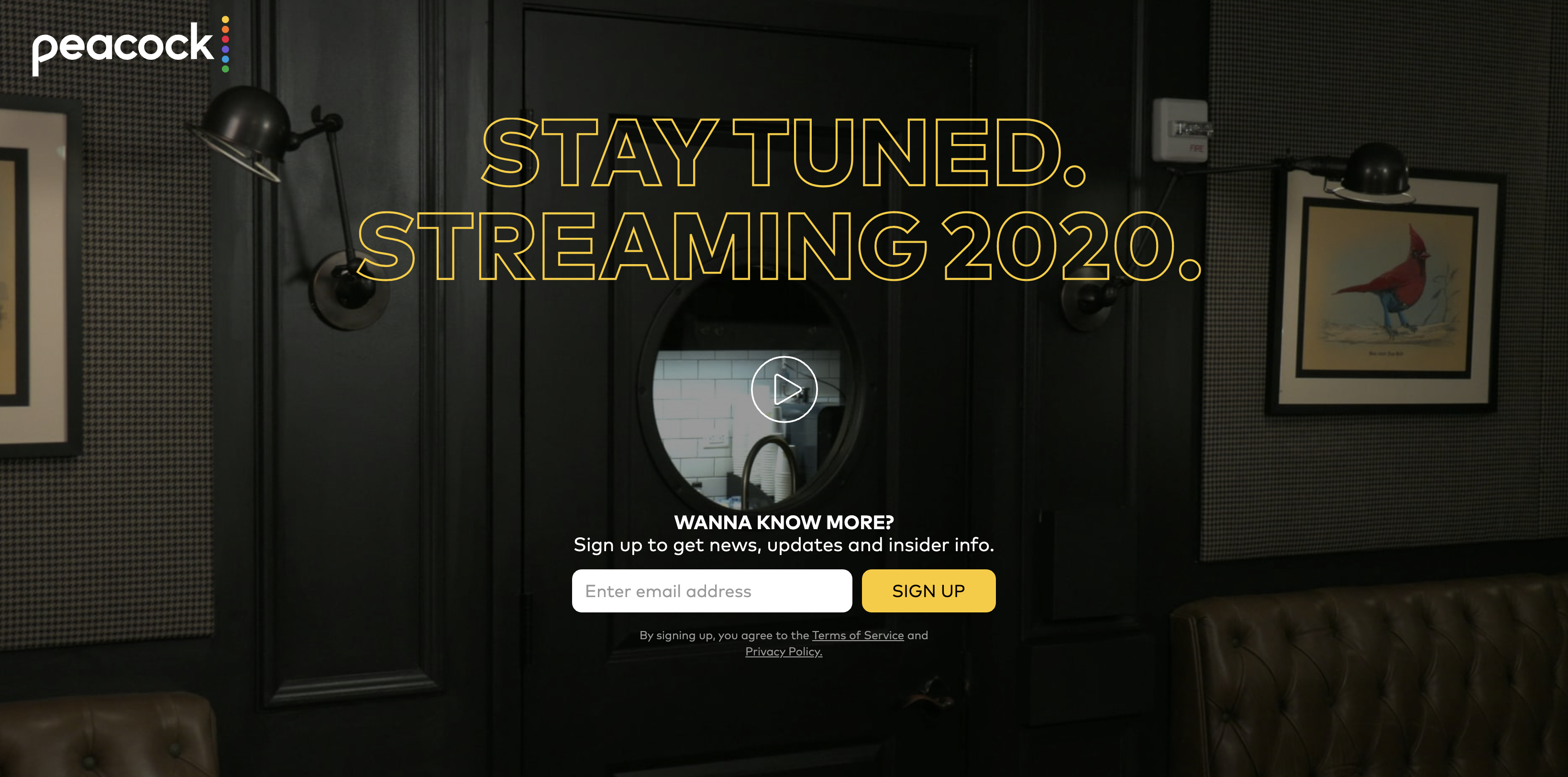
peacock homepage

What’s more interesting (or concerning, if you’re a “Battlestar Galactica” fan) are Peacock’s plans for original content. This includes a reboot of the sci-fi classic (nooo, don’t do it!), as well as reboots of “Saved by the Bell,” and “Punky Brewster.”

The company this morning announced the following originals:

  • “Dr. Death,” based on the true-crime podcast starring Jamie Dornan, Alec Baldwin, and Christian Slater
  • A “Battlestar Galactica” reboot from Golden Globe winner and Emmy-nominated “Mr. Robot” and “Homecoming” EP Sam Esmail
  • “Brave New World,” based on the dystopian novel by Aldous Huxley and starring Alden Ehrenreich (“Solo: A Star Wars Story”) and Demi Moore
  • “Angelyne,” a limited series from Emmy Rossum
  • “One of Us Is Lying,” based on the New York Times best-selling young adult mystery-thriller.
  • “Rutherford Falls,” co-created by Emmy and Peabody Award-winner Mike Schur, Ed Helms, and Sierra Teller Ornelas, and starring Ed Helms
  • “Straight Talk,”from Emmy Award nominee Rashida Jones and NAACP Image Award winner Jada Pinkett Smith;
  • “Saved By the Bell” reboot from Emmy Award winner Tracey Wigfield (“30 Rock”), featuring original cast members including Elizabeth Berkley and Mario Lopez
  • “Punky Brewster,” starring Soleil Moon Frye as a grown-up version of her former character;
  • A new season of “A.P.Bio,” starring Glenn Howerton and Patton Oswalt
  • The second movie spinoff from the long-running series “Psych.”
  • A new “Saturday Night Live” docuseries, “Who Wrote That,” from creator Lorne Michaels, exploring the famous personalities in front of and behind the camera
  • An original talk show series from Jimmy Fallonin collaboration with Matador Content and Universal Television Alternative Studio
  • A weekly late-night show starring Amber Ruffin and executive produced by Seth Meyers
  • Another spinoff of Bravo’s “The Real Housewives” franchise.

Much was already known about NBCU’s streaming service, ahead of today. The company had already discussed its vision and the launch time frame during Comcast’s second-quarter earnings call. At the time, NBCU noted the serivce’s April 2020 arrival, as well as its monetization strategy.

The company said then that the service would be ad-supported with a paid, ad-free option. It has not yet announced its pricing or distribution plans, however.

The service is launching at a time when competition among streamers is heating up, as more companies enter the fray to battle with Netflix. In addition to the big three — Netflix, Amazon, and Hulu — Disney+ is poised to launch Nov. 12, and Apple just announced Apple TV+ would arrive Nov 1. HBO Max is also right around the corner, in spring 2020.

Surprisingly, it’s the classic shows that the media giants are fighting over, in massive, multi-billion dollar deals.

NBCU snagged “The Office,” Netflix’s most-watched series, for $500 million. WarnerMedia (HBO Max) grabbed “Friends” from Netflix for $425 million. Netflix got back in the game yesterday, with a $500 million-plus deal for “Seinfeld” that includes global streaming rights. And just this morning, WarnerMedia broke records with a multi-billion dollar streaming deal for “Big Bang Theory,” for HBO Max.

Peacock, its terrible name notwithstanding, has a shot at grabbing at least some of the market, given its decent back catalog, which includes hits like “The Office” and “Parks and Rec,” and its access to a larger film library. It also snagged some high-caliber Hollywood names for its originals.

The service will be heavily promoted during the Summer Olympics, airing on NBC.

“The name Peacock pays homage to the quality content that audiences have come to expect from NBCUniversal – whether it’s culture-defining dramas from innovative creators like Sam Esmail, laugh-out-loud comedies from legends like Lorne Michaels and Mike Schur, blockbusters from Universal Pictures, or buzzy unscripted programming from the people who do it best at Bravo and E!,” said Bonnie Hammer, Chairman of Direct-to-Consumer and Digital Enterprises, in a statement about today’s news. “Peacock will be the go-to place for both the timely and timeless – from can’t-miss Olympic moments and the 2020 election, to classic fan favorites like ‘The Office’.”


17 Sep 2019

SpaceX’s orbital Starship prototype construction progress detailed in new photos

SpaceX is making progress assembling its Starship orbital spacecraft prototype, as seen in new photos shared by SpaceX CEO Elon Musk . This full-scale testing version of the Starship will take over for the StarHopper, which was a scaled down version used to test the Raptor engine initially with low-altitude ‘hop’ flights.

The Starship Mk I Prototype and Mk II prototypes, which are under construction simultaneously at SpaceX facilities in South Texas and Florida, will be used to test flight at higher altitudes and higher speeds, and will use as many as three to six Raptor engines simultaneously, vs. the single engine used with the StarHopper.

[gallery ids="1882522,1882523"]

The round sections of the prototype you see in the photos being lowered on top of one another measure 9 meters (about 30 feet) in diameter, and unlike the StarHopper, these will feature a smooth curved top section, which you can see in the second photo. Once complete, SpaceX will run a first test of the orbital prototype with the goal of reaching a height of 12 miles, or 63,000 feet, before moving on to higher velocity testing at similar heights, and finally a first orbital flight.

Ultimately, SpaceX’s goal with Starship is have it become the workhorse of all of its commercial operations, replacing entirely the Falcon 9, Falcon Heavy and Dragon Capsule spacecraft and servicing both Earth orbital needs, as well as trips to ferry supplies and astronauts to Mars, and potentially beyond.

17 Sep 2019

Remagine secures $35M fund backed by media giants to focus on entertainment and media tech

Remagine Ventures is a relatively new European VC fund which focuses on investments in entertainment tech, including AI, gaming, sports & eSports, AR/VR, consumer and commerce. It’s now completed $35 million in funding from a number of entertainment and media corporations, including Axel Springer and ProsiebenSat1, Japanese Adways and American Liontree LLC. Last year global media group Sky put $4 million into the fund as part of the launch of its new innovation office in Berlin.

To date, the fund has invested in six entertainment start-ups, including: Minute Media, a user-generated content platform for sports, Syte.ai a visual search startup, Novos, a gamer training platform, HourOne, which operates in the world of synthetic media, Vault-ai.com, predictive analytics for film and television and Madskil, an eSports company in stealth.

Started by investor/entrepreneurs Kevin Baxpehler and Eze Vidra, Remagine focuses on early-stage (seed and pre-seed) investments in Israel and UK, with synergies between the two territories.
Traditionally, Israel has been better know for it’s ‘deep tech’capabilities but there’s a growing ecosystem of entertainment tech and consumer startups looking to disrupt traditional traditional industries.

Vidra established Campus London, Google’s first physical hubs for startups and later expanded the Campus model internationally. He was also a general partner Google Ventures (GV), the company’s investment arm in Europe.

Baxpehler, is a former entrepreneur and investment banker from in Germany. He most recently led the investment activity of German entertainment giant ProSiebenSat.1 in Israel, investing in Dynamic Yield (which recently sold for $300 million to McDonalds) and Magisto, which was acquired by Vimeo for $200 million.

Vidra said: “We operate in a relatively new market in the Israeli ecosystem. The Entertainment-tech sector has tremendous momentum, and Israeli founders are expanding at a rapid pace in this world and we recognize huge potential in it.” Baxpehler added: “Eze and I have experience in the investment world, the entrepreneurial world and the corporate world. We want to meet startups very early, to accompany and guide them even before investing.”

17 Sep 2019

Amazon launches Amazon Music HD with lossless audio streaming

Amazon has a new, high-quality streaming tier of its music service called Amazon Music HD. It’s priced at $12.99 per moth for Prime members ($14.99 per month for everyone else) and you can add it to your existing Amazon Music subscription for an additional $5 per month, whether you’re an individual or family plan subscriber. What you get for the additional cost is access to over 50 million songs in what Amazon is calling HD (16-bit, 44.1kHz or around what you’d expect from a CD), and then “millions” in Ultra HD (24-bit, up to 192kHz), which the company says is the highest available quality for any music streaming.

The most popular music streaming offering for quality-seeking audiophiles to date has probably been Tidal, which launched to serve that specific need. Tidal hasn’t exactly been able to compete with industry-leading music streaming services like Apple and Spotify in terms of subscriber numbers, but its continued existence suggests there’s a demand out there for better quality music. Amazon might be well-positioned to capitalize, since they can offer this easily alongside their existing offering as a niche upsell without likely too much in the way of additional cost.

You can try out Amazon Music HD for free for 90 days at launch (ps there are both streaming and download options for the high quality music), which is a generous initial free sample period as far as these things go. That should be plenty of time to figure out if your ears care overmuch about the added fidelity you’ll get – but be warned, it might be so good you’ll never be able to go back to pedestrian, standard definition streaming quality.

17 Sep 2019

Meet Venn, the company hoping to build MTV for the gaming generation

Maybe a network will be the thing that replaces the single streaming media star.

VENN, a new company launching with $17 million in funding from some of the biggest names in gaming is hoping to harness the power of streaming media’s online celebrities and funnel them into a channel that can command the kind of advertising revenues of the networks of old.

The vision harkens back to the golden days of MTV, when shows like TRL ruled the media landscape and a New York-based network set the cultural agenda through the prism of pop music.

For the creators of VENN, who include Ariel Horn, a four-time Emmy winning producer who brought the commercial storytelling from his network days working on Olympics broadcasts for NBC (a division of Comcast) to the esports phenomenons of Riot Games and Blizzard Entertainment; and Ben Kusin, a former global director of new media at Vivendi Games, MTV is the template for creating a cultural commodity from what’s becoming the lingua franca of a new generation of consumers.

Where music (and particularly music videos) was once the genre-spanning language for a generation, the two entrepreneurs see gaming culture as the touchstone for a new audience. And where fragmentation has created a confusing market for advertisers to reach that audience, the content funnel and single source that a network can provide offers an attractive alternative to reaching out to a single celebrity gamer, streamer, or platform.

Tthat’s the pitch behind VENN, which not only stands for Video Game Entertainment News Network, but also represents the venn diagram whose center resides at the intersection of gaming, music, fashion, and entertainment broadly, according to the two co-founders.
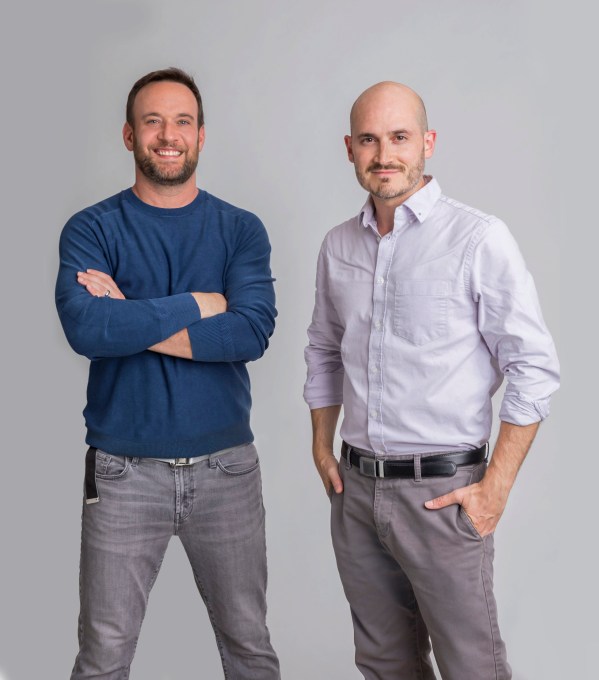
Ben Kusin Ariel Horn

VENN co-founders Ben Kusin and Ariel Horn

“You’re looking at a $150 billion per-year industry,” says Kusin. “We think streamers, casters, content creators, these are the new celebrities… what MTV TRL used to be back in the day if that were to launch today what would it look like? This culture would be seen through the lens of gaming.”

His co-founder, Horn, agrees. “We see gaming as the lens through which we want to create and contextualize Gen Z,” says Horn.

Horn knows the potential audience better than nearly anyone. In his last job, he presided over eSports events that commanded viewership in the hundreds of millions. Both Kusin and Horn think that the same sized audience could exist for their network — if not larger, because the two producers and their channel aren’t beholden to a single title, franchise or publisher.

Nor are they subject or beholden to a single distribution platform.

“We’re a universal network,” says Kusin. “We will be distributed on Twitch, on YouTube, and on Pluto, Hulu, and Roku… Anywhere and everywhere that our customers are consuming content.”

The company is currently looking to recruit top-tier talent and bring their sponsor-based streams and formats into a traditional network environment, with higher production values and something approximating the types of talent contracts and deals that would be afforded to a network figure. These streamers, gamers, and others would be able to supplement their existing sponsor-based income with their work on VENN, the two-co-founders said.

The executives would not comment on what, specifically, the programming would include, but indicated that VENN was in discussions with a number of the top streamers in the gaming corners of services like YouTube and Twitch from which they’d pull programming. One genre that will likely make its way onto the network is an American Ninja Warrior-style competitive show for speedruns through different levels of games.

“There are already shows on Twitch,” says Horn. “It’s reported out there for you in real-time. You’re getting all kinds of feedback.” What’s necessary, he says, is to elevate the production value and add other kinds of more traditional programming around it.

“There are two hundred million people consuming YouTube gaming content… There are esports teams [like] Liquid [and] G2 whose talent consider themselves entertainers,” says Kusin. “We’re giving the entire industry a home and a heartbeat.”

The appeal for brands is obvious. If there’s a single place to go to capture the audience that follows streaming celebrities like Ninja, Tfue, or VanossGaming, that real estate is far more desirable than pursuing independent sponsorship deals with each individual streamer.
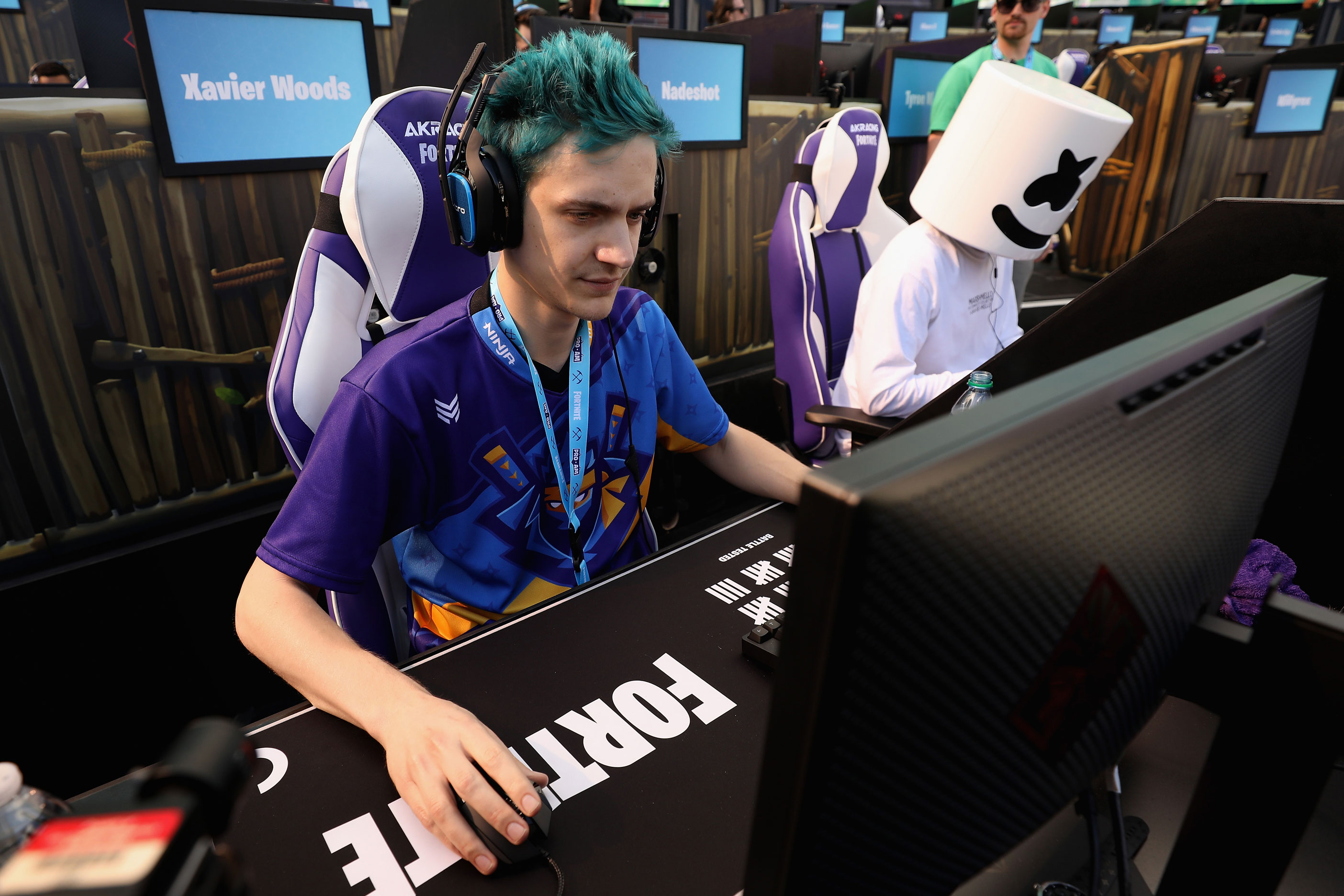
LOS ANGELES, CA – JUNE 12: Gamers ‘Ninja’ (L) and ‘Marshmello’ compete in the Epic Games Fortnite E3 Tournament at the Banc of California Stadium on June 12, 2018 in Los Angeles, California. (Photo by Christian Petersen/Getty Images)

Brands trying to put their money into gaming is not that straightforward,” says Horn.”There isn’t really a network  like this that exists right now… that exists for the industry at large.”

Other companies that have emerged to capture advertising dollars or create networks of entertainers in something akin to an agency model may beg to differ. These are companies like 3blackdot or Popdog, which represent a significant chunk of online gaming talent. Or more traditional sites that have significant followings like IGN, which bills itself as the #1 games media company.

Beyond the competition, VENN is still rolling the dice on whether the new generation of consumers wants to have a more produced, mediated entertainment network rather than continue to gravitate to the unmediated experience of watching live streams of their peers do the things that they’re doing themselves. YouTube is more than just a vehicle to mainstream stardom, these streamers are their own mainstream stars for millions of viewers who seem fine with the no-fi production values that YouTube almost demands.

Investors are betting that they are, because VENN has raised a $17 million treasure chest to spend on bringing its vision to the market. The money comes from some of the biggest names in gaming, led by the European investment firm BITKRAFT. Additional investors include: Marc Merrill, the co-founder of Riot Games; Mike and Amy Morhaime, the co-founder of Blizzard Entertainment and its former head of global esports; Kevin Lin, the co-founder of Twitch; and aXiomatic Gaming, an esports investment group with stakes in Epic Games, Team Liquid and Niantic. 

“It’s about time we significantly raise the bar for video content in gaming and esports. We need to elevate the stars and stories in our community and provide a better and larger opportunity for brands to reach gamers,” said Jens Hilgers, Founding Partner of BITKRAFT in a statement.   

17 Sep 2019

LinkedIn launches skills assessments, tests that let you beef up your credentials for job hunting

LinkedIn, the social networking service for the working world, is today taking the wraps off its latest effort to provide its users with better tools for presenting their professional selves, and to make the process of recruitment on the platform more effective. It will now offer a new feature called Skills Assessments: short, multiple-choice tests that users can take to verify their knowledge in areas like computer languages, software packages and other work-related skills.

The feature is being rolled out globally today but in a small test mode, LinkedIn says that 2 million tests have already been taken and applied across the platform, a sign of how it might well be a very popular, and needed, feature. First up are English-language tests covering some 75 different skills, all free to take, but the plan, according to Emrecan Dogan, the group product manager in its talent solutions division, is to “ramp that up agressively” in the near future, both adding in different languages and more test areas.

(Important sidenote: Dogan joined LinkedIn when his company ScoreBeyond was quietly acquired by LinkedIn last year. ScoreBeyond was an online testing service to help students prep for college entrance exams. Given LinkedIn’s efforts to get closer to younger users — again, in part because of competitive pressure — I suspect that is one area where LinkedIn will likely want to expand this assessment tool longer term, if it takes off.)

The skills assessment tool is coming at an important moment for LinkedIn.

The Microsoft-owned company now has nearly 650 million people around the world using its social networking tools to connect with each other for professional purposes, most often to network, talk about work, or find work.

That makes for a fascinating and lucrative economy of scale when it comes to rolling out its products. But it comes with a major drawback, too: the bigger the platform gets, the harder it is to track and verify details about each and every individual on it. The skills assessment becomes one way of at least being able to verify certain people’s skills in specific areas, and for that information to start feeding into other channels and products on the platform.

It’s also a critical competitive move: the company is by far the biggest platform of its kind on the internet today, but smaller rivals are building interesting products to chip away at that lead in specific areas. Triplebyte, for example, has created a platform for those looking to hire engineers, and engineers looking for new roles, to connect by way of the engineers — yes — taking online tests to measure their skills and match them up with compatible job opportunities. Triplebyte is focused on just one field — software engineering — but the template is a disruptive one that, if replicated in other verticals, could slowly start to chip away at LinkedIn’s hegemony.

And testing on actual skills is just one area where verification has fallen short on LinkedIn: another big trend in recruitment is the push for more diverse workforces. The thinking is that traditionally too many of the parameters that have been used up to now to assess people — what college was attended, or where people have worked already — have been essentially cutting many already-disenfranchised groups out of the process. Given that LinkedIn currently has no way of ascertaining when people on its platform are from minority backgrounds, a skills assessment — and especially a good result on one — might potentially help tip the balance in favor of meritrocracy (if not proactive diversity focused hiring as such).

For regular users, the option to take skills assessments and add them to your profile will appear for users as a button in the skills and endorsements area of their profiles. Users take short tests — currently only multiple choice — which Dogan says are created by professionals who are subject area experts that already work with LinkedIn, for example to write content for LinkedIn learning.

[gallery ids="1882476,1882475,1882474,1882473,1882472,1882470,1882469"]

These tests measure your knowledge in specific areas, and if you pass, you are given a badge that you can apply to your profile page, and potentially broadcast out to those who are looking for people with the skills you’ve just verified you have. (This is presuming that you are not cheating and having someone else take the test for you, or taking it while looking up answers elsewhere.) You can opt out of sharing the information anywhere else, if you choose.

If you fail, you have three months to wait before taking it again, and in the meantime LinkedIn will use the moment to upsell you on its other content: you get offered LinkedIn Learning tests to improve your skills.

For those who pass, they will need to retake tests every year to keep their badges and credentials.

On the side of recruiters, they are able to use the data that gets amassed through the tests as a way of better filtering out users when sourcing candidate pools for job openings. This is a huge issue on a platform like LinkedIn: while having a large group of people on there is a boost for finding matches, in fact there can be too many, and too much of a challenge and time suck to figure out who is genuinely suitable for a particular role.

[gallery ids="1882463,1882462,1882460,1882458,1882457,1882456,1882455"]

There is another angle where the skills are being used to help LinkedIn monetise: those who are putting in ads for jobs can now buy ads that are targeted specifically to people with certain skills that have been verified through assessments.

There are still some shortfalls in the skills assessment tool as it exists now. For example, coding tests are all multiple choice, but that’s not how many coding environments work these days. (Triplebyte for example offers collaborative assessments.) And of course, skills is just one aspect of how people might fit into a particular working environment. (Currently there are no plans to bring in psychometric or similar assessments, Dogan said.) This is an interesting start, however, and worth testing the waters as more interesting variations in recruitment and connecting professionals online continue to proliferate.