Year: 2019

04 Sep 2019

Light Phone’s founders discuss life beyond the smartphone

For a seemingly tough pitch, Light has had little trouble getting noticed. The company has run two successful crowdfunding campaigns for a pair of minimalist phones designed to augment or replace the smartphone. Today the startup announced that it will be shipping the second version of the handset, which introduces a handful of features back into the product, like texting.

Ahead of the launch, we spoke to Light’s founders, Kaiwei Tang and Joe Hollier, about funding, feature glut and the future of the handset.

How it all began

Brian Heater: The project essentially started as an in-house at Google, is that correct?

Kaiwei Tang: We met in 2014 in Google’s incubator called 30 Weeks. That’s where we met and started talking about Light Phone eventually.

Joe Hollier: 30 Weeks program was an experiment that came out of the Google creative lab, and their hypothesis was that if given the right resources, guidance, designers might be able to create new creative startups, and that designers should be on the founding table of companies.

So their hypothesis was that we as designers would be able to imagine a new going to startup in the software application space, and then through designing the end product, which is how the Google creative lab works, we’d be able to inspire the engineers and make the funding investors that we would need to make the product a reality.

Brian: What did you see in the market that wasn’t being fulfilled by countless different smartphone companies?

Joe: People were feeling overwhelmed by their smartphone and craving some escape, and we didn’t really see an escape.

04 Sep 2019

Light’s new minimalist phone is available now for $350

There’s that pesky catch-22 you’ve got to get out of the way when discussing the Light Phone and its successor. There’s an inherent irony to a piece of technology created with the express purpose of weaning us off technology. But it’s 2019, and inherent irony is kind of the name of the game.

Light certainly has its share of supporters. As the company announces that it has both begun shipping the Light Phone II to Indiegogo backers and made the product more directly available through its site at $350 (via pre-order), it’s also revealing its funding for the first time. As of this writing, the company has raised $12.3 million.

The crowdfunding parts we knew about, of course. The original phone raised a solid $400,000 on Kickstarter. The Indiegogo campaign for the second version blew that out of the water at $3.5 million with an emphasis on pre-orders. Turns out VCs are getting in on the action, as well, with $8.4 million raised in seed. Hinge Capital, Bullish, White Bay Group, Able Partners, Product Co-Op and HAX have all chipped in, but the leader is the most interesting of the bunch.

Foxconn is the biggest investor of the bunch. The manufacturing giant, naturally, is also helping the company build the handsets and scale things as Light looks toward retail channels beyond its current online offering.

Light Phone 2

“They’ve been building smart phones for 20, 30 years,” co-founder Kaiwei Tang told TechCrunch. “When we came to them with the first Light Phone, it was just a simplified, voice-only device. Right after the pitch, I was talking to the sales VP who said, ‘hey Kai, I need Light Phone right now. Smartphone has ruined my life. My kids don’t talk to me.’ ”

A number of other high-profile angel investors were equally taken with the notion of a simplified device that could deliver core functionality while weaning users off of smartphone dependence. John Zimmer (Lyft), Michael Mignano and Nir Zicherman (Anchor), Tim Kendall (Moment) and Scott Belsky (Adobe) have all invested, as well.

Like the original Light Phone, the new version presents a sort of built-in paradox for its creators. If the underlying idea is stripping non-core functionality, isn’t introducing a second version with new features somewhat counter-productive?

The new model will get ridesharing (partner to be announced), music playback (likely via on-board storage for starters), turn-by-turn direction and find my phone features. Among other things, the functionality of those features will be limited by the E Ink display. The phone also finds the company making the jump from 2G to LTE. Users can pop in a SIM from AT&T, Verizon or T-Mobile.

Light Phone 2

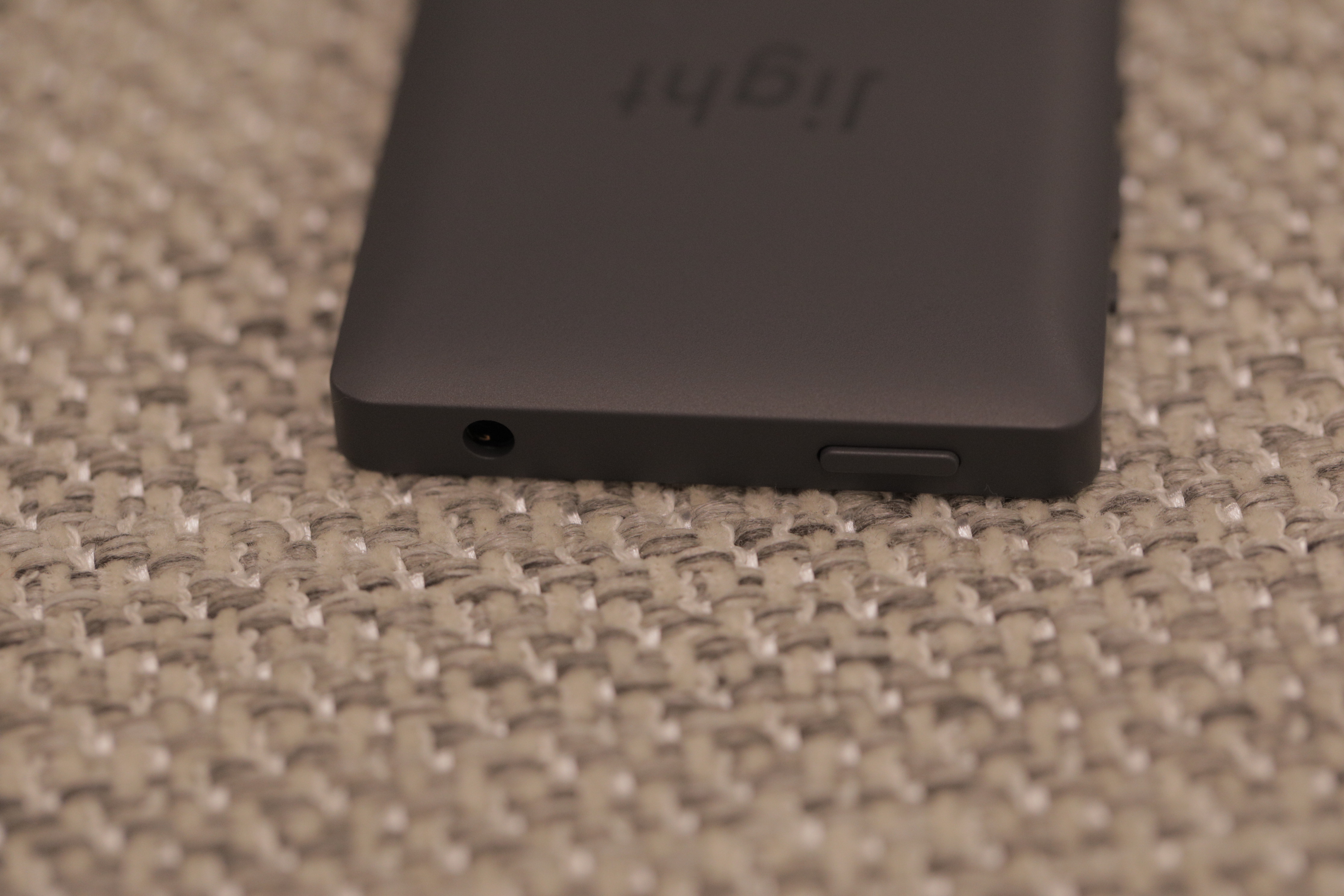
“To use an analogy, we’re offering a beautifully designed screwdriver that does one thing well,” says Tang. “Obviously, the Light Phone being an E Ink screen and small size limits it to the users. We don’t encourage people to play videos, or watch video on it. But making a phone call, getting a taxi, listening to music (yes, there’s a headphone jack), recording a voice memo. Maybe down the road they have a calendar reminder, those are the simple tools; it has a clear goal.”

The Light Phone II is probably the least pretty device I’ve reviewed for this site. It’s small, but chunky, like a shrunken e-reader with a screen too small to actually use for e-books. It’s got just enough functionality to (hopefully) free you of your smartphone for hours at a time.
CMB 8088

Light says it has sold “tens of thousands” of units. It shipped 15,000 of the first generation and somehow has in the neighborhood of 40,000 reservations it hasn’t filled for the device. The company is looking to push those users toward the Light Phone 2. That device, meanwhile, has around 10,000 pre-orders at present.


04 Sep 2019

Time to apply to the TC Hackathon at Disrupt Berlin 2019

What do you get when you mix 500 highly skilled code poets, 36 hours of sleep-deprived coding and an unlimited supply caffeine? If you guessed the TC Hackathon you are correct! Come and pit your mad programming skills against the best in the world at Disrupt Berlin 2019 on 11-12 December.

We’re limiting the number of participants to 500, so don’t wait — apply to compete in the TC Hackathon today. It doesn’t cost a thing, and you’ll even get a free Innovator pass to Disrupt Berlin.

The TC Hackathon is a series of sponsored challenges that will test your skills to the max. In addition to sponsor prizes, TechCrunch will award a $5,000 prize to the top overall hack. We’ll announce the specific sponsors, challenges and prizes in the coming weeks, but all of them will be looking for working solutions to real-world problems. You can get a sense of what to expect by looking at the sponsored contests, prizes and winners from the Disrupt SF 2018 Hackathon.

If you’re chosen to compete, you’ll join a team onsite (if you’re not already part of a team), choose which challenge you’ll take on and spend the next 24-ish hours busting your hump to design, code and create something great.

A panel of judges will look at all the completed projects in a science-fair style format and choose 10 teams to move into the final round. On day two, each of those teams will pitch their work in just two minutes on the Extra Crunch Stage.

Sponsors will announce the winners of the individual hacks and award their prizes, and then TechCrunch will select one team to receive $5,000 for the best overall hack.

You’ll be pushed to your limits, both mentally and physically, in that really fun kind of way. Plus, it’s a tremendous opportunity to connect and network with your community. Who knows, you might even find a co-founder for your own startup or meet a potential employer.

The TC Hackathon returns to Disrupt Berlin 2019 on 11-12 December. Seats are limited, so don’t wait. Come show us and the startup world what you can do. Apply right here, today.

Is your company interested in sponsoring the TC Hackathon? Contact our sponsorship sales team by filling out this form.

04 Sep 2019

Amazon and Walmart’s Flipkart pledge to scrap single-use plastic packaging in India

Amazon India and Walmart’s Flipkart, two of the largest e-commerce businesses in India, have pledged to curb the usage of single-use plastic in their packaging as they move to help New Delhi fight its ongoing battle with environmental pollution.

Amazon said on Wednesday it will replace all single-use plastic in its packaging by June 2020 with paper cushions. The move follows Flipkart’s announcement last week when it said it has already cut its reliance on single-use plastic by 25% and intended to move entirely to recycled plastic consumption in its supply chain by March 2021.

Amazon said it will use paper cushions to replace plastic dunnage like air pillows and bubble wraps across its fulfillment centers in India. “Paper cushions will be used to fill the void space inside packages to ensure that the product is well protected in transit,” the company said in a statement.

In a statement, Akhil Saxena, VP of Customer Fulfillment at Amazon India, said the company will also train its sellers who directly fulfill customer orders to curb their reliance on single-use plastic. “This investment in protecting the environment ensures a triple win — it is good for our planet, good for our customers and community, and good for the business,” he said.

The Indian government, which has previously acknowledged that the nation is getting flooded with plastic waste, is widely expected to announce major steps to curb pollution in the coming days.

“E-commerce companies are the ones creating all this waste, so the onus of recycling it has to be put on them as well,” environment secretary C.K. Mishra told Indian outlet Economic Times last week.

More to follow…

04 Sep 2019

Depop CEO Maria Raga tells us everything about social e-commerce at Disrupt Berlin

Depop started as a simple app to post photos of clothes and post them for sale. But it has become a cultural phenomenon with millions of users, a vibrant community and even some superusers making a living from the platform. That’s why I’m excited to announce that Depop CEO Maria Raga is joining us at TechCrunch Disrupt Berlin.

Many have tried to merge a social app with a shopping experience, but few have succeeded. Depop is one of them. If you’re an Instagram user, the app looks familiar with its outline icons. But instead of following brands and sometimes buying new items, Depop is all about vintage items, rare sneakers and things you simply can’t find on a regular social network.

Depop users can follow other users, discover items from their favorite brand, get personalized recommendations, and of course buy and sell items. It’s a social experience that works particularly well on mobile and makes shopping more personal.

Selling something on Depop is as easy as posting photos on a social app. You enter a description, a location, a brand and a price and you’re good to go. After that, other users can buy stuff directly from the app. You can then ship your items and get your money on your PayPal account.

And it’s been a massive success. There are currently over 13 million users — the vast majority of them are under the age of 26. The company has handled more than $500 million of gross merchandise value since its launch.

Interestingly, some superusers thrived on the platform. Those users are talented when it comes to spotting and acquiring limited-edition clothes, sneaker drops and other valuable items. They sell them on Depop with some of them generating as much as $100,000 of revenue per year.

Under Maria Raga, Depop has raised over $100 million. Earlier this summer, the company announced a $62 million funding round led by General Atlantic. It’s clear that Depop is now thriving as both a social app and a marketplace. And I can’t wait to hear how Maria Raga did it.

Buy your ticket to Disrupt Berlin to listen to this discussion — and many others. The conference will take place December 11-12.

In addition to panels and fireside chats, like this one, new startups will participate in the Startup Battlefield to compete for the highly coveted Battlefield Cup.


Maria Raga is the CEO of Depop. Since being promoted to the position in 2016 from VP of Operations, she has presided over every element of the business from finance and engineering to marketing and product. An open and collaborative CEO, Maria is dedicated to her team, which has grown to 150+ employees in 5 offices worldwide in the last three years alone. Perhaps most importantly, since she took over as CEO, she has raised close to $100M in funding, which has helped to grow and nurture the community on Depop – now 13 million users.

Prior to Depop, Maria held successively roles at Groupon and Privalia. Having graduated from Insead MBA, Maria joined Bain & Company as a consultant.

Born in Valencia, Spain, Maria now resides in London with her husband and 2 children. In her spare time, Maria enjoys connecting with Depop’s entrepreneurial Gen-Z constituency and promoting women in the workplace

04 Sep 2019

Acer announces a $14,000 gaming chair because why not

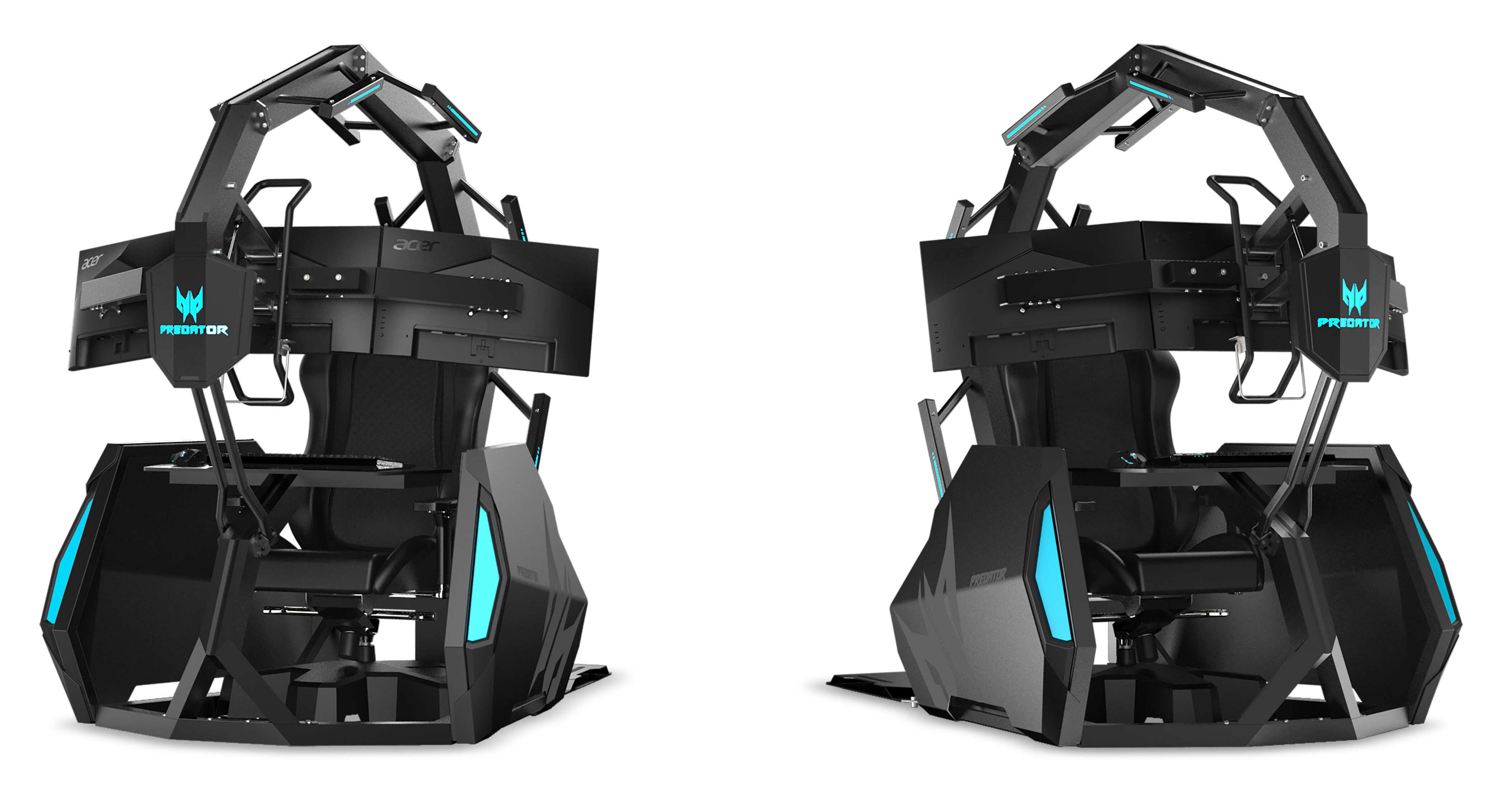
This isn’t a chair. This is a rig. It’s a throne. It’s gaming monster. The Acer Predator Thronos Air Gaming Chair is a $13,999 device has everything including a massage function.

The Predator Thronos Air is a massive steel structure that encases gamers in an immersive experience. There are three monitor mounts, an adjustable keyboard and mouse tray, a footrest and a complex cable management system to hide all wires connecting everything together. If that’s not enough, Acer has several available accessories like a cup holder, cameras and hubs.

The only thing missing are the gaming computer, monitors, keyboards, and, well, you.

This is Acer’s second gaming chair and this one is half the price of the original. Announced at IFA 2018, the $30,000 Predator Thrones Gaming Chair packs even more goodies including a powered recline mode to tilt the entire rig 140 degrees. This version requires a ground floor location and a floor that can support 715 pounds.

These sort of gaming rigs have been available for several years and provide a unique vantage point for gamers and flight sim operators. Many can be had for less than these Acer examples but few have a more imposing name than Thronos.

predator

04 Sep 2019

Alibaba reportedly near finalizing a deal to acquire NetEase’s cross-border e-commerce unit

After weeks of media reports, Alibaba may finally be nearing an agreement to acquire NetEase’s cross-border e-commerce unit, Kaola. Chinese tech news website 36kr reports that a deal may be announced as early as this week and is expected to be worth $2 billion in cash and shares.

Kaola will continue to run independently, but would become part of Alibaba’s Tmall Global, creating a massive cross-border e-commerce business. At the end of last year, Tmall Global held a 31.7% share of the market, while Kaola had about 24.5%, much larger than rivals JD Worldwide (11.5%), VIP International (9.7%), Amazon (6%).

Caixin Global first reported that Alibaba was planning to acquire Kaola for $2 billion in cash on August 15, but then the deal was reportedly called off after the companies disagreed on the price and other details.

36kr reports that Kaola employee stock options will be converted into Alibaba shares and that even though the brand will remain independent, Alibaba will put a new CEO in place, replacing current Kaola head Zhang Lei.

An Alibaba spokesperson said the company does not comment on market rumors. NetEase had no comment.

Alibaba is also expected to invest in NetEast Cloud Music, but that deal is unrelated to the Kaola acquisition.

04 Sep 2019

Just 3 days left: buy super early bird passes to Disrupt Berlin 2019

Hey European startup fans, Disrupt Berlin 2019 takes place on 11-12 December, but our super early-bird ticket pricing won’t last nearly that long. You have just three days left to save up to €600. Pay close attention to the deadline and buy your Disrupt passes by 11:59 p.m. (CEST) on 6 September.

You’ll save even more money if you act quickly enough and combine the super early bird price with our group discounts. Bring your whole team or gift passes to valued clients — that’ll impress for sure. Here’s what you’ll save by buying in bulk.

  • Buy five or more Innovator passes at once and enjoy a 20% discount
  • Buy two or more Founder or Investor passes at once and enjoy a 10% savings

Join more than 3,000 attendees and hundreds of exhibitors at Europe’s premier tech conference focused on early-stage startups. Head to Startup Alley, the expo floor and Opportunity Central of Disrupt. Network like there’s no tomorrow, and don’t forget to check out our TC Top Picks while you’re there.

Better yet, why not apply to our TC Top Picks program? TC editors will choose up to five early-stage startups in these categories: AI/Machine Learning, BioTech/HealthTech, Blockchain, FinTech, Mobility, Privacy/Security, Retail/eCommerce, Robotics/IoT/Hardware, SaaS and Social Impact & Education.

If you make the grade, you’ll receive a free Startup Alley Exhibitor Package, VIP treatment at the show, lots of media and investor attention plus a live interview with a TC editor on the Showcase Stage.

If you’re ready to launch your early-stage startup to the world-wide tech community, we want you apply to the Startup Battlefield pitch competition. It’s free and participating can put your startup on the map. Consider our Startup Battlefield alumni community — 857 companies have collectively raised more than $8.9 billion in funding, with 112 successful exits. If you’re selected, you’ll join the ranks of this august group that includes Dropbox, GetAround, SirenCare, Fitbit, Mint, Vurb and more.

Disrupt Berlin always invites the tech and investment world’s top names, minds and makers to share their insight, advice and experiences covering a range of hot-button topics. Here are just a few of the fascinating people who will grace our stages: Maria Raga, the CEO of Depop, Hovhannes Avoyan the founder and CEO of PicsArt, Roxanne Varza, the director of Station F and Tom Hulme, a general partner at GV. That’s only the beginning — we’re adding more people every week, so keep an eye on our growing list of speakers.

Disrupt Berlin 2019 takes place on 11-12 December, but the super early bird ticket pricing disappears in just three days. Buy your passes now before the deadline hits at 11:59 p.m. (CEST) on 6 September.

Is your company interested in sponsoring or exhibiting at Disrupt Berlin 2019? Contact our sponsorship sales team by filling out this form.

04 Sep 2019

India’s Swiggy has a new service that will deliver just about anything

Swiggy, one of the largest food delivery startups in India, has ambitions that move beyond getting chicken shawarma to you. The startup, which began delivering select products from local stores earlier this year, today launched Swiggy Go service to enable consumers, micro- and small businesses to deliver just about anything within a city.

Swiggy Go, currently available only in Bangalore, further pits the food delivery giant against Google-backed hyper-local concierge startup Dunzo, which is also currently operational in select cities. In a recent interview with TechCrunch, Dunzo executives said food items account for more than 25% of all deliveries on their platform.

Five-year old Swiggy, backed by Naspers and Tencent, said it intends to expand Swiggy Go to more than 300 cities by next year.

The firm also said it is bringing Swiggy Store, which is currently available only in Gurgaon, to Bangalore and Hyderabad. By next year, it plans to have Store’s presence in all metro cities in the country.

In a statement, Sriharsha Majety, CEO of Swiggy, said, “Swiggy’s vision is to elevate the quality of life of urban consumers by offering unparalleled convenience. After enabling this with food delivery for five years and stores across the city with Swiggy Stores, Go will open the Swiggy delivery superpower to all consumers in the city.”

More to follow…

04 Sep 2019

Railsbank raises £10M Series A for its open banking and compliance platform

Railsbank, the open banking and compliance platform co-founded by CEO Nigel Verdon, who previously founded Currencycloud, has raised £10 million in Series A funding.

The new injection of capital will be used for further expand beyond Europe, including the U.S., Australia and South East Asia. The latter includes a new office in Singapore where a small team has already been assembled.

Backing Railsbank’s Series A is Moneta Capital, which led the round, alongside CreditEase, Clocktower Technology Ventures, Singapore Life. A number of existing investors also participated including Firestartr.

In a call with Verdon, who was talking to TechCrunch from Singapore, he explained that the new office is part of a strategy that will see Railsbank ride the next wave of fintech innovation, which he says is happening in South East Asia and where the playbook from London and New York 2011 is being repeated.

“In 2011, [we] saw the emergence of the finTech 1.0 scene with people like Currencycloud (which I also founded), TransferWise, Betterment, Bank Simple etc,” he tells me.

“This was enabled by the opening up of regulation as the macro trend. We currently see [a] similar regulator macro trend in SE Asia emerging and also the macro trend of tech companies being the distributors of financial products driven by access to cheap smart phones by firms like Xiaomi”.

To that end, Railsbank is positioning itself as a “utility” on which other companies — spanning fintech upstarts, challenger brands, to incumbent banks that want to re-factor their tech — can build and sell various financial services or add fintech features to their products.

“Just like the water company – reliable, safe and works 24×7 and priced at utility pricing,” Verdon says of Railsbank, likening it to what Amazon has done for data centres with AWS. “Railsbank is a utility for the compete financial services backend: platform, connectivity, operations, scheme memberships (e.g. Visa), regulation, and compliance”.

As an example of what the Railsbank platform is capable of, Verdon described how SingLife was able within 2 days to develop a completely working digital banking app with a own debit card and support for bank transfers, including dedicated account numbers and sort codes etc.

This, he tells me, is made possible because the Railsbank platform and API provides all of the tech, compliance and integration “hooks” required to build a full banking experience.

Meanwhile, although the startup continues to count other fintech startups as customers, Verdon says Railsbank is also working with brands offering financial products (e.g. supermarkets, travel, retail) and what he dubs “old fin”: companies looking to replace their own costly tech with a platform solution.

“We are also working with banks to provide a complete utility infrastructure and payments/card/ops rails to reduce their… operational costs,” he tells me.