Year: 2019

26 Aug 2019

Bell’s innovative VTOL cargo craft takes its first successful autonomous flight

Bell Helicopter’s catchily-named Autonomous Pod Transport 70 (aka APT 70) has managed a major milestone, performing its first autonomous flight during a test at its Forth Worth providing ground. The aircraft is a small vertical take-off and landing craft that users four rotors to provide lift and propulsion once it’s in the air, and it’s a prototype for what Bell hopes will eventually be a small autonomous commercial cargo craft.

APT 70 has a max speed of over 100 mph, and can carry 70 lbs on board, which is good for a fair range of potential applications, including package delivery and even things like humanitarian and rescue missions. Because of the way it flies, switching from vertical to horizontal orientation for its rotors, it can fly much faster than traditional rotor-based aircraft given similar size and power constraints.

Bell’s goal with APT 70 is to successfully simulate a commercial mission as part of the NASA Systems Integration and Operationalization demo set to take place sometime in the middle of next year. This demonstration aims show how the aircraft can be intreated with centralized command and control and obstacle avoidance technologies, a key step in readying autonomous aircraft for commercial service in the U.S.

In addition to its U.S. demonstration mission with NASA, Bell is working with Japanese logistics company Yamato, and hopes to have their first collaborative product in market for on-demand customer deliveries sometime in the middle of next year.

26 Aug 2019

Apple patches previously-fixed security bug that allowed iOS 12.4 jailbreak

Apple has fixed a security flaw for a second time after it accidentally reintroduced an old bug in a recent software update.

iOS 12.4.1, released Monday, contains a security fix that was first patched months earlier in iOS 12.3. Apple rolled out a fix in May, but accidentally undid the security patch in its latest update, iOS 12.4, in July.

In a brief security advisory published after the software’s release, Apple said it fixed a kernel vulnerability that could have allowed an attacker to execute code on an iPhone or iPad with the highest level of privileges.

Those privileges, also known as system or root privileges, can open up a device to running apps that are not normally allowed by Apple’s strict rules. Known as jailbreaking, apps can access parts of a device that are normally off-limits. On one hand that allows users to extensively customize their devices, but it can also expose the device to malicious software, like malware or spyware apps .

Spyware apps often rely on undisclosed jailbreaks exploits to get access to a user’s messages, track their location, and listen to their calls without their knowledge. Nation states are known to hire mobile spyware makers to remotely install malware on the devices of activists, dissidents, and journalists. Washington Post journalist Jamal Khashoggi, who was murdered by agents of the Saudi regime, is believed to have been targeted by mobile spyware, according to reports. The company accused of supplying the spyware, Israel-based NSO Group, has denied any involvement.

Apple confirmed the fix in its iOS 12.4.1 security notes, which included a short acknowledgement to Pwn20wnd, the team which confirmed last week that its jailbreak was working again.

26 Aug 2019

IBM’s quantum-resistant magnetic tape storage is not actually snake oil

Usually when someone in tech says the word “quantum,” I put my hands on my ears and sing until they go away. But while IBM’s “quantum computing safe tape drive” nearly drove me to song, when I thought about it, it actually made a lot of sense.

First of all, it’s a bit of a misleading lede. The tape is not resistant to quantum computing at all. The problem isn’t that qubits are going to escape their cryogenic prisons and go interfere with tape drives in the basement of some datacenter or HQ. The problem is what these quantum computers may be able to accomplish when they’re finally put to use.

Without going too deep down the quantum rabbit hole, it’s generally acknowledged that quantum computers and classical computers (like the one you’re using) are good at different things — to the point where in some cases, a problem that might take incalculable time on a traditional supercomputer could be done in a flash on quantum. Don’t ask me how — I said we’re not going down the hole!

One of the things quantum is potentially very good at is certain types of cryptography: It’s theorized that quantum computers could absolutely smash through many currently used encryption techniques. In the worst case scenario, that means that if someone got hold of a large cache of encrypted data that today would be useless without the key, a future adversary may be able to force the lock. Considering how many breaches there have been where the only reason your entire life wasn’t stolen was because it was encrypted, this is a serious threat.

quantum tapeIBM and others are thinking ahead. Quantum computing isn’t a threat right now, right? It isn’t being seriously used by anyone, let alone hackers. But what if you buy a tape drive for long-term data storage today, and then a decade from now a hack hits and everything is exposed because it was using “industry standard” encryption?

To prevent that from happening, IBM is migrating its tape storage over to encryption algorithms that are resistant to state of the art quantum decryption techniques — specifically lattice cryptography (another rabbit hole — go ahead). Because these devices are meant to be used for decades if possible, during which time the entire computing landscape can change. It will be hard to predict exactly what quantum methods will emerge in the future, but at the very least you can try not to be among the low-hanging fruit favored by hackers.

The tape itself is just regular tape. In fact, the whole system is pretty much the same as you’d have bought a week ago. All the changes are in the firmware, meaning earlier drives can be retrofitted with this quantum-resistant tech.

Quantum computing may not be relevant to many applications today, but next year who knows? And in ten years, it might be commonplace. So it behooves companies like IBM, which plan to be part of the enterprise world for decades to come, to plan for it today.

26 Aug 2019

Amazon’s free streaming service IMDb TV comes to mobile devices

IMDb TV, the free ad-supported streaming service launched by Amazon-owned IMDb at the beginning of the year (originally called Freedive), is today arriving on mobile devices. With the updated version of iOS and Android IMDb app rolling out now, users can stream from the app’s growing library of free movies and TV series.

Prior to IMDb TV’s launch, the movie website had experimented with video content in the form of trailers, celebrity interviews, and other short-form series. But consumers today are more interested in services where they can stream premium content for free, without a subscription — as they can on IMDb TV competitors like Walmart-owned Vudu’s “Movies on Us,” Tubi, or The Roku Channel, for example.

At launch, IMDb TV offered a collection of TV shows like Fringe, Heroes, The Bachelor and Without a Trace, as well as Hollywood movies like Awakenings, Foxcatcher, Memento, Monster, Run Lola Run, The Illusionist, The Last Samurai, True Romance, and others.

This summer, it expanded its lineup through new deals with Warner Bros., Sony Pictures Entertainment and MGM Studios.

This brought movies like Captain Fantastic and La La Land to the service, the latter which has since become one of the service’s most-streamed movies this summer. Other popular titles included Jerry Maguire, Practical Magic, A Knight’s Tale, Drive, Max, Step Dogs, Zookeeper, Paddington, and NeverEnding Story.

More recent deals with Paramount and Lionsgate have also brought new content to IMDb TV, like Silver Linings Playbook, Age of Adaline, In the Heart of the Sea, and the TV show, The Middle.

The company hasn’t said how many customers IMDb TV has, but the service has benefitted from integrations with Amazon’s Fire TV.

Earlier this year, Marc Whitten, vice president of Fire TV, noted that Fire TV customers’ use of free, ad-supported apps had increased by over 300% during the last year. IMDb TV, is expected to contribute to that, with its placement on the “Your Apps & Channels” row on Fire TV and its availability as a free channel within the Prime Video app.

The updated iOS and Android IMDb app is rolling out starting today, the company says.

26 Aug 2019

Satellite internet startup Astranis books first commercial launch on SpaceX Falcon 9

Y Combinator-backed startup Astranis is now set to launch its first commercial telecommunication satellite aboard a Falcon 9 rocket, with a launch timeframe currently set for sometime starting in the fourth quarter of next year. Astranis aims to address the market of people who don’t currently have broadband internet access, which is still a huge number globally, and they hope to do so using low-cost satellites that massively undercut the price of existing global telecommunications hardware, which can be built and launched much faster than existing spacecraft, too.

Astranis satellites are much more cost efficient because they’re smaller and easier to make, which changes the economics of deployment for potential carrier and connectivity provider partners. Its approach has already attracted the partnership of Microcom subsidiary Pacific Dataport, an Anchorage company that was formed to expand satellite broadband access in Alaska. This will be the goal of the company’s first launch with SpaceX, to deliver a single satellite to geostationary orbit that will add more than 7.5 Gbps of capacity to the internet provider’s network in Alaska, tripling capacity and potentially reducing costs by “up to three times,” according to Astranis.

This isn’t the first ever satellite that Astranis has sent up to space – it launched a demonstration satellite in 2018 to show that its tech could work as advertised. Astranis’ approach is distinct from others attempting to offer satellite-based connectivity, including SpaceX’s own Starlink project, because it focuses on building satellites that remain in a fixed orbital position relative to the area on the ground where they’re providing service, as opposed to using a large constellation of low-Earth orbit satellites that offer coverage because one or more are bound to be over the coverage area at any given time as they orbit the Earth, handing off connections from one to the next.

26 Aug 2019

Satellite internet startup Astranis books first commercial launch on SpaceX Falcon 9

Y Combinator-backed startup Astranis is now set to launch its first commercial telecommunication satellite aboard a Falcon 9 rocket, with a launch timeframe currently set for sometime starting in the fourth quarter of next year. Astranis aims to address the market of people who don’t currently have broadband internet access, which is still a huge number globally, and they hope to do so using low-cost satellites that massively undercut the price of existing global telecommunications hardware, which can be built and launched much faster than existing spacecraft, too.

Astranis satellites are much more cost efficient because they’re smaller and easier to make, which changes the economics of deployment for potential carrier and connectivity provider partners. Its approach has already attracted the partnership of Microcom subsidiary Pacific Dataport, an Anchorage company that was formed to expand satellite broadband access in Alaska. This will be the goal of the company’s first launch with SpaceX, to deliver a single satellite to geostationary orbit that will add more than 7.5 Gbps of capacity to the internet provider’s network in Alaska, tripling capacity and potentially reducing costs by “up to three times,” according to Astranis.

This isn’t the first ever satellite that Astranis has sent up to space – it launched a demonstration satellite in 2018 to show that its tech could work as advertised. Astranis’ approach is distinct from others attempting to offer satellite-based connectivity, including SpaceX’s own Starlink project, because it focuses on building satellites that remain in a fixed orbital position relative to the area on the ground where they’re providing service, as opposed to using a large constellation of low-Earth orbit satellites that offer coverage because one or more are bound to be over the coverage area at any given time as they orbit the Earth, handing off connections from one to the next.

26 Aug 2019

The Void’s Curtis Hickman on scaling, creative IP and the future of VR experiences

What can you do with virtual reality when you have complete control of the physical space around the player? How “real” can virtual reality become?

That’s the core concept behind The Void. They take over retail spaces in places like Downtown Disney and shopping malls around the country and turn them into virtual reality playgrounds, They’ve got VR experiences based on properties like Star Wars, Ghostbusters, and Wreck-It Ralph; while these big names tend to be the main attractions, they’re dabbling with creating their own original properties, too.

By building both the game environment and the real-world rooms in which players wander, The Void can make the physical and virtual align. If you see a bench in your VR headset, there’s a bench there in the real world for you to sit on; if you see a lever on the wall in front of you, you can reach out and physically pull it. Land on a lava planet and heat lamps warm your skin; screw up a puzzle, and you’ll feel a puff of mist letting you know to try something else.

At $30-$35 per person for what works out to be a roughly thirty-minute experience (about ten of which is watching a scene-setting video and getting your group into VR suits), it’s pretty pricey. But it’s also some of the most mind-bending VR I’ve ever seen.

The Void reportedly raised about $20 million earlier this year and is in the middle of a massive expansion. It’s more than doubling its number of locations, opening 25 new spots in a partnership with the Unibail-Rodamco-Westfield chain of malls.

I sat down to chat with The Void’s co-founder and Chief Creative Officer, Curtis Hickman, to hear how they got started, how his background (in stage magic!) comes into play here, how they came to work with massive properties like Ghostbusters and Star Wars, and where he thinks VR is going from here.

Greg Kumparak: Tell me a bit about yourself. How’d you get your start? How’d you get into making VR experiences?

26 Aug 2019

Udacity names former LendingTree executive to CEO post

Online education startup Udacity has hired former LendingTree executive Gabriel Dalporto as its new CEO, an appointment that follows months of layoffs and a restructuring directed by the company’s co-founder and executive chairman Sebastian Thrun.

Dalporto comes to Udacity after seven years at LendingTree, where he served in numerous positions, including chief marketing officer and chief financial officer. Dalporto stepped down as CFO in 2017 to join the company’s board and become executive advisor to the CEO. Dalporto left the executive advisor job in 2018, but remains on the board.

Thrun, who stepped in as CEO after Vishal Makhijani left the top post in October 2018, will stay on as executive chairman.

“He’s extremely strategic and pragmatic,” Thrun said in a recent interview, describing Dalporto.

Dalporto is known for his turnaround skills. But the new CEO says his focus at Udacity won’t be slashing costs and other activities often associated with that skill set.

“I was hired as a growth executive; I was not hired to be a turnaround executive,” Dalporto told TechCrunch.
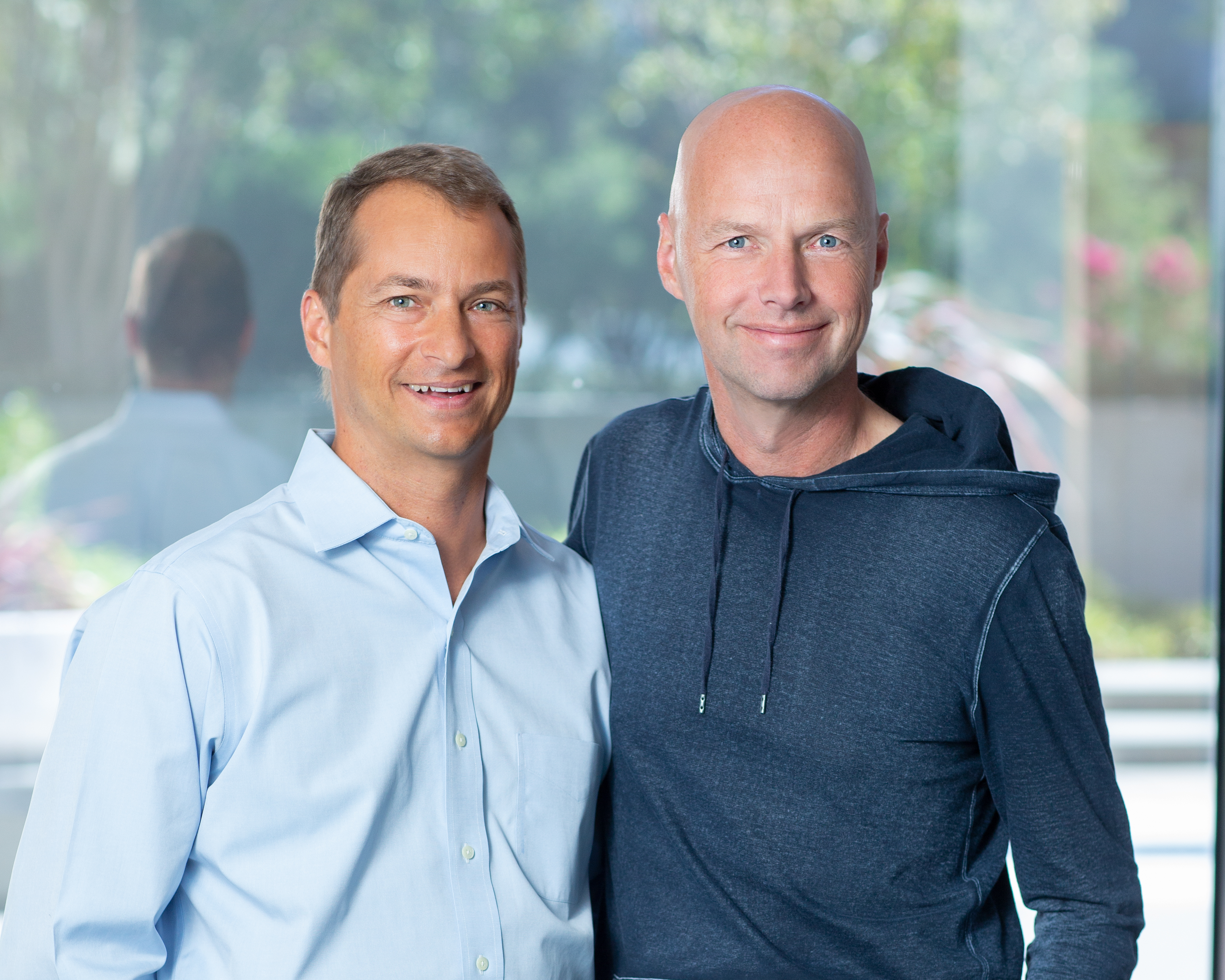
udacity Team H IMG 5639

Dalporto isn’t ready to provide details of his plans as CEO. Monday is his first day at the startup. But he will likely focus on growth areas such as the startup’s enterprise and government programs, as well as retaining and recapturing students into the Udacity ecosystem. Udacity’s enterprise clients include AT&T, Airbus, Audi, BMW, Capital One, Cisco and the Royal Bank of Scotland. It also has government relationships with Australia, the MENA region and New Zealand.

Dalporto is coming into a startup that is leaner and more productive, in terms of launching new nanodegrees, than it was a year ago.  It’s also cash-flow positive, according to Thrun, who has spent 2019 revamping the company.

When Thrun took over the CEO post, he found a company that had grown too quickly and was burdened by its own bureaucracy. Udacity, which specializes in “nanodegrees” on a range of technical subjects that include AI, deep learning, digital marketing, VR and computer vision, was struggling because of runaway costs and other inefficiencies. Its nanodegree programs, which had grown in 2017, became sluggish in 2018. 

Staff reductions soon followed as Thrun sought to get a handle on costs. About 130 people were laid off and other open positions were left vacant. Thrun then cut further in April. About 20% of the staff was laid off and operations were restructured in an effort to bring costs in line with revenue without curbing growth. The company streamlined its marketing efforts and downsized and consolidated office space. As of April, the startup employs 300 full-time equivalent employees and about 60 contractors.

Other changes included the launch of a global technical mentoring program, switching its direct-to-student business from fixed to monthly subscription pricing to incentivize individuals to move through courses faster. Lalit Singh, who joined Udacity in February as chief operating officer, has been critical to the turnaround, according to Thrun.

Its productivity has also improved. In first six months of 2019, Udacity launched 12 new nanodegree programs compared to just 8 in all of 2018.

“In the three months since we’ve initiated these changes, the consumer business has grown by more than 60%,” Thrun wrote in a blog post Monday announcing the changes.

Udacity’s enterprise and government programs have also grown, with bookings increasing by more than 100% year over year.


26 Aug 2019

US and France reach a compromise on France’s tax on tech giants

During a new briefing at the Group of 7 summit, French President Emmanuel Macron announced that U.S. President Donald Trump and Macron have agreed on a compromise regarding the controversial tax on tech giants.

France is still going to tax big tech companies. But the French government promises that it’ll scrap the French tax as soon as the OECD finds a way to properly tax tech companies in countries where they operate.

The OECD has been working on a way to properly tax tech companies with a standardized set of rules for a few years. According to recent announcements, this new framework could be released in 2020.

In addition to ending the French tax, as Le Monde outlined, France promises that it’ll pay back companies that overpaid before the OECD framework. For instance, if Facebook pays a lot of taxes in 2019 due to the French tax on tech giants and if they would have paid less under the OECD framework, France will pay back the difference.

“There’s been a lot of anxiety because of misunderstandings on this French digital tax. We talked about it, and I think we have found a very good deal thanks to the work of ministers,” Macron said.

“On a bilateral basis, we have reached an agreement to fix our disagreements between us. We are going to work together to find a solution. When there’s an international taxation model, we will remove the tax — and everything that has been paid will be deducted from this international tax. We have found an agreement that is good for all parties involved. It can solve a lot of really negative issues and improve the international system.”

On July 26, Trump criticized France’s plans in a tweet. “France just put a digital tax on our great American technology companies. If anybody taxes them, it should be their home Country, the USA,” he wrote. “We will announce a substantial reciprocal action on Macron’s foolishness shortly. I’ve always said American wine is better than French wine!”

Right before leaving for the Group of 7 summit, Trump reiterated criticism of the French tax and said the U.S. would be placing tariffs on French wines.

At the Group of 7 summit, Trump didn’t want to confirm that the U.S. and France had reached an agreement. As CNN reported, when a reporter asked a question about France’s tax on tech companies, Trump said: “I can confirm that the first lady loved your French wine. She loved your French wine. So thank you very much. That's fine.”

A couple of months ago, the French parliament voted in favor of a new tax on tech giants. In order to avoid tax optimization schemes, big tech companies that generate significant revenue in France are taxed on their revenue generated in France.

France’s Economy Minister Bruno Le Maire first lobbied other European countries to create that new tax at the European level. It made a ton of sense as the main issue is that big tech companies create complicated European corporate structures in order to lower their effective tax rate.

But Le Maire couldn’t get a unanimous vote and created a tax for France in particular. If you’re running a company that generates more than €750 million in global revenue and €25 million in France, you have to pay 3 percent of your French revenue in taxes.

This tax is specifically designed for tech companies in two categories — marketplace (Amazon’s marketplace, Uber, Airbnb…) and advertising (Facebook, Google, Criteo…). While it isn’t designed to target American companies, the vast majority of big tech companies that operate in France are American.

26 Aug 2019

Microsoft will let some Windows 7 customers get free security updates for an extra year

In four months time, Windows 7 will reach end-of-life and will no longer receive security updates.

That’s going to be a problem for some enterprises which still run the decade-old operating system. Starting January 14, 2020, Windows 7 computers will stop receiving security patches, leaving enterprises vulnerable to malware.

According to latest data, some 37% of all desktop consumer and enterprise computers still run Windows 7, with Windows 10 marginally ahead at 41%.

There will be, however, some reprieve for enterprise customers with active Windows 10 subscriptions.

A little-publicized document published by Microsoft says top-tier customers with Windows E5, Microsoft 365 E5, and Government E5 subscriptions will get extended security updates for a year at no additional charge. After the year expires, Microsoft will charge each enterprise device $50 to receive updates for a second year and $100 per device for a third year.

Qualifying subscriptions must remain active until the end of the year and throughout the extended security updates period to continue to receive security updates, the document said.

But for everyone else on other Windows subscription plans, Microsoft will begin charging from the moment Windows 7 falls out of support in January, with a final cut-off for extended security updates in January 2023.

The software and services giant began warning users in March that they would soon stop receiving critical and necessary security updates. Microsoft recommends users upgrade to Windows 10, or obtain extended security updates as a “last resort.”

News of the security update extension was first reported by Computerworld.