Year: 2019

23 Aug 2019

Target’s same-day pickup and delivery services growing at double the rate of 2018

Target’s investment in same-day pickup and delivery options is paying off. The company, which today offers same-day in-store pickup, drive-up, and same-day delivery through its acquisition of Shipt, said this week that these services combined have more than doubled their sales in the last year. In addition, they accounted for more than a third of Target’s digital sales, up from about 20% last year.

“These options offer speed, convenience and reliability and as a result, they are quickly becoming the preferred fulfillment choices for our guests,” said Target CEO Brian Cornell, speaking to investors about Target’s Q2 earnings. “And most importantly, because these options leverage our store infrastructure, technology, and teams, same-day fulfillment delivers outstanding financial performance as well,” he added. 

What’s notable about the same-day sales is that they’re bringing in guests to Target, who had never before placed digital orders with the retailer.

Roughly 1 in 5 customers placing a same-day order in the second quarter were placing an order with Target for the first time.

And once Target customers become familiar with the process, they seem to return in short order. During Q2, more than three-quarters of the same-day orders were placed by guests who had used same-day fulfillment in the past three months.

Target’s ability to grow its same-day sales in this fashion was the result of investment in infrastructure, technology, and even its brick-and-mortar stores themselves.
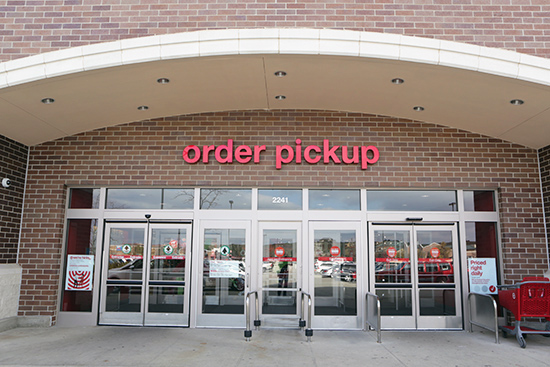
Glenview Order Pickup Entrance Exterior

On the technology front, Target says its pickup and delivery services benefitted from increased order picking efficiency. Instead of using a first-in, first-out (FIFO) system, new algorithms are being used to prioritize the sequence of order picking that helps direct store employees on which work to do first as well as the best box size for packing orders.

The technology also helps to optimize the path for order picking to minimize the number of steps between the sales floor and back room.

Target claims that since the beginning of last year, these improvements have led to an over 30% increase in order picking for drive-up and pickup services. Its ship-from-store capability also improved over 30% during that time.

Meanwhile, the retailer’s $7+ billion remodeling project announced in 2017 was focused more than just updating the stores’ look-and-feel and merchandising displays. The new format stores also include changes designed to cater to online shoppers who come inside the store for their order pickups, by adding more space for things like Order Pickup.

Outside, space is added for Drive Up customers who shop online then later drive to the store for curbside service.

This summer, Target passed its 500th store remodel, and says it’s on-track to remodel 1,000 stores by the end of 2020. It also plans to open up more small-format stores — about a third of the size of a traditional Target, or on average, 40,000 sq ft — in big cities, suburbs, and college campuses.

Target says it plans on opening 30 more small-format stores per year, as it has done last year and the year prior. It said on Friday it had opened its 100th small-format store.
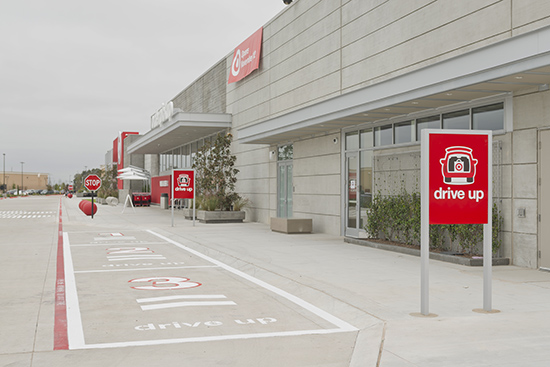
Richmond Drive Up

All the changes to make Target’s stores more of home for order fulfillment has helped the retailer reduce costs, as well, the company pointed out this week on its Q2 earnings.

Target says, as it’s shifted away from upstream distribution centers for order fulfillment to its stores, costs went down by more than 40%. And costs related to same-day services went down by 90%. Target today has 1,855 U.S. stores, which is how it’s able to make this store-centric strategy work.

Many traditional big-box retailers are struggling under the weight of competition from Amazon — Macy’s, Kohl’s and J.C. Penney’s all released disappointing earnings this week, for example.

Target’s earnings, however, beat every estimate this week, sending shares to a record high.

The company reported $18.42 billion in revenue, above the $18.34 billion expected. Profits were up 17% to $938 million ($1.82 a share) compared with $799 million ($1.49 a share), a year ago.

Second-quarter comparable sales grew 3.4 percent, with same-day fulfillment accounts for nearly 1.5 percentage points of that. Over the past two years, comparable sales have grown 10%, Target said.

 

23 Aug 2019

Sphero has acquired LittleBits

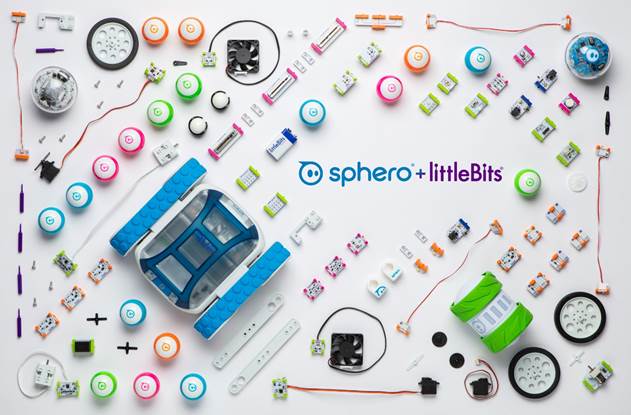
Sphero and Little Bits have long been kindred spirits in the world of entertaining STEM toys, and soon they’ll be one and the same. Sphero this morning announced plans to buy the New York-based electronic building block company.

Founded in 2010 and 2011 respectively, Sphero (nee Orbotix) and Little Bits took separate approaches, but ultimately ended up in similar spaces. Sphero first brought to life a smartphone controlled 3D printed ball that debuted at CES in 2011. That same year, Ayah Bdeir’s electronics kit side project became a serious business under the LittleBits banner.

Both companies were alumni of Disney’s accelerator. Sphero leveraged that connection in the break out Star Wars: The Force Awakens toy, a remote control BB-8. Ultimately, however, it flew too close to the sun with its licensed products, creating an R2-D2, Lightning McQueen and talking Spider-Man toys. Early last year, the Colorado-based company ended the Disney deal, laid off dozen and announced that it was moving full time into educational toys.

After several of its own Marvel and Star Wars licensing deals under the Disney IP banner, LittleBits faced similar difficulties earlier this year. In a statement to TechCrunch, the site noted that it, too, would be experiencing layoffs as it shifted its focus to K-12. “As you can imagine, the education market’s needs are vastly different than that of retail,” the company said at the time. Given this, we had to re-shape our internal structure, which ultimately led to a reduction in staff.”

Per Crunchbase, LittleBits and Sphero have raised $62.3 million and $120.3 million respectively. LittleBits notably made its own acquisition almost exactly a year ago, bringing DIY.org under its banner to add a subscription-based education element to the company’s offerings. Two months prior, Sphero purchased fellow Colorado startup, Specdrums and has since begun to offer the company’s music educational products under its banner.

image001

“We’re thrilled to bring littleBits into the fold here at Sphero,” CEO Paul Berberian told TechCrunch ahead of the acquisition. “Teachers need proven solutions that enhance learning for their students, and kids want technology that allows them to have epic experiences. Now, Sphero is better poised to introduce the best coding tools and hands-on STEAM tools like littleBits to even more classrooms around the world.”

The deal will help Sphero expand its office footprint into New York. Bdeir, however, will be moving on to other projects after nearly a decade at the helm of LittleBits.

“When I studied engineering, it was top down, test-based,” she said in a statement offered to the press. “I hated it and wanted to quit every semester. Then I got exposed to the pedagogy of learning through play and my life changed; no one could peel me away from learning, inventing, creating. Together, littleBits and Sphero are now bringing this experience to kids everywhere.”

No word on how many LittleBits employees will remain under the Sphero banner, though the aforementioned layoffs have certainly decreased the likelihood of redundancy between the two companies. With LittleBits under its wing, Sphero now holds 140 patents in the fields of robotics, electronics, software and IOT. It remains to be seen how or if the lines will work together, or whether they’ll remain independent under the Sphero banner much as Specdrums has thus far.

Between the two brands, however, there’s some solid classroom outreach and goodwill here. And both despite and because of its own struggles, Sphero makes sense as a home for the company. Both have experienced solid growth into beloved brands in a similar timeframe, even while getting ground through the sometimes unforgiving startup grind. Hardware is hard, and both Sphero and LittleBits have the war wounds to prove it.

Terms for the deal have not been disclosed.

23 Aug 2019

The myth of “stage agnostic” investing

Hello and welcome back to Equity, TechCrunch’s venture capital-focused podcast, where we unpack the numbers behind the headlines.

This week we were helmed by Kate Clark, Alex Wilhelm, and yet another extra special guest. Unusual Ventures co-founder and partner John Vironis joined us to talk soil investing (yes, it’s a thing), seed investing, growth investing and all the somewhat meaningless funding stages.

Vrionis was a longtime investor at Lightspeed Venture Partners and has made big bets on a number of companies, including AppDynamics, Heptio, and Mulesoft.

It was a great episode that kicked off with some conversation around DoorDash, the food delivery company that continues to make headlines week after week. We’d like to stop talking about the company, but it intrudes regularly into our notes.

This time DoorDash bought a few companies, purchases that appear set to allow the firm to boost its investment and research into self-driving delivery robots. (Kate saw one in the wild recently!)

Next we went deep into the subject of seed. John, of course, has been a seed investor for years and has lots to say on the topic. Mostly, we discussed Kate’s latest piece on mega-funds making an increasing number of deals at the earliest stage. John doesn’t think “stage-agnostic” investing makes any sense. You need experts at each stage making bets on a specific type of company. In his words, ‘a heart surgeon wouldn’t deliver your baby, right.”

Then we moved onto one of our favorite subjects, namely direct listings, the IPO market, and if money is too often left on the table. The question takes on extra import when we see results like Dynatrace’s IPO, which rose around 50 percent its first day. It seems likely that we’ll see other companies pursue the sort of direct listings that Spotify and Slack managed.

That segued us brilliantly into our final topic: Airbnb and its financial health. The firm, we reckon, is a good candidate for a direct listing itself. We talked over its numbers, and if we were to sum our perspectives, we’d say that Airbnb is about as impressive as we expected.

All that and we had fun, as usual.

Equity drops every Friday at 6:00 am PT, so subscribe to us on Apple PodcastsOvercastSpotify, Pocket Casts, Downcast and all the casts.

23 Aug 2019

Ping Identity files for $100M IPO

Some eight months after it was reported that Ping Identity’s owners Vista Equity had hired bankers to explore a public listing, today Ping Identity took the plunge: the Colorado-based online ID management company Ping Identity has filed an S-1 form indicating that it plans to raise up to $100 million in an IPO.

The company was acquired by Vista in 2016 for about $600 million, and while the initial S-1 filing doesn’t have an indication of price range, the company is said to be looking at a valuation of between $2 billion and $3 billion in this listing.

The area of identity and access management has become a cornerstone of enterprise IT, with companies looking for efficient and secure ways to centralise how their employees, their customers, their partners and various connected devices can be authenticated across their cloud and on-premise applications.

Ping has been one of the bigger companies building services in this area, competing with the likes of Okta, OneLogin, AuthO, aCisco, nd dozens more off-the-shelf and custom-built solutions.

The company offers its services on an SaaS basis, covering services like secure sign-on, multi-factor authentication, API access security, personalised and unified profile directories, data governance and AI-based security policies.

The company has been on a steady growth curve, reporting revenues of $112,898 million in the first six months of 2019, versus $99,450 in the same period a year before. It’s not profitable but its net loss has been shrinking in recent years, with a net loss of just $3.1 million in the first six months of this year versus $5.8 million a year before (notably in 2017 overall it was profitable with a net income of $19 million. It seems that the change is due to acquisitions and investing for growth).

More to come.


23 Aug 2019

Tastemakers raises $1.4M to sell Africa experiences to the world

New York based startup Tastemakers has raised a $1.4 million seed-round—led Precursor Ventures—for its business that connects Africa adventures to global consumers.

Tastemakers’ platform curates, prices, and lists African travel and cultural experiences—from paragliding tours to wine-tasting to concerts.

The startup generates revenues by taking a 20% commission on each transaction. Community managers in Africa screen and select experiences that go up on the site .

Tastemakers will use the investment to grow the number of experiences offered from 200 to 10,000 and build out machine learning capabilities to better match suppliers, experiences, and clients—CEO and founder Cherae Robinson told TechCrunch.

She likened the site to an Airbnb for commoditizing and connecting people to Africa travel experiences at scale.

On the startup’s addressable market, Robinson references a segment of culture curious travelers: people who are travelling to experience things such foreign art, food, music, or dance workshops.

“We looked at who’s doing these kinds of tours and and the number of people booking…and we found that globally, based on triangulating that, there are about 700 million people globally booking culture forward experiences,” said Robinson.

For different reasons—from negative stereotypes or the difficulty of identifying tourist options in Africa—most of these excursions are occurring in other parts of the world, according to Robinson.

She sees Tastemakers’ value proposition as the site that can bring a greater percentage of these culture travelers to Africa.

On revenue potential, Robinson is pretty up front on numbers and goals. “If we can capture 1% of that [700 million] market in the next five years that’s $2.2 billion generated on our platform,” she said, noting an average booking cost of $308. She believes Tastemakers could hit those figures by 2025—and by applying their 20 percent commission—reach income of $434 million.

Tastemakers Africa Ghana III

Precursor Ventures Managing Partner Charles Hudson invested in Tastemakers for its potential as an early entrant in an off the grid travel market attracting more curiosity.

“I just had a sense that Africa was having a moment, and whether its Black Panther or more startups that have a foot in Africa, that there were more people interested in going to Africa,” he told TechCrunch.

“And it’s not like going to New York City…You have providers that are hard to find and hard to book..that are not super well marketed. If you can become an aggregator and curator of those, you could effectively become the largest source of lead generation,” Hudson said.

Tastemakers is looking at  ancillary partnership and revenue share opportunities. It uses Stripe and WorldRemit to process mobile payments for transactions on the site and has done promotional partnerships with Uber Africa. The startup also counts Kempinski Hotels as its biggest lodging partner.

Tastemakers also offers advisory services to sellers on the site, to better determine price-points and on marketing their travel experiences more effectively online.

CEO Cherae Robinson is clear about the company’s for-profit status, but sees upside for Africa beyond generating business from tourism. “I strategically don’t brand Tastemakers as a social impact startup…but we’re driving benefits of the sharing economy to diverse populations both in Africa and in underrepresented communities in the technology and tourism sectors,” she said.


23 Aug 2019

Summer flash sale ends tonight: 2-for-1 Disrupt Berlin 2019 passes

Summer’s fading fast, but our 2-for-1 summer flash sale on Innovator, Founder or Investor passes to Disrupt Berlin 2019 is fading even faster. Today’s the final day you can get 2-for-1 tickets to join us in Berlin for two jam-packed days of startup goodness and opportunity. Why not do it for the lowest price?

Our 2-for-1 summer flash sale ends tonight, August 23 at 11:59 p.m. (CEST). Buy your 2-for-1 passes right here.

There are so many reasons to attend Disrupt Berlin on 11-12 December — try these five on for size, buy your passes and get ready to take your startup to the next level.

Learn

We’re building out our roster of amazing speakers, and you’ll learn from some of the top innovators, founders and investors. Efe Cakarel, the founder and CEO of MUBI, is just one prime example. MUBI, a decade-old movie-streaming service, has survived — and thrived — in the shadow of Netflix. We’ll find out how Cakarel pulled it off and hear what comes next.

Compete

Don’t miss you opportunity to launch your early-stage startup on a world stage, live in front of an eager audience of investors, tech leaders and global media outlets. We’re talking Startup Battlefield, of course, our epic pitch competition. If you’re chosen, you’ll vie for bragging rights and $50,000. And it won’t cost you a euro to apply or to participate. Apply to compete in Startup Battlefield today.

Network

What can you do with 3,000 startup fans from more than 50 countries? Network, network, network! Our Startup Alley expo floor is fertile soil and rife with opportunity. And CrunchMatch, our free business-matchmaking tool, makes it easier for you to connect with the people who can help move your business forward.

Exhibit

It’s time to showcase your early-stage startup and there’s no better way to do that than to exhibit in Startup Alley. Plant your company in front of more than 3,000 attendees, including investors and tech journalists. You have two Alley options. Buy a Startup Alley Exhibitor Package (note: this package does not qualify for the 2-for-1 flash sale) or apply to our TC Top Picks program and you might just win a free Startup Alley Exhibitor Package, VIP treatment and an interview with a TechCrunch editor on the Showcase Stage.

Save

Our super early-bird pricing can save you up to €600, but when you take advantage of our 2-for-1 summer flash sale, you’ll double your savings on Innovator, Founder or Investor passes. This time-sensitive deal disappears tonight at 11:59 p.m. (CEST). Beat the deadline, buy your tickets right now and we’ll see you in Berlin!

Is your company interested in sponsoring or exhibiting at Disrupt Berlin 2019? Contact our sponsorship sales team by filling out this form.

22 Aug 2019

Silicone 3D printing startup Spectroplast spins out of ETHZ with $1.5M

3D printing has become commonplace in the hardware industry, but because few materials can be used for it easily, the process rarely results in final products. A Swiss startup called Spectroplast hopes to change that with a technique for printing using silicone, opening up all kinds of applications in medicine, robotics, and beyond.

Silicone is not very bioreactive and of course can be made into just about any shape while retaining strength and flexibility. But the process for doing so is generally injection molding, great for mass producing lots of identical items but not so great when you need a custom job.

And it’s custom jobs that ETH Zurich’s Manuel Schaffner and Petar Stefanov have in mind. Hearts, for instance, are largely similar but the details differ, and if you were going to get a valve replaced, you’d probably prefer yours made to order rather than straight off the shelf.

“Replacement valves currently used are circular, but do not exactly match the shape of the aorta, which is different for each patient,” said Schaffner in a university news release. Not only that but they may be a mixture of materials, some of which the body may reject.

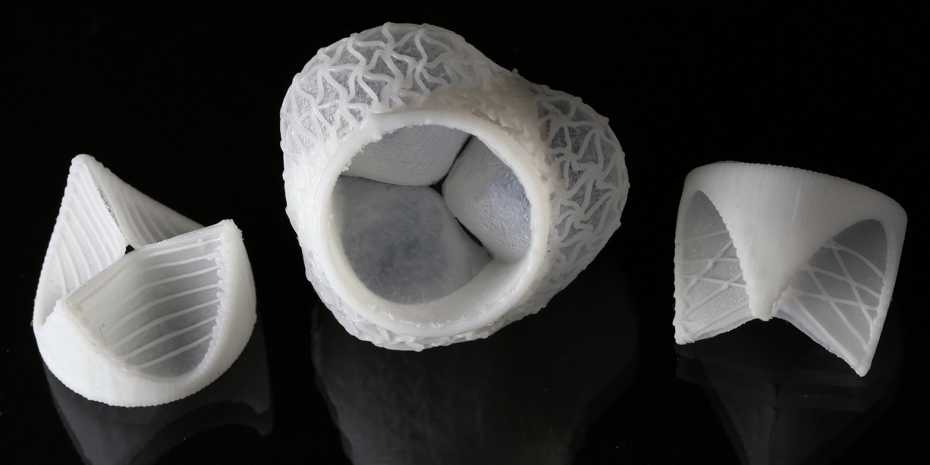
But with a precise MRI the researchers can create a digital model of the heart under consideration and, using their proprietary 3D printing technique, produce a valve that’s exactly tailored to it — all in a couple hours.

ethz siliconeprinting 1

A 3D printed silicone heart valve from Spectroplast.

Although they have created these valves and done some initial testing, it’ll be years before anyone gets one installed — this is the kind of medical technique that takes a decade to test. So in the meantime they are working on “life-improving” rather than life-saving applications.

One such case is adjacent to perhaps the most well-known surgical application of silicone: breast augmentation. In Spectroplast’s case, however, they’d be working with women who have undergone mastectomies and would like to have a breast prosthesis that matches the other perfectly.

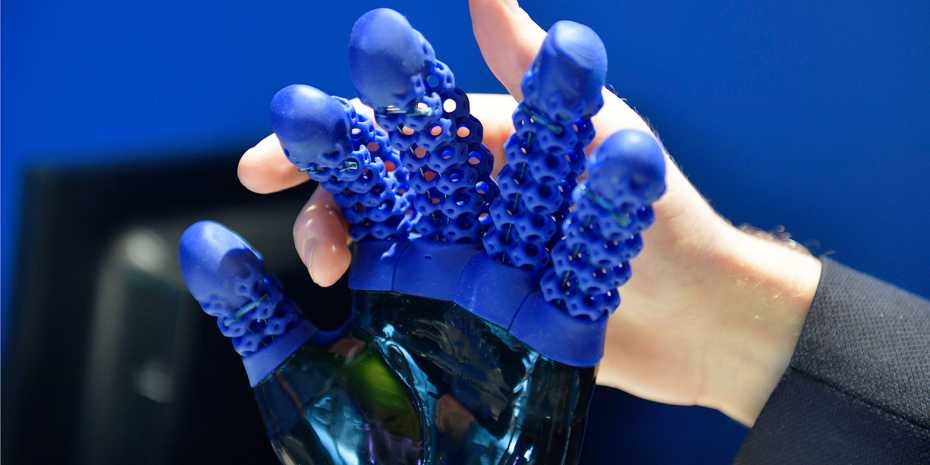
Another possibility would be anything that needs to fit perfectly to a person’s biology, like a custom hearing aid, the end of a prosthetic leg, or some other form of reconstructive surgery. And of course robots and industry could use one-off silicone parts as well.

ethz siliconeprinting 2

There’s plenty of room to grow, it seems, and although Spectroplast is just starting out it already has some 200 customers. The main limitation is the speed at which the products can be printed, a process that has to be overseen by the founders, who work in shifts.

Until very recently Schaffner and Stefanov were working on this under a grant from the ETH Pioneer Fellowship and a Swiss national innovation grant. But in deciding to depart from the ETH umbrella they attracted 1.5 million Swiss franc (about the same as dollars just now) seed round from AM Ventures Holding in Germany. The founders plan to use the money to hire new staff to crew the printers.

Right now Spectroplast is doing all the printing itself, but in the next couple years it may sell the printers or modifications necessary to adapt existing setups.

You can read the team’s paper showing their process for creating artificial heart valves here.

22 Aug 2019

This Thiel Fellow thinks he can help scooters, drones, and delivery robots charge themselves with sunlight

From the time he was a high school student, Rohit Kalyanpur thought it was peculiar that although it’s possible to create energy from a solar panel, the panels have long been used almost exclusively on rooftops and as part of industrial-scale solar grids. “I hadn’t seen [anything solar-powered] in the things people use every day other than calculators and lawn lights,” he tells us from him home in Chicago — though he’s moving to the Bay Area next month.

It wasn’t just a passing thought for Kalyanpur. Through research positions in high school, he continued to learn about energy and work on a solar charging prototype — initially to charge his iPhone —  while continuing to wonder what other materials might be powered spontaneously just by shining light on it.

What he quickly discovered, he says, is there were no developer tools to build a self-charging project. Unlike with hardware projects, where developers can turn to the open-source electronic prototyping platform Arduino and Raspberry Pi, a now seven-year-old, tiny computer the size of a credit card and was created to help students understand how computers work, there was “nothing you could use to optimize a solar product,” he says.

Fast forward, and Kalyanpur says there is now.

After attending the University of Illinois at Urbana-Champaign for two years and befriending a fellow student, Paul Couston, who helped manage and invest the university’s $10 million green fund, the pair dropped out of school to start their now four-person company, Optivolt Labs. Entry into the accelerator program TechStars Chicago was the impetus they needed, and they’ve been gaining momentum since. In fact, Kalyanpur, now 21, was recently given a Thiel Fellowship, a two-year-long program that includes a $100,000 grant to young people who want to build new things, along with a lot of mentorships and key introductions.

Now, the company has closed on a separate $1.75 million round of seed funding from a long list on notable individual investors, including Eventbrite cofounders Kevin & Julia Hartz: TJ Parker, who is the founder and CEO of PillPack (now an Amazon subsidiary); Pinterest COO Francoise Brougher: and Jeff Lutz, a former Google SVP.

What they’re buying into exactly is the promise of a scalable technology stack for solar integration. Though still nascent, Optivolt has already figured out a way to provide efficient power transfer systems, solar developer and simulation tools, and cloud based API’s to enable fleets of machines to self charge in ambient light, says Kalyanpur. Think e-scooters, EV’s, drones, sensors, and other connected devices.

Kalyanpur is hesitant to dive into too many specifics, but he says the company is will begin testing its technology soon with a number of “enterprise fleets” that have already signed on to work with Optivolt in pilot programs.

If it works as planned, it sounds like a pretty big opportunity.

Though some companies have begun making smaller solar-powered vehicles, you can imagine that there are plenty of outfits that would prefer to find a way to retrofit the hardware they already have in the world, which Kalyanpur says will be possible. He says they can use their existing batteries, too — that the solar won’t just power the devices or vehicles in real time but allow them to store some of that energy, too.  Optivolt’s technology “seamlessly integrates into everyday products, so you don’t have to change the product design meaningfully,” he insists.

We’ll be curious to see if see if it does what he thinks it can. Sounds like we aren’t the only ones, either.

Asked about Optivolt’s road map, Kalynapur suggests that one is coming together.

The company’s top priority, however, it to see first how it works in the field.

22 Aug 2019

DoorDash reveals details of its new tipping model

DoorDash announced last month that it would be changing its controversial tipping model. Today it’s revealing the basics of how the new system will work.

Under the past model, Dashers (DoorDash drivers and other delivery people) were guaranteed a minimum payment per delivery, with DoorDash paying a $1 base, then providing an additional payment boost when a customer’s tip wasn’t enough to meet the minimum — a system that made it seem like tips were being used to subsidize DoorDash payments.

Under the new system, meanwhile, DoorDash will pay a base between $2 and $10 (the amount will depend on things like delivery distance and duration), with additional bonuses from DoorDash.

Most crucially, as CEO Tony Xu put it in a blog post, “Every dollar customers tip will be an extra dollar in their Dasher’s pocket.”

Now, you might think that’s how tips are always supposed to work, but Xu said the old system was developed “in direct response to feedback from Dashers,” while the new one will result in “greater variability in total earnings from order to order” (that variability several reasons why tipping is a flawed compensation model in general).

So why change?

“We thought we were doing the right thing for Dashers by making them whole if a customer left no tip, but the feedback we’ve received recently made clear that some of our customers who were leaving tips felt like their tips didn’t matter,” Xu said. “We realized that we couldn’t continue to do right by Dashers if some customers felt we weren’t also doing right by them. To ensure that all of our users have a great experience on DoorDash, we needed to strike a better balance.”

Plus, he said, “Dashers will [now] earn more money on average — both from DoorDash and overall.”

The company plans to roll out these changes to all Dashers next month.

22 Aug 2019

Workplace digital assistant startup Capacity raises $13.2M from Midwestern VCs

Solving information scatter inside enterprises seems to be the founding idea behind dozens of enterprise software startups. Capacity, which recently rebranded from Jane.ai, is raising new cash to tackle the issue with its corporate data search platform.

The company just closed a $13.2 million Series B was funded entirely by Midwestern private investors and angels.

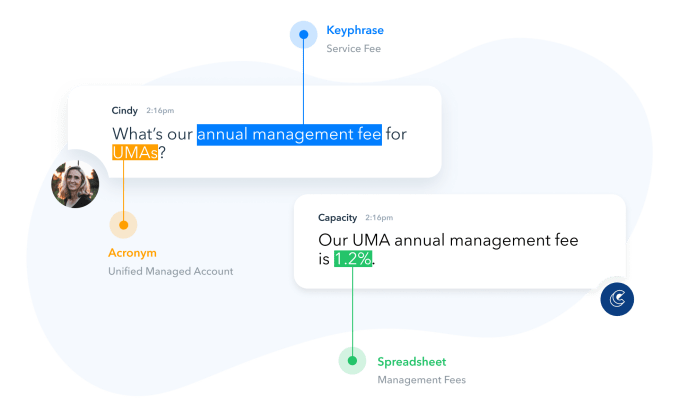
The St. Louis workplace startup helps its customers pull all of their organizational data together into a platform that makes company information more accessible to people inside the company. It’s all done through a chat interface and directory that employees can use to search for information. There’s a pretty high degree of flexibility in customizing how questions are answered and when a line of questioning gets routed to a person onsite.

Alongside Capacity’s name change, the company has opened up its platform to let developers connect apps to the Capacity network so that more information can be integrated.

asset management hero

“We got to this point where we realized that we’re never going to be the experts in building out every one of these tailored apps, so opening up our developer platform has been crucial to helping expand the number of apps that we’ll be able to connect to,” CEO David Karandish told TechCrunch.

These automated chat bots aren’t silver bullets but the fact is a lot of this content is usually found in disparate places, and tools that can crawl through documents and pull out the key context solve a pretty clear pain point for companies.