Year: 2019

12 Aug 2019

How young VCs bootstrap new venture firms

We spend a lot of time talking about new funds, and new startup venture raises, but we spend little time talking about the cash flow challenges of running a venture fund. Let’s change that today.

Starting a new venture fund is extremely challenging. In addition to just the monstrous task of fundraising — which can take as long as two years in some cases to lock down all the limited partners (LPs) on the same terms — the economics for a debut fund are often just terrible.

Take a sort of starter $20 million seed fund with two general partners using the industry’s oft-quoted (but not really all that common) “2 & 20” compensation model. This hypothetical fund rakes in $400,000 a year in management fees (2% of $20 million) to cover all costs of the fund: office rent, staff costs, legal fees, tax preparation, and accounting services in addition to the travel and entertainment costs of trying to woo founders. Whatever remains is split between those two GPs as their salaries. It’s not uncommon for new partners to make $50k — or even nothing — in the early years of a new firm, which is one reason the industry is stacked with ultra-wealthy individuals.

For young financiers looking to break into the industry, the situation is bleak, which is one reason why fund managers have gotten very creative around how to structure their management fees in order to bootstrap a venture firm in its early years.

These sorts of fund details are often kept tight-lipped, but thanks to the Mike Rothenberg case, we now actually have real data from a new firm and how it structured its fees for asset growth. From discussions with others in the industry, the models that Rothenberg Ventures used are reasonably available for investment managers looking to build new franchises.

All data for this analysis comes from Exhibit A — the Expert Report of Gerald T. Fujimoto, a forensic accountant who evaluated Rothenberg Ventures as part of the SEC’s lawsuit against Mike Rothenberg (Case No. 3:18-cv-05080). The exhibit was filed July 29, 2019. TechCrunch did not attempt to verify the work of the forensic accountant, since this analysis makes no claims about Rothenberg Ventures, but uses the data for illustrating how funds are structured in today’s work.

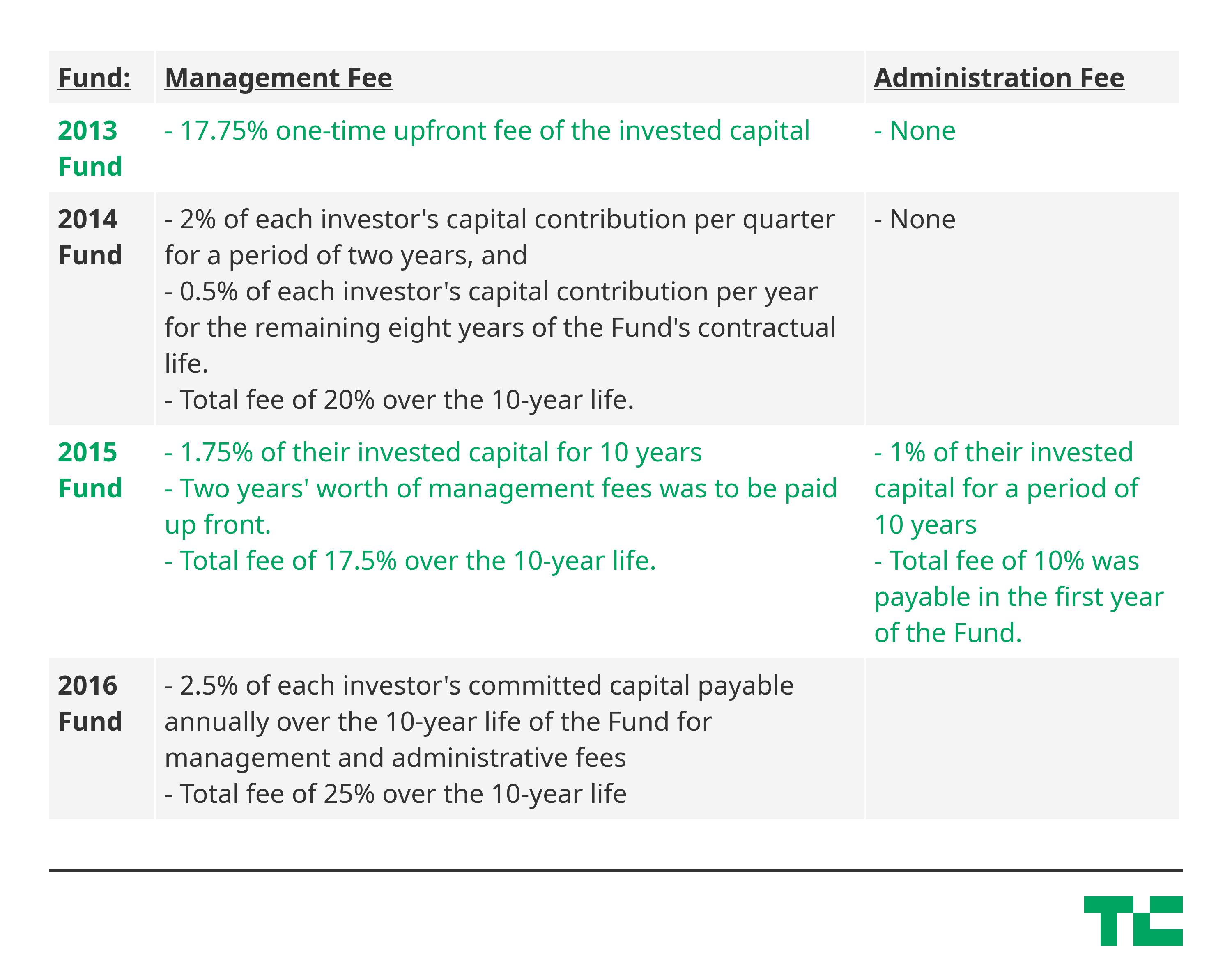
Below is a recreation of the fund structures as reported in the SEC’s case against Mike Rothenberg. Rothenberg Ventures raised a series of four venture funds with fee structures that vary widely from the traditional 2 & 20 model, which assumes a 2% annual management fee for each of the ten years of a fund’s life (further extensions beyond ten years don’t usually offer significant fees, although every fund is structured differently). That equation means that management fees generally represent 20% of a fund’s committed capital.

sec v michael rothenberg exhibit a

Source: SEC v. Michael Rothenberg (Exhibit A)

For the firm’s debut fund, Rothenberg entirely eliminated the slow and orderly parceling out of fees in lieu of a one-time 17.75% fee upon the closing of the $2.6 million fund. That meant an immediate infusion of about $470,000 into the firm, but no continual fees thereafter. This sort of heavy upfront payment is not uncommon in the industry, although it is less common to have literally the sum total of management fees for a 10-year fund paid out entirely on its first day.

From an LP perspective, this sort of fee structure indicates that the firm almost certainly would have had to raise additional funds almost as soon as the first one closed, since the fees of future venture funds would be needed to cover the management costs of the first fund in its later years.

In short: this is what a bootstrap looks like in venture capital.

Now, continuing to the second fund (2014), we see a bit more of a traditional parceling out of fees over the course of the fund, although still with a heavy upfront skew. The fund pays out the typical 20% of invested capital in total, but 80% of that amount was paid out in the first two years. Again, the implicit assumption with this sort of bootstrap is that the firm will succeed and raise additional capital (and therefore management fees) to keep the operation going.

We then see the same pattern in the 2015 fund, with fees having a normal structure, but then with more aggressive upfront payouts required. So while the fund had a flat payout every year for its management fee, two years of that fee was to be paid out immediately upon close. Similarly, the administrative fee was flat — but paid out entirely in the first year of the firm’s operation.

Finally, the fourth fund (2016) returns to a more typical, flat fee structure at 2.5% per year with no provisions for upfront payment.

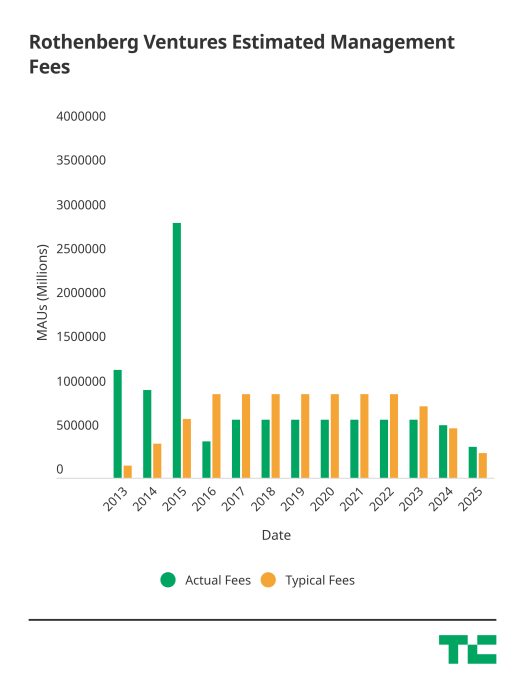
Why does this all matter? Let’s go through a back-of-the-napkin exercise of what these numbers really meant for the operations of the fund:

copy kobalt streaming service total maus paid maus

Data from SEC Case, Exhibit A

As we can clearly see here, all of those management fees upfront really did give the firm far more resources in the early years than it might have otherwise had. Over the first three years, the firm had access to roughly $5.1 million in fees, whereas with a traditional 2% annual structure, the firm would have had access to just $1.2 million. Of course, that bootstrap comes at a cost in the later years, when the firm would have more resources to manage the fund.

Nonetheless, those upfront payments helped the firm tremendously punch above its own weight. With its $1.2 million of fees in year one, it essentially had the resources of a $60 million fund — yet it had only raised $6.7 million. It similarly punched above its weight the next few years as it raised new funds with aggressive upfront fee schedules as well.

Of course, there’s a heavy burden with this approach — it’s a bet-it-all strategy that leaves little room for error (such as a series of failed investments) that might make future fundraising hard. It’s a rocket with no ejection seat, but when it works, it can compress the time to venture fund leader dramatically — maybe even by as much as a decade.

Ultimately, VCs like to bet, and they certainly like to bet on themselves, which is why these sorts of cash-flow optimizations are prevalent for new firms. No one assumes that their firm is going to fail. Plus, these sorts of management fee structures are also among the few tools a non-wealthy individual can use to even get a new fund underway. For new fund managers and for others considering jumping into the VC industry, a nuanced understanding of the risks and opportunities of mortgaging future dollars for present spend is critical — not only for one’s integrity and stress levels, but hopefully to avoid those SEC investigators and forensic accountants as well.

12 Aug 2019

London edtech startup Pi-Top sees layoffs after major contract loss

London-based edtech startup Pi-Top has cut a number of staff, TechCrunch has learned.

According to our sources the company has reduced its headcount in recent weeks, with staff being told cuts are a result of restructuring as it seeks to implement a new strategy.

One source told us Pi-Top recently lost out on a large education contract.

Another source said sales at Pi-Top have been much lower than predicted — with all major bids being lost.

Pi-Top confirmed to TechCrunch that it has let staff go, saying it has reduced headcount from 72 to 60 people across its offices in London, Austin and Shenzhen.

Our sources suggest the total number of layoffs could be up to a third. 

In a statement, Pi-Top told us:

pi-top has become one of the fastest growing ed-tech companies in the market in 4.5 years.  We have a unique vision to increase access to coding and technical education through project based learning to inspire a new generation of makers.

As part of this vision we built up our global team with a view to winning a particularly exciting national project in a developing nation, where we had a previous large scale successful implementation. We were disappointed this tender ultimately fell through due to economic factors in the region and have subsequently made the unfortunate but unavoidable decision to reduce our team size from 72 to 60 people across our offices in London, Austin and Shenzhen.

Moving forward we are focusing on our growth within the USA where we continue to enjoy widespread success. We are rolling out our new learning platform pi-top Further which will enable schools everywhere to access a world of content enhanced by practical hands-on project based learning outcomes. We have recently completed a successful Kickstarter campaign and we look forward to releasing our newest product pi-top [4].

We are also proud to have appointed Stanley Buchesky as our new Executive Chairman. Stanley brings a wealth of experience in the ed-tech sector and will be a great asset to our strategy going forward.

Pi-Top sells hardware and software designed for educational use in schools. It’s one of a large number of edtech startups that have sought to tap into the popularity of the ‘learn to code’ movement by piggybacking atop the (also British) low cost Raspberry Pi microprocessor — which provides the computing power for all Pi-Top’s products.

Pi-Top adds its own OS and additional education-focused software to the Pi, as well as proprietary cases — including a bright green laptop housing with a built in rail for breadboarding electronics.

Its most recent product, the Pi-Top 4, which was announced back in January, looks intended to move the company away from its first focus on educational desktop computing to more modular and embeddable hardware hacking which could be used by schools to power a wider variety of robotics and electronics projects.

Despite raising $16M in VC funding just over a year ago, Pi-Top opted to run a crowdfunding campaign for the Pi-Top 4 — going on to raise almost $200,000 on Kickstarter from 521 backers.

Pi-Top 4 backers have been told to expect the device to ship in November.

12 Aug 2019

Venmo launches instant transfers to bank accounts

PayPal -owned payments app Venmo today announced support for instant transfers to U.S. bank accounts. The feature is an optional alternative to Venmo’s standard bank transfer service, which typically takes one to three business days to process transactions. With Instant Transfer, however, funds from your Venmo account can hit your bank account within minutes.

As of January 2018, Venmo has offered Instant Transfers to eligible Visa and Mastercard debit cards for a small fee. At launch, the fee was a flat $0.25, but Venmo bumped it up to 1% of the transferred amount last October. Now, the minimum fee is $0.25 and the maximum fee is $10. Of course, users can still choose the standard transfer option if they don’t want to pay for the convenience of instant payments.

While transferring to a debit card is useful for gaining quick access to cash stored in Vemno, not everyone carries a debit card nor do they always want their funds to go to that card. Bank transfers can also aid small business customers or gig economy workers by moving their Venmo cash to their main account for paying bills, rent, and other automatically debited transactions.

The news of an expanded Instant Transfer service comes at a time when Venmo is seeing increased competition from rivals including Square’s Cash App and the bank-operated Venmo challenger, Zelle. Thanks to its built-in customer base and integrations with U.S. banking apps, Zelle reported $44 billion sent on 171 million transactions in Q2 2019, making it the largest peer-to-peer payment app in the U.S. by a wide margin. Venmo’s payment volume in Q2, meanwhile, was $24 billion.

However, with more than 40 million active accounts, Venmo has more users than some of the U.S.’s bigger banks. And it’s still growing.

Offering an expanded fee-based Instant Transfer service to its customers could increase Venmo’s revenue and help push the service to profitability, along with its other plans — like launching its own credit card, for instance.

Venmo parent company PayPal has also offered instant transfers to bank accounts as of March after first announcing its plans back in 2017.


12 Aug 2019

Postmates to drop IPO filing next month

Postmates plans to make its IPO paperwork public in September, TechCrunch has learned. Despite previous reports indicating the on-demand delivery company is seeking an M&A exit, sources close to the matter say Postmates is on track to go complete an initial public offering this year.

With the S-1 dropping in September, San Francisco-based Postmates is expected to debut on the stock exchange by the end of the third fiscal quarter of 2019. The company has tapped JP Morgan Chase and Bank of America Corp. as lead underwriters, Bloomberg previously reported, though other details of the float, including the size and price range of the proposed offering, have yet to be announced.

“We can’t comment on the IPO process and we don’t comment on rumor or speculation,” a Postmates spokesperson told TechCrunch.

In February, Postmates confidentially filed with the U.S. Securities and Exchange Commission for an IPO. Shortly after, Postmates held M&A talks with DoorDash, another food delivery unicorn, according to people familiar with the matter, but failed to come to mutually favorable terms. DoorDash declined to comment for this story.

Postmates has raised $681 million to date with its latest round coming in earlier this year at a $1.85 billion valuation. DoorDash, on the other hand, reached a $12.6 billion valuation in May with a $600 million Series G.

As Postmates gears up for its IPO, the food delivery business continues to consolidate.DoorDash last week purchased another food delivery service, Caviar, from Square in a deal worth $410 million. Uber is said to have considered buying Caviar, which had been looking for a buyer at least since 2016, according to Bloomberg.

DoorDash has been under heavy scrutiny as of late for the way it pays its drivers. Back in February, we reported how DoorDash offsets the amount it pays drivers with tips from customers. It wasn’t until much backlash that DoorDash finally said it would change its policies. DoorDash has yet to implement the new policy.

How Postmates will fare on the public markets is up for debate. The billion-dollar company will go head-to-head with other public businesses in the space, including powerhouses Uber and GrubHub.

Uber last week shared disappointing second-quarter earnings. The company’s food delivery unit, UberEats, however, continues to grow at an impressive rate. UberEats did $3.39 billion in gross bookings last quarter with monthly active platform consumers (MAPCs) growing more than 140% year-over-year. Still, the unit is years away from profitability, Uber chief Dara Khosrowshahi told CNBC on Thursday

Postmates updated IPO plans follow a report from Bloomberg that WeWork expects to make its IPO prospectus available in the next week. Eyes will be on both WeWork, which hopes to raise more than $3.5 billion, and Postmates, as the companies occupy two unproven categories.

Postmates follows Uber, Lyft, Pinterest and many others to the public markets in 2019, a year when many of Silicon Valley’s most notable unicorns finally decided to make the transition from private to public.

Postmates, founded in 2011 by Bastian Lehmann, is backed by Spark Capital, Founders Fund, Uncork Capital, Slow Ventures and others.

12 Aug 2019

Polarity raises $8.1M for its AI software that constantly analyzes employee screens and highlights key info

Reference docs and spreadsheets seemingly make the world go ’round, but what if employees could just close those tabs for good without losing that knowledge?

One startup is taking on that complicated challenge. Predictably, the solution is quite complicated as well from a tech perspective, involving an AI solution that analyzes everything on your PC screen — all the time — and highlights text onscreen that you could use a little bit more context on. The team at Polarity wants its tech to help teams lower the knowledge barrier to getting stuff done and allow people to focus more on procedure and strategy then memorizing file numbers, IP addresses and jargon.

The Connecticut startup just closed an $8.1 million “AA” round led by TechOperators, with Shasta Ventures, Strategic Cyber Ventures, Gula Tech Adventures and Kaiser Permanente Ventures also participating in the round. The startup closed its $3.5 million Series A in early 2017.

Interestingly, the enterprise-centric startup pitches itself as an AR company, augmenting what’s happening on your laptop screen much like a pair of AR glasses could.

The startup’s computer vision software that uses character recognition to analyze what’s on a user’s screen can be helpful for enterprise teams importing things like a company rolodex so that bios are always collectively a click away but the real utility comes from team-wide flagging of things like suspicious IP addresses that will allow entire teams to learn about new threats and issues at the same time without having to constantly check-in with their co-workers. The startup’s current product has a big focus on analysts and security teams.

Polarity before and after two

via Polarity

Using character recognition to analyze a screen for specific keywords is useful in itself, but that’s also largely a solved computer vision problem.

Polarity’s big advance has been getting these processes to occur consistently on-device without crushing a device’s CPU. Battista says that for the average customer, Polarity’s software generally eats up about 3-6% of their computer’s processing power though it can spike much higher if the system is getting fed a ton of new information at once.

“We spent years building the tech to accomplish [efficiency], readjusting how people think of [object character recognition] and then doing it in real time.” CEO Paul Battista tells me. “The more data that you have onscreen, the more power you use. So it does use a significant percentage of the CPU.”

Why bother with all of this AI trickery and CPU efficiency when you could pull this functionality off in certain apps with an API? The whole deliverable here is that it doesn’t matter if you’re working in Chrome, or Excel or pulling up a scanned document, the software is analyzing what’s actually being rendered onscreen, not what the individual app is communicating.

When it comes to a piece of software analyzing everything on your screen at all times, there are certainly some privacy concerns not only from the employee’s perspective but from a company’s security perspective.

Battista says the intent with this product isn’t to be some piece of corporate spyware, and that it won’t be something running in the background — it’s an app that users will launch. “If [companies] wanted to they could collect all of the data on everybody’s screens, but we don’t have any customers doing that.. The software is built to have a user interface for users to interact with so if the user didn’t choose to subscribe or turn on a metric, then [the company] wouldn’t be able to force them to collect it in the current product.”

Battista says that teams at seven Fortune 100 companies are currently paying for Polarity, with many more in pilot programs. The team is currently around 20 people and with this latest fundraise, Battista wants to double the size of the team in the next 18 months as they look to scale to larger rollouts at major companies.

12 Aug 2019

Huawei’s new OS isn’t an Android replacement… yet

If making an Android alternative was easy, we’d have a lot more of them. Huawei’s HarmonyOS won’t be replacing the mobile operating system for the company any time soon, and Huawei has made it pretty clear that it would much rather go back to working with Google than go at it alone.

Of course, that might not be an option.

The truth is that Huawei and Google were actually getting pretty chummy. They’d worked together plenty, and according to recent rumors, were getting ready to release a smart speaker in a partnership akin to what Google’s been doing with Lenovo in recent years. That was, of course, before Huawei was added to a U.S. “entity list” that ground those plans to a halt.

12 Aug 2019

SpaceX, Blue Origin, ULA and Northrop Grumman bid for U.S. national security launch contract

The U.S. Air Force is looking to lock in its launch providers for national security satellite missions to take place between 2022 and 2026, and the bids for this so-called “Phase 2” procurement contract are now in. The field of competitors looking to become one of the two companies chosen is a who’s who of U.S. commercial launch providers at the moment, including SpaceX, Blue Origin, ULA and Northrop Grumman.

Both Northrop Grumman and Blue Origin are new entrants in this particular launch contracting area, while SpaceX and ULA are existing providers that handle U.S. national security missions right now. SpaceX additionally has a bit of a head start, since its Falcon rockets are the only proven, certified launch vehicles included in the bids submitted, while ULA has offered up its new Vulcan Centaur, which is tailor-made for the job but not yet certified and flight-proven, and the others are still seeking certification.

“SpaceX means to serve as the Air Force’s long-term provider for space launch, offering existing, certified and proven launch systems capable of carrying out the full spectrum of national security space launch missions and requirements,” said SpaceX COO and President Gwynne Shotwell in an emailed statement, regarding this new bid.

SpaceX clearly sees its Falcon launch system as a key competitive advantage, since it’s flying currently for USAF and national security missions – the company says that this represents the lowest risk for the government overall in terms of providers for this mission, and with known costs as well.

The Air Force will make its final selection about the two winning providers in 2020.

12 Aug 2019

SpaceX, Blue Origin, ULA and Northrop Grumman bid for U.S. national security launch contract

The U.S. Air Force is looking to lock in its launch providers for national security satellite missions to take place between 2022 and 2026, and the bids for this so-called “Phase 2” procurement contract are now in. The field of competitors looking to become one of the two companies chosen is a who’s who of U.S. commercial launch providers at the moment, including SpaceX, Blue Origin, ULA and Northrop Grumman.

Both Northrop Grumman and Blue Origin are new entrants in this particular launch contracting area, while SpaceX and ULA are existing providers that handle U.S. national security missions right now. SpaceX additionally has a bit of a head start, since its Falcon rockets are the only proven, certified launch vehicles included in the bids submitted, while ULA has offered up its new Vulcan Centaur, which is tailor-made for the job but not yet certified and flight-proven, and the others are still seeking certification.

“SpaceX means to serve as the Air Force’s long-term provider for space launch, offering existing, certified and proven launch systems capable of carrying out the full spectrum of national security space launch missions and requirements,” said SpaceX COO and President Gwynne Shotwell in an emailed statement, regarding this new bid.

SpaceX clearly sees its Falcon launch system as a key competitive advantage, since it’s flying currently for USAF and national security missions – the company says that this represents the lowest risk for the government overall in terms of providers for this mission, and with known costs as well.

The Air Force will make its final selection about the two winning providers in 2020.

12 Aug 2019

Announcing the Disrupt SF 2019 agenda

Disrupt SF 2019 is set to be the biggest and best Disrupt yet. We’ve got a little something for everyone, including space chats with Lockheed Martin’s Marillyn Hewson and Blue Origin’s Bob Smith, a word from Snap CEO Evan Spiegel, a fireside chat with two of 2019’s big VC winners, Ann Muira-Ko and Theresia Gouw, as well as a rare chance to sit down with GV’s David Krane.

And that’s just a taste of what’s to come on the Disrupt Stage. The Extra Crunch stage will feature experienced operators giving practical, real world advice on how to launch, run, and grow a successful startup. Topics include how to raise your first dollars, how to be good at hiring, how to design a brand, and how to iterate a product, among many more.

And, of course, we can’t forget the Disrupt Battlefield competition, which will see one more startup crowned as the winner with $100K in cash and the Disrupt Cup to take home with them.

Tickets to the conference are available here. We hope to see you there!

So without any further ado, here’s a look at our 2019 Disrupt SF agenda.

(Editor’s Note: The agenda is subject to change.) 

Wednesday, October 2

Morning


Reigniting the Space Race with Bob Smith (Blue Origin)

Blue Origin CEO Bob Smith intends to return the U.S. to crewed spaceflight, with a goal of doing so this year with its first suborbital trips. Hopefully, we can also get Smith to tell us the ticket price for a trip, once it begins taking on paying customers. Main Stage 

How to Build a Billion Dollar SaaS Company with Neeraj Agrawal (Battery Ventures), Whitney Bouck (HelloSign) and speaker to be announced

Growing your SaaS company to a billion dollars in revenue is no easy task. It takes patience, perseverance and a strong team. Often it doesn’t happen until well after a company has gone public. We will talk to three people who have experience working with SaaS startups and understand the unique challenges they face getting to a billion dollars and beyond. ExtraCrunch Stage 

Creating the Means of Production with Joseph Gordon-Levitt (HitRecord)

For far too long, creators have been users of platforms rather than running those platforms. With HitRecord, Joseph Gordon-Levitt changed that. JGL has been head down and hands-on with HitRecord, and we’ll hear from him about how to put the power back in creators’ hands. Main Stage

Could the U.S. Government Be Your Next Investor with Steve Isakowitz (The Aerospace Corporation) and speakers to be announced

No founder likes dilution, which is why the US government is becoming an increasingly popular source for early-stage, ambitious venture capital. Hear from VC leaders and founders who have navigated the process to discover your next source of non-dilutive capital. ExtraCrunch Stage

Getting to IPO with Aaron Levie (Box) and Jennifer Tejada (PagerDuty)

PagerDuty CEO Jennifer Tejada led the company to a successful IPO earlier this year. She’ll join Box CEO Aaron Levie to talk about how these two companies charted their path to an IPO, the pros and cons of doing so, and life after ringing the bell on Wall Street. Main Stage

How to Evaluate Talent and Make Decisions with Ray Dalio (Bridgewater)

Ray Dalio knows a thing or two about building successful startups. As founder of the firm, Bridgewater, he helped build it into one of the most successful investment companies ever, managing a whopping $150 billion in assets. He recently wrote a book called Principles, and he’s coming to the TechCrunch Disrupt Extra Crunch stage in October to discuss the book and companion mobile app on how building a strong culture can lead to a flourishing startup. ExtraCrunch Stage

Setting the Pace for the Next Space Race with Marillyn Hewson (Lockheed Martin)

Lockheed Martin has had roots in Silicon Valley going back decades. Today the aerospace giant has its hands in AI, autonomy, space exploration, and more. CEO Marillyn Hewson joins us to discuss returning to crewed spaceflight, investing in startups, and what comes next for America’s biggest defense contractor. Main Stage

Afternoon


Startup Battlefield Competition – Session 1

TechCrunch’s iconic startup competition is back, as entrepreneurs from around the world pitch expert judges and vie for the Battlefield Cup and $100,000. Main Stage

How to Take a Digital Brand Offline with Rich Fulop (Brooklinen), James Reinhart (ThredUp), and Susan Tynan (Framebridge)

E-commerce has fundamentally changed the way we browse and buy physical goods. But even though online sales have taken a huge bite out of brick-and-mortar, it doesn’t mean that digital brands aren’t interested in the prospect of offline channels. Hear from three founders who have taken their own unique approach to launching a store. ExtraCrunch Stage

The Next Generation of Wireless with Hans Vestberg (Verizon)

Hear us interview our boss’s boss’s boss about the promise (and potential perils) of deploying 5G wireless technology. Main Stage

How to Hire at Breakneck Speed with Scott Cutler (StockX), Harj Taggar (TripleByte), and Liz Wessel (WayUp)

Nothing is better than striking product-market fit and suddenly finding a path to rapid, venture-scale growth. But as that growth accelerates, how do you create the conditions to rapidly find, attract, and hire the talent you need to reach unicorn status? Hear from some of the leading recruiters and services on how they have successfully scaled recruiting and avoided key pitfalls. ExtraCrunch Stage

‘The Fourth Big Wave’: Talking Crypto with Chris Dixon (Andreessen Horowitz)

If you care about understanding crypto and the ways it may well impact you sooner than you might imagine, you won’t want to miss this fireside chat with Andreessen Horowitz general partner Chris Dixon. Main Stage 

How to be a Serial Founder with David Cancel (Drift) and Caterina Fake (YesVC)

So your first company worked out well. Let’s say you have the burning desire to do another one — what’s the right way to do it the next time around? Hear from frequent founders David Cancel (formerly Performable/Hubspot, Lookery, Ghostery, Compete) and Caterina Fake (Flickr, Hunch) on what they’ve done. ExtraCrunch Stage

Brex: Special Announcement 

Hear Brex CEO Henrique Dubugras announce news right from the Disrupt Stage. Main Stage 

Building Sticky Products with Cal Henderson (Slack) and Megan Quinn (Spark Capital)

Slack co-founder Cal Henderson and Spark Capital general partner Megan Quinn will discuss what it takes to create a billion-dollar business and, in Slack’s case, list on the New York Stock Exchange in one of 2019’s most highly-anticipated exits. Main Stage

How to Build a Subscription Product with Sandra Oh Lin (KiwiCo) and speakers to be announced

The direct-to-consumer landscape has exploded in the past year but the keys to making a subscription product indispensable are still up in the air as few have discovered a path to success. This chat with KiwiCo’s Sandra Oh Lin will address the constant struggles of getting a subscription service off the ground and retaining customers. ExtraCrunch Stage

Serving startups with Henrique Dubrugras (Brex) and Michele Romanow (Clearbanc)

CEOs of two of the fastest-growing startups, Brex co-founder Henrique Dubugras and Clearbanc co-founder Michele Romanow, come together to unpack new solutions for startups looking to raise capital and scale — quick. Main Stage

Beefing Up with Patrick Brown (Impossible Foods)

Protein replacement for human consumption is going to be an $85 billion industry by 2030, according to UBS. Impossible Foods’ Patrick Brown will discuss how to build a business around removing animals from humanity’s food chain. Main Stage 

Startup Battlefield Competition – Session 2

TechCrunch’s iconic startup competition is back, as entrepreneurs from around the world pitch expert judges and vie for the Battlefield Cup and $100,000. Main Stage

Thursday, October 3

Morning


Robots and Returns with Frederic Moll (Johnson & Johnson) and Ajay Royan (Mithril Capital)

Frederic Moll is a pioneer in robotic surgical applications. Backed by Ajay Royan’s Mithril Capital he sold his last business to JNJ for $3 billion. Hear from these two industry leaders on the opportunities available in medical robotic field. Main Stage

How to Raise My First Dollars with Russ Heddleston (DocSend), Charles Hudson (Precursor), and Annie Kadavy (Redpoint Ventures)

Venture funding may have boomed over the last decade, but the decisions around your initial funding are as tricky as ever. Hear how to take advantage of the current landscape from top Silicon Valley early-stage thinkers including pre-seed investor Charles Hudson of Precursor Ventures, early-stage investor Annie Kadavy of Redpoint Ventures, and Russ Heddleston, CEO of Docsend. ExtraCrunch Stage

Inside GV with David Krane (GV)

Gain insight into the inner workings of GV, the firm’s bold bets (Lime, Impossible Foods), recent wins (Uber, Slack) and how Krane views SoftBank from in an exclusive interview with David Krane, Google’s former director of global communications and public affairs and current CEO and managing partner of GV. Main Stage

How to Build a Secure Startup without Slowing Growth with Heather Adkins (Google), Jennifer Sunshine Steffens (IOActive), and Dug Song (Duo) 

Leading security experts from Google, Duo, and IOActive discuss some of the challenges startups and enterprises face in security. How do companies navigate the litany of issues and threats without hampering growth? ExtraCrunch Stage

Beyond AI with Sam Altman (OpenAI) and Greg Brockman (OpenAI)

Fresh off a $1B cash commitment from Microsoft, OpenAI’s Sam Altman and Greg Brockman are joining us to talk about the company’s plans to bring about the age of artificial general intelligence. We’ll talk about whether that’s a good idea or not. Main Stage

The Future of Flight with Sebastian Thrun (Kitty Hawk)

Sebastian Thrun — the scientist and inventor, educator and serial entrepreneur, Google moonshot factory chieftain and self-driving car architect — is coming back to Disrupt SF. This time, it’s to talk about his latest passion project: Kitty Hawk, the electric flying car company led by Thrun and backed by Google’s Larry Page. We’ll talk about the future of flight and how this startup aims to free people from traffic. Main Stage

How to Build a Sex Tech Startup with Cyan Banister (Founders Fund), Cindy Gallop (MakeLoveNotPorn), and Lora Haddock (Lora DiCarlo)

As the old adage goes, sex sells. A panel of investors and founders will discuss the opportunities — and challenges — of building a successful sex tech startup, and how to capitalize on a market that’s projected to be worth more than $123 billion by 2026.  ExtraCrunch Stage

Scooting to a Multibillion-Dollar Valuation with Travis VanderZanden (Bird)

It’s a jungle out there in the scooter wars, but that didn’t stop Bird from being on an epic tear this year. Hear from Bird CEO Travis VanderZanden about what it took to hit a $2.5 billion valuation and what the company is doing to improve its unit economics. Main Stage

Trophies, Twitch and T-shirts with Scooter Braun and Matthew Haag (100 Thieves)

100 Thieves is one of the few esports orgs to look to Silicon Valley for investment – and it’s paying off. Hear from former pro gamer and 100 Thieves CEO and founder Matthew “Nadeshot” Haag and 100 Thieves co-owner Scooter Braun on how they built a brand worth more than $130 million that turns fans into ambassadors. Main Stage 

Afternoon


Startup Battlefield Competition – Session 3

TechCrunch’s iconic startup competition is back, as entrepreneurs from around the world pitch expert judges and vie for the Battlefield Cup and $100,000. Main Stage 

When Spies Meet Startups with Admiral Mike Rogers and Nadav Zafrir (Team 8)

Since leaving the world of intelligence, former NSA director Adm. Mike Rogers and ex-Israeli cyber-intelligence chief Nadav Zafrir talk shop about what startups need to learn about security. Main Stage

How to Build a Space Economy with Tess Hatch (Bessemer Venture Partners), Sara Spangelo (Swarm), and Adrian Steckel (OneWeb)

From thousand-satellite constellations to space tourism, orbit is a fresh and inspiring source of new startup ideas and evolutions of established ones. Swarm’s Sara Spangelo is taking on low-cost global connectivity and Bessemer Ventures’ Tess Hatch provides the perspective of investors looking to make bets like these happen. ExtraCrunch Stage 

Dominating Growth Markets with Bob van Dijk (Naspers)

Naspers is a quiet but massive conglomerate of ecommerce, media, gaming, and communications properties based in South Africa, not to mention a huge stake in Tencent. Hear from CEO Bob van Dijk about what Naspers believes is around the corner in these growth markets, and why we should or shouldn’t be concerned about an Amazon/Facebook/Google-dominated world. Main Stage 

State of the Security Union with Jeanette Manfra (DHS)

In an ever-evolving cyber world, from election security to the supply chain, Homeland Security assistant director Jeanette Manfra discusses the threats we face today — and tomorrow. Main Stage

How Do I Exit and What Happens Next with Justin Kan (Atrium), Jess Lee (Sequoia Capital) and Mike Marquez (CodeAdvisors)

Most good startup outcomes are acquisitions, and most good acquisitions happen because a buyer needs your company for a specific reason. Hear from Justin Kan (sold Twitch) and Jess Lee (sold Polyvore) plus top Silicon Valley banker Mike Marquez of Code Advisors about how to make them happen the right way. ExtraCrunch Stage

Modernizing Matrimony with Shan-Lyn Ma (Zola) 

In just over five years, Zola has managed to become the go-to service provider for couples planning their wedding. Hear from Zola founder Shan-Lyn Ma on raising upwards of $140 million and how to capitalize on the most important day of her users’ lives. Main Stage

How to be a Positive Force in the Gig Economy with Derecka Mehrens (SV Rising) and Dan Teran (Managed by Q)

As gig workers continue to struggle with financial instability, inadequate labor protections and few alternatives, hear from leaders and companies that are now trying to figure out how to create an equitable, just, and sustainable economic system for gig workers. ExtraCrunch Stage 

How AVs will Shape Cities with Aicha Evans (Zoox) 

Aicha Evans, the CEO of self-driving vehicle startup Zoox, will talk about the future of cities and how the tech her company is developing will change the look, feel and function of cities. Main Stage

How to Raise Capital without Talking to a VC with John Geiger (John Geiger Company) and Kathryn Petralia (Kabbage)

Raising venture investing is almost always a slog, but now there are a bevy of alternatives — many of which may not even require a slide deck and an uneasy coffee meeting with fleece-vest-wearing investors. Tune in to hear leading experts discuss how founders can raise VC without talking to VCs. ExtraCrunch Stage 

Startup Battlefield Competition – Session 4

TechCrunch’s iconic startup competition is back, as entrepreneurs from around the world pitch expert judges and vie for the Battlefield Cup and $100,000. Main Stage 

Friday, October 4

Morning


The Business and Ethics of Real Tech Diversity with Tracy Chou (Block Party), Harry Glaser (Sisense), and Ellen Pao (Project Include)

There’s both a moral and a business imperative to building and fostering a diverse and inclusive workforce. Hear from Project Include’s Ellen Pao and Tracy Chou what it takes to get there, and from Harry Glaser, CEO of Sisense, how focusing on diversity has positively impacted his bottom line. Main Stage

How to Iterate Your Product with Manik Gupta (Uber), Diya Jolly (Okta), and Robby Stein (Instagram)

Launching an MVP and finding early product-market fit are just the first steps in the journey to build a great startup. Learn from leading product thinkers from Instagram, Okta and Uber on how they expand, grow, and refine their products to increase their value without alienating existing users. ExtraCrunch Stage

The Grass Is Greener with Keith McCarty (Wayv) and Bharat Vasan (Pax Labs) 

The cannabis industry is projected to reach $50 billion in ten years. Keith McCarty and Bharat Vasan represent two of the biggest names in the market. Hear the duo talk about an industry with undeniable potential, but plenty of red tape to deal with, too. Main Stage

How to Take a Hardware Company Public with James Park (FitBit) and Eric Friedman (Fitbit)

Ten years after launching their product at TechCrunch 50, Fitbit co-founders James Park and Eric Friedman join us to discuss the company’s ups and downs. ExtraCrunch Stage

The Evolution of Online Video with Neal Mohan (YouTube)

YouTube remains the most popular destination for online video, and the platform for the next generation of stars. At the same time, it faces challenges around its original content strategy, competition, hate speech, misinformation and more. Chief Product Officer Neal Mohan will join us to discuss where YouTube goes from here. Main Stage

How to Build a Brand that Gets Attention with Brooke Hammerling (Brew PR), Chelsea Maclin (Bumble), and Ben Pham (Character)

Brooke Hammerling is the founder of one of the most iconic tech startup PR firms of the past decade, Brew PR, which was sold for $15 million in 2016. Chelsea Maclin is VP of Marketing at Bumble, one of the most recognizable brands in the app world today. And Ben Pham is the founder of Character, a brand design firm that’s worked with the likes of Oculus, Nike, DoorDash and Peets Coffee. The three will discuss how to think about brand design and what gets and keeps the attention of users.  ExtraCrunch Stage

Lyft, The RealReal and 2019’s IPO circus with Ann Miura-Ko (Floodgate) and Theresia Gouw (Aspect Ventures) 

Floodgate co-founding partner Ann Miura-Ko and Aspect Ventures co-founder Theresia Gouw will unpack the trends in venture capital that have dominated headlines in 2019 and dive deeper into two of this year’s most talked about IPOs. Main Stage

The Ethics of Snipping DNA with CRISPR with Rachel Haurwitz (Caribou Biosciences)

Rachel Haurwitz is co-founder of Caribou Biosciences, a startup on the cutting edge of gene editing technologies — including animal and human DNA. She will chat with us about the ethical and scientific questions surrounding CRISPRing human embryos and what that could mean for the future of humanity. Main Stage

Snap Stays Sticky with Evan Spiegel (Snap)

Snap’s 2018 was rocky and its 2017 wasn’t much better, but in the face of renewed user growth and accelerating revenues, Snap has been mounting a massive comeback on Wall Street this year. Hear from CEO Evan Spiegel about the company’s long-term prospects and its biggest existential threats. Main Stage

Afternoon


Startup Battlefield Alumni Update

Battlefield startups from the past return to the stage to tell us what they’ve been up to since they competed for the Disrupt Cup. Main Stage

Startup Battlefield: Final

TechCrunch’s iconic startup competition is back, as entrepreneurs from around the world pitch expert judges and vie for the Battlefield Cup and $100,000. Main Stage

How to get into Y Combinator with Michael Seibel (Y Combinator)

The seed-stage venture firm has come to form its own startup economy over the years, with its network of companies and founders interconnecting across the tech industry and beyond. Find out how Y Combinator works today, and how you can become a part of it, in this discussion with CEO and partner Michael Seibel. ExtraCrunch Stage

Bucking Smartphone Stagnation with Carl Pei (OnePlus) 

OnePlus has maintained impressive growth even as global numbers smartphone sales have faltered. Co-founder Carl Pei will discuss how the company has managed to buck industry trends by catering to a devoted fanbase and offering an innovative alternative to Apple and Samsung. Main Stage

Surviving the Smartphone with Cher Wang (HTC) 

No one knows the pain of slowing smartphone sales better than HTC. Co-founder and CEO Cher Wang will discuss how the company has maintained an industry-wide slow down and how technologies like blockchain and VR could hold the keys to the future. Main Stage

How to Build a Better Banking Startup with Chris Britt (Chime) Omer Ismail (Goldman Sachs), and Angela Strange (Andreessen Horowitz)

Chris Britt, the chief executive of Chime, Goldman Sachs’ Omer Ismail, and Andreessen Horowitz’s Angela Strange know that money is what everyone wants. The problem is how to make it more accessible to everyone in the world. Hear them discuss how to build a better bank for everyone. ExtraCrunch Stage

Postmates’ Path Forward with Bastian Lehmann (Postmates)

Postmates co-founder and CEO Bastian Lehmann talks about the on-demand delivery company’s uncertain future, the challenges of navigating the public markets and saying goodbye to the cozy world of venture capital once and for all. Main Stage

Browse Different with Gabriel Weinberg (DuckDuckGo) 

In 2019, the average adult spends the majority of their day staring at screens, with a good chunk of that spent browsing the web. Hear from DuckDuckGo founder Gabriel Weinberg about how the company is looking to change the privacy dynamics of being on the web, and the challenges of competing with behemoths like Google. Main Stage

Hackathon

Everybody loves a Hackathon! Hear from developers about what they built in 24 hours. ExtraCrunch Stage

Startup Battlefield’s Closing Awards Ceremony

Watch the crowning of the latest winner of Startup Battlefield. Main Stage
12 Aug 2019

Announcing the Disrupt SF 2019 agenda

Disrupt SF 2019 is set to be the biggest and best Disrupt yet. We’ve got a little something for everyone, including space chats with Lockheed Martin’s Marillyn Hewson and Blue Origin’s Bob Smith, a word from Snap CEO Evan Spiegel, a fireside chat with two of 2019’s big VC winners, Ann Muira-Ko and Theresia Gouw, as well as a rare chance to sit down with GV’s David Krane.

And that’s just a taste of what’s to come on the Disrupt Stage. The Extra Crunch stage will feature experienced operators giving practical, real world advice on how to launch, run, and grow a successful startup. Topics include how to raise your first dollars, how to be good at hiring, how to design a brand, and how to iterate a product, among many more.

And, of course, we can’t forget the Disrupt Battlefield competition, which will see one more startup crowned as the winner with $100K in cash and the Disrupt Cup to take home with them.

Tickets to the conference are available here. We hope to see you there!

So without any further ado, here’s a look at our 2019 Disrupt SF agenda.

(Editor’s Note: The agenda is subject to change.) 

Wednesday, October 2

Morning


Reigniting the Space Race with Bob Smith (Blue Origin)

Blue Origin CEO Bob Smith intends to return the U.S. to crewed spaceflight, with a goal of doing so this year with its first suborbital trips. Hopefully, we can also get Smith to tell us the ticket price for a trip, once it begins taking on paying customers. Main Stage 

How to Build a Billion Dollar SaaS Company with Neeraj Agrawal (Battery Ventures), Whitney Bouck (HelloSign) and speaker to be announced

Growing your SaaS company to a billion dollars in revenue is no easy task. It takes patience, perseverance and a strong team. Often it doesn’t happen until well after a company has gone public. We will talk to three people who have experience working with SaaS startups and understand the unique challenges they face getting to a billion dollars and beyond. ExtraCrunch Stage 

Creating the Means of Production with Joseph Gordon-Levitt (HitRecord)

For far too long, creators have been users of platforms rather than running those platforms. With HitRecord, Joseph Gordon-Levitt changed that. JGL has been head down and hands-on with HitRecord, and we’ll hear from him about how to put the power back in creators’ hands. Main Stage

Could the U.S. Government Be Your Next Investor with Steve Isakowitz (The Aerospace Corporation) and speakers to be announced

No founder likes dilution, which is why the US government is becoming an increasingly popular source for early-stage, ambitious venture capital. Hear from VC leaders and founders who have navigated the process to discover your next source of non-dilutive capital. ExtraCrunch Stage

Getting to IPO with Aaron Levie (Box) and Jennifer Tejada (PagerDuty)

PagerDuty CEO Jennifer Tejada led the company to a successful IPO earlier this year. She’ll join Box CEO Aaron Levie to talk about how these two companies charted their path to an IPO, the pros and cons of doing so, and life after ringing the bell on Wall Street. Main Stage

How to Evaluate Talent and Make Decisions with Ray Dalio (Bridgewater)

Ray Dalio knows a thing or two about building successful startups. As founder of the firm, Bridgewater, he helped build it into one of the most successful investment companies ever, managing a whopping $150 billion in assets. He recently wrote a book called Principles, and he’s coming to the TechCrunch Disrupt Extra Crunch stage in October to discuss the book and companion mobile app on how building a strong culture can lead to a flourishing startup. ExtraCrunch Stage

Setting the Pace for the Next Space Race with Marillyn Hewson (Lockheed Martin)

Lockheed Martin has had roots in Silicon Valley going back decades. Today the aerospace giant has its hands in AI, autonomy, space exploration, and more. CEO Marillyn Hewson joins us to discuss returning to crewed spaceflight, investing in startups, and what comes next for America’s biggest defense contractor. Main Stage

Afternoon


Startup Battlefield Competition – Session 1

TechCrunch’s iconic startup competition is back, as entrepreneurs from around the world pitch expert judges and vie for the Battlefield Cup and $100,000. Main Stage

How to Take a Digital Brand Offline with Rich Fulop (Brooklinen), James Reinhart (ThredUp), and Susan Tynan (Framebridge)

E-commerce has fundamentally changed the way we browse and buy physical goods. But even though online sales have taken a huge bite out of brick-and-mortar, it doesn’t mean that digital brands aren’t interested in the prospect of offline channels. Hear from three founders who have taken their own unique approach to launching a store. ExtraCrunch Stage

The Next Generation of Wireless with Hans Vestberg (Verizon)

Hear us interview our boss’s boss’s boss about the promise (and potential perils) of deploying 5G wireless technology. Main Stage

How to Hire at Breakneck Speed with Scott Cutler (StockX), Harj Taggar (TripleByte), and Liz Wessel (WayUp)

Nothing is better than striking product-market fit and suddenly finding a path to rapid, venture-scale growth. But as that growth accelerates, how do you create the conditions to rapidly find, attract, and hire the talent you need to reach unicorn status? Hear from some of the leading recruiters and services on how they have successfully scaled recruiting and avoided key pitfalls. ExtraCrunch Stage

‘The Fourth Big Wave’: Talking Crypto with Chris Dixon (Andreessen Horowitz)

If you care about understanding crypto and the ways it may well impact you sooner than you might imagine, you won’t want to miss this fireside chat with Andreessen Horowitz general partner Chris Dixon. Main Stage 

How to be a Serial Founder with David Cancel (Drift) and Caterina Fake (YesVC)

So your first company worked out well. Let’s say you have the burning desire to do another one — what’s the right way to do it the next time around? Hear from frequent founders David Cancel (formerly Performable/Hubspot, Lookery, Ghostery, Compete) and Caterina Fake (Flickr, Hunch) on what they’ve done. ExtraCrunch Stage

Brex: Special Announcement 

Hear Brex CEO Henrique Dubugras announce news right from the Disrupt Stage. Main Stage 

Building Sticky Products with Cal Henderson (Slack) and Megan Quinn (Spark Capital)

Slack co-founder Cal Henderson and Spark Capital general partner Megan Quinn will discuss what it takes to create a billion-dollar business and, in Slack’s case, list on the New York Stock Exchange in one of 2019’s most highly-anticipated exits. Main Stage

How to Build a Subscription Product with Sandra Oh Lin (KiwiCo) and speakers to be announced

The direct-to-consumer landscape has exploded in the past year but the keys to making a subscription product indispensable are still up in the air as few have discovered a path to success. This chat with KiwiCo’s Sandra Oh Lin will address the constant struggles of getting a subscription service off the ground and retaining customers. ExtraCrunch Stage

Serving startups with Henrique Dubrugras (Brex) and Michele Romanow (Clearbanc)

CEOs of two of the fastest-growing startups, Brex co-founder Henrique Dubugras and Clearbanc co-founder Michele Romanow, come together to unpack new solutions for startups looking to raise capital and scale — quick. Main Stage

Beefing Up with Patrick Brown (Impossible Foods)

Protein replacement for human consumption is going to be an $85 billion industry by 2030, according to UBS. Impossible Foods’ Patrick Brown will discuss how to build a business around removing animals from humanity’s food chain. Main Stage 

Startup Battlefield Competition – Session 2

TechCrunch’s iconic startup competition is back, as entrepreneurs from around the world pitch expert judges and vie for the Battlefield Cup and $100,000. Main Stage

Thursday, October 3

Morning


Robots and Returns with Frederic Moll (Johnson & Johnson) and Ajay Royan (Mithril Capital)

Frederic Moll is a pioneer in robotic surgical applications. Backed by Ajay Royan’s Mithril Capital he sold his last business to JNJ for $3 billion. Hear from these two industry leaders on the opportunities available in medical robotic field. Main Stage

How to Raise My First Dollars with Russ Heddleston (DocSend), Charles Hudson (Precursor), and Annie Kadavy (Redpoint Ventures)

Venture funding may have boomed over the last decade, but the decisions around your initial funding are as tricky as ever. Hear how to take advantage of the current landscape from top Silicon Valley early-stage thinkers including pre-seed investor Charles Hudson of Precursor Ventures, early-stage investor Annie Kadavy of Redpoint Ventures, and Russ Heddleston, CEO of Docsend. ExtraCrunch Stage

Inside GV with David Krane (GV)

Gain insight into the inner workings of GV, the firm’s bold bets (Lime, Impossible Foods), recent wins (Uber, Slack) and how Krane views SoftBank from in an exclusive interview with David Krane, Google’s former director of global communications and public affairs and current CEO and managing partner of GV. Main Stage

How to Build a Secure Startup without Slowing Growth with Heather Adkins (Google), Jennifer Sunshine Steffens (IOActive), and Dug Song (Duo) 

Leading security experts from Google, Duo, and IOActive discuss some of the challenges startups and enterprises face in security. How do companies navigate the litany of issues and threats without hampering growth? ExtraCrunch Stage

Beyond AI with Sam Altman (OpenAI) and Greg Brockman (OpenAI)

Fresh off a $1B cash commitment from Microsoft, OpenAI’s Sam Altman and Greg Brockman are joining us to talk about the company’s plans to bring about the age of artificial general intelligence. We’ll talk about whether that’s a good idea or not. Main Stage

The Future of Flight with Sebastian Thrun (Kitty Hawk)

Sebastian Thrun — the scientist and inventor, educator and serial entrepreneur, Google moonshot factory chieftain and self-driving car architect — is coming back to Disrupt SF. This time, it’s to talk about his latest passion project: Kitty Hawk, the electric flying car company led by Thrun and backed by Google’s Larry Page. We’ll talk about the future of flight and how this startup aims to free people from traffic. Main Stage

How to Build a Sex Tech Startup with Cyan Banister (Founders Fund), Cindy Gallop (MakeLoveNotPorn), and Lora Haddock (Lora DiCarlo)

As the old adage goes, sex sells. A panel of investors and founders will discuss the opportunities — and challenges — of building a successful sex tech startup, and how to capitalize on a market that’s projected to be worth more than $123 billion by 2026.  ExtraCrunch Stage

Scooting to a Multibillion-Dollar Valuation with Travis VanderZanden (Bird)

It’s a jungle out there in the scooter wars, but that didn’t stop Bird from being on an epic tear this year. Hear from Bird CEO Travis VanderZanden about what it took to hit a $2.5 billion valuation and what the company is doing to improve its unit economics. Main Stage

Trophies, Twitch and T-shirts with Scooter Braun and Matthew Haag (100 Thieves)

100 Thieves is one of the few esports orgs to look to Silicon Valley for investment – and it’s paying off. Hear from former pro gamer and 100 Thieves CEO and founder Matthew “Nadeshot” Haag and 100 Thieves co-owner Scooter Braun on how they built a brand worth more than $130 million that turns fans into ambassadors. Main Stage 

Afternoon


Startup Battlefield Competition – Session 3

TechCrunch’s iconic startup competition is back, as entrepreneurs from around the world pitch expert judges and vie for the Battlefield Cup and $100,000. Main Stage 

When Spies Meet Startups with Admiral Mike Rogers and Nadav Zafrir (Team 8)

Since leaving the world of intelligence, former NSA director Adm. Mike Rogers and ex-Israeli cyber-intelligence chief Nadav Zafrir talk shop about what startups need to learn about security. Main Stage

How to Build a Space Economy with Tess Hatch (Bessemer Venture Partners), Sara Spangelo (Swarm), and Adrian Steckel (OneWeb)

From thousand-satellite constellations to space tourism, orbit is a fresh and inspiring source of new startup ideas and evolutions of established ones. Swarm’s Sara Spangelo is taking on low-cost global connectivity and Bessemer Ventures’ Tess Hatch provides the perspective of investors looking to make bets like these happen. ExtraCrunch Stage 

Dominating Growth Markets with Bob van Dijk (Naspers)

Naspers is a quiet but massive conglomerate of ecommerce, media, gaming, and communications properties based in South Africa, not to mention a huge stake in Tencent. Hear from CEO Bob van Dijk about what Naspers believes is around the corner in these growth markets, and why we should or shouldn’t be concerned about an Amazon/Facebook/Google-dominated world. Main Stage 

State of the Security Union with Jeanette Manfra (DHS)

In an ever-evolving cyber world, from election security to the supply chain, Homeland Security assistant director Jeanette Manfra discusses the threats we face today — and tomorrow. Main Stage

How Do I Exit and What Happens Next with Justin Kan (Atrium), Jess Lee (Sequoia Capital) and Mike Marquez (CodeAdvisors)

Most good startup outcomes are acquisitions, and most good acquisitions happen because a buyer needs your company for a specific reason. Hear from Justin Kan (sold Twitch) and Jess Lee (sold Polyvore) plus top Silicon Valley banker Mike Marquez of Code Advisors about how to make them happen the right way. ExtraCrunch Stage

Modernizing Matrimony with Shan-Lyn Ma (Zola) 

In just over five years, Zola has managed to become the go-to service provider for couples planning their wedding. Hear from Zola founder Shan-Lyn Ma on raising upwards of $140 million and how to capitalize on the most important day of her users’ lives. Main Stage

How to be a Positive Force in the Gig Economy with Derecka Mehrens (SV Rising) and Dan Teran (Managed by Q)

As gig workers continue to struggle with financial instability, inadequate labor protections and few alternatives, hear from leaders and companies that are now trying to figure out how to create an equitable, just, and sustainable economic system for gig workers. ExtraCrunch Stage 

How AVs will Shape Cities with Aicha Evans (Zoox) 

Aicha Evans, the CEO of self-driving vehicle startup Zoox, will talk about the future of cities and how the tech her company is developing will change the look, feel and function of cities. Main Stage

How to Raise Capital without Talking to a VC with John Geiger (John Geiger Company) and Kathryn Petralia (Kabbage)

Raising venture investing is almost always a slog, but now there are a bevy of alternatives — many of which may not even require a slide deck and an uneasy coffee meeting with fleece-vest-wearing investors. Tune in to hear leading experts discuss how founders can raise VC without talking to VCs. ExtraCrunch Stage 

Startup Battlefield Competition – Session 4

TechCrunch’s iconic startup competition is back, as entrepreneurs from around the world pitch expert judges and vie for the Battlefield Cup and $100,000. Main Stage 

Friday, October 4

Morning


The Business and Ethics of Real Tech Diversity with Tracy Chou (Block Party), Harry Glaser (Sisense), and Ellen Pao (Project Include)

There’s both a moral and a business imperative to building and fostering a diverse and inclusive workforce. Hear from Project Include’s Ellen Pao and Tracy Chou what it takes to get there, and from Harry Glaser, CEO of Sisense, how focusing on diversity has positively impacted his bottom line. Main Stage

How to Iterate Your Product with Manik Gupta (Uber), Diya Jolly (Okta), and Robby Stein (Instagram)

Launching an MVP and finding early product-market fit are just the first steps in the journey to build a great startup. Learn from leading product thinkers from Instagram, Okta and Uber on how they expand, grow, and refine their products to increase their value without alienating existing users. ExtraCrunch Stage

The Grass Is Greener with Keith McCarty (Wayv) and Bharat Vasan (Pax Labs) 

The cannabis industry is projected to reach $50 billion in ten years. Keith McCarty and Bharat Vasan represent two of the biggest names in the market. Hear the duo talk about an industry with undeniable potential, but plenty of red tape to deal with, too. Main Stage

How to Take a Hardware Company Public with James Park (FitBit) and Eric Friedman (Fitbit)

Ten years after launching their product at TechCrunch 50, Fitbit co-founders James Park and Eric Friedman join us to discuss the company’s ups and downs. ExtraCrunch Stage

The Evolution of Online Video with Neal Mohan (YouTube)

YouTube remains the most popular destination for online video, and the platform for the next generation of stars. At the same time, it faces challenges around its original content strategy, competition, hate speech, misinformation and more. Chief Product Officer Neal Mohan will join us to discuss where YouTube goes from here. Main Stage

How to Build a Brand that Gets Attention with Brooke Hammerling (Brew PR), Chelsea Maclin (Bumble), and Ben Pham (Character)

Brooke Hammerling is the founder of one of the most iconic tech startup PR firms of the past decade, Brew PR, which was sold for $15 million in 2016. Chelsea Maclin is VP of Marketing at Bumble, one of the most recognizable brands in the app world today. And Ben Pham is the founder of Character, a brand design firm that’s worked with the likes of Oculus, Nike, DoorDash and Peets Coffee. The three will discuss how to think about brand design and what gets and keeps the attention of users.  ExtraCrunch Stage

Lyft, The RealReal and 2019’s IPO circus with Ann Miura-Ko (Floodgate) and Theresia Gouw (Aspect Ventures) 

Floodgate co-founding partner Ann Miura-Ko and Aspect Ventures co-founder Theresia Gouw will unpack the trends in venture capital that have dominated headlines in 2019 and dive deeper into two of this year’s most talked about IPOs. Main Stage

The Ethics of Snipping DNA with CRISPR with Rachel Haurwitz (Caribou Biosciences)

Rachel Haurwitz is co-founder of Caribou Biosciences, a startup on the cutting edge of gene editing technologies — including animal and human DNA. She will chat with us about the ethical and scientific questions surrounding CRISPRing human embryos and what that could mean for the future of humanity. Main Stage

Snap Stays Sticky with Evan Spiegel (Snap)

Snap’s 2018 was rocky and its 2017 wasn’t much better, but in the face of renewed user growth and accelerating revenues, Snap has been mounting a massive comeback on Wall Street this year. Hear from CEO Evan Spiegel about the company’s long-term prospects and its biggest existential threats. Main Stage

Afternoon


Startup Battlefield Alumni Update

Battlefield startups from the past return to the stage to tell us what they’ve been up to since they competed for the Disrupt Cup. Main Stage

Startup Battlefield: Final

TechCrunch’s iconic startup competition is back, as entrepreneurs from around the world pitch expert judges and vie for the Battlefield Cup and $100,000. Main Stage

How to get into Y Combinator with Michael Seibel (Y Combinator)

The seed-stage venture firm has come to form its own startup economy over the years, with its network of companies and founders interconnecting across the tech industry and beyond. Find out how Y Combinator works today, and how you can become a part of it, in this discussion with CEO and partner Michael Seibel. ExtraCrunch Stage

Bucking Smartphone Stagnation with Carl Pei (OnePlus) 

OnePlus has maintained impressive growth even as global numbers smartphone sales have faltered. Co-founder Carl Pei will discuss how the company has managed to buck industry trends by catering to a devoted fanbase and offering an innovative alternative to Apple and Samsung. Main Stage

Surviving the Smartphone with Cher Wang (HTC) 

No one knows the pain of slowing smartphone sales better than HTC. Co-founder and CEO Cher Wang will discuss how the company has maintained an industry-wide slow down and how technologies like blockchain and VR could hold the keys to the future. Main Stage

How to Build a Better Banking Startup with Chris Britt (Chime) Omer Ismail (Goldman Sachs), and Angela Strange (Andreessen Horowitz)

Chris Britt, the chief executive of Chime, Goldman Sachs’ Omer Ismail, and Andreessen Horowitz’s Angela Strange know that money is what everyone wants. The problem is how to make it more accessible to everyone in the world. Hear them discuss how to build a better bank for everyone. ExtraCrunch Stage

Postmates’ Path Forward with Bastian Lehmann (Postmates)

Postmates co-founder and CEO Bastian Lehmann talks about the on-demand delivery company’s uncertain future, the challenges of navigating the public markets and saying goodbye to the cozy world of venture capital once and for all. Main Stage

Browse Different with Gabriel Weinberg (DuckDuckGo) 

In 2019, the average adult spends the majority of their day staring at screens, with a good chunk of that spent browsing the web. Hear from DuckDuckGo founder Gabriel Weinberg about how the company is looking to change the privacy dynamics of being on the web, and the challenges of competing with behemoths like Google. Main Stage

Hackathon

Everybody loves a Hackathon! Hear from developers about what they built in 24 hours. ExtraCrunch Stage

Startup Battlefield’s Closing Awards Ceremony

Watch the crowning of the latest winner of Startup Battlefield. Main Stage