Year: 2019

24 Jul 2019

Facebook ends friend data access for Microsoft and Sony, the last 2 of its legacy partners, under FTC deal

One more consequence of the FTC’s investigation of Facebook, which culminated in a record $5 billion settlement announced today: it’s finally tightening another string in its privacy policy by cutting off access to friend data for Microsoft and Sony, the company announced today. It described having allowed them access up to now as “our mistake.”

Little by little, Facebook has been trickling out changes to how it handles its users’ personal data in the wake of a number of privacy breaches — not just the biggie involving Cambridge Analytica — and a subsequent investigation by regulators.

The announcement specifically impacting Microsoft and Sony comes as the company is also announcing a larger overhaul of its API. This will impact “dozens” of partners, the company said, which had been using it to build Facebook experiences on their own apps or devices “that should have been wound down.” (These integrations typically would have led to intentional — but often unintentional — sharing of contacts and synching of contacts between address books, apps and so on.)

The tech giants had been the last two remaining of a group of 12 select partners (others included Yahoo, which is owned by Verizon, which also owns us, as well as Spotify, Netflix and Blackberry) that had a particularly wide deal with the social network, in which they were allowed to access and use data relating to a users’ friend lists, in addition to data about the users themselves, when those users were logged into their services using their Facebook sign-ins.

“This was old code supporting known experiences for people, such as being able to use Facebook on an earlier generation PlayStation (PS3 or Vita) or to sync their friends’ contact information with another service,” explained Ime Archibon, Facebook’s VP of product partnerships, in a blog post. “Based on our previous commitments, we are ending these partners’ access to friend data immediately. This was our mistake, and we are correcting it.”

More to come. Refresh for updates.


24 Jul 2019

New THC and CBD infused beverage company, Cann, joins the race to replace booze

Cann, a Los Angeles-based purveyor of CBD and THC-infused intoxicants, is rolling out its first major distribution through the venture-backed delivery service Eaze as it begins to hit the streets in California.

The company founded by two former Bain consultants is the latest to take on the growing market for non-alcoholic intoxicants that use a combination of chemicals traditionally found in the marijuana plant to make their drinks.

First dreamed up by Jake Bullock while attending business school at Stanford, Cann launched earlier this month at MedMen and is now selling its $30 multi-flavor six packs both in stores and through Eaze .

The beverages come with 2 milligram dose of THC and 5milligrams of CBD per can.

Bullock and his partner Luke Anderson met while both men were at Bain Consulting — and both have a background in consumer retail businesses. Bullock initially worked at the investment bank, Allen & Co., before moving over to Bain for consulting and finally settling in to a job at Bain Capital investing in the firm’s San Francisco-based private equity shop.

Anderson remained at Bain Consulting until Bullock pulled him away to start Cann.

Combining low doses of THC and CBD isn’t a new concept. K-Zen Beverages has raised $5 million from the investment firm DCM to roll out its line of intoxicants and California Dreamin is a Y Combinator backed intoxicant containing a whopping 10 milligrams of THC.

Bullock graduated from Stanford in 2018 and convinced Anderson to quit his job, the company raised cash through the fall and collected a cool $1.5 million for their venture.

Unlike other brands that are going for more fruity flavored beverages, Bullock and Anderson chose more herbaceous and floral flavors for their drinks –grapefuit and rosemary,  lemon and lavender and blood orange and cardamom (honestly, it seems they’d go well with alcohol rather than replace it).

“We’re really proud of it being an innovative flavor profile and really interesting with the microdose on THC,” says Anderson.  

Cash came in from tNavy Capital, a cannabis-focused hedge fund, and strategic angel investors like Bonobos co-founder, Brian Spaly, and Elizabeth Spaulding, the head of Bain & Co.’s digital practice.

For Eaze, which has stayed away from cannabis beverages, Cann seems to be a literal gateway for consumers who have been unwilling to try higher dosage drinks.

Screen Shot 2019 07 23 at 6.26.59 PM

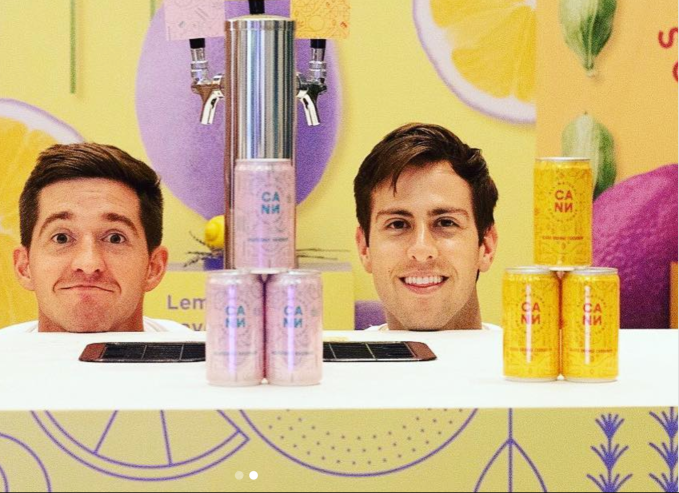
Cann co-founders Luke Anderson and Jake Bullock. Image courtesy of Cann

“They see this big blue ocean of future cannabis users that they haven’t accessed yet,” says Bullock. 

Younger consumers seem more willing to experiment with intoxicants other than traditional spirits these days and venture capital firms are buzzed by the possibility of returns like the ones reaped by the George Clooney-founded spirit company Casamigos (which sold for $1 billion).

Kin Euphorics, backed by KBW Ventures, Canaan, and Fifty Years is using chemicals other than cannabis to get that buzz, but most investors are looking at cannabis for the high and euphoria of intoxicating returns.

Cann, did a soft launch in June with a limited release across four MedMen stores in Los Angeles. “You start really small and notice what people are purchasing and what’s driving repurchasing,” says Anderson. “We had this fortunate problem of it flying off of the shelf with its packaging and flavor differentiation.”

And the company’s founders are also aware of the blatant injustice inherent in their ability to launch a drug distribution and delivery business in 2019 in Los Angeles when the city’s minority communities have been ravaged the criminal justice system for doing the same thing.

So far, the company has taken the step of reaching out to 4thMVMT, the organization founded by Karim Webb to bring entrepreneurialism and investment to communities that have been damaged by the “War on Drugs”.

“We talk to them pretty frequently,” says Bullock. “We’re hoping that their first class will take over all their dispensaries… But we have a standing offer for anyone who they send over to us.”

For both Bullock and Anderson their involvement in the cannabis industry also ties in to their own identities as gay men. “The role that cannabis played in the AIDS crisis, when the process to decriminalize was driven by the real need for that medicine,” says Anderson. “We’re early and it’s young, but part of the reason we launched the business was to make an impact in communities with our company.”

24 Jul 2019

With $160 million in new funding, Freenome looks commercialize its blood test to detect colorectal cancer

One of the major problems that technology companies working to find a cure for cancer need to solve is finding a safe, minimally invasive way to detect cancers early.

Almost all cancer screening will eventually require a biopsy, but determining whether that’s necessary in the early stages of cancer can mean the difference between life and death.

It’s one of the reasons why investors have spent hundreds of millions if not billions of dollars to find a reliable way to detect cancer from simple procedures like a blood draw. And why they’re investing over $160 million in the South San Francisco-based startup, Freenome. 

“If I could do it with less money and do it responsibly, I would,” says Gabriel Otte, Freenome’s founder and chief executive officer.

Since the company launched in 2014 it has been developing a test that combines machine learning with the development of proprietary assays to test for different types of cancer. The company’s research started in prostate cancer, but it has since turned its focus to colorectal cancer.

It’s a strain of the disease that has already been proven to respond well to early diagnosis and treatment. Whereas other types of cancer are less well understood in their earliest stages, according to Otte.

By drawing samples of cell-free DNA from the blood, and treating it with methylation and protein biomarkers the company is able to apply machine learning techniques to identify additive signatures that can increase the accuracy of early cancer detection tests.
GettyImages 179793659

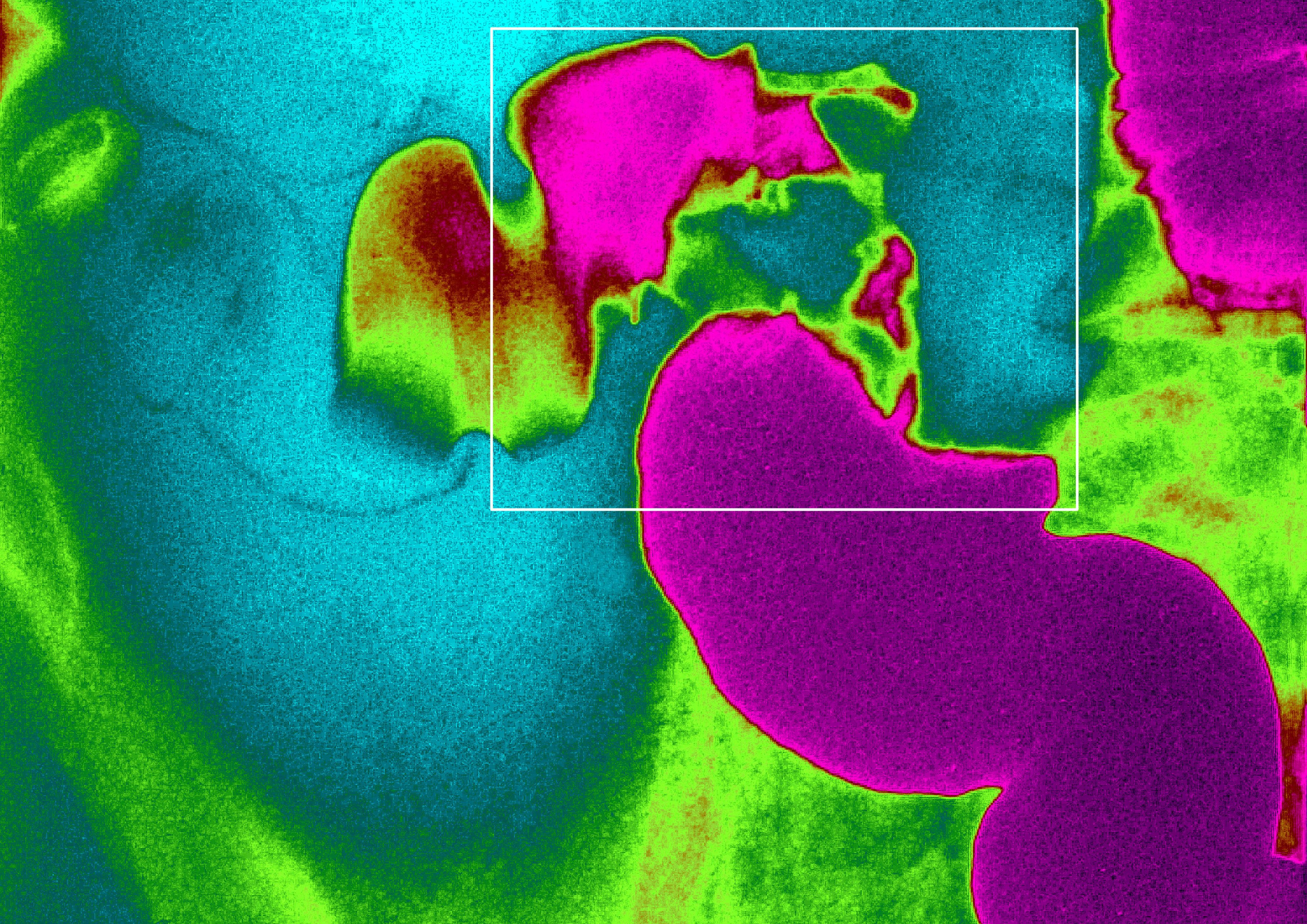
Cancer Of The Colon, X-Ray, Sigmoid Colon Cancer, Frontal Abdominal X-Ray. (Photo By BSIP/Universal Images Group via Getty Images)

By using multiple inputs rather than looking for just genetic material coming off of tumors the company says that its tests can detect cancer earlier than traditional tests that are more invasive and can miss early signs of the disease.

Colorectal cancer, which is the second most lethal cancer in the U.S., has a 90 percent five-year relative survival rate when it’s detected early, according to data from the National Cancer Institute’s Surveillance, Epidemiology, and End Results Program, cited by the company.

We get this image in our head of a magical drug or using the immune system to kill a tumor. While drugs are an important part and will continue to play an important part.. The difference between early detection and late stage detection it is life or death,” says Otte. 

Freenome has data on several types of cancers and have looked at tests for over seven different target — including colorectal and prostate cancer. But the company decided not to pursue a test for multiple cancer types because if they launched one, it would not get used, Otte said.

For the vast majority of cancer types today you wouldn’t do anything differently if you detected it early,” says Otte. “We haven’t developed what is the medical standard that we would apply to such an incident.”

Competitors in the diagnostics market disagree. Grail, a startup also working in the diagnostics space has raised $1.5 billion for its technology that screens for multiple cancers. The company even announced results earlier this year that showed promising advances for its technology. According to the company, data showed Grail’s still-in-development multi-cancer blood test detected strong signals for twelve deadly cancer types at early stages with a very high specificity of at least 99 percent (or a false positive rate of one percent or less). And the test identified where the cancer originated in the body (the tissue of origin) with high accuracy.

Thrive Earlier Detection, which raised over $100 million in May, is another company taking the approach of looking at multiple cancer screens.

For Otte the results may be impressive, but without a standard of care to follow, the test results are fairly meaningless.

“It’s not to say that I’m not a fan of people going after multi-stage cancer,” says Otte. “It’s a long road to see that that works and that helps.”
GettyImages 151045631

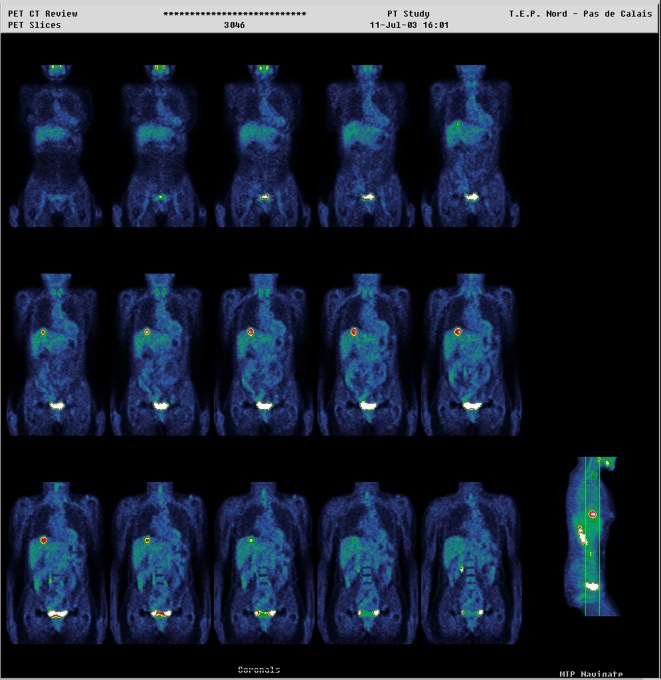
Institute Of Nuclear Medicine, University Hospital Of Lille, France. Pet Scan Positron Emission Tomography. Colorectal Carcinoma. Hepatic Lesions. (Photo By BSIP/UIG Via Getty Images)

The new financing for Freenome comes from RA Capital Management and Polaris Partners. The two investors were joined by funds advised by T. Rowe Price Associates, Perceptive Advisors, Roche Venture Fund, Kaiser Permanente ventures and the American Cancer Society’s own impact investment arm, BrightEdge Ventures.

Previous investors, who put in an initial $78 million to fund Freenome’s work, also participated in the round. They included: Andreessen Horowitz, GV (formerly Google Ventures), Data Collective Venture Capital, Section 32, and Verily Life Sciences (a subsidiary of Alphabet focused on life sciences and healthcare).

Freenome said the money would be used for a validation study and would then be submit an application for its colorectal cancer screening test to both the U.S. Food and Drug Administration (FDA) and Centers for Medicare & Medicaid Services (CMS) under the Parallel Review Program.

“The biggest hurdle [to a company’s success] is reimbursement,” says Otte. “We’re talking about Medicare coverage is going to be no more than $500… so a test needs to be significantly under $500 mark to make a significant business. [That means it] has to have clinical utility. That’s why colorectal cancer is the right move for us… payers are going to be amenable to a test like ours. It’s a big hurdle to generate enough data over enough time to show that your test results in a better patient outcome.”

Again and again, the companies investors come back to the need for early detection to be a component of a cure for the world’s deadliest diseases and it’s something that Freenome’s chief executive also stresses.

“The most affordable and effective treatment for metastatic cancer is to detect it early, when the tumor is still small and local, and we can cure it with surgery. It’s with that vision that we have invested in Freenome,” said Peter Kolchinsky, Managing Partner of RA Capital.

The company differentiates itself not just in its approach to target single cancers with a test, but also in its use of multiple inputs beyond the genetic material given off by the cancer cell itself, according to Otte.

He sees one of the limiting factors to the success of other approaches as their inability to collect enough genetic material to produce accurate enough samples — even when those samples are enhanced by machine learning.

We don’t believe that CT DNA is actually going to solve this problem,” says Otte. “It comes down to physics… In early disease there are very few fragments of DNA that will come from the tumor. At that low concentration [roughly] .01 percent… To take the appropriate amount of blood. If you were to collect 80 ML it would be… To get to 90 percent you would have to collect 300MLs.”

Once you have identified a disease then you can begin to treat it, but you have to have a correct diagnosis. The best drugs, which can bring someone with Stage 4 lung cancer who is at the brink of death back to perfect health only work in a small percentage of patients. The best approach is to treat the patient before they ever need a miracle cure, says Otte.

“When I talk about curing cancer the cure comes from early detection followed by early prevention and treatment,” he says.


24 Jul 2019

Watch SpaceX launch its CRS-18 Dragon mission to the International Space Station live

SpaceX is currently set to launch its eighteenth commercial resupply mission (CRS-18) for the International Space Station at 6:24 PM ET (3:24 PM PT) on Wednesday, from LC-40 at Cape Canaveral Air Force Station in Florida. The mission will carry equipment for experiments and scientific research, as well as supplies for ISS astronauts, and a new docking adapter that will automate the docking process for any future crew spacecraft built to take advantage during their visits to the ISS.

Live coverage will begin via the stream above at around 15 minutes prior to the target launch time, provided all goes to plan. The standard pre-launch weather assessment isn’t looking especially good however – the USAF 5th Space Wing, which is responsible for calling the weather conditions, said that there was a 30 percent chance of favorable weather as of earlier this week. Should the launch be scrubbed for today, there’s a backup window on Thursday, July 25 at 6:01 PM ET (3:01 PM PT).

SpaceX’s Dragon capsule used for this mission is badged with an “Apollo 50th” commemorative graphic near the side-hatch on the spacecraft, to celebrate the 50th anniversary of the Apollo 11 Moon landing mission. That anniversary actually ends today as well, with the returned astronauts splashing down in the Pacific Ocean in the Columbia command capsule on July 24, 1969.

While the delivery of the new automated docking module is a big highlight for this mission from the perspective of the overall space program, there’s another big milestone for SpaceX – the Falcon 9 first stage used in this mission will attempt to land back at LZ-1 at Cape Canaveral, and it’s already flown and been recovered twice previously.

24 Jul 2019

Tesla earnings day is here: Pay attention to these 4 indicators

Tesla will report its second-quarter earnings after market closes today. And while CEO Elon Musk’s traditional post-report conference call with analysts tends to garner the most buzz and headlines, there are some important matters — namely numbers — to watch for in the automaker’s actual earnings report.

Before getting into what indicators to pay attention to, here’s a quick recap of what happened in the last quarter.

In the first quarter of the year, Tesla reported a wider-than-expected loss of $702 million, or $4.10 a share, after disappointing delivery numbers, costs and pricing adjustments to its vehicles threw the automaker off of its profitability track.

The loss included $188 million of non-recurring charges. When adjusted for one-time losses, Tesla lost $494 million, or $2.90 a share, compared with a loss of $3.35 a share in the first quarter of 2018. Tesla reported that it also incurred $67 million due to a combination of restructuring and other non-recurring charges.

What to Expect in Q2 Earnings

Tesla has had a bit of comeback since reporting first-quarter earnings. Earlier this month, Tesla reported it delivered 95,200 of its electric vehicles in the second quarter. It wasn’t only a dramatic reversal from a disappointing first period; deliveries in the second quarter also set a new record.

Analysts expected Tesla to deliver 91,000 vehicles during the second quarter, according to estimates compiled by FactSet. The record-breaking figures stood in stark contrast to the company’s first quarter delivery numbers when it reported deliveries of 63,000 vehicles, nearly a one-third drop from the previous period.

The upshot for Tesla: the record-setting deliveries reported earlier this month should have a positive effect on second-quarter earnings.

But it will be enough? Analysts polled by FactSet expect Tesla to report an adjusted loss of 35 cents a share on revenue of $6.47 billion, which is substantially better than the loss of $3.06 a share that the company reported in the same period last year.

Revenue, profit or loss, and operating cash flow less capital expenditures are all important figures to pay attention to. But there are other numbers and details to watch for too. Here’s our list.

Automotive gross margin

Tesla has said it is targeting 25% automotive gross margins for Model S, Model X and Model 3. But that didn’t happen in the first quarter. Instead, automotive gross margins, excluding certain items shrank to 20.3% from 24.7% in the fourth quarter of 2018.

Tesla’s margins were buffeted in the past by sales of the higher-priced (and better margin per vehicle) Model S and X. Now Tesla is in an awkward spot where demand for the Model 3 hasn’t been enough to stave off contracting margins caused by a decline in Model S and X sales. Model 3s have a lower profit margin per vehicle than the S or X.

Tesla could see margins recover if it can sell enough Model 3s. It could also be helped by a recent decision to get rid of the standard versions of Model S and X.

Tesla’s automotive gross margin is central to the company’s future financial health, Citigroup analyst Itay Michaeli wrote in a recent note to clients.

Michaeli believes that gross margins in the range of 21% to 23% will act as a benchmark for investors. Anything “materially lower” would support the bear case on Tesla’s profitability, and anything materially higher would support the bull case,” he wrote.

Demand for Model S and X

The Model 3 might not have a demand problem, but the older Model S and Model X do. Registrations for the Model S sedan in the second quarter fell 54% to 1,205 in California, the company’s largest market in the U.S., according to a WSJ article that cited data from the Dominion Cross-Sell report. That indicates slowing sales for the higher-priced S and X elsewhere, which could effect sales and profit.

The falling demand isn’t a huge surprise. Both vehicle models are older and more expensive than the newer Model 3. But that means Tesla is more reliant than ever on Model 3 sales to close the gap.

Tesla could give the Model S or X a refresh to help boost sales. In the automotive world, “refreshed” typically means small revisions to a vehicle model that extend beyond the typical yearly updates made by manufacturers. A refresh is not a major redesign, although there’s often a noticeable change to the vehicle model.

But Musk recently stated that isn’t happening. Look for any guidance on what Tesla plans to do with the S and X.

2019 delivery guidance

Despite a dismal first-quarter earnings report, Tesla stuck by its prior guidance of delivering between 360,000 to 400,000 vehicle in 2019. The company’s second-quarter deliveries indicate a turnaround.

The company has delivered more than 186,000 vehicles in the first half of the year. Tesla will need to keep up the momentum and deliver another 174,000 in the second half of the year if it hopes to meet the lower end of its guidance.

China

Tesla’s factory in China is one of its biggest investments and bets. The automaker reached a deal in July 2018 with the Shanghai government to build a factory capable of producing 500,000 electric vehicles a year. Construction kicked off in January and has been moving forward at a brisk pace.

The factory would be the automaker’s second assembly plant and aimed at serving the alluring Chinese market. Importantly, producing Tesla vehicles in China will help it avoid challenges around shipping, pricing and tariffs, an issue that has been exacerbated by the ongoing U.S.-China trade war.

Other items we care about include production plans for the Model Y, the Tesla Semi — remember that? — the electric pickup, its battery production partnership with Panasonic, energy storage and solar as well as its progress on automated driving.

24 Jul 2019

SMB payroll startup Gusto raises $200m series D, plans R&D expansion to NYC

Every employee loves receiving their paycheck. It just so happens though that paying employees can be a royal pain, what with incredibly diverse labor laws across all 50 U.S. states. While large, Fortune 500 employers have a bevy of options, from traditional firms like ADP to newer entrants like Workday, small and medium businesses (SMBs) face the brunt of the challenge — too small to be attractive to the biggest players, but still responsible for following the complexity of U.S. labor law.

Gusto was founded to solve that problem for SMBs, and so far, it has seen strong adoption. The company crossed the 100,000 customer barrier in the past year, out of an estimated six million small businesses in the United States. “I feel like we are still at the beginning stages,” Gusto’s founder and CEO Josh Reeves told TechCrunch.

It may be early innings, but you wouldn’t know that from Gusto’s burgeoning cap table. The company announced today that it has raised $200 million of venture capital from wealth manager Fidelity Management & Research Company and Generation Investment Management, which was founded by former U.S. Vice President Al Gore to create a vehicle for “sustainable” investments.

In addition to the new capital, Gusto has added its first independent board member in the form of Anne Raimondi, a current Asana and former SendGrid board member who was SVP of Operations for customer experience SaaS platform Zendesk.

The new infusion of capital will be used for scaling the company’s product and team. “I like to take complex systems and take them apart and make them better,” Reeves explained about both around the complexity of payroll and the complexity of operating a growing workforce of his own.

While Gusto’s central product is payroll, Reeves sees two other product arcs he intends to develop more in the coming years as the company scales. One arc, which we talked about last year, is fintech features like Flexible Pay, a product that allows employees to receive their unpaid wages in advance, with the goal of reducing reliance on usurious payday lenders. The other product arc is health care and helping SMBs offer insurance benefits to their employees. “We want to be a force for universal health care,” Reeves said.

As Gusto explores additional products built around its payroll service, it has sought to expand its engineering R&D team. The company announced recently that it will open an R&D office in New York City in September, which it hopes will be able to both execute on these two products as well as others not yet planned. Today, Gusto has more than 1,000 employees in San Francisco and Denver.

That employee growth has also led to new executives joining the company recently. Danielle Brown, formerly head of diversity and inclusion at Google, has joined as Chief People Officer, and Fredrick Lee has joined as CISO from Square, where he similarly headed information security.

Asked about IPO plans, Reeves demurred, but did point out that the startup’s recent investor additions have been crossover funds that invest across public and private companies.

In addition to Fidelity and Generation, the round included participation from existing investors T. Rowe Price and Dragoneer (which led the Series C), as well as General Catalyst (which led Gusto’s Series A back when it was known as ZenPayroll). The company was founded in 2012.

24 Jul 2019

Nintendo Switch might soon go on sale in China via Tencent

After months of anticipation, Nintendo Switch is ready to shed more light on its China launch. The Japanese console giant and Tencent are “working diligently” to bring the Switch to the world’s largest market for video games, the partners announced on Weibo today, the Twitter equivalent in China.

The pair did not specify a date when the portable gaming system will officially launch as the government approval process can take months. But there are signs that things are moving forward. For example, Tencent has been given the green light to run a trial version of the New Super Mario Mario Bros. U Deluxe and a few other blockbuster titles in China.

On August 2, the partners will jointly host a press conference for Switch — no product launch yet — in Shanghai, Tencent confirmed to TechCrunch. It appears to be a strategic move that coincides with the country’s largest gaming expo China Joy beginning on the same day in the city.

Sales of Nintendo Switch in China, made possible through a distribution deal with Tencent, will likely add fuel to Nintendo’s slowing growth. It can also potentially diversify Tencent’s gaming revenues, which took a hit last year as Beijing tightened controls over online entertainment.

Switch faces an uphill battle as consoles, including Sony PS4 and Microsoft Xbox, have for years struggled to catch on in China. The reasons are multifaceted. China had banned consoles until 2014 to protect minors from harmful content. The devices are also much less affordable than mobile games, making it difficult as a form of social interaction in the mobile-first nation.

24 Jul 2019

Facebook settles with FTC: $5 billion and new privacy guarantees

Following more than a year of speculation since the Federal Trade Commission announced it was investigating Facebook over privacy lapses, the regulator has officially announced the terms of its settlement with the beleaguered social network: $5 billion (as previously rumored) and improved privacy oversight within the company.

The order was approved in a 3-2 vote by the agency’s commissioners. The FTC notes that the penalty against Facebook is the largest ever imposed on any company for violating consumers’ privacy — as well as flagging that it’s “almost 20 times greater than the largest privacy or data security penalty ever imposed worldwide”.

In addition to the money, Facebook will have to create a board committee on privacy, and must provide executive assurance that user data is being respected.

“The settlement order announced today also imposes unprecedented new restrictions on Facebook’s business operations and creates multiple channels of compliance. The order requires Facebook to restructure its approach to privacy from the corporate board-level down, and establishes strong new mechanisms to ensure that Facebook executives are accountable for the decisions they make about privacy, and that those decisions are subject to meaningful oversight,” the FTC writes in a press release announcing the decision.

“Despite repeated promises to its billions of users worldwide that they could control how their personal information is shared, Facebook undermined consumers’ choices,” said FTC chairman, Joe Simons, in a statement. “The magnitude of the $5 billion penalty and sweeping conduct relief are unprecedented in the history of the FTC. The relief is designed not only to punish future violations but, more importantly, to change Facebook’s entire privacy culture to decrease the likelihood of continued violations. The Commission takes consumer privacy seriously, and will enforce FTC orders to the fullest extent of the law.”

The FTC first confirmed that it was investigating Facebook in March of last year, during the then-new hubbub surrounding Cambridge Analytica’s abuse of data siphoned from the network. The regulator was specifically concerned that Facebook had been systematically violating the terms of its 2012 agreement, which barred them from a number of practices concerning user data.

Rumors started less than a year later that the fine the FTC was considering would be “record-setting,” though as many pointed out at the time, almost any conceivable amount would be easily (if not gladly) written off by the company, which brings in upwards of $50 billion per year in revenue.

In April, seeing the writing on the wall and perhaps privy to some of the conversations, Facebook set aside $3 billion to cover the costs of the settlement it knew was coming (it still made a $2.4B profit), but said it expected the number may actually be $5 billion. And indeed that is the number that surfaced two weeks ago in early reports of the FTC vote. (Some had suggested fines far higher, perhaps mitigated by good behavior, but the FTC doesn’t seem to have taken them up on the idea.)

Facebook has responded to the penalty in a lengthy blog post penned by Colin Stretch.

“The agreement will require a fundamental shift in the way we approach our work and it will place additional responsibility on people building our products at every level of the company,” he writes. “It will mark a sharper turn toward privacy, on a different scale than anything we’ve done in the past.

“The accountability required by this agreement surpasses current US law and we hope will be a model for the industry. It introduces more stringent processes to identify privacy risks, more documentation of those risks, and more sweeping measures to ensure that we meet these new requirements. Going forward, our approach to privacy controls will parallel our approach to financial controls, with a rigorous design process and individual certifications intended to ensure that our controls are working — and that we find and fix them when they are not.”

Stretch goes on to describe the Cambridge Analytica data misuse scandal as “a breach of trust between Facebook and the people who depend on us to protect their data”, before claiming the company will adopt a new more “robust” approach to privacy risk.

“We will be more robust in ensuring that we identify, assess and mitigate privacy risk,” he writes. “We will adopt new approaches to more thoroughly document the decisions we make and monitor their impact. And we will introduce more technical controls to better automate privacy safeguards.”

He also says Facebook will undertake a review of its “systems” — which he says the company expects will surface “issues” — pledging that “when it does, we will work swiftly to address them”.

In the blog he also confirms Facebook has settled a separate investigation by the Securities and Exchange Commission — agreeing to pay a further $100M to resolve a probe of its processes for disclosing data abuses to investors.

“We share the SEC’s interest in ensuring that we are transparent with our investors about the material risks we face, and we have already updated our disclosures and controls in this area,” he writes, adding: “As part of the settlement with the SEC, we agreed to pay a $100 million penalty.

24 Jul 2019

Sales professionals get a bad rap. Bravado wants to change that.

Take a moment to imagine the most successful salesperson you know.

Is it someone you respect? Probably not. That, precisely, is the problem Bravado — a startup emerging from stealth today with $12 million in backing from Redpoint Ventures, Freestyle Capital, Precursor Ventures, Village Global and Kindred Ventures — is working to solve.

Sahil Mansuri, Bravado founder and chief executive officer, got his start in sales. A gifted student, his father’s health issues forced him to land a job straight out of college that would make him a lot of money and fast. When his career counselor suggested he search for an opportunity in sales, he envisioned a crowded office packed with obnoxious telemarketers, not a lucrative position in B2B sales in his hometown of San Francisco.

Mansuri grew to adore sales so much, he built a company focused on evangelizing the profession. Before diving head-first into his own venture, Mansuri served as a vice president at SalesPredict, an eBay-acquired business that uses data to predict customer buying behavior and sales conversion. Before that, he worked his way up at Glassdoor, becoming the top-performing sales representative at the platform for submitting anonymous company reviews.

Although Mansuri’s parents, Indian immigrants, were initially horrified by their son’s career choice, they’ve since come around. His hope now is to help the general public develop a more favorable view of the sales profession, too.

“Sales has been transformative for my family,” Mansuri tells TechCrunch. “But when I say sales has a negative stigma, I know because I’ve lived it. That’s my life story.”

“Sales isn’t a profession that’s celebrated,” he added. “You can think of all these great engineers and product managers but you can’t think of any great people in sales.”

Bravado Community

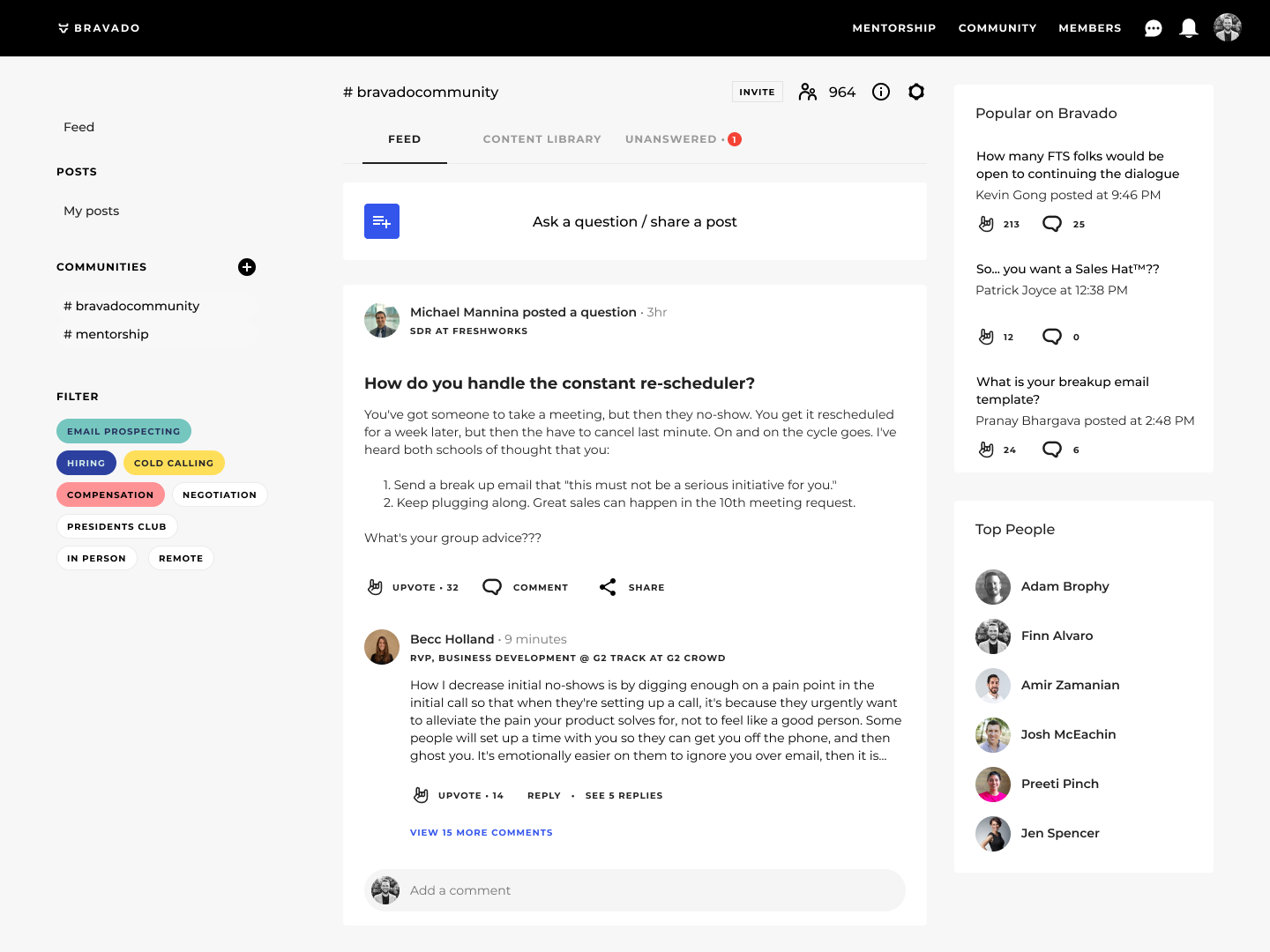
Bravado, yet to monetize its platform in any fashion, is focusing its efforts on building out its network. Currently, sales professionals can use the platform to develop credibility through the Bravado Credibility Score, which is based on customer testimonials recorded directly on a sales professional’s Bravado profile. The company is also helping sales workers develop their careers through networking events and workshops.

Fostering the next generation of sales professionals is the final piece of the Bravado business. Mansuri pointed out that none of the top 100 universities in the U.S. have sales majors, making it rather impossible for students to dream of becoming sales experts. Through Bravado’s sales mentorship program, students are provided sales curriculums, the opportunity to be placed at companies in sales roles and a growing network of sales professionals. It’s a “mini pre-professional path to sales,” says Mansuri.

Diversity is important to the team, too. There’s a reason sales has a fratty reputation; it’s a predominately white and male field with fewer than 25% women and a serious lack of minorities and LGBTQ folks. Bravado is putting forth a content strategy in an attempt to highlight these issues and invite new faces into the sales community.

“We want to build a world in which the best talent, no matter what they look like, is like ‘I really want to be in sales because that’s an awesome career,'” Mansuri explained.

Bravado’s community includes 50,000 members and 1,000 sales teams from Salesforce, LinkedIn, Microsoft, Slack, WeWork, Uber, Oracle, IBM and others. The startup recently attracted an $8.5 million Series A led by Redpoint Ventures’ Alex Bard and Annie Kadavy, a majority of which will be used to expand its membership base. When it comes time to make money, the company says it will attract dollars through a suite of to-be-developed “premium products.”

For Bravado to accomplish its goals, it must inspire the public to reimagine the salesperson stereotype, as well as encourage students across the U.S. to enter and redefine the sales field.

“Sales is perceived as a career for the leftovers,” Mansuri said. “We want to bring respect and credibility to the sales profession and share why it is that sales is a wonderful career.”

24 Jul 2019

Cruise will launch a commercial robotaxi service in San Francisco, but not in 2019

Cruise is postponing an ambitious target to launch a commercial robotaxi service before the end of the year, the company’s CEO Dan Ammann said Wednesday in a lengthy blog post that revealed new details about its plan to eventually deploy in San Francisco.

Cruise is now throwing its weight — which includes a treasure chest of more than 1,500 employees and $7.25 billion from majority shareholder GM, Softbank Vision Fund, automaker Honda and T. Rowe Price & Associates — towards a large scale deployment that “gets it right the first time,” Ammann told TechCrunch in a recent interview.

For the self-driving company, this means a steep ramp up in testing and validation of its autonomous vehicles, community outreach, investment in infrastructure that includes a massive electric charging station in San Francisco, and the development of a next-generation self-driving vehicle by a team of Cruise, GM and Honda engineers. 

“From the beginning, the approach at Cruise was to do this safely and to do this at a very large scale,” Cruise CEO Dan Ammann told TechCrunch. “There’s a technology race going on here, but there’s also a trust race going on as well. It’s really important that when we do this the first time, that we do it right.”

Ammann declined to give a new timeline for the commercial service that will first launch in San Francisco.

The decision not only provides a glimpse into Cruise’s operations, it reflects a broader trend in the nascent autonomous vehicle industry. Engineers and executives within the industry, once brazenly forecasting the imminent arrival of self-driving cars (without a human safety driver behind the wheel) have a decidedly more restrained outlook.

Cruise had one of the most aggressive timelines among companies hoping to deploy a commercial self-driving vehicle service. And even while other companies adjusted deployment plans, Cruise stuck to its timeline until now.

cruise sf

“It seemed highly unlikely that Cruise would meet that 2019 and not just because of the technical challenges,” Gartner analyst Mike Ramsey said in a recent interview, adding that company faced more pragmatic challenges such as designing a vehicle platform and launching a ride-hailing app and business.

“It’s further evidence that the ambitions for transitioning the world to self driving vehicles is unlikely to be as near term as some thought,” Ramsey said.

However, Ramsey noted that new details revealed Wednesday by Cruise does show a company that is thinking beyond just solving the technical juggernaut of autonomous vehicles and making some progress on how the service might function.

Developing.