
Year: 2019

24 Jul 2019

Tile finds another $45M to expand its item-tracking devices and platform

Tile — the company that makes popular small square-shaped tags and other technology to help people keep track of physical belongings like keys and bags — has made more recent moves to link up with chipmakers, helping it expand to wireless headsets and other electronic and other connected items as part of a wider smart home strategy. Now, Tile is announcing a round of funding of $45 million to double down on those strategies and fulfil a plan to have its technology in millions of devices by the end of this year.

The growth equity is being led by Francisco Partners, with participation from previous investors GGV Capital and Bessemer Venture Partners and new backers Bryant Stibel and SVB Financial Group.

CJ Prober — who joined as CEO last year in part to develop Tile’s newer areas of business — said in an interview that the funding will help the startup be more aggressive in doubling down on these new opportunities.

“We’re seeing great business momentum, with the first embedded partner products from our strategic initiatives coming out this year,” he said. It now has partnerships with five semiconductor companies, including Qualcomm and most recently Nordic, which they integrate Tile functionality on to their hardware, he added. “All this is now paying off with great momentum.”

Prober would not comment on the company’s valuation with this round except to say that it was definitely an upround. It’s notable that this appears to be only the first close for the Series C, which has “opened” with this $45 million commitment, in the words of a spokesperson for the company.

Tile has declined to specify any more detail on this front, but this is pretty standard procedure, and the startup has previously raised its rounds in stages — as you can see by this timeline in PitchBook. For some more context, Tile’s last noted valuation (also in PitchBook) was around $166 million, but that was now more than two years ago, before the various initiatives and other changes at the company.

Tile is not disclosing any metrics on its market share or how many of its devices are now in use, but it typically is rated as the largest of a crowded market for item-tracking devices (with others in the space including TrackR (Adero), Chipolo, and more).

But it notes that its European business (a relatively new area of focus for Tile) has grown by 160% in the last quarter. That’s coming from a small base, though: Prober confirmed that the US is still by far its biggest market in terms of sales and users.

And it also had a strong Prime Day on Amazon this year, doubling its unit sales (but didn’t provide hard numbers for comparison). It said it has exceeded projections for sign-ups for its Premium tier, which provides free battery replacements, 30-day location history, smart alerts (prompting you for example when you’ve left your keys somewhere), customer support and more for $30 for the year or $3 per month.

The company has been planting a lot of seeds, and some of them have yet to sprout. Last year, Tile announced that it would take an investment from Comcast to help it develop new products for its wider connected consumer strategy.

Prober however described this as still in the “roadmapping phase” and would not get into specifics except to say that there are a number of different initiatives in the works. There is also a partnership with Google unveiled at the most recent I/O that will see its home devices also being able to be tracked by the Tile platform.

I asked Prober if he worries ultimately about whether large tech companies like Apple, Amazon, Google and the rest — which all want to “own” connected home customers and the ecosystem of hardware and services that they may use — are seen as opportunities or threats for Tile, given that it’s piggy backing on their platforms and devices. His and the company’s fundamental feeling — one that should be supported in the spirit of competition and consumer choice — is that having a cross-platform option is the way to go.

“Our customers have different devices, products from different companies and it’s our job to ensure that Tile works well across all of those,” he said. “We see ourselves a little bit like Switzerland, which is also something that our customers and partners appreciate.”

While we’re seeing a surge of new communications technologies and protocols — 5G being perhaps the one we are hearing about most at the moment — Tile is sticking for now to Bluetooth.

“We love what Bluetooth enables for our customers in terms of the form factor, the cost and profile of the device and the power consumption,” said Prober. “We’re constantly evaluating different alternatives, and if there is an alternative we would consider that, but in our view that doesn’t exist right now.”

It’s a choice that its investors are also supporting.

“Tile pioneered the smart location category,” said Andrew Kowal, partner with Francisco Partners, in a statement. “With Bluetooth technology projected to be included in nearly 30 billion devices shipping in the next five years, Tile is poised to deliver an embedded finding solution for a rapidly expanding market. We are extremely excited to be partnering with Tile as the company enters the next chapter of its growth story.”
24 Jul 2019

Researchers spotlight the lie of ‘anonymous’ data

Researchers from two universities in Europe have published a method they say is able to correctly re-identify 99.98% of individuals in anonymized datasets with just 15 demographic attributes.

Their model suggests complex datasets of personal information cannot be protected against re-identification by current methods of ‘anonymizing’ data — such as releasing samples (subsets) of the information.

Indeed, the suggestion is that no ‘anonymized’ and released big dataset can be considered safe from re-identification — not without strict access controls.

“Our results suggest that even heavily sampled anonymized datasets are unlikely to satisfy the modern standards for anonymization set forth by GDPR [Europe’s General Data Protection Regulation] and seriously challenge the technical and legal adequacy of the de-identification release-and-forget model,” the researchers from Imperial College London and Belgium’s Université Catholique de Louvain write in the abstract to their paper which has been published in the journal Nature Communications.

It’s of course by no means the first time data anonymization has been shown to be reversible. One of the researchers behind the paper, Imperial College’s Yves-Alexandre de Montjoye, has demonstrated in previous studies looking at credit card metadata that just four random pieces of information were enough to re-identify 90 per cent of the shoppers as unique individuals, for example.

In another study which de Montjoye co-authored that investigated the privacy erosion of smartphone location data, researchers were able to uniquely identify 95% of the individuals in a dataset with just four spatio-temporal points.

At the same time, despite such studies that show how easy it can be to pick individuals out of a data soup, ‘anonymized’ consumer datasets such as those traded by brokers for marketing purposes can contain orders of magnitude more attributes per person.

The researchers cite data broker Experian selling Alteryx access to a de-identified dataset containing 248 attributes per household for 120M Americans, for example.

By their models’ measure essentially none of those households are safe from being re-identified. Yet massive datasets continue being traded, greased with the emollient claim of ‘anonymity’…

(If you want to be further creeped out by how extensively personal data is traded for commercial purposes the disgraced (and now defunct) political data company, Cambridge Analytica, said last year — at the height of the Facebook data misuse scandal — that its foundational dataset for clandestine US voter targeting efforts had beens licensed from well known data brokers such as Acxiom, Experian, Infogroup. Specifically it claimed to have legally obtained “millions of data points on American individuals” from “very large reputable data aggregators and data vendors”.)

While research has shown for years how frighteningly easy it is to re-identify individuals within anonymous datasets, the novel bit here is the researchers have built a statistical model that estimates how easy it would be to do so to any dataset.

They do that by computing the probability that a potential match is correct — so essentially they’re evaluating match uniqueness. They also found small sampling fractions failed to protect data from being re-identified.

“We validated our approach on 210 datasets from demographic and survey data and showed that even extremely small sampling fractions are not sufficient to prevent re-identification and protect your data,” they write. “Our method obtains AUC accuracy scores ranging from 0.84 to 0.97 for predicting individual uniqueness with low false-discovery rate. We showed that 99.98% of Americans were correctly re-identified in any available ‘anonymised’ dataset by using just 15 characteristics, including age, gender, and marital status.” 

They have taken the perhaps unusual step of releasing the code they built for the experiments so that others can reproduce their findings. They have also created a web interface where anyone can play around with inputting attributes to obtain a score of how likely it would be for them to be re-identifiable in a dataset based on those particular data-points.

In one test based inputting three random attributes (gender, data of birth, zipcode) into this interface, the chance of re-identification of the theoretical individual scored by the model went from 54% to a full 95% adding just one more attribute (marital status). Which underlines that datasets with far fewer attributes than 15 can still pose a massive privacy risk to most people.

The rule of thumb is the more attributes in a data-set, the more likely a match is to be correct and therefore the less likely the data can be protected by ‘anonymization’.

Which offers a lot of food for thought when, for example, Google -owned AI company DeepMind has been given access to one million ‘anonymized’ eye scans as part of a research partnership with the UK’s National Health Service.

Biometric data is of course chock-full of unique data points by its nature. So the notion that any eye scan — which contains more than (literally) a few pixels of visual data — could really be considered ‘anonymous’ just isn’t plausible.

Europe’s current data protection framework does allow for truly anonymous data to be freely used and shared — vs the stringent regulatory requirements the law imposes for processing and using personal data.

Though the framework is also careful to recognize the risk of re-identification — and uses the categorization of pseudonymized data rather than anonymous data (with the former very much remaining personal data and subject to the same protections). Only if a dataset is stripped of sufficient elements to ensure individuals can no longer be identified can it be considered ‘anonymous’ under GDPR.

The research underlines how difficult it is for any dataset to meet that standard of being truly, robustly anonymous — given how the risk of re-identification demonstrably steps up with even just a few attributes available.

“Our results reject the claims that, first, re-identification is not a practical risk and, second, sampling or releasing partial datasets provide plausible deniability,” the researchers assert.

“Our results, first, show that few attributes are often sufficient to re-identify with high confidence individuals in heavily incomplete datasets and, second, reject the claim that sampling or releasing partial datasets, e.g., from one hospital network or a single online service, provide plausible deniability. Finally, they show that, third, even if population uniqueness is low—an argument often used to justify that data are sufficiently de-identified to be considered anonymous —, many individuals are still at risk of being successfully re-identified by an attacker using our model.”

They go on to call for regulators and lawmakers to recognize the threat posed by data reidentification, and to pay legal attention to “provable privacy-enhancing systems and security measures” which they say can allow for data to be processed in a privacy-preserving way — including in their citations a 2015 paper which discusses methods such as encrypted search and privacy preserving computations; granular access control mechanisms; policy enforcement and accountability; and data provenance.

“As standards for anonymization are being redefined, incl. by national and regional data protection authorities in the EU, it is essential for them to be robust and account for new threats like the one we present in this paper. They need to take into account the individual risk of re-identification and the lack of plausible deniability—even if the dataset is incomplete—, as well as legally recognize the broad range of provable privacy-enhancing systems and security measures that would allow data to be used while effectively preserving people’s privacy,” they add.

“Moving forward, they question whether current de-identification practices satisfy the anonymization standards of modern data protection laws such as GDPR and CCPA [California’s Consumer Privacy Act] and emphasize the need to move, from a legal and regulatory perspective, beyond the de-identification release-and-forget model.”

24 Jul 2019

Ebola and the ongoing global health emergency that no one is noticing

On Wednesday the World Health Organization declared the ongoing – and now year-old – Ebola outbreak a global health emergency.

The emergency declaration comes after a man became sick and brought the virus to the Congolese city of Goma, a highly populated transit hub with an international airport and next door to Rwanda. As it stands today, the current Ebola outbreak has surpassed 2,500 cases and 1,500 deaths concentrated largely in two provinces in eastern Congo.

The response effort has been hampered by a deadly mix of armed conflict, distrust, and lack of medical resources. Less than half of the affected population trusts the government and Ebola responders; armed groups have even killed responders. Public health experts expect the outbreak to continue into the foreseeable future.

Yet outside the public health community there has been relatively little concern in America about the second largest Ebola outbreak in history. By one crude metric, the President’s tweets, the current outbreak hasn’t even registered. During the 2014-2016 Ebola epidemic, which also generated an emergency declaration, Mr. Trump tweeted nearly a hundred times about Ebola. This outbreak? 0. Unfortunately this lack of public attention has translated into a shortfall in funding particularly in contrast to the 2014-2016 Ebola epidemic.

Going viral?

The contrast in concern between the 2014-2016 Ebola epidemic and current Ebola outbreak can largely be explained by proximity and fear. Interest in the 2014-2016 Ebola epidemic rose when two U.S. nurses contracted the virus from an imported case in Dallas. However, there was considerable public interest in the outbreak even before the infections in Dallas.

This suggests there is an innate fear associated with the Ebola virus itself. Fear from infectious diseases can be quantified by the deadliness of the pathogen, the severity of the symptoms, how much is known about it, how it’s transmitted, and whether treatment or preventive measures are available. Due to the severity of Ebola virus disease, you would expect any abnormally large Ebola outbreak to create a large amount of news coverage.

When determining the amount of attention an event should receive, public health professionals and news editors face a similar question: is this event significantly different from the baseline, or what’s expected? If so, the event can be considered an outbreak and demands the public’s attention. If not, the event would be considered part of the expected baseline and not enter the public consciousness.

After the 2014-2016 Ebola epidemic resulted in nearly 30,000 infections, there is a legitimate concern that the public has reached Ebola fatigue and have shifted our expectations on what constitutes an emergency, leading to a subdued attention and response. Infectious diseases rarely make the news once the disease becomes an endemic, chronic problem (e.g., the HIV/AIDS epidemic).

Fear. What is it good for?

Fear, or lack of fear, is currently making a bad situation worse. In a recent interview, the WHO director-general spelled out two major facts: 1. the current Ebola outbreak is unlikely to end until security concerns are addressed in Congo and 2. donors refrain from funding unless they feel fear and panic.

On the ground, fear is continuing to deepen distrust towards responders occasionally triggering violence and unrest.

For potential donors, the absence of fear and public attention is causing a shortfall in funding needed for response and preparedness efforts (e.g., surveillance, healthcare infrastructure) that can limit an outbreak’s spread.

If fear can be leveraged to contain the current outbreak and fund preparedness efforts, fear can also eliminate future Ebola headlines for the right reasons; because we eliminated the threat, not because it becomes an endemic problem.

24 Jul 2019

Drip Capital raises $25M to help exporters access working capital

Drip Capital, a startup that helps small and medium-sized exporters secure working capital, has raised $25 million to expand its reach globally.

The Series B financing round for the two-and-a-half-year-old startup was led by Accel and Boosts Total Venture. In an interview with TechCrunch, Neil Kothari, co-founder and co-CEO of the startup, said Drip Capital has also raised $55 million in debt funding over the last two years, making the startup’s total raise $100 million.

Exporters worldwide have to wait for about 60 days (if not more) before they get paid. This creates an immense challenge for millions of small and medium-sized exporters who don’t have any savings to process additional orders until they get paid from their previous clients.

“Despite the fact that they’re reputable, credit-worthy businesses, over half of them still get turned down by banks for the capital they need. We invested in Drip to change this,” said Arun Mathew, a partner at Accel.

After signing up to the platform, an exporter can submit their invoices and open a credit line to finance their next orders.

Drip Capital works with investors and lenders in developed markets to help exporters secure financing. The startup, which has over 800 exporters and importers on its platform, said it has already issued loans worth more than $500 million to date.

Unlike many other online lenders that take no risk liabilities of the flowing capital, Kothari said Drip invests much of its own money in lending, too. “We have skin in the game. This adds tremendous credibility.”

The startup, whose platform is being used to do trading in 60 countries, will use the capital to expand its global footprint. It plans to launch in the UAE, Mexico, and the United States in the coming months.

“With new funding in place, we can replicate the model we’ve created in India with other geographies by scaling the product, engineering, sales and marketing teams,” the startup said.

Drip Capital also intends to expand its offerings to importers, adding a new option that will allow businesses to make more purchases from international markets and increase their sales.

Many established companies such as Honeywell, Sam’s Club, TJ Maxx, Whole Foods, and Zara have purchased goods from exporters that have received financing through Drip, the startup said.

Drip Capital, of course, isn’t the only platform that helps exporters get paid faster. But larger companies tend to do it all and optimize the supply chain for the biggest companies in the world. Drip Capital is focusing on a niche market.

24 Jul 2019

Andreessen Horowitz values camping business Hipcamp at $127M

Hipcamp uses technology to get people away from technology.

The San Francisco-based startup provides a “people-powered platform” that unlocks access to private land for camping, glamping or just a beautiful spot to park your RV, as described by Alyssa Ravasio, founder and chief executive officer. Amid explosive growth in emerging markets, including Florida and Texas, the company has attracted a $25 million Series B investment at a valuation of $127 million.

Andrew Chen, a general partner at Andreessen Horowitz, has led the round and will join Hipcamp’s board of directors as part of the deal. Caterina Fake of Yes VC, Sarah Tavel of Benchmark, August Capital and O’Reilly AlphaTech Ventures also participated in the financing, which brings Hipcamp’s total funding to $41.8 million. We first covered Hipcamp in 2014, when the nascent startup raised a $2 million seed round led by AlphaTech.

A self-described internet nerd and avid camper, Ravasio loves the outdoors, as you might’ve guessed. She founded Hipcamp after becoming frustrated with the complex process that is identifying and booking campsites across the U.S.

“I couldn’t believe how difficult the whole process was,” Ravasio told TechCrunch. “I had one camping trip where I spent five hours doing research and almost gave up … I realized camping was broken and the internet could fix it.”

In 2013, Ravasio learned to code and built the first iteration of the Hipcamp platform, a comprehensive database of campsites that earns money by taking a commission made from each booking it facilitates. Today, the company has grown to 40 employees, with campsites in 300,000 sites across the U.S. and plans to expand internationally soon.

“We’re committed to getting people outside, and that’s really the guiding light of our expansion plans,” she said.

As for long-term plans, an Airbnb acquisition wouldn’t make sense, Ravasio explained: “I think going public and making Hipcamp a company that anyone can buy and own part of is exciting to me”

24 Jul 2019

LIV, a startup making VR gaming more interactive for audiences, raises $1M from Oculus founder, and Seedcamp

LIV, a Prague-based company that wants to make VR gaming more fun to watch, and in turn bring players and spectators closer together, has picked up $1 million in funding. That’s a pretty modest raise as far as ambitious upstarts go — and LIV is certainly ambitious. However, the list of backers includes noteworthy names, such as the founder of Oculus (and designer of Oculus Rift), Palmer Luckey.

Other investors in LIV include Jaroslav Beck, CEO and co-founder of Beat Games (the studio behind VR streaming hit Beat Saber); early-stage VC Seedcamp; accelerator TechStars; Prague’s Credo Ventures; VR company VIVE; and mixed reality production specialist Splitverse.

Founded in 2016, LIV is betting on the premise that VR gaming represents an entirely new platform, and it is new platforms with nascent ecosystems where the biggest opportunities lie. Furthermore, while the watching of video game live streams shows no signs of abating — made popular via sites such as Twitch — the spectator experience hasn’t transitioned very gracefully to VR.

“Creating content in VR is incredibly hard, there are no tools for it, and no shareable content form factor that conveys the experience of being in VR,” says LIV co-founder AJ Shewki, who was previously a professional gamer under the moniker “Dr Doom”.

“LIV empowers developers and content creators to grow their audience through shareable VR content. Developers integrate our SDK, and content creators are then able to create content with those games and experiences using the LIV App. The content format is called ‘Mixed Reality Capture’ (MRC)”.

The “Mixed Reality Capture” experience is inevitably best watched than conveyed through the written word (you can watch an example below). However, what MRC essentially does is to inject a live video or, alternatively, a 3D avatar of the player’s body inside the video game stream so that spectators experience not only what the player sees (the classic VR first person perspective) but can also follow the “in real life” movements the player makes to execute moves within the game. As a player moves their arms, for example, their avatar can be seen replicating the same moves based on sensor data pulled from the VR gear the player is wearing.

It is this ability to closely watch and potentially learn from the best players that has made video game streaming so popular. But, argues Shewki, the move to VR was initially a backwards step in this regard as it required new technology to close the gap between player and spectator.

“The LIV App gives streamers the tools to broadcast themselves as themselves, or as their favourite avatars, inside any of the 100s of games that we support. We support hundreds if not thousands of avatars, including the popular Japanese VRM avatar format,” says Shewki.

“The LIV App also brings utilities like stream chat, stream alerts, scene controls and camera controls natively into the headset using our proprietary 3D overlay system, built specifically with performance in mind (which in VR is already a scarce resource). The LIV SDK is integrated by developers to get their games LIV ready. We support Unity, Unreal as well as custom engines, and have done integrations with all of them”.

Longer term, Shewki says he wants LIV to not only enable a better live streaming experience but to evolve into what the company is describing as a “real-time audience interaction platform” for VR streamers and games developers. The thinking here is that spectators of VR can also become participants beyond the simple chatroom experience that exists today.

Dubbed “LIV Play” and targeting a closed alpha release by the end of the year, the idea is to give audiences the ability to influence what happens in-game and in real-time, such as purchasing health potions when a player most needs them or spawning extra monsters when they least expect it.

“Our hypothesis was: if we give viewers more engaging ways to participate, as opposed to what you have today with chat, polls and donations, they will,” explains Shewki. “We ran experiments with Beat Saber where we let audiences replace cubes with bombs and do more fun donations. Our experiment results over 120 days were incredible. Week 1 and 2: 700% higher revenue/minute through higher engagement. It petered out to 300% higher rev/min at 120 days, where it’s stayed.”

In other words: take the same monetisation approach that we have seen in games like Fortnite, and apply it to the audience side of live gaming spectatorship. “Creativity is our only limit here,” enthuses Shewki.

24 Jul 2019

Netflix launches Rs 199 ($2.8) mobile-only monthly plan in India

Netflix has a new plan to win users in India: make its services incredibly cheap. The streaming service today introduced a lower-priced mobile plan in India that costs Rs 199 ($2.8) per month.

The announced comes days after Netflix announced that it added 2.7 million new subscribers in the quarter that ended in June this year, far fewer than the 5.1 million figure it had projected earlier this year.

Netflix started to test a lower-priced subscription plan in India and some other markets in Asia late last year. The plan restricts the usage of the service to one mobile device and offers only the standard definition viewing (~480p). It also supports viewing on tablets. Company executives said they currently have no plan to expand a similar plan to other markets just yet.

At a press conference in New Delhi on Wednesday, Ajay Arora, Director of Product Innovation, said mobile devices are increasingly driving consumption in India. Netflix users in India are watching more content on mobile than users in any other country, he said.

24 Jul 2019

Indonesian startup Pomona raises $3 million to help brands increase engagement with cashback offers

Pomona, an Indonesian startup that creates omnichannel marketing and sales software for consumer brands, announced today it has raised a Series A-2 of $3 million led by Vynn Capital. The round also included participation from new investors Ventech China and Amand Ventures, and returning ones Stellar Kapital and Central Capital Ventura.

(As for why it’s an A-2, co-founder and CEO Benz Budiman explained the company already raised an undisclosed pre-A round, which was reported in the media last year as a Series A. To avoid confusion about this funding since it is not a Series B, they are referring to it as an A-2).

Founded in 2016 by Budiman and CTO Ari Suwendi, Pomona’s software enables brands to offer cashback incentives to Indonesian consumers and includes tools for analyzing customer engagement, offline sales conversion and the effectiveness of marketing and advertising campaigns. It was developed specifically for brands in two categories: consumer packaged goods, such as toiletries and cleaning supplies, and fast-moving consumer packaged goods, or items with a short shelf life and high turnover like food and seasonal items.

The company currently works with more than 50 brands, including Unilever, Japfa, ABC President, Sosro, Frisian Flag and Sungai Budi.

Pomona’s new funding will be used to add new services with the goal of becoming an end-to-end solution, says Budiman. “For brands, we want to provide more information and data points so they can better understand local Indonesian consumers and tailor their engagement strategies to improve outreach efficiency, cut costs and better address their needs.”

The company also has plans to expand into new markets in Southeast Asia, but is keeping which countries under wraps for now.

Pomona’s solutions let customers redeem cashback offers by scanning a receipt with the Pomona app, or its partners can use Pomona’s white-label solutions to create their own branded cashback rewards app. In addition to increasing sales, Pomona’s solutions can help increase offline-to-online conversion rates, since most purchases are still made in brick-and-mortar stores. This gives companies a new way to examine what motivates customer engagement and their purchasing behavior.

In a press statement, Vynn Capital founding partner Victor Chua said, “As a major driver for private consumption in Southeast Asia, Indonesia is an increasingly important market for global brands. Understanding the behavioral traits of local consumers is essential for brands entering and operating in this dynamic market as consumers become more educated and preferential in their spending options.”

24 Jul 2019

China plans e-cigarette regulation as industry booms

China is taking steps to regulate its blossoming vaping market as health concerns over electronic cigarettes increase in recent times.

China’s National Health Commission has begun research into e-cigarettes and plans to issue legislation for the industry, said the head of the health authority Mao Qunan at a press conference this week. The attempt came as Chinese e-cigarette startups raised loads of venture capital over the past year in their fight to vie for attention in the world’s largest market of smokers.

Vaping suppliers in China range from little-known workshops that have come under legal attack from industry giant Juul, which is reportedly mulling a China entry itself, to venture-backed startups operating out of manufacturing hub Shenzhen. At least 20 e-cigarette companies in China have raised fundings since the beginning of 2019, according to data collected by Crunchbase.

These players are in effect up against state monopoly China Tobacco, which is the world’s biggest cigarette maker and provides the government with colossal tax revenues.

Some researchers support the use of vaping to help adults quit smoking while others have shown that e-cigarettes are just as addictive as traditional ones. The other major controversy is the growing use of e-cigarettes among teenagers, which has led to California’s plan to ban vaping product sales.

China is also applying more scrutiny to the new smoking technology. Research shows that the aerosol produced by heating up e-cigarettes can contain “a lot of harmful substances” and additives in e-cigarettes can “pose health risks,” said Mao. He also noted that equivocal labeling of nicotine level can misguide smokers and sloppy device standards can result in battery explosion and other safety incidents.

Like the U.S., China has seen a worryingly high vaping rate among young people, which is another reason that urges Beijing to hold the industry in check. The use of e-cigarettes by kids, teens and young adults has been proven unsafe because nicotine, which is highly addictive, can harm brain development.

In May, China drew up a set of standards (in Chinese) for e-cigarettes that specify the level of nicotine, the type of additives and other components and designs allowed in battery-powered cigarette devices.

24 Jul 2019

‘The Great Hack’: Netflix doc unpacks Cambridge Analytica, Trump, Brexit and democracy’s death

It’s perhaps not for nothing that The Great Hack – the new Netflix documentary about the connections between Cambridge Analytica, the US election and Brexit, out on July 23 – opens with a scene from Burning Man. There, Brittany Kaiser, a former employee of Cambridge Analytica, scrawls the name of the company onto a strut of ‘the temple’ that will eventually get burned in that fiery annual ritual. It’s an apt opening.

There are probably many of us who’d wish quite a lot of the last couple of years could be thrown into that temple fire, but this documentary is the first I’ve seen to expertly unpick what has become the real-world dumpster fire that is social media, dark advertising and global politics which have all become inextricably, and, often fatally, combined.

The documentary is also the first that you could plausibly recommend those of your relatives and friends who don’t work in tech, as it explains how social media – specifically Facebook – is now manipulating our lives and society, whether we like it or not.

As New York Professor David Carroll puts it at the beginning, Facebook gives “any buyer direct access to my emotional pulse” – and that included political campaigns during the Brexit referendum and the Trump election. Privacy campaigner Carroll is pivotal to the film’s story of how our data is being manipulated and essentially kept from us by Facebook.

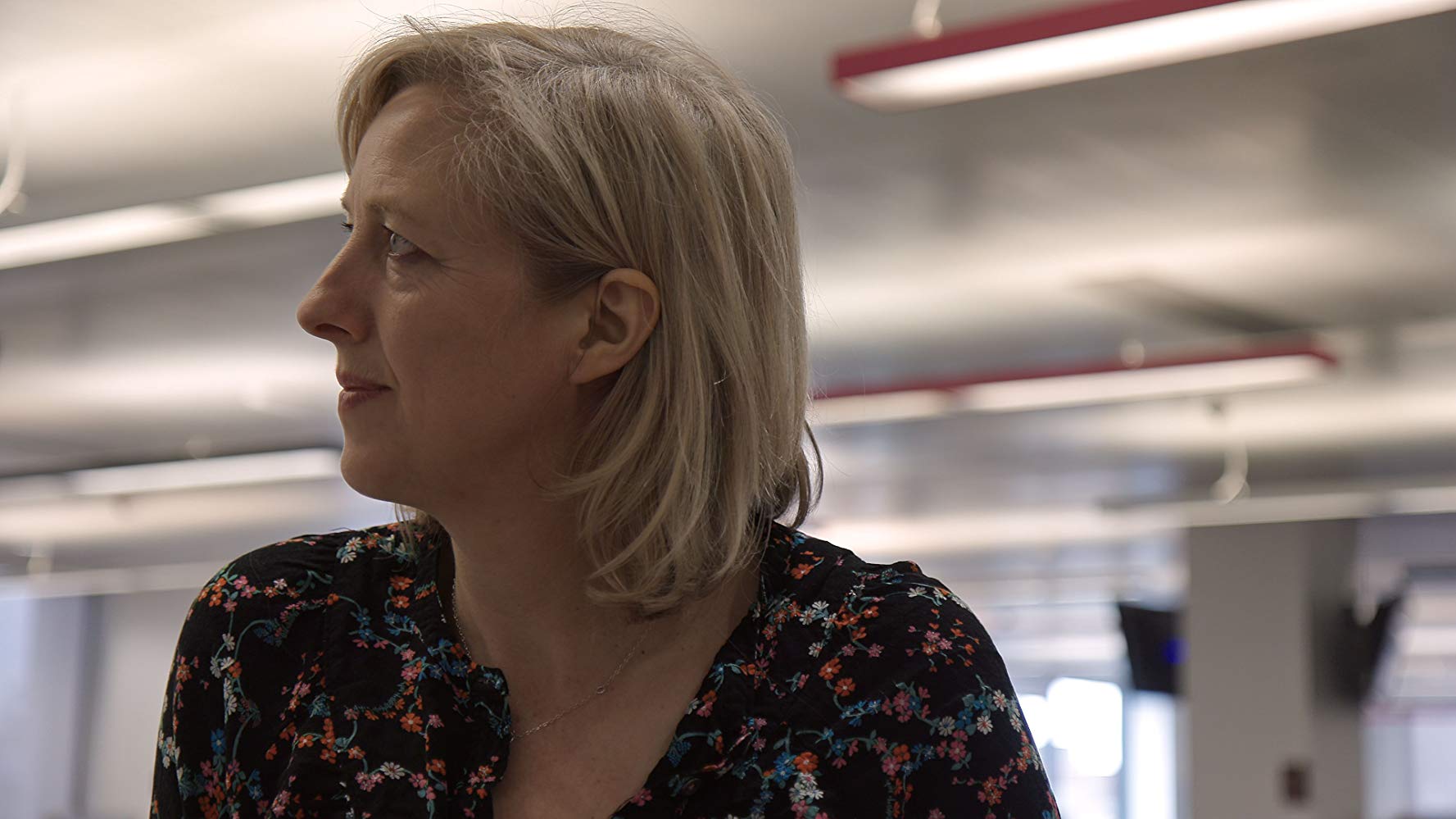
The UK’s referendum decision to leave the European Union, in fact, became “the petri dish” for a Cambridge Analytica experiment, says Guardian journalist Carole Cadwalladr She broke the story of how the political consultancy, led by Eton-educated CEO Alexander Nix, applied techniques normally used by ‘psyops’ operatives in Afghanistan to the democratic operations of the US and UK, and many other countries, over a chilling 20+ year history. Watching this film, you literally start to wonder if history has been warped towards a sickening dystopia.

carole

The petri-dish of Brexit worked. Millions of adverts, explains the documentary, targeted individuals, exploiting fear and anger, to switch them from ‘persuadables’, as CA called them, into passionate advocates for, first Brexit in the UK, and then Trump later on.

Switching to the US, the filmmakers show how CA worked directly with Trump’s “Project Alamo” campaign, spending a million dollars a day on Facebook ads ahead of the 2016 election.

The film expertly explains the timeline of how CA had first worked off Ted Cruz’s campaign, and nearly propelled that lack-luster candidate into first place in the Republican nominations. It was then that the Trump campaign picked up on CA’s military-like operation.

After loading up the psychographic survey information CA had obtained from Aleksandr Kogan, the Cambridge University academic who orchestrated the harvesting of Facebook data, the world had become their oyster. Or, perhaps more accurately, their oyster farm.

Back in London, Cadwalladr notices triumphant Brexit campaigners fraternizing with Trump and starts digging. There is a thread connecting them to Breitbart owner Steve Bannon. There is a thread connecting them to Cambridge Analytica. She tugs on those threads and, like that iconic scene in ‘The Hurt Locker’ where all the threads pull-up unexploded mines, she starts to realize that Cambridge Analytica links them all. She needs a source though. That came in the form of former employee Chris Wylie, a brave young man who was able to unravel many of the CA threads.

But the film’s attention is often drawn back to Kaiser, who had worked first on US political campaigns and then on Brexit for CA. She had been drawn to the company by smooth-talking CEO Nix, who begged: “Let me get you drunk and steal all of your secrets.”

But was she a real whistleblower? Or was she trying to cover her tracks? How could someone who’d worked on the Obama campaign switch to Trump? Was she a victim of Cambridge Analytica, or one of its villains?

British political analyst Paul Hilder manages to get her to come to the UK to testify before a parliamentary inquiry. There is high drama as her part in the story unfolds.

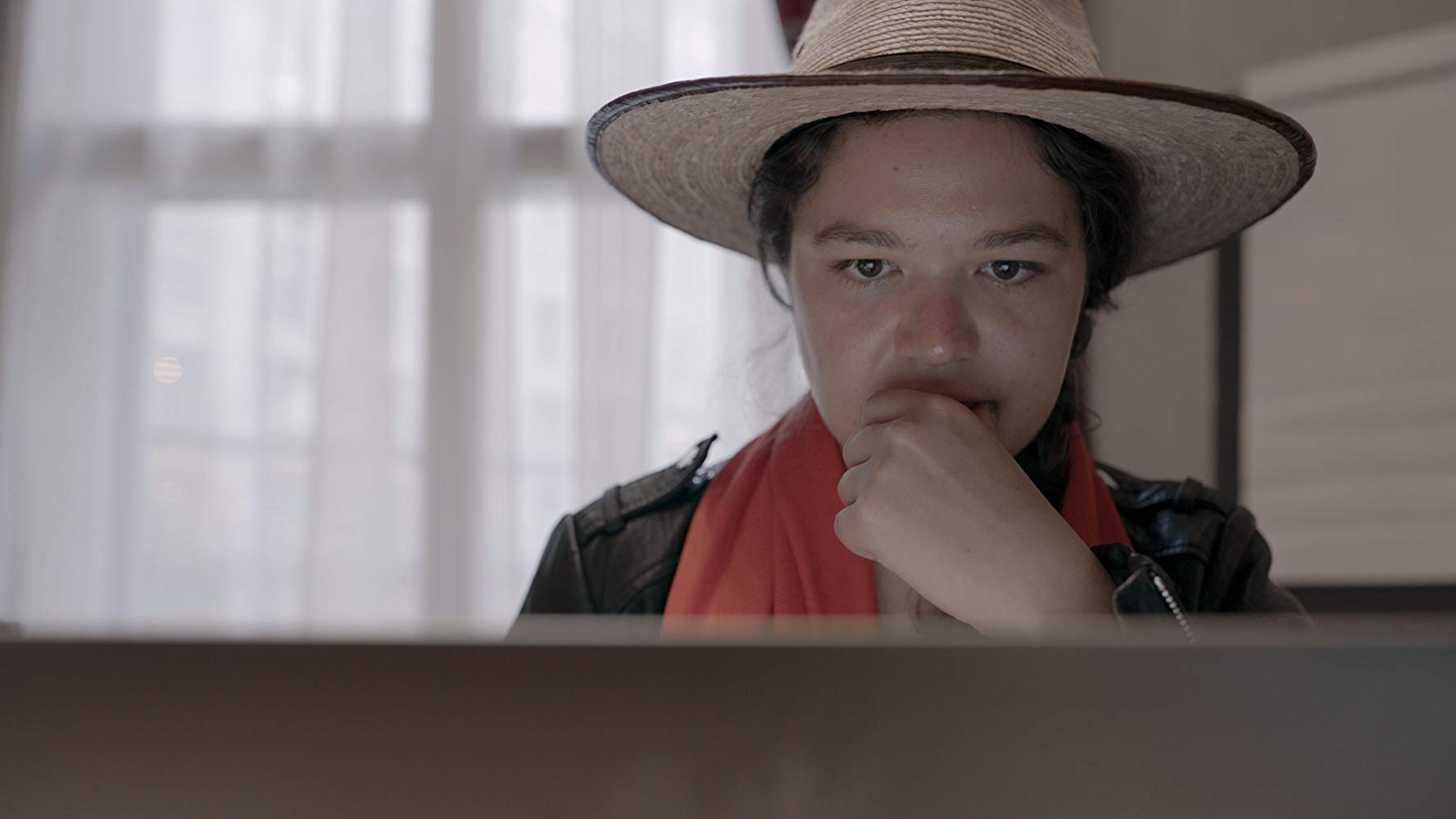
Kaiser appears in various guises which vary from idealistically naive to stupid, from knowing to manipulative. It’s almost impossible to know which. But hearing about her revelation as to why she made the choices she did… well, it’s an eye-opener.

brit

Both she and Wylie have complex stories in this tale, where not everything seems to be as it is, reflecting our new world, where truth is increasingly hard to determine.

Other characters come and go in this story. Zuckerburg makes an appearance in Congress and we learn of the casual relationship Facebook had to its complicity in these political earthquakes. Although if you’re reading TechCrunch, then you will probably know at least part of this story.

Created for Netflix by Jehane Noujaim and Karim Amer, these Egyptian-Americans made “The Square”, about the Egyptian revolution of 2011. To them, the way Cambridge Analytica applied its methods to online campaigning was just as much a revolution as Egyptians toppling a dictator from Cario’s iconic Tahrir Square.

For them, the huge irony is that “psyops”, or psychological operations used on Muslim populations in Iraq and Afghanistan after the 9/11 terrorist attacks ended up being used to influence Western elections.

Cadwalladr stands head and shoulders above all as a bastion of dogged journalism, even as she is attacked from all quarters, and still is to this day.

What you won’t find out from this film is what happens next. For many, questions remain on the table: What will happen now Facebook is entering Cryptocurrency? Will that mean it could be used for dark election campaigning? Will people be paid for their votes next time, not just in Likes? Kaiser has a bitcoin logo on the back of her phone. Is that connected? The film doesn’t comment.

But it certainly unfolds like a slow-motion car crash, where democracy is the car and you’re inside it.