Year: 2019

22 Jul 2019

Cities must plan ahead for innovation without leaving people behind

From Toronto to Tokyo, the challenges faced by cities today are often remarkably similar: climate change, rising housing costs, traffic, economic polarization, unemployment. To tackle these problems, new technology companies and industries have been sprouting and scaling up with innovative digital solutions like ride sharing and home sharing. Without a doubt, the city of the future must be digital. It must be smart. It must work for everyone.

This is a trend civic leaders everywhere need to embrace wholeheartedly. But building a truly operational smart city is going to take a village, and then some. It won’t happen overnight, but progress is already under way.

As tech broadens its urban footprint, there will be more and more potential for conflict between innovation and citizen priorities like privacy and inclusive growth. Last month, we were reminded of that in Toronto, where planning authorities from three levels of government released a 1,500-page plan by Alphabet’s Sidewalk Labs meant to pave the way for a futuristic waterfront development. Months in the making, the plan met with considerably less than universal acclaim.

But whether it’s with Sidewalk or other tech partners, the imperative to resolve these conflicts becomes even stronger for cities like Toronto. If they’re playing this game to win, civic leaders need to minimize the damage and maximize the benefits for the people they represent. They need to develop co-ordinated innovation plans that prioritize transparency, public engagement, data privacy and collaboration.

Transparency

The Sidewalk Labs plan is full of tech-forward proposals for new transit, green buildings and affordable housing, optimized by sensors, algorithms and mountains of data. But even the best intentions of a business or a city can be misconstrued when leaders fail to be transparent about their plans. Openness and engagement are critical for building legitimacy and social license.

Sidewalk says it consulted 21,000 Toronto citizens while developing its proposal. But some critics have already complained that the big decisions were made behind closed doors, with too many public platitudes and not enough debate about issues raised by citizens, city staff and the region’s already thriving innovation ecosystem.

In defense of Sidewalk Labs and Alphabet, their roots are in Internet services. They are relative newcomers to the give and take of community consultation. But they are definitely now hearing how citizens would prefer to be engaged and consulted.

As for the public planners, they have a number of excellent examples to draw from. In Barcelona, for example, the city government opened up its data sets to citizens to encourage shared use among private, public and academic sectors. And in Pittsburgh, which has become a hub for the testing of autonomous vehicles, the city provided open forum opportunities for the public to raise questions, concerns and issues directly with civic decision-makers.

Other forward-looking cities, such as San Francisco, Singapore, Helsinki and Glasgow, are already using digital technology and smart sensors to build futuristic urban services that can serve as real-world case studies for Toronto and others. However, to achieve true success, city officials need to earn residents’ trust and confidence that they are following and adapting best practices.

Toronto skyline courtesy of Shutterstock/Niloo

Data privacy

Access to shared data is crucial to informing and improving tech-enabled urban innovation. But it could also fuel a technologically driven move toward surveillance capitalism or a surveillance state – profiteering or big brother instead of trust and security.

The Sidewalk proposal respects the principles of responsible use of data and artificial intelligence. It outlines principles for guiding the smart-city project’s ethical handling of citizen data and secure use of emerging technologies like facial recognition. But these principles aren’t yet accompanied by clear, enforceable standards.

Members of the MaRS Discovery District recently co-authored an open-source report with fellow design and data governance experts, outlining how privacy conflicts could be addressed by an ethical digital trust. A digital trust ought to be transparently governed by independent, representative third-party trustees. Its trustees should be mandated to make data-use decisions in the public interest: how data could be gathered, how anonymity could be ensured, how requests for use should be dealt with.

They come with big questions to be resolved. But if a digital trust were developed for the Sidewalk project, it could be adapted and reused in other cities around the world, as civic leaders everywhere grapple with innovation plans of their own.
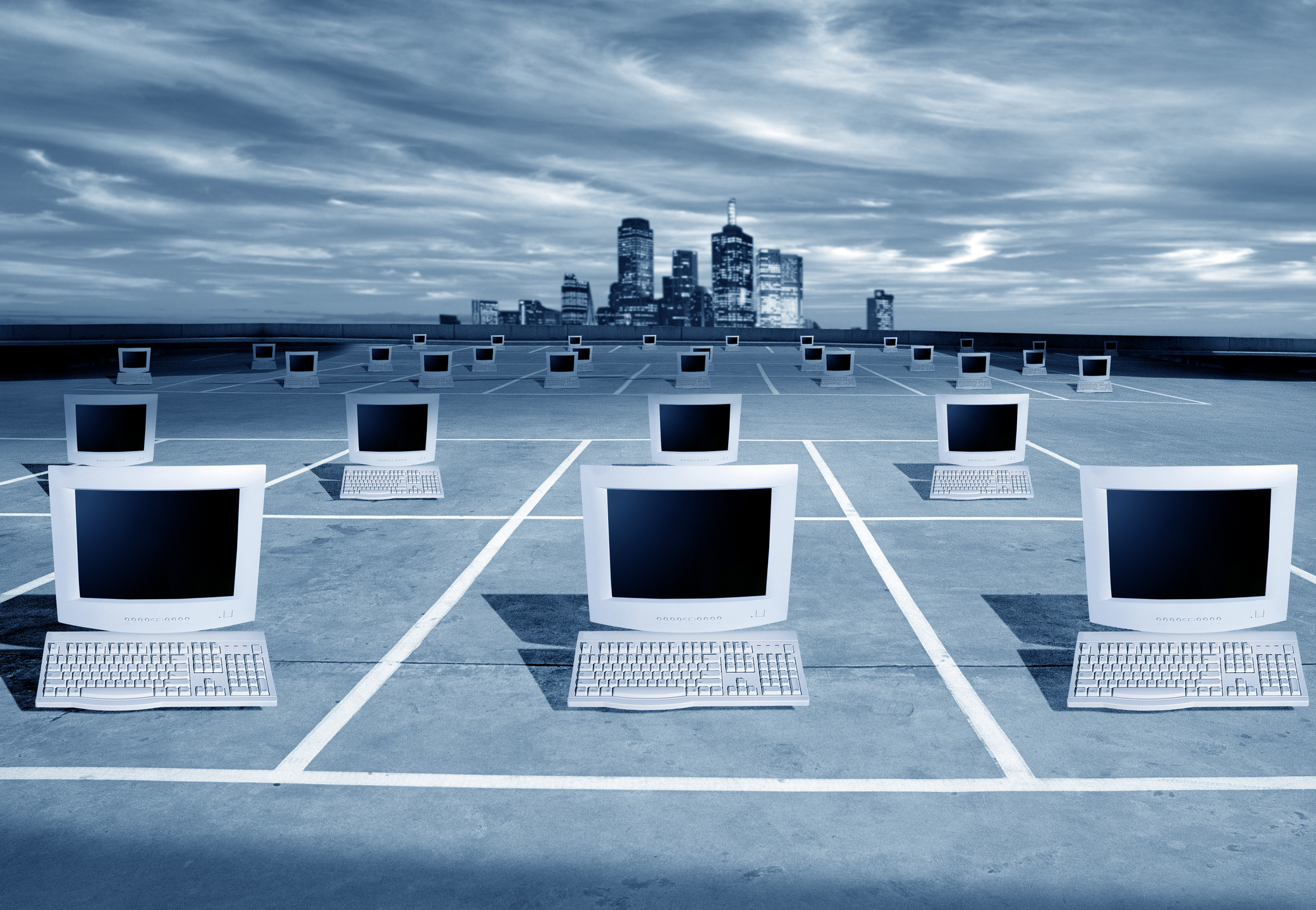
PCs on a grid in front of a city skyline.

Image courtesy of Getty Images/Colin Anderson

Collaboration

The private sector creates jobs and economic growth. Academia and education offers ideas, research and a sustainable flow of tech-savvy workers. The public sector provide policy guidance and accountability. Non-profits mobilize public awareness and surplus capital.

As Toronto is learning, it isn’t always easy to get buy-in, because every player in every sector has its own priorities. But civic leaders should be trying to pull all these innovation levers to overcome urban challenges, because when the mission is right, collaboration creates more than the sum of its parts.

One civic example we like to point to is New York, where the development of the High Line park and the rezoning of the West Chelsea Special District created a “halo effect.” A $260-million investment increased property values, boosted city tax revenues by $900-million and brought four million tourists per year to a formerly underused neighborhood.

A mission-oriented innovation ecosystem connects the dots between entrepreneurs and customers, academia and corporates, capital and talent, policymakers and activists, physical and digital infrastructure – and systems financing models can help us predict and more equitably distribute the returns. Organizations like Civic Capital Lab (disclaimer: a MaRS partner) work to repurpose projects like the High Line into real-life frameworks for other cities and communities.

That kind of planning works because the challenges cities face are so similar. When civic leaders are properly prepared to make the best of modern tech-driven innovation, there’s no problem they can’t overcome.


21 Jul 2019

Lyft’s dockless e-bikes have made their way to SF, but it wasn’t easy

When tech companies sue cities, it’s rare to see a resolution — albeit a temporary one — in favor of the tech company happen so quickly, if at all. Lyft sued San Francisco in early June, claiming the city was in violation of a 10-year contract that would give Lyft exclusive rights to operate bike-share programs.

Now, the city has granted Lyft an interim permit to deploy its dockless e-bikes, and is holding off on granting to permits to other operators. Lyft officially deployed its bikes on Friday.

“We’re thrilled to share our new ebikes with riders in San Francisco,” Lyft Head of Micromobility Policy Caroline Samponaro said in a statement. “We’ll be rolling out bikes starting today and appreciate our riders’ patience as we waited for the green light from SFMTA.”

In its lawsuit, Lyft sought a preliminary injunction or temporary restraining order to prevent the city from issuing permits to operators for stationless bike-share rentals. While the court denied Lyft’s request for a TRO, it did approve a preliminary injunction to temporarily stop the San Francisco Municipal Transportation Agency from issuing dockless permits to operators other than Lyft, without at least giving Lyft the first opportunity to submit a proposal.

The whole process, called “Right of First Offer,” may take months, according to the SFMTA. That’s why it decided to offer Lyft an interim permit to operate up to 1,900 of its dockless, hybrid e-bikes in addition to its classic bikes offered through its station-based service, once known as Ford GoBike.

“These new bikes will allow Lyft to address the severe bicycle availability issues that Bay Wheels has faced since Lyft removed e-bikes from service in April,” the SFMTA wrote in a blog post. “Essentially, the interim permit allows the existing system to return to functionality even as we negotiate with Lyft for a potential future expansion.”

The lawsuit was in light of SF announcing it would take applications for operators seeking permits to deploy additional stationless bikes. San Francisco, however, said the contract does not apply to dockless bike-share, but only station-based bike-share. Well, a judge sided with Lyft, saying the agreement did “not draw a distinction between docked/stationed and stationless/dockless bikes…Plaintiff therefore is entitled to unconditional exclusivity for stationed or stationless ‘traditional’ bikes during the term of the agreement.”

While the process continues in court, the SFMTA has also extended JUMP’s permit for up to 500 stationless bikes in order to ensure more reliable services.

I’ve reached out to Uber/JUMP and will update this story if I hear back.

21 Jul 2019

In healthcare these days, ‘There’s an app for that’… unless you really need it

When a digital health company announces a new app, everyone seems to think it’s going to improve health. Not me.

Where I work, in San Francisco’s public health system, in a hospital named after the founder of Facebook, digital solutions promising to improve health feel far away.

The patients and providers in our public delivery system are deeply familiar with the real-world barriers to leveraging technology to improve health. Our patients are low-income (nearly all of them receive public insurance) and diverse (more than 140 languages are spoken). Many of them manage multiple chronic conditions. The providers that care for them struggle with fragmented health records and outdated methods of communication, like faxes and pagers.

So when companies tell us they will cure diseases, drive down costs, and save lives with state-of-the-art technology, I am often hesitant. 

More than thirty billion dollars have been invested in digital health since 2011. The resulting technological innovations, such as mobile applications, telemedicine, and wearables, promise to help patients fight diabetes, treat chronic disease, or lose weight, for example.

However, we have yet to see digital health drive meaningful improvements in health outcomes and reductions in health expenditures. This lack of impact is because digital health companies build products that often don’t reach beyond the “worried well” – primarily healthy people who make up a small proportion of health expenditures and are already engaged in the healthcare system.

If we’re designing health apps for those who already have access to healthcare, nutritious food, clean air to breathe, and stable housing, we’re missing the point.

It’s no surprise that health apps are incongruous with the needs of low-income, diverse, and vulnerable patients when these populations are unlikely to be a part of user testing. In addition, the science that technology developers draw from is generated by clinical trials conducted on participants who often do not reflect the diversity of the United States.

Over 80% of clinical trial participants are white, and many are young and male. Women, racial and ethnic minorities, as well as older adults must be included in clinical trials to ensure the results — drawn on not only for product development but also for clinical care and policy — are relevant for diverse populations. 

Research conducted by my colleagues at the UCSF Center for Vulnerable Populations demonstrates that patients who are low-income are unable to access many digital health apps. One of our patients testing a popular depression-management app said, “I’d get really impatient with this” and expressed concern that “Somebody that’s not too educated would be like, ‘now, what do I do here?’” A caregiver testing a different app also voiced frustration, saying “Yeah, it’s an app that makes you feel like an idiot.” Yet, despite these barriers, the majority of our study participants (most of whom have smart phones) also express a high interest in using technology to manage their health.

 While the private sector is great for innovation, it will fail to improve health in a meaningful way without real-world evidence generated in partnership with diverse patients. In addition, these for-profit companies face long odds to benefit their shareholders in a substantial way without learning how to reach the 75 million patients on Medicaid (including 1 in 3 Californians) who stand to benefit from digital health solutions.

 There’s an answer, though, and it’s within reach. To truly improve health outcomes, digital health companies must partner with public health experts and patients to not only ground themselves in evidence-based research, but also build products that meet the needs of all patients. 

Along with the compelling business potential of innovating for Medicaid, infrastructure to support this work is growing. For example, organizations like HealthTech4Medicaid are bending the arc of innovation towards the patients who need it most through advocacy and key partnerships with payers, policy makers, care providers, and technology developers.

To truly revolutionize health, let’s demand that technology creators and scalers include diverse end users early and often. Otherwise, the app “for that” will be for them, not for all of us.

21 Jul 2019

Don’t hold your breath for the moon

In the house in which I grew up, a single framed newspaper front page loomed over us. “MAN ON MOON“, it declared jubilantly, in an enormous, suitably momentous typeface. Subheadings included “‘It’s very pretty up here … a fine, soft surface’” and, of course, “A giant leap for mankind.”

One leap forward, three steps back. That newspaper was dated fifty years ago today, as I type this. Apollo 17 — “the most recent time humans have travelled beyond low Earth orbit” — took place in December 1972, a date at which a large majority of humanity today was not yet born.

Space travel is not the stuff of science fiction. It is the stuff of history books, of yesteryear, of scratchy black-and-white TV, of that yellowing newspaper cover of my youth.

What happened? I mean, lots, but ultimately the costs were too high, the tangible benefits too nonexistent, and the Space Shuttle was too much of an unmitigated disaster from start to finish in every way.

What happens next? Well, there we have a quick answer: we’re going back! America is going to land the first woman on the moon by 2024! Absolutely!

…you’re absolutely right to be very skeptical.

There are a numerous “lunar exploration architectures,” or ways to return to the Moon. My friend Casey Handmer, a physicist, space enthusiast, and former levitation engineer, itemizes them in this excellent blog post from a few months ago. One of them is NASA’s proposed Lunar Gateway, which will place a space station into high Moon orbit, from and to which lunar landings will descent and return.

Is this a good idea? …Well, it’s an idea. But it’s better to have a plan and to be making progress on it that not, right? Right? …Except the last few months have seen a bewildering flurry of chaos and confusion which makes NASA’s lunar program more closely resemble a headless chicken than a smoothly oiled machine.

First, an unsigned five-page document, riddled with spectacular grammar and spelling errors such as

There is no feasible means to redesign it or any other heavy left rocket to more transport the lunar landing elements

(!) was shared by “the Gateway program office at Johnson Space Center in Houston,” reported Ars Technica. (Casey wrote an exegesis of this dubious document, if you want to see it deconstructed in detail.) Then, earlier this month, NASA demoted and replaced its executives in charge of human space exploration.

Does this sound like the behavior of a lunar project accelerating to an on-target, on-time landing? Or more like a bureaucratic catastrophe thrashing frantically while failing to get anywhere at all? “As it stands, few experts believe NASA’s plan for returning to the moon in 2024 is feasible,” says Vox mordantly. You don’t say.

I’d be so delighted to see a woman walk on the moon in 2024. But I’m not exactly holding my breath. By 2032 we will have gone sixty years, three generations, between human lunar excursions. Some people think we shouldn’t go back at all, that there is too much of more importance to do here on Earth. I disagree, strongly, but I think even they might still agree that it would be sad beyond belief if, if and when we next land on the Moon, there’s no one around who remembers the last time.

21 Jul 2019

Week in Review: The one-way web and Elon Musk’s Neuralink

Hello, weekenders. This is Week-in-Review, where I give a heavy amount of analysis and/or rambling thoughts on one story while scouring the rest of the hundreds of stories that emerged on TechCrunch this week to surface my favorites for your reading pleasure.

Last week, I offered up some mildly interesting takes on how Waymo was shaping the future of autonomous vehicles inside of a virtual space rather than wholly on physical roads.


The big story

There are two internets. There’s the one where we click through interfaces and hit menu buttons and dive down predictable lines of inquiry and find predictable ends. And then there are ads. We don’t understand why we get what we get but we the content flows from platform to user with asymmetric information of the “how?”.

Advertising is the economic backbone of the free consumer web, but users are haplessly oblivious to where that generated content comes from and why. What intrigues me here is that a few days ago Instagram announced that it was further rolling out a test to hide like counts from users and that it has been further minimizing the prominence of follower counts on profiles.

It’s an (admittedly small) step in the evolution but it hinges a bit more on how internet giants have come to realize UX transparency can actually lead to some negatives.

There’s of course the ethical argument where you think about the responsibility that Facebook has not to make people feel shitty about themselves by offering a dopamine-hit conveyor belt as a platform, but a more fascinating idea is what a change like this opens up to the company in terms of returns and what it means for how platforms portray the nebulous idea of “engagement.”

One of the easy returns I bet Instagram finds as they expand this test is that by eliminating the conforming social pressures inherent to seeing what other users are enjoying, Instagram might paint a clearer picture of its users. Without giving users a groupthink crutch to influence their own decisions on what to click the heart button on, a web of content less-focused on stats might lead them to things that actually break into.

What’s the most interesting — that this change sort of lightly grazes across — is that we’ve spent the past few decades with the necessary evil of a web predicated on a cause and effect interface. We’ve had a decent idea of why we’re coming across some piece of content and the statistics of why are often user-facing. But do we need to know how the internet works? Do we need to know why we’re seeing anything?

We’ve been thrust fully into this world of algorithmic feeds and while we’re seeing variation across platforms, we’re seeing the potential and pitfalls of the various platforms. Instagram has flirted with serving users content more boldly outside of things they’ve specifically followed with the Explore feed, but the question is when that smartly-sourced content that will come to dominate a user’s central feed and be their main touchpoint with the platform.

We’ve also seen the dangers of algorithmic content where the “why” is invisible to users, YouTube’s platform has grown immensely based off  ad-like invisibly sourced “watch next” suggestions, but can social platforms pull this off as well or are the fundamentals of today’s algorithmic feeds based around user actions and follows going to stay true down the road?

Send me feedback
on Twitter @lucasmtny or email
lucas@techcrunch.com

On to the rest of the week’s news.

Trends of the week

Here are a few big news items from big companies, with green links to all the sweet, sweet added context:

  • Musk’s Neuralink makes its first promises
    The SpaceX founder is known for his moonshots, but this one kind of takes the cake. On Tuesday, Musk spoke about the progress and long-term goals of the company he hoped would allow humans to “achieve a sort of symbiosis with artificial intelligence.” Read more about the promises made in our report.
  • FaceApp goes viral, again
    If you used the internet at all this week, chances are that you saw somebody posting an old-looking photo of themselves that was algorithmically generated by an app called FaceApp. There was an awful lot of backlash to the app’s Russian ties and its user permissions, but we tried to break down what was actually happening.
  • SpaceX’s ‘Starhopper’ bursts into flames
    It was only a test vehicle, but uncontrolled explosions generally aren’t the best sign when it comes to testing components for space flight. Check out the video and the company’s explanation here.

GAFA Gaffes

How did the top tech companies screw up this week? This clearly needs its own section, in order of badness:

  1. Libra shortcomings:
    [Congressional testimony reveals some faults in Facebook’s digital currency plans]
  2. Facebook continues to contradict itself:
    [Facebook accused of contradicting itself on claims about platform policy violations]

GettyImages 1091991690

Extra Crunch

Our premium subscription service had another week of interesting deep dives. This week, we showcased the beginning of our deep dive on Roblox, the wildly popular kids gaming platform that has grown beyond unicorn status.

How Roblox avoided the gaming graveyard and grew into a $2.5B company

“…In some ways, Roblox stayed trendy: for instance, it launched sales of its Robux currency in 2008 and virtual goods for developers in 2013, adding microtransactions at a time that much of the game industry was still trying to come to grips with the idea of free gaming. It also supported and nourished a community of unpaid content creators during a time that few other companies had done so, with a few exceptions like YouTube.

Still, the activity taking place in gaming was a philosophical threat. When a company in Roblox’s space hit it big, years before Roblox itself had any hope to, that winning strategy became a temptation. “There are friends, acquaintances, competitors chattering in your ear and saying, maybe you can just do that,” says Dusek…”

Here are some of our other top reads this week for premium subscribers. This week, we talked about seed stage dilution and startup profitability.

We’re excited to announce The Station, a new TechCrunch newsletter all about mobility. Each week, in addition to curating the biggest transportation news, Kirsten Korosec will provide analysis, original reporting and insider tips. Sign up here to get The Station in your inbox beginning in August.

20 Jul 2019

Watch Patrick Stewart grow bored of his winery in first ‘Star Trek: Picard’ trailer

Yes, Captain Jean-Luc Picard is indeed coming back. We knew this from previous announcements, but CBS All Access turned heads at this year’s San Diego Comic Con with an actual trailer of Sir Patrick Stewart Picarding his heart out. He says “engage!” for god’s sake.

From what I can grasp from this trailer, the plot of this Picard-centric follow-up to Star Trek: The Next Generation is that Jean-Luc has retired to a quiet life running a winery but quickly realizes that he’s not through adventuring. For some reason, he has Data stored in pieces in a drawer. He’s convinced to come out of retirement with what looks like a fairly rag-tag crew. Then Data is back somehow.

All of which is to say that this looks awesome and I wish it was here now instead of its “early 2020” release date on the CBS streaming service.

20 Jul 2019

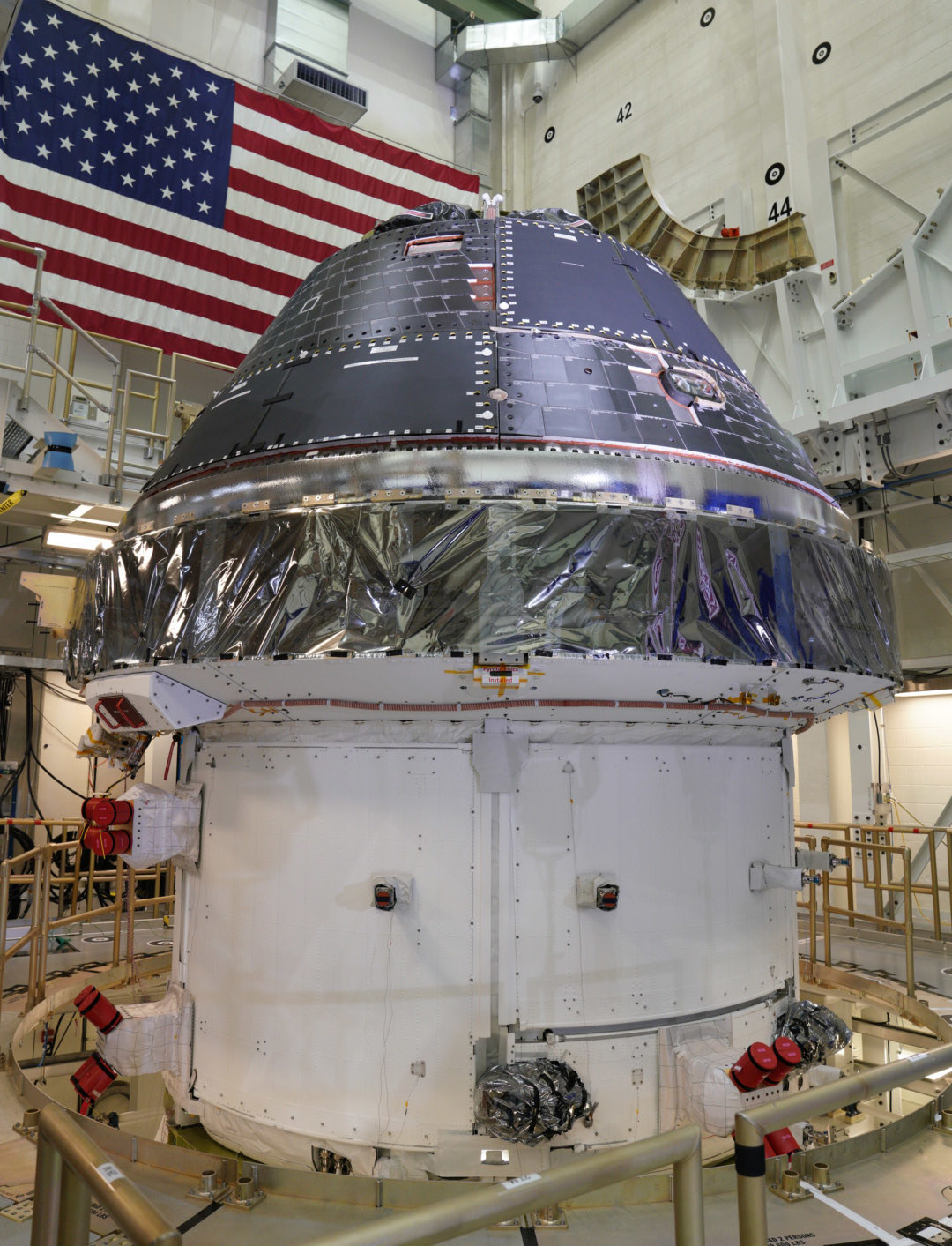
NASA’s Orion crew capsule is officially complete and ready to prep for its first Moon mission

NASA’s 50th anniversary celebrations weren’t limited to just remembrances of past achievements – the space agency also marked the day by confirming that the Orion crew capsule that will bring astronauts back to the Moon for the first time since the end of the Apollo program is ready for its first trip to lunar orbit, currently set for sometime after June 2020.

Orion won’t be carrying anyone for its first Moon mission – instead, as part of Artemis 1, it’ll fly uncrewed propelled by the new Space Launch System, spend a total of three weeks in space including six days orbiting the Moon, and then return back to Earth. Once back, it’ll perform a crucial test of high speed re-entry into Earth’s atmosphere, to demonstrate the efficacy of the Orion capsule’s thermal shielding prior to carrying actual crew for Artemis 2 in 2022, and ultimately delivering astronauts back to the lunar surface with Artemis 3 in 2024.

This isn’t Orion’s first trip to space, however – that happened back in 2014 with Exploration Flight Test 1, another uncrewed mission in which Orion spent just four-hours in space, orbiting the Earth twice and then returning to ground. This mission used a Delta IV rocket instead of the new SLS, and was meant to test key systems prior to Artemis.

1 1

On the anniversary of the Apollo Moon landing, the Lockheed Martin-built Orion capsule for the Artemis 1 mission to the Moon is declared finished.

NASA contractor Lockheed Martin, which is responsible for the Orion spacecraft’s construction, also noting that the combined crew module and service module are currently being properly integrated, and then will undergo a series of tests before returning to Kennedy Space Center in Florida by the end of the year to begin the final preparations before launch.

20 Jul 2019

US national security, climate change, startup HR, and launching in the Midwest

Reminder: Extra Crunch Event Discounts for Summer Party

TechCrunch’s annual Summer Party is just around the corner next week — come meet all the staff at the Park Chalet beer garden on the Pacific Coast in San Francisco this Thursday evening. We handed out 50 free tickets to EC subscribers this past week by email, but if you weren’t able to snag one, be sure to use your event discount (part of the annual EC subscription offering) by emailing your member customer service representative at extracrunch@techcrunch.com.

How US national security is holding the internet hostage

I have written quite a bit about CFIUS, the inter-agency process for reviewing venture capital investments and company acquisitions made by foreigners. Now, our special correspondent Mark Harris explores a much less well-known group known as Team Telecom who has been actively reviewing — and denying — additional fiber bandwidth beneath the Pacific Ocean.

20 Jul 2019

Elon Musk says Starship prototypes will have first test flights in ‘2 to 3 months’

SpaceX CEO Elon Musk believes that both the Texas and Florida Starship prototype rockets being developed by the private space company will fly “in 2 to three months,” which is an aggressive timeline considering the planned untethered flight of its Starhopper demonstration prototype missed its target of running this past week.

SpaceX is developing two Starship prototypes in parallel, at both its Texas and Florida facilities, in what is sometime referred to in the technology industry as a ‘bake-off.’ Both teams develop their own rockets independently, in an attempt to spur a sense of internal competition and potentially arrive at combined progress that wouldn’t be possible with just a single team working together on the task.

Earlier this month, Musk stated that the inaugural untethered test of its Starhopper (Hopper for short) Starship tech demo prototype would happen this past Tuesday, July 16. Those plans were derailed when a preliminary test firing of its engines resulted in a large fireball captured on camera by many local observers. Musk later said on Twitter that this was the result of a “post test fuel leak” but added that there was actually no significant damage to the sub-scale Starhopper itself.

The SpaceX CEO then continued with a new timeline for the untethered test, saying it should happen sometime this coming week instead. That’s definitely a required step for the company to take ahead of any test flights of the more complete Starhopper prototypes.

Those initial test will be sub-orbital flights, Musk said on Friday, with orbital tests to follow some “2 to 3 months” after those first test flights 2 to 3 months from today – so, that puts the earliest orbital test flights for Starship at just 4 to 6 months from now. Based on how Musk’s stated timelines match up with reality, you should definitely consider that an extremely optimistic assessment.

Musk also shared some detail about how Starship will launch – it’ll use a launch structure, which is currently under construction at another site, much like Falcon 9 and Falcon Heavy does today.

20 Jul 2019

Hold the first Moon rock ever collected with your smartphone

NASA is celebrating the 50th anniversary of the Apollo 11 Moon landing in a variety of ways today, but here’s one you can experience no matter where you are, provided you have a modern smartphone. NASA’s Astromaterials Research & Exploration Science (ARES) department has released a fully detailed model of the first ever sample of lunar soil and rock, bagged by Astronaut Neil Armstrong during humanity’s first-ever trip to the Moon’s surface.

The rock is fully manipulable provided you visit this link on a smartphone with the capability to display interactive 3D field on the web, so you can twist and turn it using touch to get a better look. It has an incredible level of detail, (“research-grade,” in fact, according to ARES, and is part of a larger effort to make more of the organization’s larger library of lunar and antarctic meteroite samples available to more people, both for research and for education.

3d models verticalThese 3D models are created using extremely high resolution photography that captures high megapixel images of the actual samples from 240 different angles, which can offer resolution as detailed as just 30 to 60 microns (doubt the width of a human hair).

But that’s just a start – software uses computer vision to ensure the 3D image provides accurate volume and text true information, and a process that involves the use of X-rays to get a cross-section image without actually slicing up the samples is also employed to ensure fully accurate representation.

If somehow you don’t have a smartphone but you do have those basic red/blue 3D glasses, then you can also view the image below in eye-popping detail. Meanwhile, NASA’s also opening up its lab of Moon rock samples to geologists for the first time, so they can study them directly in person, after years of keeping them under strict lock and key.