Year: 2019

17 Jul 2019

VidCon, seed-stage dilution, advertising, privacy, and building a career in design

The need-to-know takeaways from VidCon 2019

Extra Crunch media columnist Eric Peckham took part in all the craziness that has become VidCon this past week, where 75,000 influencers, YouTubers, advertisers, and more congregate in one place to see how many likes they all can generate (and I guess to discuss business strategy). This year, there were voluminous discussions about the rise of Chinese social media giant ByteDance’s TikTok as well as the future dangers and opportunities of synthetic media — deepfakes and also fictional influencers.

Eric has all the details of what was interesting from the conference in an exclusive conference wrap-up for Extra Crunch.

One of the use cases for synthetic media is the creation of “virtual influencers” — computer-generated characters whose social media accounts engage real people online and gain a large following. This remains a novelty rather than a mainstream trend, but it is on the mind of a number of people I spoke to.

Charlie Buffin co-manages (human) social media stars but is also developing virtual influencers like Cade Harper and Pippa Pei that post content with each other and with real human influencers. He explained to me that the opportunity is to own the original IP of these characters and craft storylines between them, plus for real-life influencers to create virtual representations of themselves that can engage fans in more ways.

What seed-stage dilution tells us about changing investor expectations

Scale Venture Partners operating partner Dale Chang discusses one of the major trends in seed financing: the rising dilution of early-stage rounds of capital. From there, he then investigates how those changes at the seed stage are changing expectations for Series A and B rounds.

17 Jul 2019

Amazon sells over 175M items during Prime Day 2019, more than Black Friday & Cyber Monday combined

Amid worker protests and antitrust investigations, Amazon’s Prime Day sales event carried on as usual — and that means it again set new records for the online retailer. This time, Amazon says Prime Day 2019 was bigger than both Black Friday and Cyber Monday combined, as Prime members purchased more than 175 million items during the event.

While last year’s Prime Day 2018 became the biggest sales day in Amazon history, it’s getting harder to directly compare one Prime Day sale with another, because Amazon keeps stretching them out.

Prime Day 2019, for example, was a full 48-hour sale, up from 36 hours last year and 30 hours the year before.

What we are able to tell, however, is that people will continue to shop as long as there are bargains being offered. During Prime Day 2018’s 36-hour sale, Prime members bought 100 million items. During this year’s 48-hour sale, members purchased over 175 million items. (Neither calculation includes Whole Foods sales.)

Amazon has also succeeded in making Prime Day bigger than its Black Friday online sales, thanks to its deep discounts — often at cost or below — on its own hardware devices, like the popular Echo speakers or Fire TV.

This year’s two-day sale was larger than Black Friday and Cyber Monday 2018 sales put together, Amazon says.

The retailer also notes that Prime Day was the biggest sales event for Amazon devices. Again, the top-sellers worldwide continued to be the Echo Dot, Fire TV Stick with Alexa Voice Remote, and the Fire TV Stick 4K with Alexa Voice Remote. The Echo Dot and Fire TV Stick were top-selling devices yesterday, and it’s not surprising to see them again win this title as they have for several years in a row.

The Echo Dot, in particular, hit its lowest-ever price point of $22 and was bundled in with some other Alexa device deals, almost as a giveaway.

“We want to thank Prime members all around the world,” said Amazon CEO Jeff Bezos, in a statement. “Members purchased millions of Alexa-enabled devices, received tens of millions of dollars in savings by shopping from Whole Foods Market and bought more than $2 billion of products from independent small and medium-sized businesses. Huge thank you to Amazonians everywhere who made this day possible for customers.”

In addition, Amazon claims a record number of U.S. Prime members shopped the site during Prime Day. But given the sale length and the growth in membership — there are now over 100 million worldwide members — this is not the most difficult milestone to achieve.

In the U.S., Prime member bought more than 100,000 lunchboxes, 100,000 laptops, 200,000 TVs, 300,000 headphones, 350,000 luxury beauty products, 400,000 pet products, 650,000 household cleaning supplies, and more than one million toys, says Amazon. They also bought over 200,000 LifeStraw Personal Water Filters and 150,000 Crest 3D White Professional Effects Whitestrips Kits, and saved “tens of millions” by shopping Amazon-owned Whole Foods.

Other top sellers in the U.S. included the Instant Pot DUO60 and 23andMe Health + Ancestry kits.

Amazon also sold millions of smart home devices, including iRobot Roomba 690 Robot Vacuum, MyQ Smart Garage Door Opener Chamberlain MYQ-G0301, and Amazon Smart Plug. It doubled the sales of the Ring and Blink devices, as well as Fire TV Edition TVs, versus last year, when comparing a two-day period. It sold 6x the number of eero devices compared with any other prior sale. And it sold more than ever Fire tablets, Kindle devices, and Alexa with screens (Echo Show and Echo Show 5.)

The largest and most important aspect to Prime Day is not ultimately the sales themselves, but the Prime memberships. This locks in consumers to Amazon’s e-commerce ecosystem for a year, and gives Amazon a chance to win their loyalty when it comes time to resubscribe.

This year, Prime Day’s effect on new subscriptions also improved, with Amazon signing up more new Prime members on July 15 than on any other day ever, and July 16 nearly hit that milestone as well.

In total, Amazon says Prime members worldwide saved over a billion dollars on purchases, and millions of items shipped in one day or faster.


 

17 Jul 2019

10x Ascend aims to help tech talent with job negotiations

10x Ascend is a new firm that helps software development, cybersecurity and data science professionals negotiate for better deals.

Founders Michael Solomon and Rishon Blumberg started out in talent management for the music industry (their clients still include musicians like Vanessa Carlton), then moved into representing tech freelancers with their firm 10x Management. More recently, they decided that there was an opportunity to provide similar services to full-time employees.

Given the rising demand for tech talent (the Bureau of Labor Statistics projects that software development roles will grow by 31 percent through 2026), you might think that developers and engineers can get anything they want when they’re look for a job.

However, Blumberg suggested that many of these prospective hires simply don’t feel comfortable asking for what they want or what they’re worth — whether that’s more money, more equity, more flexibility in working from home, more vacation or anything else that’s important to them. He also pointed out that there’s no one else representing the employee’s interest in these discussions, since the recruiter ultimately works for the employer.

“Even though technologists are data-driven people who work in data-driven environments, they don’t negotiate that much,” Blumberg said.

So 10x Ascend can help, either by getting directly involved in the negotiations, or by advising prospective hires on things like counter-offers. (It’s not doing this in secret — Solomon said that either way, “We want the employer to know that we’re involved.”)

The firm is spinning out of 10x Management, and it’s been testing the model out through a beta program. It says it’s already helped nearly 50 senior tech executives negotiate their job offers, increasing their compensation by an average of 35% — and as much as 100% in some cases.

In exchange, 10x Ascend collects between 6% and 8% of first-year salaries (the percent is lower for high-level jobs), starting with a $3,500 retainer.

Even though the firm is compensated based on salary, Solomon said that was simply the “cleanest” approach, and he emphasized that 10x Ascend isn’t just pushing clients to take the highest paying offer. In fact, it’s created a free lifestyle calculator that helps people identify their priorities, whether that’s salary, job logistics, work-life balance and so on, which then informs the negotiations.

Blumberg also acknowledged that there’s been an “education” process with employers. He suggested that while engineers are sometimes nervous that they’ll blow a job offer by asking for too much, it’s actually helpful to have a third party who can take some of the heat.

“They can say, ‘That was my stupid advisor,'” Blumberg said. “We’re happy to be the bad cop.”

He also said that in some cases, employers are ultimately grateful to have 10x Ascend involved, as it helps them figure out packages that are more likely to attract and retain talent — which may mean offering more money, but could also mean creating more “bespoke” deals that provide flexibility or compensation in other areas. (You can read more about some of the negotiations on the 10x Ascend website.)

Given the name of the firm and the timing of the launch, I had to bring up the recent discussion around “10x engineers,” which led to some delightful social media backlash. Blumberg said he hadn’t been aware of the latest controversy, but he pointed out that this is a longstanding discussion. And inasmuch as “10x engineers” exist, he suggested that they have team skills and emotional intelligence as much as technical skills.

“That doesn’t mean writing 10x lines of code or being 10x as fast,” Solomon added. “But we have definitely seen people who produce 10x results.”

17 Jul 2019

ClassPass introduces a corporate wellness program

ClassPass has set up yet another revenue stream, signing on partners like Facebook, Glossier, Google, Morgan Stanley, Under Armour, Etsy, Southwest Airlines and Gatorade to a corporate wellness program.

The program will give employees at these companies access to the ClassPass network of more than 22,000 studio partners across 2500 cities around the world, which includes studio brands like Barry’s Bootcamp, Flywheel Sports, and CorePower Yoga. Corporate partners also get access to a ‘large library’ of on-demand audio and video workouts.

This comes after ClassPass retooled the ClassPass Live product, in which it invested the resources to build out a new live broadcast studio, and rebuilt it into a library of on-demand video workouts.

The company launched ClassPass Live in 2018 with the hopes that users could workout from home within the ClassPass ecosystem. CEO Fritz Lanman told TechCrunch in June that the company stopped doing live classes in April 2019 and repackaged the content into free, on-demand video classes.

According to the release, one of the issues with corporate wellness programs is that HR departments have to patch together programs based on the regions in which their companies have offices/employees. ClassPass argues that its scale across the country, and in 17 other countries, gives it an edge with corporations who have global workforces.

Moreover, the ClassPass corporate wellness program only charges employers when employees actually use the service, and allows employers to reward good behaviors (going to a certain number of classes per month) by offering additional credits toward ClassPass experiences.

Here’s what Lanman had to say about it in a prepared statement:

The ClassPass Corporate Program enables employers of all sizes to offer the world’s most extensive, one-stop fitness and wellness program to their employees worldwide. ClassPass is the best fitness program ever created for consumers. With this launch, it’s now also the best fitness program ever created for employers and their employees.

17 Jul 2019

Peer-to-peer car sharing marketplace Turo raises $250M at over $1B valuation from IAC

Car-sharing startup Turo has raised $250 million in a Series E round of funding from IAC, the internet media company that owned and spun out Match.com, and OKCupid. This round pushes Turn into Unicorn territory, with its valuation now “past the billion-dollar” mark according to Turo CEO Andre Haddad.

This late round of funding brings the company’s total to nearly $450 million, raised across multiple rounds since its founding as Relay Rides in 2009. The company plans to use the investment to fuel its growth, further refine the customer experience aspect of its product and generally support its overall mission of increasing utilization rates for the over one billion cars currently estimated to be on the road around the world today.

IAC makes sense as a strategic partner for Turo because of its proven track record of helping companies scale to “household name” recognition status, Haddad said in a blog post. The company now has almost 400,000 vehicles available on the platform, with over 10 million users across both those listing their cars and those renting. Turo says its growth rate overall has been at around 2x over the past two years, and at 8x in its bourgeoning international markets, including the UK and Germany (where it took over Daimler’s car-sharing business alongside a strategic investment deal and officially launched last year).

17 Jul 2019

Dust Identity secures $10M Series A to identify objects with diamond dust

The idea behind Dust Identity was originally born in an MIT lab where students developed a system of uniquely identifying objects using diamond dust. Since then, the startup has been working to create a commercial application for the advanced technology, and today it announced a $10 million Series A round led by Kleiner Perkins, which also led its $2.3 million seed round last year.

Airbus Ventures and Lockheed Martin Ventures, New Science Ventures, Angular Ventures and Castle Island Ventures also participated in the round. Today’s investment brings the total raised to $12.3 million.

The company has an unusual idea of applying a thin layer of diamond dust to an object with the goal of proving that object has not been tampered with. While using diamond dust may sound expensive, the company told TechCrunch last year at the time of its seed round funding that it uses low-cost industrial diamond waste, rather than the expensive variety you find in jewelry stores.

As CEO and co-founder Ophir Gaathon told TechCrunch last year, “Once the diamonds fall on the surface of a polymer epoxy, and that polymer cures, the diamonds are fixed in their position, fixed in their orientation, and it’s actually the orientation of those diamonds that we developed a technology that allows us to read those angles very quickly.”

Ilya Fushman, who is leading the investment for Kleiner, says the company is offering a unique approach to identity and security for objects. “At a time when there is a growing trust gap between manufacturers and suppliers, Dust Identity’s diamond particle tag provides a better solution for product authentication and supply chain security than existing technologies,” he said in a statement.

The presence of strategic investors Airbus and Lockheed Martin shows that big industrial companies see a need for advanced technology like this in the supply chain. It’s worth noting that the company partnered with enterprise computing giant SAP last year to provide a blockchain interface for physical objects, where they store the Dust Identity identifier on the blockchain. Although, the startup has a relationship with SAP, it remains blockchain agnostic, according to a company spokesperson.

While it’s still early days for the company, it has attracted the attention from a broad range of investors and intends to use the funding to continue building and expanding the product in the coming year. To this point, it has implemented pilot programs and early deployments across a range of industries including automotive, luxury goods, cosmetics and oil, gas and utilities

17 Jul 2019

Google’s Area 120 launches Byteboard to improve technical interviews

Area 120, Google’s lab for experimental projects, is launching Byteboard today, a new tool that aims to make the technical interview experience less tedious and more effective. The team argues that today’s interview process for software engineers just doesn’t cut it since it doesn’t really measure how well somebody would do in a day-to-day engineering job. Instead, it does a good job of figuring out how well somebody can remember material from an advanced algorithm class and then repeat that in a whiteboard session.

“Between day jobs and family responsibilities, the current technical interview process is anxiety-inducing and burdensome for candidates — benefiting those who have the time and resources to prepare, while creating a barrier for those who do not,” said Sargun Kaur, the General Manager for Byteboard. “So despite companies investing 7 to 9 hours per person on interviewing, they miss out on great, capable talent by testing for memorization instead of practical application of skills.”

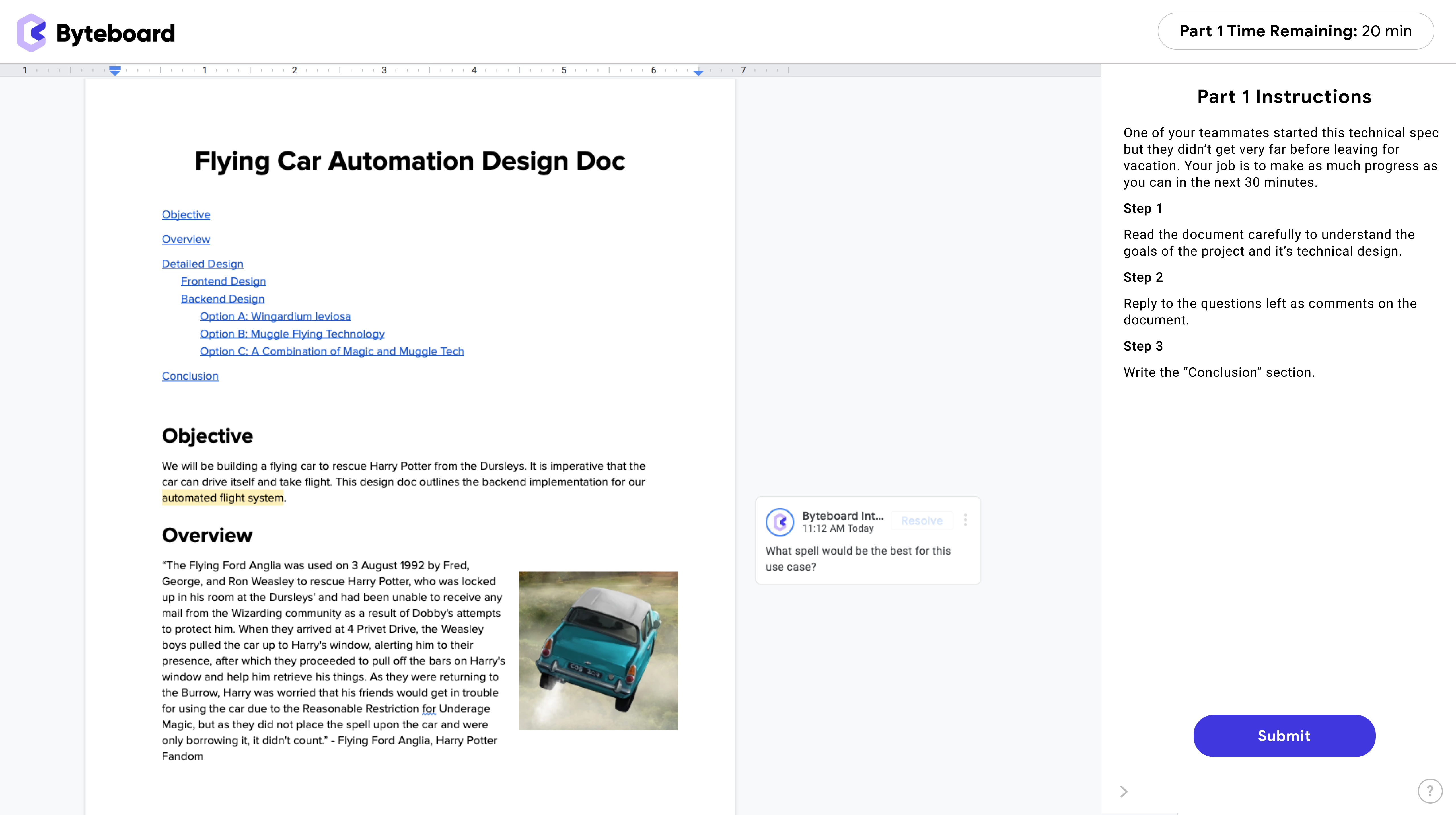
byteboard interview technical spec exercise

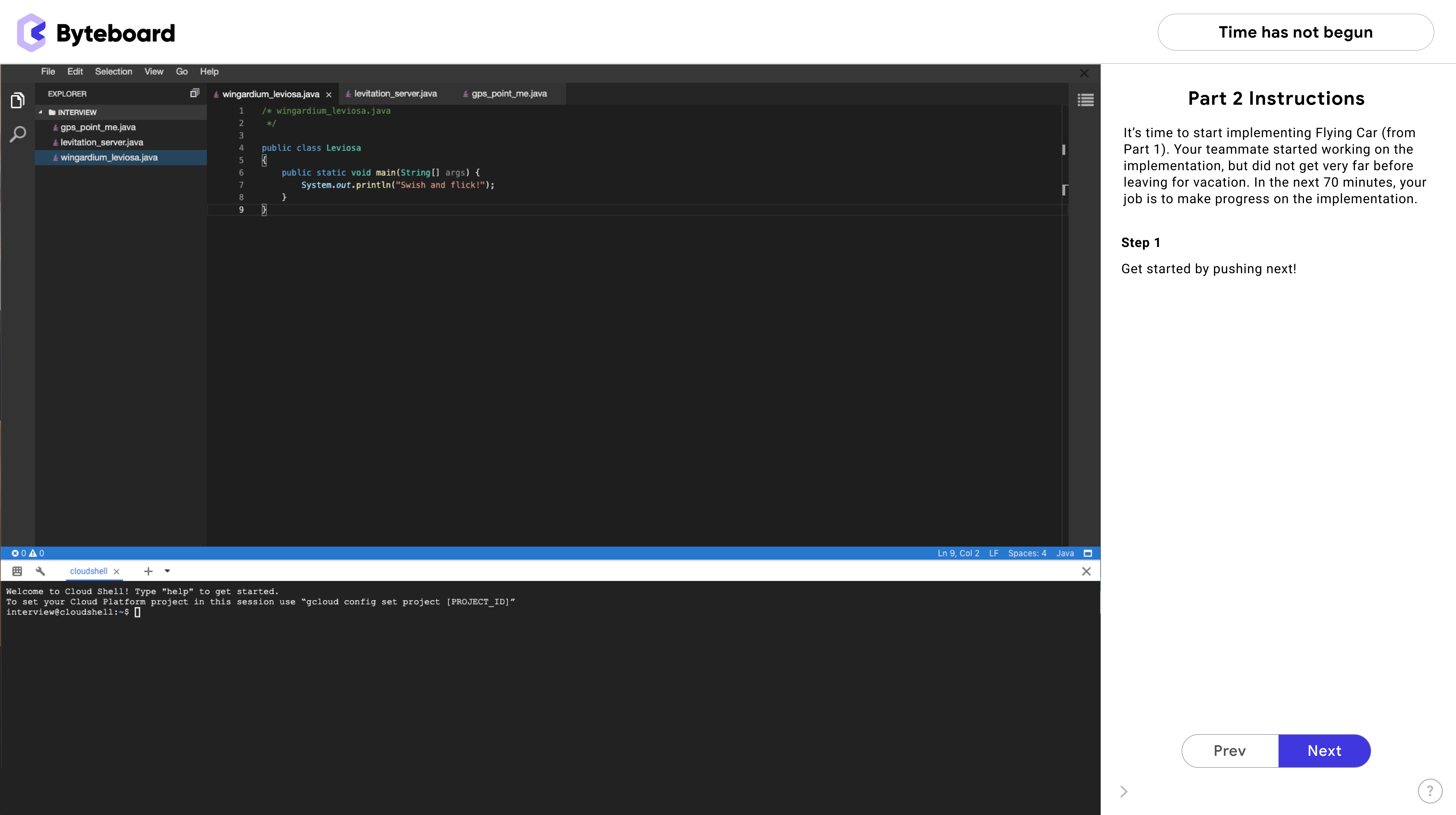
Byteboard replaces this old-fashioned process with an identity-blind, project-based evaluation process that highlights real-world skills that will be used on the job. To do this, Byteboard presents the interviewees with a real-world coding environment, for example, and candidates can choose between their own coding environment or Byteboard’s embedded web editor. Supported languages include Java, Python, Ruby, C++, C# JavaScript (node.js) and Go.

Employees can customize what domains they want candidates to work on, Kaur said. To do this, the team works with each employer to understand what they are looking for.

It’s worth noting that Google isn’t the first to do this, though this project does fit in well with the company’s recent focus on job search tools. HackerRank and others already offer employers similar tools for evaluating candidates. Kaur argues that Byteboard is different, though.

byteboard interview coding exercise

“Most other technical interview platforms focus on digitizing the traditional approach to technical interviews, which primarily tests for understanding of overly theoretical concepts,” he told me. “This still unfairly benefits those who have the time and resources to prepare for these interviews that over-index on algorithms and data structures and doesn’t allow companies to accurately assess how likely a candidate is to succeed in their job. The Byteboard interview is designed to simulate what engineers actually do on the job, asking candidates to work on a project from its design to implementation.”

The results are then assessed by a group of highly experienced engineers who have been trained to review each interview — after it has been anonymized — and rate it according to a set of rubrics that evaluate about 20 software engineering skills.

Google stresses that the evaluation process is anonymous, which will hopefully take most of the bias out of at least the early interview process.

The team also notes that some companies that have already tested the service have been able to replace all of their pre-onsite interviews with Byteboard interviews. Betterment, for example, has used it to interview over 50 engineering candidates and found that 86 percent of the candidates that made it through the process were “strong candidates.”

17 Jul 2019

Uber riders now earn rewards for shopping during their trip with new Cargo app

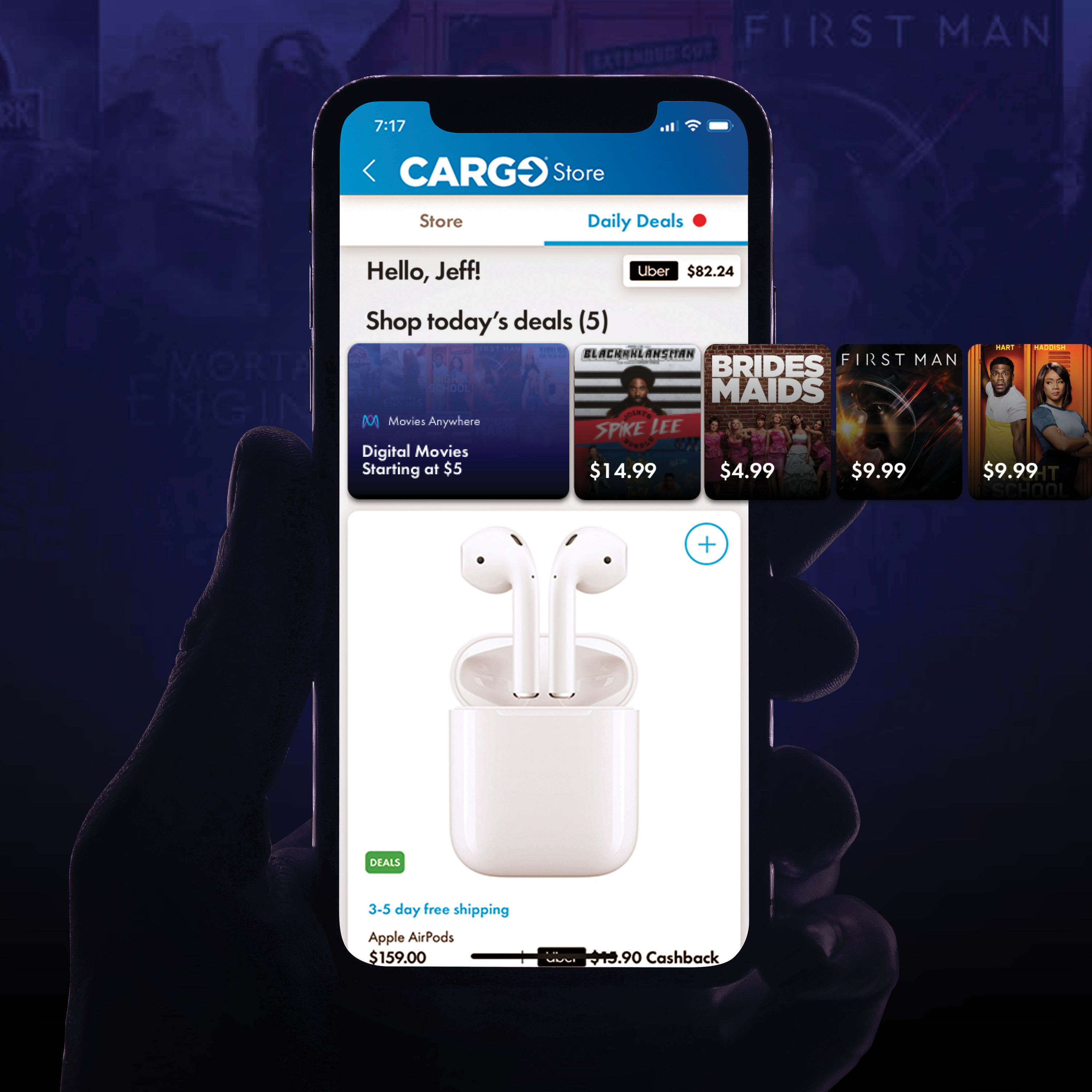
Uber is launching a new shopping app with commerce partner Cargo, a startup it signed an exclusive global partnership with last year. The app will feature items curated by Uber including products like Nintendo Switch, Apple hardware, Away luggage, Glossier cosmetics and more, and will be available to download for Uber riders making trips in cars that have Cargo consoles on board. The Cargo app will also provide in-ride entertainment, including movies from Universal Studios available to purchase for between $5 and $10 each (with bundle discounts for multiple movies), which are then viewable in the Movies Anywhere app.

Uber riders will also benefit by receiving 10 percent of their purchase value back in Uber Cash, which they can then use either on future trips, or on other purchases made through the Cargo app while riding. Uber drivers also benefit, earning 25 percent of the value of items purchased from the Cargo Box in-car, and an additional $1 for each first purchase by a passenger through the new app.

Riders just need to grab the iOS or Android app and then scan the QR code located on the Cargo Box in their driver’s car. Cargo’s app only allows purchases while on the trip, and then the item will be automatically shipped to a rider’s home address for free with an estimated delivery time of between two and five business days.

Cargo App Home Screen

This tie-up is a natural evolution for Uber’s business – the company hosts millions of riders every week, and many of those are taking relatively long trips to and from airports and other transit hubs, which provides ample opportunity to get them buying stuff or watching purchased content. Cargo, in which Uber has some equity stake, has a good opportunity to figure out how best to make the most of those trips.

This is hardly without precedent – airlines have attempted to capture consumer interest in the skies with onboard duty-free and other sales, as well as content for purchase. The big question will be whether Uber and Cargo together can provide enough additional purchase incentive vs. riders just opening the Amazon app or whatever other commerce options they have available on their own personal devices to make it a sustainable extension of their business.

17 Jul 2019

Amazon amends seller terms worldwide after German antitrust action

Amazon has agreed to make a raft of changes to the business terms it offers sellers on its marketplaces following an intervention by Germany’s Federal Cartel Office (FCO).

The regulator instigated an investigation in November last year after receiving a large number of complaints from sellers pertaining to Amazon’s German marketplace, amazon.de: The largest of the company’s five European marketplaces.

Among the changes the ecommerce giant has agreed to make are amendments to its liability provisions towards sellers to bring it into line with European standards for b2b relations, and changes to account termination and blocking to remove its unlimited right to do so without justification — meaning ordinary account terminations will in future require 30 days notice.

In a statement, Amazon said:

We are making several changes to the Amazon Services Business Solutions Agreement to clarify selling partner rights and responsibilities. The changes will become effective August 16th. 58% of the physical gross merchandise sales on Amazon are from third-party sellers, and we’ll continue working hard, investing heavily, and inventing new tools and services to help our selling partners around the world reach new customers and grow their business.

The company has also agreed to remove exclusivity of court of jurisdiction, meaning European sellers with a dispute against it may not only be able to instigate legal proceedings in Luxembourg but could, under certain conditions, be able to take it to a domestic court in future.

Other changes include reductions to confidentiality requirements Amazon has used to bind what sellers can say about it in public; product information rights and quality requirements; and over product reviews and seller ratings.

The new business terms, which will come into effect in 30 days times, will apply not just to all Amazon’s European marketplaces but also to its marketplaces worldwide, including in North American and Asia.

In a press release detailing what the FCO bills as the “far-reaching improvements” it has obtained in Amazon’s terms for sellers, it confirms the amendments conclude its proceedings against the company.

“The amendments address the numerous complaints about Amazon that the [FCO] received from sellers,” said president, Andreas Mundt, in a statement. “They concern the unilateral exclusion of liability to Amazon’s benefit, the termination and blocking of sellers’ accounts, the court of jurisdiction in case of a dispute, the handling of product information and many other issues.

“With our proceedings we have obtained far-reaching improvements for sellers active on Amazon marketplaces worldwide. The proceedings are now terminated.”

Also today Reuters reports that Austria’s regulator has also dropped a separate competition investigation of Amazon’s business as a result of the amended business terms.

Despite settling probes by EU Member States, Amazon is still facing antitrust scrutiny in the region, with the European Commission today announcing a formal investigation of how it handles merchant data.

The pan-EU competition regulator has the power to levy major fines if it determines the bloc’s rules have been broken, as well as to order a cessation of any infringing behavior — backed by the threat of additional fines for continued violation.

The FCO notes it refrained from placing further requirements on Amazon regarding the rules for product reviews in today’s settlement in light of this ongoing Commission inquiry, as well as in view of a current sector inquiry it’s conducting into online user reviews. So there could be further changes to Amazon’s terms coming down the pipe as a result of ongoing investigations. 

New EU rules intended to regulate the fairness and transparency of online platform businesses are also looming — and likely concentrating minds at Bezos HQ — having been agreed by EU institutions earlier this year.

The platform regulation will likely come into force across Europe before the end of next year.

17 Jul 2019

DJI introduces a Ronin stabilizer for mirrorless cameras

The camera stabilizer has been an interesting piece of DJI’s product play. A kind of offshoot of the company’s advanced drone-based imaging systems, the Ronin line has allowed it to appeal to photographers and videographers of the terrestrial variety. And as with its drone line, the accessories have grown at an impressive rate, becoming one of the key de facto choices for professional filmmakers.

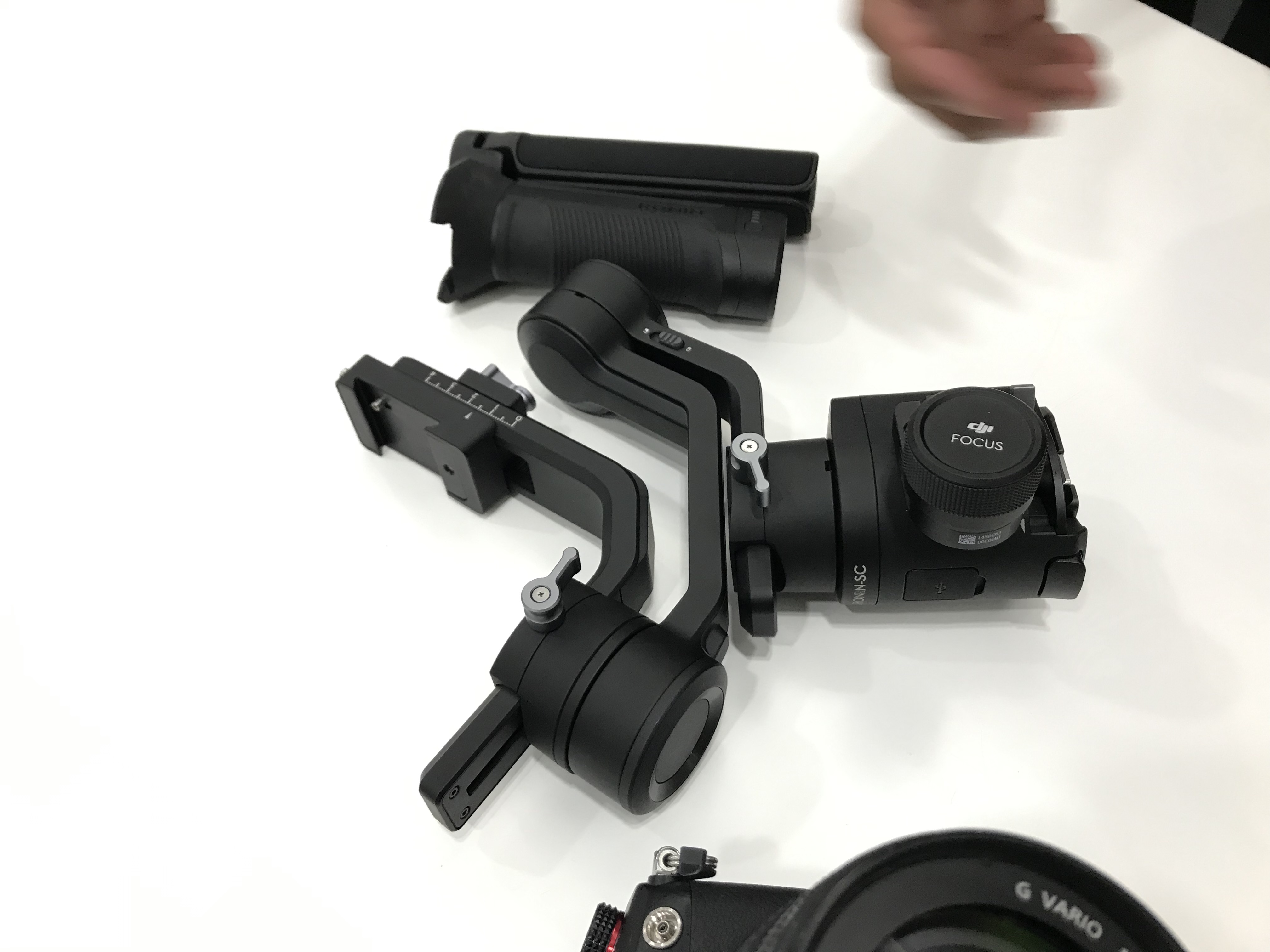
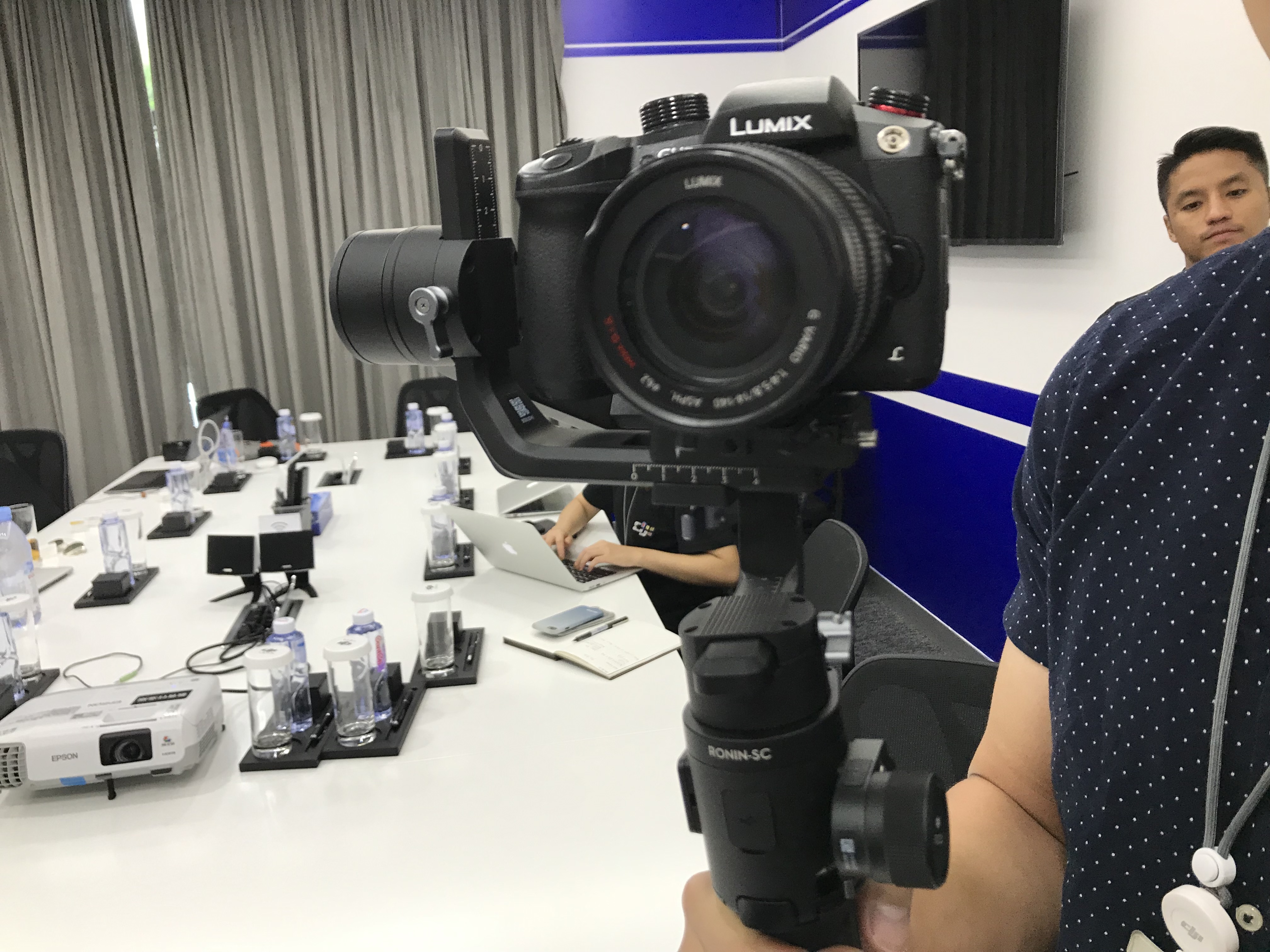
The Ronin-SC, finds DJI branching out further, with an offering designed for novices looking to up their shooting game. The product sits somewhere between the line’s high end SLR models and entry level products like the smartphone-friendly Osmo Mobile and Pocket.

IMG 0121

The device targets mirrorless camera owners — a no-brainer as the most rapidly growing category in the consumer imaging space. Designed for smaller cameras, the stabilizer itself is also smaller and lighter. It’s cheaper, too, starting at $439 for the standalone device. In spite of this, the gimbal is actually more capable than the higher-end Ronins, incorporating a number of smarts developed for drones like the Mavic line.

We happened to be at the company’s Shenzhen office this week, ahead of the launch and were able to take the product for a spin in person. As with most of DJI’s other offerings, we were pretty impressed with what the product can do. Among the more compelling on-board features is the addition of Force Mobile. A consumer-focused version of the Force Pro, the feature syncs mobile phone movements up to the gimbal.

Users can mount a smartphone on a tripod or more it manual and the Ronin will move accordingly. The feature works up to 82 feet away, so a second user can control the direction of the lens while the first moves around the camera. Users can also change the direction of a stationary Ronin seated on a desktop.

IMG 0131

Active Track 3.0 has been borrowed from the drone line, as well. Here a deep learning algorithm helps the device track subjects. The addition brings some of the ease of user from DJI’s Mavic line to the product for easier one person shots. A DJI rep also demonstrated the ease with with the shooter can walk forward, camera facing behind them, with losing the subject in the process. Other app-connected features borrowed from the drone line include Motionlapse, Time-lapse and Panorama.

The hardware itself is essentially a scaled down version of previous Ronins, with features designed from single-handed use. The Ronin-SC is available starting today for $439 or $539 for a more deluxe version that brings additional pro features like an external focus motor and a Remote Start Stop splitter.

[gallery ids="1856679,1856680,1856681,1856682,1856683,1856684,1856685,1856686,1856687"]