Year: 2019

11 Jul 2019

Apple disables Walkie Talkie app due to vulnerability that could allow iPhone eavesdropping

Apple has disabled the Apple Watch Walkie Talkie app due to an unspecified vulnerability that could allow a person to listen to another customer’s iPhone without consent, the company told TechCrunch this evening.

Apple has apologized for the bug and for the inconvenience of being unable to use the feature while a fix is made.

The Walkie Talkie app on Apple Watch allows two users who have accepted an invite from each other to receive audio chats via a ‘push to talk’ interface reminiscent of the PTT buttons on older cell phones.

A statement from Apple reads:

We were just made aware of a vulnerability related to the Walkie-Talkie app on the Apple Watch and have disabled the function as we quickly fix the issue. We apologize to our customers for the inconvenience and will restore the functionality as soon as possible. Although we are not aware of any use of the vulnerability against a customer and specific conditions and sequences of events are required to exploit it, we take the security and privacy of our customers extremely seriously. We concluded that disabling the app was the right course of action as this bug could allow someone to listen through another customer’s iPhone without consent.  We apologize again for this issue and the inconvenience.

Apple was alerted to the bug via its report a vulnerability portal directly and says that there is no current evidence that it was exploited in the wild.

The company is temporarily disabling the feature entirely until a fix can be made and rolled out to devices. The Walkie Talkie App will remain installed on devices, but will not function until it has been updated with the fix.

Earlier this year a bug was discovered in the group calling feature of FaceTime that allowed people to listen in before a call was accepted. It turned out that the teen who discovered the bug, Grant Thompson, had attempted to contact Apple about the issue but was unable to get a response. Apple fixed the bug and eventually rewarded Thompson a bug bounty.  This time around, Apple appears to be listening more closely to the reports that come in via its vulnerability tips line and has disabled the feature.

Earlier today, Apple quietly pushed a Mac update to remove a feature of the Zoom conference app that allowed it to work around Mac restrictions to provide a smoother call initiation experience — but that also allowed emails and websites to add a user to an active video call without their permission.

11 Jul 2019

Apple opens app design and development accelerator in China

Apple has opened a design and development accelerator in Shanghai — its first for China — to help local developers create better apps as the iPhone maker looks to scale its services business in one of its key overseas markets.

At the accelerator, Apple has begun to hold regular lectures, seminars and networking sessions for developers, the company said this week. It is similar to an accelerator it opened in Bangalore about two years ago.

In India, where Apple has about half a million app developers, the accelerator program has proven crucially useful, more than three dozen developers who have enrolled for the program have told TechCrunch over the years. Participation in the accelerator is free of cost.

Apple said more than 2.5 million developers from greater China, which includes Taiwan and Hong Kong, actively build apps for its platform. These developers have earned more than $29 billion through App Store sales. More than 15% of Apple’s revenue comes from greater China, according to official figures.

“Developers here in China are leading the world with some of the most popular apps on the App Store, and we are proud to be providing this additional support for them. From education to health to entertainment, the innovation we see here is incredible and we can’t wait to see what these talented developers will come up with next,” said Enwei Xie, Apple’s head of developer relations, Greater China in a statement.

The launch of the design and development accelerator comes at a time when growth of iPhone sales has slowed down in the nation (and elsewhere), though some devices such as the iPad continue to see strong momentum. The slower growth for Apple’s marquee product is in part a direct result of the ongoing trade war between the U.S. and China.

“We believe the economic environment in China has been further impacted by rising trade tensions with the United States. As the climate of mounting uncertainty weighed on financial markets, the effects appeared to reach consumers as well, with traffic to our retail stores and our channel partners in China declining as the quarter progressed,” Tim Cook wrote to shareholders ahead of Q1 2019 earnings report.

Some analysts expect Apple will report a surge in its services revenue in the third quarter, thanks to a turnaround in China.

The design and development accelerator in the country’s largest city would help developers create more quality apps, which would then improve user experience and incentivize more spendings on Apple’s ecosystem of services and products.

At its developer accelerator in India — the company’s maiden development centre of its kind anywhere — many developers who work for major companies such as Flipkart and Paytm have participated in the program and used the learnings from the sessions to improve their companies’ apps. Many Apple employees and other experts are readily available at these sessions to coach developers.

The Cupertino-giant has also opened other design and coding programs in many other markets over the years. In March, Apple said it was expanding app development curriculum at partner schools in Singapore and opening a second developer academy in Indonesia. It also maintains a similar program in Italy. Earlier this year, Apple also accepted 11 app development companies founded by women to an entrepreneur camp.

11 Jul 2019

VC firm Otium Venture becomes Frst and raises new fund

It’s a breakup of some sort, but with no hard feelings. The team behind Paris-based VC firm Otium Venture is creating a new management company called Frst and raising a new fund.

But first, let’s talk about Otium Venture. Smartbox founder Pierre-Edouard Stérin’s family office created Otium Venture and Otium Brands to manage his startup investments. Over the past four years, the Otium Venture team participated in a dozen seed rounds, such as Payfit, Doctrine and Owkin. It represented around $45 million in total (€40 million).

With Frst, the Otium Venture team is essentially creating a spinoff company with no connection to Pierre-Edouard Stérin’s family office. The team is still led by Pierre Entremont and Bruno Raillard, with Judith Tripard and Gabriel de Vinzelles also following them.

Frst is a more traditional VC firm with multiple limited partners investing in the first Frst fund (yep, first Frst fund). The firm has already raised $67 million (€60 million) from the European Investment Fund, Bpifrance, Axa Venture Partners, Ilkka Paananen and Mikko Kodisoja from Supercell, Michaël Benabou from Vente-Privée, Stanislas de Quercize from Cartier and others.

Eventually, Frst plans to reach $90 million (€80 million) with this fund.

Frst plans to invest at the seed level with investments ranging from €0.5 million to €3 million. They’re focusing on Paris-based startups and say that big tech companies are bound to appear here in France.

As for existing Otium Ventures investments? Pierre-Edouard Stérin and the Frst team have set up a consulting contract so that they can follow their investments after the change.

11 Jul 2019

Online community theAsianparent raises Series C to add e-commerce and expand into new markets

TheAsianparent, Southeast Asia’s largest online community and content platform for mothers with 23.5 million monthly active users, announced today that it has raised a Series C led by Fosun Group, the Chinese conglomerate. The amount was undisclosed, but a person familiar with the deal says it was between $10 million to $30 million. E-commerce giant JD.com also participated, along with ATM Capital, Redbadge Pacific and returning investors Global Grand Leisure and WHG Holdings.

The new funding will be used on theAsianparent’s new e-commerce business and its expansion into new markets in Asia and Africa, focusing first on Nigeria, Kenya and South Africa. Roshni Mahtani, the founder and CEO of Tickled Media, theAsianparent’s publisher, tells TechCrunch it looks for countries with high birth rates but relatively few online resources and communities for new parents. The site will have its own branding for African markets and launch first in Nigeria with localized content and a social network.

TheAsianparent, which currently has a team of 180 people across 12 countries and is headquartered in Singapore, will focus on building its e-commerce business in Asia markets first, specifically Indonesia, the Philippines and Singapore, with JD.com providing advice on things like logistics. TheAsianparent will start selling products through its site and launch its own direct-to-consumer brand later this year.

“The way I see it is that for media companies to be relevant, you need to have content, community and commerce, so that it becomes very easy for consumers to trust you for content and community, and also be able to buy products that you recommend and that have been created for their communities,” says Mahtani, who launched theAsianparent as a parenting blog in 2009.

TheAsianparent’s mobile app, which includes articles, community features and baby development trackers, launched in September 2018, has been installed 1.6 million times so far. Mahtani says the theAsianparent had a traffic growth rate of about 70 percent before funding and expects it to increase by a much faster rate now. It is expected to make $10 million in revenue this year and reach $100 million within the next five years.

In a prepared statement, Wilson Jin, the chairman of Fosun RZ Capital, said “TheAsianparent, as the largest maternal and child community in Southeast Asia, has won the trust of young mothers in Southeast Asia and has a huge commercial space. In the past few years, theAsianparent has fully verified its business development and product evolution capabilities , it is an outstanding entrepreneurial team.”

11 Jul 2019

Bankrupt Maker Faire revives, reduced to Make Community

Maker Faire and Maker Media are getting a second chance after suddenly going bankrupt, but they’ll return in a weakened capacity. Sadly, their flagship crafting festivals remain in jeopardy, and it’s unclear how long the reformed company can survive.

Maker Media suddenly laid off all 22 employees and shut down last month, as first reported by TechCrunch. Now its founder and CEO Dale Dougherty tells me he’s bought back the brands, domains, and content from creditors and rehired 15 of 22 laid off staffers with his own money. Next week, he’ll announce the relaunch of the company with the new name “Make Community“.

Read our story about how Maker Faire fell apart

The company is already working on a new issue of Make Magazine that it will hope to publish quarterly (down from six times per year) and the online archives of its do-it-yourself project guides will remain available. I hopes to keep publishing books. And it will continue to license the Maker Faire name to event organizers who’ve thrown over 200 of the festivals full of science-art and workshops in 40 countries. But Dougherty doesn’t have the funding to commit to producing the company-owned flagship Bay Area and New York Maker Faires any more.

Maker Faire Layoffs

“We’ve succeeded in just getting the transition to happen and getting Community set up” Dougherty tells me. But sounding shaky, he asks “Can I devise a better model to do what we’ve been doing the past 15 years? I don’t know if I have the answer yet.” Print publishing proved tougher and tougher recently. Combined with declining corporate sponsorships of the main events, Maker Media was losing too much money to stay afloat last time.

On June 3rd, we basically stopped doing business. And, you know, the bank froze our accounts” Dougherty said at a meetup he held in Oakland to take feedback on his plan, according a recording made by attendee Brian Benchoff. Grasping for a way to make the numbers work, he told the small crowd gathered “I’d be happy if someone wanted to take this off my hands.”

Maker Faire

Maker Faire [Image via Maker Faire Instagram]

For now, Dougherty is financing the revival himself “with the goal that we can get back up to speed as a business, and start generating revenue and a magazine again. This is where the community support needs to come in because I can’t fund it for very long.”

Dale 1

Maker Faire founder and Make Community CEO Dale Dougherty

The immediate plan is to announce a new membership model next week at Make.co where hobbyists and craft-lovers can pay a monthly or annual fee to become patrons of Make Community. Dougherty was cagey about what they’ll get in return beyond a sense of keeping alive the organization that’s held the maker community together since 2005. He does hope to get the next Make Magazine issue out by the end of summer or early fall, and existing subscribers should get it in the mail.

The company is still determining whether to move forward as a non-profit or co-op instead of as a venture-backed for-profit as before. “The one thing i don’t like about non-profit is that you end up working for the source you got the money from. You dance to their tune to get their funding” he told the meetup.

Last time, he burned through $10 million in venture funding from Obvious Ventures, Raine Ventures, and Floodgate. That could make VCs weary of putting more cash into a questionable business model. But if enough of the 80,000 remaining Make Magazine subscribers, 1 million YouTube followers, and millions who’ve attended Maker Faire events step up, pehaps the company can find surer footing.

“I hope this is actually an opportunity not just to revive what we do but maybe take it to a new level” Dougherty tells me. After all, plenty of today’s budding inventors and engineers grew up reading Make Magazine and being awestruck by the massive animatronic creations featured at its festivals.

Audibly peturbed, the founder exclaimed at his community meetup “It frustrates the heck out of me thinking that I’m the one backing up Maker Faire when there’s all these billionaires in the valley.”

Maker Faire lives

10 Jul 2019

May Mobility reveals prototype of a wheelchair-accessible autonomous vehicle

Autonomous transportation startup May Mobility is doing more than just talking about accessibility when it comes to self-driving transportation tech development. The company recently began developing a wheelchair-accessible prototype version of its autonomous shuttle vehicle, and just concluded an initial round of gathering feedback from the community of people in Columbus, Ohio, who would actually be using the shuttle.

May Mobility’s design includes accommodations for entry and exit, as well as for securing the passenger’s wheelchair once it’s on board during the course of the trip. The company learned from the first round of feedback that its design needs improvement in terms of making the ramp longer to facilitate more gradual onboarding and disembarking, as well as optimizing pick-up and drop-off points.

It still plans to work on implementing some improvements, before deploying its vehicles, but we can expect to see accessible May Mobility shuttles in operation across its pilots in Columbus, Providence and Grand Rapids soon, according to the company.

Ultimately, though, the company says that it feels its solution is perceived as at least on par with existing accessible transit options currently in service in the area.

may mobility alisyn malek

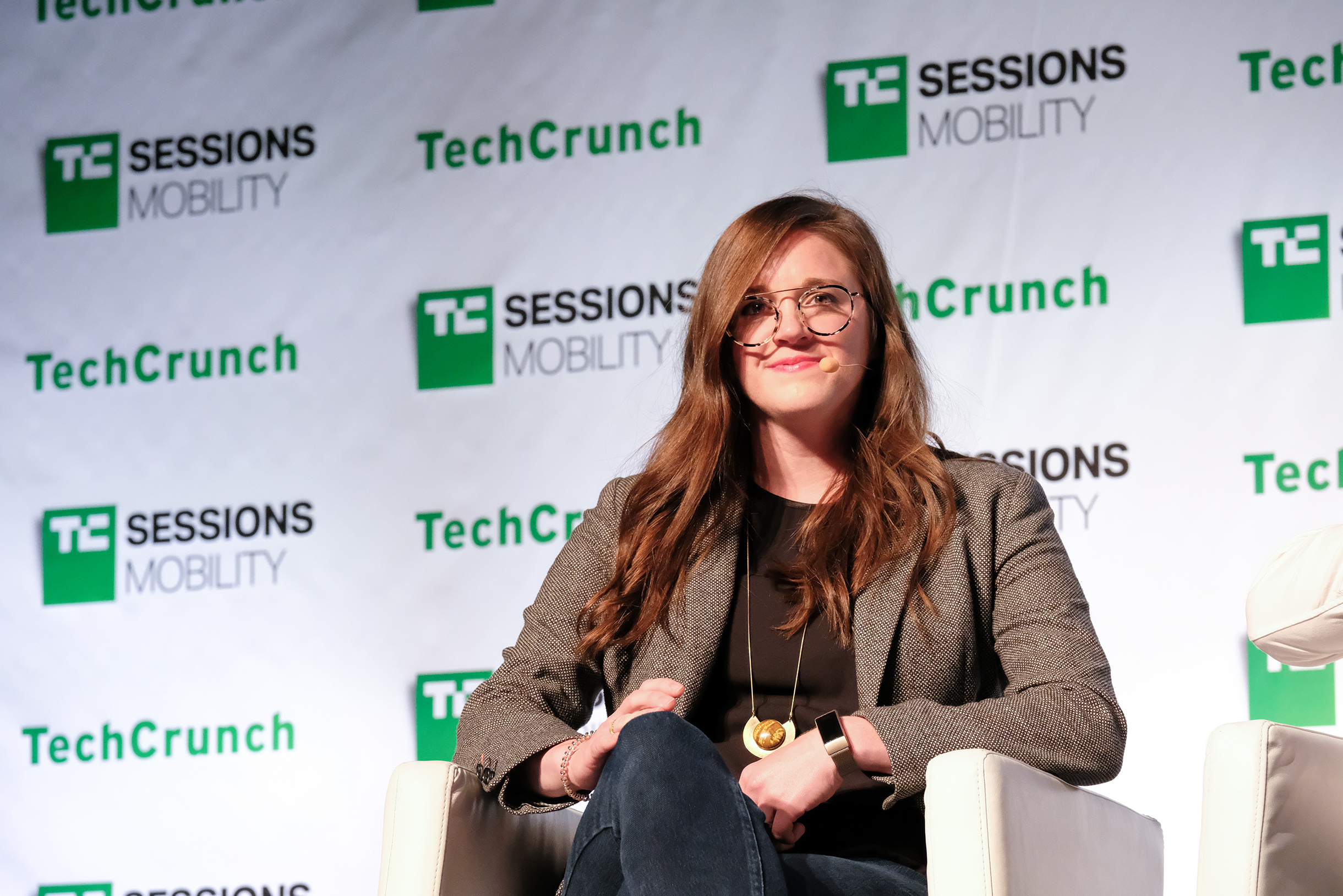
May Mobility Chief Operating Officer and co-founder Alisyn Malek speaking at TechCrunch Sessions: Mobility on July 10, 2019.

“For us, our focus is how we can transform cities, making them safer, greener and more accessible for everybody,” said May Mobility co-founder and COO Alisyn Malek on stage at TechCrunch Sessions: Mobility. “How can we make transportation easier for everybody? And part of that is we really have to think about ‘everybody.'”

May Mobility’s vehicles are specifically low-speed electric vehicles, for which there aren’t yet clear guidelines or regulations around their design and safety features, so the company thinks it makes sense to work directly with community members to get a head start on accessible design. And one of the constant refrains from autonomous vehicle companies is that their technology will bring access to people who otherwise wouldn’t be able to make use of cars, but few have shown concrete steps they’re taking to actually address the practical realities of true accessibility.

Some others in the industry are taking action, however, including Lyft, which is working with its autonomous technology partner Aptiv and the National Federation of the Blind on designing self-driving service that works for blind and low-vision passengers. But May Mobility’s service has the advantage of operating commercially for the public in defined, manageable engagements that provide value for the community now, which means the actions it’s taking toward accessibility will have real benefit where it’s already in service.

10 Jul 2019

Apple has pushed a silent Mac update to remove hidden Zoom web server

Apple has released a silent update for Mac users removing a vulnerable component in Zoom, the popular video conferencing app, which allowed websites to automatically add a user to a video call without their permission.

The Cupertino, Calif.-based tech giant told TechCrunch that the update — now released — removes the hidden web server, which Zoom quietly installed on users’ Macs when they installed the app.

Apple said the update does not require any user interaction and is deployed automatically.

The video conferencing giant took flack from users following a public vulnerability disclosure on Monday by Jonathan Leitschuh, in which he described how “any website [could] forcibly join a user to a Zoom call, with their video camera activated, without the user’s permission.” The undocumented web server remained installed even if a user uninstalled Zoom. Leitschuh said this allowed Zoom to reinstall the app without requiring any user interaction.

He also released a proof-of-concept page demonstrating the vulnerability.

Although Zoom released a fixed app version on Tuesday, Apple said its actions will protect users both past and present from the undocumented web server vulnerability without affecting or hindering the functionality of the Zoom app itself.

The update will now prompt users if they want to open the app, whereas before it would open automatically.

Apple often pushes silent signature updates to Macs to thwart known malware — similar to an anti-malware service — but it’s rare for Apple to take action publicly against a known or popular app. The company said it pushed the update to protect users from the risks posed by the exposed web server.

Zoom spokesperson Priscilla McCarthy told TechCrunch: “We’re happy to have worked with Apple on testing this update. We expect the web server issue to be resolved today. We appreciate our users’ patience as we continue to work through addressing their concerns.”

More than four million users across 750,000 companies around the world use Zoom for video conferencing.

10 Jul 2019

Bird plans to hire 1,000 people in Paris

Scooter startup Bird is betting on the French market in a significant way. The company plans to open up its biggest European office in Paris. Eventually, Bird wants to hire 1,000 people by mid-2021, which is a meaningful number for a company that has been around for a couple of years.

Paris is an important market for Bird and all scooter startups in general. It’s a relatively small city — when it comes to footprint, Paris is smaller than San Francisco. But it’s also a dense city. And of course, there are a ton of tourists who come to Paris just for a few days.

That’s why 12 different companies launched a scooter-sharing service in Paris (yes, twelve). But Les Échos recently reported that many of them have already left the city. Lime, Bird, Circ, Dott, Jump and B-Mobility are still around.

It’s a capital intensive industry, and Bird has already raised a ton of money to outlive the competition. But money is just one thing.

Opening an office in Paris is also important to show city officials that Bird is serious about this market. Last month, the City of Paris announced that it would limit the number of scooter companies in Paris. They will hand out two or three licenses to operate. And Bird certainly wants to be one of them.

Bird will also use its Paris hub to educate users about safety. The company plans to hand out free helmets if you attend a safety training session.

10 Jul 2019

Virgin Orbit performs a successful drop test of its LauncherOne rocket launch system

Richard Branson-backed space startup Virgin Orbit has completed a key step along its path to launching satellites for commercial customers. The company held a successful ‘drop test’ of its LauncherOne rocket, in which the crucial piece of its launch system was released in a free fall from its Boeing 747-based launch aircraft (nicknamed ‘Cosmic Girl’).

LauncherOne was released from a height of 35,000 feet, which is a typical cruising altitude for commercial aeroplanes, which is where it would be during an actual launch. Virgin Orbit’s model flies its rocket to this altitude before engaging the engine, which is a lot more energy and cost-efficient vs. launching the rocket from the ground (which is what SpaceX does, for instance).

During this test, the LauncherOne rocket did not engage its engine (and in fact, it’s a full-scale dummy rocket rather than a real one) once it detached from the wing of the modified 747, which is what it would do if this was an actual launch. Instead, it fell 35,000 feet to the ground, where it impacted in a planned drop zone at Edward’s Air Force Base in the Mojave desert.

D JEVADU4AAzkcA

All of this was to plan, as the main focus of this drop test was to study the separation of the rocket from the launch aircraft’s wing, and to gather a number of sensor readings about how the rocket behaves when it’s falling freely through the air.

Virgin Orbit, part of Virgin duo of space companies which also includes Virgin Galactic, which announced its intention to become a publicly traded company earlier this week. Orbit’s specific focus is offering an affordable option for smallsat launches, a market where it’ll compete with Rocket Lab, which is using a more traditional ground-based rocket launch model.

10 Jul 2019

Fintech in Latin America continues to draw big dollars as Softbank invests $231 million in Creditas

As investors continue to move more aggressively into Latin America’s startup scene, there’s one industry that seems to be drawing more attention than any others — financial services.

As wealth across the region continues to rise, access to adequate financial services — specifically debt — has become a pain-point for an upwardly mobile middle class that wants to be more entrepreneurial and have more financial tools than straight cash at their disposal.

That’s what’s driven companies like Nubank, the Brazilian consumer credit card behemoth, to valuations of roughly $4 billion; and it’s also what contributed to Creditas, a provider of secured loans, raking in $231 million in new financing from the SoftBank Vision Fund and SoftBank Group. Previous investors Vostok Emerging Finance, Santander InnoVentures and Amadeus Capital also participated in the round. 

Founded by Sergio Furio in 2012, the company started as an originator of loans to Brazilian customers who were willing to offer up collateral in exchange for lower interest rates on their debt. Back in 2017, the company became more of a fully integrated lender for the entire process.

Thanks to investments from local and international investment firms including Kaszek Ventures, Quona’s Accion Frontier Fund, Redpoint eVentures, QED Investors, Naspers Fintech, International Finance Corporation and Endeavor’s Catalyst fund, the company became one of Brazil’s largest new financial services startups.

Expect the company to use the new cash to expand its product portfolio and try to offer new lines of credit that it would issue itself — perhaps by trying to enter new businesses like unsecured consumer lending and credit cards.

If it does make its way into unsecured side of the lending market, that would put the company squarely in competition with Nubank (which was reportedly in discussions with Creditas’ lead investor, SoftBank, about an investment earlier this year).

“At Creditas we relentlessly focus on creating an amazing experience that provides efficiency and lower prices to democratize the access to low-cost lending in Brazil. With these investments, we plan to accelerate this process and expand our business model in order to improve the lives of the Brazilian population,” said Sergio Furio, Founder and CEO of Creditas, in a statement.

As a result of the investment, representatives from the SoftBank Vision Fund and SoftBank Latin America Fund will join Creditas’ Board of Directors.