Year: 2020

13 Aug 2020

Mirantis acquires Lens, an IDE for Kubernetes

Mirantis, the company that recently bought Docker’s enterprise business, today announced that it has acquired Lens, a desktop application that the team describes as a Kubernetes integrated development environment. Mirantis previously acquired the team behind the Finnish startup Kontena, the company that originally developed Lens.

Lens itself was most recently owned by Lakend Labs, though, which describes itself as “a collective of cloud native compute geeks and technologists” that is “committed to preserving and making available the open-source software and products of Kontena.” Lakend open-sourced Lens a few months ago.
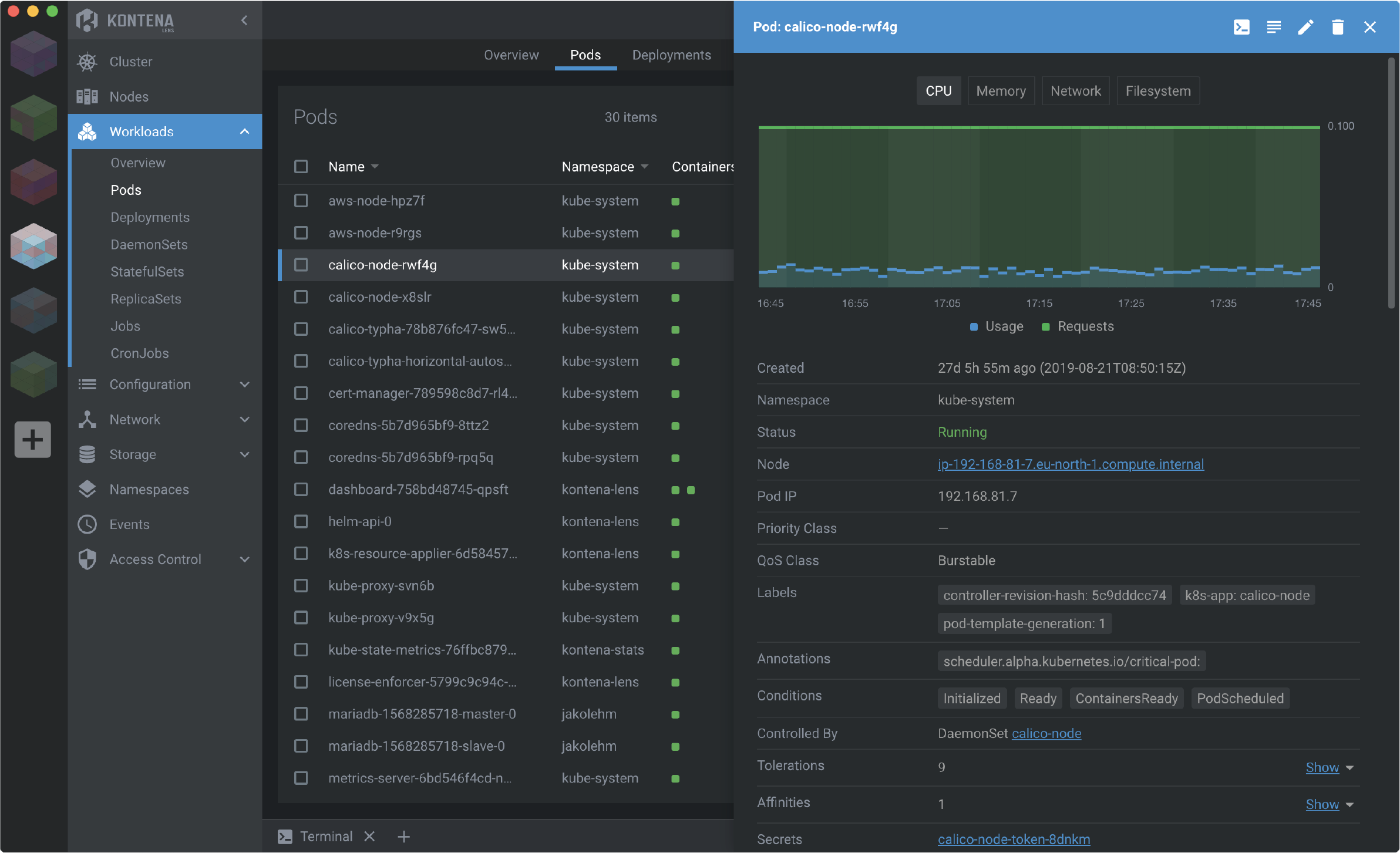
Image Credits: Mirantis

“The mission of Mirantis is very simple: we want to be — for the enterprise — the fastest way to [build] modern apps at scale,” Mirantis CEO Adrian Ionel told me. “We believe that enterprises are constantly undergoing this cycle of modernizing the way they build applications from one wave to the next — and we want to provide products to the enterprise that help them make that happen.”

Right now, that means a focus on helping enterprises build cloud-native applications at scale and, almost by default, that means providing these companies with all kinds of container infrastructure services.

“But there is another piece of this of the story that’s always been going through our minds, which is, how do we become more developer-centric and developer-focused, because, as we’ve all seen in the past 10 years, developers have become more and more in charge off what services and infrastructure they’re actually using,” Ionel explained. And that’s where the Kontena and Lens acquisitions fit in. Managing Kubernetes clusters, after all, isn’t trivial — yet now developers are often tasked with managing and monitoring how their applications interact with their company’s infrastructure.

“Lance makes it dramatically easier for developers to work with Kubernetes, to build and deploy their applications on Kubernetes, and it’s just a huge obstacle-remover for people who are turned off by the complexity of Kubernetes to get more value,” he added.

“I’m very excited to see that we found a common vision with Adrian for how to incorporate lens and how to make life for developers more enjoyable in this cloud -native technology landscape,” Miska Kaipiainen, the former CEO Kontena and now Mirantis’ Director of Engineering, told me.

He describes Lens as an IDE for Kubernetes. While you could obviously replicate Lens’ functionality with existing tools, Kaipiainen argues that it would take 20 different tools to do this. “One of them could be for monitoring, another could be for logs. A third one is for command-line configuration, and so forth and so forth,” he said. “What we have been trying to do with Lens is that we are bringing all these technologies [together] and provide one single, unified, easy to use interface for developers, so they can keep working on their workloads and on their clusters, without ever losing focus and the context on what they are working on.”

Among other things, Lens includes a context-aware terminal, multi-cluster management capabilities that work across clouds, and support for the open-source Prometheus monitoring service.

For Mirantis, Lens is a very strategic investment and the company will continue to develop the service. Indeed, Ionel said that the Lens team now basically has unlimited resources.

Looking ahead, Kaipiainen said that the team is looking at adding extensions to Lens through an API within the next couple of months. “Through this extension API, we are actually able to collaborate and work more closely with other technology vendors within the cloud technology landscape so they can start plugging directly into the Lens UI and visualize the data coming from their components, so that will make it very powerful.”

Ionel also added that the company is working on adding more features for larger software teams to Lens, which is currently a single-user product. A lot of users are already using Lens in the context of very large development teams, after all.

While the core Lens tools will remain free and open-source, Mirantis will likely charge for some new features that require a centralized service for managing them. What exactly that will look like remains to be seen, though.

If you want to give Lens a try, you can download the Windows, macOS and Linux binaries here.
13 Aug 2020

Slack and Atlassian deepen their partnership with deeper integrations

A lot of “partnerships” between tech companies don’t get very far beyond a press release and maybe some half-hearted co-selling attempts. When Atlassian sold its chat services to Slack in 2018, the two companies said they would form a new partnership and with Atlassian leaving the chat space, a lot of people were skeptical about what that would really mean. Since then, things got pretty quiet around the collaboration between the two companies, but today the companies announced some of the deep integration work they’ve done, especially within Slack.

Image Credits: Atlassian

Over the course of the last two years, Slack and Atlassian shipped 11 product integrations, which now see about a million active users every month, with Jira being the most often used integration, followed by Halp, which Atlassian acquired earlier this year. Every month, Atlassian currently sends 42 million Jira notifications to Slack — and that number continues to grow.

At the core of these integrations is the ability to get rich unfurls of deep links to Atlassian products in Slack, no matter whether that’s in DMs, public channels and private channels. Coming soon, those unfurls will become a default feature within Slack, even if the user who is seeing the link isn’t an Atlassian user yet.

“Today, if you do drop a Jira link in your channel and you’re not as your user — or even if you are and you’re not authed in — you just see a link,” Brad Armstrong said. “You don’t get the benefit of the unfurl. And so one of the things we’re doing is making that unfurl available to everybody, regardless of whether you are logged in and regardless of whether you’re even in Atlassian customer.”

Image Credits: Atlassian

The two companies also worked closely together on making moving between the products easier. If you are a Jira user, for example, you’ll soon be able to click on a ling in Slack and if you’re not currently logged into your Atlassian account, you’ll be automatically logged in. And the two companies are taking this even further by automatically creating Jira accounts for users when they come from Slack.

“If you are you’re not even at your user, when you click on the link, we will then map you from Slack and create a Jira user for you that provisions you and auths you in so you’re immediately becoming a Jira  user by virtue of wanting to collaborate on that piece of content in Slack,” Armstrong explained.

That, the two companies argues, turn Slack into something akin to a passport that gives you access to the Atlassian product suite — and that should also make onboarding a lot easier for new users.

Image Credits: Atlassian

“As you could probably imagine, as you know, onboarding is a pain, it’s hard because you have different roles, different size teams, so on and so forth,” said Bryant Lee, Atlassian’s head of product partnerships. “And that’s where you see some of the authentication stuff, the unfurling discovery piece really being an understanding of what those practices are. But the way that we look at it is not just about the product but people, products and practices. So it’s really about understanding who it is that we’re trying to optimize for.”

In addition to these new integrations that are launching soon, the two companies are also expanding their co-marketing efforts, starting with a new 50%-off offer for Atlassian users who want to also use Slack.

“We’re building on the strong foundation of our partnership’s success from the past two years, which has yielded tremendous shared customer momentum and impactful product integrations,” said Slack co-founder and CEO Stewart Butterfield . “Thanks to our strategic alliance, Slack and Atlassian have become the technology stack of choice for developer teams.”

13 Aug 2020

Ready, set, network: CrunchMatch is open for Disrupt 2020

We’re so excited about today’s news that we’re stealing, ahem, borrowing boxing announcer Michael Buffer’s famous catchphrase, “Let’s get ready to rumble!

CrunchMatch, our free networking platform is up and ready to help you build your business and expand your empire. Starting today — and for weeks to come — you can find, connect and meet with thousands of Disrupt 2020 attendees from around the world.

Bridging the physical distance of a virtual conference requires the best tools possible. We lifted the AI-powered platform’s hood and upgraded the CrunchMatch algorithm. The result? Faster, more precise matches for a better networking experience  — and the more you use it the smarter it gets.

We’ve simplified the onboarding process, too. When you register for Disrupt 2020, you’ll answer a few quick questions about your business preferences, and within minutes you’ll be automatically registered for CrunchMatch — and receive an email telling you how to access the platform.

Now that you’re ready for networking success, who are the people you need to help grow your business? Founders, investors, engineers, R&D teams, manufacturing mavens, supply-chain experts? The platform makes finding the right people a lot easier, and it helps keep you organized and on schedule.

“I used CrunchMatch to schedule meetings, and the digital aspect made connecting easier. It helped me stay organized, meet people and still have time to take in a piece of everything at Disrupt.” — JC Bodson, founder and CEO of Arbitrage Technologies.

CrunchMatch analyzes your preferences and automatically generates a list of attendees with a similar goals and interests. You can also search manually by industry, job function, company name and more.

Use CrunchMatch to schedule 1:1 video meetings with potential investors, customers, or founders; showcase your innovative products or interview prospective employees. And if that’s not enough, you can also take part in speed networking sessions that will be announced in the coming weeks!

Disrupt 2020 runs September 14 – 18, but you can start networking right now. Buy your pass to Disrupt, fire up CrunchMatch and get a giant head start on building the crucial relationships startups need to grow and succeed. Are you ready to rumble?

Is your company interested in sponsoring or exhibiting at Disrupt 2020? Contact our sponsorship sales team by filling out this form.


13 Aug 2020

AMC will offer 15 cent tickets when it reopens 100+ US theaters on August 20

Like so many industries, the last five months have been absolutely devastating for movie theaters. As far as sheer volumes go, no one has been harder hit than the world’s largest theater chain. AMC has had plans to reopen theaters for some time — but things change, particularly when you’re dealing with something as uncertain and always-evolving as a global pandemic.

This week, the theater juggernaut announced plans to reopen more than 100 theaters in the U.S. on August 20, constituting a first wave of re-openings. In an attempt to entice understandably cautious customers to return, it will be offering all tickets for $0.15 for one day only (with a limited quantity as it enforces social distancing measures). The number is a momentary return to 1920 ticket prices, as an homage to the chains founding.

Things are still…tricky, of course. Among the bigger issues here is the current lack of new releases to choose from. It’s one of those chicken and egg deals. Movie studios have been equally eager to release films, but haven’t had much luck as local regulations have kept theaters close. After numerous delays, Warner Bros. announced that it will be taking the unusual measure of premiering Christopher Nolan’s Tenet outside of the U.S. before it comes to the States. More than anything, it’s a clear indication of this country’s handling of the COVID-19.

With movies like Tenet and The New Mutants waiting in the wings, AMC will be relying on older blockbusters to try to get butts back in seats. Upcoming films include The Empire Strikes Back, Black Panther, Back to the Future, Ghostbusters and Grease. Those will be priced at $5 a pop, designed to lure folks who can’t wait to return the theater experience, new releases or no.

AMC, of course, was the subject of controversy when it announced that masks would be voluntary for moviegoers, a stance it quickly retracted after intense online backlash. The release noting the reopening includes a laundry list of sanitation and safety measures,

AMC Safe & Clean components include significant reductions in the maximum tickets available for each showtime and seat blocking in reserved seating auditoriums to allow for appropriate social distancing between parties, enhanced cleaning procedures that include extra time between showtimes to allow for a full, thorough cleaning and nightly disinfecting utilizing electrostatic sprayers, use of high tech HEPA vacuums, upgraded air filtration efforts including the use of MERV 13 filters wherever possible, new guest and associate safety protocols that include mandatory mask wearing by all guests and associates, hand sanitizing stations throughout the theatre, and the availability to guests of disinfectant wipes.

The list of theaters can be found here. It’s limited to a handful of cities and states, skipping key markets like California and New York, likely due to local COVID safety restrictions.

13 Aug 2020

We’re exploring the future of SaaS at Disrupt this year

It’s been a wild year for modern software companies, often called software-as-service (SaaS) firms due to how they deliver their product. From a strong start to the year, to a rapid devaluation in the face of a global pandemic, and a return-to-form after it became clear that software wasn’t a category that a consumer recession would harm.

Indeed, SaaS and other cloud companies have seen their valuations reach new heights in 2020, pushing the larger stock market up as their own worth soared. These frothy, booming times make the larger effort to take software into new parts of the larger global economy all the more exciting.

After all, if public SaaS companies are worth more than ever, startups themselves are inherently worth more, which means that even more capital should pour into the young companies that want to transform software eating the world from catchphrase into reality.

To dig into the SaaS market this year, we’ve compiled a panel of well-known investors to chat with TechCrunch at Disrupt this September 14-18. We’re bringing Canaan PartnersMaha Ibrahim, Andreessen Horowitz’s David Ulevitch, and Bessemer Venture Partners’ Mary D’Onofrio to help explain the changed world to us. (Astute readers will recall that D’Onofrio makes regular Extra Crunch appearances as a SaaS guru.)

We want to know how important seeing a COVID-19-era growth acceleration is to raising capital in 2020, what metrics are most attractive to the investing classes in this new world, and where SaaS is being deployed that’s new, and exciting. And, maybe, if any of the assembled investors are feeling spicy, if any bit of the SaaS market is overhyped, or overvalued.

SaaS has become the de facto business model for what feels like the majority startups, and inside of SaaS itself a focus on business-focused upstarts are taking a large slice of available venture capital. We’ll dig into why that’s the case, and how that impacts startups at different stages of maturity.

Grab your pass today to attend Disrupt to check out this session and so much more. You will also get access to the CrunchMatch platform after registering so you can start networking right away with the TechCrunch community. Get your pass here.


13 Aug 2020

Cube closes $5M Seed round to scale its financial planning software

This morning Cube announced that it has closed a Seed round worth just over $5 million. The software startup, focused on financial planning and analysis (FP&A) work, raised $3.8 million of the total recently, with remaining $1.25 million having come in an earlier Pre-Seed round.

Christina Ross, Cube’s CEO and founder, told TechCrunch that she started raising the most recent tranche of capital in March, winding up with a few term sheets within a few weeks. Eventually the startup picked Bonfire VenturesBrett Queener to lead the round, with Operator Collective, Clocktower Technology Ventures, Alumni Ventures Group, Techstars, and others taking part.

So, what is FP&A and why is Cube attracting so many interested investors? Let’s talk about both.

Attack the spreadsheets

There’s an old startup chestnut that I can’t source this morning, but goes something like this: If you want to know where to found a startup, just go to a big company, walk around until you figure out where they still use spreadsheets, and build something that will replace them. Voilà, you have a company.

Ross is doing something similar with Cube.

She detailed her work experience in an interview, noting stints at GE, at Deloitte doing financial work, at Rent The Runway as employee 34 and first head of finance, at Criteo where she was its North America head of finance, and, finally, at Eyeview as its CFO. She has helped growing companies manage and track their monetary resources, and draw a plan for the future.

Or in industry-speak, she has spent a lot of time doing FP&A, a business process where she says there are still too many old-fashioned spreadsheets.

That’s where Cube comes in. Ross noted during our chat that lots of what a CFO does is being automated, with Carta, Bill.com, Expensify, and other tools, but that FP&A is still something of a crap experience.

What Cube does is collect information from a company’s general ledger (think Quickbooks), CRM (say, Salesforce), and HRIS (ADP, perhaps) into a single repository. From there the company’s FP&A denizens can control and sort the data, viewing it using Cube’s own visualization tool, spreadsheets, or web interface.

Once you can see the information in a manner of your choosing, you can get to the real work of FP&A, namely sketching out the future. What is that sketch good for? Providing a company’s leadership with profit and loss forecasting, and other operating details.

In Ross’s conception, FP&A is actually pretty simple. Put away all the numbers, it’s just telling the story of the past, and writing the story of the future for any given company.

It’s a neat problem to solve, and one that Cube can charge handsomely for helping with. Pricing for the company’s service starts at $850 per month, and goes up from there (the startup also offers a discounted startup plan).

But don’t worry, Cube isn’t trying to build a slightly better note taking app and then begging people to please, please pay for a pittance for it. The startup wants to build a part of companies’ financial brains. And as its product will sit next to the nexus of spend and cash, the startup is probably right to demand a higher fee than we often see from less mission-critical SaaS products.

Its business-importance and price point, we presume, were part of why Cube didn’t struggle to raise during a pandemic. Based in New York City, the startup intends to triple its staff size in the next year now that it has closed its funding cycle.

Cube’s software isn’t something that I’ll ever use, but I’ve been at a startup at the time when it began to mature its accounting and finance functions. It’s a struggle to just get the numbers in line, let alone get the books so perfect that you can raise your eyes from the fine print to glance at the horizon. If Cube can help more companies do just that, it could do well for itself.

More when Cube shares growth numbers.

13 Aug 2020

Waymo COO Tekedra Mawakana is coming to TC Sessions: Mobility 2020

In the past two years, Waymo has scaled up a robotaxi service in the Phoenix area, locked in or expanded partnerships with Volvo and Fiat Chrysler Automobiles, acquired at least one company, launched a lidar business and ramped up testing of its automated trucks.

Standing at the frontline of this change — and Waymo’s future — is Tekedra Mawakana, the company’s chief operating officer. In October, Mawakana will join our virtual stage at TC Sessions: Mobility. The virtual event, which will highlight the best and brightest minds in mobility, will occur over two days on October 6 and October 7.

Mawakana will join us to discuss Waymo, the business case of autonomous vehicles as well as her career path, plans for the future and experience as an angel investor.

As COO, Mawakana oversees business strategy, operations, business development, global public policy, public affairs, marketing, communications and corporate social responsibility.

In short, Mawakana is the person behind Waymo who makes things happen.

Her two decades of experience leading teams at eBay, Yahoo, AOL and Startec Global Communications has prepared her for the ultimate job: ensuring Waymo’s technology is commercialized and widely adopted. Mawakana is already deep into that mission. She was responsible for the launch of Waymo’s first commercial service, Waymo One, in December 2018.

Mawakana is also a social impact-focused angel investor and serves on the Board of Industry Leaders for the Consumer Technology Association, and as a member of the Executive Committee on the Board of Saving Promise. She previously served as the Chairman of the Board of the Internet Association, and on the Global Network Initiative’s Board of Directors.

You can attend both days of TC Sessions: Mobility at the early-bird price of $145, with group discounts available when you buy in bulk with others from your office. If you’re a student, you can get in for just $50. Early-stage startups can get additional exposure for their company and the ability to generate leads with a virtual startup exhibition package, which includes three (3) tickets for $335. Reserve your place today for TC Sessions: Mobility and save.

13 Aug 2020

A stampede of unicorn news

With a hot IPO market and a world accelerating its shift to digital technologies amidst a pandemic, it’s a busy time for late-stage startups. Happily, the current moment is generating a wave of leaks and news. So much so, it’s actually been pretty hard to keep up.

In honor of the somewhat crazy week we’ve had, I’ve compiled the biggest and best bits of unicorn news, with two final items concerning companies that are not quite unicorns. Our goal is to get caught up so we can start next week sufficiently informed.


The Exchange explores startups, markets and money. You can read it every morning on Extra Crunch, or get The Exchange newsletter every Saturday.


As always with this sort of work, we’ll have to handle each entry quickly. But if you want to know what’s up lately with the most valuable private companies, this should provide a working summary.

We’ll start with the Gong round, talk Palantir, peek at Stripe, chat about Airbnb’s results, detail a few other revenue milestones that were new to us, discuss Robinhood trading volume, gander at some Coinbase product news and a few other items, wrapping with a note on recent funding rounds from Parsable and Coda.

The theme, in case you were hoping for a unifying thread, is that the good times that took temporary flight in March and April, are back.

Today, it’s nearly hard to recall the fear that took over startup-land; sure, there are warning signs about cloud growth rates, but for many unicorns, we still live in boom times.

Let’s begin.

A  blessing of unicorns

As promised, we’re starting with the Gong round, which my dear friend Ron Miller covered for TechCrunch. The salestech software company put together a $200 million round at a $2.2 billion valuation after raising several other rounds in recent quarters. As Ron reports, the company’s growth has been torrid, with 1,300 customers and 2.5x revenue growth “this year alone.” But most critically, Gong’s CEO Amit Bendov said that “there’s a lot of liquidity in the market.” Yep.

13 Aug 2020

Twitter pledges to dial up efforts to combat election misinformation

In the latest sign of US platforms bracing for the 2020 US presidential election in November, Twitter has said it will step up efforts to prevent its service from being used to target voters with false information around election participation.

Earlier today Facebook announced the launch of a voting hub aimed at combating election misinformation on its platform by gathering together genuine election resources.

Twitter is spinning a bolder message — saying its aim is to “empower every eligible person to register and vote” by working to surface accurate information. The aim is then that genuine information being made more prominent will squeeze the risk of voters being tricked out of their vote by election misinformation being spread on its platform.

In a statement reported earlier by Reuters the company’s VP of public policy and philanthropy for the Americas, Jessica Herrera-Flanigan, said: “Twitter is working hard to increase informed participation in democratic processes around the world. Ahead of the 2020 US Election, we’re focused on empowering every eligible person to register and vote through partnerships, tools and new policies that emphasize accurate information about all available options to vote, including by mail and early voting.”

New tools, policies, and voting resources will be rolling out over the next month that reflect that mission, according to Twitter, though it’s not offering much detail on exactly what’s cooking.

In recent years the platform has inched up efforts to combat vote misinformation, adding a button that lets users report misleading election tweets last year — and grasping the homegrown nettle by labelling and calling out president Trump’s misinformation about vote by mail earlier this.

More such tools and interventions are slated as on the way — with Twitter saying it’s exploring ways to expand its civic integrity policies, including in order to address new challenges related to election and other civic events as a result of COVID-19.

The coronavirus has thrown a peculiar spanner in the works of democratic processes by attaching potential public health risk to in person voting, making alternatives such as vote by mail or staggered voting vital options to avoid voter disenfranchisement.

Per Twitter, part of the work it’s going to do to expand its civic integrity policies is likely to focus on tackling emerging trends that arise around mischaracterizations of mail in voting and other voting procedures, including voter registration.

Its current policy — which covers political elections, censuses and major referenda and ballot initiatives — states that:

You may not use Twitter’s services for the purpose of manipulating or interfering in elections or other civic processes. This includes posting or sharing content that may suppress participation or mislead people about when, where, or how to participate in a civic process.

But the policy is narrowly focused — on misleading information about vote participation. Whereas posting inaccurate information about a candidate or political party, hyperpartisan content or making broad claims that elections are “rigged” — such as this one — do not currently constitute a civic integrity policy violation, per Twitter’s guidance.

Despite its bold messaging today about empowering voters, there’s no sign Twitter is planning to broaden its policy to, for example, stamp on Trump’s ability to use its ‘free speech’ megaphone to trash established democratic processes with unfounded general claims of manipulation.

Instead, where election participation is concerned, Twitter looks focused on a ‘more speech to combat bad speech’ model. So it’s saying it will continue to promote voter registration resources prominently — while also expanding partnerships aimed at building out a suite of bona fide resources to support eligible voters to vote safely, including by mail and alternative early voting options.

Among its current partners in this area are Vote Early Day, National Voter Registration Day, and Civic Alliance.

It has also worked with organizations such as NASS and NASED, which support local election officials, and to support their #TrustedInfo initiative, along with a number of other nonpartisan civic tech and civil rights organizations which work on ensuring eligible voters have the information they need to engage in the democratic process.

The great huge elephant in the room here is of course voter suppression — and the risk of Twitter’s platform being used to spread negative messaging that’s intended to dissuade certain demographics from voting.

Trump’s baseless claims of “rigged” elections — which Twitter continues to allow to be broadcast at the push of a button to millions of its users — are intended to have such an effect, by firing up his own base to vote while encouraging others to stay at home by undermining trust in the democratic process.

13 Aug 2020

Root AI raises $7.2M seed round to deploy its harvesting robot amid COVID-19-fueled demand

By all accounts, the COVID-19 pandemic has accelerated the adoption of robotics and automation by months, if not years. The reasons are fairly clear — robotics don’t call in sick, nor are they disease vectors in the same manner as their human counterparts. As food production and agriculture are looking to be among the biggest winners from the trend, it’s little wonder that Root AI is announcing a new funding round.

The Boston-based startup has already been getting a fair bit of press (including on these very pages) with the promise of produce-picking robotics. This week it announced a seed round of $7.2 million, bringing the company’s total funding up to $9.5 million, courtesy of First Round Capital’s Josh Kopelman, along with Jason Calacanis and Austin McChord of Outsiders Fund.

Image Credits: Root AI

There are, of course, a number of different robots focused on produce picking. It’s one of those jobs with a shortage of workers and a high turnover rate. What sets the company’s Virgo robot apart from the pack, however, is its ability to adapt. Most robotics are focused on a single type of produce, but Virgo’s dexterity and soft grippers are designed to work with different plants.

“The first commercial units will focus on tomato harvesting,” CEO Josh Lessing tells TechCrunch, “with future software updates planned to unlock new crops.” The robots are already out in the real world — albeit in extremely limited quantities. There are currently two units deployed in California fields, with plans for additional robots arriving in the U.S. and Canada later this year, in order to keep up with increased demand from COVID-19.