Year: 2020

07 Aug 2020

How to pick the right Series A investors

Early-stage startup founders who are embarking on a Series A fundraising round should consider this: their relationship with the members of their board might last longer than the average American marriage.

In other words, who invests in a startup matters as much — or more — than the total capital they’re bringing with them.

It’s important for founders to get to know the people coming onto their board because they’ll likely be a part of the company for a long time, and it’s really hard to fire them, Jake Saper of Emergence Capital noted during TechCrunch’s virtual Early Stage event in July. But forging a connection isn’t as easy as one might think, Saper added.

The fundraising process requires founders to pack in meetings with numerous investors before making a decision in a short period of time. “Neither party really gets to know the other well enough to know if this is a relationship they want to enter into,” Saper said.

“You want to work with people who give you energy,” he added. “And this is why I strongly encourage you to start to get to know potential Series A leads shortly after you close your seed round.”

Here are the best methods to meet, win over and select Series A investors.

Identify industry experts

Saper recommends extending the typically short Series A time frame by identifying a handful of potential leads as soon as a founder has closed their seed round. Founders shouldn’t just pick any one with a big name and impressive fund. Instead, he recommends focusing on investors who are suited to their startup’s business category or industry.

07 Aug 2020

IoT and data science will boost foodtech in the post-pandemic era

Even as e-grocery usage has skyrocketed in our coronavirus-catalyzed world, brick-and-mortar grocery stores have soldiered on. While strict in-store safety guidelines may gradually ease up, the shopping experience will still be low-touch and socially distanced for the foreseeable future.

This begs the question: With even greater challenges than pre-pandemic, how can grocers ensure their stores continue to operate profitably?

Just as micro-fulfillment centers (MFCs), dark stores and other fulfillment solutions have been helping e-grocers optimize profitability, a variety of old and new technologies can help brick-and-mortar stores remain relevant and continue churning out cash.

Today, we present three “must-dos” for post-pandemic retail grocers: rely on the data, rely on the biology and rely on the hardware.

Rely on the data

Image Credits: Pixabay/Pexels (opens in a new window)

The hallmark of shopping in a store is the consistent availability and wide selection of fresh items — often more so than online. But as the number of in-store customers continues to fluctuate, planning inventory and minimizing waste has become ever more so a challenge for grocery store managers. Grocers on average throw out more than 12% of their on-shelf produce, which eats into already razor-thin margins.

While e-grocers are automating and optimizing their fulfillment operations, brick-and-mortar grocers can automate and optimize their inventory planning mechanisms. To do this, they must leverage their existing troves of customer, business and external data to glean valuable insights for store managers.

Eden Technologies of Walmart is a pioneering example. Spun out of a company hackathon project, the internal tool has been deployed at over 43 distribution centers nationwide and promises to save Walmart over $2 billion in the coming years. For instance, if a batch of produce intended for a store hundreds of miles away is deemed soon-to-ripen, the tool can help divert it to the nearest store instead, using FDA standards and over 1 million images to drive its analysis.

Similarly, ventures such as Afresh Technologies and Shelf Engine have built platforms to leverage years of historical customer and sales data, as well as seasonality and other external factors, to help store managers determine how much to order and when. The results have been nothing but positive — Shelf Engine customers have increased gross margins by over 25% and Afresh customers have reduced food waste by up to 45%.

07 Aug 2020

How to access ‘America’s Seed Fund,’ the $3 billion SBIR program

One of the best kept secrets in the world of capital is that the federal government has billions of dollars it’s dying to give away to early stage founders and inventors — and all you have to do is ask. Well, there’s a bit more to it than that, so here’s a guide to getting in the door of the massive Small Business Innovation Research program.

First, as a bit of background: SBIR is a large network of programs, spread across a dozen federal agencies and the military, established some 40 years ago as a way to help out any American with a great idea but little access to capital.

Over time it has grown to impressive proportions, with a total award budget in 2019 of nearly $3.3 billion. To be clear, this is money intended to be essentially given away to qualified recipients, and not as license fees, or orders, or equity; These cash awards, which range from hundreds of thousands to over a million dollars, come with remarkably few strings attached.

That said, it’s not as if you just reach into the SBIR cookie jar and pull out a million bucks. As with anything involving the federal government, there’s a process — and not a short or simple one. There are extensive official tutorials for later, but this article (informed by tips from officials in the program) should help get you up and running.

It should be noted that this is not the only tech-related government grant program by a long shot, but it is the largest, broadest, and arguably the most accessible to small business entrepreneurs and inventors like you — or it will be once you read this guide. Just be ready to put in a little work.

Step 1: Check yourself

Image Credits: Maskot / Getty Images

The first thing you should know is that the SBIR program operates with a specific (though not uncommon) type of entrepreneur in mind: Someone who needs money to develop and commercialize a new technology or intellectual property, but isn’t yet at the stage where they can attract traditional investment, and the risk or cost is too high for an ordinary loan.

SBIR awards (some agencies offer “grants,” others “contracts,” but you can just say “awards”) are basically cash to bring something from idea to commercialization. They are not for footing manufacturing down payments, repaying earlier loans, or other miscellaneous operating costs.

If your company or invention needs help to cover R&D to get from experiment to working prototype, or prototype to commercialization, you might be a good fit. It doesn’t matter whether it’s software or hardware, your first product or your tenth — just as long as you’re a self-owned, U.S-based small business and you’re building a new technology that needs some cash to get started.

A second, lesser-known benefit of the program is that if you get selected, your company is eligible to skip the line for some government procurement processes that would otherwise require competitive offers. If you picture the U.S. Government as a potential client down the road, this benefit alone may be worth the toil.

The program is generally divided into phases, which you’ll probably want to do in order.

Phase I is for people demonstrating proof of concept — anywhere on the line from whiteboard to prototype. Awards range from tens of thousands to over $200,000, over a period of 6 to 12 months, depending on what is warranted for the specific development costs.

Phase II is for those doing deeper R&D on a proven concept and may be more than a million dollars over a two-year period; As you can see, this is a long term play, not a quick cash grab.

Phase III is where a project may transition to actual paid contracts and purchases — but you can worry about that when you get there.

In other words, while the money has few catches once you get it, the program isn’t a free-for-all. If it sounds like a match and you’re willing to do a little legwork, proceed.

Step 2: Figure out where to apply

Image Credits: Imaginima / Getty Images

Here’s where it starts getting complicated. There isn’t actually just one SBIR program, there are a dozen, spread across as many federal agencies, from Defense and Energy to NASA and NOAA. Each has its own budget and application process — making this already complex enough that many a grant-seeker has bounced right off it (or closed this tab). But don’t worry, it’s not as bad as it sounds. You’ve got three things going for you.

First, not every technology or business is a fit for every agency.

This is actually a good thing. Think about who the “customer” is for your technology: Your rocket engine isn’t going to be of much use to Health and Human Services; A collision avoidance system for a drone might be good for the Defense Department, but it also might be helpful to the Department of Energy in a different way. What specifically does your tech enable, and why would it be helpful to the work of specifically one agency? That should help narrow it down considerably — but don’t be afraid to think outside the box a little. You might be surprised what some of these departments get up to.

Second, each agency has specific things it’s looking for, both right now and perennially.

This means there’s not much in the way of guesswork. These numerous and various “solicitations” range from general areas of interest to highly detailed requests, are listed publicly (see the links below), and can usually be searched through or sorted by topic. Once you’ve decided that your tech might be useful to either the EPA or NOAA, for example, look through their solicitations — they’re updated regularly, though the schedule differs by agency — and see if one is already asking for what you’re offering or uses similar keywords. You can and should also search through previous years to see if they’ve requested something like your tech in the past.

Third, there are people whose job it is to help businesses through this process.

Procurement Technical Assistance Centers, or PTACs, exist in every state, as well as D.C., Guam, and Puerto Rico. These are staffed with people whose job it is to help small businesses navigate the complexities of government grant programs. You can find your local office by selecting it from the list here.

PTACs are more focused on contracts, however, and for these awards you may want to look up your local Small Business Development Center instead. These SBA-funded organizations are also here to help and there are several in and around most cities (select them in the dropdown menu here and hit search).

Though each program has its own requirements and solicitations, they’re all public. Here are the agencies with active SBIR programs, starting with the largest, with links to their starting pages for SBIR applicants. The second link is to their solicitations page (though it may use different terminology), which should list or itself link to current topics of interest.

Current solicitations are also centrally listed here in a different format. Please note that these addresses may at any time be rendered obsolete, as the government has no standard format for these programs or websites. Even the promotional materials I was given directly by SBIR officials were already out of date. But a little hunting around should get you to the right place. (And feel free to tell us in the comments if something seems off.)

Some of the programs are more similar than others, but there are a couple notable exceptions. The NSF, for instance, has more open-ended solicitations for basic research rather than development. But NASA and Defense are definitely the most complicated.

NASA’s SBIR program is divided up among its various research centers — Ames, Goddard, etc — each of which specializes in different technologies. While the specifics are too many and various to list here, a good way to get started is to look at a list of recent awards for similar or related technologies to your own, and find which center is the lead for it — for example robotic sampling is led by JPL, but small satellite propulsion is at Glenn. Then you can reach out to the SBIR contact for that center.

NASA also has a particularly robust Phase II program, with extended and expanded options for space-based work that necessarily takes longer or costs more money.

Defense has numerous grant programs under several umbrellas, including each branch of the military. To be honest, it’s kind of a mess, but they are working to simplify and accelerate the process. The actual DoD SBIR program, however, overlaps the most with the others and as such should be considered alongside them. You may want to rely on your PTAC or SBA representative to point the way.

Others will have their own idiosyncrasies, but getting started looks similar for all of them.

Step 3: Paperwork

woman writing writer

USA, New York, New York City

Once you’ve decided to apply, you’ll want to register at SBIR.gov first thing — you have to get in the system in the first place to be eligible for participation in the process.

The SBIR officials I spoke to emphasized that while understanding the program and finding the right agency or agencies to submit to are important steps, it all falls down if you phone in the actual application — something they’ve seen over and over, apparently.

The applications differ agency to agency, and different topics demand different information, naturally. But in all of them you should be ready to articulate at least the following:

  • Detailed but concise explanation of the technology you’re developing
  • Company budget, financials, and investors
  • Commercial applications and plan to achieve them

Although the applications may only be 10 or so pages long, companies should budget at least 80 full-time hours to complete them. For companies with little experience with this sort of thing, hiring a professional grant writer is a perfectly valid option but by no means required. This is also something that PTACs and SBDCs can help with.

It’s important, officials said, not to focus just on selling the technology or science itself — you must also show that there is a viable path forward for the team and company that the government’s funding will enable. They may not want much in return, but they’d like some assurance that they’re not throwing money down a well.

There is nothing stopping you from applying to multiple programs, though be aware that you probably won’t be able to copy-paste your application from one to the other. You can also apply year after year or quarter after quarter if you like, or to multiple solicitations within the same agency. It’s not uncommon for a company to be accepted only after multiple attempts.

Lastly, if you have any questions about any of this, find and contact the SBIR representative for the agency you’re applying to. These folks are there to liaise and connect you with the right resources, so don’t hesitate to reach out. Just don’t try to pitch them directly — it won’t work.

As you can see, applying to SBIR is not a simple process but if you know the basic steps and resources, you can frontload the hard work while your project is still at an early stage. And while it may sound like a lot of winnowing is being done, recall that there really is a ton of money going into these programs and the whole point is to support American small businesses. That’s you!


07 Aug 2020

Survey: Tell us what you think of Extra Crunch

Since launching our membership product Extra Crunch 1.5 years ago, we’ve added a number of new features at the request of our community. This includes improvements to login stability, introducing the video Q&A series Extra Crunch Live, launching over a dozen Partner Perks, and revamping our newsletters.

We also listened to the community for where to add payments support. The product is now available in over 20 countries and territories, with Australia and Israel support coming soon. 

Feedback from our community is critical as we continue to build and develop the product. We’re always looking to improve, and we’d love to get feedback on the product in its current state. If you have a few minutes, please fill out the survey below.

07 Aug 2020

mmhmm, the virtual presentation software from Phil Libin, launches its Beta 2

mmhmm, the latest project from Evernote founder Phil Libin and All Turtles, has today announced the launch of the mmhmm Beta 2. The 100,000-strong waitlist of people who have requested access are getting their invite to the platform today. Also part of the beta 2: a handful of new features for the video presentation software.

Most notable among them is Co-Pilot. Co-Pilot allows two users to ‘drive’ the presentation simultaneously, with one user speaking and visible and the other running the controls of that presentation, switching slides, playing video and/or changing the look and feel.

But let me back up for those of you who’ve (understandably) missed the mmhmm news in the past few weeks.

What is it?

If Twitch got together with the production team for a late night talk show, and their resulting love child was into corporate presentations, that baby would be called mmhmm.

Essentially, users can elevate their on-screen virtual presentations from a head in a box (or sometimes a screen-shared slide deck) to a more elegantly produced affair.

mmhmm users can run their presentation from a PIP (picture-in-picture) window, change the size of themselves on screen, add interesting filters and effects, and do it all on the fly.

And as fun as that may be, there is a lot involved in running a live production while also giving a presentation, which is why mmhmm is introducing Co-Pilot. Co-Pilot offers users the chance to have their very own executive producer help them with their call, allowing the presenter to focus on what they’re saying instead of the mmhmm controls.

Since Co-Pilot is multiplayer, beta users can invite one friend per day to the platform starting now.

Alongside Co-Pilot, mmhmm is also launching Dynamic Rooms, which gives users the ability to create a background unique to them, selecting the colors, shapes, etc. to have your own ‘template’.

The product has raised a total of $4.5 million led by Sequoia, with participation from Human Capital, Biz Stone, Jana Messerschmidt (#ANGELS), Hiroshi Mikitani (Rakuten), Taizo Son (Mistletoe), Brianne Kimmel (worklife.vc), Digital Garage, Precursor Ventures, Kevin Systrom (IG), Mike Krieger (IG), Linda Kozlowski (Blue Apron), Julia and Kevin Hartz (EventBrite), and Lachy Groom (Stripe).

07 Aug 2020

Conversational analytics are about to change customer experiences forever

Companies have long relied on web analytics data like click rates, page views and session lengths to gain customer behavior insights.This method looks at how customers react to what is presented to them, reactions driven by design and copy. But traditional web analytics fail to capture customers’ desires accurately. While marketers are pushing into predictive analytics, what about the way companies foster broader customer experience (CX)?

Leaders are increasingly adopting conversational analytics, a new paradigm for CX data. No longer will the emphasis be on how users react to what is presented to them, but rather what “intent” they convey through natural language. Companies able to capture intent data through conversational interfaces can be proactive in customer interactions, deliver hyper-personalized experiences, and position themselves more optimally in the marketplace.

Direct customer experiences based on customer disposition

Conversational AI, which powers these interfaces and automation systems and feeds data into conversational analytics engines, is a market predicted to grow from $4.2 billion in 2019 to $15.7 billion in 2024. As companies “conversationalize” their brands and open up new interfaces to customers, AI can inform CX decisions not only in how customer journeys are architected–such as curated buying experiences and paths to purchase–but also how to evolve overall product and service offerings. This insights edge could become a game-changer and competitive advantage for early adopters.

Today, there is wide variation in the degree of sophistication between conversational solutions from elementary, single-task chatbots to secure, user-centric, scalable AI. To unlock meaningful conversational analytics, companies need to ensure that they have deployed a few critical ingredients beyond the basics of parsing customer intent with natural language understanding (NLU).

While intent data is valuable, companies will up-level their engagements by collecting sentiment and tone data, including via emoji analysis. Such data can enable automation to adapt to a customer’s disposition, so if anger is detected regarding a bill that is overdue, a fast path to resolution can be provided. If a customer expresses joy after a product purchase, AI can respond with an upsell offer and collect more acute and actionable feedback for future customer journeys.

Tap into a multitude of conversational data points

07 Aug 2020

Sign up for the next Pitchers & Pitches competition on 8/13

Here’s a shout out to all the early-stage founders attending Disrupt 2020. Don’t forget to register for our next Pitchers & Pitches — on August 13 — and get ready to hone your 60-second pitch to a razor’s edge.

If you’re not in the know, our ongoing Pitchers and Pitches webinar series is a pitch-off-masterclass-mashup. It’s a chance to deliver your best pitch to a panel of experts who will provide invaluable critique to help you craft a more compelling pitch. Better pitches equal more opportunities, amirite?

Anyone can benefit by attending Pitchers & Pitches, but only companies exhibiting in Digital Startup Alley can compete. Want to be eligible to pitch in next week’s event? Buy a Disrupt Digital Startup Alley Package here.

We’ll randomly select five startups to pitch, receive direct feedback and have a shot at taking the top prize. We love prizes…especially the kind that help build a better startup. The winning founders receive a consulting session with cela, a company that connects early-stage startups to accelerators and incubators that can help scale their businesses.

Here’s another great reason to exhibit in Digital Startup Alley. You get exclusive access to our three-part interactive webinar series. Check the dates and topics below.

  • August 12: The Do’s and Don’ts of Working with the Press
  • August 19: Covid-19’s Impact on the Startup World
  • August 26: Fundraising and Hiring Best Practices

We’ll announce the pitching lineup — and the specific VC judges those founders need to impress — on August 12. Remember, only startups exhibiting at Disrupt 2020 are eligible to pitch. If you want in on the action, get yourself a Digital Startup Alley Package today.

Register here and join us for the next Pitchers & Pitches on August 13. And hey, even if you don’t compete, you’ll hear loads of good advice on ways to improve your presentation skills and make the most of your 60-second pitch.

Is your company interested in sponsoring or exhibiting at Disrupt 2020? Contact our sponsorship sales team by filling out this form.

07 Aug 2020

Extra Crunch Live: Join Eric Hippeau for a live Q&A on August 13 at 11am PT/2pm ET

The media landscape is changing rapidly. Even before COVID, media companies were looking at new revenue models beyond your standard banner ad, all the while trying to navigate the oft-changing world of social media and search, where a minor algorithm change can boost or tank traffic.

Anytime an industry is in the midst of a transformation is a great time for startups to capitalize. That’s why we’re amped to have Lerer Hippeau’s Managing Partner Eric Hippeau join us for an episode of Extra Crunch Live.

The episode will air at 2pm ET/11am PT on August 13. Folks in the audience can ask their own questions, but you must be an Extra Crunch member to access the chat. If you still haven’t signed up, now’s your chance!

Eric Hippeau served as CEO for the Huffington Post before cofounding Lerer Hippeau. HE also served as Chairman and CEO at Ziff-Davis, a former top publisher of computer magazine. He sits on the board of BuzzFeed and Marriott International.

Lerer Hippeau portfolio companies include Axios, BuzzFeed, Genius, Chartbeat and Giphy. And while the firm has experience in media, that doesn’t mean that the portfolio is squarely focused on it. Other portfolio companies include Casper, WayUp, Warby Parker, Mirror, HungryRoot, Glossier, Everlane, Brit + Co., and AllBirds, to name just a few.

As an early stage investor, Hippeau knows what it takes for companies to get the attention of VCs and take the deal across the finish line. We’ll chat with Hippeau about some of the do’s and don’ts of fundraising, his expectation for the next-generation of startups born in this pandemic world, and which sectors he’s most excited to invest in.

As previously mentioned, Extra Crunch members are encouraged to bring their own questions to this discussion. Come prepared!

Hippeau joins an all-star cast of guests on Extra Crunch Live, including Mark Cuban, Roelof Botha, Kirsten Green, Aileen Lee and Charles Hudson. You can check out the full slate of episodes here.

You can find the full details of the conversation below the jump.

Details:
Date: Thursday, August 13th @ 11am PT/2pm ET/6pm GMT
Zoom Info: https://zoom.us/j/92633495658
Add this event to your calendar

07 Aug 2020

Clean.io raises $5M to continue its battle against malicious adtech

Clean.io, a startup that helps digital publishers protect themselves from malicious ads, recently announced that it has raised $5 million in Series A funding.

The Baltimore-based company isn’t the only organization promising to fight malvertising (such as ads that force visitors to redirect to another website). But as co-founder wrote Seth Demsey told me last year, Clean.io provides “granular control over who gets to load JavaScript.”

CEO Matt Gillis told me via email this week that the challenge will “always” be evolving.”

“Just like an antivirus company needs to constantly be updating their definitions and improving their protections, we always need to be alert to the fact that bad actors will constantly try to evade detection and get over and around the walls that you put in front of them,” Gillis wrote.

The company says its technology is now used on more than 7 million websites for customers including WarnerMedia’s Xandr (formerly AppNexus), The Boston Globe and Imgur.

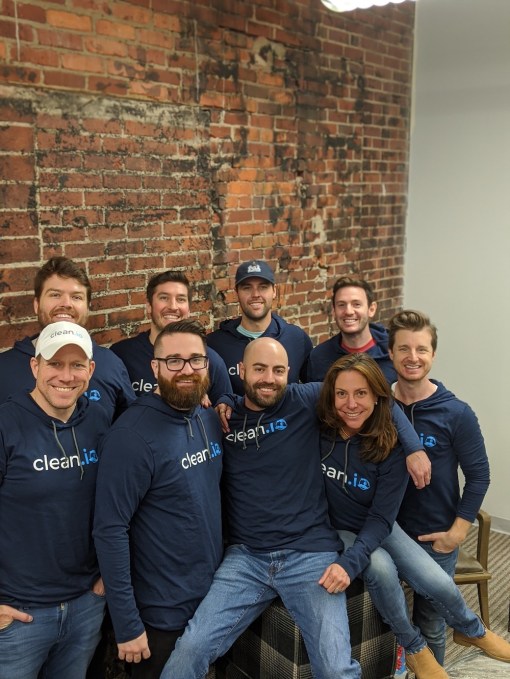
Clean.io team

Image Credits: Clean.io

Clean.io has now raised a total of $7.5 million. The Series A was led by Tribeca Venture Partners, with participation from Real Ventures, Inner Loop Capital, and Grit Capital Partners.

Gillis said he’d initially planned to fundraise at the end of February, but he had to put those plans on hold due to COVID-19. He ended up doing all his pitching via Zoom (“I saw more than my fair share of small NY apartments”) and he praised Tribeca’s Chip Meakem (who previous investments include AppNexus) as “a world class partner.”

Of course, the pandemic’s impact on digital advertising goes far beyond pausing Gillis’ fundraising process. And when it comes to malicious ads, he said that with the cost of digital advertising declining precipitously in late March, “bad actors capitalized on this opportunity.”

“We saw a pretty constant surge in threat levels from mid-March until early May,” Gillis continued. “Demand for our solutions have remained strong due to the increased level of attacks brought on by the pandemic. Now more than ever, publisher need to protect their user experience and their revenue.”

07 Aug 2020

Do’s and Don’ts of Working with the Press – Sign up to attend

If you’re exhibiting in Digital Startup Alley during Disrupt 2020 — or you plan to — do not miss this opportunity to sharpen your media skills. The first of our three-part interactive webinar series takes place on August 12th with, The Dos and Don’ts of Working with the Press.

Pro tip: Our August webinar series is open only to folks exhibiting at Disrupt 2020. Don’t miss out — buy a Disrupt Digital Startup Alley Package now and gain entry to all three exclusive webinars. Then get ready to introduce your startup to thousands of global Disrupt 2020 attendees. Talk about opportunity knocking.

Media coverage can make or break a startup, especially in the early stages. Sharing your startup story — the journey, the capabilities, the benefits — in a concise, compelling way draws media interest. And positive media coverage attracts the potential customers and investors that can drive your business forward.

Still, no one’s born knowing this essential skill — it takes time and practice to develop. And no one gives better advice on how to talk to tech media than, well, tech media. Join TechCrunch writers and editors Greg KumparakAnthony Ha and Ingrid Lunden as they divulge tips and best practices when it comes to talking with the press.

You’ll come away with actionable steps to present yourself and your startup in the best possible light. That’ll come in handy while you exhibit in Digital Startup Alley. Hundreds of tech journalists from around the world will be there searching for great stories to tell. Give them something worth writing about.

And don’t forget — this is just the first of three webinars devoted to helping Digital Startup Alley exhibitors wring every ounce of opportunity out of their time at Disrupt. Be sure to add these two webinars to your calendar:

  • August 19COVID-19’s Impact on the Startup World with panelists Nicola Corzine, Executive Director of the Nasdaq Entrepreneurship Center, and Cameron Stanfill, a VC analyst at PitchBook.
  • August 26 — Fundraising and Hiring Best Practices with panelists Sarah Kunst of Cleo Capital and Brett Berson of First Round Capital.

Exhibiting in Digital Startup Alley lets you showcase your incredible startup to a global audience. Buy a Disrupt Digital Startup Alley Package, join the first of three exclusive webinars on August 12th, get comfortable talking to the press and learn how to make the best impression possible.

Is your company interested in sponsoring or exhibiting at Disrupt 2020? Contact our sponsorship sales team by filling out this form.