Year: 2020

30 Jul 2020

New Relic is changing its pricing model to encourage broader monitoring

In the monitoring world, typically when you spin up a new instance, you pay a fee to monitor it. If you are particularly active in any given month, that can result in a hefty bill at the end of the month. That leads to limiting what you choose to monitor to control costs. New Relic wants to change that, and today it announced that it’s moving to a model where customers pay by the user instead with a smaller less costly data component.

The company is also simplifying its product set with the goal of encouraging customers to instrument everything instead of deciding what to monitor and what to leave out to control cost. “What we’re announcing is a completely reimagined platform. We’re simplifying our products from 11 to three, and we eliminate those barriers to standardizing on a single source of truth,” New Relic founder and CEO Lew Cirne told TechCrunch.

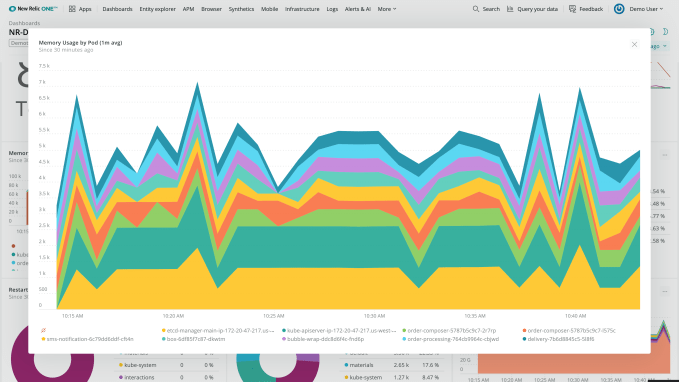
The way the company can afford to make this switch is by exposing the underlying telemetry database that it created to run its own products. By taking advantage of this database to track all of your APM, tracing and metric data all in one place, Cirne says they can control costs much better and pass those savings onto customers, whose bills should be much smaller based on a this new pricing model, he said.

“Prior to this, there has not been any technology that’s good at gathering all of those data types into a single database, what we would call a telemetry database. And we actually created one ourselves and it’s the backbone of all of our products. [Up until now], we haven’t really exposed it to our customers, so that they can put all their data into it,” he said.

New Relic Telemetry Data. Image: New Relic

The company is distilling the product set into three main categories. The first is the Telemetry Data Platform, which offers a single way to gather any events, logs or traces, whether from their agents or someone else’s or even open source like Prometheus.

The second product is called Full-stack Observability, which includes all of their previous products, which were sold separately such as APM, mobility, infrastructure and logging. Finally they are offering an intelligence layer called New Relic AI.

Cirne says by simplifying the product set and changing the way they bill, it will save customers money through the efficiencies they have uncovered. In practice he says, pricing will consist of a combination of users and data, but he believes their approach will result in much lower bills and more cost certainty for customers.

“It’ll vary by customer so this is just a rough estimate but imagine that the typical New Relic bill under this model will be a 70% per user charge and 30% data charge, roughly, but so if that’s the case, and if you look at our competitors 100% of the bill is data,” he said.

The new approach is available starting today. Companies can try it with 100 GB single user account.

30 Jul 2020

Six leading investors assess the remote-work startup landscape

The COVID-19 pandemic has shaken up the startup world, slowing some high-growth unicorns and promoting others onto the coveted list. In the earlier-stages of startup land, the same patterns of acceleration and braking can be found.

TechCrunch wanted to dig more deeply into the cohort of startups that are seeing acceleration, so we put together a list of investors who have put money to work in startups building remote-work tooling and sent them a raft of questions. We wanted to better understand if SaaS fatigue is real for the startups in question, where open-space still exists in the remote-work world and how the economics of the companies compare to other software shops.

And, yes, we did ask about valuations and intra-venture competition for the rounds that we keep hearing about. 

Not every deal from these venture capitalists fits the remote-work mold, but they and their firms and funds are involved with enough in our view to give them good perspective about what’s going on in the space as the world continues to get into shape regarding remote work. This week’s news from Google makes it plain that tech companies are prepping for a long run of forced remote work, let alone the more hybrid remote-and-office future that seems to be the new conventional expectation.

A lasting COVID-driven remote-work boom is predicated on remote-work services not only meeting the moment, but iterating to support a world that just got pushed into a faster digital transformation than anyone expected. It’s a busy space for good reason.

Here’s who TechCrunch collected notes from this time around:

As usual, we’re going to riff over some key trends and themes that stood out from the group’s collected answers, after which we’ll share their answers at length, edited for clarity and formatting.

Trends, themes

Picking through the answers we received, one thing that stood out was the simple fact that VCs do not believe that the remote-work services and tooling world is solved. In fact, the group was not shy of suggesting areas where there’s still more work to be done.

As you might expect, the issue of security came up a few times. Processes are being digitized across workplace verticals but there’s plenty of room for improvement in bringing security and compliance standards into the remote-work age.

“All the security [and] compliance while being remote is still largely untapped as companies are figuring out the answer,” said Techstars’ Cazalot, to pick one quote from a few.

Other items that popped up include front-of-office collaboration and personal remote process automation. Once basic communications are sorted, the sorts of tools and services that folks-at-a-distance need to work well both alone and and as a team will be varied.

It would be simple to presume that a growing library of apps and services would lead to software (SaaS) fatigue, but our VC group isn’t too worried about the concept.

Then there was the talk concerning economics and fundraising. TechCrunch wanted to know if remote-work startups have better or worse economics than other startups that are delivered along similar channels (SaaS, etc.). Our summary of answers it that their economics are at least as good, with some exceptions that their performance could in fact be better than other groupings of their business-model peers.

Regardless, the wave of companies hunting up new apps and services to fuel and empower their suddenly remote workforce is driving venture interest in the companies welcoming the demand. But notable is that prices, per our collected investors, are not as wild as you might think. Bessemer’s Robinson said prices were not low (“growth equity investors are paying high multiples to get a shot at the category defining [remote work-focused] app companies”), but most others offered some more tempered notes.

Reading their answers, it appears that the further an investor is from the Silicon Valley startup hub, the more reasonable prices look; that was likely true before the pandemic, mind, but that the pattern is holding up during COVID-19 implies that there is available price arbitrage available in the market that persists even into this hot niche.

That’s our first read, but there’s a lot more below.

Minn Kim, investor, Bloomberg Beta

It’s now common knowledge that the digital transformation has been accelerated by COVID-19. What portion of your active portfolio benefits from this change in pace?

Given our firm’s focus on the future of work, we’ve observed that a little over half of our portfolio companies have benefited from the digital transformation accelerated by COVID-19. These have been in areas like digital productivity, security, developer collaboration tools, network infrastructure and online education. This is also because several of our portfolio companies were built with a remote workforce in mind, including coaching platform Sounding Board and team success software Range.  

Will the influx of single-purpose remote-work apps and services lead to app fatigue, and thus a return of more bundled solutions?

For those of us fortunate enough to do most of our work online, the rise of single-purpose remote-work apps reflects the limitations of the tools that we relied on in our previous “work stack.” If there is new bundling, I believe we may see it on platforms we’re newly relying on heavily, such as those offering great ways to run online sprints, remote offsites, and collaborative screen sharing.  

Is there an upper limit to the number of tools that a single company may want to buy? Put another way, is SaaS fatigue real?

An upper limit for tool purchasing is more likely indication that a product is not yet hitting on the most important priority for its customer at the right time or price. SaaS fatigue is real until a solution comes along that addresses the user’s pain point in a clear, compelling and differentiated way. 

As companies begin to go back to the office, do you think they are going to trend back toward their old processes and ditch some of their new remote software?

For knowledge work, I believe some behaviors will naturally default back to old processes, such as in-person water cooler conversations in a shared common space. Even when companies begin to go back to the office, I imagine some people on our teams will continue to be remote, at least for awhile. With this in mind, I foresee an ongoing reliance on tools like Pinpoint, for helping software engineers collaborate more efficiently, and Bonusly, for ongoing encouragement and recognition to team members (in-person and remote).

Are there areas inside of the world of remote tools and services that you think are under-served, places where you’d like to place a bet?

I’d love to see more founders building solutions around lightweight automations (“personal RPA”), software for better decision-making and products that use digital nudges to make unstructured collaboration more effective, such as gesture recognition or sentiment notifications in video conversations. There are also many opportunities to build useful products that use the metadata in our online interactions to help us become more effective teammates. For example, we’re investors in a company called Cultivate that analyzes a team’s digital conversations to help leaders improve and get notified when they’re sending too many emails during evening hours or sharing recognition unevenly across a team. 

Does the availability of ample private capital give remote-tooling startups the flexibility to put off going up-market to the mid-market and enterprise areas?

It’s less about the flexibility of delaying moving up-market. It’s more about the freedom to experiment, iterate and get a product closer to product-market-fit with its earliest representative customer segment. 

Do remote-tooling-focused startups have similar, better or worse economics than the average venture-backed SaaS startup?

This answer will vary depending on what you’re comparing. Because many of the newer remote-tooling-focused companies offer freemium business models to encourage new users, the sustainability of a company comes down to the cost to serve each new customer. We’ve seen that remote-tooling-focused startups that are laser-focused on a specific use case and narrow the pool of potential early customers are often in a better position to understand their unit economics. 

How competitive are remote-work tooling venture rounds now? Are prices out of control?

It feels like the right time to build and raise for a Zoom competitor was at the beginning of 2020. Now, we’re seeing competitive rounds for companies building on top of Zoom or around workflow-specific features, such as event and community management or meeting analytics. That said, prices at the pre-seed and seed stages haven’t changed dramatically since pre-Covid-19. 

Elliott Robinson, growth equity partner, Bessemer

30 Jul 2020

ispace reveals the final design of its lunar lander ahead of its first mission to the Moon in 2022

Japanese new space startup ispace has revealed the final design of its HAKUTO-R lunar lander, a spacecraft set to make its first touchdown on the Moon in 2022 if all goes to the updated plan (it had been set to fly in October 2021 until today). ispace is one of the companies selected by NASA for its Commercial Lunar Payload Services (CLPS) program to deliver various payloads to the Moon ahead of NASA planned human mission to the lunar surface in 2024.

The lander is just a bit taller than a person, at around seven and a half feet tall (it’s basically that wide and long as well). The design includes 4K color cameras that will beam back images throughout the mission, as well as fuel tanks for holding its propellant, solar panels for power generation, landing gear, thrusters and payload compartments for holding up to 66 lbs of experiments and other materials.

ispace also announced adjusted timing for its first lunar lander missions for HAKUTO-R as mentioned. The first will now take place in 2022, using a SpaceX Falcon 9 rocket, and carrying commercial payloads including equipment for conducting scientific experiments. The second is now set for 2023, and will carry a small rover that will survey the Moon and pave the way for potential long-term commercial investment on the lunar surface.

[gallery ids="2024931,2024930,2024929,2024928"]

30 Jul 2020

Buildots raises $16M to bring computer vision to construction management

Buildots, a Tel Aviv and London-based startup that is using computer vision to modernize the construction management industry, today announced that it has raised $16 million in total funding. This includes a $3 million seed round that was previously unreported and a $13 million Series A round, both led by TLV Partners. Other investors include Innogy Ventures, Tidhar Construction Group, Ziv Aviram (co-founder of Mobileye & OrCam), Magma Ventures head Zvika Limon, serial entrepreneurs Benny Schnaider and  Avigdor Willenz, as well as Tidhar chairman Gil Geva.

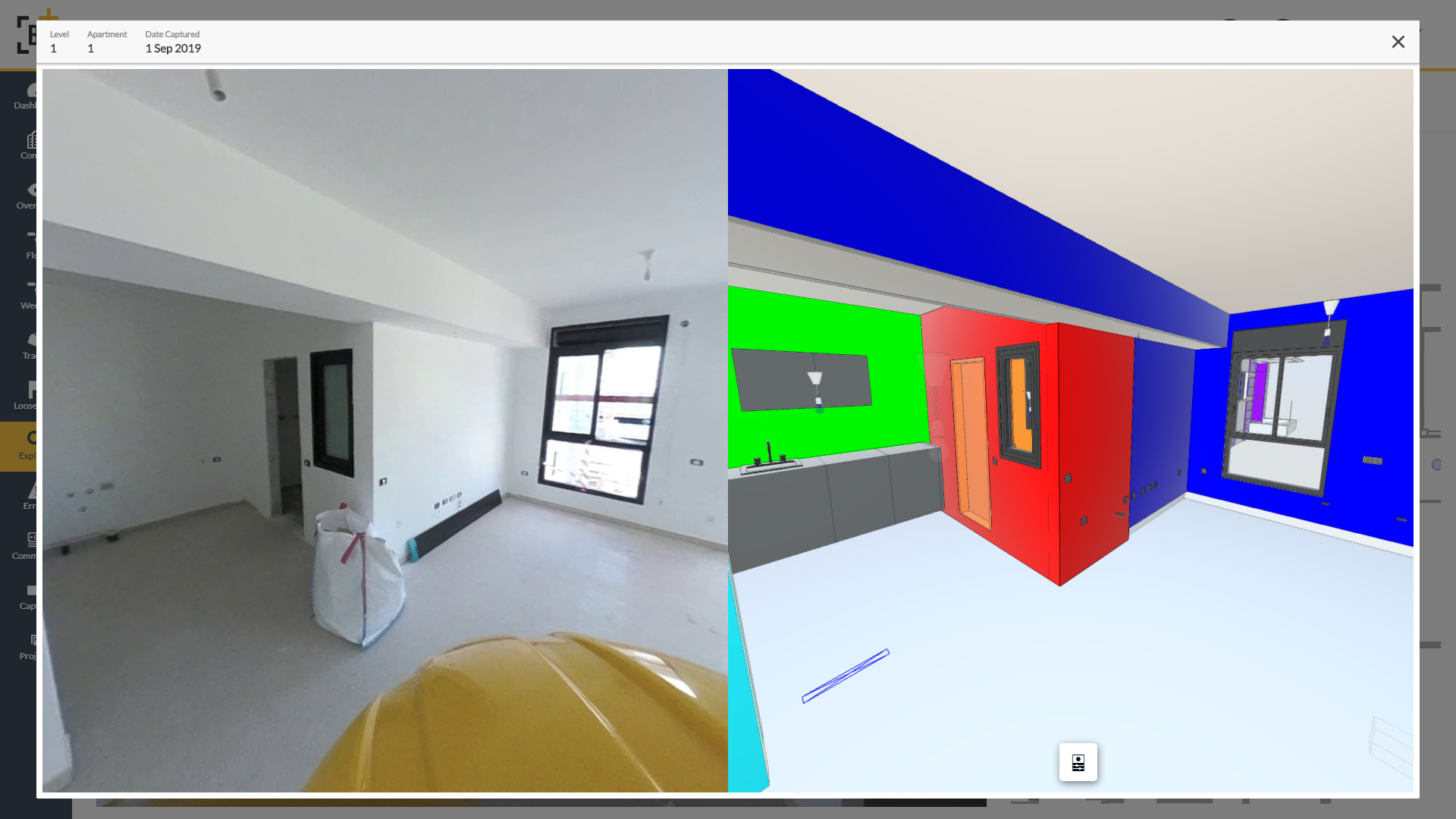
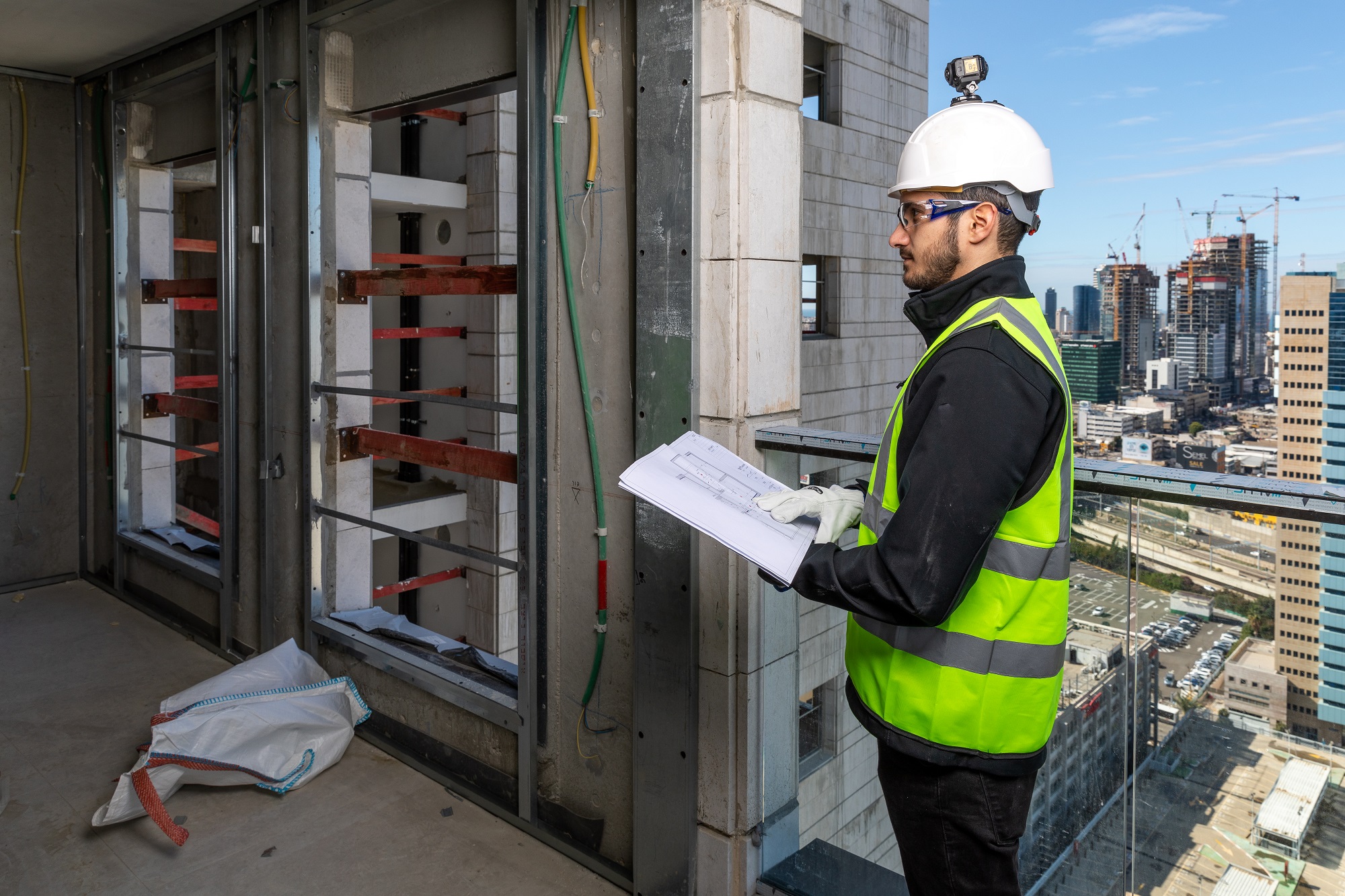
The idea behind Buildots is pretty straightforward. The team is using hardhat-mounted 360-degree cameras to allow project managers at construction sites to get an overview of the state of a project and whether it remains on schedule. The company’s software creates a digital twin of the construction site, using the architectural plans and schedule as its basis, and then uses computer vision to compare what the plans say to the reality that its tools are seeing. With this, Buildots can immediately detect when there’s a power outlet missing in a room or whether there’s a sink that still needs to be installed in a kitchen, for example.

“Buildots have been able to solve a challenge that for many seemed unconquerable, delivering huge potential for changing the way we complete our projects,” said Tidhar’s Geva in a statement. “The combination of an ambitious vision, great team and strong execution abilities quickly led us from being a customer to joining as an investor to take part in their journey.”

The company was co-founded in 2018 by Roy Danon, Aviv Leibovici and Yakir Sundry. Like so many Israeli startups, the founders met during their time in the Israeli Defense Forces, where they graduated from the Talpiot unit.

“At some point, like many of our friends, we had the urge to do something together — to build a company, to start something from scratch,” said Danon, the company’s CEO. “For us, we like getting our hands dirty. We saw most of our friends going into the most standard industries like cloud and cyber and storage and things that obviously people like us feel more comfortable in, but for some reason we had like a bug that said, ‘we want to do something that is a bit harder, that has a bigger impact on the world.’ ”

So the team started looking into how it could bring technology to traditional industries like agriculture, finance and medicine, but then settled upon construction thanks to a chance meeting with a construction company. For the first six months, the team mostly did research in both Israel and London to understand where it could provide value.

Danon argues that the construction industry is essentially a manufacturing industry, but with very outdated control and process management systems that still often relies on Excel to track progress.

Image Credits: Buildots

Construction sites obviously pose their own problems. There’s often no Wi-Fi, for example, so contractors generally still have to upload their videos manually to Buildots’ servers. They are also three dimensional, so the team had to develop systems to understand on what floor a video was taken, for example, and for large indoor spaces, GPS won’t work either.

The teams tells me that before the COVID-19 lockdowns, it was mostly focused on Israel and the U.K., but the pandemic actually accelerated its push into other geographies. It just started work on a large project in Poland and is scheduled to work on another one in Japan next month.

Because the construction industry is very project-driven, sales often start with getting one project manager on board. That project manager also usually owns the budget for the project, so they can often also sign the check, Danon noted. And once that works out, then the general contractor often wants to talk to the company about a larger enterprise deal.

As for the funding, the company’s Series A round came together just before the lockdowns started. The company managed to bring together an interesting mix of investors from both the construction and technology industries.

Now, the plan is to scale the company, which currently has 35 employees, and figure out even more ways to use the data the service collects and make it useful for its users. “We have a long journey to turn all the data we have into supporting all the workflows on a construction site,” said Danon. “There are so many more things to do and so many more roles to support.”

Image Credits: Buildots

30 Jul 2020

NASA successfully launches its Mars 2020 Perseverance rover using an Atlas V rocket

NASA has launched one of its most crucial science missions to date, the Mars 2020 mission that carries its Perseverance robotic rover. This rover, a successor to the Curiosity robotic explorer, is equipped with sensors specifically designed to help it hopefully fund evidence of ancient, microbiotic life on Mars.

Mars 2020 departed from Cape Canaveral in Florida at 7:50 AM EDT (4:50 PM PDT). Perseverance was loaded atop a United Launch Alliance (ULA) Atlas V rocket, which had a good liftoff and deployed its second stage which put the spacecraft into a parking orbit as it readies to depart on its trip towards Mars, which will see it arrive in February 2021.

Once at Mars, the lander vehicle will take Perseverance down to the planet’s surface on February 18, 2021, to a target landing zone found in what’s known as Jezero Crater. This location on Mars was once a lake, long ago when the atmosphere on Mars was quite different than the dry, dusty and cold environment we know today. This has been chosen specifically because it’s a prime spot for finding any evidence of microbiological life that might exist, since it contains one of the best-preserved deposits of a river delta on Mars.

NASA scientists don’t expect to be able to confirm the existence of life on Mars using the instruments on Perseverance, however – they think they can find strong indications that the conditions and materials necessary for life once existed, but the ultimate proof could come from the ambitious Mars sample return mission being planned for 2026. This would involve NASA launching a return rocket to the red planet, which will carry a rocket that can take off from the Mars surface with samples collected by Perseverance on board. That would then meet up with a rover to be launched by the European Space Agency (ESA) which would then make the trip all the way back to Earth for scientists to study.

In addition to its contained, radioactive nuclear battery power source, environment sensors, cameras and a suite of other instruments to help pick up any preserved evidence of ancient life, Perseverance is equipped with microphones. This is the first time that microphones are making the trip to the surface of another world, and it means we could hear what it sounds like on the surface of another world, something we’ve never done before.

Perseverance also carries the Mars Ingenuity helicopter, a small drone designed for first-ever self-powered flight, which is also designed to warm itself to survive the cold Martian night. It is set to hopefully make up to five flights in 30 days, could include color photos – the first ever taken from an aerial vantage point.

This is a great first step for this historic Mars 2020 mission, and now we’ll wait and watch for other significant milestones, including next in around two weeks when the spacecraft fires its engines for its departure from Earth’s orbit and begins the long trip to Mars.

30 Jul 2020

Panasonic boosts energy density, trims cobalt in new 2170 battery cell for Tesla

Panasonic has developed new battery technology for the ‘2170’ lithium-ion cells it produces and supplies to Tesla, a change that improves energy density by 5% and reduces costly cobalt content.

The new, higher-energy dense 2170 cells will be produced by Panasonic at Tesla’s factory in Sparks, Nevada, the company said Thursday. Panasonic is upgrading its battery cell lines with production slated to begin in September. The company operates 13 lines at the factory with a capacity to produce 35 gigawatt hours of batteries each year. All 13 lines will eventually run the new technology, Panasonic Energy North America President Allan Swan said without providing a timeline of when the entire system would be upgraded.

“We’re about to take another leap forward,” Swan said in a recent interview. “It’s kind of exciting from the Panasonic perspective; we’re driving towards cobalt free and we’re driving towards higher energy dense batteries, which gives our customers a choice of how they want utilize that.”

The facility where these new battery cells will be produced is known as Gigafactory 1, a critical component of Tesla’s plan to expand global battery capacity and reduce the cost of electric vehicles. Panasonic has been its most important partner in that project, which based on a recent agreement should last until at least 2023. Panasonic makes the 2170 cells at Gigafactory 1, which Tesla then uses to make battery packs for the Model 3. The 2170 cells are also used in Tesla’s newest vehicle, the Model Y.

Here’s a quick primer. A battery contains two electrodes. There’s an anode (negative) on one side and a cathode (positive) on the other. An electrolyte sits in the middle and acts as the courier that moves ions between the electrodes when charging and discharging.

A cell with greater energy density means that engineers figured out a way to pack more energy in that space. The 5% improvement in energy density in the cells should result in the same gains in Tesla’s battery packs. The upshot: Tesla’s Model 3 and Model Y could see improvements in range. The reduction in cobalt content, a rare chemical element that is expensive and has social and environmental costs, could also help reduce the price of the cells.

Panasonic’s factories in Japan produce the cylindrical lithium-ion “18650” cells, which are used to power Tesla’s Model S and Model X vehicles. Panasonic has already improved 18650 cells, resulting in a reduction in cobalt and improvement in energy density.

Panasonic uses a NCA, or nickel-cobalt-aluminium, cathode chemistry in its battery cells. Panasonic wouldn’t disclose the amount of cobalt used today or get into the details of its technology. However, Celina Mikolajczak, vice president of battery technology at Panasonic Energy of North America, did say that the total amount of cobalt used in Panasonic cylindrical automotive batteries is less than 2% of global demand.

Mikolajczak said that NCA uses less cobalt than NCM, or nickel manganese cobalt oxide. The NCA cathode chemistry has been further developed to reduce cobalt, she added

The company is aiming for zero cobalt in its battery cells, Mikolajczak said. Panasonic has already managed that feat in its R&D lab. The plan is to commercialize cobalt-free batteries in a few years.

30 Jul 2020

Panasonic boosts energy density, trims cobalt in new 2170 battery cell for Tesla

Panasonic has developed new battery technology for the ‘2170’ lithium-ion cells it produces and supplies to Tesla, a change that improves energy density by 5% and reduces costly cobalt content.

The new, higher-energy dense 2170 cells will be produced by Panasonic at Tesla’s factory in Sparks, Nevada, the company said Thursday. Panasonic is upgrading its battery cell lines with production slated to begin in September. The company operates 13 lines at the factory with a capacity to produce 35 gigawatt hours of batteries each year. All 13 lines will eventually run the new technology, Panasonic Energy North America President Allan Swan said without providing a timeline of when the entire system would be upgraded.

“We’re about to take another leap forward,” Swan said in a recent interview. “It’s kind of exciting from the Panasonic perspective; we’re driving towards cobalt free and we’re driving towards higher energy dense batteries, which gives our customers a choice of how they want utilize that.”

The facility where these new battery cells will be produced is known as Gigafactory 1, a critical component of Tesla’s plan to expand global battery capacity and reduce the cost of electric vehicles. Panasonic has been its most important partner in that project, which based on a recent agreement should last until at least 2023. Panasonic makes the 2170 cells at Gigafactory 1, which Tesla then uses to make battery packs for the Model 3. The 2170 cells are also used in Tesla’s newest vehicle, the Model Y.

Here’s a quick primer. A battery contains two electrodes. There’s an anode (negative) on one side and a cathode (positive) on the other. An electrolyte sits in the middle and acts as the courier that moves ions between the electrodes when charging and discharging.

A cell with greater energy density means that engineers figured out a way to pack more energy in that space. The 5% improvement in energy density in the cells should result in the same gains in Tesla’s battery packs. The upshot: Tesla’s Model 3 and Model Y could see improvements in range. The reduction in cobalt content, a rare chemical element that is expensive and has social and environmental costs, could also help reduce the price of the cells.

Panasonic’s factories in Japan produce the cylindrical lithium-ion “18650” cells, which are used to power Tesla’s Model S and Model X vehicles. Panasonic has already improved 18650 cells, resulting in a reduction in cobalt and improvement in energy density.

Panasonic uses a NCA, or nickel-cobalt-aluminium, cathode chemistry in its battery cells. Panasonic wouldn’t disclose the amount of cobalt used today or get into the details of its technology. However, Celina Mikolajczak, vice president of battery technology at Panasonic Energy of North America, did say that the total amount of cobalt used in Panasonic cylindrical automotive batteries is less than 2% of global demand.

Mikolajczak said that NCA uses less cobalt than NCM, or nickel manganese cobalt oxide. The NCA cathode chemistry has been further developed to reduce cobalt, she added

The company is aiming for zero cobalt in its battery cells, Mikolajczak said. Panasonic has already managed that feat in its R&D lab. The plan is to commercialize cobalt-free batteries in a few years.

30 Jul 2020

Watch NASA’s Mars Perseverance rover launch live

NASA is set to launch its newest rover to Mars later this morning. The liftoff is set for 7:50 AM EDT (4:50 AM PDT), with a broadcast beginning at 7:00 AM EDT (4:00 AM PDT). This mission will launch a ULA Atlas V rocket to carry the Perseverance rover to Mars with a trip that will last several months, arriving in February 2021.

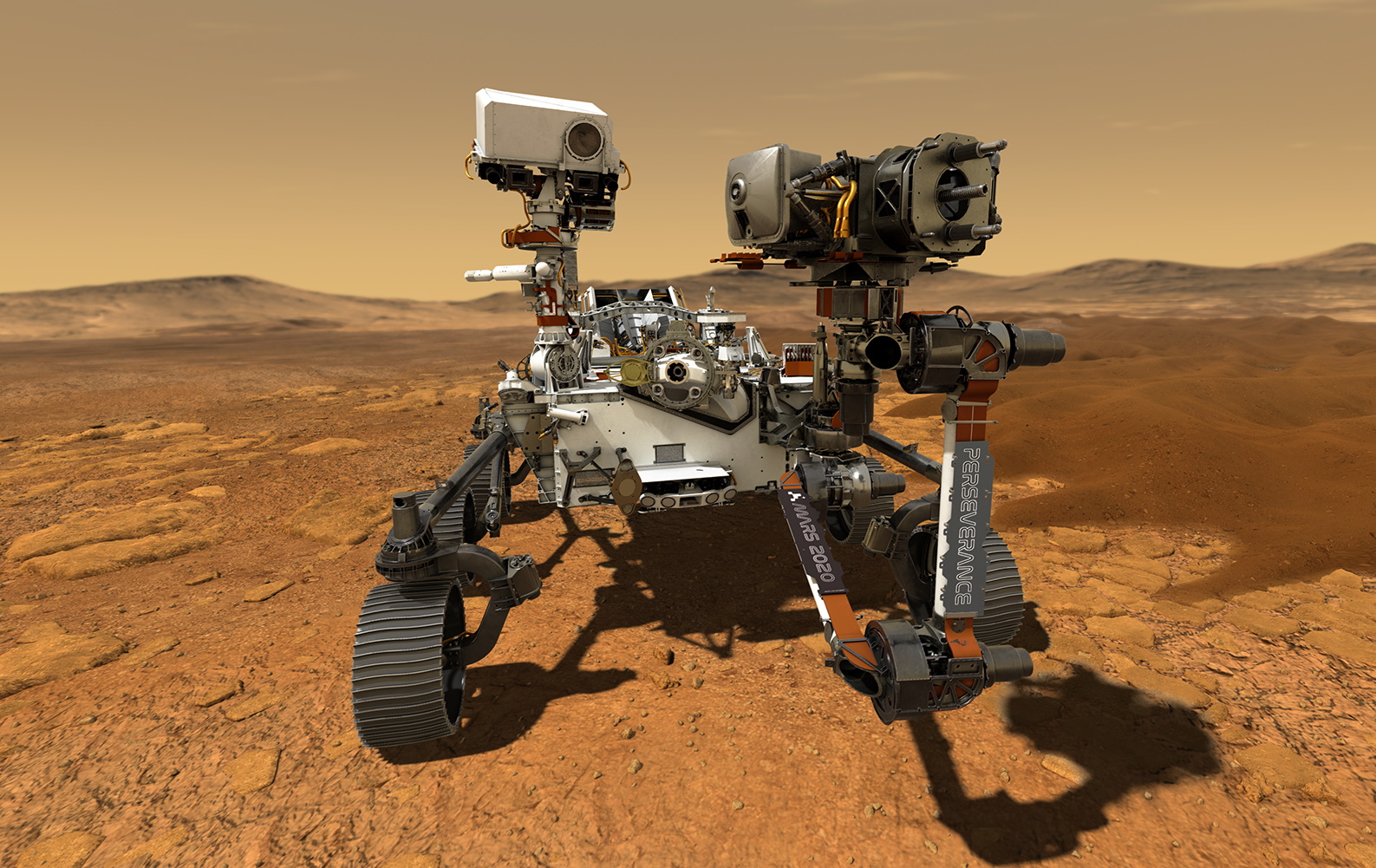
The 2,260-lb rover is equipped with a range of sensors to help it search for signs of past micro organic life on Mars, as well as study the planet’s amtospheric and geological makeup. It also carries with it a helicopter drone called Ingenuity, which will seek to become the first ever vehicle to take-off and fly within the Mars atmosphere.

Perseverance is a big upgrade over prior rovers in a number of ways. It can cover way more ground operating autonomously per day than any of its predecessors, for instance, which should help it conduct more science than ever before. It’s also equipped with 19 cameras to provide a full, detailed and high-quality view of its surroundings back to Earth. The rover is also designed to prime the pump for future human Mars exploration (and long-duration human Moon missions), with experiments on board like MOXIE, an instrument that will create oxygen from the CO2 found in Mars’ atmosphere, and will set the stage for a washing machine-sized version to be developed in future that will essentially act as a self-sustaining Mars power source.

Image Credits: NASA

The Perseverance rover is also unique in that it is preparing for a return trip for some of the samples it collects: The plan is to ultimately combine the efforts of NASA and the European Space Agency to retrieve samples of Martian soil that Perseverance leaves behind in collection canisters using a future spacecraft and retrieval lander, so that they can be studied directly back here on Earth.

30 Jul 2020

Singapore-based Volopay wants to be the “Brex of Southeast Asia”

Volopay founders Rajith Shaji and Rajesh Raikwar

Small- to medium-sized companies that do a lot of international business have to deal with two big headaches: high foreign exchange fees and corporate expense tracking. Volopay, a Singapore-based financial tech startup with offices in Bangalore, wants to help by integrating prepaid multi-currency corporate cards, expense tracking and accounting tools into one free-to-use platform.

Volopay is currently taking part in Y Combinator and is also part of Antler and Nium’s Bolt, two other accelerator programs. It now has about 40 clients in Singapore, mostly tech startups like Dathena, Tookitaki and Appknox, and plans to launch in Indonesia and Australia within the next six months.

The company was founded last year by chief executive officer Rajith Shaji and chief technology officer Rajesh Raikwar, who met while working at MoneySmart, a financial services comparison platform. Before joining MoneySmart, Shaji also held positions at fintech companies like CompareAsiaGroup, MatchMove and BankBazaar.com.

Shaji spent most of his time working in India, but often traveled to offices abroad. Dealing with corporate expenses after every trip was a “nightmare,” Shaji told TechCrunch.

“Each time I went back home, I had to make a list of all my expenses on behalf of the company. First of all, it often ran up to a few thousand dollars and I had to put in all these receipts and everything,” he said.

Shaji did not have access to most of the accounting software used by the companies’ accounting departments and communicating with them across different time zones made the process even more cumbersome and time-consuming.

Volopay addresses those issues by combining prepaid multi-currency corporate cards (available as physical or virtual cards), domestic and international bank transfers, automated payments, and expense and accounting software on one platform. Volopay’s app lets employees ask for more funds for their prepaid cards from managers, who can approve or reject the request instantly.

Shaji said this saves companies money on foreign exchange fees, which are typically about 3% of a transaction on a traditional credit card, and gives them real-time visibility into spending.

Volopay is free to use and earns money through the interchange fees credit cards charge merchants. Interchange fees also enable Volopay to offer perks like cashback deals.

Shaji said the company aspires to be the “Brex of Southeast Asia.” Like Brex, it offers an alternative to traditional financial services for startups and other small- to mid-sized businesses. But it needs to compete with several companies that also want to solve some of the same problems, like high fees for cross-border banking and corporate expense tracking. For example, Transferwise and Revolut both have operations in Singapore, while Neat and Aspire, based in Hong Kong and Singapore respectively, offer online business accounts.

Shaji said Volopay’s integration of multiple services on one platform gives it a competitive edge, adding that a better comparison to his startup is YouTrip, a multi-currency wallet for consumers that is popular in Singapore.

With accounts linked to a prepaid Mastercard, YouTrip users can make payments in 150 currencies without fees and it also supports in-app foreign currency exchanges. When explaining Volopay to potential clients, Shaji often refers to it as “YouTrip for companies.”

“YouTrip is a well-known brand [in Singapore], everyone knows they can load their money on it and save money on foreign exchange,” he said. Volopay gives the same functionality to companies, with accounting software added.

Volopay currently focuses on serving small businesses with 25 or more employees, especially tech startups that are scaling their operations and therefore need to manage increasing numbers of online payments and expenses. Shaji said Volopay has also signed up several marketing agencies, because many work on multiple projects, and therefore have to juggle multiple budgets at once.

30 Jul 2020

Microsoft’s new Flight Simulator is a beautiful work in progress

For the last two weeks, I’ve been flying around the world in a preview of Microsoft’s new Flight Simulator. Without a doubt, it’s the most beautiful flight simulator yet, and it’ll make you want to fly low and slow over your favorite cities because — if you pick the right one — every street and house will be there in more detail than you’ve ever seen in a game. Weather effects, day and night cycles, plane models — it all looks amazing. You can’t start it up and not fawn over the graphics.

But the new Flight Simulator is also still very much a work in progress, too, even just a few weeks before the scheduled launch date on August 18. It’s officially still in beta, so there’s still time to fix at least some of the issues I list below. Because Microsoft and Asobo Studios, which was responsible for the development of the simulator, are using Microsoft’s AI tech in Azure to automatically generate much of the scenery based on Microsoft’s Bing Maps data, you’ll find a lot of weirdness in the world. There are taxiway lights in the middle of runways, giant hangars and crew buses at small private fields, cars randomly driving across airports, giant trees growing everywhere (while palms often look like giant sticks), bridges that are either under water or big blocks of black over a river — and there are a lot of sunken boats, too.

When the system works well, it’s absolutely amazing. Cities like Barcelona, Berlin, San Francisco, Seattle, New York and others that are rendered using Microsoft’s photogrammetry method look great — including and maybe especially at night.

Image Credits: Microsoft

The rendering engine on my i7-9700K with an Nvidia 2070 Super graphics card never let the frame rate drop under 30 frames per second (which is perfectly fine for a flight simulator) and usually hovered well over 40, all with the graphics setting pushed up to the maximum and with a 2K resolution.

When things don’t work, though, the effect is stark because it’s so obvious. Some cities, like Las Vegas, look like they suffered some kind of catastrophe, as if the city was abandoned and nature took over (which in the case of the Vegas Strip doesn’t sound like such a bad thing, to be honest).

Image Credits: TechCrunch

Thankfully, all of this is something that Microsoft and Asobo can fix. They’ll just need to adjust their algorithms, and because a lot of the data is streamed, the updates should be virtually automatic. The fact that they haven’t done so yet is a bit of a surprise.

Image Credits: TechCrunch

Chances are you’ll want to fly over your house the day you get Flight Simulator. If you live in the right city (and the right part of that city), you’ll likely be lucky and actually see your house with its individual texture. But for some cities, including London, for example, the game only shows standard textures, and while Microsoft does a good job at matching the outlines of buildings in cities where it doesn’t do photogrammetry, it’s odd that London or Amsterdam aren’t on that list (though London apparently features a couple of wind turbines in the city center now), while Münster, Germany is.

Once you get to altitude, all of those problems obviously go away (or at least you won’t see them). But given the graphics, you’ll want to spend a lot of time at 2,000 feet or below.

Image Credits: TechCrunch

What really struck me in playing the game in its current state is how those graphical inconsistencies set the standard for the rest of the experience. The team says its focus is 100% on making the simulator as realistic as possible, but then the virtual air traffic control often doesn’t use standard phraseology, for example, or fails to hand you off to the right departure control when you leave a major airport, for example. The airplane models look great and feel pretty close to real (at least for the ones I’ve flown myself), but some currently show the wrong airspeed, for example. Some planes use modern glass cockpits with the Garmin 1000 and G3X, but those still feel severely limited.

But let me be clear here. Despite all of this, even in its beta state, Flight Simulator is a technical marvel and it will only get better over time.

Image Credits: TechCrunch

Let’s walk through the user experience a bit. The install on PC (the Xbox version will come at some point in the future) is a process that downloads a good 90GB so that you can play offline as well. The install process asks you if you are OK with streaming data, too, and that can quickly add up. After reinstalling the game and doing a few flights for screenshots, the game had downloaded about 10GB already — it adds up quickly and is something you should be aware of if you’re on a metered connection.

[gallery ids="2024272,2024274,2024275,2024276,2024277,2024278,2024281"]

Once past the long install, you’ll be greeted by a menu screen that lets you start a new flight, go for one of the landing challenges or other activities the team has set up (they are really proud of their Courchevel scenery) and go through the games’ flight training program.
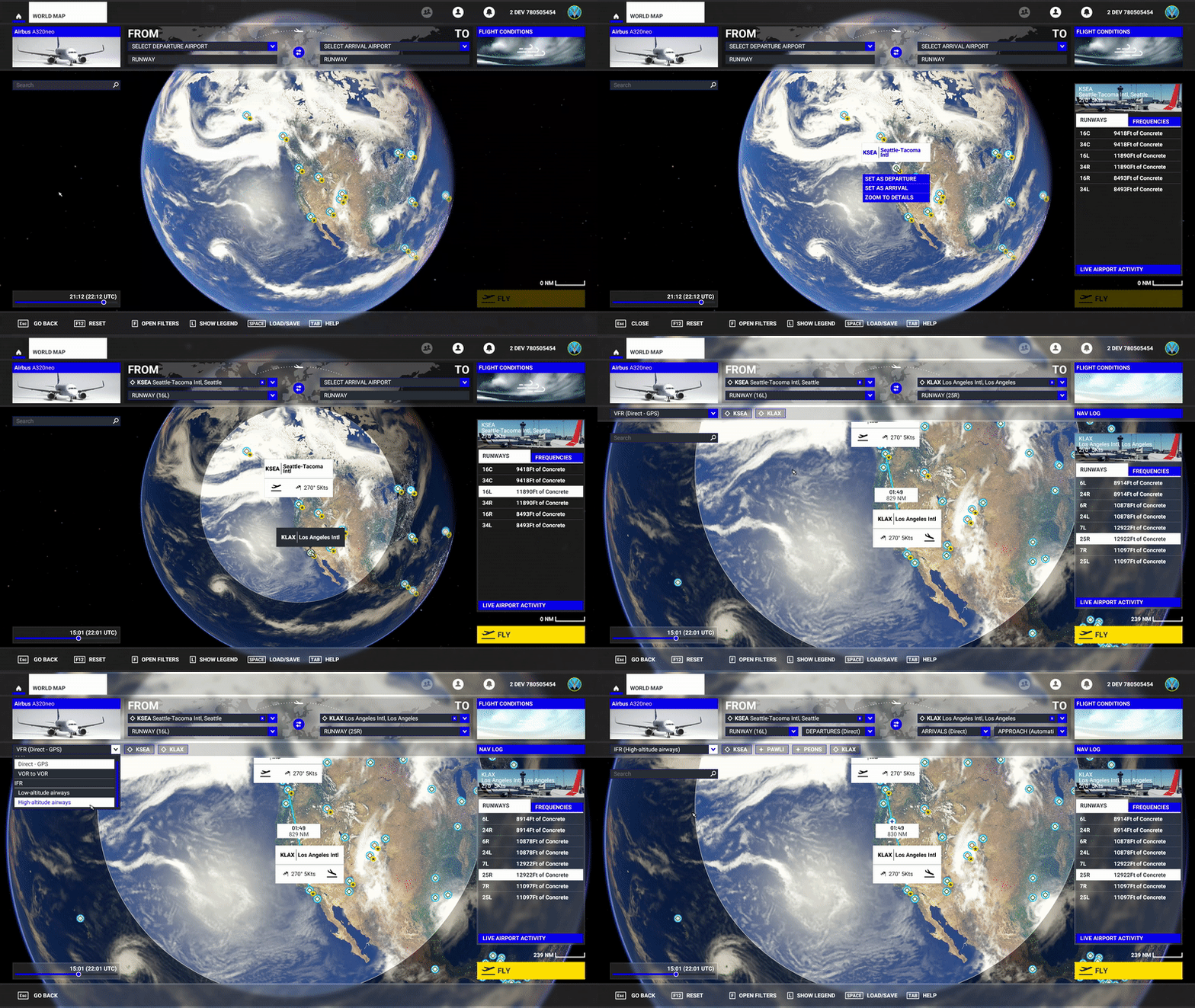
Image Credits: Microsoft

That training section walks you through eight activities that will help you get the basics of flying a Cessna 152. Most take fewer than 10 minutes and you’ll get a bit of a de-brief after, but I’m not sure it’s enough to keep a novice from getting frustrated quickly (while more advanced players will just skip this section altogether anyway).

I mostly spent my time flying the small general aviation planes in the sim, but if you prefer a Boeing 747 or Airbus 320neo, you get that option, too, as well as some turboprops and business jets. I’ll spend some more time with those before the official launch. All of the planes are beautifully detailed inside and out and except for a few bugs, everything works as expected.

To actually start playing, you’ll head for the world map and choose where you want to start your flight. What’s nice here is that you can pick any spot on your map, not just airports. That makes it easy to start flying over a city, for example. As you zoom into the map, you can see airports and landmarks (where the landmarks are either real sights like Germany’s Neuschwanstein Castle or cities that have photogrammetry data). If a town doesn’t have photogrammetry data, it will not appear on the map.

As of now, the flight planning features are pretty basic. For visual flights, you can go direct or VOR to VOR, and that’s it. For IFR flights, you choose low or high-altitude airways. You can’t really adjust any of these, just accept what the simulator gives you. That’s not really how flight planning works (at the very least you would want to take the local weather into account), so it would be nice if you could customize your route a bit more. Microsoft partnered with NavBlue for airspace data, though the built-in maps don’t do much with this data and don’t even show you the vertical boundaries of the airspace you are in.

Image Credits: TechCrunch

It’s always hard to compare the plane models and how they react to the real thing. Best I can tell, at least the single-engine Cessnas that I’m familiar with mostly handle in the same way I would expect them to in reality. Rudder controls feel a bit overly sensitive by default, but that’s relatively easy to adjust. I only played with a HOTAS-style joystick and rudder setup. I wouldn’t recommend playing with a mouse and keyboard, but your mileage may vary.

Live traffic works well, but none of the general aviation traffic around my local airports seems to show up, even though Microsoft partner FlightAware shows it.

As for the real/AI traffic in general, the sim does a pretty good job managing that. In the beta, you won’t really see the liveries of any real airlines yet — at least for the most part — I spotted the occasional United plane in the latest builds. Given some of Microsoft’s own videos, more are coming soon. Except for the built-in models you can fly in the sim, Flight Simulator is still missing a library of other airplane models for AI traffic, though again, I would assume that’s in the works, too.

Image Credits: TechCrunch

We’re three weeks out from launch. I would expect the team to be able to fix many of these issues and we’ll revisit all of them for our final review. My frustration with the current state of the game is that it’s so often so close to perfect that when it falls short of that, it’s especially jarring because it yanks you out of the experience.

Don’t get me wrong, though, flying in FS2020 is already a great experience. Even when there’s no photogrammetry, cities and villages look great once you get over 3,000 feet or so. The weather and cloud simulation — in real time — beats any add-on for today’s flight simulators. Airports still need work, but having cars drive around and flaggers walking around planes that are pushing back help make the world feel more alive. Wind affects the waves on lakes and oceans (and windsocks on airports). This is truly a next-generation flight simulator.

Image Credits: Microsoft

Microsoft and Asobo have to walk a fine line between making Flight Simulator the sim that hardcore fans want and an accessible game that brings in new players. I’ve played every version of Flight Simulator since the 90s, so getting started took exactly zero time. My sense is that new players simply looking for a good time may feel a bit lost at first, despite Microsoft adding landing challenges and other more gamified elements to the sim. In a press briefing, the Asobo team regularly stressed that it aimed for realism over anything else — and I’m perfectly ok with that. We’ll have to see if that translates to being a fun experience for casual players, too.