Year: 2020

30 Jul 2020

Google’s “no choice” screen on Android isn’t working, says Ecosia — querying the EU’s approach to antitrust enforcement

Google alternative Ecosia is on a mission to turn search clicks into trees. The Berlin based not-for-profit reached a major milestone earlier this month, having used ad revenue generated by users of its privacy-sensitive search engine to plant more than 100 million trees across 25 countries worldwide — targeted at biodiversity hotspots.

However these good feels have been hit hard by the coronavirus pandemic. Ecosia has seen its monthly revenues slashed by half since COVID-19 arrived in Europe, with turnover falling from €2.6M in February to just €1.4M in June. It’s worried that its promise of planting a tree every 0.8 seconds is at risk.

It has also suffered a knock to regional visibility as a result of boycotting an auction process that Android OS maker Google has been running throughout this year, as a response to a 2018 Commission antitrust decision that found the tech giant had violated EU competition rules in how it operates the smartphone platform — including via conditions placed on phone makers to pre-load its own services (like Google search) as device defaults.

An auction process now determines which rival search engines appear on a search ‘choice screen’ Google began showing to Android users in Europe in the wake of the Commission decision. Currently, Google offers three paid slots via the auction to non-Google search engines. Android users setting up a new device always see Google’s own search engine as one of the four total options.

The tech giant’s rivals have consistently argued this ‘pay to play’ model is no remedy for its anti-competitive behavior with Android, the world’s dominant smartphone OS. Although most (including DuckDuckGo) felt forced to participate in its auction process from the get-go. Forgoing the most prominent route to the Android search market isn’t exactly a luxury most businesses could afford.

Ecosia, a not-for-profit, was the last major hold out. But now it says it’s been forced to end its boycott in a bid to remain competitive in the region. This means it will participate in the next auction round for the Android choice screen — scheduled for the beginning of Q4. If it wins any per country slots it will appear as a search choice option to those Android users in future, though likely not til next year given the length of the auction process.

It remains highly critical of Google’s pay-to-play model, arguing it’s no remedy for the antitrust violations identified by the Commission. It also laments that EU lawmakers are taking a ‘wait and see’ approach to determining whether Google’s ‘remedy’ is actually restoring competition, given all the evidence to the contrary.

“The main reason why we boycotted the auction is because we think it’s highly unfair and anticompetitive,” says Ecosia CEO Christian Kroll, speaking to TechCrunch via video chat. “Not only do we think that fair competition shouldn’t be sold off in an auction but also the way the auction is designed basically makes sure that only the least interesting options can win.

“Since we have a business model where we use most of our revenues to plant trees we basically can’t really win in an auction model. If you’re already a search engine that’s quite well known… then you have a lot of cannibalization effects through this screen. So we’re basically paying for traffic that we would get for free anyway… So it’s just super unfair and anticompetitive.”

Kroll expresses emphatic surprise that the Commission didn’t immediately reject Google’s auction model for the choice screen — saying it seems as if they’ve learned nothing from the EU’s earlier intervention against Microsoft’s tying of its Internet Explorer browser with its dominant desktop OS, Windows. (In that case the saga ended after Microsoft agreed to implement a ballot screen offering a choice of up to 12 browsers, which paved the road for Google to later gain share with its own Chrome browser.)

For a brief initial period last year Google did offer a fee-less choice screen in Europe, pushing this out to existing Android devices — with search rivals selected based on their market popularity per country (which, in some markets, included Ecosia).

However the tech giant said then that it would be “evolving” its implementation over time. And a few months later an auction model was announced as incoming for new Android devices — with that ‘pay-to-play’ approach kicking off at the start of this year.

Search rivals including DuckDuckGo and Qwant immediately cried foul. Yet the response from the Commission has been to kick the can — with regulators offering platitudes that said they would “closely monitor”. They also claimed to be “committed to a full and effective implementation of the decision”.

However the missing adjective in that statement is ‘fast’. Google rivals would argue that for a remedy to be effective it needs to happen really fast, like now — or, for some of them, the risk really is going out of business. After all, the Commission’s Android antitrust decision (which, yes, Google is appealing) already dates back two full years

“I find it very surprising that the European Commission hasn’t rejected [Google’s auction model] from the start because some of the key principles from what made the choice screen successful in the Microsoft case have just been completely disregarded and been turned around by Google to turn the whole concept of a choice screen to their advantage,” says Kroll. “We’re not even calling it the ‘choice screen’ internally, we just call it the ‘auction screen’. And since we’re now stopping to boycott we call it the ‘no choice screen’.”

“It’s Google’s way to give the impression that there’s free choice but there is no free choice,” he adds. “If Google’s objective here would be to create choice for the user then they would present the most interesting options, which are the search engines with the highest marketshares — so definitely us, DuckDuckGo and maybe some other players as well. But that’s not what they’re trying to do.”

Kroll points out that another German search rival to Google, Cliqz, had to pull the plug on its anti-tracking alternative at the start of this year — meaning there’s now one less homegrown anti-tracking rival to Google in play. And while Ecosia feels it has no choice but to participate in Google’s auction game Kroll says it also can’t know whether or not participating will result in Ecosia overpaying Google for leads that then mean it generates less revenue and can’t plant as many trees… Or, well, any trees if the worst were to happen.

(NB: Kroll was speaking to TechCrunch ahead of signing an NDA that Google requires participants of the auction to sign which puts a legal limit on what they can say about the process once they’re involved — which, in turn, is a problematic element that another European search rival, Qwant, has also complained is unfair… )

“We don’t have any choice left, other than to participate,” adds Kroll. “Because we want to have access to the Android platform. So basically Google has successfully bullied everyone to play to its own rules — and it’s a game where Google is not only the referee but also they get a free ticket and they are also players…

“Somehow Google magically convinced the public but I think also the European Commission that they need to generate revenue in an auction because they have so many costs through the Android development and so on. It is of course true that they have costs… but they are also generating massive profit through the deals that they then make with the device makers and those profits are not at all shared.”

Kroll points out that Google shells out a (reported) $12BN per year to be the default search engine in Safari on Apple’s iOS platform — even as it pays nothing to get in front of the vast majority of mobile searchers’ eyeballs via Android (and does the same with Chrome).

“If they would pay the same amount of money for those platform they would soon be bankrupt,” he argues. “So they are getting all this for free and they are also getting other benefits for free — like having the Play Store preinstalled, like having Google Maps preinstalled, YouTube preinstalled and so on — which are all revenue sources. But they’re not sharing any of those revenue. They just try to outsource all of the costs that they have to their competitors, which is I think very unfair.”

While Alphabet, Google’s parent entity, doesn’t break out Google Play revenue specifically from within a generic “advertising” bucket when it reports its financials, data from SensorTower for the first half of 2020 suggests it generated $17.3BN in Play Store revenue alone over this six-month period, up 21% year-over-year. And Play is just one of the moneyspinners Google derives via ‘free’ Android.

Since the Commission’s antitrust 2018 decision against Android Kroll argues that nothing has changed for search competitors like Ecosia which are trying to offer consumers a more interesting value exchange for their clicks.

“What Google is doing very successfully is they’re just playing on time,” he suggests. “Our competitor, Cliqz, already went bankrupt because of that. So the strategy seems to work really well for Google. And we also can’t afford to lose access to those platforms… I really hope that the European Commission will actually do something about this because it has been done successfully in the Microsoft case and we just need exactly the same.”

Kroll also flags DuckDuckGo’s design suggestions for “a fair choice screen” — which we covered here last year but which Google (and the Commission) have so far simply ignored.

He suspects regulators are waiting to see how the market looks in another year or more. But of course by then it may be too late to save more alternative search engines from a Cliqz-style demise, thereby further strengthening Google’s position. Which would obviously be the opposite of an antitrust remedy.

Commissioner Margrethe Vestager already conceded last year that another of her interventions against the tech giant — the Google AdSense antitrust case — is an example of “enforcement that hasn’t succeeded because it has failed to restore competition”. So if she’s not careful her record on failed remedies could dent her high profile reputation for being an antitrust chief who’s at least willing to take on tech giants. Where competition is concerned, it must be all about outcomes — or what are you even doing as claimed law ‘enforcers’?

“I always fear that the point might come when big corporates are more powerful than our public institutions and I’m wondering if this point isn’t already reached,” adds Kroll, positing that it’s not clear whether the EU — as an economic and political project now facing plenty of its own issues — will have enough resilience to be able to enforce its own competition law in the near future. So really his key point is: If not now, when? (Or, well, how?)

It’s certainly true that there’s a growing disconnect between what the Commission is saying around competition policy and digital markets — where it’s alive to the critique that regulatory interventions need to be able to move much faster if they’re to prevent monopoly power irreversibly tipping these markets (it’s currently consulting on whether to give itself greater powers of intervention) — and its hands-off approach to how to remedy market failure. tl;dr there’s no effective enforcement without effective remedies. So dropping the ball after the fact of a decision really defeats the whole operation.

Vestager clearly recognizes there’s a problem in the digital context — telling the EU parliament last year: “We have to consider remedies that are much more far reaching”. (Albeit, still not committing to having much more far reaching remedies.) Yet in parallel she preaches ‘wait and see’ as her overarching philosophy — a policy ‘push-pull’ which seems to be preventing the unit from even entertaining taking on a more agile, active and iterative role in supporting markets towards actual restoration of competition. At least not before a lengthy consultation exercise which further kicks the can,

If EU lawmakers can’t learn the lessons from their own relatively recent digital antitrust history (Microsoft tying IE to Windows) to effectively enforce what is a pretty straightforwardly similar antitrust case (Google tying search & its other services to Android), you have to question why they think they need new antitrust tools to properly tackle digital monopolies now. Given they don’t seem able to effectively wield the tools they’ve already got.

It does rather look increasingly like the current crop of EU regulators have lost conviction — and/or fallen prey to risk aversion — in the face of platform power moves. (To wit: There are whispers the Commission is preparing to wave through Google’s acquisition of Fitbit, on paper-thin promises from Google, despite major concerns raised about privacy and increased data consolidation — which, if true, would again mean the Commission ignoring its own recent history of naively swallowing other similar tech giant claims.)

“My feeling is, what has happened in the Microsoft case… there was just somebody in the Commission crazy enough to say this is what the decision is and you have to do it… And maybe it just takes those kind of guts. That’s then maybe a political question. Is Vestager willing to really pick those battles?” asks Kroll.

“My feeling is if people really understand the situation then they would care but you actually need to do a little bit of explaining that it’s not good to have a dominant player that is in such an important sector like search, and that is basically shutting down the market for everybody else.”

Asked what his message is for the US lawmakers now actively eyeing antitrust concerns around Google — and indeed much of big tech — Kroll says: “I’m a fan of competition and I also admire Google; I think Google is a very clever company but I think there is a point reached where there’s so much concentration of power that it gets dangerous for society… We’ve been suffering quite a lot from all the dominance that Google has in the various sectors. There are just things that Google are doing that are obviously anticompetitive.”

One specific thing he suggests regulators take a close look at is how much money Google pays Apple to be the default search option on Safari. “It’s paying more money than it can actually afford to win the Safari search volume — that I think is very anticompetitive,” he argues. “They already own two-thirds of the market and they basically buy whatever’s left over so that they can just cement their dominance.

“The regulators should have a very close look at that and disallow Google to participate in any of those bids for default positions in other browsers in the future. I think that would even be beneficial for browsers because in the long term there would finally be competition for those spots again. Currently Google’s just winning them because they’re running out of options and there are not many other search providers left to choose from.”

He also argues they need to make Google repair “some of the damage they’ve done” — i.e. as a result of unfairly gaining marketshare — by enforcing what he calls “a really fair choice screen”; non-paid and based on relevance for users. And by doing so on Android and Chrome devices. 

“I think until a year ago if you visited Google.com with your Safari browser or Firefox browser then Google would recommend to install Chrome. And for me that’s a clear abuse of one dominant position to support another part of your company,” he argues. “Google needs to repair that and that needs to happen very quickly — because otherwise other companies might [go out of business].”

“We’re still doing okay but we have been hit heavily by corona and we have a huge loss in revenue. Other companies might be hit even worse, I don’t know. And we don’t have the same deep pockets that the big players have. So other companies might disappear if nothing’s done soon,” he adds. 

We reached out to Google and the European Commission for comment.

A Google spokesperson pointed us to its FAQ about the auction. In further remarks which they specified could not be directly quoted they claimed an auction is a fair and objective method of determining how to fill available slots, adding that the revenue generated via the auction helps Google continue to invest in developing and maintaining Android.

While a spokeswoman for the Commission told us it has been “discussing” the choice screen mechanism with Google, following what she described as “relevant feedback from the market, in particular in relation to the presentation and mechanics of the choice screen and to the selection mechanism of rival search providers”.

The spokeswoman also reiterated earlier comments, that the Commission is continuing to monitor Google’s choice screen implementation and is “committed to a full and effective implementation of the decision”.

However a source familiar with the matter said EU lawmakers view paid premium placement for a few cents as far superior to what Google was offering rivals before — i.e. no visibility at all — and thus take the view that that something is better than nothing.

30 Jul 2020

Samsung’s second-quarter profit grew 23% year-over-year, thanks to strong chip demand

Samsung Electronics sounded a cautiously optimistic note in its earnings report today. The company is continuing to deal with the fallout of the COVID-19 pandemic, but its memory business was fortified by demand for DRAM chips as data centers adapted to an increase in remote work and education.

Second-quarter operating profit grew 26% from the previous quarter, and 23% year-over-year to 8.15 trillion won (about $6.84 billion), due largely to more sales of DRAM chips. Revenue fell 4% from the previous quarter, and 6% year-over-year, to 53 trillion won, while net profit rose 7% to 5.6 trillion won. Samsung said revenue was impacted by lower sales of smartphones and other devices, but some of that was offset by reduced marketing spending and other cost-cutting measures.

Samsung Electronics will launch new models of its flagship smartphones, including the Galaxy Note and a foldable device, at its online Galaxy Unpacked event on August 5, but will also focus on increasing sales of low- to mid-priced phones, which it expects to drive revenue during the rest of the year.

The company also acknowledged that it faces intense competition from other smartphone makers. In fact, on the same day that Samsung announced its second-quarter earnings, research firm Canalys released a report that said Huawei shipped more smartphones globally than any other vendor in the second-quarter, despite dealing with American government restrictions, displacing Samsung from the top position for the first time.

On the brighter side, many analysts believe that Samsung, along with TSMC, will benefit from Intel’s recent announcement that it will outsource more semiconductor manufacturing.

Remote services drove demand for DRAM chips

The company’s semiconductor division was helped by demand for DRAM chips from data centers that need to fortify their online infrastructure to support remote workers and online education. PC demand also remained solid because of low-end laptop sales.

But sales of chips for mobile devices remained weak as consumers spent less money because of the pandemic. When they did make purchases, they tended to buy low- to mid-end mobile products, which use less powerful chips.

A “one-off gain” boosted display revenue

Samsung Electronic’s display panel business earnings improved quarter-over-quarter thanks to a “one-off gain” that boosted profits from mobile displays. Samsung did not give details about where the gain came form, but Bloomberg reports it was a compensatory payment of about 1.1 trillion won ($924 million) from Apple after the iPhone maker ordered fewer displays than expected.

But overall demand for displays was lower as COVID-19 hit smartphone sales. Operating losses were offset slightly by purchases of monitors by people working from home.

Samsung Electronics said mobile display demand is expected to recover this year as its biggest clients continue to launch new products, despite continuing uncertainties from the pandemic. It also expects orders for mobile and graphic chips to increase as new smartphones and game consoles are released, and anticipates a “full-fledged rebound in earnings from mobile displays” by the end of the year, due largely to sales of mid- to low-end smartphones.

30 Jul 2020

Apple’s App Store commission structure called into question in antitrust hearing

Apple CEO Tim Cook defended the company’s App Store commission structure in his sworn testimony before the House Antitrust Subcommittee on Wednesday. He claimed the majority of the apps pay no commission at all, with others paying either 15 or 30 percent, based on the specifics of their particular situation. He said developers were all treated equally and that Apple wouldn’t raise commissions, because it had to compete for developer interest in its platform as well.

But the documents shared by the House subcommittee as part of their investigation indicate that exceptions to Apple’s rules have been made — notably, with Amazon’s Prime Video app. In addition, Apple may have never raised commissions, but discussions weren’t off the table. It had once even considered raising commissions to 40% in particular situations.

The lawmakers had come to the hearing armed with internal Apple emails and interviews from App Store developers who argued that Apple doesn’t uniformly enforce its rules and plays favorites. But their questioning of Cook over App Store fees, combined with a format that limited execs’ ability to respond at length, initially seemed to reveal little in terms of new information about Apple’s practices.

For instance, when asked directly about how the App Store worked, Cook simply restated the store’s published rules — that is, for app developers who have to pay commissions, they pay only 15 or 30 percent. The current guidelines require 30% for apps selling digital goods or services, with a drop to 15% in year two for subscription apps. The rules also document a carve-out for “reader” apps like audiobook apps, streaming services, news publications, and other competitive products which have the option of forgoing in-app purchases.


Cook also squeezed in a mention about how the vast majority of App Store apps, 84%, pay nothing to Apple in commissions. It’s the remaining 16% that pay, he noted.

And when asked if Apple was the sole gatekeeper as to what gets published on the App Store, Cook agreed that it was — given that the App Store was a “feature of the iPhone, much like the Camera and the chip is.” He clarified that Apple’s control over apps only extended to native software applications, not web apps, but denied Apple treated developers unfairly.

“We treat every developer the same. We have open and transparent rules,” Cook said, in his testimony. “It’s a rigorous process, because we care so deeply about privacy and security and quality. We do look at every app before it goes on,” he added.

But emails in 2016 between Apple SVP Eddy Cue and Amazon CEO Jeff Bezos, shared here on the House Judiciary Committee’s website, indicate that Apple, in fact, appears to have negotiated a special deal with Amazon over its Amazon Prime Video app for iOS and Apple TV.  In an email dated Nov. 2016 — before the 2017 launch of the Prime Video tvOS app —  Apple agreed to take only a 15% revenue share for customers that signed up in the app using Apple’s payment mechanism. (Typically, subscription apps don’t drop from 30% to 15% until year two.)

Apple this April confirmed  it had a special program for Prime Video and a small handful of other apps, which were subscription video entertainment providers. The program allowed those companies to rent or sell movies and TV shows to customers using the payment methods the companies already had on file, as well as more deeply integrate with Siri. But Apple hadn’t said that this special program would include a reduced commission on subscriptions or any other in-app upsells, as these emails confirm were points of discussion.

This wouldn’t be the first time Apple saw its commission structure as having some room to flex.

When Cook was questioned as to whether there was anything that could stop Apple from raising commissions to, say, 50%, the CEO responded that Apple had never increased commissions since day one. He also argued, when asked if anything could stop it from doing so, that competition for developer interest would stop it from raising its cut.

“There is a competition for developers, just like there’s a competition for customers. And so the competition for developers — they write their apps for Android or Windows or Xbox or Playstation,” said Cook. “We have fierce competition on the developer side and the customer side which is essentially — it’s so competitive, I would describe it as a street fight for market share in the smartphone business,” he added.

But in internal emails from 2011, Apple did discuss raising commissions — all the way to 40% for the first year of recurring subscriptions. “I think we may be leaving money on the table if we just asked for about 30% of the first year of sub,” Cue had written at the time.

Of course, Apple didn’t go so far as to actually make that change in the years that passed. But these emails indicate there’s more to Apple’s thinking — and its discussions around the commission structure — than the even playing field Cook testified to.

30 Jul 2020

Amazon’s hardware business doesn’t escape Congressional scrutiny

While much of today’s Congressional grilling into the anticompetitive practices of the big tech giants focused on their core businesses, Amazon’s hardware also came in for close inspection during the hours-long interrogation.

It was a small but significant exchange, because it touched on the breadth of the company’s services and how dominance in one area can mean potentially anti-competitive behavior in another part of the tech giant’s business.

For Maryland’s Representative Jamie Raskin, both Amazon’s best-selling Echo and the Fire TV devices became targets thanks to recent reporting on the company’s business practices and negotiations regarding both devices.

The Echo is the company’s foray into the smart home market that’s widely seen as the next major battleground in consumer technology. It’s one of the most widely adopted pieces of Amazon’s technology and has captured about 60% of the smart home market, according to Raskin.

The congressman hammered Bezos on two points about the Echo. The first was the company’s pricing scheme which had the Echo priced well below the cost to produce the device making it all but impossible for other tech companies to compete.

The Echo’s wide adoption has also led Amazon to engage in other anti-competitive behavior, Raskin asserted — some of which was outlined in previous questioning from Colorado Rep. Ken Buck citing a Wall Street Journal report that Amazon had used its investment unit focused on its Echo product and Alexa voice assistant to copy technology coming from small startup companies.

But beyond its appropriation of another company’s intellectual property, Amazon also used the Echo platform to promote its own products over competitors when customers used its voice services.

“Is Alexa trained to favor Amazon products?” Raskin asked.

Bezos responded that he wasn’t sure if Amazon had specifically trained the Alexa to default to Amazon services or to promote the company’s own brand of products, but that he wouldn’t be surprised. “It wouldn’t surprise me if Alexa sometimes does promote our own products,” the Amazon chief executive said.

Raskin also took Bezos to task for the company’s recent negotiations with WarnerMedia, the production studio, streaming service, and network giant. Specifically, he was concerned with how negotiations around the distribution of WarnerMedia’s HBO Max service on the company’s Fire TV devices included discussions around Amazon’s access to WarnerMedia productions.

“You’re not only asking for financial terms but also for content from Warner Media,” Raskin said. “Is it fair to use your gatekeeper status role in the streaming device market to promote your position as a competitor in the video streaming market with respect to content?”

Bezos responded that the negotiations were “normal commerce,” but Raskin tried to make the case that the negotiations over access to the Fire was yet another way in which the company’s leverage in one market impacted its ability to exercise unfair advantage against a competitor in a different industry. 

You’re using your control over access to people’s living rooms essentially,” Raskin said. “You’re using that to obtain leverage in terms of getting creative content that you want. Are you essentially converting power in one domain into power in another domain where it doesn’t belong?”

The comments and line of inquiry from Raskin were part of an intense bout of questioning that seemed to hone in on the purported topic of the hearings — the anti-competitive and potentially monopolistic power wielded by four of the nation’s largest tech companies. Facebook, Apple and Alphabet were all raked over the Congressional coals in bouts of questioning, but it seemed that the most sustained criticism on anti-competitive behavior was reserved for Bezos and Amazon.

29 Jul 2020

Zuckerberg unconvincingly feigns ignorance of data-sucking VPN scandal

Facebook’s Mark Zuckerberg appeared less than entirely truthful at today’s House Judiciary hearing, regarding last year’s major Onavo controversy, in which his company paid teenagers to use a VPN app that reported detailed data on their internet use. Though he may not have outright lied about it, his answers were evasive and misleading enough to warrant a rushed clarification shortly afterward.

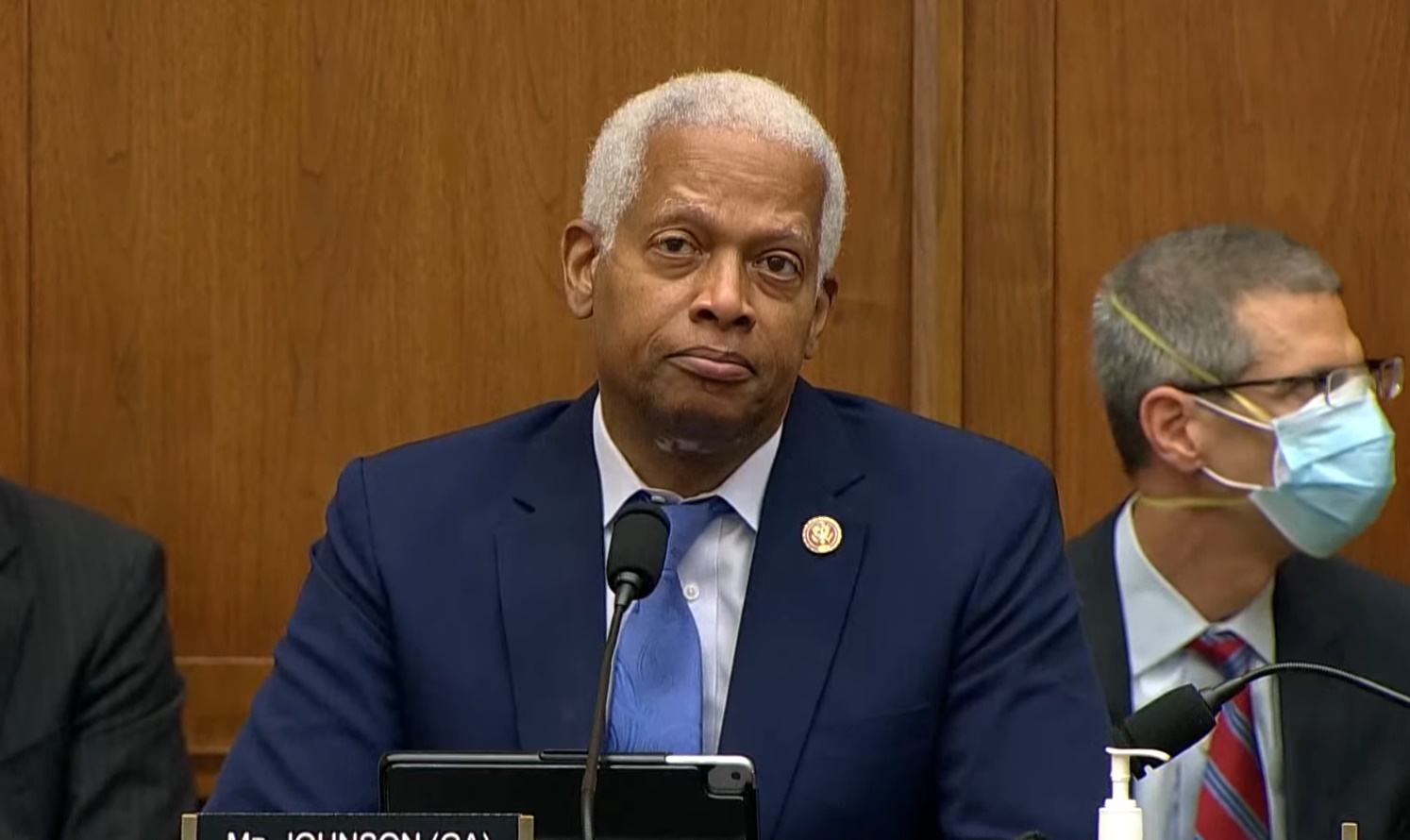
Rep. Hank Johnson (D-GA) was asking Zuckerberg to confirm a series events last year first reported by TechCrunch: A VPN app called Onavo, owned by Facebook, was kicked out of Apple’s App Store for collecting and reporting usage data while purporting to provide a protective service.

Soon afterward, Facebook quietly began paying people — 18 percent of whom were teenagers — to install the “Facebook Research” app, which did much the same thing as Onavo under a different name. TechCrunch reported this and Apple issued a ban before the end of that day; Facebook claimed to have removed it voluntarily, but this was shown not to be true.

Rep. Johnson questioned Zuckerberg along these lines, and the latter repeatedly expressed his unsureness about and lack of familiarity with these issues.

Johnson: When it became public that Facebook was using Onavo to conduct digital surveillance, your company got kicked out of Apple’s App store, isn’t that true?

Zuckerberg: Congressman, I’m not sure I’d characterize it in that way.

Johnson: I mean, Onavo did get kicked out of the app store, isn’t that true?

Zuckerberg: Congressman, we took the app out after Apple changed their policies on VPN apps.

Johnson: And it was because of the use of the surveillance tools.

Zuckerberg: Congressman, I’m not sure the policy was worded that way or that it’s exactly the right characterization of it… [The policies are explained below.]

Johnson: Let me ask you this question, after Onavo was booted out of the app store, you turned to other surveillance tools, such as Facebook Research App, correct?

Zuckerberg: Congressman, in general, yes, we do a broad variety—

Johnson: Isn’t it true, Mr. Zuckerberg, that Facebook paid teenagers to sell their privacy by installing Facebook Research App?

Zuckerberg: Congressman, I’m not familiar with that, but I think it’s a general practice that companies use to, uh, have different surveys and understand data from how people are using different products and what their preferences are.

Johnson: Facebook Research app got thrown out of the App Store too, isn’t that true?

Zuckerberg: Congressman, I’m not familiar with that.

Image Credits: YouTube

Of course, the idea that Zuckerberg was not familiar with events that made headlines, took down Facebook’s internal apps for days, and prompted an angry letter to him from a senator is absurd. (After all, Facebook responded.)

Perhaps intuiting that this particular claim of ignorance was a bridge too far (and perhaps in response to some frantic off-screen action in the CEO’s barnlike virtual testimony HQ), Zuckerberg took the opportunity to backpedal a few minutes later:

In response to Congressman Johnson’s question, before I said that I wasn’t familiar with the Facebook research app when I wasn’t familiar with that name for it. I just want to be clear that I do recall we used an app for research and it’s since been discontinued.

Of course, although Zuckerberg may plausibly have been unsure about the name, it’s not to be believed that he was not familiar with the events of that time, as they were both highly publicized and very costly for Facebook. Naturally he would also have been refreshed on them during preparation for this testimony.

That Zuckerberg is unfamiliar with the exact wording of Apple’s rules is possible, even probable, but it was no secret that the rules were changed basically in response to reports of Facebook’s Onavo shenanigans. Here is what Apple said at the time:

We work hard to protect user privacy and data security throughout the Apple ecosystem. With the latest update to our guidelines, we made it explicitly clear that apps should not collect information about which other apps are installed on a user’s device for the purposes of analytics or advertising/marketing and must make it clear what user data will be collected and how it will be used.

Later, when TechCrunch showed that Facebook had been using an enterprise deployment tool to essentially sideload spyware onto teenagers’ phones, Apple said this:

We designed our Enterprise Developer Program solely for the internal distribution of apps within an organization. Facebook has been using their membership to distribute a data-collecting app to consumers, which is a clear breach of their agreement with Apple. Any developer using their enterprise certificates to distribute apps to consumers will have their certificates revoked, which is what we did in this case to protect our users and their data.

So Facebook was the reason, implicitly first, then later explicitly, for these App Store lockdowns. Rep. Johnson put the whole thing quite plainly at the end of his questions.

Johnson: You tried one thing and then you got caught, made some apologies, then you did it all over again. [long pause]… Isn’t that true?

Zuckerberg: Congressman, I respectfully disagree with that characterization.

You can watch the full hearing here:

29 Jul 2020

Daily Crunch: Tech CEOs face Congress

U.S. tech giants face antitrust scrutiny, Spotify has a mixed quarter and at-home fitness startup Tempo raises funding. This is your Daily Crunch for July 29, 2020.

The big story: Tech CEOs face Congress

Amazon’s Jeff Bezos, Apple’s Tim Cook, Facebook’s Mark Zuckerberg and Google’s Sundar Pichai all appeared remotely this afternoon before the House Judiciary Antitrust Subcommittee.

Different representatives seemed to focused on very different issues: Republicans repeatedly returned to the question of whether the large tech platforms are suppressing conservative viewpoints, while Democrats seemed more concerned about potentially anticompetitive behavior.

For example, citing newly revealed emails sent by Zuckerberg to other Facebook executives, Rep. Jerry Nadler declared, “Facebook saw Instagram as a powerful threat that could siphon business away from Facebook so rather than compete with it, Facebook bought it.” And Rep. Val Demings (like Nadler, a Democrat) suggested that Google was responsible for “effectively destroying anonymity on the internet.”

The tech giants

Spotify users are streaming again, but ad revenues still suffer due to COVID crisis — In its latest earnings report, Spotify said it grew its active monthly users by 29%, reaching 299 million.

Google One now offers free phone backups up to 15GB on Android and iOSGoogle One is Google’s subscription program for buying additional storage and live support, and it’s getting an update.

Samsung reportedly considering a Google deal that would deprioritize Bixby — That’s according to Reuters.

Startups, funding and venture capital

Mirror competitor Tempo raises a $60M Series B — The news comes almost exactly a month after Mirror, one of the San Francisco-based company’s chief competitors, was acquired by fitness brand Lululemon for $500 million.

Remitly raises $85M at a $1.5B valuation, says money transfer business has surged — CEO Matt Oppenheimer told us that customer growth has increased by 200% compared to a year ago.

LA’s consumer goods rental service, Joymode, sells to the NYC retail investment firm, XRC Labs — Joymode’s founder Joe Fernandez will continue on as an advisor to the startup as it moves to pivot its business to focus on retail partnerships.

Advice and analysis from Extra Crunch

How to time your Series A fundraise — At our Early Stage event last week, Emergence Capital’s Jake Saper said that finding the right time to fundraise requires a micro- and macro-level strategy.

Investment in AI startups slips to three-year low — A new report from CB Insights shows historically strong but declining investing rates for AI startups.

Where is voice tech going? — One of the biggest stories in emerging technology is the growth of different types of voice assistants.

(Reminder: Extra Crunch is our subscription membership program, which aims to democratize information about startups. You can sign up here.)

Everything else

Walmart launches its own voice assistant, ‘Ask Sam,’ initially for employee use — The tool allows Walmart employees to look up prices, access store maps, find products, view sales information, check email and more.

The Hummer EV is shaping up to be GM’s electric answer to the Ford Bronco and Tesla Cybertruck — GM just released its first look at the vehicle, which was announced pre-COVID, at the Super Bowl.

The Daily Crunch is TechCrunch’s roundup of our biggest and most important stories. If you’d like to get this delivered to your inbox every day at around 3pm Pacific, you can subscribe here.

29 Jul 2020

Apple CEO Tim Cook questioned over App Store’s removal of rival screen time apps in antitrust hearing

Last year, Apple href="https://techcrunch.com/2018/12/05/apple-puts-third-party-screen-time-apps-on-notice/"> removed a number of screen time and parental control apps from its App Store, shortly after the company had released its own first-party screen time solution with the launch of iOS 12. At today’s antitrust hearing, Apple CEO Tim Cook was questioned about the move, given the anti-competitive implications.

Shortly after Apple debuted its own Screen Time feature set, several third-party app makers suddenly saw their own screen time solutions come under increased App Store review. Many apps also saw their app updates rejected or their apps removed entirely. The impacted developers had used a range of methods to track screen time, as there was no official means to do so. This had included the use of background location, VPNs, and MDM-based solutions, and sometimes a combination of methods.

Apple defended its decision at the time, saying the removals had put users’ privacy and security at risk, given that they required access to a device’s location, app use, email accounts, camera permissions, and more.

But lawmakers questioned Apple’s decision to suddenly seem to care about the user privacy threats coming from these apps — many of which had been on the market for years.

Rep. Lucy McBath (GA-D) began the line of questioning by reading an email from a mother who wrote to Apple about her disappointment over the apps’ removals, saying that Apple’s move was “reducing consumer access to much-needed services to keep children safe and protect their mental health and well-being.” She then asked why Apple had removed apps from competitors shortly after releasing its own screen time solution.

Cook responded much as Apple did last year, by saying the company was concerned about the “privacy and security of kids,” and that the technology the apps used was problematic.

“The technology that was being used at that time was called MDM, and it had the ability to sort of take over the kid’s screen, and a third party could could see it,” Cook said. “So we were worried about their safety.”

That’s perhaps not the most accurate description of how MDM works, as it describes MDM as some sneaky remote control tool. In reality, MDM technology has legitimate uses in the mobile ecosystem and continues to be used today. However, it was designed for enterprise use — like managing a fleet of employee devices, for example, not consumer phones. MDM tools can access a device’s location, control app use, email, and set various permissions, among other things that a corporate entity may want to do as part of their efforts in securing employee devices.

In a way, that’s why it made sense for parents who wanted to similarly control and lockdown their children’s iPhones. Though not a consumer technology, the app developers had seen a hole in the market and had found a way to fill it using the tools at their disposal. That’s how the market works.

Apple’s argument, isn’t wrong, though. The way the apps used MDM was a privacy risk. But rather than banning the apps outright, it should have offered them an alternative. That is, instead of just booting out its competition, it should have also built a developer API for its iOS Screen Time solution in addition to the consumer-facing product.

Such an API could have allowed developers to build apps that could tap into Apple’s own screen time features and parental controls. Apple could have given the apps a deadline to make the transition instead of ending their businesses. This wouldn’t have harmed the developers or their end users, and would have addressed the privacy concerns associated with the third-party apps.

“The timing of the removals seem very coincidental,” McBath pointed out. “If Apple wasn’t attempting to harm competitors in order to help its own app, why did Phil Schiller, who runs the App Store, promote the Screen Time app to customers who complained about the removal of rival parental control apps?,” she asked.

Cook replied that there are today over 30 screen time apps in the App Store so there is “vibrant competition for parental controls out there.”

But McBath noted that some banned apps were allowed back into the App Store six months later, without any significant privacy changes.

“Six month is truly an eternity for small businesses to be shut down. Even worse, if all the while a larger competitor is actually taking away customers,” she said.

Tim Cook wasn’t given a chance to respond further to this line of questioning as the McBath moved on to question Apple’s refusal to allow Random House a way to sell e-books in its own app outside of Apple’s iBooks.

Cook deflected that question, saying “there are many reasons why the app might not initially go through the App store,” noting it could have been a technical problem.

29 Jul 2020

Apple CEO Tim Cook questioned over App Store’s removal of rival screen time apps in antitrust hearing

Last year, Apple href="https://techcrunch.com/2018/12/05/apple-puts-third-party-screen-time-apps-on-notice/"> removed a number of screen time and parental control apps from its App Store, shortly after the company had released its own first-party screen time solution with the launch of iOS 12. At today’s antitrust hearing, Apple CEO Tim Cook was questioned about the move, given the anti-competitive implications.

Shortly after Apple debuted its own Screen Time feature set, several third-party app makers suddenly saw their own screen time solutions come under increased App Store review. Many apps also saw their app updates rejected or their apps removed entirely. The impacted developers had used a range of methods to track screen time, as there was no official means to do so. This had included the use of background location, VPNs, and MDM-based solutions, and sometimes a combination of methods.

Apple defended its decision at the time, saying the removals had put users’ privacy and security at risk, given that they required access to a device’s location, app use, email accounts, camera permissions, and more.

But lawmakers questioned Apple’s decision to suddenly seem to care about the user privacy threats coming from these apps — many of which had been on the market for years.

Rep. Lucy McBath (GA-D) began the line of questioning by reading an email from a mother who wrote to Apple about her disappointment over the apps’ removals, saying that Apple’s move was “reducing consumer access to much-needed services to keep children safe and protect their mental health and well-being.” She then asked why Apple had removed apps from competitors shortly after releasing its own screen time solution.

Cook responded much as Apple did last year, by saying the company was concerned about the “privacy and security of kids,” and that the technology the apps used was problematic.

“The technology that was being used at that time was called MDM, and it had the ability to sort of take over the kid’s screen, and a third party could could see it,” Cook said. “So we were worried about their safety.”

That’s perhaps not the most accurate description of how MDM works, as it describes MDM as some sneaky remote control tool. In reality, MDM technology has legitimate uses in the mobile ecosystem and continues to be used today. However, it was designed for enterprise use — like managing a fleet of employee devices, for example, not consumer phones. MDM tools can access a device’s location, control app use, email, and set various permissions, among other things that a corporate entity may want to do as part of their efforts in securing employee devices.

In a way, that’s why it made sense for parents who wanted to similarly control and lockdown their children’s iPhones. Though not a consumer technology, the app developers had seen a hole in the market and had found a way to fill it using the tools at their disposal. That’s how the market works.

Apple’s argument, isn’t wrong, though. The way the apps used MDM was a privacy risk. But rather than banning the apps outright, it should have offered them an alternative. That is, instead of just booting out its competition, it should have also built a developer API for its iOS Screen Time solution in addition to the consumer-facing product.

Such an API could have allowed developers to build apps that could tap into Apple’s own screen time features and parental controls. Apple could have given the apps a deadline to make the transition instead of ending their businesses. This wouldn’t have harmed the developers or their end users, and would have addressed the privacy concerns associated with the third-party apps.

“The timing of the removals seem very coincidental,” McBath pointed out. “If Apple wasn’t attempting to harm competitors in order to help its own app, why did Phil Schiller, who runs the App Store, promote the Screen Time app to customers who complained about the removal of rival parental control apps?,” she asked.

Cook replied that there are today over 30 screen time apps in the App Store so there is “vibrant competition for parental controls out there.”

But McBath noted that some banned apps were allowed back into the App Store six months later, without any significant privacy changes.

“Six month is truly an eternity for small businesses to be shut down. Even worse, if all the while a larger competitor is actually taking away customers,” she said.

Tim Cook wasn’t given a chance to respond further to this line of questioning as the McBath moved on to question Apple’s refusal to allow Random House a way to sell e-books in its own app outside of Apple’s iBooks.

Cook deflected that question, saying “there are many reasons why the app might not initially go through the App store,” noting it could have been a technical problem.

29 Jul 2020

GM starts construction on the cornerstone of its EV strategy

Steel construction has begun on the nearly 3-million-square-foot factory that will mass produce Ultium battery  packs, the cornerstone of General Motors’ strategy to bring 20 electric vehicles to market by 2023.

The Ultium Cells LLC battery cell manufacturing facility in Lordstown, Ohio is part of a joint venture between GM and LG Chem that was announced in December. At the time, the two companies committed to invest up $2.3 billion into the new joint venture as well as establish a battery cell assembly plant on a greenfield manufacturing site in the Lordstown area of Northeast Ohio that will create more than 1,100 new jobs. The factory will be able produce 30 gigawatts hours of capacity annually. To put that into perspective, Tesla’s factory in Sparks, Nevada, which is part of a partnership with Panasonic, has a 35 GW hour capacity.

GM Ultium Cells factory

Construction at the all-new Ultium Cells LLC battery cell manufacturing facility in Lordstown, Ohio.

The batteries will be used in a broad range of products across its Cadillac, Buick, Chevrolet and GMC brands as well as the Cruise Origin autonomous shuttle that was revealed in January. The Cadillac Lyriq EV flagship and an all-electric GMC Hummer, which will be revealed this fall and go into production in the fourth quarter of 2021, will use the Ultium battery system. GM plans to reveal the Lyriq at a virtual event August 6.

GM broke ground at the factory site in May and has since poured the concrete footings for the facility. Steel construction will continue into fall 2020, according to GM.

GM Ultium Battery Cell Manufacturing Factory

Image Credits: GM

GM has used LG Chem as a lithium-ion and electronics supplier for at least a decade. The companies began working together in 2009. The relationship deepened as GM developed and then launched the Chevy Bolt EV.

This latest joint venture marks a step change for GM and a means to accelerating its EV plans, which could even involve spinning out the operations into a separate company.

“We are open to looking at and evaluate anything that we think is going to drive long-term shareholder value, so I would say nothing is off the table,” GM Chairman and CEO Mary Barra said during an earnings call Wednesday.

GM reported Wednesday a $758 million loss in the second quarter on $16.78 billion in revenue. The loss and the 53% year-over-year drop in revenue was caused mostly by COVID-19-related factory shutdowns in the U.S. However, the results still managed to beat analysts expectations.

29 Jul 2020

Connected audio was a bad choice

The past week, I’ve spent ample time looking to revamp my home audio setup. I think my only qualification is that my next setup is as dumb as possible.

In the past five years, my setup has gone from a fairly middling wired 2.1 speaker setup to a confusing menagerie of connected smart speakers. I’ve likely gone through at least five Google Assistant-laden speakers including the Google Home Max, a couple connected Sonos speakers, three HomePods, a Facebook Portal+, non-smart speakers connected via Chromecast Audio and god knows how many Alexa-integrated speakers. All in all, I can firmly say I have made some very bad audio decisions in my recent life.

I’ve had a lot of frustrations with my current setup, but they’re really issues with the entire smart speaker market:

  • Good audio hardware should be timeless, and devices that need frequent firmware updates, have proprietary support for a certain operating system or can lose integration support quickly fly in the face of that.
  • Home entertainment integrations with these speakers are just awful, even among products built by the same company. Repeatedly connecting my stereo HomePods to my Apple TV has been maddening.
  • Smart assistants are much less ambitious than they were years ago and the ceiling of innovation already seems to have come down significantly. Third party integrations have sunk far below expectations and it’s pretty uncertain that these voice interfaces have as bright a future as these tech companies once hoped.
  • These assistants were once going to be the operating systems of the home, but the smart home experiment largely feels like a failure and it’s growing clearer that the dream of a Jarvis-like system that plays nicely with all of your internet-connected devices was totally naive.

All in all, it’s time for me to move on and invest some cash in a setup that will sound good for decades.

Now, many of you will say that my true error was a lack of commitment to one ecosystem, which is undoubtedly spot-on and yet I don’t think any of the players had precisely what I wanted hence the wildly piecemeal approach. Dumping more funds into a robust Sonos setup probably would have been the wisest commitment, but I have commitment issues and I think part of it was a desire to see what was out there.

In quarantine, I’ve gotten ample time to spend with my home audio system and the destructive weave on non-compatible hardware is all too much. I don’t want my speakers to have their own operating systems or for one speaker to play nice with my music streaming platform of choice, but not the other. I want something that can last.

After doing half-commits to several ecosystems, I feel I’ve seen and heard it all and now I’m shopping for some good old-fashioned dumb wired surround sound speakers to integrate with a slightly smarter AV receiver. God willing, I will have strength to not buy whatever cool audio gadgets come out next year and can stay strong. If you have some good tips on a nice setup, please help me out.