Year: 2020

30 Jun 2020

FCC declares Huawei, ZTE ‘national security threats’

The Federal Communication Commission has declared Chinese telecom giants Huawei and ZTE “national security threats,” a move that will formally ban U.S. telecom companies from using federal funds to buy and install Huawei and ZTE equipment.

FCC chairman Ajit Pai said that the “weight of evidence” supported the decision to ban the technology giant. Federal agencies and lawmakers have long claimed that the tech giants are subject to Chinese law, which “obligates them to cooperate with the country’s intelligence services,” Pai said.

“We cannot and will not allow the Chinese Communist Party to exploit network vulnerabilities and compromise our critical communications infrastructure,” the FCC said in a separate statement.

Huawei and ZTE have repeatedly rejected the claims.

The order, published by the FCC on Tuesday, said the designation takes immediate effect, but it’s not immediately clear how the designation changes the status quo.

In November of last year, the FCC announced that companies deemed a national security threat would be ineligible to receive any money from the Universal Service Fund. The $8.5B USF is the FCC’s main way of purchasing and subsidizing equipment and services to improve connectivity across the country.

Huawei and ZTE were “initially designated” as security threats at the time, but the formal process of assigning them that status has taken place in the intervening months, resulting in today’s declaration.

We’ve asked the FCC for comment but did not immediately hear back. In a public statement, Commissioner Geoffrey Starks explained that labeling the companies threats is a start, but that there is a great deal of Huawei and ZTE equipment already in use that needs to be identified and replaced.

“The Commission has taken important steps toward identifying the problematic equipment in our systems, but there is much more to do,” he wrote. “Funding is the missing piece. Congress recognized in the Secure and Trusted Communications Networks Act that many carriers will need support to transition away from untrustworthy equipment, but it still has not appropriated funding for replacements.”

The declaration is the latest move by the FCC to crack down on Chinese technology providers seen as a potential national security threat, fearing that they could be compelled to comply with demands from Chinese intelligence services, putting both Americans and U.S. networks at risk of surveillance or espionage. But it puts telecom companies working to expand their 5G coverage in a bind. Huawei and ZTE are seen as leading the way in 5G, far ahead of their American rivals.

Many of the claims against Huawei and ZTE stem from a 2012 House inquiry, at which the companies were first labeled a potential threat.

Spokespeople for Huawei and ZTE did not immediately comment.

30 Jun 2020

Summit raises $2.2B across two megafunds, and pulls in ex-CEO of SoulCycle as newest investor

While there has been a wealth of bad news the past few months in the venture capital world as firms take account of the changing macroeconomic conditions in the wake of COVID-19, that hasn’t stopped some top investment firms from continuing to raise huge piles of capital and getting bolder in their investment theses.

Case in point: Summit Partners, a venerable investor at the growth stage for startups and focused on the ecosystems in North America and Europe, has raised two new megafunds. The firm also announced that it has hired Melanie Whelan, who formerly was CEO of SoulCycle, as a new managing director. She is currently an EIR at the firm.

Summit raised a $1 billion growth equity fund focused on North American startups, and also raised a €1.1 billion ($1.24 billion) fund focused on European startups. The firm said that the funds will target growth equity-style investments with a check size of between roughy $10 million and $60 million for North American startups, and a bit larger for their European counterparts.

In recent months, the firm has invested in companies like cyber security platform RiskIQ, workflow automation startup AppWay, interaction management service Podium, consumer bedding brand Brooklinen, and cyber-skills platform Immersive Labs, according to Crunchbase.

While Summit is traditionally known for its enterprise investments, it appears the firm wants to double down on consumer with the hiring of Whelan. She will focus on “high-growth consumer and technology-enabled services,” according to Summit.

Whelan had a long career at SoulCycle, joining the company as COO in 2012 and then took the CEO title in 2015. There, she drove market expansion and worked to ready the somewhat cultish fitness brand for the public markets, with an IPO that was scheduled in mid-2018. That IPO ended up being pulled by the company, which faced headwinds from Peloton and other fitness upstarts, and Whelan left the CEO job near the end of 2019 (which, given the near complete shutdown of in-person fitness studios, seems incredibly fortuitously timed). She officially joined Summit as an EIR in February, right before the spread of the novel coronavirus slowed down much of the venture world.

The firm today has 100 people scattered across its myriad of offices, and has $21 billion under management.

30 Jun 2020

Tune-up your pitch tomorrow at Pitchers & Pitches

Ready to breathe some life into your 60-second pitch? Turn your internet dial to our next Pitchers & Pitches webinar tomorrow, July 1 at 4 p.m. ET / 1 p.m. PT. It’s free for everyone, and all you need to do is register right here.

Tune in as five early-stage startup founders (all of whom you’ll find exhibiting in Digital Startup Alley during Disrupt 2020) step to the mound to bring the heat. Translation: They’ll deliver their best 60-second elevator pitch to a panel of judges — and benefit from real-time critique, feedback and advice from industry experts who know how to craft a winning pitch.

Judging this session we have pitch-savvy TechCrunch editors, Jordan Crook and Kirsten Korosec, plus two VCs — Matthew Hartman of Betaworks Ventures and Dayna Grayson of Construct Capital. Yes, essential feedback from startup investors — the very people founders need to impress most.

Not only will the five pitching founders come away with a stronger presentation, one of them will walk away with a pretty cool prize. The viewing audience (that would be you) decides who wins a consulting session with cela, a company that connects early-stage startups to accelerators and incubators that can help scale their businesses.

Note: Only companies that purchase a Disrupt Digital Startup Alley Package are eligible to pitch. You’ll still learn valuable tips and strategies — even if you’re not facing the judges. Watch, listen, and apply the expert tips and strategies to power up your pitch — your handshake to the startup world. This is your chance to make it firm and impressive.

Here are the startups we randomly selected to compete tomorrow:

Cognidna – provides DNA insights on cognitive traits, helping parents make more informed educational decisions for their children.

Munch – a digital platform for restaurants designed to create better customer experiences.

Flexlane – an online wholesale marketplace that transforms the way local retailers in Asia buy for their stores.

Bitsensing – aims to design future safety in the era of Autonomous Vehicles.

Evertracker – a neutral platform that provides end-to-end visibility and predictability along global supply chains on an item-level.

Don’t miss this masterclass. Register for Pitches & Pitchers and tune in tomorrow, July 1 at 4 p.m. ET / 1 p.m. PT. If you want a shot at pitching during the Pitchers & Pitches session scheduled on July 22, be sure to buy your Disrupt Digital Startup Alley Package first to be eligible.

Is your company interested in sponsoring or exhibiting at Disrupt 2020? Contact our sponsorship sales team by filling out this form.

30 Jun 2020

E-scooter firms get the green light to start trials of up to one year on UK streets

In light of COVID-19 and social distancing regulations, the UK has been working on making it easier for people to get from point A to B in cities without resorting to buses and trains or bringing more cars to congested roads, and today that strategy took an interesting leap forward.

The country’s Department for Transportation today announced that it would start allowing e-scooters, by way of e-scooter rental companies, to legally operate across the country initially in a trial phase starting no later than August. Some 50 councils and other authorities, including across London and other major cities, are working on putting together trials that could run for as long as 12 months.

The regulations come into force on July 4, the DfT said with the first trials expected to begin a week later.

“As we emerge from lockdown, we have a unique opportunity in transport to build back in a greener, more sustainable way that could lead to cleaner air and healthier communities across Great Britain,” said Transport Minister Rachel Maclean in a statement. “E-scooters may offer the potential for convenient, clean and cost-effective travel that may also help ease the burden on the transport network, provide another green alternative to get around and allow for social distancing. The trials will allow us to test whether they do these things.”

There are some restrictions in place: e-scooters will not be able to go faster than 15 miles per hour, and they will only be able to use roads and cycle lanes, not sidewalks or other areas reserved for pedestrians. Users will need a drivers license (full or provisional). The scooters themselves will not need to be registered as vehicles but will need insurance. And as with bicycles, users will be recommended — but not required — to wear helmets.

It seems that privately-owned e-scooters will not be included in the rule relaxation, but it’s not clear what steps regulators will take — if any — to avoid the cluttering that we have seen in some cities overrun with too many dock-less scooters crowding sidewalks.

The list of e-scooter hopefuls is long. From the word go, those that are looking to operate in the UK include Bird, Bolt (the ridesharing startup out of Estonia), Tier, Neuron Mobility, Lime, Voi, and Zipp Mobility.

We’re contacting the DfT with our questions and will update this post as we learn more.

Electric scooters will now join the ranks of other shared transportation options that include bikes and e-bikes, as a complement to mass transit and of course walking or using your own non-autonomotive wheels as an alternative to using cars. E-scooters have been seen both as an alternative for short distances (between 1 and 5 miles) but also as a last-mile solution in combination with 

The news today lifts restrictions that had previously been in place that classified e-scooters as motor vehicles and therefore required the e-scooters to be licensed and taxed, and for operators to have licenses to use them.

Those rules also meant that the e-scooters were illegal to use on sidewalks, with the only exception to all that being legal usage across select (and very limited) campuses on private land.

The moves comes on the heels of a consultation in March to pilot e-scooter use in three regions of the UK, along with a number of other initiatives including e-cargo carriers and using drones to transport medical supplies — the aim being to explore in quick order a number of new technologies to expand transportation options available to consumers, as well as essential businesses and the people who work in them.

The bigger trend has seen other cities also looking to relax rules to improve transportation options to people who wish to socially distance but still need to get around urban areas in ways that are quicker than walking. New York City is also expected to unveil its own roadmap for e-scooter pilots in the near future.

The news made official today had been something of a badly-kept secret, specifically among transportation startups whose businesses have been in a holding pattern waiting for the regulator to ease up on restrictions that had been in place.

Just about all of those startups have been sending out alerts to journalists for over a week now with comments on government’s widely-expected announcements.

“We welcome the DfT’s announcement and are excited to be one step closer to the starting the e-scooter trials,” said Zachary Wang, CEO of Neuron Mobility, in a statement. “We are already in discussions with quite a few councils, as no two towns or cities are the same we look forward to partnering with them to safely introduce e-scooters in a way that best suits their individual needs. COVID-19 has led to a fundamental rethink of the way we travel and e-scooters have the potential to radically improve how we get around our towns and cities. We are delighted that people in the UK will soon be able to benefit from shared e-scooters, they will allow people to continue social distancing while also providing a more efficient travel option than gas-guzzling alternatives.”

Some have been gearing up for the green light for some time.

“We welcome today’s announcement from the Government as it looks to get cities moving again safely and in an environmentally friendly way,” said Roger Hassan, COO of TIER Mobility, in a statement. “We already have more than 1,000 of our industry leading scooters in our UK warehouse, ready to be deployed and we will be shipping more over very soon. Everyone at TIER is looking forward to working with the Government and with local authorities to make e-scooters in the UK a huge success story.”

While there had been restrictions in place before now, I should point out that they were often badly enforced: in London there have always been some private e-scooter owners zooming around alongside bikes and cars on the roads, and I’ve even stopped at red lights on my bike, with an e-scooter on one side of me, and a policeman on the other, and not a word gets exchanged, just a simple shrug of “what can you do?” So decriminalising, as it has done in other industries, will hopefully mean better oversight, alongside better choice for users.


30 Jun 2020

Microsoft to distribute $20M in grants to non-profits, offers free skills training via LinkedIn

The COVID-19 global health pandemic has had an almost immeasurable negative impact on the wider economy. Specifically in the job market, there have been millions of job losses, and in the US alone unemployment numbers like these have not been seen since the Great Depression. Now, tech companies are slowly stepping up to try to address the crisis, and the latest development on that front comes from Microsoft.

The company today announced a wide-ranging, global portal for free skills training for people who are out of work. And alongside that, Microsoft said it plans to disperse $20 million in grants to non-profit organizations, both which are working to help those who have lost jobs due to COVID-19 and subsequent shifts in the economy, and with a specific emphasis on those that are working with groups that are underrepresented in the tech world.

The move comes as we are seeing other tech companies try to make their own efforts to leverage their platforms to provide their own versions of relief efforts connected to COVID-19. Google has built special portals to keep people informed on local, national and global progress of COVID-19 and related news. Facebook has also built an information portal and has also created an avenue for people to offer volunteering help to those in need specifically in their community.

The money that Microsoft will be granting to non-profits is aimed at a wide swathe of organizations, not just those focused on helping groups learn new skills, but just those helping specific groups. Those that Microsoft already works with include Trust for the Americas, Fondazione Mundo Digitale in Italy, the Nasscom Foundation in India,  Tech4Dev across Africa, NPower in Canada, and the National Urban League aimed at long-term unemployed and African Americans, and Skillful.

The education and training news, meanwhile, is interesting not only because of the push that Microsoft is trying to make by leveraging the assets that it already has, but that it’s doing so in tandem with LinkedIn, the social network and professional education platform it acquired for $26.2 billion in 2016. Even though they are the same company, it’s often the case that you see less collaboration between the two than you might think would exist, but this seems to be a shift from that position.

Microsoft notes that using data from LinkedIn, it identified 10 specific tech jobs that are in particular demand right now and will continue to be in demand, offer a livable wage, and require skills that can be learned online if you don’t already have them. They are software developer, sales rep, project manager, IT admin, customer services rep, digital marketer, IT support, data analyst, financial analyst and graphic designer.

LinkedIn has designed “Learning Paths” that it offers through its online education portal for these jobs, and these will now be available to everyone free to use, globally, until the end of March 2021, in English, French, Spanish and German, with content getting updated in the tracks as needed. Alongside these, Microsoft Learn is offering supplemental technical content to these Paths, and Microsoft is also making GitHub’s Learning Lab free to practice if you’re learning software developer skills.

Alongside these, Microsoft is also giving a push to so-called “soft skills” that complement hunting for a job at the moment, including tips on looking for a job right now, learning “critical” soft skills, more on the concept and meaning of digital transformation, and a learning track focused on diversity, inclusion and allyship.

You can look at a list of all the content available and ultimately relevant jobs on LinkedIn’s purpose-built portal.

In addition to the online learning efforts, LinkedIn is also launching a separate track for those who want to either leverage LinkedIn to get spotted more easily for job opportunities, and for those who want to volunteer to help others, to offer advice and mentorship for those looking for work, or get more training to get through interviews. For those who want to signal their job seeking, they can now add an “OpenToWork” frame on their profile pictures, which links to a separate banner that runs under your profile picture which lets people see what kinds of jobs you would like to consider.


The offer to help is not unlike LinkedIn’s efforts at cultivating a mentorship program: the idea is that there are people who have the time and desire to use their skills to help others than just themselves and the companies they work for. As with the mentoring, those interested can indicate what they would like to do — making introductions, resume help or just providing advice.

LinkedIn’s interview preparations, meanwhile, are another step into working closer with Microsoft: LinkedIn’s built a set of tools that uses Microsoft’s AI platform for feedback throughout the training.

30 Jun 2020

R&D tax credits are due July 15th. Neo.tax wants to help startups apply, and raised $3M to do it

All founders love “free” money, but with the global pandemic going on, the necessity of free money has taken on a whole new meaning this year. First, there was the scramble to secure PPP loans a few weeks back for U.S.-based startups, and then the second wave of PPP loans when Congress offered a second tranche of funding. Two weeks ago, I covered a company called MainStreet, which is helping startups apply for local economic development credits which cities offer to businesses relocating to their regions.

In the same vein, Neo.tax wants to help startups secure R&D research credits from the federal government — which tend to be fairly easy to acquire for most software-based startups given the current IRS rules for what qualifies as “research.”

The free money is good, but what sets this startup apart is its ambitious vision to bring machine learning to company accounting — making it easier to track expenses and ultimately save on costs.

It’s a vision that has attracted top seed investors to the startup. Neo.tax announced today that it raised $3 million in seed funding from Andy McLoughlin at Uncork Capital and Mike Maples at Floodgate, with Michael Ma at Liquid2 and Deena Shakir at Lux Capital participating. The round closed last week.

Neo.tax was founded by Firas Abuzaid, who spent the past few years focused on a PhD in computer science from Stanford, where he conducted research in machine learning. He’s joined by Ahmad Ibrahim, who most recently was at Intuit launching small business accounting products; Stephen Yarbrough, who was head of tax at Kruse Consulting, a popular consultancy for startups on accounting and financial issues; and Leonardo De La Rocha, who was creative director of Facebook Ads for nearly five years.

Neo.tax’s Stephen Yarbrough, Firas Abuzaid, and Ahmad Ibrahim. Photos via Neo.tax

Or in short, a perfect quad of folks to tackle small business accounting issues.

Neo.tax wants to automate everything about accounting, and that requires careful application of ML techniques to an absolutely byzantine problem. Abuzaid explained that AI is in some ways a perfect fit for these challenges. “There’s a very clearly defined data model, there’s a large set of constraints that are also clearly defined. There’s an obvious objective function, and there’s a finite search space,” he said. “But if you wanted to develop a machine-learning-based solution to automate this, you have to make sure you collect the right data, and you have to make sure that you can handle all of the numerous edge cases that are going to pop up in the 80,000 page U.S. tax code.“

That’s where Neo.tax’s approach comes in. The software product is designed to ingest data about accounting, payroll, and other financial functions within an organization and starts to categorize and pattern match transactions in a bid to take out much of the drudgery of modern-day accounting.

One insight is that rather than creating a single model for all small businesses, Neo.tax tries to match similar businesses with each other, specializing its AI system to the particular client using it. “For example, let’s train a model that can target early-stage startups and then another model that can target Shopify businesses, another one that can target restaurants using Clover, or pizzerias or nail salons, or ice cream parlors,” Abuzaid said. “The idea here is that you can specialize to a particular domain and train a cascade of models that handle these different, individual subdomains that makes it a much more scalable solution.”

While Neo.tax has a big vision long-term to make accounting effortless, it wanted to find a beachhead that would allow it to work with small businesses and start to solve their problems for them. The team eventually settled on the R&D tax credit.

“That data from the R&D credit basically gives us the beginnings of the training data for building tax automation,” Ibrahim explained. “Automating tax vertical-by-vertical basically allows us to be this data layer for small businesses, and you can build lots of really great products and services on top of that data layer.“

So it’s a big long-term vision, with a focused upfront product to get there that launched about two months ago.

For startups that make less than $5 million in revenue (i.e. all early-stage startups), the R&D tax credit offers up to a quarter million dollars per year in refunds from the government for startups who either apply by July 15th (the new tax date this year due to the novel coronavirus) or who apply for an extension.

Neo.tax will take a 5% cut of the tax value generated from its product, which it will only take when the refund is actually received from the government. In this way, the team believes that it is better incentive-aligned with founders and business owners than traditional accounting firms, which charge professional services fees up front and often take a higher percentage of the rebate.

Ibrahim said that the company made about $100,000 in revenue in its first month after launch.

The startup is entering what has become a quickly crowded field led by the likes of Pilot, which has raised tens of millions of dollars from prominent investors to use a human and AI hybrid approach to bookkeeping. Pilot was last valued at $355 million when it announced its round in April 2019, although it has almost certainly raised more funding in the interim.

Ultimately, Neo.tax is betting that a deeper technical infrastructure and a hyper-focus on artificial intelligence will allow it to catchup and compete with both Pilot and incumbent accounting firms, given the speed and ease of accounting and tax preparation when everything is automated.

30 Jun 2020

Google Sheets will soon be able to autocomplete data for you

Google today announced a couple of updates to Google Sheets that will make building spreadsheets and analyzing data in them a little bit easier.

The most interesting feature here, surely, is the upcoming launch of Smart Fill. You can think of it as Smart Compose, the feature that automatically tries to finish your sentences in Gmail, but for spreadsheets. The idea here is that Smart Fill, which will launch later this year, can autocomplete your data for you.

“Say you have a column of full names, but you want to split it into two columns (first and last name, for example),” Google explains in today’s announcement. “As you start typing first names into a column, Sheets will automatically detect the pattern, generate the corresponding formula, and then autocomplete the rest of the column for you.”


That’s a nifty feature, though it’s worth noting that Microsoft has made some major strides in bringing a lot of ML-based features to Excel, too, which can now automatically create new columns based on its understanding of what your spreadsheet is about, for example. It just extended the number of these AI-driven data types to well over 100 at its Build developer conference. The use case here is a bit different, but both companies are using similar techniques to make building spreadsheets easier.

One feature that’s nice about how Google built this is that it doesn’t so much auto-magically fill a column but that it builds a formula to fill it, giving you quite a bit of flexibility to then manipulate that data as needed.

The second new feature that will be coming in the near future is Smart Cleanup, which, as the name implies, can help you clean up your data by finding duplicate rows and formatting issues. The tool will suggest changes, which users can then accept or ignore.

The company also today announced the general availability of Connected Sheets, a feature that connects a BigQuery data warehouse with Sheets so that you can analyze petabytes of data in sheets without having to know SQL or really any programming language. This feature aims to democratize access to big data analytics by giving anybody in a company who knows how to use a spreadsheet the ability to analyze that data and create charts based on it.

Connected Sheets is now available to G Suite Enterprise, G Suite Enterprise for Education and G Suite Enterprise Essentials users.

30 Jun 2020

Hear Charles Hudson explain how to sell an idea (without a product) at Early Stage

Startups often dance between selling dreams and building products, and we’ve enlisted the help of noted investor Charles Hudson to help founders sell an idea before they’ve built a product. Hudson is speaking at TechCrunch’s inaugural, virtual event TechCrunch Early Stage. The two-day event runs July 21 and 22 and will feature sessions targeting all aspects of building a startup.

Hudson has seen a lot of startups over his career as an investor and knows what it takes to sell an idea when there isn’t yet a product. As he’ll explain, this is often a tough skill to learn, and it takes practice to craft the correct message that shows obtainable goals while putting the investor at ease.

Charles Hudson is a managing partner at Precursor Ventures, where he focuses on pre-seed investments in companies building B2B and B2C software applications. Before this role, he was an investor at Uncork Capital (formerly SoftTech VC) and In-Q-Tel, the VC arm of the U.S.’s Central Intelligence Agency. Along the way, he’s held various executive and board positions at startups and organizations.

Hudson’s session at TC Early Stage is a must-watch for early-stage founders. Startups begin as an idea, and often that idea needs funds to turn into a product. Hudson will help show founders how to get an investor to buy into the concept before the product is built.

TC Early Stage takes place over two days in July and features 50+ experts across startup core competencies, such as fundraising, operations, and marketing. The virtual event features some of the best operators, investors, and founders in the startup world. Hear from Ann Miura-Ko on how to find a product-market fit. Ali Partovi is set to talk about how to hire early engineers, and Caryn Marooney’s session will explore how to make your brand stand out.

What’s more, most of the speakers, who happen to be investors, are participating in TechCrunch’s CrunchMatch, our program that connects founders to investors based on shared interests.

Here’s the fine print. Each of the 50+ breakout sessions is limited to around 100 attendees. We expect a lot more attendees, of course, so signups for each session are on a first-come, first-serve basis.

Buy your ticket today, and you can sign up for the breakouts we are announcing today, as well as those already published. Pass holders will also receive 24-hour advance notice before we announce the next batch. (And yes, you can “drop” a breakout session in favor of a new one, in the event there is a schedule conflict.) 

Get your TC Early Stage pass today and jump into the inside track on the sessions we announced today, as well as the ones to be published in the coming days.

Possible sponsor? Hit us up right here.

30 Jun 2020

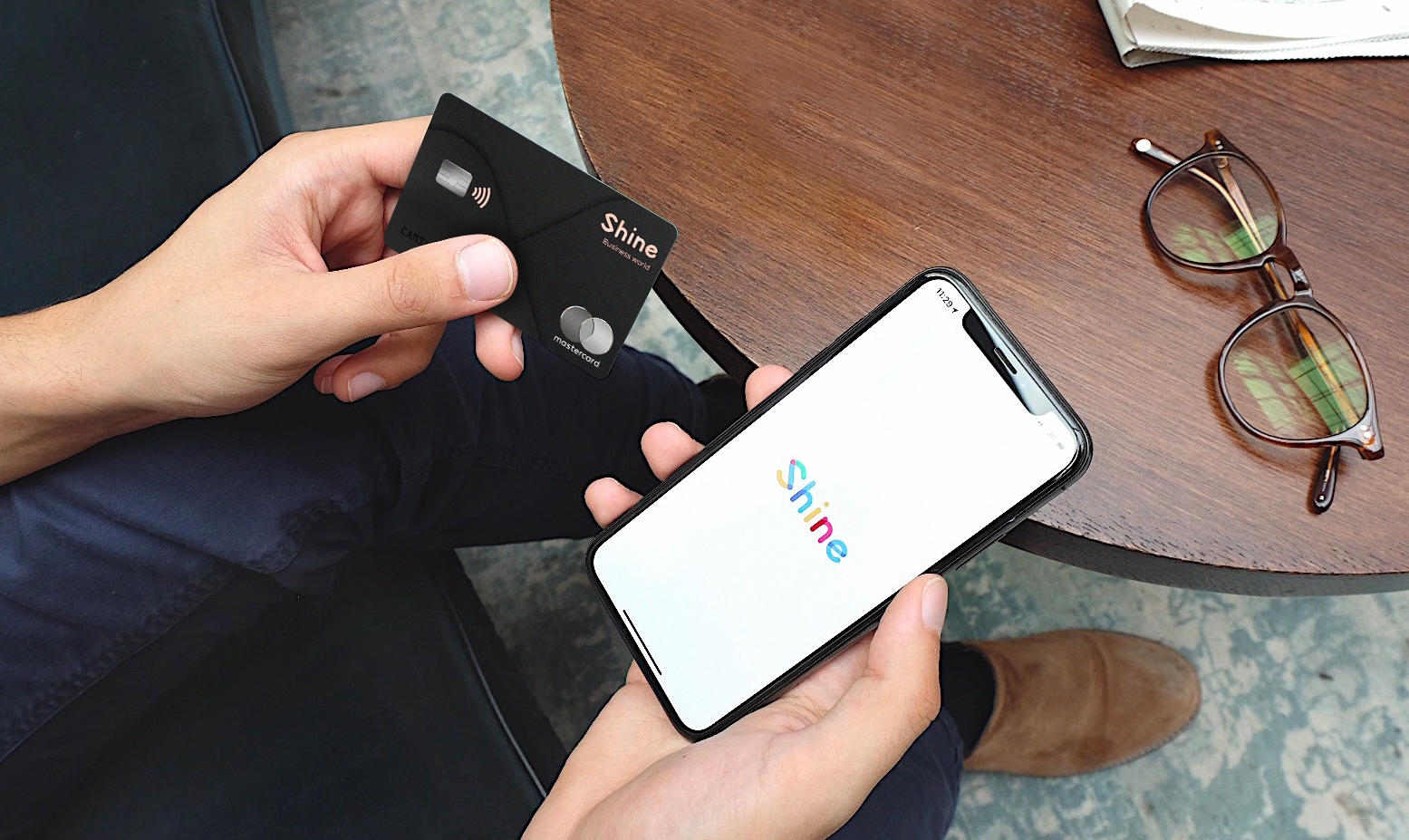
Société Générale is acquiring freelancer challenger bank Shine

Société Générale is acquiring French startup Shine. Terms of the deal are undisclosed. According to a source, Shine is getting acquired for around €100 million in an all-cash deal (around $112.6 million).

The startup had previously raised €10.8 million ($12.2 million) in total from Daphni, Kima Ventures, XAnge and various business angels.

If you’re not familiar with Shine, the startup has been building a challenger bank for freelancers and small companies in France. It lets you create a business account, get a debit card and take care of some of the most boring administrative tasks.

For instance, Shine helps you incorporate your company and also lets you create invoices directly from the app. You can send a link to your client, you get a notification when your client opens the invoice and they can view your Shine IBAN directly on the invoice.

And because the invoicing tool is integrated with your business bank account, your invoices are automatically marked as paid in the app.

When it comes to receipts, you can also open a card transaction and attach a receipt to that transaction. This way, all accounting information remains in the same app. If you’re working with an accountant, you can set up an automatic export of receipts, invoices and transactions once per month.

But the best feature of Shine is that it helps you stay on top of paperwork. You receive notifications to remind you that you should pay your taxes, you can see how much money will be left once you paid your taxes and more.

And it’s been working well with 70,000 freelancers and very small companies using Shine for their bank account. But Shine is built on top of Treezor, a banking-as-a-service company that provides financial services and debit cards to other fintech companies. At this scale, it would make sense for Shine to build its own infrastructure.

Shine has taken a different decision and is joining Société Générale, which also happens to be the company that acquired Treezor a few years ago.

Shine will operate independently from Société Générale and will still accept new customers — the two co-founders are staying at the helm of Shine. But the two companies have plans to cross-promote their respective offerings.

Société Générale could offer Shine to its business customers. And as freelancers start working with other people and turn their small independent business into a full-fledged company, Shine could also tell its customers to choose Société Générale for their business bank account.

Shine will also take advantage of Société Générale’s banking license and products. As a Shine customer, you could image getting a credit line from Société Générale. Having a banking giant behind you could greatly improve Shine’s offering. Now, let’s see if Société Générale manages to boost the potential of Shine.

30 Jun 2020

Google acquires smart glasses company North, whose Focals 2.0 won’t ship

Google confirmed today via blog post that it has acquired Canadian smart glasses company North, which began life as human interface hardware startup Thalmic Labs in 2012. The company didn’t reveal any details about the acquisition, which was first reported to be happening by The Globe and Mail, last week. The blog post is authored by Google’s SVP of Devices & Services Rick Osterloh, which cites North’s “strong technology foundation” as a key driver behind the deal.

Osterloh also emphasizes Google’s existing work in building “ambient computing,” which is to say computing that fades into the background of a user’s life, as the strategic reasoning behind the acquisition. North will join Google’s existing team in the Kitchener-Waterloo area, where North is already based, and it will aid with the company’s “hardware efforts and ambient computing future,” according to Osterloh.

In a separate blog post, North’s co-founders Stephen Lake, Matthew Bailey and Aaron Grant discuss their perspective on the acquisition. They say the deal makes sense because it will help “significantly advance our shared vision,” but go on to noted that this will mean winding down support for Focals 1.0, the first-generation smart glasses product that North released last year, and cancelling any plans to ship Focals 2.0, the second-generation version that the company had been teasing and preparing to release over the last several months.

Focals received significant media attention following their release, and provided the most consumer-friendly wearable glasses computing interface ever launched. They closely resembled regular optical glasses, albeit with larger arms to house the active computing components, and projected a transparent display overlay onto one frame which showed things like messages and navigation directions.

Around the Focals 1.0 debut, North co-founder and CEO Stephen Lake told me that the company had originally begun developing its debut product, the Myo gesture control armband, to create a way to interact naturally with the ambient smart computing platforms of the future. Myo read electrical pulses generated by the body when you move your arm and translated that into computer input. After realizing that devices it was designed to work with, including VR headsets and wearable computers like Google Glass, weren’t far enough along for its novel control paradigm to take off, they shifted to addressing the root of the problem with Focals.

Focals had some major limitations, however, including initially requiring that anyone wanting to purchase them go into a physical location for fitting, and then return for adjustments once they were ready. They were also quite expensive, and didn’t support the full range of prescriptions needed by many existing glasses-wearers. Software limitations, including limited access to Apple’s iMessage platform, also hampered the experience for Apple mobile device users.

North (and Myo before it) always employed talented and remarkable mechanical electronics engineers sources from the nearby University of Waterloo, but its ideas typically failed to attract the kind of consumer interest that would’ve been required for sustained independent operation. The company had raised nearly $200 million in funding since its founding; as mentioned, no word on the total amount Google paid, but it doesn’t seem likely to have been a blockbuster exit.