
Year: 2020

29 May 2020

YouTube and Tribeca’s global online film festival starts today

Today, the online film festival We Are One is kicking off 10 days of films, talks, musical performances and VR experiences.

The event is a collaboration between Tribeca Enterprises (the organization behind the Tribeca Film Festival) and YouTube, with help from 21 film festivals.

Think of it as an attempt to recreate some of the excitement of this year’s canceled festivals, and to showcase some of the films that would have screen there. Partner festivals include the Berlin International Film Festival, the Cannes Film Festival, the Sundance Film Festival, the Toronto Film Festival and the Venice Film Festival.

YouTube Chief Business Officer Robert Kyncl credited Tribeca for doing the “heavy lifting” of bringing all the festivals on-board and curating the lineup. He said that when Tribeca’s co-founder and CEO Jane Rosenthal first approached YouTube with the idea, “It sounded great to us, but it seemed impossible to actually execute — to get all of these important people around the world to agree to this one thing.”

However, Rosenthal and her team were able to pull it everything together in a short period of time, so YouTube is giving its part by giving the festival its online home. There will be more than 100 films screening on a schedule, just like a regular festival — although after many of the movies premiere, they will be available on-demand after it premieres for the duration of the event.

And again, it’s not just films, but the other festival programming too, like Tribeca Talks with directors like Guillermo del Toro and Francis Ford Coppola. YouTube channels like Lessons from the Screenplay, CineFix, Now You See It and La Blogotheque have also gotten involved by creating new content for the festival.

All the content is available for free, and Kyncl said that neither YouTube nor Tribeca is monetizing the event. Instead, they’re directing viewers to donate to COVID-19 relief efforts, including the World Health Organization, UNICEF, UNHCR, Save the Children, Doctors Without Borders, Leket Israel, GO Foundation and Give2Asia.

“We just see this as an immediate response with no commercial intent on our side,” he said.

And while We Are One was created in response to the COVID-19 pandemic, Kyncl sounds hopeful that there could be similar online festivals in the future — not that any online experience can fully replace the “human connection” of an in-person festival.

“The role that youTube can play for all the festivals in the future is, we can extend their reach … whether it’s creators who may be participants in their film festivals in the future, or just audiences who are absolutely participating, but I think we can expand their universe in any way they wish,” Kyncl said. But he added, “We’ve given zero thought given to it thus far. We’re all focused on making sure we can pull this off in short amount of time.”

29 May 2020

Aaron Levie: ‘We have way too many manual processes in businesses’

Box CEO Aaron Levie has been working to change the software world for 15 years, but the pandemic has accelerated the move to cloud services much faster than anyone imagined. As he pointed out yesterday in an Extra Crunch Live interview, who would have thought three months ago that businesses like yoga and cooking classes would have moved online — but here we are.

Levie says we are just beginning to see the range of what’s possible because circumstances are forcing us to move to the cloud much faster than most businesses probably would have without the pandemic acting as a change agent.

“Overall, what we’re going to see is that anything that can become digital probably will be in a much more accelerated way than we’ve ever seen before,” Levie said.

Fellow TechCrunch reporter Jon Shieber and I spent an hour chatting with Levie about how digital transformation is accelerating in general, how Box is coping with that internally and externally, his advice for founders in an economic crisis and what life might be like when we return to our offices.

Our interview was broadcast on YouTube and we have included the embed below.


Just a note that Extra Crunch Live is our new virtual speaker series for Extra Crunch members. Folks can ask their own questions live during the chat, with past and future guests like Alexis Ohanian, Garry Tan, GGV’s Hans Tung and Jeff Richards, Eventbrite’s Julia Hartz and many, many more. You can check out the schedule here. If you’d like to submit a question during a live chat, please join Extra Crunch.


On digital transformation

The way that we think about digital transformation is that much of the world has a whole bunch of processes and ways of working — ways of communicating and ways of collaborating where if those business processes or that way we worked were able to be done in digital forms or in the cloud, you’d actually be more productive, more secure and you’d be able to serve your customers better. You’d be able to automate more business processes.

We think we’re [in] an environment that anything that can be digitized probably will be. Certainly as this pandemic has reinforced, we have way too many manual processes in businesses. We have way too slow ways of working together and collaborating. And we know that we’re going to move more and more of that to digital platforms.

In some cases, it’s simple, like moving to being able to do video conferences and being able to collaborate virtually. Some of it will become more advanced. How do I begin to automate things like client onboarding processes or doing research in a life sciences organization or delivering telemedicine digitally, but overall, what we’re going to see is that anything that can become digital probably will be in a much more accelerated way than we’ve ever seen before.

How the pandemic is driving change faster

29 May 2020

Salesforce stock is taking a hit today after lighter guidance in yesterday’s earning’s report

In spite of a positive quarter with record revenue that beat analyst estimates, Salesforce stock was taking a hit today because of lighter guidance. Wall Street is a tough audience.

The stock was down $8.29/share or 4.58% as of 2:15 pm ET.

The guidance, which was a projection for next quarter’s earnings, was lighter than what the analysts on Wall Street expected. While Salesforce was projecting revenue for next quarter in the range of $4.89 to $4.90 billion, according to CNBC, analysts had expected $5.03 billion.

When analysts see a future that is a bit worse than what they expected, it usually results in a lower stock price and that’s what we are seeing today. It’s worth noting that Salesforce is operating in the same economy as everyone else and being a bit lighter on your projections in the middle of pandemic seems entirely understandable.

In yesterday’s report CEO Marc Benioff indicated that the company has been offering some customers some flexibility around payment as they navigate the economic fallout of COVID-19, and the company’s operating cash took a bit of a hit because of this.

“Operating cash flow was $1.86 billion, which was largely impacted by delayed payments from customers while sheltering in place and some temporary financial flexibility that we granted to certain customers that were most affected by the COVID pandemic,” president and CFO Mark Hawkins explained in the analyst call.

Still, the company reported revenue of $4.87 billion for the quarter, putting it on a run rate of $19.48 billion.

In a statement, David Hynes, Jr of Canaccord Genuity still remained high on Salesforce. “If you step back and think about what Salesforce is actually providing, tools that help businesses get closer to their customers are perhaps more important than ever in a slower-growth, socially distanced world. We have long reserved a spot for CRM among our top names in large cap, and we feel no differently about that view after what we heard last night. This is a high-quality firm with many levers to growth, and as such, we believe CRM is a good way to get a bit of defensive exposure to the favorable trends at play in software.”

The company is after all still firmly on the path to a $20 billion in revenue. As Hynes points out, overall the kinds of tools that Salesforce offers should remain in demand as companies look for ways to digitally transform much more rapidly in our current situation, and look to companies like Salesforce for help.

29 May 2020

Audi launches high-tech car unit Artemis to fast track a ‘pioneering’ EV to market

Audi has created a new business unit called Artemis to bring electric vehicles equipped with highly automated driving systems and other tech to market faster — the latest bid by the German automaker to become more agile and competitive.

The traditional automotive industry, where the design to start of production cycle might take five to seven years, has been grappling with how to bring new and innovative products to market more quickly to meet consumers’ fickle demands. The model is more akin to how Tesla or a consumer electronics company operates.

The first project under Artemis will be to “develop a pioneering model for Audi quickly and unbureaucratically,” Audi AG CEO Markus Duesmann said in a statement Friday. The unit is aiming to design and produce what Audi describes as a “highly efficient electric car” as early as 2024.

Artemis will be led by Alex Hitzinger, who was in charge of Audi’s Autonomous Intelligent Driving, the self-driving subsidiary that was launched just in 2017 to develop autonomous vehicle technology for the VW Group. AID was absorbed into the European headquarters of Argo AI, a move that was made after VW invested $2.6 billion in capital and assets into the self-driving startup.

Hitzinger, who takes the new position beginning June 1, will report directly to Duesmann. Artemis will be based at the company’s tech hub of its INCampus in Ingolstadt, Germany.

Artemis is under the Audi banner. However, the aim is for this group’s work to benefit brands under its parent company VW Group.  Hitzinger and the rest of his team will have access to resources and technologies within the entire Volkswagen Group . For instance, Car.Software, an independent business unit under the VW Group, will provide digital services to Artemis.  The upshot: to create a blueprint that will make VW Group a more agile automaker able to bring new and technologically advanced vehicles to market more quickly.

VW Group plans to produce and sell 75 electric vehicle models across its brands by 2029, a group that includes VW passenger cars and Audi. The creation of Artemis hasn’t changed Audi’s plans to produce 20 new all-electric vehicles and 10 new plug-in hybrids by 2025.

“The obvious question was how we could implement additional high-tech benchmarks without jeopardizing the manageability of existing projects, and at the same time utilize new opportunities in the markets,” Duesmann said.

29 May 2020

Daily Crunch: Trump takes aim at social media companies

President Trump follows through on his threat to challenge the legal protections enjoyed by social media and internet companies, Magic Leap’s CEO is stepping down and China sees its biggest autonomous driving round yet.

Here’s your Daily Crunch for May 29, 2020.

1. Trump signs an executive order taking direct aim at social media companies

Yesterday, President Donald Trump signed an executive order targeting the legal shield that internet companies rely on to protect them from liability for user-created content. Next, we’ll almost certainly see a court battle over whether the order is legal and enforceable.

While Trump and Attorney General William Barr have expressed interest in undermining Section 230 of the Communications Decency Act before, this week’s action was prompted by Twitter’s decision to add a fact-checking link to the president’s tweet about voting by mail. That conflict isn’t going away either, with Twitter adding a “public interest notice” to another of Trump’s tweets for glorifying violence.

2. Magic Leap CEO Rony Abovitz is out

Magic Leap founder and CEO Rony Abovitz announced that the company has secured a new bout of funding — but that Magic will be attempting a major turnaround without him at the helm.

3. SoftBank led $500M investment in Didi in China’s biggest autonomous driving round

As China’s largest ride-hailing provider with mountains of traffic data, Didi clearly has an upper hand in developing robotaxis, which could help address driver shortages in the long term. But it was relatively late to the field.

4. Cisco to acquire internet monitoring solution ThousandEyes

Cisco’s Todd Nightingale, writing in a blog post announcing the deal, said that the kind of data that ThousandEyes provides around internet user experience is more important than ever as internet connections have come under tremendous pressure.

5. Fintech regulations in Latin America could fuel growth or freeze out startups

Promoteo co-founder Ximena Aleman looks at what impact regulation has had so far in Latin America, and what needs to happen to strike a balance between sector growth and public trust. (Extra Crunch membership required.)

6. Uber UK launches Work Hub for drivers to find other gig jobs during COVID-19

The ride-hailing giant rolled out a similar feature in the U.S. back in April, offering drivers the ability to respond to job postings from around a dozen other companies, as well as the ability to receive orders through other Uber units: Eats, Freight and Works.

7. Join us June 3 for a contact-tracing and exposure-notification app development and deployment forum

We’re working with the COVID-19 Technology Task Force, as well as Harvard’s Berkman Klein Center, NYU’s Alliance for Public Interest Technology, Betaworks Studios and Hangar. We’ll be playing host to their live-streamed discussion around contact-tracing and exposure-notification applications, including demonstrations of some of the cutting-edge products that will be available in the U.S. to tackle these challenging, but crucial, tasks.

The Daily Crunch is TechCrunch’s roundup of our biggest and most important stories. If you’d like to get this delivered to your inbox every day at around 9am Pacific, you can subscribe here.

29 May 2020

Echo Looks will cease functioning in July, as Amazon discontinues the camera

Introduced in mid-2017, the Look was one of the more obscure — and, honestly, kind of bizarre — entries in the Echo line. It was a small camera designed to take videos and selfies of its owner, using machine learning to help choose outfits.

No surprise, really, that it never caught fire. And now, three years after its introduction, it’s dead. First noted by Voicebot.ai, Amazon sent a letter to customers noting that the camera has been discontinued — what’s more, service is going to completely shuttered in July.

Amazon confirmed the end of what seems to have amounted to an experiment and exercise in training a machine learning algorithm. The company tells TechCrunch,

When we introduced Echo Look three years ago, our goal was to train Alexa to become a style assistant as a novel way to apply AI and machine learning to fashion. With the help of our customers we evolved the service, enabling Alexa to give outfit advice and offer style recommendations. We’ve since moved Style by Alexa features into the Amazon Shopping app and to Alexa-enabled devices making them even more convenient and available to more Amazon customers. For that reason, we have decided it’s time to wind down Echo Look. Beginning July 24, 2020, both Echo Look and its app will no longer function. Customers will still be able to enjoy style advice from Alexa through the Amazon Shopping app and other Alexa-enabled devices. We look forward to continuing to support our customers and their style needs with Alexa.

Not a surprise, perhaps. But a bummer for those who spent the $200 on the product. For the looks of it, though, I don’t think the Look exactly caught the world on fire. It’s currently listed as the 51st best seller on Amazon’s list of Echo products. Honestly, there’s a decent chance this is the first time you’re hearing about it. Again, not surprising for what was always destined to be a niche addition to the Echo line.

29 May 2020

The best investment every digital brand can make during the COVID-19 pandemic

Intuitively, stores that sell online should be making a killing during the COVID-19 pandemic. After all, everyone is stuck at home — and understandably more willing to shop online instead of at a traditional retailer to avoid putting themselves and others at medical risk. But the truth is, most smaller online stores have seen better days.

The primary challenge is that smaller shops often don’t have the logistics networks that companies like Amazon do. Consequently, they’re seeing substantially delayed delivery timelines, especially if they ship internationally. Customers obviously aren’t thrilled about that reality. And in many cases, they’re requesting refunds at a staggering rate.

I saw this play out firsthand in April. At that point, my stores were down 20% or in some cases even 30% in revenue. Needless to say, my team was freaking out. But there’s one thing we did that helped us increase our revenue over 200% since the pandemic, decrease refund requests and even strengthen our existing customer relationships.

We implemented a 24-hour live chat in all of our stores. Here’s why it worked for us and why every digital brand should be doing it too.

Avoid the common ‘unreachability’ frustration

When I started my first online store in 2006, challenges that bogged my team down often meant that my team’s first priority became resolving those challenges so that we could serve our customers faster. But admittedly, when these challenges came up, it became more difficult to balance communicating with our customers and resolving the issues that prevented us from fulfilling their orders quickly.

29 May 2020

TinyML is giving hardware new life

Aluminum and iconography are no longer enough for a product to get noticed in the marketplace. Today, great products need to be useful and deliver an almost magical experience, something that becomes an extension of life. Tiny Machine Learning (TinyML) is the latest embedded software technology that moves hardware into that almost magical realm, where machines can automatically learn and grow through use, like a primitive human brain.

Until now building machine learning (ML) algorithms for hardware meant complex mathematical modes based on sample data, known as “training data,” in order to make predictions or decisions without being explicitly programmed to do so. And if this sounds complex and expensive to build, it is. On top of that, traditionally ML-related tasks were translated to the cloud, creating latency, consuming scarce power and putting machines at the mercy of connection speeds. Combined, these constraints made computing at the edge slower, more expensive and less predictable.

But thanks to recent advances, companies are turning to TinyML as the latest trend in building product intelligence. Arduino, the company best known for open-source hardware is making TinyML available for millions of developers. Together with Edge Impulse, they are turning the ubiquitous Arduino board into a powerful embedded ML platform, like the Arduino Nano 33 BLE Sense and other 32-bit boards. With this partnership you can run powerful learning models based on artificial neural networks (ANN) reaching and sampling tiny sensors along with low-powered microcontrollers.

Over the past year great strides were made in making deep learning models smaller, faster and runnable on embedded hardware through projects like TensorFlow Lite for Microcontrollers, uTensor and Arm’s CMSIS-NN. But building a quality dataset, extracting the right features, training and deploying these models is still complicated. TinyML was the missing link between edge hardware and device intelligence now coming to fruition.

Tiny devices with not-so-tiny brains

29 May 2020

Bunq adds donations to charities and tests redesign

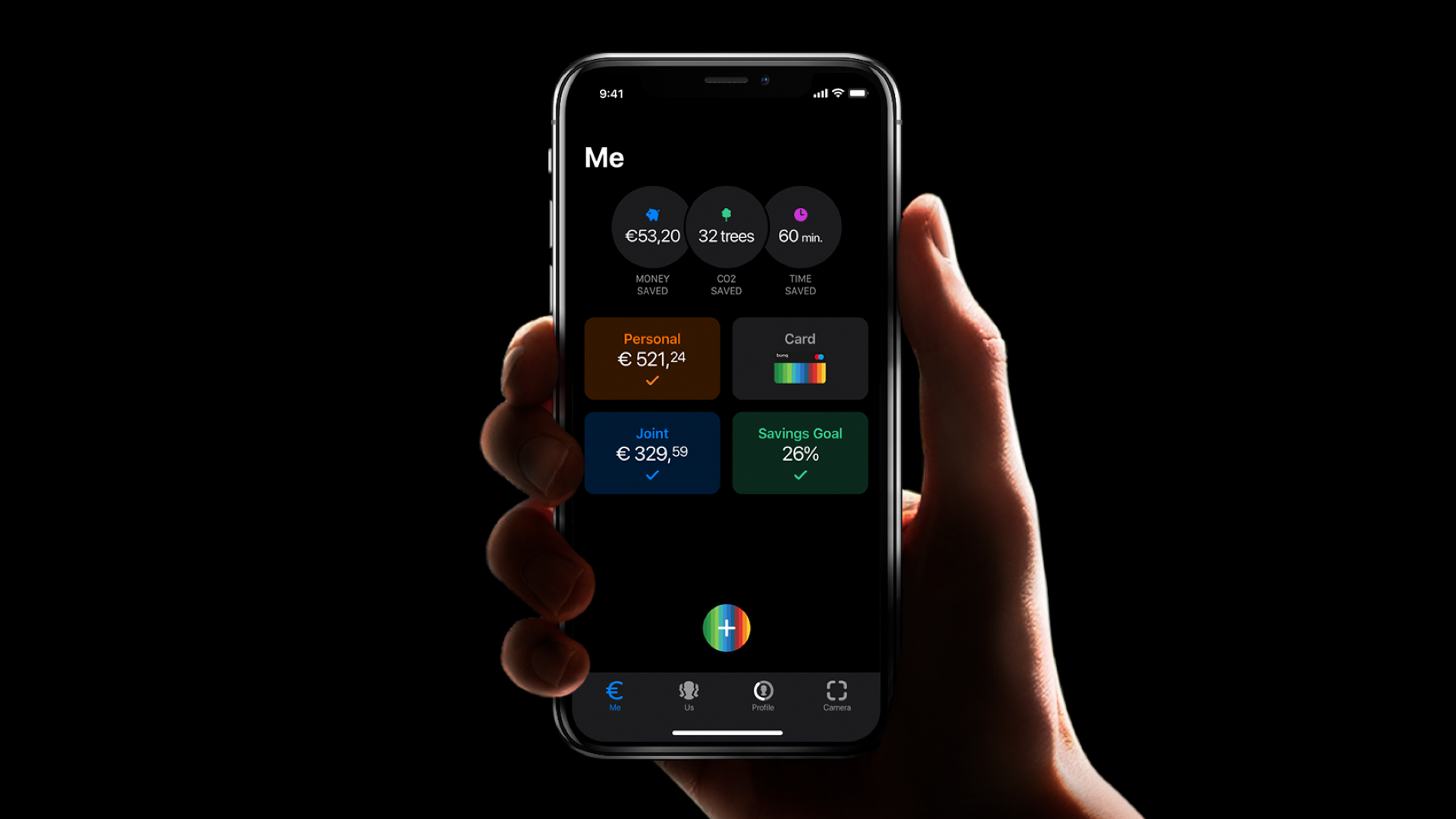
Challenger bank Bunq is adding a new feature that lets you donate to charities directly from the app. In addition to that, Bunq is also in the process of redesigning its app. The company is launching a public beta test to get feedback from its users.

Other fintech startups, such as Revolut and Lydia, have launched donation features in the past. But in those cases, startups have selected a handful of charities.

Bunq has chosen a different approach as you can create your own donation campaigns in the app. As long your local charity has an IBAN number, you can add it to Bunq’s donation feature. You can even add a local business in case you want to help them stay in business.

You can then invite other people to donate to your charities. You can also track the total amount of your donations as well as the total donations from the entire Bunq user base.

The company has also been working on the third major version of the app. In order to test it before the public release, Bunq is launching a public beta program. The first build will roll out in the coming weeks.

In order to simplify navigation, Bunq has tried to remove clutter by focusing on one main button on each page. The app will be divided in four main tabs.

The first tab called ‘Me’ will feature all your personal information — personal bank accounts, savings goals, etc. On the second tab called ‘Us’, you can see information about Bunq, such as total investments and total donations. The third tab features your profile information.

Finally, the fourth tab is a dedicated camera button. It lets you scan invoices and receipts, which could be particularly useful for business customers. I’m not sure a lot of people use that feature, but things could still change before the final release.

29 May 2020

Twitter, Reddit challenge US rules forcing visa applicants to disclose their social media handles

Twitter and Reddit have filed an amicus brief in support of a lawsuit challenging a U.S. government rule change compelling visa applicants to disclose their social media handles.

The lawsuit, brought by the Knight First Amendment Institute at Columbia University, the Brennan Center for Justice, and law firm Simpson Thacher & Bartlett, seeks to undo both the State Department’s requirement that visa applicants must disclose their social media handles prior to obtaining a U.S. visa, as well as related rules over the retention and dissemination of those records.

Last year, the State Department began asking visa applicants for their current and former social media usernames, a move that affects millions non-citizens applying to travel to the United States each year. The rule change was part of the Trump administration’s effort to expand its “enhanced” screening protocols. At the time, it was reported that the information would be used if the State Department determines that “such information is required to confirm identity or conduct more rigorous national security vetting.”

In a filing supporting the lawsuit, both Twitter and Reddit said the social media policies “unquestionably chill a vast quantity of speech” and that the rules violate the First Amendment rights “to speak anonymously and associate privately.”

Twitter and Reddit, which collectively have more than 560 million users, said their users — many of which don’t use their real names on their platforms — are forced to “surrender their anonymity in order to travel to the United States,” which “violates the First Amendment rights to speak anonymously and associate privately.”

“Twitter and Reddit vigorously guard the right to speak anonymously for people on their platforms, and anonymous individuals correspondingly communicate on these platforms with the expectation that their identities will not be revealed without a specific showing of compelling need,” the brief said.

“That expectation allows the free exchange of ideas to flourish on these platforms.”

Jessica Herrera-Flanigan, Twitter’s policy chief for the Americas, said the social media rule “infringes both of those rights and we are proud to lend our support on these critical legal issues.” Reddit’s general counsel Ben Lee called the rule a “intrusive overreach” by the government.

It’s not known how many, if any, visa applicants have been denied a visa because of their social media content. But since the social media rule went into effect, cases emerged of approved visa holders denied entry to the U.S. for other people’s social media postings. Ismail Ajjawi, a then 17-year-old freshman at Harvard University, was turned away at Boston Logan International Airport after U.S. border officials searched his phone after taking issue with social media postings of Ajjawi’s friends — and not his own.

Abed Ayoub, legal and policy director at the American-Arab Anti-Discrimination Committee, told TechCrunch at the time that Ajjawi’s case was not isolated. A week later, TechCrunch learned of another man who was denied entry to the U.S. because of a WhatsApp message sent by a distant acquaintance.

A spokesperson for the State Department did not immediately comment on news of the amicus brief.