
Year: 2021

04 Aug 2021

Venture capital undermines human rights

The future of technology is determined by a handful of venture capitalists. The world’s 10 leading venture capital firms have, together, invested over $150 billion in technology startups. The venture capitalists who run these firms decide which startups today will develop the new platforms and technologies that will shape our lives tomorrow.

There is a startling lack of diversity within the venture capital sector. This means that a small group of men — mostly white men — make decisions that affect all of us. Unsurprisingly, they all too often ignore the broader societal and human rights implications of these investment decisions.

We all live in a world shaped by venture capital. As of 2019, 81% of all venture capital funds worldwide are clustered in just a handful of countries, primarily in the U.S., Europe and China, which in turn are shaping the future of technology. If you spend time on Facebook or Twitter, use Google, travel in an Uber or stay in an Airbnb, then you’ve experienced firsthand the impact of venture capital funding.

Venture capital firms, which provide equity financing for early- and growth-stage startups, play a critical gatekeeper role, deciding which new technologies and technology companies will receive funding.

Venture capital firms need to institute human rights due diligence processes that meet the standards set forth in the UN Guiding Principles on Business and Human Rights.

All businesses — including venture capital — have a responsibility to respect human rights. In order to ensure that their investments are not undermining our human rights, it is therefore critical for venture capital firms to conduct due diligence processes before making investments.

Amnesty International recently surveyed the world’s largest venture capital firms and startup accelerators. Of the world’s 10 largest venture capital firms, not a single one had an adequate human rights due diligence process that met the standards set forth in the UN Guiding Principles on Business and Human Rights.

Unfortunately, this is true of the broader venture capital sector as well. Overall, of the 50 VC firms and three startup accelerators analyzed by Amnesty International, we found that almost all of them lacked adequate human rights due diligence policies and processes.

This failure to carry out adequate due diligence means that a vast majority of VC firms are failing in their responsibility to respect human rights.

This almost complete lack of respect for human rights among the world’s largest venture capital firms has three key impacts. First, and most immediately, it means that venture capital firms invest in companies whose products and services have been implicated in ongoing human rights abuses, such as companies that provide support to the Chinese government’s repression of the Uyghur population in Xinjiang and across China.

Second, it means that venture capital firms continue to fund companies whose business models have a significant negative impact on human rights, including our privacy and labor rights. For instance, leading venture capital firms continue to support companies that rely on app-based or “gig” workers, who often face exploitative or otherwise abusive work conditions, as well as companies whose “surveillance capitalism” business model undermines our right to privacy.

Third, the lack of human rights due diligence by venture capital firms dramatically increases the risk that they fund new and “frontier” technologies without ensuring that adequate human rights safeguards are in place.

For instance, the application of increasingly powerful artificial intelligence/machine learning (AI/ML) tools across a wide variety of sectors risks amplifying existing societal biases and discrimination. Seemingly objective algorithms can be biased by reliance on incomplete or unrepresentative training data, and/or by replicating the unconscious bias of those who developed the algorithms.

This is a critical blind spot, especially as VC-funded startups seek to disrupt such fundamental parts of our lives as education, finance and health.

The negative impacts of the VC firms’ lack of human rights due diligence — especially regarding issues like algorithmic bias — are magnified by these firms’ own lack of gender and racial diversity. For instance, women comprise only 23% of venture capital investment professionals (i.e., those involved in deciding which startups to fund).

The numbers are even worse when it comes to racial diversity — just 4% of investment professionals at VC firms in the U.S. are Latinx, and only 4% are Black. Groups like Blck VC, Diversity VC and digitalundivided have been calling attention to this issue for years, but venture capitalists have been slow to respond so far.

This lack of diversity is mirrored in the gender and racial composition of founders who receive VC funding. In 2018, all-female founding teams received just 2.2% of all U.S.-based venture funding. At the same time, Black and Latinx founders received less than 2.3% of all U.S.-based venture capital funding in 2019.

With power comes responsibility. Venture capital firms need to institute human rights due diligence processes that meet the standards set forth in the UN Guiding Principles on Business and Human Rights.

Further, they should provide support to their portfolio companies to ensure that they comply with human rights standards. Venture capital firms should also publicly commit to hiring more diverse teams, especially in investment-related positions. Finally, they should publicly commit to funding more diverse startup founders as part of their flagship funds.

VC firms have a responsibility to ensure that their investments are not causing harm. A responsibility that they have, to date, largely ignored.
04 Aug 2021

Japanese startup ispace raises $46M to support planned moon missions

Japanese startup ispace has raised $46 million in a fresh round of Series C funding as it looks to complete three lunar lander missions in three years.

The funding will go toward the second and third of the planned missions, scheduled for 2023 and 2024. The first mission, which ispace aims to conduct in the latter half of 2022, is being furnished by earlier financing.

The Series C was led by Japanese VC firm Incubate Fund, with additional investment from partnerships managed by Innovation Engine, funds managed by SBI Investment Co., Katsunori Sago, Aizawa Investments, and funds managed by HiJoJo Partners and Aizawa Asset Management. Incubate Fund’s investments in ispace stretch back to the company’s seed round in 2014.

Ispace’s total funding now stand at $195.5 million.

The company said last month it had started building the lunar landing flight module for the 2022 mission at a facility owned by space launch company ArianeGroup, in Lampoldshausen, Germany. The lander for that first mission, the Hakuto-R, will take three months to reach the moon, largely to save costs and additional weight from propellant. It will deliver a 22-pound rover for Saudi Arabia’s Mohammed bin Rashid Space Center, a lunar robot for the Japan Aerospace Exploration Agency, and payload from three Canadian companies. The lander will reach the moon aboard a SpaceX Falcon 9 rocket.

The 7.5 foot-tall Hakuto-R will also be used in the second mission in 2023, to deposit a small ispace rover that will collect data to support the company’s subsequent missions to the moon. For the final mission, the Toyko-based startup is developing a larger lander in the United States.

Ispace describes its long-term goal as being a “gateway for private sector companies to bring their business to the Moon.” The company has particular interest in helping spur a space-based economy, noting on its website that the moon’s water resources represent “untapped potential.”

04 Aug 2021

Enterprise AI 2.0: the acceleration of B2B innovation has begun

Two decades after businesses first started deploying AI solutions, one can argue that they’ve made little progress in achieving significant gains in efficiency and profitability relative to the hype that drove initial expectations.

On the surface, recent data supports AI skeptics. Almost 90% of data science projects never make it to production; only 20% of analytics insights through 2022 will achieve business outcomes; and even companies that have developed an enterprise-wide AI strategy are seeing failure rates of up to 50%.

But the past 25 years have only been the first phase in the evolution of enterprise AI — or what we might call Enterprise AI 1.0. That’s where many businesses remain today. However, companies on the leading edge of AI innovation have advanced to the next generation, which will define the coming decade of big data, analytics, and automation — Enterprise AI 2.0.

The difference between these two generations of enterprise AI is not academic. For executives across the business spectrum — from health care and retail to media and finance — the evolution from 1.0 to 2.0 is a chance to learn and adapt from past failures, create concrete expectations for future uses, and justify the rising investment in AI that we see across industries.

Two decades from now, when business leaders look back to the 2020s, the companies who achieved Enterprise AI 2.0 first will have come to be big winners in the economy, having differentiated their services, scooped up market share, and positioned themselves for ongoing innovation.

Framing the digital transformations of the future as an evolution from Enterprise AI 1.0 to 2.0 provides a conceptual model for business leaders developing strategies to compete in the age of automation and advanced analytics.

Enterprise AI v1.0 (the status quo)

Starting in the mid-1990s, AI was a sector marked by speculative testing, experimental interest and exploration. These activities occurred almost exclusively in the domain of data scientists. As Gartner wrote in a recent report, these efforts were “alchemy…run by wizards whose talents will not scale in the organization.”

Two decades from now, when business leaders look back to the 2020s, the companies who achieved Enterprise AI 2.0 first will have come to be big winners in the economy.

But the data science bottleneck — the need for everything to funnel through a small team of experts — was not the only hurdle to scaling. AI is only as powerful as the data systems it’s plugged into. Many companies experimenting with AI at the time had data spread across silos with inadequate data infrastructure and processes to optimize the technology.

Moreover, early iterations of B2B AI involved complex horizontal “machine learning” platforms focused on model development. Operationalizing these hand-curated models required crossing a deep chasm related to customization and integration with enterprise applications and workflows. These Enterprise 1.0 solutions were cumbersome and clunky to operate yet still required large investments to deploy.

Most initiatives started from the bottom up. Data scientists developed them as exploratory projects focused on speculative use cases largely decoupled from business objectives. Many turned out to be science projects and the failure rates were extraordinarily high.

04 Aug 2021

Facebook cuts off NYU researcher access, prompting rebuke from lawmakers

Facebook shut down accounts belonging to two academic researchers late Tuesday, cutting off their ability to study political ads and misinformation on the world’s biggest social network.

The company accused the academics of engaging in “unauthorized scraping” and compromising user privacy on the platform, claims that Facebook’s many critics are slamming as a thin pretense for killing the transparency work.

The company took action against Laura Edelson and Damon McCoy, two well-known researchers affiliated with NYU’s Cybersecurity for Democracy project who have long sparred with the company. The move cuts off their access to Facebook’s Ad Library — one of the company’s only meaningful transparency efforts to date — and data on popular posts from the social media monitoring service Crowdtangle.

Facebook has a history with Edelson and McCoy. The company served the pair cease and desist letters just weeks before the 2020 election, calling on the team to disable an opt-in browser tool called Ad Observer and unpublish their findings. Ad Observer is a browser tool anyone can install that’s designed to give researchers a rare glimpse into how Facebook targets the ads that have transformed it into a trillion-dollar company.

“Over the last several years, we’ve used this access to uncover systemic flaws in the Facebook Ad Library, identify misinformation in political ads including many sowing distrust in our election system, and to study Facebook’s apparent amplification of partisan misinformation,” Edelson said on Twitter.

“By suspending our accounts, Facebook has effectively ended all this work. Facebook has also effectively cut off access to more than two dozen other researchers and journalists who get access to Facebook data through our project, including our work measuring vaccine misinformation with the Virality Project and many other partners who rely on our data.”

The incident set off a fresh round of criticism about the company’s preference for opacity over transparency when it comes to some of the more dangerous behavior that the platform incubates.

By Wednesday, Facebook’s actions had attracted the attention of some members of Congress. Sen. Ron Wyden (D-OR) criticized Facebook’s decision to punish the researchers under the pretense of protecting users in light of the company’s long history of invasive privacy practices. Wyden also called Facebook’s bluff over its claim that revoking researcher access is an effort to comply with a privacy order from the FTC that the company was issued for its previous user privacy violations.

Sen. Mark Warner (D-VA) also weighed in on Facebook’s latest controversy, calling the decision “deeply concerning.” Warner praised independent researchers for “consistently [improving] the integrity and safety of social media platforms by exposing harmful and exploitative activity.”

“It’s past time for Congress to act to bring greater transparency to the shadowy world of online advertising, which continues to be a major vector for fraud and misconduct,” Warner said.

A number of free press organizations, researchers and misinformation experts also condemned Facebook’s decision Wednesday. “Facebook’s cavalier approach to privacy enabled it to become so dominant,” The Markup’s Julia Angwin and Nabiha Syed wrote in a joint statement.

“But now, when independent researchers want to interrogate that platform and the influence it commands, Facebook is propping up user privacy as a shield to hide behind.”

04 Aug 2021

Dear Sophie: Which immigration options allow me to launch my own startup?

Here’s another edition of “Dear Sophie,” the advice column that answers immigration-related questions about working at technology companies.

“Your questions are vital to the spread of knowledge that allows people all over the world to rise above borders and pursue their dreams,” says Sophie Alcorn, a Silicon Valley immigration attorney. “Whether you’re in people ops, a founder or seeking a job in Silicon Valley, I would love to answer your questions in my next column.”

Extra Crunch members receive access to weekly “Dear Sophie” columns; use promo code ALCORN to purchase a one- or two-year subscription for 50% off.


Dear Sophie,

I’ve been working on an H-1B in the U.S. for nearly two years.

While I’m immensely appreciative of my company’s sponsorship and that I made it through the H-1B lottery and am working, I’m stuck in a rut. I really want to start something of my own and work on my own terms in the United States.

Are there any immigration options that would allow me to do that?

— Seeking Satisfaction near Stanford

Dear Seeking,

A couple of exciting immigration news updates to get us started today! In breaking startup founder news, U.S. Rep. Zoe Lofgren (D-CA) introduced the LIKE Act for startup founders in the House of Representatives last week. Below, we’ll share what this could mean for your startup aspirations. Also, U.S. Citizenship and Immigration Services (USCIS) conducted a second H-1B lottery because it didn’t receive enough H-1B petitions to meet the annual cap. So, if you or your employer were selected, be sure to file an H-1B petition by November 3.

Although job dissatisfaction and frustration on an H-1B can be normal, according to Edward Gorbis, there’s a lot you can do to take control of your U.S. immigration situation and go out on your own. I interviewed Gorbis for my podcast; he’s the founder of Career Meets World and a performance coach who works with immigrants and first-generation professionals to help them find fulfillment and thrive in their careers and life. Gorbis said that “once immigrants reach stability, they start to think, ‘Who am I, what do I value, what’s my core identity?’” It’s possible for any of us to retrain our brain for success.

Gorbis said that imagining overcoming the hurdles that stand in the way of doing the work that will fulfill you is the first step. So, here are some options that can help you imagine how to build the life of your dreams.

Become a founding CEO and raise $250,000

A great new option for aspiring entrepreneurs is International Entrepreneur Parole (IEP), a new immigration program in the United States that allows CEOs, CTOs and others to live in the U.S. and run their company for 2.5 years with an option for a 2.5-year extension. Your spouse can obtain a work permit.

How to qualify? You need to own at least 10% of a U.S. company, such as a Delaware C corporation registered in California. Ideally, you’ll want to show that your company bank account has at least $250,000 raised from qualified U.S. investors, but you can use other evidence to demonstrate that your company has the potential to grow rapidly and create jobs in the U.S.

A startup visa and path to a green card may be soon on the way for entrepreneurs and their crucial employees: Last week, Lofgren introduced the Let Immigrants Kickstart Employment (LIKE) Act. The requirements for the proposed startup visa are the same as for IEP but would allow a longer stay — up to eight years total if the startup creates jobs and generates substantial revenue.

I’m very proud to have aided in drafting the LIKE Act. It’s a thrill to see how my suggestions were included, such as making Startup Green Cards not subject to the visa bulletin, clarifying that you can seek consecutive Startup Visas from different companies, how to allocate employee visas to startups, ensuring the Startup Visa is a dual intent status, and adding premium processing. It was such a joy to be able to contribute ideas to this amazing process. I look forward to supporting this bill to become a law; please reach out to me if you want to support this worthy cause.

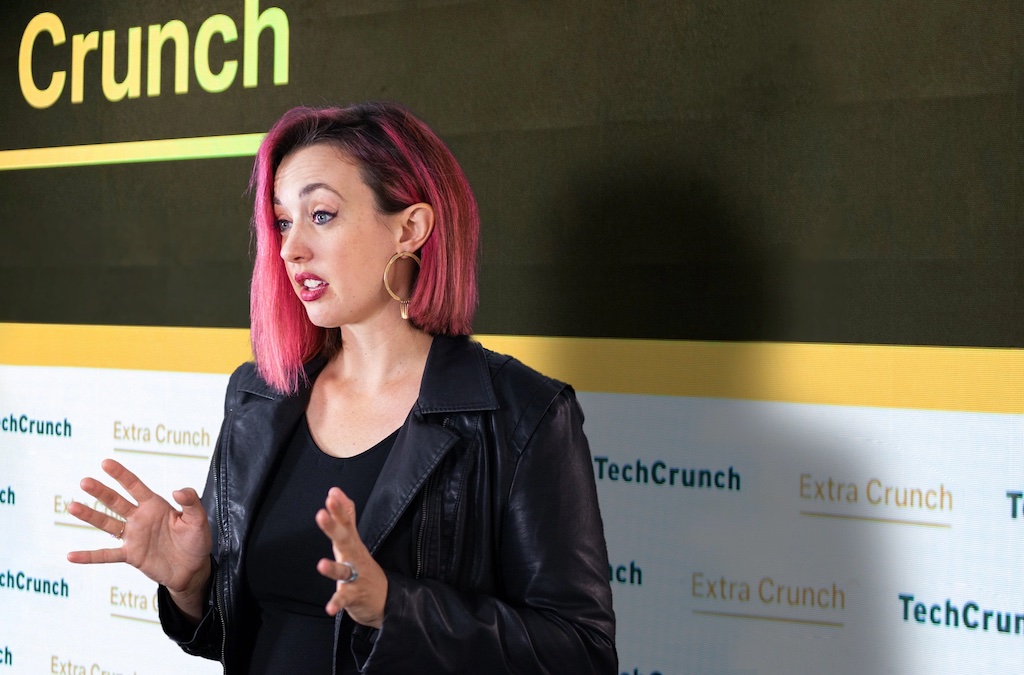
A composite image of immigration law attorney Sophie Alcorn in front of a background with a TechCrunch logo.

Image Credits: Joanna Buniak / Sophie Alcorn (opens in a new window)

See yourself at another company

There is technically no limit to how many H-1B employers you can have or how many — or few — hours you work in an H-1B position. So, think about other companies.

One option would be to have concurrent H-1Bs: Keep your current H-1B job for stability and start your own company, preferably with another individual or two, and have your startup sponsor you for an H-1B. Take a look at this Dear Sophie column for what to do before embarking on this path.

Another option would be to transfer your H-1B to another employer, or your own startup if you are going to work there. Since you already went through the H-1B lottery with your current employer, you will not have to go through the lottery process again for a second H-1B whether you choose the concurrent or transfer option.

Setting up a startup that can sponsor you for an H-1B is complicated, so I suggest you work with both a corporate attorney and an immigration attorney. Keep in mind that you will not be able to do any work for your startup until an H-1B with your startup has been approved, which is why having co-founders is helpful. Another reason is H-1Bs require an employer-employee relationship between a startup and the H-1B candidate. That means a co-founder — or the startup’s board — must supervise you and have the ability to fire you. Moreover, we often advise founders that it may be best to own less than a 50% stake in the startup when applying for an H-1B.

Consider a green card

If you end up pursuing concurrent H-1Bs, consider asking your employer whether it is willing to sponsor you for a green card. If that’s not the case, your startup can sponsor you for one, or you can self-petition for a green card:

All EB-2 green cards — except the EB-2 NIW — and the EB-3 green card require labor certification approval (PERM) from the U.S. Department of Labor. The two green cards that allow an individual to self-sponsor are the EB-1A and EB-2 NIW.

Imagine yourself doing gigs in your field

Many startup founders qualify for an O-1A extraordinary ability visa. However, you cannot have both an H-1B and an O-1A at the same time, so if your startup sponsors you for an O-1A, you will be required to leave your current H-1B job once an O-1A is approved.

An O-1A offers more flexibility than an H-1B. You can work for a single petitioning company or on multiple gigs through an agent. However, qualifying for an O-1A is more difficult than an H-1B. Resources, such as through my firm, support people with getting qualified. The one similarity with the H-1B is that you must show your startup and you have an employer-employee relationship.

Invest in your own company

The E-2 visa for treaty investors and employees is ideal for startup founders whose home country has a treaty of commerce and navigation with the U.S. Here is a list of treaty countries. For more details on E-2 visas for founders and employees, check out this previous Dear Sophie column and podcast episode.

Although there is no minimum dollar amount that a founder must invest in a startup to qualify for an E-2, we often advise founders to invest at least $100,000 to have a strong case. You cannot have both an H-1B and an E-2, so you will need to leave your current H-1B job if your E-2 is approved.

An immigration attorney can offer additional options based on your personal circumstances and legal advice tailored to you.

Enjoy the journey of building your dreams!

Sophie


Have a question for Sophie? Ask it here. We reserve the right to edit your submission for clarity and/or space.

The information provided in “Dear Sophie” is general information and not legal advice. For more information on the limitations of “Dear Sophie,” please view our full disclaimer. You can contact Sophie directly at Alcorn Immigration Law.

Sophie’s podcast, Immigration Law for Tech Startups, is available on all major platforms. If you’d like to be a guest, she’s accepting applications!

04 Aug 2021

Match Group to add live audio and video to its dating app portfolio starting in 2021

Dating app maker and Tinder parent, Match Group, said during its Q2 earnings it will bring live audio and video chat, including group live video, and other livestreaming technologies to several of the company’s brands over the next 12 to 24 months. The developments will be powered by innovations from Hyperconnect, the social networking company that this year became Match’s biggest acquisition to date, when it bought the Korean app maker for a sizable $1.73 billion. 

Since then, Match Group has been relatively quiet about its specific plans for Hyperconnect’s tech or its longer-term strategy with the operation, although Tinder was briefly spotted testing a group video chat feature called Tinder Mixer earlier this summer. The move had seemed to signal some exploration of social discovery features in the wake of the Hyperconnect deal. However, Tinder told us at the time the company had no plans to bring that specific product to market in the year ahead.

On Tuesday’s earnings, Match Group offered a little more insight into the future of Hyperconnect, following the acquisition’s official close in mid-June.

According to Match Group CEO Shar Dubey, who stepped into the top job last January, the company is excited about the potential to integrate technologies Hyperconnect has developed into existing Match-owned dating apps.

This includes, she said, “AR features, self-expression tools, conversational A.I., and a number of what we would consider metaverse elements, which have the element to transform the online meeting and getting-to-know-each-other process,” Dubey explained, without offering further specific details about how the products would work or which apps would receive these enhancements.

Many of these technologies emerged from Hyperconnect’s lab, Hyper X — the same in-house incubator whose first product is now one of the company’s flagship apps, Azar, which joined Match Group with the acquisition.

Dubey also noted that the work to begin these tech integrations was already underway at the company.

By year-end, Match Group said it expects to have at least two of its brands integrated with technologies from Hyperconnect. A number of other brands will implement Hyperconnect capabilities by year-end 2022.

In doing so, Match aims to transform what people think of when it comes to online dating.

To date, online dating been a fairly static experience across the industry, where apps focus largely on profiles and photos, and then offer some sort of matching technique — whether swipes or quizzes or something else. Tinder, in more recent years, began to break out of that mold as it innovated with an array of different experiences, like its choose-your-own-adventure in-app video series, “Swipe Night,” video profiles, instant chat features (via Tinder’s product, Hot Takes), and others. But it still lacked some the real-time elements that people have when meeting one another in the real world.

This is an area where Match believes Hyperconnect can help to improve the online dating experience.

“One of the holy grails for us in online dating has always been to bridge the disconnect that happens between people chatting online and then meeting someone in person,” Dubey said. “These technologies will eventually allow us to build experiences that will help people determine if they have that much elusive chemistry or not… Our ultimate vision here is for people to never have to go on a bad first date again,” she added.

Of course, Match Group’s positioning of the Hyperconnect deal as being more interesting because the innovation it brings — and not just the standalone apps it operates — also comes at a time when those apps have not met the company’s expectations on revenue.

In the second half the of 2021, Match Group said it expects Hyperconnect to contribute to $125 to $135 million in revenue — a financial outlook that the company admits reflects some pullback. It attributed this largely to Covid impacts, particularly in the Asia-Pacific region where Hyperconnect’s apps operate. Other impacts to Hyperconnect’s growth included a more crowded marketplace and Apple’s changes to IDFA (Identifier for Advertisers), which has impacted a number of apps — including other social networking apps, like Facebook.

While Match still believes Hyperconnect will post “solid revenue growth” in 2021, it said that these new technology integrations into the Match Group portfolio are now “a higher priority” for the company.

Match Group posted mixed earnings in Q1 with revenue of $707.8 million, above analyst estimates, but earnings per share of 46 cents, below projections of 49 cents a share. Paying customers grew 15% to 15 million, up from 13 million in the year-ago quarter. Shares declined by 7% on Wednesday morning, following the earnings announcement.

04 Aug 2021

YELA secures $2M to reproduce Cameo’s celebrity success with an app for the Middle East

The Cameo app, where celebrities send video messages to paying fans, has taken off globally. But now the concept is set to come to the Middle East and South Asia.

Tech startup YELA has secured $2 million in investment to support its launch, and will – similar to Cameo – offer users the opportunity to get close to their idols via voice, video, and direct text messages.

The investment is led by U.S investors Justin Mateen (co-founder of Tinder) and General Partner of JAM Fund, joined by Sean Rad (co-founder Tinder) and General Partner of RAD Fund. Participation from the US also includes Graph Ventures, championed by Razmig Hovaghimian (Board Member at Rakuten). In addition, U.K investment comes from Samos Fund, Ascension Ventures, and from MENA-based Hambro Perks Oryx Fund, who joined the round.

The twist is that YELA plans to sign some big celebrities known in the region, but less so in the Western world. That doesn’t mean the market is small. There are over 365 million Arabic speakers online and over 65% of the population is under 35. Meanwhile, smartphone penetration is very high.

Alex Eid, CEO and co-founder of YELA said: There is a huge appetite in the MENA market for a premium offering in the creator space.”

He said YELA has onboarded high-profile celebrities, confirming A-list signees including Amr Diab, the multi-award-winning Egyptian singer, and Haifa Wehbe, three-time Big Apple Music Award winner, amongst others.

YELA will launch in August 2021 with prices starting from $100.

04 Aug 2021

As the Delta variant surges, a non-profit app lets hospital patients call home for free on any device 

COVID Tech Connect, a non-profit created during the first wave of the coronavirus pandemic in the United States, is launching a free app aimed at helping hospital patients call home. As the Delta variant drives a new upward surge in critical COVID-19 cases, the new offering is, sadly, well-timed. 

COVID Tech Connect originated as a non-profit organization in spring 2020, right before the initial summer surge in COVID-19 cases. At the time, the initiative was dedicated to collecting and donating hardware – tablets, phones, etc – to hospitals where ICU beds were filling up, and COVID protocols prevented families from visiting sick relatives. So far, the organization has donated over 20,000 devices and 30,000 charging cords to 18,000 hospitals and extended care facilities. 

The non-profit is headed by a roster of proven entrepreneurs, including Anjali Kumar, Benish Shah, Christina Wallace, Katie Stanton, Kristina Libby and Sarah Rodell

“That program was one that we never actively promoted [the non-profit did send out some fliers to hospitals but there was no formal campaign],” Elien Becque, Product Director at COVID Tech Connect tells TechCrunch. “We didn’t really put anything behind it, but we were always being flooded with requests for devices.”

During its first year, COVID Tech Connect raised $4 million in funding from a variety of sources including Google.org, private donors, including Ellen DeGeneres and Shutterfly, and about $200k from a GoFundMe. Right now, COVID Tech Connect’s fiscal sponsor is The Giving Back Fund, another non-profit that manages charitable donations from pro athletes, celebrities or high net-worth individuals. 

About one year after its original debut, COVID Tech Connect expanded into software with an app called TeleHome. TeleHome, which soft-launched in May, is a device-agnostic, HIPAA-compliant way to perform a video call within a hospital. 

The TeleHome rollout comes during a confusing and critical time in the pandemic. While some hospital systems are now allowing visitors, others, like some Florida hospitals, are suspending or limiting visits in response to the Delta variant. 

Generally speaking, the CDC still recommends hospitals facilitate other ways for patients to visit with family – especially video or audio calls

The TeleHome app was designed through a partnership with Caregility, a for-profit company that already provides telehealth services for hospitals. Caregility provided the back-end functionality for the app, while the front-end was developed by COVID Tech Connect’s team. 

The idea for TeleHome was born out of conversations that the COVID Tech Connect team was having with hospitals about the specific use case of using smart devices to connect patients in hospital settings,” says Becque. 

“The whole point of TeleHome really was to make our mission scalable beyond just the physical devices.” 

The obvious critique of yet another video calling app is that it’s already flooded space, though TeleHome does offer some services that are unique, and that make the app particularly useful for hospitals. 

Hospitals have already used apps like FaceTime to connect patients with their families with success. A 2020 study on the effects of 350 FaceTime calls made in UK hospitals noted that the feedback was “very positive.” But the hospitals did run into IT issues – the use of FaceTime software, the study notes, limited calls to relatives who own Apple devices. (Apple’s new iOS 15 operating system will allow Androids and windows-based devices to run FaceTime, however, once it’s released widely in the fall). 

By comparison TeleHome works on any device. A hospital can request a TeleHome login (provided again, for free). Once it’s installed using that one-time login, patients can use a hospital’s device to send a link via text to another person. Clicking that link will take participants to a Zoom-call like format in an internet browser – regardless of whether they have an iPhone, Android, computer or any other type of device. 

TeleHome was a natural extension for us beyond hardware and into software, especially for those hospitals that couldn’t accept the Android devices from us,” Kara Goldberg-King, Product Director at COVID Tech Health tells TechCrunch. 

TeleHome also comes with some privacy features that may be attractive to hospitals. To address patient privacy mandates by HIPAA requirements, Becque notes that “literally no data is collected.” There is evidence that a call link was generated but there are no recordings, logs or transcripts and the link itself expires after five minutes. 

So far, the app has about 3,400 downloads. 

The one thing TeleHome can’t get around is the need for a device in the first place, though COVID Tech Connect does donate devices as well, addressing that concern in part. But it does cut out technical details usually required to get a call up and running.

TechCrunch conducted about half of this interview with Becque and Goldberg-King over the TeleHome platform –– the platform works relatively seamlessly, provided you don’t have strict privacy settings limiting microphone or camera use. A test run of the video chat service worked like a charm on a computer, but I struggled to get the chat up and running while navigating the microphone or camera permissions menus on an iPhone. 

There are some signs that some of the infrastructure of COVID Tech connect may outlast the pandemic. For instance, COVID Tech Connect is in touch with Ameelio, an app that allows incarcerated people and their families to send letters and schedule video calls for free. But for now, COVID Tech Connect remains focused on the problem it set out to solve: closing the gulf between COVID-19 patients who enter the hospital, and families on the outside.

 As long as the non-profit exists, the workforce plans to keep the service free. 

“We’re really grateful to have been able to execute on the mission with TeleHome and make it scalable and we are not going to turn it into a company,” Becque adds. “It’s free now and it’s always going to be free.” 


04 Aug 2021

Launchpad hiccups indefinitely delay Boeing’s troubled Starliner orbital test

Boeing’s Starliner capsule is leaving the launchpad after a series of delays that prevented takeoff over the last few days. NASA and the beleaguered aerospace giant will take “whatever time is necessary” to find and fix the issue, but it’s beginning to feel like this long-in-development spacecraft may never make it to the ISS.

This the second major launch attempt after the Starliner failed to enter the correct orbit in a 2019 launch. The rescheduled ISS rendezvous launch was originally scheduled for March of this year, but eventually delayed to this week. A valve issue prompted a countdown halt yesterday, but the ground teams have been unable to resolve the problem as the whole operation has had to stand down as a result.

“Engineering teams have ruled out a number of potential causes, including software, but additional time is needed to complete the assessment,” wrote NASA in a news release. “Mission teams have decided to roll the Atlas V and Starliner back to the Vertical Integration Facility (VIF) for further inspection and testing where access to the spacecraft is available. Boeing will power down the Starliner spacecraft this evening.”

It’s another major setback for Boeing’s shot at providing crew launch capability, something its rival SpaceX has achieved now multiple times despite originally working on a very similar timeline. Both experienced years of delays, but ultimately Crew Dragon was successfully piloted to the ISS while Starliner is yet to make a successful orbital trip at all, let alone one with astronauts on board.

Some may wonder whether this is throwing good money after bad, since the race is apparently lost. But Boeing knows better than many that this is a marathon, not a sprint, and that the demand for orbital launches is nearly insatiable. Even if SpaceX has a multi-year lead on Boeing, Boeing has a multi-year lead on some of its other competitors and if it can get Starliner working there will likely be enough customers to make even its tortuous development worthwhile.

Depending on how quickly this valve issue is resolved, it could be weeks or months before there’s another launch attempt.

04 Aug 2021

Cybersecurity trainer HackerU acquires Cybint for $50M, say sources

Florida-based HackerU, which creates cybersecurity and other digital skills programs, is acquiring Cybint, a SaaS-based cyber education company. TechCrunch sources understand this to be a $50M acquisition, though both companies declined to comment on the price.

HackerU provided digital workforce training to students, post-graduate professionals, and the community in the U.S., Europe and Asia through partnerships with universities. The acquisition will mean the combined entity’s geographic footprint will now increase, and it will now rebrand as ThriveDX, standing for ‘digital transformation’.

Cybint had previously raised $7.5M thus far. HackerU has been around for 15 years and in the past 4 years raised around $100 million from Prytek, as well as Liquidity Capital and Shintilla Cap. The company had a number of global initiatives including a partnership with Southern New Hampshire University, where it created boot camps training cybersecurity skills and preparing black and refugee students based in southeast Africa through remote training for long-term job opportunities.

ThriveDX’s main competitor will be 2U, which acquired Trilogy in 2019 for $750 million.

In a statement, Dan Vigdor, Co-Founder and Executive Chairman of HackerU said: “The combination of our two companies’ positions the new ThriveDX group as the category leader worldwide and solidifies our ability to reskill and upskill individuals at any stage of their professional life.”

Both rising incidences of cybersecurity breaches and the switch to remote working means the cyber world is booming right now – but there is a huge shortage of staff. According to ISC2, some 3.1 million cybersecurity vacancies were left unfilled in 2020, with 63% of corporations reporting their employees are underqualified in cybersecurity.

Vigdor added: “The pandemic accelerated a huge transformation across the global workforce, leaving companies in dire need of workers with specific skills — and job candidates in need of training.”

Roy Zur, Founder and CEO of Cybint said: “The Cybint team will support HackerU by signing additional partnerships and accelerating the development of software as a service (SaaS) training solutions with a strong emphasis on corporate training and cybersecurity education solutions globally.”