Year: 2021

04 Aug 2021

Human Interest raises $200M at a $1B valuation, plans for an IPO

Less than six months after raising $55 million in a Series C round of funding, SMB 401(k) provider Human Interest today announced it has raised $200 million in a round that propels it to unicorn status.

The Rise Fund, TPG’s global impact investing platform, led the round and was joined by SoftBank Vision Fund 2. The financing included participation from new investor Crosslink Capital and existing backers NewView Capital, Glynn Capital, U.S. Venture Partners, Wing Venture Capital, Uncork Capital, Slow Capital, Susa Ventures and others. 

Over the past year, the San Francisco-based company has raised $305 million. With the latest financing, it has now raised a total of $336.7 million since its 2015 inception.

The company admittedly has an IPO in its sights, as evidenced by the appointment of former Yodlee CFO Mike Armsby to the role of CFO at Human Interest.

Demand for 401(k)s by SMBs appears to be at an all-time high, with Human Interest reporting that its sales tripled over the last year. The company has also more than doubled its headcount over the last 12 months to 350 employees.

The startup said it is seeing strong adoption in verticals that have not previously had retirement benefits, including construction, retail, manufacturing, restaurants, nonprofits, and hospitality. For example, over the past three quarters, Human Interest has seen 4.5x customer growth in the restaurant sector. Since the start of the pandemic, Human Interest has experienced 2x higher enrollment growth among hourly workers than salaried workers, and hourly worker assets have tripled.

“Promoting financial health is a core investment pillar for The Rise Fund. Human Interest delivers one of the most compelling solutions to the persistent problem that roughly half of Americans will not have enough savings when they reach retirement age,” said Maya Chorengel, co-managing partner at The Rise Fund, in a written statement. “Despite recent legislation, primarily at the state level, legacy programs have not, to date, produced the same participant outcomes as Human Interest.”

The company said it will be using its new capital to expand its network of integrations and partnerships with financial advisors, benefits brokers and payroll companies. It also expects to, naturally, do some hiring –– another 200 employees by year’s end, primarily in its product, engineering, and revenue teams.

The 401(k) for SMB space is heating up as of late. In June, competitor Guideline also raised $200 million in a round led by General Atlantic. 

04 Aug 2021

Heatworks opens pre-orders for its plumbing-free countertop dishwasher

Heatworks has at long last opened pre-orders for the Tetra, a countertop dishwasher the company unveiled to some fanfare at CES 2018. Since the Tetra doesn’t require any plumbing, the only thing you need to connect it to is an electrical outlet. The appliance has a three-liter tank you fill with water manually. Once the cycle (which takes less than an hour on the shortest setting) is complete, you disconnect the greywater tank and pour out the used water.

The dishwasher can wash and dry three place settings worth of dishes per load. On the surface, it might seem wasteful compared with cleaning those plates, cups and utensils manually, not to mention the counter space the machine will hog. However, Heatworks claims the machine requires less water than handwashing and rinsing the dishes.

There are several settings, including a “fruit” one for washing produce. In addition, the dishwasher uses recyclable cartridges with concentrated detergent in an attempt to reduce waste.

The Tetra also requires less power than a standard dishwasher, according to the company. To heat up water, Heatworks uses Ohmic Array Technology, as Gizmodo notes. The Tetra takes a microwave-style approach to heating water rather than harnessing traditional metal elements. It uses graphite electrodes and “advanced electronic controls” to excite natural minerals in water. That setup allows the Tetra to efficiently heat water and maintain precise temperature control, according to Heatworks.

While there are other countertop dishwashers that don’t need a plumbing connection, the Tetra has a smaller water tank than many of its rivals. Farberware’s FDW05ASBWHA model (which is currently $340) has a five-liter capacity. The Tetra may heat water more efficiently than other models as well.

The Tetra will typically cost $499, but Heatworks is offering a $100 discount to those who lock in a preorder now. The detergent cartridges will cost around $6 each and they should be good for 20 loads depending on the setting and load capacity. Heatworks expects to start shipping the Tetra by May 18th, 2022, which is No Dirty Dishes Day.

Editor’s note: This post first appeared on Engadget.

04 Aug 2021

Supercritical launches carbon removal offset marketplace for tech firms reach NetZero

It’s a little known fact that the carbon footprint of the technology sector is great than the entire aviation industry (Aalto University and LUT University). At the same time, tech companies (like many others) are generally attracted to carbon offsetting schemes which don’t actually remove carbon from the environment and are often riddled with flaws.

Only carbon removal offsets contribute towards net-zero because they actively take carbon out of the sky. And yet, so far there are very few schemes making carbon removal a focus, largely because only the biggest companies are able to play in this space, partly due to cost and the nascent nature of the technology.

This is where new startup Supercritical comes in.

The startup says its platform can help businesses get to net-zero by measuring their climate impact and selling high-impact carbon removal offsets.

It’s now raised a £2m / $2.7m in a pre-seed funding led by London’s LocalGlobe venture firm. The raise is also significant because the team was that which took Songkick to exit.

Supercritical says its platform assesses a company’s carbon impact, creates an actionable plan for reducing their emissions, and recommends a portfolio of high-quality carbon removal offsets for companies to purchase. It will effectively be building a marketplace of carbon removal projects such as enhanced weathering, bio-oil sequestration, and direct air capture.

Right now these technologies tend to be costly as many are so early in development, but the opportunity is for Supercritical to become a market-maker for these emerging solutions, aggregating demand to help them scale and innovate faster.

The startup already has clients including accuRx, Tide and what3words are already customers. Supercritical is also a member of the TechZero task force, a group of UK tech companies claiming to work toward NetZero Carbon impact.

Supercritical CEO and co-founder, Michelle You, said: “Businesses are rightly suspicious of traditional carbon offsetting options, which do nothing at best and at worst are outright fraud, but most companies lack the time and the expertise to find an adequate alternative. Our mission is to make it possible for any business to start the journey to net zero. Climate action can’t just be the reserve of the world’s biggest companies, and this is a crisis that can’t wait.”

Remus Brett, who led the investment from LocalGlobe, said: “Supercritical is providing a service that is as timely as it is essential. With COP26 approaching, the question of how businesses can meaningfully address their climate impact is a critical CEO issue. We are excited to be backing the exceptional team at Supercritical as they scale the only platform that helps companies focus their efforts on carbon removal rather than offsets.”

The startup is pushing at an open door. To keep warming below 1.5°C – one of the key goals of the 2015 Paris Agreement – at least 8 billion tonnes – of carbon needs to be removed from the atmosphere every year, so the voluntary carbon offset market is set to be worth at least $100bn by 2030, and that’s inside nine years.

04 Aug 2021

GM is adding to two new zero-emission commercial vehicles to its lineup

General Motors said Wednesday it is adding to two new zero-emissions vehicles to its commercial portfolio as it looks to expand its first-to-last-mile business arm, BrightDrop.

The first vehicle will be a battery electric cargo van under the Chevrolet brand that will likely be similar to the popular Chevy Express van. The second will be a medium-duty truck that CEO Mary Barra said “will put both the Ultium and Hydrotec hydrogen fuel cell technology to work.”

Much has been made of GM’s commitment to invest in electric passenger vehicles, but the company has also been busy targeting commercial customers with zero-emitting technologies. GM’s go-to technologies are battery electric and hydrogen fuel cells for heavy-duty and long-haul purposes.

GM in January said it would supply Hydrotec Hydrogen Fuel Cell Power Cubes to trucking manufacturer Navistar, with the first hydrogen trucks anticipated to go on sale in 2024. The automaker also penned a deal with Wabtec to develop hydrogen fuel cells and batteries for locomotives.

GM launched BrightDrop in January in a bid to to offer commercial customers, starting with a contract with FedEx, an ecosystem of electric and connected products.

BrightDrop started with two main products, an electric van called the EV600 with an estimate range of 250 miles and a pod-like electric pallet dubbed EP1. BrightDrop executives previously hinted that the business unit was working on other products, including a medium-distance vehicle that transports multiple electric pallets known as EP1 and rapid load delivery vehicle concept.

“Between these new trucks, BrightDrop, EV pickups coming from Chevrolet and GMC, and our work with Wabtec on locomotives, and Navistar on semi-trucks, we will have electric solutions for almost any towing or hauling job you can imagine,” Barra said.

04 Aug 2021

Work-Bench will continue supporting early stage enterprise startups with new $100M fund

In spite of the pandemic, New York City remains the center of commerce and business, and over the last decade a robust startup community has developed there. Work-Bench, the NYC VC firm that concentrates on early stage enterprise seed investments, announced its $100 million Fund 3 this morning.

The company started back in 2013 when most investment was still concentrated in Silicon Valley, but founders Jonathan Lehr and Jessica Linn believed there was room for a new firm in NYC that concentrated on writing first checks for enterprise startups. The founding team knew IT and believed that with the concentration of Fortune 500 companies in the city, they could build something that took advantage of that proximity.

The bet has paid off in a big way with investments in successful startups like Cockroach Labs, Catalyst, Dialpad and FireHydrant (all companies TechCrunch has covered). Big exits have included UIPath, which went public last year after raising $2 billion, and today has a market cap of $34 billion and CoreOs, which Red Hat acquired for a more modest $250 million in 2018.

Writing in a blog post announcing the new fund, Lehr and Linn said their initial idea has grown far beyond anything they could have hoped for in those early days. “By utilizing our deep corporate network of Fortune 500 customers here in NYC, we can get conviction in companies early on, and before they have the metrics other VC firms require. It’s also through this network of customers that we can land critical early customer logos and through our extensive community events and playbooks that we can enable pivotal knowledge sharing,” the two founders wrote.

Lehr says, even with the pandemic, which could allowed to expand its reach, the company is mostly sticking to its NYC focus with the majority of investments based there. “This may sound ironic, but while businesses went virtual, the pandemic reinforced our focus on New York City. Our city was hit first and hardest by COVID, but despite it all, VC funding activity for local enterprise startups actually increased substantially during the pandemic. Along with that, with so many Fortune 500s in NYC all going through accelerated digital transformation during the pandemic, there was a ton of work to be done and numerous customer opportunities right here in our own backyard,” Lehr said.

He says that the $47 million Fund 2 portfolio was deployed to 70% NYC-based startups, and he predicts that Fund 3 will have a similar composition, if not slightly more concentrated in New York.

The company didn’t just decide to write first checks though, it tried to build the community by offering workspace in their offices where early stage companies could feed off one another (at least until the pandemic came along). The founders have also offered events where various speakers came to their offices, hosting hundreds of events since inception, while going virtual when the pandemic closed down in-person gatherings.

Lehr says as the company deploys Fund 3 money, it is looking for ways to invest in a more diverse group of founders. “Right now, 20% of our portfolio is made up of women founders. While we are proud of that number within an enterprise context, we believe there is so much room for improvement. As we’ve learned, deal flow doesn’t become diverse on its own – you need to make it diverse, which is why we place a huge emphasis on identifying and amplifying the voices of women and diverse founders within our own Investment Committee meetings and across the rest of the VC and enterprise tech community.”

The company will continue to look at enterprise startups, particularly in New York City, as it looks distribute these new funds.

04 Aug 2021

Next up on Synapse’s fintech services platform: white-labeled credit products

When Sankaet Pathak co-founded Synapse in 2014, he had a vision of doing more than just building a platform that enables banks and fintech companies to easily develop financial services. 

He wanted to build a company that helped provide greater access to financial services to a larger pool of people — regardless of their net worth or their country of origin. 

Over the years, San Francisco-based Synapse has steadily grown its Deposit Hub, its product that is aimed at making it “faster and easier” for fintech companies to launch and scale foundational financial products to their customers. Synapse’s banking-as-a-service platform provides payment, card issuance, deposit, lending, compliance, credit and investment products as APIs. Through those white-labeled developer- and bank-facing APIs, Synapse aims to make it easier for companies to connect with banks, and, in turn, for banks to automate and extend their back-end operations. And that line of its business has been doing well. Last year, for example, Synapse doubled its revenue, and this year, so far, it has increased it by 150%.

Today, the company is going a step further and announcing a new platform — its Credit Hub, a full-stack API platform designed to give fintech companies and neobanks a way to make credit products “easier and smarter” for everyday Americans. The platform is designed to allow any company to build white-labeled credit products — including card issuance, credit-building tools, lending accounts and cashback rewards — in as little as six weeks.

Or, as Pathak puts it, “We want to democratize credit, so that the credit invisible can build, and get access to, credit.”

In private beta until now, the company’s Credit Hub has so far helped facilitate the issuance of one million credit accounts, and the platform has extended more than $40 million in credit.

Synapse is launching its Credit Hub by leveraging the Mastercard network. With the Synapse Credit Hub platform, companies can offer a “comprehensive” suite of products, including card issuance, credit-building tools, accounts and cashback rewards, among other things, Pathak said.

“We realized that no good solution existed for the credit market. Companies would have to piecemeal it together,” Pathak said. “It takes a year or 18 months to take products to market, at a minimum. So we’re taking the same speed we brought to the deposits space to the credit space so developers can democratize credit for everyday Americans and hopefully in the future, globally.”

Synapse was founded in 2014 by Bryan Keltner and Pathak, who came to the U.S. from India to study but grew frustrated at the difficulty of opening a bank account without U.S. social security history. Specifically, as an astrophysics grad student at the University of Tennessee, Pathak was denied a bank account that he applied for alongside an American colleague. 

Even today, Pathak says he — as CEO and co-founder of a company that in 2019 raised over $33 million in a Series B funding round led by Andreessen Horowitz (a16z) –– considered himself one of the “credit invisible.”

“Pretty much the American dream is to essentially get a house. But If you’re a person who is credit invisible, you cannot get a house. I could not get a house in America — and I’ve done decently well for myself — because I’m an immigrant,” he said. 

But of course, the underbanked doesn’t just include immigrants. It also includes minorities and other populations who have been caught in a cycle of not having access to certain banking services, including credit. He said that the goal is that people with little to no financial expertise can take financial services to market. That’s not the case with other providers that require more expertise to get products and services to market, he said.

The Synapse Credit Hub, he said, specifically supports a new class of flexible, personalized accounts, cash advances and lines of credit for businesses, and increases access to credit-building and borrowing services for end-users. The platform also gives companies the ability to go to market in as little as six weeks with “out-of-the-box” access to multiple bank partnerships; a full suite of KYC and card issuance features; and a full stack of payment tools, including ACH, checks, wires, bill pay and card processing. 

“Until now, nobody could provide a comprehensive solution that enables the developer to go live with a feature-rich credit product in just weeks,” Pathak said. “We created Synapse to democratize and drive innovation in fintech, and our Credit Hub operates alongside our deposit products to provide a full-featured digital banking experience.”

The various types of credit accounts that can be built using Credit Hub offer different services, such as a credit card, a spend card, buy now, pay later and the ability to issue one-time or revolving loans to enable customers to build credit. 

“Synapse shares in Mastercard’s commitment to offering and delivering a frictionless payments experience that is easy to access and always on,” wrote Sherri Haymond, executive vice president of digital partnerships at Mastercard via e-mail. “With their Credit Hub platform, Synapse is enabling partners to accelerate the launch of credit products, allowing new solutions to go to market in a matter of weeks instead of months. We’re pleased that Synapse is leveraging the Mastercard network to make credit products more accessible.” 

04 Aug 2021

Expand your SaaS empire: Network with CrunchMatch at TC Sessions: SaaS 2021

The power of networking will be in full force at TC Sessions: SaaS 2021 on October 27. This day-long virtual gathering of the global SaaS community features the sector’s leading voices — established founders, top VCs and expert developers. That spells opportunity for early-stage founders who want to expand their network and drive their business forward.

Shameless, but helpful, plug: Buy your TC Sessions: SaaS 2021 pass now and save up to $100. Prices start at $35 (for students), and we offer group discounts when you buy four or more passes.

The easiest way to find and meet the people you’re most interested in talking to — out of the hundreds of attendees from around the world — is by using CrunchMatch. Simply answer a few questions when you register, and our free, AI-powered platform gets to work making matches with the people who align with your specific goals.

CrunchMatch can help you make efficient use of your time regardless of the type of connections you seek. Looking for investors, customers, engineers or baby unicorns? CrunchMatch has your back. It will send invitations and you can schedule 1:1 video meetings — pitch your company, conduct product demos or interview prospective employees.

You’ll receive access to the attendees list about a week before TC Sessions: SaaS starts. Jump in early and use CrunchMatch to send out invitations and line up RSVPs in advance.

Pro Tip: You can count on major tech media outlets covering this event. Why not use CrunchMatch to pitch your story for a chance to gain invaluable exposure?

CrunchMatch is the go-to networking platform at all of our TechCrunch events. Here’s what previous attendees have told us about their experiences using CrunchMatch.

“The networking at TC Sessions: Mobility is terrific. Our company’s building momentum in the U.S. market, and the opportunity to meet and talk with all the players is very important. The CrunchMatch platform made it easy to connect, and I used it to schedule 22 meetings.”— Melika Jahangiri, vice president at Wunder Mobility.

“I used CrunchMatch to schedule meetings, and the digital aspect made connecting easier. It helped me stay organized, meet people and still have time to take in a piece of everything at Disrupt.” — JC Bodson, founder and CEO of Arbitrage Technologies.

We’re not quite ready to announce the TC Sessions: SaaS agenda, and we’re still accepting applications to speak at the event. Interested? Apply here to speak if you want to contribute to your SaaS community.

Want to stay abreast of changes as they happen in the run-up to the event?  Register here for updates whenever we announce new speakers, add events and offer ticket discounts.

Get ready for serious networking at TC Sessions: SaaS 2021 on October 27. Buy your pass now to save up to $100, and use CrunchMatch to make expanding your empire quick, easy and efficient. We can’t wait to see you in October!

Is your company interested in sponsoring or exhibiting at TC Sessions: SaaS 2021 – Marketing & Fundraising? Contact our sponsorship sales team by filling out this form.

04 Aug 2021

Neobanks’ moves toward profitability could be the path to public markets

The global venture capital bet on neobanks is massive. London-based Starling Bank has raised more than $900 million, per Crunchbase. The same data source indicates that Chime has raised $1.5 billion. Monzo has raised nearly $650 million. And the list goes on: E-commerce-focused neobank Juni raised $21.5 million last month. Novo, an SMB-focused neobank, raised $41 million in June. Nubank has raised $2.3 billion. And FairMoney has locked down more than $50 million.

On and on and on.


The Exchange explores startups, markets and money.

Read it every morning on Extra Crunch or get The Exchange newsletter every Saturday.


But despite our general inclination to lump banking-focused fintech providers that serve consumers, business customers or both into a single bucket, there’s wide divergence in how the various neobank players are performing in the market.

Back in August 2020, The Exchange noted that many neobanks were racking up steep losses. Our read at the time was that the capital being poured into the fintech category was being invested aggressively in the name of growth. Based on recent results, that view is holding up.

But not all neobanks are the unprofitable enterprises that they once were. Chime indicated in September 2020 that it generates positive, unadjusted EBITDA. That’s a stricter profit metric than the one that Lyft used recently to claim its ascendance into the realm of profitable companies; Lyft posted positive adjusted EBITDA in its most recent quarter, but burned cash to fund its operations and posted a wide net loss in the period.

And Starling Bank reached what it describes as profitable territory in October 2020. Things have changed since our first look into neobank results.

The trend of positive neobank news continued this June, when Revolut reported its recent financial performance. The company did post rather negative aggregate results for the 2020 period. But when we drilled down into its quarterly results, we saw the picture of a fintech company scaling its gross margins and revenues while nearly reaching adjusted net income neutrality by Q4 2020. We were impressed.

This morning, let’s add to our running dig into neobank results by parsing recently released data from Starling Bank and Monzo. As we’ll see, although some neobanks are managing to clean up their ledgers and work toward profits — or reach profitability — not all are in the black.

04 Aug 2021

Passwordstate customers complain of silence and secrecy after cyberattack

It has been over three months since Click Studios, the Australian software house behind the enterprise password manager Passwordstate, warned its customers to “commence resetting all passwords.” The company was hit by a supply chain attack that sought to steal the passwords from customer servers around the world.

But customers tell TechCrunch that they are still without answers about the attack. Several customers say they were met with silence from Click Studios, while others were asked to sign strict secrecy agreements when they asked for assurances about the security of the software.

One IT executive whose company was compromised by the attack said they felt “abandoned” by the software maker in the wake of the attack.

Passwordstate is a standalone web server that enterprise companies can use to store and share passwords and secrets for their organizations, like keys for cloud systems and databases that store sensitive customer data, or “break glass” accounts that grant emergency access to the network. Click Studios says it has 29,000 customers using Passwordstate, including banks, universities, consultants, tech companies, defense contractors and U.S. and Australian government agencies, according to public records seen by TechCrunch. The sensitive data held by these customers might be why Passwordstate was the target of this supply-chain attack.

Click Studios sent an email to customers on April 22 warning of a possible Passwordstate compromise, but it wasn’t until Danish security research firm CSIS published a blog post the next day that revealed the existence and the extent of the breach.

CSIS said that cyber-criminals had compromised the Passwordstate software update feature to deliver a malicious update to any customer who had updated their server during a 28-hour window between April 20–22. The malicious update was designed to steal the secrets from customers’ Passwordstate servers and transmit them back to the cyber-criminals.

Read more on TechCrunch

This is how some customers found out about the hack, they told TechCrunch. Many customers turned to social media since Click Studios shut down its blog and forums as a “precaution,” prompting customers to look for other sources of information.

Some believed that the hack was “another SolarWinds,” referring to an incident months earlier at tech company SolarWinds after the network management software it sells to customers to monitor their networks and fleets of devices was compromised. Russian spies had infiltrated SolarWinds’ network and planted a backdoor in Orion’s software update feature, which was automatically pushed to customer systems. That gave the spies unfettered access to sneak around and gather information from potentially thousands of networks, including nine agencies of the U.S. federal government.

But Passwordstate was fortunate in ways that SolarWinds was not. Since new Passwordstate software updates need to be manually installed, many companies evaded compromise simply by luck. Determining whether a server had been compromised was also relatively easy by checking to see if the size of a particular file on the server was larger than it should be; the fix was fairly simple, as well.

Click Studios went public with the breach on April 24 — late on Friday night in the United States — by publishing an advisory on its website. The advisory largely repeated what it emailed to customers the day before, urging them to reset their passwords starting with all internet-facing networking gear, which, if compromised by a stolen password, would allow the cyber-criminals into a victim’s network.

Several customers who spoke to TechCrunch about the hack, including customers with compromised servers, said the Click Studios was largely unresponsive after that.

The IT executive whose Passwordstate server was compromised by the attack said they updated their server during the 28-hour-long attack, but heard nothing from Click Studios besides the mass email warning of the hack. “Everything was just, ‘change your passwords,'” the executive said.

The executive’s company invoked its incident response plan and found logs showing that passwords had been exfiltrated, but found no evidence that the stolen passwords were used. Because the company uses multi-factor authentication, the stolen passwords alone aren’t enough to break into its network. “None of the multi-factor authentication prompts came up that would have if somebody had tried to log in with any of these accounts,” the executive said.

The executive offered to provide its logs to Click Studio in the hope it would help the investigation. In a reply, Click Studios apologized but did not request the logs.

Another compromised customer — a managed service provider — said that the attackers tried to steal the company’s passwords but a glitch stopped the exfiltration in its tracks. The company’s logs showed that the malicious update tried to communicate with the cyber-criminals’ servers using a deprecated encryption protocol, which the server refused to accept. The customer said they offered to provide the logs to Click Studios, which the company agreed to and received, but that the customer heard nothing more from Click Studios after that.

Click Studios published two more advisories that weekend, but customers who asked for more information were only referred back to the advisories. Some vented their frustrations along with their other embattled customers on public forums.

By the following week, Click Studios began asking customers to refrain from posting its correspondence to social media after reports of phishing emails that were similarly worded to the emails sent by Click Studios, but some customers suspected the company was trying to control the fallout.

Months on, some customers said they feel discouraged by the Click Studios’ lack of response and are using what leverage they have to get answers.

Some customers had licenses up for renewal and wanted firm reassurances about the security and resiliency of the software. Before the incident, customers would expect an update every week or two, but Passwordstate updates were on pause indefinitely until the company’s software development line could be secured. Click Studios had a plan to prevent a similar attack in the future, but insisted on customers signing strict non-disclosure agreements before it would say anything about what changes it was making. The non-disclosure agreements also included provisions that barred anyone from revealing the very existence of the agreement.

Click Studios chief executive Mark Sandford has not responded to multiple requests for comment since the incident. Instead, TechCrunch received the same canned auto-response from the company’s support email saying that its staff are “focused only on assisting customers technically.”

In its most recent advisory, Click Studios said as of May 17 the company has returned to “normal business operations,” but has not responded to our more recent emails. Click Studios released a long-awaited update to Passwordstate on August 2 to remove the software update feature that it blamed on the supply chain attack.

Some organizations said they are staying on as customers despite the attack. One said while the incident was scary and that it warranted an investigation, they said the initial reporting was “vastly overblown.” Others expressed some sympathy for Click Studios for what was seen as a rare event that was unlikely to happen again.

“I haven’t lost faith. But this was unpleasant,” said one customer.


You can send tips securely over Signal and WhatsApp to +1 646-755-8849. You can also send files or documents using our SecureDrop.


04 Aug 2021

Reserve Trust raises $30.5M to become the ‘Stripe for B2B payments’

Reserve Trust, a Denver-based financial services provider, has raised $30.5 million in a Series A round led by QED Investors.

FinTech Collective, Ardent Venture Partners, Flywire CEO Mike Massaro and Quovo founder and CEO Lowell Putnam also participated in the financing, which included $17.9 million in secondary shares. It brings the startup’s total raised since its 2016 inception to $35.5 million.

Reserve Trust describes itself as “the first fintech trust company with a Federal Reserve master account.” What does that mean exactly? Basically, a federal reserve master account allows Reserve Trust to move dollars on behalf of its customers directly, via wire and ACH payment rails, without an intermediate or partner bank. 

Historically, only banks were able to access these payment rails directly, which left both domestic and international fintechs “with limited partner options, poor technology and slow implementations when it came to embedding high-value B2B payments,” says COO Dave Cahill. Reserve Trust touts that its technology and services give companies all over the world the ability to “seamlessly move money via the first cloud-based payment system connected directly to the Federal Reserve” since it is not limited by legacy banking systems.

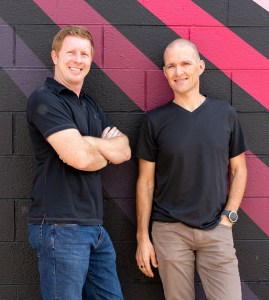
Image Credits: CEO Dave Wright and COO Dave Cahill / Reserve Trust

In conjunction with the fundraise, Reserve Trust is also announcing that Dave Wright has been named CEO and Cahill joined as COO. The pair worked together previously at SolidFire, a flash storage startup that Wright founded and sold to NetApp for $870 million in 2016.

Reserve Trust works with businesses that seek to embed domestic and cross-border B2B payment by offering them the ability to store funds in custody accounts that are backed by its Federal Reserve master account.

The history of the company relates back to the global financial crisis. After the crisis, banks in the U.S. went through a process called derisking, which meant they shed businesses that on a risk return basis weren’t as strong as other businesses. One of those included the handling of U.S. dollar payments, particularly in emerging countries. 

“One of the consequences of this is that it became significantly more difficult and expensive for businesses and smaller economies to trade and move U.S. dollars around the world,” Wright told TechCrunch. “And the founders of Reserve Trust saw this opportunity to build a new type of financial institution that was focused on helping to provide U.S. dollar payment services, especially to emerging fintechs in markets around the world, and helping to reconnect those economies to global trade.”

But rather than start a bank, the founders (Dennis Gingold, Justin Guilder) navigated a previously unexplored part of regulatory waters to create a state-chartered trust company with a Federal Reserve master account.

“That’s something that had never really been done before,” Wright added. “Pretty much every other trust company has to work through banks for all their payment services. Reserve Trust is the first that has actually managed to get a Federal Reserve master account and can process payments directly with the Federal Reserve.”

The complex process took about three years, and in 2018, the company got a Federal Reserve master account and started providing U.S. dollar custody and payment services for fintechs all over the world. Reserve Trust began to see strong demand from payment and fintech companies that were struggling to develop strong partner bank relationships, even though fundamentally there wasn’t any reason the banks couldn’t work with them. 

“They found working with banks to be a slow process, one that didn’t involve a lot of technology expertise on the side of the banks, and it was really inhibiting their ability to develop their technology,” Wright said. And that was even here in the U.S. Today, more than half of its business is from domestic fintechs, although Reserve Trust still has a strong international presence as well.

The new funds will mainly go toward helping the company scale to handle what Wright describes as “a fairly overwhelming amount of demand” and toward building out the team, the technology and the services it needs to address the payment needs of larger, faster growing fintechs around the world. 

“Most of our customers today are small and midsize fintechs, but now we’re seeing demand for much larger fintechs that have much higher payment volumes and are involved in embedded banking and B2B payments,” Wright said. “They are looking for a stronger banking partner than what they’ve been able to find among the role of traditional banks.” Customers include Unlimint and VertoFX, among others.

QED Investors partner Amias Gerety and FinTech Collective principal Matt Levinson are bullish both on Reserve Trust’s history and its potential.

The pair point to payments giant Stripe as an example of how far Reserve Trust can go.

“Stripe has significant market share doing merchant acquiring and processing e-commerce payments for the consumer,” Levinson said. “B2B payments is significantly bigger in terms of volume, so we’re talking about well over $20 trillion of addressable payment flow. But there’s no real technology company that’s brought the modern payments platform to market without being beholden to legacy banks. And that’s why we’re so excited about this business.”

Reserve Trust, he added, is giving businesses a way to facilitate B2B payments that “are smarter, faster and cheaper.”

Gerety agrees.

“Despite all the excitement around digital payments and infrastructure, there is still no fintech that can offer direct integration with the U.S. payment system,” he said. “With Reserve Trust, we are creating foundational infrastructure to hold and move payments globally and at scale.”