Year: 2021

28 Jul 2021

What Tesla’s bet on iron-based batteries means for manufacturers

Elon Musk earlier this week made his most bullish statements yet on iron-based batteries, noting that Tesla is making a “long-term shift” toward older, cheaper lithium-iron-phosphate (LFP) cells in its energy storage products and some entry-level EVs.

The Tesla CEO mused that the company’s batteries may eventually be roughly two-thirds iron-based and one-third nickel-based across its products. “And this is actually good because there’s plenty of iron in the world,” he added.

Musk’s comments reflect a change that is already underway within the automotive sector, mainly in China. Battery chemistries outside of China have been predominantly nickel-based — specifically nickel-manganese-cobalt (NMC) and nickel-cobalt-aluminum (NCA). These newer chemistries have become attractive to automakers due to their higher energy density, letting original equipment manufacturers (OEMs) improve the range of their batteries.

If Musk’s bullishness is heralding a genuine shift across the EV industry, the question is whether battery makers outside of China will be able to keep up.

Musk is not the only automotive executive to signal a return to the LFP formula. Earlier this year, Ford CEO Jim Farley said the company would use LFP batteries in some commercial vehicles. Meanwhile, Volkswagen CEO Herbert Diess announced during the company’s inaugural battery day presentation that LFP would be used in some VW entry-level EVs.

On the energy storage front, Musk’s comments about using LFP-based chemistries in Powerwall and Megapack are in line with other stationary energy storage companies pushing for iron-based formulas. “The stationary storage industry wants to move to LFP because it’s cheaper,” Sam Jaffe, who heads the battery research firm Cairn Energy Research Advisors, told TechCrunch.

LFP battery cells are attractive for a few different reasons. For one, they’re not dependent on ultra-scarce and price-volatile raw materials like cobalt and nickel. (Cobalt, which is predominantly sourced from the Democratic Republic of Congo, has undergone additional scrutiny due to inhumane mining conditions.) And while they are less energy-dense than nickel-based chemistries, LFP batteries are much cheaper. This is good news for those looking to spur the shift to electric vehicles because lowering the cost per vehicle will likely be key to greater EV adoption.

Musk clearly sees a major future for iron-based chemistries at Tesla, and his comments have helped thrust LFP back into the spotlight. But there’s one place where they’ve remained the star of the show: China.

China’s monopoly on LFP

“LFP is pretty much only produced in China,” Caspar Rawles, head of price and data assessments at the research firm Benchmark Mineral Intelligence, explained in a recent interview with TechCrunch.

China’s dominance in LFP battery production in part relates to a series of key LFP patents, which are managed by a consortium of universities and research institutions. This consortium came to an agreement with Chinese battery makers a decade ago under which the manufacturers would not be charged a licensing fee providing that the LFP batteries were used only in Chinese markets.

Hence, China cornered the LFP market.

Battery makers in China may benefit most from a potential tectonic shift toward LFP — specifically BYD and CATL, the latter of which already manufactures LFP batteries for Tesla vehicles built and sold in China. (Volkswagen, meanwhile, has a substantial stake in Chinese LFP maker Gotion High-Tech.) These battery makers aren’t slowing down: In January, CATL and Shenzhen Dynanonic signed an agreement with a local Chinese province to build an LFP cathode plant at a cost of $280 million over three years.

The LFP patents are due to expire in 2022, industry analyst Roskill explains, which could give battery manufacturers outside China time to start shifting some of their production toward iron-based formulas. However, all of the planned battery factories in Europe and North America, many of which are joint ventures with South Korean industry giants like LG Chem or SK Innovation, are still focused on nickel-based chemistries.

“For the U.S. to take advantage of LFP’s strengths, North American manufacturing will be necessary,” Jaffe explained. “Everyone building a gigafactory in the U.S. today is planning on making high nickel chemistries. There’s an enormous unmet need for locally manufactured LFP batteries.”

Rawles said he expects some LFP capacity in North America and Europe in the coming years, particularly after the patents expire. He pointed out that both CATL and SVOLT, another battery maker, have been making moves in Germany — but both of these companies are Chinese, which leaves open the question of whether other Asian or Western companies can compete in the LFP market. (Stellantis chose SVOLT as one of its battery suppliers from 2025 onwards.)

On the energy storage front, Jaffe said he thinks “it’s inevitable that most stationary storage systems will eventually be LFP.”

However, not all is lost for domestic manufacturing in the United States. “The good news for building local LFP manufacturing is that the supply chain is simple: Outside of lithium, it’s iron and phosphoric acid, two cheap materials already made [in the U.S.] in large quantities,” Jaffe added.

In the end, it is not a question of one battery chemistry versus another. What’s more likely is what we’ve already started to see from automakers, including Tesla: Iron-based batteries will be used predominately in entry-level and cheaper vehicles, while nickel-based cells will be used for higher-end and performance cars. Many consumers will likely be content with a 200- to 250-mile-range vehicle that’s thousands of dollars cheaper than one with a range of 300 to 350 miles.

Automakers have also begun making moves to take control of the battery supply, whether through vertical manufacturing or joint ventures with established battery companies. That means that growing LFP capacity in North America and Europe is not only likely, but inevitable.
28 Jul 2021

Building back better means hiring more workers skilled through alternative routes

When I first came to the United States from the Dominican Republic, nobody wanted to hire me for a job in tech.

Rather than recognize the skills I possessed, employers could only see my still-developing English and my lack of a college degree. They failed to take into account my years of experience working with technology and electronics because the route I had taken was too unfamiliar.

It’s a situation all too common for the more than 70 million workers in the U.S. who are skilled through alternative routes (STAR) — especially for the 13.5 million Hispanic STAR workers like me out there today. If the employers who are struggling to fill open tech roles want to overcome the growing “skills gap,” then it’s a situation that must change.

When I arrived in the U.S., I applied to countless IT jobs, from customer service to computer repair. Every company rejected me before they even gave me the chance to show what I could do. Had employers taken the time to talk to me, they would have learned I started fixing my neighbors’ phones and computers at the age of 12, and that I had already sailed through a series of computer classes on networking, basic coding, cybersecurity, scripting and computer repairs.

About 31 million workers — including millions of Hispanic workers — possess skills that qualify them for higher-paying roles they are never considered for.

Even as I continued to learn English and mastered coding and cybersecurity concepts, companies failed to recognize what I could bring to the table. My background was too unfamiliar to make it past most employment filters that relied on degree requirements. I was often screened out of the hiring process before showcasing my talents, and I faced the biases of hiring managers who weren’t used to candidates like me. I could only get cleaning jobs or work at factories and fast food restaurants — places where I felt all my skills were going to waste.

I ended up getting lucky, and thanks to mentoring and hiring support through a follow-on to President Obama’s TechHire Initiative, doors began to open. After years of struggling, I could finally get my foot in the door, meet hiring managers and showcase my skills. I am now working as a cybersecurity associate, but my career could have begun much earlier.

Sadly, this story is a familiar one for far too many STAR workers, especially Hispanic people. Many of them aren’t as lucky as I am.

The statistics are sobering. About 31 million workers — including millions of Hispanic workers — possess skills that qualify them for higher-paying roles they are never considered for. Recent research shows, for instance, that there are 114,000 Hispanic workers employed as food and hospitality service managers, who have the skills to transition to similarly skilled jobs as community and social services managers, where wages are nearly 50% higher.

Hispanic STAR workers are also less likely to transition to higher-wage jobs than their white counterparts, and even when they are able to make such a transition, they are compensated less for their skills.

Employers must begin building more promising pathways that are accessible to all workers. The need for this shift has only grown over the last year as the COVID-19 pandemic disproportionately impacted Hispanic and Latino communities. Hispanic or Latino workers accounted for nearly one-quarter of the pandemic’s initial job losses. Even as the economy continues to slowly recover, the unemployment rate for those workers sits at 8.6%, compared with 5.7% for white workers. The fallout has been especially pronounced among Hispanic and Latina women. In December, they accounted for 45% of all job losses.

All this is happening while employers say they are struggling to find workers to fill open positions, even as millions remain unemployed and job postings have begun to return to pre-pandemic levels. The narrative around skills gaps continue to be perpetuated by employers, and they may have worsened during the COVID-19 crisis. These gaps are expected to cost the U.S. economy $1.2 trillion over the following decade, but most of these gaps aren’t actually real. They’re just the consequence of employers ignoring workers who learned their skills through alternative routes.

By rethinking hiring barriers like degree requirements, employers can more easily find job-ready talent and improve diversity at the same time. Such shifts can lead to even more systemic change down the road.

My success doesn’t end with me, as there is a multiplier effect to hiring STAR workers. Now that I have a strong foothold in the industry, I am able to help other members of my community. I formed an organization called Rhode Island Group for Hispanic Technology (RIGHT) to provide training in basic computing, coding, cybersecurity and digital literacy — all in Spanish.

If America is going to build back better, employers need to seek out and hire more workers who are skilled through alternate routes. They must begin to look beyond the traditional signals of employability and expand their understanding of what makes a good employee. Those who fail to do so will continue to miss out on the more than 13 million talented Hispanic STAR workers like me.

28 Jul 2021

China’s regulatory crackdown is good news for startups aligned with CCP goals

Watching the Chinese technology sector over the last week has been a fascinating exercise. The Chinese government took on entire industries like edtech while also coming down on individual companies (Tencent, Meituan) in a broad effort to change the country’s technology landscape.

The sum of the financial damage is easy to understand. The NASDAQ Golden Dragon China Index, for example, which tracks U.S.-listed companies that do their business in China, fell from a 52-week high set earlier this year of 20,893.02 to 10,672.37 yesterday. You can also track the decline in value of various Chinese technology companies both on-shore and on foreign exchanges if you want to get an even fuller picture of the financial carnage.

It’s common among commentators and analysts to draw a direct line between the blocked Ant Group IPO last year, the ensuing fall from grace of Chinese entrepreneur Jack Ma, and the latest news out of the Chinese Communist Party’s (CCP) regulatory bodies. That’s reasonable. Things are changing in China, and the regulatory landscape of tech work in the country won’t be the same from here on out.


The Exchange explores startups, markets and money.

Read it every morning on Extra Crunch or get The Exchange newsletter every Saturday.


We’ve explored the moment a little, noting last week that edtech investment could slow in the country provided that the government went through with its plan to force tutoring companies to go nonprofit. The government then did so, and more, also blocking tutoring companies from being formed, going public, raising external capital from foreign sources and more. It was comprehensive. Natasha Mascarenhas has a great read on the matter here.

So, bad news for startups? After all, if edtech investment could slow in the face of regulatory changes, what about other technology-influenced areas of business?

The negative case is somewhat easy to make. The positive case is more interesting. Some market watchers are making the argument that by taking on some of China’s largest technology companies, more room could be cleared in the country for smaller companies to snag a piece of business.

28 Jul 2021

Relief looks to negotiate on behalf of users struggling with debt

Jason Saltzman is a serial entrepreneur. He first cofounded SeamlessDocs and then went on to found The Alley, a coworking space based out of New York City. Following Alley’s acquisition by Verizon, Saltzman left to build something new and became fascinated with the debt consolidation and relief space.

That’s how Relief, cofounded by Saltzman, Bryan Okeke, and Ram Barrouet, was born. Today, the startup is announcing it has raised $2 million via a convertible note, led by Collaborative Fund, BFV, Necessary Venture, The Fund. Angels also participated in the round, including Justin Kan, Ben Kaplan, Elliot Tabule, and David Galanter.

Saltzman’s thesis came out of his observation of the space. Third-party debt collection agencies use lots of automation tools but those same services aren’t extended to the individuals seeking debt relief. Relief is an app that uses machine learning algorithms and collective bargaining to reduce debt balances. In essence, Relief does the math on behalf of users and negotiates directly with creditors to bring down the balance (in half of more, according to Saltzman), all for free.

Not unlike Justworks, Relief uses the power of its entire user base to negotiate with creditors to bring down balances and lower interest rates. Once the negotiation is complete, Relief sets up a payment plan for users to pay off the rest of their debt.

Offering debt consolidation and loans for folks in financial peril is not new, but the ability to negotiate on behalf of the user is not a broadly available feature on most similar platforms.

To be clear, this is not a platform to help folks save money. Saltzman explained that Relief app is an alternative to bankruptcy.

To start, Relief will generate revenue by the credit issuers who pay to have settlements handled, with Relief taking the place of a debt collector. The startup can also generate revenue by issuing loans and earning off of the interest. But Saltzman hopes to get enough users to start thinking creatively about how to make other forms of revenue.

“Trust is the biggest challenge,” said Saltzman. “We have to get into consumers houses and de-stigmatize this horrible problem. The solution is not there right now. The data shows us that one in three Americans is behind on their credit card bills right now. So we need them to trust us.”


28 Jul 2021

Nura finally goes fully wireless with the NuraTrue buds

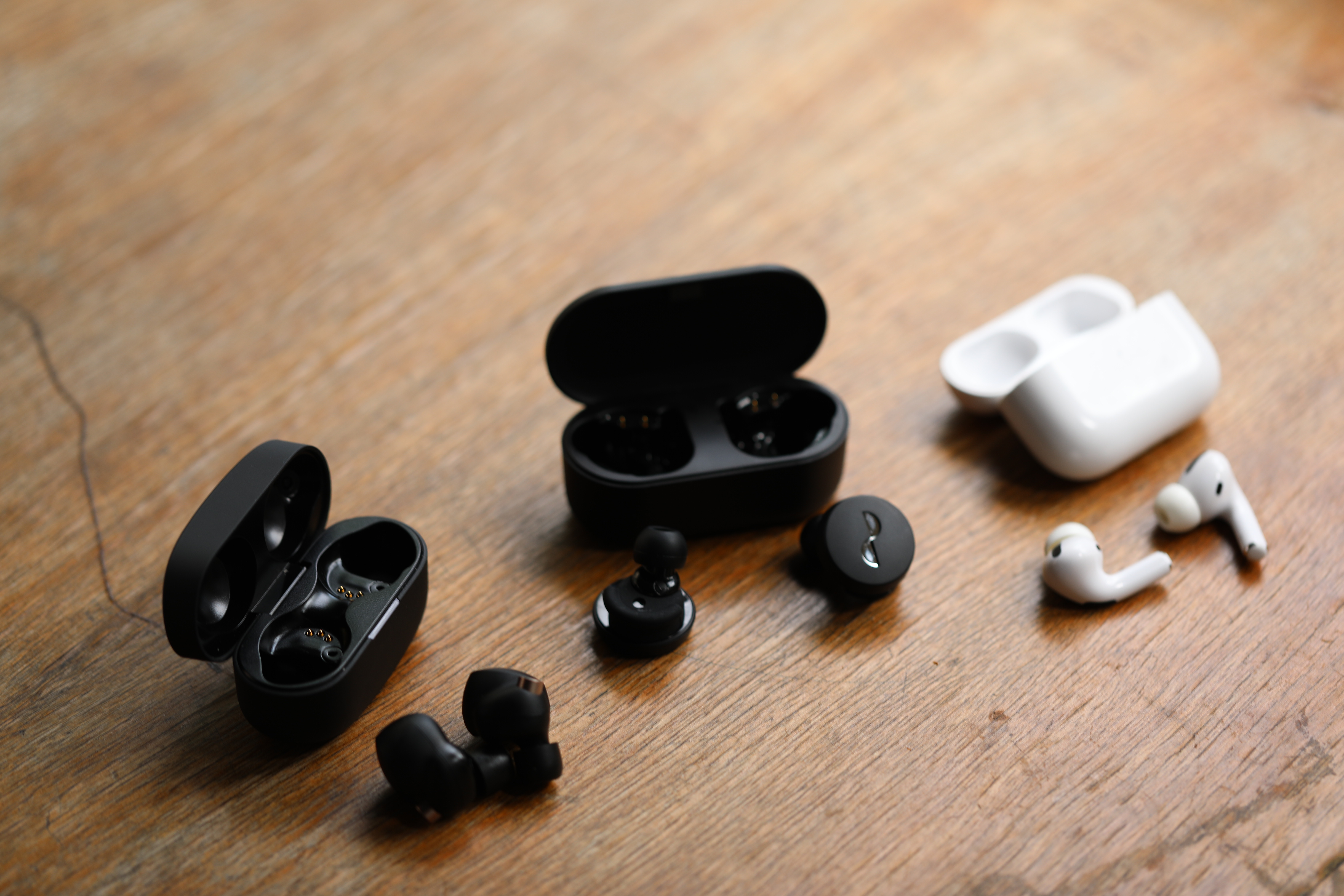
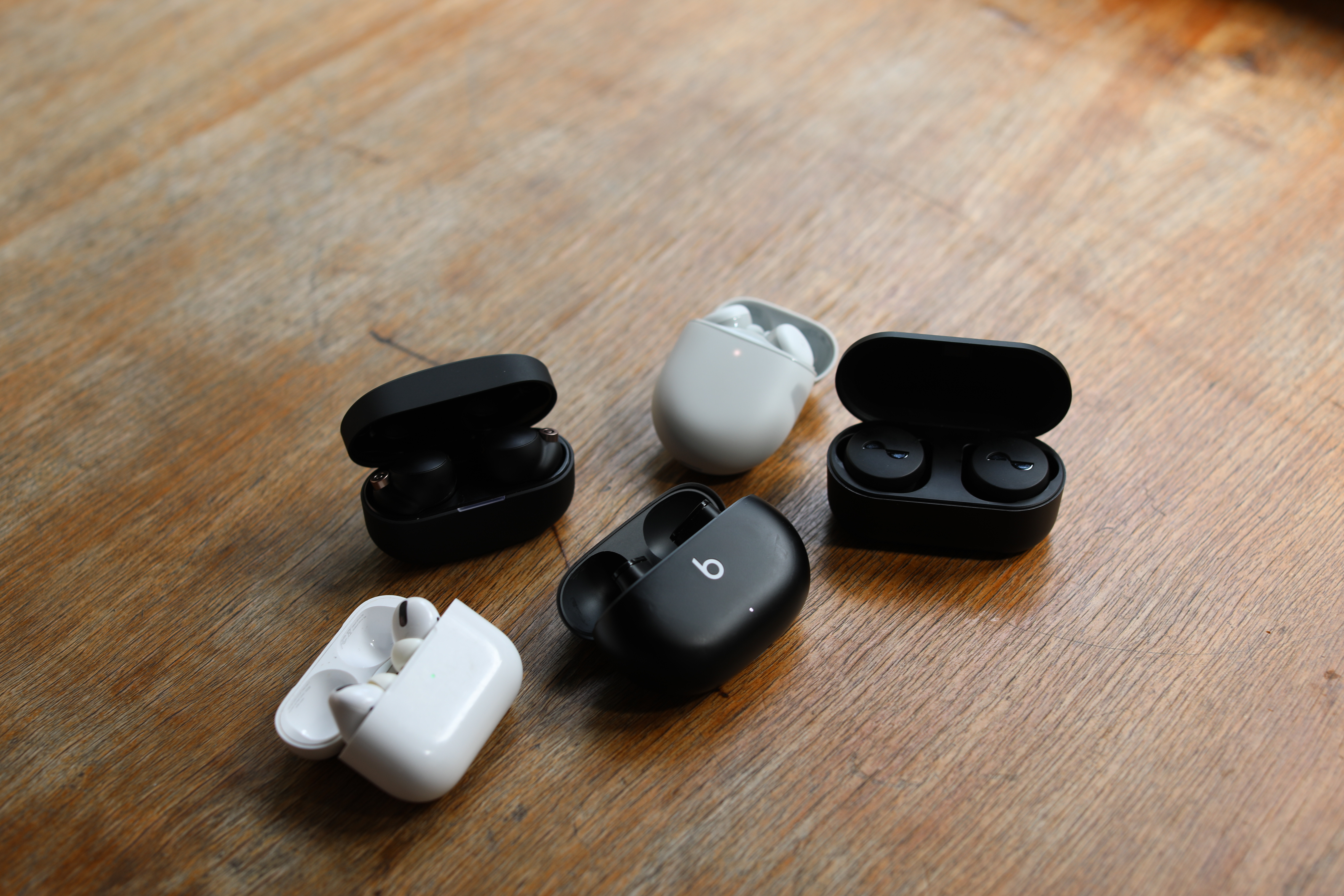
As I write this, I have no fewer than five recently reviewed earbuds sitting on the desk in front of me. And you know what? They’re all pretty good. Some are better than others, of course — that’s why they invented gadget reviews. But as far as consumer electronics go, the category seemed to mature — and the products became ubiquitous — virtually overnight.

Nearly every hardware maker has entered the category — some several times over. You can get a truly great pair for over $200 and a pretty decent one for under $100. There’s a broad range in quality across that spectrum, of course. But features? A few things, here and there, but on the whole, earbuds settled into a similar sort of homogeneity as smartphones before them.

Image Credits: Brian Heater

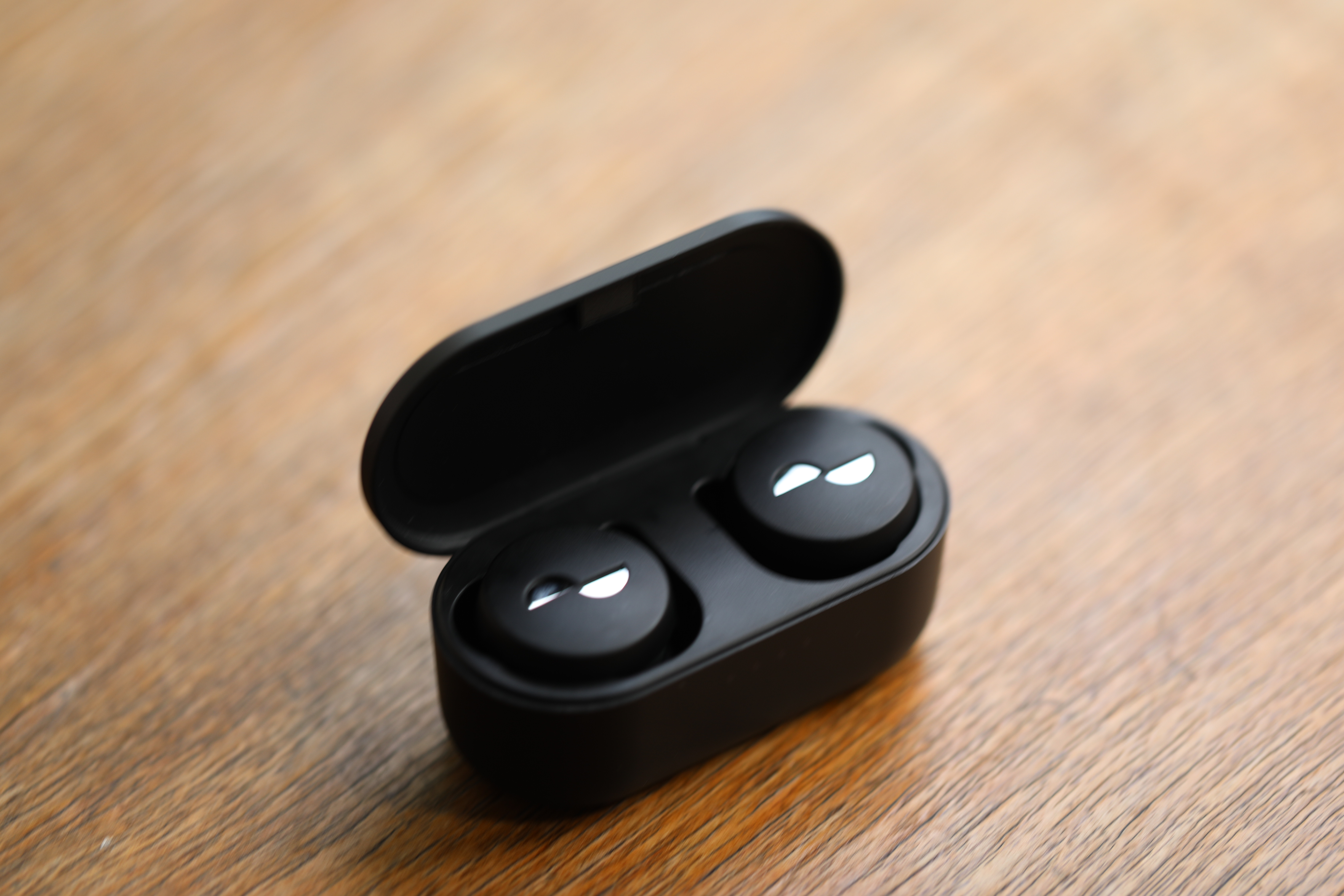
Differentiation was certainly a big topic during today’s launch of Nothing’s Ear (1). It’s also been a core part of Nura’s DNA since the beginning. But where a company like Nothing views its earbuds as the first piece in a larger ecosystem, Nura is, simply put, a headphone company. And there’s a pretty simple reason behind that. Everything Nura does is built around its audio technology — something that’s held true since before I had the opportunity to try the original Nuraphones as a prototype with a big, unsightly circuit board attached.

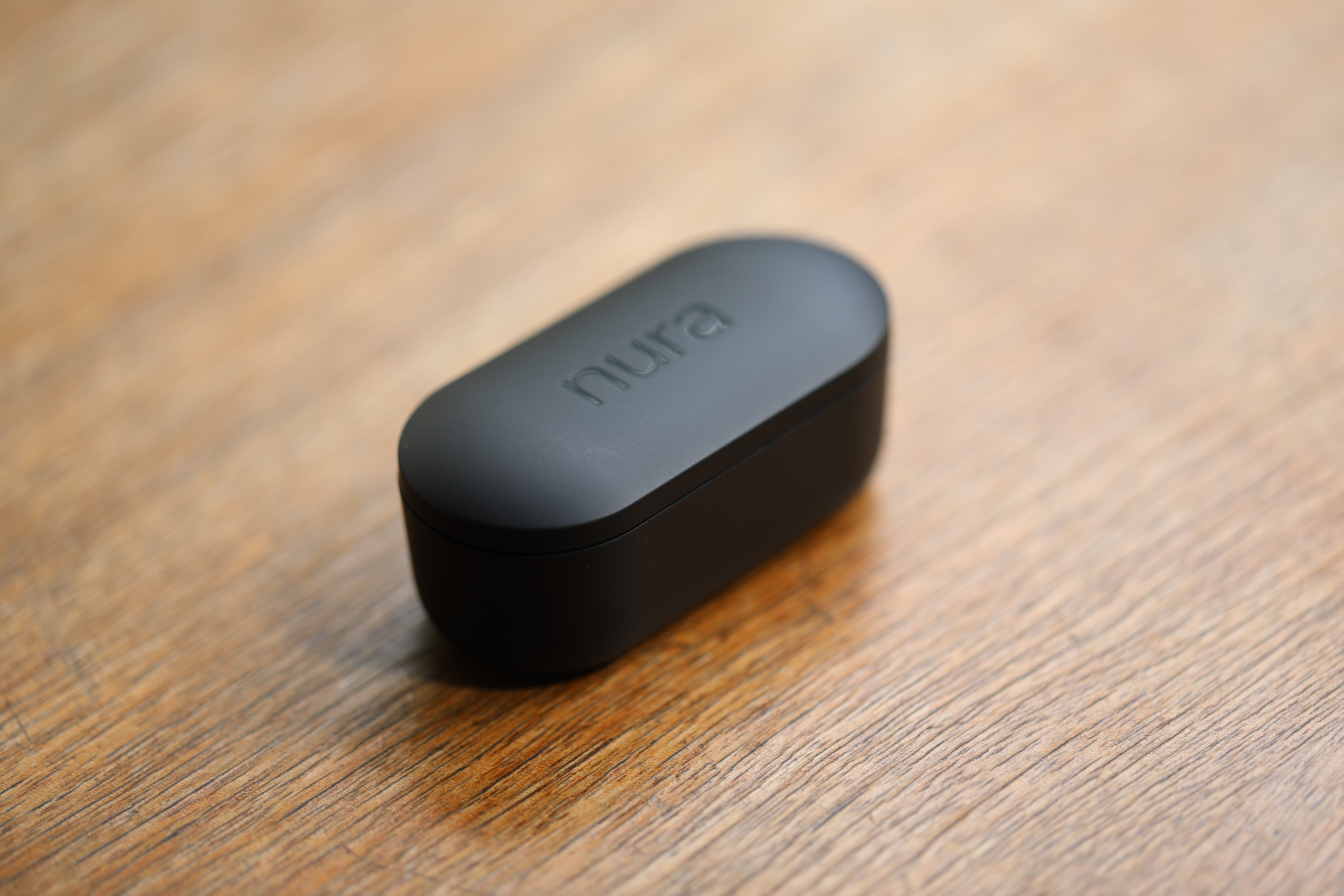
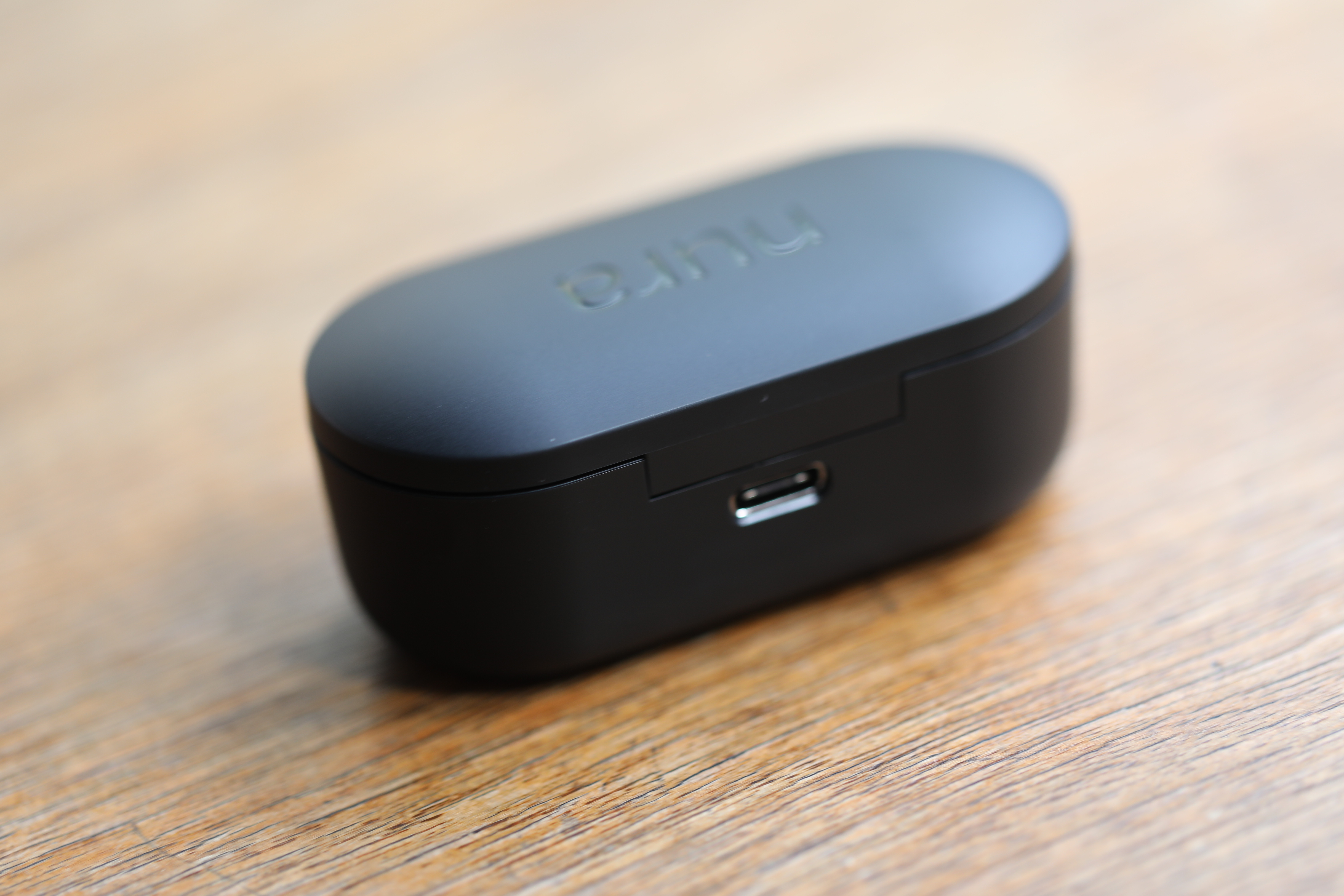
Announced today, NuraTrue mark the company’s third entry into the headphone market, following the over-ear Nuraphones and the tethered Nuraloop. The “true,” one assumes, refers to the truly wireless design, abandoning the behind-the-neck design that gave last year’s Nuraloop their name.

The decision to launch earbuds with a wire seemed an odd one at the $199 price point four years after Apple released the first AirPods (the year Nura was founded). There were some practical technical concerns, and Nura made the most of them with a magnetic connector that lets them double as wired headphones/monitors (something I appreciated when I still took a couple plane rides a month).

Image Credits: Brian Heater

When I put the question of going fully wireless to Nura co-founder Dragan Petrovic, he answered,

We wanted to release a fully wireless product only once we could ensure an outstanding user experience and (most importantly) outstanding sound quality. Fully wireless earbuds have been around for about 5 years now, but only recently has the underlying technology matured to the point of being able to do justice to the music. These improvements were delivered by the wireless chip providers, which is why many of the fully wireless products that have come out this year are considerably better than what was available before. For NuraTrue, we took the finally mature wireless technology provided by the chip makers and added Nura’s (or rather, the listener’s) personalized sound to deliver the best sound quality in the most convenient form factor.

While it’s true that everyone and their uncle has offered their own take on the category, Nura’s entry wasn’t as simple as pulling together some off-the-shelf components. The company offers one of the more unique listening experiences, courtesy of on-board technology that beams sound into the wearer’s ear and reads back the faint transmissions that return.
Per Nura,

Encoded in the returning sound wave is information about how well you heard the sound that went in. The Nuraphone uses an extremely sensitive microphone to detect this returning sound wave, and a self-learning engine built into the Nuraphone to create your profile. No buttons or knobs. It all happens automatically and in about 60 seconds. It is a little bit magic.

Image Credits: Brian Heater

The experience is the same across the three devices, so we’ve written about it a few times. Essentially the system creates a sort of custom sonic fingerprint based on the reading it gets back and uses that to adjust the settings according. It does feel like a bit of wizardry the first time you try it, especially when you flip back and forth between the default and custom settings.

The original Nuraphones quickly became one of my most recommended headphones — a solid accomplishment for such a young hardware startup. Since the launch of the original over-ear headphones, however, I’ve been waiting to see what the company might be able to do in a fully wireless form factor. And on most accounts, I’d say the NuraTrue are a success.

The great sound is largely intact — a solid accomplishment. There are nuances you’ll hear in these headphones that you too often miss in comparably priced tech — subtle details that get lost in the mix with less balanced headphones. Of course, you’ll continue to lose other nuances depending on the source of the music you’re listening to. What Nura’s able to do is impressive, but not miraculous.

You do, obviously, lose something with the smaller size. The Nurphones’ big differentiator is the addition of a powerful, tactile bass, courtesy of the ear cups. This experience is accomplished to some extent by the immersion slider in the app, which is designed to adjust the experiential level provided by the buds. But again, there’s no replacing the cocooning effect of the over-ear cups.

Image Credits: Brian Heater

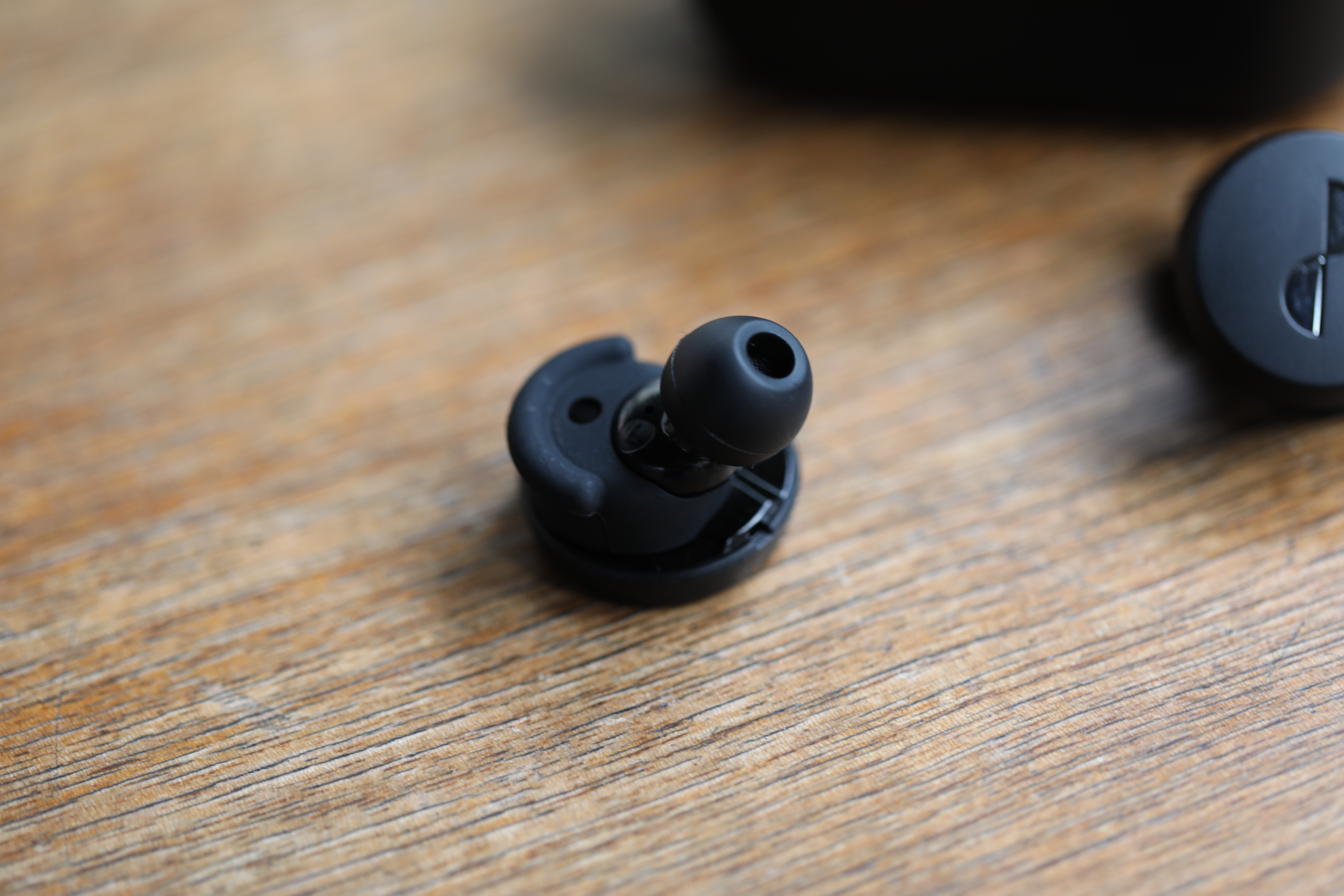
But listen, at this point I think we all implicitly understand that different form factors offer different compromises. Otherwise, we would only have one style of headphone. The NuraTrue are quite light — I was actually surprised, given their size. Each bud weighs 7.4 grams. They’re also extremely comfortable. As with other Nura products, the headphones will detect whether you have a tight seal when doing the initial testing. Of its three products, however, the NuraTrue gave me the least problems on that front.

As someone who frequently experiences ear pain from different buds, they’ve not given me an issue wearing them around effectively all day. The weight distribution and a design that you basically twist into your ear means they stay put quite well. I’ve had no issues with them falling out at the gym or on a few short runs.

The active noise canceling is decent. It’s not industry-leading by any stretch, but it gets the job done for sure. It’s a bit of an annoyance, however, that you have to go into the app to toggle it on and off — as well as the immersion feature. These things, coupled with the fundamental importance of sound profiles means the buds are tied to their app a lot more than other earbuds. It’s the price you pay for being different, I suppose.

The battery is rated at six hours on the buds and 24 with the case factored in. There’s no superfast charging here — it takes about 2.5 hours to get the case’s 500 mAh battery from zero to full. Likely that won’t be an issue unless you never remember to charge the thing or you’re planning to go on a couple of long-haul flights. The inclusion of four battery lights on the front of the case is a nice touch.

Image Credits: Brian Heater

My biggest complaint here is a bit of a surprise to me. A majority of the headphones I’ve tested recently haven’t had any Bluetooth connectivity issues. Honestly, I’d thought we’d moved past that. While the NuraTrue isn’t using the latest version of Bluetooth (5.2), the 5.0 it does uses is the same version found in, say, the AirPods Pro (Apple, of course, has the decided advantage of making its own phone, operating system and chips). The connection is fine around the house, but I’ve experienced drops while walking around that I haven’t with other recent pairs.

It’s more annoying than end of the world, but it’s worth keeping in mind — and certainly something the company should consider addressing for gen 2. The built-in  microphone also left something to be desired, creating distortion when I took calls.

As from those, there’s really not a lot to complain about. The NuraTrue are well rounded (figuratively and literally), comfortable, and the company’s sound profiling technology is enough of a standout feature to set them apart from an army of similar buds. For my own specific needs, I’d say they also make the Nuraloop largely redundant, though Petrovic tells me, the company is keeping the product around as it, “complement[s] our product portfolio by offering things that no true wireless product has, most importantly 16+ hours of battery life, and the ability to connect to an analog audio jack.”

Image Credits: Brian Heater

Fair enough on those two points. Again, if any headphone did everything, there wouldn’t be much point in variety. On the whole, I do think NuraTrue carry the far broader appeal for a majority of users. The ability to hardwire has its appeal but is pretty limited for most of us at this point. And 16 hours of battery built-in is great, but most of the time six on the bud and 24 with the case should suffice.

Mostly, it’s just nice to see a legit hardware startup continue to make some waves in the consumer space by taking on the big names with differentiated technology. In the earliest days, I’d imagined Nura would get snapped up by a Samsung or Apple, but I’m glad the company opted to go its own way.

28 Jul 2021

The mmhmm story and how it plans to spend its $100M

Hello and welcome back to Equity, TechCrunch’s venture capital-focused podcast, where we unpack the numbers behind the headlines.

For our Wednesday show this week, Natasha and Alex Chris had prior Equity guest Phil Libin back for a chat. Libin was first on our show a while back to chat about his startup studio. But since then, he’s been a little busy.

You may recall that mmhmm, Libin’s project to build a better video communication service, raised $100 million the other week. And we here on the Equity pod made a little bit of fun at the number. It was just so very much money for a roughly one year old company. What was the company going to use it for?

Well, Libin’s folks got in touch and so we decided to just have him on to chat. And we wanted him back because he was one of the most memorable guests on the show, frankly, thanks to his candor the last time around.

So, what did we get into? A refresh on the mmhmm story, and notes from Libin about what’s ahead for his company. It certainly has the cash to pursue its vision. But as we learned, building software for a variety of platforms comes with challenges. Challenges that are ameliorated by having lots of smart staff. So, that’s where the money is going.

Regardless, it was good sporting of Libin to come back for another chat. Equity is back Friday morning with our news roundup. Make sure to follow the show on Twitter, as we’re doing the odd Twitter space that you won’t want to miss.

Equity drops every Monday at 7:00 a.m. PDT, Wednesday, and Friday morning at 7:00 a.m. PDT, so subscribe to us on Apple PodcastsOvercastSpotify and all the casts.
28 Jul 2021

ASCAP Lab highlights a quartet of early-stage music startups

Music publishing giant ASCAP said today that a quartet of early-stage startups/university music projects will compete in its Immersive Music Studio Challenge. The 12-week project is a partnership between ASCAP Lab and NY Media Lab (NYCML) that offers the teams grants and access to development resources. They’ll also be showcasing at the upcoming ASCAP Experience.

It’s an interesting little cohort, aiming to tackle some wide-ranging music industry issues. Some have already laid out commercialization plans, while others essentially came together for the program and really haven’t thought that far down the road.

We spoke to the founding teams to get a better sense of the projects.

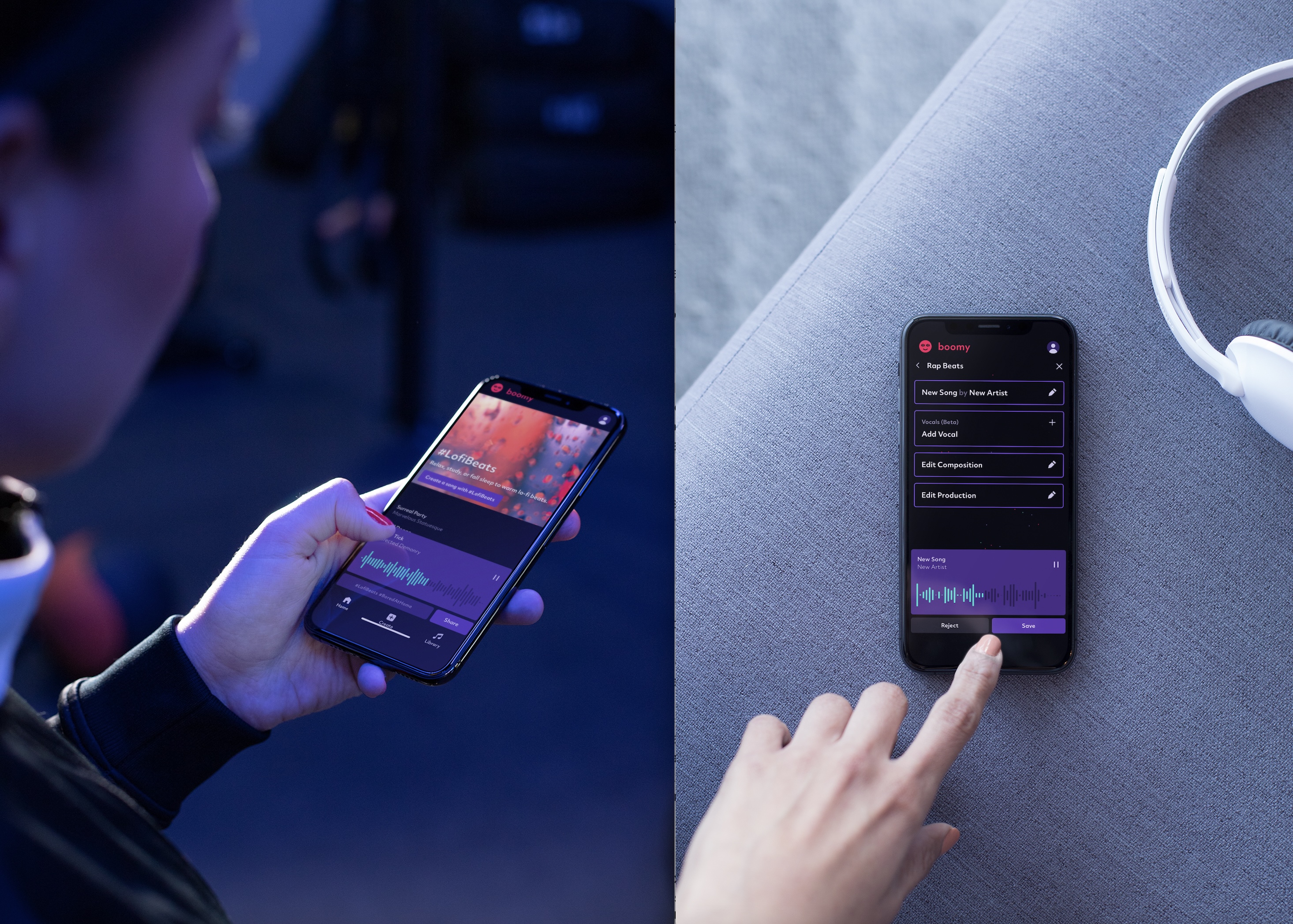
Boomy

Image Credits: Boomy

Who’s on your founding team?

Boomy was founded by serial music entrepreneur Alex Jae Mitchell and music industry veteran Matthew Cohen Santorelli in 2019.

Please describe your product. What problems in the market are you trying to address? 

Music-making is a complex skill requiring time, equipment and resources that most people don’t have. Boomy is an AI-powered music automation platform where people create and release music instantly, effortlessly, and for free — even if they’ve never made music before. Over 200,000 people are already using Boomy to create and release music, 85% of whom are first-time music makers.

Do you have any plans to commercialize? If so, what? Have you identified revenue streams?

Through the Boomy platform, users release albums to 40+ streaming services and digital retailers worldwide, including Spotify, TikTok, YouTube, Apple Music and more — all for free. Users keep an 80% share of the associated royalties, with the remaining 20% used by Boomy to power the free service.

What is your funding to date?

Boomy graduated from the Boost VC accelerator in 2019 and has raised follow-on funding from venture capital firms and music funds, but has not yet made a formal announcement regarding its fundraising.

MiSynth

Image Credits: MiSynth

Who’s on your founding team?  

MiSynth began as a fictional business proposal created by Senaida Ng in her freshman year class, “Are Friends Electric?” taught by professor Errol Kolosine. After the class ended, Ng continued with the idea and worked closely with Kolosine to bring the idea to life. She recruited Ph.D. biomedical engineer Sinem Eriksen to lead the R&D alongside the guidance of NYU Music and Audio Research Lab (MARL) researchers Pablo Ripollés and Elena Georgieva.

Please describe your product. What problems in the market are you trying to address? 

MiSynth is a revolutionary music software plugin that will allow musicians, songwriters and producers to synthesize any sounds they hear in their heads. They will bridge the gap between your imagination and your music by taking data from brain computer interfaces (BCIs) and turning them into playable MIDI instruments. The team at MiSynth strongly believes that everyone can and should have the tools to be an artist. Rather than spending hours learning about sound design and trying to re-create the perfect synth, MiSynth is making music more accessible and efficient for everyone.

Do you have any plans to commercialize? If so, what? Have you identified revenue streams?

Yes, we plan on continuing to build our prototype and testing it after the ASCAP NYCML Challenge and we hope to launch our software by August 2024. MiSynth will be sold as a software plugin compatible with any digital audio workstation (DAW), including Logic Pro X, Ableton Live, Pro Tools, FL Studio, Cubase and Reason. Customers can buy the license to use the software by paying either a one-time fee or a monthly subscription fee until they pay off the full price of the license.

What is your funding to date?

We are a relatively new company that began only in December 2020, but we plan on continuing to seek funding from investors, research grants and challenges like the ASCAP NYCML Challenge to continue our venture.

The Slashers

Who’s on your founding team? 

Devin Kenny – an interdisciplinary artist, writer, musician and independent curator based out of NYC – and William Leon – an AR/VR developer and teaching fellow at Cornell Tech. The founding team met through the \Art Fellowship at Cornell Tech in 2020.

Please describe your product. What problems in the market are you trying to address?

Otherwards is a mixed reality album listening experience combining music with interactive 3D objects and geolocation technology, creating an explorative album experience for the listener that melds music, gaming and the world around them.

Do you have any plans to commercialize? If so, what? Have you identified revenue streams?

No plans to commercialize just yet. We are in the process of iterating on the application toolchain and doing customer discovery.

What is your funding to date?

We’ve just started working on this project and have not raised any funds yet.

Dot Dot

Image Credits: Dot Dot

Who’s on your founding team?

Kate Stevenson, Elizabeth Perez, Chris White and Jacques Foottit.

Please describe your product. What problems in the market are you trying to address?

Social is a best-in-class online event platform where users can easily meet and chat with other people while exploring virtual spaces with games and live performances. We saw the need to bring serendipitous social moments and ways to spark real-life relationships into the remote, virtual experience, especially at events and live performances.

Every world comes with proximity-activated audio, live-streaming avatars, beautiful customizable visuals and unique brand opportunities. With options to showcase video content, host a social livestream, add entertaining challenges and game packages so attendees and audience members connect through playful exploration and leave wowed by the experience.

Do you have any plans to commercialize? If so, what? Have you identified revenue streams?

Social is being used commercially for product launches, conferences, team-building events, art exhibitions and performances. Revenue streams include monetization through ticketing, donation widgets and sponsorship packages. Our commercial clients include fashion and beauty brands, media, tech and finance.

The COVID-19 pandemic has redefined how we think about virtual communication and experiences. We have seen a level of behavioral change that would typically take more than 10 years happen in just 12 months. There is now a viable market for virtual engagement and therefore an opportunity to consider a hybrid approach for how we can engage audiences as we move out of the pandemic.

What is your funding to date?

We are currently funded through white-labeled development for event companies and brands. Social is growing organically based on user needs, through pilots with physical venues, artists and passionate communities.

28 Jul 2021

Brain Technologies raises $50M+ for the launch of Natural, a natural language search engine and ‘super app’

Voice-based and other personal assistant apps — which use natural language and hefty AI engines in the backend to source information to address your various questions, do your e-commerce bidding, or control one electronic device or another in your home — have been around for years, but too often they have come up short when it comes to user experience, failing to nail the right solutions to your queries. Today a new app is launching from a startup that has largely been in stealth mode up to now to try to address that disparity. Brain Technologies is today announcing $50 million in funding, and along with that is releasing Natural, an iOS app, in the US market.

The $50 million (which is actually described as “over $50 million” by the company, with an exact number undisclosed), meanwhile, is coming from a very interesting mix of investors — backers include Laurene Powell Jobs’ Emerson Collective, Goodwater Capital, Scott Cook and WTT Investment, a list that underscores some of the attention that Brain has been getting, even before having released a single product.

Prior to this round, Brain had raised $1.5 million back in 2016 from an unnamed investor while still in stealth mode.

Jerry Yue, the young founder and CEO of Brain — a repeat entrepreneur and robotics enthusiast whose last company, a grocery delivery service in China called Benlai, is still going strong — said in an interview that he does not like to call Natural a “personal assistant” app, not because of the shortcomings of so many of these in the past, but because of the voice association many have with the concept.

“We don’t position ourselves as a voice assistant because we don’t think the future is voice only,” he said. “It should be the right combination of voice and native app experience.”

Instead, he describes what Natural is as the world’s first “generative computer interface”, the logical progression in digital information search.

That progression, in his view, started with the web, progressed to search engines, and then apps, before landing where he sees it today. Natural brings all of these together in some degree. Currently, you speak or type any kind of question or command into the app, which then provides a solution that might be in the form of links to other apps you might have.

For example, “I’d like sushi tonight,” will bring back options (in theory) for ordering sushi, and possibly your most favored dishes, from a selection of restaurants by way of food ordering apps that you use, or places to go eat it, as well as options for making that sushi yourself (and buying the ingredients online to do so, as well as a method).

Similarly, travel searches return results that dip into multiple silos from, say, airlines and airline aggregators that are easily editable and that you can buy directly from those results, if you already have payment details on your device. (While Google provides this to some degree, you eventually have to navigate to sites to buy tickets, which might end up significantly more expensive when you actually visit said sites.)

The more you use the app, the theory is that it will learn more about what you might want from your questions.

AI that anticipates what we are trying to say or do is something that has been attempted before, of course, but the difference here, Yue said, is in Brain’s approach, which is based on the concept of “one shot” learning, which he described as a kind of general purpose AI, “a tool that learns to use other tools.”

The alternative is a more labor-intensive approach that AI-based systems are typically built on today, largely based around keywords. “AIs from Google or Amazon are based on thousands of people and human coding to connect services,” he said. “This approach treats natural language processing as a classification problem.” In contrast, the breakthrough system he and his team have devised, he said, “has learned more than 4 million functions on its own.” Ironically, the end result of a successful AI like this is not to make us feel more technologically powerful, but to get us away from our devices, and spending time fussing on them, and into the world.

Given that this is a consumer app, it will be interesting to see how and if there is mass takeup of Natural, and whether the right combination of anticipatory AI with natural language and design come together to pique collective attention. The team and what they’ve built in any case will be a hot property, given that AI will continue to be a strong and growing presence in the tech landscape for years to come.

“What Jerry and his team are developing is incredibly special. I’m not aware of anyone doing more interesting work to demonstrate how fundamentally AI can enhance our everyday lives,” said investor Scott Cook, who was also the founder of financial software giant Intuit, in a statement.

“Many of us remember the first time we used an iPhone. The software felt magical, and every animation felt dynamic yet subtle,” said Tom Goodwin, a Natural beta customer. “Experiencing this app is the closest thing I’ve felt to that for a long time. I love the idea of one place to go for everything.”

28 Jul 2021

Redwood Materials raises $700M to expand its battery recycling operation

Redwood Materials CEO JB Straubel shared his aspirations last year to turn the startup he co-founded in 2017 into one of the world’s major battery recycling companies. Now, the former Tesla co-founder and CTO has the money to accelerate those plans.

Redwood Materials said Wednesday it raised $700 million from high-profile institutional investors and venture firms, providing the capital needed to expand its existing operations well beyond its Carson City, Nevada home base to locations throughout North America and even into Europe.

The Series C round was led by funds and accounts advised by T. Rowe Price Associates, Inc. and included Goldman Sachs Asset Management, Baillie Gifford, Canada Pension Plan Investment Board, and Fidelity. Previous investors Capricorn’s Technology Impact Fund, Bill Gates’ Breakthrough Energy Ventures and Amazon’s Climate Pledge Fund returned to put more capital into Redwood. Valor Equity Partners, Emerson Collective, and Franklin Templeton also participated, the company said.

Redwood previously raised $40 million in a Series B and some seed money, which brings its total raise under $800 million, according to the company.

The company’s post-funding valuation is $3.7 billion, according to a source familiar with the investment round. Redwood declined to comment on the figure.

Redwood Materials is aiming to create a circular supply chain. This closed-loop system, Straubel says, will be essential if the world’s battery cell producers hope to have the supply needed for consumer electronics and the coming wave of electric vehicles.

Redwood recycles scrap from battery cell production and consumer electronics like cell phone batteries, laptop computers, power tools, power banks, scooters and electric bicycles. It then processes these discarded goods, extracting materials like cobalt, nickel and lithium that are typically mined, and then supplies those back to its customers, which today includes Panasonic at the Gigafactory in Nevada that it operates with Tesla and Envision AESC’s battery plant in Tennessee. Redwood has also partnered with Amazon to recycle EV and other lithium-ion batteries and e-waste from parts of their businesses.

“In our view, the need for these materials will grow exponentially over time as we enter the era of de-carbonization,” Joe Fath, portfolio manager of the T. Rowe Price Growth Stock Fund said in a statement, adding that “Redwood is well-positioned to be at the forefront of tackling this emerging and critically important problem.”

Straubel sees a bottleneck coming as the whole supply chain seeks to access critical materials. That will affect the growth rate and challenge automakers like Ford, GM and Volkswagen that have laid out ambitious plans to electrify their portfolios.

That problem is likely to compound as the number of automakers going down the electric path grows. Last week, Mercedes-Benz said it will spend €40 billion ($47 billion) plan to become an electric-only automaker by the end of the decade. The German automaker determined it will need battery capacity of more than 200 gigawatt hours. To hit meet those needs, Mercedes plans to set up eight battery factories with existing partners and one new partner to produce cells.

Straubel said it’s time for Redwood to scale more aggressively.

Those plans were already well underway even before it closed the $700 million round, Straubel noted. The company announced in June it had purchased 100 acres of land near the Gigafactory that Panasonic operates with Tesla in Sparks, Nevada. Redwood now has some operations at the site.

Redwood is also in the process of nearly tripling the size of its existing 150,000-square-foot facility in Carson City, Nevada. The new 400,000. addition onto the recycling facility is expected to be operational by the end of the year.

To support the growth, Redwood started hiring more employees with plans to add more than 500 jobs over the next two years. Redwood employs more than 130 people today.

The company has expanded in others ways as well, including the launch of a program that allows consumers to send in their personal electronics such as smartphones to be recycled.

“This additional equity to some extent helps us finish all those things, but it’s not really the primary purpose for all of it,” Straubel said.


28 Jul 2021

Noetic Cyber emerges from stealth with $15M led by Energy Impact Partners

Noetic Cyber, a cloud-based continuous cyber asset management and controls platform, has launched from stealth with a Series A funding round of $15 million led by Energy Impact Partners.

The round was also backed by Noetic’s existing investors, TenEleven Ventures and GlassWing Ventures, and brings the total amount of funds raised by the startup to $20 million following a $5 million seed round. Shawn Cherian, a partner at Energy Impact Partners, will join the Noetic board, while Niloofar Razi Howe, a senior operating partner at the investment firm, will join Noetic’s advisory board.

“Noetic is a true market disruptor, offering an innovative way to fix the cyber asset visibility problem — a growing and persistent challenge in today’s threat landscape,” said Howe.

The Massachusetts-based startup claims to be taking a new approach to the cyber asset management problem. Unlike traditional solutions, Noetic is not agent-based, instead using API aggregation and correlation to draw insights from multiple security and IT management tools.

“What makes us different is that we’re putting orchestration and automation at the heart of the solution, so we’re not just showing security leaders that they have problems, but we’re helping them to fix them,” Paul Ayers, CEO and co-founder of Noetic Cyber tells TechCrunch.

Ayer was previously a top exec at PGP Corporation (acquired by Symantec for $370 million) and Vormetric (acquired by Thales for $400 million) and founded Noetic Cyber with Allen Roger and Allen Hadden, who have previously worked at cybersecurity vendors including Authentica, Raptor and Axent. All three were also integral to the development of Resilient Systems, which was acquired by IBM.

“The founding team’s experience in the security, orchestration, automation and response market gives us unique experience and insights to make automation a key pillar of the solution,” Ayers said. “Our model gives you the certainty to make automation possible, the goal is to find and fix problems continuously, getting assets back to a secure state.”

“The development of the technology has been impacted by the current cyber landscape, and the pandemic, as some of the market drivers we’ve seen around the adoption of cloud services, and the increased use of unmanaged devices by remote workers, are driving a great need for accurate cyber asset discovery and management.”

The company, which currently has 20 employees, says it plans to use the newly raised funds to double its headcount by the end of the year, as well as increase its go-to-market capability in the U.S. and the U.K. to grow its customer base and revenue growth.

“In terms of technology development, this investment allows us to continue to add development and product management talent to the team to build on our cyber asset management platform,” Ayers said. 

“The beauty of our approach is that it allows us to easily add more applications and use cases on top of our core asset visibility and management model. We will continue to add more connectors to support customer use cases and will be bringing a comprehensive controls package to market later in 2021, as well as a community edition in 2022.”