Year: 2021

29 Jun 2021

Accel closes on $3B across three funds as it ramps up global investing

Accel announced Tuesday the close of three new funds totaling $3.05 billion, money that it will be using to back early-stage startups, as well as growth rounds for more mature companies. Notably, the 38-year-old Silicon Valley-based venture firm is doubling down on global investing.

The announcement underscores both the robust confidence investors continue to have for backing startups in the tech sector and the amount of money available to startups these days.

Specifically, today Accel is announcing its fifteenth early-stage U.S. fund at $650 million; its seventh early-stage European and Israeli fund also at $650 million and its sixth global growth stage fund at $1.75 billion. The latter fund is in addition, and designed to complement, a previously unannounced $2.3 billion global “Leaders” fund that is focused on later-stage investing that Accel closed in December.

Accel expects to invest in about 20 to 30 companies per fund on average, according to Partner Rich Wong. Its average investment in its growth fund will be in the $50 million to $75 million range, and $75 million and $100 million out of its global Leaders fund.

But the firm is also still eager and “excited” to incubate companies, Wong said.

“We’ll still write $500,000 to $1 million seed checks,” he told TechCrunch. “It’s important to us to work with companies from the very beginning and support them through their entire journey.”

Indeed, as TechCrunch recently reported, Accel has a history of backing companies that were previously bootstrapped (and often profitable) -– the latest example being Lower, a Columbus, Ohio-based fintech, which just raised a $100 million Series A.

Interestingly, Accel is often referred to some of these companies by existing portfolio companies (also in the case of Lower, whose CEO was referred to Accel by Galileo Clay Wilkes). More often than not, companies that Accel backs out of its early-stage and growth funds are bootstrapped and located outside of Silicon Valley.

The venture firm has long looked outside of Silicon Valley for opportunities, and has had offices not only in the Bay Area, but in London and Bangalore for years. Part of its investment thesis is to “invest early and locally,” according to Wong. Examples of this philosophy include investments in companies based all over the world — from Mexico to Stockholm to Tel Aviv to Munich.

Since the time of its last fund closure in 2019, the firm has seen 10 portfolio companies go public, including Slack, Austin-based Bumble, Bucharest-based UiPath, CrowdStrike, PagerDuty, Deliveroo and Squarespace, among others.

It also had 40 companies experience an M&A, including Utah-based Qualtrics’s $8 billion acquisition by SAP and Segment’s $3.2 billion acquisition by Twilio. Also, just last week, Rockwell Automation announced it was buying Michigan-based Plex Systems for $2.22 billion in cash. Accel first invested in Plex, which has developed a subscription-based smart manufacturing platform, in 2012.

Recent investments include a number of fintech companies such as LatAm’s Flink, Berlin-based Trade Republic, Unit and Robinhood rival Public. Accel has also backed as existing portfolio companies such as Webflow, a software company that helps businesses build no-code websites and events startup Hopin.

Wong says Accel is “open-minded but thematic” in its investment approach.

Accel Partner Sonali de Rycker, who is based out of London, agrees.

“For example, we’ll look at automation companies, consumer businesses and security companies, but at a global scale. Our goal is to find the best entrepreneurs regardless of where they are,” she said.

That has only been intensified by the recent rise of the smartphone and cloud, Wong said.

“Before, companies were mostly selling to the consumer in their own country,” he added. “But now the size of the market is so dramatically bigger, allowing them to become even larger, which is one of the reasons why I believe we’re seeing investment pace at this speed.”

To support this, it’s notable that Accel’s global Leaders fund is “dramatically” larger than the $500 million Leaders fund the firm closed in 2019.

Also, de Rycker points out, companies are staying private longer so the opportunity to invest in them until they sell or go public is greater.

Accel is also patient. In some cases, the firm’s investors will develop “years-long” relationships with companies they are courting.

“1Password is an example of this approach,” Wong said. “Arun [Mathew] had that relationship for at least six years before that investment was made. Finally, 1Password called and said ‘We’re ready, and we want you to do it.’ ”

And so Accel led the Australian company’s first external round of funding in its 14-year history — a $200 million Series A — in 2019. 

While the firm is open-minded, there are still some industries it has not yet embraced as much as others. For example, Wong said, “We’re not announcing a $2.2 billion crypto fund, but we have done crypto investments, and see some very interesting trends there. We’ll look at where crypto takes us.”

29 Jun 2021

10club raises $40 million seed funding to replicate Thrasio-model in India

10club, a one-year-old Indian startup that is building a Thrasio-like venture, said on Tuesday it has raised $40 million in what is one of the largest seed financing rounds in the South Asian market.

The round was co-led by Fireside Ventures (a prominent Indian investor in consumer and hardware tech space) and an unnamed global investor, the Indian startup said, without revealing the other firm’s name. HeyDay, PDS International, Class 5 Global, Secocha Ventures, and founders of hardware startup boAt (Aman Gupta and Sameer Mehta) also participated in the round. It’s not clear whether the round also includes debt — as is popular among Thrasio-like ventures — and if the entire financing is being wired in one tranche.

10club acquires small brands that sell their products on e-commerce platforms and scales those businesses.

“Great businesses are growing on the backs of e-commerce giants like Amazon, Flipkart, Nykaa and more. They get their foundational years right but find it difficult to scale, and understand that competition is hard to curb.That’s where we step in, allowing you – the entrepreneurs – to enjoy an exit and benefit from years of hard work,” the startup describes on its LinkedIn page.

10club is one of a few dozen firms that is attempting to replicate what is popularly known as the Thrasio-model in India. Mensa Brands, a similar venture by former fashion e-commerce Myntra chief executive, recently raised $50 million in equity and debt. TechCrunch reported earlier this month that UpScale, another prominent player in this space, is in advanced talks with Germany’s Razor Group to raise capital.

Like Thrasio, several of these firms are trying to acquire brands that sell mid-range to high-end products in categories where competition is limited. In fact, some of the categories that are common among these brands are so under-appreciated that even Amazon and other e-commerce firms have not explored them through their private label ecosystems.

New York-headquartered Thrasio, which has raised over $1.3 billion in equity and debt since December last year, had acquired or otherwise consolidated about 6,000 third party sellers on Amazon as of earlier this year.

The sweet spot is brands making Rs 10-30 crore ($1.5-4 million) in revenue, in the middle to mass premium range across high-margin categories where competition is limited and there is potential to grow. These companies are also looking at taking brands global, where margin structures are more conducive to profitability.

“India and online-first brands are at the cusp of the next revolution. We, at Fireside, believe that both VC and acquisition driven model will co-exist going forward and can turbocharge the growth of early-stage brands. Together with the team at 10Club, we will be able to drive this change and enable e-commerce entrepreneurs to realize the full potential of their brands,” said Vinay Singh, Partner at Fireside Ventures, in a statement. As part of the deal, Singh is also joining 10club’s board.

Bhavna Suresh, co-founder of 10club and former chief executive of real-estate marketplace Lamudi, said the startup has already built its foundational pillars of the centralized platform and signed letters of intent worth $15 million from several firms and will deploy the fresh capital to operate the new businesses.

29 Jun 2021

10club raises $40 million seed funding to replicate Thrasio-model in India

10club, a one-year-old Indian startup that is building a Thrasio-like venture, said on Tuesday it has raised $40 million in what is one of the largest seed financing rounds in the South Asian market.

The round was co-led by Fireside Ventures (a prominent Indian investor in consumer and hardware tech space) and an unnamed global investor, the Indian startup said, without revealing the other firm’s name. HeyDay, PDS International, Class 5 Global, Secocha Ventures, and founders of hardware startup boAt (Aman Gupta and Sameer Mehta) also participated in the round. It’s not clear whether the round also includes debt — as is popular among Thrasio-like ventures — and if the entire financing is being wired in one tranche.

10club acquires small brands that sell their products on e-commerce platforms and scales those businesses.

“Great businesses are growing on the backs of e-commerce giants like Amazon, Flipkart, Nykaa and more. They get their foundational years right but find it difficult to scale, and understand that competition is hard to curb.That’s where we step in, allowing you – the entrepreneurs – to enjoy an exit and benefit from years of hard work,” the startup describes on its LinkedIn page.

10club is one of a few dozen firms that is attempting to replicate what is popularly known as the Thrasio-model in India. Mensa Brands, a similar venture by former fashion e-commerce Myntra chief executive, recently raised $50 million in equity and debt. TechCrunch reported earlier this month that UpScale, another prominent player in this space, is in advanced talks with Germany’s Razor Group to raise capital.

Like Thrasio, several of these firms are trying to acquire brands that sell mid-range to high-end products in categories where competition is limited. In fact, some of the categories that are common among these brands are so under-appreciated that even Amazon and other e-commerce firms have not explored them through their private label ecosystems.

New York-headquartered Thrasio, which has raised over $1.3 billion in equity and debt since December last year, had acquired or otherwise consolidated about 6,000 third party sellers on Amazon as of earlier this year.

The sweet spot is brands making Rs 10-30 crore ($1.5-4 million) in revenue, in the middle to mass premium range across high-margin categories where competition is limited and there is potential to grow. These companies are also looking at taking brands global, where margin structures are more conducive to profitability.

“India and online-first brands are at the cusp of the next revolution. We, at Fireside, believe that both VC and acquisition driven model will co-exist going forward and can turbocharge the growth of early-stage brands. Together with the team at 10Club, we will be able to drive this change and enable e-commerce entrepreneurs to realize the full potential of their brands,” said Vinay Singh, Partner at Fireside Ventures, in a statement. As part of the deal, Singh is also joining 10club’s board.

Bhavna Suresh, co-founder of 10club and former chief executive of real-estate marketplace Lamudi, said the startup has already built its foundational pillars of the centralized platform and signed letters of intent worth $15 million from several firms and will deploy the fresh capital to operate the new businesses.

29 Jun 2021

ShipBob nabs $200M at a $1B+ valuation to help e-commerce companies run logistics like Amazon’s

E-commerce saw a massive surge of activity and growth in 2020; and while we may hear a lot about how big companies like Amazon got even bigger during the Covid-19 pandemic, that rising tide also lifted a lot of smaller boats. And that, in turn, has had a big impact on the wider e-commerce ecosystem.

In the latest development, ShipBob, which has built an operation and tech platform that today works with some 5,000 e-commerce businesses to run shipping and logistics like their bigger rivals, has raised $200 million. ShipBob is already profitable, but it will be using this money to double down on newer areas of business: both in terms of expanding geographically, and technically, with more R&D around software, robotics, and autonomous systems.

“We constantly evaluate the needs of our merchants today, where we believe their needs will evolve in the future, and prioritize what can drive the most impact to help make them successful and differentiate from their competitors,” said Dhruv Saxena, the company’s CEO, in an interview.

Chicago-based ShipBob has confirmed that the round pushes its valuation to over $1 billion, doubling its valuation compared to its last round, a Series D that it closed in September 2020.

Bain Capital Ventures is leading this Series E round, with SoftBank, Menlo Ventures, Hyde Park Venture Partners, Hyde Park Angels and Silicon Valley Bank also participating. Several of these are repeat investors in the company.

ShipBob’s business is part infrastructure play, and part tech play, in what Saxena, who co-founded the company with Divey Gulati, described to us as a “full-stack approach.” On the infrastructure front, the company operates warehouses across around 20 locations in the U.S., Canada, Europe and Australia (with plans to use some of this hefty round to expand that list to 10 more centers), from which its customers can store and distribute the goods that they are selling online.

The company then provides a merchant application to its customers to help track that inventory and to help liaise with the warehouses to select items to pick and send to fill orders.

Thirdly, it integrates with a number of shipping companies to then actually send out those orders to customers. Altogether it says it integrates with some 40 partners, ranging from the likes Walmart (to power two-day delivery) and Pachama (to carbon off-set deliveries), plus Amazon, Walmart, Shopify, BigCommerce, Wix, Square and Squarespace so that people setting up sites or selling through those platforms can use ShipBob to handle the orders once a customer has clicked on “buy.”

Fulfillment and logistics are not the most obvious “face” of e-commerce, but to companies that are selling items online (or indeed, offline) that need to be delivered to someone after purchasing, they can be a make or break part of the business model, nearly as important as having a good storefront that works quickly, gets people where they want to be, and offering them things they want to buy. In logistics, the many, various items that are calculated as part of that operation — setting, intake and storage, pick and pack, shipping, and return fees are just some of those items — potentially rack up to a significant cost for the sellers, which they either pass on to the buyers or stomach to compete on price against much bigger players like Amazon. On top of that, it’s almost inevitable that shipping and logistics are not “core competencies” of the companies that heavily rely on them.

And as many have pointed out, Amazon’s success is built in large part on economies of scale, by making a better return because of how much it’s passing through the same system, distributing the cost of operation across more goods.

Companies like ShipBob — and it is not the only one in this space, with others including Amazon, ShipHero, Byrd, OceanX, Shippo, and many more — have essentially built a logistics operation that lets those companies outsource the work of doing that themselves, much as they would use a payments provider like Stripe rather than building a payments flow from the ground up. ShipBob also, by virtue of working with many businesses, creates that economy of scale by bringing their orders and work all together, mimicking essentially what Amazon does for itself.

Saxena says that ShipBob already has a “Prime” style offering for customers — by which he means, a way to provide low-cost or even “free” faster shipping for orders over a certain amount of money — but it will be interesting to see how and if it ever looks to move up the stack and see how it can leverage its logistics control and command to move up the stack and work on loyalty or membership programs for the most dedicated customers.

“Our customers are the brands and we built ShipBob to support their business growth,” he said. “A requisite to supporting their growth is offering fast and affordable shipping across any channel that they want to sell, so we do offer a ‘Prime’ style offering to the brands that we support today. For example, ShipBob merchants can offer affordable 2-day shipping directly through their website and through the marketplaces where they sell, like Amazon, Walmart, Facebook, and Google.”

What will also be interesting to see is how and if the growth we’ve seen in e-commerce in the last year — fueled by a very particular set of circumstances that either closed stores, or kept people away from them, or both — will be sustained, and how that will impact ShipBob. As we pointed out yesterday, there was a 44% bump in COVID-19 online spending in 2020, but in the year before that the U.S. has had e-commerce growth of around 15% as it’s a pretty penetrated market already.

“Due to Covid, e-commerce penetration in the US got pulled forward by 5-7 years and while some of it will revert back as the economy opens up, it is still higher than the pre-COVID levels across nearly all verticals,” Saxena said, citing the company’s own stats that appear to bear this out. “Many consumers who were forced to adapt to online buying are continuing to buy things online. For example, older demographics bought online for the first time and will continue to do so, while younger demographics who bought a considerable percentage of their goods online already, increased that percentage while the size of their buying power increased as well.”

It’s for this reason, and the fact that ShipBob is profitable, that investors are happy to make a bullish investment now.

“The fastest growing ecommerce brands recognize that world-class fulfillment increases revenue and builds customer loyalty,” said Ajay Agarwal, partner at Bain Capital Ventures and a board member, said in a statement.. “These leading brands are partnering with ShipBob as the one-stop cloud logistics platform to manage and deliver their merchandise

29 Jun 2021

Ghana’s Jetstream lands $3M to build the digital infrastructure for Africa’s trade corridors

The share of exports from Africa to the rest of the world ranged from 80% to 90% between 2000 and 2017. This has created a growing demand for Africa to be less dependent on commodity exports and focus on regional commerce. Not only does this decrease export dependence, but it also forms new markets for value-added goods to be exchanged.

Yet, Africa is home to the slowest and costliest ports in the world. Reports say that sometimes it is logistically cheaper and faster for African businesses to trade goods with distant overseas partners than via Africa’s intracontinental trade corridors. That’s a big problem and Jetstream, a Ghanaian-based company proposing to change that just closed a $3 million seed round.

Local and international investors participated in the round. They include Alitheia IDF, Golden Palm Investments, 4DX Ventures, Lightspeed Venture Partners, Asia Pacific Land, Breyer Labs, and MSA Capital.

The startup was founded by Miishe Addy and Solomon Torgbor in 2018. The founders started Jetstream to enable African businesses to see and control their own cross-border supply chains. It aggregates private sector logistics providers at African ports and borders, and brings them online.

Initially, the founders’ insight was around fragmentation problems and lack of coordination at African ports; an experience Torgbor was all too familiar with. He had worked at Maersk’s freight forwarding subsidiary Damco for eight years. There, he saw cargoes sitting for weeks at container terminals without moving forward in the supply chain. The delays were due to errors and incorrect paperwork at customs, importers, and exporters not having working capital at the right time to pay their logistics bills and poor coordination on the ground. For exports, the cargo volumes were sometimes too small to ship cost-effectively by sea freight.

Jetstream

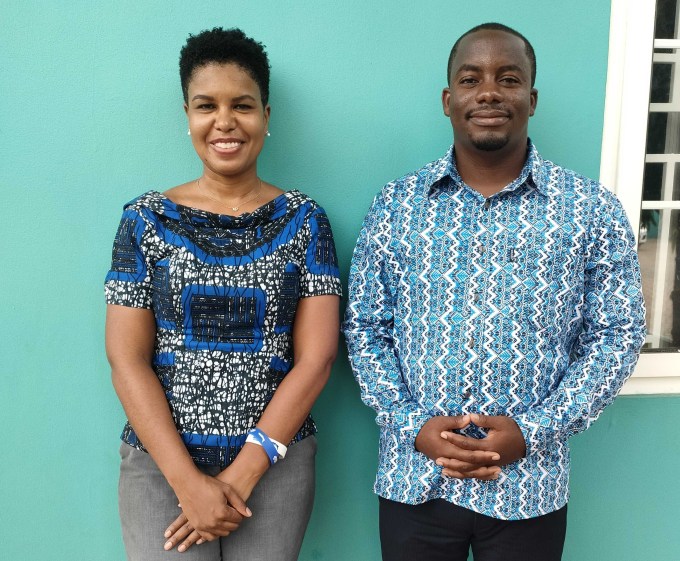
L-R: Miishe Addy (CEO) and Solomon Torgbor (COO)

Meanwhile, Addy taught business at Meltwater Entrepreneurial School of Technology (MEST), a Pan-African incubator and entrepreneur training program. Before MEST, the law graduate from Stanford worked for management consulting company Bain & Company.

As Torgbor spoke with Addy about the challenges he noticed at Damco, she immediately thought they were worth tackling. “As he was talking, a light bulb went off and I thought. ‘These are exactly the types of problems that technology solves,’” the CEO said to TechCrunch. “We discussed and tried lots of different solutions for about a year and discovered that cargo aggregation generated strong traction almost immediately.”

Jetstream started operations in Ghana in March 2019 with a Less Than Container Load (LCL) aggregation service. The service allowed agricultural exporters to group their shipments into shared sea freight containers. Then in November of that year, Jetstream added trade finance for customers who found it difficult to fill large purchase orders

Today, Jetstream is white labeling the systems built internally to manage shipments and financing for customers.

“We are different from a more siloed freight management system because we are leveraging financing to integrate the customs brokers, freight forwarders, shipping lines, airlines, and container terminals all onto the Jetstream platform so that shipments can be managed and tracked every step of the way. We are bringing many of the local providers online for the first time,” Addy said of the changes Jetstream has had to make along the way.

Jetstream’s business model is straightforward. It charges for the freight, clearance, and financial services offered. For freight, it charges a per-container or per-kilogram fee. For customs clearance, it charges a flat fee that varies depending on the tax category and location of the shipment. And for financing and insurance services, it charges a commission on the value of the goods being shipped.

During the pandemic, inefficiencies and a lack of coordination between providers around the ports were made more evident and created stronger growth for Jetstream as its logistics service revenue significantly grew 512% from March 2020 to March 2021. Addy believes that the pandemic further intensified Jetstream’s vision to bring cross-border trade corridors online and drive toward an inflection point in the speed and growth of commerce on the continent.

“We see a future where trade running on Jetstream’s digital rails has a powerful competitive edge on logistics. Jetstream is to cross-border logistics what Flutterwave is to fintech in Africa,” she continued.

Reports estimate that the market for cross-border logistics services in Africa is about $32 billion in revenue. It is predicted to double in size over the next decade. For Jetstream, starting with Ghana is the perfect place to capture as much value and expand vis-a-vis the continent’s growth. As a Ghanaian native, COO Torgbor hammers home this point. In a statement, he calls Ghana a springboard to intracontinental trade and intercontinental trade with other fast-growing emerging markets. The West African nation currently sits at the helm of Africa’s newly enacted, continent-wide free trade zone AfCFTA. Ghana is also home to Port Tema, the largest container terminal in West and Central Africa that plans to handle one million containers a year

In addition to Port Tema, Jetstream counts an unnamed Asia-based global shipping line as a major early adopter and customer of its technology. This has seen Jetstream’s business generate seven-figure revenue and Addy claims the startup grows more than 100% year on year.

Per reports, women-led startups in Africa attract less than 15% of the total VC investments that flow into the continent. However, many female-targeted funds have launched in the last couple of years to fill this gap and one of such participated in this round. Alitheia IDF, a VC firm focused on gender-diverse startups, usually invests five- to seven-figure sums and is one of the few venture capital firms in Africa tackling the low access to funding for women-led teams. Thus, Jetstream’s funding presents a rare win for this demographic (investors and founders alike) especially for the latter who are based in Ghana where few female tech CEOs exist.

Addy tells me she looks forward to when more African female-led teams are well funded, wishing Jetstream could help set off the trend. “I especially hope that our business growth encourages the investor side of the tech ecosystem to take a second look at all of the women leaders who aren’t being adequately funded,” she commented.

That aside, Jetstream also has operations in Nigeria with agents present in South Africa, China, the U.S., the U.K., and Europe. This talent placement is one of Jetstream’s moves geared towards 2028 when the CEO says the company hopes to have a presence at ports and borders in Africa comprising 80% of the continent’s total global trade.

28 Jun 2021

Harness Wealth raises $15 million to democratize the power of family offices

Family offices have existed since the 1800s, but they’ve never been so manifold as in recent years. According to a 2019 Global Family Office Report by UBS and Campden Wealth, 68% of the 360 family offices surveyed were founded in 2000 or later.

Their rise owes to numerous factors, including the tech startups that mint new centi-millionaires and billionaires each year, along with the increasingly complex choices that people with so much moolah encounter. Think household administration, legal matters, trust and estate management, personal investments, charitable ventures.

Still, family offices tend to cater to people with investable assets of $1 billion or more, according to KPMG. Even multi-family offices, where resources are shared with other families, are more typically targeting people with at least $20 million to invest. That high bar means there are still a lot of people with a lot of resources who need hand-holding.

Enter Harness Wealth, a three-year-old, New York-based outfit that was founded by David Snider and Katie Prentke English to cater to individuals with increasingly complex financial pictures, including following liquidity events. The two understand as well as anyone how one’s vested interests can abruptly change — and how hard these can be to manage when working full-time.

Snider got his start out of school as an associate with Bain & Company and later as an associate with Bain Capital before becoming the first business hire at the real estate company Compass and getting promoted to COO and CFO after the company’s $25 million Series A raise in 2013. That little company grew, of course, and now, less than four months after its late-March IPO, Compass boasts a market cap of nearly $27 billion.

Indeed, over the years, Snider, who rejoined Bain as an executive-in-residence after 4.5 years with Compass, began to see a big opportunity in bringing together the often siloed businesses of tax planning and estate planning and investment planning, including it because “it resonated with me personally. Despite all these great things on my resume, every six months I found something I could or should have been doing differently with my equity.”

Prentke English is also like a lot of the clients to which Harness Wealth caters today. After spending more than six years at American Express, she spent two years as the CMO of London-based online investment manager Nutmeg. She left the role to start Harness after being introduced to Snider through a mutual friend; in the meantime, Nutmeg was just acquired by JPMorgan Chase.

While there is no shortage of wealth managers to whom such individuals can turn, Harness says it does far more than pair people with independent registered investment advisors — which is a key part of its business. It also helps its customers, depending on their needs, connect with a team of pros across an array of verticals — not unlike the access an individual might have if they were to have a family office.

As for how Harness makes money, it shares revenue with the advisers on the platform. Snider says the percentage varies, though it’s an “ongoing revenue share to ensure alignment with our clients.” In other words, he adds, “We only do well if they find long-term success with the advisers on our platform,” versus if Harness merely collected a lead generation fee.

Ultimately, the company thinks it can replace a lot of the do-it-yourself services available in the market, like Personal Capital and Mint. That confidence is rooted in part in Snider’s experience with Compass, which, in its earlier days, though it could navigate around real estate agents but “found that while people wanted better data insights and a better user interface, they also wanted that coupled with someone who’d had many clients who looked like them,” says Snider.

He adds that Prentke English joined forces with him after discovering that Nutmeg, too, was “running into the limitations of a non-human-powered solution.”

Investors think the thesis makes sense, certainly. Harness just closed on $15 million in Series A funding led by Jackson Square Ventures, a round that brings the company’s total funding to $19 million. (Both new and existing investors include Bain Capital; Torch Capital; Activant; GingerBread Capital; FJ Labs; i2BF Ventures; First Minute Capital; Liquid2 Ventures; Alleycorp, Marc Benioff; Compass founder Ori Allon; and Paul Edgerley, who is the former co-head of Bain Capital Private Equity.

As for what Harness Wealth does with that fresh capital, part of it, interestingly, will be used to develop its own captive business line called Harness Tax. As Snider explains it, more of its clients are finding that tax planning is among their biggest concerns, given all that is happening on the IPO front, with SPACs, with remote work, and also with cryptocurrencies, into which more people are pouring money but around which the tax code has been playing catch-up.

It makes sense, given that tax planning can be time-sensitive and often dictate the overall financial planning strategy. At the same time, it’s fair to wonder whether some of Harness Wealth’s adviser partners will be turned off from working with the outfit if it thinks its partner is evolving into a rival.

Snider insists that Harness Wealth — which currently employs 22 people and is not-yet profitable — has no such designs. “Our goal is only to help people where we can add value, and we saw an opportunity to lean in on tax side.”

Harness has a “a very large population of people who may not understand their tax liabilities” because of the crypto boom in particular, he explains, adding, “We want to make sure we’re front and center” and ready to help as needed.

28 Jun 2021

Duolingo just filed to go public

Duolingo, a Pittsburgh-based language learning business last valued at $2.4 billion, has officially filed to go public.

The 400-person company, which we explored in great detail in our EC-1, was co-founded by Luis von Ahn, the inventor of CAPTCHA and reCAPTCHA, and Severin Hacker. One of the most revealing bits of its story? It’s a route to monetization as a then rare edtech consumer business based outside of Silicon Valley. The company has had a somewhat circuitous journey — full of trial and error — on finding the perfect business model. It eventually landed on subscriptions, despite an original distaste for it thanks to its mission to provide free education.

Luckily, the S-1 reveals that its earlier decisions led to sharp revenue growth at the company.

The vast majority of Duolingo’s revenue comes from subscriptions. In the most recent calendar year, for example, the edtech giant generated 73% of its total top line from subscription incomes.That revenue was followed by advertising incomes and the Duolingo English Test (DET), which represented 17% and 10% of its top line in 2020. (Notably, von Ahn hoped that the DET would be 20% of Duolingo’s revenue by 2019, a figure that it failed to reach by some margin.)

Its multi-part business model appears to be paying off. The company’s revenue grew from $70.8 million in 2019 to $161.7 million in 2020, a 129% increase. Of course some of that growth would have happened sans the recent global pandemic, but it’s not hard to see some COVID-related acceleration in the figures. Duolingo also reported $55.4 million in revenue during the first quarter of 2021, representing a 97% growth from the year-ago period.

The company recently turned profitable on an adjusted basis.

But in more strict accounting terms, net losses have grown for Duolingo. In the three months ended March 31, 2021 for example, the company had net losses of 13.5 million, a sharp increase compared to the same period last year when it had net losses of $2.2 million. And from 2019 to 2020, the company’s GAAP net losses expanded from $13.6 million to $15.8 million.

It should be noted that the company’s net margin improved in 2020, as its revenue more than doubled and its losses barely crept higher. The company’s profitability or lack thereof should not prove to be a problem during its impending listing.

In its S-1 filing Duolingo provided a placeholder $100 million figure for the funds it expects to raise; we’ll get a better idea of how much capital the edtech unicorn may onboard during its IPO when it sets an IPO price range after its roadshow.

The former startup is effectively the kick-off to the Q3 2021 IPO season, one that several inventors have told TechCrunch will be more than active.

Duolingo has raised $183.3 million in venture capital to date. Investors that have meaningful stakes in the company include NewView Capital, Union Square Ventures, CapitalG, Kleiner Perkins, and General Atlantic, which recently got a spot on the cap table through a secondary transaction.

Thinking out loud, at a run rate of around $220 million today and growth of more than 100%, Duolingo should not have a problem clearing its privately-set $2.4 billion price tag. Unless public-market investors are concerned that the edtech market’s growth is mostly behind it. That Duolingo grew by nearly 100% in the first quarter could temper such concerns.

Factoids and other joy

TechCrunch is still digging its way through Duolingo’s IPO filing, but we’ve found a number of details that add more than a little color to its recent growth and business results. Here are some standouts:

  • A “record low” attrition rate in 2020 in which only four employees, or 2% of its workforce left the company.
  • The company eventually plans to launch a “Duolingo Proficiency Score” across its offered languages, with the hopes of creating a “widely accepted indicator of language proficiency level and make Duolingo a global proficiency standard.”
  • It cited Apple’s “Translate” tool, an iOS app launched in 2020 that allows users to translate text sentences or speech between several languages, as a competitor in the ‘risk factors’ section.
  • And finally, it confirmed that it is seeking potential acquisition candidates to add complementary services to its startup.

Duolingo plans to list on the NASDAQ stock exchange using the ticker symbol DUOL.

28 Jun 2021

Daily Crunch: SpaceX announces tentative plans to launch first orbital flight next month

To get a roundup of TechCrunch’s biggest and most important stories delivered to your inbox every day at 3 p.m. PDT, subscribe here.

Hello and welcome to Daily Crunch for Monday, June 28. How much time did you spend on your phone this weekend? Too much? Not a lot? According to recent data on consumer app spending, you probably spent a pretty fair amount. Consumer spending on apps hit a new record in the first half of the year, though the pace of growth is slowing.

Before we begin, Extra Crunch is on sale this week. Check it out here and support The Good Ship TechCrunch. — Alex

The TechCrunch Top 3

  • Surgical robots are big business: News broke today that U.K.-based surgical robotics startup CMR has put together a $600 million round led by SoftBank’s second Vision Fund and Ally Bridge Group. CMR is now worth $3 billion.
  • Etsy acquires Brazilian rival: Also out today was news that Etsy, the consumer crafts marketplace popular in the United States, purchased its Brazilian cognate for $217 million. The deal for Elo7 follows Etsy’s recent purchase of Depop. It appears that Etsy views at least a good portion of its growth through an inorganic lens.
  • SpaceX wants to send Starship to (near) space: SpaceX’s Starship is nearly going to space next month, the company reported. Yep, Starship, the thing you probably most remember for blowing up during trials, could be headed to orbit in July. Don’t think that we’re knocking SpaceX for having some failed trials. The company used to crash rocket stages in reentry all the time. Now it lands them on drone ships with regularity. In space tech, perhaps you have to blow up before you can properly take flight.

Startups/VC

To kick off today, we’re talking about Pittsburgh, a fascinating startup market that TechCrunch is visiting in short order:

Moving to our regular fare, here’s more from today’s digest of startup happenings:

3 data strategies for selling to developers

Many consumers are open to a slick sales pitch, but software developers generally know better.

Successful dev-focused marketing efforts steer these users toward free tools, but unless you know exactly what data to look for and how to measure it, your efforts will have limited impact.

Software companies hoping to connect with developers should treat end users like the “go-to-market side of the team,” advises Sam Richard, senior director of growth at OpenView, which has invested in companies like Datadog, Expensify and Calendly.

For example: Instead of simply pulling analytics from your production database, what if your GTM team polled stakeholders who touch revenue about the data points they use to make decisions? If you assigned a product manager to address their needs, draft a roadmap and develop an MVP, how much could you learn?

“Don’t overthink it,” says Richard. “Selling to developers isn’t impossible — it’s just difficult.”

(Extra Crunch is our membership program, which helps founders and startup teams get ahead. You can sign up here.)

Big Tech Inc.

  • Did you know that both Microsoft and Apple are worth $2 trillion apiece? It was just a few years ago that the five largest American tech firms were worth a mere $3 trillion, though at the time that number felt huge. Today, however, Microsoft started to help chart its path to the $3 trillion mark on its own with the release of the first official Windows 11 preview. Sure, there have been some builds floating around, but this time the source code is from the code’s source.
  • Facebook has a new product out in Nigeria — where it has an office — called Sabee. TechCrunch reports that it “aims to connect learners and educators in online communities to make educational opportunities more accessible.” Facebook wants to reach all internet users, and Africa is a growth market for internet penetration, so the move makes sense.
  • For those of you out there invested in the Android wearable ecosystem, good news: Samsung and Google have a lot of new stuff that you are probably going to like.

TechCrunch Experts: Growth Marketing

Illustration montage based on education and knowledge in blue

Image Credits: SEAN GLADWELL (opens in a new window) / Getty Images

TechCrunch is building a shortlist of the top growth marketers in tech. We’d love to hear who you’ve worked with, so fill out the survey here! Here’s one of the many great recommendations we’ve received:

Name of marketer: Dipti Parmar

Name of recommender: Brody Dorland, co-founder, DivvyHQ

Recommendation: “She gave me an easy-to-implement plan to start with clear outcomes and timeline. She delivered it within one month and I was able to see the results in a couple of months. This encouraged me to hand over bigger parts of our content strategy and publishing to her.”

28 Jun 2021

Daily Crunch: SpaceX announces tentative plans to launch first orbital flight next month

To get a roundup of TechCrunch’s biggest and most important stories delivered to your inbox every day at 3 p.m. PDT, subscribe here.

Hello and welcome to Daily Crunch for Monday, June 28. How much time did you spend on your phone this weekend? Too much? Not a lot? According to recent data on consumer app spending, you probably spent a pretty fair amount. Consumer spending on apps hit a new record in the first half of the year, though the pace of growth is slowing.

Before we begin, Extra Crunch is on sale this week. Check it out here and support The Good Ship TechCrunch. — Alex

The TechCrunch Top 3

  • Surgical robots are big business: News broke today that U.K.-based surgical robotics startup CMR has put together a $600 million round led by SoftBank’s second Vision Fund and Ally Bridge Group. CMR is now worth $3 billion.
  • Etsy acquires Brazilian rival: Also out today was news that Etsy, the consumer crafts marketplace popular in the United States, purchased its Brazilian cognate for $217 million. The deal for Elo7 follows Etsy’s recent purchase of Depop. It appears that Etsy views at least a good portion of its growth through an inorganic lens.
  • SpaceX wants to send Starship to (near) space: SpaceX’s Starship is nearly going to space next month, the company reported. Yep, Starship, the thing you probably most remember for blowing up during trials, could be headed to orbit in July. Don’t think that we’re knocking SpaceX for having some failed trials. The company used to crash rocket stages in reentry all the time. Now it lands them on drone ships with regularity. In space tech, perhaps you have to blow up before you can properly take flight.

Startups/VC

To kick off today, we’re talking about Pittsburgh, a fascinating startup market that TechCrunch is visiting in short order:

Moving to our regular fare, here’s more from today’s digest of startup happenings:

3 data strategies for selling to developers

Many consumers are open to a slick sales pitch, but software developers generally know better.

Successful dev-focused marketing efforts steer these users toward free tools, but unless you know exactly what data to look for and how to measure it, your efforts will have limited impact.

Software companies hoping to connect with developers should treat end users like the “go-to-market side of the team,” advises Sam Richard, senior director of growth at OpenView, which has invested in companies like Datadog, Expensify and Calendly.

For example: Instead of simply pulling analytics from your production database, what if your GTM team polled stakeholders who touch revenue about the data points they use to make decisions? If you assigned a product manager to address their needs, draft a roadmap and develop an MVP, how much could you learn?

“Don’t overthink it,” says Richard. “Selling to developers isn’t impossible — it’s just difficult.”

(Extra Crunch is our membership program, which helps founders and startup teams get ahead. You can sign up here.)

Big Tech Inc.

  • Did you know that both Microsoft and Apple are worth $2 trillion apiece? It was just a few years ago that the five largest American tech firms were worth a mere $3 trillion, though at the time that number felt huge. Today, however, Microsoft started to help chart its path to the $3 trillion mark on its own with the release of the first official Windows 11 preview. Sure, there have been some builds floating around, but this time the source code is from the code’s source.
  • Facebook has a new product out in Nigeria — where it has an office — called Sabee. TechCrunch reports that it “aims to connect learners and educators in online communities to make educational opportunities more accessible.” Facebook wants to reach all internet users, and Africa is a growth market for internet penetration, so the move makes sense.
  • For those of you out there invested in the Android wearable ecosystem, good news: Samsung and Google have a lot of new stuff that you are probably going to like.

TechCrunch Experts: Growth Marketing

Illustration montage based on education and knowledge in blue

Image Credits: SEAN GLADWELL (opens in a new window) / Getty Images

TechCrunch is building a shortlist of the top growth marketers in tech. We’d love to hear who you’ve worked with, so fill out the survey here! Here’s one of the many great recommendations we’ve received:

Name of marketer: Dipti Parmar

Name of recommender: Brody Dorland, co-founder, DivvyHQ

Recommendation: “She gave me an easy-to-implement plan to start with clear outcomes and timeline. She delivered it within one month and I was able to see the results in a couple of months. This encouraged me to hand over bigger parts of our content strategy and publishing to her.”

28 Jun 2021

Korean court sides against Netflix, opening door for streaming bandwidth fees from ISPs

A court case in South Korea has ended in a loss for Netflix and a victory for ISPs in the country, which may now be empowered to levy bandwidth usage fees on traffic-gobbling streaming platforms. The decision is likely to be challenged, as it essentially saddles the new wave of streaming services with ISP-negotiated rents just as the market is exploding.

As reported by the Korean Economic Daily, the court’s decision is less prescriptive than an official “figure it out amongst yourselves.” But it fails to protect streamers from a class of bandwidth fees they have fought for years.

Netflix filed suit in 2020 alleging that the ISP SK Broadband had no right to demand payment for the bandwidth the platform uses, similar to a legal conflict that flared up around 2014.

Back then, ISPs complained that streaming services consumed an inordinate amount of bandwidth and the companies should pay something to offset the cost of providing it. Streaming sites countered that they were simply fulfilling the requests of users who had already paid for the bandwidth in question, and that what ISPs were trying to “double dip” and charge for the same bits twice.

The technical reality is a bit more complicated than that, though, and Netflix ended up paying what are called interconnect fees to facilitate the infrastructure necessary for the quick, consistent delivery of huge amounts of data. Netflix has said that this is basically a “fast lane” tax but from the lack of chatter since the matter was settled back then, they seem to have chalked it up as the cost of doing business.

In a statement offered by its Korean subsidiary (reported in the same Korean Economic Daily story) Netflix said it “has not been paying network usage fees, or something equivalent to the fees claimed by SK Broadband, to any one of the ISPs (internet service providers) in the world.” It’s not clear whether it classes interconnect and caching as “equivalent” or whether these arrangements have changed; I’ve asked the company for clarification and will add it to the story if they respond.

In Korea, however, the issue is not so settled, and with huge growth there the streaming sites would probably prefer not to have to pay fees proportionate to their success — hence the lawsuit. But the court’s recent decision put the ball back in their court, saying that “it needs to be determined by negotiations between the parties involved whether or not some fees will be paid.”

It’s welcome news for the broadband providers, since any fee they negotiate will be higher than zero, which is what they were working with before. What sort of money they can possibly demand is a complete mystery, since the space is changing so quickly. And the court case, since it’s so unfavorable to some of the biggest companies in the world (which stand to make a mint in the voracious South Korean market), will almost certainly be taken up again. In the meantime consumers in the country may well see streaming prices go up — a tried and true method of whipping up a froth of consumer outrage.

The issue is far from settled in the U.S. and elsewhere, as with a new Democrat-led FCC there may also be a new push for strong net neutrality rules. Netflix had pushed for this sort of fee to be outlawed during the original net neutrality push, but ultimately the idea was abandoned (and would later be mooted anyway when the rules were rescinded). The argument over what ISPs can and can’t charge for, and who should pay, is an ongoing and global one.