Year: 2021

22 Jun 2021

Daily Crunch: Transmit Security’s $543M Series A is one for the record books

To get a roundup of TechCrunch’s biggest and most important stories delivered to your inbox every day at 3 p.m. PDT, subscribe here.

Hello and welcome to Daily Crunch for June 22, 2021. We have startup product news, funding rounds and a roster of Big Tech updates for you today. But before we get into all of that do not forget to sign up for TechCrunch Spotlight: Pittsburgh startup Pitch-Off. Also the Equity podcast crew are hosting a live taping this Thursday that should be a lot of fun. I’ll be there! — Alex

The TechCrunch Top 3

  • Twitter starts rolling out Super Follows and ticketed Spaces: The great product push at Twitter continued today with an early rollout of its Super Follow feature. If you have 10,000 followers and tweet about once per day, you could be eligible to charge people from $2.99 to $9.99 per month for bonus tweets. The company is also rolling out ticketed Twitter Spaces, its live-audio product.
  • Another startup taking on Google: While we await the launch of Neeva’s subscription search alternative, Brave has put its own search offering into the market. You can give it a test here, if you’d like. The short gist is that it’s a “nontracking search engine built on top of an independent index and touted as a privacy-safe alternative to surveillance tech products like Google search,” TechCrunch wrote.
  • The early-stage startup funding market in focus: TechCrunch dug into the world of seed and early-stage venture capital rounds that startups are raising today. After a VC tipped us off to the concept of Series As coming late and Series Bs coming early, we asked a host of other investors about the idea. What did we learn? That some startups can start raising the moment they close their last round. Wild.

Startups

Everyone and their favorite pup raised money today, so we’re breaking our startup coverage into two chunks. The first is focused on product news. The second on funding rounds. Let’s go:

  • Airbank is building a small and midsized fintech service to help aggregate all of a company’s bank accounts and financial data. Read the story here.
  • Racial Inequity Drawdown is a framework that aims to “address racial inequity in startup investing and in the broader world,” TechCrunch reports.
  • Squad launched a new mobile app that connects groups of friends through time-gated audio messages. You have 24 hours to hear what your friends said now that Squad has completed its focus-shift to more intimate collections of friends from interest groups.

Turning to the money world, there are more rounds than we can get to today. But here’s a selection of favorites:

  • Mollie raises $800 million for its payment-integration service: Dutch startup Mollie is now worth $6.5 billion after raising nearly $1 billion in a single round. The startup “provides a way for businesses to integrate payments into sites, documents and other services by way of an API,” TechCrunch wrote. Its new round and valuation implies that there’s room yet in the payments space for more mega-unicorns. Still.
  • Speaking of fintech, Australian startup Zeller just raised AUD$50 million at a AUD$400 million valuation. It provides POS and card services for SMBs.
  • Lidar-focused Quanergy Systems is going public: Via a SPAC, of course. You can peruse its investor deck if you want all the gritty projections. What matters here is that the SPAC boom is not done, even if it appears to be slowing. And we’re hearing from Series-B-level founders that SPACs are already hitting them up. Expect more and weirder SPAC deals over time.
  • Oyster is now a half-unicorn: That’s what we learned when the startup focused on supporting employees outside of a company’s home country raised a $50 million Series B that valued it at nearly $500 million.
  • Vantage raises $4M to help folks manage their AWS spend: All that growth that Amazon’s AWS cloud service has managed in recent years was built on rising customer spend. And some AWS customers want to spend less. And Vantage is going to help.
  • G2 raises $157 million to help companies choose software: Software is such a huge category that even niches can support a host of competitors. But all that spend means lots of companies making choices about what software to leverage. G2 wants to help. And it is now a unicorn after its investors poured nine-figures of capital into its coffers at a valuation of more than $1 billion.
  • Transmit raises $543 million in a Series A to help kill passwords: The company is now worth $2.2 billion, with plans to use its new money to “expand its reach and investing in key global areas to grow the organization.” Any move to kill passwords is TechCrunch-approved.

How much to pay yourself as a SaaS founder

Anna Heim interviewed SaaS entrepreneurs and investors to find out how much early-stage founders should pay themselves.

Startups run by CEOs who take home a small salary tend to do better over the long run, but there are other points to consider, such as geography, marital status, and frankly, what quality of life you desire.

Waterly founder Chris Sosnowski raised his own pay to $14/hour last year; at his prior job, his salary topped $100,000.

“We had saved money up for over a year before we cut out my pay,” he told Anna. “I can live my life without entertainment … so that’s what we did for 2020.”

How much are you willing to sacrifice?

(Extra Crunch is our membership program, which helps founders and startup teams get ahead. You can sign up here.)

Big Tech Inc.

Another day, another slew of headlines discussing the latest tech and government scrap. Today we learned that the U.S. government may review Amazon’s plan to buy a huge movie studio. There was also more from India today, with news breaking that the country is digging into Google over its smart TV market. On the same theme, the EU is now investigating Google’s adtech software from an antitrust perspective.

In related news, the push to unionize Amazon employees is not stopping in its home market.

TechCrunch Experts: Growth Marketing

Illustration montage based on education and knowledge in blue

Image Credits: SEAN GLADWELL (opens in a new window) / Getty Images

Today we’re featuring one of the recommendations that was submitted to our survey. Stay tuned throughout the week as we highlight more responses!

Name of Marketer: Ladder

Recommendation: “They really get what I need. By testing different messaging on different personas, we discover what works and what doesn’t to better understand our users and prospects. This is gold for a company at our stage. Showing those results to our investors blew their minds.”

Submit your own recommendation here.

Community

TC City Spotlight: Pittsburgh. Background is black and yellow city skyline.

Natasha Mascarenhas wondered out loud “what makes a great investor?” We asked you for your thoughts, and a lot of you have weighed in. Still time to vote and share your two cents.

Speaking of sharing, we put out our last call for startups to be included in our Pittsburgh Spotlight Pitch-Off. If you know of a great startup in the Pittsburgh ecosystem, share this far and wide and encourage folks to submit their company. While you’re at it, make sure you’re registered to attend on June 29th!

22 Jun 2021

Investor Marlon Nichols and Wonderschool’s Chris Bennett on getting to the point with a pitch deck

Before our conversation on Extra Crunch Live, Marlon Nichols dropped a bomb on me. The MaC Venture Capital founding managing partner hadn’t actually seen Wonderschool’s original pitch deck before investing in the remote education startup. Our conversation with the company’s CEO, Chris Bennett was the first time he’d been through the seed-stage deck.

Their partnership was a bit of Silicon Valley luck, good timing and some old fashioned networking.

“He was a part of an organization that was helping to bring more diverse founders in touch with investors,” says Nichols. “That was happening when I first moved to the San Francisco Bay Area in 2011. We started to build a casual relationship then. Fast forward to 2016. At my first fund, Cross Culture [Ventures], we were interested in investing in early childhood care. We were actually looking at a number of different companies and one of my partners, Suzy [Ryoo] was like, ‘Have you heard of this company Wonderschool that Chris Bennett was starting, and I was like, ‘Holy shit, I know Chris.’ ”

According to Bennet, Nichols reached out about the opportunity on Facebook Messenger. After the initial conversation and assessing some direct competitors, Nichols says Wonderschool was ultimately the right fit for Cross Culture’s portfolio.

Fittingly, the startup’s origin also has its roots in SV networking.

“I used to go the TED conference every year,” says Bennett. “I met a woman who told me that early childhood education was really important [ … ] She said, ‘A lot of the skills I use today as a CEO, a lot of those seeds were planted before the age of five.’ I thought that was a really wild idea. I started doing research and realized there was a shortage of childcare in America.”

Bennett cringed slightly when we started the process of showing off the company’s early deck. The first thing that jumped out at all of us was just how bare bones the presentation is: white text on a blue background, largely made up of bullet points. There’s not flash — or even graphics — to be found in the entire thing. And the CEO adds that honestly, not much changed aesthetically between that first pitch and the Series A deck.

“It aligned with what we were valuing at the time,” says Bennett. “We were really focused on getting the product-market fit and really trying to understand what our customers needed. And we’re really focused on building the team.”

Perhaps there was something to it, however, as Wonderschool managed to raise $20 million for the latter.

22 Jun 2021

Viva Republica, developer of Korean financial super app Toss, raises $410M at a $7.4B valuation

Viva Republica, the Seoul-based fintech company behind Toss, a super app with more than 40 financial services, announced today it has raised $410 million at a post-money valuation of $7.4 billion. The new funding was led by Alkeon Capital, an American investment firm, and included participation from new investors like Korea Development Bank, and returning backers Altos Ventures and Greyhound Capital.

The company plans to launch Toss Bank, a neobank, in September 2021, which it describes as “the final key component” of its super app strategy. It will also use the funding to continue its expansion in overseas markets, including Vietnam, where Toss launched last year.

Viva Republica, which hit unicorn status in 2018, has now raised more than $940 million in equity funding.

Founder and chief executive officer SG Lee told TechCrunch that Toss Bank will focus on lending, and also offer savings accounts with competitive interest rates.

“A lot of challenger banks and neobanks are focusing on the banking experience, such as cards, so their main revenue source is interchange fees,” he said. “Toss is quite different because we already cover all that. We cover P2P payment, money transfer, cards and all sorts of services. So we are focusing on loans, unsecured loans, mortgages, all sorts of loans. We are going to use this vehicle to give the most competitive interest rates to users, and Toss Bank will not have a separate app, since we have super app strategy.”

Toss founder SG Lee

Toss founder SG Lee

One of the reasons Toss Bank is focusing on loans is because if someone has a middling credit score, many South Korean banks will only offer them loans at subprime interest rates, Lee said. Toss Bank will be able to offer better rates because its risk-scoring model leverages data from its millions of users.

Toss now claims a total of 20 million users (or more than a third of South Korea’s 51.7 population) and of that amount, 11 million are monthly active users.

The app launched as a Venmo-like peer-to-peer money transfer platform in 2015, before adding more services. Now its users can turn to the app for almost all of their financial needs.

For example, they can check their balances at different banks and credit cards on a dashboard. Merchants can use Toss Payments to send and receive online payments and manage their business finances. Other features include budgeting tools, bill payments, a credit score tracker and insurance plans. Lee said more than 20% of bank accounts and credit cards in South Korea are already registered on Toss.

As a financial super app, Toss Bank will be able to supplement information from South Korea’s main credit rating agencies with its own data about user transactions: for example, where do they spend money, how often do they spend, their cash flow and balances.

Lee added that one of South Korea’s leading credit bureaus, KCB (Korea Credit Bureau), backtested Toss’ engine with data from over two million users, and it turned out to be 150% better in terms of differential power analysis and 30% lower in delinquency rates. “This is the first engine that counts this asset-related data, and no machine-learning technologies have been used in credit evaluation” in South Korea, he said. “I think Toss Bank is really well-positioned to disrupt the whole loan market.”

In March, Toss also launched an investment service called Toss Securities, designed to make stock trading accessible to new investors who shy away from traditional brokerages. Over the past three months, it has signed up more than 3.5 million users.

Viva Republica launched Toss in Vietnam, its first international market, in 2020, and the app now has services like no-fee money transfers, debit cards and a financial dashboard through a partnership with CIMB bank. Toss currently claims more than three million monthly active users in Vietnam and says it adds more than 500,000 active users every month. Toss is planning to enter other Southeast Asian markets, too.

Toss hasn’t finalized a timeline, but it is targeting Malaysia for its next market by the end of this year. “The product that we built for Vietnam is actually quite scalable across all Southeast Asia markets, so it’s a matter of time,” Lee said. “But we want to focus on the Vietnam market because it’s scaling increasingly fast and we have to cover the growth.”

As for the possibility of holding an initial public offering or finding another exit opportunity, Lee said the company is still finalizing its plans. “As an Asian company, reaching a $7.4 billion valuation is pretty high, and I think at some point we will face not being able to do more fundraising in the private market. So we’re targeting to raise once more by the end of this year or early next year for over $300 million. That will be our last private fundraising, and then we’re thinking a timeline of three years, and we are reviewing not only for a Korean listing but also a U.S. listing.”


22 Jun 2021

Viva Republica, developer of Korean financial super app Toss, raises $410M at a $7.4B valuation

Viva Republica, the Seoul-based fintech company behind Toss, a super app with more than 40 financial services, announced today it has raised $410 million at a post-money valuation of $7.4 billion. The new funding was led by Alkeon Capital, an American investment firm, and included participation from new investors like Korea Development Bank, and returning backers Altos Ventures and Greyhound Capital.

The company plans to launch Toss Bank, a neobank, in September 2021, which it describes as “the final key component” of its super app strategy. It will also use the funding to continue its expansion in overseas markets, including Vietnam, where Toss launched last year.

Viva Republica, which hit unicorn status in 2018, has now raised more than $940 million in equity funding.

Founder and chief executive officer SG Lee told TechCrunch that Toss Bank will focus on lending, and also offer savings accounts with competitive interest rates.

“A lot of challenger banks and neobanks are focusing on the banking experience, such as cards, so their main revenue source is interchange fees,” he said. “Toss is quite different because we already cover all that. We cover P2P payment, money transfer, cards and all sorts of services. So we are focusing on loans, unsecured loans, mortgages, all sorts of loans. We are going to use this vehicle to give the most competitive interest rates to users, and Toss Bank will not have a separate app, since we have super app strategy.”

Toss founder SG Lee

Toss founder SG Lee

One of the reasons Toss Bank is focusing on loans is because if someone has a middling credit score, many South Korean banks will only offer them loans at subprime interest rates, Lee said. Toss Bank will be able to offer better rates because its risk-scoring model leverages data from its millions of users.

Toss now claims a total of 20 million users (or more than a third of South Korea’s 51.7 population) and of that amount, 11 million are monthly active users.

The app launched as a Venmo-like peer-to-peer money transfer platform in 2015, before adding more services. Now its users can turn to the app for almost all of their financial needs.

For example, they can check their balances at different banks and credit cards on a dashboard. Merchants can use Toss Payments to send and receive online payments and manage their business finances. Other features include budgeting tools, bill payments, a credit score tracker and insurance plans. Lee said more than 20% of bank accounts and credit cards in South Korea are already registered on Toss.

As a financial super app, Toss Bank will be able to supplement information from South Korea’s main credit rating agencies with its own data about user transactions: for example, where do they spend money, how often do they spend, their cash flow and balances.

Lee added that one of South Korea’s leading credit bureaus, KCB (Korea Credit Bureau), backtested Toss’ engine with data from over two million users, and it turned out to be 150% better in terms of differential power analysis and 30% lower in delinquency rates. “This is the first engine that counts this asset-related data, and no machine-learning technologies have been used in credit evaluation” in South Korea, he said. “I think Toss Bank is really well-positioned to disrupt the whole loan market.”

In March, Toss also launched an investment service called Toss Securities, designed to make stock trading accessible to new investors who shy away from traditional brokerages. Over the past three months, it has signed up more than 3.5 million users.

Viva Republica launched Toss in Vietnam, its first international market, in 2020, and the app now has services like no-fee money transfers, debit cards and a financial dashboard through a partnership with CIMB bank. Toss currently claims more than three million monthly active users in Vietnam and says it adds more than 500,000 active users every month. Toss is planning to enter other Southeast Asian markets, too.

Toss hasn’t finalized a timeline, but it is targeting Malaysia for its next market by the end of this year. “The product that we built for Vietnam is actually quite scalable across all Southeast Asia markets, so it’s a matter of time,” Lee said. “But we want to focus on the Vietnam market because it’s scaling increasingly fast and we have to cover the growth.”

As for the possibility of holding an initial public offering or finding another exit opportunity, Lee said the company is still finalizing its plans. “As an Asian company, reaching a $7.4 billion valuation is pretty high, and I think at some point we will face not being able to do more fundraising in the private market. So we’re targeting to raise once more by the end of this year or early next year for over $300 million. That will be our last private fundraising, and then we’re thinking a timeline of three years, and we are reviewing not only for a Korean listing but also a U.S. listing.”


22 Jun 2021

Inside GM’s startup incubator strategy

GM has launched a series of new subsidiaries in the past year tackling electrification, connectivity and even insurance — all part of the automaker’s aim to find value (and profits) beyond its traditional business of making, selling and financing vehicles. These startups, including numerous ones that will never make the cut, get their start under Vice President of Innovation Pam Fletcher’s watch.

Fletcher, who joined TechCrunch on June 9 at the virtual TC Sessions: Mobility 2021 event, runs a group of 170 people developing and launching startups with a total addressable market of about $1.3 trillion.

Today, about 19 companies are making their way through the incubator in hopes of joining recent GM startups like OnStar Guardian, OnStar Insurance, GM Defense and BrightDrop, the commercial electric vehicle delivery business that launched in January. Not everything will make it, Fletcher told the audience, noting “we add new things all the time.”

Launching any startup presents challenges. But launching multiple startups within a 113-year-old automaker that employs 155,000 people globally is another, more complex matter. The bar, which determines whether these startups are ever publicly launched, is specific and high. A GM startup has to be a new idea that can attract new customers and grow the total addressable market for the automaker, using existing assets and IP.

The Volt effect

The 2010 Chevrolet Volt is a noteworthy moment on the GM timeline. The vehicle marked the company’s first commercial push into electrification since the 1990s EV1 program. Fletcher, who was the chief engineer of the Chevy Volt propulsion system from 2008 to 2011, noted that the Volt was the beginning of a change within the automaker that eventually led to other commercial products including the all-electric Chevy Bolt, the hands-free driver assistance system Super Cruise and its current work on autonomous vehicle development with its subsidiary Cruise.

I don’t know that the Volt was a root exactly of what we’re seeing today. But I think it was definitely the start of a groundswell of really looking at, how do we inject technology that customers are excited about and care about quickly? How do we engage them deeply in the process? … Which we’ve always done … just, I think there was a climate there where the appetite was so strong with a certain group of customers for the technology that it allowed us to get really a front row seat with them, which was game changing for those of us on the frontlines. And obviously, there have been many programs that have had that in their own ways, but you really see that accelerating now with the advent of everything we’re doing in electrification and autonomous and a portfolio that is just emerging even to the notion of applying some of these great technologies to our new full size, truck and SUV programs. So it’s really broad, based across the company, which is exciting. (Timestamp: 4:56)

Fletcher explained how working to commercialize new technology changed how the company interacted with customers.

With new technologies, one, you get to a new customer base sometimes. So, really understanding what that customer is looking like and putting them at the center of everything. Also, different technologies have different development processes and timelines and pipelines for activity. So, it really allowed us to start to think about how to approach each step of our product development and customer engagement differently. And the Volt was an interesting time too, because that was the advent of new social media was really starting to become much more popular. And so we were very connected with those customers and a great customer base that gave us tremendous feedback very directly, you know, through at the time, what was a new channel. (Timestamp: 3:50)

22 Jun 2021

Facebook adds Shops to WhatsApp, among other e-commerce updates

Facebook is making it even easier to buy stuff while you scroll past photos of your high school lab partner’s dog. Yes, Instagram Shops and Facebook Marketplace are already displayed prominently on the apps’ bottom navigation tabs. But now, you can shop on WhatsApp too, along with other updates.

Today on a Live Audio Room, CEO Mark Zuckerberg announced three e-commerce updates that are coming to Facebook products: Shops on WhatsApp and Marketplace, Shops Ads, and Instagram Visual Search.

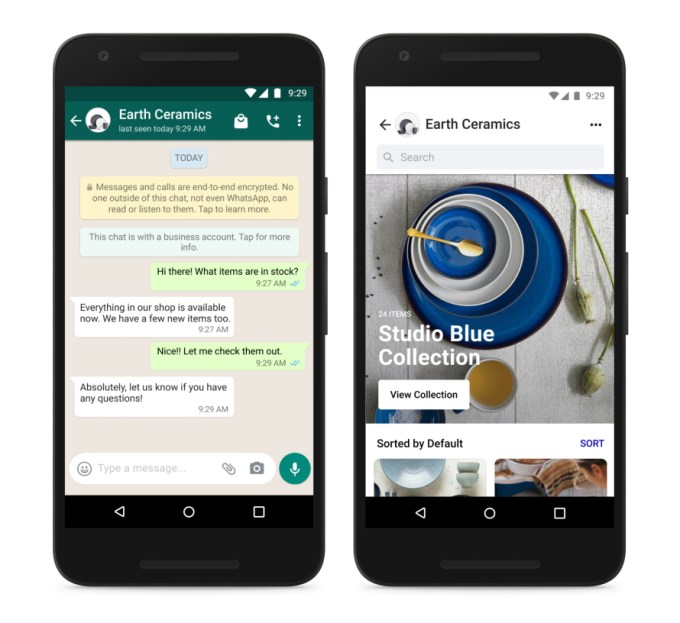
“More than 1 billion people use Marketplace each month, so we’re making it easy for businesses to bring their Shops into Marketplace to reach even more people,” Zuckerberg wrote in a Facebook post. When customers view a shop on WhatsApp, they’ll have the option of chatting with a business before buying something.

At its F8 conference earlier this month, Facebook revealed updates to WhatsApp for Business — previously, it could take weeks to set up a business account, but now, businesses can sign up in just a few minutes. Though WhatsApp has more than 2 billion global users, only about 175 million people message with WhatsApp Business accounts daily for things like customer support. Since Facebook has been pushing e-commerce on platforms like Instagram, it makes sense that this initiative will expand to WhatsApp too.

The rollout for Shops in WhatsApp will start soon, and Shops inventory in Marketplace is available now for Shops in the US with on-site checkout.

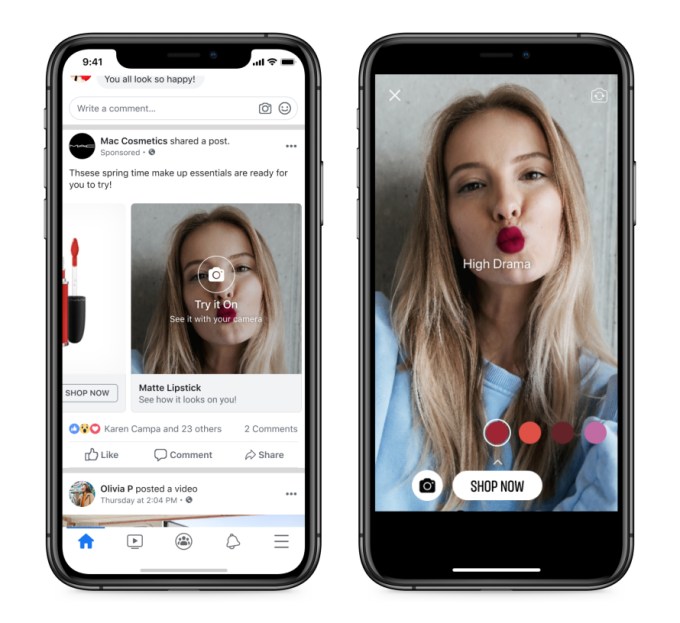
The next feature, Shops Ads, aims to provide a more individualized shopping experience based on people’s individual shopping habits. Zuckerberg said, “We’re launching the ability for a business to send shoppers to where you’re going to be most likely to make a purchase based on your shopping behavior.” Starting now, AR Dynamic Ads are available in the United States – companies like Huda Beauty and Laura Mercier are using these ads to let customers test lipstick shades with AR before making a purchase. These AR try-on experiences are made available through API integrations with Modiface and Perfect Corp. Early this year, Pinterest collaborated with ModiFace to launch an AR eyeshadow try-on.

Image Credits: Facebook

Over on Instagram, an AI-based Visual Search feature will roll out for testing in the coming months.

“A lot of shopping discovery begins with visual discovery, right, so you see something that you think is awesome. And then, you know, maybe you want to see other products that are like that, or you want to figure out how to get that product,” Zuckerberg explained. “And this is the type of problem that AI can really help out with.”

Using this AI, people will be able to upload their own photos — even ones they haven’t posted on Instagram — to find similar items. Facebook isn’t the first company to use this technology — see Cadeera, Donde Search, or Stye.ai, for instance. But bringing this technology to major platforms might change the way we shop, which seems to be Facebook’s current goal.

22 Jun 2021

Announcing the agenda for Extreme Tech Challenge Global Finals presented by TechCrunch

Here at TechCrunch, we’re big fans of startup competitions. From our Extra Crunch Live Pitch-offs all the way up to the world-famous Disrupt Startup Battlefield, we can’t get enough of ’em. So we’re hooking up with Extreme Tech Challenge (XTC) to present the Extreme Tech Challenge Global Finals, a startup competition focused on powering a more sustainable, equitable, inclusive, and healthy world.

Extreme Tech Challenge is the world’s largest transformative tech startup competition and forum for the leaders of tomorrow to be able to unleash their full potential. Last year, the competition attracted startups from 87 countries, and the 52 finalists raised more than $167M in venture investment since being selected. 

This year, over 3700 startups applied from 92 countries across XTC’s competition tracks: Agtech, Food & Water, Cleantech & Energy, Edtech, Enabling Tech, Fintech, Healthtech, and Mobility & Smart Cities. Check out the 80 Global Finalists that emerged from this competitive pool. The Category winners and the Special Awards winners will make it to the Global Finals stage. 

Join the Extreme Tech Challenge on 7/22 to meet the world’s best purpose-driven startups making the world better through transformative tech. Network with corporations, VCs, & founders. Get your free tickets here!

Today, we’re excited to share the agenda of the event with you.

Powering the Future Through Transformative Tech with Young Sohn (XTC), Bill Tai (XTC) and Beth Bechdol (Deputy Director-General, United Nations Food and Agriculture Organization) 

What are the breakthrough tech innovations transforming industries to build a radically better world? How can business, government, philanthropy, and the startup community come together to create a better tomorrow? Hear from these industry veterans and thought leaders about how technology can not only shape the future, but also where the biggest opportunities lie, including some exciting news about XTC and the United Nation’s Food and Agriculture Organization. 

Going Green with Shilpi Kumar (Urban Us), Jenny Rooke (Genoa Ventures), and Albert Wenger (Union Square Ventures)

Sustainability is the key to our planet’s future and our survival, but it’s also going to be incredibly lucrative and a major piece of our world economy. Hear from these seasoned investors and founders how VCs and startups alike are thinking about greentech and how that will evolve in the coming years.

The Extreme Tech Challenge 2021 Global Finals: Startup Pitches Part 1

The reason we’re all here – the XTC Category and Special Awards Winners get their chance to pitch their transformative tech ideas to a panel of expert judges and hear their feedback. XTC is a global platform that connects exceptional, purpose-driven startups with a network of investors, corporations, and mentors to help them raise capital, launch corporate collaborations, and scale their world-changing startups.

Waste Matters with Leon Farrant (Green Li-ion), Matanya Horowitz (AMP Robotics), and Elizabeth Gilligan (Material Evolution) 

According to the EPA, the U.S. alone produces 292.4 million tons of waste a year. Can technology help this massive – and growing – issue? Leon Farrant (Green Li-ion), Matanya Horowitz (AMP Robotics), and Elizabeth Gilligan (Material Evolution) will discuss their companies’ unique approaches to dealing with the problem.

The Extreme Tech Challenge 2021 Global Finals: Startup Pitches Part 2

The reason we’re all here – the XTC Category and Special Awards Winners get their chance to pitch their transformative tech ideas to a panel of expert judges and hear their feedback, in this second and final round. 

Cutting Out Carbon Emitters with Bioengineering with Aaron Nesser (AlgiKnit), Jennifer Holmgren (LanzaTech) and Patricia Bubner (Orbillion Bio)

Bioengineering may soon provide compelling, low-carbon alternatives in industries where even the best methods produce significant emissions. By utilizing natural and engineered biological processes, we may soon have low-carbon textiles from Algiknit, lab-grown premium meats from Orbillion Bio, and fuels captured from waste emissions via LanzaTech. Leaders from these companies will join our panel to talk about how bioengineering can do its part in the fight against climate change.

Announcement of the Extreme Tech Challenge 2021 Winners

The judging panel will crown the global winner of Extreme Tech Challenge 2021 and also announce the winner of the Female Founder Award.

Networking

Join thousands of investors, corporate executives, startups, and policymakers to network via video chat.

Join the Extreme Tech Challenge on July 22 to meet the world’s best purpose-driven startups making the world better through transformative tech. Network with corporations, VCs, & founders. Get your free tickets here!

22 Jun 2021

How Amazon-owned Zoox designed its self-driving vehicles to prevent crashes and protect if they do

The hubbub surrounding the autonomous vehicle industry often focuses on venture capital rounds, speculation about IPOs and acquisitions. But the industry’s future also hinges on the high-stakes task of proving the technology can operate safer than human drivers do today and gaining the public’s trust. In short: safety matters.

Zoox issued a safety report Tuesday that aims to give new insight into its custom electric autonomous vehicle and describes in greater detail various design details aimed at preventing crashes and protecting if they do.

“As you know, and something everybody keeps talking about, is that part of the rationale for doing AVs is because of safety, safety, safety, but they never get to the next bullet (point) right? What are you going to actually do to prevent those crashes, to save those lives?” Mark Rosekind, the company’s chief safety innovation officer and former head of the National Highway Traffic Safety Administration, told TechCrunch in a recent interview.

Rosekind this latest report says answers those questions.

Zoox is a bit different from its rivals. It isn’t just developing the self-driving software stack. The company is responsible for creating the on-demand ride-sharing app and the vehicle itself. Zoox also plans to own, manage and operate its robotaxi fleet.

Zoox unveiled in December the electric, autonomous robotaxi it built from the ground up — a cube-like vehicle loaded with sensors, no steering wheel and a moonroof that is capable of transporting four people at speeds of up to 75 miles per hour. At the time, Zoox shared a few specs on the four-seat vehicle, including the face-to-face symmetrical seating configuration, similar to what a train traveler might encounter, and the 133 kilowatt-hour battery that the company said allows it to operate for up to 16 continuous hours on a single charge. But not everything was revealed, particularly details about how it would protect occupants in the vehicle as well as the pedestrians, cyclists and other drivers it will be sharing the road with.

To be clear, Zoox is not the only AV company issuing safety reports. Voluntary safety self-assessment reports, or VSSAs, have become fairly common in the industry. These voluntary safety reports, which are included in NHTSA’s Automated Driving Systems VSSA Disclosure Index, are supposed to cover 12 areas, including the vehicle’s design, crash simulation scenarios, benchmarks for testing as well as protective measures for occupants and other road users.

Zoox’s first safety report came out in 2018, which outlined the company’s “prevent and protect” philosophy. This latest one reveals how Zoox plans to meet its safety goals, including specific details on the design of the vehicle. And more safety reports are coming — per a few hints in this latest one — including details about its collision avoidance system and the lighting system the vehicle uses for communicating with other road users.

Zoox has designed and built more than 100 safety innovations into its purposeful vehicle. Rosekind shared details on nine of them that fall into three categories: driving control, no single point of failure and rider protection.

Driving control

Zoox at Coit Tower

Image Credits: Zoox

Zoox’s purpose-built vehicle has independent braking and inactive suspension system, which means that each of the brakes has its own electronic control unit, allowing for more control over traction on the road, weight distribution and an active suspension. All of that translates to shorter stopping distances.

The vehicle also has four-wheel steering, which Rosekind noted doesn’t exist on any car on the road today, and is bidirectional. Four wheel steering allows the vehicle to simultaneously adjust where it is headed and its position within the lane.

“Once our software has determined the path for the vehicle, it’ll stay on that path down to centimeters accuracy — even at speed through a curb, Rosekind explained.

The four-wheel steering combined with the vehicle’s symmetrical design allows for it to travel bidirectionally. The bidirectional capability means no more U-turns or three-point turns, two maneuvers that are more complex, time consuming and can make occupants more vulnerable to oncoming traffic. 

No single point of failure

Rosekind said the company’s design objective was that there would be no single point of failure for its safety critical systems. For instance, the vehicle has two powertrains. The motors, drive systems and batteries work in conjunction with each other. If one component in the system fails, the other one will take over.

The vehicle also has two batteries as well as a safety diagnostics system that monitors all of the hardware, software and firmware. Sensors like lidar and. radar are also placed on the four corners of the vehicle, each one which provides a 270-degree field of view.

The diagnostic system goes beyond monitoring and will mitigate a failure or performance problem that it identifies. For instance, if a sensor has degraded performance from damage or debris, it will activate a cleaning system on the vehicle or turn it from bidirectional to unidirectional, so the sensor in a position where basically doesn’t matter if it is obscured, Rosekind explained. 

“Failsafe operational means it’s going to continue the ride, let you out, and then go take care of whatever the issue is, or pull over to a safe spot,” he said.

Rider protection

Zoox Seatbelt Notification

Image Credits: Zoox

Zoox’s goal is for its vehicle to meet a five-star crash protection for every seat in the vehicle. The vehicles are currently going through crash testing now, Rosekind said, adding that it is “going quite well and almost complete.”

The company also designed a new kind of airbag system that contains five different airbags. Curtain airbags are on each side of the vehicle, a frontal one is divided in two parts to protect the head, neck and chest. There are also rear and side seat airbags.

Within the system is an airbag control unit that can monitor where a collision is coming as well as the velocity and determine which airbags and in what order to deploy. Instead of every airbag deploying at once, they will inflate based on the collision location and the severity of the impact.

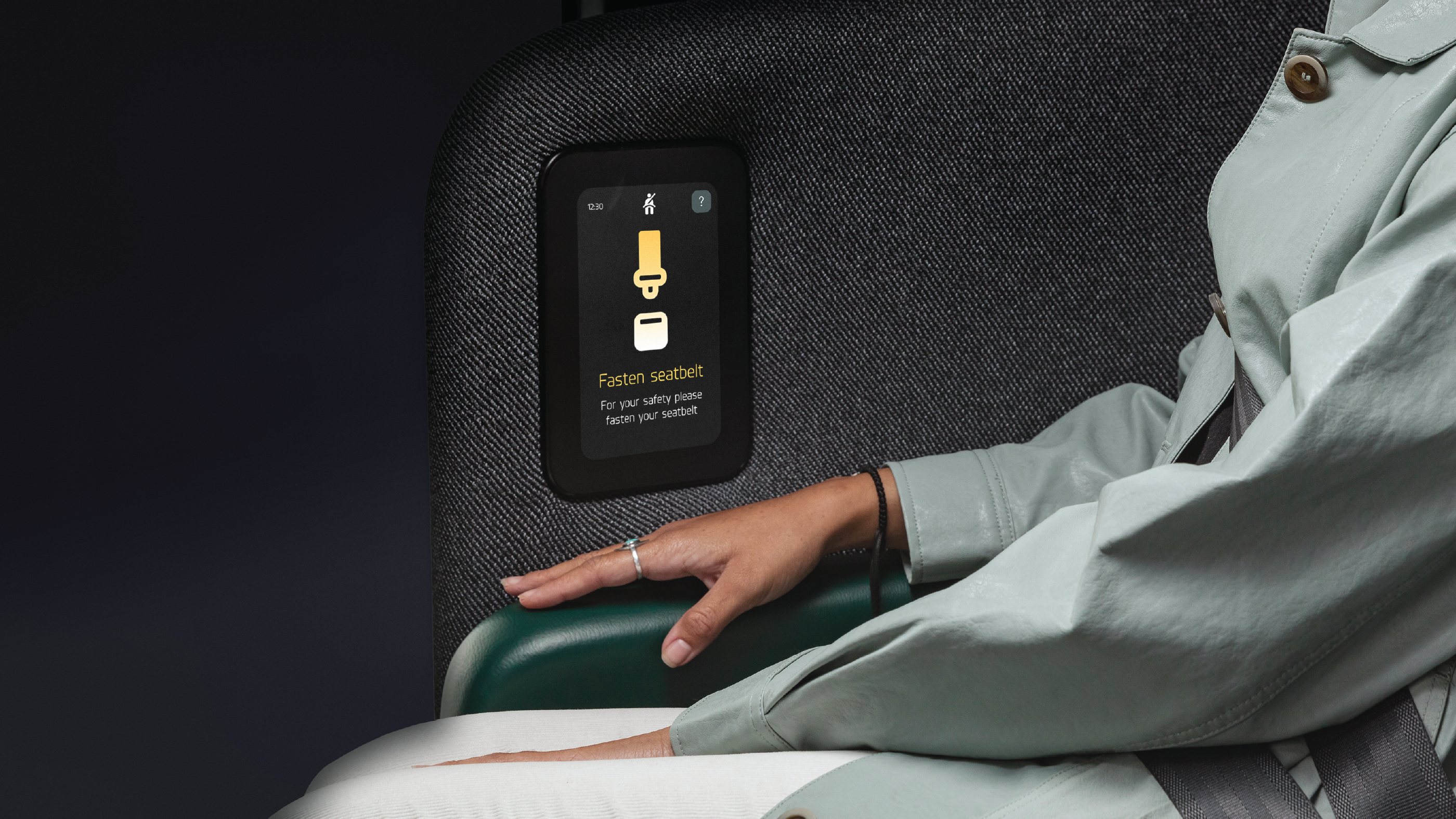
Finally, the vehicle has sensors in the seat, the buckle and even the coating on the webbing of the seatbelt to be able to tell if passengers are using the seatbelt. The vehicle will not start until everybody’s buckled up, Rosekind said.

22 Jun 2021

Addressing the cybersecurity skills gap through neurodiversity

Addressing the skills gap and strengthening your own security team means bringing in different minds and perspectives — and that starts with embracing neurodiversity. To even have a chance at closing the cybersecurity skills gap, we need people with a variety of different abilities and thought processes. But did you know that there’s an untapped potential in individuals who are neurodivergent?

Neurodiversity can mean different things to different people. It’s a concept that views the spectrum of neurological differences — like ADHD, autism, dyslexia, Tourette’s and other cognitive and developmental disorders — as natural variations of the human brain. In a nutshell, neurodiversity recognizes that brain differences are just that: differences.

I was always aware of the fact that I had a different operating system. It was like growing up on a Mac OS, but made specifically for Windows OS. It wasn’t until I was diagnosed as autistic that I understood why I am the way that I am. My diagnosis gave me a purpose. It’s a purpose I’ve taken with me into the working world, and it’s helped me realize how vital neurodiverse individuals can and will be to the cybersecurity industry.

To even have a chance at closing the cybersecurity skills gap, we need people with a variety of different abilities and thought processes.

There are many inherent traits in people with autism that are well suited for working in cybersecurity. For example, many people with autism are pattern thinkers and are highly detail-oriented. This allows someone in a threat-hunting position to find those subtle differences between malicious and nonmalicious code and catch the threats that automated tools might miss. We also have the ability to hyperfocus, which allows us to concentrate on problem-solving and stick with complex issues that other people may abandon.

Of course, we all have a different set of skills, interests, strengths and weaknesses. But there are some characteristics that — when given the right support and environment — can translate to cybersecurity positively.

This is especially true when autistic adults are interested in technology and cybersecurity. Their interest can complement their attention to detail, which can make for a successful blue team cyber professional. The number and types of cyber threats are constantly changing. Some are obvious to hunt down, and some are much more subtle. Some malware even has the ability to “live off the land” by using already created applications or executables that live natively on a computer. Knowing this information, and knowing what to look for and where to hone in, allows a neurodivergent person to consistently inspect, investigate and hunt down even the most persistent threats.

Embrace the benefits

Instead of focusing on what makes a neurodivergent person “different,” we should embrace the benefits that different minds and viewpoints bring to the field of cybersecurity. Let’s face it: The world is going to need more cybersecurity professionals. Ensuring diversity in these teams includes embracing neurodiversity. Having a blend of unique talents provided by these detail-oriented, rule-bound, logical and independent-thinking individuals is — and will be — a competitive edge in cybersecurity.

Having a career in cybersecurity typically requires logic, discipline, curiosity and the ability to solve problems and find patterns. This is an industry that offers a wide spectrum of positions and career paths for people who are neurodivergent, particularly for roles in threat analysis, threat intelligence and threat hunting.

Neurodiverse minds are usually great at finding the needle in the haystack, the small red flags and minute details that are critical for hunting down and analyzing potential threats. Other strengths include pattern recognition, thinking outside the box, attention to detail, a keen sense of focus, methodical thinking and integrity.

The more diverse your teams are, the more productive, creative and successful they will be. And not only can neurodiverse talent help strengthen cybersecurity, employing different minds and perspectives can also solve communication problems and create a positive impact for both your team and your company.

According to the Bureau of Labor Statistics, the demand for Information Security Analysts — one of the common career paths for cybersecurity professionals — is expected to grow 31% by 2029, much higher than the average growth rate of 4% for other occupations. While vital jobs in cybersecurity are going unfilled, millions of smart people who’d be ideally suited for the work remain unemployed.

Taking the first step

It’s time to challenge the assumption that qualified talent equals neurotypicality. There are many steps companies can take to ensure inclusivity and promote belonging in the workplace. Let’s start all the way at the beginning and focus on job postings.

Job postings should be black and white in terms of the information they are asking for and the job requirements. Start by making job postings more inclusive and less constrictive in what is being required. Include a contact email address where an applicant can ask for accommodations, and provide a less traditional approach by providing these accommodations.

Traditional interviews can be a challenge for neurodivergent individuals, and this is often the first hurdle to employment. For example, to ease some candidates’ nerves, you could provide a list of questions that will be asked as a guideline. More importantly, don’t judge someone based on their lack of eye contact.

To promote an inclusive and belonging culture of neurodiversity in the workplace, the workplace should be more supportive of different needs. It is vital to ensure employees at all levels have the knowledge and understanding on how to empower a diverse team and create an open and inclusive workplace. This starts with diversity, equity, inclusion and belonging training for all employees. Companies should also consider changing their communication style. Neurodiverse individuals communicate differently and not altering the way you communicate could lead to a disconnect in the workplace.

My advice to other neurodivergent and/or autistic adults looking to break into the cybersecurity field is to continue your learning, connect with cybersecurity professionals for networking purposes and never give up. The more we push for awareness and inclusion in all aspects of all companies — small and large — the more opportunities there will be for success.

22 Jun 2021

Apple is opening a store in downtown LA’s nearly 100-year-old Tower Theatre

This Thursday, Apple will mark the opening of a new store in downtown Los Angeles. The space occupies the newly renovated Tower Theatre, which opened in DTLA’s Broadway Theater District in 1927. Among other milestones, the 900-seat theater was the first in LA to be wired for the talkies, hosting a premier of “The Jazz Singer” that same year. Not for nothing, it was also the first theater in the city with air conditioning.

Apple Tower Theatre is actually the company’s 26th store in greater LA. Obviously, though, moving into a 94-year-old theater takes a fair bit more work than, say, a shopping mall. The store has been in the works for a number of years, owing in part to having to work with the city to restore a space that had been declared a landmark.

Image Credits: Apple

Interestingly, an LA Times article back in 2018 noted that the space, “may also serve as a declaration that Apple intends to compete as a major Hollywood content creator.” In hindsight, fair enough. Apple TV+ launched late the following year.

[gallery ids="2168778,2168774,2168777,2168779,2168782,2168766"]

The theater has actually been largely unoccupied since 1988, which clearly meant even more work had to go into shining up the walls and making the grand old theater presentable for that modern retail vibe — not to mention a seismic upgrade to help make it more earthquake proof.

The company also notes that it took care to maintain some of the space’s more iconic elements.

Image Credits: Apple

“Apple Tower Theatre anchors the corner of Eighth Street and Broadway, where visitors will immediately recognize the fully restored clock tower, recreated Broadway marquee, clean terra cotta exterior, and renovated historic blade sign,” Apple writes. “After walking through the Broadway doors, guests enter the monumental lobby inspired by Charles Garnier’s Paris Opera House, featuring a grand arched stairway with bronze handrails flanked by marble Corinthian columns.”

The store’s opening also marks the launch of Apple’s new Creative Studios initiative. The LA store and a location in Beijing will be the first to get the program. In its initial form, it will run between eight and 12 weeks, providing a group of mentors from the creative arts.

Image Credits: Apple

“Creativity and access to education are core values for Apple, so we are absolutely thrilled to kick off today at Apple Creative Studios in Los Angeles and Beijing and to bring this meaningful program to several more cities this year,” SVP Deirdre O’Brien said in a press release. “Building on our long history of using stores as a venue to host local artists to educate and inspire, Creative Studios is one more way we’re providing free arts education to those who need it most.”

Last week, Google launched its first retail store in Manhattan’s Chelsea district. The Apple Tower Theatre location opens at 10 a.m. local time on Thursday, June 24. The company says it’s employing nearly 100 to keep the store running.