Year: 2021

22 Jun 2021

As venues reopen, Mixhalo announces new tech for in-person live event streaming

As venues reopen across the U.S., Mixhalo has announced a pair of additions to its in-person audio live event audio streaming platform: Mixhalo Over Cellular and Mixhalo Rodeo.

The first is, more or less, what it sounds like. Rather than relying on Wi-Fi, the leverages 5G. The company says it will be able to offer a similar “ultra-low latency” that made the initial Wi-Fi product so compelling.

Mixhalo is working with a carrier to roll out the feature, but won’t say which. It notes, however, that while it would work with LTE, for obvious reasons, 5G provides a greater opportunity to decrease latency.

Rodeo, meanwhile, is designed to work with existing venue wireless to circumvent the need to install an additional overlay system.

“The Rodeo system actually reduces network strain since the existing access points are now aware of the Mixhalo traffic and can plan for and buffer network data accordingly,” CEO John Vars tells TechCrunch. “If a venue has installed a wireless system post-2015, they are likely to have the necessary hardware to support Rodeo in their venue. We do need to install a server in the venue’s server room, but that is the only hardware component of Rodeo.”

Image Credits: Mixhalo

Co-founded by Incubus guitarist Mike Einziger, Mixhalo launched its product onstage at Disrupt 2017 (with some help from Pharrell), promising to deliver live event sounds through its ultra-low latency streaming tech.

Naturally, 2020 and the first half of this year have been a pretty major trial for a startup so tied to live events. Vars tells TechCrunch that the company was forced to reduce headcount at the beginning of the pandemic as contracts were ended, but adds that the company has managed to grow since, in part on the strength of a number of partnerships.

33880884864 9f2f7a02dc k

NEW YORK, NY – MAY 17: (L-R) Pharrell Williams, Founder and CEO of MIXhalo Mike Einziger and TechCrunch senior writer Anthony Ha speak onstage during TechCrunch Disrupt NY 2017 – Day 3 at Pier 36 on May 17, 2017 in New York City. (Photo by Noam Galai/Getty Images for TechCrunch) *** Local Caption *** Pharrell Williams;Mike Einziger;Anthony Ha

“The silver lining in all of this is that we got a chance to step back and laser-focus on improving our core product,” says Vars. “These improvements include this announcement of Mixhalo Rodeo and Mixhalo over Cellular, as well as the capability to dynamically adjust latency based on physical position in the venue — we may not have had the time and opportunity to work on these improvements in the full swing of pre-pandemic business. With these new features, we’ve seen piqued interest from partners in the sports world and are excited to see this use case of Mixhalo really take off.”

22 Jun 2021

A rewards program for your rent payments? Meet Bilt

Kairos, the startup studio led by Ankur Jain, is launching a new brand today called Bilt Rewards. Bilt is a rewards program that lets renters earn each time they make a rent payment.

The company is funded by Kairos, which is the studio that is also responsible for brands like Rhino, Alloy, and Little Spoon.

Bilt has two main pieces, a rewards platform and a credit card, powered by Mastercard.

On the rewards side, Bilt has partnered with estate owners and property managers including the Blackstone Group, The Related Companies and Equity Residential. Folks who rent with these entities can now earn rewards each time they pay their rent, with the opportunity to earn even more rewards for things like lease renewals or lease signing bonuses.

The co-branded Bilt Mastercard credit card allows renters at those properties, or any other renter, to pay their rent with the credit card. As a renter myself, and as one that is still forced to pay by check via snail mail, this is a welcome offering.

Folks who use the Bilt Mastercard will earn 2x points on rent payments and one point per dollar spent on the card elsewhere.

These points, whether earned through spending on the card or by paying rent at Bilt-partnered properties, can be used toward travel with airlines and hotels, as well as other perks like group fitness classes. But perhaps the most significant option for spending points is to use them toward a mortgage payment.

Bilt worked with regulators, as well as Fannie Mae and the Department of Housing and Urban Development, to gain approval for using rewards points toward a mortgage. So not only can people use their rewards points toward their down payment on a home, but folks using the Bilt Mastercard can also build their credit score and earn rewards at the same time, bringing down the rates on their mortgage.

On the revenue side, Bilt takes a cut of the transaction fee alongside Mastercard for purchases made through the Bilt credit card. The startup also generates revenue by charging property managers for the points they distribute to their tenants.

“Three years ago, if you asked us if we could bring together an alliance of property owners to work together under one unified rewards program, it would have been hard to imagine,” said Jain. “If you think about getting payment networks to collaborate on a credit card or fees on rent, most people would have said that’s not possible. Getting regulatory approval from the U.S. government was a huge hurdle we had to overcome. Building out every airline and hotel partnership was huge. That’s why it’s taken three years. This has been the hardest project we’ve worked on.”

22 Jun 2021

If you love voice messaging, you’ll love Squad

Squad used to be an app that connected people with similar interests for in-person meetups. Then the coronavirus pandemic hit. While most social apps thrived under these conditions — people craved digital connection more than ever — Squad couldn’t operate.

Founder Isa Watson didn’t know how long the world would be in shutdown. Instead of waiting for a return to normalcy, she shifted the scope of the app entirely.  

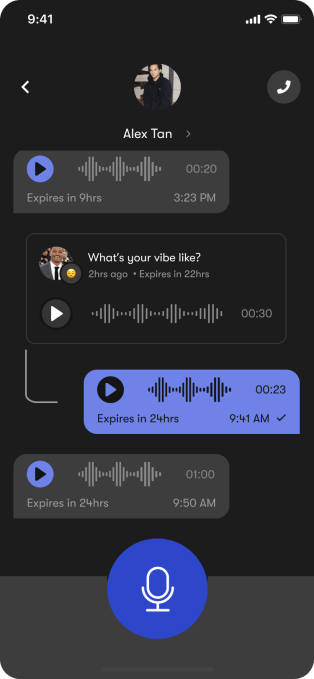
Today, Squad relaunches as an audio-based social app that aims to help users deepen their relationship with their existing circle of close friends. Squad is an audio-only app, but don’t worry — it’s not another Clubhouse wannabe. Instead, it functions as a news feed of voice message updates from your closest friends, which expire after 24 hours.

You can add up to twelve friends to your “squad,” and once you post an update, your squad members can emoji react or send a private voice message in response — these also expire after a day, encouraging users to be more open about what they share. Soon, Squad will support phone calls, but there currently isn’t functionality for group calls or group audio messaging. But, users might be incentivized to talk on the phone via Squad rather than a typical call, since you can add a title to your call. That way, your squad member knows why you’re calling before they pick up. 

Image Credits: Squad

“There’s a big gap in the social landscape, because most of the tools are discovery platforms, broadcast platforms, and personal branding platforms,” Watson said. “There’s a huge opportunity for us to come in and help people maintain stronger connections with the people that they enjoy the most.”

Posting a voice update feels more genuine than a curated Instagram shot or a crafted Facebook status update (and Facebook is decidedly uncool among Gen Z and millennials). As the popularity of apps like Dispo show, young people are responding well to ephemeral, authentic social media experiences. But the audio-only medium could be a hard sell for people who aren’t already sending voice messages on WhatsApp or iMessage. However, while Squad’s initial rollout will be domestic, there’s great potential for an app like this outside of the US, where voice messaging is more popular

“A lot of the conversations that would happen on text message are now happening in an asynchronous audio type of way,” Watson added. “So we expect that to continue to penetrate further into our habits.” 

Watson raised a $3.5 million seed round in 2019, and she was featured on TechCrunch with advice on raising venture capital as a woman of color in Silicon Valley. Despite changing the direction of her app, her investors — which include Michael Dearing (Harrison Metal), Aaron Levie (Box), Katrina Lake (StichFix), Jen Rubio (Away), and Stewart Butterfield (Slack) — remain supportive. Watson secured another million dollars of funding after the seed round, bringing Squad’s funding to a total of $4.5 million to date. 

“One thing [the investors] said to me was, ‘Isa, you’ve been talking about this shift in social for years now, and people told you you were crazy, that social was all figured out and there was nothing that was going to happen,’” Watson said. “Now, people are buying into that change.”

Image Credits: Squad

Even though Squad isn’t a Clubhouse competitor, the rise of audio-only media is a good sign for the app’s ability to crack a saturated social market (so many social apps are trying to compete with Clubhouse, it’s a miracle we don’t yet have audio-only Tinder speed dating). In Squad’s beta test, 87.5% of users completed the onboarding process. Still, Squad falls victim to the same accessibility issues that plague Clubhouse and many of its clones. As of yet, Squad doesn’t support captioning, though Watson says this is something the company has discussed and hopes to implement down the road. Not only could captioning broaden Squad’s audience, but it could also further differentiate the app from messaging giants like iMessage and WhatsApp. 

Still, if you’re someone who loves to send voice messages in your group chats, you might want to get your friends on Squad. Currently, the app is invite-only with a waitlist. Once you’re off the waitlist, you get three invites. If you post for five days straight, you get three more invites, and if someone you invited signs up, you get two more invites as well. This continues until you round out your twelve-member squad.

22 Jun 2021

Inspired by founder’s childhood asthma, NuvoAir raises $12M to tackle respiratory illnesses

You might well have a sleep app that tracks your sleep. I use Sleep Cycle, and have found it has started to even tell me when I cough during the night. It turns out you can run machine learning over how you might cough in the night, to detect changes in the way you cough. That data could inform people with ongoing respiratory illnesses and help them manage their health.

This is part of the idea behind NuvoAir, which uses both an app to listen to your night-time coughing and other health data to do just that.

The Boston-based startup has now raised $12 million in a Series A funding led by London-based AlbionVC, 

Perhaps because the COVID-19 pandemic made people more aware of respiratory complaints, NuvoAir claims it experienced 500% growth in the first quarter of 2021.

The round was also participated in by KAYA (formerly Enern), Amino Collective and existing shareholders Spiltan, Industrifonden and Novartis Pharma AG (dRx Capital).

How NuvoAir ai works is by combining the data from a Bluetooth-enabled spirometer that remotely monitors lung function; a sensor that attaches to asthma and COPD inhalers; and an integration with Fitbit devices. It also includes data from NuvoAir Cough, which assesses changes in nighttime coughing.

Its business model is enabling health plans, insurance companies, and healthcare systems to reduce the cost of managing their most severe respiratory patients, and also managing the care they provide.

Furthermore, it’s able to be used in the clinical trial business, where it licenses the technology to pharma companies or contract research organizations on a per user basis.

NuvoAir says over 500 million people globally suffer from chronic respiratory diseases such as asthma, cystic fibrosis, and chronic obstructive pulmonary disease (COPD). And it costs around $300 billion a year to manage these conditions.  The company claims its solution reduces urgent consultations by more than 39%.

In some way, NuvoAir is comparable to companies like Livongo (tracks Diabetes, raised $235M) and Omada Health (tracks chronic illness, raised $256.5M). All these companies are using increasing amounts of data about our health to manage ongoing illnesses.

The funding will be used to accelerate the expansion of the NuvoAir digital care platform in the US and Europe; advance the development of new products and services; and support NuvoAir’s partner and customer base for decentralized clinical trials around the world.

Lorenzo Consoli, Founder and Chief Executive Officer of NuvoAir told me: “As a child, I suffered from severe asthma. I was hospitalized a few times and my parents were really scared when that happened. My grandmother died because of COPD and other family members, unfortunately, had severe respiratory conditions as well. On top of that, my young son has asthma. So I have naturally been drawn to respiratory health and have always felt the current health systems are not designed to help patients on a day-to-day basis, but only when patients end up in the hospital, which is always too late. But honestly, it was only when, by chance, in 2012 I joined the digital health team of Novartis Respiratory Franchise that I realized how much technology and healthcare were meant to be together. It was an eye-opener for me to realize that certain digital biomarkers could tell whether patients were responding to treatment or predict whether they might be hospitalized… Equipped with those insights and with my prior experience as a patient, I decided in 2016 to take on the challenge of improving respiratory health, and NuvoAir was born.”

Dr. Christoph Ruedig, Partner at AlbionVC said: “We’re proud to be able to support NuvoAir, one of the few digital health companies active in both Europe and the US. The company has built an impressive respiratory disease management ecosystem with strong clinical evidence and a scalable care model that benefits patients, payers and providers.”

22 Jun 2021

G2 raises $157M for its software review service

This morning G2, a company that provides an online software review and information database, announced that it has raised a $157 million Series D. Per a release the company shared with TechCrunch in advance of its news, G2 is now worth more than $1 billion, making it a unicorn in modern parlance.

Permira led the round via its growth fund, while prior venture capital firms IVP, Emergence, and Accel also contributed. The investment also included capital from LinkedIn, which previously invested, and corporate venture dollars from both HubSpot and Salesforce.

The round caught our eye not due to its scale — nine-figure rounds are a daily occurrence in today’s super-heated venture capital market — but due to the interesting position that G2 and its rivals occupy in the technology space. They provide a guide of sorts to various software niches, not only exposing a number of competing services in a single space, but also some signal about what service might be a good pick.

For the immensely deep and immensely wide software market, offering potential buying entities — all companies, in other words — directions when it comes to software buying decisions is a position of power. And one that comes with a unique set of challenges.

G2 cannot simply provide lists of competing software products and user reviews. It needs to command a position of trust; if its users are worried that commercial interests are clouding its ratings and lists, the company’s core product could be compromised.

So, that’s what TechCrunch asked G2 CEO Godard Abel to discuss.

In response to our question regarding balancing G2’s commercial interests and review purity, Abel said that “whether a software vendor pays G2 or not has no impact on their rating on G2 and their placement in our category rankings which are 100% algorithmic and data-driven.” That’s a good start.

Abel went on to say that G2 verifies all reviews, checks the “business identity” of reviewers via their online profiles, and uses “NLP and AI to score and validate all reviews including preventing any reviews by competitors or employees of a vendor.” And, the CEO added, G2 has humans in the loop for verification as well.

The process seems reasonable, but the company and its rivals like Capterra will need to manage market trust as they continue to scale.

On that front, the CEO expanded a bit on the growth metrics that it disclosed as part of its release. In that document the company said that it added “700 paying customers for its Marketing Solutions in the past 12 months.” TechCrunch wanted to know what percent growth that number represented, and what portion of G2’s revenues come from that particular business line.

Per Abel, the customer number represented a 45% growth rate, and that that “piece of [its] business represents the bulk of [its] current revenue.”

Parsing that a little, seeing 45% customer growth in a majority revenue line implies healthy growth. We lack several data points that we’d need to convert that customer growth figure into revenue expansion itself, sadly.

With lots of new cash in the bank, G2 has plenty of space to keep growing. Its CEO highlighted international investment as a place where he intends to invest, citing “exceptionally strong growth across Europe and Asia as our international software buyer traffic and revenue have been nearly doubling.” And Abel said that his company will also “accelerate” its coverage of the software market with its new capital, along with investments into data work to improve G2’s recommendation engine.

G2 itself is now valued like a company that’s on an IPO path, which means that the standards we’ll hold it to have reached their zenith.

22 Jun 2021

Memory.ai, the startup behind time-tracking app Timely, raises $14M to build more AI-based productivity apps

Time is your most valuable asset — as the saying goes — and today a startup called Memory.ai, which is building AI-based productivity tools to help you with your own time management, is announcing some funding to double down on its ambitions: it wants not only to help manage your time, but to, essentially, provide ways to use it better in the future.

The startup, based out of Oslo, Norway, initially made its name with an app called Timely, a tool for people to track time spent doing different tasks. aimed not just at people who are quantified self geeks, but those who need to track time for practical reasons, such as consultants or others who work on the concept of billable hours. Timely has racked up 500,000 users since 2014, including more than 5,000 paying businesses in 160 countries.

Now, Memory.ai has raised $14 million as it gears up to launch its next apps, Dewo (pronounced “De-Voh”), an app that is meant to help people do more “deep work” by learning about what they are working on and filtering out distractions to focus better; and Glue, described as a knowledge hub to help in the creative process. Both are due to be released later in the year.

The funding is being led by local investors Melesio and Sanden, with participation from Investinor, Concentric and SNÖ Ventures, who backed Memory.ai previously.

“Productivity apps” has always been something of a nebulous category in the world of connected work. They can variously cover any kind of collaboration management software ranging from Asana and Jira through to Slack and Notion; or software that makes doing an existing work task more efficiently than you did it before (eg Microsoft has described all of what goes into Microsoft 365 — Excel, Word, Powerpoint, etc. — as “productivity apps”); or, yes, apps like those from Memory.ai that aim to improve your concentration or time management.

These days, however, it feels like the worlds of AI and advances in mobile computing are increasingly coming together to evolve that concept once again.

If the first wave of smartphone communications and the apps that are run on smartphone devices — social, gaming, productivity, media, information, etc. — have led to us getting pinged by a huge amount of data from lots of different places, all of the time, then could it be that the second wave is quite possibly going to usher in a newer wave of tools to handle all that better, built on the premise that not everything is of equal importance? No-mo FOMO? We’ll see.

In any case, some bigger platform players also helping to push the agenda of what productivity means in this day and age.

For example, in Apple’s recent preview of iOS 15 (due to come out later this year) the company gave a supercharge to its existing “do not disturb” feature on its phones, where it showed off a new Focus mode, letting users customize how and when they want to receive notifications from which apps, and even which apps they want to have displayed, all organized by different times of day (eg work time), place, calendar items, and so on.

Today, iPhone plays so many roles in our lives. It’s where we get information, how people reach us, and where we get things done. This is great, but it means our attention is being pulled in so many different directions and finding that balance between work and life can be tricky,” said Apple’s Craig Federighi in the WWDC keynote earlier this month. “We want to free up space to focus and help you be in the moment.” How well that gets used, and how much other platforms like Google follow suit, will be interesting to see play out. It feels, in any case, like it could be the start of something.

And, serendipitously — or maybe because this is some kind of zeitgeist — this is also playing into what Memory.ai has built and is building. 

Mathias Mikkelsen, the Oslo-based founder of Memory.ai, first came up for his idea for Timely (which had also been the original name of the whole startup) when he was working as a designer in the ad industry, one of those jobs that needed to track what he was working on, and for how long, in order to get paid.

He said he knew the whole system as it existed was inefficient: “I just thought it was insane how cumbersome and old it was. But at the same time how important it was for the task,” he said.

The guy had an entrepreneurial itch that he was keen to scratch, and this idea would become the salve to help him. Mikkelsen was so taken with building a startup around time management, that he sold his apartment in Oslo and moved himself to San Francisco to be where he believed was the epicenter of startup innovation. He tells me he lived off the proceeds of his flat for two years “in a closet” in a hacker house, bootstrapping Timely, until eventually getting into an accelerator (500 Startups) and subsequently starting to raise money. He eventually moved back to Oslo after two years to continue growing the business, as well as to live somewhere a little more spacious.

The startup’s big technical breakthrough with Timely was to figure out an efficient way of tracking time for different tasks, not just time worked on anything, without people having to go through a lot of data entry.

The solution: to integrate with a person’s computer, plus a basic to-do schedule for a day or week, and then match up which files are open when to determine how long one works for one client or another. Phone or messaging conversations, for the moment, are not included, and neither are the contents of documents — just the titles of them. Nor is data coming from wearable devices, although you could see how that, too, might prove useful.

The basic premise is to be personalised, so managers and others cannot use Timely to track exactly what people are doing, although they can track and bill for those billable hours. All this is important, as it also will feed into how DeWo and Glue will work.

The startup’s big conceptual breakthrough came around the same time: Getting time tracking or any productivity right “has never been a UI problem,” Mikkelsen said. “It’s a human nature problem.” This is where the AI comes in, to nudge people towards something they identify as important, and nudge them away from work that might not contribute to that. Tackling bigger issues beyond time are essential to improving productivity overall, which is why Memory.ai now wants to extend to apps for carving out time for deep thinking and creative thinking.

While it might seem to be a threat that a company like Apple has identified the same time management predicament that Memory.ai has, and is looking to solve that itself, Mikkelsen is not fazed. He said he thinks of Focus as not unlike Apple’s work on Health: there will be ways of feeding information into Apple’s tool to make it work better for the user, and so that will be Memory.ai’s opportunity to hopefully grow, not cannibalize, its own audience with Timely and its two new apps. It is, in a sense, a timely disruption.

“Memory’s proven software is already redefining how businesses around the world track, plan and manage their time. We look forward to working with the team to help new markets profit from the efficiencies, insights and transparency of a Memory-enabled workforce,” said Arild Engh, a partner at Melesio, in a statement.

Kjartan Rist,  a partner at Concentric, added: “We continue to be impressed with Memory’s vision to build and launch best-in-class products for the global marketplace. The company is well on its way to becoming a world leader in workplace productivity and collaboration, particularly in light of the remote and hybrid working revolution of the last 12 months. We look forward to supporting Mathias and the team in this exciting new chapter.”


22 Jun 2021

ResQ raises $7.5 million to make back of the house, top of mind

Entrepreneur Kuljeev Singh has had a three-course meal in the restaurant business. He was an angel investor in ChefHero, a part-time owner in an Australian-style meat pie shop, and now, is the founder of ResQ, a startup that helps restaurants repair and service their equipment through contractor work.

Sitting at multiple seats at the table showed Singh the “unfortunate reality of what it takes to run a restaurant. Weeks into buying that meat pie shop, Singh watched tens of thousands of dollars burn due to failing equipment and contractor issues.

“I realized [that] I have so much support at the front of the house to drive revenue to the door, but I have no technology to support the back of the house,” he said. Singh soon realized that his pain point was shared by many other restaurant owners, which seeded the idea for ResQ, a startup all about optimizing the back of the house, or non-customer facing, operation for restaurants.

ResQ announced today that it has raised $7.5 million in seed funding led by Homebrew, Golden Ventures, and Inovia Capital. Participating angel investors include Nilam Ganenthiran, president at Instacart; Gokul Rajaram, Doordash executive and board member of Pinterest and Coinbase, as well as customers, including Soul Foods, a global franchisee of Yum! Brands. ResQ has now raised $9 million in known venture capital to date.

The capital will primarily help ResQ double or triple its 60-person team across engineering, sales, and operation roles. The company will also earmark money toward launching in new markets, building atop its current presence in San Francisco, LA, Dallas, Chicago, and Phoenix.

SaaS-enabled marketplace

ResQ’s business is split into two parts: a software platform and contractor marketplace.

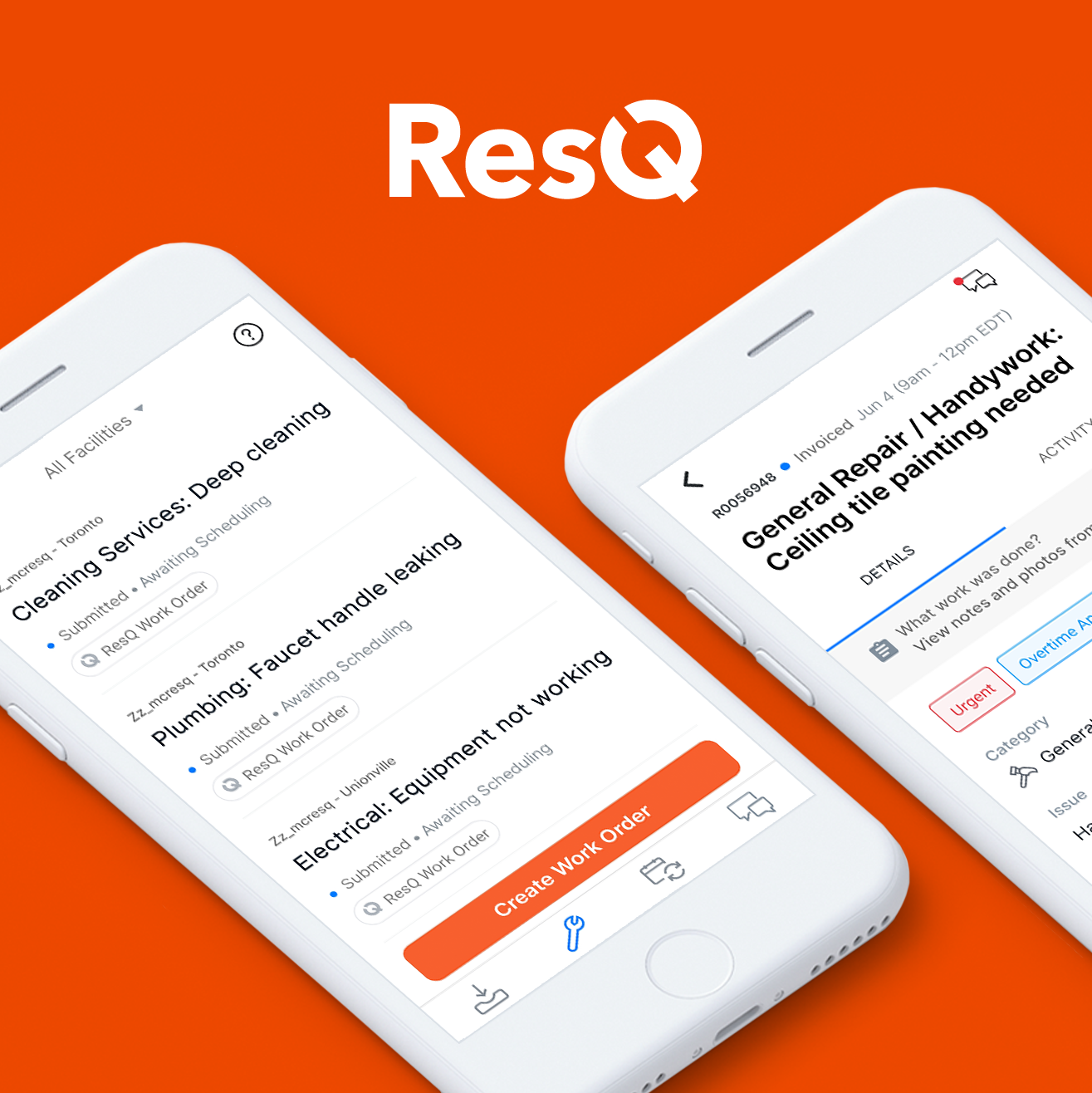
The platform allows restaurants to request, manage, and pay for a service that they need done, from plumbing issues to electrical mishaps. ResQ claims it can save restaurants between 10-30% in annual repairs by offering competitive rates, and faster communication and hiring loops. It charges a monthly SaaS fee per rooftop to a restaurant group.

ResQ product mock-up.

The software layer sits on top of ResQ’s contractor marketplace, which is essentially a supply of geographic-specific workers with a variety of specialties that can come to do repairs or management. In exchange for providing contractors with work, ResQ takes a portion of revenue they make from each service. Singh sees the marketplace business of ResQ as a differentiator from incumbents or startup competitors such as ServiceChannel.

“You don’t just need a fancy-looking piece of software,” Singh said. “You need a product that can manage vendors, that can make sure they show up on time, that can make sure that they’re not overcharging, so that’s why we’re a SaaS enabled marketplace in the background.” By owning the supply side of the repair market, ResQ can have more precision when meeting demand and understanding its end customer.

Of course, a challenge with any marketplace is balancing and sourcing a high-quality supply. ResQ has over 700 contractors on its platform right now, but it needs to continue building them up in order to meet needs and get restaurant services on time. Singh said that a majority of its contractor supply comes from its restaurant customers bringing on preferred partners to their platform. ResQ then backfills, he said, any gaps in supply or if there are any specialties that are missing. While that process may be convenient for now, the startup could eventually scale – and sweeten the deal – by generating its own supply of contractors.

Hunter Walk, partner at Homebrew, thinks that ResQ could eventually use its positioning as a marketplace to bring on edtech and fintech services to contractors. For example, it has plans to eventually turn into a skills provider to train and place local talent. ResQ also wants to turn into a “business in a box” for these contractors, helping them grow their business through payment and billing support.

“For me that’s the difference between ‘you’re just making things more efficient’ versus ‘you’re also giving some percentage of your worker base the chance to think in new ways about the services they provide,” Walk said. “If you’re just thinking about it as an as a optimization algorithm, then you’re never really going to get into the ‘what can I do to help make these people’s lives better’ and those are where some of the upside of the economics live as well.” He noted that Singh’s experience, and ethos as a founder, will lead to ResQ solving problems more holistically and humanly.

Resq-kuljeev-singh

ResQ founder Kuljeev Singh

The market

Even with successful operations, margins can be razor-thin in the restaurant industry. This reality puts any startup in the restaurant tech industry at risk: when costs need to be cut, SaaS tools could be the first to go. Toast, for example, initially cut 50% of its staff due to the economic impact of the pandemic.

For ResQ, the pandemic created new urgency around rebuilding tech-forward restaurants, Singh said.

“We started building a new paradigm to our product and transitioned from a transactional marketplace mobile only focused on smaller restaurants, to a fully SaaS product focused on multi-unit operators powered by a local marketplace,” Singh said. Surely enough, the company’s revenue grew 750% over the past year.

To date, ResQ has worked with over 3,000 restaurant groups including KFC, Taco Bell, and Tim Hortons. With millions in the bank, let’s hope that number grows and it continues to find ways to grow its back of the house footprint.

22 Jun 2021

Last call for our Pittsburgh City Spotlight Pitch-Off

We’re about a week away from TechCrunch Spotlight: Pittsburgh, and one of the uniquely-TechCrunch things we do at events is a pitch-off. Be it the big Disrupt Battlefield, or the flash pitch-offs that happen weekly on Extra Crunch Live, the energy around folks pitching their company — sometimes for the first time — is downright electric.

The pitch-off is also a great way to get to know players in locations that are new to us. We know that companies like Duolingo have been grinding away for years in the Steel City, but we want to take a deeper look into what the ecosystem has to offer.

Over 75 companies of varying stages have submitted to be a part of our Spotlight series, and we’ve seen everything from robotics to chewing gum. Yes, chewing gum. And yes, they’re awesome. 

Have a company HQ’d in Pittsburgh and want to show the world what you’re working on? Submit your company and you might be chosen. 

Interested in what’s happening in the city, who the major players are and why it’s a hot destination for robotics, ML and AI? Register to attend and join us on June 29th at 1:30pm ET. You’ll hear from Karin Tsai, director of engineering at Duolingo, Carnegie Mellon University President Farnam Jahanian, Mayor Bill Peduto and a few other fun guests. 

Get ready to network!!!!

22 Jun 2021

EU is now investigating Google’s adtech over antitrust concerns

EU antitrust authorities are finally taking a broad and deep look into Google’s adtech stack and role in the online ad market — confirming today that they’ve opened a formal investigation.

Google has already been subject to three major EU antitrust enforcements over the past five years — against Google Shopping (2017), Android (2018) and AdSense (2019). But the European Commission has, until now, avoided officially wading into the broader issue of its role in the adtech supply chain. (The AdSense investigation focused on Google’s search ad brokering business, though Google claims the latest probe represents that next stage of that 2019 enquiry, rather than stemming from a new complaint).

The Commission said that the new Google antitrust investigation will assess whether it has violated EU competition rules by “favouring its own online display advertising technology services in the so called ‘ad tech’ supply chain, to the detriment of competing providers of advertising technology services, advertisers and online publishers”.

Display advertising spending in the EU in 2019 was estimated to be approximately €20BN, per the Commission.

“The formal investigation will notably examine whether Google is distorting competition by restricting access by third parties to user data for advertising purposes on websites and apps, while reserving such data for its own use,” it added in a press release.

Earlier this month, France’s competition watchdog fined Google $268M in a case related to self-preferencing within the adtech market — which the watchdog found constituted an abuse by Google of a dominant position for ad servers for website publishers and mobile apps.

In that instance Google sought a settlement — proposing a number of binding interoperability agreements which the watchdog accepted. So it remains to be seen whether the tech giant may seek to push for a similar outcome at the EU level.

There is one cautionary signal in that respect in the Commission’s press release which makes a point of flagging up EU data protection rules — and highlighting the need to take into account the protection of “user privacy”.

That’s an interesting side-note for the EU’s antitrust division to include, given some of the criticism that France’s Google adtech settlement has attracted — for risking cementing abusive user exploitation (in the form of adtech privacy violations) into the sought for online advertising market rebalancing.

Or as Cory Doctorow neatly explains it in this Twitter thread: “The last thing we want is competition in practices that harm the public.”

Aka, unless competition authorities wise up to the data abuses being perpetuated by dominant tech platforms — such as through enlightened competition authorities engaging in close joint-working with privacy regulators (in the EU this is, at least, possible since there’s regulation in both areas) — there’s a very real risk that antitrust enforcement against Big (ad)Tech could simply supercharge the user-hostile privacy abuses that surveillance giants have only been able to get away with because of their market muscle.

So, tl;dr, ill-thought through antitrust enforcement actually risks further eroding web users’ rights… and that would indeed be a terrible outcome. (Unless you’re Google; then it would represent successfully playing one regulator off against another at the expense of users.)

The need for competition and privacy regulators to work together to purge Big Tech market abuses has become an active debate in Europe — where a few pioneering regulators (like German’s FCO) are ahead of the pack.

The UK’s Competition and Markets Authority (CMA) and Information Commissioner’s Office (ICO) also recently put out a joint statement — laying out their conviction that antitrust and data protection regulators must work together to foster a thriving digital economy that’s healthy across all dimensions — i.e. for competitors, yes, but also for consumers.

A recent CMA proposed settlement related to Google’s planned replacement for tracking cookies — aka ‘Privacy Sandbox’, which has also been the target of antitrust complaints by publishers — was notable in baking in privacy commitments and data protection oversight by the ICO in addition to the CMA carrying out its competition enforcement role.

It’s fair to say that the European Commission has lagged behind such pioneers in appreciating the need for synergistic regulatory joint-working, with the EU’s antitrust chief roundly ignoring — for example — calls to block Google’s acquisition of Fitbit over the data advantage it would entrench, in favor of accepting a few ‘concessions’ to waive the deal through.

So it’s interesting to see the EU’s antitrust division here and now — at the very least — virtue signalling an awareness of the problem of regional regulators approaching competition and privacy as if they exist in firewalled silos.

Whether this augurs the kind of enlightened regulatory joint working — to achieve holistically healthy and dynamic digital markets — which will certainly be essential if the EU is to effectively grapple with surveillance capitalism very much remains to be seen. But we can at least say that the inclusion of the below statement in an EU antitrust division press release represents a change of tone (and that, in itself, looks like a step forward…):

“Competition law and data protection laws must work hand in hand to ensure that display advertising markets operate on a level playing field in which all market participants protect user privacy in the same manner.”

Returning to the specifics of the EU’s Google adtech probe, the Commission says it will be particularly examining:

  • The obligation to use Google’s services Display & Video 360 (‘DV360′) and/or Google Ads to purchase online display advertisements on YouTube.
  • The obligation to use Google Ad Manager to serve online display advertisements on YouTube, and potential restrictions placed by Google on the way in which services competing with Google Ad Manager are able to serve online display advertisements on YouTube.
  • The apparent favouring of Google’s ad exchange “AdX” by DV360 and/or Google Ads and the potential favouring of DV360 and/or Google Ads by AdX.
  • The restrictions placed by Google on the ability of third parties, such as advertisers, publishers or competing online display advertising intermediaries, to access data about user identity or user behaviour which is available to Google’s own advertising intermediation services, including the Doubleclick ID.
  • Google’s announced plans to prohibit the placement of third party ‘cookies’ on Chrome and replace them with the “Privacy Sandbox” set of tools, including the effects on online display advertising and online display advertising intermediation markets.
  • Google’s announced plans to stop making the advertising identifier available to third parties on Android smart mobile devices when a user opts out of personalised advertising, and the effects on online display advertising and online display advertising intermediation markets.

Commenting on the investigation in a statement, Commission EVP and competition chief, Margrethe Vestager, added:

“Online advertising services are at the heart of how Google and publishers monetise their online services. Google collects data to be used for targeted advertising purposes, it sells advertising space and also acts as an online advertising intermediary. So Google is present at almost all levels of the supply chain for online display advertising. We are concerned that Google has made it harder for rival online advertising services to compete in the so-called ad tech stack. A level playing field is of the essence for everyone in the supply chain. Fair competition is important — both for advertisers to reach consumers on publishers’ sites and for publishers to sell their space to advertisers, to generate revenues and funding for content. We will also be looking at Google’s policies on user tracking to make sure they are in line with fair competition.”

Contacted for comment on the Commission investigation, a Google spokesperson sent us this statement:

“Thousands of European businesses use our advertising products to reach new customers and fund their websites every single day. They choose them because they’re competitive and effective. We will continue to engage constructively with the European Commission to answer their questions and demonstrate the benefits of our products to European businesses and consumers.”

Google also claimed that publishers keep around 70% of the revenue when using its products — saying in some instances it can be more.

It also suggested that publishers and advertisers often use multiple technologies simultaneously, further claiming that it builds its own technologies to be interoperable with more than 700 rival platforms for advertisers and 80 rival platforms for publishers.

22 Jun 2021

A.I. drug discovery platform Insilico Medicine announces $255 million in Series C funding

Insilico Medicine, an A.I-based platform for drug development and discovery announced $255 million in Series C financing on Tuesday. The massive round is reflective of a recent breakthrough for the company: proof that it’s A.I based platform can create a new target for a disease, develop a bespoke molecule to address it, and begin the clinical trial process. 

It’s also yet another indicator that A.I and drug discovery continues to be especially attractive for investors. 

Insilico Medicine is a Hong Kong-based company founded in 2014 around one central premise: that A.I assisted systems can identify novel drug targets for untreated diseases, assist in the development of new treatments, and eventually predict how well those treatments may perform in clinical trials. Previously, the company had raised $51.3 million in funding, according to Crunchbase

Insilico Medicine’s aim to use A.I to drive drug development isn’t particularly new, but there is some data to suggest that the company might actually accomplish that gauntlet of discovery all the way through trial prediction. In 2020, the company identified a novel drug target for idiopathic pulmonary fibrosis, a disease in which tiny air sacs in the lungs become scarred, which makes breathing laborious. 

Two A.I-based platforms first identified 20 potential targets, narrowed it down to one, and then designed a small molecule treatment that showed promise in animal studies. The company is currently filing an investigational new drug application with the FDA and will begin human dosing this year, with aims to begin a clinical trial late this year or early next year. 

The focus here isn’t on the drug, though, it’s on the process. This project condensed the process of preclinical drug development that typically takes multiple years and hundreds of millions of dollars into just 18 months, for a total cost of about $2.6 million. Still, founder Alex Zhavoronkov doesn’t think that Insilico Medicine’s strengths lie primarily in accelerating preclinical drug development or reducing costs: its main appeal is in eliminating an element of guesswork in drug discovery, he suggests. 

“Currently we have 16 therapeutic assets, not just IPF,” he says. “It definitely raised some eyebrows.” 

“It’s about the probability of success,” he continues. “So the probability of success of connecting the right target to the right disease with a great molecule is very, very low. The fact that we managed to do it in IPF and other diseases I can’t talk about yet – it increases confidence in A.I in general.” 

Bolstered partially by the proof-of-concept developed by the IPF project and enthusiasm around A.I based drug development, Insilico Medicine attracted a long list of investors in this most recent round. 

The round is led by Warburg Pincus, but also includes investment from Qiming Venture Partners, Pavilion Capital, Eight Roads Ventures, Lilly Asia Ventures, Sinovation Ventures, BOLD Capital Partners, Formic Ventures, Baidu Ventures, and new investors. Those include CPE, OrbiMed, Mirae Asset Capital, B Capital Group, Deerfield Management, Maison Capital, Lake Bleu Capital, President International Development Corporation, Sequoia Capital China and Sage Partners. 

This current round was oversubscribed four-fold, according to Zhavoronkov. 

A 2018 study of 63 drugs approved by the FDA between 2009 and 2018 found that the median capitalized research and development investment needed to bring a drug to market was $985 million, which also includes the cost of failed clinical trials. 

Those costs and the low likelihood of getting a drug approved has initially slowed the process of drug development. R&D returns for biopharmaceuticals hit a low of 1.6 percent in 2019, and bounced back to a measly 2.5 percent in 2020 according to a 2021 Deloitte report

Ideally, Zhavoronkov imagines an A.I-based platform trained on rich data that can cut down on the amount of failed trials. There are two major pieces of that puzzle: PandaOmics, an A.I platform that can identify those targets; and Chemistry 42, a platform that can manufacture a molecule to bind to that target.

“We have a tool, which incorporates more than 60 philosophies for target discovery,” he says. 

“You are betting something that is novel, but at the same time you have some pockets of evidence that strengthen your hypothesis. That’s what our A.I does very well.” 

Although the IPF project has not been fully published in a peer-reviewed journal, a similar project published in Nature Biotechnology was. In that paper, Insilco’s deep learning model was able to identify potential compounds in just 21 days

The IPF project is a scale-up of this idea. Zhavoronkov doesn’t just want to identify molecules for known targets, he wants to find new ones and shepherd them all the way through clinical trials. And, indeed, also to continue to collect data during those clinical trials that might improve future drug discovery projects. 

“So far nobody has challenged us to solve a disease in partnership” he says. “If that happens, I’ll be a very happy man.” 

That said, Insilico Medicine’s approach to novel target discovery has been used piecemeal, too. For instance, Insilico Medicine has collaborated with Pfizer on novel target discovery, and Johnson and Johnson on small molecule design and done both with Taisho Pharmaceuticals. Today, the company also announced a new partnership with Teva Branded Pharmaceutical Products R&D, Inc. Teva will aim to use PandaOmics to identify new drug targets.

That said, it’s not just Insilico Medicine raking in money and partnerships. The whole field of A.I-based novel targets has been experiencing significant hype.

In 2019 Nature noted that at least 20 partnerships between major drug companies and A.I drug discovery tech companies had been reported. In 2020, investment in A.I companies pursuing drug development increased to $13.9 billion, a four-fold increase from 2019, per Stanford University’s Artificial Intelligence Index annual report. R&D cost 

Drug discovery projects received the greatest amount of private A.I investment in 2020, a trend that can partially be attributed to the pandemic’s need for rapid drug development. However, the roots of the hype predate Covid-19. 

Zhavorokov is aware that A.I based drug development is riding a bit of a hype wave right now. “Companies without substantial evidence supporting their A.I powered drug discovery claims manage to raise very quickly,” he notes. 

Insilico Medicine, he says, can distinguish itself based on the quality of its investors. “Our investors don’t gamble,” he says. 

But like so many other A.I-based drug discovery platforms, we’ll have to see whether they make it through the clinical trial churn.