Year: 2021

17 Jun 2021

Beamery raises $138M at an $800M valuation for its ‘operating system for recruitment’

Online job listings were one of the first things to catch on in the first generation of the internet. But that has, ironically, also meant that some of the most-used digital recruitment services around today are also some of the least evolved in terms of tapping into all of the developments that tech has to offer, leaving the door open for some disruption. Today, one of the startups doing just that is announcing a big round of funding to double down on its growth so far.

Beamery, which has built what it describes as a “talent operating system” — a way to manage sourcing, hiring and retaining of people, plus analyzing the bigger talent picture for an organization, a “talent graph” as Beamery calls it, in an all-in-one, end-to-end service — has raised $138 million, money that it plans to use to continue building out more technology, as well as growing its business, which has been expanding quickly and saw 337% revenue growth year over year in Q4.

The Ontario Teachers’ Pension Plan Board (Ontario Teachers’), a prolific tech investor, is leading the round by way of its Teachers’ Innovation Platform (TIP). Other participants in this Series C includes several strategic backers who are also using Beamery: Accenture Ventures, EQT Ventures, Index Ventures, M12 (Microsoft’s venture arm) and Workday Ventures (the venture arm of the HR software giant).

Abakar Saidov, co-founder and CEO at London-based Beamery, told TechCrunch in an interview that it is not disclosing valuation, but sources in the know say it’s in the region of $800 million.

The round is coming on the heels of a very strong year for the company.

The “normal” way of doing things in the working world was massively upended with the rise of Covid-19 in early 2020, and within that, recruitment was among one of the most impacted areas. Not only were people applying and interviewing for jobs completely remotely, but in many cases they were getting hired, onboarded and engaged into new jobs without a single face-to-face interaction with a recruiter, manager or colleague.

And that’s before you consider the new set of constraints that HR teams were under in many places: variously, we saw hiring freezes, furloughs, layoffs and budget cuts (often more than one of these per business), and yet work still needed to get done.

All that really paved the way for platforms like Beamery’s — designed not only to be remote-friendly software-as-a-service running in the cloud, but to handle the whole recruiting and talent management process from a single place — to pick up new customers and prove its role as an updated, more user-friendly approach to the task of sourcing and placing talent.

“Traditional HR is very admin-heavy, and when you add in payroll and benefits, the systems that exist are very siloed,” said Saidov in the interview. “The innovation for us has been to move out of that construct and into something that is human, and has a human touch. From a data perspective, we’re creating the underlying system of record for all of the people touching a business. So when you build on top of that, everything looks like a consumer application.”

In the last 12 months, the company said that customers — which are in the area of large enterprises and include Covid vaccine maker AstraZeneca, Autodesk, Nasdaq, several major tech giants, and strategic investor Workday — filled 1 million roles through its platform, a figure that includes not just sourcing and placing candidates from outside of an organization’s walls, but also filling roles internally.

The work that Beamery is doing is definitely helping the business not just pull its weight — its last round was a much more modest $28 million, which was raised way back in 2018 — but grow and invest in new services.

The company said it had a year-on-year increase of 462% in jobs posted across its customer base. A year before that (which would have extended into pre-pandemic 2019), the number of candidates pipelined increased by a mere 46%, pointing to acceleration.

Beamery today already offers a pretty wide range different services.

They include tools to source candidates. This can be done organically by creating your own job boards to be found by anyone curious enough to look, and by leveraging other job boards on other platforms like LinkedIn, the Microsoft-owned professional networking platform that counts “Talent Solutions” — ie recruitment — as one of its primary business lines. (Recall Microsoft is one of Beamery’s backers.) It also provides tools to create and manage online recruitment events.

Beamery also offers tools to help people get the word out about a role, with a service akin to programmatic advertising (similar to ZipRecruiter) to populate other job boards, or run more targeted executive recruitment searches. It also provides a way for HR teams to create internal recruitment processes, and also run surveys with existing teams to get a better picture of the state of play.

And it has some analytics tools in place to measure how well recruitment drives, retention and other metrics are evolving to help plan what to do in the future.

The big question for me now is how and if Beamery will bring more into that universe. There have been some interesting startups emerging in the wider world of talent IT (if we could call it that) that could be interesting complements to what Beamery already has, or provide a roadmap for what it might try to build itself.

It includes much more extensive work on internal job boards (such as what Gloat has built); digging much deeper into building accurate pictures of who is at the company and what they do (see: ChartHop); or the many services that are building ways of sourcing and connecting with contractors, which are a huge, and growing, part of the talent equation for companies (see: Turing,  RemoteDeelPapaya GlobalLattice, Factorial, and many others).

Beamery already includes contractors alongside full- and part-time roles that can be filled using its platform, but when it comes to managing those contractors, that’s something that Beamery does not do itself, so that could be one area where it might grow, too.

“The key reason enterprises work with us it to consolidate a bunch of workflows,” Saidov said. “HR hates having different systems and everything becomes easier when things interoperate well.” Employing contractors typically involves three elements: sourcing, management and scheduling, so Beamery will likely approach how it grows in that area by determining which piece might be “super core” the centralization of more data, he added.

Another two likely areas he hinted are on Beamery’s roadmap are assessments — that is, providing tools to recruiters who want to measure the skills of applicants for jobs (another startup-heavy area today) — and tools to help recruiters do their jobs better, whether that involves more native communications tools in video and messaging, as well as Gong-like coaching to help them measure and improve screening and interviewing.

It might also consider developing a version for smaller businesses to use.

Questions investors are happy to see considered, it seems, as they invest in what looks like a winner in the bigger race. TIP’s other investments have included ComplyAdvantage, Epic Games, Graphcore, KRY and SpaceX, a long run in a wide field.

“Leading companies worldwide are prioritising recruitment and retention. They are turning to Beamery for a best-in-class talent solution that can be seamlessly integrated with their business,” said Maggie Fanari, MD for TIP in Emea. “Beamery’s best-in-class approach is already recognized by top-tier companies. I’m excited by the company’s vision of to use technology to support long-term talent growth and build better businesses. Beamery is the first company to bring predictive marketing and data science into recruitment. They are a truly innovative company, building a vision that can shape the future of work – the company fits all the criteria we look for in a TIP investment and more.”

17 Jun 2021

A Senate proposal for a new US agency to protect Americans’ data is back

Democratic Senator Kirsten Gillibrand has revived a bill that would establish a new U.S. federal agency to shield Americans from the invasive practices of tech companies operating in their own backyard.

Last year, Gillibrand (D-NY) introduced the Data Protection Act, a legislative proposal that would create an independent agency designed to address modern concerns around privacy and tech that existing government regulators have proven ill-equipped to handle.

“The U.S. needs a new approach to privacy and data protection and it’s Congress’ duty to step forward and seek answers that will give Americans meaningful protection from private companies that value profits over people,” Sen. Gillibrand said.

The revamped bill, which retains its core promise of a new “Data Protection Agency,” is co-sponsored by Ohio Democrat Sherrod Brown and returns to the new Democratic Senate with a few modifications.

In the spirit of all of the tech antitrust regulation chatter going on right now, the 2021 version of the bill would also empower the Data Protection Agency to review any major tech merger involving a data aggregator or other deals that would see the user data of 50,000 people change hands.

Other additions to the bill would establish an office of civil rights to “advance data justice” and allow the agency to evaluate and penalize high-risk data practices, like the use of algorithms, biometric data and harvesting data from children and other vulnerable groups.

Gillibrand calls the notion of updating regulation to address modern tech concerns “critical” — and she’s not alone. Democrats and Republicans seldom find common ground in 2021, but a raft of new bipartisan antitrust bills show that Congress has at last grasped how important it is to rein in tech’s most powerful companies lest they lose the opportunity altogether.

The Data Protection Act lacks the bipartisan sponsorship enjoyed by the set of new House tech bills, but with interest in taking on big tech at an all-time high, it could attract more support. Of all of the bills targeting the tech industry in the works right now, this one isn’t likely to go anywhere without more bipartisan interest, but that doesn’t mean its ideas aren’t worth considering.

Like some other proposals wending their way through Congress, this bill recognizes that the FTC has failed to meaningfully punish big tech companies for their bad behavior. In Gillibrand’s vision, the Data Protection Agency could rise to modern regulatory challenges where the FTC has failed. In other proposals, the FTC would be bolstered with new enforcement powers or infused with cash that could help the agency’s bite match its bark.

It’s possible that modernizing the tools that federal agencies have at hand won’t be sufficient. Cutting back more than a decade of overgrowth from tech’s data giants won’t be easy, particularly because the stockpile of Americans’ data that made those companies so wealthy is already out in the wild.

A new agency dedicated to wresting control of that data from powerful tech companies could bridge the gap between Europe’s own robust data protections and the absence of federal regulation we’ve seen in the U.S. But until something does, Silicon Valley’s data hoarders will eagerly fill the power vacuum themselves.

17 Jun 2021

Airspeeder wants to make electric flying racing cars a reality in 2021

While much of the eVTOL industry has its sights set on urban air taxis or cargo transportation, entrepreneur Matthew Pearson had another idea: electric flying race cars. So in 2019, he founded two companies, Alauda Aeronautics to manufacture the aircraft and Airspeeder, an international series to race them. Now, Airspeeder says it has completed the first test flights of the debut electric flying race car and is poised to host the inaugural race of its EXA series this year.

That flying race car, the electric Alauda Mk3, had its test flights in south Australia. They were observed by Australia’s Civil Aviation Safety Authority, who certified the aircraft. Pearson’s vision – and what you can see by watching some of Airspeeder’s cinematic trailers – is a race somewhat reminiscent of Star Wars’ iconic podracing, without a human or creature in the pilot seat.

The first three races, which are set to take place in 2021, will all feature remotely piloted aircraft. The company is planning for a crewed showcase as early as 2022.

The unpiloted Mk3, which can reach top speeds of 124 miles per hour (200 km/h), weighs just 286 pounds (130 kg). It can accelerate from 0 to 62 mph in 2.8 seconds, the company said, likening it to the Tesla Model S or the Porsche Taycan. In fidelity to Formula One and NASCAR, the Mk3 has a removable battery for quick replacement during pitstops. In-house pitstop crews have been able to replace the battery, which was designed by Alauda, in just under 20 seconds. The Mk3 is able to fly 10 to 15 minutes on a single battery pack, so during a 45-minute race, pilots on the ground will remotely navigate the aircraft to land for a pitstop about three times.

Mk3 is equipped with a combination of LiDAR, radar and machine vision that Pearson said creates a collision avoidance system. The company did not specify to TechCrunch the number of sensors that are on each craft and declined to provide further details on the system, citing proprietary information. The challenge of designing a safety system for a flying race car, however, is allowing enough flexibility so that the aircraft can get as close together as possible, without actually hitting each other. This is a problem for the pilots who will be competing against each other, but also Airspeeder’s system.

Pearson explained it like this: “The vehicles are talking to each other, they know where the others are and they’re all solving the collision avoidance problem in the same way using the same algorithm. So they know they can predict each other’s behavior. There’s that as the kind of framework for collision avoidance, but inside that, we want to give the pilots as much freedom and as much control as possible. So dialing up where the barrier is between pilot and machine is going to be a really interesting thing.”

While it’s tempting to draw comparisons to major eVTOL companies that are developing air taxi services, Pearson said the economics and path to commercialization for electric flying race cars is different. “The commercialization model is a lot more rapid,” he said. “We can be racing before anyone can be in commercial operations.”

One reason why they can be so agile is because its certification pathway is very different from that required by air taxis designed to shuttle people. Those startups can spend many hundreds of millions of dollars – up to $1 billion, by some estimates – on the design, certification, and manufacture of a single aircraft model. The Mk3 is flying under an experimental certification with Australia’s Civil Aviation Safety Authority that means that while it must meet certain safety and airworthiness standards, the regulatory burden is far less than for a passenger aircraft.

“The important thing about our program is to keep the vehicles in constant development cycles. So instead of trying to build one vehicle, and then certify it over 10 years, we’re trying to build new aircraft every year,” he explained. “It’s not how aviation really functions normally. And certainly, if you want to get into passenger applications, that’s not how you do it.”

Airspeeder had its first funding round in April 2020 for an unspecified amount, which was led by Australian investors Saltwater Capital and Jelix Ventures. Pearson said he’d also provide capital, and they’ve managed to attract partnerships from logistics company BHL and luxury watch maker IWC Schaffhausen. The company declined to provide further specifics on how it’s managed to fund a small-scale aeronautics manufacturing operation from the ground up.

17 Jun 2021

Insurtech AI startup Akur8 closes $30M Series B

Automating insurance claims is a big business, and the world of AI is coming at it ‘full pelt’. The latest is Akur8, an insurtech automating insurance platform whose ‘Transparent AI’ product is trying to eat into the incumbent large business of Willis Towers watson, among others.

It’s now closed a Series B funding round of $30m led by an undisclosed investor. This brings its total funding to $42m. The round is to support international expansion.

Akur8 is used by actuaries and pricing teams to make faster decisions about insurance claims.

Customers include AXA, Generali, and Munich Re, specialty insurers Canopius and Tokio Marine Kiln, insurtechs Wakam and wefox, as well as mutualistic player Matmut.

Samuel Falmagne, co-founder and CEO of Akur8 commented: “We are happy to announce the closing of our Series B funding round and are grateful for the support we have seen from our investors. This latest milestone will enable us to accelerate the transformation of insurance pricing even further, fuel our international expansion in the US and APAC, and equip P&C and health carriers with a state-of-the-art, integrated pricing solution that we have been building and refining tirelessly.”

Julien Creuzé, Partner at BlackFin Capital Partners Said: “The BlackFin team is thrilled to see Akur8 continue to spread its wings and deploy its next-generation pricing platform across insurance carriers worldwide. We have built a great relationship with the Akur8 management team and it’s a pleasure to welcome new investors and continue this journey with them.”

17 Jun 2021

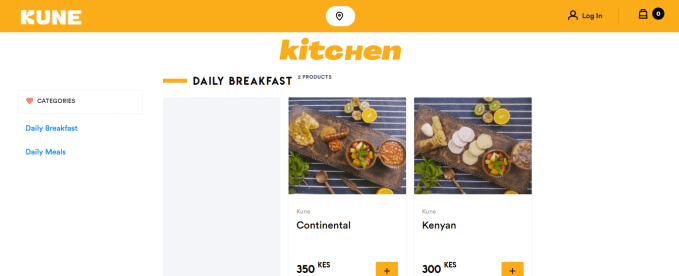
Kenyan foodtech startup Kune raises $1M pre-seed for its ready-to-eat meals service

While there has been a wave of innovation in food tech worldwide, it’s still in early days for Africa. There are only a handful of African food-tech startups, and a year and a half’s worth of global pandemic has added a couple to that list.

Kune is one of the most recent food-tech startups, and today, the six-month-old Kenyan-based company is announcing that it has closed a $1 million pre-seed round to launch its on-demand food service in August.

Pan-African venture capital firm Launch Africa Ventures led the pre-seed round. Other investors that took part include Century Oak Capital GmbH and Consonance, with a contribution from ecosystem management firm Pariti

Founded by CEO Robin Reecht in December 2020, Kune delivers freshly made, ready-to-eat meals at arguably affordable prices. When Reetch first came to Kenya from France in November 2020, it wasn’t easy to get affordable ready-to-eat meals.

“After three days of coming into Kenya, I asked where I can get great food at a cheap price, and everybody tell me it’s impossible,” he told TechCrunch. “It’s impossible because either you go to the street and you eat street food, which is really cheap but with not-so-good quality, or you order on Uber Eats, Glovo or Jumia, where you get quality but you have to pay at least $10.”

Reetch noticed a gap in the market and sought to fill it. The next month, he decided to start Kune. The goal? To provide affordable, convenient and tasty meals. It took a week to develop a pilot, and with a ready waitlist of 50 customers in a particular office space, his plans were in motion. Kune sold more than 500 meals ($4 average) and tripled its customer base from 50 to 150.

Customers were particularly excited about the product and Kune raised $50,000 from them to continue operations, Reetch said. After that, however, the orders became too large for the small team that they couldn’t keep up; at one point, it received 50 orders per day. Thus, instead of advancing with a momentum that could break down, the team took a hiatus.

“We had started to mess up the order because, you know, it’s complicated to get food right when you’re just in a small kitchen setting. So I said okay, that there is no point doing that, and the demand is so high and better to do things right.”

The next months were spent restructuring the company, making hires and building a factory to produce 5,000 meals per day. Then, when the company was ready to raise, Reetch said he saw the same enthusiasm from customers and investors. In two months, Kune closed this round, one of the largest in East Africa, and is one of the few non-fintechs to have raised a seven-figure pre-seed round on the continent.

In a fast-growing and crowded restaurant and food delivery marketplace in Kenya, Kune wants to offer a new way for busy people in Nairobi to access meals by finding a balance between Kibanda pricing (usually referred to as the typical local roadside food shop) and on-demand food delivery prices from global companies.

Kune applies a hybrid model, combining both cloud and dark kitchen concepts. Kune meals are cooked and packaged in its factory and delivered directly to online, retail and corporate customers.

The hybrid model speaks to why Launch Africa cut a check for Kune. And according to the director of the firm, Baljinder Sharma, “leveraging the cloud kitchen model and owning the entire supply chain provides a massive growth and scaling opportunity for Kune Africa.” He added: “We are looking forward to seeing the business take off and grow.”

Kune plans to fully launch in August after its new factory is completed. Per details on its site, the company is promising customers that delivery will be done on an average of 30 minutes daily.

To achieve this, Kune ensures that it owns the entire supply chain, from cooking to packaging to delivery with its own drivers and motorbikes. “Our strategy is to internalize all production and human resources capacities,” he stated. That’s where Kune will put most of the funds to use going forward. In addition to the factory, which costs about 10% of the total investment, Kune will be looking to build a huge team. Reetch tells me that judging by how operations-heavy Kune is, the team size will reach 100 come December.

Once launched, the company will build its own fleet of 100 electric motorcycles by early 2022. In addition, there are plans to hire 100 female drivers.

Currently, Kune showcases three different meals daily: two continental dishes and one foreign meal. In the coming months and quarters, Kune’s offerings will cut across microwavable meals, weight reduction meals and retail meals to target European and U.S. clients. For the latter, Reetch is enthusiastic about exporting the African food culture to Western countries. As someone who travels a lot, the CEO thinks Kenya, unlike other countries, doesn’t have a strong food culture. He references food media like TV shows where various meals and cuisines and tutorings on how to cook food are showcased. Reetch wants Kune to be the go-to for such programs in Kenya.

“In Kenya, we don’t have any culinary show. So we are going to take that position as the culinary major of Kenya, and how do you create this? By creating amazing content, which we plan to do by creating videos and writing articles on how to cook or maybe just food business in general.”

17 Jun 2021

Co-living startup Habyt closes $24M Series B, merges with Homefully

When WeWork appeared, other entrepreneurs looked at the model and thought that if you could apple co-working to property, then why not apply co-living. Thus, in the US, Common appeared, as did Hmlet in Asia. Imn the EU, Habyt launched, but has already gobbled-up its competitors Quarters, Goliving, and Erasmo’s Room.

It’s now closed a series B round of €20M / $24M, and merged with another competitor, Homefully, founded by Sebastian Wuerz in 2016. The round was backed by HV Capital (formerly Holtzbrink Ventures), Vorwerk Ventures, P101 and Picus Capital.

Founded in 2017 by Luca Bovone, Habyt will now have over 5,000 units across 15 cities and 6 countries. The merged companies will offer fully furnished and serviced living units, coupled with a tech-enabled user-experience and a focus on community, aimed at young professionals between 20 and 35 years old who move jobs and cities fairly frequently.

Luca Bovone, Founder and CEO of Habyt, said: “We have been on an incredible journey in the past year and a half. In spite of less than perfect market conditions we have been able to grow a lot via a very successful M&A strategy that brought us into the position of leaders of our sector in Europe and that still has a lot of potential. This 20M series B round really opens our doors to keep building Habyt both via organic growth and via more M&As. We are now looking at strategic targets in Europe, specifically in France and Italy, and also in other continents, especially in Asia.”

Sebastian Wuerz, Founder of homefully, said: “The coliving market is going through a consolidation phase and Habyt has really seized this opportunity quickly and effectively and is on the best track to become the leader of the sector at a global scale. Joining forces is a crucial step in this direction and I am very excited for the team to be part of this journey.”

Felix Kluehr, Partner at HV said: “We are happy to see that Habyt has emerged as the leading player in the European co-living market and HV is excited to support the team in their ambitious plan to build the leading European coliving company”.

Over an interview, Bovone told me: “It’s like a member’s club. We have a subscription model, where people pay a monthly fee, which is your rent, and then you can, of course, apply for a room somewhere else and know that we have a fairly decent scale across Europe and eventually, also in southern Europe. You are able to move from one place to the other. Our motto is live anywhere.”

He said that the pandemic had meant that people were ditching co-working spaces and “They would prefer to spend 50 to 100 euro more per month on getting better housing where they can work comfortably from home.”

“We are already seeing within our customer base, they want to stay six months in Berlin, three months in Madrid, then move back to Berlin and so on. The traditional housing market just doesn’t allow that to happen. You have contracts with utilities and so on, which you can never break and it’s just an outdated product offering, and we’re trying to tackle that.”

16 Jun 2021

A look inside Google’s first store, opening in NYC’s Chelsea neighborhood tomorrow

There have been plenty of pop-ups over the years, but tomorrow Google’s first store opens in NYC’s Chelsea neighborhood. The brick and mortar model finds the company joining peers like Apple, Microsoft, Samsung and even Amazon, all of whom have a retail presence in Manhattan, including several just around the corner from Google’s new digs.

The new space, which opens tomorrow morning at 10 a.m. local time, fills 5,000 square feet of selling space in Google’s big, pricey West Side real estate investment. The retail location was previously occupied by a Post Office and Starbucks, which vacated the premises once their leases expired under their new corporate landlord.

Image Credits: Photos courtesy of Google and Paul Warchol

The store’s layout is designed to be experiential, highlighting the company’s growing hardware portfolio along with select third-party partners. Essentially it’s a way for the company to get Pixel phones, Home offerings, Stadia, WearOS and the newest addition to the hardware portfolio, Fitbit devices, in front of tourists and locals.

“We really used the pop-ups over the last several years to get a better sense of what are customer expectations for what we can uniquely deliver at Google,” VP Jason Rosenthal said during a press preview week. We’ve taken learnings from our 2016, 2017, 2018 and 2019 pop-ups and really fed that learning into what we’re opening[…] in Chelsea.”

Due to pandemic restrictions, the preview was virtual. And while it’s open to the public this week, the company will be maintaining the standard safety precautions, as the city deals with (knock on wood) the tail end of the pandemic.

And while COVID-19 almost certainly slowed the planned opening, Google promises that things will be in full force starting tomorrow. This follows several weeks of piloting, wherein the store’s 50 or so staffers were put through their paces, while the company put the finishing touches on the experience. Prior to this, Google built a full-size store mockup in a hangar space in Mountain View to test out ideas.

Image Credits: Google and Paul Warchol

In addition to product screens and dioramas lining the 17-foot windows, the company filled the store with “sandboxes” — effectively scenarios like a living room, not dissimilar to what you might find in a large furniture store — albeit better lit. There’s also a gaming area for playing Stadia and a soundproof spot for testing out various Home/Nest products.

Like Apple’s Store, customers can bring in for repair broken devices like Pixels. The company says it’s growing the number of devices that can be repaired on-site, while certain issues, like a broken screen, should be able to be fixed same day.

[gallery ids="2167283,2167282,2167281,2167280,2167279,2167278,2167277,2167276,2167275,2167274,,,,,,,,,,,,,,,,"]

It seems likely that the store is a pilot in and of itself, with further plans to open additional locations in the U.S. and, perhaps, international markets where the company sells hardware. For now, however, Google won’t discuss the subject beyond tomorrow’s opening in Chelsea.

16 Jun 2021

Tractable raises $60M at a $1B valuation to make damage appraisals using AI

As the insurance industry adjusts to life in the 21st century (heh), an AI startup that has built computer vision tools to enable remote damage appraisals is announcing a significant round of growth funding.

Tractable, which works with automotive insurance companies to let users take and submit photos of damaged cars that are then “read” to make appraisals, has raised $60 million, a series D that values Tractable at $1 billion, the company said.

Tractable says it works with more than 20 of the top 100 auto insurers in the world, and it has seen sales grow 600% in the last 24 months, which CEO Alex Dalyac told me translates as “well into 8 figures of annual revenue.” He also told me that “we would have grown even faster if it weren’t for Covid.” People staying at home meant far less people on the roads, and less accidents.

Its business today is based mostly around car accident recovery — where users can take pictures using ordinary smartphone cameras, uploading pictures via a mobile web site (not typically an app).

But Tractable’s plan is to use some of the funding to expand deeper into areas adjacent to that: natural disaster recovery (specifically for appraising property damage), and used car appraisals. It will also use the investment to continue building out its technology, specifically to help build out better, AI-based techniques of processing and parsing pictures that are taken on smartphones — by their nature small in size.

Insight Partners and Georgian co-led the round and it brings the total raised by the company to $115 million.

Dalyac, a deep learning researcher by training who co-founded the company with Razvan Ranca and Adrien Cohen, said that the “opportunity” (if you could call an accident that) Tractable has identified and built to fix is that it’s generally time-consuming and stressful to deal with an insurance company when you are also coping with a problem with your car.

And while a new generation of “insuretech” startups have emerged in recent years that are bringing more modern processes into the equation, typically the incumbent major insurance companies — the ones that Tractable targets — have lacked the technology to improve that process.

It’s not unlike the tension between fintech-fuelled neobanks and the incumbent banks, which are now scrambling to invest in more technology to catch up with the times.

“Getting into an accident can be anything from a hassle to trauma,” Dalyac said. “It can be devastating, and then the process for recovery is pretty damn slow. You’re dealing with so many touch points with your insurance, so many people that need to come and check things out again. It’s hard to keep track and know when things will truly be back to normal. Our belief is that that whole process can be 10 times faster, thanks to the breakthroughs in image classification.”

That process currently also extends not just to taking pictures for claims, but also to help figure out when a car is beyond repair, in which case which parts can be recycled and reused elsewhere, also using Tractable’s computer vision technology. Dalyac noted that this was a popular enough service in the last year that the company helped recycle as many cars “as Tesla sold in 2019.”

Customers that have integrated with Tractable to date include Geico in the U.S., as well as a large swathe of insurers in Japan, specifically Tokio Marine Nichido, Mitsui Sumitomo, Aioi Nissay Dowa and Sompo. Covéa, the largest auto insurer in France, is also a customer, as is Admiral Seguros, the Spanish entity of UK’s Admiral Group, as well as Ageas, a top UK insurer.

Japan is the company’s biggest market today Dalyac said — the reason being that it has an ageing population, but one that is also very strong on mobile usage: combining those two, “automation is more than a value add; it’s a must have,” Dalyac said. He also added that he thinks the U.S. will overtake Japan as Tractable’s biggest market soon.

The new directions into property and other car applications will also open the door to a wider set of use cases beyond working with insurance providers over time. It will also bring Tractable potentially into new competitive environments. There are other companies that have also identified this opportunity.

For example, Hover, which has built a way to create 3d imagery of homes using ordinary smartphone cameras, is also eyeing ways of selling its tech (originally developed to help make estimates on home repairs) to insurance companies.

For now, however, it sounds like the opportunity is a big enough one that the race is more to meet demand than it is to beat competitors to do so.

“Tractable’s accelerating growth at scale is a testament to the power and differentiation of their applied machine learning system, which continues to improve as more businesses adopt it,” said Lonne Jaffe, MD at Insight Partners and Tractable Board member, in a statement. “We’re excited to double down on our partnership with Tractable as they work to help the world recover faster from accidents and disasters that affect hundreds of millions of lives.”

Emily Walsh, Partner at Georgian Partners added: “Tractable’s industry-leading computer vision capabilities are continuing to fuel incredible customer ROI and growth for the firm. We’re excited to continue to partner with Tractable as they apply their artificial intelligence capabilities to new, multi-billion dollar market opportunities in the used vehicle and natural disaster recovery industries.”

16 Jun 2021

Amazon deflects responsibility on fake reviews but admits 200M were blocked last year

Amazon admits it has a fake review problem, but does its best to spread the blame around in a new post detailing the issue. After numerous reports for years that the online retail giant is overrun with knock-off products and faked or farmed reviews, the company aims to look as if it is finally putting its foot down, but no new efforts or rules are discussed — rather, it is others that need to step up their work to keep Amazon safe.

Amazon reviews have become notoriously unreliable as indicators of quality as the store has given itself over willingly to counterfeits, AliExpress resellers, and promotion of the company’s internal brands (developed with the benefit of seller data). Multiple reports have found organized efforts to spam the store with meaningless 5-star reviews in exchange for free products or cash. I have myself received such offers, or sellers promising payment for raising a star rating.

After the requisite preliminary palaver about being “obsessed with delighting customers” and all that, Amazon explains that it, like all big tech giants, uses automated systems to vet reviews before they go up. The company has always been cagey about the actual numbers, but in this post it drops a whopper: “In 2020, we stopped more than 200 million suspected fake reviews before they were ever seen by a customer.”

200 million is a lot no matter how you look at it, but it’s really a lot when you consider that Amazon told CNBC that same year that it “analyze[s] over 10 million review submissions weekly,” which adds up to somewhere north of 520 million submissions yearly. These two Amazon-provided numbers suggest that a third of all reviews submitted, at a minimum, are rejected as fake.

Hard numbers on Amazon’s total reviews are hard to come by. Speaking to Buzzfeed, Amazon listing analysis site ReviewMeta’s Tommy Noonan estimated that in 2020 Amazon hosted around 250 million reviews (of which, incidentally, he calculated about 9 percent were “unnatural”). But if over 500 million were submitted in 2020 and about 200 million of those were fake, that indicates a far larger total. I’ve asked Amazon for more precise information on this, and will update the post if I hear back, but the company is not communicative about these numbers in general.

Groups organizing on social media numbering in the tens of thousands have been repeatedly pointed out as major contributors to the fake review ecosystem. Amazon writes that in the first quarter of 2020, it reported 300 such groups to the platforms hosting them, and the same period in 2021 it reported over 1,000. Takedown times have increased, but it’s hard to take this increase as anything other than a thriving business model — certainly not something in the process of being stamped out.

“It is imperative for social media companies to invest adequately in proactive controls to detect and enforce fake reviews ahead of our reporting the issue to them,” Amazon declares. Indeed social media companies are being pressed from multiple directions to take more responsibility for what users do on their platforms, but they make the same noises Amazon does: “we’re doing what we can,” (and, it is left unsaid, clearly it’s not enough).

“We need coordinated assistance from consumer protection regulators around the world,” Amazon writes. But the company lobbied forcefully and successfully against the INFORM act, which would have helped identify sellers with bad intent and add transparency to online marketplaces (strangely, Amazon has taken some of the actions it objects to independently). And that line is suspiciously absent when it is Amazon that consumers need to be protected against.

“It is also critical that we hold bad actors—and the service providers that provide them with fake reviews—accountable for their activity,” the post continues. But while lawsuits and partnerships with law enforcement are part of that, once again the call to “work together” rings hollow when Amazon itself is where the activity occurs and the company is in complete control of that ecosystem. Though it has banned some major players from the store, innumerable others flout the rules with impunity.

Nowhere in the post does Amazon detail any new steps it will take to deter these bad actors or crack down on the pervasive gaming of the system for which it sets the rules. It will “continue to enhance” its detection tools, “streamline processes” for partnerships, and “work hard” at keeping scammers accountable. In other words, it will keep doing exactly what it has been doing this whole time — which is what put it in this position in the first place.

16 Jun 2021

Daily Crunch: iOS 15 is latest milestone on Apple Health’s evolutionary path

To get a roundup of TechCrunch’s biggest and most important stories delivered to your inbox every day at 3 p.m. PDT, subscribe here.

Thanks to a twist of fate, two large cups of coffee and help from editor Annie Saunders, the Extra Crunch team is taking over today’s edition of Daily Crunch.

Don’t worry, we’ll hand it back as soon as Henry Pickavet returns or Alex Wilhelm is back from vacation, whichever occurs first.

Since I’ve been handed the mic: We’re trying to identify the most effective growth marketers who are helping startups build their businesses. With that in mind, Managing Editor Eric Eldon interviewed growth leader Susan Su, currently head of portfolio strategy at Sound Ventures, about the need for founders to develop a growth-centered mentality as the economy reopens.

“They don’t need to memorize all the right buttons to push in an ads dashboard, but they need to be familiar and comfortable with the core work of gap-finding,” says Su.

“Founders will fail if they adopt a mentality that someone else can or should do it for them. The founder’s job is to supply ambition and opinions, and then magnetize high-quality talent to come and pull the levers and bring their creative vision to life.”

If you’ve worked with a growth expert you recommend, please get in touch and let us know.

Thanks for reading!

Walter Thompson

Senior Editor, TechCrunch

@yourprotagonist

The TechCrunch Top 3

Apple doesn’t rank with top personal health brands like Procter & Gamble, Peloton or Fitbit, but perhaps it doesn’t need to. Cupertino’s health-related products and services are broad enough to touch each of these companies — and many others — in some way.

In an interview with Apple VP of Technology Kevin Lynch, Darrell Etherington tracked the evolution of the company’s user-guided approach to developing hardware, software and data management policies around personal health.

“It actually started from Apple Watch, where we were capturing heart rate data for calorimetry activity, and [Activity] ring closure, and we needed a place to put the heart rate data,” says Lynch. “So we created the Health app as a place to store the data.”

Sarah Perez reported on today’s launch of Spotify Greenroom, a live audio app based on the code of Locker Room. In March, Spotify purchased Betty Labs, which developed Locker Room.

Best known for music streaming, Spotify has been branching out into a more robust media company in recent years. Greenroom will allow users to host and join audio chat rooms, “and optionally turn those conversations into podcasts,” says Sarah.

There’s a reason why advertising units are called “impressions.” CPG companies are eager to literally place their messages in our faces.

So it should come as no surprise that Facebook today announced its plans to start testing ads on its Oculus platform in a limited rollout. A company blog post indicates that “for now, this is a test with a few apps.”

Startups and VC

Software testing platform BrowserStack announced today that it has raised $200 million in a Series B round. The round, which values the company at $4 billion, was led by BOND, with Insight Partners and Accel participating.

PandaDoc competitor Templafy has raised a Series D worth $60 million. Since launch, the business document creation platform based in Denmark has raised $125 million, including a $25 million Series C 14 months ago.

After securing a $100 million Series E round led by Accel partners, last-mile delivery platform Bringg is now valued at $1 billion, the company confirms. CEO Guy Bloch told TechCrunch the funds will be used to continue fueling growth, expanding operations and acquiring new customers. “Companies need our urgent help to do a job,” says Bloch.

Edtech investors are flocking to SaaS guidance counselors

The prevailing post-pandemic edtech narrative, which predicted higher ed would be DOA as soon as everyone got their vaccine and took off for a gap year, might not be quite true.

Natasha Mascarenhas explores a new crop of edtech SaaS startups that function like guidance counselors, helping students with everything from study-abroad opportunities to swiping right on a captivating college (really!).

“Startups that help students navigate institutional bureaucracy so they can get more value out of their educational experience may become a growing focus for investors as consumer demand for virtual personalized learning increases,” she writes.

(Extra Crunch is our membership program, which helps founders and startup teams get ahead. You can sign up here.)

Big Tech Inc.

Facebook rolls out new tools for Group admins: Facebook launched a new set of tools aimed at helping Facebook Group administrators get a better handle on their online communities and, potentially, help keep conversations from going off the rails. (May the odds be ever in your favor!) Among the more interesting new tools is a machine-learning-powered feature that alerts admins to potentially unhealthy conversations taking place in their group. Another lets the admin slow the pace of a heated conversation by limiting how often group members can post. As the adage goes, if you can’t say anything nice, say it slower.

Google updates online safety curriculum for kids: Perhaps we can teach the next generation to just be nice on the internet instead of using machine learning to prevent them from rapidly disseminating vaccine disinformation? Google updated and expanded its digital safety and citizenship curriculum, Be Internet Awesome, which has lessons for parents and educators about online gaming, cyberbullying and online empathy. Fingers crossed!

Waymo, Alphabet’s self-driving arm, raises $2.5B: In its second outside funding round, Waymo raised $2.5 billion to grow Waymo Driver, its autonomous driving platform, and its team. At the moment, Waymo One, a commercial ride-hailing service, operates in the Phoenix, Arizona area, and Waymo announced plans earlier this month to enter a “test run” of its trucking and cargo transportation service with J.B. Hunt.