Year: 2021

10 Jun 2021

Nvidia acquires hi-def mapping startup DeepMap to bolster AV technology

Chipmaker Nvidia is acquiring DeepMap, the high-definition mapping startup announced. The company said its mapping IP will help Nvidia’s autonomous vehicle technology sector, Nvidia Drive.

“The acquisition is an endorsement of DeepMap’s unique vision, technology and people,” said Ali Kani, vice president and general manager of Automotive at Nvidia, in a statement. “DeepMap is expected to extend our mapping products, help us scale worldwide map operations and expand our full self-driving expertise.”

One of the biggest challenges to achieving full autonomy in a passenger vehicle is achieving proper localization and updated mapping information that reflects current road conditions. By integrating DeepMap’s tech, Nvidia’s autonomous stack should have greater precision, giving the vehicle enhanced abilities to locate itself on the road.

“Joining forces with Nvidia will allow our technology to scale more quickly and benefit more people sooner. We look forward to continuing our journey as part of the Nvidia team,” said James Wu, co-founder and CEO of DeepMap, in a statement.

DeepMap — founded by former employees of Google, Apple and Baidu James Wu and Mark Wheeler — can use Nvidia Drive’s software-defined platform to scale its maps across AV fleets quickly and without using too much data storage via over-the-air updates. Nvidia will also invest into new capabilities for DeepMap as part of the partnership.

Nvidia is expected to finalize the acquisition in Q3 2021.

10 Jun 2021

Nvidia acquires hi-def mapping startup DeepMap to bolster AV technology

Chipmaker Nvidia is acquiring DeepMap, the high-definition mapping startup announced. The company said its mapping IP will help Nvidia’s autonomous vehicle technology sector, Nvidia Drive.

“The acquisition is an endorsement of DeepMap’s unique vision, technology and people,” said Ali Kani, vice president and general manager of Automotive at Nvidia, in a statement. “DeepMap is expected to extend our mapping products, help us scale worldwide map operations and expand our full self-driving expertise.”

One of the biggest challenges to achieving full autonomy in a passenger vehicle is achieving proper localization and updated mapping information that reflects current road conditions. By integrating DeepMap’s tech, Nvidia’s autonomous stack should have greater precision, giving the vehicle enhanced abilities to locate itself on the road.

“Joining forces with Nvidia will allow our technology to scale more quickly and benefit more people sooner. We look forward to continuing our journey as part of the Nvidia team,” said James Wu, co-founder and CEO of DeepMap, in a statement.

DeepMap — founded by former employees of Google, Apple and Baidu James Wu and Mark Wheeler — can use Nvidia Drive’s software-defined platform to scale its maps across AV fleets quickly and without using too much data storage via over-the-air updates. Nvidia will also invest into new capabilities for DeepMap as part of the partnership.

Nvidia is expected to finalize the acquisition in Q3 2021.

10 Jun 2021

Apple announces its 2021 Apple Design Award winners

Apple incorporated the announcement of this year’s Apple Design Award winners into its virtual Worldwide Developer Conference (WWDC) online event, instead of waiting until the event had wrapped, like last year. Ahead of WWDC, Apple previewed the finalists, whose apps and games showcased a combination of technical achievement, design and ingenuity. This evening, Apple announced the winners across six new award categories.

In each category, Apple selected one app and one game as the winner.

In the Inclusivity category, winners supported people from a diversity of backgrounds, abilities and languages.

This year, winners included U.S.-based Aconite’s highly accessible game, HoloVista, where users can adjust various options for motion control, text sizes, text contrast, sound, and visual effect intensity. In the game, users explore using the iPhone’s camera to find hidden objects, solve puzzles and more. (Our coverage)

Image Credits: Aconite

Another winner, Voice Dream Reader, is a text-to-speech app that support more than two dozen languages and offers adaptive features and a high level of customizable settings.

Image Credits: Voice Dream LLC

In the Delight and Fun, category, winners offer memorable and engaging experiences enhanced by Apple technologies. Belgium’s Pok Pok Playroom, a kid entertainment app that spun out of Snowman (Alto’s Adventure series), won for its thoughtful design and use of subtle haptics, sound effects and interactions. (Our coverage)

Image Credits: Pok Pok

Another winner included U.K.s’ Little Orpheus, a platformer that combines storytelling, surprises, and fun and offers a console-like experience in a casual game.

Image Credits: The Chinese Room

The Interaction category winners showcase apps that offer intuitive interfaces and effortless controls, Apple says.

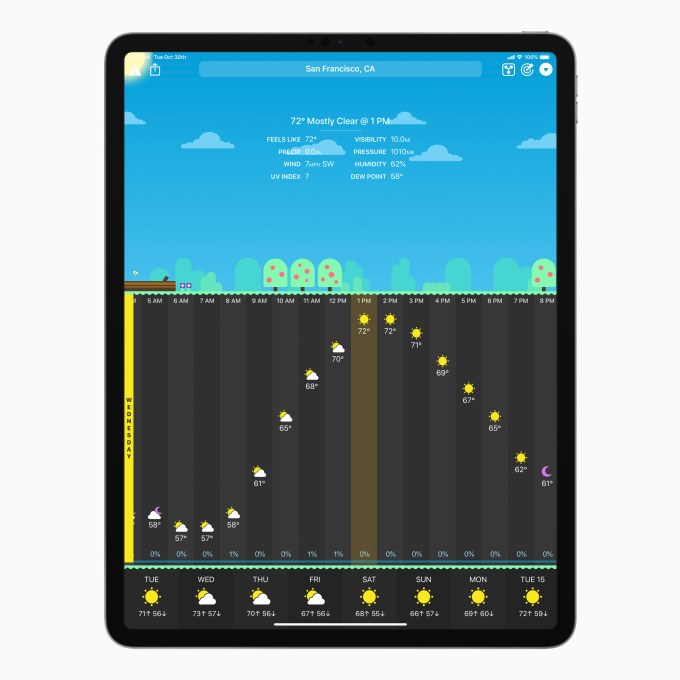
The U.S.-based snarky weather app CARROT Weather won for its humorous forecasts, unique visuals, and entertaining experience, which is also available as Apple Watch faces and widgets.

Image Credits: Brian Mueller, Grailr LLC

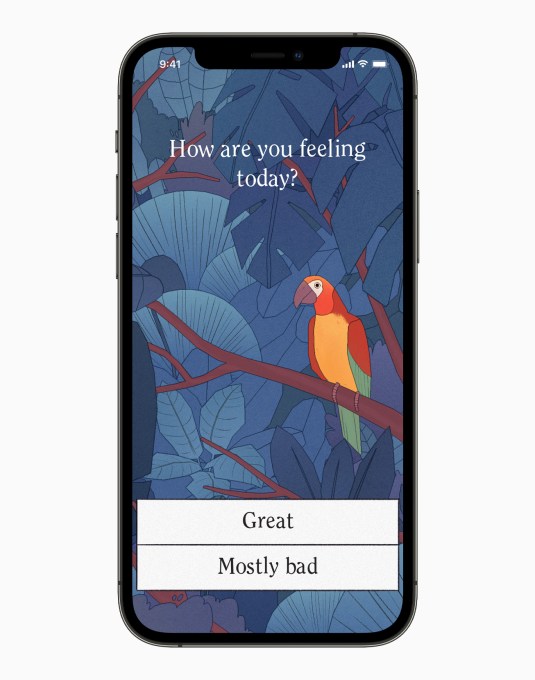
Canada’s Bird Alone game combines gestures, haptics, parallax, and dynamic sound effects in clever ways to brings its world to life.

Image Credits: George Batchelor

A Social Impact category doled out awards to Denmark’s Be My Eyes, which enables people who are blind and low vision to identify objects by pairing them with volunteers from around the world using their camera. Today, it supports over 300K users who are assisted by over 4.5M volunteers. (Our coverage)

Image Credits: S/I Be My Eyes

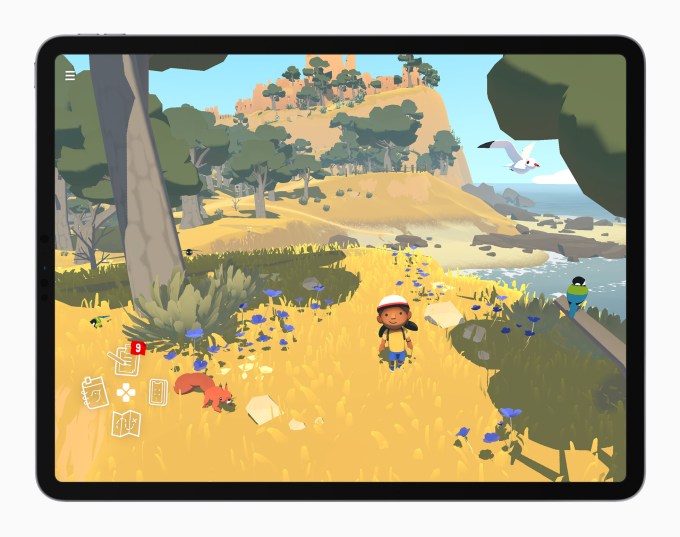
U.K.’s ustwo games won in this category for Alba, a game that teaches about respecting the environment as players save wildlife, repair a bridge, clean up trash and more. The game also plants a tree for every download.

Image Credits: ustwo games

The Visuals and Graphics winners feature “stunning imagery, skillfully drawn interfaces, and high-quality animations,” Apple says.

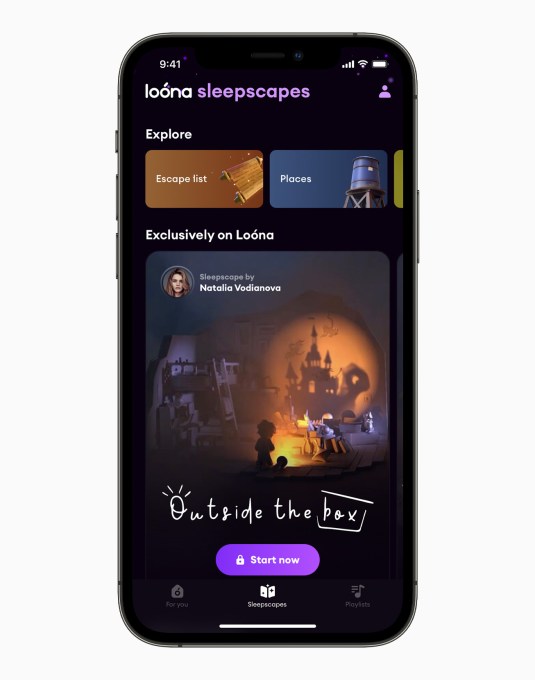
Belarus-based Loóna offers sleepscape sessions which combine relaxing activities and atmospheric sounds with storytelling to help people wind down at night. The app was recently awarded Google’s “best app” of 2020.

Image Credits: Loóna Inc

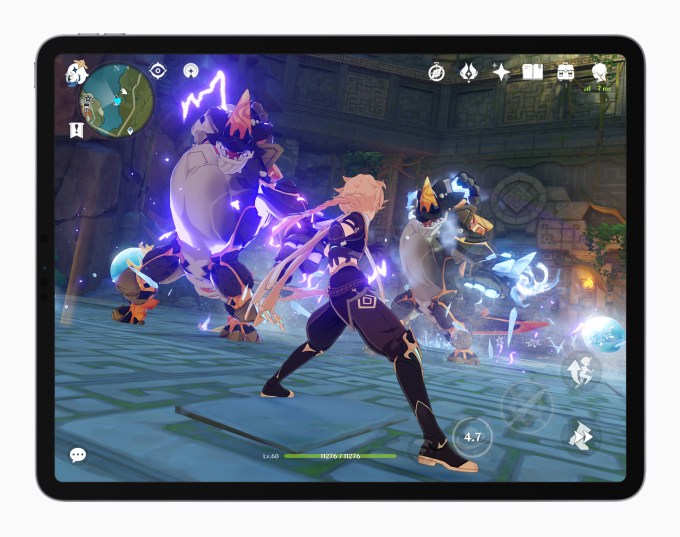
China’s Genshin Impact won for pushing the visual frontier on gaming, as motion blur, shadow quality, and frame rate can be reconfigured on the fly. The game had previously made Apple’s Best of 2020 list and was Google’s best game of 2020.

Image Credits: miHoYo Limited

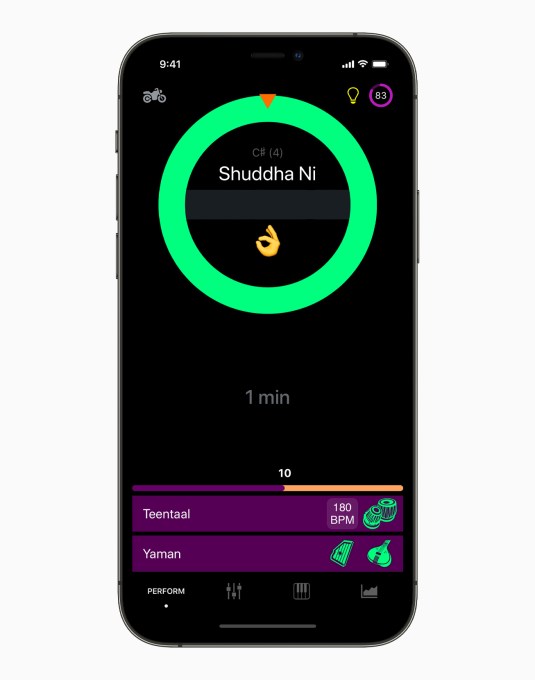
Innovation winners included India’s NaadSadhana, an all-in-one, studio-quality music app that helps artists perform and publish. The app uses A.I. and Core ML to listen and provide feedback on the accuracy of notes, and generates a backing track to match.

Image Credits: Sandeep Ranade

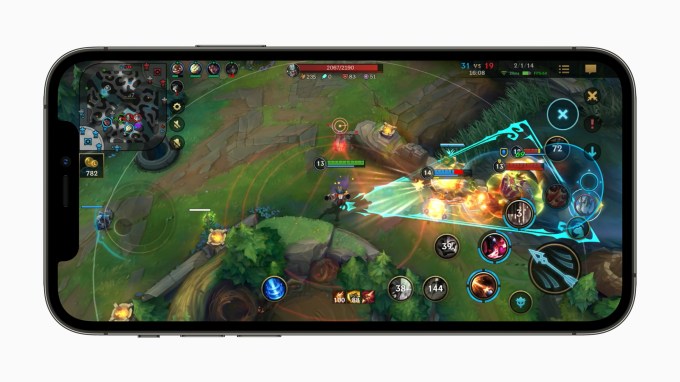
Riot Games’ League of Legends: Wild Rift (U.S.) won for taking a complex PC classic and delivering a full mobile experience that includes touchscreen controls, an auto-targeting system for newcomers, and a mobile-exclusive camera setting.

Image Credits: Riot Games

The winners this year will receive a prize package that includes hardware and the award itself.

“This year’s Apple Design Award winners have redefined what we’ve come to expect from a great app experience, and we congratulate them on a well-deserved win,” said Susan Prescott, Apple’s vice president of Worldwide Developer Relations, in a statement. “The work of these developers embodies the essential role apps and games play in our everyday lives, and serve as perfect examples of our six new award categories.”

read more about Apple's WWDC 2021 on TechCrunch

10 Jun 2021

Apple confirms hiring of Ulrich Kranz, former CEO of EV company Canoo

Apple has hired the former co-founder and CEO of electric vehicle company Canoo to help with the development of the Apple Car, Bloomberg first reported, citing unnamed sources. Apple has confirmed to TechCrunch it has hired Kranz, but did not provide further details into his job responsibilities or title.

Kranz resigned his position at Canoo in April after steering the company toward public listing and a new leadership team, and he is reported to have been scooped up by Apple within weeks. The news comes a couple of months after Apple CEO Tim Cook dropped hints that the mysterious Apple Car would include autonomous vehicle technology as a key feature. Hiring an executive with decades of experience at the cutting edge of the auto industry is a clear sign that Apple is moving ahead with its vehicle manufacturing plans.

Apple is keeping a tight lip on its plans for its vehicle. According to a Reuters report from December, Apple intends to produce an electric passenger vehicle with “breakthrough battery technology” and automated vehicle technology by 2024. Other than that, no one knows what the car will look like or who, if anyone, will be the manufacturer, although it’s not outlandish to imagine Apple creating both the hardware and software.

10 Jun 2021

After 30 years, ‘Crossing the Chasm’ is due for a refresh

When I was at Open Market in the 1990s, our CEO gave out the recently published book “Crossing the Chasm” to the executive team and told us to read it to gain insight into why we had hit a speed bump in our scaling. We had gone from zero to $60 million in revenue in four years, went public at a billion-dollar market cap, and then stalled.

We found ourselves stuck in what author Geoffrey Moore called “the chasm,” a difficult transition from visionary early adopters who are willing to put up with an incomplete product and mainstream customers who demand a more complete product. This framework for marketing technology products has been one of the canonical foundational concepts to product-market fit for the three decades since it was first published in 1991.

Why is it that in recent years, wild-eyed optimistic VCs and entrepreneurs keep undershooting market size across the tech and innovation sector?

I have been reflecting on why it is that we venture capitalists and founders keep making the same mistake over and over again — a mistake that has become even more glaring in recent years. Despite our exuberant optimism, we keep getting the potential market size wrong. Market sizes have proven to be much, much larger than any of us had ever dreamed. The reason? Today, everyone aspires to be an early adopter. Peter Drucker’s mantra — innovate or die — has finally come to pass.

A glaring example in our investment portfolio is database software company MongoDB. Looking back at our Series A investment memo for this disruptive open-source, NoSQL database startup, I was struck that we boldly predicted the company had the opportunity to disrupt a subsegment of the industry and successfully take a piece of a market that could grow as large as $8 billion in annual revenue in future years.

Today, we realize that the company’s product appeals to the vast majority of the market, one that is forecast to be $68 billion in 2020 and approximately $106 billion in 2024. The company is projected to hit a $1 billion revenue run rate next year and, with that expanded market, likely has continued room to grow for many years to come.

Another example is Veeva, a vertical software company initially focused on the pharmaceutical industry. When we met the company for their Series A round, they showed us the classic hockey stick slide, claiming they would reach $50 million in revenue in five years.

We got over our concerns about market size when we and the founders concluded they could at least achieve a few hundred million in revenue on the backs of pharma and then expand to other vertical industries from there. Boy, were we wrong! The company filed their S-1 after that fifth year showing $130 million in revenue, and today the company is projected to hit $2 billion in revenue run rate next year, all while still remaining focused on just the pharma industry.

Veeva was a pioneer in “vertical SaaS” — software platforms that serve niche industries — which in recent years has become a popular category. Another vertical SaaS example is Squire, a company my partner Jesse Middleton angel invested in as part of a pre-seed round before he joined Flybridge.

10 Jun 2021

Daily Crunch: With $639M funding found, Klarna is Europe’s highest-valued private fintech

To get a roundup of TechCrunch’s biggest and most important stories delivered to your inbox every day at 3 p.m. PDT, subscribe here.

Hello and welcome to Daily Crunch for June 10, 2021. A short note from TechCrunch to start, namely that it’s the last few hours to get an early-bird pass to TC Early Stage 2021: Marketing & Fundraising, coming in early July. It’s going to be pretty much amazing, so get on that, early-stage founders. — Alex

The TechCrunch Top 3

  • Microsoft thinks it can get cloud gaming to work: Microsoft has big plans to make cloud gaming more than whatever is left of Stadia today. Per TechCrunch, the company is preparing to “launch a dedicated device for game streaming” and wants to integrate related tech into TVs. Gamers, it’s a good time to be one of us. So long as you don’t need a new GPU.
  • Klarna raises $639M: The craze to stuff capital into successful buy-now-pay-later startups continued this week, with Klarna raising a huge stack of funds at a new, greater valuation. For more on the space and its rapid growth, read this.
  • Tech culture is changing: Recent unrest at Medium after related issues at Coinbase and Basecamp are bringing to light changing cultural expectations at startups and at the well-known Y Combinator accelerator. Inside these debates, it’s not hard to see growing recognition among some tech employees of the leverage that they have over their employers.

Startups and VC

Today we’re looking at a few key funding rounds from startupland, then some fund news and a roundup of recent unicorn IPOs.

  • AI-powered recruiting is valuable: That’s the lesson from Eightfold AI’s recent funding round. The company just put together a fresh $220 million round at a $2.1 billion valuation, more than double what it was worth late last year. Notably, this valuation doubling was not born from Tiger Global’s largesse, but SoftBank’s second Vision Fund. The company, TechCrunch writes, “uses deep learning and artificial intelligence to help companies find, recruit and retain workers.”
  • Say hello to analytics for how you spend your workday: There’s a fine line between keeping tabs on your workers and looking over their shoulders too frequently. Time is Ltd just raised $5.6 million for what we described as the Google Analytics for company time. For example, if a company wanted to know how much time its staff was spending in Slack versus, say, Teams, TiL could help. So long as the startup respects individual privacy, we’re fine with this.
  • Everyone needs fintech: Including Indonesia’s micro, small and medium businesses. Evidence of that fact is evinced by a huge $60 million Series A raised by BukuWarung, a fintech company focused on just that market. Valar Ventures and Goodwater Capital led the investment. The startup has now raised $80 million, per Crunchbase.

Over on the venture capital beat itself, here’s some recent fun fund fundraising featured facts:

  • Lots more capital for European startups: Perhaps to avoid having Tiger Global eat every round the world ‘round, Balderton Capital has put together a $680 million “early-growth” fund that will drop $25 million to $50 million checks into startups. That’s big coin for a growing scene.
  • Serena Williams’ husband raises new fund: Well-known investor Alexis Ohanian’s new firm, Seven Seven Six, has raised a $150 million fund. And it’s involved in the latest round at Nuggs.

To round out the day’s startup news, Marqeta, Monday.com, Zeta Global and 1stDibs went public. Here’s our dig into their debuts and what they mean for the IPO market — and the value of startups more generally.

The fintech endgame: New supercompanies combine the best of software and financials

Now that we can transact from anywhere, a new, hybrid class of software companies with embedded financial services are scooping up consumers — and investors are following the action.

Using data from a Battery Ventures report about “the intersection of software and financial services,” this post examines why these companies can be so hard to value and offers a framework for better understanding their business models and investor appeal.

(Extra Crunch is our membership program, which helps founders and startup teams get ahead. You can sign up here.)

Big Tech Inc.

  • Waymo’s self-driving push continues: Alphabet’s huge running bet on self-driving technology is partnering with J.B. Hunt Transport Services to test self-driving trucks in the busy Texas market. It’s long been thought that freight vehicles that don’t spend much time on side streets could make good early targets for self-driving tech. Let’s see. While we’re on the subject of autonomous transit, Scale has news on the data side of the equation.
  • Stripe brings sales tax to its payments platform: Stripe, while still private, is worth 84.2 zillion dollars, so it counts as Big Tech. The payments unicorn announced a new piece of tech today, namely the ability for its payments stack to handle sales tax both internationally and domestically. Sales tax is a huge problem, and handling it could provide Stripe with a nice edge over some of its competition.
  • Apple to (probably) kill Dark Sky: After Cupertino bought weather service Dark Sky, it was presumed to be on its way to the wood chipper. Thus ends many a technology exit to a bigco; the larger entity really wants the tech and team, but doesn’t want to keep the company’s app alive. Apple, to its credit, won’t axe Dark Sky until 2022. After that, it’s all bets off.

TechCrunch Experts: Growth Marketing

Illustration montage based on education and knowledge in blue

Image Credits: SEAN GLADWELL (opens in a new window) / Getty Images

TechCrunch wants to help startups find the right expert for their needs. To do this, we’re building a shortlist of the top growth marketers. We’ve received great recommendations for growth marketers in the startup industry since we launched the survey yesterday, and we’re excited to read more responses as they come in!

Fill out the survey here.

We look forward to publishing more about growth marketing. Check out our most recent offering, Growth marketing amid the pandemic: An interview with Right Side Up’s Tyler Elliston.

We’re excited to continue our editorial coverage about growth marketing with posts from the TechCrunch team and guests. If you’re interested in writing a guest column, read more here.

Community

Come chat with us about Pittsburgh on Twitter Spaces tomorrow 6/11 at 1 p.m. PDT/4 p.m. EDT ahead of our upcoming TC City Spotlight series event.

TC City Spotlight: Pittsburgh. Background is black and yellow city skyline.

10 Jun 2021

Pitch us, Pittsburgh

We’re getting closer to putting our spotlight on Pittsburgh, and there’s quite a bit going on behind the scenes. We’ve been spending a ton of time chatting with folks who are on the ground in the city, and we’ve had a great time learning and listening, which we think will make this installment of our Spotlight series the most dynamic yet.

As we share more details on who will be participating, such as CMU’s President Farnam Jahanian, we still want to hear from those of you building companies in the ‘Burgh.

We’ve heard from nearly 50 companies focusing on things like digital health, small business loans, patent development, robotics and clean tech, and we’ll be picking three companies to pitch live during the event on June 29th.

Because we expect all types of attendees, including investors, this could be an opportunity to take things to the next level, be it through recruiting new employees or finding a new advisor. After all, anything can happen at a TechCrunch event.

Simply fill out this form and your company could be chosen to pitch during the event.

Additionally, and to learn more about who’s who and what’s what in Pittsburgh, we’re going to be hosting a conversation on Twitter Spaces tomorrow (Friday) at 4 p.m. ET. Co-hosting will be one of our favorite Yinzers, Kit Mueller. Expect a bit of trivia, updates on news and happenings in the city and more.

Register for the event today, come chat with us tomorrow and submit your company or pass the word along to someone who should!

Agenda

June 29, 2021

2:00 p.m. EDT
Building Pittsburgh. Speaker to be announced!

2:20 p.m. EDT
Developing Duolingo. Karin Tsai, head of engineering, is set to speak on the trade-offs between engagement and edtech, scale and satisfaction, and how a simple A/B test can help.

2:40 p.m. EDT
From Student to Startup. CMU President Farnam Jahanian will speak on the school’s cutting-edge robotics and automation research and how it’s keeping innovative startups in Pittsburgh.

3:10 p.m. EDT
Pittsburgh Pitch-off. Startups will have two minutes to deliver their pitch, and our speakers will have four minutes to give their feedback. Pittsburgh startups should apply here


10 Jun 2021

Apple’s latest accessibility features are for those with limb and vocal differences

Apple announced a batch of accessibility features at WWDC 2021 that cover a wide variety of needs, among them a few for people who can’t touch or speak to their devices in the ordinary way. With Assistive Touch, Sound Control, and other improvements, these folks have new options for interacting with an iPhone or Apple Watch.

We covered Assistive Touch when it was first announced, but recently got a few more details. This feature lets anyone with an Apple Watch operate it with one hand by means of a variety of gestures. It came about when Apple heard from the community of people with limb differences — whether they’re missing an arm, or unable to use it reliably, or anything else — that as much as they liked the Apple Watch, they were tired of answering calls with their noses.

The research team cooked up a way to reliably detect the gestures of pinching one finger to the thumb, or clenching the hand into a fist, based on how doing them causes the watch to move — it’s not detecting nervous system signals or anything. These gestures, as well as double versions of them, can be set to a variety of quick actions. Among them is opening the “motion cursor,” a little dot that mimics the movements of the user’s wrist.

Considering how many people don’t have the use of a hand, this could be a really helpful way to get basic messaging, calling, and health-tracking tasks done without needing to resort to voice control.

Speaking of voice, that’s also something not everyone has at their disposal. Many of those who can’t speak fluently, however, can make a bunch of basic sounds, which can carry meaning for those who have learned — not so much Siri. But a new accessibility option called “Sound Control” lets these sounds be used as voice commands.

The setup menu lets the user choose from a variety of possible sounds: click, cluck, e, eh, k, la, muh, oo, pop, sh, and more. Picking one brings up a quick training process to let the system know how the user makes a “la” noise, and then it can be set to any of a wide selection of actions, from launching apps to asking commonly spoken questions or invoking other tools.

For those who prefer to interact with their Apple devices through a switch system, the company has a big surprise: Game controllers, once only able to be used for gaming, now work for general purposes as well. Specifically noted is the amazing Xbox Adaptive Controller, a hub and group of buttons, switches, and other accessories that improves the accessibility of console games. This powerful tool is used by many, and no doubt they will appreciate not having to switch control methods entirely when they’re done with Fortnite and want to listen to a podcast.

Image Credits: Apple

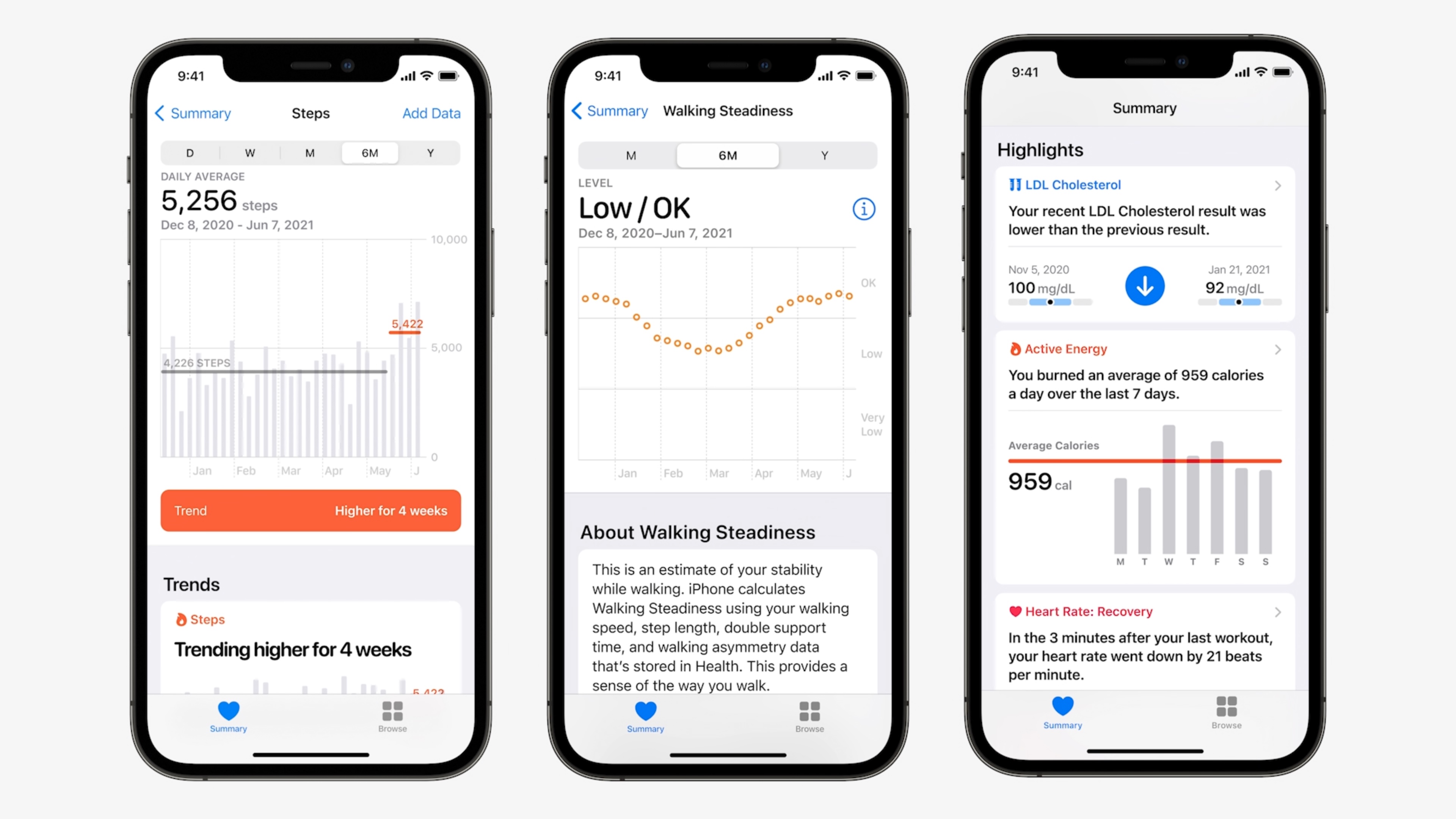
One more interesting capability in iOS that sits at the edge of accessibility is Walking Steadiness. This feature, available to anyone with an iPhone, tracks (as you might guess) the steadiness of the user’s walk. This metric, tracked throughout a day or week, can potentially give real insight into how and when a person’s locomotion is better and worse. It’s based on a bunch of data collected in the Apple Heart and Movement study, including actual falls and the unsteady movement that led to them.

If the user is someone who recently was fitted for a prosthesis, or had foot surgery, or suffers from vertigo, knowing when and why they are at risk of falling can be very important. They may not realize it, but perhaps their movements are less steady towards the end of the day, or after climbing a flight of steps, or after waiting in line for a long time. It could also show steady improvements as they get used to an artificial limb or chronic pain declines.

Exactly how this data may be used by an actual physical therapist or doctor is an open question, but importantly it’s something that can easily be tracked and understood by the users themselves.

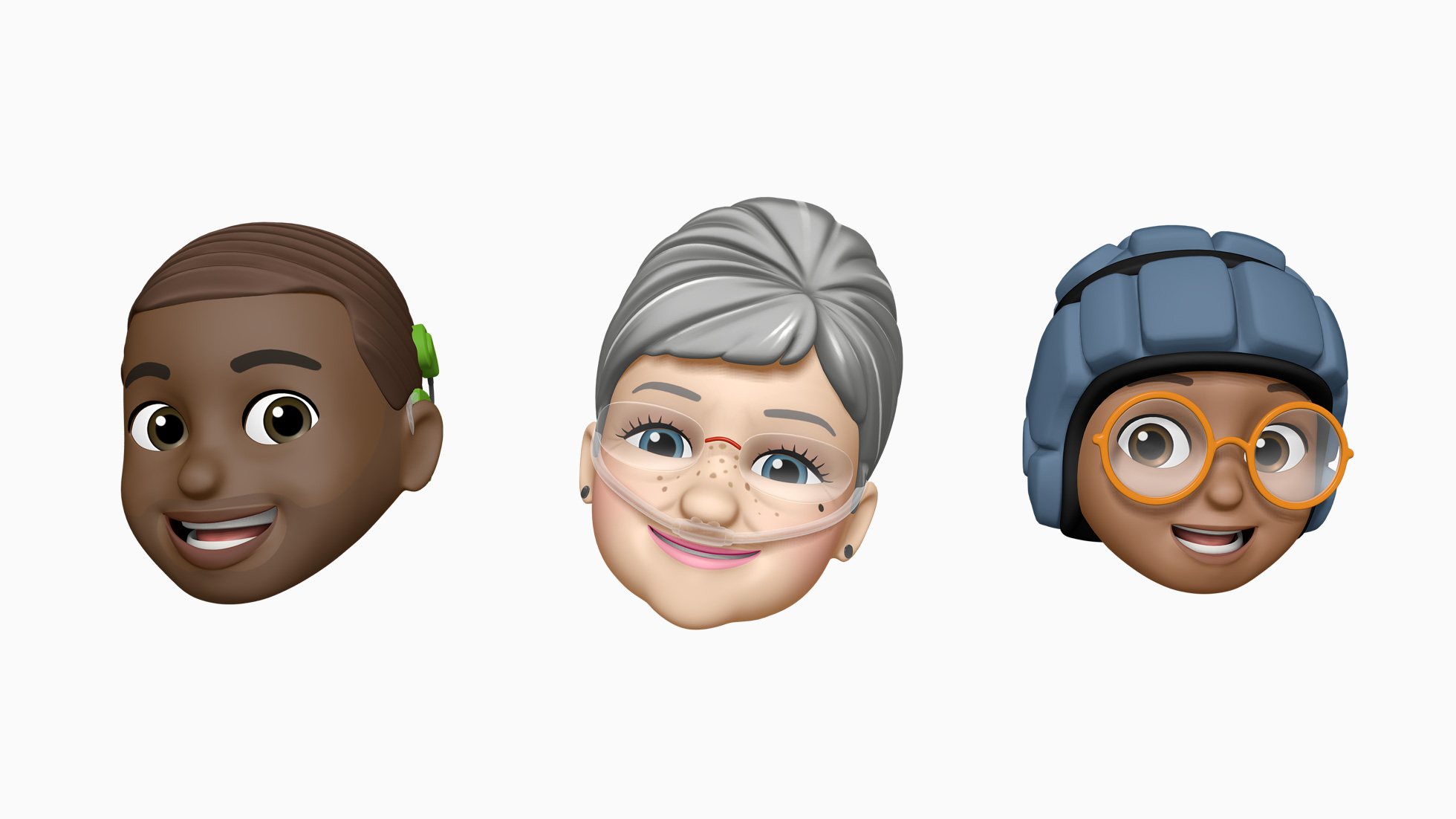
Images of Apple Memoji with a cochlear implant, an oxygen tube, and a soft helmet.

Image Credits: Apple

Among Apple’s other assistive features are new languages for voice control, improved headphone acoustic accommodation, support for bidirectional hearing aids, and of course the addition of cochlear implants and oxygen tubes for memoji. As an Apple representative put it, they don’t want to embrace differences just in features, but on the personalization and fun side as well.

10 Jun 2021

Ledger raises $380 million for its crypto hardware wallet

French startup Ledger has raised a $380 million Series C funding round led by 10T Holdings. Following today’s funding round, the company has reached a valuation of $1.5 billion.

Other investors in the funding round include existing investors Cathay Innovation, Draper Associates, Draper Dragon, Draper Esprit, DCG, Korelya Capital and Wicklow Capital. Some new investors are joining the round, such as Tekne Capital, Uphold Ventures, Felix Capital, Inherent, Financière Agache and iAngels Technologies.

Ledger’s main product is a hardware wallet to manage your crypto assets. They are shaped like USB keys and feature a tiny screen to confirm transactions on the device. The reason why that screen is important is that your private keys never leave your Ledger device.

In other words, if you want to store large amount of cryptocurrencies, you don’t want to leave them on an exchange account. If someone manages to sign in, they could withdraw all your crypto assets. With a hardware wallet, you remain in control of your crypto assets.

The company first launched the Ledger Nano S. You have to connect the device to a computer using a USB cable. More recently, with the Ledger Nano X, you can send and receive assets from your phone as the Nano X works over Bluetooth. Ledger also provides an enterprise solution for companies that want to add cryptocurrencies to their balance sheet.

Overall, Ledger has sold over 3 million hardware wallets. Every month, 1.5 million people use Ledger Live, the company’s software solution to manage your crypto assets. The company even says that it currently secures around 15% of all cryptocurrency assets globally.

It hasn’t been a smooth ride as the company has been around for seven years. After the crypto boom of 2018, interests for hardware wallets faded away. Moreover, as the company secures expensive assets, it has also suffered from a serious data breach — 272,000 customers have been affected.

With today’s funding round, the company plans to launch new products, add more DeFi features to Ledger Live and support the growth of the crypto ecosystem in general.

10 Jun 2021

Growth marketing amid the pandemic: An interview with Right Side Up’s Tyler Elliston

Growth marketers are busy today helping all sorts of startups take advantage of the market boom, but it has been a hard journey through the pandemic.

We caught up with Tyler Elliston, founder of growth marketing firm Right Side Up and occasional contributor at TechCrunch, about his experiences and what he’s seeing now.

It’s part of our new initiative to find the best growth marketers for startups based on founder recommendations. (Have a recommendation to share? Please fill out the survey here.)

Keep reading for more from Tyler about maintaining focus and resources on the right kind of growth, even when the markets are rollicking.

It’s been a while since we last spoke with you. How have the trends in growth marketing shifted between the beginning of the pandemic and now, as we begin to exit lockdowns?

Tyler Elliston: It’s been a rollercoaster! Early in the pandemic, we saw plummeting CPMs and slashed budgets. The rebound started relatively quickly over the summer of 2020 and accelerated into the fall and now 2021.

First, it was e-com companies, both those with strong pre-COVID sales online and historically brick-and-mortar brands scrambling to shift online to find much-needed sales. Then many other businesses — both new and existing — emerged with new products, value propositions and positioning to survive or even thrive in the pandemic.

Now, we continue to see very high consumer demand broadly and a corresponding eagerness amongst brands to accelerate customer acquisition, including through paid advertising. Very active investors have been a strong tailwind with respect to budgets.


Have you worked with a talented individual or agency who helped you find and keep more users?
Respond to our survey and help us find the best startup growth marketers!


We’ve talked before about how you like your team to be treated as a partner rather than a vendor. How have they been able to accomplish this during the pandemic?

The biggest thing is that we were able to lean on our reputation for being a good strategic partner that serves our clients’ best interests. Because they know we’ll tell them when we don’t think they should keep paying us for something, they also trust us when we say something like “I know this sounds crazy right now, but you should increase your budget due to a shift in your demand curve and channel economics.”

We were proactively honest with clients about what we believed the pandemic meant for their businesses, points of view we reached through a framework we outlined on our blog. For some, that meant supporting immediate termination of our partnership for them to conserve funds. In other cases, it meant pushing them to consider leaning into their performance marketing to capitalize on the changing environment and channel economics.

During the recovery, many companies have looked to external agencies and consultants to fill a temporary staffing gap in a lower-risk way. Shifting attitudes towards external resourcing and the evolution of company processes and culture to support remote workers have helped us more quickly and fully integrate with our clients’ internal teams.

In a previous conversation, you mentioned, “We regularly tell companies, ‘You don’t need any growth marketing right now. Focus on product-market fit.'” How can startups tell that it’s the right time to come work with you?

Growth marketing is an amplification tool. It shines a bright spotlight on a product or solution, believing that if only people knew about it, they would want it and love it. The “want it” and “love it” represent product-market fit. To measure these, we look at customer reviews, referral activity leading to organic growth, retention, product engagement, and ultimately realized and expected lifetime value.

Seeing good conversion rates and attractive customer acquisition costs in small-scale channel testing suggest that not only is there a group of people that love it, but that they can be reached. These are prerequisites for sustainable growth, in my view.

If an early-stage company has limited resources, how should they prioritize their funds in regards to marketing?

First, invest in the product to make it excellent, as judged by real, paying customers. Marketing plays a role in this iterative process of traffic acquisition, funnel measurement and feedback collection; it’s just not “growth marketing.” It’s better considered to be “go-to-market marketing,” typically staffed by a product marketer or similar.

Once the product is in a good place, I typically recommend at least some investment in non-paid marketing efforts and some testing of paid advertising, most often Facebook and/or Google. It’s rare for a company to find a great scalable channel if neither of these work. They serve as bellwethers for online marketing performance, generally speaking.

The best non-paid marketing investments are highly contextual on the target customer and a company’s differentiation from the competitive landscape.

What do startups continue to get wrong?

Focusing on growth before finding product/market fit is the biggest [thing that startups continue to get wrong]. Early-stage founders are under intense pressure to grow successfully. For all but the lucky few who find incredible early customer success, finding product-market fit requires an unbelievable dose of patience. I think this is one of the reasons we see a pattern of success among founders who are solving a problem they deeply care about personally. For them, it’s first and foremost about solving the problem for themselves, not others. It’s not about money or some notion of macro success. It’s about micro success. From there, it’s an easy jump to passionately share this solution you so desperately needed.

From an advertising standpoint, many companies try to run too many channels at once and expect success too quickly, leading to false negatives. Most channels are quite nuanced at this point and require both expertise and patience to crack, for most businesses.

How do your growth marketing strategies change when working with early-stage startups as opposed to mature companies?

With very early-stage companies, our work is typically not related to growth, per se. It’s more about getting a foundation in place (ex: pixels, tech stack, initial value props, early staffing), driving traffic through new funnels to gather early data, or setting up email campaigns. Once the product is in a good place, we are often working with a founder or first marketing hire to stand up their initial paid channels and try to get them from 0 to 1. Can we spend 5k, 10k, 20k/month with a good return?

On the non-paid side, it could be executing a content strategy, launching a referral program or cultivating partnerships. Once a company is spending hundreds of thousands or millions of dollars per month profitably, we are typically helping them improve channel performance, better measure the incremental impact of their spend, break through to a new level of scale, or diversify channels (paid or non-paid).