Year: 2021

09 Jun 2021

Carlyle acquires 1E.com, an endpoint and hybrid working specialist, in $270M deal

Remote work was the order of the day for the past 16 months, but as we (fingers crossed) move out of the pandemic, it’s looking like a lot of people may move into a new era of hybrid work: less focus being present in offices to feel like you are getting things done, less time commuting, and more time to be productive. To help better address that opportunity, a company called 1e, which builds solutions for companies to enable hybrid working along with managing the wider space of endpoint management, has been acquired by Carlyle on the heels of a strong year of business.

The private equity firm has picked up the London-based company in a $270 million deal.

The acquisition is coming in the form of a majority stake with CEO and co-founder Sumir Karayi maintaining a significant minority stake, along with employees of the company. The firm is completely bootstrapped — no outside investors, no VCs on the cap table prior to this deal — and profitable, with growth of 28% in the last year.

The birth and now exit of 1e is an interesting counterpoint to that of most of the enterprise startups that you will read about on the pages of TechCrunch, or maybe in tech press overall.

The company was started in 1997 when Karayi and co-founders Phil Wilcock and Mark Blackburn were at Microsoft working as in-house consultants helping enterprises adopt and adapt to Microsoft software. Karayi decided he wanted to start something of his own, rather than, in his words, “working for Microsoft forever.”

Given his background, his business started first as a consultancy, but he said that it didn’t take long to pivot, since “We realized that the problems we were looking to solve we needed to build technology to do that, so we started to write our own software.”

The company got its start as a Microsoft shop, building endpoint technology management, along with tools to help companies manage their computer terminals and networks better. That included products like NightWatchman, a power management tool for PCs and servers that helped save energy consumption for businesses; Nomad, a bandwidth management tool that helps reduce server usage; and Shopping, a platform for companies to build app-store-like experiences for internal employees or customer-facing tools.

Over time — years before the Covid-19 pandemic — that also evolved into software to enable hybrid working environments, which were already emerging as a thing and already posing challenges to businesses and users.

“The challenge was that remote working was a second-class experience,” he said, with technical support, software usage, network connectivity, device issues and just about everything harder to sort out when problems arose for workers not working in the office. So 1e — a play on the last two characters of the error message you get on a failing PC, “STOP 0x0000001E” — built software to address that, too.

Overall the company amassed some 40 patents on its technology, which now is used across more than 11 million devices among 500 large enterprise customers, including AT&T, Nestle, and a number of big banks that can’t be named.

It’s been the remote working software that has seen the company through an especially strong year — no surprise there, given the environment many of us have been working in — where businesses have been buying its tools as part of their “digital transformation” efforts, and it was this that got Karayi thinking that the company — which had largely built the business it had today on an employee base of people who just like building new things, and word-of-mouth between end users — could finally do with an outside investment and cash injection to take the business to the next level.

“We’re going through a seismic change right now and we think it’s a big opportunity for 1e,” he noted, adding that while many of us might feel like remote work is everywhere, he believes this is just the beginning of how to enable better remote working. “I think the office boat has sailed,” he said.

1e went with Carlyle among a number of other bidders as it seemed like the right fit: strong support and understanding of the business, combined with a well-recognized name. The plan more generally is to follow the PE playbook if all goes well: four years of growth, with “all later options open.”

“We were attracted to 1E’s fully integrated digital experience technology, which is differentiated by its advanced remediation and automation capabilities, and are delighted to partner with Sumir as we support the company as it enters its next phase of growth,” said Fernando Chueca, an MD in the Carlyle Europe Technology Partners (CETP) advisory team. “With strong industry tailwinds, we believe 1E has significant growth opportunities and we look forward to supporting another founder-backed business to scale through investments in product innovation, commercial operations, and international expansion.”

Other recent deals from Carlyle in Europe have included Eggplant, NetMotion Software, Apama, UC4/Automic Software and ITRS.

09 Jun 2021

Aserto announces $5.1M seed to build authorization as a service

Aserto, a new startup from a couple of tech industry vets who want to build an Authorization as a Service solution, announced a $5.1 million seed round today from Costanoa Ventures, Heavybit Industries and several industry luminaries.

The company’s two founders, Omri Gazitt, CEO and Gert Drapers, CTO, have decades of experience building some of the industry’s identity building blocks including SAML, OAuth 2.0 and OpenID. As the two founders considered what to do next last year, they felt that authorization would be a natural extension of their work in identity, and an area where there were few good solutions for developers.

“If you look at authorization, it really hasn’t hasn’t moved forward at all. The access part is really stuck in the world of the 2000s. And we wanted to figure out essentially what authorization would look like in the age of SaaS and cloud. We feel like that’s another 10 year mission with a lot of pain right now, and a lot of value that we can deliver,”Gazitt told me.

While there are other early stage startups attacking a similar problem Gazitt believes their experience gives them a leg up, and he sees it as such a critical area for developers. “If you think about authorization, it really is in the critical path of every application request. Every time I send your SaaS application a request, that authorization system has to be live to 100% availability, and it has to do its work in probably a millisecond of latency budget. Otherwise it’s putting too much burden on the application,” he explained.

What the company is doing is creating a sophisticated service that does much of the work for developers, giving them fine-grained control over roles access control based on policies using what they call a “policy-as-code approach to authoring, editing, storing, versioning, building, deploying and managing authorization rules.” The solution is built using the CNCF Open Policy Agent (OPA) project.

For now, the company is still working with early customers but is also expanding the private beta today. to include additional companies who could benefit from this kind of solution.

Casey Aylward, who is leading the investment at Costanoa, sees a wide open space and an experienced team ready to attack it. “I get really excited thinking about what are these big ecosystem plays in the open source world? Where should we be investing? And I think this is going to be one of them, and the wat Omri and Gert are thinking about the problem and approaching the ecosystem is really, really key,” she said.

The company launched in August 2020, but it was really the culmination of many discussions that Aylward and Gazitt had over the previous couple of years around authorization and how to attack the problem. In addition to the two founders, they have six employees spread across four continents.

When it comes to diversity Gazitt and Drapers are both immigrants and their lead investor is female, bringing an element of diversity to the company from the start, but it’s also something they are thinking about as they build the company. Having Aylward and other women involved certainly helps bring that to the forefront.

“It’s quite frankly super valuable that Casey, [and other women investors on the team Martina Lauchengco GP at Costanoa and Dana Oshiro, GP/GM at Heavybit] that can basically project the point of view that we’re not just a bunch of men sitting around the table with solutions, so that’s super helpful, and […] you can’t start thinking about it too early. There’s no such thing as too early with diversity,” Gazitt said.

While Gazitt and Draper both work in Seattle, their team is spread far and wide, and he says that the plan is to be a remote-first company. In fact, he has spent a lot of time talking to companies like GitLab and HashiCorp, two companies who have successfully built remote companies to learn more about how to do that right.

09 Jun 2021

Contentstack raises $57.5M for its headless content management system

Contentstack, a startup that offers a headless content management system (or a ‘content experience platform’ in marketing speak), today announced that it has raised a $57.5 million Series B round. The round, which the company says was oversubscribed, was led by Insight Partners, which also led its Series A round. New investor Georgian and existing investors Illuminate Ventures and GingerBread Capital also participated. With this, the company has now raised a total of $89 million.

“In the last year, we have helped leading companies in industries such as retail, financial services, gaming and travel to create personalized experiences for their customers in order to drive revenue, improve customer satisfaction and build customer loyalty,” said Neha Sampat, founder and CEO of Contentstack. “This round of financing demonstrates that our strategy is paying off, including our core beliefs around equality, customer care and product innovation. During a remarkably challenging year, our team delivered impressive results and we are excited to continue this growth trajectory by delivering the best agile CMS platform for a digital-first world.”

The company says it saw its customer base grow over 150% since closing its $31.5 million Series A round in October 2019. Among its new customers are Broadcom, Chico’s FAS, HP, La Perla, Leesa Sleep, McDonald’s and NBC.

In recent months, Contentstack launched a new user interface for these customers and the company argues that Georgian’s focus on AI and machine learning will allow it to bring more of these modern technologies to its platform as well.

“We are big believers in Contentstack and the leadership team, especially after our conversations with global brands revealed how important Contentstack is to these organizations and how beloved the product is by both business and technical users,” said Emily Walsh, Lead Investor at Georgian. “Now with access to our technology platform, Contenstack can not only gain operational efficiencies but also supercharge the innovation, experience and support it offers to customers and partners. We are excited to help Contentstack customers leverage AI to gain business advantages through new insights and automation.”

The company plans to use the new funding to accelerate its investments in this technology, fuel its international growth and expand its partner ecosystem.

09 Jun 2021

ProtonMail gets a slick new look, as privacy tech eyes the mainstream

End-to-end encrypted email service ProtonMail has refreshed its design, updating with a cleaner look and a more customizable user interface — including the ability to pick from a bunch of themes (dark and contrasting versions are both in the mix).

Last month the Swiss company officially announced passing 50M users globally, as it turned seven years old. Over those years privacy tech has come a long way in terms of usability — which in turn has helped drive adoption.

ProtonMail’s full integration of PGP, for example, makes the gold standard of e2e encryption invisibly accessible to a mainstream Internet user, providing them with a technical guarantee that it cannot poke around in their stuff.

Its new look (see screenshot gallery below) is really just a cherry on the cake of that underlying end-to-end encryption — but as usage of its product continues to step up it’s necessarily paying more attention to design and user interface details…

[gallery ids="2163650,2163649,2163648,2163651"]

Proton has also been busy building out a suite of productivity tools which it can cross-promote to webmail users, using the same privacy promise as its sales pitch (it talks about offering an “encrypted ecosystem”).

And while ProtonMail is a freemium product, which can be a red flag for digital privacy, Proton’s business has the credibility of always having had privacy engineering at its core. Its business model is to monetize via paying users — who it says are subsidizing the free tier of its tools.

One notable change to the refreshed ProtonMail web app is an app switcher that lets users quickly switch between (or indeed discover) its other apps: Proton Calendar and Proton Driver (an e2e encrypted cloud storage offering, currently still in beta).

The company also offers a VPN service, although it’s worth emphasizing that while Proton’s pledge is that it doesn’t track users’ web browsing, the service architecture of VPNs is different so there’s no technical ‘zero access’ guarantee here, as there is with Proton’s other products.

A difference of color in the icons Proton displays in the app switcher — where Mail, Calendar and Drive are colored purple like its wider brand livery and only the VPN is tinted green — is perhaps intended to represent that distinction.

Other tweaks to the updated ProtonMail interface include redesigned keyboard shortcuts which the company says makes it easier to check messages and quick filters to sort mails by read or unread status.

The company’s Import-Export app — to help users transfer messages to they can make the switch from another webmail provider — exited beta back in November.

Zooming out, adoption of privacy tech is growing for a number of reasons. As well as the increased accessibility and usability that’s being driven by developers of privacy tech tools like Proton, rising awareness of the risks around digital data breaches and privacy-hostile ad models is a parallel and powerful driver — to the point where iPhone maker Apple now routinely draws attention to rivals’ privacy-hostile digital activity in its marketing for iOS, seeking to put clear blue water between how it treats users’ data vs the data-mining competition.

Proton, the company behind ProtonMail, is positioned to benefit from the same privacy messaging. So it’s no surprise to see it making use of the iOS App Privacy disclosures introduced by Apple last year to highlight its own competitive distinction.

Here, for example, it’s pointing users’ attention to background data exchanges which underlie Google-owned Gmail and contrasting all those direct lines feeding into Google’s ad targeting business with absolutely no surveillance at all of ProtonMail users’ messages…

Comparison of the privacy disclosures of ProtonMail’s iOS app vs Gmail’s (Image credits: Proton)

Commenting on ProtonMail’s new look in a statement, Andy Yen, founder and CEO, added: “Your email is your life. It’s a record of your purchases, your conversations, your friends and loved ones. If left unprotected it can provide a detailed insight into your private life. We believe users should have a choice on how and with whom their data is shared. With the redesigned ProtonMail, we are offering an even easier way for users to take control of their data.”

09 Jun 2021

Sinch snaps up MessageMedia for $1.3B to compete with Twilio in business SMS services

Sinch — the Swedish company that provides a suite of services for companies to build communications and specifically “customer engagement” into their services by way of APIs — has made yet another acquisition in its global march to scale up its business and compete more squarely with Twilio. The company today announced that it has acquired MessageMedia, a provider of SMS and other messaging services for businesses to manage customer relations, user authentication, alerts and more.

The acquisition is being made for $1.3 billion — comprised of $1.1 billion in cash and the rest in shares (or in Sweden’s currency, SEK10,745 in total based on Sinch’s share price and yesterdays exchange rate). The deal is expected to close in the second half of this year.

The deal is notable not just for giving Sinch a major inroad into the world of business SMS, but also because of the timing. Less than a month ago, Sinch’s big rival Twilio announced that it would acquire ZipWhip, another big player in the same area of business SMS, for $850 million.

MessageMedia, based out of Melbourne, Australia, is currently operational also in New Zealand, the U.S. and Europe, where it focuses on providing services primarily to the SMB market with a self-service platform where customers can build and operate services, with the option of using a web portal provided by MessageMedia to handle the traffic.

It has some 60,000 customers and handles 5 billion+ messages annually, Sinch said. Growth is particularly strong in the U.S. market, where MessageMedia is adding 1,500 new customers each month. Alongside SMS, it also provides tech for companies to build MMS experiences and mobile landing pages, and it also provides them with tools to integrate other features as well as an API gateway.

For Sinch — which is publicly traded in Sweden and currently has a market cap of $13.6 billion — the deal comes just weeks after the company announced that it would be raising $1.1 billion for more acquisitions, with a big chunk of the money coming from Softbank, one of its major backers.

Given the size of this deal announced today, now we know which deal Sinch had in mind. It would be interesting to know whether Sinch’s move to buy MessageMedia predated Twilio’s for ZipWhip, which definitely do not feel like a coincidence.

“Addressing small and medium-sized businesses opens up a new avenue to growth and dramatically expands our addressable market. With MessageMedia as a part of Sinch, we will have the best team in the industry to capitalize on that opportunity,” said Oscar Werner, Sinch CEO, in a statement.

Since has been on a fast pace of buying up companies in recent times to scale up its existing business, tapping not just into the huge surge of people using phones and the internet to communicate in these pandemic-stricken times, but also to bulk up and have more economies of scale in the communications industry, essentially a business built on aggregating incremental revenues.

That fact has led to a lot of consolidation, with Twilio also buying up strategic, smaller businesses in quick order.

In this regard, MessageMedia is a strong buy for Sinch because it’s generating strong cash. MessageMedia is expected to make $151 million in profits for the year ending June 30, with gross profits of $94 million and Ebitda of $51 million, Sinch said. Sinch itself is also profitable.

Sinch’s other deals have included Inteliquent for $1.14 billion, ACL in India for $70 million and SAP’s digital interconnect business for $250 million.

For its part, MessageMedia very much plays into and is a product of the same API economy that has lifted the likes of Twilio, Stripe and many others built on the premise of knitting together very complex services, which customers can then use by way of simple lines of code that they integrate into their own digital operations, be it websites, apps, or internal systems.

Communications, and specifically messaging API-based systems are estimated to be a $9-13 billion market, Sinch said, with the U.S. accounting for 30% of that, and the global market projected to grow between 25-30% until 2024. SMBs, who might lack the resources to build such tools from the ground up, are a big part of that activity.

“Mobile messaging delivers tremendous ROI but smaller businesses often lack tools that cater to their specific needs,” said Paul Perrett, MessageMedia CEO, in a statement. “Serving these customers presents a tremendous opportunity, and with Sinch we can build a global leader in our field.”

09 Jun 2021

Float wants to provide liquidity to African SMBs in a way never done before

According to research, 85% of African SMBs have zero access to financing, and each day, African SMBs have billions locked up in receivables due to long payment cycles. This leads to cash flow problems that cause businesses to be late on important expenses and fulfilment of new orders.

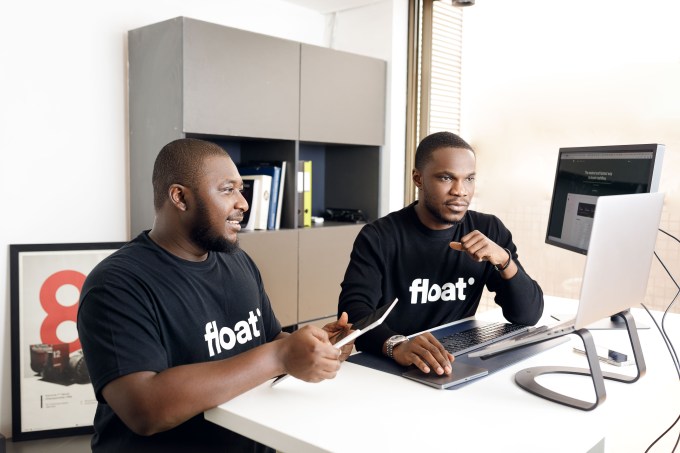
Jesse Ghansah and his co-founder Barima Effah want to answer these problems with their newly launched startup Float.

Ghansah is a serial entrepreneur. Since leaving the university in 2014, he has co-founded several tech startups but made his mark globally with OMG Digital, a startup with offices in Ghana and Nigeria that wanted to become the “BuzzFeed of Africa.” In 2016, OMG Digital was one of the first African companies accepted into Y Combinator.

Ghansah had a good run with the company and left two years ago. For his newest venture, he turned his focus outside media to fintech. Formerly Swipe, Float is an 18-month-old Lagos and San Francisco-based company aiming to close the $300 billion liquidity gap for Africa’s small and medium businesses. The company took part in YC’s Winter batch 2020, making Ghansah one of the few two-time YC founders in Africa.

Float has evolved from the last time we partly covered them during their Demo Day as “Brex for Africa.” According to CEO Ghansah, Float is “rethinking the way African businesses manage their financial operations, from managing cash and making payments to accessing credit.”

After 18 months in stealth, Float is finally going live, and we spoke with the CEO to get a glimpse into its progress and what makes it different from similar platforms on the continent.

TC: What problem would you say Float is solving?

JG: If you ask any small business, cash flow will most likely be the number one problem that they face. And this stems from the whole payment cycle, which is after you provide a service or deliver a product. Businesses that serve other businesses have to wait typically for 30-90 days for their payments to come in. This is like a traditional payment cycle where you have to offer credit sales to your customers to stay competitive; that’s why you send an invoice, and the customer will pay you back within that time frame. 

That creates a lot of problems in terms of constant cash crunches. Because you’re waiting for your revenue to come in, they sometimes fall behind in meeting certain expense payments like payroll, inventory, utilities. That’s what really causes a lot of these cash flow issues, and because of that, businesses can’t grow. For existing businesses, these are the issues they face and getting credit in terms of working capital is extremely difficult if you’re dealing with banks. 

TC: Did you have a personal experience with this problem seeing as your past venture was in media?

JG: As you know, I was a co-founder at OMG Digital, and as a media company, we had to wait for months to get paid by our partners. We needed credit this time and proceeded to get an overdraft from a long-term partner bank where we had transacted more than $100,000. But the bank wanted us to deposit 100% collateral in cash before they could give the overdraft. 

I also remember taking money from loan sharks with ridiculous interest rates, sometimes as high as 20% a month, just to meet payroll. That sort of threw me into solving those problems with Float.

TC: There are a plethora of lenders giving loans to businesses. How is Float solving the credit issue differently?

JG: So our credit product is quite different regarding how we present it to the customer. It is less complex than a loan; it is more flexible than a business overdraft. Also, there’s a difference in the tools that we provide. So we don’t just give money; what we’ve provided is a software solution with credit embedded. 

Float

Right now, we’ve built what we call the cash management tool for businesses where they get credit at the critical set of moments in time. For instance, if you want to pay a lender and need credit, you can withdraw the credit and make payment immediately. We provide a credit line that businesses can tap into any time they want as soon as they onboard to our platform, and it increases and decreases based on the transactions performed on our platform. 

So that’s just on the credit side. We’ve also built tools to help businesses stay on top of their cash flow. We give them invoicing, budgeting tools and spend management tools and a way for them to manage all their bank accounts because we know that existing businesses usually have more than one bank account. On Float, they can see all their balances and transactions, and we’re building a way for these businesses to make payments from their accounts on Float. 

You can think of Float as a really well-built cash management platform. You get credit when you need it to make vendor payments or boost your working capital, which has been pivotal to our loss rate of 0%. Then two, tools that give total visibility about your businesses so you know where your money is coming in and going out.

TC: Float’s loss rate is 0%? Does that mean no business has defaulted on your platform?

JG: Yes, we’ve not had any default so far. We’ve advanced $2.8 million to our pilot customers in Nigeria, and we don’t have any losses in the last eight months; it’s because of the type of loans we’re giving. We give businesses money to boost their working capital. So we’re essentially giving you an advance for your future revenue. 

If you look like, in the U.S., Pipe has built this for SaaS companies and are building for other customer segments, which is essentially what we’re doing. So, for us, the way we’re solving the cash flow issue is that we’re sorting your future revenue and as your customers pay you through our platform, then we make deductions. 

You can think of us as a Stripe Capital, Square Capital, Pipe or the new multidimensional lending platforms we have now. When you consider lending, I’d say there are different phases. Lending 1.0 was when you’d fill an application online, and you’d get a loan decision. Lending 2.0 and 3.0 is where credit is embedded in online tools businesses already use. That’s why it has worked really well because the businesses on our platform aren’t exactly looking for a lifeline but are looking to boost their cash flow and basically step on the gas to grow.

TC: But this loss rate will likely change as soon as you onboard more businesses, right?

JG: Yes, definitely it’s going to change. The thing with lending is that with more customers, your credit model gets tested. The more customers you have, the more probability that you’re going to have default losses. But as long as you have, like a solid credit risk criteria and assessment, you must always try to keep it as small as possible. It’s almost impossible to have a 0% default rate when you begin to grow fast.

TC: What strategy does Float put in place to mitigate losses and reduce risk?

JG: The way our credit product works is that we’re constantly connected to your bank; we know who your vendors are, know who your suppliers are, and know who your customers are. We know how much money is flowing in and out of your business at any point in time. So as I mentioned, we can quickly adjust your credit limits as soon as we sense a difference in your activity. If we notice your invoice activity has dropped and we’re not receiving as much money as you were in the previous weeks, we reduce your limit. It’s a very dynamic sort of type of product, and it is really different from what you see out there today.

TC: Aside from lending, how have the other tools been helpful to businesses?

JG: With our pilot phase, we’ve been able to give credit and also processed invoicing and vendor payments for our customers worth about $5 million. 

When you think of business payments, sometimes people always think about Paystack and Flutterwave. They’re tackling a different segment which is basically consumers paying businesses. For us, we’re centred around businesses paying other businesses. Their method, as we know, is a very drawn-out process, and that market is 10 times bigger than the market Paystack and Flutterwave are serving. 

Float

L-R: Barima Effah and Jesse Ghansah

If you look at your big multinational corporations, they have thousands of vendors on their payroll every month. Globally trillions of dollars are flowing from business to business, and that is where we want to play in. We’re launching the new version of our invoicing product and vendor payments, and a product where we can pay for services upfront on behalf of our customers and they pay back in 30 days.

TC: I’m tempted to call Float a digital bank for small businesses. Would you say there are differences?

JG: Of course there are. Almost any business owner will tell you that business banking is mostly broken. Legacy banks typically provide an outdated, underwhelming user experience. Businesses quickly move beyond basic banking needs, and for them, the options are frustratingly limited.

African neo-banks are aiming to compete with traditional banks. Still, in reality, they are actually now competing with each other for a relatively tiny slice of the market due to not solving the core problems facing businesses. A marginally better UX and a quick account opening experience is the value proposition that probably resonates well with a new startup business or a budding freelancer. However, to an already operating retail business owner that struggles to make timely payments to suppliers due to poor cash flow, that’s grossly inadequate.

This, coupled with the trust matters, reconciliation, and auditing headaches involved in moving accounts, is why neobanks haven’t taken off in this market.

There are little to no switching costs using Float because we have designed our platform to run on top of existing business bank accounts and payment processors. The idea is to provide a single platform that provides businesses with the credit they need, a consolidated view of their existing business banking and cashflow activity, coupled with various payment tools to enable them to speed through their financial operations so they can spend more time actually growing their business.

09 Jun 2021

Pennylane raises $18.3 million for its accounting service

French startup Pennylane has raised a new $18.3 million funding round (€15 million). Interestingly, this is Sequoia Capital’s first investment in France after they announced ambitious expansion plans in Europe.

If you’re not familiar with Pennylane, the startup has been developing an accounting platform that improves accounting for both clients and their accountants. Focused on small and medium companies, the company has already attracted hundreds of clients as it says 1,000 executives are currently using Pennylane.

If you’re running a small company, chances are you’re using Microsoft Excel or another financial tool for your financial projections. You’re also sending all your invoices, payroll info and more to your accountant. Essentially, you’re doing the same thing twice.

Pennylane lets you connect your account with third-party services that already hold valuable information, such as Stripe, Payfit, Qonto, Zoho, Sellsy, etc. Data is then synchronized regularly so that you can check outstanding invoices, pay your suppliers and see where you’re standing when it comes to inbound and outbound payments.

On the other side of the equation, Pennylane works with 100 accounting firms that could handle accounting tasks for you. You can ask Pennylane to connect you with an accountant and they’ll leverage your Pennylane data to complete their work.

If you already have an accountant or you have your own in-house accounting team, you can also tell them to create an account on Pennylane and retrieve accounting data from the platform. Pennylane acts as the central repository where your financial data is always up to date.

“Pennylane is becoming the key financial management platform for SME’s in Europe,” Sequoia partner Luciana Lixandru said in a statement. “We are thrilled to partner with their exceptional team to ensure businesses of any size can have a single, up-to-date source for their financial data and improve how they collaborate with their accountants.”

Up next, the startup wants to build a ‘financial operating system’ for European small and medium enterprises. You can imagine a marketplace of services that clients can choose to use in addition to Pennylane’s core product.

Pennylane has been on a roll as the company raised an $18.4 million Series A round just a few months ago. Global Founders Capital and Partech led the Series A back in January.

09 Jun 2021

Vivaldi 4.0 launches with built-in email and calendar clients, RSS reader

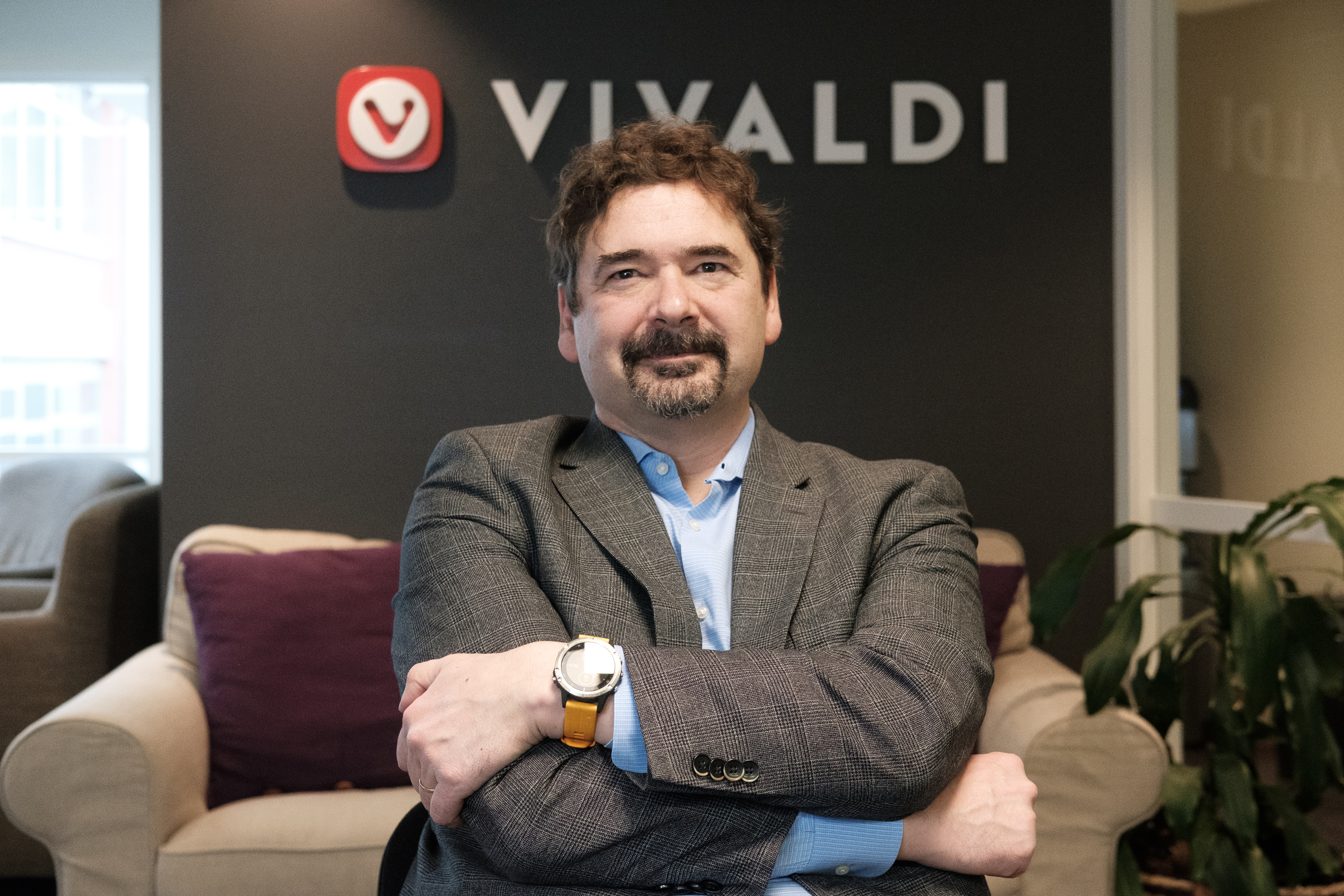
Vivaldi has always been one of the more interesting of the Chromium-based browsers, in no small part thanks to its emphasis on building tools for power users in a privacy-centric package, but also because of its pedigree, with Opera’s outspoken former CEO Jon von Tetzchner as its co-founder and CEO. Today, the Vivaldi team is launching version 4.0 of its browser and with that, it’s introducing a slew of new features that, among many other things, include the beta of new built-in mail, calendar and RSS clients, as well as the launch of Vivaldi Translate, a privacy-friendly translation service hosted on the company’s own servers and powered by Lingvanex.

Vivaldi isn’t new to email clients. The company has long offered a webmail service, for example. But building an offline email client into the browser — as well as a calendar client — almost feels like a return to the early days of browsers, like Netscape Navigator and Opera, when having these additional built-in features was almost standard. Von Tetzchner argues that for a lot of browser vendors, doing away with those features was about steering users into certain directions (including their own webmail clients).

“We’ve chosen to say, ‘okay, we don’t want to have the business model decide what we do. We rather focus on what the users want.’ And I think there’s a significant value [in a built-in email client]. Most all of us use email — at varying levels, some of use it a lot, some less, but everyone basically has at least one email account,” he said. “So having a good client for that, that’s kind of where we’re coming from. And, I mean, we obviously did a lot of those things at Opera — some of them we didn’t — and we are filling a gap with what Opera used to be doing. And now at Vivaldi, we are doing those things, but also a lot more. We never did a calendar at Opera.”

Image Credits: Vivaldi

Clearly, a lot of the decisions around Vivaldi Mail and Calendar were driven by the team’s own preferences. That means, for example, that the Mail client does its best to do away with the usual folder structure of an Outlook, for example, so that its filtering system allows a message to appear in multiple views. Since Vivaldi has always been about customization, you can choose between the traditional horizontal and wide views you’re probably familiar with from other email clients. One nice feature here is that you can also control which messages you see through toggles that let you exclude emails from mailing lists and custom folders from the default view, for example. I do like the fact that Vivaldi Mail also distinguishes between unseen and unread email.

photo of Vivaldi CEO Jon von Tetzchner

Vivaldi CEO Jon von Tetzchner. Image Credits: Vivaldi

As expected, you can use virtually any email provider here that supports the IMAP and POP protocols, but there’s also built-in support for Gmail as well.

The new built-in calendar, too, supports most of the standard calendar providers, including Google Calendar and iCloud, for example. One interesting design twist here is that the team decided to show all the data available for an event right in the calendar instead of just one or two lines per event. Von Tetzchner tells me that this is very much his preference.

“I think we have done things differently. We’ll see what people think,” he said. “But one of the things I wanted with the calendar, I wanted to be able to see all the content. Typically, with the calendars that are used today, the size of the space available for the text is dependent on the timeslot size. It doesn’t need to be that way. It looks better when the time slots are even, but functionally, it’s better that you actually can read more of the text.”

Von Tetzchner noted that he obviously wants to steer users away from Google and Microsoft, but he believes that providing alternatives isn’t good enough — they have to be better alternatives.

Image Credits: Vivaldi

As for the RSS reader, which is still pretty basic and doesn’t offer features like the ability to import and export lists of feeds yet, for example, the idea here is to help users leave their respective echo chambers but also avoid newsreaders that are focused on news suggestions. The overall implementation here works quite well, with the feed reader providing virtually all of the features you would need from a local feed reader. Whenever the browser finds an RSS feed as you are surfing the web, it will also highlight that in the URL bar, so subscribing to new feeds is about as easy as it gets. You can also subscribe to individual YouTube feeds (because even though YouTube doesn’t highlight this, every YouTube channel is still available as a feed).

“With feeds, it’s also about getting away from the [data] collection,” he said. “The news services now, they look at what you read and build profiles on you with the excuse that you then get more relevant news. But in my humble opinion, you subscribe to certain channels and that should be enough. We’re trying to basically give you — as a user — control over what you’re reading, what you’re subscribing to, and not learning about your habits or your preferences. Those are your habits and preferences and none of our business.”

All of this comes down to Vivaldi’s core philosophy of not being driven by advertising as its business model. “We have no need for or interest in collecting data on our users,” von Tetzchner told me (though it is collecting some basic aggregate data about how many users it has and where in the world they are). Indeed, he believes that collecting detailed telemetry about users only drives a company to build a product for the average user.

That’s also where the new translation feature comes in, which is hosted on Vivaldi’s own servers, so none of the data is shared with any third-party service. Vivaldi uses Lingvanex’s technology for this but hosts it on its own servers. The results are pretty good and for the most part, at a level comparable to Google Translate, for example (with the occasional subtle differences between the two where Google Translate would often offer the more precise translation).

One feature that very much acknowledges that everybody has different requirements from a browser — and that it might be nice to build an onramp to Vivaldi for non-power users, too — is Vivaldi’s new onboarding flow that allows users to choose between three default layouts. There’s an “essentials” view for those who only want a basic and very Chrome- or Edge-like experience, “classic” for those who want to use some of the browser’s more advanced features like panels and its status bar, and “fully loaded” for those who want access to every available tool. It’s this last view that also enables the new Vivaldi Mail, Feed Reader and Calendar features by default, too.

As of now Vivaldi isn’t profitable. It generates some revenue from preinstalled bookmarks and search engine partnerships. But von Tetzchner argues that Vivaldi just needs to increase its user base a bit more to become a sustainable company. He seems comfortable with that idea — and the fact that its per-user revenue is relatively low. “We’ve done this before and we’ve seen this work. It takes time to build a company like ours,” he said. “I hope people are liking what we’re building — that’s kind of the feel I get — people are really liking what we’re building. And then kind of gradually, we’ll get enough users to pay the bills and then we take it from there.”

09 Jun 2021

European neobroker Scalable Capital raises $180M+ at a $1.4B valuation

Neobrokers — startups that are disrupting the investment industry by providing a platform for a wider range of consumers to partake in the stock market by offering them more incremental investment options and modern and easy mobile-based interfaces to manage their money — continue to see a huge amount of interest, and today comes the latest development in that story.

Scalable Capital, a Munich/Berlin startup that provides tools to monitor and manage portfolios for those investing in shares, manage trades and exchange traded funds for a flat fee of €2.99 per month, has raised over $180 million (around €150 million) to expand its business. The company confirmed to us that the investment, a Series E being led by China’s Tencent, is being done at a $1.4 billion valuation.

This is a huge jump — a lot of scaling, as it were — for Scalable Capital. It was only in July 2020, less than a year ago, that the startup raised a Series D of $58 million at a $460 million valuation.

Previous investors, including BlackRock, HV Holtzbrinck Ventures and Tengelmann Ventures, also participated in this round. The company, founded in 2014 but commercially launched in 2016, has now raised more than $320 million in equity funding.

Part of the reason for the rapid fundraising is to strike while the iron is hot, and to give the startup some more fuel to grow at a time when other neobrokers are also seeing a lot of activity.

Scalable Capital itself now has 250,000 customers across Austria, Germany and the UK, more than three times the 80,000 it had back in July. At the same time, assets under management have ballooned to $5 billion (versus $2 billion in that last round). In another interesting turn, Scalable is also building out a business as a neobroker partner to many established banks, too, with the list of high-street names including ING, the British Barclays Bank, Siemens Private Finance, the digital subsidiary of the Santander Group Openbank, Oskar GmbH, and Targobank.

But while Scalable will be using some of the funding to continue expanding on the continent, it also seems that its UK business is no longer accepting new customers, We are asking whether that is temporary and Brexit-related, or another reason and will update when we have an answer.

Altogether, Scalable said that some 1,500 Exchange Traded Funds (ETFs) available on the platform (these are the most popular vehicle: more than half of the assets on the platform invested in these). It also provides access to invest across some 4,000 different shares and 2,000 funds. All of these are set to grow, along with potentially launching new products, too.

“We see huge demand to invest money in the capital markets instead of leaving it in bank accounts. This comes against a backdrop of record-low interest rates, growing inflation and a widening pension gap”, says Florian Prucker, co-CEO and co-founder of Scalable Capital, in a statement. “Our clients can access fully managed globally diversified ETF portfolios and – in the same app – self directed trading in shares, ETFs, crypto currencies and funds. We also provide a market-leading offering of ETF, stocks and crypto monthly savings plans. We are planning to launch derivatives trading next. We will continue on our mission to make everyone an investor”.

In the meantime, the company is also bulking up at a time when others in the same space are doubling down, too. Last month, Trade Republic — another neobroker from Germany — announced a $900 million investment at a $5 billion valuation led by Sequoia. Other big European players that have also recently raised big expansion rounds include Amsterdam’s Bux ($80 million in April) and Vienna-based Bitpanda ($170 million in March).

Interestingly, Tencent also led that last round for Bux, a part of its bigger investment efforts both in fintech and in the region. Other big bets in Fintech have included Viva Wallet in Greece; Nubank in Brazil, which yesterday also announced a big round; N26; and Futu, a Nasdaq-listed Chinese neo-broker. It also has built out an extensive gaming empire with a string of major acquisitions, including Supercell.

“Tencent complements our existing long-term partners who already represent an international investor base. Our recent funding is a major step forward on our way to becoming the leading retail investment platform in Europe. The strong acceleration of our growth further validates our mission to empower investors”, says Erik Podzuweit, co-CEO and co-founder of Scalable Capital, in a statement. “Anyone thinking of investing money should think of Scalable Capital. Whether you want to invest yourself via our broker or want our wealth management solutions to do it for you.”

The fintech interest is particularly notable also given that Tencent is also the parent of China’s messaging behemoth WeChat, which has also made huge inroads among consumers around a range of financial services.

“Demand for accessible solutions of personal investing is increasing in European markets, particularly among millennials. Scalable Capital excels in offering its customers a convenient and cost-efficient investing experience. We are delighted to be an investor and participate in Scalable Capital’s growth”, says Danying Ma, Managing Director of Tencent Investment, in a statement.

09 Jun 2021

Terraformation gets $30M to fight climate change with rapid reforesting

Every startup is trying to fix something but Terraformation is tackling the only problem that must matter to all of us: Climate change.

This is why it’s in such a big huge hurry. Its mission — as a ‘forest tech’ startup — is to accelerate tree planting by applying a startup-y operational philosophy of scalability to the pressing task of rapidly, sustainably reforesting denuded landscapes — bringing back native trees species to revive former wastelands and shrinking our carbon emissions in the process.

Forests are natural carbon sinks. The problem is we just don’t have enough trees with roots in the ground to offset our emissions. So that at least means the mission is simple: Plant more trees, and plant more trees fast.

Terraformation’s goal is to restore three billion acres of global native forest ecosystems by scaling tree replanting projects in parallel, scaling the use of existing techniques, and working with all the partners it can. (For a little context, the U.S. contains some 2.27BN acres of total land area, per Wikipedia).

So far it says it’s planted “thousands” of trees — with live projects in North America, South America, Africa and Europe which it hopes will yield up to 20,000 replanted acres. It’s also in talks with partners about more projects that could clad hundreds of thousands of acres with carbon-consuming (and biodiversity-prompting) trees, if they come to full fruition.

That’s still a long way off the 3BN-acre-wooded moonshot, of course. But Terraformation claims it’s been able to achieve a forestry restoration work-rate that’s 5x the average already. And that’s definitely the kind of ‘gas stepping’ that climate change needs.

Its elevator pitch is also punchy: “Our mission is explicitly to solve climate change through mass reforestation,” says founder Yishan Wong — whose name may be familiar as the ex-Reddit CEO (and also a former early-stage engineer at PayPal/Facebook). So it’s getting trees in the ground and getting faster at getting trees in the ground.”

It’s not going it alone, either. It’s just announced a first closing of a $30 million Series A funding round, led by Sam & Max Altman at Apollo Projects, the brothers’ ‘moonshot’ fund; plus several high-profile institutional investors (whose names aren’t being disclosed); along with nearly 100 angel investors, including Sundeep Ahuja, Lachy Groom, Sahil Lavingia, Joe Lonsdale, Susan Wu, and OVN Cap.

“The [Series A] was a bit larger than we anticipated and the idea is to get us to the next stage of planting orders of magnitude more trees every year,” says Wong. “So it’ll be used both for supporting forestry projects directly, as well as for the development and deployment of forestry acceleration products and technology.”

“The very, very nice thing about mass reforestation or mass restoration as a solution to climate change is that it’s extremely parallelizable,” he adds. “You can plant any tree at the same time as your planting some other tree. This is the primary reason why this solution can potentially be implemented within the timetable that we have left. But in order to do so we have to start and drive an enormous, decentralized reforestation campaign across multiple continents and countries.”

The funding follows a $5M seed last year, as the young startup worked to hone its approach.

Terraformation is targeting the main barriers to successful reforesting: Through early research and pilots it says it’s identified three key bottlenecks to large-scale forest restoration — namely, land availability, freshwater, and seed. It then seeks to address each of these pinch-points to viable reforesting — identifying and fashioning modular, sharable solutions (tools, techniques, training etc) that can help shave off friction and build leafy, branching success.

These products include a seed bank unit it’s devised, housed in a standard shipping container and kitted out with all the equipment (plus solar off-grip capability, if required) to take care of on-site storage for the thousands of native seeds each projects needs to replant a whole forest.

It also offers a nursery kit which also ships in a shipping container — a flat-packed greenhouse that it says a couple of people can put together, and where thousands of seedlings can then be tended and irrigated in pots until they’re ready to plant out.

A third support it offers to the replanting projects it wants to work with is expertise in building solar-powered desalination rigs so young trees can be supplied with adequate water to survive in locations where poor land management may have made conditions for growth difficult and harsh.

It goes without saying that planted trees which fail because of poor processes won’t help cut carbon emissions. Badly managed replanting is at best wasteful — and may be closer to cynical greenwashing in some cases. (Poor quality projects can be a known problem where claims of corporate carbon offsetting are being made, for example.)

Terraformation is thus zeroing in on repeatable ways to scale and accelerate the successful planting and nurturing of trees, from seed to sapling and beyond, to accelerate sustainable reforesting.

Ultimately, it’s the only kind of tree planting that will really count in the fight against climate change.

Its first pilot restoration projects begun in Hawai’i in 2019 — where it’s been able to plant thousands of trees at a site called Pacific Flight, reviving a native tropical sandalwood forest that had been logged unsustainably. To enable the young trees to grow in land which had also become arid as a result of cattle grazing, the team built the world’s largest fully off-grid, solar-powered desalination system to supply sustainable freshwater to the baby forest.

“The arid environment, high winds, and degraded soils meant that if a team could restore a forest there, they could do it anywhere,” is the pitch on its website.

The Series A will go toward spinning up lots more such native species forest restoration projects — working via partnerships, with organizations such as Environmental Defenders in Uganda, and other groups in Ecuador, Haiti and Tanzania — as well as on more R&D (additional products are in the pipeline, we’re told); and on expanding headcount so its team has the legs to run faster.

Interestingly, for a startup with Silicon Valley engineering pedigree at its core, the team’s approach is intentionally light on technology — leaning only on vital tech (like solar and desalination), rather than experimental bells and whistles (drones, robotics etc) to ensure the processes it’s packaging up for massive replanting parallelism remain as simple, accessible and reliable as possible. So they are able to scale all over the globe.

It’s clear that sci-fi robotic gadgetry isn’t the answer here. It’s sweating toil plus tried and tested horticulture processes, done systematically and repeatedly, in mass parallelism all over the world that’s required, argues Wong, whose years in tech have given him a healthy scepticism on the issue of over-engineering. (“The biggest lesson I learned was, you want to solve a big problem? You want to use as little technology as possible… Technology’s always breaking, it’s always got flaws. The biggest problem with technology is technology.”)

“I would say that the key contribution that ‘tech’ — if you think of a monolith or a culture or whatever — will make to climate change, is not in fact some new invention or some gadget or some sort of special magical technology… I think it really is the practice of scalability,” he goes on. “Which is an organizational end. A management way of thinking. Because that is actually something that has been carefully and painfully developed… over the past 20 years in Silicon Valley. How to take small working solutions, how to solve very big problems, how to scale them. And it isn’t a very glamorous thing — which is why I think it’s one of the more pure disciplines.

“It just has been less corrupt… Scalability is just people thinking hard and grinding it out to address really hard big problems. And I think that practice and all the little tips and rules that we have to doing that is the real contribution that tech is going to make — with one of those principles being use as little tech as you can.”

Terraformation is building software tools too — such as a mobile app to help with cataloguing and monitoring seeds. But the really critical technologies involved, solar and desalination, are very much at the ‘tried and tested’ end of the tech scale (“very, very reliable and refined”.).

Wong points out that a key development for solar and desalination is related to the unit economics — with falling costs allowing for scalability and thus speed.

Asked whether Terraformation is a business in the typical startup sense, Wong says it’s been set up in a familiar way — as a Delaware C Corp — but purely because he says that’s just the quickest way to be able to operate. Doing stuff as a non-profit would be way too slow, he says, describing it thusly as a “non non-profit” (rather than a business with a for-profit mission).

Aka: “It’s a corporate with investors but primarily the aim is to solve climate change.”

Startup investors are of course often betting their money on the chance of a quick and meaty return. But not here, confirms Wong. “When we raised funding all of our investors invested primarily because they wanted to see climate change solved,” he tells TechCrunch. “To many of them this was the first time that a plausible, full-scale solution to solving climate change had been presented.

“It’s still very, very hard. It’s very, very large. It’s really daunting. But it’s the first time someone has mapped out a path that could actually get us there. And so all of our investors invested because they want to see that happen.”

So how will a ‘non non-profit’ startup (even with $30M just banked) get its hands on enough land to plant enough trees? A variety of ways, per Wong. (Perhaps even, in some instances, landowners could end up paying it to turn their dirt into beautiful woodland.)

“The short answer is anywhere we can!” he adds. “The solution is structured to give us maximum flexibility, given that we can use a large variety of land. We don’t want to count on any particular land owning entity — and I use that very broad term to mean like people, communities, governments, municipalities — we don’t want to rely on any one particular land-owning entity wanting to work with us or allowing us to reforest the land, because you can’t guarantee that.”

He also notes that Terraformation’s plan to fix climate change is based on “worse case scenarios” — where “no one who owns any land that gets enough natural rainfall for forest restoration will allow it to reforest it”. “We use the least valuable land — basically desertified, degraded land,” he adds. “Is there enough of that? And it turns out there is.”

Even though personal financial upside clearly isn’t front of mind for Terraformation’s investors, Wong still believes there’s plenty of ‘value’ to be unlocked as a byproduct of spreading leafy-green goodness all over the planet vs funding more extractive exploitation.

“It turns out that solving climate change is actually a huge value creating act,” he argues. “My experience in Silicon Valley is if you have people who believe in you and believe in the thing that you’re creating is ultimately value-creating then it’s actually also wealth creating. If you do something that is fundamentally very, very valuable and you’re right next to it, you will be able to monetize it in some way. You will capture some of that value for your shareholders. So it’s a bet that if you really can solve climate change, that’s super valuable, both for the world and to the entity that’s [investing].”

Of course climate change is more than just a problem; it’s an existential threat to all life on Earth — one which affect humans and every other living creature and thing on the planet.

Given such terminal stakes, reversing climate change should be the highest global priority. Instead, humans have procrastinated — putting dealing with rises in atmospheric CO2 on the back-burner and worse (cutting down existing forests like the Amazon Rainforest, for one).

Set against that backdrop, Terraformation’s answer to humanity’s greatest crisis looks compellingly simple. Its bet is that climate change can be fixed by scaling the most proven technology possible (trees) to capture carbon emissions. Who can argue with that? 

But it does also seem clear that reforesting will need to go hand in hand with a mainstreaming of conservation, as a prevailing societal attitude, if the mission is to be pulled off — otherwise all these beautiful baby trees could just meet the same sad fate as all the Earth’s already lost forests.

Nonetheless, conservation is something Wong’s team is deliberately not focusing on.

Not because they don’t care. Rather their hope is that by building the baby forests, the protective partners will come — to watch over and get value from the trees as they grow. 

“I don’t want to make it seem like we don’t care about [forestry conservation] but one of the things that I try to do is figure out where people are already doing work and things are already moving in the right direction — and then go work on the thing that other people are not working on,” he says when we ask about this. “When I talk to people in the forestry world many, many people are working on avoiding deforestation, helping solve the broader socioeconomic issues that result in deforestation. And so I feel like there is momentum moving in that direction — so we have to work on this other issue that other people aren’t working on.”

Wong also argues that forests are naturally more valuable than the denuded waste/scrub ground they’re replanting — implying that pure economic interest should help these baby forests survive and thrive far into the future.

However the history of humanity shows that unequal wealth distribution can wreak all sorts of havoc on a resource-rich natural environment. And people who live in poverty may well be disproportionately more likely to like in a rural location, on or near land that Terraformation hopes to target for replanting. So if these forests can’t provide — in crude terms — ‘value’ for their local communities the risk is the same cycle of short-term economic harm will rip all this hard work (and hope) out of the ground once again.

Wealth inequality lies at the core of much of humanity’s counterproductive destruction of the environment. So, seen from that angle, reforesting the planet may require just as much effort toward tackling — root and branch — the wider socioeconomic fault-lines of our world, as it will washing, sorting and storing seed, watering seedlings and nurturing and planting saplings.

And that further dials up an already massive climate challenge. But, again, Wong is quietly hopeful.

“People aren’t cutting down trees because they’re evil, they’re cutting down trees because they need to make a living. So we have to provide them with ways to make a living that is more valuable than cutting down the trees. I think that recognition is moving in the correct direction — so I’m hopeful there,” he says.

Asked what keeps him up at night, he also has a straightforward answer to hand — one we’ve heard many times already from a new generation of climate campaigners, like Greta Thunberg, whose futures will be irrevocably stamped by the effects of climate change: Humanity simply isn’t moving fast enough.

“In order to do this we have to make order of magnitude improvements in both speed and scale — which is technically a thing that we know how to do but is among the most daunting things that you ever try to undertake. So… are we moving fast enough? Are we doing enough? Because time is running out,” warns Wong.

“The timeframe that we have left is very small when compared to the planetary scale of the problem. And so I think the only way that we’re going to get there is with proven solutions, moving, growing at exponential speed.”

“I am [hopeful],” he adds. “I’m a big fan of humans working together. People can really do it. I’m very I guess what you’d call pro-human. We have a lot of flaws, we fight amongst ourselves a lot, but I really think that when people work together they can really do amazing, amazing things… Trees gave us life and so now it’s our time to repay that debt.”