
Year: 2021

08 Jun 2021

BuyerAssist launches with $2M in funding to help B2B sales team keep their buyers engaged

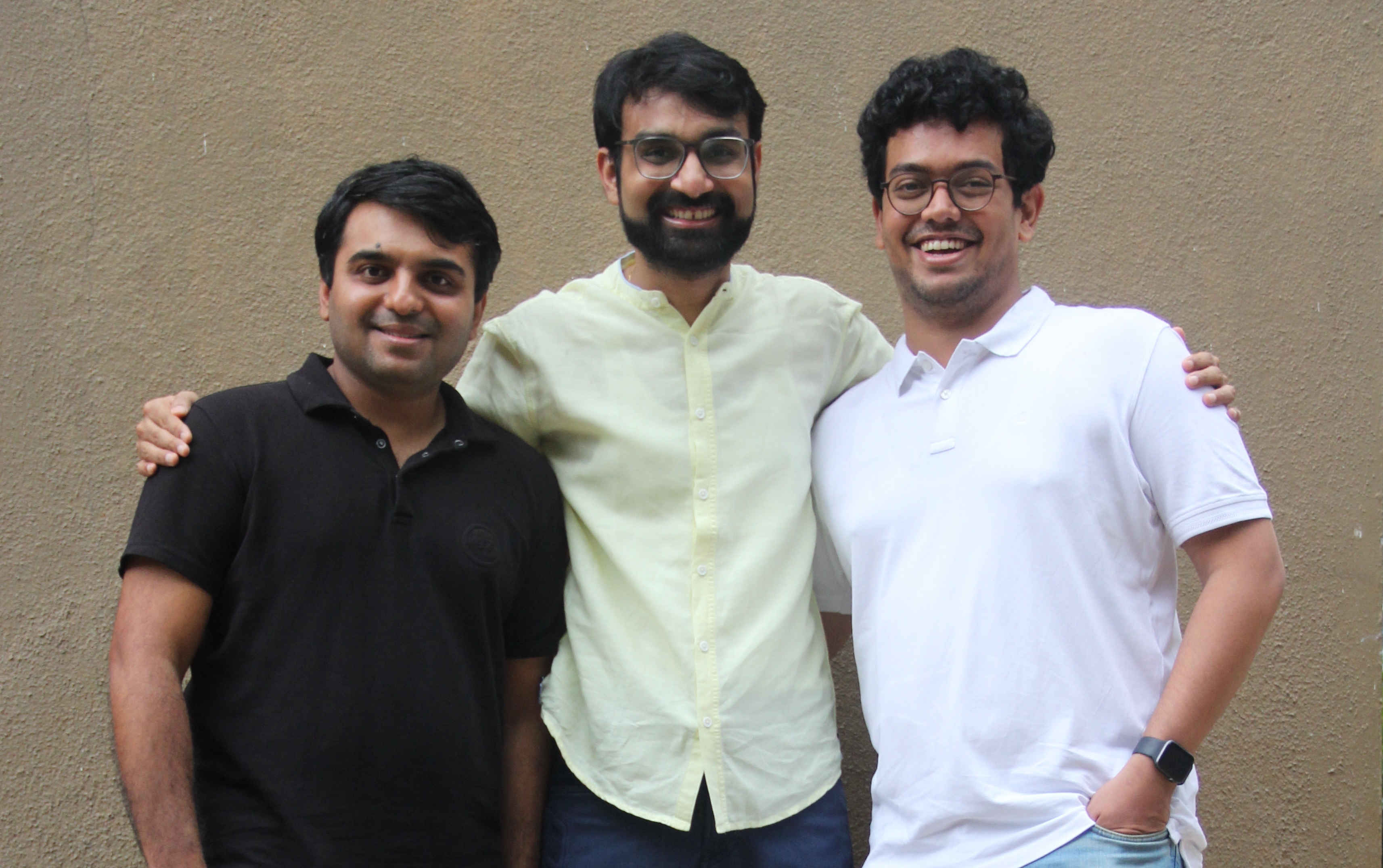
A group photo of BuyerAssist founders Shyam HN, Amit Dugar and Shankar Ganapathy

BuyerAssist founders Shyam HN, Amit Dugar and Shankar Ganapathy

Selling enterprise software is much more complicated than convincing a potential customer that your solution is the best and signing a contract. A recent Gartner study found that buying groups for B2B solutions can involve up to six to 10 decision makers, and that the majority of buyers said their most recent purchase was “very complex or difficult” as they came to a consensus while negotiating with vendors.

BuyerAssist, a new startup founded by former employees of sales readiness platform MindTickle, wants to make the buying process as smooth as possible. The company is launching its beta product to the public today with $2 million in seed funding led by Stellaris Venture Partners and Emergent Ventures, with participation from angel investors. The capital will be used for hiring in the U.S. and India, with plans to bring BuyerAssist’s platform out of beta later this year.

Headquartered in San Francisco, with an office in Pune, India, BuyerAssist.io was founded last year by Amit Dugar, Shankar Ganapathy and Shyam HN, all alumni of SoftBank Vision 2-backed MindTickle, a platform that enables companies to train their sales staff at scale. The philosophy behind BuyerAssist draws on HN and Ganapathy’s experience on the sales and marketing side of MindTickle: Ganapathy was its director of strategic accounts, while HN served as head of global sales development.

“We’ve sold half a million dollar deals, and deals where you have anywhere form 10 to 25 people involved from the buyer side,” HN told TechCrunch. “There’s a core team of about five to 10 people, but then there is also an extended team that comes and goes during the process.”

The pandemic added an extra layer of complexity to B2B sales, because many deals were done remotely. Furthermore, sales representatives get less time to interact with buyers. The Gartner report found that when B2B buying teams consider a purchase, they spend only 17% of that time meeting with potential suppliers, and the amount of time they spend interacting with any sales representative may be only 5% to 6%. This means vendors have to find ways to keep potential buyers engaged, while making the process easier for them.

BuyerAssist describes itself as a “operating system for B2B companies to deliver the most effective buying experience.” It helps by providing a centralized place to gather information that would usually be buried in emails and notes, and make it searchable. It also lets both vendors and buyers share information about their needs (like pricing, information security reviews and when they want to deploy software by), creating more transparency for each side, and stores important files like proposals, contracts and legal documentation.

For vendors, having information and questions from potential buyers organized in one place can help them better understand their deals pipeline and meet revenue goals. BuyerAssist also provides analytics that can help them retain more contracts. For example, it alerts vendors when buyers become less engaged, which may mean they are losing interest.

During its beta stage, BuyerAssist worked with four companies. The platform is currently focused on enterprise software and SaaS companies that do a lot of their sales remotely, but can be used for any complex sales process that involves multiple calls and emails. Other sectors BuyerAssist wants to enter include manufacturing and financial services.

BuyerAssist is part of a new crop of startups focused on helping vendors and buyers work together on complicated sales. Others include Accord, MetaCX, Dealpoint and Redcapped.io. HN said that the space is still very new, so companies are still figuring out their positioning. In BuyerAssist’s case, this means focusing on buyer engagement, instead of mutual success plans or collaborations, from the beginning. HN said the company will double down on investing in two key areas of product development: building its enterprise grade product to support complex sales and becoming the preferred way for buying teams to engage with BuyerAssist’s clients.

In statement about the investment, Stellaris Venture Partners partner Alok Goyal said, “As a venture capitalist focusing on the SaaS space, we get to see hundreds of teams. But it is very rare to find teams that create a perfect storm of domain expertise, functional expertise in different areas of building SaaS companies and at the same time bringing the perfect complementarity between the founders.”

Anupam Rastogi, a partner at Emergent Ventures, said “What excites me about BuyerAssist is that it focuses on reducing friction between buyers and sellers. Buyers want more flexibility and less noise. Sellers want to run a more consistent sales process. BuyerAssist facilitates this, and enables both to build a long term partnership. This is where we see the industry heading in the years and decades to come.”


08 Jun 2021

Relativity Space launches its valuation to $4.2B with $650M in new funding

3D-printed rocket startup Relativity Space has raised a $650 million Series E, bringing its total raised to over $1.2 billion. Relativity’s post-money valuation now stands at $4.2 billion, a source familiar with the matter told TechCrunch.

The round was led by Fidelity Management & Research Company, with participation from new investors with funds and accounts managed by BlackRock, Centricus, Coatue, and Soroban Capital, and participation from existing investors Baillie Gifford, K5 Global, Tiger Global, Tribe Capital, XN, Brad Buss, Mark Cuban, Jared Leto, and Spencer Rascoff.

The funds from the Series E will go toward accelerating the production of Terran R, the company’s heavy-lift, fully reusable two-stage rocket. Terran R joins Terran 1, Relativity’s debut rocket, which will conduct its first orbital flight at the end of 2021.

The company has been pretty tight-lipped about Terran R, but are now releasing further details alongside the funding announcement. As expected, Terran 1 and Terran R differ in pretty significant ways: the former is expendable, the latter reusable; the former is designed for small payloads, the latter for large. Even the Terran R’s payload fairing is reusable, and Relativity has devised a system that makes it easier to recover and recycle as it stays attached to the second stage.

The larger rocket will clock in at 216 feet tall with a maximum payload capacity of 20,000 pounds to low Earth orbit. (For comparison, SpaceX’s Falcon 9 rocket stands at around 230 feet with a maximum payload to LEO of 22,800 pounds.)

Relativity’s Terran 1 on the left, and Terran R on the right. Image Credits: Relativity

Terran R will use seven of its new Aeon R engines on the first stage, each capable of 302,000 pounds of thrust. The same 3D printers that will produce Terran R’s engines and rockets also currently make the nine Aeon 1 engines that power the Terran 1, which means Relativity doesn’t have to drastically reconfigure its production line to build the new launch vehicle.

A single Terran R should take around 60 days to build, Ellis estimated. That’s an incredible pace for a rocket with this kind of payload capacity.

Even though Terran 1 has not seen a launch yet, Relativity shows no signs of slowing down Terran R’s development: Ellis said the company will also launch Terran R from its launch site at Cape Canaveral as early as 2024 and that it signed its first anchor customer, “a well-known blue-chip company,” for the new rocket.

Relativity has printed around 85% of the rocket that will perform the company’s first orbital flight at the end of this year. The Terran 1 that will perform that mission will not be carrying any payload. Terran 1’s second launch is scheduled to take place in June ’22, and will carry cubesats to LEO as part of NASA’s Venture Class Launch Services Demonstration 2 (VCLS Demo 2) contract.

Relativity CEO Tim Ellis in an interview with TechCrunch likened 3D printing to a paradigm shift in manufacturing. “I think really the thing people haven’t gotten about our approach, or 3D printing in general, is it’s actually more like transitioning from gas internal combustion engines to electric, or on-premise service to cloud,” Ellis said. “3D printing is a cool technology but more than that, it’s actually software and data-driven manufacturing and automation technology.”

Because the core of 3D printing is a technology stack, the company can produce algorithmically generated structures with “geometries that couldn’t be possible” with traditional manufacturing, Ellis said. And the design can be easily adjusted to fit market demand.

Ellis, who started the metal 3D printing division at Blue Origin before founding Relativity, said that the strategy from day one was to design and build Terran 1 and a heavy-lift counterpart.

The actual mechanisms involved in 3D printing can technically occur in environments even when gravity is much lower – like the gravity on Mars, which is only about 38% of the gravity on Earth. But more importantly, Ellis said it’s an approach that’s “inevitably required” in an uncertain off-planet environment.

“When we founded Relativity, the inspiration was watching SpaceX land rockets and dock with the space station. They were 13 years old and they were, despite all of that pretty inspiring success, the only company that wanted to make humanity a multi-planetary and go to Mars,” Ellis said. “And I thought that 3D printing tech was inevitable to actually build an industrial base on another planet. No one else had actually even tried to go to Mars or said that was their core mission. And that’s still true today, actually, even five years later, it’s still just us and SpaceX. And I really do hope to inspire dozens to hundreds of companies to go after that mission.”

08 Jun 2021

Whatfix nabs $90M to help workers onboard and get the most out of their IT stacks

“Digital transformation” has been on the mind of many an organization in the last year: the pandemic and the shift it’s brought to how we work are speeding up investments in new apps, infrastructure and work practices to improve productivity regardless of where we sit all day. Now, it looks like we’re on to the next stage of that journey: actually figuring out how to adopt and run with all that new tech.

In a sign of the times, today a startup called Whatfix — which has built a platform that helps make better use of tech investments by giving chatbot-style guidance to users on how to use apps, with the option also to apply AI to understand what a person is doing to suggest what actions to take next — is announcing $90 million in funding. It will use the money to continue expanding its tech platform and hiring more talent to meet demand, said CEO Khadim Batti, who co-founded the company with Vara Kumar (CTO), in an interview this week.

Sources close to the company — co-headquartered in San Jose and Bangalore — confirmed that the Series D round was made at a valuation of around $600 million, triple Whatfix’s value in its Series C round last year.

That sharp rise is due in part to the state of the market today, but also the company’s growth within that bigger trend. Whatfix today has some 500 global customers on its books, The Netherlands Red Cross, Experian, Sentry Financial Services, Cardinal Health Canada, BMC Software Inc., and Bausch & Lomb among them. Some 75% of its business is coming out of the U.S., with another 18% from Europe. Revenues in the last six months have been growing at a rate of 100% quarter-on-quarter.

“This pandemic has proven an inflection point for adoption,” said Batti (pictured above, left with Kumar, right).

This latest tranche of equity funding is coming from a mix of financial and strategic investors.

SoftBank’s Vision Fund 2 is leading the round, with Eight Roads Ventures, Sequoia Capital India, Dragoneer Investment Group, F-Prime Capital and Cisco Investments also investing. The company has raised just under $140 million in total.

“Digital adoption solutions” — the general term describing what Whatfix has built — have become a popular solution for enterprises that have found themselves in an IT pickle, Batti said.

“We’ve seen more than $500 billion spent on enterprise software, with areas like SaaS growing very fast. There is so much there, and every employee has access to do better work. But most are not adopting or using that software. This means a lot [of inefficiency] in ‘digital transformation,'” said Batti. “We are focusing on fixing this problem.”

Digital adoption and digital experience overall can come in many forms these days.

They include assistants that are embedded directly into apps themselves (with some versions of this — such as Clippy on Word — nearly as old as software itself). The category also includes separate platforms that integrate at the back end with the apps that you use, providing not just a single ingestion point for data but intelligence on how best to use it, and what to use. (Dooly for sales teams is an example of that, although I don’t know if it would describe itself as a “digital adoption solution” per se.)

Others like Pendo are geared more at observing how your sites and apps are being adopted and used by others. And there are a number of others out there specifically looking at digital adoption by enterprises and competing directly with Whatfix: they include Apty, Userlane, Applearn.

One of the biggest — WalkMe — yesterday announced an IPO at an estimated $2.5 billion valuation.

Overall digital adoption and digital experience are big businesses: one analyst estimates that the market is growing currently at a rate of just under 11% annually and will be worth $15.8 billion by 2025.

Whatfix is built around the premise that it sits on top of whatever apps a company may choose to use, and will work with just about any piece of modern software, Batti said. That includes Whatfix being able to provide assistance on apps even when they have been customised for a particular workplace. It most commonly appears like a little chatbot on the user’s screen, like the one in this paragraph, which can expand with more details and information as needed, like this:
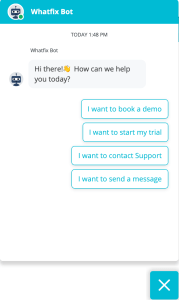

The company works with the most popular software packages — including Salesforce, MS Dynamics, Oracle’s CRM platform, ServiceNow, SuccessFactors, SharePoint, Workday — but, since it is used in the form of a browser extension or an overlay integrated by a company’s IT department, it can be used to help guide people with any application that’s available over the web. Batti said that one priority the startup has is to build deeper integrations with specific apps so that Whatfix can be used better across mobile and with local apps in future, not just via the web.

Many might think of “digital adoption” as training someone to use a particular software package, and while Whatfix is used for that, the company has also found a lot of traction as a tool beyond it, providing support on a more regular basis and across a wider variety of use cases, whether it’s to help guide people through app usage, or to monitor what they are doing in order to help suggest what to do next, and even populate relevant fields if “next” means using a different app.

The platform can be used to create usage guides, multilingual support, multi-device support, user tracking and more, and it comes with low-code options (it can be intergrated into an app with a single line of code, the company says).

The company claims its assistants can increase employee productivity by 35%, reduce training time and costs by 60%, reduce employee case tickets by 50% and increase application data accuracy by 20%.

While the field for digital adoption is very crowded today, it’s numbers like these, Whatfix’s own growth, and the fact that software is continuing to get more capable, but also more complex, that have interested investors.

“Digital Adoption Solutions are enhancing the growth and importance of SaaS products for enterprises globally,” said Munish Varma, Managing Partner, SoftBank Investment Advisers, in a statement. “Whatfix makes it easier for companies to use SaaS products, which increases productivity. Whatfix, with its roster of global clients, is well placed to become a DAS leader, and we are excited to be part of their journey.” Sumer Juneja, Partner, SoftBank Investment Advisers, added: “Enterprises spend billions on applications across multiple functions and yet employee adoption is low. Quick adoption ensures payback on software investments. Whatfix’s solutions will be a key driver for enterprises to achieve this goal, which is reflected in their growth.”

What will be interesting to watch is how platforms like Whatfix’s will evolve over time, and what further functions they might take on. For example, in enterprises, one of the biggest vulnerabilities in security has been how people mistakenly click on dodgy links in emails or otherwise inadvertently pass on information to malicious hackers. Could there be a role for digital adoption assistants to identify when this might happen and alert people before they click the wrong way? Regardless, the question and very existence of loopholes like that are signals for why we’ll probably why we’ll continue to see tools like Whatfix’s around for some time to come.

08 Jun 2021

Art app SketchAR to allow artists to list their artworks on NFT marketplaces directly

An update to an existing art app that allows artists to access NFT marketplaces directly, could have the potential to democratize access to the NFT world for artists not currently in crypto. SketchAR, is an existing mobile app that allows artists to turn photos into illustrations using its AI-based computer vision. It is now is launching a new feature that allows users to turn their art into NFTs directly inside the app, and then sell it. Content produced on the app can also include a public community feed and digital learning courses.

The app, which boasts it has almost a million users already, will start off selecting a single ‘Creator of the Week’ from its community for their art to be NFT’d on the OpenSea marketplace. But a new feature will shortly enable any artist using the platform to create and auction an NFT on-demand.

However, there a catch. The artwork will have to be created directly in the SketchAR app in order to prove the artist is the legitimate rights holder, says the startup. This is, however, an advantage, says the startup, since very few marketplaces monitor the derivation and authenticity of artworks uploaded proactively.

And for now, it looks like there is no real equivalent app on the market, although there are of course plenty of ways to create an artwork and then upload it to an NFT marketplace in a separate process.

Andrey Drobitko, CEO and founder told me: “It’s a unique offer since it allows even amateur designers to create an art piece and turn it into an NFT without diving deep into the ecosystem, connecting their wallet to their OpenSea account and paying significant gas fees to minting.”

He said: “Since the art piece comes from the app SketchAR, it also ensures it’s authentic and wasn’t stolen – something that happened quite a few times with NFTs.”

SketchAR said it also built its own infrastructure that allows it to use Ethereum and other 2-layer solutions like Flow, Immutable, or Binance Smart Chain, to reduce costs.

“Basically it competes with artists and designers learning a lot about blockchain, how to work with it, and working directly with marketplaces like OpenSea or Rarible” added Drobitko.

“15 years ago I realized I couldn’t make much money as an artist and only continued to make art for pleasure. It’s different now and we’re excited to support artists, help them develop creative skills, and successfully monetize their artworks,” he said.

It’s estimated there are roughly 50 million artists globally, but fewer than 10% are able to make it their primary source of income.

According to NonFungible.com more than $2 billion was spent on NFTs during the first quarter of 2021 representing an increase of about 2,100% from Q4 2020.

08 Jun 2021

Nuggs creator Simulate raises $50M

New York-based Simulate today announced a $50 million fundraise. Led by Alexis Ohanian’s 776, the Series B brings the meat alternative’s total funding to north of $60 million and values it at $260 million.

Simulate’s first product, Nuggs (formerly also the startup’s name), has already caused a splash, thanks in no small part to aggressive online advertising. The company notes a massive push in retail availability in the last six months. The chicken nugget alternative was available direct to consumers through online ordering when it launched in Summer 2019 — availability that moved the needle during U.S. shutdowns over the past year.

“During the height of the pandemic, people really wanted frozen food shipped directly to their door,” founder and CEO Ben Pasternak tells TechCrunch. “At the time, we were DTC only, so we saw a lot of growth there prior to our pivot to retail.”

He adds that the majority of the company’s sales now currently come from retail, due to accessibility and more restrictive DTC pricing. Currently, the product is available in 5,000 retail locations, a list that includes pretty massive retail names like Walmart/ Sam’s Club, Target and Whole Foods.

“We are getting ready to launch in restaurants and in fast food,” says Pasternak. “Internationally, we recently launched across Canada, and have plans to expand to other countries too.”

Funding will also go toward expanding the company’s headcount. Currently at 20, Simulate expects to expand employment to 50 people by 2022. “Over half of that expansion will be focused on growing our engineering team,” Pasternak says.


08 Jun 2021

Airbase raises $60M as the corporate spend market segments, matures

This morning Airbase, a corporate spend startup, announced that it has closed a $60 million Series B led by Menlo Ventures. The deal’s announcement comes after Divvy, another corporate-spend focused startup, sold to Bill.com for several billion dollars, and other unicorns in the space like Brex and Divvy each raised nine-figure rounds.

According to Airbase CEO Thejo Kote, his company’s round is not a response to the Divvy sale. Instead, he told TechCrunch in an interview, his company kicked off its fundraising process before that deal was announced.

Not that what Airbase undertook was a process in the traditional sense; Kote did not spend months schlepping a deck along Sand Hill Road, imbibing mediocre architecture, overdressed MBAs and good weather in equal quantities. Instead, he decided that his firm was open to raising more capital in April despite having capital in the bank from previous investments, and 10 days later had signed a term sheet with Menlo.

Menlo partner and new Airbase board member Matt Murphy told TechCrunch in a separate interview that his firm had had its eye on the company for some time before its deal, allowing it to move quickly when Kote opened the door to more funding. (Murphy was candid in sharing that he had spent quite some time getting in front of Airbase, which we pass along as evidence of just how competitive the venture capital market can be in 2021.)

According to Kote, his firm’s new capital was raised on a $600 million valuation, post-money, which means that the Menlo-led transaction involved 10% of the company’s shares.

A segmenting market

TechCrunch’s coverage of the corporate spend market has largely focused on the revenue growth of the competing players, and their decision to either charge for the software that they offer along with corporate cards or not. But Kote views the market as segmenting in a somewhat different manner, namely along target customer scale. Divvy, for example, went after SMBs, while Airbase has more of a mid-market focus.

The customer targeting matters, with Kote telling TechCrunch that mid-market companies are looking for a single solution to replace various point-services that they have traditionally paid for. In the case of corporate spend, that could mean that many companies are willing to pay for new software so long as it can replace several services that they were buying discretely before; say, corporate cards and expense management software.

Kote said that the Divvy-Bill.com news was a “massive validation” of his company’s thesis that software would prove key in the market formerly focused on corporate cards, and that offering cards was itself a “race to the bottom.”

In the view of Airbase’s CEO, his company has a six to eight quarter lead on its competitors in product terms. The market will vet that perspective, but the company’s confidence in its vision and new capital should provide it with ample opportunity to prove out its thesis in the coming quarters, and see whether where it views its product in terms of market positioning viz. demand and competitors is correct.

The investor perspective

Menlo Ventures seems to think so, to the tune of its largest single check to date from a non-growth fund. What did Murphy et al. find so compelling about the company? In the investor’s view, Airbase has a shot at replacing point-solutions in mid-market companies, precisely as Kote imagines:

Airbase consolidates all the different spend apps which greatly decreases complexity in workflows as finance teams previously had to jump from app to app and don’t have a real time, holistic view in one place. […] Of course there is an advantage in not having to pay for multiple apps, but the biggest benefits are simplicity of workflows which is where we heard most of the product love.

Murphy continued, adding that at many companies “a manager won’t know until after [a quarter ends] whether the team for example spent above or below budget,” which makes integrated solutions more attractive.

Why does the viewpoint matter? It implies that the market that Airbase can sell into is rather large; instead of considering the aggregate non-payroll spend that its possible customer companies may generate and then applying an interchange vig to the total to calculate its potential scale, we might tabulate mid-market software spend on expenses, accounting and other categories as the startup’s true TAM. And as Airbase can still generate top-line from interchange and other sources, it could be well-situated for long-term growth.

Of course, its competitors are not interested in letting Airbase have all the fun. Ramp recently raised lots of capital, and is investing in its own software stack. With a free price point, it’s perhaps the most aggressive player on the interchange-first side of its market. And Brex is working to make lots of public noise, again, and has its own tower of cash, software focus and recently launched paid-SaaS service.

Now Airbase has more cash than it has ever had in its accounts, and has been busy hiring. The company has picked up a CFO, a general counsel and a VP of sales, from Mattermost, Robinhood and Dropbox, respectively.

Which all sounds very much like the long-term prep work for an eventual IPO. Set your timers for 2024.

08 Jun 2021

Fintech all-star Nubank raises a $750M mega round

In 2013, Colombian businessman David Velez decided to reinvent the Brazilian banking system. He didn’t speak Portuguese, nor was he an engineer or a banker, but he did have the conviction that the system was broken and that he could fix it. And as a former Sequoia VC, he also had access to capital.

His gut instinct and market analysis were right. Today, Nubank announced a $750 million extension to its Series G (which rang in at $400 million this past January), bringing the round to a total of $1.15 billion and their valuation to $30 billion — $5 billion more than when we covered them in January.

The extension funding was led by Berkshire Hathaway, which put in $500 million, and a number of other investors.

Velez and his team decided now was a good time to raise again, because, “We saw a great opportunity in terms of growth rate and we’re very tiny when compared to the incumbents,” he told TechCrunch.”

Nubank is the biggest digital bank in the world by number of customers: 40 million. The company started as a tech company in Brazil that offered only a fee-free credit card with a line of credit of R$50 (about USD$10). 

It now offers a variety of financial products, including a digital bank account, a debit card, insurance, P2P payment via Pix (the Brazilian equivalent of Zelle), loans, rewards, life insurance and an account and credit card for small business owners. 

Nubank serves unbanked or underserviced citizens in Brazil — about 30% of the population — and this approach can be extremely profitable because there are many more clients available.

The banking system in Brazil is one of the few bureaucracies in the country that is actually quite skillful, but the customer service remains unbearable, and banks charge exorbitant fees for any little transaction. 

Traditionally, the banking industry has been dominated by five major traditional banks: Itaú Unibanco, Banco do Brasil, Bradesco, Santander and Caixa Economica Federal. 

While Brazil remains Nubank’s primary market, the company also offers services in Colombia and Mexico (services launched in Mexico in 2018). The company still only offers the credit card in both countries.

“The momentum we’re seeing in Mexico is terrific. Our Mexican credit card net promoter score (NPS) is 93, which is the highest we’ve had in Nubank history. In Brazil the highest we’ve had was 88,” Velez said.

The company has been on a hiring spree in the last few months, and brought on two heavyweight executives. Matt Swann replaced Ed Wible (the original CTO and co-founder). Wible continues to be an important player in the company, but more in a software developer capacity. Swann previously served as CTO at Bookings.com and StubHub, and as CIO of the Global Consumer Bank at Citi, so he brings years of experience of scaling tech businesses, which is what Nubank is focused on now, though Velez wouldn’t confirm which countries are next.

The other major hire, Arturo Nunez, fills the new role of chief marketing officer. Nunez was head of marketing for Apple Latin America, amongst other roles with Nike and the NBA. 

It may sound a little odd for a tech company not to have had a head of marketing, but Nubank takes pride in having a $0 cost of acquisition (CAC). Instead of spending money on marketing, they spend it on customer service and then rely on word of mouth to get the word out.

Since we last spoke with Velez in January regarding the $400 million Series G, the company went from having 34 million customers to now having 40 million in a span of roughly 6 months. The funds will be used to grow the business, including hiring more people.

“We’ve seen the entire market go digital, especially people who never thought they would,” Velez said. “There is really now an avalanche of all backgrounds [of people] who are getting into digital banking.”

08 Jun 2021

Numerous popular websites are facing an outage

Countless popular websites including Reddit, Spotify, news outlets the Guardian, BBC, Financial Times are currently facing an outage. Typically an outage of this nature occurs when a vital internet infrastructure service faces an issue.

An apparent glitch at Fastly, a popular CDN provider, is thought to be the reason, according to a product manager of Financial Times.

This is a developing story. More to follow…

08 Jun 2021

Ford unveils Maverick, a compact hybrid pickup truck for under $20,000

Ford unveiled on Tuesday the Maverick, a new compact hybrid pickup truck for people who didn’t know they needed one.

The truck’s smaller more approachable size and its base price of $19,995 is geared towards entry-level customers who want that SUV or truck lifestyle as well as the ease of navigating and parking in tight urban centers. And while its not an all-electric truck like the upcoming Ford F-150 Lightning, the Maverick is part of the company’s recently expanded plan to invest $30 billion investment in electrification by 2025.

The Maverick also has the distinction of being equipped with the first electric motor designed, developed, tested and manufactured in-house at Ford’s Van Dyke Transmission Plant.

The compact pickup can more easily maneuver city parking.

The electric motor and accompanying 2.5 liter engine produces 191 horsepower, 155 pound-feet of torque, and it can tow up to 2,000 pounds. That might not be attractive to those looking to haul one of the larger fifth-wheel campers on the market today. But with a targeted EPA fuel economy of 40 mpg in the city, Ford should find takers. Ford is also offering an option of the EcoBoost engine with an 8-speed automatic, that gives the Maverick 250 horsepower, 277 pound-feet of torque and towing capabilities of up to 4,000 pounds.

The Maverick will come standard as a front-wheel drive and be available in three trims, including the XL, XLT and the Lariat — similar to the F-Series variants. All-wheel drive upgrades are available.

A bed that’s also a ‘makerspace’

[gallery ids="2162823,2162824,2162825"]

The bed of the truck comes in at a polite size of 4.5 feet height by 4 feet wide – as opposed to the F-150’s 5.5 by 4.3 foot bed — is designed to be flexible. Ford, which wanted to be sure to get that message across, has branded it “flexbed,” because it’s, well, flexible to a range of needs.

Ford’s most popular pickup trucks, the F-150 series, are geared towards utility by providing plenty of wattage and storage for power tools. The Maverick is made with the DIY driver in mind. Ford has placed 12 available anchor points and slots that lets the owner subdivide as they might want. This so-called flexbed is equipped with two 12-volt 20-amp prewired sources, plus two 110-volt outlets for powering a “laptop or tailgate party,” as Ford suggests in a statement announcing the new vehicle.

Speaking of tailgates, the Maverick’s is multi-positional, so the driver can adjust it to hold open at whatever position best suits whatever they’re hauling, giving the truck a bed extender functionality.

Another neat feature of the pickup being so small is that the bed is designed to be accessible by reaching over the bedside, and the designers specifically focused on ensuring things were within reach for the fifth percentile of female.

Let’s talk about tech

The Maverick is a fully connected vehicle, as we’ve come to expect with any new vehicle these days. Ford’s latest pickup has its own hotpot that can give blessed internet to up to 10 devices and it comes standard with Apple CarPlay and Android Auto. By connecting a smartphone, customers can access the FordPass app, which can be used to remote start the vehicle, lock and unlock doors, locate the truck and check fuel levels.

The compact pickup also has features of the Ford Co-Pilot 360, such as pre-collision assist with auto emergency braking, which alerts the driver through audio and visual signals. There are also high beam headlamps which flip on when no other cars are in front of you, a blindspot information system in case you just drift into another lane without checking over your shoulder, lane keep assist and adaptive cruise control. This tech also allows for five standard drive modes including normal, eco, sport, slippery and tow/haul.

Inside the Maverick

The pickup’s interior a has colorful accents that are used to denote a place that’s intended for human interface such as the center mat with a charging pad or the vents. Rather than fake leather and fake wood, the Maverick features stone-face textures and speckled plastic.

There are some Ford Integrated Tether Slots which allows for customers to mix and match with different accessories they want to add to the interior, like extra cupholders or an iPad holder to entertain the kiddos in the backseat. Because the fuel tank is located behind the cabin, rather than under the bench, customers have far more under-seat storage space. Apparently that cabin can even hold buckets of ice for that tailgate Ford was talking about earlier.

The Maverick has also done away with the arm rests on the doors and speakers on the back doors, allowing more space for those tall S’well water bottles everyone loves.

08 Jun 2021

AI pioneer Raquel Urtasun launches self-driving technology startup with backing from Khosla, Uber and Aurora

One of the lingering mysteries from Uber’s sale of its Uber ATG self-driving unit to Aurora has been solved.

Raquel Urtasun, the AI pioneer who was the chief scientist at Uber ATG, has launched a new startup called Waabi that is taking what she describes as an “AI-first approach” to speed up the commercial deployment of autonomous vehicles, starting with long-haul trucks. Urtasun, who is the sole founder and CEO, already has a long list of high-profile backers, including separate investments from Uber and Aurora. Waabi has raised $83.5 million in a Series A round led by Khosla Ventures with additional participation from Uber, 8VC, Radical Ventures, OMERS Ventures, BDC, Aurora Innovation as well as leading AI researchers Geoffrey Hinton, Fei-Fei Li, Pieter Abbeel, Sanja Fidler and others.

Urtasun described Waabi, which currently employs 40 people and operates in Toronto and California, as the culmination of her life’s work to bring commercially viable self-driving technology to society. The name of the company —  Waabi means “she has vision” in Ojibwe and “simple” in Japanese —  hints at her approach and ambitions.

Autonomous vehicle startups that exist today use a combination of artificial intelligence algorithms and sensors to handle the tasks of driving that humans do such as detecting and understanding objects and making decisions based on that information to safely navigate a lonely road or a crowded highway. Beyond those basics are a variety of approaches, including within AI.

Most self-driving vehicle developers use a traditional form of AI. However, the traditional approach limits the power of AI, Urtasun said, adding that developers must manually tune the software stack, a complex and time-consuming task. The upshot, Urtasun says: Autonomous vehicle development has slowed and the limited commercial deployments that do exist operate in small and simple operational domains because scaling is so costly and technically challenging.

“Working in this field for so many years and, in particular, the industry for the past four years, it became more and more clear along the way that there is a need for a new approach that is different from the traditional approach that most companies are taking today,” said Urtasun, who is also a professor in the Department of Computer Science at the University of Toronto and a co-founder of the Vector Institute for AI.

Some developers do use deep neural nets, a sophisticated form of artificial intelligence algorithms that allows a computer to learn by using a series of connected networks to identify patterns in data. However, developers typically wall off the deep nets to handle a specific problem and use a machine learning and rules-based algorithms to tie into the broader system.

Deep nets have their own set of problems. A long-standing argument is that can’t be used with any reliability in autonomous vehicles in part because of the “black box” effect, in which the how and the why the AI solved a particular task is not clear. That is a problem for any self-driving startup that wants to be able verify and validate its system. It is also difficult to incorporate any prior knowledge about the task that the developer is trying to solve, like say driving. Finally, deep nets require an immense amount of data to learn.

Urtasun says she solved these lingering problems around deep nets by combining them with probabilistic inference and complex optimization, which she describes as a family of algorithms. When combined, the developer can trace back the decision process of the AI system and incorporate prior knowledge so they don’t have to teach the AI system everything from scratch. The final piece is a closed loop simulator that will allow the Waabi team to test at scale common driving scenarios and safety-critical edge cases.

Waabi will still have a physical fleet of vehicles to test on public roads. However, the simulator will allow the company to rely less on this form of testing. “We can even prepare for new geographies before we even drive there,” Urtasun said. “That’s a huge benefit in terms of the scaling curve.”

Urtasun’s vision and intent isn’t to take this approach and disrupt the ecosystem of OEMs, hardware and compute suppliers, but to be a player within it. That might explain the backing of Aurora, a startup that is developing its own self-driving stack that it hopes to first deploy in logistics such as long-haul trucking.

“This was the moment to really do something different,” Urtasun said. “The field is in need of a diverse set of approaches to solve this and it became very clear that this was the way to go.”