Year: 2021

07 Jun 2021

Apple announces FaceTime updates at WWDC 2021

Over a year into a global pandemic, Apple announced some major updates to its FaceTime app at WWDC 2021, which will be available in iOS 15.

Notably, Android users will now be able to join in on FaceTime calls, posing some competition to apps like Zoom and Google Meet, which have boomed during lockdown. This FaceTime makeover will also include links to join calls, which can be sent via Calendar invites in advance of your meeting. These links work across platforms, whether you’re on the web, an Android phone, or your iPhone.

Apple is also adding updates that make the experience of video chatting on FaceTime more closely resemble real life conversations.

“When talking in person, our brains process hundreds of social auditory and visual cues when talking on a video call. Many of those signals can get lost, leaving us feeling drained. So this year, we’ve set out to make FaceTime calls feel more natural, comfortable, and lifelike,” said Craig Federighi, Apple’s Senior Vice President of Software Engineering.

Through a spatial audio feature, FaceTime calls will sound like you’re sitting in the same room with your friends – that means if someone is on the left side of your screen, their audio will come through the left side of your speaker. This functionality might not translate well to smaller devices like an iPhone, but could be interesting on devices like an iMac. The person speaking will have a white ring appear around their video while they’re talking, and users will be able to select a grid view to see the other people on the call, which seems quite similar to Zoom.

Next, Apple announced voice isolation, which will improve the speaker’s audio quality when calling from a noisy area. The demo video that was shown during the WWDC announcement featured a child walking into the video frame with a leaf blower. In TechCrunch’s liveblog, Darrell Etherington pointed out that the video seemed heavily edited.

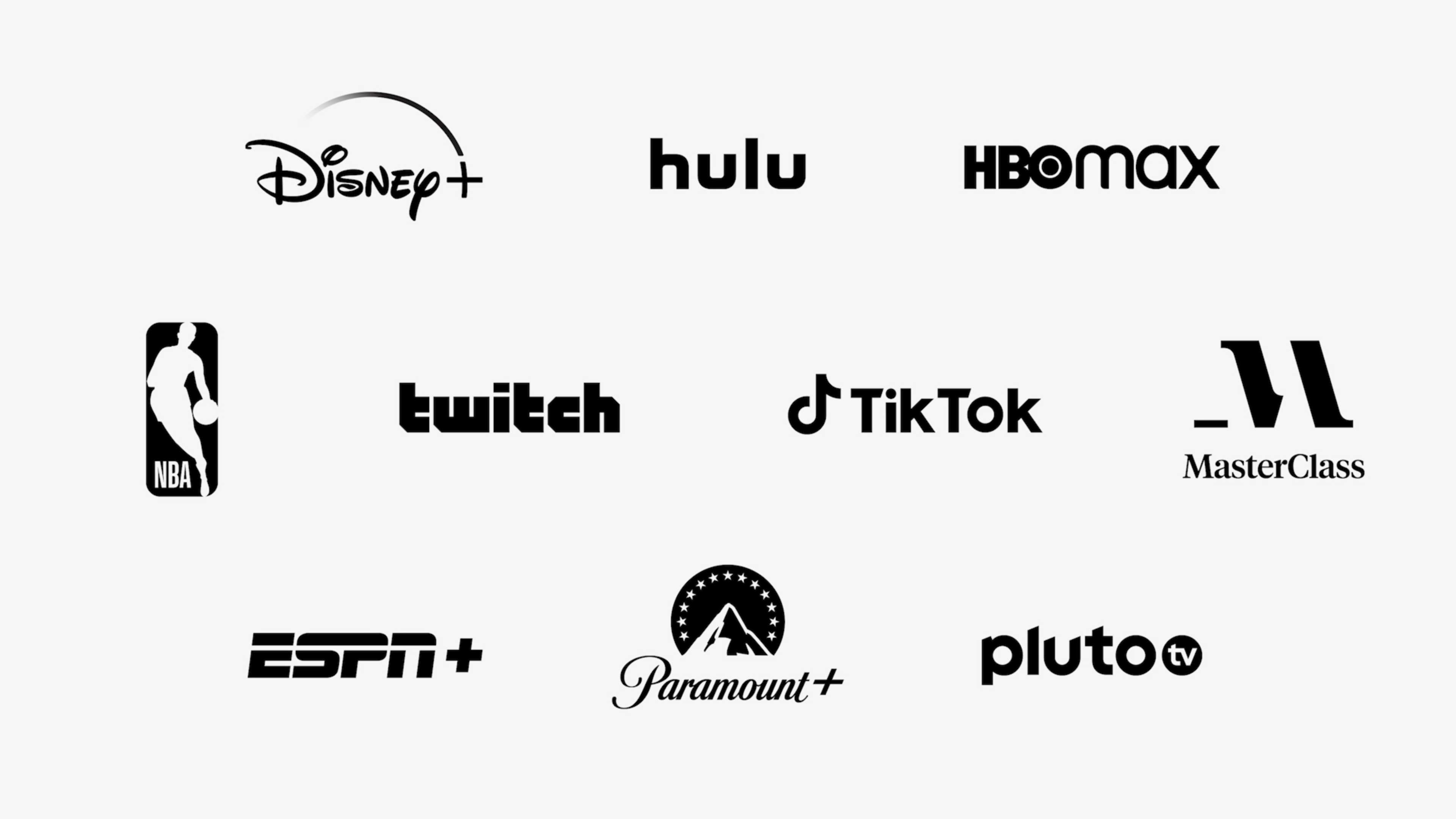
Finally, a feature called SharePlay will come to FaceTime, which makes it easier for friends to watch streaming videos together. SharePlay allows for group listening, watching, and screensharing, and Apple shared partners for SharePlay including Disney+, Hulu, HBO Max, NBA, Twitch, TikTok, MasterClass, ESPN+, Paramount+, and PlutoTV. The SharePlay API will be available so that all video app makers can access it and integrate their own apps.

read more about Apple's WWDC 2021 on TechCrunch

07 Jun 2021

Apple introduces SharePlay for co-watching, streaming, and screen sharing over FaceTime

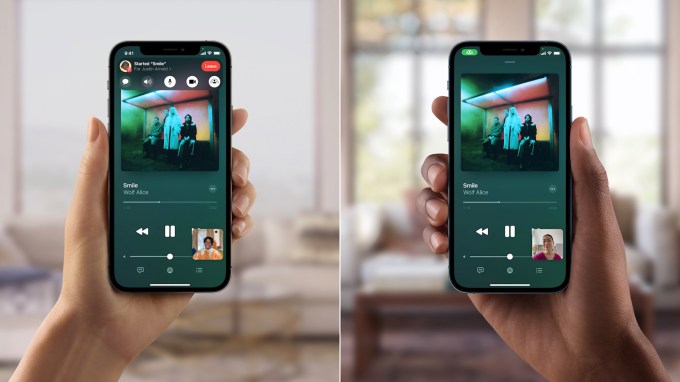
As part of its FaceTime update in iOS 15, Apple introduced a new set of features designed for shared experiences — like co-watching TV shows or TikTok videos, listening to music together, screen sharing and more — while on a FaceTime call. The feature, called SharePlay, enables real-time connections with family and friends while you’re hanging out on FaceTime, Apple explained, by integrating access to apps from within the call itself.

Image Credits: Apple

Apple demonstrated the new feature during its Worldwide Developer Conference keynote this afternoon, showing how friends could press play in Apple Music to listen together, as the music streams to everyone on the call. Shared playback controls also let anyone on the call play, pause or jump to the next track.

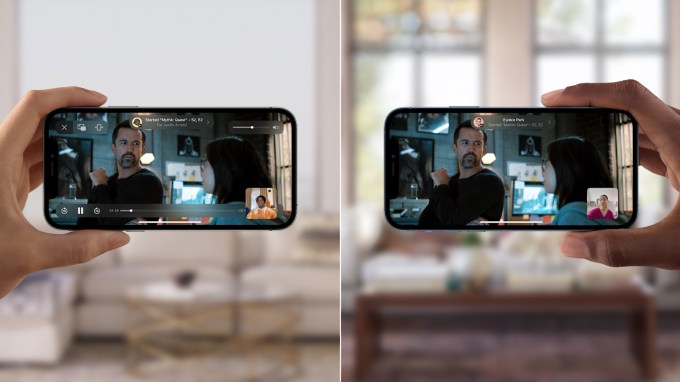
The company also showed off watching video from its Apple TV+ streaming service, where the video was synced in real-time between call participants. This was a popular trend during the pandemic, as people looked to virtually watch movies and TV with family and friends, prompting services like Hulu and Amazon Prime Video to add native co-watching features.

But Apple’s SharePlay goes much further than streaming music and video from just Apple’s own services.

The company announced a set of launch partners for SharePlay including Disney+, Hulu, HBO Max, NBA, Twitch, TikTok, MasterClass, ESPN+, Paramount+, and Pluto TV. It’s also making an API available to developers so they can integrate their own apps with SharePlay.

Image Credits: Apple

Users can screen share via SharePlay, too, so you can do things like browse Zillow listings together or show off a mobile gameplay, Apple suggested.

“Screen sharing is also a simple and super effective way to help someone out and answer questions right in the moment, and it works across Apple devices,” noted Apple SVP of Software Engineering, Craig Federighi.

The feature will roll out with iOS 15.

read more about Apple's WWDC 2021 on TechCrunch

07 Jun 2021

Apple refines iOS 15 notifications with Focus, Summary features

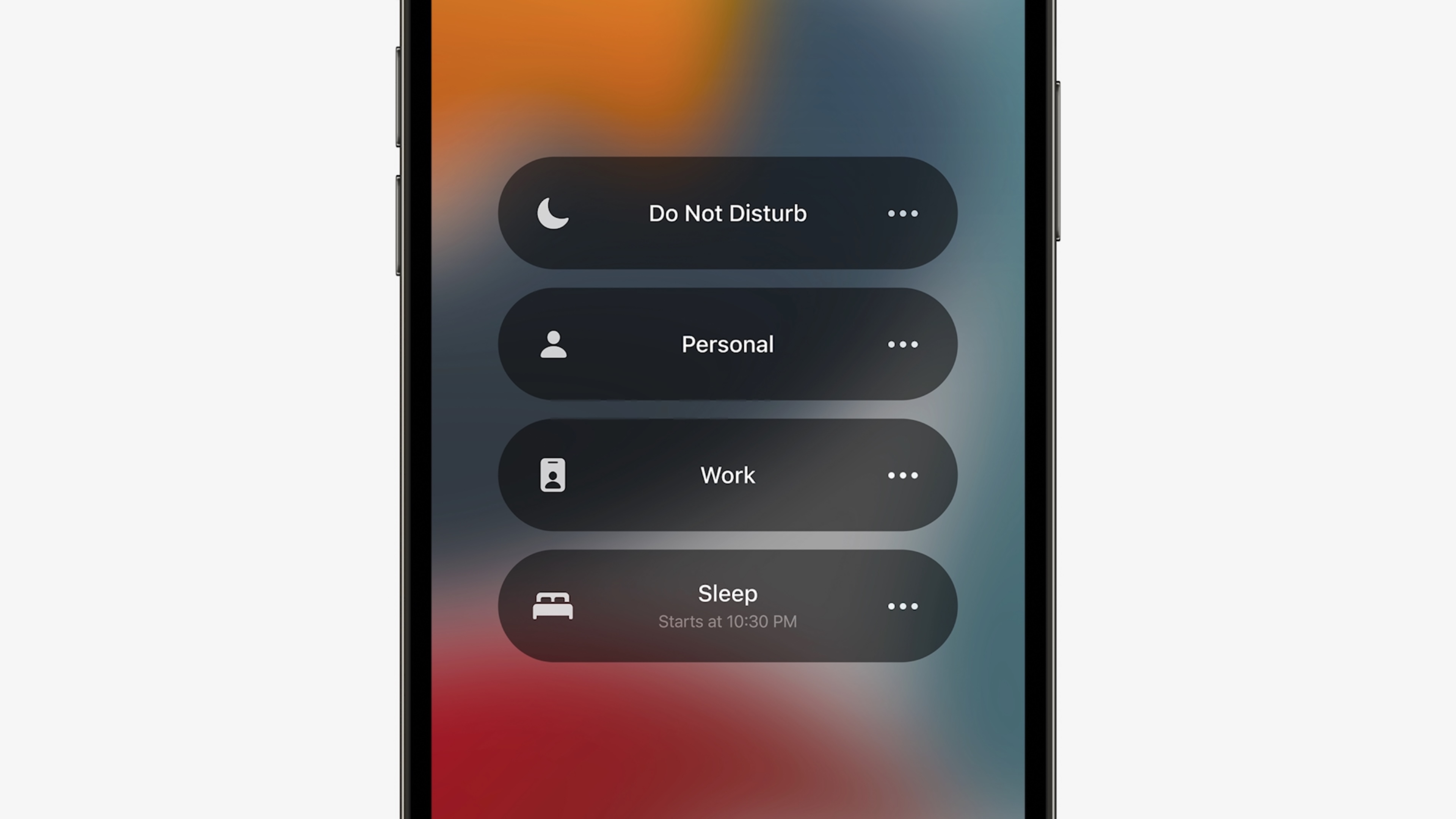
As part of the update to iOS 15, Apple will allow iPhone users to better customize how they want to be notified about incoming calls, texts or updates from apps based on their current status. With the new Focus feature instead of just silencing calls and notifications through Do Not Disturb, you’ll be able to set different types of notification preferences based on your status — like whether you’re driving, working, sleeping or through the use of custom categories of your own choosing.

The system also uses on-board AI to help determine what your status is at a given time. For example, the phone might suggest you turn off notifications when you’re arriving at the gym.

The feature somewhat recalls the smart launchers that had been popular on Android devices many years ago, like Aviate or EverythingMe, among others, which customized your device based on what you were doing, the time of day, and other factors. These apps never took off on iOS because Apple doesn’t allow third-party apps to deeply integrate with its mobile operating system or reconfigure the device’s homescreen and the trend later fizzled out.

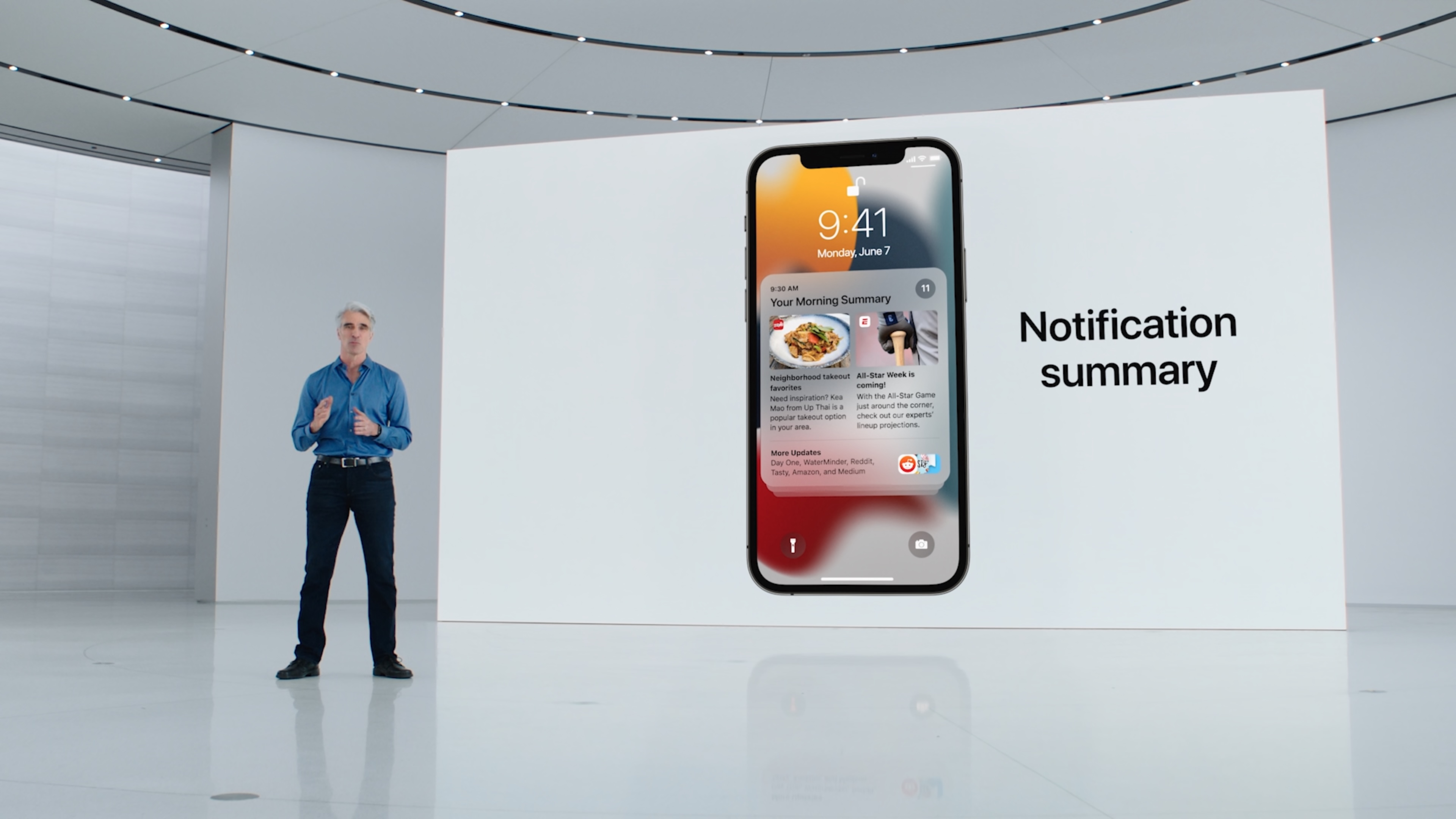
Also new is Notification Summary, which bundles and prioritizes incoming notifications, based on things like time of day. Do Not Disturb has also been integrated directly into iMessages, so other users will know when you don’t want to be bothered by incoming notes.

Developing…

read more about Apple's WWDC 2021 on TechCrunch

07 Jun 2021

Apple unveils iOS 15 with new features for FaceTime and better notifications

During the virtual keynote of WWDC, Apple shared the first details about iOS 14, the next major version of iOS that is going to be released later this year. There are four pillars with this year’s release: staying connected, focusing without distraction, using intelligence and exploring the world.

“For many of us, our iPhones have become indispensable,” SVP of Software Engineering Craig Federighi said. “Our new release is iOS 15. It’s packed with features that make the iOS experience adapt to and complement the way you use iPhone, whether it’s staying connected with those who matter to you most. Finding the space to focus without distraction, using intelligence to discover the information you need, or exploring the world around you.”

FaceTime gets a bunch of new features

Apple is adding spatial audio to FaceTime. Now the voices are spread out depending on the position of your friends on the screen. For instance, if someone appears on the left, it’ll sound like they’re on the left in your ears. In other FaceTime news, iOS now detects background noise and tries to suppress it so that you can hear your friends and family members more easily. That’s an optional feature, which means that you can disable it in case you’re showing a concert during a FaceTime call for instance.

Another FaceTime feature is ‘Portrait mode’. Behind this term, Apple means that it can automatically blurs the background, like in ‘Portrait mode’ photos. In case you want to use FaceTime for work conferences, you can now generate FaceTime links and add it to a calendar invite. FaceTime will also work in a web browser, which means that people without an Apple device can join a FaceTime call.

FaceTime is a big focus as Apple is also introducing SharePlay. With this feature, you can listen together to a music album. Press play in Apple Music and the music will start for everyone on the call. The queue is shared with everyone else, which means anyone can add songs, skip to the next track, etc.

SharePlay also lets you watch movies and TV shows together. Someone on the call starts a video and it starts on your friend’s phone or tablet. It is also compatible with AirPlay, picture-in-picture and everything you’d expect from videos on iOS.

This isn’t just compatible with Apple TV videos. Apple said there will be an API to make videos compatible with SharePlay. Partners include Disney+, Hulu, HBO Max, Twitch, TikTok and more. Here’s a screenshot of the initial partners:

Now let’s switch to Messages. The app is getting better integration with other Apple apps like News, Photos and Music. With items shared via Messages showing up in there. In other words, Messages (and iMessage) is acting as the social layer on top of Apple’s apps.

A new notification summary

Apple is going to use on-device intelligence to create summaries of your notifications. Instead of being sorted by apps and by date, it is sorted by priority. For instance, notifications from friends will be closer to the top.

When you silence notifications, your iMessage contacts will see that you have activated ‘Do not disturb’. It works a bit like ‘Do not disturb’ in Slack. But there are new settings. Apple calls this Focus mode. You can choose apps and people you want notifications from and change your focus depending on what you’re doing.

For instance, if you’re at work, you can silence personal apps and personal calls and messages. If it’s the weekend, you can silence your work emails. Your settings sync across your iCloud account if you have multiple Apple devices. And it’ll even affect your home screen by showing and hiding apps and widgets.

New smart features

Apple is going to scan your photos for text. Called Live Text, this feature lets you highlight, copy and paste text in photos. It could be a nice accessibility feature as well. iOS is going to leverage that info for Spotlight. You can search from text in your photos directly in Spotlight. These features are handled on device directly.

With iOS 15, memories are getting an upgrade. “These new memories are built on the fly. They are interactive and alive,” Chelsea Burnette, Senior Manager, Photos Engineering. Memories are those interactive movies that you can watch in the Photos app. Now, you can tap with your finger to pause the movie. While music still plays in the background, your photo montage resumes when you lift your finger.

You can now search for a specific song to pair with a memory.

This is a developing story…

read more about Apple's WWDC 2021 on TechCrunch

07 Jun 2021

Bosch opens $1.2 billion chip plant in Germany

Germany technology and parts supplier Robert Bosch opened a €1 billion ($1.2 billion) chip factory in Dresden, Germany on Monday, the single largest investment in the company’s history. The plant, which will mainly supply automotive customers, is a major signal that connected and electric vehicles are here to stay.

“Regardless of which powertrain we talk about … always we need a semiconductor and sensor,” Bosch’s executive vice president of automotive electronics Jens Fabrowsky told TechCrunch.

The plant will handle front-of-the-line processing, or wafer fabrication, in the semiconductor manufacturing process. The 300-millimeter wafers will be sent to partners, typically in Asia, to do packaging and assembly of the semiconductors.

300 millimeters is a “new field of technology,” Fabrowsky explained. As opposed to the 150- or 200-millimeter wafers that are produced at Bosch’s nearby factory in Reutlingen, Germany, the larger wafer size offers greater economies of scale because you can produce more individual chips per wafer.

The 77,500-square-foot plant will run on what Bosch calls “AIoT,” a term that combines artificial intelligence and Internet of Things to denote a fully connected and data-driven system that’s unique to the facility. Bosch will not only have real-time data on the approximately 100 machines, but also on the power, water and other aspects of the facility — up to 500 pages of data per second, Fabrowsky said. The AI-driven algorithm should detect an anomaly from any of the connected sensors immediately.

Despite its high levels of automation, the plant will employ around 700 people once it is fully operational.

It is unclear whether the plant will help resolve the ongoing global semiconductor shortage, which has forced automakers like General Motors and Ford to slash production volumes and temporarily shutter manufacturing facilities.

“At the point when we decided [to build the plant] it was purely driven by technology,” Fabrowsky said. “It was clear we needed to go into 300 [millimeters], and we needed to invest in some more capacity.”

The facility will begin production in July with chips for power tools before beginning production on automotive chips in September. It generally takes over 20 weeks to make a semiconductor chip, Fabrowsky said, including 600 individual steps in the wafer facility alone.

The company will also be investing €50 million ($61 million) to extend the clean room facilities at its Reutlingen plant, Bosch board member Harald Kroeger said at a media briefing Monday.

07 Jun 2021

Microsoft’s Windows Virtual Desktop is now Azure Virtual Desktop

As remote work became the default for many companies during the pandemic, it’s maybe no surprise that services like Microsoft’s Windows Virtual Desktop, which gives users access to a fully managed Windows 10 desktop experience from virtually anywhere, saw a lot of interest from large enterprises and a new crop of small businesses that suddenly had to find ways to better support their remote workers. That’s pretty much what Microsoft saw, too, which had originally targeted Windows Virtual Desktop at some of the world’s largest enterprises. And so as the user base changed, Microsoft’s vision for the product changed as well, leading it to now changing its name from Windows Virtual Desktop to Azure Virtual Desktop.

“When we first went GA with Windows Virtual Desktop, about a year and a half ago, the world was a very different place,” said Kam VedBrat, Microsoft’s general manager for Azure Virtual Desktop. “And to be blunt, we looked at the service and what we were building, who we were building it for, pretty differently. No one at that time had any idea that this global pandemic was going to happen and that it would cause so many organizations around the world and millions of people to have to essentially leave the office and work from home — and the role the service would play in enabling a lot of that.”

Image Credits: Microsoft

While the original idea was to help enterprises move their virtual desktop environments from their data centers to the cloud, the pandemic brought a slew of new use cases to Windows Azure Virtual Desktop. It now hosts anything from virtual school labs to the traditional remote enterprise use cases. These new users also have somewhat different needs and expertise from those users the service was originally meant for, so on top of today’s name change, the company is also launching a set of new features that should make it easier for new users to get started with using Azure Virtual Desktop.

Among those is a new Quickstart experience, which will soon launch in public preview. “One piece of feedback that we saw is that as so many organizations are looking at Azure Virtual Desktop to enable new scenarios for hybrid work, they want to get these environments up and running quickly to understand how they work, how their apps behave in them, how to think about app groups and host pools and some of the new concepts that are there,” VedBrat explained. Ideally, it should now only take a few clicks to set up a full virtual desktop environment from the Azure portal.

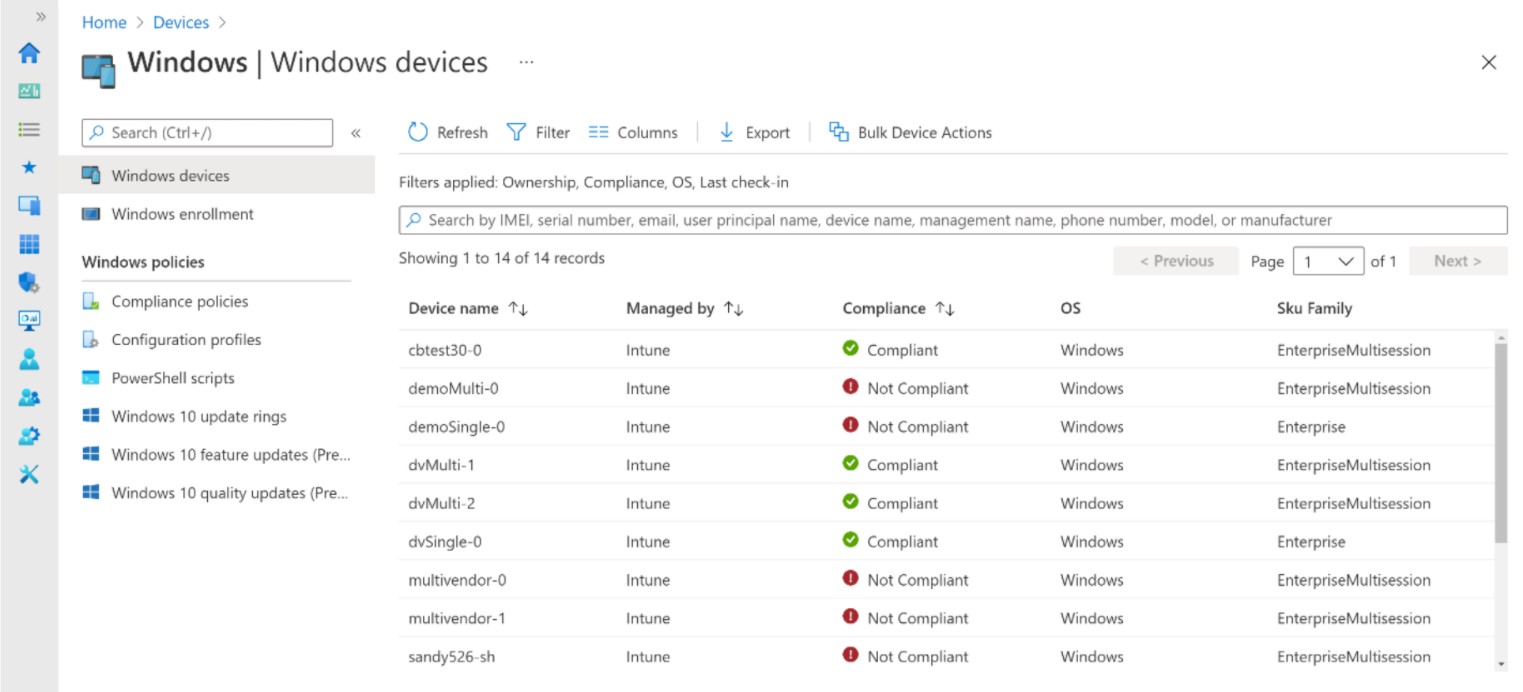
Also new in Azure Virtual Desktop is support for managing multi-session virtual machines (VMs) with Microsoft Endpoint Manager, Microsoft’s unified service for device management. This marks the first time Endpoint Manager is able to handle multi-session VMs, which are one of the biggest selling points for Azure Virtual Desktop, since it allows a business to host multiple users on the same machine running Windows 10 Enterprise in the cloud.

In addition, Azure Virtual Desktop now offers enhanced support for Azure Active Directory, in addition to a new per-user access pricing option (in addition to the cost of running on the Azure infrastructure) that will allow users to deliver apps to external users. This, Microsoft argues, will allow software vendors to deliver their apps as a SaaS solution, for example.

As for the name change, VedBrat argues that while Windows is obviously at the core of the experience, a lot of the service’s users care about the underlying Azure infrastructure as well, be that storage or networking, for example. “They look at that broader environment that they’re creating — that window estate that they’re creating in the cloud — and they see that as a larger thing and they look at a lot of Azure as part of that. So we felt like the right thing to do at this point, in order to address that broader view that our customers are taking, was to look at the new name,” he explained.

I thought Windows Virtual Desktop explained the core concept just fine, but nobody has ever accused me of being a marketing genius.

07 Jun 2021

Paytm, India’s most valuable startup, confirms plan for an IPO

Paytm, India’s most valuable startup, confirmed to its shareholders and employees on Monday that it plans to file for an IPO.

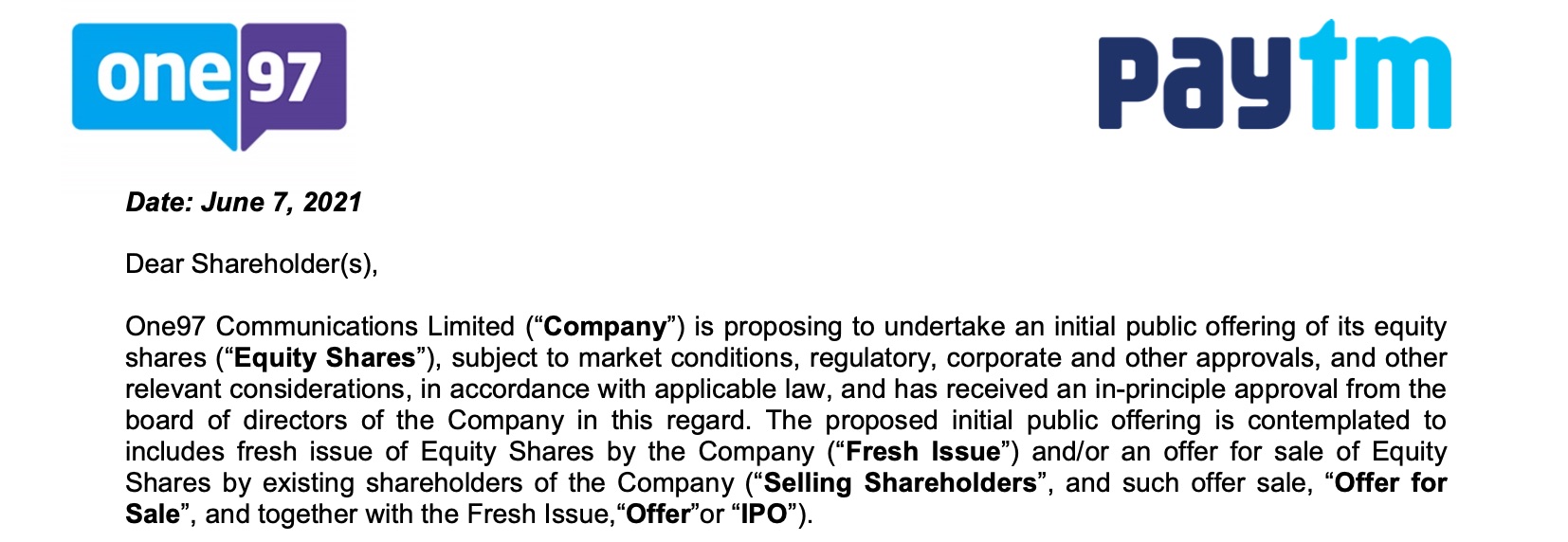
In a letter to shareholders and employees, Paytm said that it plans to raise money by issuing fresh equity in the IPO, and also sell existing shareholders’ shares at the event. The startup has offered its employees the option to sell their stakes in the firm.

This is the first time the Noida-headquartered firm has commented on its plans about the IPO. The startup said in the letter that it has received an in-principle approval from the board of directors to pursue the public market.

Paytm, which is backed by Alibaba and SoftBank, hasn’t shared when it plans to file for the IPO, but has sought shareholders’ response to their intention to sell stakes by the end of the month.

Two sources familiar with the matter told TechCrunch that Paytm plans to raise about $3 billion and is targeting a valuation of up to $30 billion in the IPO. Paytm declined to comment.

Paytm’s letter — obtained by TechCrunch — to shareholders on Monday.

This isn’t the first time Paytm has planned to explore the public route. Exactly 10 years ago, long before Paytm established itself as the largest mobile wallet firm and expanded to several financial and commerce services, the startup had filed with the regulator with intentions to become public. The startup at the time cancelled the IPO plan and instead raised money from VCs to explore new avenues for growth.

This is a developing story. More to follow…


07 Jun 2021

This SPAC is betting that a British healthcare company can shake up the US market

Welcome back to the week, and welcome back to The Exchange. Robinhood has yet to file its IPO, so we’re looking at other companies in the meantime. Today it’s Babylon Health, a British healthtech company that is pursuing a U.S. listing via a blank-check company, or SPAC.

You have questions. I have questions. We’ll get to some answers.

But before we do, we wanted to note that Anna and I are looking into the AI startup market tomorrow morning. If you are a VC with notes regarding the current pace of investment into the sector or thoughts on where customer traction is highest, let us know. If you are a founder building an AI-powered startup, we’d also like to hear from you about what you are seeing. Use the subject line “AI startups,” please.


The Exchange explores startups, markets and money. 

Read it every morning on Extra Crunch or get The Exchange newsletter every Saturday.


With that out of the way, let’s get into Babylon Health. We’ll kick off with a short riff on its fundraising history, talk about its product, and then dive into its numbers and, bracing ourselves for impact, its projections.

The larger context this morning is that we’re doing legwork ahead of what could be a super active Q3 2021 IPO cycle. Kanzhun, a Chinese company, has also filed for a U.S. listing. Toss in Robinhood whenever it gets off its duff and gives us its own filing, and we’re being promised a good time.

Babylon Health

Per Crunchbase data, Babylon has raised north of $600 million as a private company. Its funding, however, has not come from sources that we tend to discuss here at TechCrunch. Instead, the company raised some money from more traditional investors like Hoxton Ventures and Kinnevik, but the bulk of its capital was raised from the Saudi Arabian “Public Investment Fund,” or PIF. The PIF led a $550 million round into the British healthtech company back in August 2019.

PitchBook has the round cut into two parts, the larger, first portion of which valued the company at $1.9 billion on a post-money basis.

That figure brings us to the SPAC deal that Babylon is now pursuing. The company’s new equity value after its SPAC deal will land around $4.2 billion, with Babylon sitting on around $540 million in cash after the deal is completed. The company will sport a lower, $3.6 billion enterprise valuation after its merger with SPAC Alkuri.

07 Jun 2021

4 women in engineering discuss harassment, isolation and perseverence

Women engineers often face workplace and career challenges that their male colleagues don’t because they remain a minority in the profession: Depending on how you count, women make up just 13% to 25% of engineering jobs. That inequity leads to a power imbalance, which can lead to toxic working environments.

One of the more infamous and egregious examples is Susan Fowler’s experience at Uber. In a blog post in February 2017, she described her boss coming on to her in a company chat channel on her first day on the job. She later wrote a book, “Whistleblower,” that described her time at the company in detail.

Fowler’s ordeal cast a spotlight on the harassment women engineers have to deal with in the workplace. In a profession that tends to be male-dominated, behavior ranges from blatant examples, like what happened to Fowler, to ongoing daily microaggressions.

Four female engineers spoke with me about their challenges:

  • Tammy Butow, principal software reliability engineer (SRE) at Gremlin
  • Rona Chong, software engineer at Grove Collaborative
  • Ana Medina, senior chaos engineer at Gremlin
  • Yury Roa, SRE technical program manager at ADL Digital Labs in Bogota, Colombia

It’s worth noting that Fowler was also an SRE who worked on the same team as Medina (who was later part of a $10 million discrimination lawsuit against Uber). It shows just how small of a world we are talking about. While not everyone faced that level of harassment, they each described daily challenges, some of which wore them down. But they also showed a strong determination to overcome whatever obstacles came their way.

Feeling isolated

One of the primary issues these women faced throughout their careers is a feeling of isolation due to their underrepresentation. They say that can sometimes lead to self-doubt and an inkling that you don’t belong that can be difficult to overcome. Medina says that there have been times when, intentionally or not, male engineers made her feel unwelcome.

“One part that was really hard for me was those microaggressions on a daily basis, and that affects your work ethic, wanting to show up, wanting to try your best. And not only does that damage your own self-esteem, but your esteem [in terms of] growing as an engineer,” Medina explained.

Roa says that isolation can lead to impostor syndrome. That’s why it’s so important to have more women in these roles: to serve as mentors, role models and peers.

“One barrier for us related to being the only woman in the room is that [it can lead to] impostor syndrome because it is common when you are the only woman or one of few, it can be really challenging for us. So we need to gain confidence, and in these cases, it is very important to have role models and leadership that includes women,” Roa said.

Chong agrees it is essential to know that others have been in the same position — and found a way through.

“The fact that people talk authentically about their own jobs and challenges and how they’ve overcome that, that’s been really helpful for me to continue seeing myself in the tech industry,” she said. “There have been points where I’ve questioned whether I should Ieave, but then having that support around you to have people to talk to you personally and see as examples, I think it has really helped me.”

Butow described being interviewed for an article early in her career after she won an award for a mobile application she wrote.  When the article was published, she was aghast to discover it had been headlined, “Not just another pretty face…”

“I was like, that’s the title?! I was so excited to share the article with my mom, and then I wasn’t. I spent so much time writing the code and obviously my face had nothing to do with it. … So there’s just little things like that where people call it a paper cut or something like that, but it’s just lots of little microaggressions.”

Pushing through

In spite of all that, a common thread among these women was a strong desire to show that they have the technical skill to get past these moments of doubt to thrive in their professions.

Butow said she has been battling these kinds of misperceptions since she was a teenager but never let it stop her. “I just tried to not let it bother me, but mostly because I also have a background in skateboarding. It’s the same thing, right? You go to a skate park and people would say, ‘Oh, can you even do a trick?’ and I was like, ‘Watch me.’ You know, I [would] just do it. … So a lot of that happens in lots of different types of places in the world and you just have to, I don’t know, I just always push through, like I’m just going to do it anyway.”

Chong says she doesn’t give in to discouraging feelings, adding that having other women to talk to helped push her through those times.

“As much as I like to persevere and I don’t like giving up, actually there have been points where I considered quitting, but having visibility into other people’s experiences, knowing that you’re not the only one who’s experienced that, and seeing that they’ve found better environments for themselves and that they eventually worked through it, and having those people tell you that they believe in you, that probably stopped me from leaving when I [might] have otherwise,” she said.

Women helping women

Chong’s experience is not unique, but the more diverse your teams are, the more people who come from underrepresented groups can support one another. Butow recruited her at one point, and she says that was a huge moment for her.

“I think that there is a network effect where we know other women and we try to bring them in and we expand on that. So we can kind of create the change or we feel the change we want to see, and we get to make our situation more comfortable,” Chong said.

Medina says that she is motivated to help bring Latinx and Black people into tech, with a focus on attracting girls and young women. She has worked with a group called Technolachicas, which produced a series of commercials with the Televisa Foundation. They filmed six videos, three in English and three in Spanish, with the goal of showing young girls how to pursue a STEM career.

“Each commercial talks about how we got our career started with an audience persona of a girl younger than 18, an adult influencer and a parent — people that are really crucial to the development of anyone under 18,” she said. “How is it that these people can actually empower someone to look at STEM and to pursue a career in STEM?”

Butow says it’s about lifting people up. “What we’re trying to do is sharing our story and hoping to inspire other women. It’s super important to have those role models. There’s a lot of research that shows that that’s actually the most important thing is just visibility of role models that you can relate to,” she said.

The ultimate goal? Having enough support in the workplace that they’re able to concentrate on being the best engineers they can be — without all of the obstruction.


07 Jun 2021

4 women in engineering discuss harassment, isolation and perseverence

Women engineers often face workplace and career challenges that their male colleagues don’t because they remain a minority in the profession: Depending on how you count, women make up just 13% to 25% of engineering jobs. That inequity leads to a power imbalance, which can lead to toxic working environments.

One of the more infamous and egregious examples is Susan Fowler’s experience at Uber. In a blog post in February 2017, she described her boss coming on to her in a company chat channel on her first day on the job. She later wrote a book, “Whistleblower,” that described her time at the company in detail.

Fowler’s ordeal cast a spotlight on the harassment women engineers have to deal with in the workplace. In a profession that tends to be male-dominated, behavior ranges from blatant examples, like what happened to Fowler, to ongoing daily microaggressions.

Four female engineers spoke with me about their challenges:

  • Tammy Butow, principal software reliability engineer (SRE) at Gremlin
  • Rona Chong, software engineer at Grove Collaborative
  • Ana Medina, senior chaos engineer at Gremlin
  • Yury Roa, SRE technical program manager at ADL Digital Labs in Bogota, Colombia

It’s worth noting that Fowler was also an SRE who worked on the same team as Medina (who was later part of a $10 million discrimination lawsuit against Uber). It shows just how small of a world we are talking about. While not everyone faced that level of harassment, they each described daily challenges, some of which wore them down. But they also showed a strong determination to overcome whatever obstacles came their way.

Feeling isolated

One of the primary issues these women faced throughout their careers is a feeling of isolation due to their underrepresentation. They say that can sometimes lead to self-doubt and an inkling that you don’t belong that can be difficult to overcome. Medina says that there have been times when, intentionally or not, male engineers made her feel unwelcome.

“One part that was really hard for me was those microaggressions on a daily basis, and that affects your work ethic, wanting to show up, wanting to try your best. And not only does that damage your own self-esteem, but your esteem [in terms of] growing as an engineer,” Medina explained.

Roa says that isolation can lead to impostor syndrome. That’s why it’s so important to have more women in these roles: to serve as mentors, role models and peers.

“One barrier for us related to being the only woman in the room is that [it can lead to] impostor syndrome because it is common when you are the only woman or one of few, it can be really challenging for us. So we need to gain confidence, and in these cases, it is very important to have role models and leadership that includes women,” Roa said.

Chong agrees it is essential to know that others have been in the same position — and found a way through.

“The fact that people talk authentically about their own jobs and challenges and how they’ve overcome that, that’s been really helpful for me to continue seeing myself in the tech industry,” she said. “There have been points where I’ve questioned whether I should Ieave, but then having that support around you to have people to talk to you personally and see as examples, I think it has really helped me.”

Butow described being interviewed for an article early in her career after she won an award for a mobile application she wrote.  When the article was published, she was aghast to discover it had been headlined, “Not just another pretty face…”

“I was like, that’s the title?! I was so excited to share the article with my mom, and then I wasn’t. I spent so much time writing the code and obviously my face had nothing to do with it. … So there’s just little things like that where people call it a paper cut or something like that, but it’s just lots of little microaggressions.”

Pushing through

In spite of all that, a common thread among these women was a strong desire to show that they have the technical skill to get past these moments of doubt to thrive in their professions.

Butow said she has been battling these kinds of misperceptions since she was a teenager but never let it stop her. “I just tried to not let it bother me, but mostly because I also have a background in skateboarding. It’s the same thing, right? You go to a skate park and people would say, ‘Oh, can you even do a trick?’ and I was like, ‘Watch me.’ You know, I [would] just do it. … So a lot of that happens in lots of different types of places in the world and you just have to, I don’t know, I just always push through, like I’m just going to do it anyway.”

Chong says she doesn’t give in to discouraging feelings, adding that having other women to talk to helped push her through those times.

“As much as I like to persevere and I don’t like giving up, actually there have been points where I considered quitting, but having visibility into other people’s experiences, knowing that you’re not the only one who’s experienced that, and seeing that they’ve found better environments for themselves and that they eventually worked through it, and having those people tell you that they believe in you, that probably stopped me from leaving when I [might] have otherwise,” she said.

Women helping women

Chong’s experience is not unique, but the more diverse your teams are, the more people who come from underrepresented groups can support one another. Butow recruited her at one point, and she says that was a huge moment for her.

“I think that there is a network effect where we know other women and we try to bring them in and we expand on that. So we can kind of create the change or we feel the change we want to see, and we get to make our situation more comfortable,” Chong said.

Medina says that she is motivated to help bring Latinx and Black people into tech, with a focus on attracting girls and young women. She has worked with a group called Technolachicas, which produced a series of commercials with the Televisa Foundation. They filmed six videos, three in English and three in Spanish, with the goal of showing young girls how to pursue a STEM career.

“Each commercial talks about how we got our career started with an audience persona of a girl younger than 18, an adult influencer and a parent — people that are really crucial to the development of anyone under 18,” she said. “How is it that these people can actually empower someone to look at STEM and to pursue a career in STEM?”

Butow says it’s about lifting people up. “What we’re trying to do is sharing our story and hoping to inspire other women. It’s super important to have those role models. There’s a lot of research that shows that that’s actually the most important thing is just visibility of role models that you can relate to,” she said.

The ultimate goal? Having enough support in the workplace that they’re able to concentrate on being the best engineers they can be — without all of the obstruction.