Year: 2021

06 May 2021

Hamburgers and hot rods

I’m going to be honest with you: It was kind of a slow week for robotics news. Honestly, that’s the first time I can say that since I started doing this thing weekly (happy 10 weeks to us, by the way). Of course, this stuff always ebbs and flows to a certain extent — even during what’s been a particularly active stretch in robotics investments.

From that standpoint, the $56 million Series B for Path Robotics is the big news of the week. And, indeed, it’s a sizeable round for the Columbus, Ohio-based company. It’s certainly cool seeing a big win for robots in the Midwest — particularly ones that fit pretty nicely into the manufacturing mold.

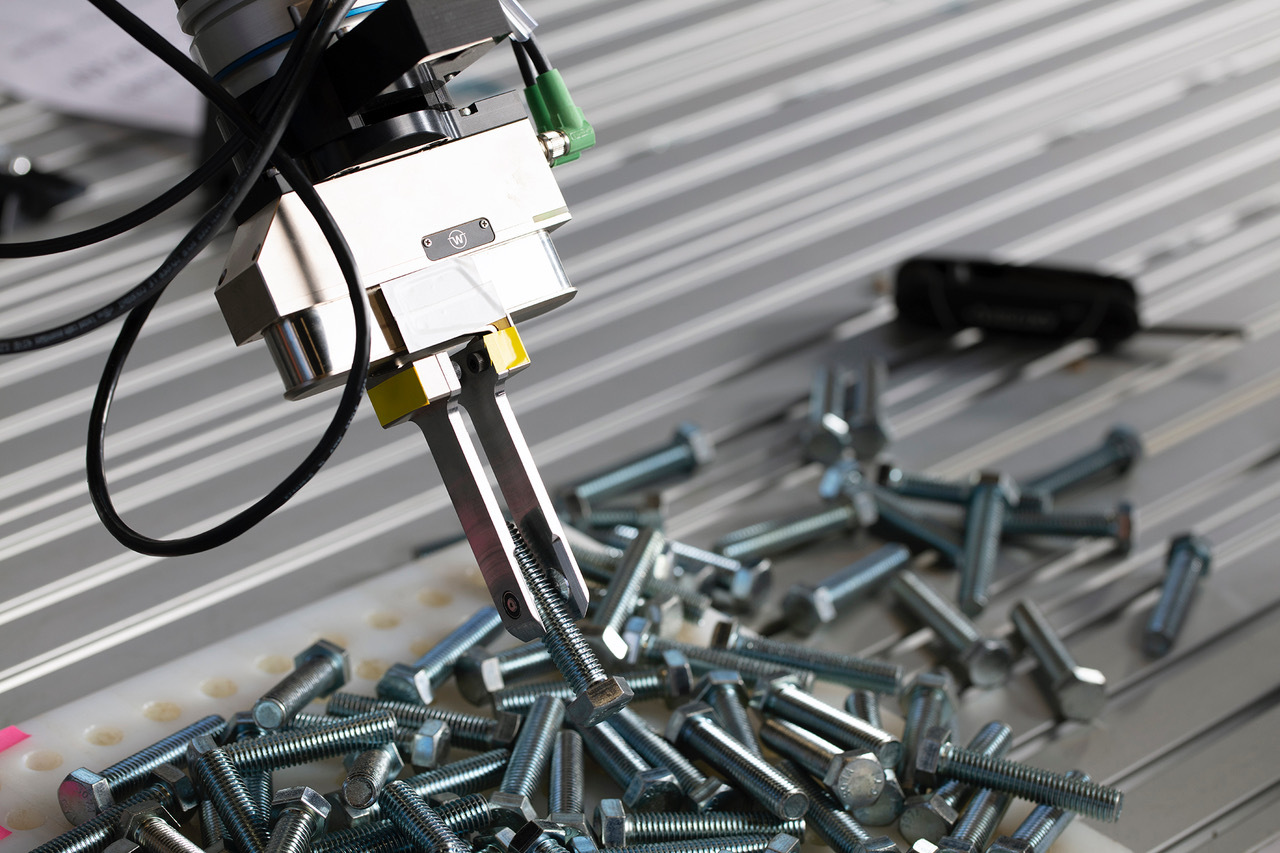
The company specializes in welding robotics — one in a long list of manufacturing jobs with a shortage of available workers. The company cites the American Welding Society, which puts the shortage potentially as high as 400,000 by the year 2024. Interest is also being driven by the pandemic, as more companies are looking for ways to move some of the process back to U.S. shores.

Image Credits: Symbio

Speaking of manufacturing, I spoke to a company called Symbio Robotics, way back in February. The big news then was that the Bay Area-based startup with partnering with Nissan and Toyota. Now it adds yet another massive automotive name to the list with the addition of Ford. The U.S. car giant has been making a lot of investments in robotics across the board in recent years.

“As the mobility landscape continues to rapidly change there is an increasing demand for much faster product life cycles,” Ford’s Advanced Controls and Digital Factory Manager Harry Kekedjian said in a release. “Using the Symbio technology, we’ve observed a 15% improvement in cycle time and greater than 50% reduction in adapting to new products over the previous manufacturing method.”

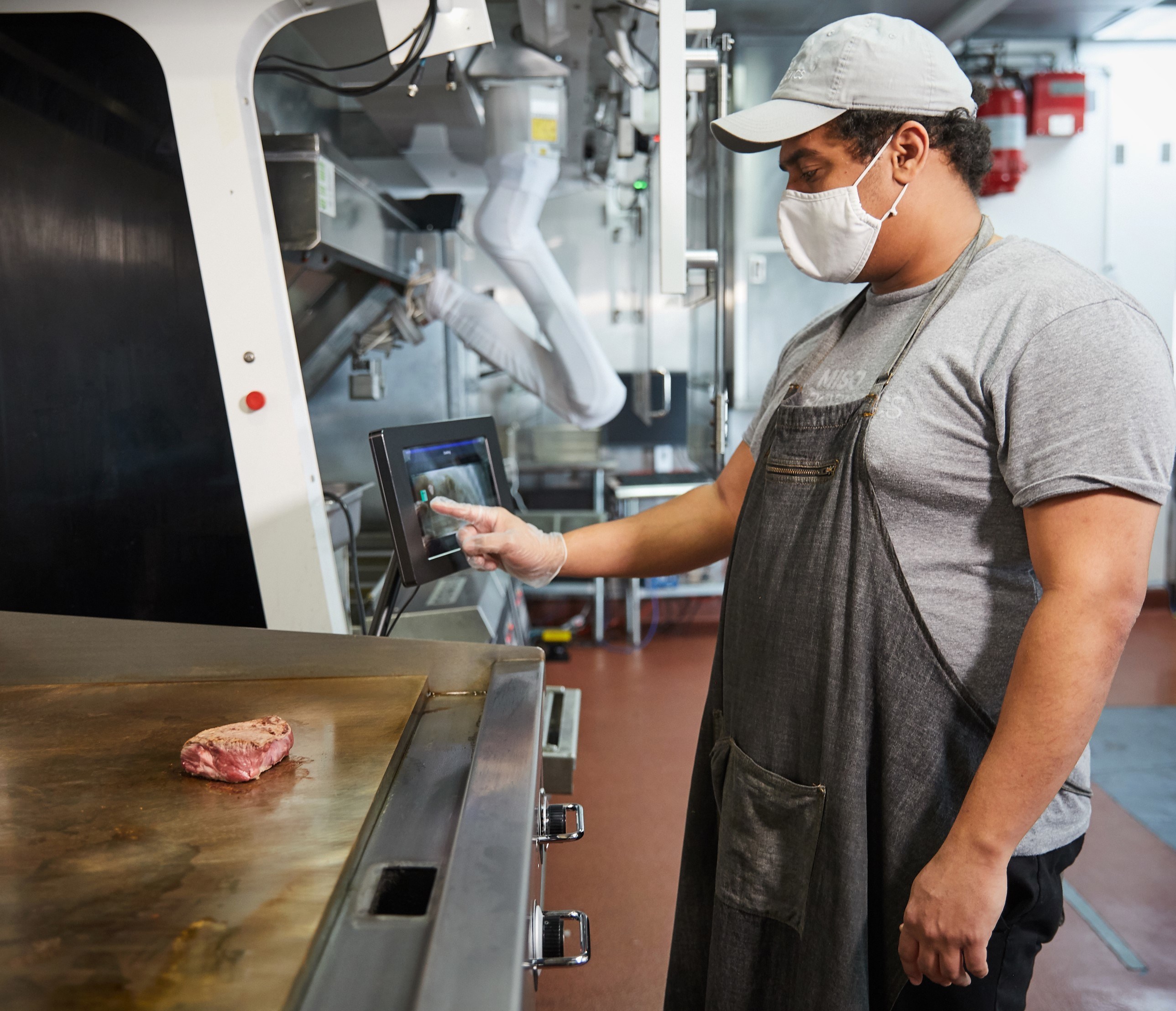
CookRight, the world’s first AI-powered cooking platform able to automatically identify and track products and tasks. Image Credits: Miso Robotics

We haven’t written a ton about Miso Robotics lately — at least not since the company announced a partnership with Harold and Kumar’s old haunt back in October. Interestingly, the Flippy maker’s latest bit of news removes the robotics bit altogether. This week, the company announced the launch of its CookRight software platform, which combines a touchscreen tablet with thermal imaging — basically it sends similar food prep instructions as the ones it would deliver to Flippy.


06 May 2021

Turkey’s Ace Games raises $7M to develop ‘hyper casual’ games

Ace Games, a Turkish mobile gaming company founded by a former Peak Games co-founder, has raised a $7 million Seed funding round led by Actera Group. Co-investment has come from San Francisco’s NFX. Former gaming entrepreneurs Kristian Segerstrale, Alexis Bonte, and Kaan Gunay also participated. Firat Ileri is previous investors from the pre-seed round.

The company runs two studios, one focused on casual and one on ‘hyper-casual’ games.

Co-founded by CEO Hakan Bas, the former Co-Founder, and COO at Peak Games, Ace Games has had some success on the US iOS Store with its hyper-casual title, ‘Mix and Drink.’

In a statement, Bas said: “Ace’s main focus is actually the casual ‘hybrid puzzle’ game that we have been working on for a while now. However, our hyper-casual studio assists the main studio in many aspects like training talent, coming up with creative game mechanics and marketing ideas, generating cash, and creating user base.” Ace’s casual title is to be released late-summer this year and the global launch is expected in early 2022.

Peak Games, Gram Games and Rollic Games were alls acquired by Zynga, showing that Turkey is cable of producing decent exits for gaming startups.

VCs such as Index, Balderton, Makers and Griffin have all made M&A deals with Dream Games, Bigger Games and Spyke Games.

06 May 2021

Bitski raises $19 million from a16z to become the ‘Shopify for NFTs’

For every crypto-skeptic that see NFTs as yet another hype bubble, there’s an acolyte who sees NFTs as the key to unlocking the future of the creative web.

Bitski, an SF-based startup that builds custom NFT storefronts for brands and creators, is banking on the latter and they have new investors betting the same. The startup tells TechCrunch they’ve raised $19 million in a Series A led by Andreessen Horowitz. The firm joins a host of creators and celebrities including Jay Z, MrBeast, Serena Willliams and 3LAU in backing the startup.

The NFT space has gotten awfully crowded lately, riding a wave of investor hype and billions of dollars worth of transactions in the past several months. While the high-dollar artwork sold by artists like Beeple and exclusive crypto communities like CryptoPunks have been hotbeds of activity, founders like those behind Bitski believe that these blockchain-backed digital goods are going to inspire a massive transformation in how artists, influencers and brands monetize their online popularity.

Bitski is aiming to allow mainstream brands and celebrities to bypass the crypto complexity of early marketplaces, hoping to give customers like early partner Adidas an on-ramp to the NFT world that’s more approachable to consumers who understand digital items but might not have fully bought into crypto. The startup sells creators a variety of subscription plans to power custom NFT storefronts that they can sell through as their own channel rather than pushing users to wide-ranging marketplaces. 

There are plenty of arguments among builders and users of NFT platforms surrounding which elements of a service should be blockchain-based and which should default to more time-honed e-commerce flows. Bitski often errs on the side of user familiarity, allowing credit card purchases on the platform, “forgot your password” functionality and user wallets hosted on Bitski’s own server hardware. They’re controversial onboarding choices that won’t satisfy crypto purists and decentralization advocates but will likely help new users get acquainted with NFTs quickly.

With the company’s Series A closed, Bitski has raised some $23.4 million to date.

06 May 2021

Figure raises $7.5M to help startup employees better understand their compensation

The topic of compensation has historically been a delicate one that has left many people — especially startup employees — wondering just what drives what can feel like random decisions around pay and equity.

Last June, software engineers (and housemates) Miles Hobby and Geoffrey Tisserand set about trying to solve the problem for companies by developing a data-driven platform that aims to help companies structure their compensation plans and transparently communicate them to candidates.

Now today, the startup behind that platform, Figure, announced it has raised $7.5 million in seed funding led by CRV. Bling Capital, Better Tomorrow Ventures and Garage Capital also participated in the financing, along with angel investors such as AngelList co-founder Naval Ravikant, Jason Calacanis, Reddit CEO Steve Huffman and other executives based in Silicon Valley.

The startup has amassed a client list that includes other startups such as fintechs Brex and NerdWallet and AI-powered fitness company Tempo. 

Put simply, Hobby and Tisserand’s mission is to improve workflows and transparency around pay, particularly equity. The pair had both worked at startups themselves (Uber and Instacart, respectively) and ended up leaving money on the table when they left those companies because no one had properly explained to them what their equity, which changed at every valuation, meant.  

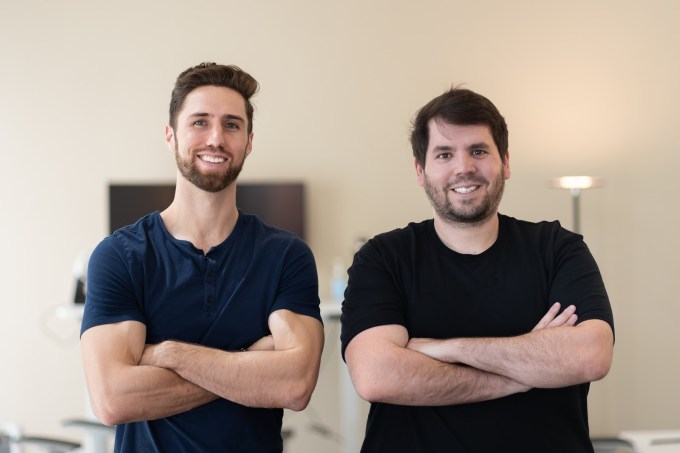
Image Credits: Figure co-founders and co-CEOs Miles Hobby and Geoffrey Tisserand. Image Credits: Figure

So, one of their goals was to create a solution that would provide a user-friendly explanation of what a person’s equity stake really means, from tax implications to whether or not they have to buy the stock and/or hold onto it.

“I’ve gone through the job search process many times before and there’s all these complex legal documents to understand why you’re getting 10,000 stock options, but obviously we knew the vast majority of people have no idea how that works,” Tisserand told TechCrunch. “We saw an opportunity there to help companies actually convey the value to their candidates while also making them aware of the potential risks of owning something that’s so illiquid.”

Image Credits: Figure

Another goal of Figure’s is to help create a more fair and balanced process about decisions around pay and equity so that there’s less inequality out there. Pointedly, it aims to remove some of the biases that exist around those decisions by systematizing the process.

“We saw a void in this kind of context around equity…and knew that there had to be a better way for companies to structure, manage and explain their compensation plans,” Hobby said.

To Hobby and Tisserand, Figure is designed to help stop instances of implicit bias.

“Compensation should be based on the work that you’re doing, and not gender or ethnic background,” Tisserand told TechCrunch. “We’re trying to give that context and remove biases. So, we’re trying to help at two different stages –– to surface inequities that already exist and make sure there are no anomalies, and then to help stop them before they can exist.”

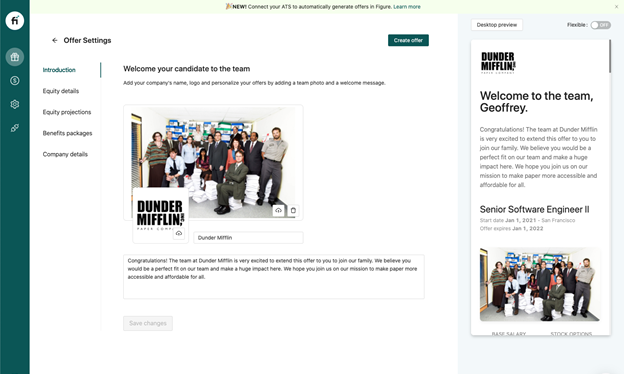
Figure also aims to give companies the tools to educate candidates and employees on their total compensation — including equity, salary, benefits and bonuses — in a “straightforward and user-friendly” way. For example, it can create custom offer letters that interactively detail a candidate’s compensation.

“Our goal is for Figure to become an operating system for compensation, where a company can encode their compensation philosophy into our system, and we help them determine their job architecture, compensation bands and offer numbers while monitoring their compensation health to provide adjustment suggestions when needed,” Hobby said.

Post-hire, Figure’s compensation management system “helps keep everything running smoothly.”

Anna Khan, general partner of enterprise software at CRV, is joining Figure’s board as part of the funding. The decision to back the startup was in part personal, she said.

“I’d been investing in software for eight years and was alarmed that no one was building anything around pay equity when it comes to how we’re paid, why we’re paid what we’re paid and on how to build equity long term,” Khan told TechCrunch. “Unfortunately, discussions around compensation and equity still happen behind closed doors and this extends into workflow around compensation — equally broken — with manual leveling, old data and large pay inequities.”

The company plans to use its new capital to expand its product offerings and scale its organization.

06 May 2021

Diginex launches ESG reporting platform aimed at small businesses

As ESG reporting goes up the agenda for large companies, it’s also increasingly doing so for smaller companies as well. But right now, tracking things like your company’s CO2 emissions is mainly the preserve of large corporations. Now a startup hopes to address this.

Diginex Solutions has a self-guided tool which claims to generate ESG reports six times faster than competitors and comes in at a relatively affordable $99 per month.

The blockchain-enabled reporting tool also generates reports, giving companies the ability to demonstrate their ESG creds.

DiginexESG is certified by the GRI, an international independent standards organization and now operates in the US, UK, Luxembourg, Hong Kong, Singapore, and Chile. It is currently raising venture backing largely from strategic corporate investors.

Competitors include Turnkey Group, NASDAQ Onereport, Enablon (raised $15M) and World-favour.

Mark Blick, CEO at Diginex Solutions said, “The current landscape of ESG reporting is challenging for many organizations – particularly SMEs – requiring huge consultancy fees, time and resources that distracts from day-to-day activity. The DiginexESG platform quite simply takes away those challenges and does all the heavy lifting for them. It’s like Docusign, Dropbox, TurboTax or Slack hardcoded for ESG reporting.”

06 May 2021

Oculii looks to supercharge radar for autonomy with $55M round B

Autonomous vehicles rely on many sensors to perceive the world around them, and while cameras and lidar get a lot of the attention, good old radar is an important piece of the puzzle — though it has some fundamental limitations. Oculii, which just raised a $55M round, aims to minimize those limitations and make radar more capable with a smart software layer for existing devices — and sell its own as well.

Radar’s advantages lie in its superior range, and in the fact that its radio frequency beams can pass through things like raindrops, snow, and fog — making it crucial for perceiving the environment during inclement weather. Lidar and ordinary visible light cameras can be totally flummoxed by these common events, so it’s necessary to have a backup.

But radar’s major disadvantage is that, due to the wavelengths and how the antennas work, it can’t image things in detail the way lidar can. You tend to get very precisely located blobs rather than detailed shapes. It still provides invaluable capabilities in a suite of sensors, but if anyone could add a bit of extra fidelity to its scans, it would be that much better.

That’s exactly what Oculii does — take an ordinary radar and supercharge it. The company claims a 100x improvement to spatial resolution accomplished by handing over control of the system to its software. Co-founder and CEO Steven Hong explained in an email that a standard radar might have, for a 120 degree field of view, a 10 degree spatial resolution, so it can tell where something is with a precision of a few degrees on either side, and little or no ability to tell the object’s elevation.

Some are better, some worse, but for the purposes of this example that amounts to an effectively 12×1 resolution. Not great!

Handing over control to the Oculii system, however, which intelligently adjusts the transmissions based on what it’s already perceiving, could raise that to a 0.5° horizonal x 1° vertical resolution, giving it an effective resolution of perhaps 120×10. (Again, these numbers are purely for explanatory purposes and aren’t inherent to the system.)

That’s a huge improvement and results in the ability to see that something is, for example, two objects near each other and not one large one, or that an object is smaller than another near it, or — with additional computation — that it is moving one way or the other at such and such a speed relative to the radar unit.

Here’s a video demonstration of one of their own devices, showing considerably more detail than one would expect:

Exactly how this is done is part of Oculii’s proprietary magic, and Hong did not elaborate much on how exactly the system works. “Oculii’s sensor uses AI to adaptively generate an ‘intelligent’ waveform that adapts to the environment and embed information across time that can be leveraged to improve the resolution significantly,” he said. (Integrating information over time is what gives it the “4D” moniker, by the way.)

Here’s a little sizzle reel that gives a very general idea:

Autonomous vehicle manufacturers have not yet hit on any canonical set of sensors that AVs should have, but something like Oculii could give radar a more prominent place — its limitations sometimes mean it is relegated to emergency braking detection at the front or some such situation. With more detail and more data, radar could play a larger role in AV decisionmaking systems.

The company is definitely making deals — it’s working with Tier-1s and OEMs, one of which (Hella) is an investor, which gives a sense of confidence in Oculii’s approach. It’s also working with radar makers and has some commercial contracts looking at a 2024-2025 timeline.

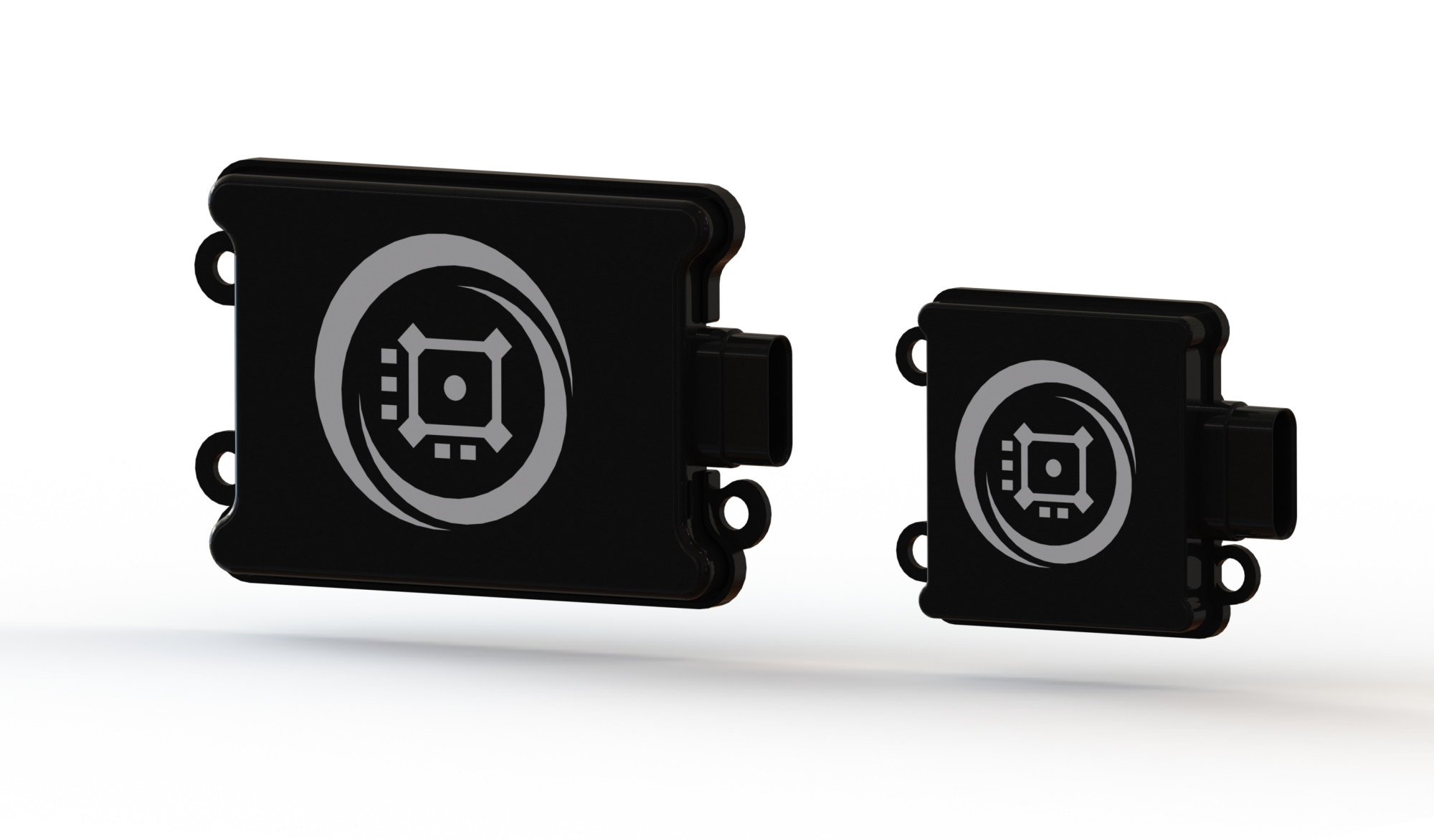
CG render of Oculii's two radar units.

Image Credits: Oculii

It’s also getting into making its own all-in-one radar units, doing the hardware-software synergy thing. It claims these are the world’s highest resolution radars, and I don’t see any competitors out there contradicting this — the simple fact is radars don’t compete much on “resolution,” but more on the precision of their rangefinding and speed detection.

One exception might be Echodyne, which uses a metamaterial radar surface to direct a customizable radar beam anywhere in its field of view, examining objects in detail or scanning the whole area quickly. But even then its “resolution” isn’t so easy to estimate.

At any rate the company’s new Eagle and Falcon radars might be tempting to manufacturers working on putting together cutting-edge sensing suites for their autonomous experiments or production driver-assist systems.

It’s clear that with radar tipped as a major component of autonomous vehicles, robots, aircraft and other devices, it’s worth investing seriously in the space. The $55M B round certainly demonstrates that well enough. It was, as Oculii’s press release lists it, “co-led by Catapult Ventures and Conductive Ventures, with participation from Taiwania Capital, Susquehanna Investment Group (SIG), HELLA Ventures, PHI-Zoyi Capital, R7 Partners, VectoIQ, ACVC Partners, Mesh Ventures, Schox Ventures, and Signature Bank.”

The money will allow for the expected scaling and hiring, and as Hong added, “continued investment of the technology to deliver higher resolution, longer range, more compact and cheaper sensors that will accelerate an autonomous future.”

06 May 2021

From bootstrapped to a $2.1B valuation, ReCharge raises $227M for subscription management platform

ReCharge, a provider of subscription management software for e-commerce, announced today that it has raised $227 million in a Series B growth round at a $2.1 billion valuation. 

Summit Partners, ICONIQ Growth and Bain Capital Ventures provided the capital.

Notably, Santa Monica, California-based ReCharge was bootstrapped for several years before raising $50 million in a previously undisclosed Series A from Summit Partners in January of 2020. And, it’s currently cash flow positive, according to company execs. With this round, ReCharge has raised a total of $277 million in funding.

Over the years, the company’s SaaS platform has evolved from a subscription billing/payments platform to include a broader set of offerings aimed at helping e-commerce businesses boost revenues and cut operating costs.

Specifically, ReCharge’s cloud-based software is designed to give e-commerce merchants a way to offer and manage subscriptions for physical products. It also aims to help these brands, primarily direct to consumer companies, grow by providing them with ways to “easily” add subscription offerings to their business with the goal of turning one-time purchasers “into loyal, repeat customers.”

The company has some impressive growth metrics, no doubt in part driven by the COVID-19 pandemic’s push to all things digital. ReCharge’s ARR grew 146% in 2020, while revenue grew over 136% over the same period, according to co-founder and CEO Oisin O’Connor, although he declined to reveal hard numbers. The startup has 15,000 customers and 20 million subscribers across 180 countries on its platform. Customers include Harry’s, Oatly, Fiji Water, Billie and Native. But even prior to the pandemic, it had doubled its processing volume each year for the past five years and has processed over $5.3 billion in transactions since its 2014 inception.

ReCharge also has 328 employees, up from 140 in January of 2020.

“We saw many brick and mortar stores, such as Oatly, offer their products through subscriptions as a result of the pandemic in 2020,” O’Connor told TechCrunch. “Certain categories such as food & beverage and pet foods were some of the fastest growing segments in total subscriber count, with 100% and 147% increases, respectively, as non-discretionary spending shifted online.”

He was surprised to see that growth also extend beyond the most obvious categories. For example, ReCharge saw beauty care products subscribers grow by 120% last year.

“Overall, we saw a 91% subscriber growth in 2020 across the board in all categories of subscriptions,” O’Connor told TechCrunch. “We believe there is a combination of factors at play: the pandemic, the rise of physical subscriptions and the rise of direct-to-consumer buying.”

ReCharge plans to use its fresh capital to accelerate hiring in both R&D (engineering and product) and go-to-market functions such as sales, marketing and customer success. It plans to continue its expansion into other e-commerce platforms such as BigCommerce, Salesforce Commerce Cloud and Magento, and outside of North America into other geographic markets, starting with Europe. ReCharge also plans to “broaden” its acquisition scope so that it can “accelerate” its time-to-market in certain domains, according to O’Connor, and of course build upon its products and services.

Yoonkee Sull, partner at ICONIQ Growth, said his firm has been watching the rapid rise of subscription commerce for several years “as more merchants have looked for ways to deepen relationships with loyal customers and consumers increasingly have sought out more convenient and flexible ways to buy from their favorite brands.”

Ultimately, ICONIQ is betting on its belief that ReCharge “will continue to take significant share in a fast-growing market,” he told TechCrunch.

Sull believes the ReCharge team identified the subscription e-commerce opportunity early on and addresses the numerous nuanced needs of the market with “a fully-featured product that uniquely enables both the smallest merchants and largest brands to easily adopt and scale with their platform.”

Andrew Collins, managing director at Summit Partners, was impressed that the company saw so much growth without external capital for years, due to its “efficiency and discipline.”

The ReCharge team identified a true product-market fit and built a product that customers love — which has fueled strong organic growth as the business has scaled,” Collins added.

06 May 2021

Desktop Metal adds wood printing to its portfolio

Desktop Metal today announced the launch of wood 3D printing tool, Forust. Founded in 2019, the company specializes in 3D printing for interior design. The company’s “non-destructive” printing methods have managed to largely fly under the radar, with minimal press coverage until now — making them a pretty ideal acquisition candidate.

In fact, the gross assets acquisition actually occurred back in October 2020, according to a filing, which pegs it at a price at $2.5 million, including $2 million in cash considerations. Since then, it seems, the two have been working together ahead of an official launch.

In a press release issued today, Desktop Metal is positioning Forust as the name of the new manufacturing process now in the company’s portfolio. The technology utilizes cellulose dust and lignin, byproducts from the wood and paper industries, respectively.

Image Credits: Desktop Metal


“As part of Desktop Metal, Forust is empowering architects, designers, and manufacturers to leverage design-forward technology to rethink how wood waste streams are used — whether you’re looking to manufacture one, one thousand or one million pieces,” Forust co-founder and CEO Andrew Jeffery tells TechCrunch. “Forust has the ability to bring 3D-printed, sustainable wood designs to life for businesses and consumers to create beautiful, sturdy wood products to support various industries, such as interior design, furniture and consumer home goods.”

Starting today, the companies will offer samples and designs online. The list of products includes architectural accents, pieces of furniture and home products like bowls and flower pots.

Image Credits: Desktop Metal

“Applications for Forust’s wood parts are really limitless,” said Desktop Metal CEO Ric Fulop, says in a press release. “There are many applications where polymers and plastics are used today where you can now cost-effectively replace with sustainably manufactured wood parts — luxurious high-end components in interiors, consumer electronics, instruments, aviation, boats, home goods and eventually in flooring and exterior roofing applications.”

In addition to Forust, the same filing reveals that the company also purchased the “single acquired technology asset” of Figur Machine Tools, a sheet metal printing company, for $3.5 million. In August, Desktop Metal announced it was going public via a SPAC that valued it at $2.5 billion.


06 May 2021

Expressable launches with millions for scalable speech therapy

Speaking isn’t simple for at least 40 million Americans, so a new Austin-based startup is scaling a solution. Expressable is a digital speech therapy company that connects patients to speech language pathologists (SLP) via telehealth services and asynchronous support, and it has raised a new $4.5 million seed round.

The early-stage startup is launching with an explicit focus on serving the approximately five million children in the United States that have a communication disorder. What might start as an occasional stutter could turn into a communication disorder over time – so the startup is looking to intervene early to get kids on a clearer path.

Launched in 2019 by married co-founders Nicholas Barbara and Leanne Sherred, Expressable has served thousands of families to date. Today, the duo announced its seed funding, co-led by Lerer Hippeau and NextView Ventures, with participation from Amplifyher Ventures. The money will be used to expand its provider network, go in-network, and focus on its edtech service.

What it does

Put simply, Expressable connects children to speech-language pathologists on a recurring basis. The therapy is done live via Zoom for Healthcare with licensed professionals that Expresssable employs full-time. Clients are matched with a therapist in their area of need, from public speaking to vocal cord paralysis. Parents are able to reach their children’s SLP through secure SMS for coordination, questions, and rescheduling throughout the week.

On top of real-time support, the virtual speech therapy provider has a suite of asynchronous services. The company is building an e-learning platform with homework assignments and lessons, prescribed by the therapist and provided via SMS, for parents to do with their children to reinforce the speech care plans.

The activities are meant to be bite-sized – used when driving to the grocery store or cooking dinner or playing in the backyard – and tailored for interaction with children. The lessons can be as simple as creating opportunities for a kid to ask for juice, or to practice two-word utterances with an imitation game.

A mock secure SMS by Expressable. Image Credits: Expressable

This unique edtech bit of Expressable leans heavily on parent involvement in the therapy process. Parental help has been shown to increase positive outcomes, but notably it could also leave low-income, working class families out of the mix. Its price, on average, is $59 per week, and that’s currently only out of pocket rather than subsidized by insurance.

“There’s a lot of content for speech language pathologists by speech language pathologists, but not a lot of content by [SLPs] for parents, written in a way that is consumable,” Barbara said. “It just felt like a huge opportunity and market gap.”

Part of Expressable’s value is that it’s better than the status quo, which surprisingly often actually amounts to nothing. According to the National Institute on Deafness and Other Communication Disorders, about 8 to 9 percent of children have a speech sound disorder in the country — but only half actually get treatment. What might start as an occasional stutter could turn into a communication disorder over time – so Expressable wants to intervene early to get kids on the right path.

“Public schools are the number-one provider for pediatric speech but they are unfortunately notoriously underfunded,” said Sherred. Children who are lucky enough to be eligible for school services are often provided them in a group setting, she continued, which lengthens the amount of time it takes to make progress.

Sherred witnessed the “incredibly frustrating cycle” created by gaps in school intervention first-hand as a SLP. She has spent the majority of her career in in-home health, where she would work in homes and daycares directly with children.

The majority of Expressable’s user base are children, but about 35% are adults, signaling how speech issues can continue past childhood.

Meagen Lloyst, who sourced the Expressabble deal for Lerer Hippeau, is one example. Lloyst was diagnosed with a speech and voice condition in late 2020 and needed to find remote SLP therapy, which introduced her to the challenges of finding a high-quality specialized SLP.

“Before Expressable, there was no consumer-facing brand out there solving these pain points for individuals with communications disorders,” Lloyst said. “It’s evident that they’re already hiring the best SLPs out there, bringing parents and education into the process to focus on better outcomes for children, and doing so in a cost-effective and convenient way through virtual care.”

Telehealth with a twist

While telehealth usage remains above pre-pandemic levels, visits are on the decline. One challenge for any digital telehealth startup, Expressable included, is how to make a convincing pitch for moving caretaking fully-virtual in a post-pandemic context.

The Expressable co-founders pointed toward consistency, both internally and externally, as a competitive advantage.

First, speech therapy is a recurring service that many patients use once a week, every month, for years. “A lot of other telemedicine plays are these quick, convenient, and direct primary care,” Barbara said. “[We are] a longer tail of treatment plan that requires a close relationship between provider and patient.”

Second, unlike many telehealth startups, Expressable has hired its specialists full-time as W-2 employees. It’s a strategic choice to help ensure to its clients that their SLP of choice is a long-term relationship. The startup has 50 W-2 SLPs currently.

“We have built a career path for SLPs and a value proposition to speech language pathologists where they can work from home, set their own hours [get] paid above the national average, and then receive benefits that may not be obviously not common if you’re working in a contractor position.”

Not relying on the traditional contractor model might be a differentiation, but it’s also a challenge. The startup will have to rapidly (and efficiently) hire SLPs for the variety of speaking conditions out there – and in order to expand into new markets, it has to go through the arduous legal process of local licensing requirements, instead of just going to a white-label solution that helps staff similar companies while offloading individual practitioner certification.

While it has ambitions to become a national practice, Expressable currently operates in 15 states, and employs SLPs that are licensed in all the states that it operates in.


06 May 2021

Look out PiedPiper – iSIZE reduces power for video streaming, raises $6.3M in round led by Octopus

It’s widely known that video streaming boomed during the pandemic, as millions of people were faced by boredom during lockdowns. But an unintended consequence of this was the growing environmental impact of millions of video streams which meant server farms needing to draw increasing amounts of power from the grid. Indeed, there were even calls for people to cycle down to Standard Definition, as HD streaming has a greater impact. But it turns out that if you optimize the video, you can reduce the bitrate required, reducing the data and energy needed.

Oddly enough this is also the pitch of the famed satirical show, Silicon Valley, where fictional startup PiedPiper invents a new creates an app that contains a revolutionary data compression algorithm for video.

But this scenario may about to become fact.

iSIZE, UK startup which applies deep learning to optimize video streaming and delivery, has $6.3 million in a funding round led by Octopus Ventures, with participation from existing investors including TD Veen and Patrick Pichette, Chairman of Twitter and ex-CFO of Google. The company has now raised a total of $8.2 million.

iSIZE’s BitSave technology optimizes video streaming quality while reducing bitrate requirements, “allowing for a significant reduction in data and energy consumption”.

This is trained to ‘see with the human eye’ in order to n=make the video still look high quality, but reduce the bitrate needed. It integrates with all video encoding standards (including AVC, HEVC, and AV1) without needing changes to the streaming process. In other words, the links of Netflix, etc would, says the company, be able to install the iSize solution relatively easily.

Founded by Sergio Grce and Dr. Yiannis Andreopoulos, the team combines R&D in machine learning, neural networks, and video signal processing, and is a graduate of the Creative Destruction Lab Oxford 2019-2020 program.

Sergio Grce, Founder and CEO of iSIZE, commented: “Today there are more people streaming more video than ever before. Our customers recognize both the commercial opportunity and their social responsibility to optimize their video delivery pipelines with our pioneering technology.”

On a call to me, he added: “The processing optimizes for human perception and tries to reverse engineer human perception of the receiver in a manner similar to psycho visual perception. So that saves bitrate and the content looks the same or better on the client device. We are doing something similar for video as what the MP3 did for music.”

Simon King, Partner and deep tech investor at Octopus Ventures, said: “The technology iSIZE has created is pioneering and is already being used by some of the world’s largest companies to reduce the costs and energy used in streaming. Consumer demand for high-quality video is only going to increase as our devices are upgraded, so it’s vital that we find new ways to reduce the environmental impact.”

iSIZE’s competitors include Wave 1 and Deep Render.

Meanwhile, let’s remind ourselves of how good PiedPiper was at video compression.