Author: azeeadmin

14 Feb 2019

Apple is selling the iPhone 7 and iPhone 8 in Germany again

Two older iPhone models are back on sale in Apple stores in Germany — but only with Qualcomm chips inside.

The iPhone maker was forced to pull the iPhone 7 and iPhone 8 models from shelves in its online shop and physical stores in the country last month, after chipmaker Qualcomm posted security bonds to enforce a December court injunction it secured via patent litigation.

Apple told Reuters it had “no choice” but to stop using some Intel chips for handsets to be sold in Germany. “Qualcomm is attempting to use injunctions against our products to try to get Apple to succumb to their extortionist demands,” it said in a statement provided to the news agency.

Apple and Qualcomm have been embroiled in an increasingly bitter global legal battle around patents and licensing terms for several years.

The litigation follows Cupertino’s move away from using only Qualcomm’s chips in iPhones after, in 2016, Apple began sourcing modem chips from rival Intel — dropping Qualcomm chips entirely for last year’s iPhone models. Though still using some Qualcomm chips for older iPhone models, as it will now for iPhone 7 and iPhone 8 units headed to Germany.

For these handsets Apple is swapping out Intel modems that contain chips from Qorvo which are subject to the local patent litigation injunction. (The litigation relates to a patented smartphone power management technology.) 

Hence Apple’s Germany webstore is once again listing the two older iPhone models for sale…

Newer iPhones containing Intel chips remain on sale in Germany because they do not containing the same components subject to the patent injunction.

“Intel’s modem products are not involved in this lawsuit and are not subject to this or any other injunction,” Intel’s general counsel, Steven Rodgers, said in a statement to Reuters.

While Apple’s decision to restock its shelves with Qualcomm-only iPhone 7s and 8s represents a momentary victory for Qualcomm, a separate German court tossed another of its patent suits against Apple last month — dismissing it as groundless. (Qualcomm said it would appeal.)

The chipmaker has also been pursing patent litigation against Apple in China, and in December Apple appealed a preliminary injunction banning the import and sales of old iPhone models in the country.

At the same time, Qualcomm and Apple are both waiting the result of an antitrust trial brought against Qualcomm’s licensing terms in the U.S.

Two years ago the FTC filed charges against Qualcomm, accusing the chipmaker of operating a monopoly and forcing exclusivity from Apple while charging “excessive” licensing fees for standards-essential patents.

The case was heard last month and is pending a verdict or settlement.

14 Feb 2019

Grover launches e-scooter subscription service

Grover, the Berlin-based startup that offers “pay-as-you-go” subscriptions to the latest consumer tech as an alternative to owning products outright, is going all-in on e-scooters or so-called micro-mobility. The latest to jump in on the e-scooter craze, the company is launching an e-scooter monthly subscription service in Germany.

Dubbed GroverGo, customers can rent the Xiaomi e-Scooter Mijia M365 for €49.90 per month and have access to a rental scooter of their own for a fraction of the cost of buying.

The idea — and thinking behind Grover as a whole — is that instead of purchasing an e-scooter outright (or in this instance, relying on using the sprawling number of pay-per-ride services), GroverGo customers can enjoy unlimited e-scooter rides without the up front costs or commitment of owning an e-scooter. A GroverGo rolling monthly subscription can be canceled at any time and includes Grover Care damage coverage.

The Xiaomi scooter goes up to 25 km/h, and can ride up to 30 km without recharging. It is also foldable and fairly lightweight, which Grover says makes it easy to travel with. The company also reckons that GroverGo makes sense for anyone who would ride 10 or more times per week.

“The biggest advantage of GroverGo versus pay-per-ride e-scooter services is the guaranteed availability and efficient use, as each scooter stays with its renter rather than hundreds of them clogging the sidewalks waiting to be picked up and recharged,” says Grover, taking a dig at the likes of Lime and Bird. “GroverGo customers make their scooter their own for the time of their subscription and know that it’s always charged and at their disposal. Even in the most remote neighbourhoods, the scooter can be folded and taken to the office or a bar and will be there for the ride home”.

The tech subscription service is also confident e-scooters will become more useful, as German authorities make changes to how the devices are regulated. “Thanks to a recently issued ordinance by the federal government, it is expected that Germany may will change its regulations and allow e-scooters on public streets soon,” says Grover.

Meanwhile, Michael Cassau, CEO and founder of Grover, tells me he believes micro-mobility services the “future of cities” and that the Product-as-a-Service model that Grover is based on is particularly suited to the space. “I am confident that our approach with GroverGo is smart and efficient, and will convince many to switch to e-mobility without the barriers and commitment of buying and financing, and without the hassle of shared e-scooter services,” he adds.

14 Feb 2019

Alibaba’s Ant Financial buys UK’s WorldFirst reportedly for around to expand in foreign exchange

Ant Financial, the financial services giant affiliated with Chinese e-commerce giant Alibaba, has made its first big move into Europe. It’s acquired London-headquartered payments company WorldFirst in a deal that sources tell us is valued at around $700 million.

(That would line up with multiple reports from December claiming the two were in talks for an acquisition of around £550 million, or $717 million at current exchange rates.)

This isn’t your average multi-hundred million dollar acquisition. The deal was confirmed by WorldFirst in a note to customers while Alibaba, which curiously didn’t put out an official press release, acknowledged the acquisition to us through a spokesperson.

Yet despite a relatively under-the-radar outing, the deal has potentially significant consequences.

One of a number of globally active money remittance services, 15-year-old WorldFirst lets businesses and consumers move money between countries at prices that are lower than regular banks. The company claims to have transferred over £70 billion ($90 billion) for customers since 2004, with more than one million transfers made each year. WorldFirst is a player in the competitive remittance market, in which migrant workers send money home to family, who can make transfers online or in person at WorldFirst outlets.

Ant Financial is best known for its Alipay service, which is China’s dominant mobile payment app with over 550 million registered users. Alibaba owns one-third of Ant, which is valued at as much as $150 billion, and it has been pushing to expand its empire outside of China and beyond Asia Pacific, too.

“Alipay and WorldFirst’s capabilities and international footprints are highly complementary,” WorldFirst co-founder and chief executive Jonathan Quin wrote in an internal memo obtained by TechCrunch.

According to Quin, WorldFirst will retain its brand and become a wholly-owned subsidiary of Ant Financial. Many merchants in the UK already accept Alipay, which has expanded to cater for Chinese tourists spending money overseas.

“The tie-up will add WorldFirst’s international online payments and virtual account products to Alipay’s range of technology solutions,” an Ant Financial spokesperson told TechCrunch without disclosing the size of the buyout.

WorldFirst has been financed by private equity investors and, as a private company, it keeps its financial details closely held, but in August 2018 it noted that it had transferred more than $95 billion for some 160,000 customers — businesses and individuals included. A source told us its GMV was around $10 billion a year.

Sources, meanwhile, noted that it was under pressure of its own that would have made securing a deal with Ant even more of a priority.

“That whole sector of payments from the West to China sellers for e-commerce is under massive margin pressure from Amazon going direct with its own service, plus new China based entrants PingPong, LianLian and Airwallex,” one executive very close to the remittance space told us. “WorldFirst had recently seen low to declining growth because of this.”

The acquisition gives Ant Financial a massive international boost, and for the first time a presence in Europe, but it comes amid some stumbles for the company in its other attempts to expand internationally.

Notably, the company agreed to acquire Nasdaq-listed MoneyGram for $1.2 billion in 2017 after it won a bidding war for the global payment company. Ultimately, however, the deal was blocked by the U.S. government. Bruised by the episode, which set its plans back by a year, Ant went on to raise an enormous $14 billion funding round last summer during which time it presumably kicked off the search for a MoneyGram alternative.

While WorldFirst is based out of the UK, the company last year made a key move to expand its US operations when it was announced in August that it would acquire the retail money transfer business of San Francisco-based startup Wyre, which had built the network on blockchain technology but was selling it to focus on the other side of its business, providing currency exchange APIs to larger B2B customers.

It looked like all systems go for WorldFirst to move deeper in the US after that. But then, the company abruptly announced on February 20 that it planned to close the U.S-based business. The move may have been made to prevent a repeat of that scuppered MoneyGram acquisition.

WorldFirst is closing its business in the U.S. in a move widely seen as a precursor to its acquisition by Ant Financial

Outside of the U.S. and China, Ant Financial has aggressively expanded its presence in Asia through a series of investment deals that have seen it put $200 million into Kakao Pay in Korea, and find similar deals in Southeast Asia. The overall strategy appears to be to replicate the success of Alipay in China, where it offers mobile payments and digital financial services that cover loans, banking and wealth management.

In a show of its global ambition, Alipay just this week announced a deal to bring its payment option to U.S. Walgreens stores. A previous partnership with point-of-sale company First Data added Alipay to four million retail partners Stateside, and the company has similar deals in Europe and parts of Asia.

14 Feb 2019

Europe agrees platform rules to tackle unfair business practices

The European Union’s political institutions have reached agreement over new rules designed to boost transparency around online platform businesses and curb unfair practices to support traders and other businesses that rely on digital intermediaries for discovery and sales.

The European Commission proposed a regulation for fairness and transparency in online platform trading last April. And late yesterday the European Parliament, the Council of the EU and the Commission reached a political deal on regulating the business environment of platforms, announcing the development in a press release today.

The political agreement paves the way for adoption and publication of the regulation, likely later this year. The rules will apply 12 months after that point.

Under the new rules, sudden and unexpected account suspensions will be banned, with the Commission saying platforms will have to provide “clear reasons” for any termination and also possibilities for appeal.

Terms and conditions must also be “easily available and provided in plain and intelligible language”.

There must also be advance notice of changes — of at least 15 days, with longer notice periods applying for more complex changes.

Online platform intermediaries such as ecommerce marketplaces and search engines are covered by the new rules if they provide services to businesses established in the EU and which offer goods or services to consumers located in the EU.

The Commission estimates there are some 7,000 such platforms and marketplaces which will be covered by the regulation, noting this includes “world giants as well as very small start-ups”.

To be clear, the regulation does not target every online platform. For example, it does not cover online advertising (or b2b ad exchanges), payment services, SEO services or services that do not intermediate direct transactions between businesses and consumers.

The Commission also notes that online retailers that sell their own brand products and/or don’t rely on third party sellers on their own platform are also excluded from the regulation, such as retailers of brands or supermarkets.

For search engines the focus is on ranking transparency. And on that front dominant search engine Google has attracted more than its fair share of criticism in Europe from a range of rivals (not all of whom are European).

In 2017, the search giant was also slapped with a $2.7BN antitrust fine related to its price comparison service, Google Shopping. The EC found Google had systematically given prominent placement to its own search comparison service while also demoting rival services in search results. (Google rejects the findings and is appealing.)

Given that history, the new transparency provisions look intended to make it harder for a dominant search player to use its market power against rivals.

Changing the online marketplace

The importance of legislating for platform fairness was also flagged by the Commission’s antitrust chief, Margrethe Vestager, last summer — when she handed Google another very large fine ($5BN) for anti-competitive behavior related to its mobile platform Android.

Vestager said then she wasn’t sure breaking Google up would be an effective competition fix, preferring to push for remedies to support “more players to have a real go”, as her Android decision attempts to do. But she also stressed the importance of “legislation that will ensure that you have transparency and fairness in the business to platform relationship”.

If businesses have legal means to find out why, for example, their traffic has stopped and what they can do to get it back that will “change the marketplace, and it will change the way we are protected as consumers but also as businesses”, she argued.

Just such a change is now in sight thanks to EU political accord on the issue.

The regulation represents the first such rules for online platforms in Europe and — commissioners’ contend — anywhere in the world.

“Our target is to outlaw some of the most unfair practices and create a benchmark for transparency, at the same time safeguarding the great advantages of online platforms both for consumers and for businesses,” said Andrus Ansip, VP for the EU’s Digital Single Market initiative in a statement.

Elżbieta Bieńkowska, commissioner for internal market, industry, entrepreneurship, and SMEs, added that the rules are “especially designed with the millions of SMEs in mind”.

“Many of them do not have the bargaining muscle to enter into a dispute with a big platform, but with these new rules they have a new safety net and will no longer worry about being randomly kicked off a platform, or intransparent ranking in search results,” she said in another supporting statement.

In a factsheet about the new rules, the Commission specifies they cover third-party ecommerce market places (e.g. Amazon Marketplace, eBay, Fnac Marketplace, etc.); app stores (e.g. Google Play, Apple App Store, Microsoft Store etc.); social media for business (e.g. Facebook pages, Instagram used by makers/artists etc.); and price comparison tools (e.g. Skyscanner, Google Shopping etc.).

Where transparency is concerned, the rules require that marketplaces and search engines disclose the main parameters they use to rank goods and services on their site “to help sellers understand how to optimise their presence” — with the Commission saying the regulation aims to strike a balance of supporting sellers without allowing gaming of the ranking system.

Some platform business practices will also require mandatory disclosure — such as for platforms that not only provide a marketplace for sellers but sell on their platform themselves, as does Amazon for example.

The ecommerce giant’s use of merchant data remains under scrutiny in the EU. Vestager revealed a preliminary antitrust probe of Amazon last fall — when she said her department was gathering information to “try to get a full picture”.

She said her concern is dual platforms could gain an unfair advantage as a consequence of access to merchants’ data. And, again, the incoming transparency rules look intended to shrink that risk — requiring what the Commission couches as exhaustive disclosure of “any advantage” a platform may give to their own products over others.

“They must also disclose what data they collect, and how they use it — and in particular how such data is shared with other business partners they have,” it continues, noting also that: “Where personal data is concerned, the rules of the GDPR [General Data Protection Regulation] apply.”

(And GDPR of course places further transparency requirements on platforms by, for example, empowering individuals to request any personal data held on them, as well as the reasons why their information is being processed.)

The platform regulation also includes new avenues for dispute resolution by requiring platforms set up an internal complaint-handling system to assist business users.

“Only the smallest platforms in terms of head count or turnover will be exempt from this obligation,” the Commission notes. (The exemption limit is set at fewer than 50 staff and less than €10M revenue.)

It also says: “Platforms will have to provide businesses with more options to resolve a potential problem through mediators. This will help resolve more issues out of court, saving businesses time and money.”

But, at the same time, the new rules allow business associations to take platforms to court to stop any non-compliance — mirroring a provision in the GDPR which also allows for collective enforcement and redress of individual privacy rights (where Member States adopt it).

“This will help overcome fear of retaliation, and lower the cost of court cases for individual businesses, when the new rules are not followed,” the Commission argues.

“In addition, Member States can appoint public authorities with enforcement powers, if they wish, and businesses can turn to those authorities.”

One component of the regulation that appears to be being left up to EU Member States to tackle is penalties for non-compliance — with no clear regime of fines set out (as there is in GDPR). So it’s not clear whether the platform regulation might not have rather more bark than bite, at least initially.

“Member States shall need to take measures that are sufficiently dissuasive to ensure that the online intermediation platforms and search engines comply with the requirements in the Regulation,” the Commission writes in a section of its factsheet dealing with how to make sure platforms respect the new rules.

It also points again to the provision allowing business associations or organisations to take action in national courts on behalf of members — saying this offers a legal route to “stop or prohibit non-compliance with one or more of the requirements of the Regulation”. So, er, expect lawsuits.

The Commission says the rules will be subject to review within 18 months after they come into force — in a bid to ensure the regulation keeps pace with fast-paced tech developments.

A dedicated Online Platform Observatory has been established in the EU for the purpose of “monitoring the evolution of the market and the effective implementation of the rules”, it adds.

14 Feb 2019

Teckro scores $25M Series C round to speed up clinical trials

Teckro, a software platform that claims to make the conduct of clinical trials more efficient and collaborative, has closed $25 million in Series C funding. The round, which brings the total raised by the Irish company to $43 million, is led Northpond Ventures with participation from Founders Fund, Sands Capital Ventures, Bill Maris’ Section 32 venture fund, and Borealis Ventures.

Founded by brothers Gary and Nigel Hughes, and Jacek Skrzypiec in 2015, Teckro’s technology is designed to improve the conduct of clinical trials, including by employing machine learning to improve the speed and accuracy of clinical trials. Through digitisation, t also attempts to make clinical trials more transparent across stakeholders and those responsible for conducting the trial, including doctors, research nurses and patients.

“The industry still relies heavily on paper, on working off retrospective data, and there is still an over-reliance on sending CRAs to busy research sites,” says Teckro co-founder and CEO Gary Hughes. “This approach, together with the plethora of point solutions that get ‘bolted on’, only adds to the complexity and disjointed experience of research sites and patients”.

To that end, Teckro says it has users in over 80 countries, up from 30 countries at the time of the Series B in August 2017. It employs over 100 staff across its global headquarters in Limerick, Ireland, an engineering hub in Dublin, Ireland and a U.S. base in Nashville, Tennessee.

“Our mission is to engage more physicians in clinical research,” Hughes tells me. “We believe increased participation by physicians (currently less than 3 percent globally) will provide greater access to patients, effectively making clinical research a treatment option for millions of patients with unmet medical needs. That requires a complete rethink of clinical trial operations, particularly the experience of research sites. It’s very much a ‘fix one thing’ approach, establishing new digital touch points that remove friction and provide busy research staff with instant access to critical trial information when it is needed most”.

The broader Teckro vision is to be “at the centre of all site and patient interactions in a clinical trial,” says Hughes. “We are building a new digital infrastructure and toolset for clinical research that makes the conduct of trials simpler, more transparent and more inclusive”.

The resulting aim, of course, is to ensure that effective drugs are efficiently moved from the lab to the patient “so that [more] lives can be saved”.

14 Feb 2019

Malt raises $28.6 million for its freelancer platform

French startup Malt is raising a $28.6 million funding round (€25 million) with Idinvest Partners leading the round and existing investors ISAI and Serena also participating. Overall, the company has raised $36.6 million since its creation (€32 million).

Malt has created a marketplace for engineers working as freelancers and companies. There are currently 100,000 freelancers on the platform and 15,000 companies using Malt regularly.

With today’s funding round, the company wants to grow its platform in other European countries. There are 10,000 freelancers on the platform in Spain, and the company plans to open new markets, starting with Germany and the Netherlands.

The startup thinks that hiring freelancers can be a great alternative to big IT consulting companies. Every time a freelancer accepts a job, clients rate the freelancer. This way, clients can know for sure that somebody is a capable developer.

On the other side, freelancers don’t necessarily have all the connections to find freelancing jobs on their own. Malt can help you work with more companies. The startup also acts as a sort of broker. You no longer have to send emails weeks or even months after completing a job to get your money. Malt takes care of all the pesky admin tasks. Freelancers also get a few deals on benefits, health coverage, etc.

Big French companies, such as Accorhotels, Société Générale and BlaBlaCar use Malt. 75 percent of France’s top 40 public companies in the CAC40 have worked with a Malt freelancer at some point. And if your big company doesn’t know much about data science, devops and other jobs, Malt can help you find freelancers for you.

14 Feb 2019

GoEuro rebrands as Omio to take its travel aggregator business global

European multimodal travel booking platform GoEuro has announced a change of name and destination: Its new ambition is to go global, scaling beyond its regional grounding to tackle the challenge of intercity travel internationally — hence needing a more expansive brand name.

The name it’s chosen is Omio, pronounced with the stress on the ‘me’ sound in the middle of the word.

GoEuro unveiled a new brand identity late last year — which it says now was preparing the ground for this full rebranding.

So why Omio? CEO and founder Naren Shaam tells TechCrunch the new name was chosen to be memorable, lighthearted and neutral. A word that travels inoffensively across languages was also clearly essential.

“It took a while — probably eight months — to do the search on the name,” he says. “The hard thing about the name is a few criteria we had. One was that it had to be short, easy to remember, and four letter names are just non-existent now.

“It had to be lighthearted because travel inherently comes with a lot of stress to consumers… Every time you book travel it’s a lot of anxiety and then relief after you book it etc. So we want to change that behavior to customers; saying we will take care of your journey.”

The multimodal travel startup, which was founded back in 2012, also says it’s happy to have been able to retain a ghost of its old brand — thanks to the double ‘o’ in both names — which it intends to suggestively stand in for the beginning and end of a journey.

In Europe the travel aggregator tool that’s been known since launch as GoEuro — and soon, within a matter of weeks, Omio, everywhere it operates — has some 27 million monthly users tapping into the convenience of a platform that knits together train travel, bus trips, flights and most recently ferries to offer the most comprehensive coverage available of longer distance travel options in the region.

Europe is heavily networked for transport, with multiple intercity travel options to choose from. But it is also massively fragmented across a huge mix of providers (and languages) making it challenging for travellers to navigate, compare and book across so many potential options.

Taming this complexity via a multimodal search and comparison tool that now also integrates booking for most ground-based travel options (and some flights) on one platform has been GoEuro’s mission to-date. And now it’s Omio’s tackle globally.

“Global transport is not on a single product. What we bring is way more than just air, in terms of all ground transportation,” says Shaam. “So for me the problem of how do I get from Kyoto to Tokyo, or Rio to Sao Paulo. Or somewhere in Southeast Asia in Thailand is still a global problem. And it’s not yet solved. And so for us it’s the right time to evolve the brand… It’s definitely time to step out and say we want to build a global brand. We want to be that transport product across the world where we can serve all transport globally.”

While GoEuro is in some senses a quintessentially European business — Shaam says he “couldn’t have imagined” building a multimodal transport platform out of the US, for instance, where travel is so dominated by airlines and cars — he suggests that sets the business up to tackle similar complexity elsewhere.

Putting in the hard graft of negotiating partnerships and nailing technical integrations with multiple transport providers, large and tiny, also isn’t the sort of tech business prone to fast-following platform clones. So Omio suggests competition at a global scale will most likely be piecemeal, from multiple regional players.

“When I look beyond Europe the problem that I experienced in Europe in 2010 [which inspired me to set up GoEuro] is definitely a problem I experience still globally,” he says. “So when we can figure out how to bring 100,000 remote train and bus stations plugged into a uniform, normalized product and then give a single-click mobile ticket that works everywhere why not actually solve this problem globally?”

That translates into having “the engineering and the product and the means” to scale what GoEuro has done for travel in Europe internationally, moving to other continents with their own blend and mix of transport options and challenges.

Shaam notes that Omio employs more than 200 engineers within a company that has a staff of 300 — emphasizing also that the partnerships plus all the engineering that sits behind the aggregator’s front end take a lot of resource to maintain.

“I agree it is such a European startup. And it has served us well to get 27M monthly users traveling across Europe. Last year alone we served something like eight million unique routes. So the density of routes that we have is great. We already have global users; we have users from 100+ countries,” he says, adding: “If you look at Europe, European companies are starting to go on the global stage more and more now.

“You can see Spotify being one of the largest global tech companies coming out of Europe. You’ve seen some in the fintech space. Industries where there’s heavy fragmentation in Europe allow us to build global products because Europe is a great product market.”
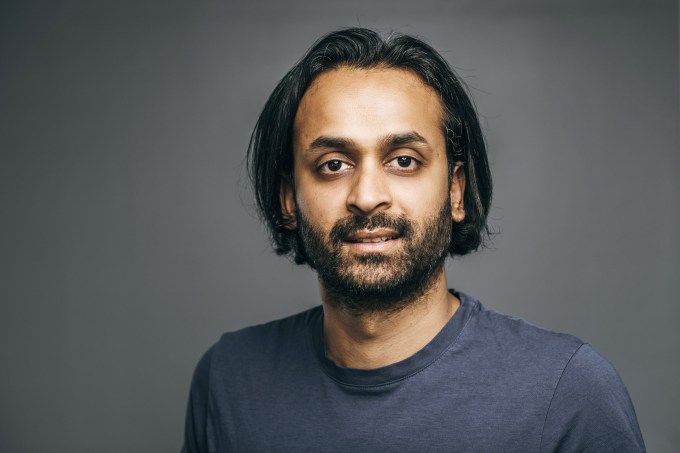
GoEuro — now Omio — founder and CEO, Naren Shaam

On the international expansion horizon, Omio says its considering expanding into South America, Asia and the U.S. Although Shaam says no decisions have yet been taken as to the regions and markets it might move into first.

He also readily accepts the goal of building a global travel aggregator is a long term mission, with the partnerships, engineering and legacy technology integrations that will have to underpin the expansion all requiring time (and money) to work through.

There’s also no suggestion that Omio intends to offer a more lightweight transport proposition as a strategy to elbow its way into new markets, either.

“If we go into the U.S. the goal is not to just offer another airline product,” he says. “There’s enough websites out there that do exactly that. So we will offer something different. And our competition will also be regional companies that offer something similar in each market.”

In a year’s time, Shaam says he hopes to have further deepened the platform’s coverage and usage in Europe — noting there are more transport dots to connect in markets including Portugal, Ireland, Norway, Sweden, plus parts of Eastern Europe (as well as “very heavily fragmented” bus providers in Spain and Italy).

By then he says he also wants to have “a clear answer to what are the two next big continents we want to expand into and have people that are ready to do that”.

So connecting the dots of intercity travel is very evidently a far slower-paced business than heavily VC-backed innercity transport plays — which have attracted multiple billions in funding in very short order thanks to fast usage velocity and revenue growth vs GoEuro’s modest (by contrast) ~$300M.

Nonetheless Shaam is convinced the intercity opportunity is still “a big market”. Perhaps not as massive as micromobility, ride-hailing and so on but still big and relatively under-invested, as he sees it.

So how will GoEuro as Omio approach scaling a travel business that is, necessarily, so very grounded in fixed and non-uniform transport infrastructure? He suggests the business will be able to draw on what is already years of experience integrating with transport providers of various types and sizes to support the new global push.

It’s developed what he describes as an “a la carte” menu of products for different sized travel providers — arguing this established menu of tools will help scale into new markets in fresh geographies, even while conceding there are other aspects of the business that will not be so easily replicable.

“Over time we built a lot of tooling that adapts to the different types of suppliers. So, for example, if you’re a large state-owned operator… that has very different systems built for decades basically vs a tiny bus company that runs from Naples to Positano that nobody even knows the name of or no technology it stands on we have different products that we offer to each of them.

“We have all the tooling built out so it’s basically ‘plug and play’ for us to do. So this thing doesn’t change. That’s portable.”

What will be new for Omio is international product market fit, with Shaam saying, for example, that it won’t necessarily be able to rely on the same sort of network effects it sees in Europe that help drive usage.

He also notes mobile penetration rates will differ — again requiring a different approach to serving customer needs in new regions such as Latin America.

“It’s not quick,” he concedes. “That’s why we’d rather launch now because I can’t tell you that in three months we’ll have had four more continents covered, right. This is a long term play but we’ve raised enough capital to make sure we’re here for that long term journey.”

“We have a name that people know and we can build technology,” he adds, expanding on what Omio can bring to the table as it tries to sell its platform to travel providers everywhere. “We’ve worked with 800+ suppliers. So from a commercial standpoint, people know who we are and how much scale we can bring in terms of their fixed cost businesses — so we can sell a lot of tickets for all of them. We can bring international tourists from a global audience. And we can really fill up seats. So people know that you put your supply on our product and we instantly scale because the existing demand is just so large.”

The Berlin-based startup closed a $150M funding round last fall so it’s not short of immediate resources to support the new hires it’ll be looking to add to start building out its global roadmap.

Shaam also notes it brought in more Asian capital with its last round, which he says he hopes will help “with this globalization capital”. Most of the investors it added then are also geared towards longer term returns vs traditional VC, he adds.

Omio is not currently in the process of raising another funding round, according to Shaam, though he confirms it does plan to raise more in future as it works towards the global vision of a single platform to help travellers move all over the world.

“The amount of capital that’s gone into intercity transport is tiny compared to innercity transport,” he notes. “That means that if you’re still going after a global problem that we want to solve that means that we need to raise capital at some point in the future. For now we’re just very comfortable with what we have but it doesn’t mean that we’ll stop.”

One potential future market Omio is likely to approach only very cautiously is China.

A b2c partnership with local travel booking platform Qunar, which GoEuro inked back in 2017, to link Chinese consumers with European travel opportunities, means Omio has a commercial reason to be sensitive of any moves into that market.

The complexity and challenge of going into China as an outsider is of course another major reason to go slow.

“I want to say very carefully that China is a market we need a lot more time to understand before we go into, as I think there’s enough lessons learned from all the tech companies from the West,” says Shaam readily. “It’s not going to be a rushed decision. So in that case the partnership with have with Qunar — I don’t see any changes in the near term because going into China is a big step for us. And it’s not an easy decision anyway.”


14 Feb 2019

Fitness startup Eastnine picks up £2M from LocalGlobe, Cherry Ventures, Niklas Zennström and others

Eastnine, a new fitness startup and app co-founded by London entrepreneur and investor Jason Goodman, is de-cloaking today, including disclosing that it has raised £2 million in seed funding.

Leading the round is London-based LocalGlobe and Berlin-based Cherry Ventures, who are joined by a list of prominent angel investors that includes Niklas Zennström, co-founder of Skype and London venture capital firm Atomico.

Also participating is former Spotify CMO and now Atomico Partner Sophia Bendz, Supercell founder Ilkka Paananen, Moo co-founder Richard Moross, Wonga founder Errol Damelin, and Climate Corp co-founder and Atomico Partner Siraj Khaliq, amongst others.

The links to current Atomico personnel, who have all invested in a personal capacity, shouldn’t come as a total surprise. Before co-founding Eastnine, Goodman spent a year as an Atomico Executive-in-Residence (XiR) where he mentored founders within the venture capital firm’s portfolio. Prior to Atomico, he was founder and CEO of product design agency Albion, which was acquired by KBS.

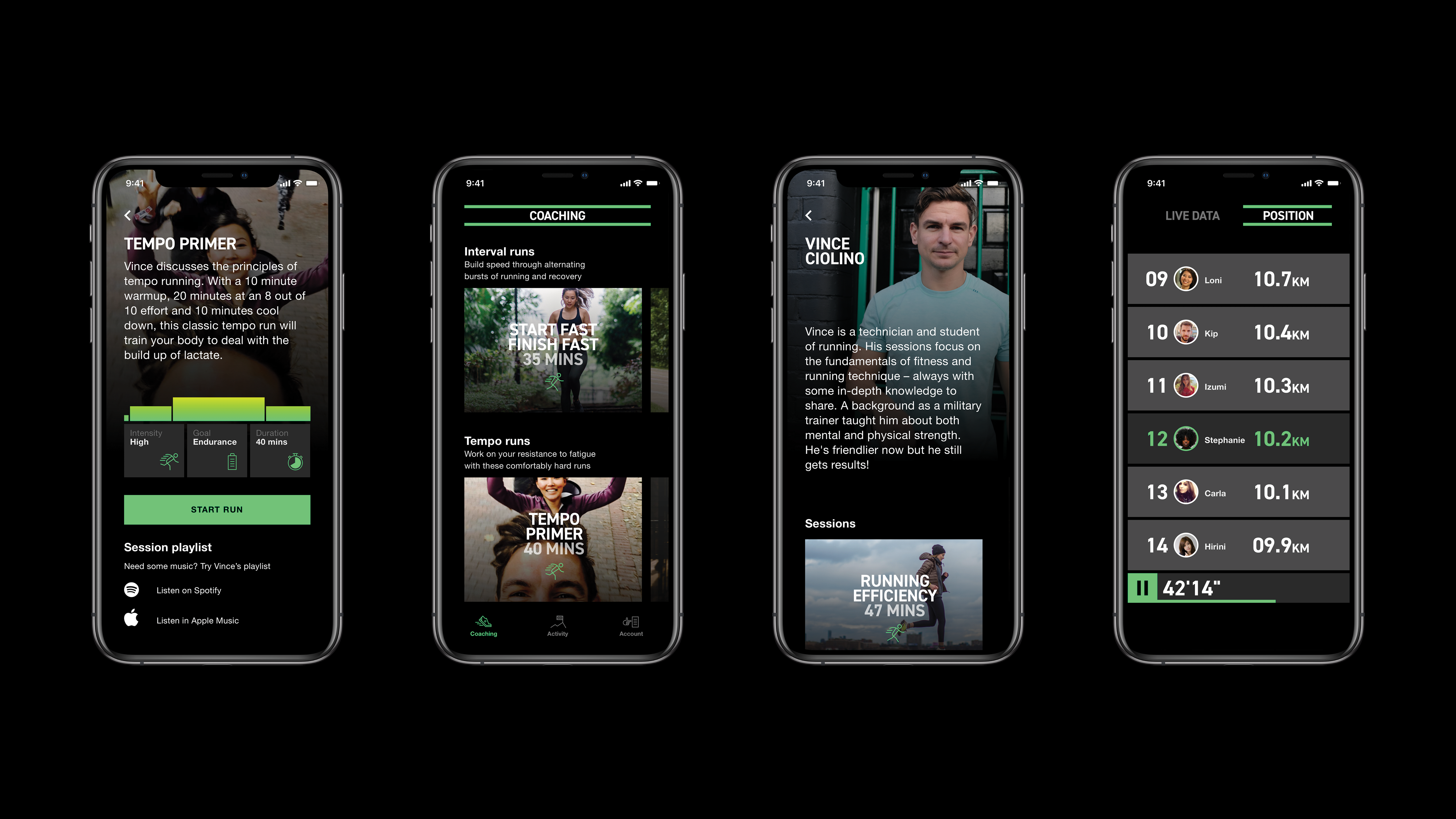
Launching in beta for iOS, the Eastnine app is initially focusing on running, blending professional coaching sessions delivered via audio with more innovative social features. The latter includes the ability to “race” against other Eastnine runners who have previously taken the same coaching session. The feature uses asynchronous session data, but is presented on a map in real-time, something akin to racing against an action replay.

The social element, explained Goodman in a call yesterday, is important to help motivate people to engage with and improve their fitness. That’s because running can often feel incredibly isolated and it is difficult to see an improvement because it can be slow to manifest.

“A daily run is hard to make a habit and can be inherently solitary,” says Goodman. “Doing it with others makes it enjoyable, purposeful and addictive. We’ve tried all sorts of apps, but they are linear and lonely and miss the extra push you get from doing it with others, on your terms. Our training experience combines the fun and sport of being surrounded by other Eastnine runners on a real-time leaderboard with [a] genuinely knowledgeable coaching approach that inspires people to run more and run better”.

(“Hate running but now actually doing it,” is how one London millennial founder described the Eastnine app, having taken part in the startup’s closed beta.)

More broadly, Goodman says he wants to disrupt the “con” in fitness and the way people approach fitness everyday. “We want to do this by helping to create the right habits, making it accessible, social and enjoyable,” he tells me, whilst bemoaning the number of charlatans that currently exist in the fitness space. He also believes the industry is crying out for a more British and quietly European approach, instead of the “shouty” coaching style often imported from North America.

The Eastnine coaching team is made up of qualified coaches from the world of professional sport. They include Team GB athletes JJ Jegede and Lewis Richardson; former professional rugby player Leo Savage; osteopath to elite sports professionals Alice Monger-Godfrey; and nutritionist to competitive cyclists and Ironman athletes Will Girling.

“The fitness industry on so many levels is a con,” says Goodman. “Too many products and services are sold to us in a way that suggests an immediate fix — but human nature means that when we don’t see results, or create the right habits, we don’t push on and make tangible progress. The real challenge is to learn the right habits that help us make real progress. The cons are well documented: gyms make profit on the users that don’t show up or cancel their membership and social media is full of pseudo celebrities selling the latest appetite suppressant lollipop that they have never used but are happy to endorse. The category is full of people saying one thing and trying to sell you something else”.

While in beta, the Eastnine app remains entirely free. However, the startup plans to eventually switch to a freemium model, with an optional monthly subscription similar to Calm or Headspace that can be canceled at any time. “We want as many people using it as possible so we can develop the service with our members feedback,” adds Goodman. “We’ll use a freemium approach so a portion of content will always be free”.

Meanwhile, it would be remiss not to mention Eastnine’s other co-founders. They are David McCreary, previously VP Engineering of Boiler Room and Senior Software Engineer at NextVR; Cat Forrest, former international GB high jumper, Rapha cycling ambassador and marketeer at Virgin Group; and Matt Harrison, previously Strategy Director at innovation agency Seymourpowell.

14 Feb 2019

Thailand’s Jitta raises $6.5M to develop an algorithm-powered wealth fund

Jitta, a Bangkok-based fintech startup, has announced a $6.5 million Series A round as it prepares to launch an investment fund for consumers in what would be a first for the Thai market.

The deal is one of the largest Series A in Thailand for some time and it was led by Beacon Venture Capital, the $30 million fund attached to Thailand’s Kasikorn Bank. Beacon picked up the majority of the capital but an existing angel investor, whose identity was not disclosed, also took part. Kasikorn and Jitta are not actively collaborating at this point, but there is obviously the potential to do so in the future.

Founded in 2014, Jitta has developed a proprietary algorithm that helps to identify investment options on a range of stock markets that include the U.S., Thailand and other parts of Asia. The company started out offering a freemium intelligence product that allowed professional, or at least serious, investors tap its technology to find undervalued stocks or investments that are poised for growth.

To do that, it uses an algorithm that analyses a range of factors that include earnings reports and business analysis to create a ranking on how under-valued a stock is. Human analysts check over the computer-generated result to ensure against anomalies or outliers. The company is anchored around Warren Buffett’s “wonderful company at a fair price” thesis.

The recommendations engine, which is boosted by intelligence reports penned by in-house analysts, helped Jitta to gain a core base of paying users in Thailand, Singapore and the U.S., CEO and co-founder Trawut Luangsomboon told TechCrunch in an interview, but it struggled to appeal to paying users outside of serious traders. Confident in the company’s ability to perform — Luangsomboon said Jitta has beaten the S&P and other indicators using predictions on past data — it stopped offering a paid-for subscription for the intelligence service and began trialing a wealth fund in partnership with an asset management firm.

The thinking behind the fund — Jitta Wealth — is to offer a passive investment option to users who have don’t have the time or confidence to invest by themselves. Instead, they simply put money into Jitta Wealth and let the company worrying about making money. Jitta’s pricing means it is incentivized to do just that. Customers will be charged a 0.5 percent management fee and, at the end of the year, Jitta will take a 10 percent cut of their profit.

Those fees are lower than most funds and based on success, such is the company’s confidence in its algorithm and expertise. The fund will offer exposure to stocks in the U.S., Thailand and frontier market Vietnam which together represent different levels of risk and reward, Jitta’s CEO explained.

Jitta is awaiting SEC approval to launch the service, but Luangsomboon is confident that it will go live in Q2. Already, he said, it has a waitlist of some 20,000 people.

The company is sticking to Thailand right now, but its stock analysis product — which covers 16 countries — is likely to be expanded into new markets this year, with India and Singapore on the horizon. Luangsomboon told TechCrunch that the expansions will be carried out in conjunction with local partners in both countries. Further down the line, the company will look to develop overseas funds once it feels it has built a local reputation among trading professionals and proven its technology. That’s likely to be something in the region of one to two years away.

International expansion aside, Jitta plans to use its new capital to increase its headcount of 25 right now. In particular, it is looking for engineers to refine its algorithms and tech, as well as business development and sales hires.

14 Feb 2019

Romance scams cost more money than any other type of consumer fraud, says the Federal Trade Commission

The Federal Trade Commission has released data that shows romance scams cost more money than other types of consumer fraud reported to the agency last year—and the problem is getting worse. Romance scammers target people through dating sites and apps or social media, often using fake profiles and sob stories to convince victims to send them large amounts of money.

The number of romance scams reported to the FTC increased from 8,500 in 2015 to 21,000 last year. Reported losses from these scams grew more than four times, from $33 million in 2015 to $143 million last year. The figures for 2018 are based on 21,368 reports submitted to FTC’s Consumer Sentinel, a database of consumer complaints.

Romance scams were particularly costly for individual victims. The median loss reported by romance scam victims was $2,600, or seven times higher than the median loss across other types of fraud. People between the ages of 40 to 69 reported losing money to romance scams at twice the rate of people in their 20s, but the elderly lost larger amounts, with victims aged 70 and over reporting the biggest median losses at $10,000.

The FTC says the majority of victims were asked to wire money, while the second largest group were asked to use gift or reload cards like Moneypak, which are all methods that are quick, usually difficult to reverse, and allow recipients to remain anonymous. Romance scammers often claim they need money for medical and other emergencies, and come up with excuses about why they can’t meet with their targets in person, for example claiming to be in the military and stationed abroad or not having enough funds to travel.

To prevent being victimized, the FTC suggests doing a reverse image search of profile photos to check if a profile is fake, not sending money to people you haven’t met in person, and being open with family and friends about online relationships.