Author: azeeadmin

13 Feb 2019

Autonomous truck startup TuSimple hits unicorn status in latest round

Another autonomous vehicle unicorn has joined the herd.

TuSimple, a self-driving truck startup running daily routes for customers in Arizona, has raised $95 million in a Series D funding round led by Sina Corp. as the company prepares to scale up its commercial autonomous fleet to more than 50 trucks by June.

The startup, which launched in 2015 and has operations in San Diego and Tucson, Arizona, has a post-money of $1.095 billion (aka unicorn status). TuSimple has raised $178 million to date in rounds that have included backers such as Nvidia and ZP Capital. Sina, operator of China’s biggest microblogging site Weibo, is one of TuSimple’s earliest investors. Composite Capital, a Hong Kong-based investment firm and previous investor, also participated in this latest round.

TuSimple launched when the burgeoning AV ecosystem of investors, academics turned entrepreneurs, and early self-driving tech pioneers, were focused more on the development of autonomous passenger vehicles, namely robotaxis.

Autonomous trucking existed in relative obscurity until high-profile engineers from Google launched Otto, a self-driving truck startup that was quickly acquired by Uber in August 2016. Then came the reveal of the Tesla Semi and the founding of several autonomous trucking startups including Starsky Robotics and Embark.

Suddenly, it seemed people had woken up to the economic opportunity that could be achieved — just maybe — with trucks.

Meanwhile, TuSimple quietly scaled. In late 2017, TuSimple raised $55 million with plans to use those funds to scale up testing to two full truck fleets in China and the U.S. By 2018, TuSimple started testing on public roads, beginning with a 120-mile highway stretch between Tucson and Phoenix in Arizona and another segment in Shanghai.

“Autonomous driving is one of the most complex AI systems humans have ever built. After three years of intense focus to reach our technical goals, we have moved beyond research into the serious work of building a commercial solution,” TuSimple founder, president and CTO Xiaodi Hou said.

Today, TuSimple is taking three to five fully autonomous trips per day for customers on three different routes in Arizona. All of these trips have two safety engineers, one who is behind the wheel, and another monitoring the data pouring in during each trip. TuSimple says these daily trips allow it to earn revenue while it validates its Level 4 autonomous system, a designation by SAE that means the vehicle takes over all of the driving in certain conditions. TuSimple has 12 contracted customers.

Now, it’s ready to ramp up further, in terms of its fleet size and partnerships. TuSimple plans to expand its daily “fully-autonomous” commercial deliveries to Texas. The company also plans to use this influx of capital to fund what it describes as “critical joint production programs” with OEM, Tier 1 suppliers and sensors partners. Truck manufacturing suppliers are working with TuSimple on the integration of autonomous software with powertrain, braking and steering systems. The company says this is “an essential step for the commercial production and operation of self-driving trucks.”

TuSimple isn’t disclosing its customers or even suppliers yet. Although, TuSimple did reveal last month at CES that it’s working with Tier 1 supplier Cummins Inc. to enable powertrain integration with its autonomous technologies.

TuSimple’s focus on cameras

Other AV companies, namely low-speed autonomous passenger vehicles have focused on LiDAR (light detection and ranging lasers) to improve the perception of the vehicle, arguably one of the most difficult tasks of automated driving. But for TuSimple, “laser isn’t the sauce.”

Instead, TuSimple has developed a camera-centric perception solution. The company does use LiDAR for its mapping and some data collection. However, LiDAR has its limitations in the high-speed world of trucking, Hou explained to TechCrunch in a previous interview.

Even its name, which is an interlingual pun that essentially means “simple image” or simple image analysis, affirms TuSimple’s approach.

It appears that has paid off. LiDAR can detect objects like cars to about 250 meters, although the optimal quality falters past 150 meters. TuSimple says its camera-based system has a vision range of 1,000 meters.

As a reluctant participant in AV demos, this TechCrunch reporter headed to TuSimple’s Tucson operations recently armed with lots of curiosity and a healthy dose of skepticism.

The TuSimple truck, two safety engineers in the front, and Hou and myself in the back of the cab, entered into autonomous mode in the company parking lot as it approached a surface road. From here, the truck drove the route in autonomous mode for the entire 65-mile or so trip. This route began with a left turn onto a surface road, then onto an unprotected left at a traffic light, a railroad crossing, and finally an entrance onto the highway. The truck continued for 30 miles before exiting the interstate, then maneuvering back onto the highway from the trip back.

A display in the cab allowed us to see what the truck was seeing, or more specifically what the camera-based system sees. TuSimple’s camera combined with software algorithms allows the system to track distance, relative speed and vehicle type of the various objects spotted while on the road and has an intention prediction feature that allows the vehicle to understand what those objects might do.

The end result, at least for this demo, was a ride along in an autonomous truck that was able to accomplish a number of complicated tasks, including anticipating congestion ahead and making a lane change in a smooth, uninterrupted movement — no disc braking necessary.
13 Feb 2019

Autonomous truck startup TuSimple hits unicorn status in latest round

Another autonomous vehicle unicorn has joined the herd.

TuSimple, a self-driving truck startup running daily routes for customers in Arizona, has raised $95 million in a Series D funding round led by Sina Corp. as the company prepares to scale up its commercial autonomous fleet to more than 50 trucks by June.

The startup, which launched in 2015 and has operations in San Diego and Tucson, Arizona, has a post-money of $1.095 billion (aka unicorn status). TuSimple has raised $178 million to date in rounds that have included backers such as Nvidia and ZP Capital. Sina, operator of China’s biggest microblogging site Weibo, is one of TuSimple’s earliest investors. Composite Capital, a Hong Kong-based investment firm and previous investor, also participated in this latest round.

TuSimple launched when the burgeoning AV ecosystem of investors, academics turned entrepreneurs, and early self-driving tech pioneers, were focused more on the development of autonomous passenger vehicles, namely robotaxis.

Autonomous trucking existed in relative obscurity until high-profile engineers from Google launched Otto, a self-driving truck startup that was quickly acquired by Uber in August 2016. Then came the reveal of the Tesla Semi and the founding of several autonomous trucking startups including Starsky Robotics and Embark.

Suddenly, it seemed people had woken up to the economic opportunity that could be achieved — just maybe — with trucks.

Meanwhile, TuSimple quietly scaled. In late 2017, TuSimple raised $55 million with plans to use those funds to scale up testing to two full truck fleets in China and the U.S. By 2018, TuSimple started testing on public roads, beginning with a 120-mile highway stretch between Tucson and Phoenix in Arizona and another segment in Shanghai.

“Autonomous driving is one of the most complex AI systems humans have ever built. After three years of intense focus to reach our technical goals, we have moved beyond research into the serious work of building a commercial solution,” TuSimple founder, president and CTO Xiaodi Hou said.

Today, TuSimple is taking three to five fully autonomous trips per day for customers on three different routes in Arizona. All of these trips have two safety engineers, one who is behind the wheel, and another monitoring the data pouring in during each trip. TuSimple says these daily trips allow it to earn revenue while it validates its Level 4 autonomous system, a designation by SAE that means the vehicle takes over all of the driving in certain conditions. TuSimple has 12 contracted customers.

Now, it’s ready to ramp up further, in terms of its fleet size and partnerships. TuSimple plans to expand its daily “fully-autonomous” commercial deliveries to Texas. The company also plans to use this influx of capital to fund what it describes as “critical joint production programs” with OEM, Tier 1 suppliers and sensors partners. Truck manufacturing suppliers are working with TuSimple on the integration of autonomous software with powertrain, braking and steering systems. The company says this is “an essential step for the commercial production and operation of self-driving trucks.”

TuSimple isn’t disclosing its customers or even suppliers yet. Although, TuSimple did reveal last month at CES that it’s working with Tier 1 supplier Cummins Inc. to enable powertrain integration with its autonomous technologies.

TuSimple’s focus on cameras

Other AV companies, namely low-speed autonomous passenger vehicles have focused on LiDAR (light detection and ranging lasers) to improve the perception of the vehicle, arguably one of the most difficult tasks of automated driving. But for TuSimple, “laser isn’t the sauce.”

Instead, TuSimple has developed a camera-centric perception solution. The company does use LiDAR for its mapping and some data collection. However, LiDAR has its limitations in the high-speed world of trucking, Hou explained to TechCrunch in a previous interview.

Even its name, which is an interlingual pun that essentially means “simple image” or simple image analysis, affirms TuSimple’s approach.

It appears that has paid off. LiDAR can detect objects like cars to about 250 meters, although the optimal quality falters past 150 meters. TuSimple says its camera-based system has a vision range of 1,000 meters.

As a reluctant participant in AV demos, this TechCrunch reporter headed to TuSimple’s Tucson operations recently armed with lots of curiosity and a healthy dose of skepticism.

The TuSimple truck, two safety engineers in the front, and Hou and myself in the back of the cab, entered into autonomous mode in the company parking lot as it approached a surface road. From here, the truck drove the route in autonomous mode for the entire 65-mile or so trip. This route began with a left turn onto a surface road, then onto an unprotected left at a traffic light, a railroad crossing, and finally an entrance onto the highway. The truck continued for 30 miles before exiting the interstate, then maneuvering back onto the highway from the trip back.

A display in the cab allowed us to see what the truck was seeing, or more specifically what the camera-based system sees. TuSimple’s camera combined with software algorithms allows the system to track distance, relative speed and vehicle type of the various objects spotted while on the road and has an intention prediction feature that allows the vehicle to understand what those objects might do.

The end result, at least for this demo, was a ride along in an autonomous truck that was able to accomplish a number of complicated tasks, including anticipating congestion ahead and making a lane change in a smooth, uninterrupted movement — no disc braking necessary.

13 Feb 2019

BuzzFeed News employees vote to unionize

Shortly after BuzzFeed News employees revealed that they had voted to unionize, its editor-in-chief said the company wants to meet with them to discuss voluntarily recognition. Employees announced today that they are organizing as BuzzFeed News Union under the NewsGuild of New York.

“Our staff has been organizing for several months, and we have legitimate grievances about unfair pay disparities, mismanaged pivots and layoffs, weak benefits, skyrocketing health insurance costs, diversity, and more,” says a mission statement posted to BuzzFeed News Union’s site. It adds that employees have been meeting for years and ramped up its efforts last fall when BuzzFeed laid off video staffers and its podcast team. Organizing efforts gained more urgency two weeks ago, when BuzzFeed cut 15 percent of its workforce, or about 250 jobs.

BuzzFeed News’ deputy news director Jason Wells reports that the publication’s editor-in-chief, Ben Smith, told employees “we look forward to meeting with the organizers to discuss a way toward voluntarily recognizing their union.”

Wells’ notes that BuzzFeed News is “on track to be one of the last major newsrooms to unionize in the wake of industry pressures that have shrunk many media outlets.” Other outlets with new employee unions include HuffPost and the Los Angeles Times. The NewsGuild of New York also represents the New York Times, Reuters, the Daily Beast and the Los Angeles Times.

In their mission statement, BuzzFeed News Union’s organizers said they want an agreement that “requires due process for termination, a diverse newsroom, reasonable severance amid layoffs, a competitive 401(k), rights to our creative works, and affordable health insurance.”

It also calls on BuzzFeed News’ management to address pay gaps and give employees on contract, or “permalancers, who are paid through a third party but are functionally members of our team,” the same treatment as other staff.

BuzzFeed CEO Jonah Peretti said during a 2015 company meeting that he didn’t think “a union is right for BuzzFeed,” though his recent response to employees demanding that the company compensate their laid-off colleagues for unused paid time off make signal a more conciliatory approach. After the meeting, BuzzFeed News paid out all unused vacation and comp days to laid-off staff even in states they are not legally required to do so.

13 Feb 2019

It isn’t just apps. China’s cinemas broke records during Lunar New Year

China celebrated Lunar New Year last week as hundreds of millions of people travelled to their hometowns. While many had longed to see their separated loved ones, others dreaded the weeklong holiday as relatives awkwardly caught up with them with questions like: “Why are you not married? How much do you earn?”

Luckily, there are ways to survive the festive time in this digital age. Smartphone usage during this period has historically surged. Short video app TikTok’s China version Douyin noticeably took off by acquiring 42 million new users over the first week of last year’s holiday, a report from data analytics firm QuestMobile shows. Tencent’s mobile game blockbuster Honor of Kings similarly gained 76 percent DAUs during that time, according to another QuestMobile report.

People also hid away by immersing themselves in the cinema during the Lunar New Year, a movie-going period akin to the American holiday season. This year, China wrapped up the first six days of the New Year with a record-breaking 5.8 billion ($860 million) yuan box office, according to data collected by Maoyan, Alibaba’s movie ticketing service slated for an initial public offering.

The new benchmark, however, did not reflect an expanding viewership. Rather, it came from price hikes in movie tickets, market research firm EntGroup suggests. On the first day of Year of the Pig, tickets were sold at an average of 45 yuan ($6.65), up from 39 yuan last year. That certainly put some price-sensitive audience off — though not by a huge margin as there wasn’t much to do otherwise. (Shops were closed. Fireworks and firecrackers, which are traditionally set off during the New Year to drive bad spirits away, are also banned in most Chinese cities for safety concerns.) Cinemas across China sold 31.69 million tickets on the first day, a slight decline from last year’s 32.63 million.

Dawn of Chinese sci-fi

wandering earth 2

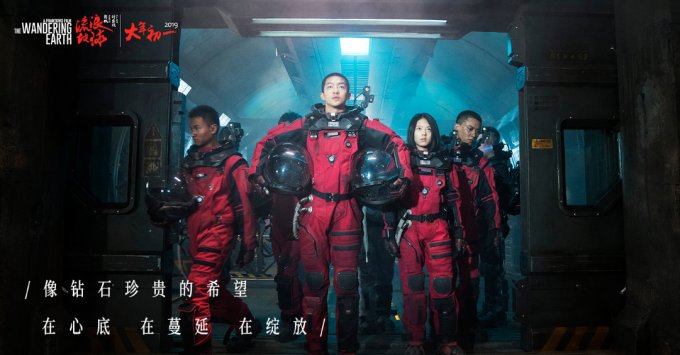
Image source: The Wandering Earth via Weibo

Many Chinese companies don’t return to work until this Thursday, so the box office results are still being announced. Investment bank Nomura put the estimated total at 6.2 billion yuan. What’s also noticeable about this year’s film-inspired holiday peak is the fervor that sci-fi The Wandering Earth whipped up.

American audiences may find in the Chinese film elements of Interstellar’s space adventures, but The Wandering Earth will likely resonate better with the Chinese audience. Adapted from the novel of Hugo Award-winning Chinese author Liu Cixin, the film tells the story of the human race seeking a new home as the aging sun is about to devour the earth. A group of Chinese astronauts, scientists and soldiers eventually work out a plan to postpone the apocalypse — a plot deemed to have stoke Chinese viewers’ sense of pride, though the rescue also involves participation from other nations.

The film, featuring convincing special effects, is also widely heralded as the dawn of Chinese-made sci-fi films. The sensation gave rise to a wave of patriotic online reviews like “If you are Chinese, go watch The Wandering Earth” though it’s unclear whether the discourse was genuine or have been manipulated.

Alibaba’s movie powerhouse

This record-smashing holiday has also been a big win for Alibaba, the Chinese internet outfit best known for ecommerce and increasingly cloud computing. Its content production segment Alibaba Pictures has backed five of the movies screened during the holiday, one of which being the blockbuster The Wandering Earth that also counts Tencent as an investor.

Tech giants with online streaming services are on course to upend China’s film and entertainment industry, a sector traditionally controlled by old-school production houses. In its most recent quarter, Alibaba increased its stake to take majority control in Alibaba Pictures, the film production business it acquired in 2014. Tencent and Baidu have also spent big bucks on content creation. While Tencent zooms in on video games and anime, Baidu’s Netflix-style video site iQiyi has received wide acclaim for house-produced dramas like Yanxi Palace, a smash hit drama about backstabbing concubines that was streamed over 15 billion times.

Seeing all the entertainment options on the table, the Chinese government made a pre-emptive move against the private players by introducing a news app designed for propaganda purposes in the weeks leading to the vacation.

“The timing of the publishing of this app might be linked to the upcoming Chinese New Year Festival, which the Chinese Communist Party sees as an opportunity and a necessity to spread their ideology,” Kristin Shi-Kupfer, director of German think tank MERICS, told TechCrunch earlier. “[It] may be hoping that people would use the holiday season to take a closer look, but probably also knowing that most people would rather choose other sources to relax, consume and travel.”

13 Feb 2019

DoorDash subsidizes driver wages with tips

It’s true that DoorDash offsets the amount it pays its drivers with customer tip, according to an FAQ page on its own site.

“For each delivery, you will always receive at least $1 from DoorDash plus 100% of the customer tip,” DoorDash states on a Dasher FAQ page. “Where that sum is less than the guaranteed amount, DoorDash will provide a pay boost to make sure you receive the guaranteed amount. Where that sum is more than the guaranteed amount, you pocket the extra amount.”

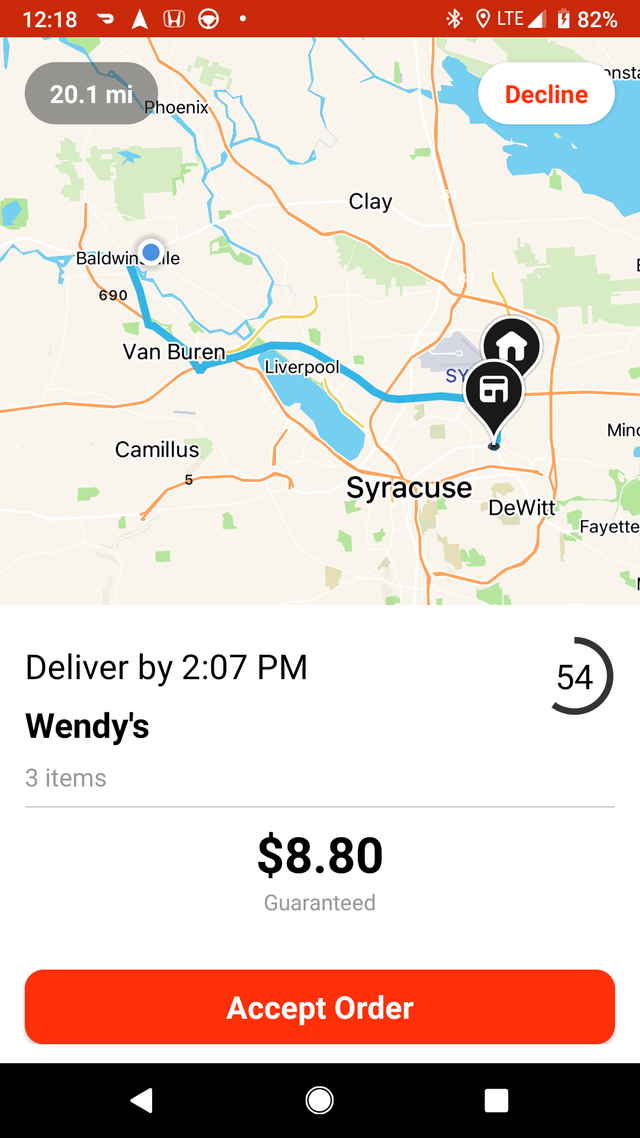
To be clear, drivers see the guaranteed amount in the app before deciding to accept or reject the order. That amount is based on the size of the order, whether or not you have to place the order in person, distance away, traffic and other factors.

On another page, DoorDash describes its payment structure as follows: $1 plus customer tip plus pay boost, which varies based on the complexity of order, distance to restaurants and other factors. It’s only when a customer doesn’t tip at all, which DoorDash told Fast Company happens about 15 percent of the time, that DoorDash is on the hook to pay the entire guaranteed amount.

Here’s an example of what Dashers see:

“DoorDash doesn’t show workers what part of the ‘guarantee’ is from tip and what part is from DoorDash,” Sage Wilson of labor organization Working Washington told TechCrunch in an email. “(Instacart’s old policy did show this, which is why it was easier to demonstrate.) So that’s exactly where their “transparency” stops— at the point when it’s clear they’re taking tips.”

And just because DoorDash is upfront about parts of its practice, it doesn’t mean drivers are okay with it. There’s a webpage, Reddit and Subreddits that all describe DoorDash’s practices.

On the website, No Tip Doordash, it states:

While the tip may technically be going to the driver, it is only replacing the normal delivery pay. Your tip saves doordash money, and it is not increasing the drivers pay. Please tip in cash, if available.

In a statement to Bloomberg, DoorDash said it implemented this policy to “ensure that Dashers are more fairly compensated for every delivery.”

This comes shortly after Instacart apologized and announced it would stop engaging in that practice. In a blog post last week, Instacart CEO Apoorva Mehta said all shoppers will now have a guaranteed higher base compensation, paid by Instacart. Depending on the region, Instacart says it will pay shoppers between $7 to $10 at a minimum for full-service orders (shopping, picking and delivering) and $5 at a minimum for delivery-only tasks. The company will also stop including tips in its base pay for shoppers.

Amazon also reportedly engages in this practice, according to The Los Angeles Times.

I’ve reached out to DoorDash and will update this story if I hear back.

This story has been updated to reflect comments from Working Washington organizer Sage Wilson.

13 Feb 2019

No, your tweets aren’t awful. Twitter’s Likes are currently borked.

If you have been experiencing issues with the Like or Retweet count on Twitter and are desperately seeking validation, here it is: yes, it’s Twitter, not you (probably). The company confirmed today that it is working on a fix for a problem with notifications that’s been messing with Like counts.

Many users around the world have reported seeing the number of Likes on their tweets fluctuate continuously, making them wonder if accounts were being suspended in mass or if Twitter was deleting them.

Twitter did not say when the issue began, but based on a careful study of Twitter search results, and not on my own desperate longing for validation from internet strangers, the issue has been going on for almost a day.

13 Feb 2019

Jim Steyer runs the powerful nonprofit Common Sense Media, and he’s increasingly using his influence around tech consumption

California Governor Gavin Newsom earlier today proposed a so-called digital dividend that would let consumers share in the profits generated by California-based tech companies that have been “collecting, curating and monetizing” their users’ personal data. Newsom added that he has asked his administration to develop a proposal for a “new data dividend for Californians, because we recognize that data has value, and it belongs to you.”

It’s an idea that tech companies will surely argue against if it begins to take shape beyond a talking point, but it has at least one early proponent: Jim Steyer, the founder and CEO of the hugely popular,15-year-old nonprofit organization Common Sense Media. In fact, says Steyer, the idea is his, and Common Sense, which also has powerful advocacy and educational arms, is working on related legislation right now.

Steyer’s involvement in the background might surprise some of the 125 million people who visit the site each year for advice on what movies, shows, apps, and games are age appropriate for their children. But it’s well-known to executives in politics, media, and tech,who Steyer has befriended and sometimes harangued, all in the pursuit of putting children first, he suggests.

As renowned GOP strategist Mark McKinnon told Politico in 2014, Steyer knows everyone, and he doesn’t shy from tapping his vast network when he wants to get something done. In fact, McKinnon told the outlet that he couldn’t remember how he came into Steyer’s orbit initially, but that their meeting was no accident. “He figured I could help him, and he found me . . . He’s connected to more big names than Kevin Bacon.”

We talked with Steyer today as he was en route to the airport in New York to talk with him Common Sense’s reach, how he views tech, and the ways he has been using his powerful platform in ways that might surprise. Our chat with Steyer (who is big brother of billionaire hedge fund manager Tom Steyer) has been edited for length and clarity.

TC: You have 300 employees, 125 million unique users, and you’ve said that Common Sense’s research-based curriculum and tools are used in over 75,000 U.S. schools. Are people constantly trying to persuade you to turn Common Sense into a for-profit venture?

JS: Forever. All the time. But we’re Switzerland. It’s important to us that you can’t buy our reviews and ratings, even if you’re [CEO] Bob Iger at Disney. We’re there for parents who need an independent resource about TVs, movies, video games, books, cells phones, social media. Our mission is to make children the number one priority in our society.

TC: And you’re financed–

JS: We’re extremely well-financed because we license our ratings to Comcast, to Charter, Cox, Netflix. They all use us, but we’re also their biggest critics on the advocacy front.

TC: I didn’t realize what a political force Common Sense has become, by your telling.

JS: We’re the biggest advocates for [Governor Gavin} Newsom’s early-childhood agenda. We wrote the privacy law that passed in California last year [and offers California consumers sweeping new internet privacy protections beginning next year]. Gavin announced the data dividend today in today’s address; we’re about to introduce legislation on this.

TC: Why this for your life’s work?

JS: Because I was a school teacher in Harlem in the South Bronx. Then I ran the NAACP Legal Defense Fund and started [my first advocacy venture] Children Now [in 1988]. My life’s work has been kids, and there was nobody doing anything like what Common Sense does. There were advocacy groups, but our goal was really to create the AARP for kids.

TC: You went to high school with Roger McNamee, who has written a new book called “Zucked” about the damage Facebook has wreaked on society. We talked with him about it last week. What did you think of the book?

JS: I’m in the book. Did you read the whole thing?  Roger and Tristan [Harris, a former design ethicist at Google who is now the director and a co-founder of The Center for Humane Technology] were based out of our office for a year.

I wrote “Talking Back to Facebook,” which basically said the same thing, in 2012. You could see it coming way before “Zucked,” which I told Roger, who was a terrible guitarist in high school, by the way. You can quote me on that. He’s my good friend but he was terrible.

TC: You have four kids. What’s your stance on technology?

JS: My stance? It’s limit it. Set clear rules and follow them. The world of tech and social media is here to stay. The genie is out of the bottle. So you have to come up with a healthy tech diet. You have kids? Don’t let them have cell phones. Delay, delay, delay, baby.  The Steyer kids didn’t get a cell phone until high school. Except the fourth. You get tired. He’s also a true digital native, where the older kids have graduated from Stanford and I ask them, Aren’t you glad you didn’t have phones earlier on? You turned out okay.

TC: We’re having that battle right now with our 11-year-old. In fact, I’m on Common Sense maybe 10 times a week doing research to counter his arguments. The platform does seem conservative when it comes to age appropriateness.

JS: We’re rating things for people wnot just who live in San Francisco but who live in Greenville, South Carolina and rural Alabama and in Kabul, Afghanistan. We don’t presuppose that local standards are the same everywhere. That said, we understand that you might subtract a year or two from our recommendations. My own children did that.

TC: What’s the fastest-growing aspect of your content? Is it around social media?

JS: A lot of interest centers on social media — Instagram, Snapchat. People are also very focused on where their kids now watch TV, which is YouTube .

TC: YouTube is very actively driving me crazy right now.

JS: It should be. There are many disgraceful elements and I tell Sundar [Pichai] and Susan [Wojcicki] and they would like to help us. They know it’s a huge pain point.

TC: You sound like Roger McNamee, who talks about Mark Zuckerberg and Sheryl Sandberg eventually seeing the light. Does Google want to work with you? Do you think these platforms should be regulated?

JS: We want to regulate them and we want to work with them. I like Sundar. I like Ruth [Porat, Google’s CFO]. I like the people running Google more than their predecessors, who I also know quite well. But YouTube is the single-most popular platform for kids these days and there are zero controls, zero rules. It’s a completely unregulated environment.

TC: How does Common Sense approach the morass that is YouTube? How can you help parents steer through the content?

JS: We’re looking at the whole picture right now and taking a holistic approach. Sundar is a power user; he has three kids. Susan is my friend. She has five kids. We go to football games together. We are having that discussion. They know it’s a big deal.

TC: And Mark Zuckerberg? Sheryl Sandberg? What’s your take on Facebook, more than six years after writing your book? 

JS: I think all this pressure is an existential threat to their brand. Last year, they were largely mute. Even though they didn’t like when we wrote and passed that privacy act they stayed out of it, because their brand has been so tarnished. Parents know they can’t trust their kids with Facebook and Instagram. And [Instagram founders] . Kevin [Systrom] and Mike Krieger have left. Jan Koum of WhatsApp has left. Its record speaks for itself.

We have a complicated relationship because of my book and because we refuse to partner with them. We work through political efforts instead.  Do I get invited to Sheryl’s Hanukkah party any more? No.

I respect their extraordinary success. We’ve just disagreed with them on so many levels for so long that I wrote a book about them and I was right. Go read it. You can probably find it for $2.

TC: Is Amazon part of Common Sense Media’s purview?

JS: We highlight kids making purchases without their parents’ knowledge all the time. This is a brave new world, and we’re trying to bring some order to the chaos.

There’s a lot of this libertarian ethos in Silicon Valley that I don’t agree with. The consequences for kids are too steep. It’s been ‘damn the torpedoes, full speed ahead.’  And the chickens are coming home to roost.

13 Feb 2019

Investors are still failing to back founders from diverse backgrounds

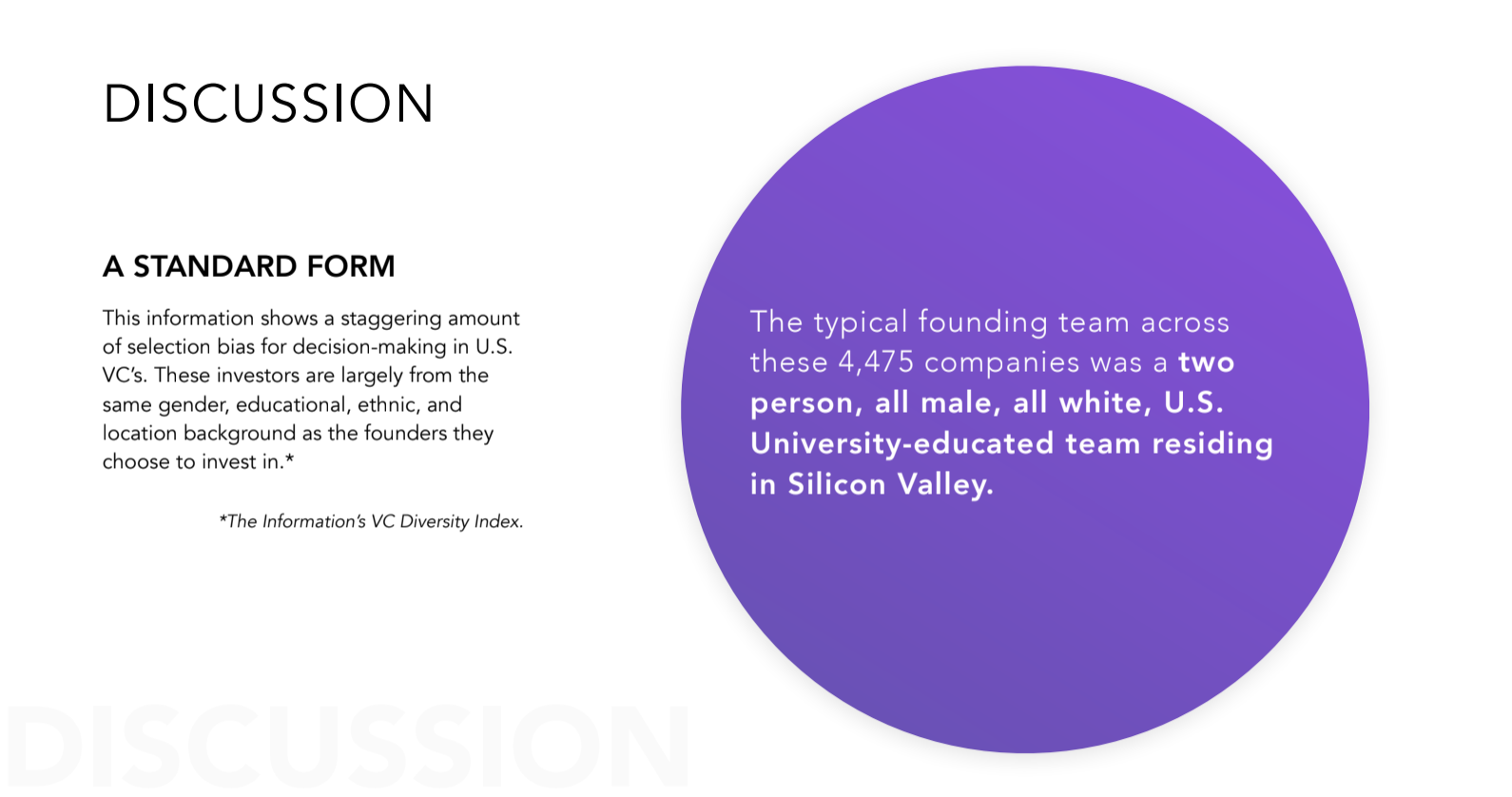
The large majority of venture dollars are invested in companies run by white men with a university degree, according to a new report by RateMyInvestor and Diversity VC.

This new data reveals that despite the lip service investors have paid to backing founders from diverse backgrounds, much, much, more work needs to be done to actually achieve the industry’s stated goals. It also shows the vast gulf that separates the meritocratic myth that Silicon Valley has created for itself from the hard truths of its natural nepotistic state.

In 2017, venture capital investment reached $84.24 billion, a height not seen since the dot-com bubble of the early 2000s. The data from RateMyInvestor and Diversity VC covers a survey of the seed to Series D investments made during that year from what the two organizations selected as the top 135 firms by deal activity. Those firms invested in 4,475 companies, which collectively included 9,874 co-founders, according to the report.

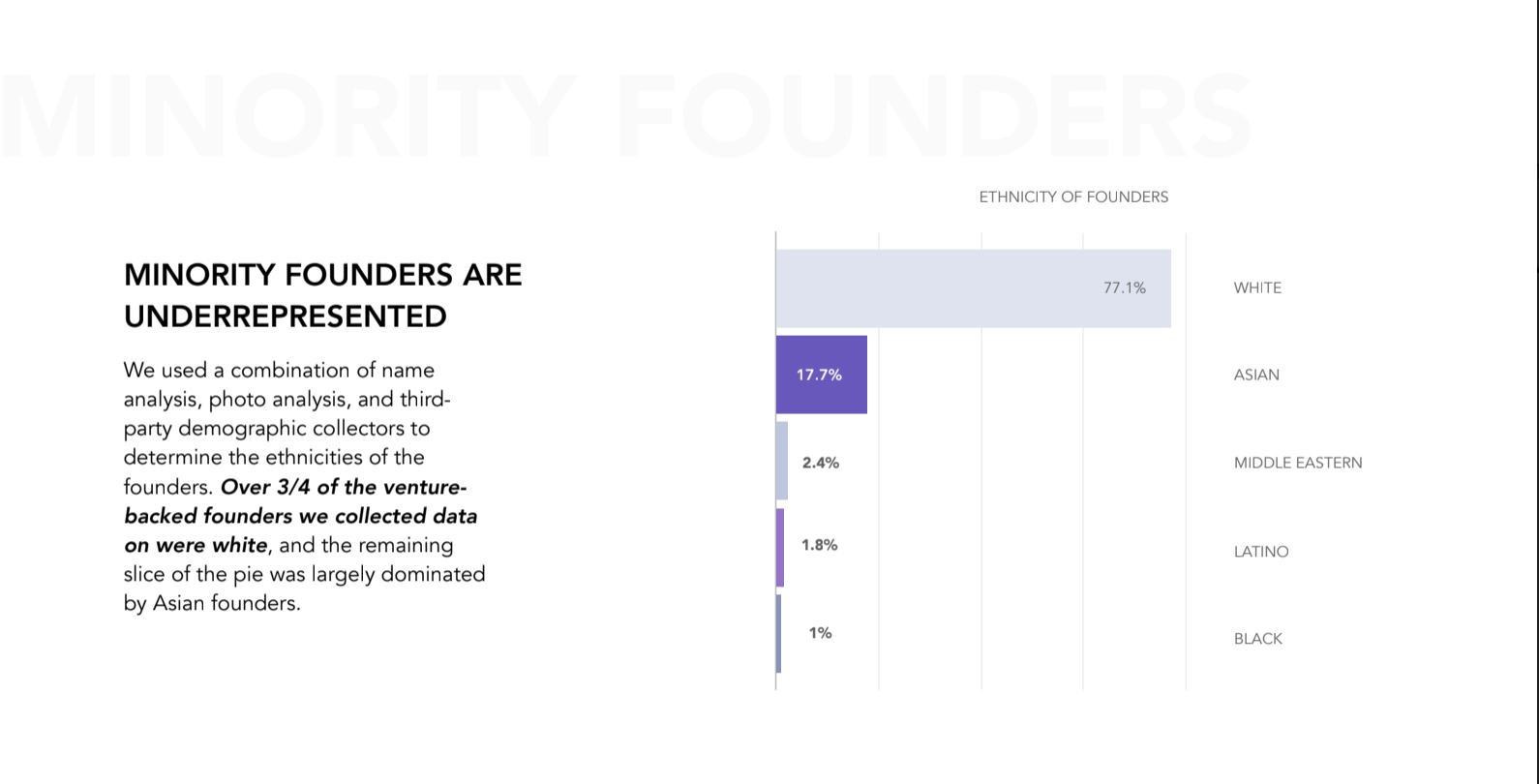
Of those co-founders only 9 percent were women, while 17 percent identified as Asian American, 2.4 percent identified as Middle Eastern, 1.9 percent identified as Latinx and 1 percent identified as black.

“VCs should make more of a deliberate effort to spend quality time with communities of color that are otherwise unfamiliar,” said Suzy Ryoo, a venture partner and vice president of technology at Cross Culture Ventures . “Another tactical suggestion would be to co-host salon dinners community events with the growing group of early-stage venture funds managed by diverse investors, such as Cross Culture Ventures, Backstage Capital, Precursor Ventures, etc.”

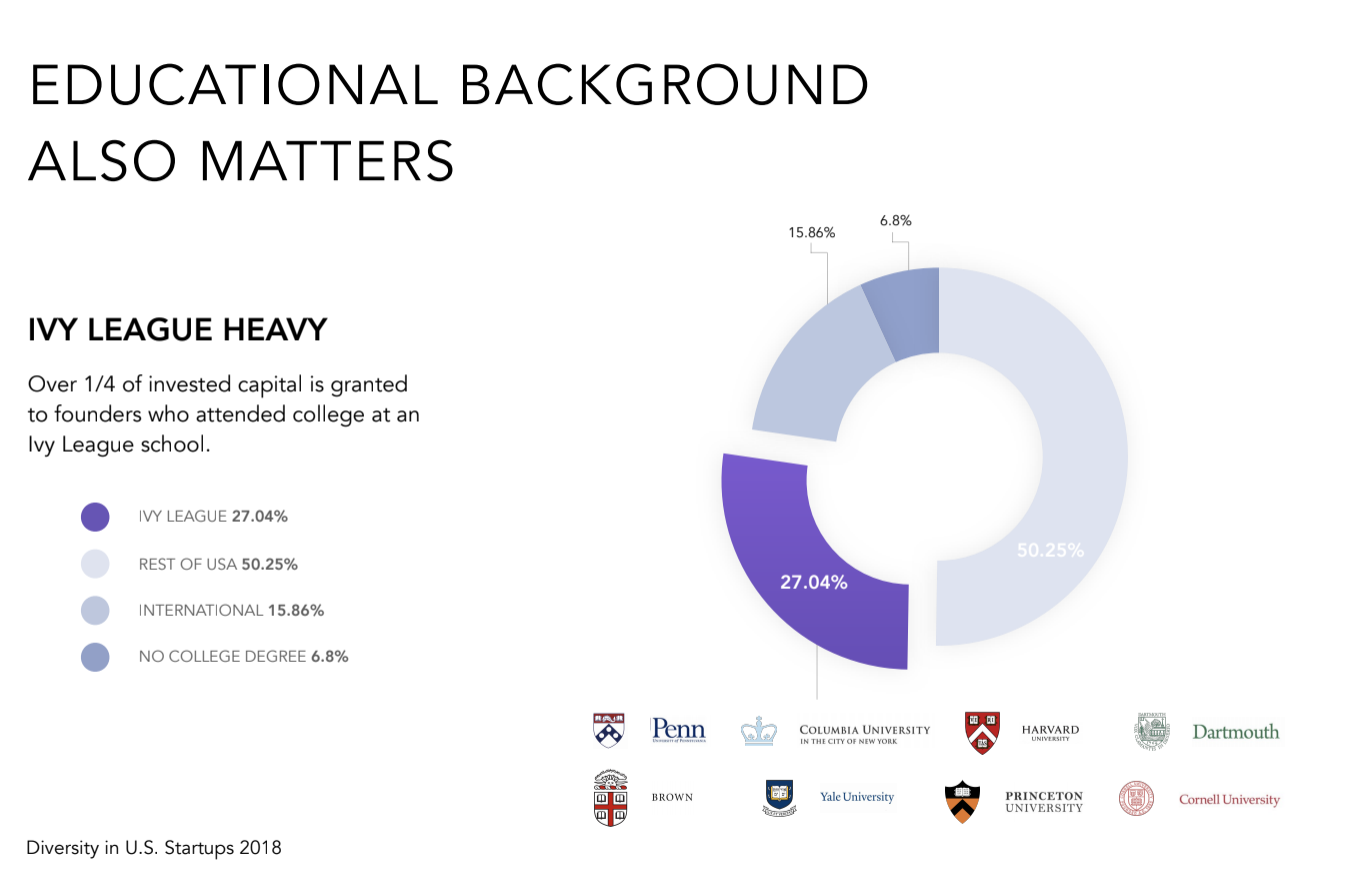
The data compiled by Diversity VC and RateMyInvestor contains some other staggering statistics. Ivy League-educated founders captured 27 percent of all the dollars invested in venture capital startups, while all graduates from all other universities across the U.S. represented 50 percent of venture funding. Founders who graduated from international institutions had nearly 16 percent of venture funding. Founders without a university degree accounted for around 6 percent of the total capital invested.

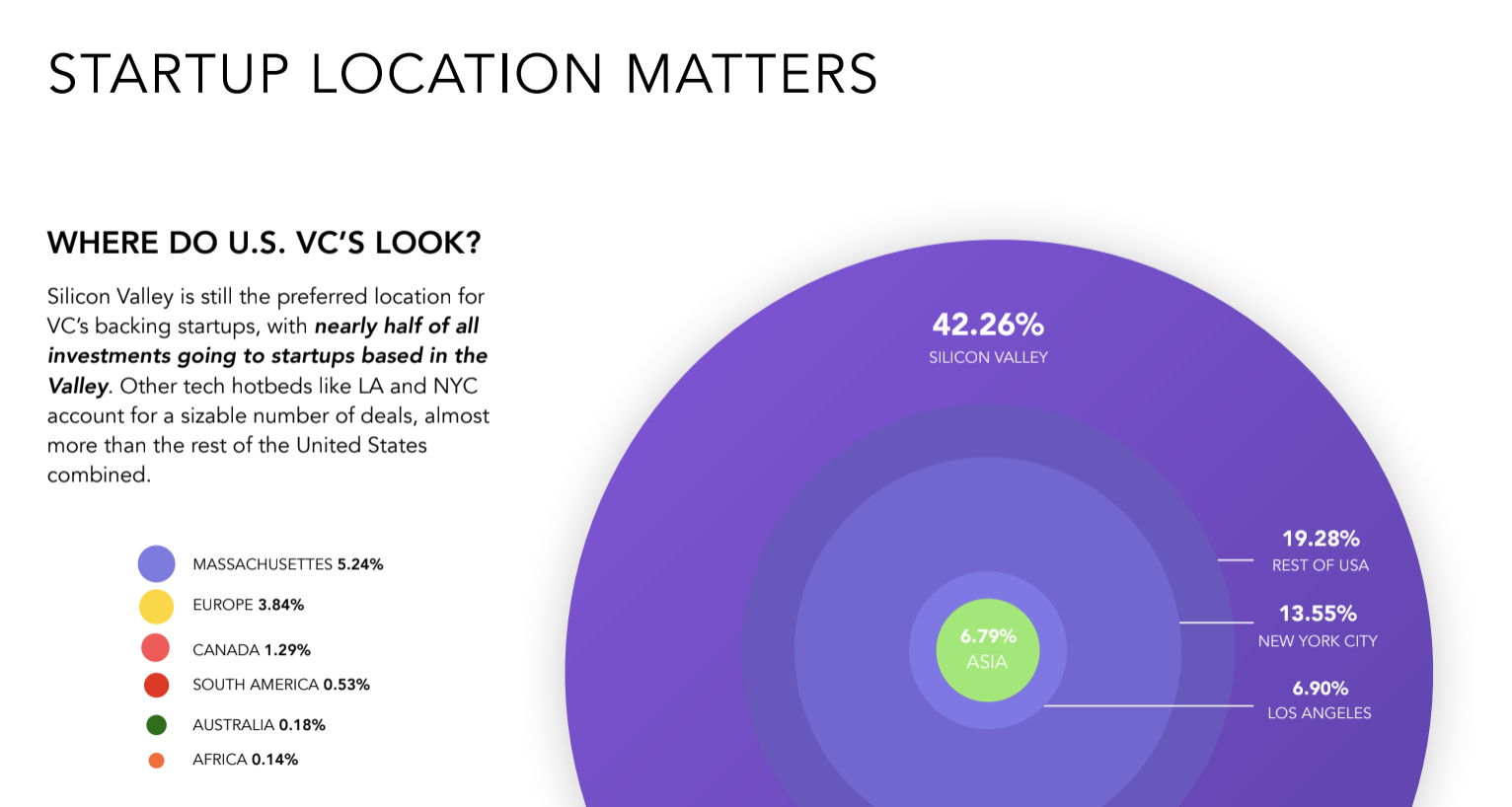
Finally, investors are still wildly reluctant to leave Silicon Valley to look for new deals, according to the survey. This despite skyrocketing prices for real estate and talent and the emergence of big technology ecosystems in cities across the U.S.

“Silicon Valley has done a poor job of fostering diversity of all forms, especially diversity of thought,” said DCM partner Kyle Lui. “VCs and founders tend to back/hire people who are in their existing network who most likely share the same views as them, went to the same school as them, and shared similar life experiences as them.”

12 Feb 2019

Tim Cook-backed shower startup Nebia shows off a warmer, water-saving shower head

I’m not in the habit of getting naked during meetings at startup offices, but this time it felt appropriate.

Nebia, a shower startup that has attracted investments from the likes of Apple CEO Tim Cook and former Google chairman Eric Schmidt’s foundation is back with some new cash (though it won’t divulge how much) and a new generation of its thoughtfully designed shower heads that aim to dramatically reduce the amount of water people use while cleaning up.

After a lengthy chat with Nebia CEO Philip Winter who discussed all of the nuances of the Nebia’s second-gen “Spa Shower” that they just launched a crowdfunding campaign for today, he asked whether I’d like to try it out. With a couple hours of empty space in my calendar, I said “Why not?” and wandered over to the startup office’s shower showroom.

Shower Thoughts

This was probably the most analytical thinking I’ve done in the shower about the process of showering itself.

The shower head in my bathroom at home is pretty standard and basically concentrates the water into a couple dozen streams organized in a circle that are firing at an even pace. It’s nothing fancy, I couldn’t tell you the brand, but I can say that I spend at least 20-30 minutes in there everyday without exception.

Nebia’s shower is wildly more complicated — as a $499 shower should be — but it’s the combination of different techniques that leads to a shower that feels full and refreshing but is using significantly less water than you’re used to. The customer for this is probably placing a healthier premium on the fact that it’s great for the environment than that it’s a spa-type experience, the shower head uses 65 percent less water than your average shower head, the company says.

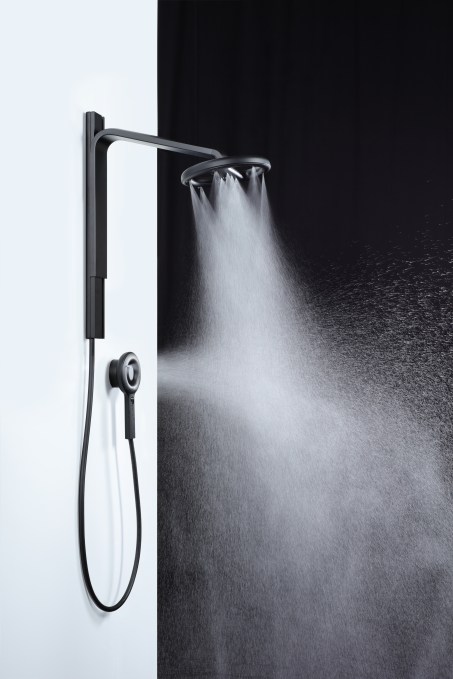
The Nebia shower is all a very strange feat of engineering and involves the water being “atomized” as they called it, with water droplets being significantly smaller when it exits some nozzles leading to an enveloping mist and larger and warmer jets being shot out of the shower head’s center. The big improvement in this generation is that the water is about 29 percent warmer.

How does the shower head even control warmth? Isn’t all the water coming from the same heater? As Winter explained to me, things are a lot more complicated when it comes to how Nebia handles thermodynamics. Smaller water droplets means increased surface area exposed to the room temperature which means greatly sped up heat dissipation. In practice, this means that the distance the water can travel from the shower head before getting chilly is a much shorter journey than your current shower. To adjust that, Nebia fires the water droplets three times quicker and maintains some larger droplet streams to maintain the heat for longer.

Nebia does a bit of cheating by also having a second shower head firing from the hip. The wand adds to the water being used but still keeps the system using about half of the amount of water that the average shower head uses.

Thankfully, there was also room for a side-by-side comparison as I was able to try out both the gen-1 and gen-2 Spa Shower in the same bathroom. The shower experience didn’t feel wildly distinct but the difference in water heat when cranked to full blast was notable, my own temperature sensing isn’t quite finely tuned enough to confirm the 29 percent figure, but that doesn’t seem off.

Ultimately, it was the best shower I’ve had in a startup’s offices to date, but it was also a shower that didn’t feel as though I was resting my head under a light trickle of cold water like other low-flow showers. It’s a real product though at this point it’s also a decidedly premium product, even with the $100 crowdfunding discount of the $499 retail price. Beyond the warmer water, the new shower’s easy-install system is now compatible with about 95 percent of American homes, the company says. There’s also a new matte black color option and a little matching shower shelf you can add to keep that high-design look.

The company, which launched out of Y Combinator, has attracted some top investors who seem to be intrigued by the water-saving impact. The company says they’ve already shipped over 16,000 shower heads and that over 100 million gallons of water have been saved.

This Series A investment was led by Moen, the faucet and shower head maker which also announced a partnership with the startup. The latest round also boasts follow-on investment from Tim Cook and The Schmidt Family Foundation as well as some new investors like Airbnb co-founder Joe Gebbia, Starwood Hotels co-founder Barry Sternlicht, Fitbit co-founder James Park and Stanford StartX.

The crowdfunding campaign kicked off today and has already blown through $300k in pre-orders (they’ve already sold most of the $349 early bird deals); the company hopes to ship the first 2.0 shower heads in June.

12 Feb 2019

Google expands partnership with Founder Gym to support underrepresented founders

Google for Startups has expanded a partnership with startup training program Founder Gym to better serve underrepresented founders through a new scholarship program.

The program typically charges $396 to participate, but thanks to this partnership with Google for Startups, Google will cover the costs for select scholarship recipients to participate in the six-week program. This partnership is an extension of a pilot program that started last March.

“Google for Startups took an early bet on Founder Gym when we were less than six months old, and as any founder knows, you never forget the first people to say ‘yes’ to your dream,” Mandela Schumacher-Hodge Dixon said in a statement.

“Our team at Founder Gym has used that early vote of confidence to help fuel our efforts to train a groundbreaking number of founders around the world in our inaugural year.”

Founder Gym, co-founded by Mandela Schumacher-Hodge Dixon and Gabriela Zamudio,* unveiled its online platform in November 2017 to support and train underrepresented founders building tech startups.

“We are deeply committed to supporting the growth and success of underrepresented founders,” Google for Startups VP Lisa Gevelber said in a statement. “At Google we know that innovation can come from anywhere, but the resources needed to succeed are not evenly distributed. Founder Gym is truly moving the needle in this space – their unique program delivers the tangible resources necessary to level the playing field for founders and help them grow their businesses.”

Instead of describing it as a school, bootcamp or incubator, Founder Gym describes itself as a topical, six-week training program that covers topics like fundraising, pitching, user growth and problem validation. In Founder Gym’s first 12 months of operation, its cohort has collectively raised $35 million in funding.

“As we enter year two of this journey, we couldn’t be more excited to expand our partnership with Google for Startups, an organization that has a long history of supporting the entrepreneur’s journey,” Schumacher-Hodge Dixon said. “There is no doubt in my mind, this partnership will help us achieve our mission of developing the next generation of great innovators and leaders.”

Update 3:14 pm: This story has been edited to reflect the fact that Zamudio is no longer at Founder Gym.