Author: azeeadmin

12 Feb 2019

The thesis of Patreon

Can Patreon become a powerful, multi-billion-dollar company at the heart of the global media and entertainment industry? It’s founders and investors certainly believe so.

In this Extra Crunch EC-1, I dove into Patreon’s founding story, product, business model, and competition. Now I want to dissect the foundational thesis of where Patreon could unlock massive economic value. If it turns out they got the thesis wrong, tactical and product details won’t save it.

As I see it, Patreon’s thesis includes four hypotheses:

  1. There’s a ton of untapped economic value in getting the mid-tail creator market to adopt membership business models.
  2. Creators will adopt membership business models once they become exposed to the idea.
  3. Creators need a dedicated “membership” service independent of the platforms they use for most of their content distribution and social interaction.
  4. By owning membership, Patreon will be able to expand into providing numerous other products and services to creators.

I agree there is substantial untapped opportunity for mid-tail creators to leverage memberships, that Patreon can secure meaningful market share even amid competition by the largest content distribution platforms, and that being the dominant infrastructure provider for creator memberships is a highly strategic position from which to expand into numerous other products and services for creators. Where I’m more cautious is regarding the pace by which creators will adopt this and the percent of mid-tail creators for which this is a good fit. Let’s dig in.

Reading time for this article is about 11 minutes. Feature illustration by Bryce Durbin / TechCrunch.

1. There’s a lot of untapped economic value in getting the mid-tail creator market to adopt membership business models.

Creators produce media content for others to consume online and are independent (and not employees) of large media companies. The “mid-tail” creator is an individual who has a dedicated base of “true fans” probably numbering in the hundreds or low thousands. From my research, there are no good metrics for how many such creators exist.

Patreon wants to be the platform for mid-tail creators, which it defines as creators who can earn $1,000-500,000 per month through its platform. Currently, the platform has about 133,000 creators earning at least $1.00 but only 4,300 of them fit into that category. Those 4,300 drive most of the $500 million in payments it expects to process this year, however. Conte said of the number of creators who could fit in this range, “it’s hundreds and hundreds of thousands of those creators, and we have a very small proportion of them now.”

These creators are underserved small businesses

Whether they’re sole proprietors hustling for side income or full-time production teams shooting videos in a studio, mid-tier creators are businesses. However, as I explained in my analysis of Patreon’s product, these are customers not typically thought of as small businesses, and even if they are, they’re usually seen as too complicated, low ROI, and volatile. These mid-tail creators are not being chased by top talent managers, agents, record labels, etc. because they don’t command enough earning potential (in the eyes of the traditional industry). Creators are entrepreneurs, but unlike other types of small businesses, they need to stay focused on creating their product and interacting with fans, not managing a business.

Without time to handle business, these mid-tail creators are then left with advertising as a reasonably simple revenue model. Having thousands of passionate fans, though, may generate enough ad revenue to cover lunch, if they’re lucky. Plus, they often are not even creating content to appeal to a massive global audience anyway. Instead, they want to provide a lot of value to a more targeted audience than advertising allows.

If you remove advertising from the picture, then every potential revenue stream comes back to the same subgroup of fans: superfans who care enough that they will buy merch, event tickets, albums, art prints, and basically anything that a creator produces. The superfan-creator dynamic isn’t just transactional, like buying a pair of shoes from a store with good reviews. Rather, it’s quite emotional. Superfans don’t just value the final output, but also the process of creation and the person doing it. They want access to the whole thing.

If a product targeted mid-tail creators, however, it could address their particular needs, and this is where Patreon steps in. SVP of Product Wyatt Jenkins described the challenge of serving this customer: “There’s a tension between capitalism and art that exists in the world that we can’t untangle, we just have to do our best. So all the language in all the product is like teaching artists business. That’s the challenge we face everyday.”

Membership unlocks value

A membership business model is like a subscription to a community. Membership is about fans paying dues (on a recurring basis) to be part of a creator’s inner circle, receiving a mix of perks like exclusive content, access to discussion groups, members-only merchandise, first dibs on event tickets, video calls with the creator, etc. There can be different tiers of membership that provide better perks. Beyond the tangible benefits, it also provides deeper emotional value to fans: being (formally) part of a tribe.

Membership is a business model that can be distinctly applied to the circumstances of content creators. Creators make for natural recurring revenue businesses, since loyal fans want to both continuously consume content and also want an ongoing relationship with the creator. People will pay to be your friend. It is not about trying to change who is popular or how popular they are — it’s about helping them make more money through deeper engagement with their core fans. It makes the mid-tail of creators fatter.

Patreon talks about membership as a fit for the 1-3% of a creator’s online fan base most passionate about them. For some niche creators, it could be much higher.

“It’s not in our mission to change the fundamental economics…there are some creators who are popular and some who aren’t…we can’t change that…we can give less popular creators the best tools to better monetize their audience though and sustain themselves as a creator.” – Jack Conte

On the flip side for creators, membership offers reliable, recurring revenue. They can choose to go full-time, make capital expenditures and hire employees based on forecasted income. As a result, mid-tail creators who are part-time or full-time but scraping by can evolve into a landscape of stable small and mid-size businesses managing customer churn and happiness. Especially if there are tools to understand those tactics and take action without having technical savvy or traditional business experience.

12 Feb 2019

The competitors of Patreon

In December, Patreon CEO Jack Conte shared a list on Twitter predicting what being an independent content creator will be like in 10 years. One of his predictions was that there will be fierce competition between distribution platforms to get creators paid.

That competition has already begun, which is good for creators, but is it good for Patreon?

Patreon holds a strategic position in the creator toolset, particularly around building membership businesses — the recurring income from superfans that allows for creator sustainability. Among its competitors are some of the richest tech companies in the world who own content distribution platforms, like Facebook and YouTube. A crop of vertical-specific subscription infrastructure companies could push back on Patreon’s early market share by offering creators better features for specific use cases. A range of B2B software companies, blockchain projects, or even Hollywood agencies could decide to target Patreon’s core creator customer.

This article is an analysis of each of those challenges to Patreon, and how the company can navigate them to come out ahead.

Reading time for this article is about 16 minutes. Feature illustration by Bryce Durbin / TechCrunch.

Fending off the content platforms

Creators heavily use content distribution sites like Facebook, YouTube, Twitch and others to publish their work and engage with their fans. Given the amount of effort expended on these platforms, it seems inevitable that they would find value in running their membership businesses through them as well.

Indeed, these platforms — particularly Facebook and YouTube — are investing significant resources into building out full-featured tools for creators to generate revenue directly from their fans.

Facebook is the top threat to Patreon, although others are also certainly important to watch.

The top distribution platforms have three advantages against Patreon. First, they have enormous budgets, plain and simple. Second, they already count most of the world’s creators and fans as users. YouTube, for example, may not be a hub for podcasts or for poetry, but the vast majority of podcasters and poets already have YouTube accounts … as do most of their fans. These platforms don’t need to do customer acquisition in the traditional sense, they just need existing users to test out new features.

Third, they have a major advantage with user convenience. It’s easier to convert a fan who is wavering on the idea of becoming a patron when the button to do so is right there in front of them. That fan is probably already logged into their YouTube account so that one click could be all that’s needed — no new account creation on Patreon.com.

Facebook and YouTube want fan-creator revenue

Content platforms see new revenue streams in the fan-creator relationship now. More of them are testing ways for creators to directly monetize fans rather than solely operate off ad revenue. This is driven by 1) increasing saturation in the digital ad market, 2) greater awareness of best business practices from the gaming sector, such as enabling superfans to spend money on extra perks, and 3) deeper understanding of China’s dominant social platforms which have long had features like tipping as revenue streams.

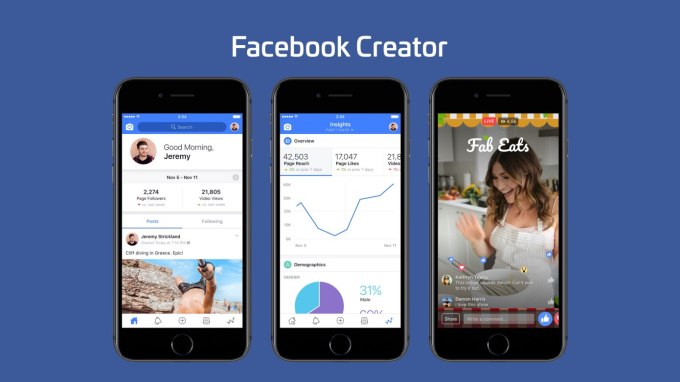
Facebook has been building out dedicated functionality for creators. Its Creator App is a unified inbox of Facebook comments, Instagram comments, and Messenger chats, plus a unified analytics dashboard to help creators understand who their fans are. This app could quickly evolve into the type of business infrastructure that Patreon is building to help creators manage their superfan relationships and get them to spend more.

Ominously, Facebook has been aggressively testing a variety of monetization options for creators. Among them:

  • Creator Memberships: users who join a creator’s $4.99 per month membership tier get exclusive content and a supporter badge next to their name.
  • Subscription Groups: creators can set a price of $4.99 through $29.99 per month for fans to join a private Facebook Group, which already has a Group Insights tool to get analytics on the most active participants, the most engaged posts, and the demographics of group members.
  • Facebook Stars: a virtual currency for tipping creators on gaming live streams. Fans buy a pack of Stars, and Facebook takes a 5-30% cut depending on how much they spend, while creators get $0.01 for each Star fans send them.
  • A marketplace for matching creators with businesses for branded content campaigns and sponsorship deals, similar to the Niche marketplace that Twitter acquired.

Facebook isn’t alone in attempting to leverage its platform to help monetize creators. YouTube has been hard at work as well.

In June 2018, it rolled out “Channel Memberships.” Creators with at least 50,000 subscribers to their channel can offer a $4.99 per month membership to their fans that provides access to exclusive live streams, members-only posts in the creator’s Community tab, custom emojis to use in YouTube comments, and a badge that appears next to the user’s name to mark them as a member. YouTube keeps 30% ($1.50 each) of the revenue from Channel Memberships, which includes payment processing costs.

Other fan monetization features on YouTube now include:

  • Super Chat: when there is a live comments feed next to the video during Live Streams and Premieres, fans can pay to have their comments highlighted and temporarily pinned to the top so more people read them.
  • Merchandise: creators with at least 10,000 subscribers can create custom merchandise to offer their fans through an integration with Teespring. Featured merchandise then appears underneath the creator’s YouTube videos. Teespring pays YouTube a commission on all the sales this generates for them and YouTube shares a portion of that commission back with creators.
  • Ticketing: through integrations with Eventbrite and Ticketmaster, creators can promote and sell tickets to their live events directly from the YouTube pages where fans are watching their videos.

Beyond Facebook and YouTube, there are a bunch of other content platforms with fan-creator revenue models that could undermine Patreon’s ambitions. Amazon-owned Twitch has subscriptions similar to YouTube’s Channel Memberships, while Medium has a freemium model where creators can paywall their writing and then get a cut of the overall revenue based on the amount of “applause” their posts received. So far, Twitter and Snap seem to be non-players in this market.

Patreon faces two major risks from the rise of fan-creator monetization features on content platforms, beyond just company-to-company competition. Even if Facebook, YouTube, and other platforms release a fairly weak set of features, Patreon could face a “death by a thousand cuts” scenario. In aggregate, those features could reduce pressure on creators to find an independent platform to drive their superfans to. It also means that those platforms have the credit card info of a creator’s superfans as well, reducing the switching costs of leaving Patreon.

Second, Patreon envisions itself as the nucleus of a creator’s membership business, plugging into all the other platforms where they post content and engage fans using the Patreon API. But such integrations require collaborations with the distribution platforms. They now integrate with Reddit, but if other platforms are developing monetization tools of their own (even if not in direct competition), they may view a Patreon API integration as competitive with their own offering and refuse to collaborate. If Patreon doesn’t connect to the platforms creators use most often, it makes its service a much less compelling option.

Both companies could hit Patreon hard if they wanted to. Facebook in particular is such a powerful potential competitor because if it built its own robust version of a creator CRM it could provide creators unrivaled data on who their superfans are and how best to engage them. Plus, consumers actually read their Messenger, Instagram, and WhatsApp messages (unlike messages sent to subscribers to a YouTuber’s channel).

12 Feb 2019

The definitive Patreon reading guide

At nearly six years old, Patreon has gone from startup to king of membership. Now an established leader in an industry that’s been flipped on its head, Patreon’s path has been anything but predictable — peppered with its share of milestones, mishaps, pivots, champions, and critics — and offers invaluable insights for founders, investors, creatives, or those looking to make sense of the new media landscape.

Since we’ve probably read almost every word written on Patreon as part for our “under-the-hood” exploration in this EC-1, we’ve compiled a supplemental list of resources and readings we believe are particularly helpful for learning the Patreon story.

Reading time for this article is about 8 minutes. Feature illustration by Bryce Durbin / TechCrunch.

I. Background: The Story of Patreon

Pedals Music Video (Announcement Video) & Behind the Scenes Video | May 2013 | In May of 2013, Co-founder and CEO Jack Conte first announced the creation of Patreon alongside the release of a stunning music video that had smoke machines, light shows, and robots on beat machines. Conte also added a neat behind-the-scenes video showing just how much groundwork and hustle went into the production.

Jack Conte’s Patreon Explanation | May 2013 | In a separate video, Conte went into a bit more depth on the original site’s purpose, vision, and functionality.

Pomplamoose’s Jack Conte Creates A Subscription-Based Funding Site For Artists and Patreon Is a Recurring Tip Jar for Fans Who Love Everything You Make | May 2013 | TechCrunch’s and AllThingsD’s coverage of Patreon’s launch. In context, revisiting the pieces offers an interesting look back at the initial excitement around Patreon’s offering and the pervasiveness of the problem it was tackling.

Jack Conte Presentation @ XOXO Festival | September 2013 | At the XOXO Festival, a festival and conference for independent internet-based creators, Conte explains how his own experience as a YouTube artist led to the creation of Patreon.

1,000 True Fans | March 2008 | Wired founding editor Kevin Kelly’s widely read 1,000 True Fans essay is essentially the philosophical underpinning of Patreon. The principal idea here is that one can be a successful creator if they are able to consistently monetize even a small, dedicated fan base. Kelly walks through independent artist economics to explain how just one thousand true fans who will consistently support or purchase a creator’s work can be enough to make a comfortable living.

Digital Medici: How This Musician-Turned-Entrepreneur Plans To Save Creators From Advertising | February 2018 | In a 2018 profile, Kathleen Chaykowski contextualizes Conte’s motivation and aspirations for Patreon, outlining his path from childhood music fanatic to struggling artist to founder.

Inside Patreon, The Economic Engine of Internet Culture | August 2017 | Verge senior reporter Adi Robertson outlines in-depth how the Patreon model has changed from the creator perspective overtime, including creator anecdotes, success stories and concerns.

12 Feb 2019

Startups, demo tables are still available for TC Sessions: Robotics+AI

TechCrunch is known for helping startups get to the next level by providing a platform for them to showcase their work at a demo table. Startup demo tables for TechCrunch Sessions: Robotics + AI on April 18 are still available for any early-stage robotics or AI startup with $3M or less in funding. This is your chance to get your robotics or AI startup the exposure it needs to make connections and grow.

Startup demo tables get your company in front of over 1,000 people who are specifically interested in robotics and AI – including some heavy-hitter investors and TechCrunch writers. Each demo table not only comes with its own dedicated space but also includes 3 tickets for your entire startup crew to enjoy the show. The event attracts a flock of students from schools like UC Berkeley and Stanford, making it a great opportunity for you to find your next engineer or intern.

When you book your $1,500 startup demo table you’ll be networking with the industry’s doers, movers and shakers that can potentially give you the leg up you need to grow. This event provides an exceptional opportunity to demo your product in front of a very smart, very large and very targeted audience. This year’s lineup (a work in progress) will not disappoint with speakers such as Arnaud Thiercellin (DJI), Melonee Wise (Fetch Robotics), and Peter Barrett (Playground Global).

Here’s what else you can expect at TC Sessions: Robotics + AI. TechCrunch editors will host a full day of interviews and demos (like this one) on the main stage. And we’ll have workshops and other demos running in parallel. Want to know more? Check out the full coverage from last year. And, as always, there will be plenty of opportunity for world-class networking.

Don’t miss a spectacular day-long event focused exclusively on robotics and AI. Come learn, teach, demo and network. And buy your tickets and a demo table now before it’s too late. We can’t wait to see you there!

12 Feb 2019

IBM brings Watson to any cloud

IBM today announced that it is freeing its Watson-branded AI services like the Watson Assistant for building conversational interfaces and Watson OpenScale for managing the AI lifecycle from its own cloud and allowing enterprises to take its platform and running it their own data centers. In a way, you can think of this as Watson as a managed service.

“Clients are really struggling with infusing AI into their applications because the data is distributed in multiple places,” IBM Watson’s CTO and chief architects Ruchir Puri told me when I asked him for IBM’s reasoning behind this move. “It’s in these hybrid environments, they’ve got multiple cloud implementations, they have data in their private cloud as well. They have been struggling because the providers of AI have been trying to lock them into a particular implementation that is not suitable to this hybrid cloud environment.”

So with this decision of bringing Watson to any cloud, IBM wants to give these businesses the option to bring AI to their data, which is significantly harder and costlier to move, after all. Purir also stressed that many enterprises have long wanted to use AI to make their operations more efficient, but they needed to run their AI tools in an environment that they control and feel comfortable with.

At the core of the technical specifications for running Watson in their public or private cloud is IBM Cloud Private, the company’s private cloud platform that uses open source technologies for running tools and services like Kubernetes and Cloud Foundry. That’s the platform that allows enterprises to then run Watson, too (which itself runs on containers, too).

Right now, the focus of this fire launch is on Watson Assistant and Watson OpenScale. “The capabilities we are releasing right now are based on our two flagship products. That addresses a very large domain of use cases that we come across,” said Puri. “In the remaining part of the year, we will being the rest of the capabilities [to the platform]. For example, Watson Knowledge Studio will come along with it as well, as well as Watson’s natural language understanding capabilities that we currently have available in our public cloud environment will be ported on to it as well.”

With that, Puri argues, IBM will offer enterprises a full spectrum of tools for developing and running AI models using structured and unstructured data, as well as a full monitoring and lifecycle management suite.

In addition to this, IBM also today announced that it is launching a new version of its Watson Machine Learning Accelerator that brings high-performance GPU clustering to Power Systems and X86 systems and which promises to accelerate AI performance up to 10x.

The company also today announced IBM Business Automation Intelligence with Watson, though it didn’t quite delve into the details. This new service, the company says, will give business leaders the ability “to apply AI directly to applications, strengthening the workforce, from clerical to knowledge workers, to intelligently automate work from the mundane to the complex.” I’m not really sure what that means, but I’m sure the business leaders who will buy this service will figure it out.

12 Feb 2019

How I podcast

I’ve been podcasting in various forms for about a dozen years now. Sometimes it has been within the corporate confines of the various publications I’ve worked for and sometimes it has just been for myself. That’s the beauty of podcasting — there’s no overhead.

It can be recorded on a terrible Skype line or meticulously crafted by an army of producers. You can do it for five listeners or five million. Do a five-episode miniseries or suddenly look at the calendar one day and realize you’ve been putting up an episode a week for five years.

My current podcast, RiYL, falls into the latter category. Episode 322 just posted this weekend. That’s a lifetime in podcast years, and I’m not exaggerating when I say there’s no way the show would have lasted this long had I not assembled the proper gear.

It’s true that doing the show has been an ongoing process of refining my setup, both in terms of recording hardware and the software workflow, but the core components have been in place for a while. A number of my more successful friends have invested thousands to build home studios that sound as professional as any NPR affiliate.

For me, however, the key has always been mobility. I’ve fine-tuned a podcasting rig that sounds good, but is small enough to slip into a laptop sleeve. Leave no trace, as the saying goes.

The motivation dates back to the show’s humble beginnings (though, for the record, the first few episodes were done over Skype as I was still figuring things out). I realized pretty early on that getting touring artists and musicians to come to my place in Queens (with a few exceptions) was going to be a non-starter.

Piecing together a lightweight rig has given me the flexibility to meet people where they are, be it a hotel room, bar or their PR rep’s conference room. And now that I travel pretty regularly for work, it means I can easily slip the setup into a carry-on, so I can meet guests in their hometowns.

Here’s a photo of upcoming guest Hannibal Buress, recorded in my hotel room in Lagos, Nigeria. My setup is placed gingerly atop my overturned suitcase on a coffee table. He’s clearly impressed.

The other thing the setup has helped me realize is that people’s expectations for professionalism has shifted considerably in recent decades. My rig is small and simple, but various guests have commented over the years that they’re impressed. The last person who interviewed them had them speak into their iPhone.

At the very least, this is certainly better than that.

It’s not the end-all, be-all, by any stretch of the imagination. This is just what has worked for me. Over the years, I’ve had plenty of people — guests and otherwise — ask me what I use. Also, in the wake of last week’s Spotify acquisition of Anchor and Gimlet, podcasts are, once again, the hot newness. So now seemed like as good a time as any to get this all down on paper.

TASCAM DR-40 4-Track Portable Digital Recorder ($170): This was my first acquisition and the one piece of hardware I’ve held onto through the duration of the show (though for the record, I’ve purchased it twice after an unfortunate incident with a lost backpack).

Zoom and Roland also make solid multi-track recorders that will probably be interchangeable for most. The key is finding a system you like that sports dual XLR mic inputs that you can monitor on the fly. They pretty much all have built-in mics, but you’re not going to want to rely on room mics for a podcast. It sounds like crap and it’s a nightmare to edit if you’ve got more than one speaker.

Recording works like a charm. The system records each mic to a left and right channel, which it saves as a WAV file on an SD card. Just make sure the mics are placed at a sufficient distance, so you don’t pick up too much cross talk.

Of course, here you’re limited to two mics. That’s been an issue at points when entire bands have wanted to join in on the fun. The aforementioned companies do make recorders with more inputs. Those are generally larger and a lot pricier, though.

Honorable mention here goes to the Rodecaster. The board is really great at what it does. We recorded an episode of TechCrunch Original Content on the thing, with it doing guest duties and producing in real time. The recent addition of multi-track recording makes this thing an absolute killer.

It has eight channels, including multiple mic inputs, triggerable sound pads and the ability to beam someone in via phone. If I was setting up a home studio on the cheap, I would shell out for one of these, no questions asked. That said, it’s just way too large for my current needs.

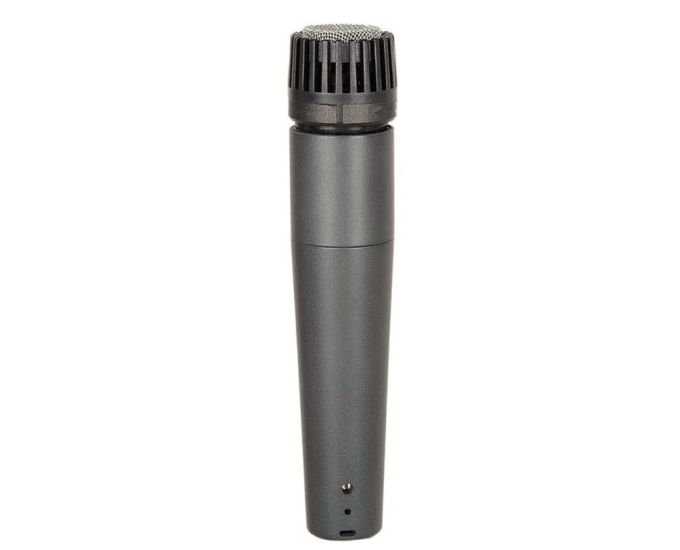
Weymic New Wm57 ($10): Okay, true story. Right after I bought the TASCAM, I invested in a pair of super-cheap mics. They sounded… OK, but the presentation was lacking. One afternoon, I went to Reggie Watts’ Brooklyn apartment to record an episode. I handed him a mic. He looked it over, moved it around in his hand a bit, then slyly unplugged it and reached into a drawer behind him, grabbed a mic and popped it on.

The guy knows from microphones.

My takeaway here is that presentation is important. Looks matter, as does weight. A microphone should have some heft to it. People’s expectations have lowered with regards to what an audio setup looks like, but you need good mics if pros are going to take you seriously.

I’ve since been through various mics, and lately I’ve settled on these things. For the record, they’re a wholesale knock-off of the Shure SM57 Cardioid Dynamic Microphone — the go-to microphone for podcasters. The SM57 is the thing I assume Marc Maron and Terry Gross would talk about if they had to share an Uber Pool to Silver Lake.

The Weymic looks nearly identical and sounds great for one-tenth the price. Don’t ask me how. And hey, I’m not exactly swimming in Casper ad revenue here. Also do yourself a favor and invest in a couple of foam windscreens to cut down on sibilance. You can get a bunch in a pack for cheap.

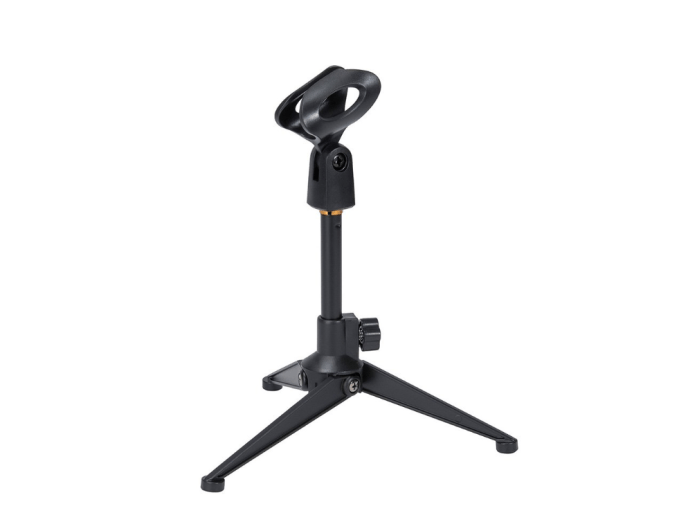
Universal Adjustable Desk Microphone Stand Portable Foldable Tripod (Two for $15): I’m embarrassed to admit how long it took me to add these to the repertoire. Guests jostle mics a lot during long interviews, and that stuff picks up. I’ve also had a number of older guests on the show, and asking them to hold a microphone for 45 minutes to an hour is just cruel.

These, picked up from Amazon, are super-cheap and fold up into nothing, making them perfect for my laptop-sleeve constraints. The only issues are: 1) They’re not great for super-tall guests. I recently had a member of the band Health on the show and ended up sticking the stand precariously atop a pile of several books; and 2) The screws loosen themselves like crazy for some reason, so I just purchased a pair of keychain screw drivers to keep them in check.

I pair all of that with a couple of six-foot XLR mic cables ($7 a piece for Amazon basics) and some velcro ties. Those fit nicely in the outside pocket of the laptop sleeve, along with backup batteries.

Audacity/Garage Band: Sometimes you just stick with the workflow you’ve got. I should probably upgrade to Adobe Audition (maybe this article will be what motivates me) one of these days, but I’ve been using Audacity for like 10 years at this point. It’s simple and it works fine for chopping up a show. That’s my biggest complaint with a number of the free apps like Anchor — they mostly suck when it comes to editing a show.

And editing is important. It’s true that another one of the wonderful things about podcasts is they can be as long or as short as you want, but everything can benefit from a little tightening up. I also spend a lot of time adjusting levels (often on the subway ride home). And make sure to record a little room tone to get rid of ambient noise in post.

After the show is edited, I export it as a single track and import it into my show template in Garage Band. That’s where I add the music beds, outros and the like.

Podbean: A couple of friends are launching a podcast soon. They asked me who I use for hosting. Podbean is something I found early on. I’m not sure I’d recommend the service, but I’m 300+ episodes deep at this point. There are a lot of options out there, so shop around a bit. Anchor is compelling for novices, including its built-in ad-servicing (though I’m a little wary of how the Spotify acquisition will play out) and a lot of my friends swear by Libsyn for more popular shows. Heck, even SoundCloud has a decent option.

Everyone has an embedded player and the means with which to syndicate to iTunes, Google Play, Spotify, et al.

I’ve found Podbean to be a bit clunky and the service has experienced a handful of outages. That said, recent additions have streamlined the program, and they’ve added some pretty decent analytics to the backend, so it’s definitely headed in the right direction. Once uploaded, I embed that into a Tumblr post.

Headliner: I’ve tried a number of speech visualizers for promoting the show. I found Anchor’s clunky. Wavve’s was decent, but they start charging you after your first 30-second clip. I only just started using Headliner this week, and it’s terrific. Easy to use, highly customizable and, best of all, free.

The transcriptions are okay for a free service (you’re going to have to clean them up) and the online editing tools are great. I think I’m sticking with this one for a while.

Additional shout-outs to Google Drive. The first thing I do after transferring files from my desktop is back them up here. It’s the one place where I’ve got all my files and has helped quite a bit with scheduling episodes.

YouTube is another recent experiment for me. I’ve been syndicating the show to all of the usual places, as mentioned above, but it recently occurred to me that people use the video platform to listen to audio programs. I asked a bunch of folks on Facebook and found it to be surprisingly popular. This will become increasingly important as more people purchase screen-sporting assistants like Google Home Hub and the Amazon Show. It’s a new thing for me and I’ve only got a handful of subscribers at the moment, but I’ll let you know how that goes.

I do still find myself recording remotely from time to time. Auto podcaster extraordinaire Kirsten recently introduced me to Zencastr, which is great for this purpose, recording each caller remotely and backing up those files to a server. If I’m using Skype, I go with the old standby, Ecamm’s Call Recorder, to record locally.

I’ve also become attached to Blue’s Raspberry USB mic for this purpose. It’s adorable and tiny, so you can stash it in a backpack for travel. It’s not the best-sounding mic, but it’s good for its size and it sounds a hell of a lot better than the company’s Yeti Nano. Rode’s got a company of models with optional windscreens I’ve been meaning to check out as well, but I’ve heard good things.

If you’re hip to any new tools you think I should check out, hit me up on Twitter at @bheater. I’m always looking for ways to step up my game.

12 Feb 2019

Apple fails to block porn & gambling “Enterprise” apps

Facebook and Google were far from the only developers openly abusing Apple’s Enterprise Certificate program meant for companies offering employee-only apps. A TechCrunch investigation uncovered a dozen hardcore pornography apps and a dozen real-money gambling apps that escaped Apple’s oversight. The developers passed Apple’s weak Enterprise Certificate screening process or piggybacked on a legitimate approval, allowing them to sidestep the App Store and Cupertino’s traditional safeguards designed to keep iOS family friendly. Without proper oversight, they were able to operate these vice apps that blatantly flaunt Apple’s content policies.

The situation shows further evidence that Apple has been neglecting its responsibility to police the Enterprise Certificate program, leading to its exploitation to circumvent App Store rules and forbidden categories. For a company whose CEO Tim Cook frequently criticizes its competitors for data misuse and policy fiascos like Facebook’s Cambridge Analytica, Apple’s failure to catch and block these porn and gambling demonstrates it has work to do itself.

Porn apps PPAV and iPorn (iP) continue to abuse Apple’s Enterprise Certificate program to sidestep the App Store’s ban on pornography. Nudity censored by TechCrunch


TechCrunch broke the news last week that Facebook and Google had broken the rules of Apple’s Enterprise Certificate program to distribute apps that installed VPNs or demanded root network access to collect all of a user’s traffic and phone activity for competitive intelligence. That led Apple to briefly revoke Facebook and Google’s Certificates, thereby disabling the companies’ legitimate employee-only apps which caused office chaos.

Apple issued a fiery statement that “Facebook has been using their membership to distribute a data-collecting app to consumers, which is a clear breach of their agreement with Apple. Any developer using their enterprise certificates to distribute apps to consumers will have their certificates revoked, which is what we did in this case to protect our users and their data.” Meanwhile, dozens of prohibited apps were available for download from shady developers’ websites.

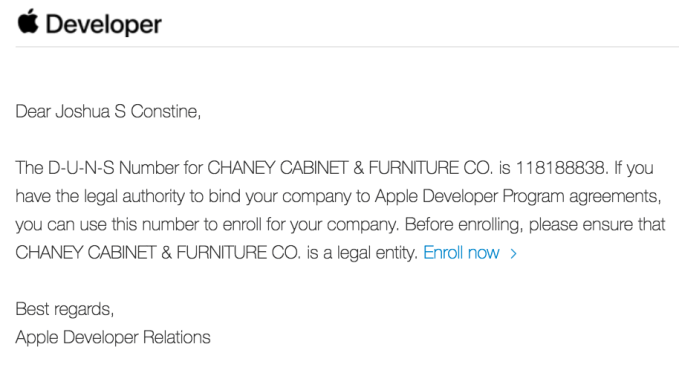
Apple offers a lookup tool for finding any business’ D-U-N-S number, allowing shady developers to forge their Enterprise Certificate application

The problem starts with Apple’s lax standards for accepting businesses to the enterprise program. The program is for companies to distribute apps only to their employees, and its policy explicitly states “You may not use, distribute or otherwise make Your Internal Use Applications available to Your Customers”. Yet Apple doesn’t adequately enforce these policies.

Developers simply have to fill out an online form and pay $299 to Apple, as detailed in this guide from Calvium. The form merely asks developers to pledge they’re building an Enterprise Certificate app for internal employee-only use, that they have the legal authority to register the business, provide a D-U-N-S business ID number, and have an up to date Mac. You can easily Google a business’ address details and look up their D-U-N-S ID number with a tool Apple provides. After setting up an Apple ID and agreeing to its terms of service, businesses wait one to four weeks for a phone call from Apple asking them to reconfirm they’ll only distribute apps internally and are authorized to represent their business.

With just a few lies on the phone and web plus some Googleable public information, sketchy developers can get approved for an Apple Enterprise Certificate.

Real-money gambling apps openly advertise that they have iOS versions available that abuse the Enterprise Certificate program

Given the number of policy-violating apps that are being distributed to non-employees using registrations for businesses unrelated to their apps, it’s clear that Apple needs to tighten the oversight on the Enterprise Certificate program. TechCrunch found thousands of sites offering downloads of “sideloaded” Enterprise apps, and investigating just a sample uncovered numerous abuses.  Using a standard un-jailbroken iPhone. TechCrunch was able to download and verify 12 pornography and 12 real-money gambling apps over the past week that were abusing Apple’s Enterprise Certificate system to offer apps prohibited from the App Store. These apps either offered streaming or pay-per-view hardcore pornography, or allowed users to deposit, win, and withdraw real money — all of which would be prohibited if the apps were distributed through the App Store.

A whole screen of prohibited sideloaded porn and gambling apps TechCrunch was able to download through the Enterprise Certificate system

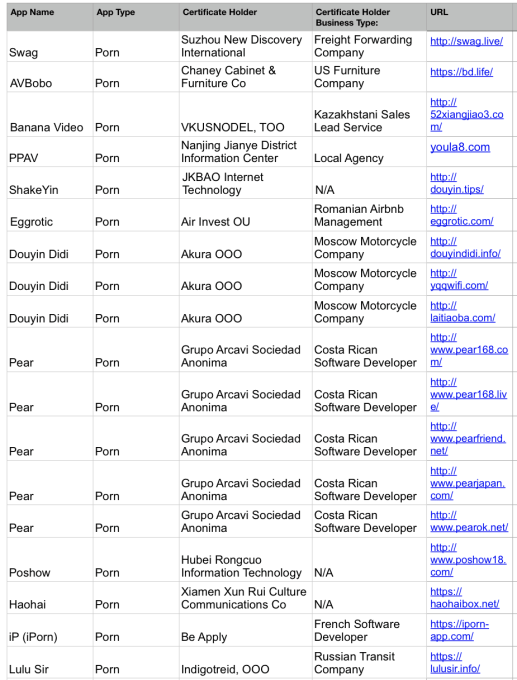
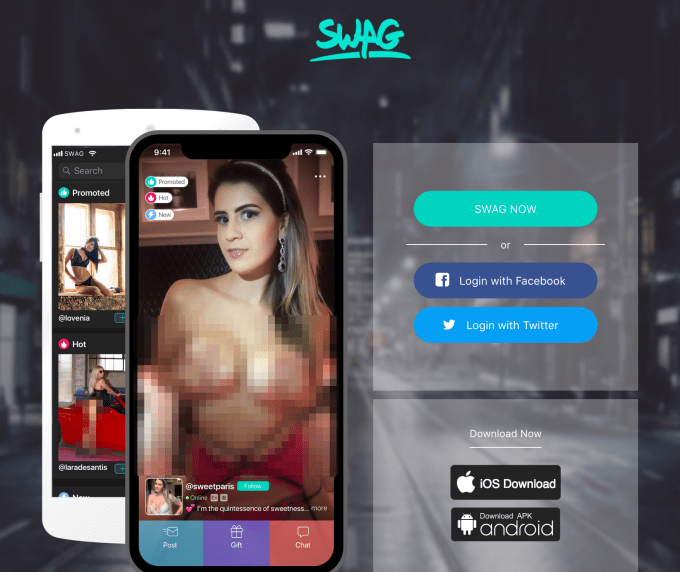
In an apparent effort to step up policy enforcement in the wake of TechCrunch’s investigation into Facebook and Google’s Enterprise Certificate violations, Apple appears to have disabled some of these apps in the past few days, but many remain operational. The porn apps that we discovered which are currently functional include Swag, PPAV, Banana Video, iPorn (iP), Pear, Poshow, and AVBobo, while the currently functional gambling apps include RD Poker and RiverPoker.

The Enterprise Certificates for these apps were rarely registered to company names related to their true purpose. The only example was Lucky8 for gambling. Many of the apps used innocuous names like Interprener, Mohajer International Communications, Sungate, and AsianLiveTech. Yet others seemed to have forged or stolen credentials to sign up under the names of completely unrelated but legitimate businesses. Dragon Gaming was registered to US gravel supplier CSL-LOMA. As for porn apps, PPAV’s certificate is assigned to the Nanjing Jianye District Information Center, Douyin Didi was licensed under Moscow motorcycle company Akura OOO, Chinese app Pear is registered to Grupo Arcavi Sociedad Anonima in Costa Rica, and AVBobo covers its tracks with the name of a Fresno-based company called Chaney Cabinet & Furniture Co.

You can see a full list of the policy violating apps we found below:

Apple refused to explain how these apps slipped into the Enterprise Certificate app program. It declined say if it does any follow-up compliance audits on developers in the program or if it plans to change admission process. An Apple spokesperson did provide this statement, though, indicating it will work to shut these apps down and potentially ban the developers from building iOS products entirely:

“Developers that abuse our enterprise certificates are in violation of the Apple Developer Enterprise Program Agreement and will have their certificates terminated, and if appropriate, they will be removed from our Developer Program completely. We are continuously evaluating the cases of misuse and are prepared to take immediate action.”

TechCrunch asked Guardian Mobile Firewall’s security expert Will Strafach to look at the apps we found and their Certificates. Strafach’s initial analysis of the apps didn’t find any glaring evidence that the apps misappropriate data, but they all do violate Apple’s Certificate policies and provide content banned from the App Store. “At the moment, I have noticed that action is slower regarding apps available from an independent website and not these easy-to-scrape app directories” that occasionally crop up offering centralized access to a plethora of sideloaded apps.

Porn app AVBobo uses an Enterprise Certificate registered to Fresno’s Chaney Cabinet & Furniture Co

Strafach explained how “A significant number of the Enterprise Certificates used to sign publicly available apps are referred to informally as ‘rogue certificates’ as they are often not associated with the named company. There are no hard facts to confirm the manner in which these certificates originate, but the result of the initial step is that individuals will gain control of an Enterprise Certificate attributable to a corporation, usually China/HK-based. Code services are then sold quietly on Chinese language marketplaces, resulting in sometimes 5 to 10 (or more) distinct apps being signed with the same Enterprise Certificate.” We found Sungate and Mohajer Certificates were farmed out for use by multiple apps in this way.

“In my experience, Enterprise Certificate signed apps available on independent websites have not been harmful to users in a malicious sense, only in the sense that they have broken the rules” Strafach notes. “Enterprise Certificate signed apps from these Chinese ‘helper’ tools, however, have been a mixed bag. Zoe example, in multiple cases, we have noticed such apps with additional tracking and adware code injected into the original now-repackaged app being offered.”

Porn apps like Swag openly advertise their availability on iOS

Interestingly, none of the off-limits apps we discovered asked users to install a VPN like Google Screenwise, let alone root network access like Facebook Research. TechCrunch reported this month that both apps had been paying users to snoop on their private data. But the iOS versions were banned by Apple after we exposed their policy violations, and Apple also caused chaos at Facebook and Google’s offices by temporarily shutting down their employee-only iOS apps too. The fact that these two US tech giants were more aggressive about collecting user data than shady Chinese porn and gambling apps is telling.“This is a cat-and-mouse game” Strafach concluded regarding Apple’s struggle to keep out these apps. But given the rampant abuse, it seems Apple could easily add stronger verification processes and more check-ups to the Enterprise Certificate program. Developers should have to do more to prove their apps’ connection with the Certificate holder, and Apple should regularly audit certificates to see what kind of apps they’re powering.

Back when Facebook missed Cambridge Analytica’s abuse of its app platform, Cook was asked what he’d do in Mark Zuckerberg’s shoes. “I wouldn’t be in this situation” Cook frankly replied. But if Apple can’t keep porn and casinos off iOS, perhaps Cook shouldn’t be lecturing anyone else.

12 Feb 2019

Amazon is bringing its delivery Lockers to Coachella

Amazon Lockers are coming to a new location: Coachella. The retailer says it will make its storage lockers available to festival-goers, allowing them to order both in advance and same-day to have items like sunscreen, hats, phone chargers and more delivered to an on-site locker at the event at no extra charge during the festival weekends of April 12 through 14 and April 19 through 21.

Ahead of the event, Amazon will also launch a dedicated Coachella storefront on its retail site, where customers can shop festival needs in advance across categories like fashion & accessories, beauty, health & wellness, tech, and camping gear.

To use the new festival Locker system, customers will be able to select one of the Amazon Lockers at Coachella during the checkout process as the shipping address. When the package arrives for pickup, the customers will be sent an email with a barcode that they’ll use to pick up the package.

Amazon says the Lockers will have a dedicated place at the festival and will be staffed by team members in case of any issues that arise.

An Amazon spokesperson confirmed that all shipping options will be available to the Coachella Lockers than are currently available to all Lockers not at the festival.

The retailer today operates Lockers in over 900 cities and towns across the U.S. as an alternative for those who don’t want to take delivery at work or at home. Lockers eliminate issues around package theft concerns, and work well for customers whose “homes” are actually shared spaces, like college dorms. They also allow for convenient returns and can help customers receive some items faster, as they offer a centralized delivery location for package drop off.

However, Amazon Lockers are usually permanent installations – at Whole Foods, local 7-Eleven stores, or other area businesses.

The retailer says this is the first time it’s brought Lockers to Coachella. It also appears to be the first time that Amazon has set up temporary Lockers at all, outside of hurricane relief efforts.

The deal with the large music festival is likely just as much about advertising the Amazon and Prime brands as well as the retailer’s same-day delivery service to a large, receptive audience, as it is a decision to cater to the festival market as a strategy for Amazon Lockers. That said, if the Coachella Lockers prove to be a big success, it wouldn’t be surprising to see Amazon set up Lockers at other events. But Amazon has no announced plans in that direction at this point in time.

The move also speaks to the flexibility of Amazon’s delivery operations – that it can drop in a few lockers over a weekend, then cash in on the uptick in sales from attendees.

“We want customers to make the most out of their weekend at Coachella,” said Patrick Supanc, Amazon Worldwide Director of Lockers and Pickup, in a statement about Amazon’s plans. “Bringing the convenience of Amazon Lockers to Coachella will help customers focus on their experience instead of worrying about forgetting something at home or having to carry it in with them.”


12 Feb 2019

Glide helps you build mobile apps from a spreadsheet without coding

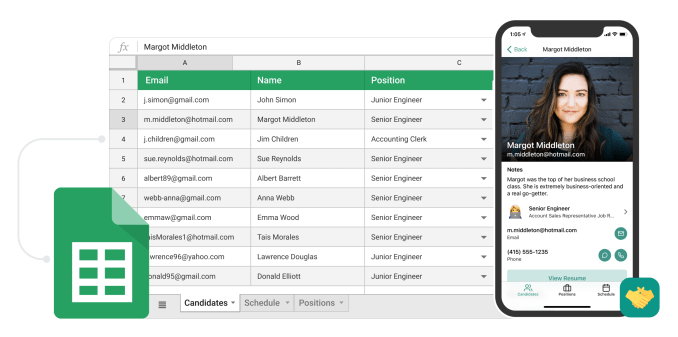
The founders of Glide, a member of the Y Combinator Winter 2019 class, had a notion that building mobile apps in the enterprise was too hard. They decided to simplify the process by starting with a spreadsheet, and automatically turning the contents into a slick mobile app.

David Siegel, CEO and co-founder at Glide, was working with his co-founders Jason Smith, Mark Probst and Antonio Garcia Aprea at Xamerin, a cross-platform mobile development company that Microsoft acquired for $500 million in 2016. There, they witnessed first-hand the difficulty that companies were having building mobile apps. When their two-year stint at Microsoft was over, the four founders decided to build a startup to solve the problem.

“We saw how desperate some of the world’s largest companies were to have a mobile strategy, and also how painful and expensive it is to develop mobile apps. And we haven’t seen significant progress on that 10 years after the smartphone debuted,” Siegel told TechCrunch.

The founders began with research, looking at almost 100 no-code tools and were not really satisfied with any of them. They chose the venerable spreadsheet, a business tool many people use to track information, as the source for their mobile app builder, starting with Google Sheets.

“There’s a saying that spreadsheets are the most the most successful programming model of all time, and smartphones are the most successful computers of all time. So when we started exploring Glide we asked ourselves, can these two forces be combined to create something very valuable to let individuals and businesses build the type of apps that we saw Xamerin customers needed to build, but much more quickly,” Siegel said.

Photo: Glide

The company developed Glide, a service that lets you add information to a Google Sheet spreadsheet, and then very quickly create an app from the contents without coding. “You can easily assemble a polished, data-driven app that you can customize and share as a progressive web app, meaning you can get a link that you can share with anybody, and they can load it in a browser without downloading an app, or you can publish Glide apps as native apps to app stores,” Siegel explained. What’s more, there is a two-way connection between app and spreadsheet, so that when you add information in either place, the other element is updated.

The founders decided to apply at Y Combinator after consulting with former Xamerin CEO, and current GitHub chief executive, Nat Friedman. He and other advisors told them YC would be a great place for first-time founders to get guidance on building a company, taking advantage of the vast YC network.

One of the primary lessons he says that they have learned is the importance of getting out in the field and talking to customers, and not falling into the trap of falling in love with the act of building the tool. The company has actually helped fellow YC companies build mobile apps using the Glide tool.

Glide is live today and people can create apps using their own spreadsheet data, or using the templates available on the site as a starting point. There is a free tier available to try it without obligation.

12 Feb 2019

Two former members of Google’s skunkworks division have launched a biomanufacturing company

Biomanufacturing technologies — taking modified versions of existing organisms and bending them to the will of humans — has moved from the world of science fiction to becoming a new reality.

Across the startup landscape companies are launching to make synthetic spider silk, or make leather substitutes, or meat substitutes, or novel chemicals and pharmaceuticals.

What all of these companies have in common is that they need to be able to rapidly experiment with different organisms and processes for cultivating them to make their visions work at a commercial scale — and that’s where Culture Biosciences comes in.

The company was founded by two Chapel Hill, N.C. natives and Duke alums Matthew Ball and Will Patrick. The two met in college at Duke and worked together in Google’s famous skunkworks division (then known as Google X).

Will Patrick, co-founder, Culture Biosciences

After leaving Google, Patrick, the company’s chief executive, wound up at MIT’s Media Lab where he was exposed to the work that companies like Gingko Bioworks was doing around biomanufacturing and became convinced that it would be transformational by human society.

“I was becoming incredibly inspired by all of that,” says Patrick. “What I was noticing was that the problem and the bottleneck in the industry was moving from industrial design to scale-up.”

The solution to that bottleneck rested in making the fermentation process more precise and more controlled, Patrick thought.

Think of biomanufacturing as a process similar to brewing beer. Organisms are sitting in a soup of goo, eating some things and excreting other things and all of that needs to be controlled. It’s one thing to be able to control the growth and extraction of goo in a test tube, quite another to do it at the scale of a hundred-gallon sized tanks.

“There are these really challenging aspects of operating bioreactors, sampling, and testing and getting data,” said Patrick . “We have been able to create this infrastructure that we can scale out.”

The company has built its own hardware — including customized robotics, sensors, and networks for its bioreactors, which, at 250 milliliters, are roughly the size of coke cans.

“That was the problem we were solving with Culture Biosciences,” says Patrick. “We do cloud fermentation.” 

The company, which just raised $5.5 million from investors including Refactor Capital, and Verily, the life sciences division of Google parent company, Alphabet, already has 50 bioreactors and is going to be scaling up to 100 really rapidly.

“What we’re helping [customers] with is making their R&D much more high throughput,” says Patrick.

Those customers include companies like Geltor, the manufacturer of a collagen replacement; Modern Meadow, the company that’s looking to make a leather replacement; and Pivot Bio, which makes supplements for agriculture to replace chemical fertilizers.

Verily and Refactor aren’t the only two investors to be impressed by Culture’s technology. Section 32, the investment shop founded by Google Ventures’ former chief executive Bill Maris, Y Combinator, BoxGroup, Shana Fisher from Third Kind Venture Capital, and Data Collective are also investors in the company.

Culture Biosciences actually shares office space with Verily, working from that company’s shared office space in South San Francisco, which was built to house startup companies in the life sciences space.

With Culture, the biomanufacturing industry and the investors who are supporting it seem to be learning one of the critical lessons from the last wave of big bets on biology — in biofuels.

That first wave in the 2000s there were lots of lessons that were learned.” says Patrick. “You have to think with the end in mind. What can those systems actually deliver from a technical perspective? Replicate those large scale environments as much as you can in your small scale lab… Not having to compete with oil really helps.”

[gallery ids="1781816,1781815,1781811"]